
Showing 14 items matching "shetland ponies"
-
 Phillip Island and District Historical Society Inc.
Photograph, circa 1900
... ...Shetland Ponies...Three children with eight Shetland ponies... Heights San Remo Shetland Ponies Black & White Photograph Miss Elms San Remo Three children with eight Shetland ponies Photograph ...8 dark grey ponies all bridled with three young children in attendance. Oldest girl in hat and riding gear. Second younger girl and young curly-headed boy. Trees and shrubs in background.Three children with eight Shetland ponieslocal history, photography, photographs, slides, film, shetland heights san remo, shetland ponies, black & white photograph, miss elms san remo -
 Phillip Island and District Historical Society Inc.
Photograph, Shetland Heights, 1890's
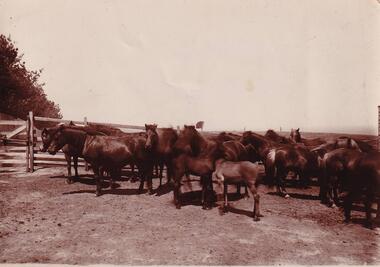
... ...shetland ponies...Scene showing Shetland Ponies on the Smalls' property at Shetland Heights....This Photograph was donated by Jessie Smith to Stanley Joseph McFee. local history photographs scenes of san remo and shetland heights sepia photograph san remo shetland heights shetland ponies Scene showing Shetland Ponies on the Smalls' property at Shetland Heights. ...This Photograph was donated by Jessie Smith to Stanley Joseph McFee.Scene showing Shetland Ponies on the Smalls' property at Shetland Heights.local history, photographs, scenes of san remo and shetland heights, sepia photograph, san remo, shetland heights, shetland ponies -
 Glen Eira Historical Society
Caulfield Transport
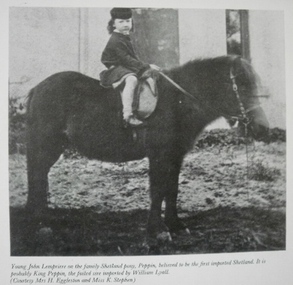
... ...Shetland Ponies...Photograph of John Lemprerie on the first Hardham, Davided Shetland Pony believed to be King Peppin, date unknown...Caulfield Shetland Ponies King Peppin Lempriere John Photograph of John Lemprerie on the first Hardham, Davided Shetland Pony believed to be King Peppin, date unknown Caulfield Transport ...Photograph of John Lemprerie on the first Hardham, Davided Shetland Pony believed to be King Peppin, date unknowncaulfield, shetland ponies, king peppin, lempriere, john -
 Melbourne Royal
Award - Trophy, Marshwood Perpetual Challenge Trophy, 1974
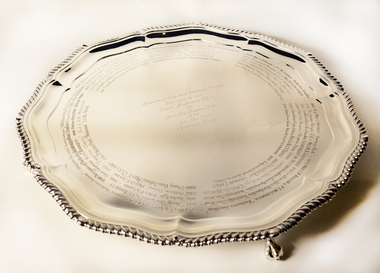
... ...shetland pony...Major Cox and Australia The Coxes promoted the Shetland pony elsewhere too. Major Cox judged Shetland ponies at shows in Australia, Sweden and France. ...Marshwood Perpetual Challenge Trophy / Presented to the / Royal Melbourne Show / by / Mr & Mrs Maurice Cox / 1974 / for the best / Shetland Pony /...Major Cox and Australia The Coxes promoted the Shetland pony elsewhere too. Major Cox judged Shetland ponies at shows in Australia, Sweden and France. ...The Marshwood Challenge Trophy was first awarded in 1974. This valuable trophy was donated by Major Maurice Charles Cox and his wife Betty, who were devoted to the Shetland Pony. Why is it called Marshwood? The Coxes both worked to maintain high standards of the Shetland breed. They did this in Great Britain by starting The Marshwood Stud in 1922. They also both took on the role of president of the Shetland Pony Major Stud Book Society and started a scheme to use only the best stallions for breeding. Major Cox and Australia The Coxes promoted the Shetland pony elsewhere too. Major Cox judged Shetland ponies at shows in Australia, Sweden and France. He probably last judged in Australia at the Sydney Easter Show in 1981. By this time Major Cox must have been in his late 70s as he was a reserve cavalry man in 1918. The silver-footed salver trophy was made in Scotland in 1916. It is possible that Major Cox brought it with him to Australia when he was judging Shetland ponies at the Royal Melbourne Show in the 1970s. The Marshwood Challenge Cup was awarded for the best Shetland pony at the show. Major Cox drew on his experiences examining Shetlands all around the world when he wrote The Shetland Pony (first published in 1965). (Mandy Bede)Silver tray on four feet. The 14-sided silver tray has wavy edges giving a floral appearance.Marshwood Perpetual Challenge Trophy / Presented to the / Royal Melbourne Show / by / Mr & Mrs Maurice Cox / 1974 / for the best / Shetland Pony /horses, pony, shetland pony, melbourne royal show, horses in action, melbourne royal horses in action competition, blue ribbon competitions, marshwood, cox, major maurice charles cox, betty cox -
 Brown Hill Progress Association Inc.
Photograph - Black and White, Pet Show at Brown Hill State School, 1963, 20/08/2016
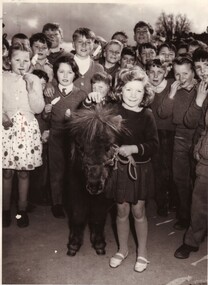
... ...shetland pony...A group of children stand around Annette Myers and her pet Shetland Pony....Verso "Star of the Pet Parade August 20th 1963 Annette Myers was the envy of the school yesterday with her pet Shetland Pony 'Curly Sue'. She took it to Brown Hill State School where she is a student and entered it in a pet and doll parade. ...brown hill brown hill state school annette myers shetland pony Verso "Star of the Pet Parade August 20th 1963 Annette Myers was the envy of the school yesterday with her pet Shetland Pony 'Curly Sue'. ...A group of children stand around Annette Myers and her pet Shetland Pony.Verso "Star of the Pet Parade August 20th 1963 Annette Myers was the envy of the school yesterday with her pet Shetland Pony 'Curly Sue'. She took it to Brown Hill State School where she is a student and entered it in a pet and doll parade. The kids raised 74 pounds for the day"brown hill, brown hill state school, annette myers, shetland pony -
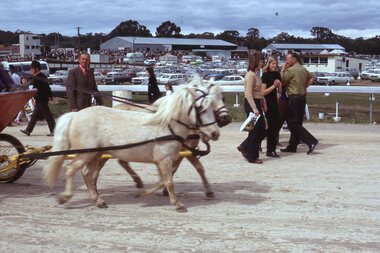 Stawell Historical Society Inc
Slide, Ian McCann, Stawell Show
... Two shetland ponys? pulling stagecoach with people walking behind....Stawell Show Two shetland ponys? pulling stagecoach with people walking behind. ...Two shetland ponys? pulling stagecoach with people walking behind.stawell show -
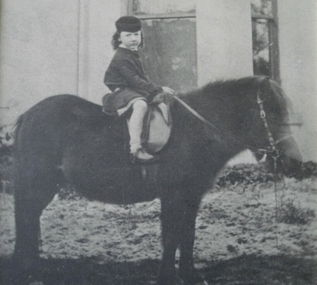 Glen Eira Historical Society
Caulfield Transport
... Photograph of John Lemprerie on the first Hardham, Davided Shetland Pony believed to be King Peppin, date unknown...Caulfield Horses King Peppin Lempriere John Photograph of John Lemprerie on the first Hardham, Davided Shetland Pony believed to be King Peppin, date unknown Caulfield Transport ...Photograph of John Lemprerie on the first Hardham, Davided Shetland Pony believed to be King Peppin, date unknowncaulfield, horses, king peppin, lempriere, john -
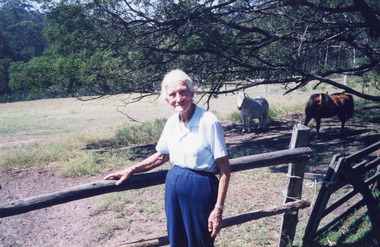 Lakes Entrance Historical Society
Photograph - Maisie Byrne 1998, Lakes Post Newspaper
... Colour photograph of Mrs Maisie Byrne nee Ault with her Shetland ponies at her property Bee Farm Toorloo Arm Victoria...Genealogy Colour photograph of Mrs Maisie Byrne nee Ault with her Shetland ponies at her property Bee Farm Toorloo Arm Victoria Photograph Maisie Byrne 1998 Lakes Post Newspaper ...Colour photograph of Mrs Maisie Byrne nee Ault with her Shetland ponies at her property Bee Farm Toorloo Arm Victoriagenealogy -
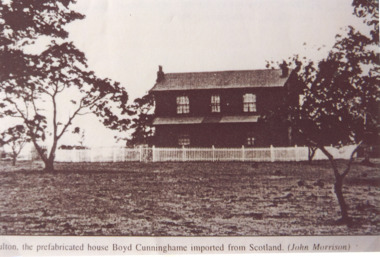 Lakes Entrance Historical Society
Photograph - 'The Fulton Home' Maffra Victoria c1800
... Their only transport was by pony trap, pulled by a pair of Shetland ponies. In the 1930's sugar beet was grown on land in front of the house by Vincent Teychenne of Newry ...Their only transport was by pony trap, pulled by a pair of Shetland ponies. In the 1930's sugar beet was grown on land in front of the house by Vincent Teychenne of Newry Settlement Farming Houses The Fulton pre fabricated house of Boyd Cunninghame, imported from Scotland (John Morrison) Black and white copy of the Fulton home of Boyd Cunninghame on the Sale Maffra Rd Photograph 'The Fulton Home' Maffra Victoria c1800 ...Later owned by 2 Corbett brothers, until mid to late 1940's. Their only transport was by pony trap, pulled by a pair of Shetland ponies. In the 1930's sugar beet was grown on land in front of the house by Vincent Teychenne of Newry Black and white copy of the Fulton home of Boyd Cunninghame on the Sale Maffra RdThe Fulton pre fabricated house of Boyd Cunninghame, imported from Scotland (John Morrison)settlement, farming, houses -
Federation University Historical Collection
Newsclip, Ballarat Courier, Big Cats May Roam Area, 2012
... The article is a response to the findings of Noel Judd of Smythesdale who reported the death of a Shetland pony , and found paw prints of a large cat nearby. ...The article is a response to the findings of Noel Judd of Smythesdale who reported the death of a Shetland pony , and found paw prints of a large cat nearby. ...Dr David Waldron has spent years trawling through government documents and speaking to old farmers and policemen trying to gather as much information as possible for a book on the subject of giant cats. In 2013 his book, co-authored with Simon Townsend, "Snarls from the tea-Tree: A History of Victorian Big cat Folkore" was published.Half a page from an undated Ballarat Courier with information relating to big cats in the Australian bush. It also includes an image of Dr David Waldron. The article is a response to the findings of Noel Judd of Smythesdale who reported the death of a Shetland pony , and found paw prints of a large cat nearby. Dy David Waldron considered plaster casts of the paw print and concluded they were almost certainly not made by a cat.australian animal folklore collections, big cats, smythesdale, waldron, judd -
 Falls Creek Historical Society
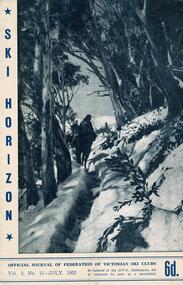
Journal - Ski-Horizon Vol 3 No 11
... However the back inside cover featured an advertisement for Toonallook Romneys and Shetland and Welsh ponies from the Toonallook, Albury which was the property of Fred Griffith. ...However the back inside cover featured an advertisement for Toonallook Romneys and Shetland and Welsh ponies from the Toonallook, Albury which was the property of Fred Griffith. ...Ski-Horizon is the official journal of the Federation of Victorian Ski Clubs which began publication in 1949. The were 26 original member clubs which included Albury Ski Club, Bogong Ski Club, Myrtleford Ski Club, Tallangatta and District Ski Club and Wangaratta Ski Club. Two pioneers of Falls Creek, Tom Mitchell, M.L.A., and Martin Romuld were Vice-Presidents of the Federation.This Journal is significant because it documents the early development of skiing in Victoria.The journal features stories and events chronicling developments in Victoria and internationally. There were no items specifically related to Falls Creek in this issue. However the back inside cover featured an advertisement for Toonallook Romneys and Shetland and Welsh ponies from the Toonallook, Albury which was the property of Fred Griffith. It was frequently the venue for the annual fundraising ball for the Albury Ski Club. tom mitchell m.l.a., toonallook, fred griffith -
 Flagstaff Hill Maritime Museum and Village
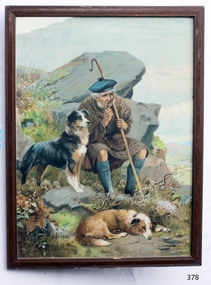
Print - Picture of a Scottish Shepherd and his Two Dogs, A Shepherd and His Friends, 20th Century
... This breed was formally recognized by The Kennel Club (UK) in 1909. Like the Shetland pony, Shetland cattle and the Shetland sheep, the Shetland Sheepdog is a hardy but diminutive breed developed to thrive amidst the harsh and meagre conditions of its native islands. ...This breed was formally recognized by The Kennel Club (UK) in 1909. Like the Shetland pony, Shetland cattle and the Shetland sheep, the Shetland Sheepdog is a hardy but diminutive breed developed to thrive amidst the harsh and meagre conditions of its native islands. ...Shepherding is among the oldest occupations, beginning some 5,000 years ago in Asia Minor. Sheep were kept for their milk, meat and especially their wool. Over the next thousand years, sheep and shepherding spread throughout Eurasia. Henri Fleisch tentatively suggested the Shepherd Neolithic industry of Lebanon may date to the Epipaleolithic and that it may have been used by one of the first cultures of nomadic shepherds in the Beqaa Valley. Some sheep were integrated in the family farm along with other animals such as chickens and pigs. To maintain a large flock, the sheep must be able to move from pasture to another pasture. This required the development of an occupation separate from that of the farmer. The duty of shepherds was to keep their flock intact, protect it from predators and guide it to market areas in time for shearing. In ancient times, shepherds also commonly milked their sheep, and made cheese from this milk; few shepherds still do this today. In many societies, shepherds were an important part of the economy. Unlike farmers, shepherds were often wage earners, being paid to watch the sheep of others. Shepherds also lived apart from society, being largely nomadic. It was mainly a job of solitary males without children, and new shepherds thus needed to be recruited externally. Shepherds were most often the younger sons of farming peasants who did not inherit any land. In other societies, each family would have a family member to shepherd its flock, often a child, youth or an elder who couldn't help much with harder work; these shepherds were fully integrated in society. Shepherds would normally work in groups either looking after one large flock, or each bringing their own and merging their responsibilities. They would live in small cabins, often shared with their sheep, and would buy food from local communities. Less often shepherds lived in covered wagons that travelled with their flocks. Shepherding developed only in certain areas. In the lowlands and river valleys, it was far more efficient to grow grain and cereals than to allow sheep to graze, thus the raising of sheep was confined to rugged and mountainous areas. In pre-modern times shepherding was thus centred on regions such as the Middle East, Greece, the Pyrenees, the Carpathian Mountains, Scotland and Northern England. https://en.wikipedia.org/wiki/Shepherd The Shetland Sheepdog, often known as the Sheltie, is a breed of herding dog that originated in the Shetland Islands of Scotland. The original name was Shetland Collie, but this caused controversy amongst Rough Collie breeders of the time, so the breed's name was formally changed. This diligent small dog is clever, vocal, excitable and willing to please. They are incredibly trustworthy to their owners to the point where they are often referred to as "shadows" due to their attachment to family. This breed was formally recognized by The Kennel Club (UK) in 1909. Like the Shetland pony, Shetland cattle and the Shetland sheep, the Shetland Sheepdog is a hardy but diminutive breed developed to thrive amidst the harsh and meagre conditions of its native islands. While the Sheltie still excels at herding, today it is often raised as a working dog and/or family pet. https://en.wikipedia.org/wiki/Shetland_Sheepdog The Rough Collie (also known as the Long-Haired Collie) is a long-coated dog breed of medium to large size that, in its original form, was a type of collie used and bred for herding sheep in Scotland. More recent breeding has focused on the Collie as a show dog, and also companion. The breed specifications call for a distinctive long narrow tapered snout and tipped (semiprick) ears, so some dogs have their ears taped when young. Rough Collies generally come in shades of sable and white (sometimes mahogany), blue merle, tri-coloured, and colour-headed white. There is a smooth-coated variety known as a Smooth Collie; some breed organisations, including both the American and Canadian Kennel Clubs, consider smooth-coat and rough-coat collies to be variations of the same breed. Rough Collies closely resemble the smaller Shetland Sheepdogs or "Shelties", but the two breeds do not have an exclusive linear relationship. https://en.wikipedia.org/wiki/Rough_Collie This picture shows a typical Scottish scene with a shepherd in kilt and his two sheepdogs.Picture, print of old Scotsman sitting on a stone slab with his dogs nearby. Framed, glass covered colour print. Marked "A SHEPHERD AND HIS FRIENDS", "1897" , "Drummonds" (on picture). Marked "A SHEPHERD AND HIS FRIENDS", "1897" , "Drummonds" (on picture). flagstaff hill, warrnambool, shipwrecked-coast, flagstaff-hill, flagstaff-hill-maritime-museum, maritime-museum, shipwreck-coast, flagstaff-hill-maritime-village, print, picture, wall decoration, shepherd and dogs, a shepherd and his friends, shetland sheep dog, rough collie -
 National Vietnam Veterans Museum (NVVM)
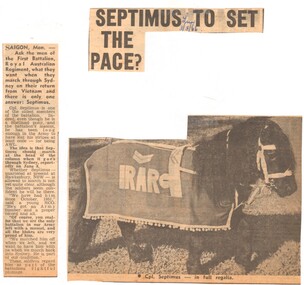
Newspaper, A Newspaper Clipping Titled Septimus To Set The Pace?
... ...Shetland Pony...Newspaper clippings Cpl Septimus - H201 Mascot 1st Battalion Royal Australian Regiment Shetland Pony A Newspaper Clipping Titled Septimus To Set The Pace? ...A Newspaper Clipping Titled Septimus To Set The Pace? When asked what the men of the 1st Battalion, Royal Australian Regiment wanted when they marched through Sydney of their return, the only answer was Cpl Septimus Regimental Number H201. See media for more informationnewspaper clippings, cpl septimus - h201, mascot, 1st battalion, royal australian regiment, shetland pony -
 Ringwood and District Historical Society
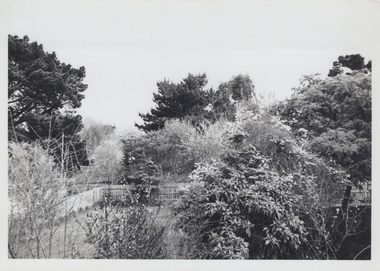
Photograph, Looking towards Mrs Seggie's backyard (used to be a Shetland pony paddock) and the HUGE pine in the Webber's backyard 93 Ringwood Street c1970
... Looking towards Mrs Seggie's backyard (used to be a Shetland pony paddock) and the HUGE pine in the Webber's backyard 93 Ringwood Street c1970...Black and white photograph Looking towards Mrs Seggie's backyard (used to be a Shetland pony paddock) and the HUGE pine in the Webber's backyard 93 Ringwood Street c1970 Photograph ...Black and white photograph
