
Showing 50 items matching "social justice -- australia"
-
 RMIT GSBL Justice Smith Collection
Report, Council for Aboriginal Reconciliation (Australia), Going forward : social justice for the first Australians : a submission to the Commonwealth Government from the Council for Aboriginal Reconciliation, 1995
... ...social justice -- australia...aboriginal australians -- government policy aboriginal australians -- government relations torres strait islanders -- government policy -- australia torres strait islanders -- government relations social justice -- australia ISBN: 0642226423 Going forward : social justice for the first Australians : a submission to the Commonwealth Government from the Council for Aboriginal Reconciliation Report Council for Aboriginal Reconciliation (Australia) Australian Government Publishing Service ...ISBN: 0642226423aboriginal australians -- government policy, aboriginal australians -- government relations, torres strait islanders -- government policy -- australia, torres strait islanders -- government relations, social justice -- australia -
 Hymettus Cottage & Garden Ballarat
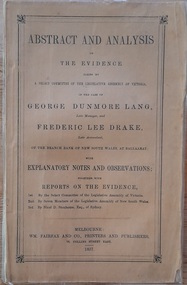
Work on paper - Book, Abstract and Analysis of the Evidence taken by A Select Committee of the Assembly of Victoria in the Case of George Dunmore Lang Late Manager and Frederic Lee Drake Late Assistant of the Bank of New South Wales at Ballaarat
... One of colonial Australia's great movers and shakers and with an eye for opportunity and a great deal of conviction and energy. a Scottish preacher, politician and patriot, he fought many social justice battles in Australia. ...One of colonial Australia's great movers and shakers and with an eye for opportunity and a great deal of conviction and energy. a Scottish preacher, politician and patriot, he fought many social justice battles in Australia. ...Rev John Dunmore Lang's defence of his son who was imprisoned for his part in the fraud at the Bank of New South Wales Ballarat and Clunes in 1854.Small 95 page booklet published in 1857 by Fairfax, Melbourne and inscribed by W. D. Lang.non-fictionRev John Dunmore Lang's defence of his son who was imprisoned for his part in the fraud at the Bank of New South Wales Ballarat and Clunes in 1854.drake, lang, rev john dunmore lang, ballarat, clunes, select committee of enquiry -
 Uniting Church Archives - Synod of Victoria
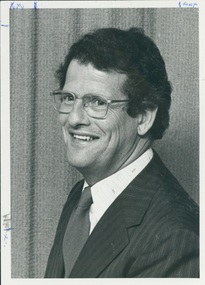
BW photo, c. 1999
... Reverend Brian L Smith, Uniting Church minister 1982, Cloncurry-North West Patrol, Aitkenvale, Executive Officer Social Justice and Chaplaincy South Australia, Frontier Services, Parramatta Regional Mission...Reverend Brian L Smith was ordained Uniting Church minister in 1982 and served at Cloncurry-North West Patrol, Aitkenvale, Ececutive Officer Social Justice and Chaplaincy South Australia, Frontier Services, and Parramatta Regional Mission ...Reverend Brian L Smith was ordained Uniting Church minister in 1982 and served at Cloncurry-North West Patrol, Aitkenvale, Ececutive Officer Social Justice and Chaplaincy South Australia, Frontier Services, and Parramatta Regional Mission Reverend Brian L Smith, Uniting Church minister 1982, Cloncurry-North West Patrol, Aitkenvale, Executive Officer Social Justice and Chaplaincy South Australia, Frontier Services, Parramatta Regional Mission Rev Keith Smith. ...Reverend Brian L Smith was ordained Uniting Church minister in 1982 and served at Cloncurry-North West Patrol, Aitkenvale, Ececutive Officer Social Justice and Chaplaincy South Australia, Frontier Services, and Parramatta Regional Mission Rev. Keith SmithRev Keith Smith. Church and Nation 16 September ? p26reverend brian l smith, uniting church minister 1982, cloncurry-north west patrol, aitkenvale, executive officer social justice and chaplaincy south australia, frontier services, parramatta regional mission -
The Beechworth Burke Museum
Audio - Oral History, Jennifer Williams, Desmond McIntosh, 27 July 2000
... Desmond was an active member of the Beechworth community outside of the Prison in the church and an APEX member (which is a social justice program run across Australia). In prison, he led work programs for the prisoners such as a gardening program where they grew the fresh vegetables and fruit that they would eat. ...Desmond was an active member of the Beechworth community outside of the Prison in the church and an APEX member (which is a social justice program run across Australia). In prison, he led work programs for the prisoners such as a gardening program where they grew the fresh vegetables and fruit that they would eat. ...Desmond (Des) McIntosh was born in Beechworth in the old goldfield’s hospital in 1940. He was the third child born in a family of five children. His great-grandparents moved from Scotland to Yackandandah in the 1930s to pursue wealth in the gold boom, but only just made a living out of it. His grandfather eventually moved and lived in the Woolshed Valley, where Desmond’s parents came from. His family continued to live in the Woolshed Valley as dairy farmers until the 1950s and then moved to Beechworth. Desmond went to school in Wooragee but left when he was 15 to work as a salesman at Freeman’s Store in Beechworth. He worked there for nine years, and then started working in the prison service in Beechworth at what is now known as the Old Beechworth Gaol, or HM Prison Beechworth, where he worked for 27 years. Desmond was an active member of the Beechworth community outside of the Prison in the church and an APEX member (which is a social justice program run across Australia). In prison, he led work programs for the prisoners such as a gardening program where they grew the fresh vegetables and fruit that they would eat. This oral history recording was part of a project conducted by Jennifer Williams in the year 2000 to capture the everyday life and struggles in Beechworth during the twentieth century. This project involved recording seventy oral histories on cassette tapes of local Beechworth residents which were then published in a book titled: Listen to what they say: voices of twentieth century Beechworth. These cassette tapes were digitised in July 2021 with funds made available by the Friends of the Burke.Mr. Desmond McIntosh’s account of his life in Beechworth and the local area during the 20th century is historically and socially significant to the cultural heritage of the region. He details some of the change that occurred across Beechworth over time, as well as details about the management of the Old Goal Beechworth. His account is important to the region's history in terms of social issues and the effect WWII has on Beechworth. This oral history account is socially and historically significant as it is a part of a broader collection of interviews conducted by Jennifer Williams which were published in the book 'Listen to what they say: voices of twentieth-century Beechworth.' While the township of Beechworth is known for its history as a gold rush town, these accounts provide a unique insight into the day-to-day life of the town's residents during the 20th century, many of which will have now been lost if they had not been preserved.This is a digital copy of a recording that was originally recorded on a cassette tape. The cassette tape is black with a horizontal white strip and is currently stored in a clear flat plastic rectangular container. It holds up to 40 minutes of recordings on each side. Mr. Desmond McIntoshlisten to what they say: voices of twentieth century beechworth, beechworth, oral history, burke museum, desmond mcintosh, old goal beechworth, apex, wooragee, hm prison beechworth, woolshed valley, scotland, dairy farmer, freeman's store, gardening, garden, social justive -
 Supreme Court of Victoria Library
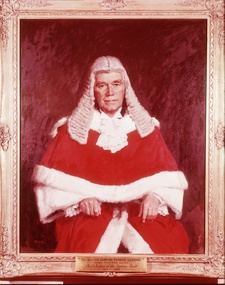
Portrait, Sir Edmund Herring, 1964
... Australian War Memorial and a member of the Melbourne Grammar School Council, as well as Lieutenant Governor of the State of Victoria a position he held from 1945 to 1972. Herring was also an outspoken social critic, between the wars he had been a member of the White Guard, who were a far right group acting against communism. During the Cold War period of the 1950s, Herring spoke out in favour of the British Empire and the American alliance. The portrait of Chief Justice ...The portrait of Chief Justice Sir Edmund Herring is significant because of whom it portrays and who painted it. Sir Edmund Herring (1892-1982), had a military career before becoming the Chief Justice of Victoria in 1944. Sir Edmund served as an artillery officer with the British Army in World War One and was awarded the Military Cross. While he returned to the Law between the wars, becoming Kings Counsel in 1936, he continued his military associations through the Australian Militia forces rising to colonel by the start of the Second World War. At the outset of World War Two Herring was appointed as Commander of the Royal Artillery for the Australian Sixth Division. Herring saw service in North Africa and Greece and was in charge of Australian Northern forces in 1942, afterwards working with General Blamey in Papua New Guinea. It was at this time that Herring confirmed the death sentences of 22 Papuans who had been found guilty of murder and treason. Sir Edmund was appointed Chief Justice, straight from his army command in 1944. As Chief Justice he quickly established the Law Reform Committee and after the war oversaw the extension of the Supreme Court buildings, with the creation of new Courts. He was considered an able administrator, but his refusal to appoint Joan Rosanove a Queen’s Counsel throughout the 1950s, did not sit well with many legal practitioners. After his retirement from the Bench, he continued in his many public activities, including trustee of the Shrine of Remembrance and the Australian War Memorial and a member of the Melbourne Grammar School Council, as well as Lieutenant Governor of the State of Victoria a position he held from 1945 to 1972. Herring was also an outspoken social critic, between the wars he had been a member of the White Guard, who were a far right group acting against communism. During the Cold War period of the 1950s, Herring spoke out in favour of the British Empire and the American alliance. The portrait of Chief Justice Sir Edmund Herring is significant because of whom it portrays and who painted it. The portrait of Sir Edmund Herring is the second one that Sir William Dargie (1912-2003), completed of Sir Edmund, his first effort in 1944/45 won the Archibald prize. Dargie won the Archibald prize a record eight times.Portrait in oils of Sir Edmund Herring, Chief Justice of the Supreme Court of Victoria (1944-1964). Sir Edmund is seated, this is a half portrait, dressed in his red judicial robes. The sitter takes up most of the frame and there is very little extra information in the picture. signed lower left "Dargie'. Plaque with the following details : Sir Edmund Francis Herring, KCMG, KBE, DSO, MC, ED. Chief Justice of the Supreme Court, 1944-1964.judges, herring -
 Orbost & District Historical Society
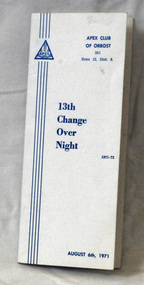
program, 1971
... Apex is a volunteer community service organisation whose members work in local clubs across urban, regional and rural Australia to raise awareness about social justice issues, assist the needy in a practical way and contribute resources to worthwhile causes. ...Apex is a volunteer community service organisation whose members work in local clubs across urban, regional and rural Australia to raise awareness about social justice issues, assist the needy in a practical way and contribute resources to worthwhile causes. ...This program was made for the Orbost Apex Club to be used on the "change over night" of August 6th 1971. Apex Clubs were begun in March 1931 when three young architects, looking to make a contribution to their local community of Geelong Victoria, decided to create Apex. Apex is a volunteer community service organisation whose members work in local clubs across urban, regional and rural Australia to raise awareness about social justice issues, assist the needy in a practical way and contribute resources to worthwhile causes. (ref Apex website)The Apex Club of Orbost was a volunteer service club which contributed to the Orbost community. A declining population has led to the demise of many social groups in the area.A white triple fold cardboard program. It has blue print on the white background.APEX CLUB OF ORBOST 13th Change Over Nightprogram apex service-club -
 Orbost & District Historical Society
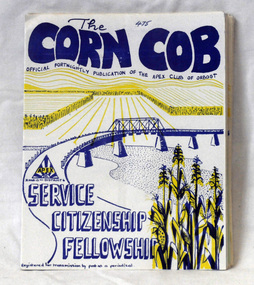
magazines, The Corn Cob, 1976, 1977
... Apex clubs are volunteer service clubs whose members work in local clubs across urban, regional and rural Australia to raise awareness about social justice issues, assist the needy in a practical way and contribute resources to worthwhile causes....Apex clubs are volunteer service clubs whose members work in local clubs across urban, regional and rural Australia to raise awareness about social justice issues, assist the needy in a practical way and contribute resources to worthwhile causes. ...These magazines were published fortnightly and distributed to the members of Orbost Apex Club. Apex clubs are volunteer service clubs whose members work in local clubs across urban, regional and rural Australia to raise awareness about social justice issues, assist the needy in a practical way and contribute resources to worthwhile causes.The Orbost Apex Club was a volunteer service club which contributed to the local community. As the population of the area declined so did the number of social clubs.Thirteen magazines which were a fortnightly publication of the Orbost Apex Club. Titled, The Corn Cob, it has a white cover with blue and yellow print. Inside each cover is duplicated material usually two sheets.On front in pen - the number of the issuemagazines orbost-apex corn-cob -
 Eltham District Historical Society Inc
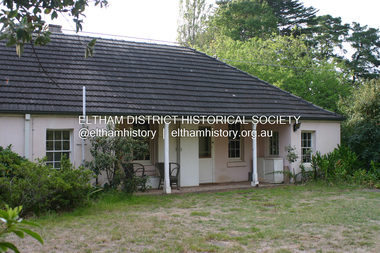
Photograph - Digital Photograph, Alan King, Sweeney's Cottage, Sweeneys Lane, Eltham, 30 January 2008
... It is said the arson was due to a dispute over undelivered guns to a social justice guerilla group, the White Boys, of which Sweeney was a member. But the sentence was commuted to life transportation to Australia in 1823.1 Apparently in Sydney he became a servant to James Chandler at Botany. ...It is said the arson was due to a dispute over undelivered guns to a social justice guerilla group, the White Boys, of which Sweeney was a member. But the sentence was commuted to life transportation to Australia in 1823.1 Apparently in Sydney he became a servant to James Chandler at Botany. ...Part of the original cottage named Culla Hill built by Thomas Sweeney (a former convict) remains as a small section of today’s house. Covered under Heritage Overlay, Nillumbik Planning Scheme National Estate National Trust of Australia (Victoria) Local Sifgnificance Published: Nillumbik Now and Then / Marguerite Marshall 2008; photographs Alan King with Marguerite Marshall.; p19 Thomas Sweeney, a former convict who became a respected citizen, once lived on a property at what is now the corner of Sweeneys Lane and Culla Hill, Eltham. As Sweeney was one of the district’s first settlers, the property is registered by the National Trust. Thomas Sweeney was born in 1802, son of impoverished tenant farmers in Tipperary County, Ireland. He became a ploughman, then at 21 he was sentenced to hang for setting on fire the house of Patrick Guyder at Gullshill. It is said the arson was due to a dispute over undelivered guns to a social justice guerilla group, the White Boys, of which Sweeney was a member. But the sentence was commuted to life transportation to Australia in 1823.1 Apparently in Sydney he became a servant to James Chandler at Botany. Soon James Chandler leased his farm and became a catechist on the Hawkesbury River, so Sweeney was reassigned to a former convict, John Brown, at Liverpool. Later Sweeney was assigned to George Brown of Lake Illawarra. In 1831, Sweeney was granted a ticket-of-leave and bought a boat to carry goods between Illawarra district and Sydney Town. He married his first wife who had come to Australia as a free woman. However she drowned after bearing him a daughter. In 1838, one month after he had received a conditional pardon, Sweeney married a blacksmith’s daughter, Margaret Meehan, newly arrived from Ireland. They then moved to Port Phillip and squatted on the south side of the Yarra River, about seven miles (11km) from Melbourne. Around 1842, Sweeney bought 110 acres (44.5ha) in the parish of Nillumbik for £110. He built a slab hut 12 x 10 feet (3.6m x 3m) and then his homestead, Culla Hill, a typical Tipperary style cottage, now known as Sweeney’s Cottage. It was here that many generations of Sweeneys lived for almost 100 years. Culla Hill became a social centre for the district and the Catholic community used it as a church. Sweeney was apparently on good terms with a tribe of Aborigines living on the river nearby, who helped him build his house.2 Sweeney proved himself a civic-minded leader. In 1844, he led a call for a bridge over the Plenty River. He was on the first school board and supplied the first grain for Eltham’s mill. Sweeney profited during the gold rush, not by gold digging, but by providing supplies for nearby fields and others as far away as Beechworth.3 Thomas Sweeney died in 1867 and was buried at the Eltham Cemetery, leaving two sons, five daughters, and 300 acres (121.4ha), as well as Culla Hill. Culla Hill – by then reduced to 75 acres (30ha) – was sold out of the family in 1939, then renamed Sweeneys. The present Sweeneys Lane, running diagonally through the original holding, was the track to the house. Part of the original cottage remains as a small section of today’s house. The dining-family room fronted by a veranda is original, and although there have been some changes, the cedar door and most of the small 12-paned wooden-framed windows are original. The walls are made of the original hand-made brick. After buying the property in 1952 Mr and Mrs Burston demolished a dilapidated slab hut, a three-roomed detached kitchen and cellar, as materials needed to restore them were very difficult to obtain so soon after the war.4 However the barn remains almost in its original condition. It is believed to have been built from stone quarried on the property. Now roofed with iron sheets it was probably originally thatched. The sandstone barn has a peaked roof supported by the original saplings and a doorway large enough to accommodate a fully loaded wagon.This collection of almost 130 photos about places and people within the Shire of Nillumbik, an urban and rural municipality in Melbourne's north, contributes to an understanding of the history of the Shire. Published in 2008 immediately prior to the Black Saturday bushfires of February 7, 2009, it documents sites that were impacted, and in some cases destroyed by the fires. It includes photographs taken especially for the publication, creating a unique time capsule representing the Shire in the early 21st century. It remains the most recent comprehenesive publication devoted to the Shire's history connecting local residents to the past. nillumbik now and then (marshall-king) collection, culla hill, eltham, sweeney's cottage, sweeneys lane, thomas sweeney -
 Eltham District Historical Society Inc
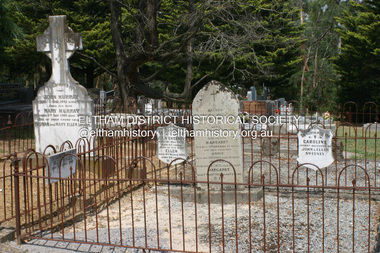
Photograph - Digital Photograph, Alan King, Graves of Thomas Sweeney and family, Eltham Cemetery, Victoria, 27 January 2008
... Justice, Deputy Governor and Treasurer.6 Further south is the grave of social reformer Bertram Wainer, born in Scotland in 1928 and died in 1987. He campaigned to legalise abortion and exposed police corruption in allowing illegal ‘backyard’ abortions. Other prominent local residents interred in the cemetery include: Justus Jörgensen, who founded Montsalvat; Alistair Knox, the mud-brick housing pioneer and Eltham Shire Councillor from 1971 to 1975 and President in 1975; Clem and Nina Christensen, who had a major influence on the literary development of post World War Two Australia. ...Justice, Deputy Governor and Treasurer.6 Further south is the grave of social reformer Bertram Wainer, born in Scotland in 1928 and died in 1987. He campaigned to legalise abortion and exposed police corruption in allowing illegal ‘backyard’ abortions. Other prominent local residents interred in the cemetery include: Justus Jörgensen, who founded Montsalvat; Alistair Knox, the mud-brick housing pioneer and Eltham Shire Councillor from 1971 to 1975 and President in 1975; Clem and Nina Christensen, who had a major influence on the literary development of post World War Two Australia. ...The grave of Thomas Sweeney, former convict turned respectable citizen. The Murray and Sweeney families were both early settlers of the Eltham district and connected by marriage. Their family plots are located side by side in the Catholic section of the Eltham Cemetery. Irish-born Thomas Sweeney is regarded as the first settler in Eltham. He was transported to Sydney in 1823 after being convicted of arson. He was granted his freedom in 1838 and married Margaret Meehan in the same year. They moved to Melbourne and in 1842 Thomas purchased 110 acres beside the Yarra River in the vicinity of present-day Sweeneys Lane. He called the property ‘Culla Hill’ and built a small slab hut (reputedly with Wurundjeri help; Margaret is said to have run an informal hospital for them in return). This was followed in 1846 by more substantial buildings consisting of a three-roomed Irish-style ‘longhouse’ and a barn made of stone and handmade bricks, with doors large enough to accommodate a fully loaded wagon. When the gold rush came, Thomas prospered by selling meat and potatoes to the prospectors, enabling him to purchase a further 308 acres in 1856. He promoted the construction of a bridge over the Plenty River and the establishment of a school at Eltham. Roman Catholic Church services were held at Culla Hill in the early years. When he died in 1867, he was regarded as a respected member of the community. Thomas and Margaret are buried in Eltham Cemetery with many of their descendants. Their first son John continued to farm Culla Hill until his death in 1909. Culla Hill passed out of the Sweeneys' possession in 1939. The house and barn remain today, though lesser outbuildings have gone. The facade of the house is much the same as it was in the 1840s. Sacred To the memory of Thomas Sweeney Who died Sep 6th 1867 Aged 65 years May his soul res in peace Also his wife Margaret Died Oct 3rd 1884 aged 73 years And their daughters Annie Died Aug 22nd 1860 aged 21 years Johanna Died Aug 19th 1872 aged 22 years Margaret Died 7th Sep 1913 aged 72 years R.I.P. Also In Memory Of John Sweeney Died 24th May 1909 Aged 65 years Also of his wife Ellen Died 8th March 1910 Aged 64 years R.I.P Also In Memory Of Caroline Infant daughter of John & Ellen Sweeney Published: Nillumbik Now and Then / Marguerite Marshall 2008; photographs Alan King with Marguerite Marshall.; p55 From the piety and poverty of 19th century Eltham, 20th century artists and environmentalists, to today’s comfortable middle class, Eltham Cemetery records it all — and more. A visit to Eltham Cemetery reveals an important social record since its beginnings in 1858. The cemetery was situated on about six acres (2.4ha) (now around 4.8ha) at the corner of Mount Pleasant and Metery Roads.1* It is thought that Metery Road was originally called Cemetery Road, but in the early 1940s, a resident, possibly a councillor, objected to the name resulting in the change.2 Much can be gleaned about the developing Eltham community from burial styles and the names of former local residents. Originally the cemetery was divided into Christian denominations, like others of that time, following the United Kingdom burial system. In 1861 the cemetery included Church of England, Presbyterian, Roman Catholic and Wesleyans (later Methodist) sites. Graves also indicated social class. Some had grand tombstones, perhaps fenced with ornamental cast iron railing, but most in the 1860s and 1870s were constructed of modest stone slabs.3 This indicated the poverty of the district, which was largely inhabited by farmers on small landholdings. A poignant reminder of the high rates of infant mortality of those times, are the many infants and young children recorded on the headstones. Major changes occurred in the cemetery in the late 20th century as Christian adherence weakened and society became more egalitarian and informal. In the early 1970s a non-denominational lawn section for burials was established. Since then all new areas have been non-denominational to accommodate the more diverse local community. Now, instead of large ornamental headstones, some mourners have chosen boulders, reflecting the natural Eltham style, while others choose graves in the lawn areas or niches in walls. In the late 1970s, the University Donor Section was established north-west of Candlebark Lawn for those who donated their bodies for The University of Melbourne medical research. In the early 1980s the natural Australian garden style, popular in Eltham, was mirrored in a new section called Ashes Walk. Local landscape architect Gordon Ford, who had popularised this style, designed the Walk using boulders shaded by native plants beside curved pathways. Landscape architect Robert Boyle later redesigned Ashes Walk and developed other parts of the cemetery in keeping with this style.4 Appropriately Ford, who died in 1999, was interred in the Native Garden Section in a cluster of sites shaded by a large eucalyptus tree.5 By 2007, about 6400 interments were recorded in the Eltham Cemetery. Close inspection reveals notable names in the district’s history. The grave of Thomas Sweeney, a former convict who became a respected citizen, can be found in the Roman Catholic section near the path. Eltham Primary School’s first headmaster, David Clark, is buried in a modest grave in the Church of England section to the east of the path from the main entrance. Sir William Irvine, Victorian Premier from 1900 to 1902, whose grave is in the north-east Presbyterian section was at various times Victoria’s Chief Justice, Deputy Governor and Treasurer.6 Further south is the grave of social reformer Bertram Wainer, born in Scotland in 1928 and died in 1987. He campaigned to legalise abortion and exposed police corruption in allowing illegal ‘backyard’ abortions. Other prominent local residents interred in the cemetery include: Justus Jörgensen, who founded Montsalvat; Alistair Knox, the mud-brick housing pioneer and Eltham Shire Councillor from 1971 to 1975 and President in 1975; Clem and Nina Christensen, who had a major influence on the literary development of post World War Two Australia. Others were: composer Dorian Le Gallienne; artist Peter Glass; Stephen Dattner, a prominent Melbourne furrier; ALP parliamentarian for Greensborough, Pauline Toner and political scientist and commentator, Professor William Macmahon Ball.This collection of almost 130 photos about places and people within the Shire of Nillumbik, an urban and rural municipality in Melbourne's north, contributes to an understanding of the history of the Shire. Published in 2008 immediately prior to the Black Saturday bushfires of February 7, 2009, it documents sites that were impacted, and in some cases destroyed by the fires. It includes photographs taken especially for the publication, creating a unique time capsule representing the Shire in the early 21st century. It remains the most recent comprehenesive publication devoted to the Shire's history connecting local residents to the past. nillumbik now and then (marshall-king) collection, annie sweeney, caroline sweeney, ellen sweeney, eltham cemetery, graves, gravestones, johanna sweeney, john murray, john sweeney, margaret sweeney, mary ellen drain, mary murray, thomas murray, thomas sweeney -
 Eltham District Historical Society Inc
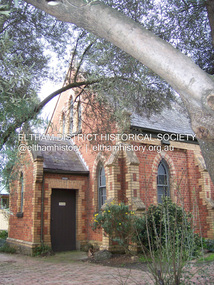
Photograph - Digital Photograph, Marguerite Marshall, Uniting Church, Main Road, Eltham, 19 August 2008
... social justice action, such as in Jubilee 2000, supporting debt relief to the world’s 45 poorest countries. Some of the many church members who have had an outstanding impact on the wider community include Philip Shillinglaw, farmer and poet, and Arthur Bird (after whom the Arthur Bird Reserve is named), a pioneer orchardist and the Sunday School Superintendent for 33 years. Others were: the Rev Dr Cliff Wright, who established the Methodist Youth Fellowship and was prominent in the World Council of Churches, the Rev Brian Howe, who became Deputy Prime Minister and Tim Marshall, awarded the Order of Australia...social justice action, such as in Jubilee 2000, supporting debt relief to the world’s 45 poorest countries. Some of the many church members who have had an outstanding impact on the wider community include Philip Shillinglaw, farmer and poet, and Arthur Bird (after whom the Arthur Bird Reserve is named), a pioneer orchardist and the Sunday School Superintendent for 33 years. Others were: the Rev Dr Cliff Wright, who established the Methodist Youth Fellowship and was prominent in the World Council of Churches, the Rev Brian Howe, who became Deputy Prime Minister and Tim Marshall, awarded the Order of Australia ...Eltham's original Wesleyan Methodist Church Covered under Heritage Overlay, Nillumbik Planning Scheme. Published: Nillumbik Now and Then / Marguerite Marshall 2008; photographs Alan King with Marguerite Marshall.; p97 The pretty Uniting Church building at the corner of John and Main Roads Eltham has served the community since 1881.1 Originally called the Eltham Wesleyan Church, the church became the Eltham Methodist Church in 1902, the year it united with the Primitive Methodists.2 As the church community developed, influencing and being influenced by the wider community, its buildings changed accordingly. Eltham Wesleyans first worshiped together in 1850 at the home of William and Mary Crozier on 24 acres (9.7ha) bounded by Mount Pleasant Road and Pitt Street. From 1855 the Wesleyans worshipped in a slab-and-bark hut; then in 1858 in a chapel on Henry Street close to Maria Street (now Main Road). Meanwhile, in 1860, the Primitive Methodists opened a brick chapel at the corner of Susan and Bridge Streets. The John Street building – in the Early English Gothic style with biochrome brick window frames, buttress heads and pinnacle – was designed by architects Crouch and Wilson. Church member George Stebbing built the church as he did Eltham’s St Margaret’s Anglican Church and Shillinglaw Cottage. The Church Honour Roll is a poignant reminder of how church members have served the wider community: 27 members enlisted and 11 died in World War One. Despite the Great Depression, 1931 was a time of expansion for the church. Its red-brick hall was opened by prominent Methodist and philanthropist F J Cato of the Moran and Cato Grocery chain. The hall enabled the church to attract people from outside through activities like its gymnasium – with 40 boys and youth participating – and the girls’ callisthenics club, which competed at the Ballarat South Street Competitions. The church also held concerts, bazaars, picnics and sports, with badminton and tennis played on the church court at 23 John Street. Two stained-glass windows commemorate tragic events. A dove representing the Holy Spirit and Comforter marked the death in 1936 of member Effie Lowerson from scarlet fever at 14 years. The other depicting the Biblical story A sower went forth to sow, commemorates Ross Gangell, who died in 1961 at 23 years of a rare blood condition. Eltham’s population expanson resulted in the growth of the church and an extension in 1971, designed by member and architect Colin Jones. The church was linked to the hall and additions included a foyer, vestry, meeting room and toilets. The design reflected the Eltham style of the time, with its simplicity, extensive clear glass, reused baked clay-bricks from the 1881 church, heavy ceiling beams and solomite (compressed straw) ceiling. On June 26, 1977 the church became part of the new Uniting Church in Australia consisting of the former Methodist and Congregational and most of the Presbyterian Churches. In 1981 membership peaked at 159 – about 20 years after most Protestant churches – and continued to reach out to the wider community.3 In 1987, 147 children attended Selihoo, the weekly after-school program organised with St Margaret’s Anglican Church. From 1993, the church with other local churches, participated in LINC (Love in the Name of Christ), helping the wider community in various ways including babysitting, transport, gardening and visiting. Despite such initiatives, church numbers declined, and on June 23, 1996, the church merged with the Montmorency Uniting Church.4 However, the church continued to proclaim its message of love in community service and strong social justice action, such as in Jubilee 2000, supporting debt relief to the world’s 45 poorest countries. Some of the many church members who have had an outstanding impact on the wider community include Philip Shillinglaw, farmer and poet, and Arthur Bird (after whom the Arthur Bird Reserve is named), a pioneer orchardist and the Sunday School Superintendent for 33 years. Others were: the Rev Dr Cliff Wright, who established the Methodist Youth Fellowship and was prominent in the World Council of Churches, the Rev Brian Howe, who became Deputy Prime Minister and Tim Marshall, awarded the Order of Australia in 2000 for his work on salinity.This collection of almost 130 photos about places and people within the Shire of Nillumbik, an urban and rural municipality in Melbourne's north, contributes to an understanding of the history of the Shire. Published in 2008 immediately prior to the Black Saturday bushfires of February 7, 2009, it documents sites that were impacted, and in some cases destroyed by the fires. It includes photographs taken especially for the publication, creating a unique time capsule representing the Shire in the early 21st century. It remains the most recent comprehenesive publication devoted to the Shire's history connecting local residents to the past. nillumbik now and then (marshall-king) collection, eltham uniting church, eltham methodist church -
 Yarra City Council
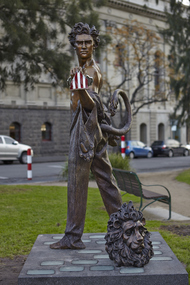
Sculpture - Figurative, William Eicholtz, Courage, 2014
... 'Courage' honours the contribution, culture and diversity of the Gay, Lesbian, Bisexual, Transgender, Intersex and Queer (GLBTIQ) community, and is dedicated to the legacy of Ralph McLean (1957–2010), Australia’s first openly gay elected official (City of Fitzroy, 1982) and Mayor (1984), an advocate for gay rights and social justice, and a champion of the arts....'Courage' honours the contribution, culture and diversity of the Gay, Lesbian, Bisexual, Transgender, Intersex and Queer (GLBTIQ) community, and is dedicated to the legacy of Ralph McLean (1957–2010), Australia’s first openly gay elected official (City of Fitzroy, 1982) and Mayor (1984), an advocate for gay rights and social justice, and a champion of the arts. ...'Inspired by the iconic character of the Cowardly Lion in the story 'The Wonderful Wizard of Oz' and his contemplation of what it means to possess the courage to be yourself, no matter who you are.''Courage' honours the contribution, culture and diversity of the Gay, Lesbian, Bisexual, Transgender, Intersex and Queer (GLBTIQ) community, and is dedicated to the legacy of Ralph McLean (1957–2010), Australia’s first openly gay elected official (City of Fitzroy, 1982) and Mayor (1984), an advocate for gay rights and social justice, and a champion of the arts.Bronze statue of a male figure half dressed in a lion costume holding a medal of bravery with a lions head/mask resting on his foot. Accompanying plaquelgtbqia+, wizard oz, ralph mclean, eicholtz -
 Galen Catholic College
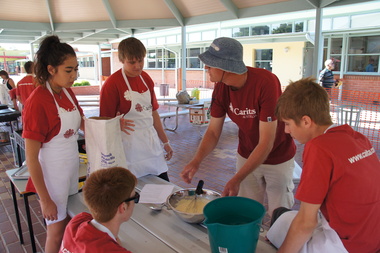
Caritas Australia Fundraiser, 2014
... Australia...Fundraising...Social Justice...Galen Catholic College students and staff have often been actively involved in social justice initiatives. These photos show students volunteering in a Caritas Australia fundraiser, with the proceeds going to those in greatest need....Galen Catholic College Galen College Caritas Australia Fundraising Social Justice Volunteering 2014. Caritas Australia Fundraiser, 2014. ...Galen Catholic College students and staff have often been actively involved in social justice initiatives. These photos show students volunteering in a Caritas Australia fundraiser, with the proceeds going to those in greatest need.galen catholic college, galen college, caritas australia, fundraising, social justice, volunteering, 2014. -
 Warrnambool and District Historical Society Inc.
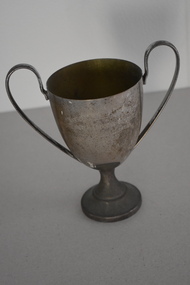
Trophy, W&D United Friendly Benefit Quoits 1933, 1933
... social reasons and to assist members in times of sickness or to provide insurance in case of illness or hardship. Other societies had specific aims such as the promotion of temperance or allegiance to a particular church or country. The Australian Natives Association (A.N.A.) the winner of this trophy was set up in Warrnambool in the late 19th century and it was an active society with regular meetings, discussion groups, lectures and campaigns for the social justice issues of the day. ...social reasons and to assist members in times of sickness or to provide insurance in case of illness or hardship. Other societies had specific aims such as the promotion of temperance or allegiance to a particular church or country. The Australian Natives Association (A.N.A.) the winner of this trophy was set up in Warrnambool in the late 19th century and it was an active society with regular meetings, discussion groups, lectures and campaigns for the social justice issues of the day. ...This is a trophy awarded by an association of Friendly Societies in Warrnambool in 1933. Friendly or Benefit Societies have operated in Warrnambool since 1860 when the Manchester Unity Independent Order of Oddfellows Lodge was formed. Benefit societies such as this were set up mainly for social reasons and to assist members in times of sickness or to provide insurance in case of illness or hardship. Other societies had specific aims such as the promotion of temperance or allegiance to a particular church or country. The Australian Natives Association (A.N.A.) the winner of this trophy was set up in Warrnambool in the late 19th century and it was an active society with regular meetings, discussion groups, lectures and campaigns for the social justice issues of the day. The A.N.A. in Australia was influential in promoting nationalism and campaigning for Federation. The A.N.A merged with the M.U.I.O.O.F some years ago and operates today as the benefit group, Australia Unity. The trophy won by A.N.A. in 1933 was for quoits, a popular indoor game in the 1930s and still played today, mainly on social occasions. This trophy is of interest as it dates from the 1930s and is connected with the Warrnambool Friendly Societies of the time and especially the Australian Natives Association (A.N.A.)This is an electro plated nickel silver cup with two side handles, a short stem and a round silver base. An inscription is on one side of the cup. The cup is much stained. ‘Warrnambool & District United Friendly Benefit Societies Association Quoits 1933 Won by A.N.A.’friendly societies warrnambool, australian natives association warrnambool -
 Victorian Aboriginal Corporation for Languages
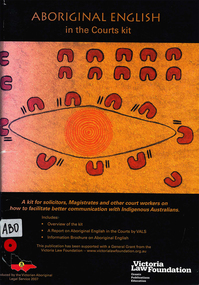
Kit, Victorian Aboriginal Legal Service et al, Aboriginal English in the courts kit : a report on Aboriginal English in the courts, 2007
... Australia. Aboriginal Australians -- Social life and customs. Law -- Australia -- Language -- Handbooks...manuals...etc. Aboriginal Australians -- Criminal justice...Australians -- Social life and customs. Law -- Australia -- Language -- Handbooks manuals etc. Aboriginal Australians -- Criminal justice system. tables, sample legal letters, pamphlets, information card The overall objective of this report is to collate information about Aboriginal English in order to inform future staff training and resources for people working in the courts, including solicitors and magistrates. ...The overall objective of this report is to collate information about Aboriginal English in order to inform future staff training and resources for people working in the courts, including solicitors and magistrates. Features Radio National transcript from Lingua Franca program, and content by Diane Eades.tables, sample legal letters, pamphlets, information cardaustralia -- trials, litigation, etc. english language -- dialects -- australia. aboriginal australians -- social life and customs. law -- australia -- language -- handbooks, manuals, etc. aboriginal australians -- criminal justice system. -
 Robin Boyd Foundation
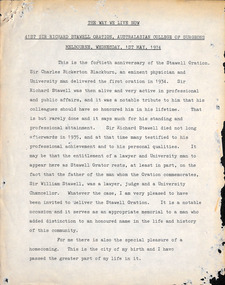
Document - Manuscript, Zelman Cowen, The Way We Live Now, 1974
... This is a speech – 41st Sir Richard Stawell Oration, Australian College of Surgeons, Melbourne 01.05.1974 Sociological jurisprudence law ethics politics Social history Authority Justice Richard Stawell Zelman Cowen Typewritten, quarto, 34 pages The Way We Live Now Document Manuscript Zelman Cowen ...The is a speech given by Zelman Cowen in Melbourne, on Wednesday 1st May 1974 for the 41st Sir Richard Stawell Oration, Australian College of Surgeons. This may have been sent to Patricia Boyd since the Zelman Cowen was a long time friend of the family.This is a speech – 41st Sir Richard Stawell Oration, Australian College of Surgeons, Melbourne 01.05.1974Typewritten, quarto, 34 pagessociological jurisprudence, law, ethics, politics, social history, authority, justice, richard stawell, zelman cowen -
 Uniting Church Archives - Synod of Victoria
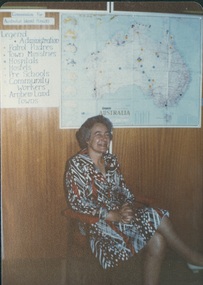
Colour photo, Prior to 1977
... Australia and to return to their homes as trained teachers and theologians. Up until recently she was involved in the Spina Bifida and Hydro Cephalis Association of SA. By the time she had taken up with the AIM Frances had a well tuned desire for social justice. ...Australia and to return to their homes as trained teachers and theologians. Up until recently she was involved in the Spina Bifida and Hydro Cephalis Association of SA. By the time she had taken up with the AIM Frances had a well tuned desire for social justice. ...Everyone seemed to know Frances – it was November 1985 – I met Frances at the Victorian Synod office as she lent me her office to interview staff for St Philip’s which I was taking over in 1986. The interviews completed, she took me to a nearby coffee shop where we had a delightful chat. I came away much the richer, more informed about St Philip’s and feeling I had known Frances forever. And so started our 23 year friendship, with me hearing the first of many stories – for Frances was a wonderfully gifted story teller with a capacity to turn the past into life, and its characters into real people. It seems fitting that a person destined to add to Australia’s history should be born down the beach from Mendonca’s Mahogany ship – Port Fairy on the 28 January 1924. There she went to school – first to primary school then to Camperdown’s Higher Elementary School which went to Year 10. She was the eldest of four children with three brothers, Jock, Norman and Rod. After Year 10, Frances took a job in Camperdown as a dental nurse. She tackled this successfully until deciding to study at Rolland House in Carlton to become a Deaconess. Jock, her brother, recalls asking Frances what made her decide to be a Deaconess. At a Presbyterian Fellowship camp at Warrnambool, Frances and the others were sleeping in the Church Hall on palliases. During the night she awoke and her eye was drawn to a stained glass window, unusually brightly lit. On the window were the words “Follow Me”. Without flinching Frances took the words to heart and decided to serve God as a Deaconess, and during her time with the Australian Inland Mission she became quite a legend. What a patriot Frances was! She loved the stories of pioneers and knew well the history of where she had come from – the Western District. A keen follower of cricket, she would be right up with the last test and the issues of the team. Originally a Melbourne football supporter, she became an avid Geelong supporter and would often score at the annual self destruct St Philip’s vs Flynn Church match. She loved the gladiatorial, albeit often suicidal display. And though an Aussie through and through she loved her Scottish roots. Through her stories, she could easily transport a person in the Centralian landscape onto the heather of the Highlands. In spite of her love for Scotland, the city which was her favourite was New York. Frances – truly a citizen of the world. As a citizen of the world Frances fought for Indigenous and migrant women’s rights and was active in the World Council of Churches, sponsoring local and overseas women to study in Australia and to return to their homes as trained teachers and theologians. Up until recently she was involved in the Spina Bifida and Hydro Cephalis Association of SA. By the time she had taken up with the AIM Frances had a well tuned desire for social justice. To her it was important that the poor and less fortunate were given a go. She felt that the Labor Party provided her best avenue to push her social justice desires. After joining the party in 1956, she quickly became a respected member of the party and worked tirelessly for it, being honoured in the end with life membership. In the party she knew everyone and everyone knew her. She introduced me to Bob Hawke and when I spoke to Gough Whitlam once on a plane, he affirmed to me his friendship with Frances. In her cottage was a picture of her with Kevin Rudd with his arm around her. She is remembered by her party colleagues as someone who had a real compassion for helping people. She believed in the traditional ethic of the Labor Party which is to help those who are less fortunate. Interestingly, she supported St Philip’s moving from solely being a residential college to a school because we had chosen a relatively low fee base to enable maximum access for people and our boarding house continued to, and still does, offer accommodation to any student wishing to attend schools in Alice. Having supported the outback for years from the engine rooms of the mission arm of the church in Victoria, Frances then decided to move to Alice for her retirement. Settling in the little cottage at the far south eastern corner of Old Timers, this became to me, my family and I’m sure to plenty of people, Frances’ Cottage. But moving to Alice was hardly moving into retirement. She quickly became Chaplain at St Philip’s where she clearly showed her love for the children and staff and a real belief in St Philip’s role – to provide access to education for isolated children. She became a stalwart of the Adelaide House Museum, a wonderful member of the congregation, a powerful contributor to the Presbytery and the Annual Synod. Frances was strong, never flinched on a point of principle and discussed things face to face so that you truly knew where you stood with her. She had a great feeling for the pastoralists and knew many of them well. As Chaplain of the College she related well to the children and in addition, knew many of their families. She also felt deeply for the Indigenous people and regularly tackled the issue of how conditions could be improved for them. As we developed the school at St Philip’s, Frances worked with me on so many things. She would visit the College each week for Chapel, run a Sunday school for little kids and the service for all the boarders. When the school was ready to start she wrote the College prayer, said now every week by all students. The prayer says so much about Frances. She pioneered the RE program, teaching RE and in addition to Sunday, visited staff and students every Wednesday. At Presentation Night she presented a homily and provided the blessing – always a strong presence in front of the College community. She was so much part of St Philip’s that when we built the new boarding house in 1990 it seemed so obvious to call it McKechnie House. As a faithful servant of Adelaide House for years and an enthusiastic member of the National Trust, Frances was the first chairperson of the committee, a driving force to redevelop Adelaide House and she worked tirelessly to present John Flynn’s Hospital in the best light. She helped to deliver the stories of Flynn and McKay and the Outback missionaries to so many people and was instrumental in producing meaningful displays. I enjoyed walking around the museum with her intensely, enjoying her detailed stories of the past missionary era and I know many others would have as well. As a loyal and loving member of the Flynn Church, and being such a comrade of Fred McKay’s, Frances understood intricately the symbols which lie within the architecture. Once again, as a story teller, each one had a yarn attached to it. Over her twenty-three years as a member of the Flynn Church she has made a wonderful contribution. As a charismatic personality people were naturally attracted to Frances and were touched and affected by her. Peter Robson, twenty-two years at St Philip’s, remembers her asking him why he had stayed so long at the College. He explained to her that it was her address one day in Chapel in the early times that inspired him to keep going. With great wisdom she had said, “You can’t conquer something, unless you allow it to conquer you.” St Philip’s had conquered him. Wherever she went, whomever she was with, she had a real and lasting impact. Frances brought the reality of the Outback to so many as she addressed congregations around Victoria. She started the Australian Church Women’s Fellowship in the Northern Territory in 1997. She was also involved in setting up the Institute for Aboriginal Development. I believe that Frances should have been recognised nationally for her work with an AM. However, she was the Northern Territory finalist in the Senior Australian of the Year Awards in 2003. In 2004 she was awarded an OBE – not from the Queen but at Old Timers. This is a coveted award which means “Over Bloody Eighty”. Frances was part of it all, in the river, at a bush dance, at a dinner, at a service, at a party, at a meeting, at a footy game, at a cricket game, at Synod, at Presbytery, at Labour meetings, I could go on. Frances McKechnie, what a wonderful Australian. (Eulogy by Chris Tudor) Frances McKechnie died mid-2008. Deaconess Frances McKechnie is seated in front of a map of Australia marked with Australian Inland Mission places identified.At the time the photo was taken, McKechnie was the Victorian Regional Officer for the Australian Inland Mission (Presbyterian). At one stage, she worked for National Mission Frontier Services from 1968 to 1986. See below for the eulogy at her funeral by Chris Tudor. (Frances died May or June 2008.)deaconess frances mckechnie; australian inland mission; presbyterian church -
 Uniting Church Archives - Synod of Victoria
Bw photo, Undated
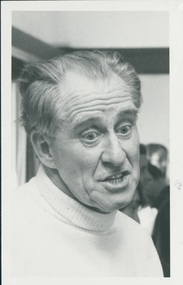
... social activism. He knew the certainty that without justice there can be no peace, within, or between, communities and nations. He was greatly influenced by ''liberation theology'' and framed his life of thought, analysis and action on the teachings of the Bible. He was also a visionary in working closely with Asian churches on ecumenical and social justice issues in a way that anticipated by decades the closer relationships Australia...social activism. He knew the certainty that without justice there can be no peace, within, or between, communities and nations. He was greatly influenced by ''liberation theology'' and framed his life of thought, analysis and action on the teachings of the Bible. He was also a visionary in working closely with Asian churches on ecumenical and social justice issues in a way that anticipated by decades the closer relationships Australia ...Harvey Perkins was a Methodist minister and a peacemaker throughout his life of service and social activism. He knew the certainty that without justice there can be no peace, within, or between, communities and nations. He was greatly influenced by ''liberation theology'' and framed his life of thought, analysis and action on the teachings of the Bible. He was also a visionary in working closely with Asian churches on ecumenical and social justice issues in a way that anticipated by decades the closer relationships Australia now enjoys with Asia. He understood that any form of intervention altered the power relationship within a community and often challenged the dominant social interests in the post-colonial Asian countries. He knew any form of aid had to empower its recipients and be based on a partnership of equality. In the early 1960s, Perkins was an opponent of the war in Indochina and conscription in Australia and played an important role in activating congregations to protest against the war. His keen intelligence, knowledge of history and analytical skills demolished the false foundation on which the US and its allies entered the war and he organised medical and social work teams in South Vietnam and Laos to help refugees and displaced persons. In the 1970s Perkins played an important role in ''decolonising'' and devolving power in the Methodist Church missions in Aboriginal Australia and the Pacific Islands by analysing power structures and relationships through what he had learnt in Asia. Harvey Perkins and his twin sister, Jean, were born in Tasmania on January 29, 1919, children of Leslie Perkins and his wife, Doris (nee Cook). Leslie was a Methodist minister and Harvey and Jean's childhood was spent in parishes in urban and rural areas of Tasmania and Victoria. The family saw the grinding poverty and desperate human need wrought by the Depression as a ceaseless tide of people came knocking at the door of the local parsonage for help. In 1941, Perkins enlisted as an officer in the Australian Navy and served in the Pacific theatre until 1946. To his children, he explained his justification as being the real threat of invasion but it was a war that altered the direction of his life. On discharge he abandoned his completed studies at Melbourne University in law and commerce and studied for a degree in divinity. He was active in the World Student Christian Federation and in 1949, was ordained into the Methodist Church. A few years later, Perkins travelled to a World Student Christian Federation conference in Canada, on his way to study in Cambridge, and met an expatriate, Jill McCrory. They married in 1953. After Cambridge, Perkins returned to Australia and served as a minister in the Mitcham area of the growing Melbourne outer suburbs until 1956, when he was appointed General Secretary of the Australian Council of Churches and director of the Inter-Church Aid and Refugee World Service. From 1968 to 1971, Perkins worked with the East Asian Christian Conference and then took a position with the World Council of Churches in Geneva with its Commission on Churches Participation in Development. He returned to Australia in 1973 to a position with the Methodist Board of Missions and then returned to the Christian Conference of Asia in 1976 and relocated to Singapore for several years. Before retiring in 1984 he worked with the Uniting Church Board of Social Responsibility. In retirement Perkins continued to work in the Dee Why parish, enjoying preaching, leading study groups and working as a pastor in a local community. Along with his work, Perkins had a lifelong passion for AFL and his beloved team North Melbourne. Wherever he was in the world he could be found fiddling with a short-wave radio to listen to a game. In later years, Perkins developed Alzheimer's and his home became his haven until two weeks before his death. Harvey Perkins is survived by Jill, children Mary, Ro, David, Marguerite, Anna, Harvey and Kate and their partners, 13 grandchildren and two great-grandchildren. Jean died in 1981. (Obituary in the SMH by David Perkins) Head and shoulders portrait of Rev. Harvey PerkinsRev. Harvey Perkinsrev. harvey perkins; methodist minister; christian conference of asia; australian council of churches -
 Uniting Church Archives - Synod of Victoria
BW photo, Undated
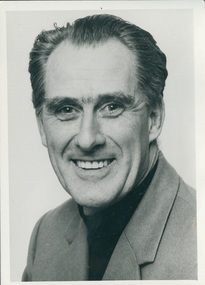
... social activism. He knew the certainty that without justice there can be no peace, within, or between, communities and nations. He was greatly influenced by ''liberation theology'' and framed his life of thought, analysis and action on the teachings of the Bible. He was also a visionary in working closely with Asian churches on ecumenical and social justice issues in a way that anticipated by decades the closer relationships Australia...social activism. He knew the certainty that without justice there can be no peace, within, or between, communities and nations. He was greatly influenced by ''liberation theology'' and framed his life of thought, analysis and action on the teachings of the Bible. He was also a visionary in working closely with Asian churches on ecumenical and social justice issues in a way that anticipated by decades the closer relationships Australia ...Harvey Perkins was a Methodist minister and a peacemaker throughout his life of service and social activism. He knew the certainty that without justice there can be no peace, within, or between, communities and nations. He was greatly influenced by ''liberation theology'' and framed his life of thought, analysis and action on the teachings of the Bible. He was also a visionary in working closely with Asian churches on ecumenical and social justice issues in a way that anticipated by decades the closer relationships Australia now enjoys with Asia. He understood that any form of intervention altered the power relationship within a community and often challenged the dominant social interests in the post-colonial Asian countries. He knew any form of aid had to empower its recipients and be based on a partnership of equality. In the early 1960s, Perkins was an opponent of the war in Indochina and conscription in Australia and played an important role in activating congregations to protest against the war. His keen intelligence, knowledge of history and analytical skills demolished the false foundation on which the US and its allies entered the war and he organised medical and social work teams in South Vietnam and Laos to help refugees and displaced persons. In the 1970s Perkins played an important role in ''decolonising'' and devolving power in the Methodist Church missions in Aboriginal Australia and the Pacific Islands by analysing power structures and relationships through what he had learnt in Asia. Harvey Perkins and his twin sister, Jean, were born in Tasmania on January 29, 1919, children of Leslie Perkins and his wife, Doris (nee Cook). Leslie was a Methodist minister and Harvey and Jean's childhood was spent in parishes in urban and rural areas of Tasmania and Victoria. The family saw the grinding poverty and desperate human need wrought by the Depression as a ceaseless tide of people came knocking at the door of the local parsonage for help. In 1941, Perkins enlisted as an officer in the Australian Navy and served in the Pacific theatre until 1946. To his children, he explained his justification as being the real threat of invasion but it was a war that altered the direction of his life. On discharge he abandoned his completed studies at Melbourne University in law and commerce and studied for a degree in divinity. He was active in the World Student Christian Federation and in 1949, was ordained into the Methodist Church. A few years later, Perkins travelled to a World Student Christian Federation conference in Canada, on his way to study in Cambridge, and met an expatriate, Jill McCrory. They married in 1953. After Cambridge, Perkins returned to Australia and served as a minister in the Mitcham area of the growing Melbourne outer suburbs until 1956, when he was appointed General Secretary of the Australian Council of Churches and director of the Inter-Church Aid and Refugee World Service. From 1968 to 1971, Perkins worked with the East Asian Christian Conference and then took a position with the World Council of Churches in Geneva with its Commission on Churches Participation in Development. He returned to Australia in 1973 to a position with the Methodist Board of Missions and then returned to the Christian Conference of Asia in 1976 and relocated to Singapore for several years. Before retiring in 1984 he worked with the Uniting Church Board of Social Responsibility. In retirement Perkins continued to work in the Dee Why parish, enjoying preaching, leading study groups and working as a pastor in a local community. Along with his work, Perkins had a lifelong passion for AFL and his beloved team North Melbourne. Wherever he was in the world he could be found fiddling with a short-wave radio to listen to a game. In later years, Perkins developed Alzheimer's and his home became his haven until two weeks before his death. Harvey Perkins is survived by Jill, children Mary, Ro, David, Marguerite, Anna, Harvey and Kate and their partners, 13 grandchildren and two great-grandchildren. Jean died in 1981. (Obituary in the SMH by David Perkins) Head and shoulders portrait of the Rev. Harvey Perkins. Photo taken some years before the photo of him in F524 -9Rev. Harvey Perkinsrev. harvey perkins; methodist minister; christian conference of asia; australian council of churches -
 Uniting Church Archives - Synod of Victoria
BW photo, Undated
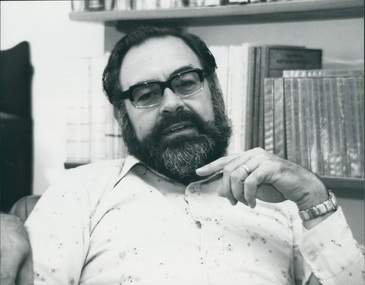
... social justice. He campaigned relentlessly for the Church to reflect the teachings of Jesus and for a peaceful and just society. This was evident in his simple lifestyle and through his practical engagement in mission with the poor and marginalised. Honoured in Australia...social justice. He campaigned relentlessly for the Church to reflect the teachings of Jesus and for a peaceful and just society. This was evident in his simple lifestyle and through his practical engagement in mission with the poor and marginalised. Honoured in Australia ...Athol Gill was born in Wauchope, NSW, on 5th September 1937. On 25th April 1959 he married Judith Prior. In 1960 he enrolled to become a Baptist minister studying at the Baptist Theological College of NSW. A strong call to higher studies took him to London where he obtained his BD (Hons) and later to Zurich where he attained his Masters and a Doctorate of Theology. Athol lectured in Biblical Studies in both Baptist and Methodist Theological Colleges in Brisbane, moved to Melbourne in 1974 to become Dean of Whitley College, then in 1979 was appointed Professor of New Testament where he continued until his death. He was widely respected for his academic work but also for his remarkable commitment to living the faith he taught. Athol lived, with his family, in Christian Community for nearly all his adult life - in Brisbane at the House of Freedom, and for his last seventeen years as founding leader of the House of the Gentle Bunyip linked with the Clifton Hill Baptist Church, which later became known as the Community Church of St Mark. The House of the Gentle Bunyip came into being in 1975 during the Anzac Day weekend when Athol was teaching on "Discipleship" from the Gospel of St Mark. He announced he was commencing a Christian community to explore and expound the meaning of discipleship. 35 people, mainly young and single, agreed to join him. Athol was a provocative advocate for the poor and for social justice. He campaigned relentlessly for the Church to reflect the teachings of Jesus and for a peaceful and just society. This was evident in his simple lifestyle and through his practical engagement in mission with the poor and marginalised. Honoured in Australia and internationally as a brilliant theologian, teacher and author, Athol is also remembered for his love of sport, especially for the Carlton Football Club, his unique sense of humour and his warm humanity. He died suddenly on 9th March 1992. Head and shoulders of Athol Gill seated in front of bookcaseDr Athol Gill says that the Christians in Yugoslavia are not hoping for a change to Western democracy, but greater human rights under a Communist government. dr athol gill; house of the gentle bunyip -
Victorian Aboriginal Corporation for Languages
Book, Human Rights and Equal Opportunity Commission, Bringing them home : National Inquiry into the separation of Aboriginal and Torres Straight Islander children from their families, 1997
... child protection institutional care Australian Aboriginal history Aboriginal children social justice maps, b&w photographs, tables A tribute to the strengths and struggles of many thousands of Aboriginal and Torres Strait Islander people affected by forcible removal. ...A tribute to the strengths and struggles of many thousands of Aboriginal and Torres Strait Islander people affected by forcible removal. It acknowledges the hardship they endured and the sacrifices they made. Dedicated to those who found the strength to tell their stories to the Inquiry and to the generations of Aboriginal and Torres Strait Islander people separated from their families and communities. Includes stories and recommendations.maps, b&w photographs, tableschild protection, institutional care, australian aboriginal history, aboriginal children, social justice -
 Victorian Aboriginal Corporation for Languages
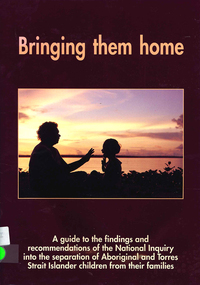
Book, Human Rights and Equal Opportunity Commission, Bringing them home : a guide to the findings and recommendations of the National Inquiry into the separation of Aboriginal and Torres Strait Islander children from their families, 1997
... child protection institutional care child custody Australian Aboriginal history Aboriginal children social justice public policy government policy Link Up colour photographs, colour illustrations, b&w photographs, graphs A tribute to the strengths and struggles of many thousands of Aboriginal and Torres Strait Islander people affected by forcible removal. ...A tribute to the strengths and struggles of many thousands of Aboriginal and Torres Strait Islander people affected by forcible removal. It acknowledges the hardship they endured and the sacrifices they made. Dedicated to those who found the strength to tell their stories to the Inquiry and to the generations of Aboriginal and Torres Strait Islander people separated from their families and communities. Includes stories and recommendations.colour photographs, colour illustrations, b&w photographs, graphschild protection, institutional care, child custody, australian aboriginal history, aboriginal children, social justice, public policy, government policy, link up -
 Sunshine and District Historical Society Incorporated
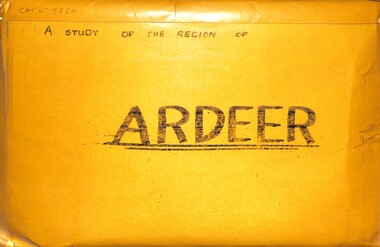
Archive - A Study Of The Region Of Ardeer, Sister Chanel (Sister Julia Williams), 1985
... social justice work. They arrived in Victoria in the 1880s and continue to operate schools, ministries, and community programs across the state. 5384.01 - A Regional Study Of The Region Of Ardeer Envelope.jpg Text - A Regional Study Of The Region Of Ardeer 5384.02 - A Regional Study Of The Region Of Ardeer Page 1.jpg Text - A Regional Study Of The Region Of Ardeer 5384.02 - A Regional Study Of The Region Of Ardeer Page 2.jpg 5384.02 - A Regional Study Of The Region Of Ardeer Page 3.jpg Text - Subject HU211 Regionalism And Australia 5384.02 - A Regional Study Of The Region Of Ardeer Page 4.jpg Text - Ardeer Regions Selected 5384.02 - A Regional Study Of The Region Of Ardeer Page 5.jpg Melway Map 5384.02 - A Regional Study Of The Region Of Ardeer Page 6.jpg Text - Ardeer Never Heard Of It. ...Sister Chanel, was later known as Sister Julia Williams. She was professed on the 7th December 1963. She is mentioned in a history of the Brigidine Sister, by Morna Sturrock, Women of Strength, Women of Gentleness: Brigidine Sisters - Victoria Province, David Lovell Publishing, Victoria Australia, 1995, page 290. Sister Chanel (Sister Julia Williams) undertook a study of Ardeer in 1985, as part of her university studies. At the time, she was based at the Brigidine Convent in Blanche Street, Ardeer, opposite the Mother of God Catholic Primary School. Some years later, she was living at Unit 3, 387 Station Street, Bonbeach, Vic, 3196. Today, the Brigidine Convent at Ardeer no longer exists. The buildings have been demolished. The local schools begun by the Brigidine Sisters are now entirely staffed by lay teachers. There is a Brigidine Centre in Malvern, which contains archives relating to the Brigidine Sisters' history.The Brigidine Sisters (often misheard as “Bridiline”) are a long‑established Catholic religious congregation with a major historical presence in Melbourne, especially in education and social justice work. They arrived in Victoria in the 1880s and continue to operate schools, ministries, and community programs across the state.5384.01 - A Regional Study Of The Region Of Ardeer Envelope.jpg Text - A Regional Study Of The Region Of Ardeer 5384.02 - A Regional Study Of The Region Of Ardeer Page 1.jpg Text - A Regional Study Of The Region Of Ardeer 5384.02 - A Regional Study Of The Region Of Ardeer Page 2.jpg 5384.02 - A Regional Study Of The Region Of Ardeer Page 3.jpg Text - Subject HU211 Regionalism And Australia 5384.02 - A Regional Study Of The Region Of Ardeer Page 4.jpg Text - Ardeer Regions Selected 5384.02 - A Regional Study Of The Region Of Ardeer Page 5.jpg Melway Map 5384.02 - A Regional Study Of The Region Of Ardeer Page 6.jpg Text - Ardeer Never Heard Of It. Wheres That? 5384.02 - A Regional Study Of The Region Of Ardeer Page 7.jpg Text - Study The Region of Ardeer. There's Northing To Study 5384.02 - A Regional Study Of The Region Of Ardeer Page 8.jpg 1978 Municipal Directory 5384.02 - A Regional Study Of The Region Of Ardeer Page 9.jpg Text - Who Fosters It Image - House 5384.02 - A Regional Study Of The Region Of Ardeer Page 10.jpg Image - Market Gardens Yallourn Street Image - Yallourn Street 5384.02 - A Regional Study Of The Region Of Ardeer Page 11.jpg Image - Mother Of God Catholic Church Blanche Street Image - Mother Of God Catholic Church Blanche Street 5384.02 - A Regional Study Of The Region Of Ardeer Page 12.jpg Image - Scotch Thistles Image - Kororoit Creek Bridge West Street To Esmond Street 5384.02 - A Regional Study Of The Region Of Ardeer Page 13.jpg Image - Kororoit Creek Bridge Yalloun Street to Ballarat Road Image - Mother Of God Catholic Church Blanche Street 5384.02 - A Regional Study Of The Region Of Ardeer Page 14.jpg Text - Councillors, Politicians, People 5384.02 - A Regional Study Of The Region Of Ardeer Page 15.jpg Reality 5384.02 - A Regional Study Of The Region Of Ardeer Page 16.jpg Text - Geography Of The City Of Sunshine 5384.02 - A Regional Study Of The Region Of Ardeer Page 18.jpg Melway Map 5384.02 - A Regional Study Of The Region Of Ardeer Page 20.jpg Image - Kororoit Creek From Ballarat Road 5384.02 - A Regional Study Of The Region Of Ardeer Page 22.jpg Text - Basalt Sample Of A Basalt Rock When Laying Foundations For The Polish Community Hall In Helene Street 5384.02 - A Regional Study Of The Region Of Ardeer Page 23.jpg Image - Corner Yallourn Street And Rockbank Road Image - Tower Road Proposed Freeway Site (Now Scrapped) 5384.02 - A Regional Study Of The Region Of Ardeer Page 24.jpg Image - Kororoit Creek Bridge West Street To Esmond Street 5384.02 - A Regional Study Of The Region Of Ardeer Page 25.jpg Kororoit Creek Bridge West Street To Esmond Street 5384.02 - A Regional Study Of The Region Of Ardeer Page 26.jpg Image - Sunshine Swimming Pool Kororoit Creek 5384.02 - A Regional Study Of The Region Of Ardeer Page 27.jpg Text - Industry 5384.02 - A Regional Study Of The Region Of Ardeer Page 28.jpg Text - ICI 5384.02 - A Regional Study Of The Region Of Ardeer Page 29.jpg Text - ICINZ 5384.02 - A Regional Study Of The Region Of Ardeer Page 30.jpg Image - ICIANZ Ballarat Road Entrance 1979 Image - ICIANZ Explosive Reserve View From More Park Esmond Road 5384.02 - A Regional Study Of The Region Of Ardeer Page 31.jpg Image - Forrest Street Corner Fitzgerald Road Image - Entrance To ICIANZ Forrest Street 5384.02 - A Regional Study Of The Region Of Ardeer Page 32.jpg Image - Explosive Train Shunting Across Forrest Street 5384.02 - A Regional Study Of The Region Of Ardeer Page 33.jpg Image - Besco Batteries Forrest Street 5384.02 - A Regional Study Of The Region Of Ardeer Page 34.jpg Image - Queen Of Heaven Catholic Church Holt Street 5384.02 - A Regional Study Of The Region Of Ardeer Page 35.jpg Image - Ukrainian Catholic Church Forrest Street 5384.02 - A Regional Study Of The Region Of Ardeer Page 36.jpg Image - Mother Of God Catholic Church Blanche Street 5384.02 - A Regional Study Of The Region Of Ardeer Page 37.jpg Image - Ukrainian Hall Suspension Street Image - Polish Hall Helene Street 5384.02 - A Regional Study Of The Region Of Ardeer Page 38.jpg Image - Mother Of God Catholic Primary School Blanche Street 5384.02 - A Regional Study Of The Region Of Ardeer Page 39.jpg Image - Ardeer State School Looking From Suspension Street 5384.02 - A Regional Study Of The Region Of Ardeer Page 40.jpg Image - Polish Soccer Club Playgroup 5384.02 - A Regional Study Of The Region Of Ardeer Page 41.jpg Image - Holt Street Shopping Centre Image - Holt Street Milk Bar And Post Office 5384.02 - A Regional Study Of The Region Of Ardeer Page 42.jpg Image - 29 - 31 Maxwell Street Shopping Centre Image - 60 - 62 Maxwell Street Shopping Centre 5384.02 - A Regional Study Of The Region Of Ardeer Page 43.jpg Image - Motor Rail Train At Ardeer Station 5384.02 - A Regional Study Of The Region Of Ardeer Page 44.jpg Image - Ardeer Railway Station 5384.02 - A Regional Study Of The Region Of Ardeer Page 45.jpg Image - Railway Line Pedestrian Crossing Ardeer Station Ridgeway Parade To Forrest Street Image - Railway Line Pedestrian Crossing Ridgeway Parade To West Street 5384.02 - A Regional Study Of The Region Of Ardeer Page 46.jpg Image - Half House Image - Half House 5384.02 - A Regional Study Of The Region Of Ardeer Page 47.jpg Image - Small House Image - Vacant Block 5384.02 - A Regional Study Of The Region Of Ardeer Page 48.jpg Image - House Image - New House 5384.02 - A Regional Study Of The Region Of Ardeer Page 49.jpg Image - House 5384.02 - A Regional Study Of The Region Of Ardeer Page 50.jpg Image - Horse Riding School Forrest Street Image - Horse Riding School Forrest Street 5384.02 - A Regional Study Of The Region Of Ardeer Page 51.jpg Image - Kororoit Creek Image - Playground 5384.02 - A Regional Study Of The Region Of Ardeer Page 52.jpg Image - More Park Women's Sport Centre Esmond Street Image - Old Service Station Old Service Station 5384.02 - A Regional Study Of The Region Of Ardeer Page 53.jpg Image - Vegetable Garden Image - Vegetable Garden 5384.02 - A Regional Study Of The Region Of Ardeer Page 54.jpg Text - Open Space Analysis 5384.02 - A Regional Study Of The Region Of Ardeer Page 55.jpg 1976 Census 5384.02 - A Regional Study Of The Region Of Ardeer Page 56.jpg 1976 Census 5384.02 - A Regional Study Of The Region Of Ardeer Page 57.jpg 1979 Statistics 5384.02 - A Regional Study Of The Region Of Ardeer Page 58.jpg Text - Some Significant Realities 5384.02 - A Regional Study Of The Region Of Ardeer Page 59.jpg Text - A Typical Story From An Ardeerite 5384.02 - A Regional Study Of The Region Of Ardeer Page 60.jpg Text - Bibliography 5384.03 - A Regional Study Of The Region Of Ardeer - Donation Letter.jpg 5384.04 - A Regional Study Of The Region Of Ardeer - Sister Chanel Details.jpg -
Sunshine and District Historical Society Incorporated
Mixed media (collection) - Gwenyth "Gwen" Goedecke Collection
... Gwenyth (Gwen) Goedecke was a powerhouse of social justice and women's rights in Victoria, Australia. Her activism spanned more than 50 years, and she was deeply committed to empowering working-class women and promoting peace. ...The Gwenyth "Gwen" Goedecke Collection was a large donation from the time when she was a City of Sunshine Councillor, Australia Labour Party member, Communist Party member, Sunshine International Women's Committee founder and Activist for many other causes. The collection has been split into separate catalogue numbers and is stored in various locations as per the individual cataloue numberssunshine city council, australia labour party, communist party, union of australia women, international disarmament, sunshine internation women's committee, goedeckesunshine city council, australia labour party, communist party, union of australia women, international disarmament, sunshine internation women's committee, goedecke -
 Sunshine and District Historical Society Incorporated
Archive - Gwen Goedecke Collection - A Collection of documents on Social Issues
... FOLDERS: |Employment|Education|Violence|Childcare Services|Divorce/Old Age/Victorian Caregiver's Association|Families/ The Institute of Family Studies (including newsletters, discussion and study papers)|Socialism|Social Welfare|Poverty |PUBLICATIONS: |Royal Commission on Human Relationships, Final Report Vol 5 - Commonwealth of Australia 1977|Possibilities for Social Welfare in Australia - Commonwealth of Australia 1975|Social Welfare Research Centre Newsletter - Number 8 - 1983|Social Justice Consultative Council Department of the Premier and Cabinet, Melbourne 1992|Voluntary Associations and Funding Issues Working Party - Lost Sleep Over Government Funding - 5 Case Studies - Victoria 1979|Government of Victoria - Submission to the Senate Standing Committee on Social Welfare concerning Homeless Youth Melbourne 1981|Victorian Council of Social Service - Passing the Buck - A Victorian Perspective on Federal Responsibility 2 copies - 1982|Social Welfare Research Bulletin No 1 - Australian Government Social Welfare Commission - 1975|FACS - The Victorian Family & Community Service Programme What is it about? ...Gwyneth 'Gwen Goedecke' collection FOLDERS: |Employment|Education|Violence|Childcare Services|Divorce/Old Age/Victorian Caregiver's Association|Families/ The Institute of Family Studies (including newsletters, discussion and study papers)|Socialism|Social Welfare|Poverty |PUBLICATIONS: |Royal Commission on Human Relationships, Final Report Vol 5 - Commonwealth of Australia 1977|Possibilities for Social Welfare in Australia - Commonwealth of Australia 1975|Social Welfare Research Centre Newsletter - Number 8 - 1983|Social Justice Consultative Council Department of the Premier and Cabinet, Melbourne 1992|Voluntary Associations and Funding Issues Working Party - Lost Sleep Over Government Funding - 5 Case Studies - Victoria 1979|Government of Victoria - Submission to the Senate Standing Committee on Social Welfare concerning Homeless Youth Melbourne 1981|Victorian Council of Social Service - Passing the Buck - A Victorian Perspective on Federal Responsibility 2 copies - 1982|Social Welfare Research Bulletin No 1 - Australian Government Social Welfare Commission - 1975|FACS - The Victorian Family & Community Service Programme What is it about? ...Gwyneth 'Gwen Goedecke' collectionFOLDERS: |Employment|Education|Violence|Childcare Services|Divorce/Old Age/Victorian Caregiver's Association|Families/ The Institute of Family Studies (including newsletters, discussion and study papers)|Socialism|Social Welfare|Poverty |PUBLICATIONS: |Royal Commission on Human Relationships, Final Report Vol 5 - Commonwealth of Australia 1977|Possibilities for Social Welfare in Australia - Commonwealth of Australia 1975|Social Welfare Research Centre Newsletter - Number 8 - 1983|Social Justice Consultative Council Department of the Premier and Cabinet, Melbourne 1992|Voluntary Associations and Funding Issues Working Party - Lost Sleep Over Government Funding - 5 Case Studies - Victoria 1979|Government of Victoria - Submission to the Senate Standing Committee on Social Welfare concerning Homeless Youth Melbourne 1981|Victorian Council of Social Service - Passing the Buck - A Victorian Perspective on Federal Responsibility 2 copies - 1982|Social Welfare Research Bulletin No 1 - Australian Government Social Welfare Commission - 1975|FACS - The Victorian Family & Community Service Programme What is it about? - Department of Community Welfare Services, Victoria - 1979| FACS - The Victorian Family & Community Service Programme What is it about? - Department of Community Welfare Services, Victoria (Second Draft) - 1979| Australian Government Social Welfare Commission Annual Report - 1973|Australian Government Commission of Inquiry into Poverty - Study of the Heidelberg Community - 1976|Victorian Emergency Relief Committee findings/report- March 1982|Monday on a Shoestring - a resource guide for low-income people in the West - 1997 -
 Sunshine and District Historical Society Incorporated
Archive - Aboriginal First Nation and Archaelogy
... Newspaper Article Brimbank Independent 6 May 1997 Aboriginal reconciliation meeting at St Albans|Typed Letter 8 June 1982 Victoria Archaelogical Survey|Typed Letter 10 June 1982 Survey of Archaelogical Sites in the Melbourne Metropolitan Area|Newspaper Article Herald Sun 18 September 1994 Before the white man|Newspaper Article Advocate 30 June 1999 We re rockin on Rock of Ages - Volcanic rock from the banks of the Kororoit Creek|Newspaper Article Advocate 20 June 2000 History revealed Aboriginal artefacts on a West Sunshine site|Typed Report First Residents of Melbourne's Western Region by Gary Presland|Brochure First Residents of Melbourne's Western Region by Gary Presland|Flyer The Melbourne and Metropolitan Archaeological Survey|Flyer John Bateman and the Aborigines|Flyer and Time A Celebration of Victoria's Submerged Archaelogical Heritage|Flyer Aborigines in the Gellibrand Hill area|Program 9 Octoberr 1981 Archaelogy|Handmade Map 1997 Brimbank Dreamtime Festival 22nd March 1997 - Map of Festival Layout at Brimbank Park|Newspaper Article Advocate 20 April 2013 Call for leaders to take a stand|Typed Letter 2010 Preliminary Report on Aboriginal Artefacts found in Albion and Ardeer by Robert Jackson|Brimbank Together Yes Acknowledging our history embracing our future poster - Use by Brimbank Council at The Hunt Club Community Centre|Newspaper Article Weekly Times 2 July 2002 A cultural experience for students Maribyrnong Primary School|Newspaper Article Living Museum 10 October 2001 Project forges links between cultures|The Advocate 20th April - Call for leaders to take a stand Colleen Marion|Booklet The Voice to Parliament|Booklet The Voice to Parliament Your Questions answered|Brochure Yes23 It's time to recognise Aboriginal and Torres Strait Islander Peoples in the Consititution throug a voice information sheets|Your official referendum booklet|Flyer How to vote yes campaign cards|Newspaper Article Herald Sun 15 October 2023 Time to Unite after the referendum defeat|Newspaper Article Herald Sun 16 October 2023 How Australia Voted|Brochure Brimbank council wants a better future for Aboriginal and Torres Strait Islander people|Brochure council for Aboriginal Reconciliation Working Together|Email La Trobe University Branch 4 March 2001|Typed Letter 13 March 1991 The Aboriginal Programme Exchange|Typed Letter 20 April 2000 Union of Australian Women|Typed Letter August 2000 Union of Australian Women Newsletter|Magazine Dissent Spring 2000 Aborigines reconciliation racial prejudice|Brochure Talking Together Women and Reconciliation|Brochure A National Action Network|Brochure High Court Decision on Native Title|Brochure Running Discussion Groups|Brochure Dealing with the Media|Brochure Contacts and Resources|Program The Western Metropolitan Region NAIDOC Program 2007|Newspaper Article The Age 25 May 1991 The Jawoyns troubled dreaming|Newsletter AEQUA Equal Employment Opportunity Newsletter 12 August 1981 Aboriginal employment in the APS on the up|Photocopy of Photograph Off Opie Road near Brachnell Place|Brochure Brimbank News Issue 10 2023 Be Bold Festival 7 October 2023|Typed Notes Uluru Statement from the Heart|Newspaper Article The Age 18 January 2001 William Barak|Newspaper Article The Star 17th October 2006 Special day for youth Karen Jackson|Newspaper Article Lalor Star March 1980 Aboriginal Treaty|Typed Letter Womens International Leagure for Peace and Freedom November 1979|Newspaper Article The Age 17 April 1997 Rednecks using Wik debate to grab new rights|Flyer Support Workers Claims for Stolen Wages and Return the Stolen wages for Workers and their families and Support Wage Justice Return the Stolen Wages|Handwritten Letter from Leo Prestia 27 January|List of Aboriginal Organisatons February 2004|Newspaper Article A Saturday Reflection|Postcard Pitchi Richi Sanctuary Alice Springs|Postcard Pitchi Richi Sanctuary Alice Spring|Invitation The Mayor and Councillors of Moreland City Council Connections Land and people|Notes Address Selina Aborignes|Booklet Recognition The Way forward An Issues paper from the Ausralian Catholic Social Justice Council|Newspaper Article The Age 21 January 1980 Signs of ancient man found in threatened valley|Form Australians for Native title reconciliation|Booklet Vic Uni News June 1997 Jindi woraback joining together|Newspaper Article The Age 17 April 1997 Black network hears Wik plan|Booklet Australian Institute for a Just Sustainable Peaceful Future Native Title Implications for Land management April 1997 Discussion Paper Number 11|Typed Notes Parliament of Australia Department of the Parliamentary Library current Information Digest Education and Welfare 14 January 1973 Aborigines Government Policy|Koori music and the Multicultural choir 13 July|Typed Notes 4 February 2004|Flyer State of Shock A new film by David Bradbury|Newspaper Article 21 October 1997 The Age Metro Arts and Life Heritage voting for a Trust you can trust6|Typed Letter from Parliament of Australia The Senate Hon Margaret Reynolds 15 September 1997 Native title Amendment bill 1997|Typed notes What are the International implications of Australias proposed legislative response to the Wik decision 16 May 1997|Newspaper Article The Age 11 October 1980 CRA and the Aborigines|Newspaper Article The Age 27 October 1980 Lost languages of the Aborigine|Program Western Metropolitan Region NAIDOC Committee 6 October 2004|Typed Notes How the English Language is used to put Aborigines down Deny us rights or Is Employed as a Political Tool Against Us|Flyer Australias for Reconciliation Study Circle The Footscray Community Arts Centre|Newspaper Article Weekly Times 4 December 2001 Smoking marks opening|Flyer Save The Racial Discrimination Act The Law for All of Us|Flyer Freedom fund for 1988 Dont Celebrate 1988 White Australia Has a Black History|Typed Notes 4 May 1997 Area Meeting on Aboriginal Reconciliation 20 May 1997 Why Reconciliation|Newspaper Article Sunday Press 17 July 1988 Hes black hes white and hes Browned off|Handwritten list Morning Tea with Yolande Klempprier 5 December 1979|Typed Notes Interim Consultative Committee Western Region Community Legal Centre|Brochure Aboriginal Myths and Legends from the Goldfields to the South West of Western Australia|Brochure Messagestick Conserve or Destroy May 1980 Voume 5 No 1|Brochure Aboringinal Women's Task Force "We need to know what you think"|Newspaper Article The Age 27th February 1980 Aboriginal skeleton found by workmen Barries Rd Melton|Newspaper Article 18th September 1985 Only maternal instricts have saved Aboriginal race from destruction says Hollows|Newspaper Article Star Weekly 26th March 2024 New Indigenous name for Sydenham Park "Yaluk barring Park"|Newspaper Article Star Weekly 30th July 2024 - New name for park|Newspaper Artilce 9th January 2024 Abandoning January 26 - Brimbank Council will no longer hold citizenship cermonies on January 26...Aborigine Aboriginal First Nation Newspaper Article Brimbank Independent 6 May 1997 Aboriginal reconciliation meeting at St Albans|Typed Letter 8 June 1982 Victoria Archaelogical Survey|Typed Letter 10 June 1982 Survey of Archaelogical Sites in the Melbourne Metropolitan Area|Newspaper Article Herald Sun 18 September 1994 Before the white man|Newspaper Article Advocate 30 June 1999 We re rockin on Rock of Ages - Volcanic rock from the banks of the Kororoit Creek|Newspaper Article Advocate 20 June 2000 History revealed Aboriginal artefacts on a West Sunshine site|Typed Report First Residents of Melbourne's Western Region by Gary Presland|Brochure First Residents of Melbourne's Western Region by Gary Presland|Flyer The Melbourne and Metropolitan Archaeological Survey|Flyer John Bateman and the Aborigines|Flyer and Time A Celebration of Victoria's Submerged Archaelogical Heritage|Flyer Aborigines in the Gellibrand Hill area|Program 9 Octoberr 1981 Archaelogy|Handmade Map 1997 Brimbank Dreamtime Festival 22nd March 1997 - Map of Festival Layout at Brimbank Park|Newspaper Article Advocate 20 April 2013 Call for leaders to take a stand|Typed Letter 2010 Preliminary Report on Aboriginal Artefacts found in Albion and Ardeer by Robert Jackson|Brimbank Together Yes Acknowledging our history embracing our future poster - Use by Brimbank Council at The Hunt Club Community Centre|Newspaper Article Weekly Times 2 July 2002 A cultural experience for students Maribyrnong Primary School|Newspaper Article Living Museum 10 October 2001 Project forges links between cultures|The Advocate 20th April - Call for leaders to take a stand Colleen Marion|Booklet The Voice to Parliament|Booklet The Voice to Parliament Your Questions answered|Brochure Yes23 It's time to recognise Aboriginal and Torres Strait Islander Peoples in the Consititution throug a voice information sheets|Your official referendum booklet|Flyer How to vote yes campaign cards|Newspaper Article Herald Sun 15 October 2023 Time to Unite after the referendum defeat|Newspaper Article Herald Sun 16 October 2023 How Australia Voted|Brochure Brimbank council wants a better future for Aboriginal and Torres Strait Islander people|Brochure council for Aboriginal Reconciliation Working Together|Email La Trobe University Branch 4 March 2001|Typed Letter 13 March 1991 The Aboriginal Programme Exchange|Typed Letter 20 April 2000 Union of Australian Women|Typed Letter August 2000 Union of Australian Women Newsletter|Magazine Dissent Spring 2000 Aborigines reconciliation racial prejudice|Brochure Talking Together Women and Reconciliation|Brochure A National Action Network|Brochure High Court Decision on Native Title|Brochure Running Discussion Groups|Brochure Dealing with the Media|Brochure Contacts and Resources|Program The Western Metropolitan Region NAIDOC Program 2007|Newspaper Article The Age 25 May 1991 The Jawoyns troubled dreaming|Newsletter AEQUA Equal Employment Opportunity Newsletter 12 August 1981 Aboriginal employment in the APS on the up|Photocopy of Photograph Off Opie Road near Brachnell Place|Brochure Brimbank News Issue 10 2023 Be Bold Festival 7 October 2023|Typed Notes Uluru Statement from the Heart|Newspaper Article The Age 18 January 2001 William Barak|Newspaper Article The Star 17th October 2006 Special day for youth Karen Jackson|Newspaper Article Lalor Star March 1980 Aboriginal Treaty|Typed Letter Womens International Leagure for Peace and Freedom November 1979|Newspaper Article The Age 17 April 1997 Rednecks using Wik debate to grab new rights|Flyer Support Workers Claims for Stolen Wages and Return the Stolen wages for Workers and their families and Support Wage Justice Return the Stolen Wages|Handwritten Letter from Leo Prestia 27 January|List of Aboriginal Organisatons February 2004|Newspaper Article A Saturday Reflection|Postcard Pitchi Richi Sanctuary Alice Springs|Postcard Pitchi Richi Sanctuary Alice Spring|Invitation The Mayor and Councillors of Moreland City Council Connections Land and people|Notes Address Selina Aborignes|Booklet Recognition The Way forward An Issues paper from the Ausralian Catholic Social Justice Council|Newspaper Article The Age 21 January 1980 Signs of ancient man found in threatened valley|Form Australians for Native title reconciliation|Booklet Vic Uni News June 1997 Jindi woraback joining together|Newspaper Article The Age 17 April 1997 Black network hears Wik plan|Booklet Australian Institute for a Just Sustainable Peaceful Future Native Title Implications for Land management April 1997 Discussion Paper Number 11|Typed Notes Parliament of Australia Department of the Parliamentary Library current Information Digest Education and Welfare 14 January 1973 Aborigines Government Policy|Koori music and the Multicultural choir 13 July|Typed Notes 4 February 2004|Flyer State of Shock A new film by David Bradbury|Newspaper Article 21 October 1997 The Age Metro Arts and Life Heritage voting for a Trust you can trust6|Typed Letter from Parliament of Australia The Senate Hon Margaret Reynolds 15 September 1997 Native title Amendment bill 1997|Typed notes What are the International implications of Australias proposed legislative response to the Wik decision 16 May 1997|Newspaper Article The Age 11 October 1980 CRA and the Aborigines|Newspaper Article The Age 27 October 1980 Lost languages of the Aborigine|Program Western Metropolitan Region NAIDOC Committee 6 October 2004|Typed Notes How the English Language is used to put Aborigines down Deny us rights or Is Employed as a Political Tool Against Us|Flyer Australias for Reconciliation Study Circle The Footscray Community Arts Centre|Newspaper Article Weekly Times 4 December 2001 Smoking marks opening|Flyer Save The Racial Discrimination Act The Law for All of Us|Flyer Freedom fund for 1988 Dont Celebrate 1988 White Australia Has a Black History|Typed Notes 4 May 1997 Area Meeting on Aboriginal Reconciliation 20 May 1997 Why Reconciliation|Newspaper Article Sunday Press 17 July 1988 Hes black hes white and hes Browned off|Handwritten list Morning Tea with Yolande Klempprier 5 December 1979|Typed Notes Interim Consultative Committee Western Region Community Legal Centre|Brochure Aboriginal Myths and Legends from the Goldfields to the South West of Western Australia|Brochure Messagestick Conserve or Destroy May 1980 Voume 5 No 1|Brochure Aboringinal Women's Task Force "We need to know what you think"|Newspaper Article The Age 27th February 1980 Aboriginal skeleton found by workmen Barries Rd Melton|Newspaper Article 18th September 1985 Only maternal instricts have saved Aboriginal race from destruction says Hollows|Newspaper Article Star Weekly 26th March 2024 New Indigenous name for Sydenham Park "Yaluk barring Park"|Newspaper Article Star Weekly 30th July 2024 - New name for park|Newspaper Artilce 9th January 2024 Abandoning January 26 - Brimbank Council will no longer hold citizenship cermonies on January 26 Collection documents relating to Aboriginal First Nation and Archaelogy in the district Archive Aboriginal First Nation and Archaelogy ...Newspaper Article Brimbank Independent 6 May 1997 Aboriginal reconciliation meeting at St Albans|Typed Letter 8 June 1982 Victoria Archaelogical Survey|Typed Letter 10 June 1982 Survey of Archaelogical Sites in the Melbourne Metropolitan Area|Newspaper Article Herald Sun 18 September 1994 Before the white man|Newspaper Article Advocate 30 June 1999 We re rockin on Rock of Ages - Volcanic rock from the banks of the Kororoit Creek|Newspaper Article Advocate 20 June 2000 History revealed Aboriginal artefacts on a West Sunshine site|Typed Report First Residents of Melbourne's Western Region by Gary Presland|Brochure First Residents of Melbourne's Western Region by Gary Presland|Flyer The Melbourne and Metropolitan Archaeological Survey|Flyer John Bateman and the Aborigines|Flyer and Time A Celebration of Victoria's Submerged Archaelogical Heritage|Flyer Aborigines in the Gellibrand Hill area|Program 9 Octoberr 1981 Archaelogy|Handmade Map 1997 Brimbank Dreamtime Festival 22nd March 1997 - Map of Festival Layout at Brimbank Park|Newspaper Article Advocate 20 April 2013 Call for leaders to take a stand|Typed Letter 2010 Preliminary Report on Aboriginal Artefacts found in Albion and Ardeer by Robert Jackson|Brimbank Together Yes Acknowledging our history embracing our future poster - Use by Brimbank Council at The Hunt Club Community Centre|Newspaper Article Weekly Times 2 July 2002 A cultural experience for students Maribyrnong Primary School|Newspaper Article Living Museum 10 October 2001 Project forges links between cultures|The Advocate 20th April - Call for leaders to take a stand Colleen Marion|Booklet The Voice to Parliament|Booklet The Voice to Parliament Your Questions answered|Brochure Yes23 It's time to recognise Aboriginal and Torres Strait Islander Peoples in the Consititution throug a voice information sheets|Your official referendum booklet|Flyer How to vote yes campaign cards|Newspaper Article Herald Sun 15 October 2023 Time to Unite after the referendum defeat|Newspaper Article Herald Sun 16 October 2023 How Australia Voted|Brochure Brimbank council wants a better future for Aboriginal and Torres Strait Islander people|Brochure council for Aboriginal Reconciliation Working Together|Email La Trobe University Branch 4 March 2001|Typed Letter 13 March 1991 The Aboriginal Programme Exchange|Typed Letter 20 April 2000 Union of Australian Women|Typed Letter August 2000 Union of Australian Women Newsletter|Magazine Dissent Spring 2000 Aborigines reconciliation racial prejudice|Brochure Talking Together Women and Reconciliation|Brochure A National Action Network|Brochure High Court Decision on Native Title|Brochure Running Discussion Groups|Brochure Dealing with the Media|Brochure Contacts and Resources|Program The Western Metropolitan Region NAIDOC Program 2007|Newspaper Article The Age 25 May 1991 The Jawoyns troubled dreaming|Newsletter AEQUA Equal Employment Opportunity Newsletter 12 August 1981 Aboriginal employment in the APS on the up|Photocopy of Photograph Off Opie Road near Brachnell Place|Brochure Brimbank News Issue 10 2023 Be Bold Festival 7 October 2023|Typed Notes Uluru Statement from the Heart|Newspaper Article The Age 18 January 2001 William Barak|Newspaper Article The Star 17th October 2006 Special day for youth Karen Jackson|Newspaper Article Lalor Star March 1980 Aboriginal Treaty|Typed Letter Womens International Leagure for Peace and Freedom November 1979|Newspaper Article The Age 17 April 1997 Rednecks using Wik debate to grab new rights|Flyer Support Workers Claims for Stolen Wages and Return the Stolen wages for Workers and their families and Support Wage Justice Return the Stolen Wages|Handwritten Letter from Leo Prestia 27 January|List of Aboriginal Organisatons February 2004|Newspaper Article A Saturday Reflection|Postcard Pitchi Richi Sanctuary Alice Springs|Postcard Pitchi Richi Sanctuary Alice Spring|Invitation The Mayor and Councillors of Moreland City Council Connections Land and people|Notes Address Selina Aborignes|Booklet Recognition The Way forward An Issues paper from the Ausralian Catholic Social Justice Council|Newspaper Article The Age 21 January 1980 Signs of ancient man found in threatened valley|Form Australians for Native title reconciliation|Booklet Vic Uni News June 1997 Jindi woraback joining together|Newspaper Article The Age 17 April 1997 Black network hears Wik plan|Booklet Australian Institute for a Just Sustainable Peaceful Future Native Title Implications for Land management April 1997 Discussion Paper Number 11|Typed Notes Parliament of Australia Department of the Parliamentary Library current Information Digest Education and Welfare 14 January 1973 Aborigines Government Policy|Koori music and the Multicultural choir 13 July|Typed Notes 4 February 2004|Flyer State of Shock A new film by David Bradbury|Newspaper Article 21 October 1997 The Age Metro Arts and Life Heritage voting for a Trust you can trust6|Typed Letter from Parliament of Australia The Senate Hon Margaret Reynolds 15 September 1997 Native title Amendment bill 1997|Typed notes What are the International implications of Australias proposed legislative response to the Wik decision 16 May 1997|Newspaper Article The Age 11 October 1980 CRA and the Aborigines|Newspaper Article The Age 27 October 1980 Lost languages of the Aborigine|Program Western Metropolitan Region NAIDOC Committee 6 October 2004|Typed Notes How the English Language is used to put Aborigines down Deny us rights or Is Employed as a Political Tool Against Us|Flyer Australias for Reconciliation Study Circle The Footscray Community Arts Centre|Newspaper Article Weekly Times 4 December 2001 Smoking marks opening|Flyer Save The Racial Discrimination Act The Law for All of Us|Flyer Freedom fund for 1988 Dont Celebrate 1988 White Australia Has a Black History|Typed Notes 4 May 1997 Area Meeting on Aboriginal Reconciliation 20 May 1997 Why Reconciliation|Newspaper Article Sunday Press 17 July 1988 Hes black hes white and hes Browned off|Handwritten list Morning Tea with Yolande Klempprier 5 December 1979|Typed Notes Interim Consultative Committee Western Region Community Legal Centre|Brochure Aboriginal Myths and Legends from the Goldfields to the South West of Western Australia|Brochure Messagestick Conserve or Destroy May 1980 Voume 5 No 1|Brochure Aboringinal Women's Task Force "We need to know what you think"|Newspaper Article The Age 27th February 1980 Aboriginal skeleton found by workmen Barries Rd Melton|Newspaper Article 18th September 1985 Only maternal instricts have saved Aboriginal race from destruction says Hollows|Newspaper Article Star Weekly 26th March 2024 New Indigenous name for Sydenham Park "Yaluk barring Park"|Newspaper Article Star Weekly 30th July 2024 - New name for park|Newspaper Artilce 9th January 2024 Abandoning January 26 - Brimbank Council will no longer hold citizenship cermonies on January 26aborigine, aboriginal, first nation -
Koorie Heritage Trust
Book, Brennan, Frank, 1954, Sharing the country : the case for an agreement between black and white Australians, 1991
... Frank Brennan, a lawyer, Jesuit priest and Aboriginal affairs advisor to Australia's Catholic bishops, explains what needs to be done in law and social justice to create an agreement for the future between black and white Australians. 176 p. ; 20 cm. ...Frank Brennan, a lawyer, Jesuit priest and Aboriginal affairs advisor to Australia's Catholic bishops, explains what needs to be done in law and social justice to create an agreement for the future between black and white Australians.176 p. ; 20 cm.Frank Brennan, a lawyer, Jesuit priest and Aboriginal affairs advisor to Australia's Catholic bishops, explains what needs to be done in law and social justice to create an agreement for the future between black and white Australians.aboriginal australians -- land tenure. | aboriginal australians -- civil rights. | aboriginal australians -- government relations. -
Koorie Heritage Trust
Booklet, Kelly, Howard (Victorian SEMP Race and Ethnic Relations team) et al, Black Conditions, 1978
... Australians -- Social conditions. | Aboriginal Australians -- Housing. | A study of Aboriginal communities and the living conditions of Aborigines. A social justice ...A study of Aboriginal communities and the living conditions of Aborigines. A social justice booklet.28 p.; ill.; 28 cm.A study of Aboriginal communities and the living conditions of Aborigines. A social justice booklet.aboriginal australians -- social conditions. | aboriginal australians -- housing. | -
Koorie Heritage Trust
Document - Report, Aboriginal and Torres Strait Islander Commission, The first step : a report on the initial community consultations on the Royal Commission into Aboriginal Deaths in Custody, 1992
... Australia. | Aboriginal Australians -- Social conditions. | Aboriginal Australians -- Criminal justice system..... | Aboriginal Australians -- Social conditions. | Aboriginal Australians -- Criminal justice system. ...In October 1987, the Royal Commission into Aboriginal Deaths in Custody was established to find out why so many Aboriginal people were dying in prison - 99 between January 1980 and May 1989 alone. Since then, tragically, there have been another 25 deaths. The findings of the Royal Commission and its recommendations have been widely publicised since their release in May 1991. They catalogue the terrible history of dispossession and oppression of our people. The Commission makes 339 recommendations on how the past hurt and current disadvantage of the Aboriginal people can be redressed... The main themes to emerge not surprisingly, underline many of the issues raised in the Royal Commission's Final Report - the plight of families of the deceases, Aboriginal / police relations, the lack of access to land, substance abuse, appalling health, inadequate housing, and the pressing need to provide education and employment for our youth.41 p. ; 25 cm.In October 1987, the Royal Commission into Aboriginal Deaths in Custody was established to find out why so many Aboriginal people were dying in prison - 99 between January 1980 and May 1989 alone. Since then, tragically, there have been another 25 deaths. The findings of the Royal Commission and its recommendations have been widely publicised since their release in May 1991. They catalogue the terrible history of dispossession and oppression of our people. The Commission makes 339 recommendations on how the past hurt and current disadvantage of the Aboriginal people can be redressed... The main themes to emerge not surprisingly, underline many of the issues raised in the Royal Commission's Final Report - the plight of families of the deceases, Aboriginal / police relations, the lack of access to land, substance abuse, appalling health, inadequate housing, and the pressing need to provide education and employment for our youth.australia. royal commission into aboriginal deaths in custody. | prisoners, aboriginal australian. | prisoners, aboriginal australian -- death. | prisoners, aboriginal australian -- mortality. | prisons and race relations -- australia. | police -- complaints against -- australia. | aboriginal australians -- social conditions. | aboriginal australians -- criminal justice system. -
Koorie Heritage Trust
Journal - Serials, Aboriginal Law Research Unit in association with the Legal Service Bulletin Co-operative Ltd., 1981-1997, Aboriginal Law Bulletin, 1981
... . -- Periodicals | Race discrimination -- Law and legislation -- Australia | Discrimination in law enforcement -- Australia -- Periodicals | Government policy | Law - Indigenous | Law - International law - Human rights | Law - Legal system | Law - Legal aid services | Race relations - Racial discrimination - Legislative | Politics and Government - Social justice.... -- Periodicals | Race discrimination -- Law and legislation -- Australia | Discrimination in law enforcement -- Australia -- Periodicals | Government policy | Law - Indigenous | Law - International law - Human rights | Law - Legal system | Law - Legal aid services | Race relations - Racial discrimination - Legislative | Politics and Government - Social justice Aboriginal Law Bulletin began in 1981 as one of the first projects of the Aboriginal Law Research Centre at the University of NSW. ...Aboriginal Law Bulletin began in 1981 as one of the first projects of the Aboriginal Law Research Centre at the University of NSW. The Centre became the Aboriginal Law Centre in 1986 and the Indigenous Law Centre in 1997; journal title changed to Indigenous law bulletin from Vol. 4 no. 1 (Apr. 1997)v. ; 29cm.Aboriginal Law Bulletin began in 1981 as one of the first projects of the Aboriginal Law Research Centre at the University of NSW. The Centre became the Aboriginal Law Centre in 1986 and the Indigenous Law Centre in 1997; journal title changed to Indigenous law bulletin from Vol. 4 no. 1 (Apr. 1997)law -- australia -- periodicals | aboriginal australians -- legal status, laws, etc. -- periodicals | torres strait islanders -- legal status, laws, etc. -- periodicals | race discrimination -- law and legislation -- australia | discrimination in law enforcement -- australia -- periodicals | government policy | law - indigenous | law - international law - human rights | law - legal system | law - legal aid services | race relations - racial discrimination - legislative | politics and government - social justice -
 Sunshine and District Historical Society Incorporated
Book - White Pages Business And Government Melbourne 2010 - 2011 Directory, Telstra Corporation Limited, White Pages Business & Government Melbourne 2010/11
... Australian life, often sitting next to the home phone, used for everything from finding a plumber to checking how to spell someone’s surname. Circular 2004, a separate Business & Government White Pages directory was printed, before that, business and government listings were included within the main White Pages volumes, not as a standalone directory. Leslie "Les" Jack Twentyman OAM, featured on the front cover was a former Braybrook resident and a youth outreach worker, social justice ...For decades, the White Pages was a printed alphabetical directory of residential and business phone numbers delivered annually to every household. It became a fixture of Australian life, often sitting next to the home phone, used for everything from finding a plumber to checking how to spell someone’s surname. Circular 2004, a separate Business & Government White Pages directory was printed, before that, business and government listings were included within the main White Pages volumes, not as a standalone directory. Leslie "Les" Jack Twentyman OAM, featured on the front cover was a former Braybrook resident and a youth outreach worker, social justice advocate, and community activist. His work began in the City of Sunshine where he became a frontline figure supporting youth at risk. This led to a lifetime dedication working with vulnerable young people. For his dedication towards his work, he was awarded the Medal of the Order of Australia (OAM) in 1994 and in 2004 he was the Victorian of the Year.Large soft cover publicationnon-fictionFor decades, the White Pages was a printed alphabetical directory of residential and business phone numbers delivered annually to every household. It became a fixture of Australian life, often sitting next to the home phone, used for everything from finding a plumber to checking how to spell someone’s surname. Circular 2004, a separate Business & Government White Pages directory was printed, before that, business and government listings were included within the main White Pages volumes, not as a standalone directory. Leslie "Les" Jack Twentyman OAM, featured on the front cover was a former Braybrook resident and a youth outreach worker, social justice advocate, and community activist. His work began in the City of Sunshine where he became a frontline figure supporting youth at risk. This led to a lifetime dedication working with vulnerable young people. For his dedication towards his work, he was awarded the Medal of the Order of Australia (OAM) in 1994 and in 2004 he was the Victorian of the Year.leslie "les" jack twentyman
