
Showing 8 items matching "social movements - australia"
-
 National Vietnam Veterans Museum (NVVM)
Book, Ashbolt, Allan, Words From the Vietnam Years: An Australian Experience
... Social movements - Australia...Social movements - Australia Political culture - Australia Australia. ...Thus we can say that we constantly surpass our class and that our class reality is made manifest by this very surpassing.Thus we can say that we constantly surpass our class and that our class reality is made manifest by this very surpassing.social movements - australia, political culture - australia, australia. social change, 1960-1972 -
 Flagstaff Hill Maritime Museum and Village
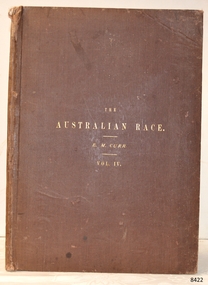
Book - Ethnographic survey, Edward Micklethwaite Curr, The Australian Race Vol 4, 1886-1887
... Australia. It consolidates his findings on origins, languages, customs, and distributions, and its atlas volume furnishes a large comparative language map and ethnographic plates. The four volume set are a broad survey of Aboriginal peoples’ origins, languages, social customs, and movements across the Australian continent. ...The Australian Race Vol. 4 by Edward M. Curr is the highly illustrated fourth part of Curr’s four volume ethnographic survey of Aboriginal Australia. It consolidates his findings on origins, languages, customs, and distributions, and its atlas volume furnishes a large comparative language map and ethnographic plates. The four volume set are a broad survey of Aboriginal peoples’ origins, languages, social customs, and movements across the Australian continent. The fourth volume functions as an atlas and language compendium, pairing textual material with a folio atlas of comparative vocabularies and a large map that traces routes and distributions. This volume also documents specific rites and regional practices, as part of his broader attempt to synthesize ethnographic and linguistic data across Australia. The work is considered a foundational reference work although in today's modern world is is regarded as dated and eurocentric set of volumes as a reference in Australian Indigenous studies and anthropology.Hard cover book, The Australian Race Vol 4. Author: Edward Micklethwaite Curr Publisher: John Ferres, Government Printer Melbourne Aus. Date: 1886-1887 Light brown cloth hardcover and spine and blue edging to hard covers lettering in blue . The spine has a label with an inscription. Further Information: Map in pocket at the back of volnon-fictionThe Australian Race Vol. 4 by Edward M. Curr is the highly illustrated fourth part of Curr’s four volume ethnographic survey of Aboriginal Australia. It consolidates his findings on origins, languages, customs, and distributions, and its atlas volume furnishes a large comparative language map and ethnographic plates. The four volume set are a broad survey of Aboriginal peoples’ origins, languages, social customs, and movements across the Australian continent. The fourth volume functions as an atlas and language compendium, pairing textual material with a folio atlas of comparative vocabularies and a large map that traces routes and distributions. This volume also documents specific rites and regional practices, as part of his broader attempt to synthesize ethnographic and linguistic data across Australia. The work is considered a foundational reference work although in today's modern world is is regarded as dated and eurocentric set of volumes as a reference in Australian Indigenous studies and anthropology.flagstaff hil, warrnambool, flagstaff hill maritime museum, maritime museum, shipwreck coast, flagstaff hill maritime village, great ocean road, book, pattison collection, warrnambool library, warrnambool mechanics’ institute, ralph eric pattison, corangamite regional library service, warrnambool city librarian, mechanics’ institute library, victorian library board, warrnambool books and records, warrnambool children’s library, the australian race vol 4, aboriginal studies, languages, native langauge -
 Flagstaff Hill Maritime Museum and Village
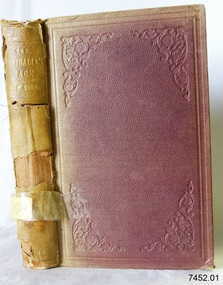
Book - Ethnographic survey, Edward Micklethwaite Curr, The Australian Race Vol 1, 1886-1887
... Australia. It consolidates his findings on origins, languages, customs, and distributions, and its atlas volume furnishes a large comparative language map and ethnographic plates. The four volume set is a broad survey of Aboriginal peoples’ origins, languages, social customs, and movements across the Australian continent. ...The Australian Race Vol. 1 by Edward M. Curr is the highly illustrated first part of Curr’s four volume ethnographic survey of Aboriginal Australia. It consolidates his findings on origins, languages, customs, and distributions, and its atlas volume furnishes a large comparative language map and ethnographic plates. The four volume set is a broad survey of Aboriginal peoples’ origins, languages, social customs, and movements across the Australian continent. Volume one is chiefly a comparative on various vocabularies and linguistic materials, with early observations used to identify and compare Aboriginal language groups. This volume also documents specific rites and regional practices, as part of his broader attempt to synthesize ethnographic and linguistic data across Australia. The work is considered a foundational reference work although in today's modern world is is regarded as dated and eurocentric set of volumes as a reference in Australian Indigenous studies and anthropology.Hard cover book, The Australian Race Vol 1. Author: Edward Micklethwaite Curr Publisher: John Ferres, Government Printer Melbourne Aus. Date: 1886-1887 Light brown cloth hardcover and spine and blue edging to hard covers lettering in blue . The spine has a label with an inscription.non-fictionThe Australian Race Vol. 1 by Edward M. Curr is the highly illustrated first part of Curr’s four volume ethnographic survey of Aboriginal Australia. It consolidates his findings on origins, languages, customs, and distributions, and its atlas volume furnishes a large comparative language map and ethnographic plates. The four volume set is a broad survey of Aboriginal peoples’ origins, languages, social customs, and movements across the Australian continent. Volume one is chiefly a comparative on various vocabularies and linguistic materials, with early observations used to identify and compare Aboriginal language groups. This volume also documents specific rites and regional practices, as part of his broader attempt to synthesize ethnographic and linguistic data across Australia. The work is considered a foundational reference work although in today's modern world is is regarded as dated and eurocentric set of volumes as a reference in Australian Indigenous studies and anthropology.flagstaff hil, warrnambool, flagstaff hill maritime museum, maritime museum, shipwreck coast, flagstaff hill maritime village, great ocean road, book, pattison collection, warrnambool library, warrnambool mechanics’ institute, ralph eric pattison, corangamite regional library service, warrnambool city librarian, mechanics’ institute library, victorian library board, warrnambool books and records, warrnambool children’s library, the australian race vol 4, aboriginal studies, languages, native langauge -
 Flagstaff Hill Maritime Museum and Village
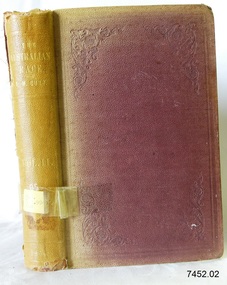
Book - Ethnographic survey, Edward Micklethwaite Curr, The Australian Race Vol 2, 1886-1887
... Australia. Volume two continues the language and vocabulary work from volume one, and goes on in expanding the comparative material available across more regions and groups of Aboriginal tribes or mobs. The four volume set is a broad survey of Aboriginal peoples’ origins, languages, social customs, and movements ...The Australian Race Vol. 2 by Edward M. Curr is the second part of Curr’s four volume ethnographic survey of Aboriginal Australia. Volume two continues the language and vocabulary work from volume one, and goes on in expanding the comparative material available across more regions and groups of Aboriginal tribes or mobs. The four volume set is a broad survey of Aboriginal peoples’ origins, languages, social customs, and movements across the Australian continent. Volume one is chiefly a comparative on various vocabularies and linguistic materials, with early observations used to identify and compare Aboriginal language groups. This volume also documents specific rites and regional practices, as part of his broader attempt to synthesize ethnographic and linguistic data across Australia. The work is considered a foundational reference work although in today's modern world is is regarded as dated and eurocentric set of volumes as a reference in Australian Indigenous studies and anthropology.Hard cover book, The Australian Race Vol 2. Author: Edward Micklethwaite Curr Publisher: John Ferres, Government Printer Melbourne Aus. Date: 1886-1887 Light brown cloth hardcover and spine and blue edging to hard covers lettering in blue . The spine has a label with an inscription.non-fictionThe Australian Race Vol. 2 by Edward M. Curr is the second part of Curr’s four volume ethnographic survey of Aboriginal Australia. Volume two continues the language and vocabulary work from volume one, and goes on in expanding the comparative material available across more regions and groups of Aboriginal tribes or mobs. The four volume set is a broad survey of Aboriginal peoples’ origins, languages, social customs, and movements across the Australian continent. Volume one is chiefly a comparative on various vocabularies and linguistic materials, with early observations used to identify and compare Aboriginal language groups. This volume also documents specific rites and regional practices, as part of his broader attempt to synthesize ethnographic and linguistic data across Australia. The work is considered a foundational reference work although in today's modern world is is regarded as dated and eurocentric set of volumes as a reference in Australian Indigenous studies and anthropology.flagstaff hil, warrnambool, flagstaff hill maritime museum, maritime museum, shipwreck coast, flagstaff hill maritime village, great ocean road, book, pattison collection, warrnambool library, warrnambool mechanics’ institute, ralph eric pattison, corangamite regional library service, warrnambool city librarian, mechanics’ institute library, victorian library board, warrnambool books and records, warrnambool children’s library, the australian race vol 4, aboriginal studies, languages, native langauge -
 Flagstaff Hill Maritime Museum and Village
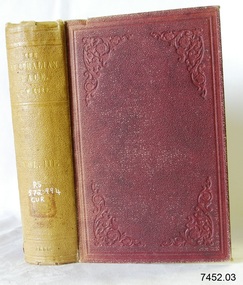
Book - Ethnographic survey, Edward Micklethwaite Curr, The Australian Race Vol 3, 1886-1887
... Australia. Volume three moves further into Aboriginal customs their social practices, and regional accounts gathered from settlers, missionaries, and other correspondents of the time. The four volume set is a broad survey of Aboriginal peoples’ origins, languages, social customs, and movements across the Australian continent. ...The Australian Race Vol. 3 by Edward M. Curr is the third part of Curr’s four volume ethnographic survey of Aboriginal Australia. Volume three moves further into Aboriginal customs their social practices, and regional accounts gathered from settlers, missionaries, and other correspondents of the time. The four volume set is a broad survey of Aboriginal peoples’ origins, languages, social customs, and movements across the Australian continent. Volume one is chiefly a comparative on various vocabularies and linguistic materials, with early observations used to identify and compare Aboriginal language groups. This volume continuing in documenting specific rites and regional practices, as part of his broader attempt to synthesize ethnographic and linguistic data across Australia. The work is considered a foundational reference work although in today's modern world is is regarded as dated and eurocentric set of volumes as a reference in Australian Indigenous studies and anthropology.Hard cover book, The Australian Race Vol 3. Author: Edward Micklethwaite Curr Publisher: John Ferres, Government Printer Melbourne Aus. Date: 1886-1887 Light brown cloth hardcover and spine and blue edging to hard covers lettering in blue . The spine has a label with an inscription.non-fictionThe Australian Race Vol. 3 by Edward M. Curr is the third part of Curr’s four volume ethnographic survey of Aboriginal Australia. Volume three moves further into Aboriginal customs their social practices, and regional accounts gathered from settlers, missionaries, and other correspondents of the time. The four volume set is a broad survey of Aboriginal peoples’ origins, languages, social customs, and movements across the Australian continent. Volume one is chiefly a comparative on various vocabularies and linguistic materials, with early observations used to identify and compare Aboriginal language groups. This volume continuing in documenting specific rites and regional practices, as part of his broader attempt to synthesize ethnographic and linguistic data across Australia. The work is considered a foundational reference work although in today's modern world is is regarded as dated and eurocentric set of volumes as a reference in Australian Indigenous studies and anthropology.flagstaff hil, warrnambool, flagstaff hill maritime museum, maritime museum, shipwreck coast, flagstaff hill maritime village, great ocean road, book, pattison collection, warrnambool library, warrnambool mechanics’ institute, ralph eric pattison, corangamite regional library service, warrnambool city librarian, mechanics’ institute library, victorian library board, warrnambool books and records, warrnambool children’s library, the australian race vol 4, aboriginal studies, languages, native langauge -
 Melbourne Water
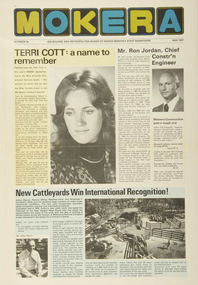
Staff Newsletter, Miss MMBW, Terri Cott, 1977
... This newsletter article has historic and social associations with the many women's rights movements in the 1970s. In particular, it relates to the number of challenges the Miss Australia Quest experienced with feminist and activist groups threatening the future of the competition, which forced organisers to examine the appropriateness of the Quest. mmbw melbourne water miss mmbw 1970s staff Miss MMBW, Terri Cott Staff Newsletter ...As the Yarra became unsuitable as a source of water, several attempts were made to find alternative sources for the growing population of Melbourne. It was not until 1891 that the efforts to sewer Melbourne came to fruition with the setting up of the Melbourne Metropolitan Board of Works (MMBW), now known as Melbourne Water. From 1891 until 1992, it was the responsibility of the MMBW to safeguard public health by providing a sewerage system and a safe water supply system. In 1992, The MMBW merged with a number of smaller urban water authorities to form Melbourne Water. The Australian Cerebral Palsy Association ran the Miss Australia Quest and had various titles such as Miss Queensland and Miss Victoria. One branch of the Victorian state competition was the Miss Victorian Government Service Quest. Terri Cott was one of the MMBW’s most popular representatives in the running for the title of Miss Victorian Government Service Quest in 1977. At the time, 18 year old Terri was an Administrative Officer in the Accounts Payable Department and had been with the Board for a year. Terri was crowned as the winner for Miss Victorian Government Service as she was the second highest money raiser with $17,337.72. This also won her a holiday on Brampton Island. Terri was up against 12 other women from other state Government Departments.This staff newsletter highlights the historically significant achievement of Miss Terri Cott being one of the most popular representatives in the running for the title of Miss Victorian Government Service Quest in 1977. This captured achievement not only focuses on Terri's external beauty, but demonstrates her charitable efforts. This newsletter article has historic and social associations with the many women's rights movements in the 1970s. In particular, it relates to the number of challenges the Miss Australia Quest experienced with feminist and activist groups threatening the future of the competition, which forced organisers to examine the appropriateness of the Quest. mmbw, melbourne water, miss mmbw, 1970s, staff -
 Emerald Museum & Nobelius Heritage Park
Photograph - James McConnachie, Emerald Co-op, Unknown photographer
... The co-op movement is an historically significant movement that has ties with the broader social and labour movements of the nineteenth and twentieth centuries. Emerald and District Co-operative Society community hardware Emerald Victoria Australia Black and white rectangular photograph. ...James McConnachie worked in the Emerald Co-Op from 1981 until his retirement in 2012. In that time he served as the Secretary Manager, General Manager and Managing Director. Founded in 1945, the Emerald and District Co-Operative Society was established in the wake of the Second World War when a shortage of stock feed created a desperate situation for local farmers. The co-operative movement is a workers movement that grew out of industrial Britain when underpaid working people banded together to buy goods at wholesale prices (Jenkinson, 2005).This photograph is historically and socially significant because it depicts a long-serving member of the Emerald Co-Operative. Since its establishment in 1945, the Co-Op has become an integral part of the community. It is an active supporter of local sporting clubs, schools and groups. Sponsorships have included the football club, the primary and secondary schools, and the Emerald RSL. The co-op movement is an historically significant movement that has ties with the broader social and labour movements of the nineteenth and twentieth centuries.Black and white rectangular photograph. The photo is of James McConnachie, manager of the Emerald Co-Op. He is wearing a plaid shirt and has a pen tucked into his right ear.emerald and district co-operative society, community, hardware, emerald, victoria, australia -
Emerald Museum & Nobelius Heritage Park
Photograph - James McConnachie, Manager Emerald Co-op, Unknown photographer
... The co-op movement is an historically significant movement that has ties with the broader social and labour movements of the nineteenth and twentieth centuries. Emerald and District Co-operative Society community Salvation Army hardware Emerald Victoria Australia Obverse: S S / Black and white rectangular photograph. ...James McConnachie worked in the Emerald Co-Op from 1981 until his retirement in 2012. In that time he served as the Secretary Manager, General Manager and Managing Director. Founded in 1945, the Emerald and District Co-Operative Society was established in the wake of the Second World War when a shortage of stock feed created a desperate situation for local farmers. The co-operative movement is a workers movement that grew out of industrial Britain when underpaid working people banded together to buy goods at wholesale prices (Jenkinson, 2005).This photograph is historically and socially significant because it depicts a long-serving member of the Emerald Co-Operative. Since its establishment in 1945, the Co-Op has become an integral part of the community. It is an active supporter of local sporting clubs, schools and groups. Sponsorships have included the football club, the primary and secondary schools, and the Emerald RSL. The co-op movement is an historically significant movement that has ties with the broader social and labour movements of the nineteenth and twentieth centuries.Black and white rectangular photograph. Two males are posing for a photo. The male on the left is in a Salvation Army uniform, distinguished by the letter 'S' pinned onto his left and right lapel. Two more unidentifiable pins are on the left lapel. The male on the right is James McConnachie, manager of the Emerald Co-Op. He is in civilian clothing. The two males are standing in front of a small table. On the table is a large, white, stuffed-toy bear with a ribbon tied around its neck. Five smaller stuffed-toy bears are also on the table. The two males are both holding onto the large bear. The two males are standing outdoors in front of a brick wall. Trees can be seen in the background.Obverse: S S /emerald and district co-operative society, community, salvation army, hardware, emerald, victoria, australia
