
Showing 20 items matching "soviet army"
-
 The 5th/6th Battalion Royal Victoria Regiment Historical Collection
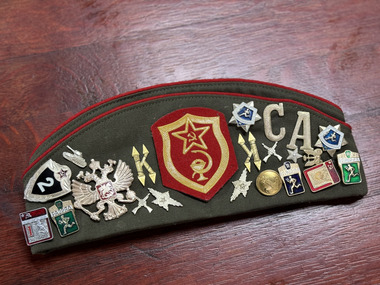
Uniform - Soviet Army Pilotka Cap
... Soviet Army Pilotka Cap...Soviet Army Pilotka Cap...Soviet Russian Army Pilotka Hat original Military badge...The cap is attached with numbers of military badges Soviet Russian Army Pilotka Hat original Military badge Soviet Army Pilotka Cap Uniform Soviet Army Pilotka Cap ...Soviet Russian Army Pilotka Hat original Military badgeThe cap is attached with numbers of military badges -
 The 5th/6th Battalion Royal Victoria Regiment Historical Collection
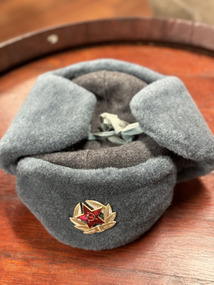
Headwear - Soviet Red Army Ushanka Winter fur hat
... Soviet Red Army Ushanka Winter fur hat...Soviet Red Army Ushanka Winter fur hat...Fur hat with Soviet symbol on the front of the hat Soviet Red Army Ushanka Winter fur hat Headwear Soviet Red Army Ushanka Winter fur hat ...Fur hat with Soviet symbol on the front of the hat -
 4th/19th Prince of Wales's Light Horse Regiment Unit History Room
Document, Defence Intelligence Agency, Defence Intelligence Agency Soviet Divisional Organizational Guide, Dec 1981
... ...Soviet Army...Intelligence Soviet Army DDB-1100-333-82 Loose leaf stapled document presenting descriptions of Soviet divisions, unclassified manning, equipment and organizational data based on best available information on divisions based in Germany Defence Intelligence Agency Soviet Divisional Organizational Guide Document Defence Intelligence Agency ...Loose leaf stapled document presenting descriptions of Soviet divisions, unclassified manning, equipment and organizational data based on best available information on divisions based in GermanyDDB-1100-333-82intelligence, soviet army -
4th/19th Prince of Wales's Light Horse Regiment Unit History Room
Document, Enemy Infantry Weapons, 1980's
... Soviet Army Weapons...Soviet Army Weapons Three page stapled document covering the following weapons: AK47 & AKM Rifles, RPK light machine gun, RPG 7V, RPG 7D anti tank missile launcher, the Draginov sniper rifle and M57 light mortar Enemy Infantry Weapons Document ...Three page stapled document covering the following weapons: AK47 & AKM Rifles, RPK light machine gun, RPG 7V, RPG 7D anti tank missile launcher, the Draginov sniper rifle and M57 light mortarsoviet army weapons -
 Bendigo Military Museum
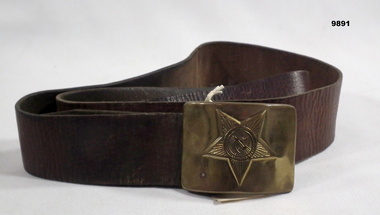
Uniform - BELT
... Belt from WW2 Soviet Army soldier with star and sickle on buckle. ...Belt from WW2 Soviet Army soldier with star and sickle on buckle. ...Belt from WW2 Soviet Army soldier with star and sickle on buckle. Part of the collection of William (Bill) THOMASON. CAT NO. 4136P.Brown leather belt with square brass buckle with 5 pointed star on buckle representing USSR.soviet uniform, belt -
 4th/19th Prince of Wales's Light Horse Regiment Unit History Room
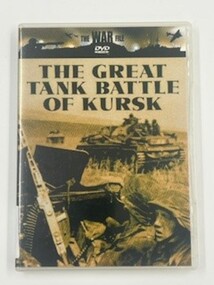
Film - DVD, The Great Tank Battle of Kursk
... The great tank battle of Kursk took place in 1943, when the Germans mounted a huge attack on the Soviet army with a force f some 900,000 men, 2,700 of their most fearsome tanks, 10,000 artillery pieces and 2,000 aircraft. ...The great tank battle of Kursk took place in 1943, when the Germans mounted a huge attack on the Soviet army with a force f some 900,000 men, 2,700 of their most fearsome tanks, 10,000 artillery pieces and 2,000 aircraft. ...The great tank battle of Kursk took place in 1943, when the Germans mounted a huge attack on the Soviet army with a force f some 900,000 men, 2,700 of their most fearsome tanks, 10,000 artillery pieces and 2,000 aircraft. Codenamed 'Operation Citadel', the attack was Adolf Hitler's plan to avenge the disaster that befell the German 6th Army at Stalingrad.DVD in caseThe War File - The Great Tank Battle of Kursk -
 Polish Museum & Archives in Australia
Pennant, La Casa de Banderin, 08/1955
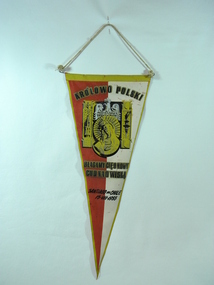
... In 1955 the Polish Community in Chile wanted to Commemorate the 10th Anniversary of the ending of the 2nd World War but, since it was not a happy occasion, as Poland had been betrayed and placed in the Soviet sphere of influence, they chose to create a Pennant with a plea for the Patron Icon of Eastern Poland - Our Lady of the Sharp/Morning Gate (Matka Boska Ostrobramska/Zaranna) in Vilnius (Wilno) - to give them a new Miracle on the Vistula, in reference to an epic battle which took place on 15th August 1922 on the banks of the Vistula (Wisla) River in which the Polish troops defeated the Soviet Army and turned back the march of Communism to the West. ...In 1955 the Polish Community in Chile wanted to Commemorate the 10th Anniversary of the ending of the 2nd World War but, since it was not a happy occasion, as Poland had been betrayed and placed in the Soviet sphere of influence, they chose to create a Pennant with a plea for the Patron Icon of Eastern Poland - Our Lady of the Sharp/Morning Gate (Matka Boska Ostrobramska/Zaranna) in Vilnius (Wilno) - to give them a new Miracle on the Vistula, in reference to an epic battle which took place on 15th August 1922 on the banks of the Vistula (Wisla) River in which the Polish troops defeated the Soviet Army and turned back the march of Communism to the West. ...In 1955 the Polish Community in Chile wanted to Commemorate the 10th Anniversary of the ending of the 2nd World War but, since it was not a happy occasion, as Poland had been betrayed and placed in the Soviet sphere of influence, they chose to create a Pennant with a plea for the Patron Icon of Eastern Poland - Our Lady of the Sharp/Morning Gate (Matka Boska Ostrobramska/Zaranna) in Vilnius (Wilno) - to give them a new Miracle on the Vistula, in reference to an epic battle which took place on 15th August 1922 on the banks of the Vistula (Wisla) River in which the Polish troops defeated the Soviet Army and turned back the march of Communism to the West. This particular Pennant was purchased by Stanislawa Zamecznik (nee Zakrzewska), while living in Chile after deportation from her birth place in Sianozatki near Bychov (Bychow) to Schweningen in Germany from which they emigrated to South America as Displaced Persons. It was brought to Australia when the Zakrzewski Family emigrated from Chile in 1956, first to Port Augusta and then subsequently to Sydney.It is significant in that it tells the story of the aspirations of the Polish Diaspora displaced from it's Homeland in the Kresy Region and scattered throughout the World, including the Americas and Australia.Pennant of red cloth with screen printing in white, mustard yellow and black hung on copper wire with gold cord Front: Polish inscription "KROLOWO POLSKI / BLAGAMY CIE O NOWY / CUD NAD WISLA / SANTIAGO DE CHILE / 15.VIII.1955" Back: Spanish inscription "LA CASA DE BANDERIN AHUMADA 61"polish pennant polski proporczyk orzel eagle matka boska ostrobramska zaranna our lady of vilnus santiago chile cud nad wisla miracle on the vistula -
 Brighton Historical Society
Clothing - Swimsuit, Ada of California, circa 1950s-60s
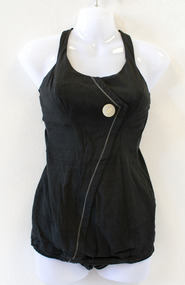
... In order to escape the horrific conditions of the camp, Ada and her sister Barbara joined the Soviet-backed Polish Army. During her time in the military she became close with a handsome young Jewish officer, Lieutenant Antoni Murkies, who later became her husband. ...In order to escape the horrific conditions of the camp, Ada and her sister Barbara joined the Soviet-backed Polish Army. During her time in the military she became close with a handsome young Jewish officer, Lieutenant Antoni Murkies, who later became her husband. ...This swimsuit belonged to Audrey May Ferguson (nee Fulton), a longtime Brighton resident. Ada of California was a Melbourne swimwear company founded in the early 1950s by Brighton locals Ada and Toni Murkies. Born in Poland in 1922, Ada was 17 when the Second World War reached her doorstep. She and her family were torn from their home by Soviet soldiers and sent to a brutal labour camp in Siberia as part of a series of mass deportations. In order to escape the horrific conditions of the camp, Ada and her sister Barbara joined the Soviet-backed Polish Army. During her time in the military she became close with a handsome young Jewish officer, Lieutenant Antoni Murkies, who later became her husband. After the war Toni was awarded 15 medals including the highest Polish military honour, the Virtuti Militari. Ada was awarded 10 medals, including the Order of the Cross of Grunwald. Emigrating to Australia as postwar refugees in 1948, Ada and Toni arrived in Melbourne with little to their name. Working initially in garment factories and building their connections, by the mid-1950s the couple were able to start a company of their own, with Ada designing the garments and Toni managing the business. Within ten years, Ada of California swimwear was being sold in department stores throughout Australia, and the Murkies family were able to build a permanent home of their own in Brighton. By the early 1980s they had acquired several other major labels, including Watersun.Black one-piece rayon and cotton swimsuit. Straps button at back. Asymmetrical zig-zag front with double-line of white stitching, embellished by a large cream button.Label, white with green palm tree logo and red text: "Ada / OF CALIFORNIA" Label, white with red text: "61% RAYON, 10% RUBBER, 29% COTTON 36"swimwear, audrey may ferguson, audrey may fulton, melbourne designers, ada of california, ada murkies, toni murkies, 1950s, 1960s -
 Brighton Historical Society
Swimsuit, Ada of California
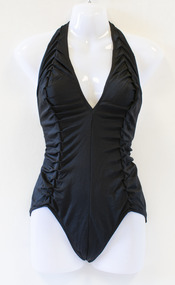
... In order to escape the horrific conditions of the camp, Ada and her sister Barbara joined the Soviet-backed Polish Army. During her time in the military she became close with a handsome young Jewish officer, Lieutenant Antoni Murkies, who later became her husband. ...In order to escape the horrific conditions of the camp, Ada and her sister Barbara joined the Soviet-backed Polish Army. During her time in the military she became close with a handsome young Jewish officer, Lieutenant Antoni Murkies, who later became her husband. ...Ada of California was a Melbourne swimwear company founded in the early 1950s by Brighton locals Ada and Toni Murkies. Born in Poland in 1922, Ada was 17 when the Second World War reached her doorstep. She and her family were torn from their home by Soviet soldiers and sent to a brutal labour camp in Siberia as part of a series of mass deportations. In order to escape the horrific conditions of the camp, Ada and her sister Barbara joined the Soviet-backed Polish Army. During her time in the military she became close with a handsome young Jewish officer, Lieutenant Antoni Murkies, who later became her husband. After the war Toni was awarded 15 medals including the highest Polish military honour, the Virtuti Militari. Ada was awarded 10 medals, including the Order of the Cross of Grunwald. Emigrating to Australia as postwar refugees in 1948, Ada and Toni arrived in Melbourne with little to their name. Working initially in garment factories and building their connections, by the mid-1950s the couple were able to start a company of their own, with Ada designing the garments and Toni managing the business. Within ten years, Ada of California swimwear was being sold in department stores throughout Australia, and the Murkies family were able to build a permanent home of their own in Brighton. By the early 1980s they had acquired several other major labels, including Watersun. This swimsuit is believed to be one of a large quantity of samples, seconds and unsold Ada Productions stock donated to Brighton Historical Society in late 1990 by Brian Samuel, who worked at the company between 1979 and 1990.Black one-piece swimsuit with deep v-neck and low-cut back and high-cut legs. Halter neck. Ruched sides. Label in side: "ada / 16"swimwear, ada of california, ada productions, melbourne designers, ada murkies, toni murkies -
 Brighton Historical Society
Swimsuit, Ada of California
... In order to escape the horrific conditions of the camp, Ada and her sister Barbara joined the Soviet-backed Polish Army. During her time in the military she became close with a handsome young Jewish officer, Lieutenant Antoni Murkies, who later became her husband. ...In order to escape the horrific conditions of the camp, Ada and her sister Barbara joined the Soviet-backed Polish Army. During her time in the military she became close with a handsome young Jewish officer, Lieutenant Antoni Murkies, who later became her husband. ...Ada of California was a Melbourne swimwear company founded in the early 1950s by Brighton locals Ada and Toni Murkies. Born in Poland in 1922, Ada was 17 when the Second World War reached her doorstep. She and her family were torn from their home by Soviet soldiers and sent to a brutal labour camp in Siberia as part of a series of mass deportations. In order to escape the horrific conditions of the camp, Ada and her sister Barbara joined the Soviet-backed Polish Army. During her time in the military she became close with a handsome young Jewish officer, Lieutenant Antoni Murkies, who later became her husband. After the war Toni was awarded 15 medals including the highest Polish military honour, the Virtuti Militari. Ada was awarded 10 medals, including the Order of the Cross of Grunwald. Emigrating to Australia as postwar refugees in 1948, Ada and Toni arrived in Melbourne with little to their name. Working initially in garment factories and building their connections, by the mid-1950s the couple were able to start a company of their own, with Ada designing the garments and Toni managing the business. Within ten years, Ada of California swimwear was being sold in department stores throughout Australia, and the Murkies family were able to build a permanent home of their own in Brighton. By the early 1980s they had acquired several other major labels, including Watersun. This swimsuit is believed to be one of a large quantity of samples, seconds and unsold Ada Productions stock donated to Brighton Historical Society in late 1990 by Brian Samuel, who worked at the company between 1979 and 1990.Blue backless one-piece swimsuit with ruching up sides and front. Halter neck. Straps loop down over hooks at the back.Label in side: "ada / 12"swimwear, ada of california, ada productions, melbourne designers, ada murkies, toni murkies -
 Brighton Historical Society
Swimsuit, late 1950s - early 1960s
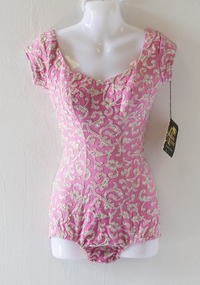
... In order to escape the horrific conditions of the camp, Ada and her sister Barbara joined the Soviet-backed Polish Army. During her time in the military she became close with a handsome young Jewish officer, Lieutenant Antoni Murkies, who later became her husband. ...In order to escape the horrific conditions of the camp, Ada and her sister Barbara joined the Soviet-backed Polish Army. During her time in the military she became close with a handsome young Jewish officer, Lieutenant Antoni Murkies, who later became her husband. ...Ada of California was a Melbourne swimwear company founded in the early 1950s by Brighton locals Ada and Toni Murkies. Born in Poland in 1922, Ada was 17 when the Second World War reached her doorstep. She and her family were torn from their home by Soviet soldiers and sent to a brutal labour camp in Siberia as part of a series of mass deportations. In order to escape the horrific conditions of the camp, Ada and her sister Barbara joined the Soviet-backed Polish Army. During her time in the military she became close with a handsome young Jewish officer, Lieutenant Antoni Murkies, who later became her husband. After the war Toni was awarded 15 medals including the highest Polish military honour, the Virtuti Militari. Ada was awarded 10 medals, including the Order of the Cross of Grunwald. Emigrating to Australia as postwar refugees in 1948, Ada and Toni arrived in Melbourne with little to their name. Working initially in garment factories and building their connections, by the mid-1950s the couple were able to start a company of their own, with Ada designing the garments and Toni managing the business. Within ten years, Ada of California swimwear was being sold in department stores throughout Australia, and the Murkies family were able to build a permanent home of their own in Brighton. By the early 1980s they had acquired several other major labels, including Watersun. This swimsuit is believed to be one of a large quantity of samples, seconds and unsold Ada Productions stock donated to Brighton Historical Society in late 1990 by Brian Samuel, who worked at the company between 1979 and 1990.Pink short-sleeved one-piece swimsuit with silver lamé embellishment. Sweetheart neckline and low-cut back with metal zip. A black and gold swing tag is attached to one sleeve.Label in bra: “Ada OF CALIFORNIA / MIRACULOUS s-t-r-e-t-c-h BRI-NYLON / 34” Swing tag, front: black with gold text and palm tree logo. “Ada / OF CALIFORNIA / ‘Limited Edition’”. Back: gold with black text. “‘Limited Edition’”. Interior: “Congratulations on your choice of ADA OF CALIFORNIA ‘Limited Edition” Swimsuit contoured for your discriminating taste. / Style 546 / Size 34 / Price £11.9.6”. Care instructions also included.swimwear, ada productions, ada of california, ada murkies, toni murkies, melbourne designers -
 Brighton Historical Society
Swimsuit, circa 1950s
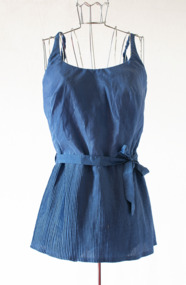
... In order to escape the horrific conditions of the camp, Ada and her sister Barbara joined the Soviet-backed Polish Army. During her time in the military she became close with a handsome young Jewish officer, Lieutenant Antoni Murkies, who later became her husband. ...In order to escape the horrific conditions of the camp, Ada and her sister Barbara joined the Soviet-backed Polish Army. During her time in the military she became close with a handsome young Jewish officer, Lieutenant Antoni Murkies, who later became her husband. ...This swimsuit belonged to Brighton local Joyce Fuller, nee Harries (1920-2018), who wore it at Dendy Beach in the 1950s. Ada of California was a Melbourne swimwear company founded in the early 1950s by Brighton locals Ada and Toni Murkies. Born in Poland in 1922, Ada was 17 when the Second World War reached her doorstep. She and her family were torn from their home by Soviet soldiers and sent to a brutal labour camp in Siberia as part of a series of mass deportations. In order to escape the horrific conditions of the camp, Ada and her sister Barbara joined the Soviet-backed Polish Army. During her time in the military she became close with a handsome young Jewish officer, Lieutenant Antoni Murkies, who later became her husband. After the war Toni was awarded 15 medals including the highest Polish military honour, the Virtuti Militari. Ada was awarded 10 medals, including the Order of the Cross of Grunwald. Emigrating to Australia as postwar refugees in 1948, Ada and Toni arrived in Melbourne with little to their name. Working initially in garment factories and building their connections, by the mid-1950s the couple were able to start a company of their own, with Ada designing the garments and Toni managing the business. Within ten years, Ada of California swimwear was being sold in department stores throughout Australia, and the Murkies family were able to build a permanent home of their own in Brighton. By the early 1980s they had acquired several other major labels, including Watersun. Visiting Brighton Historical Society in 2019, Ada recalled this particular swimsuit style to be a popular one, particularly with older women, as the cinched waist and pleated modesty skirt suited many body types. This was important to her, as she wanted women of all ages and sizes to look and feel good in her swimwear, and she devoted much time and attention to the fit and finish of the garments. When the company began introducing padded bras, such as the one in this swimsuit, Ada insisted on using lacy floral lining and a small ribbon rosette in the centre gore, to give women a sense of quality, femininity and care in construction.Blue one-piece swimsuit with waist tie and short finely pleated overskirt. Sleeveless with thin elasticised straps. Inbuilt padded underwire bra with label and pale pink ribbon rosette on centre gore. Fastens with back zip.Label: "Ada / OF CALIFORNIA / 38"swimwear, brighton, dendy street beach, ada of california, ada murkies, toni murkies, joyce fuller, joyce harries -
4th/19th Prince of Wales's Light Horse Regiment Unit History Room
Booklet, Recognition Handbook Foreign Weapons & Equipment (USSR), Oct 1964
... Soviet Weapons Army Code No 70009 Soft covered booklet of photographs and descriptions of Soviet weapons and equipment Recognition Handbook Foreign Weapons & Equipment (USSR) Booklet ...Soft covered booklet of photographs and descriptions of Soviet weapons and equipmentArmy Code No 70009soviet weapons -
 Monbulk RSL Sub Branch
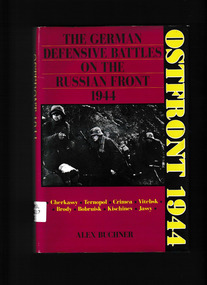
Book, Schiffer Military History, Ostfront 1944 : the German defensive battles on the Russian front, 1944, 1991
... world war 1939-1945 - campaigns - soviet union operation bagration This book describes the battles on the Eastern front in 1944 which resulted in the destruction of Army Group Centre Bibliography, ill, maps, p.304. ...This book describes the battles on the Eastern front in 1944 which resulted in the destruction of Army Group CentreBibliography, ill, maps, p.304.non-fictionThis book describes the battles on the Eastern front in 1944 which resulted in the destruction of Army Group Centreworld war 1939-1945 - campaigns - soviet union, operation bagration -
 Monbulk RSL Sub Branch
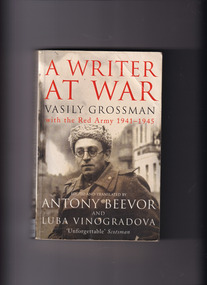
Book, Antony Beevor, The writer at war: Vasily Grossman with the red army 1941-195, 2006
... Deemed unfit for service when the Germans invaded the Soviet Union in 1941, Grossman became a special correspondent for The Red Star, the Red Army newspaper. ...Based on the notebooks in which Vasily Grossman gathered the raw material for his newspaper articles, A Writer at War depicts the crushing conditions on the Eastern Front during World War II and the lives and deaths of infantrymen, tank drivers, pilots, snipers, and civilians. Deemed unfit for service when the Germans invaded the Soviet Union in 1941, Grossman became a special correspondent for The Red Star, the Red Army newspaper. A portly novelist in his mid-thirties with no military experience, he was given a uniform and hastily taught how to use a pistol. Remarkably, he spent three of the next four years at the front, observing with a writer's eye the most pitiless fighting ever recorded.". "Grossman witnessed almost all the major events on the Eastern Front: the appalling defeats and desperate retreats of 1941, the defense of Moscow, and the fighting in the Ukraine. In August 1942 he was posted to Stalingrad, where he remained during four months of brutal street fighting. Grossman was present at the battle of Kursk (the largest tank engagement in history), and, as the Red Army advanced, he reached Berdichev, where his worst fears for his mother and other relatives were confirmed. A Jew himself, he undertook the faithful recording of Holocaust atrocities as their extent dawned. His report "The Hell of Treblinka" was used in evidence at the Nuremberg tribunalIndex, ill, maps, p.378.non-fictionBased on the notebooks in which Vasily Grossman gathered the raw material for his newspaper articles, A Writer at War depicts the crushing conditions on the Eastern Front during World War II and the lives and deaths of infantrymen, tank drivers, pilots, snipers, and civilians. Deemed unfit for service when the Germans invaded the Soviet Union in 1941, Grossman became a special correspondent for The Red Star, the Red Army newspaper. A portly novelist in his mid-thirties with no military experience, he was given a uniform and hastily taught how to use a pistol. Remarkably, he spent three of the next four years at the front, observing with a writer's eye the most pitiless fighting ever recorded.". "Grossman witnessed almost all the major events on the Eastern Front: the appalling defeats and desperate retreats of 1941, the defense of Moscow, and the fighting in the Ukraine. In August 1942 he was posted to Stalingrad, where he remained during four months of brutal street fighting. Grossman was present at the battle of Kursk (the largest tank engagement in history), and, as the Red Army advanced, he reached Berdichev, where his worst fears for his mother and other relatives were confirmed. A Jew himself, he undertook the faithful recording of Holocaust atrocities as their extent dawned. His report "The Hell of Treblinka" was used in evidence at the Nuremberg tribunalworld war 1939-1945 - campaigns - eastern europe, soviet union - german occupation - 1941-1944 -
 Monbulk RSL Sub Branch
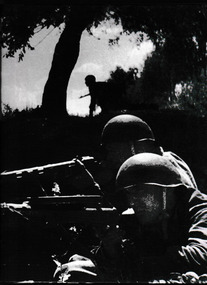
Book, Time-Life Books, The Soviet juggernaught, 1980
... World War 1939-1945 - Campaigns - Russia World war 1939-1945 - Red army Describes the victorious advance of the Red army after 1943 Index, bib, ill, p.208. The Soviet juggernaught Book Time-Life Books Earl F Ziemke ...Describes the victorious advance of the Red army after 1943Index, bib, ill, p.208.non-fictionDescribes the victorious advance of the Red army after 1943world war 1939-1945 - campaigns - russia, world war 1939-1945 - red army -
 Monbulk RSL Sub Branch
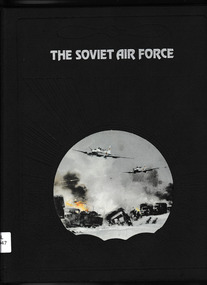
Book, Time Life Books, The Soviet Air Force at war, 1983
... World war 1939-1945 - Aerial operations - Russia Soviet Union - Air force Chapter heads: The Red Falcons of Bolshevism--Waging peace testing for war --The struggle for survival--Armies of the air--Pobyeda! ...Chapter heads: The Red Falcons of Bolshevism--Waging peace testing for war --The struggle for survival--Armies of the air--Pobyeda! Victory!Index, bibliography, ill, maps, p.176.non-fictionChapter heads: The Red Falcons of Bolshevism--Waging peace testing for war --The struggle for survival--Armies of the air--Pobyeda! Victory!world war 1939-1945 - aerial operations - russia, soviet union - air force -
Moorabbin Air Museum
Book - Military aviation tactics, Air Land Battle 2000
... Military aviation tactics Nuclear options Strike options Emerging technology Soviet war tactics Airland battle plan 2000 Overview of US Army plans for air/land battles in 2000, circa 1986 Air Land Battle 2000 Book Military aviation tactics ...Overview of US Army plans for air/land battles in 2000, circa 1986non-fictionOverview of US Army plans for air/land battles in 2000, circa 1986nuclear options, strike options, emerging technology, soviet war tactics, airland battle plan 2000 -
 City of Melbourne Libraries
Photograph (item), Bull, Hugh Jones, 1897-1993, Miss Ida Park conducts the North Fitzroy State School Choir
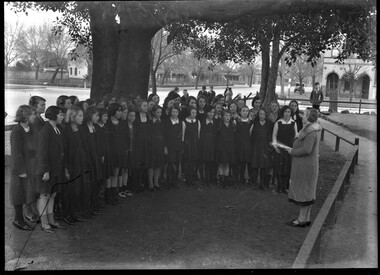
... army arrives and the cowardly men of the town flee. The womenfolk decide on a different approach. Lead by the burgomaster’s beautiful wife Cornelia, they set out to to preserve the peace with grace and hospitality only to find the Spaniards attractive and virile, unlike their own husbands. The Sun newspaper described the film as “Mellow as a Stilton cheese, and as ripely suited to adult taste.” Preceding “La Kermesse Heroique” was a Gaumont British newsreel of King George VI and Queen Elizabeth departing for a tour of Canada and the Soviet...army arrives and the cowardly men of the town flee. The womenfolk decide on a different approach. Lead by the burgomaster’s beautiful wife Cornelia, they set out to to preserve the peace with grace and hospitality only to find the Spaniards attractive and virile, unlike their own husbands. The Sun newspaper described the film as “Mellow as a Stilton cheese, and as ripely suited to adult taste.” Preceding “La Kermesse Heroique” was a Gaumont British newsreel of King George VI and Queen Elizabeth departing for a tour of Canada and the Soviet ...The pupils of Falconer Street Central School No.3918 in North Fitzroy rehearse with conductress Miss Ida Park for their performance at the Temperance Hall, Russell Street Melbourne with proceeds going to the Lord Mayor’s Fund. The house on the right of the photograph is Jubilee House, 126 Michael Street North Fitzroy and is extant. Photographer notations on slide: Choir At Fitzroy State School 1933 B5 While this photograph appears not to have been published, a photograph taken from a different angle of the same event was published in The Age 21 July 1933. SCHOOL CHILDREN SING IN THE OPEN AIR. “A choir of children at North Fitzroy practise their songs for a Pantomime, to be given in the Temperance Hall for the Lord Mayor's Fund on Wednesday next. On the extreme left is the conductress of the Choir (Miss Ida Park).” Reference: http://nla.gov.au/nla.news-article204368572 Research by project volunteer, Fiona Collyer: Children of The Falconer Street Central School Choral Society, trained by conductress Miss Ida Park, along with dance and gymnastics pupils of Misses Dorothy Gibb and Inez Ellis, performed in the “Cinderella” pantomime at the Temperance Hall in Russell Street, Melbourne on 26 July, 1933. The proceeds went to the Lord Mayor’s Fund. Conductress Miss Ida Park (1904- 1952) lived in the North Fitzroy and Clifton Hill area all her life. She was immersed in the music world of Melbourne and was a member of the Musical Society of Victoria. Ida graduated from Melbourne University Conservatorium with a Bachelor of Music degree in 1929 before departing for London where she studied piano and organ at the Royal Academy of Music. Ida returned to Melbourne in 1931, and billed as “The Gifted Young Australian Pianist”, held pianoforte recitals of classical music at Assembly Hall, Collins Street. She also played the organ for services at St Paul’s Independent Church in Delbridge Street, North Fitzroy and later St Luke’s, North Fitzroy. Ida conducted the children of the Falconer Street Central School Choral Society as they competed in the State School Choral Championships and the 85 children of the Fitzroy City Centenary Choir who sang at Melbourne’s Centenary celebrations of 1934/35. In 1945, Ida married Charles Hazeldine, a tenor and returned digger who had served in two world wars. The pair performed together in many concerts over the years. Tragically, both Ida and Charles were badly injured when struck by a car while crossing Queens Parade Clifton Hill in June 1952, with Ida dying from head injuries at St Vincent’s Hospital soon after. She was 48 years old. Charles wrote on Ida’s death notice - “Called home.” The choir were pupils of Falconer Street Central School No. 3918 in North Fitzroy which was built in 1915 to provide upper primary education for grades 5 to 8 for the area. In 1957 it became Fitzroy High School. In 1992, the Kennett Government swept to power, embarking on a program of fiscal austerity and privatisation of government services. 390 government schools were closed, with the land proposed to be sold to developers. 7000 teachers were sacked: 10% of Victoria’s public school teachers. Auxiliary school staff also lost their jobs. Amongst the first to close was Fitzroy High School. Fearful that the land would be sold, hundreds of students, parents, teachers and local residents occupied the building around-the-clock in four hour shifts and overnight for 14 months, sleeping on gym mats in the principal’s office and administrators’ wing. The blockade was lifted when a arrangement was reached to allow Kangan Batman TAFE to use the school from 1993 until 1998. With the election of the Bracks Government in 1999, and construction of new buildings, Fitzroy High School was reopened in 2004 after a 12 year battle. Temperance Hall, at 172 Russell Street, where the children performed “Cinderella”, was built in 1872 by the Melbourne Total Abstinence Society as a venue for lectures, meetings and alcohol-free community concerts and events. From 1934, Temperance Hall was fitted out as a cinema and renamed the Imperial Theatre, showing popular Hollywood films, before closing in 1939 for renovations and reopening as the Savoy Theatre, Melbourne’s first “Continental” talkies cinema. At this time, Australian cinema programming was dominated by American and British films. The lessees, Continental Film Art Theatre began negotiating for theatre properties in Melbourne, Sydney, Adelaide, Brisbane, Perth and Auckland to screen foreign language films, hoping to present the finest productions from France, Germany, Holland and Italy. At the cost of £6000, the theatre was fitted with the latest Mirrophonic sound and projection system and enlarged to seat 800 patrons with luxurious, ultra modern fittings and furnishings in a colour palette of rust and beige. Instead of usherettes, General Manager Peter Dawson, hoping to bring a sophisticated European atmosphere to the theatre, employed attractive, multilingual “Continental hostesses” to assist guests (not patrons) and answer queries relating to the films. Collectively the hostesses spoke English, French, Dutch, German, Russian and Italian. The Age 20 May 1939- “Atmosphere is a very important part of the theatre's scheme. Ushers in the ordinary sense will not be employed; hostesses will look upon patrons as guests. They will be dressed in full evening dress, and the only indication that they are not guests is the little medallion pinned to their evening dress, on which their names are inscribed.” The hostesses were dressed in evening gowns of olive-green velvet, the full skirts embroidered with gold loops, wine velvet bolero jackets and long white kid gloves with silvery tiaras in their hair. For guests worried that they may not understand the plot, the management assured patrons that- “By means of superimposed English translations on the bottom of the screen, the dialogue is perfectly understandable and the whole witty story can be followed with ease.” The Gala opening of the Savoy Theatre, on 31 May 1939 was attended by a “who’s who” of Melbourne Society, the women wearing beautiful gowns, headdresses and furs. Amongst the guests were former premier Sir Stanley Argyle and Lady Argyle, former Lord Mayor Sir Harold Gengoult-Smith and his wife Cynthia, Field Marshall Thomas Blamey and Lady Blamey and Miss Jessie Brookes. The Vice Consul for France, Monsieur Frank Puaux and his wife attended, Madame Puaux dressed in a black satin gown and a musquash fur cape. She was presented with a beautiful bouquet of scarlet carnations and lily of the valley tied with the tricolour of France. In his speech Monsieur Puaux stated that “from the cultural, linguistic and artistic points of view it was excellent that the Australian public should have an opportunity to see foreign film in the original language.” “Letty” writing in Table Talk magazine described the atmosphere of “Continental” gaiety that had permeated Melbourne - “The Letters of Letty”, Table Talk 8 June 1939 “The “foreign influence” is definitely obtruding itself into the even tenor of Melbourne life these days…. but in the pleasantest manner possible! Included in the great number of Continental people who have recently made their homes here, we have stars of the Russian ballet settling in our midst…. and now… we have been presented with our own Continental picture theatre in the attractive shape of The Savoy, which opened its doors on Wednesday night for the exclusive release of foreign films. One could hardly recognise the old Temperance Hall in its adaptation to the smart, comfortable and thoroughly-intriguing Savoy Theatre. Where once this rather draughty old building stood in Russell Street there now greets us an unmistakable “Continental” edifice, living up to its exterior by sustaining within its walls its overseas’ atmosphere. Indeed, one feels as though one has crossed the threshold into a European city, stepping out of the unmistakably Australian street that is Russell into The Savoy lounge to be greeted by polite “messieurs” from the attractive, Continental-looking usherettes and to gaze upon a film as delightfully French in story and presentation as “La Kermesse Heroique.” But successful though “La Kermesse Heroique” proved on its initial presentation inside the theatre, the debut was no more triumphal than that made by the winning and pretty little French lass who had charge of the booking office outside in the foyer. With her attractive accent and Continental flair for making one “feel at home” she was undoubtedly one of the hits of the night-especially with the susceptible males, who spent very much longer in the lounge than is customary, racking their brains for excuses for making conversation with the attractive Parisienne! Those French girls certainly have a way with them!” The opening film, the 1935 French comedy “La Kermesse Heroique”, (The Heroic Sex) starring Francoise Rosay and Jean Murat (film now called “Carnival in Flanders”) was the winner of the Grand Prix du Cinema Francais as the finest picture of 1936 and described in the advertisement as “The Gay French Comedy of Laughter and Romance” The film is set during the 17th century Spanish occupation of Flanders in the Flemish town of Boom at the time of their annual festival. Hearing news of a pending visit to Boom by the commander, the Duke of Olivares and his army, and fearing rape and pillage, the boorish burgomaster feigns his own death, hoping the Spaniards will bypass the grieving town out of respect. The army arrives and the cowardly men of the town flee. The womenfolk decide on a different approach. Lead by the burgomaster’s beautiful wife Cornelia, they set out to to preserve the peace with grace and hospitality only to find the Spaniards attractive and virile, unlike their own husbands. The Sun newspaper described the film as “Mellow as a Stilton cheese, and as ripely suited to adult taste.” Preceding “La Kermesse Heroique” was a Gaumont British newsreel of King George VI and Queen Elizabeth departing for a tour of Canada and the Soviet documentary “Nine Months on a Drifting Ice Floe” During the war “Continental” films became difficult to source, so the Savoy screened Hollywood movies and held fund raisers for the war effort. After World War Two, the Savoy continued to screen “Continental” films, catering to post-war immigrants from Europe and bohemian Melburnians. In 1953, the Savoy had a wildly popular season with queues winding around the block to see Swedish summer romance “One Summer of Happiness” (Hon dansade en sommar) with its nude swimming scenes. The Chief Commonwealth Censor declined to cut the film on the grounds that although it displayed nudity, it was genuinely artistic. According to Wikipedia, film director Fred Schepisi was first exposed to European films such as “Bicycle Thieves”, “Rocco and His Brothers” and “The Wages of Fear” at the Savoy as a teenager, leading to his long career in filmmaking. In 1955, in response to the massive rise in car ownership, the Melbourne City Council recommended that parking stations be built on every block. The Savoy Theatre and adjacent buildings, which included the Golden Fleece Hotel were demolished in 1963 and replaced with Total House, a Brutalist commercial building consisting of a seven storey car park crowned by a four storey office block, shops at street level, and a basement theatre which housed the Lido Theatre Restaurant-Cabaret from 1965. The building was designed by architectural firm Bogle & Banfield Associates and named for the original tenant of the offices, French oil company, Total Oil Products P/L. The Lido Theatre Restaurant was managed by former Tivoli dancer and promoter David Hamilton McIlwraith, presenting dinner and a glamorous cabaret floor show of showgirls, (some topless) to accompany variety acts by local and international actors, singers, comedians and magicians. The interior of the Lido was opulently decorated in deep, lush green with old world gold trim and chandeliers. Handily, patrons could enter and leave via an elevator, straight from the building’s own car park! A four course gourmet dinner with show and dancing cost $8.00 in 1968. The Lido advertised in 1966 that “Every visitor to Melbourne soon discovers the brightest entertainment spot in the Southern Hemisphere with its million dollar decor, dining delights and spectacular stage productions.” Australian Jewish News - 21 April 1967 - “Superb decor and atmosphere, cuisine and service have been readily recognised as the contributing factors to the excellence of stage presentations, staging, costumes, decor and, of course, the actual choice of artists.” The bedazzling ensemble of 40 high-kicking, feathered and sequinned showgirls were advertised as the “Fabulous Lido girls and the controversial Baretop Lido Goddesses” who were described as “Statuesque Beauty as Nature intended” and “…a host of glamorous gals whose favourite shade is flesh pink.” Some of the acts who performed at the Lido were- -Broken Hill’s own - opera singer June Bronhill -1967. -Versatile singer Lovelace Watkins known as “Black Sinatra - 1967. -“Queen of the five-fingered boogie", honky-tonk and rollicking rag-time pianist, Winifred Atwell - 1967. -New Zealand pop duo, Bill and Boyd -1968. -American actress and soprano Kathryn Grayson -1968. -Denise Drysdale in “Say It With Music” -1968. -“Catwoman” Eartha Kitt -1969. -Internationally recognised female impersonator, Sydneysider Tracey Lee, (Maxwell Richie) billed as "controversial impressionist and singing personality from the famous Carousel Nightspot in Paris". -Frances Faye, American comedienne and show-tune singer and pianist-1969. -“Cry Guy” histrionic singer Johnnie Ray -1970. -Risqué revue “Oh Calcutta!” with some segments and the “four letter” words removed-1970. In 1970, under new management, the Lido was renovated with claret and gold wallpaper, midnight blue ceiling and a computerised fountain with fairy lights and relaunched by “The Tigress from Tiger Bay”, Shirley Bassey. The relaunch was short lived however, as later that year the venue became El Toro Espana, a Spanish restaurant and nightclub offering a four course meal for $4.50 while you watched the floorshow. The venue then briefly became the Red Garter Music Hall Theatre from 1972, then in 1974 the site became the 600 seat Total Theatre comprising of a cinema with a stage for live acts. There were also three bars to choose from - the Crush Bar, the Bleachers and the Snake Pit. Total Theatre had the unusual concept of a live music act, or plays, musicals and magicians followed by a film. In 1975 soprano Suzanne Steele featured, followed by the film “The Voyage” starring Sophia Loren and Richard Burton. In 1975, the Total held a rock film festival showing a Jimi Hendrix documentary, “Monterey Pop Festival”, “Pink Floyd in Pompeii” and more. In 1976, 17 year old Chrissy Amphlett, later of rock band Divinyls, played the role of Linda Lips for nine months in the Australian stage production of R-rated “sexual musical”, “Let My People Come” at the Total Theatre. The Total Theatre closed in 1979 and from 1980 to 2014 the venue became Billboard Nightclub, hosting local and international acts, including INXS, Tina Turner and John Farnham, and in 2009, 18 year old Taylor Swift. The venue is now called 170 Russell and presents hundreds of live local and international acts every year. In 2014, after being under threat of demolition, Total House was listed on the Victorian Heritage Register as “a landmark of post-World War II modernist design and…one of the earliest and best expressions of Brutalist architecture in Victoria”. References: RICHARD CROOKS ARRIVES SCHOOL AGAIN VENUE OF ROYAL VISIT (1939, May 31). The Age (Melbourne, Vic. : 1854 - 1954), p. 17. Retrieved November 21, 2025, from http://nla.gov.au/nla.news-article205629696 AMUSEMENTS. (1933, July 27). The Age (Melbourne, Vic. : 1854 - 1954), p. 12. Retrieved September 19, 2025, from http://nla.gov.au/nla.news-article204378853 https://larzra.wordpress.com/origins/ CONTINENTAL HOSTESSES, (1939, May 31). The Sun News-Pictorial (Melbourne, Vic. : 1922 - 1954; 1956), p. 27. Retrieved November 21, 2025, from http://nla.gov.au/nla.news-article278189387 The Letters of Letty (1939, June 8). Table Talk (Melbourne, Vic. : 1885 - 1939), p. 12. Retrieved October 29, 2025, from http://nla.gov.au/nla.news-article149320966 SAVOY THEATRE (1939, June 1). The Age (Melbourne, Vic. : 1854 - 1954), p. 7. Retrieved September 19, 2025, from http://nla.gov.au/nla.news-article205639035 NEW THEATRE OPENED (1939, June 1). The Argus (Melbourne, Vic. : 1848 - 1957), p. 8. Retrieved September 21, 2025, from http://nla.gov.au/nla.news-article12134234 https://en.wikipedia.org/wiki/Total_House Page [?] TOUCH OF SPAIN (1970, December 18). The Australian Jewish News (Melbourne, Vic. : 1935 - 1999), p. 35. Retrieved September 23, 2025, from http://nla.gov.au/nla.news-article262493757 No title (1935, June 11). The Herald (Melbourne, Vic. : 1861 - 1954), p. 27. Retrieved September 29, 2025, from http://nla.gov.au/nla.news-article244840169 Dine, wine, and watch a stage show (1966, November 16). The Australian Women's Weekly (1933 - 1982), p. 6. Retrieved November 9, 2025, from http://nla.gov.au/nla.news-article44025050 http://jonathanbollen.net/2011/02/26/tracey-lee/ LIDO ‘ART’ (1967, April 21). The Australian Jewish News (Melbourne, Vic. : 1935 - 1999), p. 8. Retrieved November 9, 2025, from http://nla.gov.au/nla.news-article263003136 THE FABULOUS LIDO (1965, October 22). The Australian Jewish News (Melbourne, Vic. : 1935 - 1999), p. 17. Retrieved November 9, 2025, from http://nla.gov.au/nla.news-article262983995 No title (1939, May 31). The Argus (Melbourne, Vic. : 1848 - 1957), p. 6. Retrieved November 21, 2025, from http://nla.gov.au/nla.news-article12134144 #NEW THEATRE OPENED (1939, June 1). The Argus (Melbourne, Vic. : 1848 - 1957), p. 8. Retrieved September 29, 2025, from http://nla.gov.au/nla.news-article12134234 https://en.wikipedia.org/wiki/Tracey_Lee_(female_impersonator) https://citycollection.melbourne.vic.gov.au/35b-40h-image-of-a-model-for-the-total-house-offices-and-car-park-on-russell-street/ https://www.theage.com.au/national/victoria/from-the-archives-1990-s-hundreds-of-school-closures-hit-victoria-20190801-p52cwj.html http://jonathanbollen.net/2011/05/29/the-lido-melbourne/Photographer notations on slide: primary schools, schools, music, education, choirs, fitzroy, cars, theatre restaurants, venues, films -
 Bendigo Historical Society Inc.
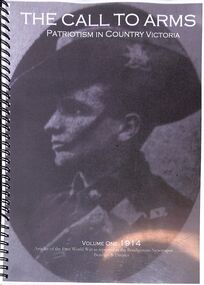
Book - "The Call to Arms. Patriotism in Country Victoria. Volume 1.", 2011
... Later that year, the Bolsheviks seized power in Russia in the October Revolution; Soviet Russia signed an armistice with the Central Powers in December, followed by a separate peace in March 1918. That month, Germany launched a spring offensive in the west, which despite initial successes left the German Army exhausted and demoralised. ...Later that year, the Bolsheviks seized power in Russia in the October Revolution; Soviet Russia signed an armistice with the Central Powers in December, followed by a separate peace in March 1918. That month, Germany launched a spring offensive in the west, which despite initial successes left the German Army exhausted and demoralised. ...World War one began in 1914, and ended in 1918. World War I or the First World War (28 July 1914 – 11 November 1918), also known as the Great War, was a global conflict between two coalitions: the Allies (or Entente) and the Central Powers. One of the deadliest conflicts in history, World War I resulted in an estimated 15 to 22 million deaths, including those in war crimes and genocides. The war also helped spread the Spanish flu pandemic. The conflict saw important developments in weaponry, including the first large-scale use of machine guns, artillery, aircraft, chemical weapons, and tanks. The causes of World War I included the rise of the German Empire, which disturbed the long-standing balance of power in Europe, and the exacerbation of imperial rivalries, as reflected in new alliances and an arms race between the great powers. Tensions in the Balkans reached a breaking point on 28 June 1914 when Gavrilo Princip, a Bosnian Serb, assassinated Franz Ferdinand, the heir to the Austro-Hungarian throne. Austria-Hungary blamed Serbia and declared war on 28 July, upon which the Russian Empire mobilised in Serbia's defence. In early August, Germany declared war on Russia and France; the United Kingdom entered the war after Germany invaded Belgium. Germany's strategy in 1914 was to quickly defeat France, but its advance was halted in September, and the Western Front solidified into a near-continuous line of fortified trenches from the English Channel to Switzerland. The Eastern Front was more dynamic, but neither side gained a decisive advantage, despite costly offensives. The Ottoman Empire joined the Central Powers in November, which was followed by a failed Allied campaign at Gallipoli. Japan and Italy also joined the Allies. Major battles, including those at Verdun, the Somme, and Passchendaele, failed to break the stalemate on the Western Front. In April 1917, the United States joined the Allies after Germany resumed unrestricted submarine warfare against Atlantic shipping. Later that year, the Bolsheviks seized power in Russia in the October Revolution; Soviet Russia signed an armistice with the Central Powers in December, followed by a separate peace in March 1918. That month, Germany launched a spring offensive in the west, which despite initial successes left the German Army exhausted and demoralised. The Allied Hundred Days Offensive, beginning in August 1918, caused a collapse of the German front line. By early November, the Allies had signed armistices with the Ottomans and with Austria-Hungary, leaving Germany isolated. Facing a revolution at home, Kaiser Wilhelm II abdicated on 9 November, and the war ended with the Armistice of 11 November 1918. Metal spiral bound book. Plastic clear cover, and black cardboard back cover. Soft cover. Cover has an image of a black and white image of the bust of a soldier looking to the left. Titles in white. 121 pages. Contains articles of the First World War as reported in the 'Bendigonian Newspaper'. Contains a timeline of significant events during WW1. Has index. Transcribed by Pamela Houston. Printed by Bendigo Copy Centre, Bendigo. Volume one deals with 1914.world war one, soldiers, bendigonian newspapaper
