
Showing 42 items matching "specialist book on health"
-
 Bendigo Historical Society Inc.
Book - MEDICAL DISEASES OF INFANCY AND CHILDHOOD, 1893
... ...specialist book on health...BOOK specialist book on health Children's diseases. Dawson Williams. ...Medical Diseases of Infancy and Childhood. A Medical Practitioners handbook.Dawson Williams. M.D.Lon.book, specialist book on health, children's diseases. -
 Flagstaff Hill Maritime Museum and Village
Book - General Medical Reference Annuals, Various Medical Contributors, The Medical Annual and Practitioners Index 1890, 1890
... These were written by leading specialists and practitioners, and include useful reference tables listing new medical publications, official health reports, asylum statistics, instruments, and pharmaceutical suppliers. Publication Details Hard cover book ...The 1890 volume is the 8th annual edition (8th year of issue) in the continuous annual series. The Medical Annual and Practitioners’ Index was one of the premier late-Victorian medical reference works. Starting in 1883/1884, the publication served as an essential year-end review digest for medical practitioners across Great Britain and the British colonies. The volume contains reviews of therapeutic progress achieved and new remedies for medical conditions, including detailed summaries of new drugs, synthetic chemicals, serums, and pharmacological advances introduced during 1889–1890. There is also a dictionary of new treatments, as well as summaries of clinical practices and breakthroughs in antiseptic surgery, gynaecology, neurology, and infectious diseases. These were written by leading specialists and practitioners, and include useful reference tables listing new medical publications, official health reports, asylum statistics, instruments, and pharmaceutical suppliers.Hard cover book. The Medical Annual and Practitioners Index for 1890 Author: Various Contributors Editor: Dr. Percy Roberts Wilde Publisher: John Wright & Co. Bristol. (Simpkin Marshall, Hamilton, Kent & Co Ltd. For London) Date: 1890 Further Information: Further Information: Blue cloth hard cover brown spine. Spine bands and panel edges somewhat rubbed and dust-toned as with age. Embossed patterning with lettering to Spine in Gilt, Publishers logo to front cover with Volume title.non-fictionThe 1890 volume is the 8th annual edition (8th year of issue) in the continuous annual series. The Medical Annual and Practitioners’ Index was one of the premier late-Victorian medical reference works. Starting in 1883/1884, the publication served as an essential year-end review digest for medical practitioners across Great Britain and the British colonies. The volume contains reviews of therapeutic progress achieved and new remedies for medical conditions, including detailed summaries of new drugs, synthetic chemicals, serums, and pharmacological advances introduced during 1889–1890. There is also a dictionary of new treatments, as well as summaries of clinical practices and breakthroughs in antiseptic surgery, gynaecology, neurology, and infectious diseases. These were written by leading specialists and practitioners, and include useful reference tables listing new medical publications, official health reports, asylum statistics, instruments, and pharmaceutical suppliers.flagstaff hill, warrnambool, shipwrecked-coast, flagstaff-hill, flagstaff-hill-maritime-museum, maritime-museum, shipwreck-coast, flagstaff-hill-maritime-village, the medical annual and practitioners index 1890, book, medical reference books, medical annual -
 Monbulk RSL Sub Branch
Book, Australian Broadcasting Corporation, P.O.W. : prisoners of war, 1985
... No historian has written a book to cover the range of camps and experiences, and only in specialist medical publications has anyone investigated the impact of prison life on subsequent physical and mental health. ...Within three months of the Japanese entering World War II on December 8, 1941 over 22 000 Australians had become prisoners-of-war. They went into camps in Timor, Ambon, New Britain, Java, Sumatra, Borneo, Singapore and Malaya, and a few were scattered to other points in what was briefly part of the Japanese empire. Later most of the prisoners were to be shifted further north into South-east Asia, Formosa, Korea, Manchuria and Japan itself. They were captives within lands and cultures and to experiences alien to those known to all other Australians. At the end of the war in August 1945, 14315 servicemen and thirty service women were alive to put on new, loose-fitting uniforms and go home. One in three of the prisoners had died. That is, nearly half of the deaths suffered by Australians in the war in the Pacific were among men and women who had surrendered. Another 8174 Australians had been captured in the fighting in Europe, the Middle East and North Africa: but of these men only 265 died as a result of wounds, disease or execution.By any quantitative measure the imprisonment of so many Australians is a major event in Australian history. For many soldiers it was living --and dying --in captivity which made World War II different from that of World War I. But the prisoners have received no permanent place in Australian history. Their story is not immediately recalled on celebratory occasions. In a general history of the nation in which a chapter is given to the war the prisoners might be mentioned in a sentence, or part of a sentence. Where the horror, stoicism and gallantry of Gallipoli have become part of a common tradition shared by all Australians, the ex-prisoners are granted just the horror. The public may be sympathetic; but the horror is for the prisoners alone. To make another comparison: in five months of fighting on the Kokoda Trail in 1942 the Australians lost 625 dead, less than the number who died on Ambon. Yet the events on Ambon are unknown to most Australians. There were no reporters or cameramen on Ambon and, for the 309 who defended Ambon's Laha airfield, no survivors. How many of them died in battle or died as prisoners will never be known. But there are more than just practical reasons why the record of the prisoners of war is so slight and uneven in the general knowledge of Australians. They have not tried to find out. No historian has written a book to cover the range of camps and experiences, and only in specialist medical publications has anyone investigated the impact of prison life on subsequent physical and mental health. The complexity of the experience and its impact on particular lives have not been expressed in a way to give them significance for other Australians.Index, bib, ill, maps, p.224.Within three months of the Japanese entering World War II on December 8, 1941 over 22 000 Australians had become prisoners-of-war. They went into camps in Timor, Ambon, New Britain, Java, Sumatra, Borneo, Singapore and Malaya, and a few were scattered to other points in what was briefly part of the Japanese empire. Later most of the prisoners were to be shifted further north into South-east Asia, Formosa, Korea, Manchuria and Japan itself. They were captives within lands and cultures and to experiences alien to those known to all other Australians. At the end of the war in August 1945, 14315 servicemen and thirty service women were alive to put on new, loose-fitting uniforms and go home. One in three of the prisoners had died. That is, nearly half of the deaths suffered by Australians in the war in the Pacific were among men and women who had surrendered. Another 8174 Australians had been captured in the fighting in Europe, the Middle East and North Africa: but of these men only 265 died as a result of wounds, disease or execution.By any quantitative measure the imprisonment of so many Australians is a major event in Australian history. For many soldiers it was living --and dying --in captivity which made World War II different from that of World War I. But the prisoners have received no permanent place in Australian history. Their story is not immediately recalled on celebratory occasions. In a general history of the nation in which a chapter is given to the war the prisoners might be mentioned in a sentence, or part of a sentence. Where the horror, stoicism and gallantry of Gallipoli have become part of a common tradition shared by all Australians, the ex-prisoners are granted just the horror. The public may be sympathetic; but the horror is for the prisoners alone. To make another comparison: in five months of fighting on the Kokoda Trail in 1942 the Australians lost 625 dead, less than the number who died on Ambon. Yet the events on Ambon are unknown to most Australians. There were no reporters or cameramen on Ambon and, for the 309 who defended Ambon's Laha airfield, no survivors. How many of them died in battle or died as prisoners will never be known. But there are more than just practical reasons why the record of the prisoners of war is so slight and uneven in the general knowledge of Australians. They have not tried to find out. No historian has written a book to cover the range of camps and experiences, and only in specialist medical publications has anyone investigated the impact of prison life on subsequent physical and mental health. The complexity of the experience and its impact on particular lives have not been expressed in a way to give them significance for other Australians.world war 1939 – 1945 - prisons and prisoners – japanese, world war 1939-1945 - personal narrativies - australia -
 Numurkah & District Historical Society
Isolation Ward Medical Displays - overview
... Shelf One – North End of Isolation Ward 1 x slipper enamel bedpan 1 x enamel pan with spout 1 x stainless steel bedpan 1 x stainless steel urinal 2 x ceramic urinals 1 x ceramic bowl Shelf Two – North end of Isolation Ward 1 x small enamel kidney dish 2 x slipper ceramic bedpans 1 x enamel wash-bowl & jug Shelf Three – North end of Isolation Ward 1 X dry Steriliser Shelf Four – North end of Isolation Ward 1 X steam Steriliser Shelf One – South end of Isolation Ward 1 x nurse’s dictionary Domestic Medical Practice Book Doctor and Specialist Book Aids to Gynaecological Nursing Book Foundations of Anatomy & Physiology Book 2 x thermometers 1 x stainless steel swab bowl 1 x ophthalmoscope 1 x stainless bowl & bandages 1 x scissors/ tweezers kit 1 x large operating scissors & 1 x operating tweezers 1 x camode pot 1 x sigmoidoscope 3 x plessors Shelf Two – South end of Isolation Ward 1 x ceramic jug Kaarimba Ladies Auxiliary History of Num. Dist. Health...hospital, medical equipment Shelf One – North End of Isolation Ward 1 x slipper enamel bedpan 1 x enamel pan with spout 1 x stainless steel bedpan 1 x stainless steel urinal 2 x ceramic urinals 1 x ceramic bowl Shelf Two – North end of Isolation Ward 1 x small enamel kidney dish 2 x slipper ceramic bedpans 1 x enamel wash-bowl & jug Shelf Three – North end of Isolation Ward 1 X dry Steriliser Shelf Four – North end of Isolation Ward 1 X steam Steriliser Shelf One – South end of Isolation Ward 1 x nurse’s dictionary Domestic Medical Practice Book Doctor and Specialist Book Aids to Gynaecological Nursing Book Foundations of Anatomy & Physiology Book 2 x thermometers 1 x stainless steel swab bowl 1 x ophthalmoscope 1 x stainless bowl & bandages 1 x scissors/ tweezers kit 1 x large operating scissors & 1 x operating tweezers 1 x camode pot 1 x sigmoidoscope 3 x plessors Shelf Two – South end of Isolation Ward 1 x ceramic jug Kaarimba Ladies Auxiliary History of Num. Dist. Health ...Shelf One – North End of Isolation Ward 1 x slipper enamel bedpan 1 x enamel pan with spout 1 x stainless steel bedpan 1 x stainless steel urinal 2 x ceramic urinals 1 x ceramic bowl Shelf Two – North end of Isolation Ward 1 x small enamel kidney dish 2 x slipper ceramic bedpans 1 x enamel wash-bowl & jug Shelf Three – North end of Isolation Ward 1 X dry Steriliser Shelf Four – North end of Isolation Ward 1 X steam Steriliser Shelf One – South end of Isolation Ward 1 x nurse’s dictionary Domestic Medical Practice Book Doctor and Specialist Book Aids to Gynaecological Nursing Book Foundations of Anatomy & Physiology Book 2 x thermometers 1 x stainless steel swab bowl 1 x ophthalmoscope 1 x stainless bowl & bandages 1 x scissors/ tweezers kit 1 x large operating scissors & 1 x operating tweezers 1 x camode pot 1 x sigmoidoscope 3 x plessors Shelf Two – South end of Isolation Ward 1 x ceramic jug Kaarimba Ladies Auxiliary History of Num. Dist. Health Nursing Certificates & Notebooks – Winifred Smith Shelf Three – South end of Isolation Ward Nursing Certificates & Notebooks – Winifred Smith Shelf Four – South end of Isolation Ward 1 x white enamel bucket 1 x enamel bowl Glass Cabinet: Premature Babies Book Handbook of Paediatrics Various health brochures 1 x enamel potty, dry liners, nappy pins 1 x infant welfare leather case 2 x breast pump 2 x dippers Medical Items placed around the room 1 x kidney dish with syringes & bandage 1 x stethoscope 1 x catheters 1 x oxygen tubing 1 x hospital bed (pre-dates 1950’s eg from local private hospital) 1 x operating table and 1 x theatre stool (original Numurkah Hospital 1950’s) 1 x heart table 1 x dental chair, mouthwash dish & stand 3 x wooden crutches 1 x early dentist chair 1 x Infant Welfare Centre sign hospital, medical equipment -
 Flagstaff Hill Maritime Museum and Village
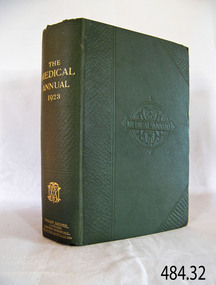
Book - General Medical Reference Annuals, Various Medical Contributors, The Medical Annual and Practitioners Index 1923, 1923
... These were written by leading specialists and practitioners, and include useful reference tables listing new medical publications, official health reports, asylum statistics, instruments, and pharmaceutical suppliers. Publication Details Hard cover book ...The 1923volume is the Fort First annual edition (41 years of issue) in the continuous annual series. The Medical Annual and Practitioners’ Index was one of the premier late-Victorian medical reference works. Starting in 1883/1884, the publication served as an essential year-end review digest for medical practitioners across Great Britain and the British colonies. The volume contains reviews of therapeutic progress achieved and new remedies for medical conditions, including detailed summaries of new drugs, synthetic chemicals, serums, and pharmacological advances introduced during 1889–1890. There is also a dictionary of new treatments, as well as summaries of clinical practices and breakthroughs in antiseptic surgery, gynaecology, neurology, and infectious diseases. These were written by leading specialists and practitioners, and include useful reference tables listing new medical publications, official health reports, asylum statistics, instruments, and pharmaceutical suppliers.Hard cover book. The Medical Annual and Practitioners Index for 1923 Author: Various Contributors Editor: Dr. Percy Roberts Wilde Publisher: John Wright & Co. Bristol. (Simpkin Marshall, Hamilton, Kent & Co Ltd. For London) Date: 1923 Further Information: Further Information: Blue cloth hard cover brown spine. Spine bands and panel edges somewhat rubbed and dust-toned as with age. Embossed patterning with lettering to Spine in Gilt, Publishers logo to front cover with Volume title.non-fictionThe 1923volume is the Fort First annual edition (41 years of issue) in the continuous annual series. The Medical Annual and Practitioners’ Index was one of the premier late-Victorian medical reference works. Starting in 1883/1884, the publication served as an essential year-end review digest for medical practitioners across Great Britain and the British colonies. The volume contains reviews of therapeutic progress achieved and new remedies for medical conditions, including detailed summaries of new drugs, synthetic chemicals, serums, and pharmacological advances introduced during 1889–1890. There is also a dictionary of new treatments, as well as summaries of clinical practices and breakthroughs in antiseptic surgery, gynaecology, neurology, and infectious diseases. These were written by leading specialists and practitioners, and include useful reference tables listing new medical publications, official health reports, asylum statistics, instruments, and pharmaceutical suppliers.flagstaff hill, warrnambool, shipwrecked-coast, flagstaff-hill, flagstaff-hill-maritime-museum, maritime-museum, shipwreck-coast, flagstaff-hill-maritime-village, the medical annual and practitioners index 1890, book, medical reference books, medical annual -
 Flagstaff Hill Maritime Museum and Village
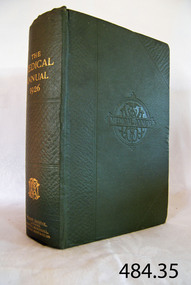
Book - General Medical Reference Annuals, Various Medical Contributors, The Medical Annual and Practitioners Index 1926, 1926
... These were written by leading specialists and practitioners, and include useful reference tables listing new medical publications, official health reports, asylum statistics, instruments, and pharmaceutical suppliers. Publication Details Hard cover book ...The 1926 volume is the forty fourth annual edition (44 years of issue) in the continuous annual series. The Medical Annual and Practitioners’ Index was one of the premier late-Victorian medical reference works. Starting in 1883/1884, the publication served as an essential year-end review digest for medical practitioners across Great Britain and the British colonies. The volume contains reviews of therapeutic progress achieved and new remedies for medical conditions, including detailed summaries of new drugs, synthetic chemicals, serums, and pharmacological advances introduced during 1889–1890. There is also a dictionary of new treatments, as well as summaries of clinical practices and breakthroughs in antiseptic surgery, gynaecology, neurology, and infectious diseases. These were written by leading specialists and practitioners, and include useful reference tables listing new medical publications, official health reports, asylum statistics, instruments, and pharmaceutical suppliers.Hard cover book. The Medical Annual and Practitioners Index for 1926 Author: Various Contributors Editor: Dr. Percy Roberts Wilde Publisher: John Wright & Co. Bristol. (Simpkin Marshall, Hamilton, Kent & Co Ltd. For London) Date: 1926 Further Information: Further Information: Blue cloth hard cover brown spine. Spine bands and panel edges somewhat rubbed and dust-toned as with age. Embossed patterning with lettering to Spine in Gilt, Publishers logo to front cover with Volume title.non-fictionThe 1926 volume is the forty fourth annual edition (44 years of issue) in the continuous annual series. The Medical Annual and Practitioners’ Index was one of the premier late-Victorian medical reference works. Starting in 1883/1884, the publication served as an essential year-end review digest for medical practitioners across Great Britain and the British colonies. The volume contains reviews of therapeutic progress achieved and new remedies for medical conditions, including detailed summaries of new drugs, synthetic chemicals, serums, and pharmacological advances introduced during 1889–1890. There is also a dictionary of new treatments, as well as summaries of clinical practices and breakthroughs in antiseptic surgery, gynaecology, neurology, and infectious diseases. These were written by leading specialists and practitioners, and include useful reference tables listing new medical publications, official health reports, asylum statistics, instruments, and pharmaceutical suppliers.flagstaff hill, warrnambool, shipwrecked-coast, flagstaff-hill, flagstaff-hill-maritime-museum, maritime-museum, shipwreck-coast, flagstaff-hill-maritime-village, the medical annual and practitioners index 1890, book, medical reference books, medical annual -
 Flagstaff Hill Maritime Museum and Village
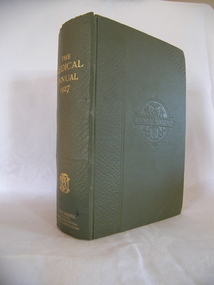
Book - General Medical Reference Annuals, Various Medical Contributors, The Medical Annual and Practitioners Index 1927, 1927
... These were written by leading specialists and practitioners, and include useful reference tables listing new medical publications, official health reports, asylum statistics, instruments, and pharmaceutical suppliers. Publication Details Hard cover book ...The 1927 volume is the forty fifth annual edition (45 years of issue) in the continuous annual series. The Medical Annual and Practitioners’ Index was one of the premier late-Victorian medical reference works. Starting in 1883/1884, the publication served as an essential year-end review digest for medical practitioners across Great Britain and the British colonies. The volume contains reviews of therapeutic progress achieved and new remedies for medical conditions, including detailed summaries of new drugs, synthetic chemicals, serums, and pharmacological advances introduced during 1889–1890. There is also a dictionary of new treatments, as well as summaries of clinical practices and breakthroughs in antiseptic surgery, gynaecology, neurology, and infectious diseases. These were written by leading specialists and practitioners, and include useful reference tables listing new medical publications, official health reports, asylum statistics, instruments, and pharmaceutical suppliers.Hard cover book. The Medical Annual and Practitioners Index for 1927 Author: Various Contributors Editor: Dr. Percy Roberts Wilde Publisher: John Wright & Co. Bristol. (Simpkin Marshall, Hamilton, Kent & Co Ltd. For London) Date: 1927 Further Information: Further Information: Blue cloth hard cover brown spine. Spine bands and panel edges somewhat rubbed and dust-toned as with age. Embossed patterning with lettering to Spine in Gilt, Publishers logo to front cover with Volume title.non-fictionThe 1927 volume is the forty fifth annual edition (45 years of issue) in the continuous annual series. The Medical Annual and Practitioners’ Index was one of the premier late-Victorian medical reference works. Starting in 1883/1884, the publication served as an essential year-end review digest for medical practitioners across Great Britain and the British colonies. The volume contains reviews of therapeutic progress achieved and new remedies for medical conditions, including detailed summaries of new drugs, synthetic chemicals, serums, and pharmacological advances introduced during 1889–1890. There is also a dictionary of new treatments, as well as summaries of clinical practices and breakthroughs in antiseptic surgery, gynaecology, neurology, and infectious diseases. These were written by leading specialists and practitioners, and include useful reference tables listing new medical publications, official health reports, asylum statistics, instruments, and pharmaceutical suppliers.flagstaff hill, warrnambool, shipwrecked-coast, flagstaff-hill, flagstaff-hill-maritime-museum, maritime-museum, shipwreck-coast, flagstaff-hill-maritime-village, the medical annual and practitioners index 1890, book, medical reference books, medical annual -
 Flagstaff Hill Maritime Museum and Village
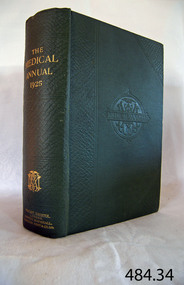
Book - General Medical Reference Annuals, Various Medical Contributors, The Medical Annual and Practitioners Index 1925, 1925
... These were written by leading specialists and practitioners, and include useful reference tables listing new medical publications, official health reports, asylum statistics, instruments, and pharmaceutical suppliers. Publication Details Hard cover book ...The 1925 volume is the forty third annual edition (43 years of issue) in the continuous annual series. The Medical Annual and Practitioners’ Index was one of the premier late-Victorian medical reference works. Starting in 1883/1884, the publication served as an essential year-end review digest for medical practitioners across Great Britain and the British colonies. The volume contains reviews of therapeutic progress achieved and new remedies for medical conditions, including detailed summaries of new drugs, synthetic chemicals, serums, and pharmacological advances introduced during 1889–1890. There is also a dictionary of new treatments, as well as summaries of clinical practices and breakthroughs in antiseptic surgery, gynaecology, neurology, and infectious diseases. These were written by leading specialists and practitioners, and include useful reference tables listing new medical publications, official health reports, asylum statistics, instruments, and pharmaceutical suppliers.Hard cover book. The Medical Annual and Practitioners Index for 1925 Author: Various Contributors Editor: Dr. Percy Roberts Wilde Publisher: John Wright & Co. Bristol. (Simpkin Marshall, Hamilton, Kent & Co Ltd. For London) Date: 1925 Further Information: Further Information: Blue cloth hard cover brown spine. Spine bands and panel edges somewhat rubbed and dust-toned as with age. Embossed patterning with lettering to Spine in Gilt, Publishers logo to front cover with Volume title.non-fictionThe 1925 volume is the forty third annual edition (43 years of issue) in the continuous annual series. The Medical Annual and Practitioners’ Index was one of the premier late-Victorian medical reference works. Starting in 1883/1884, the publication served as an essential year-end review digest for medical practitioners across Great Britain and the British colonies. The volume contains reviews of therapeutic progress achieved and new remedies for medical conditions, including detailed summaries of new drugs, synthetic chemicals, serums, and pharmacological advances introduced during 1889–1890. There is also a dictionary of new treatments, as well as summaries of clinical practices and breakthroughs in antiseptic surgery, gynaecology, neurology, and infectious diseases. These were written by leading specialists and practitioners, and include useful reference tables listing new medical publications, official health reports, asylum statistics, instruments, and pharmaceutical suppliers.flagstaff hill, warrnambool, shipwrecked-coast, flagstaff-hill, flagstaff-hill-maritime-museum, maritime-museum, shipwreck-coast, flagstaff-hill-maritime-village, the medical annual and practitioners index 1890, book, medical reference books, medical annual -
 Flagstaff Hill Maritime Museum and Village
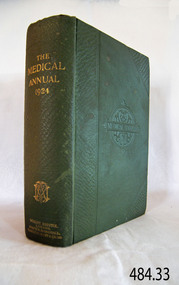
Book - General Medical Reference Annuals, Various Medical Contributors, The Medical Annual and Practitioners Index 1924, 1924
... These were written by leading specialists and practitioners, and include useful reference tables listing new medical publications, official health reports, asylum statistics, instruments, and pharmaceutical suppliers. Publication Details Hard cover book ...The 1924 volume is the forty second annual edition (42 years of issue) in the continuous annual series. The Medical Annual and Practitioners’ Index was one of the premier late-Victorian medical reference works. Starting in 1883/1884, the publication served as an essential year-end review digest for medical practitioners across Great Britain and the British colonies. The volume contains reviews of therapeutic progress achieved and new remedies for medical conditions, including detailed summaries of new drugs, synthetic chemicals, serums, and pharmacological advances introduced during 1889–1890. There is also a dictionary of new treatments, as well as summaries of clinical practices and breakthroughs in antiseptic surgery, gynaecology, neurology, and infectious diseases. These were written by leading specialists and practitioners, and include useful reference tables listing new medical publications, official health reports, asylum statistics, instruments, and pharmaceutical suppliers.Hard cover book. The Medical Annual and Practitioners Index for 1924 Author: Various Contributors Editor: Dr. Percy Roberts Wilde Publisher: John Wright & Co. Bristol. (Simpkin Marshall, Hamilton, Kent & Co Ltd. For London) Date: 1924 Further Information: Further Information: Blue cloth hard cover brown spine. Spine bands and panel edges somewhat rubbed and dust-toned as with age. Embossed patterning with lettering to Spine in Gilt, Publishers logo to front cover with Volume title.non-fictionThe 1924 volume is the forty second annual edition (42 years of issue) in the continuous annual series. The Medical Annual and Practitioners’ Index was one of the premier late-Victorian medical reference works. Starting in 1883/1884, the publication served as an essential year-end review digest for medical practitioners across Great Britain and the British colonies. The volume contains reviews of therapeutic progress achieved and new remedies for medical conditions, including detailed summaries of new drugs, synthetic chemicals, serums, and pharmacological advances introduced during 1889–1890. There is also a dictionary of new treatments, as well as summaries of clinical practices and breakthroughs in antiseptic surgery, gynaecology, neurology, and infectious diseases. These were written by leading specialists and practitioners, and include useful reference tables listing new medical publications, official health reports, asylum statistics, instruments, and pharmaceutical suppliers.flagstaff hill, warrnambool, shipwrecked-coast, flagstaff-hill, flagstaff-hill-maritime-museum, maritime-museum, shipwreck-coast, flagstaff-hill-maritime-village, the medical annual and practitioners index 1890, book, medical reference books, medical annual -
 Flagstaff Hill Maritime Museum and Village
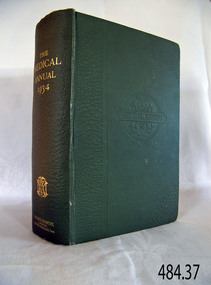
Book - General Medical Reference Annuals, Various Medical Contributors, The Medical Annual and Practitioners Index 1934, 1934
... These were written by leading specialists and practitioners, and include useful reference tables listing new medical publications, official health reports, asylum statistics, instruments, and pharmaceutical suppliers. Publication Details Hard cover book ...The 1934 volume is the fifty second annual edition (52 years of issue) in the continuous annual series. The Medical Annual and Practitioners’ Index was one of the premier late-Victorian medical reference works. Starting in 1883/1884, the publication served as an essential year-end review digest for medical practitioners across Great Britain and the British colonies. The volume contains reviews of therapeutic progress achieved and new remedies for medical conditions, including detailed summaries of new drugs, synthetic chemicals, serums, and pharmacological advances introduced during 1889–1890. There is also a dictionary of new treatments, as well as summaries of clinical practices and breakthroughs in antiseptic surgery, gynaecology, neurology, and infectious diseases. These were written by leading specialists and practitioners, and include useful reference tables listing new medical publications, official health reports, asylum statistics, instruments, and pharmaceutical suppliers.Hard cover book. The Medical Annual and Practitioners Index for 1934 Author: Various Contributors Editor: Dr. Percy Roberts Wilde Publisher: John Wright & Co. Bristol. (Simpkin Marshall, Hamilton, Kent & Co Ltd. For London) Date: 1934 Further Information: Further Information: Blue cloth hard cover brown spine. Spine bands and panel edges somewhat rubbed and dust-toned as with age. Embossed patterning with lettering to Spine in Gilt, Publishers logo to front cover with Volume title.non-fictionThe 1934 volume is the fifty second annual edition (52 years of issue) in the continuous annual series. The Medical Annual and Practitioners’ Index was one of the premier late-Victorian medical reference works. Starting in 1883/1884, the publication served as an essential year-end review digest for medical practitioners across Great Britain and the British colonies. The volume contains reviews of therapeutic progress achieved and new remedies for medical conditions, including detailed summaries of new drugs, synthetic chemicals, serums, and pharmacological advances introduced during 1889–1890. There is also a dictionary of new treatments, as well as summaries of clinical practices and breakthroughs in antiseptic surgery, gynaecology, neurology, and infectious diseases. These were written by leading specialists and practitioners, and include useful reference tables listing new medical publications, official health reports, asylum statistics, instruments, and pharmaceutical suppliers.flagstaff hill, warrnambool, shipwrecked-coast, flagstaff-hill, flagstaff-hill-maritime-museum, maritime-museum, shipwreck-coast, flagstaff-hill-maritime-village, the medical annual and practitioners index 1890, book, medical reference books, medical annual -
 Flagstaff Hill Maritime Museum and Village
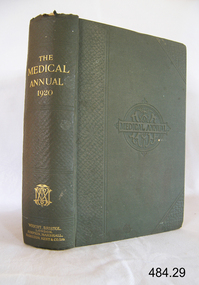
Book - General Medical Reference Annuals, Various Medical Contributors, The Medical Annual and Practitioners Index 1920, 1920
... These were written by leading specialists and practitioners, and include useful reference tables listing new medical publications, official health reports, asylum statistics, instruments, and pharmaceutical suppliers. Publication Details Hard cover book ...The 1920 volume is the thirty eighth annual edition (38 years of issue) in the continuous annual series. The Medical Annual and Practitioners’ Index was one of the premier late-Victorian medical reference works. Starting in 1883/1884, the publication served as an essential year-end review digest for medical practitioners across Great Britain and the British colonies. The volume contains reviews of therapeutic progress achieved and new remedies for medical conditions, including detailed summaries of new drugs, synthetic chemicals, serums, and pharmacological advances introduced during 1889–1890. There is also a dictionary of new treatments, as well as summaries of clinical practices and breakthroughs in antiseptic surgery, gynaecology, neurology, and infectious diseases. These were written by leading specialists and practitioners, and include useful reference tables listing new medical publications, official health reports, asylum statistics, instruments, and pharmaceutical suppliers.Hard cover book. The Medical Annual and Practitioners Index for 1920 Author: Various Contributors Editor: Dr. Percy Roberts Wilde Publisher: John Wright & Co. Bristol. (Simpkin Marshall, Hamilton, Kent & Co Ltd. For London) Date: 1920 Further Information: Further Information: Blue cloth hard cover brown spine. Spine bands and panel edges somewhat rubbed and dust-toned as with age. Embossed patterning with lettering to Spine in Gilt, Publishers logo to front cover with Volume title.non-fictionThe 1920 volume is the thirty eighth annual edition (38 years of issue) in the continuous annual series. The Medical Annual and Practitioners’ Index was one of the premier late-Victorian medical reference works. Starting in 1883/1884, the publication served as an essential year-end review digest for medical practitioners across Great Britain and the British colonies. The volume contains reviews of therapeutic progress achieved and new remedies for medical conditions, including detailed summaries of new drugs, synthetic chemicals, serums, and pharmacological advances introduced during 1889–1890. There is also a dictionary of new treatments, as well as summaries of clinical practices and breakthroughs in antiseptic surgery, gynaecology, neurology, and infectious diseases. These were written by leading specialists and practitioners, and include useful reference tables listing new medical publications, official health reports, asylum statistics, instruments, and pharmaceutical suppliers.flagstaff hill, warrnambool, shipwrecked-coast, flagstaff-hill, flagstaff-hill-maritime-museum, maritime-museum, shipwreck-coast, flagstaff-hill-maritime-village, the medical annual and practitioners index 1890, book, medical reference books, medical annual -
 Flagstaff Hill Maritime Museum and Village
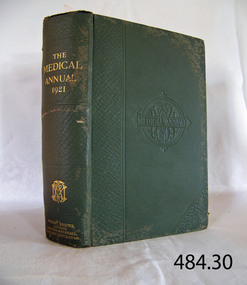
Book - General Medical Reference Annuals, Various Medical Contributors, The Medical Annual and Practitioners Index 1921, 1921
... These were written by leading specialists and practitioners, and include useful reference tables listing new medical publications, official health reports, asylum statistics, instruments, and pharmaceutical suppliers. Publication Details Hard cover book ...The 1921 volume is the thirty ninth annual edition (39 years of issue) in the continuous annual series. The Medical Annual and Practitioners’ Index was one of the premier late-Victorian medical reference works. Starting in 1883/1884, the publication served as an essential year-end review digest for medical practitioners across Great Britain and the British colonies. The volume contains reviews of therapeutic progress achieved and new remedies for medical conditions, including detailed summaries of new drugs, synthetic chemicals, serums, and pharmacological advances introduced during 1889–1890. There is also a dictionary of new treatments, as well as summaries of clinical practices and breakthroughs in antiseptic surgery, gynaecology, neurology, and infectious diseases. These were written by leading specialists and practitioners, and include useful reference tables listing new medical publications, official health reports, asylum statistics, instruments, and pharmaceutical suppliers.Hard cover book. The Medical Annual and Practitioners Index for 1921 Author: Various Contributors Editor: Dr. Percy Roberts Wilde Publisher: John Wright & Co. Bristol. (Simpkin Marshall, Hamilton, Kent & Co Ltd. For London) Date: 1921 Further Information: Further Information: Blue cloth hard cover brown spine. Spine bands and panel edges somewhat rubbed and dust-toned as with age. Embossed patterning with lettering to Spine in Gilt, Publishers logo to front cover with Volume title.non-fictionThe 1921 volume is the thirty ninth annual edition (39 years of issue) in the continuous annual series. The Medical Annual and Practitioners’ Index was one of the premier late-Victorian medical reference works. Starting in 1883/1884, the publication served as an essential year-end review digest for medical practitioners across Great Britain and the British colonies. The volume contains reviews of therapeutic progress achieved and new remedies for medical conditions, including detailed summaries of new drugs, synthetic chemicals, serums, and pharmacological advances introduced during 1889–1890. There is also a dictionary of new treatments, as well as summaries of clinical practices and breakthroughs in antiseptic surgery, gynaecology, neurology, and infectious diseases. These were written by leading specialists and practitioners, and include useful reference tables listing new medical publications, official health reports, asylum statistics, instruments, and pharmaceutical suppliers.flagstaff hill, warrnambool, shipwrecked-coast, flagstaff-hill, flagstaff-hill-maritime-museum, maritime-museum, shipwreck-coast, flagstaff-hill-maritime-village, the medical annual and practitioners index 1890, book, medical reference books, medical annual -
 Flagstaff Hill Maritime Museum and Village
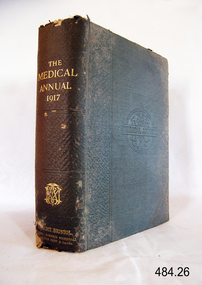
Book - General Medical Reference Annuals, Various Medical Contributors, The Medical Annual and Practitioners Index 1917, 1917
... These were written by leading specialists and practitioners, and include useful reference tables listing new medical publications, official health reports, asylum statistics, instruments, and pharmaceutical suppliers. Publication Details Hard cover book ...The 1917 volume is the thirty fifth annual edition (35 years of issue) in the continuous annual series. The Medical Annual and Practitioners’ Index was one of the premier late-Victorian medical reference works. Starting in 1883/1884, the publication served as an essential year-end review digest for medical practitioners across Great Britain and the British colonies. The volume contains reviews of therapeutic progress achieved and new remedies for medical conditions, including detailed summaries of new drugs, synthetic chemicals, serums, and pharmacological advances introduced during 1889–1890. There is also a dictionary of new treatments, as well as summaries of clinical practices and breakthroughs in antiseptic surgery, gynaecology, neurology, and infectious diseases. These were written by leading specialists and practitioners, and include useful reference tables listing new medical publications, official health reports, asylum statistics, instruments, and pharmaceutical suppliers.Hard cover book. The Medical Annual and Practitioners Index for 1917 Author: Various Contributors Editor: Dr. Percy Roberts Wilde Publisher: John Wright & Co. Bristol. (Simpkin Marshall, Hamilton, Kent & Co Ltd. For London) Date: 1917 Further Information: Further Information: Blue cloth hard cover brown spine. Spine bands and panel edges somewhat rubbed and dust-toned as with age. Embossed patterning with lettering to Spine in Gilt, Publishers logo to front cover with Volume title.non-fictionThe 1917 volume is the thirty fifth annual edition (35 years of issue) in the continuous annual series. The Medical Annual and Practitioners’ Index was one of the premier late-Victorian medical reference works. Starting in 1883/1884, the publication served as an essential year-end review digest for medical practitioners across Great Britain and the British colonies. The volume contains reviews of therapeutic progress achieved and new remedies for medical conditions, including detailed summaries of new drugs, synthetic chemicals, serums, and pharmacological advances introduced during 1889–1890. There is also a dictionary of new treatments, as well as summaries of clinical practices and breakthroughs in antiseptic surgery, gynaecology, neurology, and infectious diseases. These were written by leading specialists and practitioners, and include useful reference tables listing new medical publications, official health reports, asylum statistics, instruments, and pharmaceutical suppliers.flagstaff hill, warrnambool, shipwrecked-coast, flagstaff-hill, flagstaff-hill-maritime-museum, maritime-museum, shipwreck-coast, flagstaff-hill-maritime-village, the medical annual and practitioners index 1890, book, medical reference books, medical annual -
 Flagstaff Hill Maritime Museum and Village
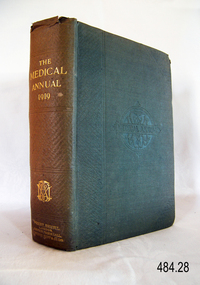
Book - General Medical Reference Annuals, Various Medical Contributors, The Medical Annual and Practitioners Index 1919, 1919
... These were written by leading specialists and practitioners, and include useful reference tables listing new medical publications, official health reports, asylum statistics, instruments, and pharmaceutical suppliers. Publication Details Hard cover book ...The 1919 volume is the thirty seventh annual edition (37 years of issue) in the continuous annual series. The Medical Annual and Practitioners’ Index was one of the premier late-Victorian medical reference works. Starting in 1883/1884, the publication served as an essential year-end review digest for medical practitioners across Great Britain and the British colonies. The volume contains reviews of therapeutic progress achieved and new remedies for medical conditions, including detailed summaries of new drugs, synthetic chemicals, serums, and pharmacological advances introduced during 1889–1890. There is also a dictionary of new treatments, as well as summaries of clinical practices and breakthroughs in antiseptic surgery, gynaecology, neurology, and infectious diseases. These were written by leading specialists and practitioners, and include useful reference tables listing new medical publications, official health reports, asylum statistics, instruments, and pharmaceutical suppliers.Hard cover book. The Medical Annual and Practitioners Index for 1919 Author: Various Contributors Editor: Dr. Percy Roberts Wilde Publisher: John Wright & Co. Bristol. (Simpkin Marshall, Hamilton, Kent & Co Ltd. For London) Date: 1919 Further Information: Further Information: Blue cloth hard cover brown spine. Spine bands and panel edges somewhat rubbed and dust-toned as with age. Embossed patterning with lettering to Spine in Gilt, Publishers logo to front cover with Volume title.non-fictionThe 1919 volume is the thirty seventh annual edition (37 years of issue) in the continuous annual series. The Medical Annual and Practitioners’ Index was one of the premier late-Victorian medical reference works. Starting in 1883/1884, the publication served as an essential year-end review digest for medical practitioners across Great Britain and the British colonies. The volume contains reviews of therapeutic progress achieved and new remedies for medical conditions, including detailed summaries of new drugs, synthetic chemicals, serums, and pharmacological advances introduced during 1889–1890. There is also a dictionary of new treatments, as well as summaries of clinical practices and breakthroughs in antiseptic surgery, gynaecology, neurology, and infectious diseases. These were written by leading specialists and practitioners, and include useful reference tables listing new medical publications, official health reports, asylum statistics, instruments, and pharmaceutical suppliers.flagstaff hill, warrnambool, shipwrecked-coast, flagstaff-hill, flagstaff-hill-maritime-museum, maritime-museum, shipwreck-coast, flagstaff-hill-maritime-village, the medical annual and practitioners index 1890, book, medical reference books, medical annual -
 Flagstaff Hill Maritime Museum and Village
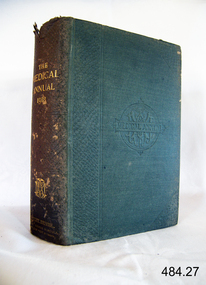
Book - General Medical Reference Annuals, Various Medical Contributors, The Medical Annual and Practitioners Index 1918, 1918
... These were written by leading specialists and practitioners, and include useful reference tables listing new medical publications, official health reports, asylum statistics, instruments, and pharmaceutical suppliers. Publication Details Hard cover book ...The 1918 volume is the thirty sixth annual edition (36 years of issue) in the continuous annual series. The Medical Annual and Practitioners’ Index was one of the premier late-Victorian medical reference works. Starting in 1883/1884, the publication served as an essential year-end review digest for medical practitioners across Great Britain and the British colonies. The volume contains reviews of therapeutic progress achieved and new remedies for medical conditions, including detailed summaries of new drugs, synthetic chemicals, serums, and pharmacological advances introduced during 1889–1890. There is also a dictionary of new treatments, as well as summaries of clinical practices and breakthroughs in antiseptic surgery, gynaecology, neurology, and infectious diseases. These were written by leading specialists and practitioners, and include useful reference tables listing new medical publications, official health reports, asylum statistics, instruments, and pharmaceutical suppliers.Hard cover book. The Medical Annual and Practitioners Index for 1918 Author: Various Contributors Editor: Dr. Percy Roberts Wilde Publisher: John Wright & Co. Bristol. (Simpkin Marshall, Hamilton, Kent & Co Ltd. For London) Date: 1918 Further Information: Further Information: Blue cloth hard cover brown spine. Spine bands and panel edges somewhat rubbed and dust-toned as with age. Embossed patterning with lettering to Spine in Gilt, Publishers logo to front cover with Volume title.non-fictionThe 1918 volume is the thirty sixth annual edition (36 years of issue) in the continuous annual series. The Medical Annual and Practitioners’ Index was one of the premier late-Victorian medical reference works. Starting in 1883/1884, the publication served as an essential year-end review digest for medical practitioners across Great Britain and the British colonies. The volume contains reviews of therapeutic progress achieved and new remedies for medical conditions, including detailed summaries of new drugs, synthetic chemicals, serums, and pharmacological advances introduced during 1889–1890. There is also a dictionary of new treatments, as well as summaries of clinical practices and breakthroughs in antiseptic surgery, gynaecology, neurology, and infectious diseases. These were written by leading specialists and practitioners, and include useful reference tables listing new medical publications, official health reports, asylum statistics, instruments, and pharmaceutical suppliers.flagstaff hill, warrnambool, shipwrecked-coast, flagstaff-hill, flagstaff-hill-maritime-museum, maritime-museum, shipwreck-coast, flagstaff-hill-maritime-village, the medical annual and practitioners index 1890, book, medical reference books, medical annual -
 Flagstaff Hill Maritime Museum and Village
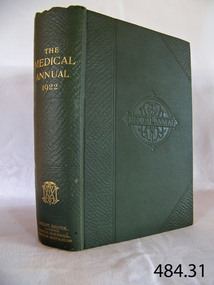
Book - General Medical Reference Annuals, Various Medical Contributors, The Medical Annual and Practitioners Index 1922, 1922
... These were written by leading specialists and practitioners, and include useful reference tables listing new medical publications, official health reports, asylum statistics, instruments, and pharmaceutical suppliers. Publication Details Hard cover book ...The 1922 volume is the Fortieth annual edition (40 years of issue) in the continuous annual series. The Medical Annual and Practitioners’ Index was one of the premier late-Victorian medical reference works. Starting in 1883/1884, the publication served as an essential year-end review digest for medical practitioners across Great Britain and the British colonies. The volume contains reviews of therapeutic progress achieved and new remedies for medical conditions, including detailed summaries of new drugs, synthetic chemicals, serums, and pharmacological advances introduced during 1889–1890. There is also a dictionary of new treatments, as well as summaries of clinical practices and breakthroughs in antiseptic surgery, gynaecology, neurology, and infectious diseases. These were written by leading specialists and practitioners, and include useful reference tables listing new medical publications, official health reports, asylum statistics, instruments, and pharmaceutical suppliers.Hard cover book. The Medical Annual and Practitioners Index for 1922 Author: Various Contributors Editor: Dr. Percy Roberts Wilde Publisher: John Wright & Co. Bristol. (Simpkin Marshall, Hamilton, Kent & Co Ltd. For London) Date: 1922 Further Information: Further Information: Blue cloth hard cover brown spine. Spine bands and panel edges somewhat rubbed and dust-toned as with age. Embossed patterning with lettering to Spine in Gilt, Publishers logo to front cover with Volume title.non-fictionThe 1922 volume is the Fortieth annual edition (40 years of issue) in the continuous annual series. The Medical Annual and Practitioners’ Index was one of the premier late-Victorian medical reference works. Starting in 1883/1884, the publication served as an essential year-end review digest for medical practitioners across Great Britain and the British colonies. The volume contains reviews of therapeutic progress achieved and new remedies for medical conditions, including detailed summaries of new drugs, synthetic chemicals, serums, and pharmacological advances introduced during 1889–1890. There is also a dictionary of new treatments, as well as summaries of clinical practices and breakthroughs in antiseptic surgery, gynaecology, neurology, and infectious diseases. These were written by leading specialists and practitioners, and include useful reference tables listing new medical publications, official health reports, asylum statistics, instruments, and pharmaceutical suppliers.flagstaff hill, warrnambool, shipwrecked-coast, flagstaff-hill, flagstaff-hill-maritime-museum, maritime-museum, shipwreck-coast, flagstaff-hill-maritime-village, the medical annual and practitioners index 1890, book, medical reference books, medical annual -
 Flagstaff Hill Maritime Museum and Village
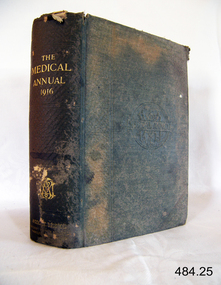
Book - General Medical Reference Annuals, Various Medical Contributors, The Medical Annual and Practitioners Index 1916, 1916
... These were written by leading specialists and practitioners, and include useful reference tables listing new medical publications, official health reports, asylum statistics, instruments, and pharmaceutical suppliers. Publication Details Hard cover book ...The 1916 volume is the thirty fourth annual edition (34 years of issue) in the continuous annual series. The Medical Annual and Practitioners’ Index was one of the premier late-Victorian medical reference works. Starting in 1883/1884, the publication served as an essential year-end review digest for medical practitioners across Great Britain and the British colonies. The volume contains reviews of therapeutic progress achieved and new remedies for medical conditions, including detailed summaries of new drugs, synthetic chemicals, serums, and pharmacological advances introduced during 1889–1890. There is also a dictionary of new treatments, as well as summaries of clinical practices and breakthroughs in antiseptic surgery, gynaecology, neurology, and infectious diseases. These were written by leading specialists and practitioners, and include useful reference tables listing new medical publications, official health reports, asylum statistics, instruments, and pharmaceutical suppliers.Hard cover book. The Medical Annual and Practitioners Index for 1916 Author: Various Contributors Editor: Dr. Percy Roberts Wilde Publisher: John Wright & Co. Bristol. (Simpkin Marshall, Hamilton, Kent & Co Ltd. For London) Date: 1916 Further Information: Further Information: Blue cloth hard cover brown spine. Spine bands and panel edges somewhat rubbed and dust-toned as with age. Embossed patterning with lettering to Spine in Gilt, Publishers logo to front cover with Volume title.non-fictionThe 1916 volume is the thirty fourth annual edition (34 years of issue) in the continuous annual series. The Medical Annual and Practitioners’ Index was one of the premier late-Victorian medical reference works. Starting in 1883/1884, the publication served as an essential year-end review digest for medical practitioners across Great Britain and the British colonies. The volume contains reviews of therapeutic progress achieved and new remedies for medical conditions, including detailed summaries of new drugs, synthetic chemicals, serums, and pharmacological advances introduced during 1889–1890. There is also a dictionary of new treatments, as well as summaries of clinical practices and breakthroughs in antiseptic surgery, gynaecology, neurology, and infectious diseases. These were written by leading specialists and practitioners, and include useful reference tables listing new medical publications, official health reports, asylum statistics, instruments, and pharmaceutical suppliers.flagstaff hill, warrnambool, shipwrecked-coast, flagstaff-hill, flagstaff-hill-maritime-museum, maritime-museum, shipwreck-coast, flagstaff-hill-maritime-village, the medical annual and practitioners index 1890, book, medical reference books, medical annual -
 Flagstaff Hill Maritime Museum and Village
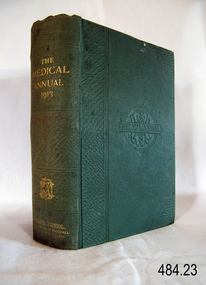
Book - General Medical Reference Annuals, Various Medical Contributors, The Medical Annual and Practitioners Index 1913, 1913
... These were written by leading specialists and practitioners, and include useful reference tables listing new medical publications, official health reports, asylum statistics, instruments, and pharmaceutical suppliers. Publication Details Hard cover book ...The 1913 volume is the thirty first annual edition (31 years of issue) in the continuous annual series. The Medical Annual and Practitioners’ Index was one of the premier late-Victorian medical reference works. Starting in 1883/1884, the publication served as an essential year-end review digest for medical practitioners across Great Britain and the British colonies. The volume contains reviews of therapeutic progress achieved and new remedies for medical conditions, including detailed summaries of new drugs, synthetic chemicals, serums, and pharmacological advances introduced during 1889–1890. There is also a dictionary of new treatments, as well as summaries of clinical practices and breakthroughs in antiseptic surgery, gynaecology, neurology, and infectious diseases. These were written by leading specialists and practitioners, and include useful reference tables listing new medical publications, official health reports, asylum statistics, instruments, and pharmaceutical suppliers.Hard cover book. The Medical Annual and Practitioners Index for 1913 Author: Various Contributors Editor: Dr. Percy Roberts Wilde Publisher: John Wright & Co. Bristol. (Simpkin Marshall, Hamilton, Kent & Co Ltd. For London) Date: 1913 Further Information: Further Information: Blue cloth hard cover brown spine. Spine bands and panel edges somewhat rubbed and dust-toned as with age. Embossed patterning with lettering to Spine in Gilt, Publishers logo to front cover with Volume title.non-fictionThe 1913 volume is the thirty first annual edition (31 years of issue) in the continuous annual series. The Medical Annual and Practitioners’ Index was one of the premier late-Victorian medical reference works. Starting in 1883/1884, the publication served as an essential year-end review digest for medical practitioners across Great Britain and the British colonies. The volume contains reviews of therapeutic progress achieved and new remedies for medical conditions, including detailed summaries of new drugs, synthetic chemicals, serums, and pharmacological advances introduced during 1889–1890. There is also a dictionary of new treatments, as well as summaries of clinical practices and breakthroughs in antiseptic surgery, gynaecology, neurology, and infectious diseases. These were written by leading specialists and practitioners, and include useful reference tables listing new medical publications, official health reports, asylum statistics, instruments, and pharmaceutical suppliers.flagstaff hill, warrnambool, shipwrecked-coast, flagstaff-hill, flagstaff-hill-maritime-museum, maritime-museum, shipwreck-coast, flagstaff-hill-maritime-village, the medical annual and practitioners index 1890, book, medical reference books, medical annual -
 Flagstaff Hill Maritime Museum and Village
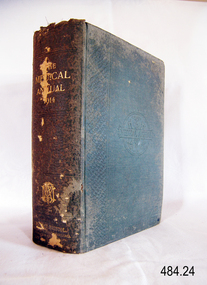
Book - General Medical Reference Annuals, Various Medical Contributors, The Medical Annual and Practitioners Index 1914, 1914
... These were written by leading specialists and practitioners, and include useful reference tables listing new medical publications, official health reports, asylum statistics, instruments, and pharmaceutical suppliers. Publication Details Hard cover book ...The 1914 volume is the thirty second annual edition (32 years of issue) in the continuous annual series. The Medical Annual and Practitioners’ Index was one of the premier late-Victorian medical reference works. Starting in 1883/1884, the publication served as an essential year-end review digest for medical practitioners across Great Britain and the British colonies. The volume contains reviews of therapeutic progress achieved and new remedies for medical conditions, including detailed summaries of new drugs, synthetic chemicals, serums, and pharmacological advances introduced during 1889–1890. There is also a dictionary of new treatments, as well as summaries of clinical practices and breakthroughs in antiseptic surgery, gynaecology, neurology, and infectious diseases. These were written by leading specialists and practitioners, and include useful reference tables listing new medical publications, official health reports, asylum statistics, instruments, and pharmaceutical suppliers.Hard cover book. The Medical Annual and Practitioners Index for 1914 Author: Various Contributors Editor: Dr. Percy Roberts Wilde Publisher: John Wright & Co. Bristol. (Simpkin Marshall, Hamilton, Kent & Co Ltd. For London) Date: 1914 Further Information: Further Information: Blue cloth hard cover brown spine. Spine bands and panel edges somewhat rubbed and dust-toned as with age. Embossed patterning with lettering to Spine in Gilt, Publishers logo to front cover with Volume title.non-fictionThe 1914 volume is the thirty second annual edition (32 years of issue) in the continuous annual series. The Medical Annual and Practitioners’ Index was one of the premier late-Victorian medical reference works. Starting in 1883/1884, the publication served as an essential year-end review digest for medical practitioners across Great Britain and the British colonies. The volume contains reviews of therapeutic progress achieved and new remedies for medical conditions, including detailed summaries of new drugs, synthetic chemicals, serums, and pharmacological advances introduced during 1889–1890. There is also a dictionary of new treatments, as well as summaries of clinical practices and breakthroughs in antiseptic surgery, gynaecology, neurology, and infectious diseases. These were written by leading specialists and practitioners, and include useful reference tables listing new medical publications, official health reports, asylum statistics, instruments, and pharmaceutical suppliers.flagstaff hill, warrnambool, shipwrecked-coast, flagstaff-hill, flagstaff-hill-maritime-museum, maritime-museum, shipwreck-coast, flagstaff-hill-maritime-village, the medical annual and practitioners index 1890, book, medical reference books, medical annual -
 Flagstaff Hill Maritime Museum and Village
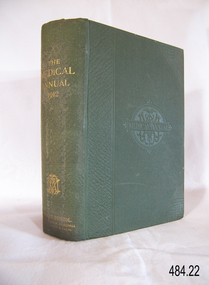
Book - General Medical Reference Annuals, Various Medical Contributors, The Medical Annual and Practitioners Index 1912, 1912
... These were written by leading specialists and practitioners, and include useful reference tables listing new medical publications, official health reports, asylum statistics, instruments, and pharmaceutical suppliers. Publication Details Hard cover book ...The 1912 volume is the 13th annual edition (13th year of issue) in the continuous annual series. The Medical Annual and Practitioners’ Index was one of the premier late-Victorian medical reference works. Starting in 1883/1884, the publication served as an essential year-end review digest for medical practitioners across Great Britain and the British colonies. The volume contains reviews of therapeutic progress achieved and new remedies for medical conditions, including detailed summaries of new drugs, synthetic chemicals, serums, and pharmacological advances introduced during 1889–1890. There is also a dictionary of new treatments, as well as summaries of clinical practices and breakthroughs in antiseptic surgery, gynaecology, neurology, and infectious diseases. These were written by leading specialists and practitioners, and include useful reference tables listing new medical publications, official health reports, asylum statistics, instruments, and pharmaceutical suppliers.Hard cover book. The Medical Annual and Practitioners Index for 1912 Author: Various Contributors Editor: Dr. Percy Roberts Wilde Publisher: John Wright & Co. Bristol. (Simpkin Marshall, Hamilton, Kent & Co Ltd. For London) Date: 1912 Further Information: Further Information: Blue cloth hard cover brown spine. Spine bands and panel edges somewhat rubbed and dust-toned as with age. Embossed patterning with lettering to Spine in Gilt, Publishers logo to front cover with Volume title.non-fictionThe 1912 volume is the 13th annual edition (13th year of issue) in the continuous annual series. The Medical Annual and Practitioners’ Index was one of the premier late-Victorian medical reference works. Starting in 1883/1884, the publication served as an essential year-end review digest for medical practitioners across Great Britain and the British colonies. The volume contains reviews of therapeutic progress achieved and new remedies for medical conditions, including detailed summaries of new drugs, synthetic chemicals, serums, and pharmacological advances introduced during 1889–1890. There is also a dictionary of new treatments, as well as summaries of clinical practices and breakthroughs in antiseptic surgery, gynaecology, neurology, and infectious diseases. These were written by leading specialists and practitioners, and include useful reference tables listing new medical publications, official health reports, asylum statistics, instruments, and pharmaceutical suppliers.flagstaff hill, warrnambool, shipwrecked-coast, flagstaff-hill, flagstaff-hill-maritime-museum, maritime-museum, shipwreck-coast, flagstaff-hill-maritime-village, the medical annual and practitioners index 1890, book, medical reference books, medical annual -
 Flagstaff Hill Maritime Museum and Village
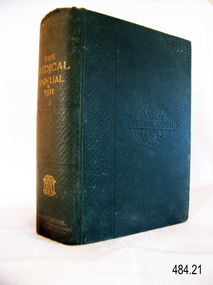
Book - General Medical Reference Annuals, Various Medical Contributors, The Medical Annual and Practitioners Index 1911, 1911
... These were written by leading specialists and practitioners, and include useful reference tables listing new medical publications, official health reports, asylum statistics, instruments, and pharmaceutical suppliers. Publication Details Hard cover book ...The 1911 volume is the 29th annual edition (29th year of issue) in the continuous annual series. The Medical Annual and Practitioners’ Index was one of the premier late-Victorian medical reference works. Starting in 1883/1884, the publication served as an essential year-end review digest for medical practitioners across Great Britain and the British colonies. The volume contains reviews of therapeutic progress achieved and new remedies for medical conditions, including detailed summaries of new drugs, synthetic chemicals, serums, and pharmacological advances introduced during 1889–1890. There is also a dictionary of new treatments, as well as summaries of clinical practices and breakthroughs in antiseptic surgery, gynaecology, neurology, and infectious diseases. These were written by leading specialists and practitioners, and include useful reference tables listing new medical publications, official health reports, asylum statistics, instruments, and pharmaceutical suppliers.Hard cover book. The Medical Annual and Practitioners Index for 1911 Author: Various Contributors Editor: Dr. Percy Roberts Wilde Publisher: John Wright & Co. Bristol. (Simpkin Marshall, Hamilton, Kent & Co Ltd. For London) Date: 1911 Further Information: Further Information: Blue cloth hard cover brown spine. Spine bands and panel edges somewhat rubbed and dust-toned as with age. Embossed patterning with lettering to Spine in Gilt, Publishers logo to front cover with Volume title.non-fictionThe 1911 volume is the 29th annual edition (29th year of issue) in the continuous annual series. The Medical Annual and Practitioners’ Index was one of the premier late-Victorian medical reference works. Starting in 1883/1884, the publication served as an essential year-end review digest for medical practitioners across Great Britain and the British colonies. The volume contains reviews of therapeutic progress achieved and new remedies for medical conditions, including detailed summaries of new drugs, synthetic chemicals, serums, and pharmacological advances introduced during 1889–1890. There is also a dictionary of new treatments, as well as summaries of clinical practices and breakthroughs in antiseptic surgery, gynaecology, neurology, and infectious diseases. These were written by leading specialists and practitioners, and include useful reference tables listing new medical publications, official health reports, asylum statistics, instruments, and pharmaceutical suppliers.flagstaff hill, warrnambool, shipwrecked-coast, flagstaff-hill, flagstaff-hill-maritime-museum, maritime-museum, shipwreck-coast, flagstaff-hill-maritime-village, the medical annual and practitioners index 1890, book, medical reference books, medical annual -
 Flagstaff Hill Maritime Museum and Village
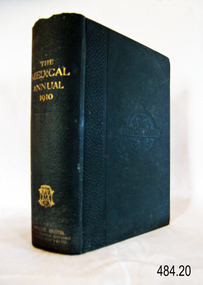
Book - General Medical Reference Annuals, Various Medical Contributors, The Medical Annual and Practitioners Index 1910, 1910
... These were written by leading specialists and practitioners, and include useful reference tables listing new medical publications, official health reports, asylum statistics, instruments, and pharmaceutical suppliers. Publication Details Hard cover book ...The 1910 volume is the 28th annual edition (28th year of issue) in the continuous annual series. The Medical Annual and Practitioners’ Index was one of the premier late-Victorian medical reference works. Starting in 1883/1884, the publication served as an essential year-end review digest for medical practitioners across Great Britain and the British colonies. The volume contains reviews of therapeutic progress achieved and new remedies for medical conditions, including detailed summaries of new drugs, synthetic chemicals, serums, and pharmacological advances introduced during 1889–1890. There is also a dictionary of new treatments, as well as summaries of clinical practices and breakthroughs in antiseptic surgery, gynaecology, neurology, and infectious diseases. These were written by leading specialists and practitioners, and include useful reference tables listing new medical publications, official health reports, asylum statistics, instruments, and pharmaceutical suppliers.Hard cover book. The Medical Annual and Practitioners Index for 1910 Author: Various Contributors Editor: Dr. Percy Roberts Wilde Publisher: John Wright & Co. Bristol. (Simpkin Marshall, Hamilton, Kent & Co Ltd. For London) Date: 1910 Further Information: Further Information: Blue cloth hard cover brown spine. Spine bands and panel edges somewhat rubbed and dust-toned as with age. Embossed patterning with lettering to Spine in Gilt, Publishers logo to front cover with Volume title.non-fictionThe 1910 volume is the 28th annual edition (28th year of issue) in the continuous annual series. The Medical Annual and Practitioners’ Index was one of the premier late-Victorian medical reference works. Starting in 1883/1884, the publication served as an essential year-end review digest for medical practitioners across Great Britain and the British colonies. The volume contains reviews of therapeutic progress achieved and new remedies for medical conditions, including detailed summaries of new drugs, synthetic chemicals, serums, and pharmacological advances introduced during 1889–1890. There is also a dictionary of new treatments, as well as summaries of clinical practices and breakthroughs in antiseptic surgery, gynaecology, neurology, and infectious diseases. These were written by leading specialists and practitioners, and include useful reference tables listing new medical publications, official health reports, asylum statistics, instruments, and pharmaceutical suppliers.flagstaff hill, warrnambool, shipwrecked-coast, flagstaff-hill, flagstaff-hill-maritime-museum, maritime-museum, shipwreck-coast, flagstaff-hill-maritime-village, the medical annual and practitioners index 1890, book, medical reference books, medical annual -
 Flagstaff Hill Maritime Museum and Village
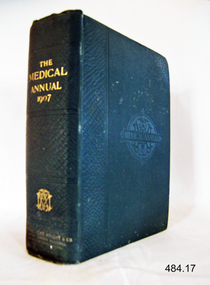
Book - General Medical Reference Annuals, Various Medical Contributors, The Medical Annual and Practitioners Index 1907, 1907
... These were written by leading specialists and practitioners, and include useful reference tables listing new medical publications, official health reports, asylum statistics, instruments, and pharmaceutical suppliers. Publication Details Hard cover book ...The 1907volume is the 25th annual edition (25th year of issue) in the continuous annual series. The Medical Annual and Practitioners’ Index was one of the premier late-Victorian medical reference works. Starting in 1883/1884, the publication served as an essential year-end review digest for medical practitioners across Great Britain and the British colonies. The volume contains reviews of therapeutic progress achieved and new remedies for medical conditions, including detailed summaries of new drugs, synthetic chemicals, serums, and pharmacological advances introduced during 1889–1890. There is also a dictionary of new treatments, as well as summaries of clinical practices and breakthroughs in antiseptic surgery, gynaecology, neurology, and infectious diseases. These were written by leading specialists and practitioners, and include useful reference tables listing new medical publications, official health reports, asylum statistics, instruments, and pharmaceutical suppliers.Hard cover book. The Medical Annual and Practitioners Index for 1907 Author: Various Contributors Editor: Dr. Percy Roberts Wilde Publisher: John Wright & Co. Bristol. (Simpkin Marshall, Hamilton, Kent & Co Ltd. For London) Date: 1907 Further Information: Further Information: Blue cloth hard cover brown spine. Spine bands and panel edges somewhat rubbed and dust-toned as with age. Embossed patterning with lettering to Spine in Gilt, Publishers logo to front cover with Volume title.non-fictionThe 1907volume is the 25th annual edition (25th year of issue) in the continuous annual series. The Medical Annual and Practitioners’ Index was one of the premier late-Victorian medical reference works. Starting in 1883/1884, the publication served as an essential year-end review digest for medical practitioners across Great Britain and the British colonies. The volume contains reviews of therapeutic progress achieved and new remedies for medical conditions, including detailed summaries of new drugs, synthetic chemicals, serums, and pharmacological advances introduced during 1889–1890. There is also a dictionary of new treatments, as well as summaries of clinical practices and breakthroughs in antiseptic surgery, gynaecology, neurology, and infectious diseases. These were written by leading specialists and practitioners, and include useful reference tables listing new medical publications, official health reports, asylum statistics, instruments, and pharmaceutical suppliers.flagstaff hill, warrnambool, shipwrecked-coast, flagstaff-hill, flagstaff-hill-maritime-museum, maritime-museum, shipwreck-coast, flagstaff-hill-maritime-village, the medical annual and practitioners index 1890, book, medical reference books, medical annual -
 Flagstaff Hill Maritime Museum and Village
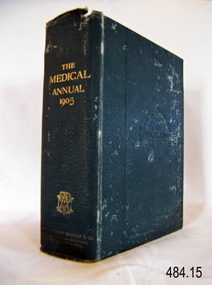
Book - General Medical Reference Annuals, Various Medical Contributors, The Medical Annual and Practitioners Index 1905, 1905
... These were written by leading specialists and practitioners, and include useful reference tables listing new medical publications, official health reports, asylum statistics, instruments, and pharmaceutical suppliers. Publication Details Hard cover book ...The 1905 volume is the 23rd annual edition (23rd year of issue) in the continuous annual series. The Medical Annual and Practitioners’ Index was one of the premier late-Victorian medical reference works. Starting in 1883/1884, the publication served as an essential year-end review digest for medical practitioners across Great Britain and the British colonies. The volume contains reviews of therapeutic progress achieved and new remedies for medical conditions, including detailed summaries of new drugs, synthetic chemicals, serums, and pharmacological advances introduced during 1889–1890. There is also a dictionary of new treatments, as well as summaries of clinical practices and breakthroughs in antiseptic surgery, gynaecology, neurology, and infectious diseases. These were written by leading specialists and practitioners, and include useful reference tables listing new medical publications, official health reports, asylum statistics, instruments, and pharmaceutical suppliers.Hard cover book. The Medical Annual and Practitioners Index for 1905 Author: Various Contributors Editor: Dr. Percy Roberts Wilde Publisher: John Wright & Co. Bristol. (Simpkin Marshall, Hamilton, Kent & Co Ltd. For London) Date: 1905 Further Information: Further Information: Blue cloth hard cover brown spine. Spine bands and panel edges somewhat rubbed and dust-toned as with age. Embossed patterning with lettering to Spine in Gilt, Publishers logo to front cover with Volume title.non-fictionThe 1905 volume is the 23rd annual edition (23rd year of issue) in the continuous annual series. The Medical Annual and Practitioners’ Index was one of the premier late-Victorian medical reference works. Starting in 1883/1884, the publication served as an essential year-end review digest for medical practitioners across Great Britain and the British colonies. The volume contains reviews of therapeutic progress achieved and new remedies for medical conditions, including detailed summaries of new drugs, synthetic chemicals, serums, and pharmacological advances introduced during 1889–1890. There is also a dictionary of new treatments, as well as summaries of clinical practices and breakthroughs in antiseptic surgery, gynaecology, neurology, and infectious diseases. These were written by leading specialists and practitioners, and include useful reference tables listing new medical publications, official health reports, asylum statistics, instruments, and pharmaceutical suppliers.flagstaff hill, warrnambool, shipwrecked-coast, flagstaff-hill, flagstaff-hill-maritime-museum, maritime-museum, shipwreck-coast, flagstaff-hill-maritime-village, the medical annual and practitioners index 1890, book, medical reference books, medical annual -
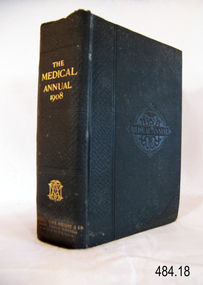 Flagstaff Hill Maritime Museum and Village
Book - General Medical Reference Annuals, Various Medical Contributors, The Medical Annual and Practitioners Index 1908, 1908
... These were written by leading specialists and practitioners, and include useful reference tables listing new medical publications, official health reports, asylum statistics, instruments, and pharmaceutical suppliers. Publication Details Hard cover book ...The 1908 volume is the 26th annual edition (26th year of issue) in the continuous annual series. The Medical Annual and Practitioners’ Index was one of the premier late-Victorian medical reference works. Starting in 1883/1884, the publication served as an essential year-end review digest for medical practitioners across Great Britain and the British colonies. The volume contains reviews of therapeutic progress achieved and new remedies for medical conditions, including detailed summaries of new drugs, synthetic chemicals, serums, and pharmacological advances introduced during 1889–1890. There is also a dictionary of new treatments, as well as summaries of clinical practices and breakthroughs in antiseptic surgery, gynaecology, neurology, and infectious diseases. These were written by leading specialists and practitioners, and include useful reference tables listing new medical publications, official health reports, asylum statistics, instruments, and pharmaceutical suppliers.Hard cover book. The Medical Annual and Practitioners Index for 1908 Author: Various Contributors Editor: Dr. Percy Roberts Wilde Publisher: John Wright & Co. Bristol. (Simpkin Marshall, Hamilton, Kent & Co Ltd. For London) Date: 1908 Further Information: Further Information: Blue cloth hard cover brown spine. Spine bands and panel edges somewhat rubbed and dust-toned as with age. Embossed patterning with lettering to Spine in Gilt, Publishers logo to front cover with Volume title.non-fictionThe 1908 volume is the 26th annual edition (26th year of issue) in the continuous annual series. The Medical Annual and Practitioners’ Index was one of the premier late-Victorian medical reference works. Starting in 1883/1884, the publication served as an essential year-end review digest for medical practitioners across Great Britain and the British colonies. The volume contains reviews of therapeutic progress achieved and new remedies for medical conditions, including detailed summaries of new drugs, synthetic chemicals, serums, and pharmacological advances introduced during 1889–1890. There is also a dictionary of new treatments, as well as summaries of clinical practices and breakthroughs in antiseptic surgery, gynaecology, neurology, and infectious diseases. These were written by leading specialists and practitioners, and include useful reference tables listing new medical publications, official health reports, asylum statistics, instruments, and pharmaceutical suppliers.flagstaff hill, warrnambool, shipwrecked-coast, flagstaff-hill, flagstaff-hill-maritime-museum, maritime-museum, shipwreck-coast, flagstaff-hill-maritime-village, the medical annual and practitioners index 1890, book, medical reference books, medical annual -
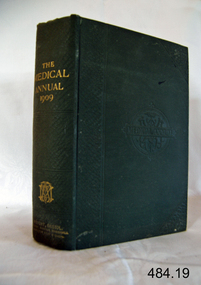 Flagstaff Hill Maritime Museum and Village
Book - General Medical Reference Annuals, Various Medical Contributors, The Medical Annual and Practitioners Index 1909, 1909
... These were written by leading specialists and practitioners, and include useful reference tables listing new medical publications, official health reports, asylum statistics, instruments, and pharmaceutical suppliers. Publication Details Hard cover book ...The 1909 volume is the 27th annual edition (27th year of issue) in the continuous annual series. The Medical Annual and Practitioners’ Index was one of the premier late-Victorian medical reference works. Starting in 1883/1884, the publication served as an essential year-end review digest for medical practitioners across Great Britain and the British colonies. The volume contains reviews of therapeutic progress achieved and new remedies for medical conditions, including detailed summaries of new drugs, synthetic chemicals, serums, and pharmacological advances introduced during 1889–1890. There is also a dictionary of new treatments, as well as summaries of clinical practices and breakthroughs in antiseptic surgery, gynaecology, neurology, and infectious diseases. These were written by leading specialists and practitioners, and include useful reference tables listing new medical publications, official health reports, asylum statistics, instruments, and pharmaceutical suppliers.Hard cover book. The Medical Annual and Practitioners Index for 1909 Author: Various Contributors Editor: Dr. Percy Roberts Wilde Publisher: John Wright & Co. Bristol. (Simpkin Marshall, Hamilton, Kent & Co Ltd. For London) Date: 1909 Further Information: Further Information: Blue cloth hard cover brown spine. Spine bands and panel edges somewhat rubbed and dust-toned as with age. Embossed patterning with lettering to Spine in Gilt, Publishers logo to front cover with Volume title.non-fictionThe 1909 volume is the 27th annual edition (27th year of issue) in the continuous annual series. The Medical Annual and Practitioners’ Index was one of the premier late-Victorian medical reference works. Starting in 1883/1884, the publication served as an essential year-end review digest for medical practitioners across Great Britain and the British colonies. The volume contains reviews of therapeutic progress achieved and new remedies for medical conditions, including detailed summaries of new drugs, synthetic chemicals, serums, and pharmacological advances introduced during 1889–1890. There is also a dictionary of new treatments, as well as summaries of clinical practices and breakthroughs in antiseptic surgery, gynaecology, neurology, and infectious diseases. These were written by leading specialists and practitioners, and include useful reference tables listing new medical publications, official health reports, asylum statistics, instruments, and pharmaceutical suppliers.flagstaff hill, warrnambool, shipwrecked-coast, flagstaff-hill, flagstaff-hill-maritime-museum, maritime-museum, shipwreck-coast, flagstaff-hill-maritime-village, the medical annual and practitioners index 1890, book, medical reference books, medical annual -
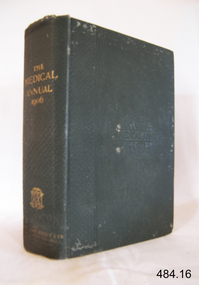 Flagstaff Hill Maritime Museum and Village
Book - General Medical Reference Annuals, Various Medical Contributors, The Medical Annual and Practitioners Index 1906, 1906
... These were written by leading specialists and practitioners, and include useful reference tables listing new medical publications, official health reports, asylum statistics, instruments, and pharmaceutical suppliers. Publication Details Hard cover book ...The 1906 volume is the 24th annual edition (24th year of issue) in the continuous annual series. The Medical Annual and Practitioners’ Index was one of the premier late-Victorian medical reference works. Starting in 1883/1884, the publication served as an essential year-end review digest for medical practitioners across Great Britain and the British colonies. The volume contains reviews of therapeutic progress achieved and new remedies for medical conditions, including detailed summaries of new drugs, synthetic chemicals, serums, and pharmacological advances introduced during 1889–1890. There is also a dictionary of new treatments, as well as summaries of clinical practices and breakthroughs in antiseptic surgery, gynaecology, neurology, and infectious diseases. These were written by leading specialists and practitioners, and include useful reference tables listing new medical publications, official health reports, asylum statistics, instruments, and pharmaceutical suppliers.Hard cover book. The Medical Annual and Practitioners Index for 1906 Author: Various Contributors Editor: Dr. Percy Roberts Wilde Publisher: John Wright & Co. Bristol. (Simpkin Marshall, Hamilton, Kent & Co Ltd. For London) Date: 1906 Further Information: Further Information: Blue cloth hard cover brown spine. Spine bands and panel edges somewhat rubbed and dust-toned as with age. Embossed patterning with lettering to Spine in Gilt, Publishers logo to front cover with Volume title.non-fictionThe 1906 volume is the 24th annual edition (24th year of issue) in the continuous annual series. The Medical Annual and Practitioners’ Index was one of the premier late-Victorian medical reference works. Starting in 1883/1884, the publication served as an essential year-end review digest for medical practitioners across Great Britain and the British colonies. The volume contains reviews of therapeutic progress achieved and new remedies for medical conditions, including detailed summaries of new drugs, synthetic chemicals, serums, and pharmacological advances introduced during 1889–1890. There is also a dictionary of new treatments, as well as summaries of clinical practices and breakthroughs in antiseptic surgery, gynaecology, neurology, and infectious diseases. These were written by leading specialists and practitioners, and include useful reference tables listing new medical publications, official health reports, asylum statistics, instruments, and pharmaceutical suppliers.flagstaff hill, warrnambool, shipwrecked-coast, flagstaff-hill, flagstaff-hill-maritime-museum, maritime-museum, shipwreck-coast, flagstaff-hill-maritime-village, the medical annual and practitioners index 1890, book, medical reference books, medical annual -
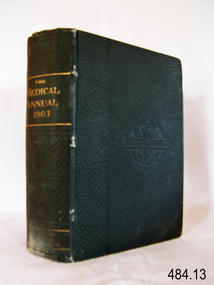 Flagstaff Hill Maritime Museum and Village
Book - General Medical Reference Annuals, Various Medical Contributors, The Medical Annual and Practitioners Index 1903, 1903
... These were written by leading specialists and practitioners, and include useful reference tables listing new medical publications, official health reports, asylum statistics, instruments, and pharmaceutical suppliers. Publication Details Hard cover book ...The 1903 volume is the 21st annual edition (21st year of issue) in the continuous annual series. The Medical Annual and Practitioners’ Index was one of the premier late-Victorian medical reference works. Starting in 1883/1884, the publication served as an essential year-end review digest for medical practitioners across Great Britain and the British colonies. The volume contains reviews of therapeutic progress achieved and new remedies for medical conditions, including detailed summaries of new drugs, synthetic chemicals, serums, and pharmacological advances introduced during 1889–1890. There is also a dictionary of new treatments, as well as summaries of clinical practices and breakthroughs in antiseptic surgery, gynaecology, neurology, and infectious diseases. These were written by leading specialists and practitioners, and include useful reference tables listing new medical publications, official health reports, asylum statistics, instruments, and pharmaceutical suppliers.Hard cover book. The Medical Annual and Practitioners Index for 1903 Author: Various Contributors Editor: Dr. Percy Roberts Wilde Publisher: John Wright & Co. Bristol. (Simpkin Marshall, Hamilton, Kent & Co Ltd. For London) Date: 1903 Further Information: Further Information: Blue cloth hard cover brown spine. Spine bands and panel edges somewhat rubbed and dust-toned as with age. Embossed patterning with lettering to Spine in Gilt, Publishers logo to front cover with Volume title.non-fictionThe 1903 volume is the 21st annual edition (21st year of issue) in the continuous annual series. The Medical Annual and Practitioners’ Index was one of the premier late-Victorian medical reference works. Starting in 1883/1884, the publication served as an essential year-end review digest for medical practitioners across Great Britain and the British colonies. The volume contains reviews of therapeutic progress achieved and new remedies for medical conditions, including detailed summaries of new drugs, synthetic chemicals, serums, and pharmacological advances introduced during 1889–1890. There is also a dictionary of new treatments, as well as summaries of clinical practices and breakthroughs in antiseptic surgery, gynaecology, neurology, and infectious diseases. These were written by leading specialists and practitioners, and include useful reference tables listing new medical publications, official health reports, asylum statistics, instruments, and pharmaceutical suppliers.flagstaff hill, warrnambool, shipwrecked-coast, flagstaff-hill, flagstaff-hill-maritime-museum, maritime-museum, shipwreck-coast, flagstaff-hill-maritime-village, the medical annual and practitioners index 1890, book, medical reference books, medical annual -
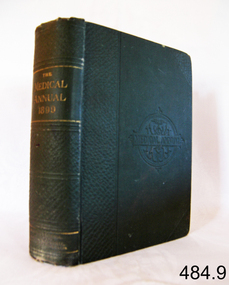 Flagstaff Hill Maritime Museum and Village
Book - General Medical Reference Annuals, Various Medical Contributors, The Medical Annual and Practitioners Index 1899, 1899
... These were written by leading specialists and practitioners, and include useful reference tables listing new medical publications, official health reports, asylum statistics, instruments, and pharmaceutical suppliers. Publication Details Hard cover book ...The 1899 volume is the 17th annual edition (17th year of issue) in the continuous annual series. The Medical Annual and Practitioners’ Index was one of the premier late-Victorian medical reference works. Starting in 1883/1884, the publication served as an essential year-end review digest for medical practitioners across Great Britain and the British colonies. The volume contains reviews of therapeutic progress achieved and new remedies for medical conditions, including detailed summaries of new drugs, synthetic chemicals, serums, and pharmacological advances introduced during 1889–1890. There is also a dictionary of new treatments, as well as summaries of clinical practices and breakthroughs in antiseptic surgery, gynaecology, neurology, and infectious diseases. These were written by leading specialists and practitioners, and include useful reference tables listing new medical publications, official health reports, asylum statistics, instruments, and pharmaceutical suppliers.Hard cover book. The Medical Annual and Practitioners Index for 1899 Author: Various Contributors Editor: Dr. Percy Roberts Wilde Publisher: John Wright & Co. Bristol. (Simpkin Marshall, Hamilton, Kent & Co Ltd. For London) Date: 1899 Further Information: Further Information: Blue cloth hard cover brown spine. Spine bands and panel edges somewhat rubbed and dust-toned as with age. Embossed patterning with lettering to Spine in Gilt, Publishers logo to front cover with Volume title.non-fictionThe 1899 volume is the 17th annual edition (17th year of issue) in the continuous annual series. The Medical Annual and Practitioners’ Index was one of the premier late-Victorian medical reference works. Starting in 1883/1884, the publication served as an essential year-end review digest for medical practitioners across Great Britain and the British colonies. The volume contains reviews of therapeutic progress achieved and new remedies for medical conditions, including detailed summaries of new drugs, synthetic chemicals, serums, and pharmacological advances introduced during 1889–1890. There is also a dictionary of new treatments, as well as summaries of clinical practices and breakthroughs in antiseptic surgery, gynaecology, neurology, and infectious diseases. These were written by leading specialists and practitioners, and include useful reference tables listing new medical publications, official health reports, asylum statistics, instruments, and pharmaceutical suppliers.flagstaff hill, warrnambool, shipwrecked-coast, flagstaff-hill, flagstaff-hill-maritime-museum, maritime-museum, shipwreck-coast, flagstaff-hill-maritime-village, the medical annual and practitioners index 1890, book, medical reference books, medical annual -
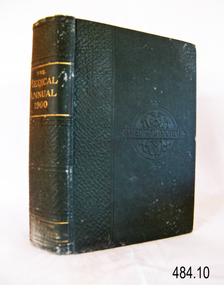 Flagstaff Hill Maritime Museum and Village
Book - General Medical Reference Annuals, Various Medical Contributors, The Medical Annual and Practitioners Index 1900, 1900
... These were written by leading specialists and practitioners, and include useful reference tables listing new medical publications, official health reports, asylum statistics, instruments, and pharmaceutical suppliers. Publication Details Hard cover book ...The 1900 volume is the 18th annual edition (18th year of issue) in the continuous annual series. The Medical Annual and Practitioners’ Index was one of the premier late-Victorian medical reference works. Starting in 1883/1884, the publication served as an essential year-end review digest for medical practitioners across Great Britain and the British colonies. The volume contains reviews of therapeutic progress achieved and new remedies for medical conditions, including detailed summaries of new drugs, synthetic chemicals, serums, and pharmacological advances introduced during 1889–1890. There is also a dictionary of new treatments, as well as summaries of clinical practices and breakthroughs in antiseptic surgery, gynaecology, neurology, and infectious diseases. These were written by leading specialists and practitioners, and include useful reference tables listing new medical publications, official health reports, asylum statistics, instruments, and pharmaceutical suppliers.Hard cover book. The Medical Annual and Practitioners Index for 1900 Author: Various Contributors Editor: Dr. Percy Roberts Wilde Publisher: John Wright & Co. Bristol. (Simpkin Marshall, Hamilton, Kent & Co Ltd. For London) Date: 1900 Further Information: Further Information: Blue cloth hard cover brown spine. Spine bands and panel edges somewhat rubbed and dust-toned as with age. Embossed patterning with lettering to Spine in Gilt, Publishers logo to front cover with Volume title.non-fictionThe 1900 volume is the 18th annual edition (18th year of issue) in the continuous annual series. The Medical Annual and Practitioners’ Index was one of the premier late-Victorian medical reference works. Starting in 1883/1884, the publication served as an essential year-end review digest for medical practitioners across Great Britain and the British colonies. The volume contains reviews of therapeutic progress achieved and new remedies for medical conditions, including detailed summaries of new drugs, synthetic chemicals, serums, and pharmacological advances introduced during 1889–1890. There is also a dictionary of new treatments, as well as summaries of clinical practices and breakthroughs in antiseptic surgery, gynaecology, neurology, and infectious diseases. These were written by leading specialists and practitioners, and include useful reference tables listing new medical publications, official health reports, asylum statistics, instruments, and pharmaceutical suppliers.flagstaff hill, warrnambool, shipwrecked-coast, flagstaff-hill, flagstaff-hill-maritime-museum, maritime-museum, shipwreck-coast, flagstaff-hill-maritime-village, the medical annual and practitioners index 1890, book, medical reference books, medical annual
