
Showing 300 items matching "stranding"
-
 Flagstaff Hill Maritime Museum and Village
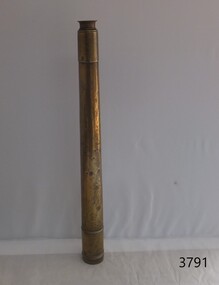
Instrument - Marine Telescope, 1870-1880
... The eyepiece is flat and at the end of the first draw in a very faded engraving that is believed to read "John Browning, 63 Strand, and should read London under the word strand but this is hard to establish given the engravings condition. ..."John Browning, engraved to the first tube in copper plate style "63 STRAND" Engraved under in capital text...63 Strand , London, London, Victoria, England UK...The eyepiece is flat and at the end of the first draw in a very faded engraving that is believed to read "John Browning, 63 Strand, and should read London under the word strand but this is hard to establish given the engravings condition. ...This telescope was amongst various items collected from a sea dive in Port Phillip Bay. The diver was the caretaker of the Port Lonsdale Lighthouse, who dived on various wrecks in the bay during the 1960's. After the caretaker's death, his son sold off many of the shipwreck artefacts. The telescope was purchased from the caretaker's son in the 1990's by a previous owner of the Marine Shop, Queenscliff, Victoria. John Browning was particularly well known for his scientific advances in the fields of spectroscopy, astronomy, and optometry. Between 1856 and 1872, Browning acquired provisional patents for designs of numerous scientific instruments. He was also the recipient of an award at the 1862 International Exhibition held in London. Also recognised for his temperature-compensated aneroid barometer. Browning's scientific instruments were used in physics, chemistry, and biology. The products he designed and manufactured included spectroscopes, telescopes, microscopes, barometers, photometers, cameras, ophthalmologist, and electrical equipment such as electric lamps. John Browning was born around 1831 in Kent, England. His father, William Spencer Browning, was a maker of nautical instruments. John Browning's great-grandfather was also an instrument maker as well as John’s brother Samuel Browning of the firms Spencer & Browning and Spencer, Browning & Rust, who also manufactured navigational instruments. The latter firm was in operation in London from 1784 to 1840 and was succeeded by the firm of Spencer, Browning & Co. John Browning initially intended to follow the medical profession and entered Guy's Hospital, a teaching hospital and a school of medicine. Despite having passed the required examinations, however, he abandoned his plans. Instead, he apprenticed with his father, William Spencer Browning. At the same time, in the late 1840s, he was a student attending the Royal College of Chemistry several days per week. By the early 1870s, practical optics had become John Browning's primary interest, and he listed his occupation as an optician on the census records from 1871 to 1901. He was well known among London's ophthalmic surgeons for his various ophthalmic instruments. He had a large part in reforming the art of crafting spectacles. Other achievements were as an author of the book, How to Use Our Eyes and How to Preserve them by the Aid of Spectacles. Published in 1883, the book included thirty-seven illustrations, including a diagram demonstrating the anatomy of the eye. In 1895, he was one of the founders of the "British Ophthalmology" the first professional organisation for optometry. He was not only its first president but also registered as its first member so many considered him to be the first professional optometrist. Other professional organisations he belonged too was as a member of “The Aeronautical Society of Great Britain”. In 1871 constructing the first wind tunnel located at Greenwich Marine Engineering Works. He was also a member of other scientific organisations, such as the “Microscopical Society of London”, the “Meteorological Society”, and the “Royal”. Then in 1908 the company of W. Watson & Son, opticians and camera makers, took over John Browning's company since 1901 John Browning had been semi-retired but in 1908 he fully retired and moved to Bournemouth in Hampshire. He died in Cheltenham, Gloucestershire in 1925.The telescope is significant for its association with one of the world’s leading scientific instrument makers and inventor of the 19th and early 20th century. It is believed the donation came off a wreck either in Port Philip Bay or between Point Lonsdale and the Nepean Heads making it a significant maritime historical artefact. Its provenance is good given it was taken off a wreck in this area by the Point Lonsdale lighthouse caretaker. Examples of John Browning's telescopes because of their scientific and historical importance are highly valued by collectors.Marine style single draw brass telescope with a sunshade. The single draw has no split and the second cartridge is held in a long brass tube within the single draw, mounted from the objective end. The eyepiece is flat and at the end of the first draw in a very faded engraving that is believed to read "John Browning, 63 Strand, and should read London under the word strand but this is hard to establish given the engravings condition. This interpretation of the engraving has been arrived at by examination of other John Browning telescope engraving examples."John Browning, engraved to the first tube in copper plate style "63 STRAND" Engraved under in capital textflagstaff hill, flagstaff hill maritime museum and village, warrnambool, maritime museum, maritime village, great ocean road, shipwreck coast, shipwreck artefact, port phillip bay, port lonsdale lighthouse, wreck, 1960’s diver, queenscliff marine shop, john browning, telescope, spectroscopy, optometry, scientific instruments, william spencer browning, optician, navigational instrument, microscopical society of london, aeronautical society, marine technology -
 Bendigo Historical Society Inc.
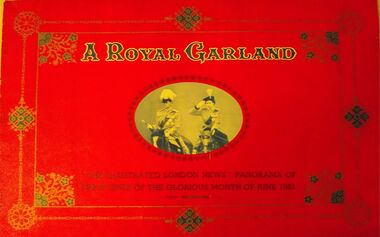
Document - LYDIA CHANCELLOR COLLECTION: A ROYAL GARLAND
... Printed and published by 'The Illustrated London News,' Ingram House, 195-198 Strand, London, W.C.2. 32 pgs....'The Illustrated London News,' Ingram House, 195-198 Strand, London, W.C.2....Printed and published by 'The Illustrated London News,' Ingram House, 195-198 Strand, London, W.C.2. 32 pgs. Document LYDIA CHANCELLOR COLLECTION: A ROYAL GARLAND ...A large red coloured book titled 'A Royal Garland 'The Illustrated London News' Panorama of The Events of The Glorious Month of June 1953. A series of photos of the British Royal Family during June 1953. Printed and published by 'The Illustrated London News,' Ingram House, 195-198 Strand, London, W.C.2. 32 pgs.'The Illustrated London News,' Ingram House, 195-198 Strand, London, W.C.2.royalty, british, royal tour, lydia chancellor, british royal family, coronation, the queen, royal yacht -
 Chelsea & District Historical Society Inc
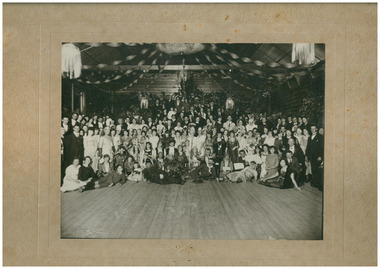
Photograph - St Chad's Church of England, Chelsea, Masquerade Ball in Kismet Hall, c 1920's
... St Chad's Church of England congregation and friends attend a ball at Kismet Hall Kismet Hall was built by Mr Walker on his property adjoining the "Kismet" tea rooms in 1914, in the Strand, Chelsea....Sepia photo of members and friend of Chad's Church of England attending a Masquerade ball at Kismet Hall, in the Strand, Chelsea. ...St Chad's Church of England congregation and friends attend a ball at Kismet Hall Kismet Hall was built by Mr Walker on his property adjoining the "Kismet" tea rooms in 1914, in the Strand, Chelsea. Church of England Anglican Religion building church chelsea Kismet Hall Masquerade Ball Church of England, Chelsea Sepia photo of members and friend of Chad's Church of England attending a Masquerade ball at Kismet Hall, in the Strand, Chelsea. ...St Chad's Church of England congregation and friends attend a ball at Kismet Hall Kismet Hall was built by Mr Walker on his property adjoining the "Kismet" tea rooms in 1914, in the Strand, Chelsea.Sepia photo of members and friend of Chad's Church of England attending a Masquerade ball at Kismet Hall, in the Strand, Chelsea. Church of England, Chelseachurch of england, anglican, religion, building, church, chelsea, kismet hall, masquerade ball -
 Federation University Historical Collection
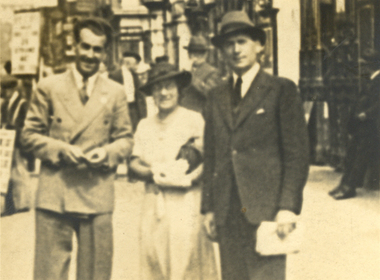
Photograph - Black and White, Frank Wright and friends at The Strand, London, 1937, 1937
... Frank Wright and friends at The Strand, London, 1937......strand...The place is The Strand in London....Band Festival), Frank Wright, Strand London Aug. 1937...The place is The Strand in London. Frank Wright and friends at The Strand, London, 1937 Photograph - Black and White ...Frank Wright was a renown resident of Smeaton, where he was born. He lived at Laura Villa, and attended Smeaton State School. His father William was a gold miner and his mother's name was Sarah. Their family won many singing and instrumental awards. Frank was tutored by Percy Code and was awarded a gold medal for the highest marks in the ALCM examinations in the British Colonies at the age of seventeen years. He became the Australian Open Cornet Champion by the age of eighteen. A year later, Frank conducted the City of Ballarat Band, and later the Ballarat Soldiers’ Memorial Band. He formed the Frank Wright Frisco Band and Frank Wright and his Coliseum Orchestra. These bands won many South Street awards, and Frank as conductor won many awards in the Australian Band Championship contest. In 1933 Frank Wright sailed to England to conduct the famous St Hilda’s Band and was later appointed Musical Director of the London County Council, where he organized many amazing concerts in parks, in and around the London district. He was made Professor of Brass and Military Band Scoring and conducted at the Guildhall of Music and Drama. Frank was often invited to adjudicate Brass Band Championships around Europe, in Australia, including South Street and in New Zealand. The Frank Wright Medal at the Royal South Street competition is awarded to an individual recognized as making an outstanding contribution to brass music in Australia.Black and white photograph of two men dressed in suits and a woman in a summer dress, hat and gloves, In the background are city buildings and other people. They are Frank Wright, Harry Mortimer and Miss F Bantin. The place is The Strand in London.Written in faint pencil on the back - Harry Mortimer, Miss F. Bantin, (Sec. Nat. Band Festival), Frank Wright, Strand London Aug. 1937frank wright, cornet, conductor, ballarat, st hilda's band, strand -
 Otway Districts Historical Society
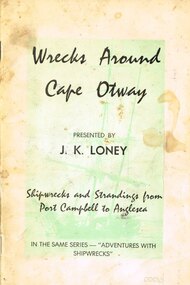
Book, J.K. Loney, Wrecks around Cape Otway
... History of shipwrecks and strandings from Port Campbell to Anglesea, with photographs, locations and gravesites, and some mention of areas either side of the main wrecks....Shipwrecks and strandings from Port Campbell to Anglesea. J.K. ...Shipwrecks and strandings from Port Campbell to Anglesea. J.K. ...History of shipwrecks and strandings from Port Campbell to Anglesea, with photographs, locations and gravesites, and some mention of areas either side of the main wrecks.Wrecks around Cape Otway. Shipwrecks and strandings from Port Campbell to Anglesea. J.K. Loney. 1st ed. Apollo Bay (Vic); J.K. Loney; nd. iv, 50 p.; illus. Soft cover.cape otway; shipwrecks; strandings; port campbell; anglesea; apollo bay; lorne; j.k. loney; -
 Mont De Lancey
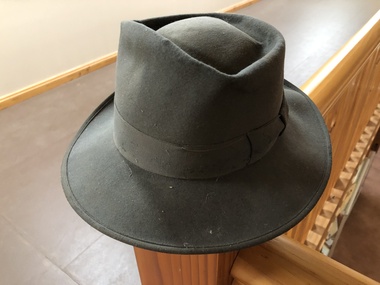
Hat, London Stores Ltd
... The Strand, Pockerweight...Hats The Strand, Pockerweight Grey mens hat, size 6 3/4, with grey ribbon hatband. ...Grey mens hat, size 6 3/4, with grey ribbon hatband.The Strand, Pockerweighthats -
 Flagstaff Hill Maritime Museum and Village
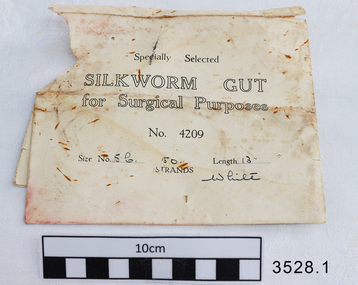
Surgical thread, early 20th century
... Envelope has printed text on front “Specially Selected / SILKWORM GUT / For Surgical Purposes” “No. 4209/ Size No. 56, 50 Strands, Length 13”. Hand written in black nib pen is “White”. ...Printed on envelope “Specially Selected / SILKWORM GUT / For Surgical Purposes” “No. 4209/ Size No. 56, 50 Strands, Length 13”. Hand written in black nib pen is “White”...Envelope has printed text on front “Specially Selected / SILKWORM GUT / For Surgical Purposes” “No. 4209/ Size No. 56, 50 Strands, Length 13”. Hand written in black nib pen is “White”. ...The silkworm gut thread would be used in surgery for applications such as sewing sutures to close wounds or hold drainage tubes in place. This surgical thread was donated to Flagstaff Hill Maritime Village by the family of Doctor William Roy Angus, Surgeon and Oculist. It is part of the “W.R. Angus Collection” that includes historical medical equipment, surgical instruments and material once belonging to Dr Edward Ryan and Dr Thomas Francis Ryan, (both of Nhill, Victoria) as well as Dr Angus’ own belongings. The Collection’s history spans the medical practices of the two Doctors Ryan, from 1885-1926 plus that of Dr Angus, up until 1969. ABOUT THE “W.R.ANGUS COLLECTION” Doctor William Roy Angus M.B., B.S., Adel., 1923, F.R.C.S. Edin.,1928 (also known as Dr Roy Angus) was born in Murrumbeena, Victoria in 1901 and lived until 1970. He qualified as a doctor in 1923 at University of Adelaide, was Resident Medical Officer at the Royal Adelaide Hospital in 1924 and for a period was house surgeon to Sir (then Mr.) Henry Simpson Newland. Dr Angus was briefly an Assistant to Dr Riddell of Kapunda, then commenced private practice at Curramulka, Yorke Peninsula, SA, where he was physician, surgeon and chemist. In 1926, he was appointed as new Medical Assistant to Dr Thomas Francis Ryan (T.F. Ryan, or Tom), in Nhill, Victoria, where his experiences included radiology and pharmacy. In 1927 he was Acting House Surgeon in Dr Tom Ryan’s absence. Dr Angus had become engaged to Gladys Forsyth and they decided he would take time to further his studies overseas in the UK in 1927. He studied at London University College Hospital and at Edinburgh Royal Infirmary and in 1928, was awarded FRCS (Fellow from the Royal College of Surgeons), Edinburgh. He worked his passage back to Australia as a Ship’s Surgeon on the on the Australian Commonwealth Line’s T.S.S. Largs Bay. Dr Angus married Gladys in 1929, in Ballarat. (They went on to have one son (Graham 1932, born in SA) and two daughters (Helen (died 12/07/1996) and Berenice (Berry), both born at Mira, Nhill ) Dr Angus was a ‘flying doctor’ for the A.I.M. (Australian Inland Ministry) Aerial Medical Service in 1928 . The organisation began in South Australia through the Presbyterian Church in that year, with its first station being in the remote town of Oodnadatta, where Dr Angus was stationed. He was locum tenens there on North-South Railway at 21 Mile Camp. He took up this ‘flying doctor’ position in response to a call from Dr John Flynn; the organisation was later known as the Flying Doctor Service, then the Royal Flying Doctor Service. A lot of his work during this time involved dental surgery also. Between 1928-1932 he was surgeon at the Curramulka Hospital, Yorke Peninsula, South Australia. In 1933 Dr Angus returned to Nhill where he’d previously worked as Medical Assistant and purchased a share of the Nelson Street practice and Mira hospital from Dr Les Middleton one of the Middleton Brothers, the current owners of what was once Dr Tom Ryan’s practice. Dr L Middleton was House Surgeon to the Nhill Hospital 1926-1933, when he resigned. [Dr Tom Ryan’s practice had originally belonged to his older brother Dr Edward Ryan, who came to Nhill in 1885. Dr Edward saw patients at his rooms, firstly in Victoria Street and in 1886 in Nelson Street, until 1901. The Nelson Street practice also had a 2 bed ward, called Mira Private Hospital ). Dr Edward Ryan was House Surgeon at the Nhill Hospital 1884-1902 . He also had occasions where he successfully performed veterinary surgery for the local farmers too. Dr Tom Ryan then purchased the practice from his brother in 1901. Both Dr Edward and Dr Tom Ryan work as surgeons included eye surgery. Dr Tom Ryan performed many of his operations in the Mira private hospital on his premises. He too was House Surgeon at the Nhill Hospital 1902-1926. Dr Tom Ryan had one of the only two pieces of radiology equipment in Victoria during his practicing years – The Royal Melbourne Hospital had the other one. Over the years Dr Tom Ryan gradually set up what was effectively a training school for country general-practitioner-surgeons. Each patient was carefully examined, including using the X-ray machine, and any surgery was discussed and planned with Dr Ryan’s assistants several days in advance. Dr Angus gained experience in using the X-ray machine there during his time as assistant to Dr Ryan. Dr Tom Ryan moved from Nhill in 1926. He became a Fellow of the Royal Australasian College of Surgeons in 1927, soon after its formation, a rare accolade for a doctor outside any of the major cities. He remained a bachelor and died suddenly on 7th Dec 1955, aged 91, at his home in Ararat. Scholarships and prizes are still awarded to medical students in the honour of Dr T.F. Ryan and his father, Dr Michael Ryan, and brother, John Patrick Ryan. ] When Dr Angus bought into the Nelson Street premises in Nhill he was also appointed as the Nhill Hospital’s Honorary House Surgeon 1933-1938. His practitioner’s plate from his Nhill surgery states “HOURS Daily, except Tuesdays, Fridays and Saturday afternoons, 9-10am, 2-4pm, 7-8pm. Sundays by appointment”. This plate is now mounted on the doorway to the Port Medical Office at Flagstaff Hill Maritime Village, Warrnambool. Dr Edward Ryan and Dr Tom Ryan had an extensive collection of historical medical equipment and materials spanning 1884-1926 and when Dr Angus took up practice in their old premises he obtained this collection, a large part of which is now on display at the Port Medical Office at Flagstaff Hill Maritime Village in Warrnambool. During his time in Nhill Dr Angus was involved in the merging of the Mira Hospital and Nhill Public Hospital into one public hospital and the property titles passed on to Nhill Hospital in 1939. In 1939 Dr Angus and his family moved to Warrnambool where he purchased “Birchwood,” the 1852 home and medical practice of Dr John Hunter Henderson, at 214 Koroit Street. (This property was sold in1965 to the State Government and is now the site of the Warrnambool Police Station. ). The Angus family was able to afford gardeners, cooks and maids; their home was a popular place for visiting dignitaries to stay whilst visiting Warrnambool. Dr Angus had his own silk worm farm at home in a Mulberry tree. His young daughter used his centrifuge for spinning the silk. Dr Angus was appointed on a part-time basis as Port Medical Officer (Health Officer) in Warrnambool and held this position until the 1940’s when the government no longer required the service of a Port Medical Officer in Warrnambool; he was thus Warrnambool’s last serving Port Medical Officer. (The duties of a Port Medical Officer were outlined by the Colonial Secretary on 21st June, 1839 under the terms of the Quarantine Act. Masters of immigrant ships arriving in port reported incidents of diseases, illness and death and the Port Medical Officer made a decision on whether the ship required Quarantine and for how long, in this way preventing contagious illness from spreading from new immigrants to the residents already in the colony.) Dr Angus was a member of the Australian Medical Association, for 35 years and surgeon at the Warrnambool Base Hospital 1939-1942, He served as a Surgeon Captain during WWII1942-45, in Ballarat, Victoria, and in Bonegilla, N.S.W., completing his service just before the end of the war due to suffering from a heart attack. During his convalescence he carved an intricate and ‘most artistic’ chess set from the material that dentures were made from. He then studied ophthalmology at the Royal Melbourne Eye and Ear Hospital and created cosmetically superior artificial eyes by pioneering using the intrascleral cartilage. Angus received accolades from the Ophthalmological Society of Australasia for this work. He returned to Warrnambool to commence practice as an ophthalmologist, pioneering in artificial eye improvements. He was Honorary Consultant Ophthalmologist to Warrnambool Base Hospital for 31 years. He made monthly visits to Portland as a visiting surgeon, to perform eye surgery. He represented the Victorian South-West subdivision of the Australian Medical Association as its secretary between 1949 and 1956 and as chairman from 1956 to 1958. In 1968 Dr Angus was elected member of Spain’s Barraquer Institute of Barcelona after his research work in Intrasclearal cartilage grafting, becoming one of the few Australian ophthalmologists to receive this honour, and in the following year presented his final paper on Living Intrasclearal Cartilage Implants at the Inaugural Meeting of the Australian College of Ophthalmologists in Melbourne In his personal life Dr Angus was a Presbyterian and treated Sunday as a Sabbath, a day of rest. He would visit 3 or 4 country patients on a Sunday, taking his children along ‘for the ride’ and to visit with him. Sunday evenings he would play the pianola and sing Scottish songs to his family. One of Dr Angus’ patients was Margaret MacKenzie, author of a book on local shipwrecks that she’d seen as an eye witness from the late 1880’s in Peterborough, Victoria. In the early 1950’s Dr Angus, painted a picture of a shipwreck for the cover jacket of Margaret’s book, Shipwrecks and More Shipwrecks. She was blind in later life and her daughter wrote the actual book for her. Dr Angus and his wife Gladys were very involved in Warrnambool’s society with a strong interest in civic affairs. Their interests included organisations such as Red Cross, Rostrum, Warrnambool and District Historical Society (founding members), Wine and Food Society, Steering Committee for Tertiary Education in Warrnambool, Local National Trust, Good Neighbour Council, Housing Commission Advisory Board, United Services Institute, Legion of Ex-Servicemen, Olympic Pool Committee, Food for Britain Organisation, Warrnambool Hospital, Anti-Cancer Council, Boys’ Club, Charitable Council, National Fitness Council and Air Raid Precautions Group. He was also a member of the Steam Preservation Society and derived much pleasure from a steam traction engine on his farm. He had an interest in people and the community He and his wife Gladys were both involved in the creation of Flagstaff Hill, including the layout of the gardens. After his death (28th March 1970) his family requested his practitioner’s plate, medical instruments and some personal belongings be displayed in the Port Medical Office surgery at Flagstaff Hill Maritime Village, and be called the “W. R. Angus Collection”. The W.R. Angus Collection is significant for still being located at the site it is connected with, Doctor Angus being the last Port Medical Officer in Warrnambool. The collection of medical instruments and other equipment is culturally significant, being an historical example of medicine from late 19th to mid-20th century. Dr Angus assisted Dr Tom Ryan, a pioneer in the use of X-rays and in ocular surgery. Surgical thread of silkworm gut in white envelope, from the W.R. Angus Collection. Envelope has printed text on front “Specially Selected / SILKWORM GUT / For Surgical Purposes” “No. 4209/ Size No. 56, 50 Strands, Length 13”. Hand written in black nib pen is “White”. Once part of Dr T F Ryan's medical practice.Printed on envelope “Specially Selected / SILKWORM GUT / For Surgical Purposes” “No. 4209/ Size No. 56, 50 Strands, Length 13”. Hand written in black nib pen is “White”flagstaff hill, warrnambool, shipwrecked coast, flagstaff hill maritime museum, maritime museum, shipwreck coast, flagstaff hill maritime village, great ocean road, silkworm gut, silkworm thread, surgery, dr t f ryan, dr angus, flagstaff hill, warrnambool, shipwrecked coast, flagstaff hill maritime museum, maritime museum, shipwreck coast, flagstaff hill maritime village, great ocean road, silkworm gut, silkworm thread, surgery, dr t f ryan, dr angus, surgical thread, medical equipment, warrnambool base hospital, nhill base hospital, mira hospital, flying doctor, medical history, medical treatment -
 Bendigo Historical Society Inc.
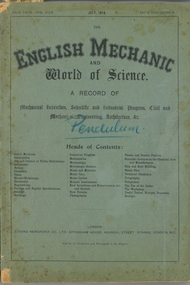
Magazine - BUSH COLLECTION: ENGLISH MECHANIC AND WORLD OF SCIENCE
... Strand Newspaper Co., Ltd. London...SCIENCES General Strand Newspaper Co., Ltd. London Magazine "English Mechanic and World of Science'. ...Magazine "English Mechanic and World of Science'. Green soft cover, black text. A record of mechanical invention, scientific and industrial progress, civil and mechanical engineering, architecture.Strand Newspaper Co., Ltd. Londonsciences, general -
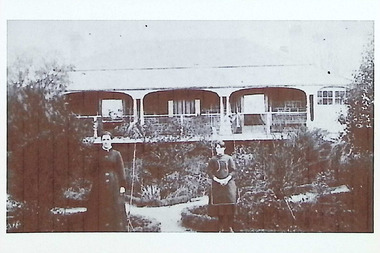 Williamstown Historical Society Inc
Photograph - The Strand, Williamstown, "Rosneath"
... The Strand, Williamstown, "Rosneath"...The Strand Williamstown House Roseneath The Strand, Williamstown, "Rosneath" Photograph The Strand, Williamstown, "Rosneath" ...The Strand, Williamstown, "Rosneath"the strand, williamstown, house, roseneath -
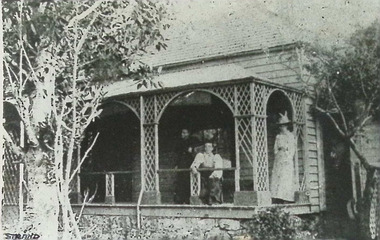 Williamstown Historical Society Inc
Photograph - The Strand, Williamstown, McChesney's House
... The Strand, Williamstown, McChesney's House...The Strand Williamstown House McChesney The Strand, Williamstown, McChesney's House Photograph The Strand, Williamstown, McChesney's House ...The Strand, Williamstown, McChesney's Housethe strand, williamstown, house, mcchesney -
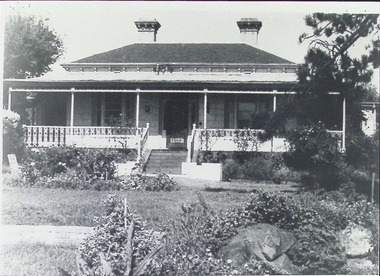 Williamstown Historical Society Inc
Photograph - The Strand, Williamstown, McChesney's House
... The Strand, Williamstown, McChesney's House...The Strand Williamstown House McChesney The Strand, Williamstown, McChesney's House Photograph The Strand, Williamstown, McChesney's House ...The Strand, Williamstown, McChesney's Housethe strand, williamstown, house, mcchesney -
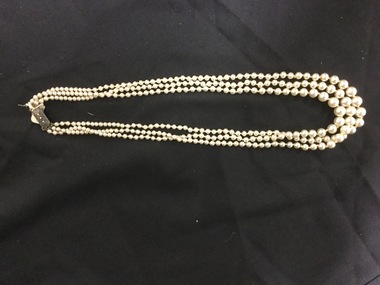 Mont De Lancey
Pearl necklace
... Three strand pearl necklace....Sebire. 1952. necklaces pearls jewellery Three strand pearl necklace. Pearl necklace ...Worn by Mrs. W.J. Sebire. 1952.Three strand pearl necklace.necklaces, pearls, jewellery -
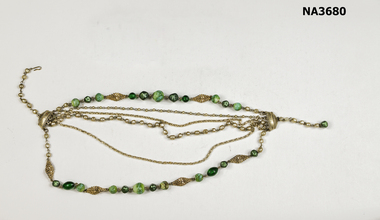 Whitehorse Historical Society Inc.
Accessory - Necklace, not known
... Necklace with six strands of green beads and silver decorations....From the estate of Jenny Lang, 11 Pearcedale Grove Nunawading COSTUME ACCESSORIES Jewellery Necklace with six strands of green beads and silver decorations. ...From the estate of Jenny Lang, 11 Pearcedale Grove NunawadingNecklace with six strands of green beads and silver decorations.costume accessories, jewellery -
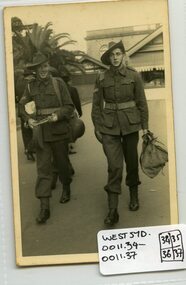 The Foundling Archive
Photograph West Sydney
... Jim Central Station Photos 49 Little Strand Arcade Sydney...Second World War; me; Wesy Sydney; Australia Jim Central Station Photos 49 Little Strand Arcade Sydney Photograph West Sydney ...This photograph is part of the West Sydney Collection which depicts the period around Second World War in Australia from the perspective of a young unknown woman.Jim Central Station Photos 49 Little Strand Arcade Sydneysecond world war; me; wesy sydney; australia -
 Bendigo Historical Society Inc.
Photograph - PORTRAIT OF A LADY
... London & Provincial Photographic Company 443 West Strand, London. W. C....PHOTOGRAPH Portrait female Portrait of a Lady London & Provincial Photographic Company 443 West Strand, London. W. C. Small full length portrait of a lady standing beside a cupboard with a large jug on it. ...Small full length portrait of a lady standing beside a cupboard with a large jug on it. She is wearing a long high neck dress with large sleeves and a full skirt with a large bow on the side front. She is also wearing a locket and a long necklace. Behind her is garden scene.London & Provincial Photographic Company 443 West Strand, London. W. C.photograph, portrait, female, portrait of a lady -
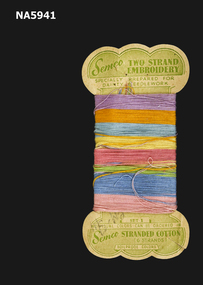 Whitehorse Historical Society Inc.
Textile - Embroidery stranded cotton card, Semco, C 1940's
... Semco 2 strand embroidery. Specially prepared for dainty needlework. ...Sample of thread used for darning cotton sewing Darning Domestic life Semco 2 strand embroidery. Specially prepared for dainty needlework. ...Sample of thread used for darning cottonCard containing various coloured embroidery cottonsSemco 2 strand embroidery. Specially prepared for dainty needlework. Set 1.sewing, darning, domestic life -
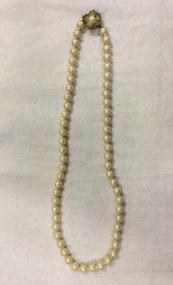 Kew Historical Society Inc
Jewellery, Necklace, 1960s
... Long strand of standardised faux pearls with a gold metal and pearl clasp....necklaces costume jewellery, fashion accessories Long strand of standardised faux pearls with a gold metal and pearl clasp. ...Long strand of standardised faux pearls with a gold metal and pearl clasp.necklaces, costume jewellery, fashion accessories -
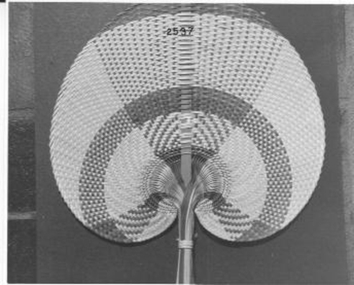 Whitehorse Historical Society Inc.
Functional object - Fan
... Coloured design of indigo and dark blue formed by use of coloured strands....Coloured design of indigo and dark blue formed by use of coloured strands. Functional object Fan ...Leaf shaped fan made of strands, possibly raffia- woven around a central bamboo strut which forms the cone of the handle. Coloured design of indigo and dark blue formed by use of coloured strands.handcrafts, basketwork, costume accessories, female -
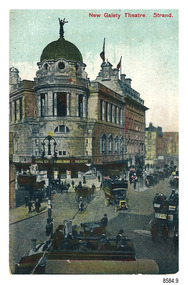 Flagstaff Hill Maritime Museum and Village
Postcard - Historical, building, New Gaiety Theatre, Strand, 1905-1907
... New Gaiety Theatre, Strand...New Gaiety Theatre, Strand [London] - The New Gaiety Theatre opened in 1903 on the corner of The Strand and Aldwych, London. ...Sign on the image of the building: “GAIETY / SPRING CHICKEN / THEATRE” On the front in red: “New Gaiety Theatre, Strand” On the back in printed in green: Stamp box “INLAND / 1/2d.’ ...New Gaiety Theatre, Strand [London] - The New Gaiety Theatre opened in 1903 on the corner of The Strand and Aldwych, London. ...The nine postcards in this set were donated together and date to the early 1900s. All but one postcard in this set shows images of Warrnambool, in the Western District of Victoria; the other has a London image. The postcards were all printed in Great Britain according to that country’s postal regulations. The fronts of all cards have titles printed in red. Most of the images on the cards are attributed to photographer Joseph Jordan and belong to the Jordan Series. The back of these cards has an outline for a postage stamp, a vertical dividing line and a heading on each side of the line to separate the Correspondence from the Address. However, this postcard is the 'odd one out' in that its location is London, it has no border, it has no reference to 'Jordan' or 'Jordan Series' no reference to the printer, no 'correspondence heading', it is slightly smaller than the others, and it has text in the stamp area that refers to 'inland' and 'foreign' postage, a half-penny inland and one-penny overseas.. Postcards or ‘correspondence cards’ appeared in Britain in 1894. They were plain cards with a space for the message on one side and an address on the other; regulations didn’t allow anything but the address to be written on the ‘address’ side. In 1902 the British regulations then allowed a picture to be printed on the front and the address on the back, so messages had to be written on the picture side. Soon, the regulations changed and the back was divided for a message and the address. New Gaiety Theatre, Strand [London] - The New Gaiety Theatre opened in 1903 on the corner of The Strand and Aldwych, London. The second show performed in the new theatre was “The Spring Chicken” in 1905. The third show followed in 1907. The preprinted postage cost on the stamp outline is ½ d. or half penny; according to The Great Britain Philatelic Society, Great Britain Postcard Stamps were priced 1/2 d. or Half Penny from 1-Oct-1870 to 3-Jun-1916. The postcard is significant for its inclusion with a set of nine postcards, eight of which are images of Warrnambool and its district and photographed by Joseph Jordan. It is also curious for is lack of connection to Jordan. Postcard, one of nine, portrait orientation, coloured print. The image shows a tall three-storey corner building with a statue on its domed tower and smaller towers on the sides. The top two storeys have balconies with columns, and overhang the ground floor, providing cover over the footpath. The foreground has horse-drawn carriages and coaches, and motorised vehicles including a bus. Figures wearing top hats and others in long dresses are in front of the building, which has a sign on the corner advertising the building and its current show. There is no correspondence written on the card. The front of the postcard has a printed red title and an inscription on the image. The reverse has inscriptions and outlines for a postage stamp. Made in Britain.Sign on the image of the building: “GAIETY / SPRING CHICKEN / THEATRE” On the front in red: “New Gaiety Theatre, Strand” On the back in printed in green: Stamp box “INLAND / 1/2d.’ STAMP / FOREIGN 1d.” “POST CARD” “THE ADDRESS ONLY TO BE WRITTEN HERE” flagstaff hill maritime museum, flagstaff hill maritime village, flagstaff hill maritime museum and village, maritime museum, warrnambool, great ocean road, warrnambool and district, warrnambool scenes, local scenes, views of warrnambool, postcard, souvenir, correspondence, cameo postcard, new gaiety theater, the strand, spring chicken, gaiety theatre, london theatre -
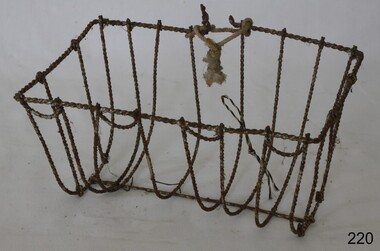 Flagstaff Hill Maritime Museum and Village
Domestic object - Soap holder, early 20th century
... Soap holder; basket shaped frame, handmade from twisted wire strands....Although the soap holder is currently not associated with a historical event, person or place at this time it is being used to augment Flagstaff's village display as it is typical of items used in the 19th and early 20th centuries. flagstaff hill warrnambool shipwrecked coast flagstaff hill maritime museum maritime museum shipwreck coast flagstaff hill maritime village great ocean road soap h older wire soap holder cleaning laundry washing sanitation Soap holder; basket shaped frame, handmade from twisted wire strands. Domestic object Soap holder ...This wire soap holder is purpose-made by hand for holding a bar of soap in a way that allows the soap to air dry. It may have been used in the laundry, bathroom or kitchen, areas used for washing hands or bodies. Wet bars of soap could become very soft and difficult to use. The maker used short lengths of wire to create this soap holder, showing thriftiness and inventiveness.Although the soap holder is currently not associated with a historical event, person or place at this time it is being used to augment Flagstaff's village display as it is typical of items used in the 19th and early 20th centuries.Soap holder; basket shaped frame, handmade from twisted wire strands.flagstaff hill, warrnambool, shipwrecked coast, flagstaff hill maritime museum, maritime museum, shipwreck coast, flagstaff hill maritime village, great ocean road, soap h older, wire soap holder, cleaning, laundry, washing, sanitation -
 Stawell Historical Society Inc
Costume - Footware, Baby Bootees
... Pink Leather with strap and button Toe has 2 Bluebirds with strand of Pearls...Baby Ware - Childs Clothing Pink Leather with strap and button Toe has 2 Bluebirds with strand of Pearls Baby Bootees Costume Footware ...Baby Ware - Childs ClothingPink Leather with strap and button Toe has 2 Bluebirds with strand of Pearls -
 National Wool Museum
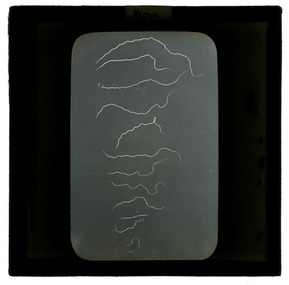
Photograph - Wool Fibres, J W Allen, 1900 - 1940
... Black and white glass lantern slide with paper edging depicting strands of wool....Agriculture New South Wales Graziers Association Travel Sheep Breeding Photography Glass Lantern Slides J W Allen [handwritten]: Kemp Black and white glass lantern slide with paper edging depicting strands of wool. Photograph Wool Fibres J W Allen ...This item is part of a collection of six black and white glass lantern slides previously housed together in a glass plate box. The slides are part of a greater collection of around forty three black and white glass lantern slides, along with other photographs and photo albums related to this collection. This item is associated with the New South Wales Graziers Association world tour of merino sheep 1928/9. The slides were possibly used as supporting material in presentations made by J W Allen when on tour.Black and white glass lantern slide with paper edging depicting strands of wool.[handwritten]: Kempagriculture, new south wales graziers association, travel, sheep, breeding, photography, glass lantern slides, j w allen -
 Kew Historical Society Inc
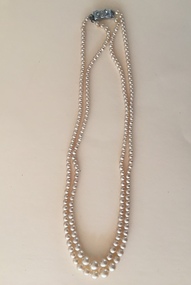
Accessory, Two-strand Pearl Necklace, 1950s
... Two-strand Pearl Necklace...Graduated double strand of small faux pearls joined by a metal and diamanté clasp....Two-strand Pearl Necklace Accessory Accessory ...Graduated double strand of small faux pearls joined by a metal and diamanté clasp.costume jewellery, dione mcintyre, neclaces -
 Lara RSL Sub Branch
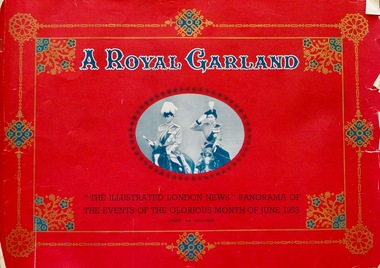
Magazine, A Royal Garland, 1953
... Printed and Published by by The Illustrated London News, Ingram House, 195-198 Strand, London. WC2....This Magazine was collated and printed in June 1953, it is an original Magazine magazine, london royal photographs Printed and Published by by The Illustrated London News, Ingram House, 195-198 Strand, London. WC2. 32 glossy pages of Black and White Photographs of news and events in London for the month of June 1953. ...This magazine was printed in June 1953. It is a collection of photoghraphs of events that occurred in London in June 1953.This Magazine was collated and printed in June 1953, it is an original Magazine32 glossy pages of Black and White Photographs of news and events in London for the month of June 1953. Printed and Published by by The Illustrated London News, Ingram House, 195-198 Strand, London. WC2.magazine,, london, royal, photographs -
 Mission to Seafarers Victoria
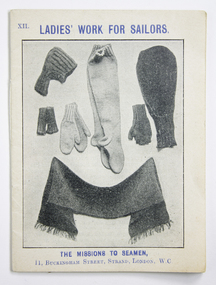
Booklet - Patterns catalogue, Missions to Seamen, London, Ladies' Work For Sailors
... XII - Ladies' Work For Sailors - The Missions to Seamen, 11 Buckingham Street, Strand, London, W.C....knitting lhlg ladies harbour lights guild mission to seamen london seamens' mission mission to seafarers mtsuk XII - Ladies' Work For Sailors - The Missions to Seamen, 11 Buckingham Street, Strand, London, W.C. This small booklet contains knitting patterns with photographs. ...This small booklet contains knitting patterns with photographs.XII - Ladies' Work For Sailors - The Missions to Seamen, 11 Buckingham Street, Strand, London, W.C.knitting, lhlg, ladies harbour lights guild, mission to seamen, london, seamens' mission, mission to seafarers, mtsuk -
 Bendigo Historical Society Inc.
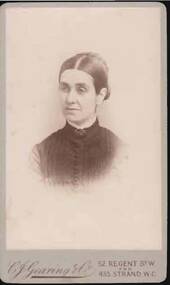
Photograph - PORTRAIT OF A LADY
... Gearing & Co., 52 Regent St. W and 433 Strand. W. C....Gearing & Co., 52 Regent St. W and 433 Strand. W. C. Head and shoulder portrait of a lady. ...Head and shoulder portrait of a lady. She is wearing a high neck dress with a brooch at the throat.C. J. Gearing & Co., 52 Regent St. W and 433 Strand. W. C.photograph, portrait, portrait of a lady, c j gearing & co., carte de visite -
 Queenscliffe Maritime Museum
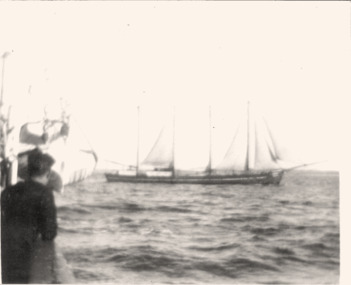
Photograph - Photo & article of the KERMANDIE, Photo of the 4 masted schooner KERMANDIE under sail, unknown
... Black & white photos of the schooner KERMANDIE & news clipping re its stranding at the Rip....the schooner KERMANDIE under sail 4 masted Tasmanian schooner under sail historical references Reverse " NIL " Black & white photos of the schooner KERMANDIE & news clipping re its stranding at the Rip. Photo of the 4 masted schooner KERMANDIE under sail. ...the schooner KERMANDIE under sail4 masted Tasmanian schooner under sailBlack & white photos of the schooner KERMANDIE & news clipping re its stranding at the Rip.Reverse " NIL "historical references -
 Robin Boyd Foundation
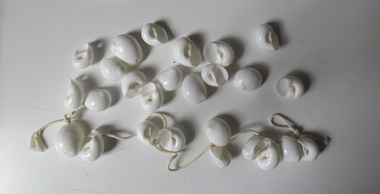
Decorative object - Necklace
... White shell necklace, string strand, 10 shells threaded, 16 loose shells...White shell necklace, string strand, 10 shells threaded, 16 loose shells Decorative object Necklace ...White shell necklace, string strand, 10 shells threaded, 16 loose shells -
 Kew Historical Society Inc
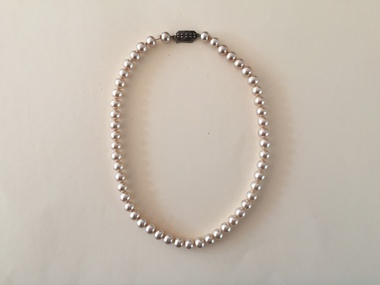
Jewellery, Necklace, 1950s
... Short strand of single size faux pearls joined by a white metal and diamanté clasp....costume jewellery necklaces Dione mcintyre Short strand of single size faux pearls joined by a white metal and diamanté clasp. ...Short strand of single size faux pearls joined by a white metal and diamanté clasp.costume jewellery, necklaces, dione mcintyre -
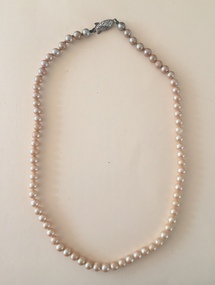 Kew Historical Society Inc
Accessory, Single Strand Pearl Necklace, 1960s
... Single Strand Pearl Necklace...Short strand of single size pink faux pearls joined by a white metal clasp....Single Strand Pearl Necklace Accessory Accessory ...Short strand of single size pink faux pearls joined by a white metal clasp.costume jewellery, necklaces
