
Showing 25 items matching "submarine warfare"
-
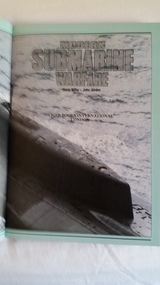 Monbulk RSL Sub Branch
Book, David Miller, Modern submarine warfare, 1991
... Modern submarine warfare...Submarine warfare...Submarine warfare Submarine technology A history of the development of submarine technology Index, ill, p.208. ...A history of the development of submarine technologyIndex, ill, p.208.non-fictionA history of the development of submarine technologysubmarine warfare, submarine technology -
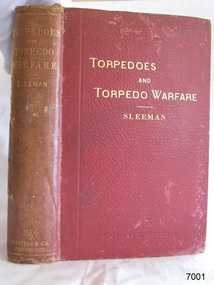 Flagstaff Hill Maritime Museum and Village
Book - Reference/History/Naval Armaments Technical Manual, Griffin & Co. (Publishers by appointment to Her Majesty and H.R.H. the Duke of Edinburugh), Torpedoes and Torpedo Warfare, 1889
... ...submarine warfare...The material associated with Sleemans book is described as a “complete and concise account” of submarine warfare and its practical details. This description makes it a useful snapshot of late 19th century naval thinking. ...Containing a complete account of the progress of submarine warfare; also a detailed description of matters appertaining thereto, including the latest improvements, with 83 full-page illustrations, diagrams etc. ...This work is significant, mainly as an early comprehensive handbook on torpedoes and submarine warfare rather than as a literary classic. ...Torpedoes and Torpedo Warfare is a late-19th century naval history/manual about the development of submarine warfare, torpedoes, mines, and the vessels and tactics used to deploy them. It was originally written as a technical survey of the weapon’s rise and practical use, with diagrams and detailed descriptions. The book traces the evolution of torpedo warfare from early submarine mines through the introduction of electric detonation and later improvements. It is part history, part technical handbook.Torpedoes and Torpedo Warfare, by C. Sleeman. Containing a complete account of the progress of submarine warfare; also a detailed description of matters appertaining thereto, including the latest improvements, with 83 full-page illustrations, diagrams etc. Second Edition. 1889. Published by Griffin & Co, U.K. Hard-cover, bound book, red with gold lettering. Inscription inside the cover. non-fictionTorpedoes and Torpedo Warfare is a late-19th century naval history/manual about the development of submarine warfare, torpedoes, mines, and the vessels and tactics used to deploy them. It was originally written as a technical survey of the weapon’s rise and practical use, with diagrams and detailed descriptions. The book traces the evolution of torpedo warfare from early submarine mines through the introduction of electric detonation and later improvements. It is part history, part technical handbook. warrnambool, shipwrecked-coast, flagstaff-hill, flagstaff-hill-maritime-museum, maritime-museum, shipwreck-coast, flagstaff-hill-maritime-village, shipwrecked-artefact, book, c. sleeman author, torpedo warfare, submarine warfare -
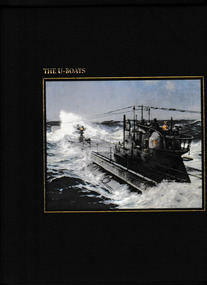 Monbulk RSL Sub Branch
Book, Time Life Books, The U Boats, 1979
... World War 1914-1918 - Submarine warfare...World War 1914-1918 - Submarine warfare World War 1939-1945 - Submarine warfare A history of U Boat activities in both world wars Index, bib, ill, p.176. ...A history of U Boat activities in both world warsIndex, bib, ill, p.176.non-fictionA history of U Boat activities in both world warsworld war 1914-1918 - submarine warfare, world war 1939-1945 - submarine warfare -
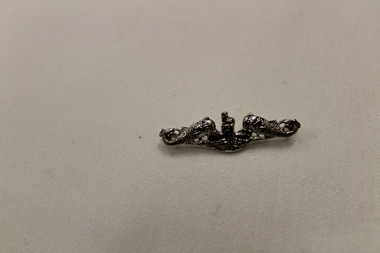 Dandenong/Cranbourne RSL Sub Branch
Badge - US Submarine Badge
... The badge is titled " The Submarine Warfare Insignia." They are worn by qualified submariners....The badge is titled " The Submarine Warfare Insignia." They are worn by qualified submariners. ...Small silver lapel badge showing two dolphins face to face. The badge is titled " The Submarine Warfare Insignia." They are worn by qualified submariners. V - 21 - N is inscribed in rear of badge. -
 Monbulk RSL Sub Branch
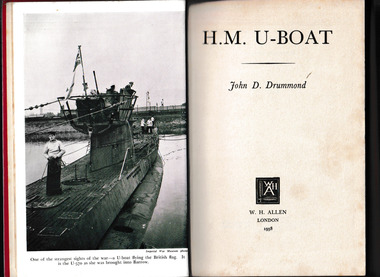
W.H. Allen, H.M. U-Boat, 1958
... ...Submarine warfare - World war II...World War 1939-1945 - Naval operations Submarine warfare - World war II The amazing story of U 570 - captured by the British and used against the Germans Index, ill, p.220. ...The amazing story of U 570 - captured by the British and used against the GermansIndex, ill, p.220.non-fictionThe amazing story of U 570 - captured by the British and used against the Germansworld war 1939-1945 - naval operations, submarine warfare - world war ii -
 Monbulk RSL Sub Branch
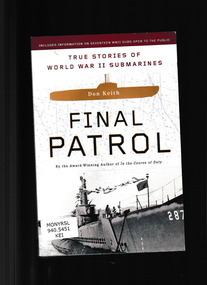
Book, NAL Caliber, Final patrol : true stories of World War II submarines, 2006
... Submarine warfare - World war II...Submarine warfare - World war II World War 1939-1945 - Naval operations - United States During World War II, the U.S. ...During World War II, the U.S. Navy's submarine service suffered the highest percentage of casualties of any branch of the American armed forces. One in five submariners was lost. But despite the odds, these underwater warriors accounted for almost sixty percent of Japanese shipping losses and were a major factor in winning the war.Index, ill, p.331.During World War II, the U.S. Navy's submarine service suffered the highest percentage of casualties of any branch of the American armed forces. One in five submariners was lost. But despite the odds, these underwater warriors accounted for almost sixty percent of Japanese shipping losses and were a major factor in winning the war.submarine warfare - world war ii, world war 1939-1945 - naval operations - united states -
 Monbulk RSL Sub Branch
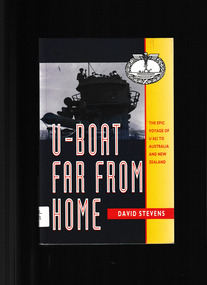
Book, Allen & Unwin, U-boat far from home : the epic voyage of U862 to Australia and New Zealand /, 1997
... Submarine warfare - World war II...Submarine warfare - World war II World War 1939-1945 - Naval operations - Germany The operations of U 862 in Australian and New Zealand waters in World War Two Index, bib, ill, maps, p.282. ...The operations of U 862 in Australian and New Zealand waters in World War TwoIndex, bib, ill, maps, p.282.non-fictionThe operations of U 862 in Australian and New Zealand waters in World War Two submarine warfare - world war ii, world war 1939-1945 - naval operations - germany -
 Monbulk RSL Sub Branch
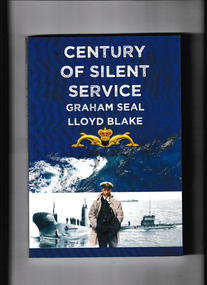
Book, Boolarong Press, Century of silent service, 2013
... ...Submarine warfare...Royal Australian navy - Submarine forces Submarine warfare Australia's Submariners are a group with an extremely strong sense of identity that goes well beyond occupational comradeship or the esprit de corps of military life in peace or war. ...Australia's Submariners are a group with an extremely strong sense of identity that goes well beyond occupational comradeship or the esprit de corps of military life in peace or war. Since 1914, the unique skills, attitudes, values and demands of the work they do and the environment in which they do it have forged unparalleled camaraderie. A camaraderie that extends beyond nationality, embracing submariners past and present of every other nation. No one but submariners understand the experience of diving deep beneath the waves in technology filled tubes of steel, each submariner totally dependent on the other for a safe return to the surface. The ethos of Australia's submariners is based upon these factors and remains strong even when they leave the sea and take up other occupations. Australia's future submarines will certainly present challenges in terms of sophistication, technology and capability however the characteristics of our submariners evolved over previous generations will remain much the same; trained and equipped to meet the challenges; just as they have been met and surmounted so many times, in silence, over a century of service.Bib, ill, maps, p.243.non-fictionAustralia's Submariners are a group with an extremely strong sense of identity that goes well beyond occupational comradeship or the esprit de corps of military life in peace or war. Since 1914, the unique skills, attitudes, values and demands of the work they do and the environment in which they do it have forged unparalleled camaraderie. A camaraderie that extends beyond nationality, embracing submariners past and present of every other nation. No one but submariners understand the experience of diving deep beneath the waves in technology filled tubes of steel, each submariner totally dependent on the other for a safe return to the surface. The ethos of Australia's submariners is based upon these factors and remains strong even when they leave the sea and take up other occupations. Australia's future submarines will certainly present challenges in terms of sophistication, technology and capability however the characteristics of our submariners evolved over previous generations will remain much the same; trained and equipped to meet the challenges; just as they have been met and surmounted so many times, in silence, over a century of service.royal australian navy - submarine forces, submarine warfare -
 Monbulk RSL Sub Branch
Book, Groset and Dunlap, The splinter fleet of the Otranto barrage, 1936
... World War 1914-1918 - Submarine warfare...World War 1914-1918 - Submarine warfare Battle of Durazzo An account of the battle of Durazzo p.307. ...An account of the battle of Durazzop.307.non-fictionAn account of the battle of Durazzoworld war 1914-1918 - submarine warfare, battle of durazzo -
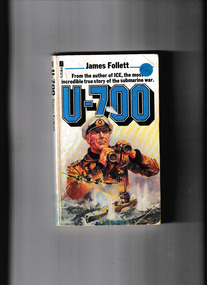 Monbulk RSL Sub Branch
Book, Futura Publications, U-700, 1980
... ...Submarine warfare - World war II...World War 1939 - 1945 - Fiction Submarine warfare - World war II Second World War thriller. ...Second World War thriller. British Intelligence wants to capture a U-boat to learn the secrets, but one man, branded a coward, tries to stop them.p.205.fictionSecond World War thriller. British Intelligence wants to capture a U-boat to learn the secrets, but one man, branded a coward, tries to stop them.world war 1939 - 1945 - fiction, submarine warfare - world war ii -
 Monbulk RSL Sub Branch
Book, Time Life Books, War under the Pacific, 1980
... World War 1939-1945 - Submarine warfare...World War 1939-1945 - Campaigns - Pacific area World War 1939-1945 - Submarine warfare American and Japanese submarine warfare in World War II Index, bibliography, ill, p.208. ...American and Japanese submarine warfare in World War IIIndex, bibliography, ill, p.208.non-fictionAmerican and Japanese submarine warfare in World War IIworld war 1939-1945 - campaigns - pacific area, world war 1939-1945 - submarine warfare -
 Monbulk RSL Sub Branch
Book, Airlife, Patrol aircraft vs. submarine, 1991
... ...Submarine warfare...Patrol aircraft Submarine warfare Submarine hunting aircraft in World warTwo Ill, p.64. ...Submarine hunting aircraft in World warTwoIll, p.64.non-fictionSubmarine hunting aircraft in World warTwopatrol aircraft, submarine warfare -
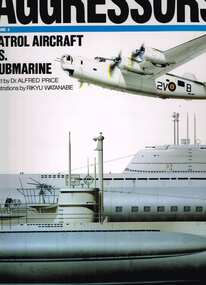 Monbulk RSL Sub Branch
Book, Airlife Publishing, Aggressors, volume 4 : Patrol aircraft vs submarine, 1991
... ...Submarine warfare - World war II...World War II - Aerial operations Submarine warfare - World war II Description of submarine warfare in World war Two Ill, p.48. ...Description of submarine warfare in World war TwoIll, p.48.non-fictionDescription of submarine warfare in World war Twoworld war ii - aerial operations, submarine warfare - world war ii -
 Monbulk RSL Sub Branch
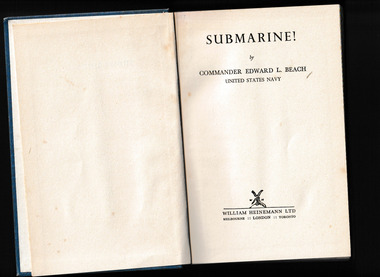
Book, Heinemann, Submarine!, 1953
... Submarine warfare - World war II...Submarine warfare - World war II World war 1939-1945 - Personal narratives A personal account by an American submariner of operations in the pacific in World War Two p.274. ...A personal account by an American submariner of operations in the pacific in World War Twop.274.A personal account by an American submariner of operations in the pacific in World War Twosubmarine warfare - world war ii, world war 1939-1945 - personal narratives -
 National Vietnam Veterans Museum (NVVM)
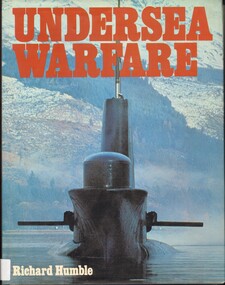
Book, Undersea Warfare, 1981
... Submarine warfare...Submarine warfare Royal Australian Navy Undersea Warfare is a sobering yet compelling account of the evolution of the modern fighting submarine, from its debut in 1914 to the 1980s and what could yet turn out to be the eve of World War 3. ...Undersea Warfare is a sobering yet compelling account of the evolution of the modern fighting submarine, from its debut in 1914 to the 1980s and what could yet turn out to be the eve of World War 3.Undersea Warfare is a sobering yet compelling account of the evolution of the modern fighting submarine, from its debut in 1914 to the 1980s and what could yet turn out to be the eve of World War 3.submarine warfare, royal australian navy -
 Returned Nurses RSL Sub-branch
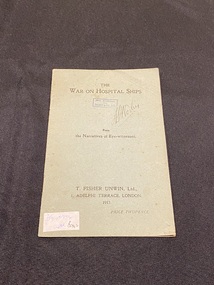
Booklet, T.Fisher Unwin, The War on Hospital Ships: from the narratives of eye-witnesses, 1917
... ...submarine warfare...Hospital Ships submarine warfare World War 1914-1918 Naval Operations World War 1914-1918 German atrocities WW1 WWI First World War An account on the attack of Hospital Ships in the First World War. '359.50994 / WAR BOX02' [handwritten in blue and black ink on a white sticker label in the bottom left corner of the cover] 'With Compliments / from / DALGETY & COY.LTD.' ...An account on the attack of Hospital Ships in the First World War.Thin green staple-bound booklet with black printed title and publication details on the cover.non-fictionAn account on the attack of Hospital Ships in the First World War.hospital ships, submarine warfare, world war 1914-1918 naval operations, world war 1914-1918 german atrocities, ww1, wwi, first world war -
 The Beechworth Burke Museum
Photograph
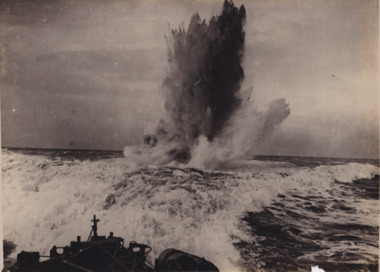
... ...submarine warfare...Finally, the naval war held great ramifications for the future since many practices employed in the First World War were those pursued in the Second World War. burke museum world war 1 world war i ww1 wwi submarine submarine warfare navy naval vessels Reverse: 6527/ (Crown copyright notice from the Imperial War Museum)/ Naval 23/ 23/ A99/ Black and white rectangular reproduced photograph on matte photographic paper Photograph Photograph ...Taken during World War I from the forecastle of a navy ship, the photograph depicts an eruption of water and smoke as a result of an underwater submarine being bombed from above.The naval war of World War I was a conflict unlike any previous one with the exception of the brief Russo-Japanese War (1904-1905), with naval warfare in World War I being mainly between the German forces and the Great Britain forces. The naval war of World War I proved largely a disappointment to officials on both sides as it did not produce the decisive fleet actions envisioned in the pre-war years. Nevertheless, the war at sea was a crucial part of World War I overall. The German use of the submarine against commerce not only threatened the Allied war effort, but also drew the United States into the conflict. In addition, the British economic blockade of Germany afforded by the Royal Navy’s command of the sea inflicted great damage on the war effort of Germany. Finally, the naval war held great ramifications for the future since many practices employed in the First World War were those pursued in the Second World War.Black and white rectangular reproduced photograph on matte photographic paperReverse: 6527/ (Crown copyright notice from the Imperial War Museum)/ Naval 23/ 23/ A99/ burke museum, world war 1, world war i, ww1, wwi, submarine, submarine warfare, navy, naval vessels -
 Bendigo Historical Society Inc.
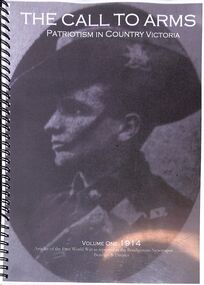
Book - "The Call to Arms. Patriotism in Country Victoria. Volume 1.", 2011
... In April 1917, the United States joined the Allies after Germany resumed unrestricted submarine warfare against Atlantic shipping. Later that year, the Bolsheviks seized power in Russia in the October Revolution; Soviet Russia signed an armistice with the Central Powers in December, followed by a separate peace in March 1918. ...In April 1917, the United States joined the Allies after Germany resumed unrestricted submarine warfare against Atlantic shipping. Later that year, the Bolsheviks seized power in Russia in the October Revolution; Soviet Russia signed an armistice with the Central Powers in December, followed by a separate peace in March 1918. ...World War one began in 1914, and ended in 1918. World War I or the First World War (28 July 1914 – 11 November 1918), also known as the Great War, was a global conflict between two coalitions: the Allies (or Entente) and the Central Powers. One of the deadliest conflicts in history, World War I resulted in an estimated 15 to 22 million deaths, including those in war crimes and genocides. The war also helped spread the Spanish flu pandemic. The conflict saw important developments in weaponry, including the first large-scale use of machine guns, artillery, aircraft, chemical weapons, and tanks. The causes of World War I included the rise of the German Empire, which disturbed the long-standing balance of power in Europe, and the exacerbation of imperial rivalries, as reflected in new alliances and an arms race between the great powers. Tensions in the Balkans reached a breaking point on 28 June 1914 when Gavrilo Princip, a Bosnian Serb, assassinated Franz Ferdinand, the heir to the Austro-Hungarian throne. Austria-Hungary blamed Serbia and declared war on 28 July, upon which the Russian Empire mobilised in Serbia's defence. In early August, Germany declared war on Russia and France; the United Kingdom entered the war after Germany invaded Belgium. Germany's strategy in 1914 was to quickly defeat France, but its advance was halted in September, and the Western Front solidified into a near-continuous line of fortified trenches from the English Channel to Switzerland. The Eastern Front was more dynamic, but neither side gained a decisive advantage, despite costly offensives. The Ottoman Empire joined the Central Powers in November, which was followed by a failed Allied campaign at Gallipoli. Japan and Italy also joined the Allies. Major battles, including those at Verdun, the Somme, and Passchendaele, failed to break the stalemate on the Western Front. In April 1917, the United States joined the Allies after Germany resumed unrestricted submarine warfare against Atlantic shipping. Later that year, the Bolsheviks seized power in Russia in the October Revolution; Soviet Russia signed an armistice with the Central Powers in December, followed by a separate peace in March 1918. That month, Germany launched a spring offensive in the west, which despite initial successes left the German Army exhausted and demoralised. The Allied Hundred Days Offensive, beginning in August 1918, caused a collapse of the German front line. By early November, the Allies had signed armistices with the Ottomans and with Austria-Hungary, leaving Germany isolated. Facing a revolution at home, Kaiser Wilhelm II abdicated on 9 November, and the war ended with the Armistice of 11 November 1918. Metal spiral bound book. Plastic clear cover, and black cardboard back cover. Soft cover. Cover has an image of a black and white image of the bust of a soldier looking to the left. Titles in white. 121 pages. Contains articles of the First World War as reported in the 'Bendigonian Newspaper'. Contains a timeline of significant events during WW1. Has index. Transcribed by Pamela Houston. Printed by Bendigo Copy Centre, Bendigo. Volume one deals with 1914.world war one, soldiers, bendigonian newspapaper -
 Australian Commando Association - Victoria
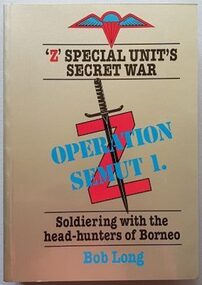
Book, Z Special Units' Secret War- Operations SEMUT 1, 1989
... The unit carried out a total of 81 covert operations in the South West Pacific theatre, with parties inserted by parachute or submarine to provide intelligence and conduct guerrilla warfare. The best known of these missions were Operation Jaywick and Operation RIMAU, both of which involved raids on Japanese shipping in Singapore Harbour; the latter of which resulted in the deaths of twenty-three commandos either in action or by execution after capture. ...The unit carried out a total of 81 covert operations in the South West Pacific theatre, with parties inserted by parachute or submarine to provide intelligence and conduct guerrilla warfare. The best known of these missions were Operation Jaywick and Operation RIMAU, both of which involved raids on Japanese shipping in Singapore Harbour; the latter of which resulted in the deaths of twenty-three commandos either in action or by execution after capture. ...An account of the operations of The Allied Intelligence Bureau (AIB) better known as ‘Z’ Special Unit. Now a scarce and highly sought after title. The author’s personal experiences with Australian Special Forces (Services Reconnaissance Department) which involved guerrilla soldiering with the head-hunters of Japanese held Borneo during World War 2. Z Special Unit an administrative support unit of (also known as Special Operations Australia (SOA) or the Services Reconnaissance Department (SRD)) was a joint Allied special forces unit formed during the Second World War to operate behind Japanese lines in South East Asia. Predominantly Australian, SRD was a specialist reconnaissance and sabotage unit that included British, Dutch, New Zealand, Timorese and Indonesian members, predominantly operating on Borneo and the islands of the former Netherlands East Indies. The unit carried out a total of 81 covert operations in the South West Pacific theatre, with parties inserted by parachute or submarine to provide intelligence and conduct guerrilla warfare. The best known of these missions were Operation Jaywick and Operation RIMAU, both of which involved raids on Japanese shipping in Singapore Harbour; the latter of which resulted in the deaths of twenty-three commandos either in action or by execution after capture. Although the unit was disbanded after the war, many of the training techniques and operational procedures employed were later used during the formation of other Australian Army special forces units and they remain a model for guerrilla operations to this day.Hard Cover with Dust Jacket – 608 pagesInscribed by author-Bob Long AK223 SEMUT 1 Borneo 1945 -
 Australian Commando Association - Victoria
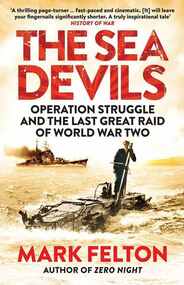
The Sea Devils. Operation STRUGGLE and the last great raid of World War II
... Eighteen young British, Australian and New Zealand special forces from a top-secret underwater warfare unit prepare to undertake three audacious missions against the Japanese. Using XE-craft midget submarines, the raiders will creep deep behind Japanese lines to sink two huge warships off Singapore and sever two vitally important undersea communications cables. ...Eighteen young British, Australian and New Zealand special forces from a top-secret underwater warfare unit prepare to undertake three audacious missions against the Japanese. Using XE-craft midget submarines, the raiders will creep deep behind Japanese lines to sink two huge warships off Singapore and sever two vitally important undersea communications cables. ...July 1945. Eighteen young British, Australian and New Zealand special forces from a top-secret underwater warfare unit prepare to undertake three audacious missions against the Japanese. Using XE-craft midget submarines, the raiders will creep deep behind Japanese lines to sink two huge warships off Singapore and sever two vitally important undersea communications cables. Success will hasten ultimate victory over Japan; but if any of the men are captured they can expect a gruesome execution. Can the Sea Devils overcome Japanese defences, mechanical failures, oxygen poisoning and submarine disasters to fulfill their missions? Mark Felton tells the true story of a band of young men living on raw courage, nerves and Adrenalin as they attempt to pull off what could be the last great raid of World War Two.ww2, special operations, submarine operations -
 Australian Commando Association - Victoria
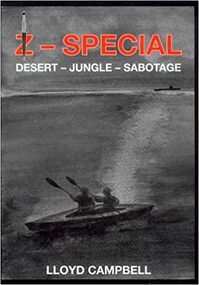
Book, Z Special- Desert-Jungle- Sabotage
... The unit carried out a total of 81 covert operations in the South West Pacific theatre, with parties inserted by parachute or submarine to provide intelligence and conduct guerrilla warfare. The best known of these missions were Operation Jaywick and Operation Rimau, both of which involved raids on Japanese shipping in Singapore Harbour; the latter of which resulted in the deaths of 23 commandos either in action or by execution after capture. ...The unit carried out a total of 81 covert operations in the South West Pacific theatre, with parties inserted by parachute or submarine to provide intelligence and conduct guerrilla warfare. The best known of these missions were Operation Jaywick and Operation Rimau, both of which involved raids on Japanese shipping in Singapore Harbour; the latter of which resulted in the deaths of 23 commandos either in action or by execution after capture. ...When Lloyd Campbell joined the AIF, he was underage and went to the Middle East with 2/17 Battalion. Later in New Guinea he made a major career change and volunteered for an unknown unit and special operations. What he had joined was the SRD – known as Z-Special Unit. Z Special Unit—also known as Special Operations Executive (SOE), Special Operations Australia (SOA) or the Services Reconnaissance Department (SRD)—was a joint Allied special forces unit formed during the Second World War to operate behind Japanese lines in South East Asia. Predominantly Australian, Z Special Unit was a specialist reconnaissance and sabotage unit that included British, Dutch, New Zealand, Timorese and Indonesian members, predominantly operating on Borneo and the islands of the former Netherlands East Indies. The unit carried out a total of 81 covert operations in the South West Pacific theatre, with parties inserted by parachute or submarine to provide intelligence and conduct guerrilla warfare. The best known of these missions were Operation Jaywick and Operation Rimau, both of which involved raids on Japanese shipping in Singapore Harbour; the latter of which resulted in the deaths of 23 commandos either in action or by execution after capture. Although the unit was disbanded after the war, many of the training techniques and operational procedures employed were later used during the formation of other Australian Army special forces units and they remain a model for guerrilla operations to this day. pp. 274, illusts, maps ww2, the australian special operations, special forces, z special unit -
 Monbulk RSL Sub Branch
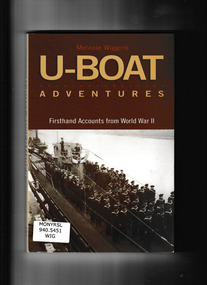
Book, Naval Institute, U-boat adventures : firsthand accounts from World War II, 2010
... warfare, where every single crewman made a crucial difference in the fate of his boat. As she searched for and interviewed U-boat men, Wiggins also collected photographs from scrapbooks and archives, and consulted war-era personnel records and secret diaries. Her attendance at a reunion of the crew of U-682 netted a wealth of information as did her interviews with submarine ...Twenty-two U-boat veterans tell their stories in this collection of their experiences, recorded by the author during several years of travel throughout Germany. While many books have been written about the U-boat war, this is one of the few that focuses on the lives of the submariners, and rarer still is its concentration on the crewmen rather than the officers. Melanie Wiggins interviewed seventeen men of the enlisted ranks, along with five commanders, to take readers into the terrifying world of underwater warfare, where every single crewman made a crucial difference in the fate of his boat. As she searched for and interviewed U-boat men, Wiggins also collected photographs from scrapbooks and archives, and consulted war-era personnel records and secret diaries. Her attendance at a reunion of the crew of U-682 netted a wealth of information as did her interviews with submarine veterans in Gؤrlitz, former East Germany. Her interviews with Admiral Otto Kretschmer just two months before his death and ninety-four-year-old Commander Jѓrgen Wattenberg in Hamburg add important dimensions to the work. Among the individual sagas included are Radioman Hans Bѓrck's description of his 1942 patrol to Aruba and the visit of Japanese submarine I-30 at Lorient; Fireman 2nd Class Josef Erben's explanation of how his boat, U-128, got stuck on a large rock and had to be hauled free; POW Ernst Gؤ:thling's memories of being wounded in a British prison camp when German planes mistakenly dropped bombs in the area.Index, bibliography, notes, ill, p.250.non-fictionTwenty-two U-boat veterans tell their stories in this collection of their experiences, recorded by the author during several years of travel throughout Germany. While many books have been written about the U-boat war, this is one of the few that focuses on the lives of the submariners, and rarer still is its concentration on the crewmen rather than the officers. Melanie Wiggins interviewed seventeen men of the enlisted ranks, along with five commanders, to take readers into the terrifying world of underwater warfare, where every single crewman made a crucial difference in the fate of his boat. As she searched for and interviewed U-boat men, Wiggins also collected photographs from scrapbooks and archives, and consulted war-era personnel records and secret diaries. Her attendance at a reunion of the crew of U-682 netted a wealth of information as did her interviews with submarine veterans in Gؤrlitz, former East Germany. Her interviews with Admiral Otto Kretschmer just two months before his death and ninety-four-year-old Commander Jѓrgen Wattenberg in Hamburg add important dimensions to the work. Among the individual sagas included are Radioman Hans Bѓrck's description of his 1942 patrol to Aruba and the visit of Japanese submarine I-30 at Lorient; Fireman 2nd Class Josef Erben's explanation of how his boat, U-128, got stuck on a large rock and had to be hauled free; POW Ernst Gؤ:thling's memories of being wounded in a British prison camp when German planes mistakenly dropped bombs in the area.world war 1939 – 1945 –naval operations - germany, germany - u-boats -
 Monbulk RSL Sub Branch
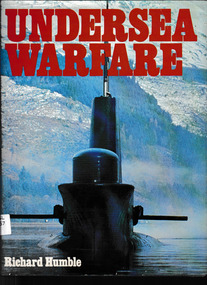
Book, New English Library, Undersea warfare, 1981
... Submarines - History Undersea warfare - History A history of undersea warfare Index, ill, p.192. ...A history of undersea warfareIndex, ill, p.192.A history of undersea warfaresubmarines - history, undersea warfare - history -
 National Vietnam Veterans Museum (NVVM)
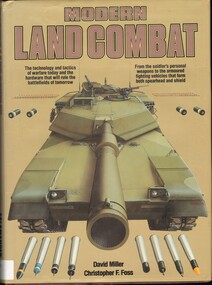
Book, Miller, David and Foss, Christopher F, Modern Land Combat, 1987
... In combination with the earlier titles devoted to Modern Air Combat, Modern fighting Helicopters, Modern Naval Combat and Modern Submarine Warfare, it completes a detailed, graphically illustrated survey of the technology, hardware and tactics involved in all the main areas of current military activity. ...The organisation of this book follows the established style of the successful series of which if forms part. In combination with the earlier titles devoted to Modern Air Combat, Modern fighting Helicopters, Modern Naval Combat and Modern Submarine Warfare, it completes a detailed, graphically illustrated survey of the technology, hardware and tactics involved in all the main areas of current military activity.The organisation of this book follows the established style of the successful series of which if forms part. In combination with the earlier titles devoted to Modern Air Combat, Modern fighting Helicopters, Modern Naval Combat and Modern Submarine Warfare, it completes a detailed, graphically illustrated survey of the technology, hardware and tactics involved in all the main areas of current military activity.military art and science, weapons -
 Returned Nurses RSL Sub-branch
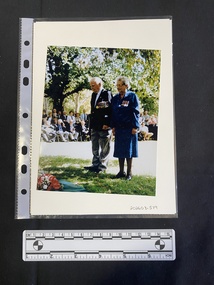
Photograph - Colour photograph, [c2001]
... The Centaur was sunk by a Japanese submarine on 14 May 1943. Nurses in warfare 'AHS Centaur Dedication / 21-1-2001' [graphite, reverse, top] 'Bruce Ruxton / Jean Brown / Caloundra' [graphite, reverse, middle] Colour photograph of an older couple wearing military medals outside. ...The photo show an older couple wearing military medals at the Dedication ceremony for the AHS Centaur. The Centaur was sunk by a Japanese submarine on 14 May 1943.Colour photograph of an older couple wearing military medals outside.'AHS Centaur Dedication / 21-1-2001' [graphite, reverse, top] 'Bruce Ruxton / Jean Brown / Caloundra' [graphite, reverse, middle]nurses in warfare
