
Showing 12 items matching "t. e. role"
-
 Chiltern Athenaeum Trust
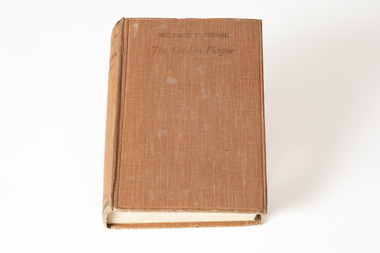
Book, Hutchinson & Co LTD, The Golden Plague, c1930
... ...T. E. Role..."The Golden Plague” won the T. E. Role gold medal for the best historical novel which went on to become a best seller. ..."The Golden Plague” won the T. E. Role gold medal for the best historical novel which went on to become a best seller. ...Wilfred Clarence Busse was born in Chiltern, Victoria in 1898. His family moved to the region during the gold rush and continued to resided in the area, purchasing land adjacent the Murray River. Busse completed his secondary education at Wesley College in Melbourne then studied law at the University of Melbourne. Busse went on to become a barrister, often in the chambers of Sir Leo Finn Bernard Cussen (1859-1933) a judge of the Supreme Court of Victoria. Busse was also an avid fictional writer and in 1930 he published two novels "The Blue Beyond; A Romance of the Early Days in South Eastern Australia” and "The Golden Plague: A Romance of the Early Fifties." "The Golden Plague” won the T. E. Role gold medal for the best historical novel which went on to become a best seller. Busse often drew inspiration for his novels from his younger years living Chiltern. His passion for the region lead him to write “The History of Chiltern” which was published in a serial form in the Chiltern Federal Standard from 1922-1923. Wilfred Clarence Busse was a member of Chiltern Athenaeum upon his death in 1960. This book is of considerable importance to Chiltern Athenaeum as it was written by Wilfred Clarence Busse, a barrister and author born in Chiltern. Busse drew inspiration to write novels from his life growing up in Chiltern which is apparent in "The Golden Plague: A Romance of the Early Fifties." Small book in a solid orange hardback with text written in gold on top front and spine. There are 287 pagesFront cover: Wilfred C. Busse / The Golden Plague / Title page: The Golden Plague / A Romance of the roaring fifties / By Wilfred C. Busse / Hutchinson & Co (Publishers), LTD. / Paternoster Row, London, EC4 / wilfred clarence busse, busse, chiltern, chiltern athenaeum, federal standard, t. e. role, "the blue beyond, a romance of the early days in south eastern australia”, "the golden plague: a romance of the early fifties.", "the golden plague”, wesley college, university of melbourne, sir leo finn bernard cussen, supreme court of victoria, gold rush, murray river, “the history of chiltern” -
 Chiltern Athenaeum Trust
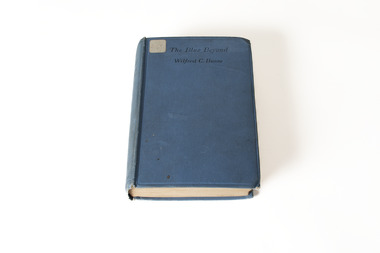
Book - Book by W.C. Busse, Wilfred C. Busse, The Blue Beyond, c1928
... ...T. E. Role gold medal..."The Golden Plague: A Romance of the Early Fifties", written in 1930, won the T. E. Role gold medal for the best historical novel published that year and went on to become a best seller. ..."The Golden Plague: A Romance of the Early Fifties", written in 1930, won the T. E. Role gold medal for the best historical novel published that year and went on to become a best seller. ...Wilfred Clarence Busse 1898-1960, born in Chiltern, was a barrister and author. His family moved to the region during the gold rush and continued to reside in the area, purchasing land adjacent the Murray River. Busse attended school at Wesley College and studied law at the University of Melbourne. Busse went on to become a barrister, often in the chambers of Sir Leo Finn Bernard Cussen (1859-1933) a judge of the Supreme Court of Victoria. Time spent on a Victorian station in his early twenties, as well as careful documentary research, informed the writing of his historical novels of bush life. "The Blue Beyond; A Romance of the Early Days in South Eastern Australia" was written in 1928 and published in 1930. "The Golden Plague: A Romance of the Early Fifties", written in 1930, won the T. E. Role gold medal for the best historical novel published that year and went on to become a best seller. His passion for the region led him to write “The History of Chiltern”, which was published in a serial form in the Chiltern Federal Standard from 1922-1923. He was a member of the Chiltern Athenaeum upon his death in 1960.This book is of considerable importance to Chiltern Athenaeum as it was written by Wilfred Clarence Busse, a barrister and author born in Chiltern. Busse drew inspiration to write novels from his life growing up in Chiltern which is apparent in "The Blue Beyond; A Romance of the Early Days in South Eastern Australia".A small sized book in blue hardback binding, with the title and the author`s name in dark blue fonts at the top of the front cover. There are 288 pages. Front cover: The Blue Beyond/Wilfred C. Busse/ Title page: The Blue Beyond/A Romance of the Early Days in South-Eastern Australia/by Wilfred C. Busse/ Hutchinson & Co (Publishers), LTD. /34-36 Paternoster Row, EC4 / wilfred clarence busse, chiltern, barrister, author, wesley college, university of melbourne, supreme court of victoria, leo finn bernard cussen, historical novels, bush life, the golden plague, the blue beyond, the history of chiltern, chiltern athenaeum, gold rush, murray river, chambers, 1928, 1930, chiltern federal standard, t. e. role gold medal -
 Chiltern Athenaeum Trust
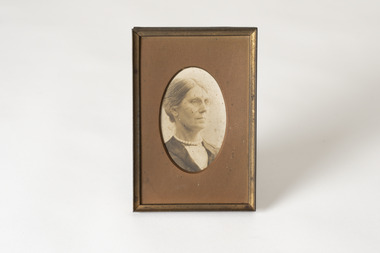
Photograph - Framed Photograph from W.C.Busse Collection
... ...T. E. Role gold medal..."The Golden Plague: A Romance of the Early Fifties", written in 1930, won the T. E. Role gold medal for the best historical novel published that year and went on to become a best seller. ..."The Golden Plague: A Romance of the Early Fifties", written in 1930, won the T. E. Role gold medal for the best historical novel published that year and went on to become a best seller. ...This is a photograph from the W.C. Busse Collection and a woman is illustrated with a bun hair tie and a pearl necklace. Wilfred Clarence Busse 1898-1960, born in Chiltern, was a barrister and author. His family moved to the region during the gold rush and continued to reside in the area, purchasing land adjacent the Murray River. Busse attended school at Wesley College and studied law at the University of Melbourne. Busse went on to become a barrister, often in the chambers of Sir Leo Finn Bernard Cussen (1859-1933) a judge of the Supreme Court of Victoria. Time spent on a Victorian station in his early twenties, as well as careful documentary research, informed the writing of his historical novels of bush life. "The Blue Beyond; A Romance of the Early Days in South Eastern Australia" was written in 1928 and published in 1930. "The Golden Plague: A Romance of the Early Fifties", written in 1930, won the T. E. Role gold medal for the best historical novel published that year and went on to become a best seller. His passion for the region led him to write “The History of Chiltern”, which was published in a serial form in the Chiltern Federal Standard from 1922-1923. He was a member of the Chiltern Athenaeum upon his death in 1960. The photograph belongs to the W.C. Busse Collection, which is of great importance to Chiltern Athenaeum. Wilfred Clarence Busse was a barrister and author born in Chiltern and drew inspiration to write novels from his life growing up in Chiltern.Black and white framed photograph printed on paper and wooden frame.w.c. busse collection, wilfred clarence busse, chiltern, barrister, author, murray river, wesley college, university of melbourne, chambers, leo finn bernard cussen, judge, supreme court of victoria, historical novels, bush life, the blue beyond, the golden plague, t. e. role gold medal, the history of chiltern, chiltern federal standard, chiltern athenaeum -
 Chiltern Athenaeum Trust
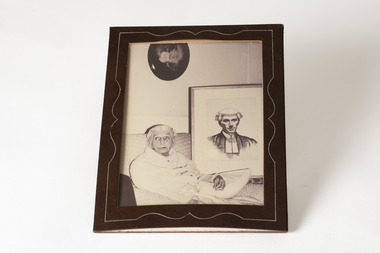
Photograph - Framed Photograph from W.C.Busse Collection
... ...T. E. Role gold medal..."The Golden Plague: A Romance of the Early Fifties", written in 1930, won the T. E. Role gold medal for the best historical novel published that year and went on to become a best seller. ..."The Golden Plague: A Romance of the Early Fifties", written in 1930, won the T. E. Role gold medal for the best historical novel published that year and went on to become a best seller. ...This is a photograph from the W.C. Busse Collection and an elderly woman is illustrated sitting on a couch. Wilfred Clarence Busse 1898-1960, born in Chiltern, was a barrister and author. His family moved to the region during the gold rush and continued to reside in the area, purchasing land adjacent the Murray River. Busse attended school at Wesley College and studied law at the University of Melbourne. Busse went on to become a barrister, often in the chambers of Sir Leo Finn Bernard Cussen (1859-1933) a judge of the Supreme Court of Victoria. Time spent on a Victorian station in his early twenties, as well as careful documentary research, informed the writing of his historical novels of bush life. "The Blue Beyond; A Romance of the Early Days in South Eastern Australia" was written in 1928 and published in 1930. "The Golden Plague: A Romance of the Early Fifties", written in 1930, won the T. E. Role gold medal for the best historical novel published that year and went on to become a best seller. His passion for the region led him to write “The History of Chiltern”, which was published in a serial form in the Chiltern Federal Standard from 1922-1923. He was a member of the Chiltern Athenaeum upon his death in 1960.The photograph belongs to the W.C. Busse Collection, which is of great importance to Chiltern Athenaeum. Wilfred Clarence Busse was a barrister and author born in Chiltern and drew inspiration to write novels from his life growing up in Chiltern.Black and white framed photograph printed on paper.Obverse: 1,018/w.c. busse collection, wesley college, leo finn bernard cussen, supreme court of victoria, wilfred clarence busse, chiltern, murray river, barrister, author, bush life, the blue beyond, the golden plague, t. e. role gold medal, the history of chiltern, chiltern federal standard, chiltern athenaeum, historical novels, university of melbourne, gold rush, best seller -
 Chiltern Athenaeum Trust
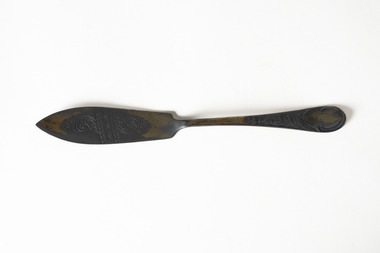
Domestic object - Butter knife belonging to W.C.Busse
... ...T. E. Role..."The Golden Plague” won the T. E. Role gold medal for the best historical novel which went on to become a best seller. ..."The Golden Plague” won the T. E. Role gold medal for the best historical novel which went on to become a best seller. ...Wilfred Clarence Busse, born in Chiltern in 1898, His family moved to the region during the gold rush and continued to reside in the area, purchasing land adjacent the Murray River. Busse completed his secondary education at Wesley College in Melbourne then studied law at the University of Melbourne. Busse went on to become a barrister, often in the chambers of Sir Leo Finn Bernard Cussen (1859-1933) a judge of the Supreme Court of Victoria. He worked most of his life in Chiltern as a Barrister and Solicitor and gained the unofficial title of historian of Chiltern, leaving behind several manuscript histories and a scrap book. Busse was an avid fictional writer and in 1930 he published two novels. Time spent on a Victorian station in his early twenties, as well as careful documentary research, informed the writing of his historical novels of bush life. "The Blue Beyond; A Romance of the Early Days in South Eastern Australia” and "The Golden Plague: A Romance of the Early Fifties." "The Golden Plague” won the T. E. Role gold medal for the best historical novel which went on to become a best seller. Busse often drew inspiration for his novels from his younger years living Chiltern. His passion for the region lead him to write “The History of Chiltern” which was published in a serial form in the Chiltern Federal Standard from 1922-1923. Wilfred Clarence Busse was a member of Chiltern Athenaeum (where this object is now held) up until his death in 1960, he is buried in the Barnawartha Cemetery. Likely Silverplate due to the intensity of the tarnishing of the metal, with indecipherable hallmarks on the handle, the method of production and the maker mark are unclear. The delicate swirling fernlike motif on this particular butter knife appears to be stylised in either Art deco the decorative arts and craft style favoured in Europe between 1880-1930's and less representational than examples of Australiana flora captured in silversmithing from the 1850's onwards produced in Australia. It is likely that those producing silverware at the time would be drawing on the decorative arts movement while incorporating elements of the natural beauty in the flora of their newfound environment into the silverware they produced.Wilfred Clarence Busse was of social significance to Chiltern, he helped to document the cultural story of the area in his published works "The Golden Plague" and "The Beyond Blue" by recounting his own upbringing in a bush lifestyle. He was a respected Barrister and was the unofficial historian of the Chiltern Athenaeum for many years. This butter knife represents a window into the domestic life of this person who was well loved in the area, and it continues its relationship to Busse as well as Chiltern by being held within the very collection he helped to maintain in his life. Domestic objects tell us the story about how people lived, objects of daily use hold particular meaning in that they can tell us the story of an individual, we feel closer to their life and habits, it humanises and connects us across time. Wilfred Busse ate food, he buttered his bread and he did it with a wonderfully decorated silver butter knife.A tarnished metal butter knife with engraved and embossed spiral fern details on the knife and handlesilverware, wilfred clarence busse, busse, chiltern, chiltern athenaeum, federal standard, t. e. role, "the blue beyond, a romance of the early days in south eastern australia”, "the golden plague: a romance of the early fifties.", "the golden plague”, wesley college, university of melbourne, sir leo finn bernard cussen, supreme court of victoria, gold rush, murray river, “the history of chiltern”, silversmithing, decorative arts, floral, flora, australiana, australian flora, arts and craft movement, australian silver, cussen, cutlery, butter knife, knife, silverplate -
 Chiltern Athenaeum Trust
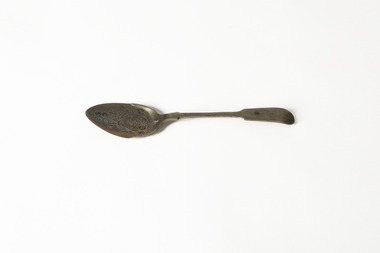
Domestic object - Spoon belonging to W.C.Busse
... ...T. E. Role..."The Golden Plague” won the T. E. Role gold medal for the best historical novel which went on to become a best seller. ..."The Golden Plague” won the T. E. Role gold medal for the best historical novel which went on to become a best seller. ...Wilfred Clarence Busse, born in Chiltern in 1898, His family moved to the region during the gold rush and continued to reside in the area, purchasing land adjacent the Murray River. Busse completed his secondary education at Wesley College in Melbourne then studied law at the University of Melbourne. Busse went on to become a barrister, often in the chambers of Sir Leo Finn Bernard Cussen (1859-1933) a judge of the Supreme Court of Victoria. He worked most of his life in Chiltern as a Barrister and Solicitor and gained the unofficial title of historian of Chiltern, leaving behind several manuscript histories and a scrap book. Busse was an avid fictional writer and in 1930 he published two novels. Time spent on a Victorian station in his early twenties, as well as careful documentary research, informed the writing of his historical novels of bush life. "The Blue Beyond; A Romance of the Early Days in South Eastern Australia” and "The Golden Plague: A Romance of the Early Fifties." "The Golden Plague” won the T. E. Role gold medal for the best historical novel which went on to become a best seller. Busse often drew inspiration for his novels from his younger years living Chiltern. His passion for the region lead him to write “The History of Chiltern” which was published in a serial form in the Chiltern Federal Standard from 1922-1923. Wilfred Clarence Busse was a member of Chiltern Athenaeum (where this object is now held) up until his death in 1960, he is buried in the Barnawartha Cemetery. The floral motif on this particular spoon appears to be stylised in the decorative arts and craft style favoured in Europe between 1880-1920 and less representational than examples of Australiana flora captured in silversmithing from the 1850's onwards produced in Australia. It is likely that those producing silverware at the time would be drawing on the decorative arts movement while incorporating elements of the natural beauty in the flora of their newfound environment into the silverware they produced. This spoon seems more likely to have been produced in Europe and imported to the colony. The hallmarks on the handle DON and BP indicate it may have been produced from English electroplating silver which is a more cost effective product than solid silver, most likely produced by Cooper Brothers, Don Plate Works, established in Sheffield in 1866 who distributed silverware in Europe, America and the colonies well into the 1950's.Wilfred Clarence Busse was of social significance to Chiltern, he helped to document the cultural story of the area in his published works "The Golden Plague" and "The Beyond Blue" by recounting his own upbringing in a bush lifestyle. He was a respected Barrister and was the unofficial historian of the Chiltern Athenaeum for many years. This spoon represents a window into the domestic life of this person who was well loved in the area, and it continues its relationship to Busse as well as Chiltern by being held within the very collection he helped to maintain in his life. Domestic objects tell us the story about how people lived, objects of daily use hold particular meaning in that they can tell us the story of an individual, we feel closer to their life and habits, it humanises and connects us across time. Wilfred Busse ate food and he did it from a beautiful silver floral detailed spoon.A silver tablespoon with floral embossed head and hallmarks embossed on reverse handleDON/ BP/silverware, wilfred clarence busse, busse, chiltern, chiltern athenaeum, federal standard, t. e. role, "the blue beyond, a romance of the early days in south eastern australia”, "the golden plague: a romance of the early fifties.", "the golden plague”, wesley college, university of melbourne, sir leo finn bernard cussen, supreme court of victoria, gold rush, murray river, “the history of chiltern”, silversmithing, spoon, decorative arts, floral, flora, australiana, australian flora, arts and craft movement, australian silver, cussen -
 Chiltern Athenaeum Trust
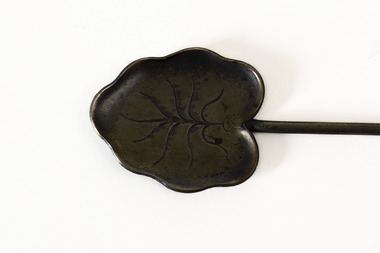
Domestic object - Spoon belonging to W.C.Busse
... ...T. E. Role..."The Golden Plague” won the T. E. Role gold medal for the best historical novel which went on to become a best seller. ..."The Golden Plague” won the T. E. Role gold medal for the best historical novel which went on to become a best seller. ...Wilfred Clarence Busse, born in Chiltern in 1898, His family moved to the region during the gold rush and continued to reside in the area, purchasing land adjacent the Murray River. Busse completed his secondary education at Wesley College in Melbourne then studied law at the University of Melbourne. Busse went on to become a barrister, often in the chambers of Sir Leo Finn Bernard Cussen (1859-1933) a judge of the Supreme Court of Victoria. He worked most of his life in Chiltern as a Barrister and Solicitor and gained the unofficial title of historian of Chiltern, leaving behind several manuscript histories and a scrap book. Busse was an avid fictional writer and in 1930 he published two novels. Time spent on a Victorian station in his early twenties, as well as careful documentary research, informed the writing of his historical novels of bush life. "The Blue Beyond; A Romance of the Early Days in South Eastern Australia” and "The Golden Plague: A Romance of the Early Fifties." "The Golden Plague” won the T. E. Role gold medal for the best historical novel which went on to become a best seller. Busse often drew inspiration for his novels from his younger years living Chiltern. His passion for the region lead him to write “The History of Chiltern” which was published in a serial form in the Chiltern Federal Standard from 1922-1923. Wilfred Clarence Busse was a member of Chiltern Athenaeum (where this object is now held) up until his death in 1960, he is buried in the Barnawartha Cemetery. The leaf shaped motif of this particular spoon appears to be stylised in a simple form of decorative arts and craft or even Art Nouveau style favoured in Europe between 1880-1920 and less representational than examples of Australiana flora captured in silversmithing from the 1850's onwards. According to Christine Erratt, due to the goldrush in the 1850's, there was increased wealth in the colony and an influx of immigrants from Europe to Australia who brought with them silversmithing skills which began ‘the golden age’ of Australian silver', Erratt says that 'Australia's unique flora has been portrayed in the decorative arts since the early colonial times of the last decade of the 18th century. The use of Australian flora to decorate silverware is of particular interest and diversity'. It is likely that those producing silverware at the time would be drawing on the decorative arts movement while incorporating elements of the natural beauty in the flora of their newfound environment into the silverware they produced. There are no discerning maker hallmarks to place where it was produced or ascertain the material accurately.Wilfred Clarence Busse was of social significance to Chiltern, he helped to document the cultural story of the area in his published works "The Golden Plague" and "The Beyond Blue" by recounting his own upbringing in a bush lifestyle. He was a respected Barrister and was the unofficial historian of the Chiltern Athenaeum for many years. This spoon represents a window into the domestic life of this person who was well loved in the area, and it continues its relationship to Busse as well as Chiltern by being held within the very collection he helped to maintain in his life. Domestic objects tell us the story about how people lived, objects of daily use hold particular meaning in that they can tell us the story of an individual, we feel closer to their life and habits, it humanises and connects us across time. A tarnished small silver teaspoon with leaf-shaped head and slim handlesilverware, wilfred clarence busse, busse, chiltern, chiltern athenaeum, federal standard, t. e. role, "the blue beyond, a romance of the early days in south eastern australia”, "the golden plague: a romance of the early fifties.", "the golden plague”, wesley college, university of melbourne, sir leo finn bernard cussen, supreme court of victoria, gold rush, murray river, “the history of chiltern”, silversmithing, spoon, decorative arts, floral, flora, australiana, australian flora, arts and craft movement, australian silver, cussen -
 Chiltern Athenaeum Trust
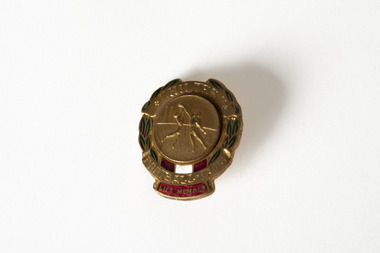
Badge
... ...T. E. Role...Busse Wilfred Clarence Busse Chiltern Chiltern Athenaeum Chiltern Football Club Football sport T. E. Role "The Blue Beyond A Romance of the Early Days in South Eastern Australia” "The Golden Plague: A Romance of the Early Fifties." ...This badge was given to William Clarence Busse when he became a lifetime member of the Chiltern Football Club. Football became popualr in Chiltern during the 1860s, with the local team becoming a key part of the creation of a formal competition for the Ovens and Murray region, which came about in 1893. The Chiltern team also participated in the founding of the Chiltern and District Football Association in 1912, where they won their first premiership in 1914. In 1954, the team played in a Grand Final against Greta that had a 43 minute long final quarter. Chiltern was ahead when the fourth quarter should have ended, but the timer did not go off and the game went into overtime, allowing Greta to snatch the win and set in place a decades-long rivalry. Today, the team continues to compete under the nickname the 'Swans' in the Tallangatta and District Football League. Wilfred Clarence Busse was born in Chiltern in 1898. He completed his education at Wesley College in Melbourne then studied law at the University of Melbourne, before becoming a barrister. During his career, he often worked in the chambers of Judge Bernard Cussen (1859-1933) of the Supreme Court. Cussen was popular as a judge and lawyer, known for being just and precise and for completing through statutory consolidation in his spare time. Beyond his career as a lawyer, Busse wrote historical fiction inspired by his life in Chiltern, these included "The Blue Beyond; A Romance of the Early Days in South Eastern Australia" and "The Golden Plague: A Romance of the Early Fifties," which won the T.E.Role gold medal for the best historical novel in 1930 and went on to become a best seller. He was a member of the Chiltern Athenaeum until his death in 1960. This object is significant for its link to W.C. Busse, a barrister and author born in Chiltern, and as memorabilia of the Chiltern Football Club. A small gold metallic badge depicting two men playing Australian Rules Football, surrounded by a border of leaves. Obverse: "CHILTERN/ FOOTBALL CLUB/ LIFE MEMBER" Reverse: "W.C. Busse/ K. G. 9KT/ M ??" busse, w.c. busse, wilfred clarence busse, chiltern, chiltern athenaeum, chiltern football club, football, sport, t. e. role, "the blue beyond, a romance of the early days in south eastern australia”, "the golden plague: a romance of the early fifties.", "the golden plague”, wesley college, university of melbourne, sir leo finn bernard cussen, supreme court of victoria, football league, lifetime member, chiltern football club lifetime member -
 Chiltern Athenaeum Trust
Photograph - Framed Photograph, Unknown
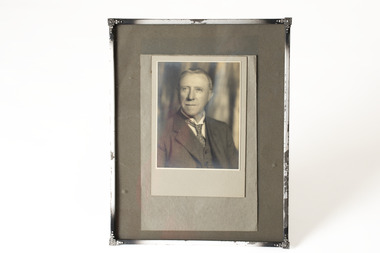
... "The Golden Plague” won the T. E. Role gold medal for the best historical novel which went on to become a best seller. ..."The Golden Plague” won the T. E. Role gold medal for the best historical novel which went on to become a best seller. ...Wilfred Clarence Busse was born in Chiltern, Victoria in 1898. His family moved to the region during the gold rush and continued to resided in the area, purchasing land adjacent the Murray River. Busse completed his secondary education at Wesley College in Melbourne then studied law at the University of Melbourne. Busse went on to become a barrister, often in the chambers of Sir Leo Finn Bernard Cussen (1859-1933) a judge of the Supreme Court of Victoria. Busse was also an avid fictional writer and in 1930 he published two novels "The Blue Beyond; A Romance of the Early Days in South Eastern Australia” and "The Golden Plague: A Romance of the Early Fifties." "The Golden Plague” won the T. E. Role gold medal for the best historical novel which went on to become a best seller. Busse often drew inspiration for his novels from his younger years living Chiltern. His passion for the region lead him to write “The History of Chiltern” which was published in a serial form in the Chiltern Federal Standard from 1922-1923. Wilfred Clarence Busse was a member of Chiltern Athenaeum upon his death in 1960This photograph is of considerable importance to Chiltern Athenaeum as it was written by Wilfred Clarence Busse, a barrister and author born in Chiltern. Busse drew inspiration to write novels from his life growing up in Chiltern which is apparent in "The Golden Plague: A Romance of the Early Fifties."Sepia rectangular photograph printed on matte photographic paper mounted on board placed within a silver frame.photograph, indigo shire, chiltern athenaeum museum, framed photograph, wilfred clarence busse, busse, chiltern athenaeum, "the blue beyond, a romance of the early days in south eastern australia”, "the golden plague: a romance of the early fifties.", “the history of chiltern” -
 Vision Australia
Administrative record - Text, 80th Annual Report Royal Blind Society of N.S.W. (1960), 1960
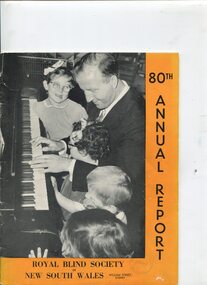
... Albert's appointment as Vice President, the unexpected demolition of 'Heathfield; in Woollahra due to it's condition and a rethinking of strategy given the demand for a kindergarten in the western suburbs, intention to rebuild the lower hall in William St to accommodate studios, offices, repair and storage facilities to satisfy the growing demand for tapes, outline of the Blind Book Society and how it became an auxiliary to the Society so that the assets and goodwill of the BBS were transferred to the RBS, support for this action by Frank Clune and other authors, transcription work done by the Braille Writers Association of NSW includes Leaving Certificate exams, knitting patterns, recipes and musical compositions, references to the change in talking book machines and teachers checking transcribers work to ensure mild censorship does not occur, two examples of how the support can change the life of a blind person, the assembling of a giant flower basket (10 x 15 feet) for the Town Hall Float in the Waratah Festival which was filled with 25,000 sweet peas and a bow of 6 foot wide satin - sadly the truck carrying this would not start and the float was not seen, dropping of sales due to plastic goods and imported products, 17 First Prizes and 12 Second Prizes in various handicrafts at the Royal Easter Show, the work of Margaret Green in providing services to blind children across the state, a visit by world-famous blind pianist George Shearing, pictures of the opening of the "Light House" home for Aged Blind Women and the Alexis Albert Hostel for Aged Blind Men, renovations have occurred at the Helen Keller Hostel and drama and singing classes are held as well as the local choir Waimea Singers directed by Nellie Sweeney, cricketer Ken Curtis took a hat trick - the first in Australian blind cricket history - in the third match between NSW and Victoria at Kooyong in December 1960, three musicians (Julian Lee, Percy Roberts and George Herrmann) were in contact with pianist Percy Shearing before his television appearance, drama classes provided by Irene Alexander have been well attended with some students giving dramatic presentations on radio stations, monthly musical concerts continue to be held in the Society's hall, the continued success of the Black and White Ball, the huge success of the 2UW Blind Appeal providing much needed funds, the addition of the Silver Lighthouse to the group of Auxiliaries, the passing of E K Gordon who was a Foundation Member of the Committee as well as roles with the Newcastle branch and Nursery for Blind Babies, the ACT Liaison Group obtained free passes for bus services within the Territory, the 'Glow Worm' sessions ended in its 21st year on 2GB with Goodie Reeve now reading news excerpts and Betty Hatherley's session on 2UW have been replaced by recorded announcements. Royal Blind Society of New South Wales Annual Report Justice Maxwell Paul Cullen H.F. Benning Herbert Thompson C D Darvall Ken Bunn E T ...Articles in the annual report include: a brief history of the organisation on it's 80th anniversary, resignation of Herbert Thompson who had provided over 50 years of voluntary service in the library, Braille teacher and Council member with a plaque commemorating him in the Library, the addition of Reverend Noel McCaw on the Council as Mr Thompson's replacement and A.F. Albert's appointment as Vice President, the unexpected demolition of 'Heathfield; in Woollahra due to it's condition and a rethinking of strategy given the demand for a kindergarten in the western suburbs, intention to rebuild the lower hall in William St to accommodate studios, offices, repair and storage facilities to satisfy the growing demand for tapes, outline of the Blind Book Society and how it became an auxiliary to the Society so that the assets and goodwill of the BBS were transferred to the RBS, support for this action by Frank Clune and other authors, transcription work done by the Braille Writers Association of NSW includes Leaving Certificate exams, knitting patterns, recipes and musical compositions, references to the change in talking book machines and teachers checking transcribers work to ensure mild censorship does not occur, two examples of how the support can change the life of a blind person, the assembling of a giant flower basket (10 x 15 feet) for the Town Hall Float in the Waratah Festival which was filled with 25,000 sweet peas and a bow of 6 foot wide satin - sadly the truck carrying this would not start and the float was not seen, dropping of sales due to plastic goods and imported products, 17 First Prizes and 12 Second Prizes in various handicrafts at the Royal Easter Show, the work of Margaret Green in providing services to blind children across the state, a visit by world-famous blind pianist George Shearing, pictures of the opening of the "Light House" home for Aged Blind Women and the Alexis Albert Hostel for Aged Blind Men, renovations have occurred at the Helen Keller Hostel and drama and singing classes are held as well as the local choir Waimea Singers directed by Nellie Sweeney, cricketer Ken Curtis took a hat trick - the first in Australian blind cricket history - in the third match between NSW and Victoria at Kooyong in December 1960, three musicians (Julian Lee, Percy Roberts and George Herrmann) were in contact with pianist Percy Shearing before his television appearance, drama classes provided by Irene Alexander have been well attended with some students giving dramatic presentations on radio stations, monthly musical concerts continue to be held in the Society's hall, the continued success of the Black and White Ball, the huge success of the 2UW Blind Appeal providing much needed funds, the addition of the Silver Lighthouse to the group of Auxiliaries, the passing of E K Gordon who was a Foundation Member of the Committee as well as roles with the Newcastle branch and Nursery for Blind Babies, the ACT Liaison Group obtained free passes for bus services within the Territory, the 'Glow Worm' sessions ended in its 21st year on 2GB with Goodie Reeve now reading news excerpts and Betty Hatherley's session on 2UW have been replaced by recorded announcements.1 volume of text and imagesroyal blind society of new south wales, annual report, justice maxwell, paul cullen, h.f. benning, herbert thompson, c d darvall, ken bunn, e t herford, roy kippax, k. g hunter-kerr, phyllis bourke, w.a. davis, alexis albert, noel mccaw, buildings, talking books, blind book library, kenneth bruce, frank clune, dame mary gilmore, roy young, braille writers association of new south wales, transcription, t brockhoff, zita ainsworth, l farrell, a faulks, percy cooper, m duncan, dorothy juleff, margaret green, victor maxwell kindergarten, light house home, alexis albert hostel, helen keller hostel, waimea singers, nellie sweeney, ken curtis, cricket, julian lee, percy roberts, george herrmann, irene alexander, maurice chevalier, nola dekyvere, betty hatherley, l c haynes, fundraising, l atkins, l a maurer, j lamond, j wishart, jill hamer, w. cannington, e k gordon, j blair, b macleay, lions club of mayfield, lions club of sydney, lions club of burwood, apex, lions club of bondi, n g wilson, j v brickwood, goodie reeve, 2uw, 2gb -
 Expression Australia
Newsletter, The Victorian Deaf News January 1937
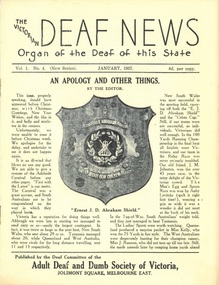
... Published by the Deaf Committee of the Adult Deaf and Dumb Society of Victoria 'The Victorian Deaf News' Newsletter is a significant publication as an historical record giving and insight into the people, activities and events of the Deaf Community in Victoria. e. j. d. abraham shield, kelly, ransom, roly mcgrath, bundy, plunkett, wilbow, levitzke, puddy, dickenson, salton, warburton, south australian carnival, british deaf times, george frankland, joe hepworth, h. m. cuttell, british deaf times, alex mcgregor, h. b. beale, george wilkinson, british deaf monthly, maxwell s. fry, herr albreghs, douglas tilden, thomas williamson, w. k. morrison, g. r. davidson, f. e. frewin, j. mclean, g. newnham, j. m. johnston, r. dow, r. lygon, i. guthrie, alf tyzzer, mrs j. e. muir, t. peters, mrs a. wilson, deaf men's guild, deaf women's guild, w. burgess, w. bladier, j. collins, colin johns, mrs w. a. patterson, vernon griffiths, hood, mrs ed johnson, e. moores. ferguson stokes, damman, hopkins, abbott, richie, thomas james derby, ashby, nancy newton, reiffel, hunt, o'keeffe, caroline, pickett, sinnott, peters, mrs g. h. oakley, c. t. o. graham, Vol. 1 No. 4 (New Series) January 1937; Size 24.5cmHx18.5cmW; 16 pages The Victorian Deaf News January 1937 Newsletter ...Published by the Deaf Committee of the Adult Deaf and Dumb Society of Victoria'The Victorian Deaf News' Newsletter is a significant publication as an historical record giving and insight into the people, activities and events of the Deaf Community in Victoria.Vol. 1 No. 4 (New Series) January 1937; Size 24.5cmHx18.5cmW; 16 pagese. j. d. abraham shield, kelly, ransom, roly mcgrath, bundy, plunkett, wilbow, levitzke, puddy, dickenson, salton, warburton, south australian carnival, british deaf times, george frankland, joe hepworth, h. m. cuttell, british deaf times, alex mcgregor, h. b. beale, george wilkinson, british deaf monthly, maxwell s. fry, herr albreghs, douglas tilden, thomas williamson, w. k. morrison, g. r. davidson, f. e. frewin, j. mclean, g. newnham, j. m. johnston, r. dow, r. lygon, i. guthrie, alf tyzzer, mrs j. e. muir, t. peters, mrs a. wilson, deaf men's guild, deaf women's guild, w. burgess, w. bladier, j. collins, colin johns, mrs w. a. patterson, vernon griffiths, hood, mrs ed johnson, e. moores. ferguson stokes, damman, hopkins, abbott, richie, thomas james derby, ashby, nancy newton, reiffel, hunt, o'keeffe, caroline, pickett, sinnott, peters, mrs g. h. oakley, c. t. o. graham, -
 University of Melbourne, Burnley Campus Archives
Article, E. E. Pescott, The Pioneers of Horticulture in Victoria, 1940
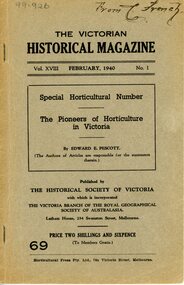
... E. Pescott, in The Victorian Historical Magazine, Vol. XVIII, No. 1, Feb. 1940. 1 copy from C. French , first Victorian Government Entomologist has an inscription inside from C. French. Taped inside the cover is a page from, "The Australian Garden Lover," handwritten "Jan 1 1958." The article is entitled, "Camellias," and describes the work of T. C. Cole and his sons in propagating camellias, anbd his role...E. Pescott, in The Victorian Historical Magazine, Vol. XVIII, No. 1, Feb. 1940. 1 copy from C. French , first Victorian Government Entomologist has an inscription inside from C. French. Taped inside the cover is a page from, "The Australian Garden Lover," handwritten "Jan 1 1958." The article is entitled, "Camellias," and describes the work of T. C. Cole and his sons in propagating camellias, anbd his role ...Special Horticultural Number of "The Pioneers of Horticulture in Victoria"2 copies devoted to "The Pioneers of Horticulture in Victoria" by Edward E. Pescott, in The Victorian Historical Magazine, Vol. XVIII, No. 1, Feb. 1940. 1 copy from C. French , first Victorian Government Entomologist has an inscription inside from C. French. Taped inside the cover is a page from, "The Australian Garden Lover," handwritten "Jan 1 1958." The article is entitled, "Camellias," and describes the work of T. C. Cole and his sons in propagating camellias, anbd his role in the foundation of Burnley Gardens. The other copy includes a copy of the Royal Horticultural Society of Victoria News Letter No. 65, May 1963 with an inscription about the Speaker's (Jack Cato) great grandfather, Copy 1:To my old pal Charle French with the author's best wishes Ed. E. Pescott 19.4.40. Copy 2: Mr Cato's gr-grandfather introduced apples to Tas. from the Chilterns and from S Africa en route.pioneers, horticulture, victoria, victorian historical magazine, e e pescott, c french, camellias, t c cole, history of horticulture in australia
