
Showing 49 items matching "temperly"
-
 Whitehorse Historical Society Inc.
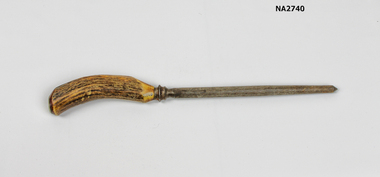
Domestic object - Knife Sharpener
... Tempered steel sharpener for sharpening knives....domestic items utensils cutlery Tempered steel sharpener for sharpening knives. ...Tempered steel sharpener for sharpening knives.domestic items, utensils, cutlery -
 Whitehorse Historical Society Inc.
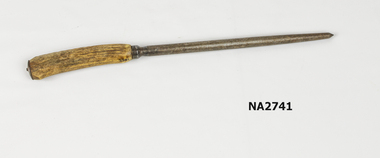
Tool - Knife Sharpener
... Tempered steel sharpener for sharpening knives. ...domestic items utensils cutlery Tempered steel sharpener for sharpening knives. ...Tempered steel sharpener for sharpening knives. It has a bone handle.domestic items, utensils, cutlery -
 Orbost & District Historical Society
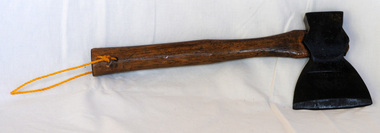
stud axe
... Made in USA True temper flint edge....Possibly made by Kelly Axe Company after 1949. stud-axe tools Made in USA True temper flint edge. A wooden handled axe with a flat ended wedge shaped blade for hammering. ...Used in wood splitting to split with the grain of the wood. Splitting or stud axe bits are more wedge shaped. This shape causes the axe to rend the fibres of the wood apart, without having to cut through them. Possibly made by Kelly Axe Company after 1949.A wooden handled axe with a flat ended wedge shaped blade for hammering. There is a piece of orange cord threaded through the handle for hanging. Made in USA True temper flint edge.stud-axe tools -
 Flagstaff Hill Maritime Museum and Village
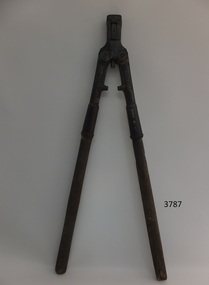
Bolt Cutter, 1878
... Cast iron bolt cutter with removable tempered steel cutter. Chambers New No. 2....This cutter is just one of the many inventions and mechanical improvements that Cyrus Chambers made during his lifetime, contributing to the ongoing development of mechanical improvements that were occurring in American industry of the time and therefore a notable addition to the Flagstaff collection. flagstaff hill warrnambool shipwrecked coast flagstaff hill maritime museum maritime museum shipwreck coast flagstaff hill maritime village great ocean road cyrus chambers bolt cutter paper folding machine brick making machine elliot cresson elliot cresson medal franklin institute gold medal rivet cutter Raised embossed lettering on cast body of cutter "New No 2" on one side, "Chambers Bros & Co" on the other side Cast iron bolt cutter with removable tempered steel cutter. Chambers New No. 2. Bolt Cutter ...Cyrus Chambers was a self-described mechanic who started out winding bobbins in his father's woollen mill and went on to invent machines that changed their industries. Cyrus Chambers came from Quaker parents the ninth of thirteen siblings, he once said a year before his death. “I believe I have succeeded because, first, I was industrious; second, because I made a study of the subject that was before me.” At age 7, Chambers went to work in his father’s mill. His job was to monitor bobbins—wooden spindles around which thread was wound and to remove and replace them as they became full. "There was no child labour law at that time," he later recalled. Chambers loved machinery and always regarded himself as a mechanic rather than an inventor. At age 16, Chambers was sent to learn dentistry with an older brother, (Edwin) who was already in the field and willing to take him on as an apprentice. Chambers was talented at working with small parts. He used his brother's dental instruments to build a miniature high-pressure steam engine of silver. It ran at 3,000 revolutions per minute and weighed less than a half-ounce. At that time it was the smallest engine that had ever been constructed. The engine was displayed at the 1876 Centennial and is now in a permanent collection at the Franklin Institute USA. Chambers major invention was the paper folding machine and came from reading that school teachers made less than the young girls who were employed to fold book pages as they came off the press. He told friends that his first efforts were to make the machine that would fold newspapers after demonstrating his device he met with Horace Greeley of the New York Tribune who advised Chambers would never invent the machine that would be able to fold his newspaper or books. In less than a year Chambers had built a full-size machine capable of folding large newspapers and books and was installed at J B Lippincott & Co folding pages for the "Comly Speller" this machine ran successfully for twenty-five years until the printing works burnt down. Chambers then went into partnership with a brother and they established the firm "Chambers, Brother & Co" at a plant in Philadelphia. It was also observed in 1910 and a fact that there was not a periodical or newspaper printed or recently published book that had not gone through one of Chambers inventions. Chambers went on to produce many mechanical inventions and improvements to existing tools and machinery most notable was his invention for the machine that would make clay bricks. This machine made forty bricks per hour and by the end of Chambers life after many improvements, it could make more than four hundred. Although there were a large number of bold cutters made of this patent at Cyrus Chamber’s foundry in Philadelphia, the item is associated with a notable American inventor of the nineteenth century. This particular patent for a bolt and rivet cutter won Chambers the prestigious Elliott Cresson Medal. This cutter is just one of the many inventions and mechanical improvements that Cyrus Chambers made during his lifetime, contributing to the ongoing development of mechanical improvements that were occurring in American industry of the time and therefore a notable addition to the Flagstaff collection.Cast iron bolt cutter with removable tempered steel cutter. Chambers New No. 2.Raised embossed lettering on cast body of cutter "New No 2" on one side, "Chambers Bros & Co" on the other sideflagstaff hill, warrnambool, shipwrecked coast, flagstaff hill maritime museum, maritime museum, shipwreck coast, flagstaff hill maritime village, great ocean road, cyrus chambers, bolt cutter, paper folding machine, brick making machine, elliot cresson, elliot cresson medal, franklin institute, gold medal, rivet cutter -
 Tennis Australia
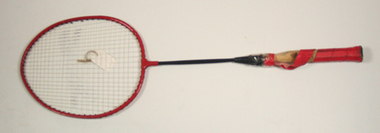
Racquet, Circa 1985
... Text on shaft states: 'Tempered Steel Shaft'. Materials: Metal composite, Nylon...Text on shaft states: 'Tempered Steel Shaft'. Materials: Metal composite, Nylon Racquet ...Badminton racquet. Unbranded. Metal with nylon strings. Red grip tape. Text on shaft states: 'Tempered Steel Shaft'. Materials: Metal composite, Nylontennis -
 Bendigo Military Museum
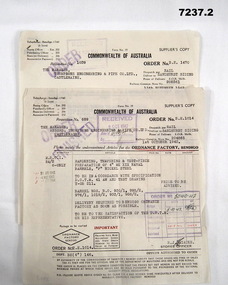
Document - ORDER FORMS
... Commonwealth Order to Ordnance Factory Bendigo to harden, temper and test 4" MK x 1 x Naval Barrels, "" F" nickel steel. ...Commonwealth Order to Ordnance Factory Bendigo to harden, temper and test 4" MK x 1 x Naval Barrels, "" F" nickel steel. ...By using this Cat No it will bring up all associated items re Thompsons.1. Commonwealth Order to Ordnance Factory Bendigo to harden, temper and test 4" MK x 1 x Naval Barrels, "" F" nickel steel. Six barrel numbers are shown. Dated 1 Oct 1942. 2. Commonwealth Order to Bendigo Ordinance Factory to harden, temper and test piece 4"breech block billett "F" Nickel steel. Thompsons Foundry.1. Stamped - order finished. Received 2 Oct 1942 - order tracking signed by R. J. Liniacke, shipped 28 June 1944. 2. Stamped - order. Received 21 Nov 1942 - signed by R. J. Liniacke.ww2, cannon manufacture -
 Geoffrey Kaye Museum of Anaesthetic History
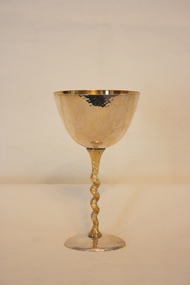
Decorative object - Goblet, Stuart Devlin, 1973
... The stem is designed in a rope like twist holding up a simple tempered cup. The hallmarks are punched on the outside of the cup....The stem is designed in a rope like twist holding up a simple tempered cup. The hallmarks are punched on the outside of the cup. ...This goblet was gifted to the Faculty by Professor John Norman (UK) during the Combined Scientific Meeting (CSM) organized by Hong Kong College of Anesthesiologists (HKCA) with ANZCA, held in May 2001, Hong Kong. The goblet is a unique design by the Australian - born artist Stuart Devlin AO, CMG. Devlin is considered to be a significant contemporary gold and silversmith, having become well known as a London Designer in the '70s and '80s. His achievements include the Royal Warrant of Appointment as Goldsmith and Jeweller to the Queen of England granted in 1982.Hand made gold gilded sterling silver goblet. The stem is designed in a rope like twist holding up a simple tempered cup. The hallmarks are punched on the outside of the cup.[hallmarks] SD / lion passant / lion's head / Sprofessor norman, john, combined scientific meeting, csm, devlin, stuart -
 Emerald Museum & Nobelius Heritage Park
Equipment - Razors for Shaving in box
... (a) Hammer forged, tempered and hardened by electricity; Made in Germany; Wald Sulingen....unknown Emerald Victoria Australia personal effects (a) Hammer forged, tempered and hardened by electricity; Made in Germany; Wald Sulingen. ...unknownTwo razors with ivory handles in box(a) Hammer forged, tempered and hardened by electricity; Made in Germany; Wald Sulingen.|(b) King cutter; H. Boker & Coemerald, victoria, australia, personal effects -
Moorabbin Air Museum
Journal (item) - Assorted Magazines - See Notes
... Interavia: Germany Tempers Aerospace PLANS Volume 47 Aprox. 1992...Interavia: Germany Tempers Aerospace PLANS Volume 47 Aprox. 1992 Assorted Magazines - see Notes Journal Assorted Magazines - See Notes ...Interavia: Germany Tempers Aerospace PLANS Volume 47 Aprox. 1992 -
Emerald Museum & Nobelius Heritage Park
Book - Religious Book, S.W. Partridge & Co et al, The Giants and How to Fight them, 1880s
... A sermon about the 'giants' of selfishness, heathenism, intemperance, ill-temper and covetousness....A sermon about the 'giants' of selfishness, heathenism, intemperance, ill-temper and covetousness. Emerald Victoria Australia school children school history Prizes and awards primary schools Charles Johnston Mrs Constable "Presented to Charles Johnston for Copy Book Writing and Good Conduct at S.S. 762 July 1886" The Giants and How to Fight them Book Religious Book S.W. ...A sermon about the 'giants' of selfishness, heathenism, intemperance, ill-temper and covetousness."Presented to Charles Johnston for Copy Book Writing and Good Conduct at S.S. 762 July 1886"emerald, victoria, australia, school children, school history, prizes and awards, primary schools, charles johnston, mrs constable -
Tatura Irrigation & Wartime Camps Museum
Photograph - copy, 1988 copy
... Photographed at Exhibition of Camp memorabilia displayed at Temper Home for Aged, Bayswater, Victoria, 1981....Photographed at Exhibition of Camp memorabilia displayed at Temper Home for Aged, Bayswater, Victoria, 1981. hand made reinhard beilharz handcrafts wood working tools pow camp internees temple society Colour photograph of handmade wooden articles. ...Photographed at Exhibition of Camp memorabilia displayed at Temper Home for Aged, Bayswater, Victoria, 1981.Colour photograph of handmade wooden articles. Tools and planes made by Master Carpenter Reinhard Beilharz and a jewel box and inlay brooches he made for his wife Therla. Negative no. 19.hand made, reinhard beilharz, handcrafts, wood working tools, pow, camp internees, temple society -
Tatura Irrigation & Wartime Camps Museum
Photograph - copy, 1988
... Photographed at Exhibition of Camp Memorabilia displayed at Temper Home for Aged, Bayswater, Victoria, in 1981....Photographed at Exhibition of Camp Memorabilia displayed at Temper Home for Aged, Bayswater, Victoria, in 1981. hand crafts pow internment camp hand tools Colour photograph. ...Photographed at Exhibition of Camp Memorabilia displayed at Temper Home for Aged, Bayswater, Victoria, in 1981.Colour photograph. Variety of tools made from whatever material one could lay one's hands on. Negative no 20.hand crafts, pow, internment camp, hand tools -
Tatura Irrigation & Wartime Camps Museum
Photograph - copy, 1988 copy
... Photographed at Exhibition of Camp memorabilia displayed at Temper Home for Aged, Bayswater, Victoria, in 1981....Photographed at Exhibition of Camp memorabilia displayed at Temper Home for Aged, Bayswater, Victoria, in 1981. hand crafts pow camp internees Colour photograph of items in daily use at camp. ...Photographed at Exhibition of Camp memorabilia displayed at Temper Home for Aged, Bayswater, Victoria, in 1981.Colour photograph of items in daily use at camp. Plate, mug and cutlery. Laundry scoop, grater and iron used with hot coals. Negatives no 3. hand crafts, pow, camp internees -
Tatura Irrigation & Wartime Camps Museum
Photograph - copy, 1988 copy
... Photographed at Exhibition of Camp memorabilia displayed at Temper Home for Aged, Bayswater, Victoria, in 1981....Photographed at Exhibition of Camp memorabilia displayed at Temper Home for Aged, Bayswater, Victoria, in 1981. tin craft hand craft embroidery red cross pow camp internees Colour photograph. ...Photographed at Exhibition of Camp memorabilia displayed at Temper Home for Aged, Bayswater, Victoria, in 1981.Colour photograph. "Tatura Silver". Made from jam tins - biscuit cutters, tea pot, funnel shaped beaters used to agitate washing in the coppers. Embroidered table cloth (material supplied by Red Cross). Negative no 17.tin craft, hand craft, embroidery, red cross, pow, camp internees -
Tatura Irrigation & Wartime Camps Museum
Photograph - copy, 1988 copy
... Photographed at Exhibition of Camp memorabilia displayed at Temper Home for Aged, Bayswater, Victoria, in 1981....Photographed at Exhibition of Camp memorabilia displayed at Temper Home for Aged, Bayswater, Victoria, in 1981. tools wood work fret work hand carved dolls inlay work pow camp internees Colour photograph. ...Photographed at Exhibition of Camp memorabilia displayed at Temper Home for Aged, Bayswater, Victoria, in 1981.Colour photograph. Hand carved woodwork and dolls. Tools and planes, toys, fretsaw work cradle, dolls bath with ladle and fairy tale figures - inlay work. Doll on top of jewel box has hand carved head and limbs and a stuffed cloth body. Negative no 4.tools, wood work, fret work, hand carved, dolls, inlay work, pow, camp internees -
 Lara RSL Sub Branch
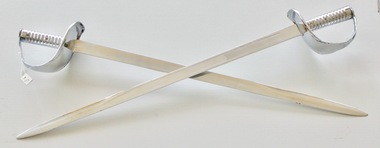
Cutlass chrome pair of, 1804 Chromed cutlass pair
... Each blade is fold forged from a single billet of high-carbon steel, then hardened and tempered. Hand assembled and ground, each is then fully chrome plated for a mirror finish. ...Each blade is fold forged from a single billet of high-carbon steel, then hardened and tempered. Hand assembled and ground, each is then fully chrome plated for a mirror finish. 1804 Chromed cutlass pair Cutlass chrome pair of ...Windlass, an ISO accredited sword maker and official supplier to MOD UK and the RN.good example of Navy cutlass swords2 x British Naval Cutlass 1804 - Chromed These highest quality blades are manufactured by Windlass, an ISO accredited sword maker and official supplier to MOD UK and the RN. Each blade is fold forged from a single billet of high-carbon steel, then hardened and tempered. Hand assembled and ground, each is then fully chrome plated for a mirror finish. 1. Blade near the hilt has on one side crossed sword and scabbard, obverse has a J. On the basket are N an arrow WD followed by an L. 2. Blade near the hilt has on one side crossed sword and scabbard, obverse has a inscribed 9 and stamped C6. On the basket are N an arrow WD followed by an L.navy, cutlass -
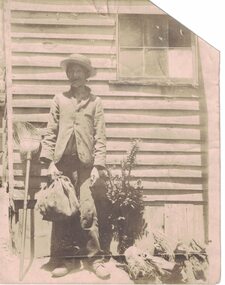 Linton and District Historical Society Inc
Photograph, "Ginge", Chinese Hawker and Linton Identity
... However, the early LDHS index to photographs says that his temper matched his hair colour - fiery!...However, the early LDHS index to photographs says that his temper matched his hair colour - fiery! Ginge Ginger Chinese traders Chinese miners Small, faded and damaged photograph which shows "Ginge", a Chinese hawker who sold his goods in Linton and other towns in the district in the early 1900s. ...Mrs Stella Surman recalled "Ginge" as always having a smile for everyone (quoted in "Linton Makes History", p. 85). However, the early LDHS index to photographs says that his temper matched his hair colour - fiery!Small, faded and damaged photograph which shows "Ginge", a Chinese hawker who sold his goods in Linton and other towns in the district in the early 1900s. Legend says that his name derived from having red hair.ginge, ginger, chinese traders, chinese miners -
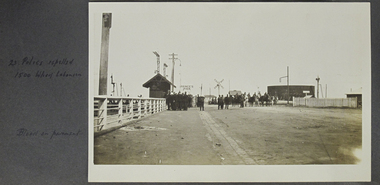 Mission to Seafarers Victoria
Photograph - Photograph, Sepia, 23 Police repelled 1500 Wharf Labourers - Blood on Pavement, November 1928
... Strike-breakers were brought in and police, armed with guns and brandishing batons, lined the wharf to protect them. Tempers rose, fighting broke out, and a nervous inspector ordered his men to fire first into the air, then into the crowd....Strike-breakers were brought in and police, armed with guns and brandishing batons, lined the wharf to protect them. Tempers rose, fighting broke out, and a nervous inspector ordered his men to fire first into the air, then into the crowd. strike wharfs police port melbourne princes pier alan whittaker fan album 1928 labourers on page 8 23 Police repelled 1500 Wharf Labourers - Blood on Pavement Photograph Photograph, Sepia ...In October 1928, on the eve of the Great Depression, Melbourne’s wharfies went on strike. Strike-breakers were brought in and police, armed with guns and brandishing batons, lined the wharf to protect them. Tempers rose, fighting broke out, and a nervous inspector ordered his men to fire first into the air, then into the crowd.on page 8strike, wharfs, police, port melbourne, princes pier, alan whittaker, fan album, 1928, labourers -
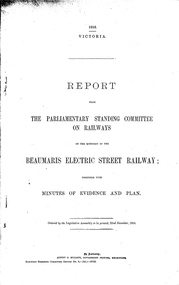 Melbourne Tram Museum
Document - Report, Victorian Parliament, "Report - The Parliamentary Standing Committee re the Beaumaris Electric Street Railway.", Dec. 1916
... Kernot, and Committee recommendations - tempered by the War....Kernot, and Committee recommendations - tempered by the War. "Report - The Parliamentary Standing Committee re the Beaumaris Electric Street Railway." ...Printed - 6 page foolscap, stapled on left hand side, 2 sections, Victorian State Parliamentary Report titled "Report - The Parliamentary Standing Committee on Railways on the question of the Beaumaris Electric Street Railway." - dated 22 December 1916. References previous reports, Black Rock, Beaumaris, residential development, routes and costs of the proposed tramway, costs provided by the Chief Engineer for Railway Construction, E. Kernot, and Committee recommendations - tempered by the War.trams, tramways, sandringham, black rock, beaumaris, railways, tramways, proposals -
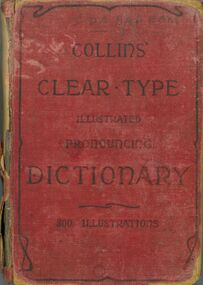 Bendigo Historical Society Inc.
Book - BADHAM COLLECTION: DICTIONARY, Unknown
... The Collins history of publishing dictionaries began in 1824 in Glasgow by William Collins who had a background as a teacher and an interest in material related to the Temperence Movement. The company continues to publish dictionaries to this day, including digital versions and foreign language editions. ...The Collins history of publishing dictionaries began in 1824 in Glasgow by William Collins who had a background as a teacher and an interest in material related to the Temperence Movement. The company continues to publish dictionaries to this day, including digital versions and foreign language editions. ...The Collins history of publishing dictionaries began in 1824 in Glasgow by William Collins who had a background as a teacher and an interest in material related to the Temperence Movement. The company continues to publish dictionaries to this day, including digital versions and foreign language editions. Today the company is known as Harper Collins. The dictionary was used by several members of the Badham family which reflects the continued usage of such items and not just replacing something that may be older.Collins Dictionary with cardboard red covers and 288 pages. Names of former owners on front cover and inside front cover. Inside the back are names of various members of the Badham family - Edith, Ida and Jim. This dictionary has had several owners in the one family.a 'Collins' Clear Type Illustrated Pronouncing Dictionary. 300 Illustrations'. Name of former owner printed in top right-hand corner 'Ida Badham'. b Inside the front cover names of owners of the dictionary 'E. Badham', Ida Badham'.badham collection, dictionary, collins, william collins -
 Flagstaff Hill Maritime Museum and Village
Tool - Wood Mitre & Trimmer Guillotine, Early 20th century
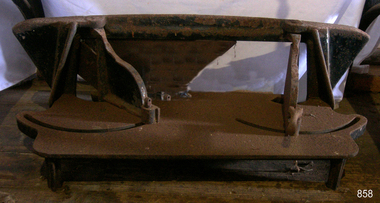
... It is heavy, simple, and sturdily built of cast iron with tempered steel guillotine blades. It is used for taking super accurate, paper-thin slices off the ends of mitres and butt joints, and leaving behind a glassy-smooth surface. ...It is heavy, simple, and sturdily built of cast iron with tempered steel guillotine blades. It is used for taking super accurate, paper-thin slices off the ends of mitres and butt joints, and leaving behind a glassy-smooth surface. ...The mitre trimmer is a classic hand-powered tool for picture framers and trim carpenters that has remained relatively unchanged for decades. It is heavy, simple, and sturdily built of cast iron with tempered steel guillotine blades. It is used for taking super accurate, paper-thin slices off the ends of mitres and butt joints, and leaving behind a glassy-smooth surface. Also used in picture frame making or cabinet woodworking, by placing a piece of timber in one side after setting the desired angle and pulling a handle that operates a guillotine blade thereby cutting the timber or decorative trim to the required angle.A significant tool still in use today in many cabinet makers workshops. The subject tool gives insight into how this type of tool development, design and use has not progressed since it’s original invention. It is still for sale from many tool manufacturing companies and use in small craftsmen boutique workshops today as it was many decades ago.Cast Iron wood Trimmer bench like construction on raised feet with 2 adjustable gates. Noneflagstaff hill, warrnambool, shipwrecked-coast, flagstaff-hill, flagstaff-hill-maritime-museum, maritime-museum, shipwreck-coast, flagstaff-hill-maritime-village, cabinet makers tools, picture framing, mitre cutting, wood trimming -
 Warrnambool and District Historical Society Inc.
souvenir cup, Warrnambool Congregational Church
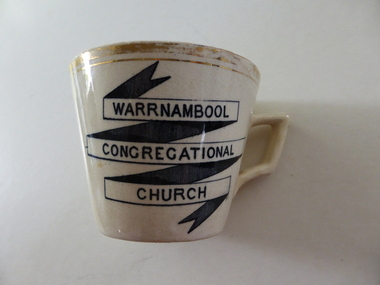
... After initially meeting at the small Temperence Hall in Liebig St, land was purchased at the corner of Liebig and lava St and the first church opened in March 1864. ...After initially meeting at the small Temperence Hall in Liebig St, land was purchased at the corner of Liebig and lava St and the first church opened in March 1864. ...The Warrnambool Congregational Church was established with a meeting called in April 1862 and over the ensuing months a congregation with first pastor Rev W Pentland was established. After initially meeting at the small Temperence Hall in Liebig St, land was purchased at the corner of Liebig and lava St and the first church opened in March 1864. It remained on this site until the site was sold to the T & G Assurance in 1939 and land known as Kianga Estate was purchased on the corner of Lava and Henna Streets.It became part of the amalgamation with other churches to form the Uniting Church in 1977.This cup is possibly a souvenir from the 50th anniversary celebrations held in 1912. A common object which is linked to one of warrnambool's longest running churches.Cream china cup with thick gold rim and black test in banner style on one side of the cup. Warrnambool Congregational Church on front of cup . 338 written on bottom and 4 on paper labelwarrnambool, warrnambool congregational church -
 Stawell Historical Society Inc
Photograph, Mr Robert Gray at Kays Foundry in Wimmera Street
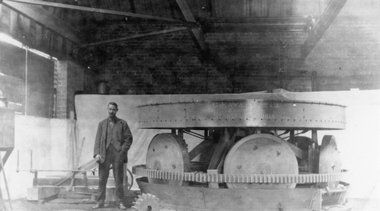
... Roberts job was that of black smith tempering and sharpening rock drills....Roberts job was that of black smith tempering and sharpening rock drills. stawell industry mining Robert Grey at Kays Foundry Stawell. ...Robert Gray at Kays Foundry Wimmera Street Stawell standing beside Crusher built for Bulola Goldfields New Guinea. Robert (Bob) Gray born Stawell in 1879 to Edmond and Susan Gray. Robert worked for 20 years at the George Kay Foundry Wimmera Street as a fitter and turner manufacturing and repairing steam engines and boilers. The foundry burnt down in 1924. George Kay gave Bob this reference. He them worked at the sandstone quarry out beyond Mt Dryden (Heatherlie) The stone of which was used to build the Elizabeth Street Commonwealth Bank in Melbourne. Roberts job was that of black smith tempering and sharpening rock drills.Black and white photograph of a man standing beside a circular structure in a large workshop.Robert Grey at Kays Foundry Stawell. Built for Bulola Goldfields New Guinea.stawell industry mining -
 Eltham District Historical Society Inc
Book, Kristin Otto, Yarra : a diverting history of Melbourne's murky river / Kristin Otto, 2005
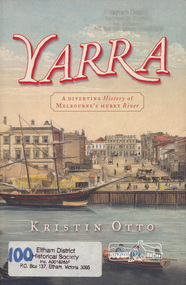
... From the creation stories of Kulin owners and geologist blow-ins (and Robert Hoddle's bad-tempered expedition to the headwaters) to the twenty-first-century waterside building boom, Otto traces the course of Melbourne's murky river. ...From the creation stories of Kulin owners and geologist blow-ins (and Robert Hoddle's bad-tempered expedition to the headwaters) to the twenty-first-century waterside building boom, Otto traces the course of Melbourne's murky river. ..."It was John Wedge, Batman's private surveyor, who named the Yarra Yarra. In September 1835 he was at the Turning Basin with some Kulin and heard them identify the river as it came over the Falls as, he wrote, 'Yarrow Yarrow'. It was only some months later that Wedge discovered they had been referring to the pattern and movement of water over the Falls, not the river itself. And ever since, it has been the Yarra's fate to be misunderstood: maligned for its muddiness, ill-used as sewer and tip; scooped, sculpted, straightened and stressed, 'cleaned up' to the detriment of its natural inhabitants; built-over, under and beside; worked mercilessly and then bridged almost to maritime extinction. In Kristin Otto's superbly entertaining new history, the whole sorry tale is laid bare. From the creation stories of Kulin owners and geologist blow-ins (and Robert Hoddle's bad-tempered expedition to the headwaters) to the twenty-first-century waterside building boom, Otto traces the course of Melbourne's murky river. Erudite, affectionate and witty, with more meanders and diversions than the river itself, Yarra is both a fascinating read and a fitting tribute to the 'noble stream'." -- Publisher's website.Paperback; [viii], 245 p. : illus., maps ; 24 cm.ISBN 1920885781yarra river -
City of Moorabbin Historical Society (Operating the Box Cottage Museum)
Manufactured Glass, Pharmacy beaker 'PYREX', 20thC
... It is now made of tempered glass....It is now made of tempered glass. pyrex corning ware corning incorporated houghton amory snr sullivan eugene littleton jesse schott otto jena germany corning america glass manufacturers laboratory glass cooking housework kitchen equipment pharmacy moorabbin bentleigh cheltenham fibe optics television hubble telescope PYREX 300 A pharmaceutical clear glass beaker with capacity 300ml Manufactured Glass, Pharmacy beaker 'PYREX' Corning Incorporated ...PYREX is a brand that was introduced by Amory Houghton Sr. (1812-1882) founder of Corning Incorporated in 1915 for a line of clear, low-thermal-expansion borosilicate glass used for laboratory glassware and kitchenware. In 1879 Corning Incorporated developed a bulb-shaped glass encasement for Thomas Edison’s new incandescent lamp. Borosilicate glass was first made by German chemist and glass technologist Otto Schott, founder of Schott AG , Jena , Germany in 1893, 22 years before Corning Inc. produced the PYREX brand. Schott AG sold the product under the name "Duran.".. In 1908, Dr. Eugene Sullivan (1872 - 1962), Director of Research at Corning Glass Works, U.S.A., who had studied in Leipzig, Germany, developed Nonex, a borosilicate low-expansion glass. 1913 Jesse Littleton of Corning Inc. discovered the cooking potential of borosilicate glass by giving his wife a casserole dish made from a cut-down Nonex battery jar. Corning Inc. removed the lead from Nonex, and developed it as a consumer product and Pyrex made its public debut in 1915 during World War I, positioned as an American-produced alternative to the German ‘Duran’. 1952 ‘Corning ware’ ceramic glass was developed by Dr. S.D.Stookey. 1994 Corning received an Award for life- changing, life- enhancing technological inventions that enabled new industries, - lighting, television, optical communications. The PYREX line of highly durable cookware and laboratory glass products are still available today. It is now made of tempered glass.A pharmaceutical clear glass beaker with capacity 300mlPYREX 300pyrex, corning ware, corning incorporated, houghton amory snr, sullivan eugene, littleton jesse, schott otto, jena germany, corning america, glass manufacturers, laboratory glass, cooking, housework, kitchen equipment, pharmacy, moorabbin, bentleigh, cheltenham, fibe optics, television, hubble telescope -
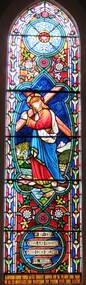 Christ Church Anglican Parish of Warrnambool
Memorial window: William RUTLEDGE, "BY THY CROSS AND PASSION GOOD LORD DELIVER US""
... According to reported accounts, William Rutledge had a tempestuous manner with an “explosive” temper, although he did not hold grudges. This is countered by accounts of his kindness, generosity, honesty and practical, progressive outlook in all his undertakings. ...According to reported accounts, William Rutledge had a tempestuous manner with an “explosive” temper, although he did not hold grudges. This is countered by accounts of his kindness, generosity, honesty and practical, progressive outlook in all his undertakings. ...William Rutledge [born 1806, Ireland] was a self-made, larger-than-life man who involved himself prominently in business, municipal, political, community and social aspects of life. Eldest son of James and Martha [nee Forster], William arrived in Australia from Ireland in 1829 and within six years had sufficiently established himself to purchase land in New South Wales. He married Eliza Kirk in Sydney in august 1840. They had two sons and five daughters. In 1843 he began his association and life in Port Fairy and soon became prominent and influential in almost all aspects of that developing town. His interests encompassed mercantile, civic, pastoral, shipping, importing, exporting, immigration, politics and social aspects with in the district and colony. He was a major contributor to the building of St John’s Anglican Church, Port Fairy. He acquired three special surveys with historical importance in Victoria. In south west Victoria that interest being especially the Farnham Survey of 5120 acres between Dennington and Tower Hill/Killarney. This was farmed by immigrant tenant and lessee farmers, some of whom were brought to the Australia at William Rutledge’s own expense and by whom he was considered a kind and considerate landlord. His endeavours were not without failures and in 1862 his Port Fairy Company failed with debts of over £170,000. This debt was redeemed in full within a year. According to reported accounts, William Rutledge had a tempestuous manner with an “explosive” temper, although he did not hold grudges. This is countered by accounts of his kindness, generosity, honesty and practical, progressive outlook in all his undertakings. After the failure and closure of his Company, William Rutledge moved to his property at Farnham Park near Warrnambool where he concentrated his interest in breeding sheep and horses. Throughout his life his home was reputed to be convivial and hospitable. William Rutledge died at Farnham Park on June 1st, 1876. William Rutledge's place in the history of settlement in south west Victoria gives importance to this memorial.Stained glass window, south wall, main nave, depicting Jesus bearing the Cross. The background is quite floral. A medallion shape holds the title as printed on a ribbon: "By thy cross and passion good Lord deliver us".In Latin: In Memoriam Gulielmi Rutledge qui A.D. MDCCCVI underimo ante Kal: Feb: natus vitam posuit/ Kal: Jun: MDCCCLXXVI Filae amantissimae hanc fenestram pietatis indirio posueruntrutledge, william rutledge, farnham survey, port fairy, christ church warrnambool -
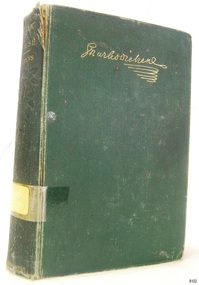 Flagstaff Hill Maritime Museum and Village
Book - A Fictional Story, Charles Dickens, Bleak House, 1873-1900
... In the end, the Jarndyce case finally concludes, but the estate is gone, Richard dies, and the survivors are left with a tempered sense of justice and charity....In the end, the Jarndyce case finally concludes, but the estate is gone, Richard dies, and the survivors are left with a tempered sense of justice and charity. Critics often rank Bleak House as one of Dickens’s most important novels, notable for its harsh satire of the English legal system, its ambitious dual narrative structure (omniscient narrator third person, plus Esther’s first person account), along with its large, interconnected cast of characters. ...Charles Dickens (1812–1870) was one of the great English novelists of the Victorian era, famous for vivid characters, social criticism, and stories that were first published in serial form. He began as a journalist, rose to enormous popularity during his lifetime, and wrote major works such as Oliver Twist, David Copperfield, and Great Expectations. Bleak House is one of Charles Dickens’s major novels, a sprawling, multi plot story built around the endless Court of Chancery lawsuit known as “Jarndyce and Jarndyce” and its ruinous effect on several families. It is widely regarded as among his finest and most complex works, central to any serious study of his fiction.Bleak House. Author: Charles Dickens. Publisher: Chapman & Hall Ltd, London. Date: 1873-1900. (See note section this document for more information on Edition). Blue leather hardcover with title on spine in gold lettering, Charles Dickens signature on front cover written in gold lettering. The spine has a Library label.fictionCharles Dickens (1812–1870) was one of the great English novelists of the Victorian era, famous for vivid characters, social criticism, and stories that were first published in serial form. He began as a journalist, rose to enormous popularity during his lifetime, and wrote major works such as Oliver Twist, David Copperfield, and Great Expectations. Bleak House is one of Charles Dickens’s major novels, a sprawling, multi plot story built around the endless Court of Chancery lawsuit known as “Jarndyce and Jarndyce” and its ruinous effect on several families. It is widely regarded as among his finest and most complex works, central to any serious study of his fiction.book, the old curiosity shop, charles dickens, shipwrecked-coast, flagstaff-hill, flagstaff-hill-maritime-museum, warrnambool, maritime-museum, flagstaff-hill-maritime-village, pattison collection, warrnambool library, warrnambool mechanics’ institute, ralph eric pattison, corangamite regional library service, warrnambool city librarian, mechanics’ institute library, victorian library board, warrnambool books and records, warrnambool children’s library, great ocean road -
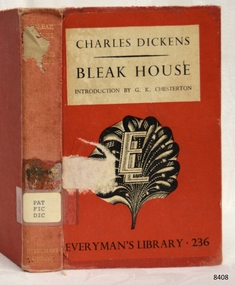 Flagstaff Hill Maritime Museum and Village
Book - A Fictional Story, Charles Dickens, Bleak House, 1925
... In the end, the Jarndyce case finally concludes, but the estate is gone, Richard dies, and the survivors are left with a tempered sense of justice and charity....In the end, the Jarndyce case finally concludes, but the estate is gone, Richard dies, and the survivors are left with a tempered sense of justice and charity. Critics often rank Bleak House as one of Dickens’s most important novels, notable for its harsh satire of the English legal system, its ambitious dual narrative structure (omniscient narrator third person, plus Esther’s first person account), along with its large, interconnected cast of characters. ...Charles Dickens (1812–1870) was one of the great English novelists of the Victorian era, famous for vivid characters, social criticism, and stories that were first published in serial form. He began as a journalist, rose to enormous popularity during his lifetime, and wrote major works such as Oliver Twist, David Copperfield, and Great Expectations. Bleak House is one of Charles Dickens’s major novels, a sprawling, multi plot story built around the endless Court of Chancery lawsuit known as “Jarndyce and Jarndyce” and its ruinous effect on several families. It is widely regarded as among his finest and most complex works, central to any serious study of his fiction.Bleak House. Author: Charles Dickens. Publisher: Chapman & Hall Ltd, London. Date: 1925. (See note section this document for more information on Edition). Cloth hardcover with title on spine in gold lettering, Front cover has a paper stick on title. The spine has a Library label.fictionCharles Dickens (1812–1870) was one of the great English novelists of the Victorian era, famous for vivid characters, social criticism, and stories that were first published in serial form. He began as a journalist, rose to enormous popularity during his lifetime, and wrote major works such as Oliver Twist, David Copperfield, and Great Expectations. Bleak House is one of Charles Dickens’s major novels, a sprawling, multi plot story built around the endless Court of Chancery lawsuit known as “Jarndyce and Jarndyce” and its ruinous effect on several families. It is widely regarded as among his finest and most complex works, central to any serious study of his fiction.book, the old curiosity shop, charles dickens, shipwrecked-coast, flagstaff-hill, flagstaff-hill-maritime-museum, warrnambool, maritime-museum, flagstaff-hill-maritime-village, pattison collection, warrnambool library, warrnambool mechanics’ institute, ralph eric pattison, corangamite regional library service, warrnambool city librarian, mechanics’ institute library, victorian library board, warrnambool books and records, warrnambool children’s library, great ocean road -
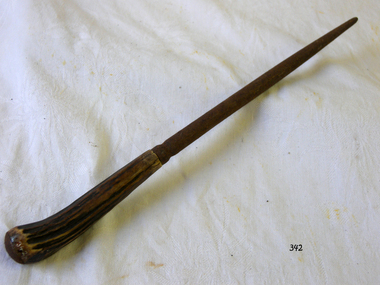 Flagstaff Hill Maritime Museum and Village
Domestic object - Sharpening Steel
... These scenarios also lead Western trends toward blades tempered to a lower level of hardness (and thus lower brittleness). ...These scenarios also lead Western trends toward blades tempered to a lower level of hardness (and thus lower brittleness). ...A honing steel, sometimes referred to as a sharpening steel, whet steel, sharpening stick, sharpening rod, butcher's steel, and chef's steel, is a rod of steel, ceramic or diamond-coated steel used to restore keenness to dulled blade edges. They are flat, oval, or round in cross-section and up to 30 centimetres (1 ft) long. The steel and ceramic honing steels may have longitudinal ridges, whereas the diamond-coated steels are smooth but embedded with abrasive diamond particles. Non-abrasive honing rods such as smooth ceramic or ribbed steel are able to remove small amounts of metal via adhesive wear. In normal use, the rod is applied to the blade at a slightly higher angle than that of the bevel, resulting in the formation of a micro-bevel. The term "hone" is associated with light maintenance performed on a blade without the effort and precision normally associated with sharpening, so the name "hone" was borrowed. In the 1980s, ceramic abrasives became increasingly popular and proved an equal, if not superior, method for accomplishing the same daily maintenance tasks; manufacturers replaced steels with ceramic (and later, manufactured diamond abrasive) sharpening "steels" that were actually hones. Use Honing steels are used by lightly placing the near edge of the blade against the base of the steel, then sliding the blade away from yourself along the steel while moving it down – the blade moves diagonally, while the steel remains stationary. This should be done with the blade held at an angle to the steel, usually about 20°, and repeating on the opposite side at the same angle. This is repeated five to ten times per side. Steeling It is often recommended that steeling be performed immediately before or after using a knife and can be done daily. By contrast, knives are generally sharpened much less frequently. A traditional smooth honing steel is of no use if the edge is blunt, because it removes no material; instead it fixes deformations along the edge of a sharp blade, technically known as burnishing. There has long been speculation about the efficacy of steeling (re-aligning the edge) vs honing (removing minor deformation with abrasives); studies tend to favour abrasives for daily maintenance, especially in high-carbide-volume "stainless" steels (such as the popular CPM S30V steel, which tends to "tear out" when steeled rather than re-forming an edge.) Small honing steel for outdoor activities Usage trends Steels have traditionally been used in the West, especially in heavy-use scenarios (e.g. butchering, where the edge deforms due to forceful contact with bone). These scenarios also lead Western trends toward blades tempered to a lower level of hardness (and thus lower brittleness). In East Asia, notably Japan, harder knives are preferred, so there is little need for steeling intra-day, as the edge does not deform as much. Instead, the blade is honed as needed on a waterstone. While tradition has kept the practice of steeling alive in Western kitchens, the majority of honing steels sold are abrasive rather than smooth, and knives are harder and more frequently made of stainless steel, which does not respond to traditional steeling techniques as well as high-carbon/low alloy tool steels.The sharpening steel is essential to maintain the sharpness of carving and other knives.Steel knife sharpener with bone handle. Part of a carving set.None.flagstaff hill, warrnambool, shipwrecked-coast, flagstaff-hill, flagstaff-hill-maritime-museum, maritime-museum, shipwreck-coast, flagstaff-hill-maritime-village, sharpening steel, carving set, kitchen equipment -
![Medal - Royal Red Cross Medal & miniature in box, Garrard & Co. Limited, [circa 1918]](/media/collectors/64a5077bc83bd7b7b94f4211/items/6a695a9b154863c24680e420/item-media/6a695b3e154863c24680fd40/item-fit-380x285.jpg?cb=6) Returned Nurses RSL Sub-branch
Returned Nurses RSL Sub-branchMedal - Royal Red Cross Medal & miniature in box, Garrard & Co. Limited, [circa 1918]
... I consider her a thoroughly well trained Nurse, most kind and attentive to the patients, she is energetic, reliable, punctual, tactful and good tempered. Her powers of administration and initiative are excellent and she has great ability in instructing the orderlies. ...I consider her a thoroughly well trained Nurse, most kind and attentive to the patients, she is energetic, reliable, punctual, tactful and good tempered. Her powers of administration and initiative are excellent and she has great ability in instructing the orderlies. ...This Royal Red Cross was awarded to Minnie Maud McNab who served as a nurse then Sister in Queen Alexandria's Imperial Military Nursing Staff Reserve, Dr Bird's Unit during WWI. "Appointed to QAIMNSR 22 January 1915 Arrived in Egypt 22 January 1915 Embarked Bombay 18 April 1917 Disembarked Basrah 26 April 1917 Posted No 3 British General Hospital 26 April 1917 Admitted to hospital 03 May 1917 Discharged 07 May 1917 Joined for duty at Bagdad 23 May 1917 Appointed Assistant Matron to 31 BSH at Basrah 01 December 1917 Mentioned in Lieut General Sir F S Mande's despatch dated 02 November 1917 London Gazette No 30570 Joined for temporary duty Baghdad 24 May 1918 Admitted OCD 29 July 1918 Discharged 17 August 1918 and returned to Duty Left unit to proceed on leave to India 24 August 1918 Proceeded to India on leave per 'Kina' 01 September 1918 Returned from Leave 31 October 1918 Rejoined unit from leave Baghdad 10 November 1918 Awarded Royal Red Cross 1st Class in recognition of valuable services with the British Forces in Mesopotamia 26 August 1918 (Gazette No 30865) Mentioned in despatches by Lt. General W R Marshall in his despatch dated 15 April 1918 (Gazette No 30867) Admitted to Hospital 11 January 1919 Discharged from Hospital 10 February 1919 31 B S Hospital 'Sister Minnie Maud McNab QAIMNS Reserve has served under me for eighteen months as Sister and Assistant Matron, the duties of the latter she performed to my entire satisfaction. I consider her a thoroughly well trained Nurse, most kind and attentive to the patients, she is energetic, reliable, punctual, tactful and good tempered. Her powers of administration and initiative are excellent and she has great ability in instructing the orderlies. I recommend her for further service if required, promotion and for full gratuity.' Transferred to UK for duty 21 February 1919 Embarked 'Vasna' 21 February 1919 or UK Appointment terminated 21 July 1919 Departed from her unit 21 July 1919 After taking a holiday in Scotland asked for temporary duty if her passage home was not available. Posted to Royal Herbert Hospital, Woolwich 08 September 1919 Postal address whilst awaiting repatriation Berrington War Hospital, Shrewbury Returning to Australia per 'Northumberland' trans-shipped at Bombay ex 'Macedonia' embarked England 01 November 1919" (https://ausww1nurses.weebly.com/mca-mcn.html) "The Royal Red Cross is a military decoration awarded in the United Kingdom and Commonwealth for exceptional services in military nursing. It was established on 27 April 1883 by Queen Victoria... The Royal Red Cross was originally a single class of Member and it was first awarded to the founder of modern nursing, Florence Nightingale. A second class, Associate, was added during World War I in 1917. The award is awarded to a fully trained nurse of an officially recognized nursing service, military or civilian, who has shown exceptional devotion and competence in the performance of nursing duties, over a continuous and long period, or who has performed an exceptional act of bravery and devotion at her or his post of duty. The decoration was conferred exclusively to women until 1976. Recipients of the Royal Red Cross are entitled to use the post-nominal letters “RRC” or “ARRC” for Members and Associates respectively." [https://collectionswa.net.au/items/25f38e85-6c15-429f-95b6-0a24c241e199] A thin, black, textured leather coated box with gold lettering 'R R C' in the centre and '1st' in the bottom left corner. Has a white sticker attached to the top right hand corner with red handwritten 'M47'. The box has a small metal button on bottom section that when pushed opens the box. The leather is damaged and fraying around the edges and corners of the box and there are various scratch marks that have removed the black paint/dye from the leather in places. Inside, the box lid is lined with padded fabric (likely silk or satin), has the manufacturer details printed at the centre of lid. There is a small blue ink mark on the fabric in the top left of the inside of the lid and minor holes and wear in the upper portion of the lid. The bottom part of the box is a mount covered in blue velvet. The mount and velvet have a depression in the shape of the main Royal Red Cross (RRC) medal and ribbon. The velvet is dusty and has some fibres in the creases and across the whole area. "The badge for the RRC is in the shape of a golden cross, 1.375 inches (3.49 cm) wide, the obverse enamelled red, with a circular medallion, bearing an effigy of the reigning monarch at its centre. The words "Faith", "Hope" and "Charity" are inscribed on the upper limbs of the cross, with the year "1883" in the lower limb. The reverse is plain except a circular medallion bearing the royal cypher of the reigning monarch" [Wikipedia - see References], on this medal the initials are GRJ. The ribbon is a dark blue stripe between crimson edge stripes and forms a landscape oriented bow that the medal hangs from the middle. This box also contains a miniature medal, bearing the same description as above being of [approximately quarter size]. There is a white sticker on the underside of the box that has handwritten in black ink 'RNC / J McCarthy' 'M47' [red ink on white sticker attached to top of box] 'RNC / J McCarthy' [black ink on white sticker attached to underneath of box] 'M.M.McNAB / 1914-1919' [Engraved on bottom of the lower part of the full sized medal's cross]minnie maud mcnab, wwi, ww1, world war one, royal red cross 1st class, royal red cross, queen alexandra's imperial military nursing service reserve
