
Showing 10 items matching "textile fibres dyeing"
-
 National Wool Museum
Book, A Material World: fibre, colour and pattern
... Fashion Weaving Embroidery Textile Design Textile Fibres...Dyeing...fibre, colour and pattern" - Powerhouse Museum, Sydney, 1990. Catalogue from an exhibition of the same name held at the Powerhouse. Primarily an overview of the main aspects of the Powerhouse textile collection. Fashion Weaving Embroidery Textile Design Textile Fibres Dyeing ..."A Material World: fibre, colour and pattern" - Powerhouse Museum, Sydney, 1990. Catalogue from an exhibition of the same name held at the Powerhouse. Primarily an overview of the main aspects of the Powerhouse textile collection.fashion weaving embroidery textile design textile fibres, dyeing, printing, fashion, weaving, embroidery, textile design, textile fibres -
 National Wool Museum
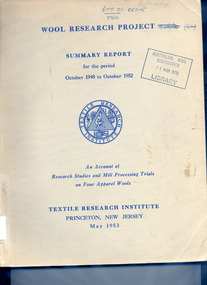
Book, An account of research studies and mill processing trials on four apparel wools
... Merino sheep Wool - characteristics Wool - chemistry Textile Research Textile Calculations Textile Fibres...Dyeing...Merino sheep Wool - characteristics Wool - chemistry Textile Research Textile Calculations Textile Fibres Dyeing Spinning Carding Yarn - worsted Merino sheep Wool - characteristics Wool - chemistry Textile Research Textile Calculations Textile Fibres An account of research studies and mill processing trials on four apparel wools Book ..."An account of research studies and mill processing trials on four apparel wools"- J H Wakelin and W von Bergen 1953 : Wool research project, summary report for the period October 1948 to October 1952.merino sheep wool - characteristics wool - chemistry textile research textile calculations textile fibres, dyeing, spinning, carding, yarn - worsted, merino sheep, wool - characteristics, wool - chemistry, textile research, textile calculations, textile fibres -
National Wool Museum
Book, The Dyeing of Textile Fabrics
... Textile Fibres Dyeing..."The Dyeing of Textile Fabrics" - J.J. Hummel, 1885. Textile Fibres Dyeing Dyeing Textile Fibres The Dyeing of Textile Fabrics Book ..."The Dyeing of Textile Fabrics" - J.J. Hummel, 1885.textile fibres dyeing, dyeing, textile fibres -
 National Wool Museum
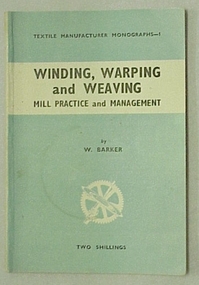
Book, Winding, warping and weaving: mill practice and management
... "Winding, warping and weaving: mill practice and management" - W Barker, "Textile Manufacturer" Monograph No 1 Textile Industry - education Textile Fibres Weaving Textile Machinery Textile Manufacturer Winding Warping Dressing Dyeing Textile Industry - education Textile Fibres Weaving Textile Machinery "Winding, warping and weaving: mill practice and management" - W Barker, "Textile Manufacturer" Monograph No 1 Winding, warping and weaving: mill practice and management Book ..."Winding, warping and weaving: mill practice and management" - W Barker, "Textile Manufacturer" Monograph No 1"Winding, warping and weaving: mill practice and management" - W Barker, "Textile Manufacturer" Monograph No 1textile industry - education textile fibres weaving textile machinery, textile manufacturer, winding, warping, dressing, dyeing, textile industry - education, textile fibres, weaving, textile machinery -
National Wool Museum
Book, Manual for the dyeing of wool, hair and bristles, and wool in combination with other fibres
... "Manual for the dyeing of wool, hair and bristles, and wool in combination with other fibres"- I G Farbenindustrie Aktiengesellschaft, 1932. Textile ..."Manual for the dyeing of wool, hair and bristles, and wool in combination with other fibres"- I G Farbenindustrie Aktiengesellschaft, 1932.textile industry, dyeing -
Stawell Historical Society Inc
Archive - Laboratory Books, Spinning in the 70's, P.R. Lord
... From Dye Laborataory AUNDE / Norwellan North Western Woollen Mills became Norwellan Textiles then AUNDE Manufacturing John Bennett April 71 Purple cover with black image of Fibre Spinning in the 70's, P.R. ...From Dye Laborataory AUNDE / Norwellan North Western Woollen Mills became Norwellan Textiles then AUNDEPurple cover with black image of FibreJohn Bennett April 71manufacturing -
National Wool Museum
Book, How to Know Textiles
... Textile Fibres Weaving Machine Knitting Yarn production Cotton Silk Lace Dyeing Cloth - woollen Cloth - worsted Rayon Textile Fibres Weaving Machine Knitting Yarn production Cotton Silk How to Know Textiles Book ..."How to Know Textiles" - Cassie Paine Small, 1932.textile fibres weaving machine knitting yarn production cotton silk, lace, dyeing, cloth - woollen, cloth - worsted, rayon, textile fibres, weaving, machine knitting, yarn production, cotton, silk -
 Ararat Gallery TAMA
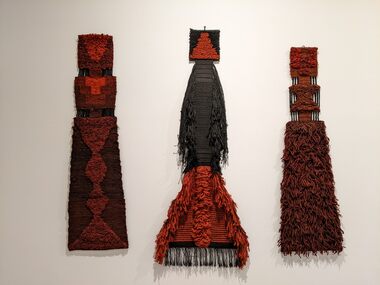
Ann Greenwood, Untitled (wall hanging)
... textile artist renowned for her innovative use of weaving, felt, and natural fibres. Based in Gippsland, Victoria, she has developed a distinctive practice that merges traditional textile techniques with contemporary art. Greenwood’s work often incorporates hand-spun wool, plant dyes...textile artist renowned for her innovative use of weaving, felt, and natural fibres. Based in Gippsland, Victoria, she has developed a distinctive practice that merges traditional textile techniques with contemporary art. Greenwood’s work often incorporates hand-spun wool, plant dyes ...Ann Greenwood is an Australian textile artist renowned for her innovative use of weaving, felt, and natural fibres. Based in Gippsland, Victoria, she has developed a distinctive practice that merges traditional textile techniques with contemporary art. Greenwood’s work often incorporates hand-spun wool, plant dyes, and materials sourced from her immediate environment, reflecting her deep connection to nature and sustainability. Over five decades, her practice has encompassed sculpture, installation, and performance, expanding the boundaries of textile art. In Three Mamacunas, Greenwood draws on the legacy of the Inca Empire, where Mamacunas were women who served in temples as priestesses, weavers, and caretakers of sacred rituals. Their roles embodied creativity, devotion, and cultural continuity. Today, the term is reinterpreted in contemporary art and writing as a symbol of women’s strength, wisdom, and custodianship of tradition, linking ancestral practices with present-day explorations of identity and resilience. -
 Ararat Gallery TAMA
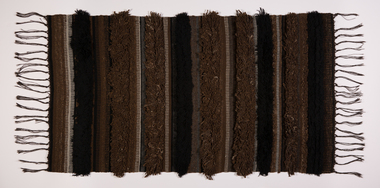
Ann Greenwood, Rug, 1977-8
... textile artist renowned for her innovative use of weaving, felt, and natural fibres. Based in Gippsland, Victoria, she has developed a distinctive practice that merges traditional textile techniques with contemporary art. Greenwood’s work often incorporates hand-spun wool, plant dyes...textile artist renowned for her innovative use of weaving, felt, and natural fibres. Based in Gippsland, Victoria, she has developed a distinctive practice that merges traditional textile techniques with contemporary art. Greenwood’s work often incorporates hand-spun wool, plant dyes ...Ann Greenwood is an Australian textile artist renowned for her innovative use of weaving, felt, and natural fibres. Based in Gippsland, Victoria, she has developed a distinctive practice that merges traditional textile techniques with contemporary art. Greenwood’s work often incorporates hand-spun wool, plant dyes, and materials sourced from her immediate environment, reflecting her deep connection to nature and sustainability. Over five decades, her practice has encompassed sculpture, installation, and performance, expanding the boundaries of textile art. In Three Mamacunas, Greenwood draws on the legacy of the Inca Empire, where Mamacunas were women who served in temples as priestesses, weavers, and caretakers of sacred rituals. Their roles embodied creativity, devotion, and cultural continuity. Today, the term is reinterpreted in contemporary art and writing as a symbol of women’s strength, wisdom, and custodianship of tradition, linking ancestral practices with present-day explorations of identity and resilience. -
 Ararat Gallery TAMA
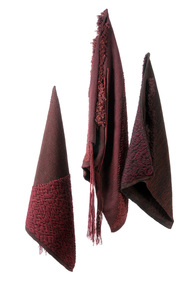
Three Mamacunas, 1982
... textile artist renowned for her innovative use of weaving, felt, and natural fibres. Based in Gippsland, Victoria, she has developed a distinctive practice that merges traditional textile techniques with contemporary art. Greenwood’s work often incorporates hand-spun wool, plant dyes...textile artist renowned for her innovative use of weaving, felt, and natural fibres. Based in Gippsland, Victoria, she has developed a distinctive practice that merges traditional textile techniques with contemporary art. Greenwood’s work often incorporates hand-spun wool, plant dyes ...Ann Greenwood is an Australian textile artist renowned for her innovative use of weaving, felt, and natural fibres. Based in Gippsland, Victoria, she has developed a distinctive practice that merges traditional textile techniques with contemporary art. Greenwood’s work often incorporates hand-spun wool, plant dyes, and materials sourced from her immediate environment, reflecting her deep connection to nature and sustainability. Over five decades, her practice has encompassed sculpture, installation, and performance, expanding the boundaries of textile art. In Three Mamacunas, Greenwood draws on the legacy of the Inca Empire, where Mamacunas were women who served in temples as priestesses, weavers, and caretakers of sacred rituals. Their roles embodied creativity, devotion, and cultural continuity. Today, the term is reinterpreted in contemporary art and writing as a symbol of women’s strength, wisdom, and custodianship of tradition, linking ancestral practices with present-day explorations of identity and resilience.
