
Showing 5 items matching "the development of war planes"
-
 Moorabbin Air Museum
Book - Aircraft history, An Illustrated History of Aircraft
... ...The development of war planes...Aircraft history The concept of flight World War 1 The development of war planes Engines Between the wars World War 2 The jet engine The V bomber era Aviation today The helicopter The helicopter in military service History of aircraft from pre-Wright brothers to 1979. ...History of aircraft from pre-Wright brothers to 1979.non-fictionHistory of aircraft from pre-Wright brothers to 1979.the concept of flight, world war 1, the development of war planes, engines, between the wars, world war 2, the jet engine, the v bomber era, aviation today, the helicopter, the helicopter in military service -
 Flagstaff Hill Maritime Museum and Village
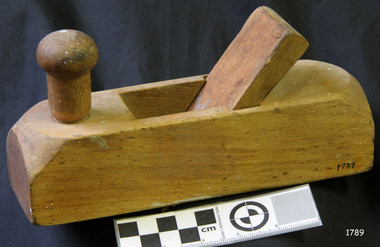
Tool - Smoothing Plane, Johann Heinrich August Bleckmann, 1870 to 1920
... The item is giving a snapshot of early colonial and European trades persons tools and gives an interesting insight into the development and progression of European tool and steel development and innervation prior to and just after the First World War. flagstaff hill warrnambool shipwrecked-coast flagstaff-hill flagstaff-hill-maritime-museum maritime-museum shipwreck-coast flagstaff-hill-maritime-village plane Marked "Bleckmann (symbol) Safingen" "GN". ...Johann Elias Bleckmann (1784-1856) founded a steel goods shop in Ronsdorf near Düsseldorf Germany. After completing a business education in his father's business, his son Johann Heinrich August Bleckmann (1826-1891) gained further experience through travel in North and South America. When his father died, he took over the steel goods store and moved it to Solingen. He bought a hammer mill in Mürzzuschlag Styria (Austria) in 1862 and converted it into a modern crucible casting steel smelter. His "Phoenix Steel", which he produced himself, achieved worldwide renown. He then went on to establish a file and tool factory and later founded a steel and plate rolling mill. Apart from cutlery blades, the company's self-produced steel was also processed into tools, scythes, rifle parts, etc. His sons Eugen and Walter continued after his death in 1891 at the Phoenix steelworks. However, by the end of the First World War, the two brothers fell into economic difficulties as a result of eliminating a large part of their foreign trade. In 1921, the company was converted into a public limited company and merged three years later with the company Schoeller & Stahlwerke. Made by Johann Heinrich August Bleckmann a significant Austrian manufacture of cutlery and tools in a recognized area of Germany famous for the production of steel items. The item is giving a snapshot of early colonial and European trades persons tools and gives an interesting insight into the development and progression of European tool and steel development and innervation prior to and just after the First World War.Plane Smoothing type with flat base. Has wooden wedge and iron missing. Knob handle is set on top and at the front. Iron 1 3/5 inches wide. Marked "Bleckmann (symbol) Safingen" "GN".flagstaff hill, warrnambool, shipwrecked-coast, flagstaff-hill, flagstaff-hill-maritime-museum, maritime-museum, shipwreck-coast, flagstaff-hill-maritime-village, plane -
 Bendigo Historical Society Inc.
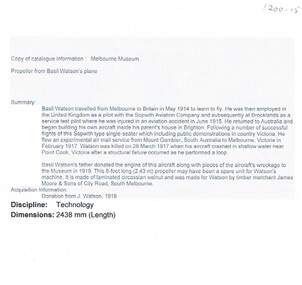
Document - BASIL WATSON COLLECTION: MAN AND AERIAL MACHINES NEWSLETTER ISSUE NO. 40 1994, 1994
... plane from Shorts Aircraft since 1900 by C.H. Bames. An article on Basil George Watson also 'The War Aloft, Experiences of Australian Aviator, the latest machines'. 'In his Homebuilt Biplane Aviator Loops and Dive's. 'Bendigo Aviator flies from Melbourne' 'Flight from Bendigo', 'The Aeroplane in War, some recent developments...plane from Shorts Aircraft since 1900 by C.H. Bames. An article on Basil George Watson also 'The War Aloft, Experiences of Australian Aviator, the latest machines'. 'In his Homebuilt Biplane Aviator Loops and Dive's. 'Bendigo Aviator flies from Melbourne' 'Flight from Bendigo', 'The Aeroplane in War, some recent developments ...On the front page of Man and Aerial Machines a publication for those with a serious interest in the Aeronautical history of Australia. Issue No. 40 ISSN 1037-5120 January to February 1994 is a grey scale of Basil Watson and his Aircraft along with another man standing behind the Aircraft, both men are wearing hats. The biplane has a single propella and along the side of the plane is a ring of three different colours. Underneath is written 'Basil Waton's aircraft at an unknown location and R.A.A.F Museum via John Hopton. The newsletter covers a drawing of Short S.B.5 with 60deg wing sweep and a low set tail plane from Shorts Aircraft since 1900 by C.H. Bames. An article on Basil George Watson also 'The War Aloft, Experiences of Australian Aviator, the latest machines'. 'In his Homebuilt Biplane Aviator Loops and Dive's. 'Bendigo Aviator flies from Melbourne' 'Flight from Bendigo', 'The Aeroplane in War, some recent developments'. 'Castlemaine New Years Day Carnival' An advertisement for Basil Watson to give a demonstration at the Bendigo Racecourse Saturday 2nd December (weather permitting)person, individual, basil watson -
 National Vietnam Veterans Museum (NVVM)
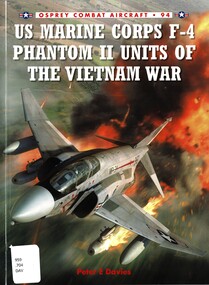
Book, Davies, Peter E, US Marine Corps F-4 Phantom 11 Units Of The Vietnam War, 2012
... War 1961-1975. Phantom II (Jet fighter plane) Vietnam War 1961-1975 -- Aerial operations American Comprehensive histories of fighting aircraft and their crews, highlighting their vital role in the development of warfare in the 20th and 21st centuries US Marine Corps F-4 Phantom 11 Units Of The Vietnam War. ...Comprehensive histories of fighting aircraft and their crews, highlighting their vital role in the development of warfare in the 20th and 21st centuriesComprehensive histories of fighting aircraft and their crews, highlighting their vital role in the development of warfare in the 20th and 21st centuriesunited states. marine corps -- aviation -- history -- 20th century, united states. marine corps -- history -- vietnam war, 1961-1975., phantom ii (jet fighter plane), vietnam war, 1961-1975 -- aerial operations, american -
 Wodonga & District Historical Society Inc
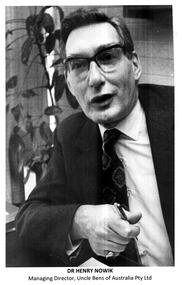
Mixed media - Dr Henry Nowik and Uncle Bens at Wodonga
... development of industry in Wodonga, through his management and leadership of Uncle Bens Wodonga from 1965 until 1979. Born in Poznan, Poland in 1917, Henry was studying medicine in Paris when World War II broke out and he enlisted in the Royal Air Force, serving with distinction as a Bomber Pilot. He was imprisoned in Russia when his plane...development of industry in Wodonga, through his management and leadership of Uncle Bens Wodonga from 1965 until 1979. Born in Poznan, Poland in 1917, Henry was studying medicine in Paris when World War II broke out and he enlisted in the Royal Air Force, serving with distinction as a Bomber Pilot. He was imprisoned in Russia when his plane ...Dr Henry Nowik played a critical role in the development of industry in Wodonga, through his management and leadership of Uncle Bens Wodonga from 1965 until 1979. Born in Poznan, Poland in 1917, Henry was studying medicine in Paris when World War II broke out and he enlisted in the Royal Air Force, serving with distinction as a Bomber Pilot. He was imprisoned in Russia when his plane ditched, escaped through Kazakhstan and was eventually evacuated to London where he was appointed RAF Aide-de-Camp to General Charles de Gaulle. He was later awarded the French Croix de Guerre. After the war Dr Nowik received a PhD in Political Science and Law from American Beirut University before moving to London to teach at the London School of Economics. He then moved into industry occupying a number of senior positions in marketing and market research. In 1964, Dr Nowik, then Market Research Manager for Pedigree Petfoods, the British arm of Mars Inc., came to Australia to research the prospects for establishing a petfood business. Dr Nowik was a passionate believer in the need for decentralisation of Australian industry. In 1965 Uncle Bens of Australia began building their first Australian factory in Wodonga, Victoria, from humble beginnings in a small house in Hovell Street. It became fully operational in 1967. Dr Nowik became the Marketing and Sales Director and in 1970 the Managing Director. Dr Nowik's work as a member of the Albury-Wodonga Consultative Committee was recognized in 1975 with the Order of the British Empire and in 1977 he was appointed Chairman of the Commonwealth Government's Decentralisation Advisory Board. He participated in a number of trade missions to Malaysia, China and Japan and was a Member of the Executive Committee of the Trade Development Council and the Victorian Promotion Committee. These contributions were recognised in 1982 when he was made an Officer of the Order of Australia. In 1979, Dr Nowik left Wodonga and moved to the United States to become Vice-President, Marketing for Mars, becoming Global Product Group President in 1980. Following his retirement in 1985 he continued to act as Senior Advisor to a number of Mars' businesses. Albury-Wodonga retained a special place in Dr Nowik's heart and he kept a close interest in Charles Sturt University, sharing his time, experience and expertise with staff and students. The University made him an honorary Doctor of Letters in 1993 when the Henry Nowik Lecture Theatre officially opened at the University's Albury campus. Later the City of Wodonga named a park in his honour. Dr Nowik and his wife returned to Australia in 2004, first living in Brisbane then moving to Maleny in Queensland. Henry Nowik died on 12th March 2015 aged 98. These items are significant because they demonstrate the contribution made to the Wodonga community and the Australian economy by Dr Henry Nowik AO OBE.A collection of items briefly documenting the contribution of Dr Henry Nowik to Wodonga, Victoria. Included are photos of Dr Nowik, newspaper items, a photo of the first office of Uncle Bens in Wodonga and a farewell card from Dr Nowik.dr henry nowik, uncle bens wodonga
