
Showing 44 items matching "the first jets"
-
 Moorabbin Air Museum
Book - Aviation history, Jet Planes Work Like This
... ...How a jet engine works...The first...How a jet engine works The first jets Putting back the propeller The jet family New shapes in the sky The future for jets Into space Overview of how jet aircraft work for young readers, circa 1958 Jet Planes Work Like This Book Aviation history ...Overview of how jet aircraft work for young readers, circa 1958non-fictionOverview of how jet aircraft work for young readers, circa 1958the jet age arrives, who invented the jet engine ?, how a jet engine works, the first jets, putting back the propeller, the jet family, new shapes in the sky, the future for jets, into space -
 National Vietnam Veterans Museum (NVVM)
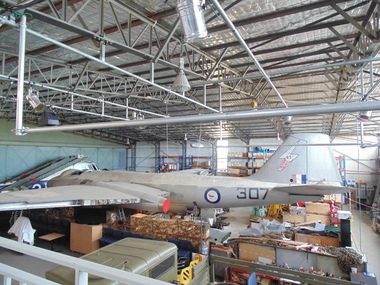
Vehicle - Canberra Bomber A84-307, 1951
... It was Australia's first jet bomber. B1 bomber version of the English Electric Canberra. ...It was Australia's first jet bomber. B1 bomber version of the English Electric Canberra. ...The bomber being restored is the oldest surviving complete Canberra. This plane flew continually from 1951 —1973 and was used in both Malaya and Vietnam. It is one of three bombers bought from England before production began at the Government Aircraft Factory at Fisherman's Bend. The plane has the oldest known Rolls Royce Avon engine, being serial number 2.The Canberra is a first-generation jet-powered light bomber which could fly at a higher altitude than previous bombers. It was Australia's first jet bomber. B1 bomber version of the English Electric Canberra. It is being restored by the NVVM.Serial no: A84-307.canberra bomber, air force, bomber, plane -
Moorabbin Air Museum
Machine - GAF Canberra Mk 20 A84-222 (Cockpit)
... Description: The English Electric Canberra was Britain’s first jet bomber and first flew in 1949 and served with many Commonwealth countries. ...Description: The English Electric Canberra was Britain’s first jet bomber and first flew in 1949 and served with many Commonwealth countries. ...Historical Details: . Description: The English Electric Canberra was Britain’s first jet bomber and first flew in 1949 and served with many Commonwealth countries. It was also produced in the USA as the Martin B-57 attesting to its world wide supremacy at the time. The Canberra carried. Level of Importance: Regional -
Dandenong/Cranbourne RSL Sub Branch
Framed Print- Korean War ,twin engined single seat Gloster Meteor Fighters were the first RAAF jet aircraft to go into action in 1951 during the Korean War of 1950-53
... Framed Print- Korean War ,twin engined single seat Gloster Meteor Fighters were the first RAAF jet aircraft to go into action in 1951 during the Korean War of 1950-53...Framed Print- Korean War ,twin engined single seat Gloster Meteor Fighters were the first RAAF jet aircraft to go into action in 1951 during the Korean War of 1950-53...Framed Print- Korean War ,twin engined single seat Gloster Meteor Fighters were the first RAAF jet aircraft to go into action in 1951 during the Korean War of 1950-53 Framed Print- Korean War ,twin engined single seat Gloster Meteor Fighters were the first RAAF jet aircraft to go into action in 1951 during the Korean War of 1950-53 ...Framed Print- Korean War ,twin engined single seat Gloster Meteor Fighters were the first RAAF jet aircraft to go into action in 1951 during the Korean War of 1950-53 -
 National Vietnam Veterans Museum (NVVM)
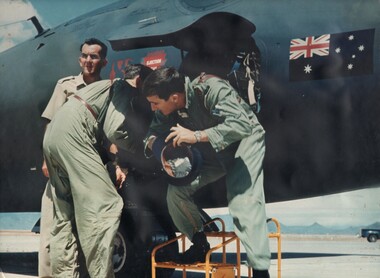
Photograph, Gibbons, Denis, 1st Canberra Bomber Arrives
... A coloured photograph of the crew of the first Canberra Jet bomber of the RAAF's No. 2 Sqn to land in Vietnam alight from their aircraft upon arrival at the Phan Rang Airbase to commence their tour of duty on active service in the Vietnam conflict....Photograph Canberra bomber 2 Sqn RAAF Phan Rang Airbase Gibbons Collection Catalogue Denis Gibbons Royal Australian Air Force A coloured photograph of the crew of the first Canberra Jet bomber of the RAAF's No. 2 Sqn to land in Vietnam alight from their aircraft upon arrival at the Phan Rang Airbase to commence their tour of duty on active service in the Vietnam conflict. 1st Canberra Bomber Arrives Photograph Gibbons, Denis ...Denis Gibbons (1937 – 2011) Trained with the Australian Army, before travelling to Vietnam in January 1966, Denis stayed with the 1st Australian Task Force in Nui Dat working as a photographer. For almost five years Gibbons toured with nine Australian infantry battalions, posting compelling war images from within many combat zones before being flown out in late November 1970 after sustaining injuries. The images held within the National Vietnam Veterans Museum make up the Gibbons Collection.A coloured photograph of the crew of the first Canberra Jet bomber of the RAAF's No. 2 Sqn to land in Vietnam alight from their aircraft upon arrival at the Phan Rang Airbase to commence their tour of duty on active service in the Vietnam conflict.photograph, canberra bomber, 2 sqn, raaf, phan rang airbase, gibbons collection catalogue, denis gibbons, royal australian air force -
Moorabbin Air Museum
Machine - Junkers Jumo 109-004 1950 Lbs Of Thrust Turbo Jet
... Description: The Junkers Jumo was one of the first successful jet engines and was developed in Germany during the early days of World War 2.It powered the German Messerschmitt Me 262 jet fighter which appeared late in the war. ...Description: The Junkers Jumo was one of the first successful jet engines and was developed in Germany during the early days of World War 2.It powered the German Messerschmitt Me 262 jet fighter which appeared late in the war. ...Historical Details: . Description: The Junkers Jumo was one of the first successful jet engines and was developed in Germany during the early days of World War 2.It powered the German Messerschmitt Me 262 jet fighter which appeared late in the war. The Museum’s example was one of two b. Level of Importance: States/n 62920 -
 Orbost & District Historical Society
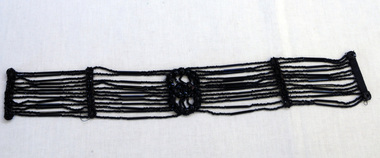
choker
... When Queen Victoria declared that her court wear mourning attire for the three years after the death of Albert,and that only jet jewelry was to be worn at court for the first year jet jewellery was widely worn. ...When Queen Victoria declared that her court wear mourning attire for the three years after the death of Albert,and that only jet jewelry was to be worn at court for the first year jet jewellery was widely worn. ...Jet came into common usage in the 19th century when a small town in England, Whitby, began mining jet to make mourning jewellery. When Queen Victoria declared that her court wear mourning attire for the three years after the death of Albert,and that only jet jewelry was to be worn at court for the first year jet jewellery was widely worn. In the Victorian era, there was a wide variety of materials used to mimic Whitby Jet for mourning jewelry. This item is an example of typical mourning style jewelry which became popular as a universal form of adornmentA black jet bead choker with fasteners at the ends.jewellery choker jet -
Moorabbin Air Museum
Machine - GAF (Dassault) Mirage IIIO A3-45
... Description: The Mirage was Australia’s first truly supersonic jet fighter, entering service in 1965. ...Description: The Mirage was Australia’s first truly supersonic jet fighter, entering service in 1965. ...Historical Details: . Description: The Mirage was Australia’s first truly supersonic jet fighter, entering service in 1965. Designed by Avions Marcel Dassault, 116 examples were built under licence by the Government Aircraft Factory as the primary contractor. The wings, fin, tail cone and. Level of Importance: State -
National Wool Museum
Book, Knitting, Patons Knitting Book no. 583
... As far as is presently known, Patons 'Jet' wool first appeared in the mid 1950s - the name probably represented modernity and was a reflection of the public interest in rockets / jets / supersonic aircraft / space travel which occurred in the post World War II era and which culminated in Sputnik and the formation of NASA in 1958....As far as is presently known, Patons 'Jet' wool first appeared in the mid 1950s - the name probably represented modernity and was a reflection of the public interest in rockets / jets / supersonic aircraft / space travel which occurred in the post World War II era and which culminated in Sputnik and the formation of NASA in 1958. ...This book was owned by the late Dr Elizabeth Kerr and was donated to the Museum by the executor of her estate, Margaret Cameron. It was produced by Patons and Baldwins and contains knitting patterns for mens, womens and childrens garments. This book would appear to have been produced at the time of the Sputnik launch in 1957 - unusually the garments have been given names like 'Supersonic', 'Satellite', 'Thor', 'Nikes', 'Rocket', 'Vanguard', 'Canaveral', and 'Electra'. Prior to the launch of Sputnik by the Soviets on Oct. 4, 1957, there was little awareness of satellites; also, the Vanguard and the Thor were American rockets launched from Cape Canaveral during the same era. As far as is presently known, Patons 'Jet' wool first appeared in the mid 1950s - the name probably represented modernity and was a reflection of the public interest in rockets / jets / supersonic aircraft / space travel which occurred in the post World War II era and which culminated in Sputnik and the formation of NASA in 1958.No. 583 Featuring PATONS JET TRIPLEKNIT / Patons / KNITTING BOOK 583 / WITH T.V. DESIGNS / 2'-knitting handicrafts - history, patons and baldwins (australia) ltd, knitting, handicrafts - history -
 Queenscliffe Maritime Museum
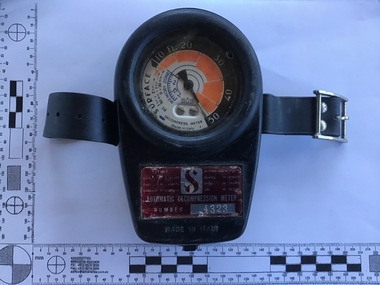
Equipment - The ScubaPro Automatic Decompression Meter 1966 in original box
... First available in ScubaPro’s catalogue in 1966, the ScubaPro Automatic Decompression Meter was a break through in diving technology and a forerunner to the modern dive computer. The meter attempted to calculate nitrogen absorption based on dive time and depth. This was done mechanically instead of electronically, and without the benefit of any actual computing. The Automatic Decompression Meter was introduced just a year after ScubaPro’s most successful product – the ScubaPro Jet...First available in ScubaPro’s catalogue in 1966, the ScubaPro Automatic Decompression Meter was a break through in diving technology and a forerunner to the modern dive computer. The meter attempted to calculate nitrogen absorption based on dive time and depth. This was done mechanically instead of electronically, and without the benefit of any actual computing. The Automatic Decompression Meter was introduced just a year after ScubaPro’s most successful product – the ScubaPro Jet ...First available in ScubaPro’s catalogue in 1966, the ScubaPro Automatic Decompression Meter was a break through in diving technology and a forerunner to the modern dive computer. The meter attempted to calculate nitrogen absorption based on dive time and depth. This was done mechanically instead of electronically, and without the benefit of any actual computing. The Automatic Decompression Meter was introduced just a year after ScubaPro’s most successful product – the ScubaPro Jet Fins – which still remain popular today. Used by divers since 1966The ScubaPro Automatic Decompression Meter 1966 in original box Automatic Decompression Meter Number 4323 made in Italydiving, decompression meter, scubapro -
 Warrnambool and District Historical Society Inc.
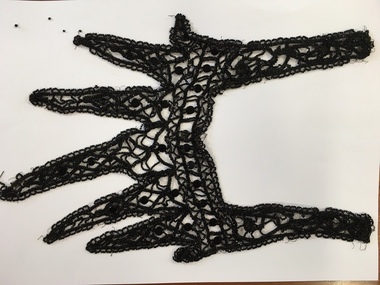
Artefact, Textile: Beaded mourning collar, Circa late 19th century
... first period to items of decoration or adornment such as this collar with other items such as brooches, hair and dress adornments which were used at the later stages of mourning. This second stage often went for extended periods especially for widows who often remained in mourning until or if they remarried. Other colours such as dark greys and purples were also acceptable as mourning clothes. Such was the practice in England that jet...first period to items of decoration or adornment such as this collar with other items such as brooches, hair and dress adornments which were used at the later stages of mourning. This second stage often went for extended periods especially for widows who often remained in mourning until or if they remarried. Other colours such as dark greys and purples were also acceptable as mourning clothes. Such was the practice in England that jet ...Black has for centuries been associated with mourning but it rose to new heights during the Victorian times with Queen Victoria wearing black from the time of her husband’s death in 1861 until her death in 1901. There were different stages of mourning from the severe plain black clothing of the first period to items of decoration or adornment such as this collar with other items such as brooches, hair and dress adornments which were used at the later stages of mourning. This second stage often went for extended periods especially for widows who often remained in mourning until or if they remarried. Other colours such as dark greys and purples were also acceptable as mourning clothes. Such was the practice in England that jet from Whitby was used extensively by the more well to do. Later on black glass was used which was cheaper.An item which relates to customs which were prevalent in the late 19th and early 20th centuryBlack beaded collar with seven lengths of beads coming from a section which joins at the back with a hook and eye. The seed beads are stitched to a dark cotton backing. The neckline is square. It also has a number of larger flatter beads across the yoke and down the centre of each of the seven lengths of beads.warrnambool, mourning collar, black beaded mourning collar, beaded mourning collar, -
 Monbulk RSL Sub Branch
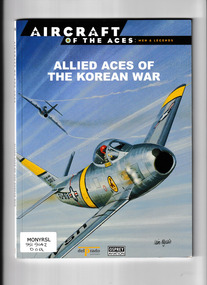
Book, Osprey Publishing, Allied aces of the Korean war, 2001
... Korean war 1950-1953 - History Korean war - Aerial combat The first virtually all-jet war, the conflict in Korea saw F-86 Sabres of the USAF take on MiG-15s of the North Korean and Chinese air forces. ...The first virtually all-jet war, the conflict in Korea saw F-86 Sabres of the USAF take on MiG-15s of the North Korean and Chinese air forces. Although the Allied pilots were initially taken aback by the ability of the communist fighter in combat, sound training and skilful leadership soon enabled Sabre pilots to dominate the dogfights over the Yalu River. In all 39 F-86 pilots achieved ace status, and a number of these are profiled in this volume, as are notable pilots from the US Navy, Marine Corps and Royal Navy and, for the first time, the handful of MiG-15 aces.Ill, p.64.non-fictionThe first virtually all-jet war, the conflict in Korea saw F-86 Sabres of the USAF take on MiG-15s of the North Korean and Chinese air forces. Although the Allied pilots were initially taken aback by the ability of the communist fighter in combat, sound training and skilful leadership soon enabled Sabre pilots to dominate the dogfights over the Yalu River. In all 39 F-86 pilots achieved ace status, and a number of these are profiled in this volume, as are notable pilots from the US Navy, Marine Corps and Royal Navy and, for the first time, the handful of MiG-15 aces.korean war 1950-1953 - history, korean war - aerial combat -
 Monbulk RSL Sub Branch
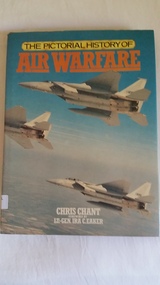
Book, Octopus books, The pictorial history of air warfare, 1979
... Air warfare - history Military aircraft - History This book traces the development of air warfare from from the first flight in a balloon in 1873 to the latest combat jets Index, ill, p.192. ...This book traces the development of air warfare from from the first flight in a balloon in 1873 to the latest combat jetsIndex, ill, p.192.non-fictionThis book traces the development of air warfare from from the first flight in a balloon in 1873 to the latest combat jetsair warfare - history, military aircraft - history -
 Monbulk RSL Sub Branch
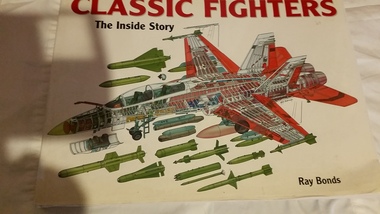
Book, Chartwell Books, Classic fighters : the inside story, 2005
... In between are featured a host of combat-proven fighters, many of which have recorded a plethora of 'firsts' - first jet warplane, first supersonic fighter to enter service, first Mach 2 and even Mach 3 interceptors, first tail-less delta machine, first sweeping-wing machine, first missile-armed fighter, and many more. ...'Packed with fascinating facts, this volume contains incredibly detailed cutaway drawings of arguably the greatest fighter aircraft ever flown. Each drawing examines what's 'under the skin', clearly showing 'the inside story' - airframe structure, cockpit components, engines, fuel tanks, avionics, machine guns and cannon, missiles and bombs - revealing how the fighters were built, and the weapons they have carried into combat. Each significant component is given a number and is identified in an accompanying key. Moreover, together with stunning photographs, as well as detailed specifications, the absorbing in-depth development histories provide avid aviation enthusiasts all the information they could wish for about the most exciting warplanes spanning almost a hundred years. The aircraft themselves vary tremendously, from simple, wooden-framed, fabric-covered machines with open cockpits, often firing machine guns through whirring, propellers, to super-fast, highly maneuverable, sophisticated and stealthy fighters armed to the teeth with multi-barrel cannons and missiles that can destroy enemy aircraft from beyond visual range. In between are featured a host of combat-proven fighters, many of which have recorded a plethora of 'firsts' - first jet warplane, first supersonic fighter to enter service, first Mach 2 and even Mach 3 interceptors, first tail-less delta machine, first sweeping-wing machine, first missile-armed fighter, and many more. It is certainly an extraordinarily wide-ranging subject presented in such a fantastically individual manner that it is difficult to imagine a more striking volume in aviation publishing.Ill, p,253.non-fiction'Packed with fascinating facts, this volume contains incredibly detailed cutaway drawings of arguably the greatest fighter aircraft ever flown. Each drawing examines what's 'under the skin', clearly showing 'the inside story' - airframe structure, cockpit components, engines, fuel tanks, avionics, machine guns and cannon, missiles and bombs - revealing how the fighters were built, and the weapons they have carried into combat. Each significant component is given a number and is identified in an accompanying key. Moreover, together with stunning photographs, as well as detailed specifications, the absorbing in-depth development histories provide avid aviation enthusiasts all the information they could wish for about the most exciting warplanes spanning almost a hundred years. The aircraft themselves vary tremendously, from simple, wooden-framed, fabric-covered machines with open cockpits, often firing machine guns through whirring, propellers, to super-fast, highly maneuverable, sophisticated and stealthy fighters armed to the teeth with multi-barrel cannons and missiles that can destroy enemy aircraft from beyond visual range. In between are featured a host of combat-proven fighters, many of which have recorded a plethora of 'firsts' - first jet warplane, first supersonic fighter to enter service, first Mach 2 and even Mach 3 interceptors, first tail-less delta machine, first sweeping-wing machine, first missile-armed fighter, and many more. It is certainly an extraordinarily wide-ranging subject presented in such a fantastically individual manner that it is difficult to imagine a more striking volume in aviation publishing.fighter planes - history, fighter planes -
 Bendigo Historical Society Inc.
Document - CZECH PHILHARMONIC ORCHESTRA
... jet line. Cyclax, make-up and beauty preparations. Grutzner & Cartly Pty. Ltd. Furs. BNS Nylon - British Nylon Spinners (Australia) Pty. Ltd. Carinia Records - Czech Philharmonic Orchestra with World Famous Soloists now for the first time in Australia on High Fidelity Recordings. ...jet line. Cyclax, make-up and beauty preparations. Grutzner & Cartly Pty. Ltd. Furs. BNS Nylon - British Nylon Spinners (Australia) Pty. Ltd. Carinia Records - Czech Philharmonic Orchestra with World Famous Soloists now for the first time in Australia on High Fidelity Recordings. ...Czech Philharmonic Orchestra, Melbourne Town Hall. Australian Tour 1959. The first overseas symphony orchestra to visit this country. The Czech Philharmonic is one of the world's leading orchestras. It has s 60-year-old history which is backed by the rich musical traditions of its country. The Australian Broadcasting Commission in conjunction with the Musica Viva Society of Australia proudly presents the Czech Philharmonic Orchestra. Conductor: Ladislav Slovak Concertmaster: Bretislav Ludvik. Saturday, October 3, Monday, October 5. Czech Philharmonic Orchestra, article giving history of Orchestra from 1896 in Prague, photo of orchestra included. Ladislav Slovak, small article describing his work history, includes photograph. Programme. Analytical Notes. Musica Viva Society of Australia. Registered Office: 26 Paling's Building, Ash St., Sydney. President: Hon. Mr. Justice B P Macfarlan, Hon. Secretary: C J Berg, Hon. Treasurer: J B Elder, Manager: Regina Ridge. Victoria Branch: Registered Office: 5th Floor, 300 Lt. Collins St., Melbourne, C.1. President: F G Nicholls, Hon. Secretary: I G Spira, Hon. Treasurer: A Teague. Australian Broadcasting Commission. Chairman: Sir Richard Boyer, K.B.E., M.A. Vice-Chairman: E R Dawes, ESQ., C.M.G. Sir John Medley, KT., D.C.L., M.A. The Hon. Dame Enid Lyons, G.B.E. Mrs. G L Byth, O.B.E., B.A. A G Lowndes, M.Sc. H B Halvorsen, F.C.A., F.C.I.S. General Manager: Charles Moses, C.B.E. Manager for Victoria: Ewart Chapple. Concert Manager for Victoria: Ray Humphrey. Advertisements: AWA - Amalgamated Wireless (Australasia) Limited. Stereophonic Radiolagram. Philips Electrical Industries Pty Ltd. Fontana - Karel Ancerl recordings. The Ace of Clubs, 12'' LP Beethoven etc. Alfred Nott Pty. Ltd. H S Harvey, E Goetz, Opticians. Georges, shoes. Ernest Hiller, tailored suits. Philips Magnalux Television. TAA the nation's jet line. Cyclax, make-up and beauty preparations. Grutzner & Cartly Pty. Ltd. Furs. BNS Nylon - British Nylon Spinners (Australia) Pty. Ltd. Carinia Records - Czech Philharmonic Orchestra with World Famous Soloists now for the first time in Australia on High Fidelity Recordings. Suttons Pty. Ltd. 'The House of Music', you are cordially invited to inspect the fine Petrof pianos. RCA Records - recordings of Jan Peerce. Scala Record Import Co. Czech recordings. Boosey & Hawks (Australia) Pty. Ltd., Music and Books on Music. GMH - General Motors - Holden's Limited. Country Club Tailored by Buckwalter - Quiet Tone Sports Shirts. Allan's, Fine Pianos.entertainment, music, classical -
 Royal Australian and New Zealand College of Obstetricians & Gynaecologists (RANZCOG)
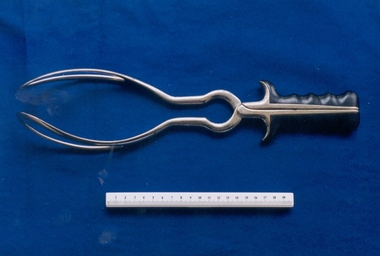
Barnes-type obstetrical forceps with Simpson style handles, c. 1849-1962, J. Gray & Son
... first, followed by the right blade – the baby is then pulled down until the occiput is under the symphysis, then pulled around. This particular set of Barnes forceps is unusual because it has handles/grips associated with Simpson type obstetrical forceps, making it a combination of styles. These forceps are similar in appearance to a style of 19th century forceps known as Hensoldt's forceps, made by Jetter...first, followed by the right blade – the baby is then pulled down until the occiput is under the symphysis, then pulled around. This particular set of Barnes forceps is unusual because it has handles/grips associated with Simpson type obstetrical forceps, making it a combination of styles. These forceps are similar in appearance to a style of 19th century forceps known as Hensoldt's forceps, made by Jetter ...Neville Barnes obstetric forceps have a cephalic and pelvic curve and are used for delivery of babies presenting as occipitoanterior. The left blade is put on first, followed by the right blade – the baby is then pulled down until the occiput is under the symphysis, then pulled around. This particular set of Barnes forceps is unusual because it has handles/grips associated with Simpson type obstetrical forceps, making it a combination of styles. These forceps are similar in appearance to a style of 19th century forceps known as Hensoldt's forceps, made by Jetter and Scheerer, c. 1899. These are pictured as Fig. 771 in the Sir Kenardatth Das catalogue (see references). J. Gray & Son, Sheffield, were in operation from 1849 to 1962, so these forceps date from this time period.Set of obstetric forceps. Consists of a set of stainless steel blades, with black bakelite hand grip attachment. Forceps are engraved with the text 'J.GREY & SON" and "SHEFFIELD". The number '4' is engraved on the inner aspect of the blade, at the join point.'J.GREY & SON/SHEFFIELD'obstetric delivery -
 Eltham District Historical Society Inc
Film - Video (VHS), Diamond Creek Fire Brigade, c.1955-1987
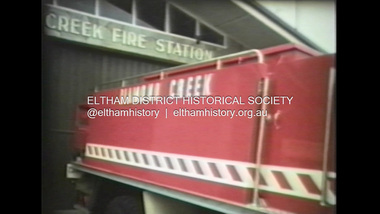
... First, the short lengths of suction hose are coupled, a strainer fitted to ensure debris does not foul the pump. Gauges must be constantly monitored to ensure manageable water pressures are maintained. Pressures are normally controlled to allow two fire fighters to work at each nozzle outlet. Two nozzles are tested, one adjustable jet...First, the short lengths of suction hose are coupled, a strainer fitted to ensure debris does not foul the pump. Gauges must be constantly monitored to ensure manageable water pressures are maintained. Pressures are normally controlled to allow two fire fighters to work at each nozzle outlet. Two nozzles are tested, one adjustable jet ...Combination of three movie films. Movie One (1950s): 00:00 – 13:14 Black and white footage of Diamond Creek firemen practising in Diamond Street in the 1950s for forthcoming demonstrations of abilities. Mentions of Gordon Brandy and Joe Hislop Running out hoses from old hose reels along Diamond Street, Diamond Creek Displays from various brigades running out and connecting hoses. Also scenes from the 1950s of Diamond Creek Fire Brigade competing in various locations around Victoria and Tasmania. Mentions of Brigade members Dave Kidd, Bruce Hackett, Ron Kirkbride, Jack Marks, Graham Upton who are prominent in these events. Members of Kyneton Fire Brigade also present. Members competing in running out hose reels, connecting hoses togethers and to hydrants then climbing towers to direct water from hose or at a target hanging above the road. Diamond Creek members identified wearing a diamond on their chest and back. Includes scenes of Scottish pipe bands at the events and significant crowds of spectators. Footage of Mel Stone and Beryl Marks, Stan Redpath and Ron Kirkbride, then Ron Kirkbride and Eric Holt viewing flower displays. Film changes to colour at Diamond Creek oval for practice with fire engine entering oval. Members depicted include Bill May, Jack Sinclair, Jim Cox, Bob Beale, Dave Kidd, Bruce Hackett and Captain Clarrie Stone. Reverts to black and white in the 1950s where the Brigade joins forces with the Diamond Valley Community Hospital for a Gala Day on the Diamond Creek Oval. Changes to colour again, possibly same event and scenes of children on bikes and scooters or with prams and carts racing around the oval. Mention of young lad Brian Laurie who has his own fire truck. Dart throwing, pony rides. Scenes with Dr Don Cordner, Gus Lyons, Vic Cohn (?) and spinning wheel and Diamond Creek School children entertain a large crowd with Maypole dancing. Movie Two (1950s): 13:25 – 19:00 This black and white film was taken by a TV film crew in the 1950s depicts a typical call out for the Diamond Creek Fire Brigade. In this case the careless action of a member of the public throwing a lighted match from a car, which can cause extensive damage. Footage features the Shire of Eltham War Memorial tower at Kangaroo Ground before it was modified with a fire spotter’s cabin. Discusses fire spotting operations from the tower. Shows a fire spotter walking around the top of the tower. A fire is detected, and the information is relayed to the nearest fire station, in this case, Diamond Creek. The telephone call is received, and the alarm sounded. Captain Clarrie Stone and firemen May and Shaw leave their workplaces and prepare for action. Scenes of running across the Main Hurstbridge road showing the shops (Shell service station and Chemist prominent). Scenes entering the fire station which has a pictorial warning covering the entire door “Only you can prevent forest fires – If you’re careless – we’re homeless!” Eric Holt pinpoints the location of the fire while Captain Clarrie Stone and Fireman Shaw take note. The advance vehicle (an FE Holden ute, rego GTE-696) leaves to assess the extent of the fire. Having assessed the fire, Fireman Shaw communicates with base showing radio with call sign VL3JZ. Eric Holt takes the call. In the meantime, Captain Clarrie Stone and Fireman Shaw undertake some limited action to address the fire. Firemen Bill May, Jim Bates and Hugh Bar (?) man the tanker. A photo portrait of Queen Elizabeth is visible hanging on the wall. They are later joined by Firemen Jim Cox, Eric DeBuse (?) and Jack Marks. The tanker is seen departing the station and diverging off before the bridge. Captain Clarrie Stone and Fireman Shaw are seen pumping water on the flames with hand pumps when the tanker arrives. The hose is unreeled, and water turned on the flames. Jack Sinclair joins the action. Jim Cox directs water to the high stuff. The fire put out, Jack Marks and Eric DeBuse wind in the hoses and the team head back to town. It’s peaceful again at the memorial tower. Movie Three (1969-1987): 19:14 – 34:34 Colour film “Fired with Dedication”, Country Fire Authority Victoria, produced by I.L. Wadeson, Commentary by A.M. Hem. Credits with CFA Victoria emblem and then placed over a view of an old-style ladder engine. Opens with the scene of a fire engine outside the Diamond Creek Fire Station then various trophies reflecting the competition success of the brigade in various track and disciplined events. Two trophies shown of particular pride to the brigade were for first place in the Torchlight Procession at the State Championships in Mildura in 1986 and also at Swan Hill in 1981. Still photo scenes of ex Captain Clarrie Stone, Brigade Captain for 21 years; ex Captain Jack Marks, 10 years; ex Captain Ian Douglas, 10 years. Cuts to scene of radio control room, January 1969, and news of a fire on the northern side of the township of Diamond Creek. With scenes of flames in bush, the narration explains that until the early 1960s the area was an orchard district which protected the town against the savagery of bushfires. But due to competition from other areas more suitable for orcharding and easier transport to Melbourne the district could no longer remain competitive, and orchards were replaced by grassed areas, which together with the bush areas were a feeding ground for fire. On 8th January 1969, high temperatures and strong north winds, were, with the carelessness of some individual all that was necessary to produce the worst fire the district had seen. Cuts to scene of blackened fields and cattle - Hundreds of hectares of grass land were blackened, and cattle had to be transported to other areas for agistment. Scene of destroyed buildings in the township – 13 houses and the public hall in the town were destroyed as was the theatre equipment which was owned by the fire brigade. The Church of England Hall and bell tower were badly damaged. The whole town could have been burnt out but for the determination, skill, and courage of the Diamond Creek Fire Brigade. Scenes of all that was left of the home on the hill on the west side of the Church of England. Also, the remains of the old Pisy (?) home on the top of the same hill near Lambert Street, and the ruined Crocker home. Cuts to a scene in the mid-1970s to mid-1980s of a house fire in Haley Street attended by the Diamond Creek Fire Brigade. Although the house was severely damaged, it was saved. Mentions that whilst assistance is appreciated, in some circumstances, those doing so are not properly dressed for fighting fires. Breathing apparatus is a must in structure fire attack. Next scene (either on Mangarook or Coventry oval) showing off four Diamond Creek Fire Brigade efficient and very expensive firefighting units. Features a forward control vehicle Toyota 4WD used for conveying task force personnel to the required areas; a Hino Model 3.2 tanker, diesel powered and carries 3,000 litres of water and has a 16 HP petrol driven pump which delivers 900 litres of water per minute; an International tanker (registration TCM-418) which carries 3,000 litres of water with pumping capacity of 600 litres per minute. The Ford diesel powered pumper (registration MXE-754) is a well-equipped vehicle with a water capacity of 1,000 litres and capable of pumping 1,900 litres of water per minute from the main pump, has many lockers which hose equipment such as breathing apparatus and various types of hose nozzles and foam making equipment. The vehicle carries 360m of 64mm diameter hose which can be laid out from the rear lockers and a portable lighting plant, an Oxy Viva resuscitator to revive smoke inhalation victims and forcible entry tools to gain access to structure fires. Views of the main pump and control panel on the vehicle. As well as the main pump, the vehicle is equipped with an auxiliary pump which allows the facility to pump whilst moving. Fire fighters must undergo constant training and hone their skills, Scenes of a training exercise using the pumper to pump from static water. First, the short lengths of suction hose are coupled, a strainer fitted to ensure debris does not foul the pump. Gauges must be constantly monitored to ensure manageable water pressures are maintained. Pressures are normally controlled to allow two fire fighters to work at each nozzle outlet. Two nozzles are tested, one adjustable jet fog type which is used on flammable gasses or within a structure fire to absorb heat. A straight jet nozzle to project water long distances to protect exposed surfaces close to a fire radiated heat. The pumper is quite a versatile vehicle in handling structure fires, but it also carries specialist equipment needed in containing hazardous chemical incidents. Cuts to scene of parade – the Diamond Creek Fire Brigade has with other neighbouring brigades participated in most town fairs and earns the respect of the watching public. It can be seen why this brigade has been so successful at disciplined contests. Views of Plenty Fire Brigade Road Rescue unit which is equipped with the “Jaws of Life” Scenes of athletic competitions – many neighbouring brigades indulge in friendly but keen competition at the Diamond Creek Town Fair. The young are also encouraged to participate in all aspects of Junior Fire Brigade activities and become tomorrow’s generation of volunteer fire fighters. Scene of the 1986 Diamond Creek Town Fair which was the last time veteran Captain Clarrie Stone BEM marched with the brigade. Clarrie was awarded the British Empire Medal for his service to the Country Fire Authority. Also, scenes of vehicles in the parade. Cuts to scene of brigade members in drill formation for inspection by Acting Chief Harry Rothsay (?) on the occasion of the opening of the new fire station extensions on August 29, 1987. Rudy Libel (?) Captain at the time. Scenes of crowds including many dignitaries of neighbouring brigades present including Lieutenant Gordon Grandy (who came down from Queensland for the occasion) and ex-Secretary David Kidd and wife Betty, also ex Captain Clarrie Stone and Mrs Nel Stone, a life member of the Ladies Auxiliary, the Reverend Jock Ryan, son of J.L Ryan, founder of the Diamond Creek Fire Brigade, Foundation Captain of the fire brigade, Keith Bradbury and Mrs Bradbury. Pauline Dick accepts a community service award for services to the CFA. Recognising over 47 and a half years of service, a presentation is made by Mr Neil Marshall, Acting Chairman of the CFA to ex Captain Clarrie Stone with response by Clarrie. Other members of the official party include Cr. Martin Wright, Shire President Wayne Phillips and local Member of Parliament, Mrs Pauline Toner. Ex foreman John Bennett is presented with a life member’s awards by Captain Rudy Libel. The camera also catches Gwen Cox, Jean Ryan and Bessie Layton (?) Provides historic footage of people, places and equipment and a record of the worst fires expoerienced in Diamond Creek in 1969BASF Standard Quality SQ E-180 VHS dubbing (poor quality) of three films Converted to MP4 file format 0:34:38, 1.85GBOn label: "Donation - August 2000 Diamond Creek Unit Old films made up from Fire Brigade shows at competitions - also Kangaroo Ground Tower being used"video recording, diamond creek fire brigade, 1986 diamond creek town fair, a.m. hem, acting chief harry rothsay, athletic competitions, beryl marks, bessie layton, betty kidd, bill may, bob beale, brian laurie, bruce hackett, captain clarrie stone, chemist, church of england hall, clarrie stone, clarrie stone bem, country fire authority victoria, coventry oval, cr. martin wright, crocker home, dart throwing, dave kidd, david kidd, diamond creek, diamond creek fire station, diamond creek oval, diamond creek school, diamond creek town fair, diamond street, diamond valley community hospital, dr don cordner, eric debuse, eric holt, fe holden ute, fire damage – buildings, fire spotter, fire spotter’s cabin, fire station extension, fired with dedication (film), firefighting units, fireman shaw, firemen jim cox, ford pumper, foundation captain, gala day, gordon brandy, gordon grandy, graham upton, gus lyons, gwen cox, haley street, hino model 3.2 tanker, house fire, i.l. wadeson, ian douglas, international tanker, j.l ryan, jack marks, jack sinclair, january 1969, jaws of life, jean ryan, jim bates and hugh bar, jim cox, joe hislop, john bennett, kangaroo ground, kangaroo ground tower, keith bradbury, kyneton fire brigade, lambert street, main hurstbridge road, mangarook oval, maypole dancing, mel stone, mildura 1986, mrs bradbury, mxe754 vic registration, neil marshall, nel stone, orchard district, oxy viva resuscitator, pauline dick, pauline toner mp, pisy home, plenty fire brigade road rescue unit, pony rides, radio control room, reverend jock ryan, ron kirkbride, rudy libel, shell service station, shire of eltham war memorial, shire president wayne phillips, spinning wheel, stan redpath, state championships, swan hill 1981, tcm418 vic registration, torchlight procession, toyota 4wd, trophies, vic cohn, victorian bushfires - 1969, vl3jz -
 Bendigo Historical Society Inc.
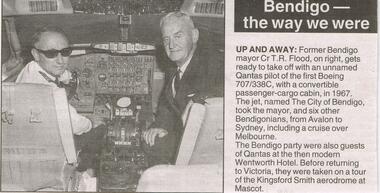
Newspaper - JENNY FOLEY COLLECTION: UP AND AWAY
... Flood, on right, gets ready to take off with an unnamed Qantas pilot of the first Boeing 707/338C, with a convertible passenger-cargo cabin, in 1967. The jet, named The City of Bendigo, took the mayor, and six other Bendigonians, from Avalon to Sydney, including a cruise over Melbourne. ...Flood, on right, gets ready to take off with an unnamed Qantas pilot of the first Boeing 707/338C, with a convertible passenger-cargo cabin, in 1967. The jet, named The City of Bendigo, took the mayor, and six other Bendigonians, from Avalon to Sydney, including a cruise over Melbourne. ...Bendigo Advertiser "The way we were" from Wednesday, May 12, 2004. Up and away: former Bendigo mayor Cr T.R. Flood, on right, gets ready to take off with an unnamed Qantas pilot of the first Boeing 707/338C, with a convertible passenger-cargo cabin, in 1967. The jet, named The City of Bendigo, took the mayor, and six other Bendigonians, from Avalon to Sydney, including a cruise over Melbourne. The Bendigo party were also guests of Qantas at the then modern Wentworth Hotel. Before returning to Victoria, they were taken on a tour of the Kingsford Smith aerodrome at Mascot.newspaper, bendigo advertiser, the way we were -
 National Vietnam Veterans Museum (NVVM)
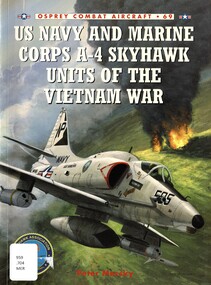
Book, Mersky, Peter, US Navy and Marine Corps A-4 Skyhawk Units of the Vietnam War
... Jet attack plane) Vietnam War 1961-1975 -- Aerial operations American. US Navy United States - Marine Corps the A-4 was the backbone of the US Navy and Marine Corps' light strike force for much of the 1960s, and especially during the first half of the ten-year struggle in South-East Asia. ...the A-4 was the backbone of the US Navy and Marine Corps' light strike force for much of the 1960s, and especially during the first half of the ten-year struggle in South-East Asia.non-fictionthe A-4 was the backbone of the US Navy and Marine Corps' light strike force for much of the 1960s, and especially during the first half of the ten-year struggle in South-East Asia.skyhawk (jet attack plane), vietnam war, 1961-1975 -- aerial operations, american., us navy, united states - marine corps -
 National Vietnam Veterans Museum (NVVM)
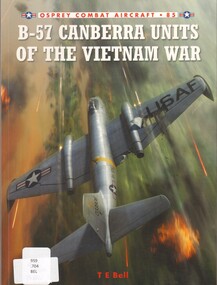
Book, Bell, T.E, B-57 Canberra Units of the Vietnam War, 2011
... Vietnam War 1961-1975 -- Aerial operations American Airplanes Military -- Markings -- United States Canberra bomber While not receiving as much publicity as the F-105 and F-4 fighter-bombers, which took the fight into the heart of North Vietnam, the B-57 Canberra was nevertheless the first jet-powered American attack aircraft committed to the conflict. ...While not receiving as much publicity as the F-105 and F-4 fighter-bombers, which took the fight into the heart of North Vietnam, the B-57 Canberra was nevertheless the first jet-powered American attack aircraft committed to the conflict.While not receiving as much publicity as the F-105 and F-4 fighter-bombers, which took the fight into the heart of North Vietnam, the B-57 Canberra was nevertheless the first jet-powered American attack aircraft committed to the conflict.canberra (military aircraft) -- history., vietnam war, 1961-1975 -- aerial operations, american, airplanes, military -- markings -- united states, canberra bomber -
 Dutch Australian Heritage Centre Victoria
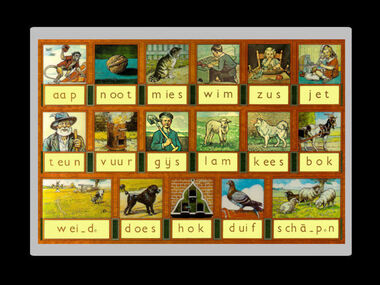
Placemat with laminated copy of aap-noot-mies reading board (leesplankje) in A4 size, Dutch Australia Heritage Centre, December 2012
... The "aap, noot, mies" reading boards were used in the Netherlands for a long time (from many years before WWII till the late 1960's) as the main tool for teaching students in the first year of primary school the main vowels and consonants of the Dutch Language. The reading boards were used in combination with reading books containing the Zus & Jet stories. ...The Placemats were made in response to the display of pictures of the "aap, noot, mies" reading boards, which led to requests from older Dutch Citizens for copies.The "aap, noot, mies" reading boards were used in the Netherlands for a long time (from many years before WWII till the late 1960's) as the main tool for teaching students in the first year of primary school the main vowels and consonants of the Dutch Language. The reading boards were used in combination with reading books containing the Zus & Jet stories. These stories are the source of the pictures on the reading board. Item number 6380 is an example of such a reading book.A laminated A4 copy of the "Aap, Noot, Mies" reading board.The board shows pictures of items and persons as well as the spelling of the words and names, for the words: aap, noot, mies,wim, zus, jet, teun, vuur, gijs, lam, kees, bok, weide, does, hok, duif, schapen.aap noot mies reading board leesplankje dutch primary school -
Moorabbin Air Museum
Document (item) - Bill Prowse Collection WP14 See details in Description, Bill Prowse Collection WP14
... Jet Instrument Flying Trainer Type AT50 Maintenance Handbook Australia Flies First Local Hornet - extract from Flight International Magazine 16/3/85 Techniques of Oblique Aerial Photography of agricultural Field trials CSIRO Alata Magazine - Italy Jindivik Target Program for US Army McGregor Range Dowty Hydraulic System and Undercarriages fitted to Armstrong Whitworth Argosy - Course notes Summary of Evaluation of Tactical Transport Aircraft for RAAF - technical report TTA 13/77 Pilot's Notes General RAF Govt of India Press 1943 AP 2095 (RAF) Air BP Journal Number 28 Jindivik Details Sketch Nomad 22B Promotional Catalogue GAF Mirage Metallurgy Technical Memo No 322 Canberra Metallurgy Tech Memo 319 Fatigue racking in mail landing wheels Handbook of wireless Telegraphy Vol 1 1938 Jindivik target Program US Army Aircraft Flight Test recording and Analysis System AFTRAS Tech notes Mission Avionics for Medium Range Maritime Reconnaissance Patrol Aircraft - proposal by Litton Systems for GAF 1993 Assessment of Installation of Edward Davis Jet Engine in Jindivik Initial Study to redesign Jindivik Wing Nomad 22 Fenwick Aviation - French 1972 Jindivik Publication B4A-PO3 Equipment bench test Specs Mirage Metallurgy Memo 302 - disc brakes Mirage Metallurgy Tech memo 326 Corrosion of main landing wheels Adour Mk 871.F405 Rolls RoyceLeading the Trainer Market Adour/F405 Turbo Fan Jet Engine Promotional Jindivik Promotional Catalogue weapons test facilityJindivik Promotional Catalogue weapons test facility Canberra Production line magazine leaflet Mirage IIIO and IIID handwritten report ATAR 8 and 9 Snecma Engine Promotional engine Malkara Guided Weapon promotional leaflet CAC Promotional leaflet brief history 1939 to 1966 Fighters for today and tomorrow McDonnell Douglas McDonnell Douglas Hornet Production details Australian Industry Participation Program Northrop Turana Australia's Target reprint of article from Aircraft Magazine Ikara Anti Submarine guided weapon system - single page promotional Nomad de-icing team UK 1979 Jindivik weapons target facility The Hunted One promotional catalogue Jindivik tow system - line drawings Mirage III Bulletins Meteor Target a/c accident A77-802 Investigation result 1969 GAF Brochure and products 1969 Defence Science and Technology Organisation Brochures for Aeronautical and Maritime Research Lab Jindivik Mk4 Report GAF Jindivick brief history Design proposal for Searchlight on N22 Nomad The Link Trainer - article Thrust Alignment for launch/firing at Woomera Ikara - photos Turana - naval target 1970 article Ceres Agricultural CAC proposal Magazine Missile and Razzi 1962 RFDS 50th anniversary publication magazine Potential new workload estimates for GAF 1983 Parachute Assembly deceleration Type 936-71 ...Jet Instrument Flying Trainer Type AT50 Maintenance Handbook Australia Flies First Local Hornet - extract from Flight International Magazine 16/3/85 Techniques of Oblique Aerial Photography of agricultural Field trials CSIRO Alata Magazine - Italy Jindivik Target Program for US Army McGregor Range Dowty Hydraulic System and Undercarriages fitted to Armstrong Whitworth Argosy - Course notes Summary of Evaluation of Tactical Transport Aircraft for RAAF - technical report TTA 13/77 Pilot's Notes General RAF Govt of India Press 1943 AP 2095 (RAF) Air BP Journal Number 28 Jindivik Details Sketch Nomad 22B Promotional Catalogue GAF Mirage Metallurgy Technical Memo No 322 Canberra Metallurgy Tech Memo 319 Fatigue racking in mail landing wheels Handbook of wireless Telegraphy Vol 1 1938 Jindivik target Program US Army Aircraft Flight Test recording and Analysis System AFTRAS Tech notes Mission Avionics for Medium Range Maritime Reconnaissance Patrol Aircraft - proposal by Litton Systems for GAF 1993 Assessment of Installation of Edward Davis Jet Engine in Jindivik Initial Study to redesign Jindivik Wing Nomad 22 Fenwick Aviation - French 1972 Jindivik Publication B4A-PO3 Equipment bench test Specs Mirage Metallurgy Memo 302 - disc brakes Mirage Metallurgy Tech memo 326 Corrosion of main landing wheels Adour Mk 871.F405 Rolls RoyceLeading the Trainer Market Adour/F405 Turbo Fan Jet Engine Promotional Jindivik Promotional Catalogue weapons test facilityJindivik Promotional Catalogue weapons test facility Canberra Production line magazine leaflet Mirage IIIO and IIID handwritten report ATAR 8 and 9 Snecma Engine Promotional engine Malkara Guided Weapon promotional leaflet CAC Promotional leaflet brief history 1939 to 1966 Fighters for today and tomorrow McDonnell Douglas McDonnell Douglas Hornet Production details Australian Industry Participation Program Northrop Turana Australia's Target reprint of article from Aircraft Magazine Ikara Anti Submarine guided weapon system - single page promotional Nomad de-icing team UK 1979 Jindivik weapons target facility The Hunted One promotional catalogue Jindivik tow system - line drawings Mirage III Bulletins Meteor Target a/c accident A77-802 Investigation result 1969 GAF Brochure and products 1969 Defence Science and Technology Organisation Brochures for Aeronautical and Maritime Research Lab Jindivik Mk4 Report GAF Jindivick brief history Design proposal for Searchlight on N22 Nomad The Link Trainer - article Thrust Alignment for launch/firing at Woomera Ikara - photos Turana - naval target 1970 article Ceres Agricultural CAC proposal Magazine Missile and Razzi 1962 RFDS 50th anniversary publication magazine Potential new workload estimates for GAF 1983 Parachute Assembly deceleration Type 936-71 Bill Prowse Collection WP14 Document Bill Prowse Collection WP14 See details in Description ... -
Moorabbin Air Museum
Document (item) - CAC Speech from official handing over of the first Macchi MB326H Jet trainer to RAAF October 2, 1967
... CAC Speech from official handing over of the first Macchi MB326H Jet trainer to RAAF October 2, 1967...Document CAC Speech from official handing over of the first Macchi MB326H Jet trainer to RAAF October 2, 1967 ... -
 Warrnambool and District Historical Society Inc.
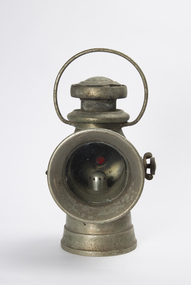
Functional object - Portable lamp, Lucas Industries, c 1900
... first produced lamps after 1875. It could have domestic use or be attached to cars or bicycles early in the 20th Century to provide light at night. The lighting fluid was oil. This object is an interesting example of lighting for cars and bicycles and in the home in the late 19th and early 20th Centuries. Vintage lighting Lucas Industries LUCAS No. 722 KING OF THE ROAD JOS. LUCAS LTD. This is a brass lantern with a circular glass piece in the middle front, and a top metal mechanism with a handle. Inside the circular opening is a domed jet ...This portable lamp was manufactured by the Lucas Industries, a company in Birmingham, England that first produced lamps after 1875. It could have domestic use or be attached to cars or bicycles early in the 20th Century to provide light at night. The lighting fluid was oil. This object is an interesting example of lighting for cars and bicycles and in the home in the late 19th and early 20th Centuries.This is a brass lantern with a circular glass piece in the middle front, and a top metal mechanism with a handle. Inside the circular opening is a domed jet with holes for lighting the lamp. On the sides there are various mechanisms for turning the light up and down, opening the front glass and opening the bottom to allow filling of the lighting fluid. The item is corroded on the exterior. The top has air vents to permit the vapours to escape. On the side is the maker's name LUCAS No. 722 KING OF THE ROAD JOS. LUCAS LTD. vintage lighting, lucas industries -
 Ballarat Tramway Museum
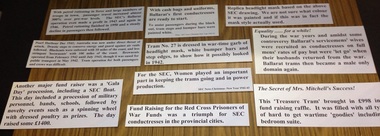
Memorabilia - Exhibition Material, Warren Doubleday, Ballarat Trammies at War, 12/02/1996 12:00:00 AM
... jet coated paper, used Microsoft PowerPoint, BJC4000 printer, & Glued onto heavy card. Each has 2 Velcro dots on rear. .1 125 x 252 Group of Conductresses by No. 29 .2 87 x 270 Secret of Mrs. Mitchell's success - Treasure Tram .3 50 x 255 Fund raising - under Conductresses Triumph! - photo .4 102 x 250 Fund raiser float caption .5 75 x 237 Tram statistics caption - used for the two graphs .6 96 x 177 First...jet coated paper, used Microsoft PowerPoint, BJC4000 printer, & Glued onto heavy card. Each has 2 Velcro dots on rear. .1 125 x 252 Group of Conductresses by No. 29 .2 87 x 270 Secret of Mrs. Mitchell's success - Treasure Tram .3 50 x 255 Fund raising - under Conductresses Triumph! - photo .4 102 x 250 Fund raiser float caption .5 75 x 237 Tram statistics caption - used for the two graphs .6 96 x 177 First ...Ten captions or label cards used in the Museum's exhibition entitled "Australia Remembers". Printed on ink jet coated paper, used Microsoft PowerPoint, BJC4000 printer, & Glued onto heavy card. Each has 2 Velcro dots on rear. .1 125 x 252 Group of Conductresses by No. 29 .2 87 x 270 Secret of Mrs. Mitchell's success - Treasure Tram .3 50 x 255 Fund raising - under Conductresses Triumph! - photo .4 102 x 250 Fund raiser float caption .5 75 x 237 Tram statistics caption - used for the two graphs .6 96 x 177 First conductresses ready to go .7 62 x 248 Replica headlight caption .8 75 x 263 Headlight drawing note .9 60 x 244 No. 27 caption .10 57 x 260 Women at work for the SEC Image of cards added 19/10/2013.trams, tramways, btm, exhibitions, world war ii -
 Brighton Historical Society
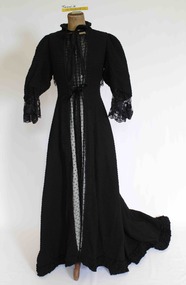
Clothing - Dress, Visiting dress, late 19th century
... first Royal visitor the Duke Of Edinburgh, Queen Victoria’s second son, at St Ninians in 1867. In later years St Ninians was subsequently subdivided and later demolished. st ninians george ward cole visiting gown brighton miss margaret morison ward cole miss agnes bruce ward cole 1880s A black and mint green wool, velvet, lace and silk dress from circa 1882. The bodice features a wired, standing collar, finishing just under the chin and open at the front of the throat. On either side at the front of the throat it features long black lace ties with black jet ...This gown, one of two similar items in the collection, belonged to one of the daughters of George Ward Cole, Miss Margaret Morison Ward Cole or Miss Agnes Bruce Ward Cole. George Ward Cole was an early member of the Victorian Parliament and the family featured prominently in Melbourne Society in their time. They established a substantial home known as “St Ninians” at 10 Miller Street in 1841. The family reportedly entertained Melbourne’s first Royal visitor the Duke Of Edinburgh, Queen Victoria’s second son, at St Ninians in 1867. In later years St Ninians was subsequently subdivided and later demolished.A black and mint green wool, velvet, lace and silk dress from circa 1882. The bodice features a wired, standing collar, finishing just under the chin and open at the front of the throat. On either side at the front of the throat it features long black lace ties with black jet bead fringe. The centre front of the dress from the neckline to the base of the skirt features an insert panel of mint green corded silk. The silk is gathered and the neckline and waist and overlaid a panel of gathered lacy net. Inserted into the seam at either side of this panel at the waist are two velvet ties. The dress secures closed with eight black buttons and one hook and eye down the right side of the mint panel to mid thigh. The edges of the collar and black front panels are finished with a looped ribbon trim. The remainder of the dress is made of a black wool fabric woven a checkered pattern of larger and looser threads and smaller and tighter threads creating a seersucker like pattern. The bodice features a natural shoulder line and an Amadis sleeve of full cut gathered to the bodice at the shoulder and finishing at the elbow with a large black lace flounce. The front panels of the dress are flat and shaped neatly to the body from neck to hip line and gently out to create the Victorian silhouette. On the back of each shoulder the dress features a leaf like, small jet beaded embellishment with multiple long loops of jet beads falling down the back to the waist. Underneath this embellishment is a pleated black ribbon that runs from the shoulder to the back of the pelvis. Over the pelvis are another two jet beaded embellishments of a floral design with two tassels. The skirt is full and pleated in under this embellishment and fulls to the floor with a small train. The base of the dress is finished with a ruched band of the main dress fabric.st ninians, george ward cole, visiting gown, brighton, miss margaret morison ward cole, miss agnes bruce ward cole, 1880s -
Moorabbin Air Museum
Machine - CAC CA-31 Jet Trainer Factory Mockup, 1964
... It followed on from an earlier swept wing jet trainer proposal first commenced in 1953, which went through. ...It followed on from an earlier swept wing jet trainer proposal first commenced in 1953, which went through. ...Historical Details: The CA-31 Factory Mockup was constructed by CAC to provide a full size – 3 dimensional demonstration of the aircraft’s overall size, layout and cockpit configuration. It was constructed in CAC’s development Hangar, (the CAC Butler Hangar now relocated to. Description: The CAC CA-31 concept was developed in 1964 as a two seat delta wing trainer to support the intended use of the GAF Mirage fighter in RAAF service. It followed on from an earlier swept wing jet trainer proposal first commenced in 1953, which went through. Level of Importance: National -
Moorabbin Air Museum
Machine - Rolls Royce Avon 6,500 Lbs Of Thrust Turbo Jet Mark 1
... first run in 1946 and entered service in 1950. When Australia decided to build the Sabre the Avon engine was chosen as its power plant and CAC built the Avon under licence. The Avon powered many aircraft including the GAF Canberra and H. Level of Importance: State s/n CAC8 Rolls Royce Avon 6,500 Lbs Of Thrust Turbo Jet ...Historical Details: . Description: The Avon was first run in 1946 and entered service in 1950. When Australia decided to build the Sabre the Avon engine was chosen as its power plant and CAC built the Avon under licence. The Avon powered many aircraft including the GAF Canberra and H. Level of Importance: States/n CAC8 -
Moorabbin Air Museum
Machine - Rolls Royce Avon 6,500 Lbs Of Thrust Turbo Jet
... first run in 1946 and entered service in 1950. When Australia decided to build the Sabre the Avon engine was chosen as its power plant and CAC built the Avon under licence. The Avon powered many aircraft including the GAF Canberra and H. Level of Importance: s/n CA21504A Rolls Royce Avon 6,500 Lbs Of Thrust Turbo Jet ...Historical Details: Example of the Avon Engine built locally by CAC to support the local manufacture of the GAF Canberra Bombers. Description: The Avon was first run in 1946 and entered service in 1950. When Australia decided to build the Sabre the Avon engine was chosen as its power plant and CAC built the Avon under licence. The Avon powered many aircraft including the GAF Canberra and H. Level of Importance: s/n CA21504A -
 Moorabbin Air Museum
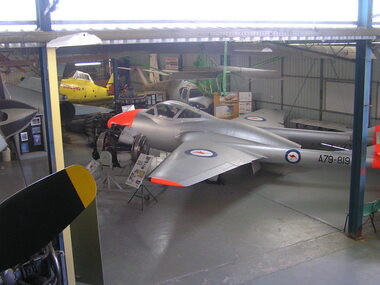
Machine - De Havilland DH114 Vampire T35 A79-835 (Displayed As A79-819)
... Description: First flown on the 29th of September 1943, the Vampire, in its many versions, came to be the most widely used British military jet aircraft ever produced, and saw service with some 25 air forces around the world. ...Description: First flown on the 29th of September 1943, the Vampire, in its many versions, came to be the most widely used British military jet aircraft ever produced, and saw service with some 25 air forces around the world. ...Historical Details: . Description: First flown on the 29th of September 1943, the Vampire, in its many versions, came to be the most widely used British military jet aircraft ever produced, and saw service with some 25 air forces around the world. In 1951 the RAAF ordered 36 DeHavilland. Level of Importance: Regionaldh vampire
