
Showing 78 items matching "the half roll "
-
 Moorabbin Air Museum
Book - FLYING AEROBATICS, Advanced Flight Maneuvers & Aerobatics
... ...The half roll & split S...FLYING AEROBATICS Aerobatics & the Federal Aviation regulations The loop The half roll & split S The slow roll The Immelmann The Cuban 8 The Cloverleaf The snaproll Spins Recovery from vertical flight The barrel roll Aerobatics & the "whole pilot" Overview of skills used in aerobatics & advanced flight maneuvers, circa 1980 Advanced Flight Maneuvers & Aerobatics Book FLYING AEROBATICS ...Overview of skills used in aerobatics & advanced flight maneuvers, circa 1980non-fictionOverview of skills used in aerobatics & advanced flight maneuvers, circa 1980aerobatics & the federal aviation regulations, the loop, the half roll & split s, the slow roll, the immelmann, the cuban 8, the cloverleaf, the snaproll, spins, recovery from vertical flight, the barrel roll, aerobatics & the "whole pilot" -
Port Melbourne Historical & Preservation Society
Document - Agreement, Supply of Electricity, City of Port Melbourne, 1970s
... .01 - City of Port Melbourne application and agreement for a supply of electricity on the left and information required for purpose of compiling Municipal Roll. .02 - Half size double sheet with ordinary conditions for the supply of electricity on first sheet and application on second...Local Government - City of Port Melbourne Utilities - Electricity Beris CAMPBELL .01 - City of Port Melbourne application and agreement for a supply of electricity on the left and information required for purpose of compiling Municipal Roll. .02 - Half size double sheet with ordinary conditions for the supply of electricity on first sheet and application on second Document Agreement, Supply of Electricity, City of Port Melbourne ....01 - City of Port Melbourne application and agreement for a supply of electricity on the left and information required for purpose of compiling Municipal Roll. .02 - Half size double sheet with ordinary conditions for the supply of electricity on first sheet and application on secondlocal government - city of port melbourne, utilities - electricity, beris campbell -
 Bendigo Military Museum
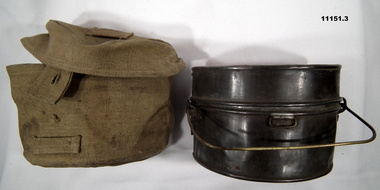
Equipment - DIXIE, WW1 PATTERN, c.1910-1920
... Half circle Dixie Tin with soldered joints. It has 4 little buckles (front, back and sides). It has an "Ad Hoc" brass handle - looks like 1/8" welding rod. 3. Tin lid, rolled...Half circle Dixie Tin with soldered joints. It has 4 little buckles (front, back and sides). It has an "Ad Hoc" brass handle - looks like 1/8" welding rod. 3. Tin lid, rolled ...1. Bag, Carrier, Dixie set. Khaki canvas, leather straps at back. Single ring on rear panel. The lid is held down with a signle strap. The mounting button is missing from the front panel. Shape is half circle. 2. Half circle Dixie Tin with soldered joints. It has 4 little buckles (front, back and sides). It has an "Ad Hoc" brass handle - looks like 1/8" welding rod. 3. Tin lid, rolled edges, Half circle, internal mounted that folds out.1, Stamped inside are; 395. AAO?V. 49.JNF 10-12.ww1, mess equipment, dixie cooking set -
 Bendigo Historical Society Inc.
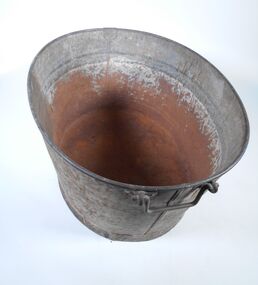
Domestic object - Wash Tub
... half centimetres below the bottom of the tub. The bottom of the tub is an oval 50 centimetres long and 40 centimeters wide. The wall is 29 centimetres high with rolled rim half a centimetre wide on the top, it's made in two pieces that are folded together at each end. ...half centimetres below the bottom of the tub. The bottom of the tub is an oval 50 centimetres long and 40 centimeters wide. The wall is 29 centimetres high with rolled ...Before hot and cold water was easily available children were bathed in small tubs. An oval metal wash tub. The base has a four centmetres metal band around it that extends two and a half centimetres below the bottom of the tub. The bottom of the tub is an oval 50 centimetres long and 40 centimeters wide. The wall is 29 centimetres high with rolled rim half a centimetre wide on the top, it's made in two pieces that are folded together at each end. The top of the tub is an oval 62 centimetres long and 49 centimetres wide. There are identical metal handles at the top of the tub at each end, they are made of a one centimetre diameter metal rode, they have a nine centimetres long grip, a four centimetre piece at right angles on each end and a two centimetre long piece at the opposite right angle on the end which is inserted into a two centimetre loop that's attached to the tub. wash tub, personal hygiene -
 Bendigo Historical Society Inc.
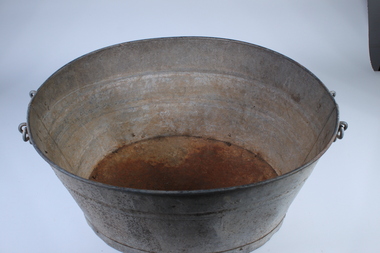
Domestic object - Harris Collection: Wash Tub
... half centimetres below the bottom of the tub. The bottom of the tub is an oval 54 centimetres long and 41 centimeters wide. The wall is 32 centimetres high with rolled rim half a centimetre wide on the top, it's made in two pieces that are folded together at each end. ...half centimetres below the bottom of the tub. The bottom of the tub is an oval 54 centimetres long and 41 centimeters wide. The wall is 32 centimetres high with rolled ...Jonathan Harris operated a winery on the banks of the Axe Creek, Axedale in the 1850s An oval metal wash tub. The base has a four centmetres metal band around it that extends two and a half centimetres below the bottom of the tub. The bottom of the tub is an oval 54 centimetres long and 41 centimeters wide. The wall is 32 centimetres high with rolled rim half a centimetre wide on the top, it's made in two pieces that are folded together at each end. The top of the tub is an oval 70 centimetres long and 51 centimetres wide. There are identical metal handles at the top of the tub at each end, they are made of a one centimetre diameter metal rode, they have a nine centimetres long grip, a four centimetre piece at right angles on each end and a two centimetre long piece at the opposite right angle on the end which is inserted into a two centimetre loop that's attached to the tub. Part of the Harris collection. wash tub, personal hygiene, harris collection -
 Flagstaff Hill Maritime Museum and Village
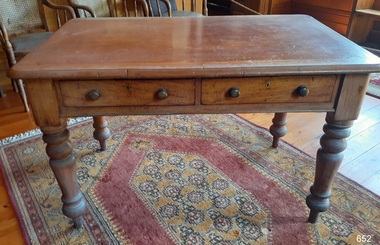
Furniture - Desk, Foy & Gibson, Circa 1880s
... Desktop has a wooden border with a rolled edge and a fitted timber centrepiece. The four tapered legs are tulip turned. Two half-width drawers fit side by side and extend the full depth of the desk. ...Desktop has a wooden border with a rolled edge and a fitted timber centrepiece. The four tapered legs are tulip turned. Two half-width drawers fit side by side and extend the full depth of the desk. ...The design of this small disc is from the Australian Colonial period. The cedar wood desk was made in Australian by Foy & Gibson in the 1880s, most probably in the business’s works in Collingwood, Victoria. The heavy brass locks fitted into the desk drawers were made by the famous Hobbs & Co of London, mid-late 19th century. In 1860 the business changed hands but the locks were still branded Hobbs & Co. The desk is branded with the symbol of Victoria’s Public Works Department. There is currently no information on when, where and by whom this desk was used. However, a very similar desk with Hobbs & Co. locks is on site at the Point Hicks Lightstation in Victoria and was formerly used by the Point Hicks head light keeper there. Other light stations also have similar desks from the P.W.D. (see also ‘Desk, Parks Victoria – Point Hicks Lightstation, Victorian Collections’.) HOBBS & CO., LONDON Alfred Charles Hobbs, 1812-1891, was American born. He became an executive salesman in 1840 for renowned lock manufacturer Day & Newell. His technique of exposing the weaknesses of people’s current locks was very successful in generating sales. He represented Day & Newell at London’s Great Exhibition of 1851, competing with other lock makers. Through the Exhibition he became famous for picking the best trusted Bramah and Chubb locks. Hobbs’ fame led him to found his own company in 1851 then register it in 1852 as Hobbs & Co., London. Hobbs was awarded the Telford Medal by the British Institution of Civil Engineers in 1854 for his paper 'On the Principles and Construction of Locks'. In 1855 the very successful company added partners and became Hobbs, Ashley and Co. In 1860, it traded under the name of Hobbs, Hart & Co. and was based in Cheapside London, where the business remained. Hobbs then returned to America, having sold the complete company to John Mathias Hart. He briefly returned to attend the 21st anniversary celebrations of the successful business in 1872. Hobbs kept himself busy in America, inventing and manufacturing firearm ammunition, for which he held several patents. He passed away there in 1891, a month after his 70th birthday. FOY & GIBSON Mark Foy wan an Irish draper who migrated to Bendigo, Victoria in 1858, attracted by the gold rush. He lived and worked in the area, establishing a drapery business. In the 1870s he moved to Melbourne where there were better prospects for expansion. He chose a place in Smith Street, Collingwood, a suburb of Melbourne, and started his business at the rear. In 1883 Foy retired, bringing in William Gibson as a partner, and then transferred his own share of the company to his son Francis Foy. Not long afterwards Francis sold his half share to Gibson, and the business continued under the name of Foy & Gibson. Francis Foy and he and his brother Mark Foy (junior) moved to Sydney. They established a business there in 1885, named after their father, Mark Foy. Gibson added to his business by starting his own manufacturing works from 1887, producing clothing, millinery, furniture, bedding and hardware for his stores. The factories, warehouses and stores complex became one of Victoria’s largest employers. He set up branches of his stores in Perth, Brisbane and Adelaide and two more branches in Melbourne. Foy & Gibson (usually referred to as Foys) became one of Australia’s largest retail department stores. In 1931 Foy’s little house in Collingwood was still part of the entrance to Foy & Gibson Emporium. In 1955 the company was bought out by Cox Brothers. Later on the stores were sold to various businesses such as David Jones, Woolworths and Harris Scarfe. In 1968 Cox Brothers went into receivership, ending almost 100 years of the business known as Foy’s. The former Foy & Gibson Complex is registered by Heritage Council Victoria. “Designed by William Pitt, this magnificent 19th and early 20th century complex of factories, warehouses and showrooms saw the production of a remarkable range of goods for Foy & Gibson, Melbourne’s earliest department store chain”. (Quoted from the Plaque erected by the Collingwood Historical Society 2007) P.W.D. – Public Works Department, Victoria The desk is stamped “P.W.D,” signifying that it is from the Public Works Department in Victoria, which operated from 1855-1987. The department was responsible for, among other things, the design and supply of office furniture and equipment for public buildings and organisations. This desk is significant historically as it originated from Foy & Gibson, a colonial Australian company that had a positive and strong impact on employment, manufacturing and retailing in Melbourne, Victoria and Australia. The significance of Foy & Gibson to Victoria’s and Australia’s history is marked by the Collingwood Complex being registered in both Heritage Victoria Register (H0755, H0897 and H0896) and National Trust Register (B2668). This locks on this desk are significant for their connection with their manufacturer, Hobbs & Co, who invented a lock that surpassed the security of any other locks produced in the mid-19th century. Desk; Australian Colonial cedar desk, honey coloured. Desktop has a wooden border with a rolled edge and a fitted timber centrepiece. The four tapered legs are tulip turned. Two half-width drawers fit side by side and extend the full depth of the desk. The drawers have dovetail joints. Each drawer has two round wooden knob handles, a keyhole and a fitted, heavy brass lever lock. Inscriptions are on the desktop, drawers, desk leg and lock. Made in Australia circa 1880 by Foy & Gibson, lock made by Hobbs & Co, London.Impressed into timber frame of one drawer “FOY & GIBSON” Impressed into lock “HOBBS & CO / LONDON”, “MACHINE MADE”, “LEVER” Impressed along the front edge of the desktop [indecipherable] text. Impressed into the timber of right front leg “P. W. D.” below a ‘crown’ symbol Handwritten in white chalk under a drawer “206” flagstaff hill, warrnambool, shipwrecked coast, flagstaff hill maritime museum, maritime museum, shipwreck coast, flagstaff hill maritime village, great ocean road, desk, cedar desk, colonial desk, 1880s desk, australian colonial furniture, furniture, office furniture, office equipment, australian made furniture, colonial furniture, colonial hardware, foy & gibson, alfred charles hobbs, hobbs & co london, hobs & co lever lock, cabinetry lock, machine made lever lock, p.w.d., public works department victoria, day & newell, great exhibition of 1851, bramah lock, chubb lock, telford medal 1854, cheapside london, mark foy, mark foy – bendigo draper, smith street collingwood, william gibson, foy & gibson emporium, foy & gibson complex, cox brothers -
 Federation University Historical Collection
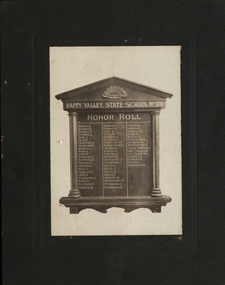
Photograph, Happy Valley State School No.376 Honor Roll, c1920
... Roll A.A. Louden Reverse lhs upper - inked words 'Photo only'; centre - 'Mrs J Garvey, Happy Valley'; rhs upper - two stamps, 1 penny and a half penny franked with Ballarat; pencilled writing 'Mrs Garvey Happy Valley Sepia photograph of honor roll board for World War One with white background mounted on grey cardboard Happy Valley State School No.376 Honor Roll Photograph ...World War One honor roll of former students of the Happy Valley State School No 376 who enlisted. The original honor roll no longer exists. There is a framed photograph of it in the current Happy Valley School building now used for community events. This honor roll would appear to be made before the end of WW1 as Ernest Alfred Yung died in September 1917 at Ypres. His brother George Alfred Yung returned who was also in the same battle returned to Australia. Honour rolls were also made to encourage more men to enlist. Margaret Young studied at Ballarat West Art School in 1894. This was one of Ballarat's Art schools. In 1907 they merged and became Ballarat Technical Art School (BTAS). Margaret became a teacher and taught for many years at BTAS, specialising in woodcarving. At the end of the First World War, Honour Boards were requested to be made to honour the men who had served. Ballarat was the main provider of these boards. Margaret Young was one of the people responsible for the carvings and specially mentioned for her work by the Caulfield School in Melbourne. On her resignation, Margaret moved to Adelaide. At the past students Reunion Celebrations in 1930, Margaret Young was to be the Guest of Honour. Unfortunately she was unable to attend due to ill health. Sepia photograph of honor roll board for World War One with white background mounted on grey cardboardReverse lhs upper - inked words 'Photo only'; centre - 'Mrs J Garvey, Happy Valley'; rhs upper - two stamps, 1 penny and a half penny franked with Ballarat; pencilled writing 'Mrs Garvey Happy Valleyhappy valley, happy valley state school, honor roll, honour roll, o. brough, e. daniels, g. daniels, philately, j. dial, g. dial, a. gradnor, w. gradnor, g. kiely, a. kerr, w. lowe, l. martinez, h. martinez, j. milburn, c. milburn, a. may, e. morgan, f. opie, a. paterson, n. reid, f. rankin, h. smith, t. thomas, l. thomas, e. yung, a. yung, a. bromley, j. blundell, h. barraclough, j. crommie, g. darling, j. darling, w. w. groves, j. gardiner, a. keys, j. keys, p. kelly, s. kelly, m. morgan, w. montgomery, j. rutherford, r. rutherford, p. smith, w. wishart, h. wark, s. ronald, k.n. mcnamee, p. bennington, sister m.j. thomas, d.l. thomas, w.e. thomas, j.s. gower, f.h. gower, s. gower, s.t.m. gower, happy valley school honor roll, a.a. louden -
 Federation University Historical Collection
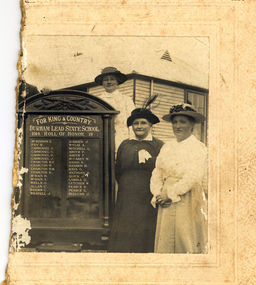
Photograph - Black and White, Durham Lead Roll of Honour, 26/10/1917
... The honour roll contains a list of 32 names. durham lead state school world war one honour roll durham lead state school honour roll garibaldi hall Ellenor Mitchell Ellenor Austin Half of a black and white photograph showing three women standing to the right of a World War One Honour Board for Durham Lead State School. ...According to the Monument Australia website the 2015 location of the Honour Board was Garibaldi Hall, Hardies Hill Road, Garibaldi, Victoria. Being made in 1917, the honour board never had the end date of the war added. The Ballarat Courier wrote Ballarat Courier, 30th October 1917: At a reunion of old scholars of the Durham Lead State School on Friday 26th October 1917, an honour roll of those who had enlisted in the A.I.F. was unveiled. The honour roll contains a list of 32 names. Half of a black and white photograph showing three women standing to the right of a World War One Honour Board for Durham Lead State School. The women in the centre is thought to be Ellenor Mitchell (nee Austin). The women wear long sleeves and hats. One woman wears a white ribbon. A man's hand and shoulder is evident on the left side of the Honour Board. The building the people stand in front of looks like a weatherboard school, so it is most probably Durham Lead State School Gift of Gordon and Marilyn Vincentdurham lead state school, world war one, honour roll, durham lead state school honour roll, garibaldi hall, ellenor mitchell, ellenor austin -
 Federation University Historical Collection
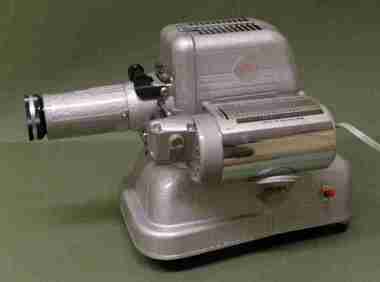
Equipment - Scientific Instrument, Controlled Reader (Film Strip Reader)
... roll-film onto a screen. The indexing frequency of the text lines is variable between 15 x 130 lines per minute. Fan cooled motor. Outer surfaces in grey hammered finish. In grey-finish storage box with removable top half...roll-film onto a screen. The indexing frequency of the text lines is variable between 15 x 130 lines per minute. Fan cooled motor. Outer surfaces in grey hammered finish. In grey-finish storage box with removable top half ...A projector designed to display text from a specifically prepared roll-film onto a screen. The indexing frequency of the text lines is variable between 15 x 130 lines per minute. Fan cooled motor. Outer surfaces in grey hammered finish. In grey-finish storage box with removable top half. Nameplate, work speed table Serial No P130256 Model V-45-Pscientific instruments, projector, film strip projector, controlled reader -
 City of Moorabbin Historical Society (Operating the Box Cottage Museum)
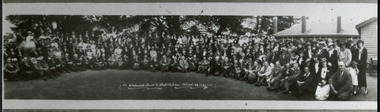
Photograph - Back to Cheltenham State School - A memento 28.11.1936, 1936
... The roll call showed that there were 50 pupils present who attended tho school more than half a century ago. ...The roll call showed that there were 50 pupils present who attended tho school more than half a century ago. ...A reunion gathering for past students of Cheltenham State School held in November 1936A black and white photograph of a large group of men and women in a semicircle on a school play yard beside a weatherboard building .They all appear to be smartly dressed, many women wearing hats and the men in suits. Cheltenham School Reunion. The third annual "Back to Cheltenham State school" reunion attracted an attendance of 600 former scholars to the school on Saturday afternoon. The proceedings were opened by tho mayor of Moorabbin (Cr. J. W. Allnut). The oldest teacher present was Mrs. Grant, of Sorrento, who, as Miss Fraser, had charge of the school from 1880 to 1883. Another old identity was Mr. T. Evans, of Kew, who is 82 years of age — he was the head teacher from 1802 to 1800. Photographs were taken of Mrs. Grant with fifteen of her former pupils, and of Mr. Evans, who mustered 72 of his old scholars. The roll call showed that there were 50 pupils present who attended tho school more than half a century ago. Mrs. Buckley, of Mentone, who is 84, and Mr. W. P. Fairlam, of Cheltenham, 80 years, were the oldest former scholars in attendance. Mr. Fairlam, notwithstanding his age, still carries on the business of an auctioneer. Bouquets were presented to Mrs. Grant and Mrs Buckley by the president of the mothers' club (Mrs. Marshall). An enjoyable day was wound up by a dance at night in the mechanical institute, when 200 attended. (Age, Monday 30 November 1936, page 5)cheltenham primary school, state school, charman road, cheltenham, school, charman stephen, gettens mary, spring grove, balcombe road, nepean road, dairy farmers, market agrdeners, poultry farmers, methodist church, cancel, 1936 -
 Orbost & District Historical Society
tin, From 1920's
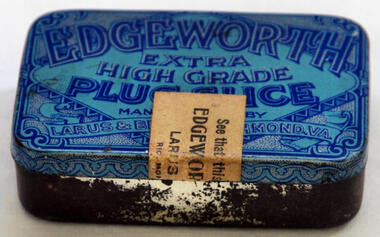
... There were mechanical "roll you own" gadgets on the market but most rural users, especially males used their palms. This item reflects the first half of the 20th century when smoking was acceptable. tin tobacco larus smoking container Tobacco by LARUS & BRO. ...The ready rubbed tobacco held within the tin was mainly used by those smokers who rolled their own cigarettes. These smokers would have mainly used their palm and formed a cup then placing their choice of the amount of tobacco to be rolled. This would then be placed on the fine cigarette paper and rolled and sealed (using saliva in the mouth) into the required shape. There were mechanical "roll you own" gadgets on the market but most rural users, especially males used their palms. This item reflects the first half of the 20th century when smoking was acceptable.Small blue, rectangular tin with hinged lid. Match striker on base. Edgeworth Extra High Grade Plug Slice. Paper seal remains on lid. Tobacco by LARUS & BRO. CO Richmond Va Tin by American Can Co 50Atin tobacco larus smoking container -
 Orbost & District Historical Society
tin, The British Australasian Tobacco Company Pty Ltd, 1895-1900
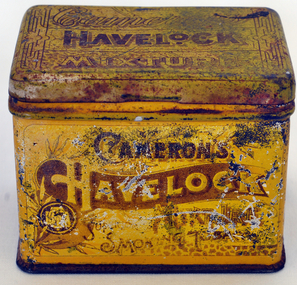
... There were mechanical "roll you own" gadgets on the market but most rural users, especially males used their palms. This item is reflective of the first half of the 20th century when smoking was acceptable. container tobacco smoking Printed in black over a yellow base: front side: 'Cameron's / HAVELOCK / SUPERIOR MIXTURE / SMOKING TOBACCO'; back side: 'Cameron's / HAVELOCK / SMOKING / MIXTURE / MANUFACTURED BY / THE BRITISH AUSTRALASIAN TOBACCO Co PROPRIETARY LIMITED / MELBOURNE AUSTRALIA'; Left side: 'Guaranteed / MANUFACTURED FROM / FINEST GROWTH / FRAGRANT TOBACCO / 4oz WEIGHT' A rectangular tin with hinged lid. ...The ready rubbed tobacco held within the tin was mainly used by those smokers who rolled their own cigarettes. These smokers would have mainly used their palm and formed a cup then placing their choice of the amount of tobacco to be rolled. This would then be placed on the fine cigarette paper and rolled and sealed (using saliva in the mouth) into the required shape. There were mechanical "roll you own" gadgets on the market but most rural users, especially males used their palms. This item is reflective of the first half of the 20th century when smoking was acceptable.A rectangular tin with hinged lid. Cameron's Havelock Superior Mixture Smoking Tobacco.Printed in black over a yellow base: front side: 'Cameron's / HAVELOCK / SUPERIOR MIXTURE / SMOKING TOBACCO'; back side: 'Cameron's / HAVELOCK / SMOKING / MIXTURE / MANUFACTURED BY / THE BRITISH AUSTRALASIAN TOBACCO Co PROPRIETARY LIMITED / MELBOURNE AUSTRALIA'; Left side: 'Guaranteed / MANUFACTURED FROM / FINEST GROWTH / FRAGRANT TOBACCO / 4oz WEIGHT'container tobacco smoking -
 Orbost & District Historical Society
glass rolling pin, 1930's
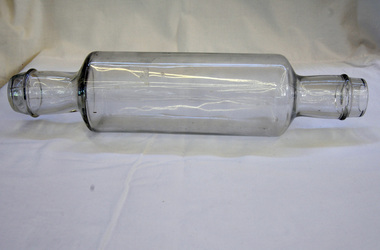
... half of the 20th century as they were seen to be more easily cleaned that wooden ones. This item is an example of a once commonly used kitchen item. domestic kitchen glass rolling-pin, one one end - M A moulded clear glass cylinder rolling pin with glass handles at each end. It is hollow and can be filled with cold or warm water to better roll ...Starting in the 18th century, glassworks in English port towns like Bristol, London, Sunderland, and Newcastle began producing hollow glass rolling pins. They were originally produced for sailors to give to loved ones, particularly young women they were hoping to woo for marriage. Plain, clear glass rolling pins became a common kitchen item in the first half of the 20th century as they were seen to be more easily cleaned that wooden ones.This item is an example of a once commonly used kitchen item.A moulded clear glass cylinder rolling pin with glass handles at each end. It is hollow and can be filled with cold or warm water to better roll a preferred food. There is no stopper at one end. It is marked with M at one end (probably indicating size).one one end - Mdomestic kitchen glass rolling-pin, -
 Eltham District Historical Society Inc
Photograph - Medal, Jim Connor, Eltham Roll of Honour Board, Eltham Community Gallery, Eltham Library, 20 April 2023
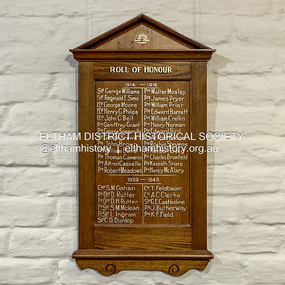
... Roll Board to be erected in the building. The RSL was duly requested to supply those names in July 1953. In August 1953, the Secretary of the EWMT made enquiries with Briar Hill Timber regarding a suitable timber to be used for the board, which was to be to be polished and have the 37 names in gold lettering, one half inch in size. ...Roll Board to be erected in the building. The RSL was duly requested to supply those names in July 1953. In August 1953, the Secretary of the EWMT made enquiries with Briar Hill Timber regarding a suitable timber to be used for the board, which was to be to be polished and have the 37 names in gold lettering, one half inch in size. ...In May 1953, Mr A.E. Parsons moved (seconded by Mrs A.E. Kerr) that the need for an Honour Roll be included on the agenda of the Eltham War Memorial Trust (EWMT) meeting to be held in June 1953. At that meeting, Mrs L. Jarrold moved (seconded by Mrs A.E. Kerr) that the Secretary of the Trust (Mr C.G. Seear) write to the RSL and obtain eligible names from both wars to be placed on an Honour Roll Board to be erected in the building. The RSL was duly requested to supply those names in July 1953. In August 1953, the Secretary of the EWMT made enquiries with Briar Hill Timber regarding a suitable timber to be used for the board, which was to be to be polished and have the 37 names in gold lettering, one half inch in size. At the September meeting of the Trust, the Secretary reported on the design and price from Briar Hill Timber being £3.15.0. A sketch was not available, and Briar Hill Timber was asked to supply one, which was duly presented at the October meeting. The Briar Hill Timber design was not as requested by the Trust. The Secretary subsequently requested from other potential suppliers and several proposals with quotes were received and discussed at the Trust’s November meeting. A decision was made to proceed with Design No. 936 which was to be quoted in mountain ash. A quote from Johnstons Furniture Productions of Gertrude St., Fitzroy for £13.10.0 was received in December. The design and quote being accepted by the Trust, an order was placed for its commission. The Honour Roll Board was presented at the March 1954 Trust meeting and the proposed lettering was discussed. The Secretary was requested to follow-up confirmation of the names from the RSL and to have them printed in gold lettering on the board. The account from Johnstons Furniture Productions for the board was submitted and paid in full by the Trust. By the April meeting the names to be painted had still not been furnished by the RSL. A further follow-up request was made, and the names duly provided by Cr Stanley S. Addison at the Trust’s meeting in May. The names were copied from the Memorial Obelisk which was first erected by the WW1 Eltham Peace Celebrations in August 1919 at the northwest corner of Bridge Street and Main Road. (The obelisk was later moved in 1956 to the garden area of the refurbished RSL branch building in Main Road for safekeeping due to road widening works.) These names and the Honour Roll Board were handed over to A.E. Emmett, signwriter who completed the work for the gold lettering and submitted an account for such to the Trust for £12.0.0 in July 1954. At the Trust’s August 1954 meeting, the Secretary advised that the Honour Roll Board had been completed and was situated at the Baby Health Centre where arrangements had been made to place it in a prominent position. Handover of the Eltham War Memorial Trust’s assets (including the Eltham Roll of Honour Board) to Eltham Council was conducted in August 1965. In 1999 the Honour Roll Board was removed from the Eltham War Memorial by members of the RSL and relocated to the Eltham RSL sub-branch on Main Road. Following financial collapse of the Eltham RSL sub-branch and merger of the Eltham and Montmorency sub-branches and subsequent sale of the Eltham property, the WW1 obelisk was relocated to a location in front of the Eltham War Memorial. The Honour Roll Board was retrieved by former Eltham District Historical Society President, Harry Gilham in September 2004 who arranged for it to be re-hung in the Eltham War Memorial Hall (former Children’s Library) where it was attached to the brick wall face of the west (rear) wall of the Hall. Sometime around late 2018 when Council was investigating the potential sale and development of the Eltham War Memorial site, the Eltham Honour Roll Board was once again removed from the Eltham War Memorial by persons unknown, under the pretext of ‘safekeeping,’ to a location outside of the Shire of Nillumbik and placed in storage at the Montmorency-Eltham RSL sub-branch, in the City of Banyule. Eltham District Historical Society was made aware of the removal of the Honour Roll Board to the Montmorency-Eltham RSL sub-branch. A formal request was made by EDHS to the Montmorency-Eltham RSL to return this community asset to its rightful place as intended when it was commissioned and paid for by the Eltham War Memorial Trust. Nillumbik Shire Council was also made aware of the removal of this community asset and formally requested its return prior to Anzac Day, 2021. This did not happen however following ongoing negotiations led by Nillumbik Shire Council, the Honour Roll Board was returned in time for Anzac Day 2023 where it is now proudly displayed in the Community Gallery near the internal entrance to Eltham Library providing the community with greater access to it.jim connor collection, briar hill timber & trading co. pty ltd, eltham children's library, eltham community gallery, eltham district historical society, eltham library, eltham rsl sub-branch, eltham war memorial, eltham war memorial hall, eltham war memorial trust, honour board, honour roll -
 Bendigo Military Museum
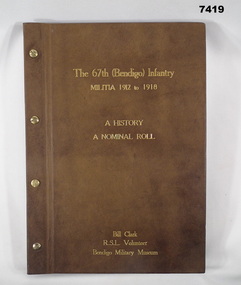
Book - BOOK, THE 67th INFANTRY, CLARK Bill, The 67th (Bendigo) Infantry MILITIA 1912-1918. / A History. / A Nominal Roll, Nov 2023
... The second half of the book is A4 size excel spreadsheet with approx 2100 names. The 67th (Bendigo) Infantry MILITIA 1912-1918. / A History. / A Nominal Roll. ...The 67th (Bendigo) Infantry was the local Militia Infantry Unit from 1912-1918. It's members came from Bendigo up to Deniliquin and Bendigo up to Kerang - Swan Hill areas.This is a leather bound book (Manuscript). The type of leather is called "old goat leather". The title and words are gold embossed. It is fastened with 4 brass Chicago screw binders. Inside are pages of A4. size. The history section is of 165 pages - text, images, black and white and colour. The second half of the book is A4 size excel spreadsheet with approx 2100 names.ww1, militia, citizen forces, 67th infantry -
 Eltham District Historical Society Inc
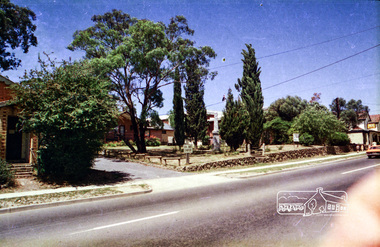
Photograph, Eltham RSL and Uniting Church, Main Road, Eltham, c.1979, 1979c
... Land sold and since developed into units. monuments church eltham rsl sub-branch eltham uniting church main road Unidentified; half-frame numbering Roll of 35mm colour negative film, 6 strips Eltham RSL and Uniting Church, Main Road, Eltham, c.1979 Photograph ...Changing streetscape - RSL branch merged with Montmorency. Land sold and since developed into units.Roll of 35mm colour negative film, 6 stripsUnidentified; half-frame numberingmonuments, church, eltham rsl sub-branch, eltham uniting church, main road -
 Eltham District Historical Society Inc
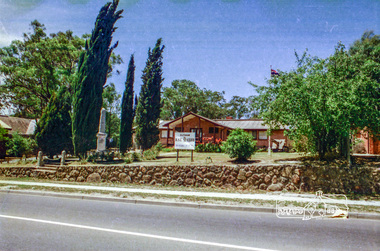
Photograph, Eltham RSL and Uniting Church, Main Road, Eltham, c.1979, 1979c
... Land sold and since developed into units. monuments church eltham rsl sub-branch eltham uniting church main road Unidentified; half-frame numbering Roll of 35mm colour negative film, 6 strips Eltham RSL and Uniting Church, Main Road, Eltham, c.1979 Photograph ...Changing streetscape - RSL branch merged with Montmorency. Land sold and since developed into units.Roll of 35mm colour negative film, 6 stripsUnidentified; half-frame numberingmonuments, church, eltham rsl sub-branch, eltham uniting church, main road -
 Eltham District Historical Society Inc
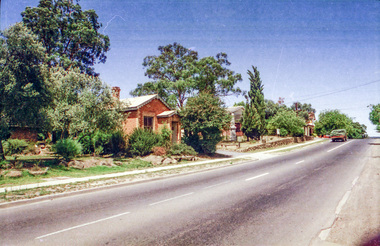
Photograph, Eltham RSL and Uniting Church, Main Road, Eltham, c.1979, 1979c
... Land sold and since developed into units. monuments church eltham rsl sub-branch eltham uniting church main road Unidentified; half-frame numbering Roll of 35mm colour negative film, 6 strips Eltham RSL and Uniting Church, Main Road, Eltham, c.1979 Photograph ...Changing streetscape - RSL branch merged with Montmorency. Land sold and since developed into units.Roll of 35mm colour negative film, 6 stripsUnidentified; half-frame numberingmonuments, church, eltham rsl sub-branch, eltham uniting church, main road -
 Eltham District Historical Society Inc
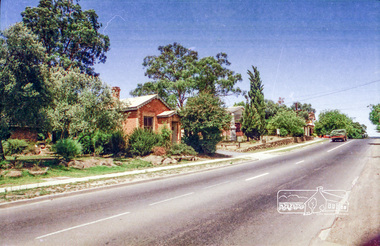
Photograph, Eltham RSL and Uniting Church, Main Road, Eltham, c.1979, 1979c
... Land sold and since developed into units. monuments church eltham rsl sub-branch eltham uniting church main road Unidentified; half-frame numbering Roll of 35mm colour negative film, 6 strips Eltham RSL and Uniting Church, Main Road, Eltham, c.1979 Photograph ...Changing streetscape - RSL branch merged with Montmorency. Land sold and since developed into units.Roll of 35mm colour negative film, 6 stripsUnidentified; half-frame numberingmonuments, church, eltham rsl sub-branch, eltham uniting church, main road -
 Eltham District Historical Society Inc
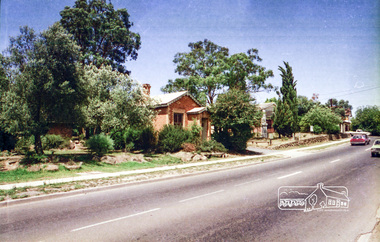
Photograph, Eltham RSL and Uniting Church, Main Road, Eltham, c.1979, 1979c
... Land sold and since developed into units. monuments church eltham rsl sub-branch eltham uniting church main road Unidentified; half-frame numbering Roll of 35mm colour negative film, 6 strips Eltham RSL and Uniting Church, Main Road, Eltham, c.1979 Photograph ...Changing streetscape - RSL branch merged with Montmorency. Land sold and since developed into units.Roll of 35mm colour negative film, 6 stripsUnidentified; half-frame numberingmonuments, church, eltham rsl sub-branch, eltham uniting church, main road -
 Eltham District Historical Society Inc
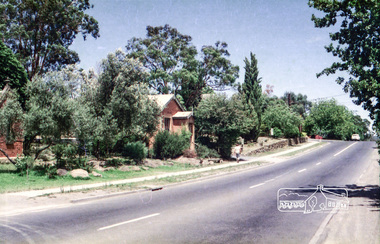
Photograph, Eltham RSL and Uniting Church, Main Road, Eltham, c.1979, 1979c
... Land sold and since developed into units. monuments church eltham rsl sub-branch eltham uniting church main road Unidentified; half-frame numbering Roll of 35mm colour negative film, 6 strips Eltham RSL and Uniting Church, Main Road, Eltham, c.1979 Photograph ...Changing streetscape - RSL branch merged with Montmorency. Land sold and since developed into units.Roll of 35mm colour negative film, 6 stripsUnidentified; half-frame numberingmonuments, church, eltham rsl sub-branch, eltham uniting church, main road -
 Eltham District Historical Society Inc
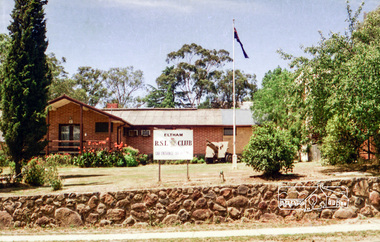
Photograph, Eltham RSL and Uniting Church, Main Road, Eltham, c.1979, 1979c
... Land sold and since developed into units. monuments church eltham rsl sub-branch eltham uniting church main road Unidentified; half-frame numbering Roll of 35mm colour negative film, 6 strips Eltham RSL and Uniting Church, Main Road, Eltham, c.1979 Photograph ...Changing streetscape - RSL branch merged with Montmorency. Land sold and since developed into units.Roll of 35mm colour negative film, 6 stripsUnidentified; half-frame numberingmonuments, church, eltham rsl sub-branch, eltham uniting church, main road -
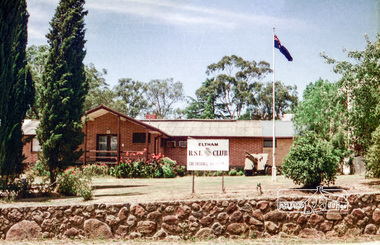 Eltham District Historical Society Inc
Photograph, Eltham RSL and Uniting Church, Main Road, Eltham, 1979c
... Changing streetscape monuments church eltham rsl sub-branch eltham uniting church main road Unidentified; half-frame numbering Roll of 35mm colour negative film, 6 strips Eltham RSL and Uniting Church, Main Road, Eltham Photograph Photograph ...Once a row of shops wase situated here and then the Eltham RSL sub branch occupied this site from the 1950s. The War Memorial obelisk was relocated here from it oriiginal site and situated in front of the building. After the branch amalgamated with Montmorency in 2012, the building was subsequently sold and demolished. The memorial was relocated. Units now occupy the site. Changing streetscapeRoll of 35mm colour negative film, 6 stripsUnidentified; half-frame numberingmonuments, church, eltham rsl sub-branch, eltham uniting church, main road -
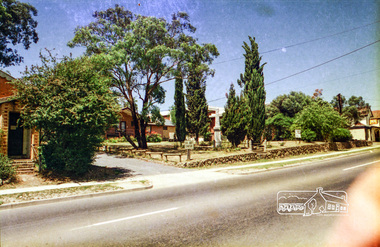 Eltham District Historical Society Inc
Photograph, Eltham RSL and Uniting Church, Main Road, Eltham, c.1979, 1979c
... Land sold and since developed into units. monuments church eltham rsl sub-branch eltham uniting church main road Unidentified; half-frame numbering Roll of 35mm colour negative film, 6 strips Eltham RSL and Uniting Church, Main Road, Eltham, c.1979 Photograph ...Changing streetscape - RSL branch merged with Montmorency. Land sold and since developed into units.Roll of 35mm colour negative film, 6 stripsUnidentified; half-frame numberingmonuments, church, eltham rsl sub-branch, eltham uniting church, main road -
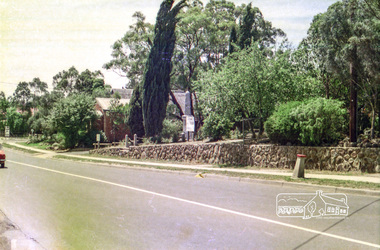 Eltham District Historical Society Inc
Photograph, Eltham RSL and Uniting Church, Main Road, Eltham, c.1979, 1979c
... Land sold and since developed into units. monuments church eltham rsl sub-branch eltham uniting church main road Unidentified; half-frame numbering Roll of 35mm colour negative film, 6 strips Eltham RSL and Uniting Church, Main Road, Eltham, c.1979 Photograph ...Changing streetscape - RSL branch merged with Montmorency. Land sold and since developed into units.Roll of 35mm colour negative film, 6 stripsUnidentified; half-frame numberingmonuments, church, eltham rsl sub-branch, eltham uniting church, main road -
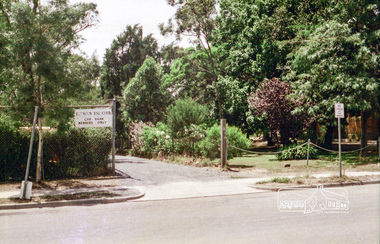 Eltham District Historical Society Inc
Photograph, Eltham RSL carpark entrance, Pitt Street, Eltham, c.1979
... Land sold and since developed into units. monuments church eltham rsl sub-branch eltham uniting church main road Unidentified; half-frame numbering Roll of 35mm colour negative film, 6 strips Eltham RSL carpark entrance, Pitt Street, Eltham Photograph Photograph ...Changing streetscape - RSL branch merged with Montmorency. Land sold and since developed into units.Roll of 35mm colour negative film, 6 stripsUnidentified; half-frame numberingmonuments, church, eltham rsl sub-branch, eltham uniting church, main road -
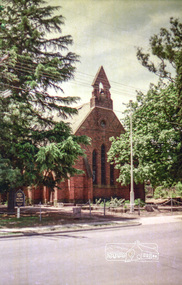 Eltham District Historical Society Inc
Photograph, St Margaret's Anglican Church, Pitt Street, Eltham, c.1979, 1979c
... Changing streetscape church pitt street st margaret's anglican church Unidentified; half-frame numbering Roll of 35mm colour negative film, 6 strips St Margaret's Anglican Church, Pitt Street, Eltham, c.1979 Photograph ...Changing streetscapeRoll of 35mm colour negative film, 6 stripsUnidentified; half-frame numberingchurch, pitt street, st margaret's anglican church -
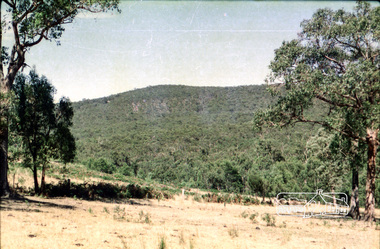 Eltham District Historical Society Inc
Photograph, Probably Kangaroo Ground, c.1979, 1979c
... Possibly the Bassett-Smith property Unidentified; half-frame numbering Roll of 35mm colour negative film, 6 strips Probably Kangaroo Ground, c.1979 Photograph ...Possibly the Bassett-Smith propertyRoll of 35mm colour negative film, 6 stripsUnidentified; half-frame numbering -
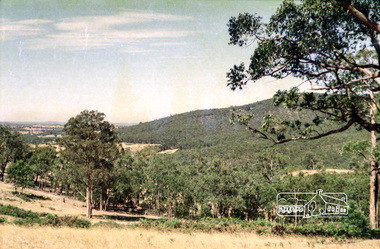 Eltham District Historical Society Inc
Photograph, Probably Kangaroo Ground, c.1979, 1979c
... Possibly the Bassett-Smith property Unidentified; half-frame numbering Roll of 35mm colour negative film, 6 strips Probably Kangaroo Ground, c.1979 Photograph ...Possibly the Bassett-Smith propertyRoll of 35mm colour negative film, 6 stripsUnidentified; half-frame numbering -
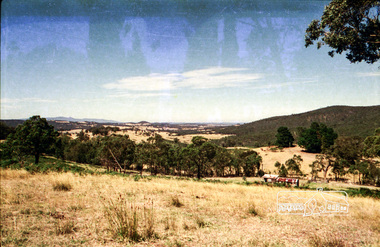 Eltham District Historical Society Inc
Photograph, Probably Kangaroo Ground, c.1979, 1979c
... Possibly the Bassett-Smith property Unidentified; half-frame numbering Roll of 35mm colour negative film, 6 strips Probably Kangaroo Ground, c.1979 Photograph ...Possibly the Bassett-Smith propertyRoll of 35mm colour negative film, 6 stripsUnidentified; half-frame numbering
