
Showing 8 items matching "the origin of species"
-
 Flagstaff Hill Maritime Museum and Village
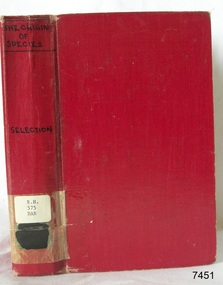
Book - Reference Book/Biology/Scientific, Charles Darwin, The Origin of Species or The Preservation of Favoured Races in the Struggle for Life, 1859
... The Origin of Species or The Preservation of Favoured Races in the Struggle for Life.......The Origin of Species...The full title is “On the Origin of Species by Means of Natural Selection”, or the “Preservation of Favoured Races in the Struggle for Life”, the book was first published on 24th November 1859. ...The Origin of Species Author: Charles Darwin Publisher: John Murray Date: 1860...The full title is “On the Origin of Species by Means of Natural Selection”, or the “Preservation of Favoured Races in the Struggle for Life”, the book was first published on 24th November 1859. ...The Origin of Species is Charles Darwin’s landmark 1859 book, and it introduced the idea that species change over time through natural selection. Darwin drew on observations from his voyage on the HMS Beagle, especially evidence from the Galapagos Islands, to argue that living things share common ancestry and adapt through inherited variation. Darwin’s central claim argues that individuals with traits better suited to their environment are more likely to survive and reproduce, so those traits become more common over generations. The book challenged the idea of special creation and became the foundation of modern evolutionary biology. The book is considered one of the most influential scientific works ever written because it provided a unifying explanation for the diversity of life. It also sparked major scientific and religious debate that continues to this day.The Origin of Species Author: Charles Darwin Publisher: John Murray Date: 1860non-fiction The Origin of Species is Charles Darwin’s landmark 1859 book, and it introduced the idea that species change over time through natural selection. Darwin drew on observations from his voyage on the HMS Beagle, especially evidence from the Galapagos Islands, to argue that living things share common ancestry and adapt through inherited variation. Darwin’s central claim argues that individuals with traits better suited to their environment are more likely to survive and reproduce, so those traits become more common over generations. The book challenged the idea of special creation and became the foundation of modern evolutionary biology. The book is considered one of the most influential scientific works ever written because it provided a unifying explanation for the diversity of life. It also sparked major scientific and religious debate that continues to this day. warrnambool, shipwrecked-coast, flagstaff-hill, flagstaff-hill-maritime-museum, maritime-museum, shipwreck-coast, shipwrecked-artefact, book, warrnambool mechanics’ institute, the origin of species, charles darwin, pattison collection -
 Victorian Aboriginal Corporation for Languages
Book, John Mathew, Eaglehawk and crow : a study of the Australian Aborigines, including an inquiry into their origin and a survey of Australian languages, 1899
... Original text featuring Mathew's comprehensively detailed observations and theories on the origin of species of Aboriginal people, traditional lifestyles, art and social customs....John Mathew eaglehawk and crow stories maps, b&w illustrations, word lists, tables Original text featuring Mathew's comprehensively detailed observations and theories on the origin of species of Aboriginal people, traditional lifestyles, art and social customs. ...Original text featuring Mathew's comprehensively detailed observations and theories on the origin of species of Aboriginal people, traditional lifestyles, art and social customs.maps, b&w illustrations, word lists, tablesjohn mathew, eaglehawk and crow, stories -
 Victorian Aboriginal Corporation for Languages
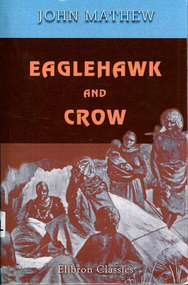
Book, John Mathew, Eaglehawk and crow : a study of the Australian Aborigines, including an inquiry into their origin and a survey of Australian languages, 2005
... s observations and theories on Origin of Species of Aboriginal People, Traditional Lifestyles, Art and Social Customs. ...s observations and theories on Origin of Species of Aboriginal People, Traditional Lifestyles, Art and Social Customs. ...Original text of comprehensive detail of Mathew?s observations and theories on Origin of Species of Aboriginal People, Traditional Lifestyles, Art and Social Customs. Includes maps and word lists and meanings. -
 Stanley Athenaeum & Public Room
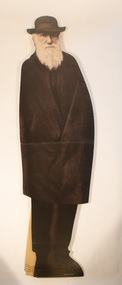
Work on paper - Darwin's cardboard cut-out, Darwin's Stand-up photo
... Purchased to celebrate 150 years since the publication of Charles Darwin's 'Origin of Species' , displayed in exhibition and at the Charles Darwin celebratory dinner 2009. ...Purchased to celebrate 150 years since the publication of Charles Darwin's 'Origin of Species' , displayed in exhibition and at the Charles Darwin celebratory dinner 2009. ...Purchased to celebrate 150 years since the publication of Charles Darwin's 'Origin of Species' , displayed in exhibition and at the Charles Darwin celebratory dinner 2009. Sent by post from UK.Made of cardboard with lightweight stand at back. Brown and white colouring for photo. Stand at back handmade.starcut outs limited SC104 -
 Flagstaff Hill Maritime Museum and Village
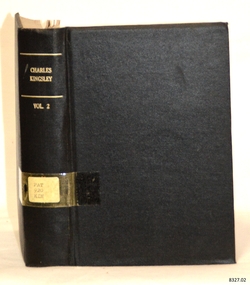
Book - Letters/Journals, Charles Kingsley, Charles Kingsley: His Letters and Memories of His Life Vol 2, 1879
... While Volume 1 establishes his early love of nature, Volume 2 shows him actively processing and defending Charles Darwin’s On the Origin of Species. It highlights his unique status as a clergyman who attempted to harmonise evolutionary theory with Christian theology. ...While Volume 1 establishes his early love of nature, Volume 2 shows him actively processing and defending Charles Darwin’s On the Origin of Species. It highlights his unique status as a clergyman who attempted to harmonise evolutionary theory with Christian theology. ...While Volume 1 introduces Charles Kingsley’s early development and his explosive rise as a radical social reformer, Volume 2 pivots to his mature years as an established public figure. It focuses on his high-profile intellectual battles and his global travels. The transition from Volume 1 to Volume 2 charts a shift from a young, controversial outsider to a celebrated, busy member of the Victorian elite. Volume 1 covers his early life from 1819 to 1856, while Volume 2 spans the years between 1857 and 1875. It documents his mature family life, his appointment as Royal Chaplain to Queen Victoria, his tenure as a professor of Modern History at Cambridge, and his time as Canon of Westminster. It was during these later years that his children's classic, The Water-Babies (1863), and his late historical fiction were published.Charles Kingsley: His Letters and Memories of His Life Vol 2 Author: Charles Kingsley Edited by his wife ( Frances "Fanny" Grenfell) Publisher: C Kegan Paul & Co Date: 1879 Further Information: Sixth Abridged Editionnon-fictionWhile Volume 1 introduces Charles Kingsley’s early development and his explosive rise as a radical social reformer, Volume 2 pivots to his mature years as an established public figure. It focuses on his high-profile intellectual battles and his global travels. The transition from Volume 1 to Volume 2 charts a shift from a young, controversial outsider to a celebrated, busy member of the Victorian elite. Volume 1 covers his early life from 1819 to 1856, while Volume 2 spans the years between 1857 and 1875. It documents his mature family life, his appointment as Royal Chaplain to Queen Victoria, his tenure as a professor of Modern History at Cambridge, and his time as Canon of Westminster. It was during these later years that his children's classic, The Water-Babies (1863), and his late historical fiction were published.flagstaff hill, warrnambool, shipwrecked coast, flagstaff hill maritime museum, maritime museum, shipwreck coast, flagstaff hill maritime village, great ocean road, book, pattison collection, warrnambool library, warrnambool mechanics’ institute, ralph eric pattison, corangamite regional library service, warrnambool city librarian, mechanics’ institute library, victorian library board, warrnambool books and records, warrnambool children’s library, charles kingsley: his letters and memories of his life vol 1, frances "fanny" grenfell, mrs kingsley -
 Flagstaff Hill Maritime Museum and Village
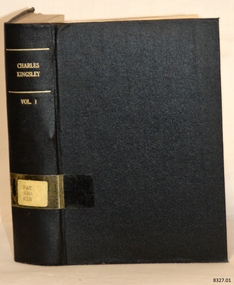
Book - Letters/Journals, Charles Kingsley, Charles Kingsley: His Letters and Memories of His Life Vol 1, 1879
... During a decade when the publication of Charles Darwin’s On the Origin of Species (1859) threw the religious world into a panic, Kingsley stood out as a prominent clergyman who openly defended new ideas. ...The focus of this book is not a standard biography written by an outside observer; it is a life story told through letters and personal journals. The volume is seamlessly woven together with editorial commentary by Kingsley’s widow, Frances "Fanny" Grenfell. Because this is Volume 1, it covers the first half of Charles Kingsley's life. It documents his childhood, his time at Cambridge University, and his intense courtship of Fanny. His early career as an Anglican clergyman in the rural parish of Eversley is covered, alongside his rise to national prominence in the late 1840s and 1850s as a social reformer. The text highlights his role in the Christian Socialist movement and his writing under the pen name "Parson Lot" to advocate for the working class. It also explores the writing and reception of his famous early novels, such as Alton Locke and Yeast, which tackled themes of poverty and systemic inequality.Charles Kingsley: His Letters and Memories of His Life Vol 1 Author: Charles Kingsley Edited by his wife ( Frances "Fanny" Grenfell) Publisher: C Kegan Paul & Co Date: 1879 Further Information: Sixth Abridged Editionnon-fictionThe focus of this book is not a standard biography written by an outside observer; it is a life story told through letters and personal journals. The volume is seamlessly woven together with editorial commentary by Kingsley’s widow, Frances "Fanny" Grenfell. Because this is Volume 1, it covers the first half of Charles Kingsley's life. It documents his childhood, his time at Cambridge University, and his intense courtship of Fanny. His early career as an Anglican clergyman in the rural parish of Eversley is covered, alongside his rise to national prominence in the late 1840s and 1850s as a social reformer. The text highlights his role in the Christian Socialist movement and his writing under the pen name "Parson Lot" to advocate for the working class. It also explores the writing and reception of his famous early novels, such as Alton Locke and Yeast, which tackled themes of poverty and systemic inequality.flagstaff hill, warrnambool, shipwrecked coast, flagstaff hill maritime museum, maritime museum, shipwreck coast, flagstaff hill maritime village, great ocean road, book, pattison collection, warrnambool library, warrnambool mechanics’ institute, ralph eric pattison, corangamite regional library service, warrnambool city librarian, mechanics’ institute library, victorian library board, warrnambool books and records, warrnambool children’s library, charles kingsley: his letters and memories of his life vol 1, frances "fanny" grenfell, mrs kingsley -
 The Beechworth Burke Museum
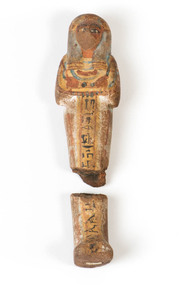
Ceremonial object - Ushabti of Taweret-Khaiti, Circa 1292 BC
... They were also utilised in Australian museums, like the Burke Museum, to connect the collection to one of the oldest civilisations known to man and since Australia was considered a “young” country by European settlers, this was vital and derived from an interest in Darwin’s “Origin of the Species” 1859. Furthermore, there was a culture of collecting in the 1800s amongst the affluent in English society which led to the appearance of many Egyptian artefacts in private collections. ...Ushabti are tiny anthropoid (human-shaped) figures placed in the tombs of wealthy Egyptians. They were intended to do the work of the deceased in the afterlife. This purpose is implied through their name, which may have derived from the Egyptian word “to answer”. The Burke Museum in Beechworth is home to a particular ancient Egyptian Ushabti figure. This artefact was donated to the Museum in 1875. No details about how it left Egypt, arrived in Australia, and where it was located before this donation are known. The Nineteenth Century, when this artefact was donated, was a period when many museums acquired items of ancient Egyptian heritage. Many of these items were procured in less than desirable circumstances, having often been looted from ancient tombs and sold to tourists without documentation as to their original location and/or accompanying grave goods. These artefacts were also divested through partage (the trading of artefacts for funds); however, the latter is unlikely to have been the case for this artefact. Since the Ushabti was donated by an unknown donor, it is likely to have been in a private collection rather than an institution. Ushabti can be dated using iconographic analysis which is non-invasive and provides a comprehensive study of the artefact. The later period of the 18th Dynasty marked the beginning of an increase in both the inclusion of Ushabti as essential funerary items and the creation of Ushabti with tools. From this period, they are no longer depicted without tools. Depictions of tools including gardening hoes are frequently depicted grasped in the Ushabti’s hands whilst items like the seed-bag are depicted hanging on the back rather than in an alternative position. This Ushabti figure grasps a gardening hoe and a mattock and a small seed bag surrounded by a yoke bearing water jars are depicted on the upper back of the Ushabti. These features are essential in helping narrow this dating to the late 18th and before the early 20th Dynasty. The position of this seed bag also provides dating information. In the early 18th Dynasty this bag was consistently drawn on the front of the figurine; however, by the reign of Seti I, this feature moved to the back. Thus, since the seed bag is located on the back of this Ushabti, it cannot date to the early 18th Dynasty. By the 19th Dynasty, Ushabti’s were increasingly made from either faience or terracotta. The availability of these materials in Egypt resulted in the increase of Ushabti production with tombs containing many more figurines than previously seen. The Ushabti held by the Burke collections is made from terracotta. Terracotta was rarely used for Ushabti before and during the early 18th Dynasty with only the odd appearance until the late 18th Dynasty and becoming common through that period until the late Third Intermediate Period. Whilst the face has been damaged, there is no evidence for the Ushabti having been provided with an Osirian false beard. This omission rules out a dating of later than the 25th Dynasty when beards became prominent. The inscriptions also date the Ushabti to the New Kingdom. This is because of the use of sḥḏ (“to illuminate”) with Wsjr (“Osiris”) which only occurs in these periods. Therefore, considering all these elements, the Ushabti can be confidently be dated to between the late 18th to early 19th dynasty.Artefacts like this Ushabti are no longer exclusively representative of their origins in burial assemblages and significance in the mythology of the Egyptian afterlife but are also significant for the accumulated histories they have gained through travel. The movement of this artefact from Egypt to Australia allows insight into the collecting habits of the 19th century, and in particular, the reception of ancient Egyptian artefacts in small rural museums. The procurement of Egyptian artefacts was a social trend around the late 1800s to early 1900s. Egyptian artefacts were considered curiosities and recognised for their ability to attract public attention to museums. They were also utilised in Australian museums, like the Burke Museum, to connect the collection to one of the oldest civilisations known to man and since Australia was considered a “young” country by European settlers, this was vital and derived from an interest in Darwin’s “Origin of the Species” 1859. Furthermore, there was a culture of collecting in the 1800s amongst the affluent in English society which led to the appearance of many Egyptian artefacts in private collections. The acquisition of this Ushabti figure is not certain, but it was likely donated from a private collection rather than an institution. This particular artefact is significant as an example of a high-quality Ushabti representative of those produced during the late 18th or early 19th century. It provides insight into the individualism of an Ushabti and the mythology of ancient Egypt. It also provides an example of the types of items required in the tomb assemblages of this period and reinforces the importance of ensuring the successful afterlife of the deceased through art. This Ushabti belonged to a woman named Taweret-Khaiti, Chantress of Amun, in the late 18th Dynasty or early 19th Dynasty (c.1292 BC) of the Egyptian New Kingdom. It likely comes from an undetermined tomb in the locality of Thebes. This figure is made from Nile silt clay (a polyester terracotta; clay sourced from the banks of the Nile River) which was a popular material for Ushabti construction in the early 19th Dynasty. It is in a fair state of preservation (with the exception of a break through the centre) and originally made to a high quality. The face has been damaged but the eyes and eyebrows are clearly marked with black ink and the sclera painted white. The Ushabti is painted a light brown/yellow colour and features a vertical line of inscription down the lower front. The Ushabti wears a large wig and and a schematic collar. The arms are painted light brown and depicted crossed with bracelets around the wrists. It grasps a hoe and mattock. A yellow seed-basket is depicted on the Ushabti’s back. These features represent the likelihood that this particular Ushabti was intended to complete farm work for the deceased in the next life. There would have been additional Ushabti of similar design within the tomb who worked under the supervision of a foreman Ushabti. The foreman Ushabti would be depicted dressed in the clothing of the living. The inscriptions are painted freehand in black ink and written in a vertical column from the base of the collar to the foot pedestal on the front of the Ushabti. The owner of the Ushabti could elect to have the figures inscribed with their name, the Ushabti spell and any other details they deemed necessary. In the case of this example, the Ushabti is inscribed with the owner’s details and is an abbreviated version of the standard Ushabti formula. This formula ensured that the Ushabti would complete the desired task in the afterlife when called upon by the deceased. Ushabti which were not inscribed would represent their intended purpose through design; however, this Ushabti, like most made in the late 18th Dynasty, conveys its purpose both through both design and inscription. The inscription is as follows: sHD wsir nbt pr Smayt imn tA-wr(t)-xai(ti) mAa xrw which translates to: "The illuminated one, the Osiris (the deceased), the mistress of the household, Chantress of Amun, Taweret-Khaiti, true of voice (justified)"ancient egypt -
 National Wool Museum
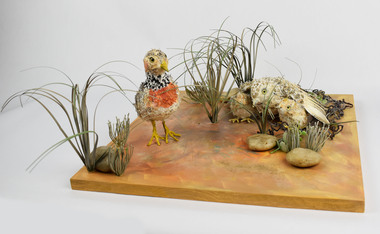
Artwork, other - Paper Taxidermy, Mary-Jane Walker, Plains Wanderer, 2020
... origins date back to when Australia was part of the Gondwana supercontinent over 60 million years ago. They are so biologically distinct that their extinction would result in the loss of a branch of the tree of life. A fussy grass dweller, they like neither too much nor too little grass. That is where sheep grazing can help. After years of low numbers in Victoria, plains-wanderer populations have been increasing in Terrick Terrick National Park in north west Victoria, as sheep grazing maintains the grass in the park at a suitable level. With the right management, this ecologically important bird species...origins date back to when Australia was part of the Gondwana supercontinent over 60 million years ago. They are so biologically distinct that their extinction would result in the loss of a branch of the tree of life. A fussy grass dweller, they like neither too much nor too little grass. That is where sheep grazing can help. After years of low numbers in Victoria, plains-wanderer populations have been increasing in Terrick Terrick National Park in north west Victoria, as sheep grazing maintains the grass in the park at a suitable level. With the right management, this ecologically important bird species ...The world’s most ecologically distinct bird lives in the native grasslands of Victoria - but only just. The plains-wanderer is a small bird that was once widespread across the grasslands of south-eastern Australia. Today there are fewer than 1000 mature birds in the wild. The plains-wanderer is under threat due to habitat loss caused by overgrazing, cropping and suburban sprawl. Unlike most other birds, female wanderers are larger and more colourful and the males take care of the chicks. They are only about 15cm tall and weigh between 40-80g for the male and 55-90g for the female. Their intricate plumage mirrors the colours of their grassland home so they blend in perfectly with their surroundings. The plains-wanderer’s origins date back to when Australia was part of the Gondwana supercontinent over 60 million years ago. They are so biologically distinct that their extinction would result in the loss of a branch of the tree of life. A fussy grass dweller, they like neither too much nor too little grass. That is where sheep grazing can help. After years of low numbers in Victoria, plains-wanderer populations have been increasing in Terrick Terrick National Park in north west Victoria, as sheep grazing maintains the grass in the park at a suitable level. With the right management, this ecologically important bird species is continuing to survive in the native grasslands of Victoria. Managing these habitats for the plains-wanderer can also support the conservation of many other threatened plant and animal species. Object: Nest of plains-wanderers by Mary-Jane Walker, 2020. Outer made from upcycled paper, internal structure steel. Nest of plains-wanderers by Mary-Jane Walker, 2020. Outer made from up cycled paper, internal structure steel. native grasslands, plains-wanderer, terrick terrick national park
