
Showing 91 items matching "the white russian"
-
 Surrey Hills Historical Society Collection
Work on paper - Vertical File, Ray Kelly
... ...The White Russian...Undated. (2 pages) 6. ‘The White Russian’ Poem. Melbourne 1941 (3 pages) 7. ...Undated. (2 pages) 6. ‘The White Russian’ Poem. Melbourne 1941 (3 pages) 7. ...Ray Kelly 1. Miscellaneous Advertisements re: Incley Pty Lty from 1897, 1927, 1928 and 1928. From ‘The West Australian’ and ‘Argus’ (4 pages) 2. Collection of copies of photos from Ray Kelly (His family, home and shop). ( 6 pages including duplicates) 3. Notice of Marriage of Edward Kelly and Frances Horn in ‘Argus’ 12 February 1921 4. ‘From Repertory Theatre to Professional Stage’ from ‘Table Talk’ 11 March 1926 (1 page) 5. ‘Some Memories of Bryn Awel’ by Ray Kelly. Undated. (2 pages) 6. ‘The White Russian’ Poem. Melbourne 1941 (3 pages) 7. ‘Sighting of the old Russian Hedge-Cutter’ by Jen Gilmour Hearn 15 July 2009 and ‘Recollections’ by Shirley Sleigh, 18 July 2009 (1 page) 8. Quote from ‘Deepdene Days’ (re: The Russian) (1 page) 9. ‘The Russian Hedge Cutter’ by Ray Kelly 19 January 2009 (1 page) 10. ‘Aged Russian Sets Hospital Poser’ (Newspaper Cutting 1949) 11. ‘The Old Treeloppers’ by Ray Kelly 10 February 2009 (1 page) 12. Australian Electoral roll re: Edward Kelly up to 1924 (1 page) ray kelly, the white russian, the russian hedge cutter, the old treeloppers, bryn awel, edward kelly, frances horn -
 Vision Australia
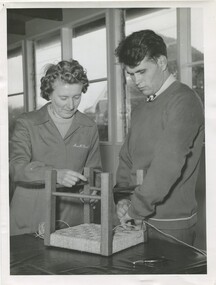
Photograph - Image, Alex Momot, 1962
... Alex Mamot was a White Russian immigrant from China, sponsored by the Association of the Blind. ...Hayer top + Bottom, #85. 3178 4 - Volunteer Carole Opperman teaches English to White Russian refugee Alex Momot, who has been sponsored by the Association for the Blind. 2/8 9 - Celine Mann & Alex Mamot at point of arrival. ...Alex Mamot was a White Russian immigrant from China, sponsored by the Association of the Blind. ...Alex Mamot was a White Russian immigrant from China, sponsored by the Association of the Blind. Despite initial language barriers, his determination to succeed was an inspiration to those around him, who developed new ways of teaching which took into account his growing knowledge of English. In these images Alex Momot is showing with a Russian typewriter, being shown how to make stools by Mollie McDowell, feeling texture of a new suit held up by Matron Agar, being taught English by Carole Laird, learning the alphabet with H. Mackenzie and greeted at Brighton reception by Ms A. Mann. In addition, there are two typed notes without images: - The ship Tjiluwak, carrying Alexander Momot and other White Russian refugees approaching the wharf in Melbourne. - On the wharf, Alex 2nd from left, is greeted by Mrs W Christian (left) a blind Committee member of the Association for the Blind and Miss Constance Duncan of the Australian Council of Churches. At the right is Sergie Bankovski, also a blind White Russian who acted as interpreter. Miss Duncan also initiated the move which resulted in the Association for the Blind giving refuge to Sergie and his mother. Standing at the rear is Major General S.F. Legge, Director of Public Relations for the Association of the Blind.12 b/w photographs of Alex Mamot1 - No 4, 3" wide all in full depth, Hayer top + Bottom, #85, 3178 3 - P14. Reduce to 3" wide. Hayer top + Bottom, #85. 3178 4 - Volunteer Carole Opperman teaches English to White Russian refugee Alex Momot, who has been sponsored by the Association for the Blind. 2/8 9 - Celine Mann & Alex Mamot at point of arrival. No 1. 3" wide all in, full depth, Hayer top + Bottom, 3178, 45, 16B. 12 - 3181association for the blind, elanora home (brighton), alex mamot -
 Maccabi Victoria
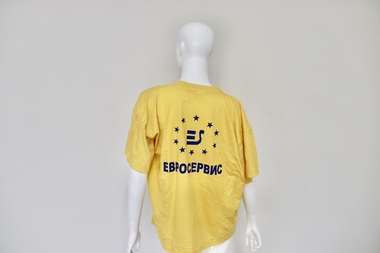
Uniform - tshirt, c. 1980
... Russian Jewish Congress logo on front in blue & on back: white print Maccabi logo & RUSSIA & blue Russian text...Russian Jewish Congress logo on front in blue & on back: white print Maccabi logo & RUSSIA & blue Russian text Uniform tshirt ...Yellow t-shirt. Russian Jewish Congress logo on front in blue & on back: white print Maccabi logo & RUSSIA & blue Russian textmaccabiah games -
 Mission to Seafarers Victoria
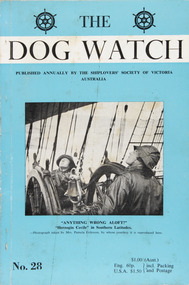
Journal (item) - Periodicals-Annual, Shiplovers' Society of Victoria, The Annual Dog Watch
... Klebingat - 48 A Memory of White Russia - F. L. Ogle - 56 The First of Port Phillip Pilots - Darren Baillieu - 58 Captain Robert Pattman of the "Loch Torridon" - Captain W. ...Klebingat - 48 A Memory of White Russia - F. L. Ogle - 56 The First of Port Phillip Pilots - Darren Baillieu - 58 Captain Robert Pattman of the "Loch Torridon" - Captain W. ...This journal provides the reader with glimpses of the adventures and hardships of a seaman's life. Many of the stories are of sailing ships.Contributes to our knowledge of the importance of shipping and places on record those stories of the sea which would otherwise be lost.Contents Foreword - Commodore Rodney Rhoades, D.S.C., R.A.N. (Ret.) - 9 Editorial - "Restoration and Replicas" - S. A. E. Strom - 11 "Polly Woodside" Remains Afloat - Dr. E. Graeme Robertson - 17 Gleams Through the Darkness - N. S. Smith - 23 Captain W. E. Smith - Captain E. Molyneux - 33 Nearly Sixty Years Ago - Captain W. J. Cowling - 35 Some Time - C. L. Lewis - 47 Father Tremblay Builds a Boat - Captain F. K. Klebingat - 48 A Memory of White Russia - F. L. Ogle - 56 The First of Port Phillip Pilots - Darren Baillieu - 58 Captain Robert Pattman of the "Loch Torridon" - Captain W. R. Chaplin - 72 With "Antiope" in the Northern Waters - Captain A. R. Nancarrow - 77 Rottnest Island - B. D. Goldfinch - 82 "Port Nicholson" to the Rescue - J. R. Brazier - 87 Glossary - - 91 Lights on the Hill - C. E. Bonwick - 93 Murray River Shipping - Ross Holloway - 94 What's in a Name - - 103 That was the Trouble - Dr. Stanislaw Bernatt - 110 "Eight Bells" - H. F. Watson - 111 Musings of an Old Sailor - Captain J. W. Carr - 112 A Voyage on the SS "Orange Branch" - I. L. Barton - 114 Book Reviews - - 129sailing ships, steamships, shipping, seafaring life, shiplovers' society of victoria, dog watch, herzogin cecile -
 Eltham District Historical Society Inc
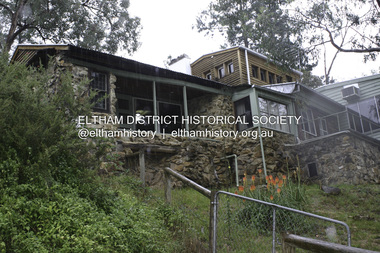
Photograph - Digital Photograph, Alan King, Stonygrad, 34 Hamilton Road, North Warrandyte, 30 January 2008
... Vassilieff trained with the Imperial Military Academy at St Petersburg and fought in World War One as an officer in the White Russian Army against the communists. In 1920 he was captured, then escaped from prison, stole a horse and rode bareback 150 miles to the Black Sea, helped at first by Tartar freebooters. ...Vassilieff trained with the Imperial Military Academy at St Petersburg and fought in World War One as an officer in the White Russian Army against the communists. In 1920 he was captured, then escaped from prison, stole a horse and rode bareback 150 miles to the Black Sea, helped at first by Tartar freebooters. ...Vassilieff dynamited rock from his own property to build his house. Stonygrad is reminiscent of a grotto and in parts, of a sculpture. Covered under Heritage Overlay, Nillumbik Planning Scheme. Published: Nillumbik Now and Then / Marguerite Marshall 2008; photographs Alan King with Marguerite Marshall.; p135 Stonygrad, the home built by Expressionist painter and sculptor Danila Vassilieff, is reminiscent of a grotto and in parts, of a sculpture. Vassilieff, who amongst others influenced painter Sydney Nolan and Albert Tucker, was a member of the artists group the Angry Penguins. He was also a highly regarded art teacher at the nearby Koornong Experimental School and taught at Eltham High School. Art critic Robert Hughes described Vassilieff’s painting as ‘lyrical without social commentary’, and said Vassilieff was ‘the most oddly neglected artist in recent Australian History’. Vassilieff, who was born in 1897 in Russia, had an unusually adventurous life before he settled in Warrandyte. The 12th of 18 children, he lived on a farm in the Don Basin. Vassilieff trained with the Imperial Military Academy at St Petersburg and fought in World War One as an officer in the White Russian Army against the communists. In 1920 he was captured, then escaped from prison, stole a horse and rode bareback 150 miles to the Black Sea, helped at first by Tartar freebooters. He then travelled to India, Shanghai and arrived in Queensland as a refugee in 1923 where he began painting. He and his wife Anisia bought a sugar farm near Ingram, and later he constructed railway lines at Mataranka, in the Northern Territory.4 In 1929 Vassilieff went to Brazil for formal art training from former fellow-officer Dmitri Ismailovich, but he soon left to travel up the Amazon River. He then worked as a sidewalk artist in the West Indies and travelled for two years in England, France and Spain. In 1937 he arrived in Melbourne where he lived until his death in 1958. His first major Australian series was the Carlton streetscapes and from 1951 he sculpted in local hard limestone. Vassilieff rejected all dogma and regarded religious subjects as suitable only for decorative arts. In 1944 he helped defeat a communist attempt to take over the Contemporary Art Society. For a short time, from around 1955, Vassilieff taught at various Victorian schools. The Angry Penguins painted mainly between 1937 and 1947, and included Arthur Boyd, Albert Tucker, Sidney Nolan and Joy Hester. The group formed as they felt isolated from European thought and art (including Surrealism) from which their work was derived. They were also angry at what they considered to be the complacency and insularity of their society. They maintained Australians at first were scarcely aware of the threats of the Wall Street Crash and Hitler and were little interested in the Spanish Civil War. The Angry Penguins also objected to the White Australia Policy. Hughes said although most of the Melbourne Expressionists in the 1940s were unskilled and their work crude in style, they helped jolt Australian painting from its pastoral complacency. Their style influenced nearly every painting produced by significant figurative artists in Melbourne in the 1950s such as Charles Blackman. From 1939 Vassilieff built Stonygrad, mainly with local stone. The house stands at the end of a private road surrounded by trees with the quiet occasionally broken by the sounds of bellbirds. To build his house Vassilieff dynamited rock and cut trees from his own property. The original section of the three-level house is of irregular-shaped pieces of solid stone, exposed inside like the exterior. Vassilieff later built sections with timber and brick. Inside is rustic and cave-like, and several rooms are linked by arched openings with no doors. One undulating wall was carved out of rock from which two sculptured heads protrude. Several ceilings are of rough-hewn logs and the built-in table and bookcase are rough, as is a timber ladder leading to a bedroom. Not for the elderly or unsteady! Yet the general impression in the muted light is beautiful, with artistic originality.This collection of almost 130 photos about places and people within the Shire of Nillumbik, an urban and rural municipality in Melbourne's north, contributes to an understanding of the history of the Shire. Published in 2008 immediately prior to the Black Saturday bushfires of February 7, 2009, it documents sites that were impacted, and in some cases destroyed by the fires. It includes photographs taken especially for the publication, creating a unique time capsule representing the Shire in the early 21st century. It remains the most recent comprehenesive publication devoted to the Shire's history connecting local residents to the past. nillumbik now and then (marshall-king) collection, danila vassilieff, hamilton road, north warrandyte, stonygrad -
 Maccabi Victoria
Accessory, 2000
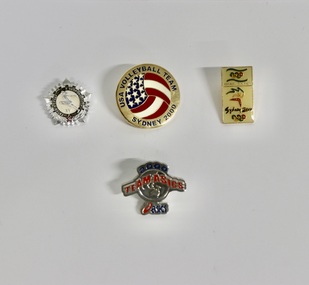
... Assorted countries' pins from 2000 Olympic Games collected by Judy Kohn who was a volunteer at the Games. 01: USA Volleyball Team Sydney 2000 and USA flag on volleyball - red, white, blue on gold 02: Israel & in Hebrew, logo & Sydney 2000 with rings - blue, black, red, yellow, green & gold on cream, on back - 10,000 pcs 03: Sydney 2000, rings & Germany logo - red & black on gold 04: INDIA Sydney Olympics 2000, rings and Indian logo - black, blue, red, yellow, green & orange on white & gold edge 05: CYPRUS, rings & Cyprus logo - blue, black, red, yellow, green & gold on cream 06: CUBA, rings & flag - red, black, white, gold 07: ESPANA (SPAIN) - red, yellow, black & gold rings & Sydney 2000 08: AUSTRIA Olympic Team Sydney 2000 - orange, red, white, black on silver with Austrian airlines plane 09: TEAM ASICS 2000 and Asics logo - red & blue on silver 10: NBC, logo & Olympic rings - yellow, orange, red, purple, blue, green & gold on navy blue enamelled badge 11: Russian - looks like athletics v cheap aluminium badge with red sickle Russian logo & white background with athlete & IV in silver - this is a propaganda pin about GTO organisation (Ready for Labour and Defence of the USSR) - awarded to 220,000,000 people in Russia doing an athletic program during late 1970s 12: LIETUVA (Lithuania) - Sydney 2000 & flag colours & Olympic rings - red, yellow, green, white, gold...These pins are assorted from various countries Olympics 27 Assorted countries' pins from 2000 Olympic Games collected by Judy Kohn who was a volunteer at the Games. 01: USA Volleyball Team Sydney 2000 and USA flag on volleyball - red, white, blue on gold 02: Israel & in Hebrew, logo & Sydney 2000 with rings - blue, black, red, yellow, green & gold on cream, on back - 10,000 pcs 03: Sydney 2000, rings & Germany logo - red & black on gold 04: INDIA Sydney Olympics 2000, rings and Indian logo - black, blue, red, yellow, green & orange on white & gold edge 05: CYPRUS, rings & Cyprus logo - blue, black, red, yellow, green & gold on cream 06: CUBA, rings & flag - red, black, white, gold 07: ESPANA (SPAIN) - red, yellow, black & gold rings & Sydney 2000 08: AUSTRIA Olympic Team Sydney 2000 - orange, red, white, black on silver with Austrian airlines plane 09: TEAM ASICS 2000 and Asics logo - red & blue on silver 10: NBC, logo & Olympic rings - yellow, orange, red, purple, blue, green & gold on navy blue enamelled badge 11: Russian - looks like athletics v cheap aluminium badge with red sickle Russian logo & white background with athlete & IV in silver - this is a propaganda pin about GTO organisation (Ready for Labour and Defence of the USSR) - awarded to 220,000,000 people in Russia doing an athletic program during late 1970s 12: LIETUVA (Lithuania) - Sydney 2000 & flag colours & Olympic rings - red, yellow, green, white, gold Accessory ...These pins are assorted from various countriesAssorted countries' pins from 2000 Olympic Games collected by Judy Kohn who was a volunteer at the Games. 01: USA Volleyball Team Sydney 2000 and USA flag on volleyball - red, white, blue on gold 02: Israel & in Hebrew, logo & Sydney 2000 with rings - blue, black, red, yellow, green & gold on cream, on back - 10,000 pcs 03: Sydney 2000, rings & Germany logo - red & black on gold 04: INDIA Sydney Olympics 2000, rings and Indian logo - black, blue, red, yellow, green & orange on white & gold edge 05: CYPRUS, rings & Cyprus logo - blue, black, red, yellow, green & gold on cream 06: CUBA, rings & flag - red, black, white, gold 07: ESPANA (SPAIN) - red, yellow, black & gold rings & Sydney 2000 08: AUSTRIA Olympic Team Sydney 2000 - orange, red, white, black on silver with Austrian airlines plane 09: TEAM ASICS 2000 and Asics logo - red & blue on silver 10: NBC, logo & Olympic rings - yellow, orange, red, purple, blue, green & gold on navy blue enamelled badge 11: Russian - looks like athletics v cheap aluminium badge with red sickle Russian logo & white background with athlete & IV in silver - this is a propaganda pin about GTO organisation (Ready for Labour and Defence of the USSR) - awarded to 220,000,000 people in Russia doing an athletic program during late 1970s 12: LIETUVA (Lithuania) - Sydney 2000 & flag colours & Olympic rings - red, yellow, green, white, goldolympics 27 -
 Federation University Historical Collection
Postcard - Postcard Booklet, Levi Fils & Co, Vues Detachables
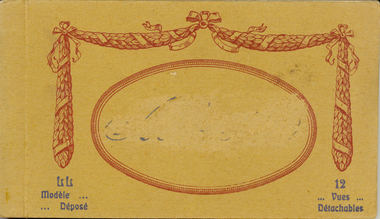
... Russia as well. There are few French towns that are not captured by his cards. His name does not appear on the cards but - L.L. follows the title as a photo credit. Many of their cards are not attributed. These cards were printed as colotypes in black & white...Russia as well. There are few French towns that are not captured by his cards. His name does not appear on the cards but - L.L. follows the title as a photo credit. Many of their cards are not attributed. These cards were printed as colotypes in black & white ...Levy Sons & Co. 1895-1919 Paris, France and London, England In 1864 the Parisian photographic studio of Ferrier pere*, fils & Soulier was bought out and became M. Leon & J. Levy. This partnership lasted until 1872 when Leon left and it was renamed J. Levy & Co., which became an important producer of stereo-views and lantern slides. By 1895 his sons had joined the company and it was renamed once again to Levy Sons & Co. (or Levy et ses Fils). His son Lucien became a well known photographer who began publishing international view-cards from his own work depicting scenes mostly from within the French empire, though quite a number are from England and there are some from Australia and Russia as well. There are few French towns that are not captured by his cards. His name does not appear on the cards but - L.L. follows the title as a photo credit. Many of their cards are not attributed. These cards were printed as colotypes in black & white, sepia, and over speckled color lithography. In 1920 the studio united with Neurdein Freres to become Levy & Neurdein reunis. Their negatives are now owned by the Roger-Viollet Photographic Agency. *Claude Marie Ferrier (1811-1889) was also an important early photographer. He was the 'Pere' in Ferrier Pere, Fils & Soulier - best remembered for their stunning series of glass views. Sorting this collection is a challenge. The postcard rears display a variety of forms - a) garland emblem with LL inside, b) with an addition emblem within (FPS?). Or c) - no emblem which may mean production by another company - however LL. remains on the front as a credit to the photographer. http://www.metropostcard.com/picslogos/pcl-levylucien.jpg.jpg http://www.unpi.com/clem/unpostcards/LON1919PC2Naback.jpg Example Colour Card circa 1920 No. 78 Paris - L'Escalier de l'Opera - LL. http://www.postcardcollector.org/forum/index.php?p=/discussion/1306/levy-fils-cie-paris-specifically-lucien-levy-llAbbeyville was a town in the Somme, so that this is a possible reason that the name has been erased on the postcard. http://www.france-voyage.com/travel-photos/abbeville-11435.htmSmall brown covered book of 12 postcards with views of Abbeyville in the Somme. Issue between each each individual postcard. The cover has an oval on front and the name "Abbeyville" in its centre has been erased. The name of the town has also been erased (censored) throughout the booklet. There is a garland in maroon around the maroon oval on the front cover. Print in dark grey on bottom left and right hand side corners.Print "Modele ... Depose" in dark grey on bottom left and "12 Vues Detachables" on right hand side corners. Names of places printed inside but the name of the town has been erased throughout. "Carte Postale" with logo underneath at centre and "Correspondence" LHS and "Adresse" RHS on top of verso of each postcard in booklet. "Levy Fils & Co, Paris sideways along centre line of postcard on verso.abbeyville, levy fils, postcard, vues, panorama, place de l'amiral-courbet, monument, rue alfred-cendre, alfred-cendre street, statue, saint vulfran church, saint gilles church, museum, prarona statue, avenue de la gars, avenue of the station, chevalier de la barre, river somme, somme, talence bridge, correspondence, carte postale, censor, censored -
 Federation University Historical Collection
Postcard, 'United We Stand' World War One Souvenir Postcard, c1916
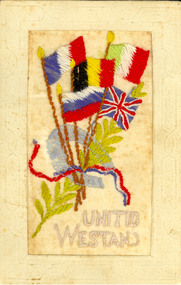
... white silk. The embroidery includes 5 flags (England, France, Italy, Belgium, Russia), a blue horseshoe, a green sprig rosemary and the words 'United We Stand"....white silk. The embroidery includes 5 flags (England, France, Italy, Belgium, Russia), a blue horseshoe, a green sprig rosemary and the words 'United We Stand". ...Postcard sent from the French theatre of war during World War One by Harry Holmes. HENRY SMERDON (Harry) HOLMES was born in 1897 at the family property, ’Sauchieburn’, 17 km north of Ballarat, in the Ascot district. He was the youngest of four children. After finishing his education at St Patrick’s College, Ballarat, Henry joined the Holmes family farming interests. At the age of 18 he enlisted and served with AIF in Egypt, France and Belgium 1915-1918. Henry served at the famous battlegrounds of Ypes and Somme in the Australian Army 8th Battalion. He was a Driver with the 4th D.A.C. The postcard is of "The Ascot" boys. Includes [Samuel] Gordon Spittle, Henry [Harry] Holmes's first cousin, and other Ascot lads and district connections: neighbours, Ascot State School classmates and football mates from Clunes / Creswick districts. (Research by Henry's grand-daughter, Jane Dyer nee Chatham) White postcard with embroidery on white silk. The embroidery includes 5 flags (England, France, Italy, Belgium, Russia), a blue horseshoe, a green sprig rosemary and the words 'United We Stand".Verso: With best love from Harry 13/5/16chatham, chatham family collection, holmes, harry holmes, henry holmes, world war, world war 1, world war i, world war one. -
 The Beechworth Burke Museum
Audio - Oral History, Valentina Witkowski
... While the township of Beechworth is known for its history as a gold rush town, these accounts provide a unique insight into the day-to-day life of the town's residents during the 20th century, many of which will have now been lost if they had not been preserved. listen to what they say beechworth oral history witkowski Valentina Witkowski Russia Burke Museum Mrs Valentina Witkowski This is a digital copy of a recording that was originally captured on a cassette tape. The cassette tape is black with a horizontal white ...Valentina Witkowski was born in 1922 in St. Petersberg (Leningrad at the time) in Russia. She moved to Australia post war with her husband and children. She retells her time moving from Russia, to Germany where she was in a camp, Canada, Argentina and then finally Australia. This oral history recording was part of a project conducted by Jennifer Williams in the year 2000 to capture the everyday life and struggles in Beechworth during the twentieth century. This project involves recording seventy oral histories on cassette tapes of local Beechworth residents which were then published in a book titled: Listen to what they say: voices of twentieth century Beechworth. These cassette tapes were digitised in July 2021 with funds made available by the Friends of the Burke. Mrs Valentina Witkowski account of her life before and after arriving in Beechworth and the local area during the 20th century is historically and socially significant to the cultural heritage of the region. She details her struggles in Germany before arriving in Beechworth with her new husband and children. This oral history account is socially and historically significant as it is a part of a broader collection of interviews conducted by Jennifer Williams which were published in the book 'Listen to what they say: voices of twentieth-century Beechworth'. While the township of Beechworth is known for its history as a gold rush town, these accounts provide a unique insight into the day-to-day life of the town's residents during the 20th century, many of which will have now been lost if they had not been preserved. This is a digital copy of a recording that was originally captured on a cassette tape. The cassette tape is black with a horizontal white strip and is currently stored in a clear flat plastic rectangular container. It holds up 40 minutes of recordings on each side. Mrs Valentina Witkowskilisten to what they say, beechworth, oral history, witkowski, valentina witkowski, russia, burke museum -
 The Beechworth Burke Museum
Geological specimen - Amazonite, unknown
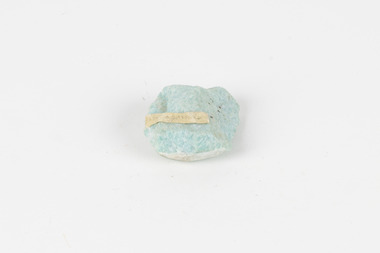
... white streaks or veining. The greenish colour is believed to come from the small amount of lead contained in its composition. Amazonite is named after the Amazon River due to its colour and similarities to another rock found along the riverbanks, although Amazonite is not actually found at or near the Amazon. Although less commonly used in jewellery today, Amazonite has been mined and used by humans for thousands of years and Amazonite jewellery from at least 2000BCE have been discovered in North Africa. Amazonite is found in many locations around the world including Brazil, Peru, Ethiopia, Canada, Russia...white streaks or veining. The greenish colour is believed to come from the small amount of lead contained in its composition. Amazonite is named after the Amazon River due to its colour and similarities to another rock found along the riverbanks, although Amazonite is not actually found at or near the Amazon. Although less commonly used in jewellery today, Amazonite has been mined and used by humans for thousands of years and Amazonite jewellery from at least 2000BCE have been discovered in North Africa. Amazonite is found in many locations around the world including Brazil, Peru, Ethiopia, Canada, Russia ...Amazonite is classed as a Tectosilicate and is part of the Feldspar group of minerals. Amazonite forms in a triclinic crystal structure and its chemical formula is K(AlSi3O8). In appearance, Amazonite can range from shades of green to green blue to blue, and often with white streaks or veining. The greenish colour is believed to come from the small amount of lead contained in its composition. Amazonite is named after the Amazon River due to its colour and similarities to another rock found along the riverbanks, although Amazonite is not actually found at or near the Amazon. Although less commonly used in jewellery today, Amazonite has been mined and used by humans for thousands of years and Amazonite jewellery from at least 2000BCE have been discovered in North Africa. Amazonite is found in many locations around the world including Brazil, Peru, Ethiopia, Canada, Russia, Mozambique, Myanmar, Pakistan, China, Madagascar, and the United States of America. This specimen most probably comes from the U.S.A., Amazonite is found in several US states particularly in Colorado, Virginia, Pennsylvania. This specimen is of both scientific and historic significance as a striking blue green example of Amazonite mined prior to 1868 in the United States of America, most likely from Colorado, Virginia, or Pennsylvania. These three states are all locations of significant Amazonite deposits. This specimen is part of a larger collection of geological and mineral specimens collected from around Australia (and some parts of the world) and donated to the Burke Museum between 1868-1880. A large percentage of these specimens were collected in Victoria as part of the Geological Survey of Victoria that begun in 1852 (in response to the Gold Rush) to study and map the geology of Victoria. Collecting geological specimens was an important part of mapping and understanding the scientific makeup of the earth. Many of these specimens were sent to research and collecting organisations across Australia, including the Burke Museum, to educate and encourage further study.A palm-sized Feldspar mineral specimen from the Tectosilicate class in shades of blue-green with white veining.Existing label: green/blue Feldspar / "amazonite" / possibly USA geological specimen, geology, geology collection, burke museum, beechworth, tectosilicate, amazonite, feldspar, triclinic crystal structure, amazonite usa, amazonite colorado, amazonite virginia, amazonite pennsylvania -
 Mission to Seafarers Victoria
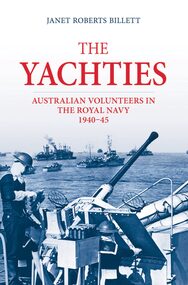
Book, Janet Billett, The Yachties - Australian Volunteers in the Royal Navy 1940-45, 2023
... Russia. A small group distinguished themselves in Rendering Mines Safe. The majority served in Combined Operations, which included daring coastal raids, the amphibious landings in the Mediterranean and Normandy, covert operations, and mine sweeping. Later in the war, Yachties also served in the Royal Australian Navy in South East Asia and the Pacific, contributing to victory with bravery, dash and loyalty to country and Empire. As a group they are the most highly decorated Australian volunteers. yachties dominion yachtsmen scheme royal navy ww2 201 pages with black and white ...201 pages with black and white illustrations; notes, bibliography, index.non-fictionyachties, dominion yachtsmen scheme, royal navy, ww2 -
 The Beechworth Burke Museum
Animal specimen - Bluebird
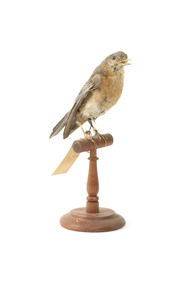
... white abdomen. The females is duller in colour than the male, with greyer upperparts and blue tinges to her wings. These Bluebirds, the European variety, are the most common of the three Bluebird species. When not nesting, these birds fly in small flocks around the countryside. Bluebirds feed on small insects including moths, termites and mosquitoes. They also eat grasshoppers, crickets and caterpillars. The Bluebird can spot caterpillars and other insects in tall grass from a distance of over 45 meters. The Bluebird is commonly identified in numerous cultures as being symbolic as a harbinger of happiness. Often in Russian...white abdomen. The females is duller in colour than the male, with greyer upperparts and blue tinges to her wings. These Bluebirds, the European variety, are the most common of the three Bluebird species. When not nesting, these birds fly in small flocks around the countryside. Bluebirds feed on small insects including moths, termites and mosquitoes. They also eat grasshoppers, crickets and caterpillars. The Bluebird can spot caterpillars and other insects in tall grass from a distance of over 45 meters. The Bluebird is commonly identified in numerous cultures as being symbolic as a harbinger of happiness. Often in Russian ...Eastern bluebirds are well-known song birds that live in eastern North America. They are sexually dimorphic, easily recognised by the male's bright royal blue upper plumage, chest of reddish brown and white abdomen. The females is duller in colour than the male, with greyer upperparts and blue tinges to her wings. These Bluebirds, the European variety, are the most common of the three Bluebird species. When not nesting, these birds fly in small flocks around the countryside. Bluebirds feed on small insects including moths, termites and mosquitoes. They also eat grasshoppers, crickets and caterpillars. The Bluebird can spot caterpillars and other insects in tall grass from a distance of over 45 meters. The Bluebird is commonly identified in numerous cultures as being symbolic as a harbinger of happiness. Often in Russian fairytales, the Bluebird is used as a symbol of hope. This specimen is part of a collection of almost 200 animal specimens that were originally acquired as skins from various institutions across Australia, including the Australian Museum in Sydney and the National Museum of Victoria (known as Museums Victoria since 1983), as well as individuals such as amateur anthropologist Reynell Eveleigh Johns between 1860-1880. These skins were then mounted by members of the Burke Museum Committee and put-on display in the formal space of the Museum’s original exhibition hall where they continue to be on display. This display of taxidermy mounts initially served to instruct visitors to the Burke Museum of the natural world around them, today it serves as an insight into the collecting habits of the 19th century.This specimen is part of a significant and rare taxidermy mount collection in the Burke Museum. This collection is scientifically and culturally important for reminding us of how science continues to shape our understanding of the modern world. They demonstrate a capacity to hold evidence of how Australia’s fauna history existed in the past and are potentially important for future environmental research. This collection continues to be on display in the Museum and has become a key part to interpreting the collecting habits of the 19th century.This female bluebird (likely Eastern) has a medium brown head and back, a rufous breast, and a cream belly. The bird has blue-tinged wing and tail feathers. The bill is short and has been stylized with the bill partly open to provide the illusion that the bird is making a call. This specimen stands upon a wooden mount and has an identification tag tied around its leg. The bird's plumage has faded since it was first preserved; females generally have duller colouring than their male counterparts but the colour of this particular specimen is paler than it would have been.Label: 122a. Blue-Bird / Catalogue Page 29. / Metal tag: 107taxidermy mount, taxidermy, animalia, burke museum, beechworth, australian museum, skin, reynell eveleigh johns, bird, american birds, bluebird -
 Federation University Historical Collection
Photograph (black & White), Lieutenant-Colonel Sir Henry Seymour Rawlinson, 1st Baron Rawlinson - South Africa
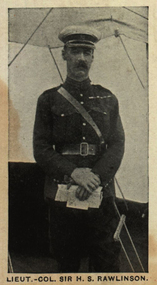
... Grand Officer of the Legion of Honour of France, 1916; Order of Danilo, 1st Class of the Kingdom of Montenegro, 1916; Obilitch Medal in Gold of the Kingdom of Montenegro, 1917; Order of St George, 4th Class of the Empire of Russia, 1917; Grand Officer of the Order of Leopold of Belgium, 1917; Croix de Guerre of Belgium, 1918; Croix de Guerre of France, 1919; American Army Distinguished Service Medal, 1919; Knight Grand Commander of the Order of the Star of India, 1924. rawlinson second boer war western transvaal battle of rooiwai 1st baron of trent, dorset knight grand cross of the royal victorian order knight commander of the order of st michael and st george knight grand cross of the order of the bath grand officer of the legion of honour france order of danilo 1st class of the kingdom of montenegro obilitch medal in gold of the kingdom of montenegro order fo st george 4th class of theempire of russia grand officer of the order of leopold of belgium croix de guerra of belgium croix de guerra of france american army distinguished service medal knight grand commander of the order of the star of india Individual image from photographed poster of tobacco and cigarette cards. Lieutenant-Colonel Sir Henry Seymour Rawlinson, 1st Baron Rawlinson - South Africa Photograph (black & White ...Rawlinson served with distinction in a field command in the Second Boer War from 1899 to 1902. He was in Western Transvaal during early 1902 and led a column taking part in the Battle of Rooiwai, the last battle of the war. Following the end of hostilities he returned to England. Rawlinson, for his commands and the battles and wars he was engaged in during his career was awarded many times. Knight Grand Cross of the Royal Victorian Order, 1917; Knight Commander of the Order of St Michael and St George, 1918; Knight Grand Cross of the Order of the Bath, 1919; Baron Rawlinson, of Trent in the County of Dorset, 1919. Grand Officer of the Legion of Honour of France, 1916; Order of Danilo, 1st Class of the Kingdom of Montenegro, 1916; Obilitch Medal in Gold of the Kingdom of Montenegro, 1917; Order of St George, 4th Class of the Empire of Russia, 1917; Grand Officer of the Order of Leopold of Belgium, 1917; Croix de Guerre of Belgium, 1918; Croix de Guerre of France, 1919; American Army Distinguished Service Medal, 1919; Knight Grand Commander of the Order of the Star of India, 1924. Individual image from photographed poster of tobacco and cigarette cards.rawlinson, second boer war, western transvaal, battle of rooiwai, 1st baron of trent, dorset, knight grand cross of the royal victorian order, knight commander of the order of st michael and st george, knight grand cross of the order of the bath, grand officer of the legion of honour france, order of danilo 1st class of the kingdom of montenegro, obilitch medal in gold of the kingdom of montenegro, order fo st george 4th class of theempire of russia, grand officer of the order of leopold of belgium, croix de guerra of belgium, croix de guerra of france, american army distinguished service medal, knight grand commander of the order of the star of india -
 Flagstaff Hill Maritime Museum and Village
Photograph, before 1911
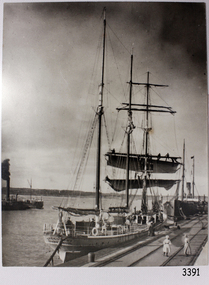
... white, of the sailing barque Speculant, berth at Warrnambool Breakwater. Two steamships are also in the photograph. There are people on the Speculant and on the breakwater. The barquentine SPECULANT was a steel, three-masted sailing ship built in 1895 in Inverkeithing, Scotland, registered in Warrnambool, Victoria and wrecked at Cape Paton, Victoria, 10th February 1911. The SPECULANT had been involved in the timber trade between the United Kingdom and Russia...white, of the sailing barque Speculant, berth at Warrnambool Breakwater. Two steamships are also in the photograph. There are people on the Speculant and on the breakwater. The barquentine SPECULANT was a steel, three-masted sailing ship built in 1895 in Inverkeithing, Scotland, registered in Warrnambool, Victoria and wrecked at Cape Paton, Victoria, 10th February 1911. The SPECULANT had been involved in the timber trade between the United Kingdom and Russia ...Photograph, black and white, of the sailing barque Speculant, berth at Warrnambool Breakwater. Two steamships are also in the photograph. There are people on the Speculant and on the breakwater. The barquentine SPECULANT was a steel, three-masted sailing ship built in 1895 in Inverkeithing, Scotland, registered in Warrnambool, Victoria and wrecked at Cape Paton, Victoria, 10th February 1911. The SPECULANT had been involved in the timber trade between the United Kingdom and Russia, until sold to its Warrnambool owners and timber merchants Messrs. P.J. McGennan & Co. (Peter John McGennan) in 1902 for 3000 pounds and had her sailed to Warrnambool as her new port. Peter John McGennan was born in 1844 and worked as a builder and cooper in Holyhead, Anglesea, Wales. He immigrated to Australia in 1869 as a free settler and arrived in Warrnambool in 1871 and undertook management of a property in Grassmere for Mr. Palmer. Peter met his wife Emily in South Melbourne and they married in 1873. They had ten children including Harry who lived to 1965, and Andrew who lived until 1958. (The other children were their four brothers - John who was killed in the Dardenalles aged 35, Frederick who died aged 8, Peter who died aged 28, Frank who died aged 5 weeks - and four sisters - Beatrice who died age 89, Edith who died aged 49, Blanche who died aged 89 and Eveline who died aged 48.) In 1874 Peter starting a boating establishment on the Hopkins River. In 1875 he opened up a Coopers business in Kepler Street next to what was Bateman, Smith and Co., moving to Liebig Street, next to the Victoria Hotel, in 1877. In 1882 he then moved to Lava Street (which in later years was the site of Chandlers Hardware Store). He was associated with the establishment of the Butter Factory at Allansford. He started making Butter Boxes to his own design and cheese batts for the Butter Factory. In 1896 established a Box Factory in Davis Street Merrivale, employing 24 people at its peak, (it was burnt down in 1923); and in Pertobe Road from 1912 (now the Army Barracks building). Peter was a Borough Councillor for Albert Ward from 1885 to 1891, he commenced the Foreshore Trust (including the camping grounds along Pertobe Road), and he was an inaugural Director of the Woollen Mill in Harris Street, buying an extensive share-holding in 1908 from the share trader Edward Vidler. They lobbied the Town Hall to have a formal ‘Cutting’ for the waters of the Merri River to be redirected from its natural opening south of Dennington, to its existing opening near Viaduct Road, in order to have the scourings from the wool at the Woollen Mill discharged into the sea. He sold Butter Boxes around the state, and had to ship them to Melbourne by rail. Peter’s purchase of the SPECULANT in 1902 enabled him to back-load white pine from Kaipara, New Zealand to Warrnambool to make his butter boxes then, to gain profitability, buy and ship potatoes and other primary produce bound to Melbourne. (McGennan & Co. had also owned the LA BELLA, which had traded in timber as well, until she was tragically wrecked with the loss of seven lives, after missing the entrance channel to Warrnambool harbour in 1905. It appears that the SPECULANT was bought to replace the LA BELLA.) In 1911 the SPECULANT had been attempting to depart Warrnambool for almost the entire month of January to undergo docking and overhaul in Melbourne. A month of east and south-easterly winds had forced her to remain sheltered in Lady Bay, Warrnambool apart from one morning of northerlies, when an attempt was made to round Cape Otway; she had to return to shelter in Portland after failing to make any headway. With only 140 tons of sand ballast aboard, the ship would not have been easy to handle. Captain Jacobsen and his crew of nine, mainly Swedes, decided to make for Melbourne, leaving Portland Harbour on 5th February 1911. By the 9th they had reached Cape Otway, where they encountered a moonless night, constant heavy rain, and a heavy sea with a south-easterly wind blowing. After safely rounding Cape Otway the course was changed to east, then north-east to take the vessel to a point six miles off Cape Patton, following the orders of Captain Jacobsen, who told the crew to be very careful with the steering, as the wind and sea was running to leeward. The patent log (used to measure speed) had been out of order for the last four months as no-one in Warrnambool was able to fix it: it was intended to have it repaired in Melbourne. In the meantime the crew measured the vessel's speed by looking over the side and estimating wind strength. This compounded the difficulties of imprecise positioning, as the strong cross wind and sea were acting on the lightly laden vessel to steadily drive it towards the shore. At 3.30am on Friday 10 February 1911 Captain Jacobsen and the first mate were looking over the side of the vessel when they heard the sound of breakers and suddenly struck the rocks. The crew immediately knew they had no chance of getting the SPECULANT off, and attempted to rescue themselves by launching the lifeboat, which was instantly smashed to pieces. One of the crew then volunteered to take a line ashore, and the rest of the crew were all able to drag themselves to shore, some suffering hand lacerations from the rocks. Once ashore they began to walk along the coast towards Lorne, believing it was the nearest settlement. Realising their mistake as dawn broke they returned westwards to Cape Patton, and found a farm belonging to Mr C. Ramsden, who took them in and gave them a change of clothes and food. After resting for a day and returning to the wreck to salvage some of their personal possessions, at 10am on Saturday they set out for Apollo Bay, a voyage that took six hours, sometimes wading through flooded creeks up to their necks. The Age described the wreck as "listed to starboard. All the cabin is gutted and the ballast gone. There is a big rock right through the bottom of her, and there is not the slightest hope of getting her off". A Board of Marine inquiry found that Captain Jacobson was guilty of careless navigation by not taking steps to accurately verify the position of the vessel with respect to Cape Otway when the light was visible and by not setting a safe and proper course with respect to the wind and sea. It suspended his certificate for 6 months and ordered him to pay costs. The location of the wreck site was marked for a long time by two anchors on the shoreline, until in 1970 the larger of the two anchors was recovered by the Underwater Explorers' Club and mounted on the foreshore at Apollo Bay. The bell from the wreck was also donated to the Apollo Bay Surf Lifesaving Club but is recorded to have been stolen. Rusting remains of the wreck can still be found on the shoreline on the southern side of, and directly below Cape Patton. Parts of the SPECULANT site have been buried by rubble from construction and maintenance works to the Great Ocean Road, as well as by naturally occurring landslides. Peter J McGennan passed away in 1920. The Gates in the western wall of the Anglican Church in Henna Street/Koroit St are dedicated to him for his time of community work, which is matched with other prominent Warrnambool citizens; Fletcher Jones, John Younger, J.D.E (Tag) Walter, and Edward Vidler. After Peter J McGennan's death Harry, Andrew and Edith continued to operate the family business until July 11th 1923 when the company was wound up. (Andrew lived in Ryot Street Warrnambool, near Lava Street.) Harry McGennan (Peter and Emily’s son) owned the Criterion Hotel in Kepler Street Warrnambool (now demolished). His son Sid and wife Dot lived in 28 Howard Street (corner of Nelson Street) and Sid managed the Criterion until it was decided by the family to sell, and for he remained Manager for the new owners until he retired. Harry commenced the Foreshore Trust in Warrnambool around 1950. The McGennan Carpark in Pertobe Road is named after Harry and there are Memorial-Stone Gates in his memory. (The Gates were once the original entrance to the carpark but are now the exit.). Peter’s great-grandson, also called Andrew, is a Security Officer in Warrnambool. The Patent Log (also called a Taffrail log) from the SPECULANT, mentioned above, and a number of photographs, are now part of the Collection at Flagstaff Hill Maritime Village. The SPECULANT is historically significant as the largest ship to have been registered in Warrnambool, and is believed to have been the largest barquentine to visit Melbourne. It is evidence of the final days of large commercial sailing vessels involved in the Victorian and New Zealand timber trade. The SPECULANT is listed on the Victorian Heritage Register VHR S626Photograph, black and white, of the sailing barque Speculant, berth at Warrnambool Breakwater. Two steamships are also in the photograph. There are people on the Speculant and on the breakwater.flagstaff hill, warrnambool, shipwrecked-coast, flagstaff-hill, flagstaff-hill-maritime-museum, maritime-museum, shipwreck-coast, flagstaff-hill-maritime-village, warrnambool breakwater, la bella, speculant, cumming and ellis, international timber trade, p. j. mcgennan and co. warrnambool, peter mcgennan, capt. james jacobsen, warrnambool maritime history, h. pengilley apollo bay, cape patton victoria, warrnambool historical photograph -
 Flagstaff Hill Maritime Museum and Village
Photograph
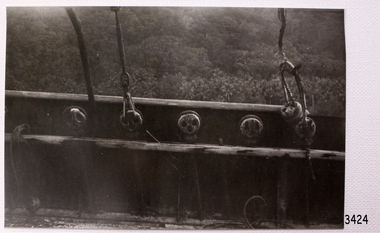
... Black and White photograph of the Star of Russia.147 mm x 98 mm SH 275.1 Ships S...flagstaff hill warrnambool shipwrecked-coast flagstaff-hill flagstaff-hill-maritime-museum maritime-museum shipwreck-coast flagstaff-hill-maritime-village photograph Star of Russia Black and White photograph of the Star of Russia.147 mm x 98 mm SH 275.1 Ships S Photograph ...Black and White photograph of the Star of Russia.147 mm x 98 mm SH 275.1 Ships Sflagstaff hill, warrnambool, shipwrecked-coast, flagstaff-hill, flagstaff-hill-maritime-museum, maritime-museum, shipwreck-coast, flagstaff-hill-maritime-village, photograph, star of russia -
 Flagstaff Hill Maritime Museum and Village
Photograph
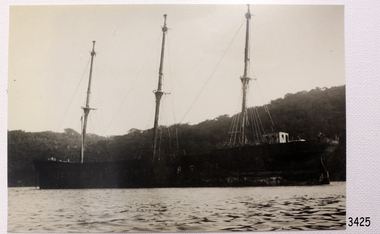
... Black and White photograph of the Star of Russia, 1981 tons Built Belfast 1874. 147 mm x 98 mm SH 275.2 Ships S....flagstaff hill warrnambool shipwrecked-coast flagstaff-hill flagstaff-hill-maritime-museum maritime-museum shipwreck-coast flagstaff-hill-maritime-village photograph Star of Russia Belfast Black and White photograph of the Star of Russia, 1981 tons Built Belfast 1874. 147 mm x 98 mm SH 275.2 Ships S. ...Black and White photograph of the Star of Russia, 1981 tons Built Belfast 1874. 147 mm x 98 mm SH 275.2 Ships S.flagstaff hill, warrnambool, shipwrecked-coast, flagstaff-hill, flagstaff-hill-maritime-museum, maritime-museum, shipwreck-coast, flagstaff-hill-maritime-village, photograph, star of russia, belfast -
 Glenelg Shire Council Cultural Collection
Instrument - Ships Barometer
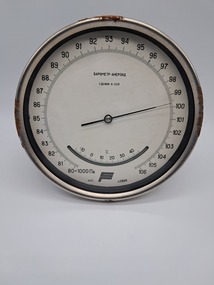
... A circular white round face with black numbers around the edge starting at 80 and going up in 1 number increments to 106. Language is in Russian...A circular white round face with black numbers around the edge starting at 80 and going up in 1 number increments to 106. Language is in Russian ...Since the mid-1600s, barometers have been a useful tool for boaters to measure air pressure in order to predict weather changes out on the sea. A change in pressure causes the dial's indicator hand to move. Aneroid barometers have a circular display face much like a clock that indicates the current atmospheric pressure. Part of a collection of objects belonging to Robert Hodgson. He was a fisherman and part of Shore Line Engineering.A circular white round face with black numbers around the edge starting at 80 and going up in 1 number increments to 106. Language is in Russian. A thermometer is on the face of the lower half starting at -10 degrees Celsius and up to 40 degrees Celsius going up in 10 number increments. A glass panelsits above the whit face and it is held together by a metal edge. The back of the barometer is black bakelite. -
 Montmorency–Eltham RSL Sub Branch
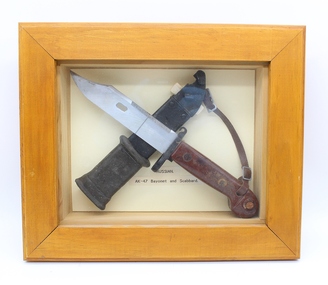
Weapon - AK-47 Bayonet and Scabbard mounted in display case
... Russian AK-47 bayonet and scabbard cross mounted with metal wires in stained light walnut colour wooden glass fronted display case. Leather strap and buckle attached to mounting end of bayonet. Nylon hanging cord for wooden case stapled to back of wooden case. Black masking tape covering mounting wires on back of wooden case. White...Russian AK-47 bayonet and Scabbard. 0040 Memory Frame 10" XS with barcode on white label....Chris Albers served in Cambodia, with the UN Forces late 90's cambodia, un forces, ak-47, bayonet, scabbard Russian AK-47 bayonet and Scabbard. 0040 Memory Frame 10" XS with barcode on white label. ...Chris Albers served in Cambodia, with the UN Forces late 90's Russian AK-47 bayonet and scabbard cross mounted with metal wires in stained light walnut colour wooden glass fronted display case. Leather strap and buckle attached to mounting end of bayonet. Nylon hanging cord for wooden case stapled to back of wooden case. Black masking tape covering mounting wires on back of wooden case. White label with barcode on rear of case.Russian AK-47 bayonet and Scabbard. 0040 Memory Frame 10" XS with barcode on white label.cambodia, un forces, ak-47, bayonet, scabbard -
 Ringwood and District Historical Society
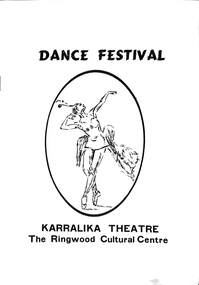
Booklet, Dance Festival - Karralika Theatre - The Ringwood Cultural Centre
... After interval the Kolobok Dance Company presents "The Swagman", "Clog Dance", "Fan Dance", "Over the Legs", "Russian Dances", "Hora and Banul Maracine", "Uzundara", "Ukranian Suite". Date of performance/s not mentioned. 8 page multi-fold white coloured paper program with gloss paper cover and black coloured printing. ...8 page multi-fold white coloured paper program with gloss paper cover and black coloured printing. There are 3 blank pages, so only 5 pages have printing on themThis program includes a list of the office bearers of the Kolobok Dance Company, The Ringwood Ballet Group and the Utassy Memorial Ballet School. Acknowledgements are made to various contributors. Acts include Cinderella Parts 1 & 2, music by Prokofiev, choreography by Bernice Morrow, "La Boutique Fantasque" - music by Rossini- Respighi, choreography by Leslie Hutchinson and Laurel Martyn. After interval the Kolobok Dance Company presents "The Swagman", "Clog Dance", "Fan Dance", "Over the Legs", "Russian Dances", "Hora and Banul Maracine", "Uzundara", "Ukranian Suite". Date of performance/s not mentioned. -
 Eltham District Historical Society Inc
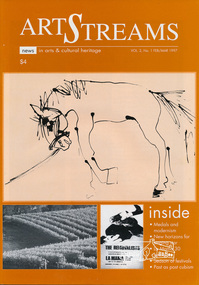
Journal, Peter Doughtery, ArtStreams: News in arts and cultural heritage; Vol. 2, No. 1, Feb-Mar 1997, 1997
... (archie) colquoun abu baku adams of north riding afandi siyo albert namatjira alice (1956) andy warhol annita furey anthony dymke art streams magazine ballarat school of mines bathing in the dark bob sedergren bob valentine bourbo's belly brian brown quntet bulleen art & garden centre cafe margot charles blackman christine edwards circushead clifton pugh cottlesbridge council amalgamation cuddlefish dave pithouse david lord david tolley dawn sime dione mcintyre dixon's creek edward grigoryan eltham college concert band eltham wiregrass gallery erika mcgilchrist fergusson winery food for all seasons frances duffy fred williams frenzi geoff achison geoff mainwaring graeme bell grape grazing festival half caste child heather shimmen hoodangers isobel lindsay james wakeling janette geri john brack john mcall john murphy jordie albiston judy jacques kath mckinnon katherine's silly women kelly 1956 ken harrison kevin borland kim harriss quartet la mama theatre lauurie dawes leonard french lighthouse liz jones lloyd jones lothlorien lovegroves lovey's estate luxum maelstrom max meldrum may grigg michelle nicolle mighty servant mirka mora miss suzannah espie moma montsalvat jazz festival moonee valley drifters moonlight shadow museum of modern art at heide mystery train the melbourne jazz band nicole eveleigh nigel shipley olympomania peter mcintyre phyllis murphy pip avent portrait of georges mora (1956) ray horsfield red shed theatre company reed's gallery richardson house (1955) river house (1955) robin boyd sandro donatti secret of the west wind seville shantell vineyard shedlevellers bush band shirley bourne sigmund jorgensen sir william dargie soul sister swing sydney nolan that handsome couple the band who knew too much the broken fence (1956) the gusset rustlers the rhonda movement the russian gypsey jazz quartet three amigos victorian artists supplies warburton wholefood delights yarra valley grape grazing festival yellow dog jazz band yering station art streams Colour front and back cover with feature articles and literary pieces with photographs and advertisements printed in black and white. 36 pages, 30 cm. ...Vol. 2, No. 1, Feb-Mar 1997 CONTENTS MEDALS AND MODERNISM A retrospective look at the cultural impact of the Melbourne Olympics 3 CD REVIEWS 6 NEW HORIZONS Judy Jacques takes a new direction 6 LA MAMA 30 YEARS ON Liz Jones at the helm 10 PAST AS POST CUBISM Annita Furey on Heather Shim men 14 GRAPE GRAZING FESTIVAL Food, wine and music in the Yarra Valley 16 SHORT STORY Fantasia on a cup of coffee 18 WHAT'S ON A round-up of events for February 22 WHO'S TEACHING WHAT Classes in the region 24 FRANCES DUFFY RETROSPECTIVE An artist who extended the boundaries of tonalism 26 ANDY WARHOL AND THE CAN OF SOUP More than 15 minutes of fame 27 A ‘DUTCH’ FESTIVAL COMES TO ST ANDREWS 28 LISTINGS Artists, performers and galleries 29 "Peter Dougherty has been involved in the local art scene for many years. As publisher and editor of the arts magazine Artstreams, his comments on the various branches of the arts are widely respected. His "The Arts" column in the Diamond Valley Leader presents a brief summary for a much wider cross section of the local community. Peter also operates his own gallery and the Artstreams Cafe at the St Andrews market. Peter has a wealth of knowledge about present day and historical aspects of local art and artists." - Eltham District Historical Society Newsletter No. 161, March 2005Colour front and back cover with feature articles and literary pieces with photographs and advertisements printed in black and white. 36 pages, 30 cm. Vol. 1, no. 1 (Nov. 1996) - Vol. 10, no. 5 (summer ed. 2005/06) 1956 melbourne olympics, 1956 olympics, 1995 eltham arts ball, a.d. (archie) colquoun, abu baku, adams of north riding, afandi siyo, albert namatjira, alice (1956), andy warhol, annita furey, anthony dymke, art streams magazine, ballarat school of mines, bathing in the dark, bob sedergren, bob valentine, bourbo's belly, brian brown quntet, bulleen art & garden centre, cafe margot, charles blackman, christine edwards, circushead, clifton pugh, cottlesbridge, council amalgamation, cuddlefish, dave pithouse, david lord, david tolley, dawn sime, dione mcintyre, dixon's creek, edward grigoryan, eltham college concert band, eltham wiregrass gallery, erika mcgilchrist, fergusson winery, food for all seasons, frances duffy, fred williams, frenzi, geoff achison, geoff mainwaring, graeme bell, grape grazing festival, half caste child, heather shimmen, hoodangers, isobel lindsay, james wakeling, janette geri, john brack, john mcall, john murphy, jordie albiston, judy jacques, kath mckinnon, katherine's silly women, kelly 1956, ken harrison, kevin borland, kim harriss quartet, la mama theatre, lauurie dawes, leonard french, lighthouse, liz jones, lloyd jones, lothlorien, lovegroves, lovey's estate, luxum, maelstrom, max meldrum, may grigg, michelle nicolle, mighty servant, mirka mora, miss suzannah espie, moma, montsalvat jazz festival, moonee valley drifters, moonlight shadow, museum of modern art at heide, mystery train, the melbourne jazz band, nicole eveleigh, nigel shipley, olympomania, peter mcintyre, phyllis murphy, pip avent, portrait of georges mora (1956), ray horsfield, red shed theatre company, reed's gallery, richardson house (1955), river house (1955), robin boyd, sandro donatti, secret of the west wind, seville, shantell vineyard, shedlevellers bush band, shirley bourne, sigmund jorgensen, sir william dargie, soul sister swing, sydney nolan, that handsome couple, the band who knew too much, the broken fence (1956), the gusset rustlers, the rhonda movement, the russian gypsey jazz quartet, three amigos, victorian artists supplies, warburton, wholefood delights, yarra valley grape grazing festival, yellow dog jazz band, yering station, art streams -
 Eltham District Historical Society Inc
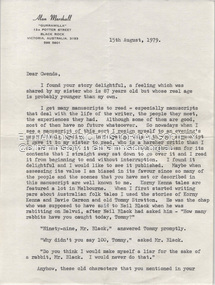
Document - Folder, Alan Marshall (1902-1984), Correspondence from Alan Marshall to Gwenda Sanderson, 1979-1983
... White...Alec Irvine...Jack Irvine...Staughton's stable...Cumming family...Jallalabad...Miss Baird...Private Catholic School...Jack Peoples...Shaw's...Weatherley...Miss Ann Gordon...Ballangeich...Writer...Author...Sun (newspaper)...William Collins (Aust.) Ltd...Chatsworth homestead...Russia...Korny Kenna Folk tales Australian Folk Tales Davie Carson Tommy Stratton Neil Black Black Emily Noorat Purnim encampment Pompey Austin Aboriginal characters John Manifold John Hooker Collins Publishers Eltham history Alan Marshall (Pioneers and Painters) James Bonwick Mount Shadwell Mount Noorat John Smith Blacksmith Mary Turner-Shaw On Mount Emu Creek (book) Wooiwyrite Western District Victoria Merrilyn Sanderson Mortlake The Land (poem) Collected Verse (book) Austin family Hammers over the Anvil (book) Eeyeuk Dennis family Peg Dennis Noorat Church Jim Smith Miss Dennis Mrs Polly Mrs Angus Gillies Mental health Frank Smith Country Life (English paper) Field (English paper) Peter McLeod Bill Beechey Angus Gillies Mag Dennis East Driscoll Camperdown Bill White Alec Irvine Jack Irvine Staughton's stable Cumming family Jallalabad Miss Baird Private Catholic School Jack Peoples Shaw's Weatherley Miss Ann Gordon Ballangeich Writer Author Sun (newspaper) William Collins (Aust.) Ltd Chatsworth homestead Russia ...Alan Marshall AM, (2 May 1902 – 21 January 1984) was an Australian writer, story teller, humanist and social documenter. Personal correspondence between Gwenda Sanderson and Alan Marshall, dated between 1979 and 1983. There are 21 letters in all, the last 3 of which were dictated from the Hurlingham Nursing Home in Brighton. Background information for the letters (daugher Merrilyn Sanderson 10 October 2025): My mother, Gwenda Sanderson ( nee White ) grew up in the western district and knew Alan Marshall's sister. Gwenda was an aspiring author, and reached out to Alan for support and advice regarding her writing. Alan proved to be a generous and inspiring mentor and as you will see, they established a rapport. In 1966 Gwenda moved from Mortlake to Montmorency (quite a culture shock!) and around 1983 she and her husband, Stan moved to Diamond Creek. Letters: 1. Alan Marshall to Gwenda Sanderson, 15 August 1979 2. Alan Marshall to Gwenda Sanderson, 22 August 1979 3. Alan Marshall to Gwenda Sanderson, 28 August 1979 4. Alan Marshall to Gwenda Sanderson, 7 September 1979 5. Alan Marshall to Gwenda Sanderson, 19 September 1979 6. Alan Marshall to Gwenda Sanderson, 11 October 1979 7. Alan Marshall to Gwenda Sanderson, 18 October 1979 8. Alan Marshall to Gwenda Sanderson, 1 November 1979 9. Alan Marshall to Gwenda Sanderson, 10 January 1980 10. Alan Marshall to Gwenda Sanderson, 24 January 1980 11. Alan Marshall to Gwenda Sanderson, 15 February 1980 12. Gwen Hardisty on behalf of Alan Marshall to Gwenda Sanderson, 27 May 1980 13. Alan Marshall to Gwenda Sanderson, 17 June 1980 14. Alan Marshall to Gwenda Sanderson, 29 July 1980 15. Alan Marshall to Gwenda Sanderson, 4 August 1980 16. Alan Marshall to Gwenda Sanderson, 22 August 1980 17. Alan Marshall to Gwenda Sanderson, 5 February 1981 18. Alan Marshall to Gwenda Sanderson, 5 August 1981 19. Gwen Hardisty on behalf of Alan Marshall to Gwenda Sanderson, 11 May 1982 20. Alan Marshall to Gwenda Sanderson, 27 Octopber 1982 21. Alan Marshall to Gwenda Sanderson, 21 February 1983 alan marshall, gwenda sanderson, gurrawilla, elsie louise mcconnell, black rock (vic.), korny kenna, folk tales, australian folk tales, davie carson, tommy stratton, neil black, black emily, noorat, purnim encampment, pompey austin, aboriginal characters, john manifold, john hooker, collins publishers, eltham history, alan marshall (pioneers and painters), james bonwick, mount shadwell, mount noorat, john smith, blacksmith, mary turner-shaw, on mount emu creek (book), wooiwyrite, western district victoria, merrilyn sanderson, mortlake, the land (poem), collected verse (book), austin family, hammers over the anvil (book), eeyeuk, dennis family, peg dennis, noorat church, jim smith, miss dennis, mrs polly, mrs angus gillies, mental health, frank smith, country life (english paper), field (english paper), peter mcleod, bill beechey, angus gillies, mag dennis, east driscoll, camperdown, bill white, alec irvine, jack irvine, staughton's stable, cumming family, jallalabad, miss baird, private catholic school, jack peoples, shaw's, weatherley, miss ann gordon, ballangeich, writer, author, sun (newspaper), william collins (aust.) ltd, chatsworth homestead, russia, i can jump puddles (book), nat gould, race horses, ethell dell, gertrude page, geoffrey farnell, east driscoll (story), shamrock smith, the catholic ball (story), lance skuthorpe, the blood of johnny meagher (story), winter-irving, sarah midgeley, richard skilbeck, miss edith (story), sun competition, mandeville hall, hampden council, alan marshall commemorative plaque noorat, russian theatrical troupe, noorat show, eliza sturgess, sam johnson the baker, elsie johnson, crupper, martingale, a.j. black, shaw women, miss laura, squatter, duke of edinburgh, royal family, 'texas' green, member for kalgoorlie, duke of gloucestor, the girl in pink, prince of wales, may creedie (story), mrs scott of mortlake, smouldering fires (book), lindsay russell, mary murray of our valley (book), the fellowship of australian writers, jim hamilton, journey to aboriginal victoria (book), mary gilmore, peter mcallum institute, may creedie (book), gwen hardisty, heart attack, bulletin (magazine), stephenson, gloria swanson, jennifer marshall, daniel (grandson), cathy (daughter), sandringham hospithal, east brighton nursing home, alan marshall writes alone (review) -
 Eltham District Historical Society Inc
Negative - Photograph, Russell Yeoman, Stanhope, 10 Peter Street, Eltham, c.Sep. 2000
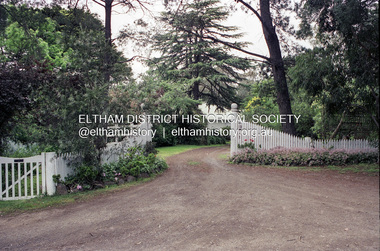
... Russian Language and Literature, University of Melbourne, from 1946 to 1977. Clem Christesen, poet, short story writer and painter, founded Australia's leading literary journal Meanjin Quarterly in 1940 and remained editor until 1975. Very many distinguished Australian and foreign writers, artists and academics-from Nobel prize-winning novelist Patrick White...Russian Language and Literature, University of Melbourne, from 1946 to 1977. Clem Christesen, poet, short story writer and painter, founded Australia's leading literary journal Meanjin Quarterly in 1940 and remained editor until 1975. Very many distinguished Australian and foreign writers, artists and academics-from Nobel prize-winning novelist Patrick White ...Clem Christesen wrote a brief history of "Stanhope" which was reproduced in EDHS Newsletter No. 162 May 2005. STANHOPE HOUSE is situated on the crest of Stanhope Hill about ten minutes' walk westward from the Eltham railway station and is bounded by Peter, Fay and Stanhope Streets. The original property, comprising 15 ½ acres with a frontage on Diamond Creek, was bought in about 1900 by Will Longstaff (b. 1878, d London 1953), official war artist during World War I, who became famous for his painting 'The Ghosts of Menin Gate', France which is now in the Australian War Memorial, Canberra. The main residence, designed by Desbrowe Annear, was built of jarrah, with stucco walls and floors of Tasmanian hardwood The rooms were panelled with Californian redwood (sequoia). Away from house was a cottage (used as a studio), and stables, dairy and meat house. In 1919 Mr Theo. Handfield bought the property from Mrs Longstaff. On New Year 's Day 1924 most of the estate (eighty blocks) was auctioned. Bishop Reginald Stephen, Warden of Trinity College and distinguished scholar, bought the house and five acres in 1928. Dr and Mrs C.B. Christesen became the new owners in 1946 and subsequently extended the house on the north and south sides. 'Stanhope 'has had many very interesting art and literary associations. When Will Longstaff occupied it - he was a cousin of another well-known painter, Sir John Longstaff- various leading artists of the period, including Walter Withers who lived nearby, were frequent visitors. A son of Mr and Mrs Handfield, John, became a journalist and author, and now lives with his wife Esta at Homestead Road, Eltham. Bishop Stephen was related to Sir Leslie Stephen (1832-1904), one of the great representative minds of Victorian Britain, first editor of the monumental Dictionary of National Biography and father of the famous novelist and essayist Virginia Woolf. John Harcourt, novelist and music critic, rented 'Stanhope 'while he and his wife Fay were building 'Clay Nuneham' (mudbrick) at the foot of Stanhope Hill near the creek. Nina Christesen, academic and founding editor of Melbourne Slavonic Studies, was Head of the Department of Russian Language and Literature, University of Melbourne, from 1946 to 1977. Clem Christesen, poet, short story writer and painter, founded Australia's leading literary journal Meanjin Quarterly in 1940 and remained editor until 1975. Very many distinguished Australian and foreign writers, artists and academics-from Nobel prize-winning novelist Patrick White to the world's leading cellist Mstislav Rostropovich - have visited 'Stanhope ' over the years. The extensive garden is said to be one of the loveliest in Eltham. The main entrance is by way of Diamond and Peter Streets. film - kodak gc 400-6, russell yeoman collection, scan - 35mm negative, bishop stephen, clem christesen, eltham, nina mikhailovna christesen, peter street, stanhope, theo handfield, will longstaff -
 Bendigo Military Museum
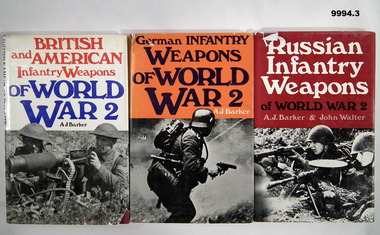
Book - INFANTRY WEAPONS, WW2, A.J. BARKER et al, 1. "BRITISH AND AMERICAN INFANTRY WEAPONS OF WORLD WAR 2". 2. "GERMAN INFANTRY WEAPONS OF WORLD WAR 2". 3. "RUSSIAN INFANTRY WEAPONS OF WORLD WAR 2, 1969 - 1971
... white photographs and diagrams. 2.3. Front endpapers - handwritten details and stamp. 1. "BRITISH AND AMERICAN INFANTRY WEAPONS OF WORLD WAR 2". 2. "GERMAN INFANTRY WEAPONS OF WORLD WAR 2". 3. "RUSSIAN ...1.2.3. Hardcover books with dust covers. Hardcover - cardboard, dark red colour buckram with gold colour print on spine. Dust covers - 1. Red, blue and black print on front, spine and back. Illustrated - black and white photograph of two soldiers with machine gun. 2, Dark blue and black print on front, spine and back. Illustrated - black and white photograph of a soldier with hand gun. 3. White and black photograph of two soldiers with machine guns. 2. & 3. Front 76-79 pages - cut, plain, white colour paper. Illustrated black and white photographs and diagrams. 2.3. Front endpapers - handwritten details and stamp. 2. Handwritten details - grey lead pencil "4.90". Stamp - purple ink "TECHNICAL BOOK & MAGAZINE CO/ 289-299 Swanston Street/ 323951-52 MELBOURNE" 3. Handwritten details - grey lead pencil "4-95".publications, books, infantry weapons, ww2, reference -
 Bendigo Military Museum
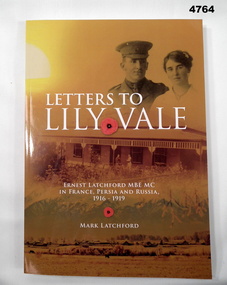
Book - PERSONAL CORRESPONDENCE, LATCHFORD Mark, "LETTERS TO LILY VALE, ERNEST LATCHFORD MBE MC, in France, Persia, and Russia, 1916-1919", 2020
... white photographs and colour maps. "LETTERS TO LILY VALE, ERNEST LATCHFORD MBE MC, in France, Persia, and Russia, 1916-1919" Book PERSONAL CORRESPONDENCE LATCHFORD Mark Open book Howden Print & Design ...Collection of transcribed correspondence written by Ern Latchford from 1916-1919, nearly all addressed to his fiancee and later wife, Linda Dehnert of 'Lily Vale' Ballan.Correspondence written to fiancee and later wife. Soft cover book. Soft cover - cardboard, black and white print on front, spine and book cover illustrated with montage of photographs in yellow sepia colours. Portrait, House, landscape with buildings in background. 328 pages, semi gloss white, illustrated black and white photographs and colour maps.book, letters, ww1, biography -
 Warrnambool and District Historical Society Inc.
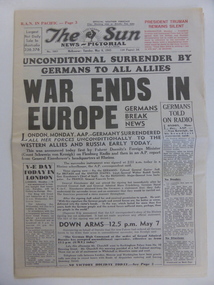
News Sheet, The Sun News-Pictorial 1945, 1945
... Russia, France and the United States of America. This paper has no local significance but the event it describes (the end of the war in Europe in May 1945) is of signal importance in world history and affected all in Australia at the time and still does today. The newspaper will be of interest to researchers and useful for display. World War Two V.E. Day Warrnambool History This is a Melbourne newspaper (The Sun News-Pictorial 1945). It has 16 pages and is printed in black print on a white ...This Melbourne Sun newspaper of May 8, 1945 contains details of the surrender of Germany in World War Two. The first surrender document was signed at Rheims, France by representatives of Germany, Britain, Russia, France and the United States of America. This paper has no local significance but the event it describes (the end of the war in Europe in May 1945) is of signal importance in world history and affected all in Australia at the time and still does today. The newspaper will be of interest to researchers and useful for display. This is a Melbourne newspaper (The Sun News-Pictorial 1945). It has 16 pages and is printed in black print on a white (now creamy-coloured) background. It has the news of the end of the war in Europe with the surrender of Germany. The newspaper includes black and white photographs, advertisements, cartoons, comic strips and a crossword puzzle. world war two, v.e. day, warrnambool, history -
 Eltham District Historical Society Inc
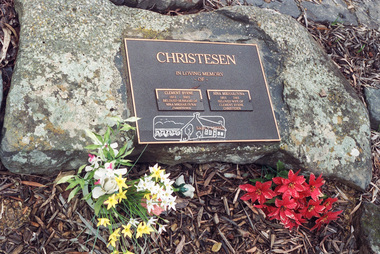
Negative - Photograph, Harry Gilham, Memorial for Clem and Nina Christesen, Eltham Cemetery, Victoria, 1 Aug 2007
... Russian Language and Literature, remaining its head until her retirement in 1977. In 1987 she was made a Member of the Order of Australia. Nina was married to Clem Christesen, founder and editor of the respected (if left-leaning) literary magazine "Meanjin". They lived at "Stanhope" in Peter Street, Eltham. Visitors included writers Patrick White...Russian Language and Literature, remaining its head until her retirement in 1977. In 1987 she was made a Member of the Order of Australia. Nina was married to Clem Christesen, founder and editor of the respected (if left-leaning) literary magazine "Meanjin". They lived at "Stanhope" in Peter Street, Eltham. Visitors included writers Patrick White ...Russian-born Nina Christesen (nee Maximoff) is regarded as the pioneer of Russian academic studies in Australia. In 1946 she became a lecturer in Russian at Melbourne University, and in 1947 established the Department of Russian Language and Literature, remaining its head until her retirement in 1977. In 1987 she was made a Member of the Order of Australia. Nina was married to Clem Christesen, founder and editor of the respected (if left-leaning) literary magazine "Meanjin". They lived at "Stanhope" in Peter Street, Eltham. Visitors included writers Patrick White and Xavier Herbert, painters Arthur Boyd and Clifton Pugh, and historians Manning Clark and Geoffrey Blainey. In 1955, both Nina and Clem were interrogated by the Petrov Royal Commission on suspicion of being Communist sympathisers, which they reputedly rebutted wittily. Nina died in 2001 and Clem in 2003. They are buried together at Eltham Cemetery. There is also a memorial to Nina at the Eltham Living and Learning Centre, in the form of a bluestone amphitheatre with a floor of hand-painted tiles. Christesen In Loving Memory Of Clement Byrne 1911 - 2003 Beloved husband of Nina Mikhailovna Christesen and Nina Mikhailovna 1911 - 2001 Beloved wife of Clement Byrne Christesen also In Memoriam Captain Mikhail Ivanovich Maximoff 1885 - 1967 Tatiana Semenovna Maximoff 1888 - 1979eltham cemetery, gravestones, memorials, captain mikhail ivanovich maximoff, clem christesen, clement byne christesen, nina mikhailovna christesen, tatiana semenovna maximoff -
 Eltham District Historical Society Inc
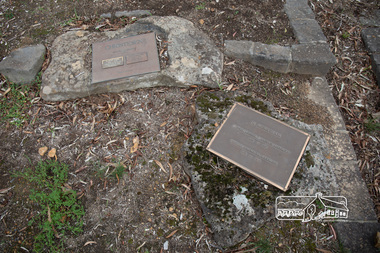
Photograph, Peter Pidgeon, Memorial for Clem and Nina Christesen, Eltham Cemetery, Victoria, 5 April 2021
... Russian Language and Literature, remaining its head until her retirement in 1977. In 1987 she was made a Member of the Order of Australia. Nina was married to Clem Christesen, founder and editor of the respected (if left-leaning) literary magazine "Meanjin". They lived at "Stanhope" in Peter Street, Eltham. Visitors included writers Patrick White...Russian Language and Literature, remaining its head until her retirement in 1977. In 1987 she was made a Member of the Order of Australia. Nina was married to Clem Christesen, founder and editor of the respected (if left-leaning) literary magazine "Meanjin". They lived at "Stanhope" in Peter Street, Eltham. Visitors included writers Patrick White ...Russian-born Nina Christesen (nee Maximoff) is regarded as the pioneer of Russian academic studies in Australia. In 1946 she became a lecturer in Russian at Melbourne University, and in 1947 established the Department of Russian Language and Literature, remaining its head until her retirement in 1977. In 1987 she was made a Member of the Order of Australia. Nina was married to Clem Christesen, founder and editor of the respected (if left-leaning) literary magazine "Meanjin". They lived at "Stanhope" in Peter Street, Eltham. Visitors included writers Patrick White and Xavier Herbert, painters Arthur Boyd and Clifton Pugh, and historians Manning Clark and Geoffrey Blainey. In 1955, both Nina and Clem were interrogated by the Petrov Royal Commission on suspicion of being Communist sympathisers, which they reputedly rebutted wittily. Nina died in 2001 and Clem in 2003. They are buried together at Eltham Cemetery. There is also a memorial to Nina at the Eltham Living and Learning Centre, in the form of a bluestone amphitheatre with a floor of hand-painted tiles. Christesen In Loving Memory Of Clement Byrne 1911 - 2003 Beloved husband of Nina Mikhailovna Christesen and Nina Mikhailovna 1911 - 2001 Beloved wife of Clement Byrne Christesen also In Memoriam Captain Mikhail Ivanovich Maximoff 1885 - 1967 Tatiana Semenovna Maximoff 1888 - 1979Born Digitaleltham cemetery, gravestones, heritage excursion, clem christesen, clement byne christesen, nina mikhailovna christesen, captain mikhail ivanovich maximoff, tatiana semenovna maximoff -
 Bendigo Military Museum
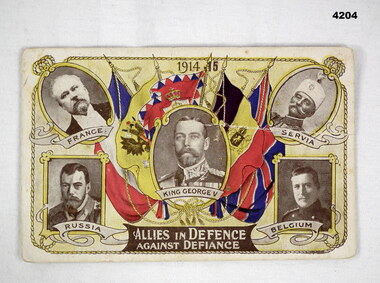
Postcard - ALLIES POSTCARD, S.W.Series, 1914 - 15
... Black and white, portrait prints of 5 allied leaders with King George centre then, France, Servia, Russia and Belgium. ...Postcards Allies Black and white, portrait prints of 5 allied leaders with King George centre then, France, Servia, Russia and Belgium. ...Black and white, portrait prints of 5 allied leaders with King George centre then, France, Servia, Russia and Belgium. Decorative yellow boarders on a yellow background, flags of each country in colour around King George’s print. Rear of the card has a marked position for a stamp and writing area.postcards, allies -
 Eltham District Historical Society Inc
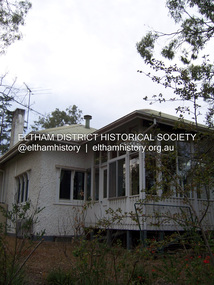
Photograph - Digital Photograph, Alan King, Stanhope, Peter Street, Eltham, 15 March 2008
... White and Peter Carey. Nina Christensen – who died aged 89 in 2001 – was founding Editor of the Melbourne Slavonic Studies Journal and pioneered the study of Russian in Australia. ...White and Peter Carey. Nina Christensen – who died aged 89 in 2001 – was founding Editor of the Melbourne Slavonic Studies Journal and pioneered the study of Russian in Australia. ...On the crest of Stanhope Hill at Peter Street, Eltham, stands the former home of a couple, Clem and Nina Christensen who had a major influence on the literary development of post World War 2 Australia. Covered under Heritage Overlay, Nillumbik Planning Scheme. Published: Nillumbik Now and Then / Marguerite Marshall 2008; photographs Alan King with Marguerite Marshall.; p109 On the crest of Stanhope Hill at Peter Street, Eltham, stands the former home of a couple, who had a major influence on the literary development of post World War Two Australia. In 1946, Clem and Nina Christensen bought the house, which had been designed by Harold Desbrowe Annear, considered to be one of Australia’s most innovative architects in the first quarter of the 20th century.1 That year the stucco building with a metal roof, built in 1910, was extended to the north and south. The main residence was built of jarrah, with stucco walls, floors of Tasmanian hardwood and rooms panelled with Californian redwood (sequoia). The property included a cottage, former stables, a dairy and meat-house. From its beginnings the property has attracted artists and intellectuals. Official World War One artist, Will Longstaff, bought the property – then 15½ acres (6ha) around 1900. Famous for his painting The Ghosts of Menin Gate, now in the Australian War Memorial Canberra, Longstaff was the cousin of another well-known painter, Sir John Longstaff. Several leading artists visited Longstaff at Stanhope including Walter Withers of the Heidelberg School, who lived in Brougham Street, Eltham. In 1919, Theo Handfield, father of author and journalist John Handfield, bought the property from Mrs Longstaff. Then in 1924 the land was subdivided and most of the estate (80 blocks) was auctioned. The next owner was related to novelist Virginia Woolf. Bishop Reginald Stephen, Warden of Trinity College, bought the house and five acres (2 ha) in 1928. He was related to Sir Leslie Stephen, the first editor of the Dictionary of National Biography and Woolf’s father. Novelist and music critic John Harcourt, was the next tenant, while he and his wife Fay, built their mud-brick house Clay Nuneham, at the foot of Stanhope Hill. Dr Clem and Mrs Nina Christensen, lived in the house until their deaths. Clem Christensen – who died aged 91 in 2003 – was a poet, short story writer and painter. However, he is most noted for founding Australia’s foremost literary journal2 Meanjin (originally Meanjin Papers), which he described as ‘democratic left of centre’, in Brisbane in 1940. Clem brought Meanjin to Melbourne in 1945 and remained editor until 1975. Enormously influential, Meanjin spawned and encouraged many of Australia’s best literary talents and it had an international reputation. Meanjin was the first to publish such writers as Judith Wright and David Malouf and it encouraged writers like Patrick White and Peter Carey. Nina Christensen – who died aged 89 in 2001 – was founding Editor of the Melbourne Slavonic Studies Journal and pioneered the study of Russian in Australia. In 1946 she established the Department of Russian Language and Literature at The University of Melbourne, which she led until 1977. Nina’s graduates largely staffed subsequent departments, in other Australian universities.3 However Nina’s Russian heritage and Clem’s outspoken views caused problems. They were forced to defend themselves in the Petrov inspired Royal Commission on Espionage in the 1950s, but were exonerated. The Christensens attracted and hosted many distinguished Australian and foreign writers, artists and academics, including Nobel prize-winning novelist, Patrick White and the world’s then leading cellist, Mstislav Rostropovich.4 Other writers and intellectuals who visited Stanhope were: Vance Palmer, Alan Marshall, A D Hope, Xavier Herbert, Nevil Shute, Geoffrey Dutton, Martin Boyd, Judah Waten, Bruce Grant, Dorothy Hewett and Sir Herbert Read. Painters included: Danila Vassilieff, Arthur Boyd, Albert Tucker, Justus Jörgensen, Robert Hughes and Clifton Pugh. Academics included: Manning Clark, Geoffrey Blainey, W Macmahon Ball, Richard Downing, Geoffrey Serle and scientist Tim Marshall. Politicians included: Jim Cairns, Pauline Toner, Lance Barnard, Sir Paul Hasluck, Sheryl Garbutt and performance artists included: film star Olivia Newton-John, members of the Bolshoi ballet and the Russian State Ballet of Siberia.5 Nina Christensen was honoured in 2006 at the Eltham Living and Learning Centre with the building of an amphitheatre designed by V Sverdlin.This collection of almost 130 photos about places and people within the Shire of Nillumbik, an urban and rural municipality in Melbourne's north, contributes to an understanding of the history of the Shire. Published in 2008 immediately prior to the Black Saturday bushfires of February 7, 2009, it documents sites that were impacted, and in some cases destroyed by the fires. It includes photographs taken especially for the publication, creating a unique time capsule representing the Shire in the early 21st century. It remains the most recent comprehenesive publication devoted to the Shire's history connecting local residents to the past. nillumbik now and then (marshall-king) collection, clem christesen, eltham, nina christesen, peter street, stanhope -
 Queenscliffe Maritime Museum
Print - Framed copy of an engraving of the sailing ship 'Nelson' in the Alfred Graving Dock in Williamstown, 1868, HMVS Nelson in the Alfred Graving Dock, Williamstown, Victoria, 1868
... The new ensign was very similar to the present day national flag and incorporated the Union flag with five white stars on a blue field. Following upon a series of ‘Russian scares’ in the 1870s, Nelson presumably by permission of the Admiralty, was converted into a fighting ship for the Victorian Navy; she was cut down to a single- decker, the fore and mizzen masts were removed, and the armament modified by the landing of several of the old muzzle-loaders and the addition of a number of new breech-loading guns. ...As the White Ensign was reserved entirely for the use of the Royal Navy, the Admiral decided to approve of a new ensign for the Victorian Navy and this was flown for the first time from Nelson on 9th March 1870. The new ensign was very similar to the present day national flag and incorporated the Union flag with five white stars on a blue field.Following upon a series of ‘Russian scares’ in the 1870s, Nelson presumably by permission of the Admiralty, was converted into a fighting ship for the Victorian Navy; she was cut down to a single- decker, the fore and mizzen masts were removed, and the armament modified by the landing of several of the old muzzle-loaders and the addition of a number of new breech-loading guns. This conversion was carried out in the new drydock in 1881.A framed copy of an engraving entitled: 'Opening of the Graving Dock, Williamstown'.Opening of the Graving Dock, Williamstownhmvs nelson, alfred graving dock, williamstown
