
Showing 211 items matching "the women's hospital melbourne"
-
 St Vincent's Hospital Melbourne Archives
Certificate - The Royal Women's Hospital Melbourne postgraduate certificate in Gynaecological Diseases Nursing awarded to Vivienne Ethel Pearce in 1961
... The Royal Women's Hospital Melbourne postgraduate certificate in Gynaecological Diseases Nursing awarded to Vivienne Ethel Pearce in 1961. ......The Royal Women's Hospital Melbourne...Sister Vivienne Pearce completed a post graduate course in Gynaecological Diseases Nursing at The Royal Women's Hospital to further her already completed certified trained nurse and midwife training at St Vincent's Hospital Melbourne. ...Vivienne Pearce The Royal Women's Hospital Melbourne Gynaecological Diseases Nursing Postgraduate Nursing St Vincent's Hospital Melbourne St Vincent's Midwifery Hospital Melbourne. ...Sister Vivienne Pearce completed a post graduate course in Gynaecological Diseases Nursing at The Royal Women's Hospital to further her already completed certified trained nurse and midwife training at St Vincent's Hospital Melbourne. The certificate is signed by the President, the Manager, the Matron, the Examiners and Vivienne Pearce.vivienne pearce, the royal women's hospital melbourne, gynaecological diseases nursing, postgraduate nursing, st vincent's hospital melbourne, st vincent's midwifery hospital melbourne. -
 Alfred Hospital Nurses League - Nursing History Collection
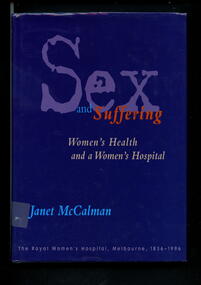
Book - Illustrated book, Janet McCalman, Sex and suffering: women's health and a women's hospital: the Royal Women's Hospital Melbourne 1856-1996, 14/12/1995
... Sex and suffering: women's health and a women's hospital: the Royal Women's Hospital Melbourne 1856-1996...Many AHNL members undertook midwifery training at The Royal Women's Hospital. Royal Women's Hospital-Melbourne-History Women's Health Obstetrics and Gynacology Hospitals-Victoria-History Nursing An absorbing social history of women's health seen through the workings of Australia's oldest women's hospital: the Royal Women's Hospital, from 1856-1996. ...An absorbing social history of women's health seen through the workings of Australia's oldest women's hospital: the Royal Women's Hospital, from 1856-1996.Illustrated book with dust jacket. Book is bound in dark blue, with abbreviated title, author's surname, and publishers mark printed in gilt on spine. Dust jacket has a dark blue background, full title and author's name printed in multicolour on front. Abbreviated title, author's surname and publishers mark in multicolour print on spine.An absorbing social history of women's health seen through the workings of Australia's oldest women's hospital: the Royal Women's Hospital, from 1856-1996.royal women's hospital-melbourne-history, women's health, obstetrics and gynacology, hospitals-victoria-history, nursing -
 Kew Historical Society Inc
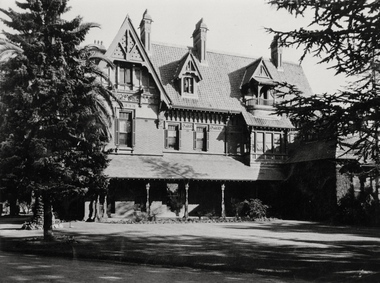
Photograph - 'Tara Hall', Studley Park Road, Marc Strizic (attrib), c.1960
... Typed inscription on reverse: "Tara Hall at the time it was a home for nurses from the Royal Women's Hospital, Melbourne. (Royal Women's Hospital, Melbourne)."...(Royal Women's Hospital, Melbourne)." Tara Hall, Studley Park Road, circa 1957. ...'Lost Glories: a memorial to forgotten Australian buildings' was published by David Latta in 1986. It tells the story of a number of significant Australian buildings that had previously been demolished. A chapter in the book was devoted to Goathland, later known as Tara Hall. To supplement the text, he sourced photographs from a range of suppliers, chiefly the Royal Women's Hospital which had once owned Tara Hall, but had sold it in 1960. This is one of the photographs donated to KHS by the author.Tara Hall, Studley Park Road, circa 1957. The front of Tara Hall (previously named Byram, Goathland and Lowan). This triple-storey mansion with its elaborate gabled, steeply-pitched roofs and verandah was set back from Studley Park Road and concealed by a high brick fence. E. G. Kilburn, of Ellerker & Kilburn, designed Byram for the industrialist George Ramsden in 1888. Typed inscription on reverse: "Tara Hall at the time it was a home for nurses from the Royal Women's Hospital, Melbourne. (Royal Women's Hospital, Melbourne)."byram, goathland, tara hall, lowan, studley park (kew), george ramsden, sir malcolm mceacharn, edward george kilburn (architect), studley park road (kew) -
St Vincent's Hospital Melbourne Archives
Certificate - The Midwives Acts Certificate of Registration awarded to Agnes McLean by Nurses Board Victoria, 1929
... ...The Women's Hospital Melbourne...Agnes Mclean completed her general nurse training at St Vincents Hospital Melbourne in 1928 and then her midwifery training at The Women's Hospital in 1929. ...Agnes McLean Nurses Board of Victoria Midwives Act St Vincents Hospital Melbourne Nurse Training The Women's Hospital Melbourne Certificate The Midwives Acts Certificate of Registration awarded to Agnes McLean by Nurses Board Victoria, 1929. ...The Nurses Board of Victoria became responsible for the registration of midwives in 1929 following the passing of the Midwives Act 1928. Agnes Mclean completed her general nurse training at St Vincents Hospital Melbourne in 1928 and then her midwifery training at The Women's Hospital in 1929. agnes mclean, nurses board of victoria, midwives act, st vincents hospital melbourne, nurse training, the women's hospital melbourne -
 Stawell Historical Society Inc
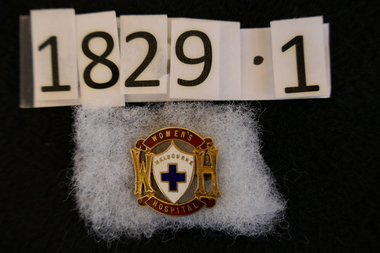
Memorabilia - Badge
... Women’s Hospital Melbourne Nursing Badges. Jean Hughes – Wood...Stawell Women’s Hospital Melbourne Nursing Badges. Jean Hughes – Wood Memorabilia Badge ...Women’s Hospital Melbourne Nursing Badges. Jean Hughes – Woodstawell -
 Stawell Historical Society Inc
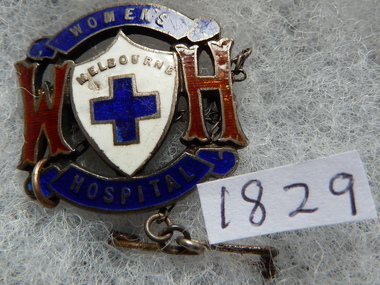
Memorabilia - Badge
... Women’s Hospital Melbourne Nursing Badges. Jean Hughes – Wood...Stawell Women’s Hospital Melbourne Nursing Badges. Jean Hughes – Wood Memorabilia Badge ...Women’s Hospital Melbourne Nursing Badges. Jean Hughes – Woodstawell -
 Kew Historical Society Inc
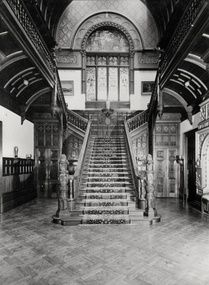
Photograph - Grand Staircase, Tara Hall', Studley Park Road, Marc Strizic (attrib), c.1960
... Typed inscription on reverse: "The Grand Staircase of Tara Hall (Royal Women's Hospital, Melbourne)....Women's Hospital which had once owned Tara Hall, but had sold it in 1960. This is one of the photographs donated to KHS by the author. byram, goathland, tara hall, lowan, studley park (kew), george ramsden, sir malcolm mceacharn, edward george kilburn (architect), studley park road (kew) Typed inscription on reverse: "The Grand Staircase of Tara Hall (Royal Women's Hospital, Melbourne). ...'Lost Glories: a memorial to forgotten Australian buildings' was published by David Latta in 1986. It tells the story of a number of significant Australian buildings that had previously been demolished. A chapter in the book was devoted to Goathland, later known as Tara Hall. To supplement the text, he sourced photographs from a range of suppliers, chiefly the Royal Women's Hospital which had once owned Tara Hall, but had sold it in 1960. This is one of the photographs donated to KHS by the author. The Grand Staircase of Tara Hall, circa 1957. The central hallway and stairs of Tara Hall, (previously named Byram, Goathland and Lowan). Edward George Kilburn, of Ellerker & Kilburn, designed this Studley Park Road mansion, of which the hallway was a significant feature, for the industrialist George Ramsden in 1888. Tara Hall, one of the great houses in Kew was demolished in 1959-60. Possibly Marc Strizic, photographer (1928-2012). Typed inscription on reverse: "The Grand Staircase of Tara Hall (Royal Women's Hospital, Melbourne).byram, goathland, tara hall, lowan, studley park (kew), george ramsden, sir malcolm mceacharn, edward george kilburn (architect), studley park road (kew) -
 Kew Historical Society Inc
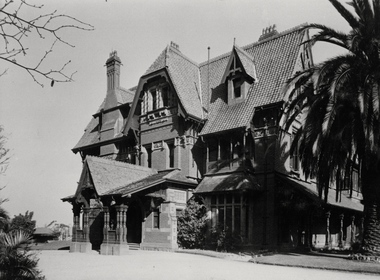
Photograph - Porte-cochere, 'Tara Hall', Studley Park Road, Marc Strizic (attrib), c.1960
... Typed inscription on reverse: "Goathland, also known as Tara Hall (Royal Women's Hospital, Melbourne)."...Women's Hospital which had once owned Tara Hall, but had sold it in 1960. This is one of the photographs donated to KHS by the author. Goathland -- Kew (Vic) Byram -- Kew (Vic) Tara Hall - Kew (Vic) Studley Park road Typed inscription on reverse: "Goathland, also known as Tara Hall (Royal Women's Hospital, Melbourne)." ...'Lost Glories: a memorial to forgotten Australian buildings' was published by David Latta in 1986. It tells the story of a number of significant Australian buildings that had previously been demolished. A chapter in the book was devoted to Goathland, later known as Tara Hall. To supplement the text, he sourced photographs from a range of suppliers, chiefly the Royal Women's Hospital which had once owned Tara Hall, but had sold it in 1960. This is one of the photographs donated to KHS by the author. Porte-cochere, Tara Hall, circa 1957. The main entrance to Tara Hall (previously named Byram, Goathland and Lowan). The entrance, through a porte-cochère, was located on the side of the house facing east. During construction, commentators described the house as being in the ‘Elizabethan style’. The architectural style of the exterior, with its innovatory use of red brick and Italian tiles was more influenced by American models. Edward George Kilburn, of Ellerker & Kilburn, designed Byram for the industrialist George Ramsden in 1888. Typed inscription on reverse: "Goathland, also known as Tara Hall (Royal Women's Hospital, Melbourne)."goathland -- kew (vic), byram -- kew (vic), tara hall - kew (vic), studley park road -
 Kew Historical Society Inc
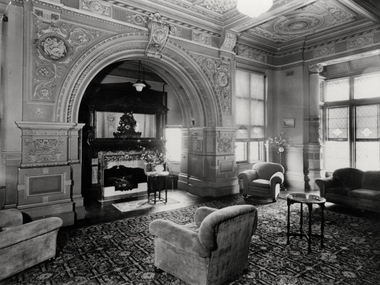
Photograph - Drawing Room, 'Tara Hall', Studley Park Road, Marc Strizic (attrib), c.1960
... Typed inscription on reverse: "A sitting room, one of many handsomely decorated rooms at Tara Hall.( Royal Women's Hospital, Melbourne)."...Women's Hospital which had once owned Tara Hall, but had sold it in 1960. This is one of the photographs donated to KHS by the author. byram, goathland, tara hall, lowan, studley park (kew), george ramsden, sir malcolm mceacharn, edward george kilburn (architect), studley park road (kew) Typed inscription on reverse: "A sitting room, one of many handsomely decorated rooms at Tara Hall.( Royal Women's Hospital, Melbourne)." ...'Lost Glories: a memorial to forgotten Australian buildings' was published by David Latta in 1986. It tells the story of a number of significant Australian buildings that had previously been demolished. A chapter in the book was devoted to Goathland, later known as Tara Hall. To supplement the text, he sourced photographs from a range of suppliers, chiefly the Royal Women's Hospital which had once owned Tara Hall, but had sold it in 1960. This is one of the photographs donated to KHS by the author. The Drawing Room, Tara Hall, circa 1957. A reception room in Tara Hall (previously named Byram, Goathland and Lowan). The room is presumed to be the original drawing room. In the La Trobe collection, there is a drawing by Charlie Hammond, depicting a group of painters who are gilding the elaborate stucco ceiling of this room. The drawing is dated 16 September 1889. The elaborate stucco decoration is characteristic of E. G. Kilburn’s late style. Kilburn, of Ellerker & Kilburn, designed Byram for the industrialist George Ramsden in 1888. Typed inscription on reverse: "A sitting room, one of many handsomely decorated rooms at Tara Hall.( Royal Women's Hospital, Melbourne)."byram, goathland, tara hall, lowan, studley park (kew), george ramsden, sir malcolm mceacharn, edward george kilburn (architect), studley park road (kew) -
St Vincent's Hospital Melbourne Archives
Book - The Midwife's Text-Book of the Principles and Practice of Midwifery by R.W.Johnstone of Scotland, circa 1947
... ...The Royal Women's Hospital Melbourne...Margaret Slattery R.W.Johnstone St Vincents Hospital Melbourne The Royal Women's Hospital Melbourne Midwifery Nursing Training In an indented circle on the hardcover is "Blacks Medical Series: " with the image of the Rod Of Asclepius, the symbol of medicine featuring the single serpent wrapped around a simple staff. ...Text reference book for midwives with illustrations and photographs.In an indented circle on the hardcover is "Blacks Medical Series: " with the image of the Rod Of Asclepius, the symbol of medicine featuring the single serpent wrapped around a simple staff. Margaret Slattery's name is hand written in ink on the inner cover. margaret slattery, r.w.johnstone, st vincents hospital melbourne, the royal women's hospital melbourne, midwifery nursing training -
 Kew Historical Society Inc
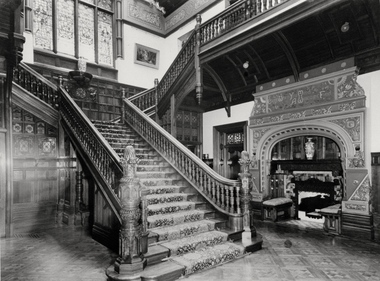
Photograph - Staircase of 'Tara Hall', Studley Park Road, Marc Strizic (attrib), c.1960
... (Royal Women's Hospital, Melbourne)." ...Women's Hospital which had once owned Tara Hall, but had sold it in 1960. This is one of the photographs donated to KHS by the author. byram, goathland, tara hall, lowan, studley park (kew), george ramsden, sir malcolm mceacharn, edward george kilburn (architect), studley park road (kew) Typed inscription on reverse: "The Staircase at Tara Hall. Above the ornate fireplace is the legend 'Come When You Mind, A Welcome Find'. (Royal Women's Hospital, Melbourne ...'Lost Glories: a memorial to forgotten Australian buildings' was published by David Latta in 1986. It tells the story of a number of significant Australian buildings that had previously been demolished. A chapter in the book was devoted to Goathland, later known as Tara Hall. To supplement the text, he sourced photographs from a range of suppliers, chiefly the Royal Women's Hospital which had once owned Tara Hall, but had sold it in 1960. This is one of the photographs donated to KHS by the author. The Staircase at Tara Hall, circa 1957. An angled view of the main hallway and staircase of Tara Hall (previously named Byram, Goathland and Lowan). To the right of the staircase in this Studley Park Road mansion, a large inglenook fireplace was located, which was surrounded by stucco decoration. The latter was a characteristic of E. G. Kilburn’s late style.Typed inscription on reverse: "The Staircase at Tara Hall. Above the ornate fireplace is the legend 'Come When You Mind, A Welcome Find'. (Royal Women's Hospital, Melbourne)." byram, goathland, tara hall, lowan, studley park (kew), george ramsden, sir malcolm mceacharn, edward george kilburn (architect), studley park road (kew) -
 Returned Nurses RSL Sub-branch
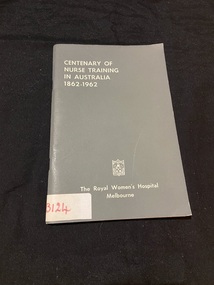
Booklet - Paperback booklet, Leo Butler et al, Centenary of Nurse training in Australia 1862-1962, 1962
... The bottom of the page shows the emblem and name of The Royal Women's Hospital Melbourne....The bottom of the page shows the emblem and name of The Royal Women's Hospital Melbourne. Centenary of Nurse training in Australia 1862-1962 Booklet Paperback booklet Leo Butler Royal Women's Hospital Melbourne Royal Women's Hospital ...History of 100 years of nurses training in Australia.Dark grey booklet with two staples down the side and the title printed in white text in the upper left corner. The bottom of the page shows the emblem and name of The Royal Women's Hospital Melbourne.non-fictionHistory of 100 years of nurses training in Australia.royal women's hospital melbourne, nursing - history, nursing - in service training -
 Geoffrey Kaye Museum of Anaesthetic History
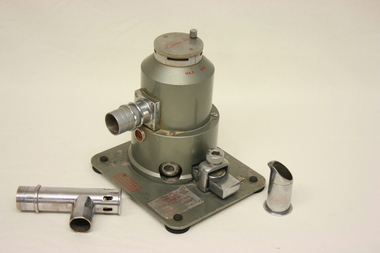
Equipment - Tecota trilene inhaler, Cyprane Ltd
... The item was donated by Dr K McCaul of the Royal Women's Hospital, Melbourne, in 1966....The item was donated by Dr K McCaul of the Royal Women's Hospital, Melbourne, in 1966. trilene inhaler tecota anaesthesia beaker mask vaporise obstetrics childbirth dr k mccaul royal women's hospital melbourne 1966 vapor face mask vaporising chamber cyprane ltd keighley Red markings identifying the manufacturer and the measurement scale are located on both the stand and top twist dial. ...The item was donated by Dr K McCaul of the Royal Women's Hospital, Melbourne, in 1966.Anaesthetic trilene was administered to the patient via rubber tubing from the Trilene inhaler, within which the anaesthetic was converted into a vapor. The cylindrical metal apparatus sits atop a flat, square stand with four black rubber feet. Item includes ports and valves for connection to a face mask and vaporising chamber, as well as mask attachment and metal pouring jug with spout.Red markings identifying the manufacturer and the measurement scale are located on both the stand and top twist dial. The base of the mask attachment piece is inscribed with the manufacturer's details: 'Cyprane Ltd'. The metal beaker is engraved with a line marked at the 15cc level. trilene inhaler, tecota, anaesthesia, beaker, mask, vaporise, obstetrics, childbirth, dr k mccaul royal women's hospital melbourne, 1966, vapor, face mask, vaporising chamber, cyprane ltd, keighley -
St Vincent's Hospital Melbourne Archives
Certificate - Women's Hospital Melbourne midwifery department certificate for Letitia St. Ledger in 1934
... Women's Hospital Melbourne midwifery department certificate states that Letitia St. ...Women's Hospital Melbourne midwifery department certificate states that Letitia St. ...Women's Hospital Melbourne midwifery department certificate states that Letitia St. Ledger received instruction for nine months and was found to be competent as an Obstetrics Nurse. letitia st.ledger, women's hospital melbourne, delia russell, nurse training -
 Alfred Hospital Nurses League - Nursing History Collection
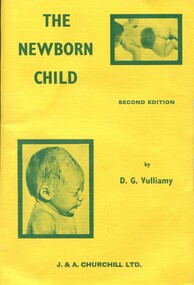
Book - Illustrated textbook, David G Vulliamy 1917-2013, The newborn child, 1967
... At top right of this page the previous catalogue number is handwritten [black ink] , underneath 'Sister Beverley Satchell/Royal Womens Hospital/ Melbourne/ February 1968...At top right of this page the previous catalogue number is handwritten [black ink] , underneath 'Sister Beverley Satchell/Royal Womens Hospital/ Melbourne/ February 1968 Illustrated book with yellow binding. ...This textbook was traditionally used as a clinical guide for medical students and nursing staff detailing the physical characteristics, commom disorders, and general care of infants during the neonatal periodIllustrated book with yellow binding. Green print on front cover. In additon to title, edition, author and publisher details there are two photographs of newborn infants. Title, edition and author also printed on spinenon-fictionThis textbook was traditionally used as a clinical guide for medical students and nursing staff detailing the physical characteristics, commom disorders, and general care of infants during the neonatal periodnewborn infants, neonatal period, premature infants -
 Royal Australian and New Zealand College of Obstetricians & Gynaecologists (RANZCOG)
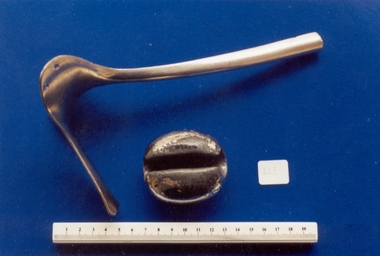
Auvard-style speculum associated with Dr Kelvin Churches, Ramsay
... This speculum had belonged to Dr Kelvin Churches who was an honorary at the Royal Women's Hospital, Melbourne. ...This speculum had belonged to Dr Kelvin Churches who was an honorary at the Royal Women's Hospital, Melbourne. Obstetrics "C.K.C" "RAMSAY" Auvard-style speculum, with detachable weight. ...Auvard's specula were used primarily for douching and operating with continuous irrigation. Some examples had fixed weights, others were detachable. This speculum had belonged to Dr Kelvin Churches who was an honorary at the Royal Women's Hospital, Melbourne. Auvard-style speculum, with detachable weight. Inscribed with initials " C.K.C" (for Kelvin Churches). Stamped "RAMSAY", which is the manufacturer."C.K.C" "RAMSAY"obstetrics -
St Vincent's Hospital Melbourne Archives
Photograph - Photographs of Midwife Margaret Slattery during her nursing overseas experience and exchange program in America, circa 1955
... Following her General Nurse Training at St Vincent's Hospital Melbourne, Sister Margaret Slattery completed her Midwifery Training at Royal Women's Hospital Melbourne, travelled overseas to England, Canada and then an exchange program in America. ...Following her General Nurse Training at St Vincent's Hospital Melbourne, Sister Margaret Slattery completed her Midwifery Training at Royal Women's Hospital Melbourne, travelled overseas to England, Canada and then an exchange program in America. ...Following her General Nurse Training at St Vincent's Hospital Melbourne, Sister Margaret Slattery completed her Midwifery Training at Royal Women's Hospital Melbourne, travelled overseas to England, Canada and then an exchange program in America. One of the photographs shows the elaborate bassinet covers that were in use in hospital baby nurseries circa 1955 in America.Inscription reads Toronto Western Hospital Canada, November 1955 - "Baby Cart,- 8 of 'em!". Another reads: "The Doorway of Dickens house. We did not enter the threshold-we didn't have the bob!"margaret slattery, st vincent's hospital melbourne, royal women's hospital., midwifery nursing -
 Warrnambool and District Historical Society Inc.
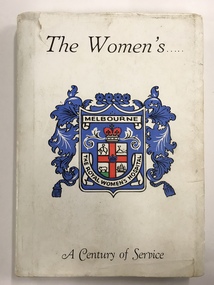
Book, The Women's..... A Century of Service, 1956
... Women’s Hospital from 1924 to 1951. Dr Saltau was the son of Marcus Saltau (M.L.A.) and his wife Jean and the grandson of Henry Saltau who came to Australia in 1860 and who founded in the 1870s the Warrnambool firm of Saltau and Son, general carriers, coal, wood and produce merchants and forwarding agents. Dr Saltau’s father Marcus was Mayor of Warrnambool and a generous benefactor of the Warrnambool Hospital (Marcus Saltau House and Jean Buick Saltau Maternity Ward). Dr Saltau was educated at Warrnambool Academy (Richard Lawson, Headmaster), Scotch College, Melbourne... This is a soft-cover book of 170 pages printed in 1976 and giving the history of the first 100 years of the Royal Women’s Hospital, Melbourne. It has a white cover of thick paper with the emblem of the hospital on the front in blue, red, black and white. ...Melbourne The Royal Women's Hospital...His name is listed in this book. warrnambool medical staff royal women’s hospital melbourne saltau family warrnambool dr william dixon saltau Statement of Significance Melbourne The Royal Women's Hospital This is a soft-cover book of 170 pages printed in 1976 and giving the history of the first 100 years of the Royal Women’s Hospital, Melbourne. ...This book by C.E. Sayers details the history of the Royal Women's Hospital from the time of its foundation as the Lying In Hospital in 1856.It includes information on doctors and nurses and managerial staff connected with the hospital. Some Warrnambool medical staff in the past have been connected with the Women's Hospital. Apart from its detailing of the history of an important institution in Victoria, this book is of particular interest to the Warrnambool and District Historical Society because William Dixon Saltau (1894-1970), born in Warrnambool, was the Medical Superintendent of the Women’s Hospital from 1924 to 1951. Dr Saltau was the son of Marcus Saltau (M.L.A.) and his wife Jean and the grandson of Henry Saltau who came to Australia in 1860 and who founded in the 1870s the Warrnambool firm of Saltau and Son, general carriers, coal, wood and produce merchants and forwarding agents. Dr Saltau’s father Marcus was Mayor of Warrnambool and a generous benefactor of the Warrnambool Hospital (Marcus Saltau House and Jean Buick Saltau Maternity Ward). Dr Saltau was educated at Warrnambool Academy (Richard Lawson, Headmaster), Scotch College, Melbourne and Melbourne University. He specialized in obstetrics and gynaecology and practised in England, Adelaide and Melbourne. .This book is of general historical interest as it describes the history of the Royal Women’s Hospital in Melbourne and because a Warrnambool identity, Dr William Dixon Saltau, was the Medical Superintendent of this hospital for 25 years. His name is listed in this book. This is a soft-cover book of 170 pages printed in 1976 and giving the history of the first 100 years of the Royal Women’s Hospital, Melbourne. It has a white cover of thick paper with the emblem of the hospital on the front in blue, red, black and white. There is also a dust cover with the same material on it. The book has 26 Chapters and ten Appendices, an Index, a Foreword and an Introduction. It has a black and white sketch of the entrance to the first hospital and portraits of the two medical founders of the hospital. The pages have been bound using glue.Melbourne The Royal Women's Hospitalwarrnambool medical staff, royal women’s hospital, melbourne, saltau family, warrnambool, dr william dixon saltau, statement of significance -
 Bendigo Historical Society Inc.
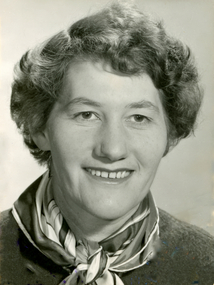
Memorabilia - Doctor Lilian Cleeve Collection, 1915 - 1996
... She grew up in Moonee Ponds and graduated as a Doctor from the University of Melbourne School of Medicine in 1941. She completed her training at the Women's Hospital in Melbourne between December 1940 and January 1941 where she delivered her first baby, Beverley Margaret Manley. ...Cathcart. 11138d Doctor Cleeve and George Cathcart Photo 11138e Dr Cleeve front row 3rd from the right with her first baby delivered at the Women's Hospital Melbourne 1940 Photo. Back Row: B J Bernstein, B Chromow, S I D Preston, H J Hoffman, P Zerman, D G Sisely. ...She grew up in Moonee Ponds and graduated as a Doctor from the University of Melbourne School of Medicine in 1941. She completed her training at the Women's Hospital in Melbourne between December 1940 and January 1941 where she delivered her first baby, Beverley Margaret Manley. ...Doctor Lilian Marjorie Cleeve was born in 1915 and died in February 1996. She grew up in Moonee Ponds and graduated as a Doctor from the University of Melbourne School of Medicine in 1941. She completed her training at the Women's Hospital in Melbourne between December 1940 and January 1941 where she delivered her first baby, Beverley Margaret Manley. In 1942 at the beginning of the war with Japan, Doctor Cleeve travelled to Bendigo. The train was full of soldiers travelling to camp at the Bendigo Showgrounds next to the hospital (now the Tom Flood Centre). Because of the war, the streets were in darkness. Some soldiers carried her suitcase to her new home. Doctor Cleeve immediately began work as the hospital Registrar. Later on she specialized in the delivery of babies, who always seemed to be born on her days off. After leaving the hospital Doctor Cleeve joined the medical practice of Doctors Gorman and Grant (husband and wife). Their rooms were on the corner of View and Mckenzie Streets in the Atkinson building (named after Doctor Harry Atkinson). Doctor Cleeve then established a medical practice in Garsed Street where the Dan Murphy Car Park is now located. Later Doctor Cleeve ran an eye clinic with Doctor Gorman's son, on the other side of Garsed Street. She also used to visit Puckapunyal Army Base to screen both the regular army recruits and the conscripts who were sent to Vietnam. Doctor Cleeve last worked as part of the associate medical staff at the Bendigo Teachers' College in Osborne Street from 1979 to 1980. In 1944 Lilian married Sargent George Cathcart (Fortuna Army Survey Regiment). George was the secretary/treasurer of the Bendigo Branch of the Liberal Party. They lived at 96 Moore Street ('Silver Birches'), close to the hospital. George and Lilian had one son, Andrew. George passed away from a heart attack in 1957. Lilian married Roy Lockart Chisholm in 1960. Roy was the manager of the Charing Cross Branch of the CBA Bank. Not long after their marriage, Lilian (now Mrs Chisholm), Roy, and Lilian's young son Andrew, took a honeymoon voyage on the cargo vessel "Milos" to Hong Kong, Japan, New Guinea and Borneo, where they visited the Sandakan War Memorial. In 1960 Lilian sold 96 Moore Street, and following Roy's retirement, they purchased a house which they named 'Roslyn' at 28 Reginald Street, Quarry Hill. Roy died in 1963 after suffering a stroke. Respected and well-liked, Mrs Chisholm continued to raise Andrew in Reginald Street with the assistance of her faithful housekeeper Coral Suurpaa, known to all as “Hickey". Coral lived in a house in Breen Street, beside the Myrtle Street railway bridge. Prior to this, "Hickey" had lived-in at Moore Street when Dr Cleeve was widowed after the death of her first husband. Photos, Passport, Letter and Nameplate 11138a Doctor Lilian Marjorie Cleeve passport photo May 1961 11138b British Australian Passport 11138c The Premier Visits 'Silver Birches' 96 Moore St., Bendigo on April 8th 1957 Photo. From Left to Right are: Former Bendigo Organiser, Mr T.J. Langdon (now at Ballarat), Mrs Langdon, Mrs John Stanistreet, The Premier, Hon. H.E. Bolte, Mr John Stanistreet, M.L.A., Mrs G. Cathcart (Dr Cleeve) and Mr G.W.S. Cathcart. 11138d Doctor Cleeve and George Cathcart Photo 11138e Dr Cleeve front row 3rd from the right with her first baby delivered at the Women's Hospital Melbourne 1940 Photo. Back Row: B J Bernstein, B Chromow, S I D Preston, H J Hoffman, P Zerman, D G Sisely. Middle Row: L B Satchell, J B Buchanan, O B Pearce, J C Trinea, M R Millikan, I J Selikoff, R E Dwork. Front Row: J Kremer, R B Lewis, Miss B Marshall, Dr M A Mackie, Prof. Marshall Allan, Miss L Cleeve, Miss J grant, H Berinshaw. 11138f Dr Cleeve, Coral Suurpaa, Andrew Cathcart Photo in the backyard at 28 Reginald St. Quarry Hill, 1195-1997. 11138g Letter from Andrew Cathcart to the Sisely family in dec 2009 re the photo taken at the Women's Hospital Melbourne in 1940-41 11138h Dr L M Cleeve Nameplate Front View 11138i Dr L M Cleeve Nameplate Rear View 11138j The University of Melbourne Conferring of degrees Wilson Hall Monday 1st June 1942bendigo, doctor lorna sisely, women's hospital melbourne, roy lockart chisholm, reginald street, quarry hill, coral suurpaa, dr lilian cleeve, george cathcart -
 Alfred Hospital Nurses League - Nursing History Collection
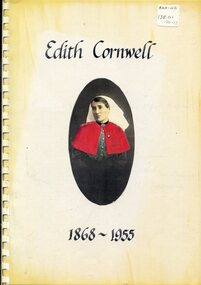
Booklet, Alison Cornwell et al, Edith Cornwell 1868-1955, 1992
... After this she worked at several different hospitals, including qualifying as a midwife, and the role of matron at Hay, Wagga Wagga, and the Women's Hospital, Melbourne. In 1902 Edith had joined the Australian Army Nursing Service as a reserve. ...After this she worked at several different hospitals, including qualifying as a midwife, and the role of matron at Hay, Wagga Wagga, and the Women's Hospital, Melbourne. In 1902 Edith had joined the Australian Army Nursing Service as a reserve. ...Edith Cornwell was born in 1868; she completed her nursing training at the Alfred Hospital in 1896. After this she worked at several different hospitals, including qualifying as a midwife, and the role of matron at Hay, Wagga Wagga, and the Women's Hospital, Melbourne. In 1902 Edith had joined the Australian Army Nursing Service as a reserve. At the outbreak of war in 1914 Edith formally enlisted and served overseas twice. in Egypt (1915-1916) as Matron of the No2 Australian General Hospital (AGH) at Heliopolis. Returning to Australia Edith became Matron of No 5 Base Hospital, Melbourne. In February 1917 Edith was awarded the Royal Red Cross, 2nd Class. In 1918, she worked as Matron at AGHs in France and England. In 1919 Edith was awarded the Royal Red Cross, 1st Class. After the war Edith was active in the formation of the Returned Nurses Club.After leaving the army in 1922 Edith joined Victoria's Neglected Children Department as Matron of their Receiving House. Edith retired in 1932, in 1933 she was awarded the Florence Nightingale Medal. In 1937 Edith was chosen to represent Australian nurses at the coronation of King George V.Biography of a significant graduate of the Alfred Hospital School of NursingComb-bound book with clear plastic front cover and white cardboard back cover. Title page visible through clear plastic: - coloured photograph of Edith Corwell wearing the World War I uniform of matron in the Australian Army Nursing Service. Title printed above and below this photo. White comb binding visible at left. Previous catalogue number handwritten on small white sticker at top right of front cover. On page after title page is a handwritten dedication 'Presented to the Archives of the Alfred Hospital/ Alison Cornwell/ Elaine White (nee Cornwell)/ June 1993, Melbourneedith cornwell, alfred hospital, world war 1914-1918, australian army nursing service -
 Royal Australian and New Zealand College of Obstetricians & Gynaecologists (RANZCOG)
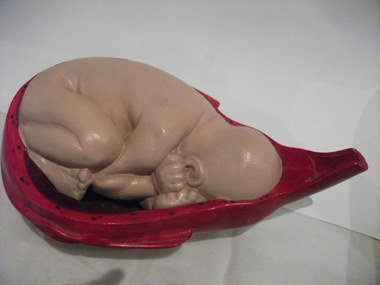
Obstetric teaching model
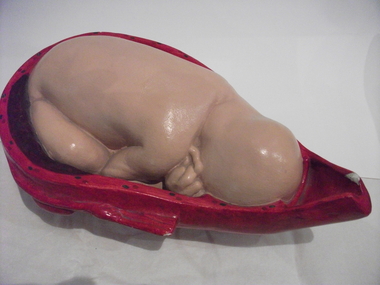
... Originally this six part teaching model was used and owned by the former Queen Victoria Womens' Hospital, Lonsdale/ Swanston Streets, Melbourne. With the amalgamation of hospitals, the models were transferred to the Monash Medical Centre, Clayton....Originally this six part teaching model was used and owned by the former Queen Victoria Womens' Hospital, Lonsdale/ Swanston Streets, Melbourne. With the amalgamation of hospitals, the models were transferred to the Monash Medical Centre, Clayton. ...Originally this six part teaching model was used and owned by the former Queen Victoria Womens' Hospital, Lonsdale/ Swanston Streets, Melbourne. With the amalgamation of hospitals, the models were transferred to the Monash Medical Centre, Clayton.Foetus in uterus, cervix not dilated. Painted plaster. The birth process in six stages; first of six models.teaching aid, obstetric delivery -
 Royal Australian and New Zealand College of Obstetricians & Gynaecologists (RANZCOG)
Obstetric teaching model
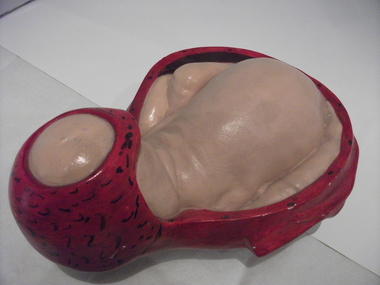
... Originally this six part teaching model was used and owned by the former Queen Victoria Womens' Hospital, Lonsdale/ Swanston Streets, Melbourne. With the amalgamation of hospitals, the models were transferred to the Monash Medical Centre, Clayton....Originally this six part teaching model was used and owned by the former Queen Victoria Womens' Hospital, Lonsdale/ Swanston Streets, Melbourne. With the amalgamation of hospitals, the models were transferred to the Monash Medical Centre, Clayton. ...Originally this six part teaching model was used and owned by the former Queen Victoria Womens' Hospital, Lonsdale/ Swanston Streets, Melbourne. With the amalgamation of hospitals, the models were transferred to the Monash Medical Centre, Clayton.Foetus in uterus, head engaged, cervix partially dilated.. Painted plaster. The birth process in six stages;second of six models.teaching aid, obstetric delivery -
 Royal Australian and New Zealand College of Obstetricians & Gynaecologists (RANZCOG)
Obstetric teaching model
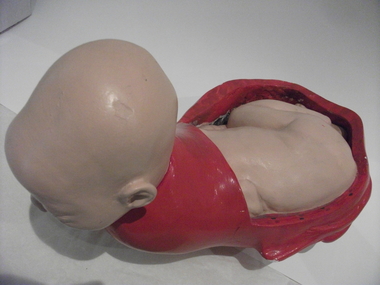
... Originally this six part teaching model was used and owned by the former Queen Victoria Womens' Hospital, Lonsdale/ Swanston Streets, Melbourne. With the amalgamation of hospitals, the models were transferred to the Monash Medical Centre, Clayton....Originally this six part teaching model was used and owned by the former Queen Victoria Womens' Hospital, Lonsdale/ Swanston Streets, Melbourne. With the amalgamation of hospitals, the models were transferred to the Monash Medical Centre, Clayton. ...Originally this six part teaching model was used and owned by the former Queen Victoria Womens' Hospital, Lonsdale/ Swanston Streets, Melbourne. With the amalgamation of hospitals, the models were transferred to the Monash Medical Centre, Clayton.Foetus in uterus, head crowning.. Painted plaster. The birth process in six stages; third of six models.teaching aid, obstetric delivery -
 Royal Australian and New Zealand College of Obstetricians & Gynaecologists (RANZCOG)
Obstetric teaching model
... Originally this six part teaching model was used and owned by the former Queen Victoria Womens' Hospital, Lonsdale/ Swanston Streets, Melbourne. With the amalgamation of hospitals, the models were transferred to the Monash Medical Centre, Clayton....Originally this six part teaching model was used and owned by the former Queen Victoria Womens' Hospital, Lonsdale/ Swanston Streets, Melbourne. With the amalgamation of hospitals, the models were transferred to the Monash Medical Centre, Clayton. ...Originally this six part teaching model was used and owned by the former Queen Victoria Womens' Hospital, Lonsdale/ Swanston Streets, Melbourne. With the amalgamation of hospitals, the models were transferred to the Monash Medical Centre, Clayton.Foetus, head fully emerged. Painted plaster. The birth process in six stages; fourth of six models.teaching aid, obstetric delivery -
 Royal Australian and New Zealand College of Obstetricians & Gynaecologists (RANZCOG)
Obstetric teaching model
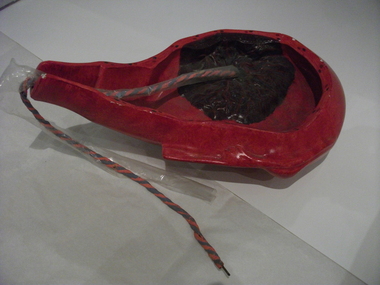
... Originally this six part teaching model was used and owned by the former Queen Victoria Womens' Hospital, Lonsdale/ Swanston Streets, Melbourne. With the amalgamation of hospitals, the models were transferred to the Monash Medical Centre, Clayton....Originally this six part teaching model was used and owned by the former Queen Victoria Womens' Hospital, Lonsdale/ Swanston Streets, Melbourne. With the amalgamation of hospitals, the models were transferred to the Monash Medical Centre, Clayton. ...Originally this six part teaching model was used and owned by the former Queen Victoria Womens' Hospital, Lonsdale/ Swanston Streets, Melbourne. With the amalgamation of hospitals, the models were transferred to the Monash Medical Centre, Clayton.Placenta with attached umbilical cord, uterus still enlarged. Painted plaster. The birth process in six stages; fifth of six models.teaching aid, obstetric delivery -
 Royal Australian and New Zealand College of Obstetricians & Gynaecologists (RANZCOG)
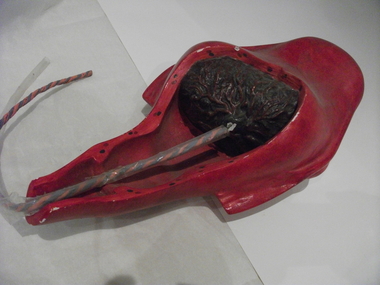
Obstetric teaching model
... Originally this six part teaching model was used and owned by the former Queen Victoria Womens' Hospital, Lonsdale/ Swanston Streets, Melbourne. With the amalgamation of hospitals, the models were transferred to the Monash Medical Centre, Clayton....Originally this six part teaching model was used and owned by the former Queen Victoria Womens' Hospital, Lonsdale/ Swanston Streets, Melbourne. With the amalgamation of hospitals, the models were transferred to the Monash Medical Centre, Clayton. ...Originally this six part teaching model was used and owned by the former Queen Victoria Womens' Hospital, Lonsdale/ Swanston Streets, Melbourne. With the amalgamation of hospitals, the models were transferred to the Monash Medical Centre, Clayton.Placenta with attached umbilical cord, uterus smaller, cervix more contracted. [end of series]. Painted plaster. The birth process in six stages;sixth of six models.teaching aid, obstetric delivery -
 Ballarat Clarendon College
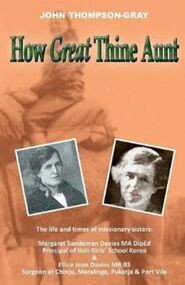
Book, How great thine aunt, 2018
... Jean gave up a promising career in surgery at the Women's Hospital in Melbourne to practise at a mission hospital in Chinju, Korea. ...Jean gave up a promising career in surgery at the Women's Hospital in Melbourne to practise at a mission hospital in Chinju, Korea. ...This is the untold story of Margaret (1904) and Jean (1906) Davies and their uncompromising faith, amazing courage and endless endurance. Margaret was called to Korea as an educator from 1910 to 1940. During the Mansei Uprising, Japanese police arrested her for inciting to riot and drove Kim Il-Sung into Manchuria where he founded Korean Communism. Jean gave up a promising career in surgery at the Women's Hospital in Melbourne to practise at a mission hospital in Chinju, Korea. Sent home as a foreign alien before the attack on Pearl Harbor she practised at outback mission stations in Australia, doubling as the Flying Doctor. She medically examined the population of the New Hebrides (Vanuatu) as a first step to rid the country of leprosy. Jean returned to Pukatja in South Australia during British nuclear bomb testing at Maralinga.Small paperback bookmargaret davies, ellice jean davies, clarendon-presbyterian-ladies-college, 1900s, korea, missionary, surgeon, maralinga, vanuatu -
 Warrnambool and District Historical Society Inc.
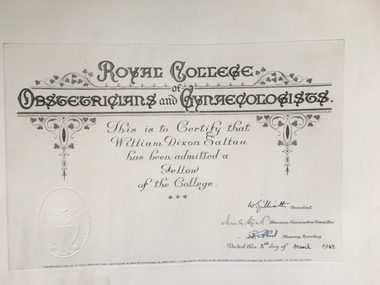
Document, University of Melbourne, First half of 20th C
... Hospital Board and a long-serving State politician. William Dixon Saltau was educated at Warrnambool Academy and Scotch College and graduated from Melbourne University in 1918. He worked as a doctor in Melbourne and Adelaide hospitals and in England. He was the Medical Superintendent of the Women’s...Hospital Board and a long-serving State politician. William Dixon Saltau was educated at Warrnambool Academy and Scotch College and graduated from Melbourne University in 1918. He worked as a doctor in Melbourne and Adelaide hospitals and in England. He was the Medical Superintendent of the Women’s ...These three items give details of the medical qualifications of Dr William Dixon Saltau. Born in Warrnambool, Dr Saltau (1894-1970) was the son of Hon. Marcus Saltau. M.L.C. and Jean Saltau (nee Anton). The Saltau family had been prominent in Warrnambool affairs since Henry Saltau arrived in Warrnambool in the 1870s and founded the business of Saltau and Son – general carriers, coal, wood and produce merchants and forwarding agents. Marcus Saltau was active in Warrnambool community affairs as Mayor, Chairman of the Warrnambool Hospital Board and a long-serving State politician. William Dixon Saltau was educated at Warrnambool Academy and Scotch College and graduated from Melbourne University in 1918. He worked as a doctor in Melbourne and Adelaide hospitals and in England. He was the Medical Superintendent of the Women’s Hospital in Melbourne for 25 years and was elected to the Fellowship of the Royal College of Obstetricians and Gynaecologists in 1947. These items are of considerable importance as they are original documents connected to the medical career of Dr William Saltau. He came from a prominent Warrnambool family and had a distinguished medical career. These are three items belonging to Dr William Dixon Saltau:- Item One: Certificate of Dr William Saltau’s admission to the British Royal College of Obstetricians and Gynaecologists – a cream sheet of parchment paper with the stamp of the Royal College and black printed material and three signatures and two ornamental scrolls under the heading. Item Two: Oval cardboard cylinder to hold the certificate. It has one enclosed end and a label on the outside with a British stamp and a typed address. Item Three: A leather bound folder containing 37 pages, 34 of them with details of the medical courses completed at the University of Melbourne by Dr Saltau. The cover has a gold border. Item Three Cover: ‘University of Melbourne Certificates of the Degrees of M.B. & B.S.’saltau family, history of warrnambool, dr william dixon saltau -
 The Beechworth Burke Museum
Audio - Oral History, Jennifer Williams, Barry Pope, 26/6/2000
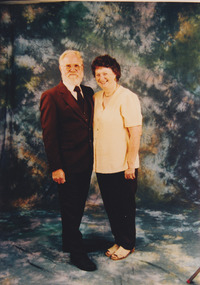
... Melbourne at the intentions of travelling around Australia, met a local girl in Beechworth and decided to stay. He worked firstly in logging operations at the mill in Stanley, had some bartending jobs at Beechworth hotels, then got a job as a kitchen-hand at the Mayday Hill Hospital. Taking up new opportunities to advance his career and earning potential, he trained as a prison officer, working for several months at Pentridge Prison and Fairlea Women's...Melbourne at the intentions of travelling around Australia, met a local girl in Beechworth and decided to stay. He worked firstly in logging operations at the mill in Stanley, had some bartending jobs at Beechworth hotels, then got a job as a kitchen-hand at the Mayday Hill Hospital. Taking up new opportunities to advance his career and earning potential, he trained as a prison officer, working for several months at Pentridge Prison and Fairlea Women's ...Barry Pope left Melbourne at the intentions of travelling around Australia, met a local girl in Beechworth and decided to stay. He worked firstly in logging operations at the mill in Stanley, had some bartending jobs at Beechworth hotels, then got a job as a kitchen-hand at the Mayday Hill Hospital. Taking up new opportunities to advance his career and earning potential, he trained as a prison officer, working for several months at Pentridge Prison and Fairlea Women's Prison in Melbourne. He then returned to Beechworth to work in the prison system. In his story Mr Pope discusses many aspects of prison life for both prisoners and prison officers, from the food and daily routine, attitudes to discipline and rehabilitation, industries and opportunities available to prisoners and how prisoners were viewed in society after their period in prison was finished. This oral history recording was part of a project conducted by Jennifer Williams in the year 2000 to capture the everyday life and struggles in Beechworth during the twentieth century. This project involved recording seventy oral histories on cassette tapes of local Beechworth residents which were then published in a book titled: Listen to what they say: voices of twentieth century Beechworth. These cassette tapes were digitised in July 2021 with funds made available by the Friends of the Burke.Barry Pope's account of his career is historically and socially significant as it details practices within the prison industry in the Twentieth Century as well as the operations of regional hospitals. This oral history account is socially and historically significant as it is a part of a broader collection of interviews conducted by Jennifer Williams which were published in the book 'Listen to what they say: voices of twentieth-century Beechworth.' While the township of Beechworth is known for its history as a gold rush town, these accounts provide a unique insight into the day-to-day life of the town's residents during the 20th century, many of which will have now been lost if they had not been preserved.This is a digital copy of a recording that was originally captured on a cassette tape. The cassette tape is black with a horizontal white strip and is currently stored in a clear flat plastic rectangular container. It holds up 40 minutes of recordings on each side.Barry Pope /beechworth, 1960s, 1970s, 1980s, stanley mill, logging, hotel wentworth, oral history, hospital garden, mayday hill hospital, met hospital, social welfare department, loyola, lyolla, pentridge prison, fairlea women's prison, prison officer training, drug crimes, prison daily life, prison farm, prison wood workshop, prison industry, prison escapes, beechworth prison, prison suicides, prison violence, prisoner attitudes to crime, mental health, isolation cells, walking dog scheme, guide dogs, prison concerts, prison plays, george smee, prison food, prison officer accommodation -
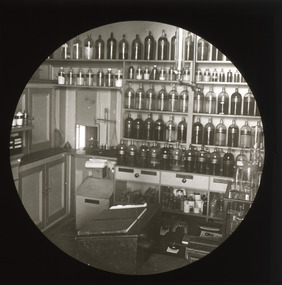 The Beechworth Burke Museum
Photograph - Lantern Slide, c1900
... women in business...david mcewan...john mcewan...national trust...national trust victoria...north-east victoria national trust...heritage buildings...industrial heritage...helene grey...pharmaceutical society of victoria...victorian college of pharmacy...country women's association...caroline copp...royal melbourne hospital...She was a member of the Pharmaceutical Society of Victoria, a hospital committee and Board, the Red Cross and the Infant Welfare Association and held office for the Chiltern branch of the Country Women's Association. Her sister Helene Grey received an OBE for her work as Lady Superintendent of the Royal Melbourne Hospital. ...She was a member of the Pharmaceutical Society of Victoria, a hospital committee and Board, the Red Cross and the Infant Welfare Association and held office for the Chiltern branch of the Country Women's Association. Her sister Helene Grey received an OBE for her work as Lady Superintendent of the Royal Melbourne Hospital. ...Chiltern Pharmacy, now called Dow's Pharmacy, opened in 1859 at a time when the township of Chiltern was experiencing a second-wave gold rush that redistributed the balance of commercial and social activity in the region. David McEwan, father of Prime Minister John McEwan, was one of the first pharmacists practicing at the business. It was purchased in 1929 by pharmacist Hilda Dow who ran the business with her apprentice and husband, Roy Dow, until they closed the business in 1968. In 1988, after founding the North East branch of the National Trust, the Dows donated the premises with its entire fittings and stock. Some of the more than 4,000 items in stock at the time of closure in 1968 were present in the shop when the Dows took charge in 1929 and date to the late Nineteenth Century (around the time this image was taken). Hilda Dow (nee Grey) was born in 1897, the daughter of a police magistrate. She enrolled to study at the Victorian College of Pharmacy in 1919 and worked initially for Poynton's Pharmacy in Morwell before purchasing the Chiltern Pharmacy that was later named after her. She was a member of the Pharmaceutical Society of Victoria, a hospital committee and Board, the Red Cross and the Infant Welfare Association and held office for the Chiltern branch of the Country Women's Association. Her sister Helene Grey received an OBE for her work as Lady Superintendent of the Royal Melbourne Hospital. Although Hilda Dow was not Australia's first female pharmacist (this was Caroline Copp in 1880) the preservation of the pharmacy and the stories it presents sheds light on the general issue of recognition for female medical pioneers in Australia. Lantern slides, sometimes called 'magic lantern' slides, are glass plates on which an image has been secured for the purpose of projection. Glass slides were etched or hand-painted for this purpose from the Eighteenth Century but the process became more popular and accessible to the public with the development of photographic-emulsion slides used with a 'Magic Lantern' device in the mid-Nineteenth Century. Photographic lantern slides comprise a double-negative emulsion layer (forming a positive image) between thin glass plates that are bound together. A number of processes existed to form and bind the emulsion layer to the base plate, including the albumen, wet plate collodion, gelatine dry plate and woodburytype techniques. Lantern slides and magic lantern technologies are seen as foundational precursors to the development of modern photography and film-making techniques.This image is significant as it provides insight into social and commercial infrastructure available in the North-East region of Victoria in the late Nineteenth and early Twentieth Centuries. The business pictured is also associated with a Prime Minister of Victoria and some of Victoria's first female medical and pharmaceutical practitioners. Thin translucent sheet of glass with a circular image printed on the front and framed in a black backing. It is held together by metals strips to secure the edges of the slide.burke museum, beechworth, lantern slide, slide, glass slide, plate, burke museum collection, photograph, monochrome, hilda dow, roy dow, chiltern pharmacy, dow's pharmacy, chiltern, indigo shire, north east victoria, history of pharmacies, women in pharmacy, women in medicine, women in business, david mcewan, john mcewan, national trust, national trust victoria, north-east victoria national trust, heritage buildings, industrial heritage, helene grey, pharmaceutical society of victoria, victorian college of pharmacy, country women's association, caroline copp, royal melbourne hospital, red cross, infant welfare association
