
Showing 50 items matching "thirty years war"
-
 Federation University Historical Collection
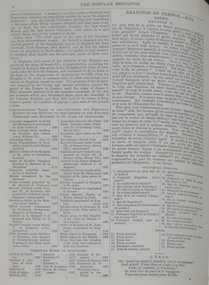
Book, Cassell, Petter, Galpin & Co, Popular Educator Vol. 5
... ...thirty years war...Includes illustrations and topics such as Knights Templar, Red Cross Knights, Lesson in Architecture, botany, arithmetic, algebra, static forces, Cambridge University, chemistry, latin, Euclid, fossils, geology, Greek, Electricity, German, Organic Chemistry, shells, pearls, North America, nightshades, the Thirty Years War, commerce, reflection of light, book-keeping, mosses, South America, hydrostatics, camera obscura, London University...cambridge university knights templar red cross knights organic chemistry north america thirty years war south america camera obscura london university springs public library Stamped 'Springs Public Libray' Green/black clothcovered book of 412 pages. ...Green/black clothcovered book of 412 pages. Includes illustrations and topics such as Knights Templar, Red Cross Knights, Lesson in Architecture, botany, arithmetic, algebra, static forces, Cambridge University, chemistry, latin, Euclid, fossils, geology, Greek, Electricity, German, Organic Chemistry, shells, pearls, North America, nightshades, the Thirty Years War, commerce, reflection of light, book-keeping, mosses, South America, hydrostatics, camera obscura, London UniversityStamped 'Springs Public Libray'cambridge university, knights templar, red cross knights, organic chemistry, north america, thirty years war, south america, camera obscura, london university, springs public library -
 National Vietnam Veterans Museum (NVVM)
Book, Scholl-Latour, Peter, Death in the Ricefields: Thirty Years of War in Indochina
... Death in the Ricefields: Thirty Years of War in Indochina....Death in the Ricefields: Thirty Years of War in Indochina. Book Scholl-Latour, Peter ...The monsson raid had been falling non-stop since early morning, and the view over the Saigon River was blurred by the dark, humid air.The monsson raid had been falling non-stop since early morning, and the view over the Saigon River was blurred by the dark, humid air.indochina - description and travel, indochina - history - 1945, saigon, dien bien phu, rice fields, ho chi minh -
 Bendigo Historical Society Inc.
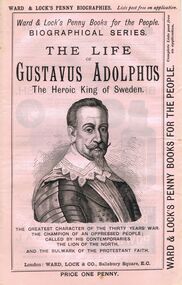
Book - LYDIA CHANCELLOR COLLECTION: THE LIFE OF GUSTAVUS ADOLPHUS
... The greatest character of the Thirty Years' War. The champion of an oppressed people; called by his contemporaries The Lion of the North, and the Bulwark of the Protestant Faith.' ...The greatest character of the Thirty Years' War. The champion of an oppressed people; called by his contemporaries The Lion of the North, and the Bulwark of the Protestant Faith.' ...A pink book titled 'The Life of Gustavus Adolphus the Heroic King of Sweden. The greatest character of the Thirty Years' War. The champion of an oppressed people; called by his contemporaries The Lion of the North, and the Bulwark of the Protestant Faith.' London : Ward, Lock & Co., Salisbury Square, E.C. 641 - 656 pgs.This booklet is one of a series of 53 ' Ward & Lock's Penny Books for the People.' 'Biographical Series.' Price one penny. There are also advertisements of notes.books, biography, gustavus adolphus, lydia chancellor, collection, sweden, swedish history, scandinavia, gustavus adolphus, ward & lock's penny biographies, ward & lock's penny books for the people, biographical series, biographies, male, individual, person, penny books, advertisements -
 Bendigo Historical Society Inc.
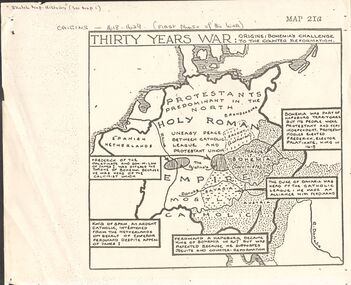
Document - GERMAN HERITAGE SOCIETY COLLECTION: MAPS OF GERMANY (PERIODS OF CHANGE)
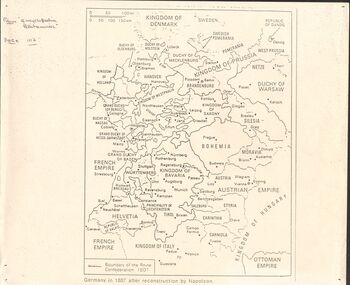
... Three loose copies of the Thirty Years War Map 21a, 21c and 21d. Maps of the Thirty Years War,Europe at the End of the 15th Century, The Reformation in Europe (16th Century), /Europe in the Time of Charles II & James II, The Domination of France 1660 - 85, Europe in the Time of Henry VIII, Germany in 1807 after reconstruction by Napoleon, German Federation 1815, The German Federation 1815, The German Empire of 1871, The Growth of the German Zollverein, Boundaries Before 1918 showing Kingdoms, Duchies, Provinces, etc., of the Former German Empire, the German Empire (1871 - 1918), and Boundaries before 1918 showing Kingdoms, Duchies, Provinces, etc., of the Former German Empire. ...Three loose copies of the Thirty Years War Map 21a, 21c and 21d. Maps of the Thirty Years War,Europe at the End of the 15th Century, The Reformation in Europe (16th Century), /Europe in the Time of Charles II & James II, The Domination of France 1660 - 85, Europe in the Time of Henry VIII, Germany in 1807 after reconstruction by Napoleon, German Federation 1815, The German Federation 1815, The German Empire of 1871, The Growth of the German Zollverein, Boundaries Before 1918 showing Kingdoms, Duchies, Provinces, etc., of the Former German Empire, the German Empire (1871 - 1918), and Boundaries before 1918 showing Kingdoms, Duchies, Provinces, etc., of the Former German Empire. ...Item 21. Maps of Germany (Periods of Change) held in two buff coloured commerce folders. Name written on the front in purple. Three loose copies of the Thirty Years War Map 21a, 21c and 21d. Maps of the Thirty Years War,Europe at the End of the 15th Century, The Reformation in Europe (16th Century), /Europe in the Time of Charles II & James II, The Domination of France 1660 - 85, Europe in the Time of Henry VIII, Germany in 1807 after reconstruction by Napoleon, German Federation 1815, The German Federation 1815, The German Empire of 1871, The Growth of the German Zollverein, Boundaries Before 1918 showing Kingdoms, Duchies, Provinces, etc., of the Former German Empire, the German Empire (1871 - 1918), and Boundaries before 1918 showing Kingdoms, Duchies, Provinces, etc., of the Former German Empire. The last page has a small map of Europe, a small map showing East and West Berlin, German Coats of Arms, Comparative International Figures of Population and a short article titled 'Do You Know Germany'.document, certificate, maps of germany, german heritage society collection - maps of germany (periods of change) -
 Bendigo Historical Society Inc.
Document - GERMAN HERITAGE SOCIETY COLLECTION: MAPS OF GERMANY
... Germany in 1807 after reconstruction by Napoleon, Germany, Map of Germany States with their Coat of Arms, Thirty Years War Map 21b,Europe in the Time of Henry VIII, Europe in The Time of James I and Charles I, Europe at the End of the 15th Century, Boundaries before 1918 showing Kingdoms, Duchies, provinces, etc., of the Former German Empire (2 copies), Two Grosser Plan Vor Hamburg. ...Germany in 1807 after reconstruction by Napoleon, Germany, Map of Germany States with their Coat of Arms, Thirty Years War Map 21b,Europe in the Time of Henry VIII, Europe in The Time of James I and Charles I, Europe at the End of the 15th Century, Boundaries before 1918 showing Kingdoms, Duchies, provinces, etc., of the Former German Empire (2 copies), Two Grosser Plan Vor Hamburg. ...Item 21. Maps of Germany. Germany in 1807 after reconstruction by Napoleon, Germany, Map of Germany States with their Coat of Arms, Thirty Years War Map 21b,Europe in the Time of Henry VIII, Europe in The Time of James I and Charles I, Europe at the End of the 15th Century, Boundaries before 1918 showing Kingdoms, Duchies, provinces, etc., of the Former German Empire (2 copies), Two Grosser Plan Vor Hamburg. Photocopies of Der Rodingsmarkt Hamburg, Kehrwieder Hamburg and Rathhausmarkt und Borse Hamburg. Photocopy of Silesia's Place in History,document, certificate, map of germany, german heritage society collection - maps of germany, theodor w brandt's verlag -
 Federation University Historical Collection
Book, Standardization of Australia's Railway Gauges, 1945, 1945
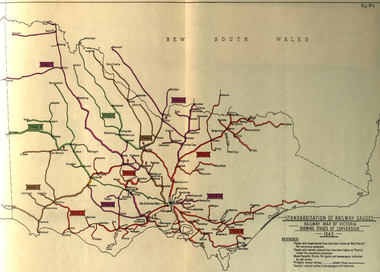
... thirty years had a profound effect on Australia's railway network. In two decades as its Chairman of Commissioners, he revolutionised Victorian Railways, with unprecedented attention to customer service and innovations such as more powerful locomotives, air-conditioned carriages, and faster services culminating in the introduction of the flagship Spirit of Progress express train. Seconded to the Federal Government in World War...thirty years had a profound effect on Australia's railway network. In two decades as its Chairman of Commissioners, he revolutionised Victorian Railways, with unprecedented attention to customer service and innovations such as more powerful locomotives, air-conditioned carriages, and faster services culminating in the introduction of the flagship Spirit of Progress express train. Seconded to the Federal Government in World War ...Sir Harold Winthrop Clapp KBE (7 May 1875 – 21 October 1952) was a transport administrator who over the course of thirty years had a profound effect on Australia's railway network. In two decades as its Chairman of Commissioners, he revolutionised Victorian Railways, with unprecedented attention to customer service and innovations such as more powerful locomotives, air-conditioned carriages, and faster services culminating in the introduction of the flagship Spirit of Progress express train. Seconded to the Federal Government in World War II, he played a pivotal role in the manufacture of fighter aircraft in the defence of Australia. As Director-General of Australia's Land Transport Board, he presented a report on railway gauge standardisation that ultimately led to the eventual linking of all Australian mainland capital cities by a uniform rail gauge. (http://en.wikipedia.org/wiki/Harold_Winthrop_Clapp, accessed 02/10/2013)Grey, soft covered, stapled report of 89 pages. "Standardization of Australia's Railway Gauges" by Harold Clapp is a report and recommendation regarding the standarization of Australia's railway gauges. The contents include: * Lines suggested for conversion or new lines to be constructed * scheme of conversion of tracks and structures * scheme of conversion of locomotives and rolling stock * Estimated costs * Associated works * Estimated manpower which the project will absorb in its various phases *Standardization of rolling stock * Other considerations associated with the project * Estimated time involved in the various phases of the work. The report includes 8 maps: * Map of Australia showing the various proposals referred to *Map of Australian railways showing extent of standard gauge if proposals are carried out * Map of Australian railways as of 30 June 1944 *Map of Australia showing principal mileages referred to in the report * Railway Map of Western Australia, 1945 * Railway Map of South Australia, 1945 * Railway Map of Victoria, 1945 * Railway Map of Melbourne Suburbs, 1945 railway, guage, standardization, standardisation, fremantle, perth, kalgoorlie, peterborough, silverton, tramway, tram, train, townsville, dajarra, bourke, cunnamulla, charleville, blackall, longreach, winton, hughenden, townsville, gajarra, birdum, darwin, narrow gauge -
 The Beechworth Burke Museum
Photograph, Between 1946 and 1961
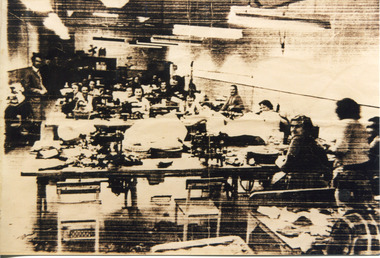
... years of age. At its peak, the shoe factory employed thirty six women and girls, which also included post-war migrants. ...years of age. At its peak, the shoe factory employed thirty six women and girls, which also included post-war migrants. ...Elgin Shoes Pty., Ltd., established a branch shoe factory in Beechworth in 1946. Managing director, Mr T Nagle Pitman, selected Beechworth as a suitable location for the factory due to the availability of labour in the town, particularly girls under sixteen years of age. At its peak, the shoe factory employed thirty six women and girls, which also included post-war migrants. After the Second World War, Australia admitted increasing numbers of immigrants in order to fulfil labour requirements for a rapidly inflating demand of consumer goods. These migrants were largely from European Countries in line with the ‘White Australia Policy’. In 1954 Beechworth had 170 migrants from the UK, 102 from Hungary, and 63 from Germany. The factory closed in 1961 as increased centralisation of both populations and industry in the larger nearby towns of Wangaratta and Wodonga lead to the closure of many factories in small towns in the 1960s and 1970s. This photograph is historically significant as it shows the working conditions in a factory primarily staffed by women at some point between the late 1940s and early 1960s. Sepia rectangular photograph printed on matte photographic paperReverse: 14 / AFGA / 6982 / pitman shoe factory, elgin shoe company, industry, shoe factory, shoemaking, working women, post-war migration, factory, white australia policy, mid-twentieth century women's working conditions, twentieth-century working conditions, pitman, elgin, shoe, sewing machine, leather, pittman -
 City of Moorabbin Historical Society (Operating the Box Cottage Museum)
Domestic object - Silver Plated Vase, Paramount - K. G. Luke Pty Ltd
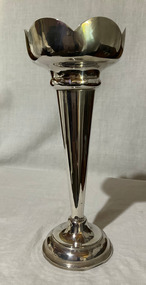
... These employees were still with him thirty years later, with 650 others, making an ever-increasing range of products: silverware, stainless steel surgical equipment, plated goods and glass-washing machines. In 1929 he bought a larger factory in Queen's Parade, Fitzroy (since redeveloped), doubled his staff and introduced new lines. At the outbreak of World War ...Manufactured by K. G. Luke Pty Ltd.In 1921 Kenneth Luke became a partner in a small metal-spinning and silverware business at Carlton. By 1925 he was its proprietor and an employer of seven. These employees were still with him thirty years later, with 650 others, making an ever-increasing range of products: silverware, stainless steel surgical equipment, plated goods and glass-washing machines. In 1929 he bought a larger factory in Queen's Parade, Fitzroy (since redeveloped), doubled his staff and introduced new lines. At the outbreak of World War 2 production was again stepped up and Luke became an honorary adviser to the Department of Supply and Shipping. Luke went on to achieve many major public roles. In 1938-55 he was president of the Carlton Football Club. A delegate (from 1935) to the Victorian Football League, he was its vice president (1946-55) and president (1956-71). With post-war growth generating record crowds, he consolidated central administration and professionalised the game for players.A Silver Plated Vase manufactured by K.G. Luke Pty Ltd.A1 - Paramount Plate - Best EPNS Quality Plate 4001-0paramount, k. g. luke pty ltd -
 Ringwood and District Historical Society
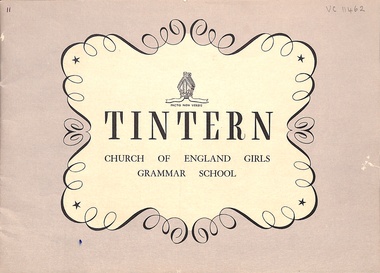
Archive - Parent Record, Tintern CEGS / Tintern CEG Primary and Seconday College, East Ringwood - Archive Collection (Parent Record)
... Wars. The school has maintained throughout the years a high scholastic standard. It has achieved outstanding successes in the Public Examinations in both Arts and Science subjects. In this year 1948 thirty...Wars. The school has maintained throughout the years a high scholastic standard. It has achieved outstanding successes in the Public Examinations in both Arts and Science subjects. In this year 1948 thirty ...Parent Record for Archive collection of photographs and documents relating to Tintern CEGS / Tintern CEG Primary and Seconday College, East Ringwood East Ringwood School Foundation Stone laid 10th June 1950 (See VC 11465)Transcription of Foreword to VC11462 c1950 memorial Booklet: "Tintern, one of the oldest girls’ schools in Victoria, was founded in 1877 by Mrs. Emma Bartlett Cook. It was then known as Tintern Ladies College. In 1918 it was taken over by the Church of England. From its inception it has sent out into the world women who have played an important part in the life of the community — as Doctors, Scientists, Lawyers, Teachers, University Lecturers, Heads of Schools and Colleges, Musicians, Artists, Architects, Nurses, Missionaries, Social Service Workers, Journalists, Business Women and Home-Makers. Tintern girls have served their country in the Boer War and in the two World Wars. The school has maintained throughout the years a high scholastic standard. It has achieved outstanding successes in the Public Examinations in both Arts and Science subjects. In this year 1948 thirty Tintern girls are doing courses at the University. In Mrs. Cook’s day the school was noted for its music. It has now a flourishing orchestra, and Tintern choir was amongst those chosen to broadcast in Education Week 1947. Art and Craft have an important place in the curriculum. Games such as hockey, tennis and croquet were started as early as the 1880s. In 1900 the girls were daring enough to start a bicycle club. Nowadays Tintern plays baseball, basketball, hockey and tennis. As the years have passed the curriculum has been widened and buildings have been added — the senior classrooms in 1918, the laboratory block in 1930, the Junior School (the gift of Sir William Angliss) in 1937, the library (the gift of Mr. E. R. Cullen) in 1938, the craft house in 1938 and the Domestic Science kitchen in 1946. ESTABLISHED 1877" -
 Warrnambool and District Historical Society Inc.
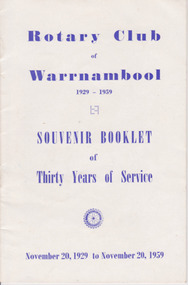
Booklet, Rotary Club of Warrnambool, 1929-1959, Printed prior to November 1959
... wars and Depression years as well as community projects such as tree planting and overseas aid.. The list of Officebearers is a reflection of community identities and one facet of their contribution to society. In one paragraph state what is significant, the type of significance it holds, and why it is significant rotary rotary club of warrnambool Horace I Holmes charter 3237 Printed by Collett & Bain, 34 Kepler St Warrnambool White Gloss card cover. Front cover has blue text, Rotary Club of Warrnambool 1929-1959, Souvenir Booklet of Thirty ...This booklet relates the history of the first 30 years of service by the Rotary Club of Warrnambool. It gives an overview of the many local projects which have been helped over the years and also lists the club office bearers Its significance lies in the list of projects which were happening in the period 1929-1959 such as assistance to Natural disasters and hardship in the post wars and Depression years as well as community projects such as tree planting and overseas aid.. The list of Officebearers is a reflection of community identities and one facet of their contribution to society. In one paragraph state what is significant, the type of significance it holds, and why it is significantWhite Gloss card cover. Front cover has blue text, Rotary Club of Warrnambool 1929-1959, Souvenir Booklet of Thirty Years of Service. Small Rotary International Wheel. November 20, 1929 to November 20, 1959. Back cover Collett &Bain Printers 34 Kepler St Warrnambool. 16 PagesPrinted by Collett & Bain, 34 Kepler St Warrnamboolrotary, rotary club of warrnambool, horace i holmes, charter 3237 -
 Eltham District Historical Society Inc
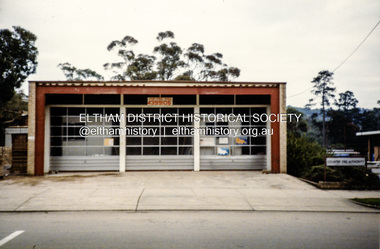
Photograph, Eltham Fire Station, 909 Main Road, Eltham, July 1986
... thirty years. In 1962, land for a new (fourth) Eltham Fire Station on the opposite (western) side of Main Road was acquired from the Eltham War Memorial Trust. ...thirty years. In 1962, land for a new (fourth) Eltham Fire Station on the opposite (western) side of Main Road was acquired from the Eltham War Memorial Trust. ...Located at 909 Main Road, Eltham. Opened 7 October 1966 Eltham's Fire Stations by Peter Pidgeon Article published EDHS Newsletter No.287 April 2026 Where was Eltham’s first fire station and how many have there been? Following the formation of the Eltham Volunteer Fire Brigade in March 1926, firefighting equipment was initially housed in a shed on Captain H. Warren’s property. A more permanent solution was required. In May 1927 a proposal was made to build a fire station and meeting hall at the corner of Luck Street and Main Road where the present railway station carpark is located. An application was approved by Council in September to build the fire station consisting of a galvanised iron shed on the land in Luck Street, However, in April 1928 when E.O. Egan, Secretary, Eltham Volunteer Fire Brigade sought permission to erect a fire station on the continuation of Luck Street, Council advised they had no power to act on this as they did not own the land. Cr. Ernie Andrew offered to loan a site on his own land in Arthur Street (where the entrance to the carpark under Woolworths is situated) and by September 1928 the new fire station was being erected consisting of a building to house the reel and other equipment as well as a meeting room. It was constructed with a concrete floor and painted. A purpose-built cupboard had been constructed for the hose by local carpenter, Mr. Fraser and Mr. Frank Jones arranged for electric lighting to be installed. Many donations were made by the community to assist in paying off the debt on the station. The first meeting in the new fire station was held November 12, 1928, with a large attendance of members. The official opening was to be held in the New Year on January 8, 1929. In February 1930, Eltham Council agreed to place the Eltham Volunteer Fire Brigade under the control of the Country Fire Brigades’ Board. Further discussions were held in May regarding their area of responsibility to cover as well as questions about a suitable block of land and relocation of the brigade’s buildings. In August 1930, the Chief Officer of Country Fire Board visited Council to select a suitable site. He did not approve of any that Council suggested but encouraged Council to buy land for the purpose. Enquiries were made about a block in Henry Street adjacent to the Public Hall which the Chief Officer favoured. Cr Price investigated and learned the block could be purchased, £10 would secure it if the people of Eltham were willing to raise a further £30-40. All were in favour of proceeding. By February 1931, £40 had been raised by the community, in addition to £20 added by Council and £20 by the Fire Brigades’ Board making £80 total to purchase the site. Several working bees were held between May and July 1931 to level the ground in preparation for relocation of the station building from Arthur Street to the new site in Henry Street. It was not long before the Henry Street site had proven to be not all that was desired. Access to the Henry Street site from Main Road was steep and not suited for man handling a heavy hose reel. By November 1933 the Country Fire Brigades’ Board advised it was considering the matter of a new cation and fire station for Eltham. On February 23, 1934, the Advertiser reported a new Fire Station was to be built on an alternate site at a cost of £600. In August, the Country Fire Brigades’ Board notified it intended to build a new fire station at no cost to Eltham if the brigade could purchase a block of land. An appeal was established by the brigade to raise funds for the purchase of the new site between the residence and confectionery shop owned by Mr. G.H. Browne and Ryan Bros. butchers on the eastern side of Main Road between Arthur and Dudley streets. An inspection of the site by the Chief Officer of Country Fire Brigades' Board was undertaken September 28. It was directed that tenders for the erection of the building were to be called immediately and construction to start the next month. By New Year 1935 the erection of the third station building was well in progress and was completed by mid-February. The station was officially opened April 26, 1935, and a new 35 feet high bell tower was erected in December 1935. This fire station, the third erected in six years, served the community for the next thirty years. In 1962, land for a new (fourth) Eltham Fire Station on the opposite (western) side of Main Road was acquired from the Eltham War Memorial Trust. The new station was opened October 7, 1966. In 1970 the former fire station building on the eastern side of Main Road was relocated to Research Park for use by the 1st Research Scout group. The site is now part of the current Coles supermarket and Eltham Village complex. A new fifth fire station was erected in Brougham Street at a cost of $9.6m and officially opened December 2015. It was intended for use by both career and volunteer firefighters. The former site was to be made available for community access. However, the mixed functional role presented operational difficulties at the new station and after three years, the Eltham CFA volunteers moved back to the former site towards the end of 2018 following a $500,000 upgrade to the facility. So nowadays the career Fire Rescue Victoria members of Eltham Fire Brigade operate out of Eltham’s fifth fire station in Brougham Street and the volunteer Eltham CFA Brigade operate out of Eltham’s fourth station, or could it be considered the sixth?Colour photograph of Eltham Fire Station, Main Road, July 1986eltham fire brigade, eltham fire station, eltham shops, main road eltham -
 Monbulk RSL Sub Branch
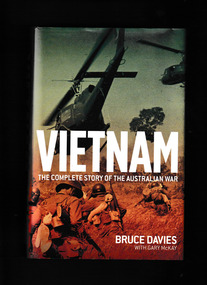
Book, Allen & Unwin, Vietnam : the complete story of the Australian War, 2012
... Vietnam war 1961-1975 – History Vietnam war 1961-1975 – Australian involvement Take a journey back to the front line with two Australian veterans as they retrace the footsteps of soldiers and politicians, villagers and the enemy in a meticulously researched new history of the Vietnam War. Thirty years after the end of the Vietnam war comes an objective analysis of Australia's involvement. ...Take a journey back to the front line with two Australian veterans as they retrace the footsteps of soldiers and politicians, villagers and the enemy in a meticulously researched new history of the Vietnam War. Thirty years after the end of the Vietnam war comes an objective analysis of Australia's involvement. The book shows the extent of Australia's engagement in the Vietnam war and its contribution compared to its allies. "For Australians, Vietnam remains one of the most difficult-and controversial-wars we have fought. On the fiftieth anniversary of Australia's first involvement comes Vietnam: the complete story of the Australian war, for anyone who wishes to understand why Australia went to war, and who wants to make sense of the intensely unrelenting warfare. For Bruce Davies and Gary McKay, the history of Vietnam-its wars, colonial domination, its search for freedom and its subsequent loss-speaks to an Australian anxiety of a very small population far away from the centre of an empire to which it was firmly committed. The rise of Japan, the war in the Pacific and the postcolonial independence of the peoples of southeast Asia, coupled with the mercurial influence of Ho Chi Minh and the rise of communism, form the background to the commitment of Australian forces. Vietnam takes the reader to the front line, describing the experiences of soldier, politician, villager, enemy; and into the war room to unpick the military and political strategies. We see the challenges the Australians faced against not only a dogged enemy, but also those by the allies in the quest to defeat a powerful counterinsurgency. ... Meticulously researched and marked with acute critical analysis and a deep understanding of the place and the war, Vietnam shows the experience of Australian soldiers as never before.Index, notes, ill, p.601.non-fictionTake a journey back to the front line with two Australian veterans as they retrace the footsteps of soldiers and politicians, villagers and the enemy in a meticulously researched new history of the Vietnam War. Thirty years after the end of the Vietnam war comes an objective analysis of Australia's involvement. The book shows the extent of Australia's engagement in the Vietnam war and its contribution compared to its allies. "For Australians, Vietnam remains one of the most difficult-and controversial-wars we have fought. On the fiftieth anniversary of Australia's first involvement comes Vietnam: the complete story of the Australian war, for anyone who wishes to understand why Australia went to war, and who wants to make sense of the intensely unrelenting warfare. For Bruce Davies and Gary McKay, the history of Vietnam-its wars, colonial domination, its search for freedom and its subsequent loss-speaks to an Australian anxiety of a very small population far away from the centre of an empire to which it was firmly committed. The rise of Japan, the war in the Pacific and the postcolonial independence of the peoples of southeast Asia, coupled with the mercurial influence of Ho Chi Minh and the rise of communism, form the background to the commitment of Australian forces. Vietnam takes the reader to the front line, describing the experiences of soldier, politician, villager, enemy; and into the war room to unpick the military and political strategies. We see the challenges the Australians faced against not only a dogged enemy, but also those by the allies in the quest to defeat a powerful counterinsurgency. ... Meticulously researched and marked with acute critical analysis and a deep understanding of the place and the war, Vietnam shows the experience of Australian soldiers as never before.vietnam war 1961-1975 – history, vietnam war 1961-1975 – australian involvement -
 Monbulk RSL Sub Branch
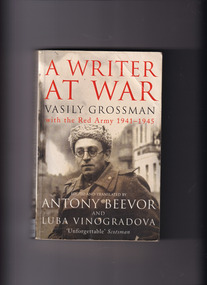
Book, Antony Beevor, The writer at war: Vasily Grossman with the red army 1941-195, 2006
... War II and the lives and deaths of infantrymen, tank drivers, pilots, snipers, and civilians. Deemed unfit for service when the Germans invaded the Soviet Union in 1941, Grossman became a special correspondent for The Red Star, the Red Army newspaper. A portly novelist in his mid-thirties with no military experience, he was given a uniform and hastily taught how to use a pistol. Remarkably, he spent three of the next four years ...Based on the notebooks in which Vasily Grossman gathered the raw material for his newspaper articles, A Writer at War depicts the crushing conditions on the Eastern Front during World War II and the lives and deaths of infantrymen, tank drivers, pilots, snipers, and civilians. Deemed unfit for service when the Germans invaded the Soviet Union in 1941, Grossman became a special correspondent for The Red Star, the Red Army newspaper. A portly novelist in his mid-thirties with no military experience, he was given a uniform and hastily taught how to use a pistol. Remarkably, he spent three of the next four years at the front, observing with a writer's eye the most pitiless fighting ever recorded.". "Grossman witnessed almost all the major events on the Eastern Front: the appalling defeats and desperate retreats of 1941, the defense of Moscow, and the fighting in the Ukraine. In August 1942 he was posted to Stalingrad, where he remained during four months of brutal street fighting. Grossman was present at the battle of Kursk (the largest tank engagement in history), and, as the Red Army advanced, he reached Berdichev, where his worst fears for his mother and other relatives were confirmed. A Jew himself, he undertook the faithful recording of Holocaust atrocities as their extent dawned. His report "The Hell of Treblinka" was used in evidence at the Nuremberg tribunalIndex, ill, maps, p.378.non-fictionBased on the notebooks in which Vasily Grossman gathered the raw material for his newspaper articles, A Writer at War depicts the crushing conditions on the Eastern Front during World War II and the lives and deaths of infantrymen, tank drivers, pilots, snipers, and civilians. Deemed unfit for service when the Germans invaded the Soviet Union in 1941, Grossman became a special correspondent for The Red Star, the Red Army newspaper. A portly novelist in his mid-thirties with no military experience, he was given a uniform and hastily taught how to use a pistol. Remarkably, he spent three of the next four years at the front, observing with a writer's eye the most pitiless fighting ever recorded.". "Grossman witnessed almost all the major events on the Eastern Front: the appalling defeats and desperate retreats of 1941, the defense of Moscow, and the fighting in the Ukraine. In August 1942 he was posted to Stalingrad, where he remained during four months of brutal street fighting. Grossman was present at the battle of Kursk (the largest tank engagement in history), and, as the Red Army advanced, he reached Berdichev, where his worst fears for his mother and other relatives were confirmed. A Jew himself, he undertook the faithful recording of Holocaust atrocities as their extent dawned. His report "The Hell of Treblinka" was used in evidence at the Nuremberg tribunalworld war 1939-1945 - campaigns - eastern europe, soviet union - german occupation - 1941-1944 -
 Monbulk RSL Sub Branch
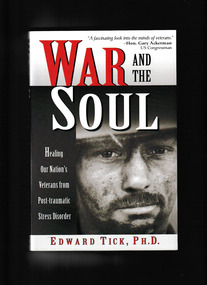
Book, Quest Books, War and the soul: Healing our nation's veterans from post-traumatic stress disorder, 2005
... War's violence can cause the very soul to flee and be lost for life. Drawing on history, mythology, and thirty years of experience, Dr. ...Post-traumatic stress disorder increasingly afflicts veterans of modern warfare. To begin healing, says Edward Tick, we must see PTSD as a disorder of identity itself. War's violence can cause the very soul to flee and be lost for life. Drawing on history, mythology, and thirty years of experience, Dr. Tick reveals the universal dimensions of veterans' soul wounding. He uses methods from ancient Greek, Native America, Vietnamese, and other traditions to restore the soul so that the veteran can, at last, truly return home. His work is invaluable for veterans of any war as well as for their families and all who would help themIndex, bibliography, notes, p.329.non-fictionPost-traumatic stress disorder increasingly afflicts veterans of modern warfare. To begin healing, says Edward Tick, we must see PTSD as a disorder of identity itself. War's violence can cause the very soul to flee and be lost for life. Drawing on history, mythology, and thirty years of experience, Dr. Tick reveals the universal dimensions of veterans' soul wounding. He uses methods from ancient Greek, Native America, Vietnamese, and other traditions to restore the soul so that the veteran can, at last, truly return home. His work is invaluable for veterans of any war as well as for their families and all who would help thempost traumatic stress disorder - treatment, veterans - mental health - united states -
 Monbulk RSL Sub Branch
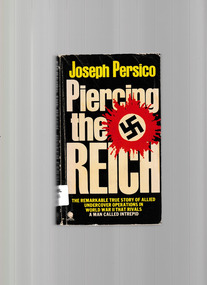
Book, Joseph E. Persico, Piercing the Reich : the penetration of Nazi Germany by OSS agents during World War II, 1980
... World war 1939-1945 - Espionage Office of Strategic Services This book tells for the first time the full story of the infiltration of Germany by the Office of Strategic Services, a closely guarded secret for over thirty years Ill, index, p.464. ...This book tells for the first time the full story of the infiltration of Germany by the Office of Strategic Services, a closely guarded secret for over thirty yearsIll, index, p.464.non-fictionThis book tells for the first time the full story of the infiltration of Germany by the Office of Strategic Services, a closely guarded secret for over thirty yearsworld war 1939-1945 - espionage, office of strategic services -
 Victoria Police Museum
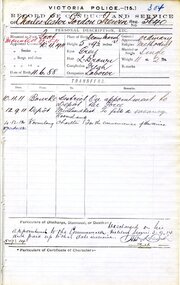
Record of Conduct and Service (Charles Lester Gordon Trewin)
... War broke out, Australian men from all backgrounds and professions were called to serve their country. Members of the Victorian Police force were some of the first to answer the call with twenty men joining the first convoy of soldiers who left Australian shores in October 1914. Over the course of four long years, one hundred and thirty...War broke out, Australian men from all backgrounds and professions were called to serve their country. Members of the Victorian Police force were some of the first to answer the call with twenty men joining the first convoy of soldiers who left Australian shores in October 1914. Over the course of four long years, one hundred and thirty ...When the First World War broke out, Australian men from all backgrounds and professions were called to serve their country. Members of the Victorian Police force were some of the first to answer the call with twenty men joining the first convoy of soldiers who left Australian shores in October 1914. Over the course of four long years, one hundred and thirty-eight Victorian Police enlisted from stations across the state. Of these, twenty-seven lost their lives. Whilst the fate of each man was different, a deep commitment to protecting and serving the public was common to all. Victoria Police service: Joined 10/04/1911; Discharged 3/09/1914 WW1 service: Enlisted: 5 September 1914; Highest rank: Captain; Regiment: 4th Australian Light Horse Regiment; Fate: Returned to Australia 15th January 1919.Official documentworld war 1, 1914-1918; victoria police; trewin, charles lester gordon 5640 -
 Victoria Police Museum
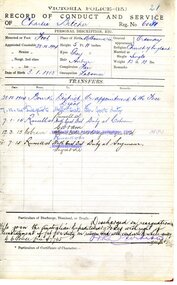
Record of Conduct and Service (Charles Belcher)
... War broke out, Australian men from all backgrounds and professions were called to serve their country. Members of the Victorian Police force were some of the first to answer the call with twenty men joining the first convoy of soldiers who left Australian shores in October 1914. Over the course of four long years, one hundred and thirty...War broke out, Australian men from all backgrounds and professions were called to serve their country. Members of the Victorian Police force were some of the first to answer the call with twenty men joining the first convoy of soldiers who left Australian shores in October 1914. Over the course of four long years, one hundred and thirty ...When the First World War broke out, Australian men from all backgrounds and professions were called to serve their country. Members of the Victorian Police force were some of the first to answer the call with twenty men joining the first convoy of soldiers who left Australian shores in October 1914. Over the course of four long years, one hundred and thirty-eight Victorian Police enlisted from stations across the state. Of these, twenty-seven lost their lives. Whilst the fate of each man was different, a deep commitment to protecting and serving the public was common to all. Victoria Police service: Joined: 28/10/1914; Resigned: 3/07/1915 WW1 service: Enlisted: 5 July 1915; Highest rank: Gunner; Regiment: V5A Australian Heavy Trench Mortar Battery; Fate: Died of illness, France, 18 January 1917; Medals: British War and Victory medalsOfficial documentworld war 1, 1914-1918; victoria police; belcher, charles 6041 -
 Victoria Police Museum
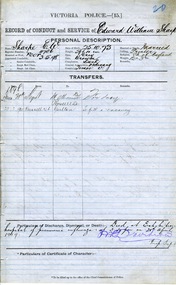
Record of Conduct and Service (Edward William Sharpe)
... War broke out, Australian men from all backgrounds and professions were called to serve their country. Members of the Victorian Police force were some of the first to answer the call with twenty men joining the first convoy of soldiers who left Australian shores in October 1914. Over the course of four long years, one hundred and thirty...War broke out, Australian men from all backgrounds and professions were called to serve their country. Members of the Victorian Police force were some of the first to answer the call with twenty men joining the first convoy of soldiers who left Australian shores in October 1914. Over the course of four long years, one hundred and thirty ...When the First World War broke out, Australian men from all backgrounds and professions were called to serve their country. Members of the Victorian Police force were some of the first to answer the call with twenty men joining the first convoy of soldiers who left Australian shores in October 1914. Over the course of four long years, one hundred and thirty-eight Victorian Police enlisted from stations across the state. Of these, twenty-seven lost their lives. Whilst the fate of each man was different, a deep commitment to protecting and serving the public was common to all. Victoria Police service: Joined 3/05/1898; Leave without pay July 1915; Rejoined ca April 1918; Died 28/04/1919 from pneumonic influenza WW1 service: Enlisted 7 July 1915; Highest rank: Sergeant; Regiment: 29th Battalion, A Company; Fate: Returned to Australia 15 April 1918; Medals: 1914-15 Star, British War Medal, Victory MedalOfficial documentworld war 1, 1914-1918; victoria police; sharpe, edward william 4706 -
 Victoria Police Museum
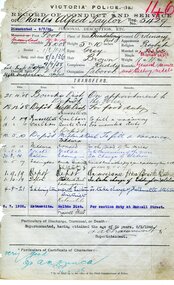
Record of Conduct and Service (Charles Alfred Taylor)
... War broke out, Australian men from all backgrounds and professions were called to serve their country. Members of the Victorian Police force were some of the first to answer the call with twenty men joining the first convoy of soldiers who left Australian shores in October 1914. Over the course of four long years, one hundred and thirty...War broke out, Australian men from all backgrounds and professions were called to serve their country. Members of the Victorian Police force were some of the first to answer the call with twenty men joining the first convoy of soldiers who left Australian shores in October 1914. Over the course of four long years, one hundred and thirty ...When the First World War broke out, Australian men from all backgrounds and professions were called to serve their country. Members of the Victorian Police force were some of the first to answer the call with twenty men joining the first convoy of soldiers who left Australian shores in October 1914. Over the course of four long years, one hundred and thirty-eight Victorian Police enlisted from stations across the state. Of these, twenty-seven lost their lives. Whilst the fate of each man was different, a deep commitment to protecting and serving the public was common to all. Victoria Police service: Joined: 28/10/1908; Granted leave without pay: 5/05/1917; Re-joined: 1/10/1919; Retired: 8/02/1946; Highest rank: Inspector WW1 service: Enlisted: 10 May 1917; Highest rank: Corporal; Regiment: 38th Battalion; Fate: Returned to Australia 4 July 1919; Medals: 1914-1915 Star, British War and Victory medalsOfficial documentworld war 1, 1914-1918; victoria police; taylor, charles alfred 5429 -
 Victoria Police Museum
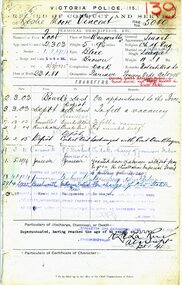
Record of Conduct and Service (Leslie Moore Vincent)
... War broke out, Australian men from all backgrounds and professions were called to serve their country. Members of the Victorian Police force were some of the first to answer the call with twenty men joining the first convoy of soldiers who left Australian shores in October 1914. Over the course of four long years, one hundred and thirty...War broke out, Australian men from all backgrounds and professions were called to serve their country. Members of the Victorian Police force were some of the first to answer the call with twenty men joining the first convoy of soldiers who left Australian shores in October 1914. Over the course of four long years, one hundred and thirty ...When the First World War broke out, Australian men from all backgrounds and professions were called to serve their country. Members of the Victorian Police force were some of the first to answer the call with twenty men joining the first convoy of soldiers who left Australian shores in October 1914. Over the course of four long years, one hundred and thirty-eight Victorian Police enlisted from stations across the state. Of these, twenty-seven lost their lives. Whilst the fate of each man was different, a deep commitment to protecting and serving the public was common to all. Victoria Police service: Joined 2/03/1903; Granted leave without pay 1/09/1916; Resumed duties 6/08/1919; Retired 23/01/1941; Highest rank: Sergeant WW1 service: Enlisted 5 May 1916; Highest rank: Lance Sergeant; Regiment: 3rd Australian Divisional Ammunition Column; Fate: Returned to Australia 8 May 1919; Medals: 1914-1915 Star, British War and Victory MedalsOfficial documentworld war 1, 1914-1918; victoria police; vincent, leslie moore 5080 -
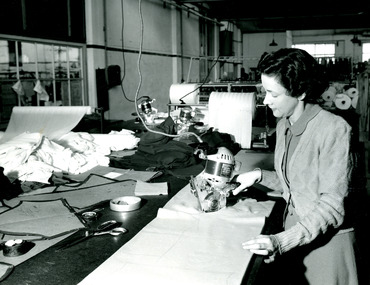 Bendigo Historical Society Inc.
Photograph - HANRO COLLECTION: PROMOTIONAL PHOTOGRAPHS, 1940's
... War II. Lansell's major contribution was his service to returned soldiers. He was president of the Bendigo sub-branch of the Returned Sailors' and Soldiers' Imperial League of Australia for nearly thirty years. ...War II. Lansell's major contribution was his service to returned soldiers. He was president of the Bendigo sub-branch of the Returned Sailors' and Soldiers' Imperial League of Australia for nearly thirty years. ...Sir George Victor Lansell (1883-1959), businessman, politician and philanthropist, was born on 3 October 1883 in London, elder son of George Lansell, the Bendigo 'Quartz King', and his second wife Harriet Edith, née Bassford. George was educated at St Andrew's College, Bendigo, and Melbourne Church of England Grammar School. On 20 January 1910 at All Saints Pro-Cathedral, Bendigo, he married a skiing champion, Edith Florence Gwendoline Frew; they had three daughters. As a young man Lansell excelled in revolver shooting, boxing and swimming but his militia interests endured longest. First commissioned in the 8th Australian Infantry Regiment in 1904, he was a captain in 1909. In May 1916 he was commissioned captain in Bendigo's 38th Battalion, Australian Imperial Force. Entering the front line in France on 1 December he was wounded two days later and invalided back to Australia next March for discharge in August. After the war he rose in 1923 to major commanding the 38th Battalion, Australian Military Forces. Lieutenant-Colonel in 1927, he retired as honorary colonel in 1942 after having organized the north-west Victorian group of the Volunteer Defence Corps early in World War II. Lansell's major contribution was his service to returned soldiers. He was president of the Bendigo sub-branch of the Returned Sailors' and Soldiers' Imperial League of Australia for nearly thirty years. His work extended beyond grand gesture and he is remembered affectionately for his personal generosity to ex-servicemen and their dependants. Lansell was director of the powerful Sandhurst Trustees' Co., the Bendigo Mutual Permanent Land & Building Society and many other local companies. In 1926 he brought to Bendigo the overseas-based Hanro Knitting Mills (Hanro comes from the Swiss firm Handschin and Ronus which made high quality underwear and knitwear at Liestal, Switzerland) and the Australian Swiss Watch Co. Early in his business career he acquired the Bendigo Independent and amalgamated it with the Bendigo Advertiser in 1918. He had interests in the Riverine Herald, the Rochester Irrigator, the Stock and Station Journal and Central Victorian Broadcasters Ltd, and was a delegate to Empire press conferences in Canada (1920), England (1923) and Australia (1925).Lever arch folder containing Hanro black and white promotional photographs. 53 studio photographs of women's knitwear and lingerie 20.5cm x 25.2cm. 1 studio photograph of men's knitwear 19cm x 23.5cm. 2 x photo's 19cm x 23.3cm Photographer Reg Brock. 27 black and white photo's 15cm x 21cm of men's knitwear, womenswear and lingerie, were donated by Ann Peters.Reg Brock Studios Bendigo. Labels or stamps on back of photographs.business, retail, hanro promotional photographs, george victor lansell, bendigo hanro, ralph birrell collections -
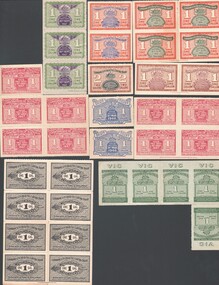 Bendigo Historical Society Inc.
Document - WES HARRY COLLECTION: MOTOR SPIRIT RATION STAMPS, 1939 - 1949
... Collection of thirty six Motor Spirit Ration stamps from the years during world war 2. Most are signed on the back by G. ...ORGANIZATION Government ration tickets World War 2 Rationing Motor Spirit Ration Stamps Collection of thirty six Motor Spirit Ration stamps from the years during world war 2. ...Collection of thirty six Motor Spirit Ration stamps from the years during world war 2. Most are signed on the back by G. Alice Jones. Also on the reverse is ' 2(e)/4652.organization, government, ration tickets, world war 2, rationing, motor spirit ration stamps -
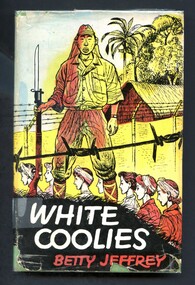 Alfred Hospital Nurses League - Nursing History Collection
Book - Illustrated Book, Betty Jeffrey 1908-2000 et al, White Coolies, 1954
... war Betty Jeffrey In 1942 a group of sixty-five Australian Army nursing sisters was evacuated from Malaya aboard the Vyner Brooke, a few days before the fall of Singapore. Two days later their ship was bombed and sunk by the Japanese. Of the fifty-three survivors who scrambled ashore, twenty-one were murdered and the remaining thirty-two were taken prisoner. The book is the engrossing record kept by one of the sisters, Betty Jeffrey, during the three grueling years ...In 1942 a group of sixty-five Australian Army nursing sisters was evacuated from Malaya aboard the Vyner Brooke, a few days before the fall of Singapore. Two days later their ship was bombed and sunk by the Japanese. Of the fifty-three survivors who scrambled ashore, twenty-one were murdered and the remaining thirty-two were taken prisoner. The book is the engrossing record kept by one of the sisters, Betty Jeffrey, during the three grueling years of imprisonment that followed. It is an amazing story of survival and deprivation in the harshest of conditions.Illustrated book with dustjacket. Book has a light green cover, with an image of a compass embossed in gold. on the front. The tile author's surname and publisher's name are embossed in gold on the spine. Dust jacket has multicoloured illustration by J.P.L Kickhefer on front and spine: group of women, some with head scarves walking behind a ?prison guard, barbed wire topped fence in front of and behind group. In the background is a hut and tropical plants. Title (white print) and authors name (red print) appear on a black background at base of front of dustjacket. Title, author's and publisher's names are printed in black on spinenon-fictionIn 1942 a group of sixty-five Australian Army nursing sisters was evacuated from Malaya aboard the Vyner Brooke, a few days before the fall of Singapore. Two days later their ship was bombed and sunk by the Japanese. Of the fifty-three survivors who scrambled ashore, twenty-one were murdered and the remaining thirty-two were taken prisoner. The book is the engrossing record kept by one of the sisters, Betty Jeffrey, during the three grueling years of imprisonment that followed. It is an amazing story of survival and deprivation in the harshest of conditions.world war 1939-1945 prisoners of war, betty jeffrey -
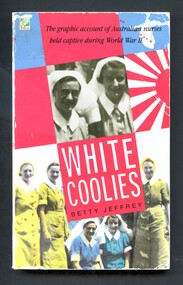 Alfred Hospital Nurses League - Nursing History Collection
Book, Betty Jeffrey 1908-2000, White Coolies, 1988
... war Nurses n 1942 a group of sixty-five Australian Army nursing sisters was evacuated from Malaya aboard the Vyner Brooke, a few days before the fall of Singapore. Two days later their ship was bombed and sunk by the Japanese. Of the fifty-three survivors who scrambled ashore, twenty-one were murdered and the remaining thirty-two were taken prisoner. The book is the engrossing record kept by one of the sisters, Betty Jeffrey, during the three grueling years ...n 1942 a group of sixty-five Australian Army nursing sisters was evacuated from Malaya aboard the Vyner Brooke, a few days before the fall of Singapore. Two days later their ship was bombed and sunk by the Japanese. Of the fifty-three survivors who scrambled ashore, twenty-one were murdered and the remaining thirty-two were taken prisoner. The book is the engrossing record kept by one of the sisters, Betty Jeffrey, during the three grueling years of imprisonment that followed. It is an amazing story of survival and deprivation in the harshest of conditions.Book has a red white and Malaya 1941, Nursing Sisters of cover, tile printed in white and author's name printed in black on front cover. On the front cover is a coloured black and white photograph "Malaya 1941, Nursing Sisters of 2/4 Clearing Station, 8 Division. Title and author's name also printed in white on spine. The back cover has a summary of the booknon-fictionn 1942 a group of sixty-five Australian Army nursing sisters was evacuated from Malaya aboard the Vyner Brooke, a few days before the fall of Singapore. Two days later their ship was bombed and sunk by the Japanese. Of the fifty-three survivors who scrambled ashore, twenty-one were murdered and the remaining thirty-two were taken prisoner. The book is the engrossing record kept by one of the sisters, Betty Jeffrey, during the three grueling years of imprisonment that followed. It is an amazing story of survival and deprivation in the harshest of conditions.world war 1939-1945 prisoners of war, nurses -
 National Vietnam Veterans Museum (NVVM)
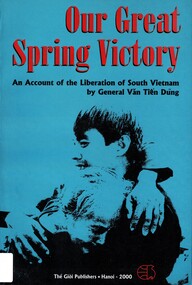
Book, Van Tien Dung, General, Our Great Spring Victory: An Account of the Liberation of South Vietnam, 2000
... Vietnam War 1961-1975 -- Personal narratives North Vietnamese Vietnamese Conflict 1961-1975 -- Campaigns Thirty years have elapsed since the end of the Vietnam War (30 April 1975). ...Thirty years have elapsed since the end of the Vietnam War (30 April 1975). However, those who were involved in the war, either directly or indirectly still sense its physical and psychological impacts.Thirty years have elapsed since the end of the Vietnam War (30 April 1975). However, those who were involved in the war, either directly or indirectly still sense its physical and psychological impacts.vietnam war, 1961-1975 -- personal narratives, north vietnamese, vietnamese conflict, 1961-1975 -- campaigns -
 National Vietnam Veterans Museum (NVVM)
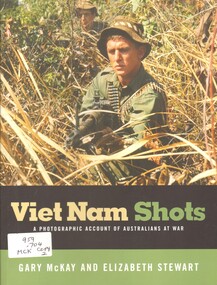
Book, McKay, Gary and Stewart, Elizabeth, Viet Nam Shots: A Photographic Account Of Australians At War. (Copy 3)
... War 1961-1975- Australia Australia. Army Denis Gibbons Sgt Bill Errington `````````````````````````````````````````````````````````````````````````````````````````````````````````````````````````````````````````````````````````````````````````````````````````````````````````````````````````````````````````````` Thirty-four years after the last Australian troops left Viet Nam, Viet Nam Shots provides a compelling and comprehensive illustrated history of Australia's involvement in the war that divided a nation. ...Thirty-four years after the last Australian troops left Viet Nam, Viet Nam Shots provides a compelling and comprehensive illustrated history of Australia's involvement in the war that divided a nation.Thirty-four years after the last Australian troops left Viet Nam, Viet Nam Shots provides a compelling and comprehensive illustrated history of Australia's involvement in the war that divided a nation.vietnam war, 1961-1975- australia, australia. army, denis gibbons, sgt bill errington, `````````````````````````````````````````````````````````````````````````````````````````````````````````````````````````````````````````````````````````````````````````````````````````````````````````````````````````````````````````````` -
 National Vietnam Veterans Museum (NVVM)
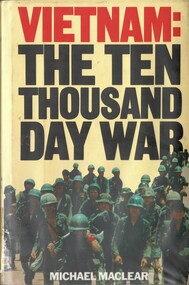
Book, Maclear, Michael, Vietnam: The Ten Thousand Day War (Copy 3)
... Vietnam War 1961-1975 Vietnam - History - 1945-1975 Saigon South China Sea United States Embassy At 7.53 on the morning of 30 April 1975, the last helicopter took of from the United States embassy compound in Saigon, bound for a waiting aircraft-carrier in the South China Sea. After thirty years ...At 7.53 on the morning of 30 April 1975, the last helicopter took of from the United States embassy compound in Saigon, bound for a waiting aircraft-carrier in the South China Sea. After thirty years - more that ten thousand days - the Vietnam War was over.At 7.53 on the morning of 30 April 1975, the last helicopter took of from the United States embassy compound in Saigon, bound for a waiting aircraft-carrier in the South China Sea. After thirty years - more that ten thousand days - the Vietnam War was over.vietnam war, 1961-1975, vietnam - history - 1945-1975, saigon, south china sea, united states embassy -
 National Vietnam Veterans Museum (NVVM)
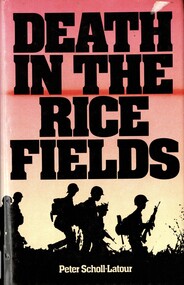
Book, Scholl-Latour, Peter, Death in the Ricefields, 1979
... Vietnam War (1961-1975) Indochinese War 1946-1954 -- Causes Dien Bien Phu Prisoners of the Viet Cong Saigon For over thirty-five years, the world's ideologies have been fought out in the ricefields and jungles, the towns and cities, of Indochina. ...For over thirty-five years, the world's ideologies have been fought out in the ricefields and jungles, the towns and cities, of Indochina.For over thirty-five years, the world's ideologies have been fought out in the ricefields and jungles, the towns and cities, of Indochina.vietnam war (1961-1975), indochinese war, 1946-1954 -- causes, dien bien phu, prisoners of the viet cong, saigon -
 National Vietnam Veterans Museum (NVVM)
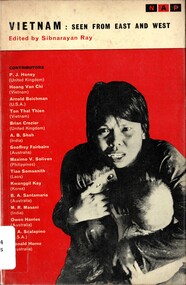
Book, Ray, Sibnarayan, Vietnam Seen from East and West: An International Symposium
... Vietnam War 1961 - 1975 Southeast Asia - Politics and government Like the war in Spain thirty years ago, the significance of the war in Vietnam reaches far beyond the geographical boundries of that tragic and beautiful land. ...Like the war in Spain thirty years ago, the significance of the war in Vietnam reaches far beyond the geographical boundries of that tragic and beautiful land.Like the war in Spain thirty years ago, the significance of the war in Vietnam reaches far beyond the geographical boundries of that tragic and beautiful land.vietnam war, 1961 - 1975, southeast asia - politics and government -
 National Vietnam Veterans Museum (NVVM)
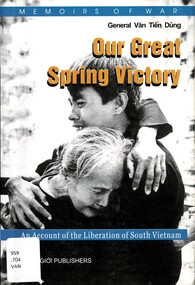
Book, Van Tien Dung, General, Our Great Spring Victory: An Account of the Liberation of South Vietnam, 2000
... Vietnam War 1961-1975 -- Personal narratives North Vietnamese Vietnamese Conflict 1961-1975 -- Campaigns Thirty years have elapsed since the end of the Vietnam War (30 April 1975). ...Thirty years have elapsed since the end of the Vietnam War (30 April 1975). However, those who were involved in the war, either directly or indirectly still sense its physical and psychological impacts.Thirty years have elapsed since the end of the Vietnam War (30 April 1975). However, those who were involved in the war, either directly or indirectly still sense its physical and psychological impacts.vietnam war, 1961-1975 -- personal narratives, north vietnamese, vietnamese conflict, 1961-1975 -- campaigns
