
Showing 6 items matching "tortured hero"
-
 National Vietnam Veterans Museum (NVVM)
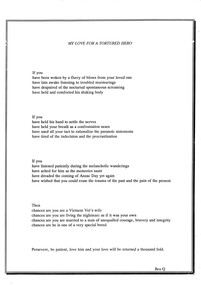
Literary Work, A copy of My Love For a Tortured Hero: A Poem by Bea Q
... A copy of My Love For a Tortured Hero: A Poem by Bea Q......Tortured Hero...1961 - 1975 -- Veterans -- Australia Vietnam War 1961-1975 - Poetry Tortured Hero Poem A photocopy of a poem written by a Vietnam Vet's wife to other Vietnam Vets wives A copy of My Love For a Tortured Hero: A Poem by Bea Q Literary Work Q, Bea ...A photocopy of a poem written by a Vietnam Vet's wife to other Vietnam Vets wives 1961 - 1975 -- veterans -- australia, vietnam war, 1961-1975 - poetry, tortured hero, poem -
 Monbulk RSL Sub Branch
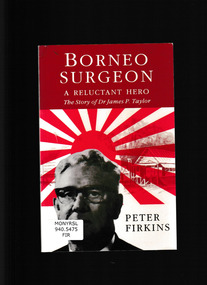
Book, Hesperian Press, Borneo surgeon : a reluctant hero : the life and times of Dr. James Patrick Taylor, OBE, MB, CH.M, 1995
... tortured. Donated by Major General M.P.J. O'Brien, July 2018. Signed by author Ill, p.151 Borneo surgeon : a reluctant hero : the life and times of Dr. ...Peter Firkins has produced a heroic figure comparable in courage and selflessness to that of the legendary 'Weary' Dunlop, and whose story should be known by all Australians in the same way. What a wonderful epitaph to a man born into a humble Yass family at the end of the nineteenth century who, by his own determination and intellect, won a scholarship for his secondary education at St Patrick's College, Goulburn and an Exhibition to study medicine at Sydney University. Almost by pure chance he pursued his medical career in an outpost of the British Empire then known as British North Borneo to become Principal Medical Officer at the time of the Japanese occupation during World War II. The Japanese allowed the civilian medical staff to remain at their posts with the status of 'simple confinement' while at the same time the bewildered local people looked to someone for leadership in their new and unaccustomed circumstances.Aided by his wonderful wife Celia he was imperceptibly drawn into the key role of organising the underground movement among loyal native and giving support to the Australian Prisoners of War transferred to Borneo from Singapore. In 1943 he was exposed to the Japanese, arrested and terribly tortured. Donated by Major General M.P.J. O'Brien, July 2018. Signed by authorIll, p.151non-fictionPeter Firkins has produced a heroic figure comparable in courage and selflessness to that of the legendary 'Weary' Dunlop, and whose story should be known by all Australians in the same way. What a wonderful epitaph to a man born into a humble Yass family at the end of the nineteenth century who, by his own determination and intellect, won a scholarship for his secondary education at St Patrick's College, Goulburn and an Exhibition to study medicine at Sydney University. Almost by pure chance he pursued his medical career in an outpost of the British Empire then known as British North Borneo to become Principal Medical Officer at the time of the Japanese occupation during World War II. The Japanese allowed the civilian medical staff to remain at their posts with the status of 'simple confinement' while at the same time the bewildered local people looked to someone for leadership in their new and unaccustomed circumstances.Aided by his wonderful wife Celia he was imperceptibly drawn into the key role of organising the underground movement among loyal native and giving support to the Australian Prisoners of War transferred to Borneo from Singapore. In 1943 he was exposed to the Japanese, arrested and terribly tortured. Donated by Major General M.P.J. O'Brien, July 2018. Signed by authorworld war 1939 – 1945 - prisons and prisoners - japanese, world war 1939 – 1945 – personal narratives – australia -
 National Vietnam Veterans Museum (NVVM)
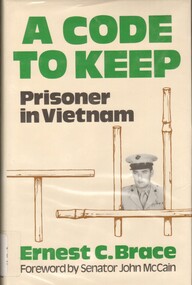
Book, Brace, Ernest, A Code To Keep: Prisoner in Vietnam
... Vietnam War 1961-1975 - Prisoners and prisons North Vietnamese Vietnam War 1961-1975 - Personal narratives American He was a former Marine hero, banished in disgrace from the Corps. Yet he maintained the military code of conduct in the torture cells of the enemy. this is the true, firsthand account of America's longest-held 'civilian' prisoner of war in Vietnam, and his courageous return to honour. ...He was a former Marine hero, banished in disgrace from the Corps. Yet he maintained the military code of conduct in the torture cells of the enemy. this is the true, firsthand account of America's longest-held 'civilian' prisoner of war in Vietnam, and his courageous return to honour.He was a former Marine hero, banished in disgrace from the Corps. Yet he maintained the military code of conduct in the torture cells of the enemy. this is the true, firsthand account of America's longest-held 'civilian' prisoner of war in Vietnam, and his courageous return to honour.vietnam war, 1961-1975 - prisoners and prisons, north vietnamese, vietnam war, 1961-1975 - personal narratives, american -
 Tramways/East Melbourne RSL Sub Branch - RSL Victoria Listing id: 27511
Book, Michael j. Durant & Steven Hartov et al, IN THE COMPANY OF HEROES (The true story of the Black Hawk pilot, shot down, captured and tortured)
... ISBN: 0 552 15094 0 IN THE COMPANY OF HEROES (The true story of the Black Hawk pilot, shot down, captured and tortured) Book Michael j. ...isbn: 0 552 15094 0 -
 Returned Nurses RSL Sub-branch
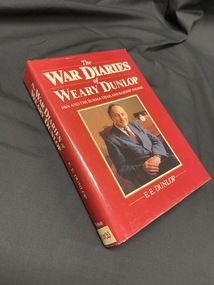
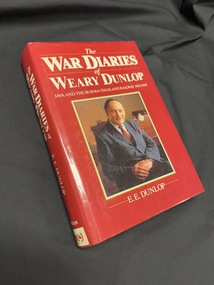
Book, Ernest Edward Dunlop, The war diaries of Weary Dunlop : Java and the Burma-Thailand railway 1942-1945, 1986
... hero and a legend to thousands of Australian and allied prisoners, whose lives were saved with meagre medical supplies and the instruments the medical officers carried on their backs through Java and Thai jungles. He says himself: 'Of some 22,000 who entered captivity, more than 7,000 died or were killed. Of their sufferings... only those who were present can fully comprehend the seeming hopelessness of it all as their bodies wasted and their friends died.' Sir Edward describes how the cmps were organised; he records deaths, cholera epidemics, operations, and torture ...'More than forty years ago Sir Edward Dunlop, then a lieutenant-colonel, began these diaries at the start of his imprisonment by the Japanese in Java and on the Burma-Thailand Railway. His meticulous observations of prison camp life were concealed all through the war; by the time peace cam in 1945, he carried with him a unique record of the lives of prisoners-of-war. As a commanding officer and a surgeon, 'Weary' became a hero and a legend to thousands of Australian and allied prisoners, whose lives were saved with meagre medical supplies and the instruments the medical officers carried on their backs through Java and Thai jungles. He says himself: 'Of some 22,000 who entered captivity, more than 7,000 died or were killed. Of their sufferings... only those who were present can fully comprehend the seeming hopelessness of it all as their bodies wasted and their friends died.' Sir Edward describes how the cmps were organised; he records deaths, cholera epidemics, operations, and torture; his own - rare - despair; the movement of prisoners up and down the line; and his constant struggle to protect the sick from being drafted into Japanese work parties. From February 1942 he was in the following Japanese prison camps; Bandoeng, Tjimahi, Makasura, Changi, Konyu, Hintok, Tarsau, Chungkai and Nakom Patom.' [From inside front dust jacket]Book with a red dustjacket, had a photograph of a seated older man on cover and white text on cover and spinenon-fiction'More than forty years ago Sir Edward Dunlop, then a lieutenant-colonel, began these diaries at the start of his imprisonment by the Japanese in Java and on the Burma-Thailand Railway. His meticulous observations of prison camp life were concealed all through the war; by the time peace cam in 1945, he carried with him a unique record of the lives of prisoners-of-war. As a commanding officer and a surgeon, 'Weary' became a hero and a legend to thousands of Australian and allied prisoners, whose lives were saved with meagre medical supplies and the instruments the medical officers carried on their backs through Java and Thai jungles. He says himself: 'Of some 22,000 who entered captivity, more than 7,000 died or were killed. Of their sufferings... only those who were present can fully comprehend the seeming hopelessness of it all as their bodies wasted and their friends died.' Sir Edward describes how the cmps were organised; he records deaths, cholera epidemics, operations, and torture; his own - rare - despair; the movement of prisoners up and down the line; and his constant struggle to protect the sick from being drafted into Japanese work parties. From February 1942 he was in the following Japanese prison camps; Bandoeng, Tjimahi, Makasura, Changi, Konyu, Hintok, Tarsau, Chungkai and Nakom Patom.' [From inside front dust jacket]australian nurses, world war two, wwii, ww2, prisoner of war, japan -
 Returned Nurses RSL Sub-branch
Book, Ernest Edward Dunlop, The war diaries of Weary Dunlop : Java and the Burma-Thailand railway 1942-1945, 1986
... hero and a legend to thousands of Australian and allied prisoners, whose lives were saved with meagre medical supplies and the instruments the medical officers carried on their backs through Java and Thai jungles. He says himself: 'Of some 22,000 who entered captivity, more than 7,000 died or were killed. Of their sufferings... only those who were present can fully comprehend the seeming hopelessness of it all as their bodies wasted and their friends died.' Sir Edward describes how the cmps were organised; he records deaths, cholera epidemics, operations, and torture ...'More than forty years ago Sir Edward Dunlop, then a lieutenant-colonel, began these diaries at the start of his imprisonment by the Japanese in Java and on the Burma-Thailand Railway. His meticulous observations of prison camp life were concealed all through the war; by the time peace cam in 1945, he carried with him a unique record of the lives of prisoners-of-war. As a commanding officer and a surgeon, 'Weary' became a hero and a legend to thousands of Australian and allied prisoners, whose lives were saved with meagre medical supplies and the instruments the medical officers carried on their backs through Java and Thai jungles. He says himself: 'Of some 22,000 who entered captivity, more than 7,000 died or were killed. Of their sufferings... only those who were present can fully comprehend the seeming hopelessness of it all as their bodies wasted and their friends died.' Sir Edward describes how the cmps were organised; he records deaths, cholera epidemics, operations, and torture; his own - rare - despair; the movement of prisoners up and down the line; and his constant struggle to protect the sick from being drafted into Japanese work parties. From February 1942 he was in the following Japanese prison camps; Bandoeng, Tjimahi, Makasura, Changi, Konyu, Hintok, Tarsau, Chungkai and Nakom Patom.' [From inside front dust jacket]Book with a red dustjacket, had a photograph of a seated older man on cover and white text on cover and spinenon-fiction'More than forty years ago Sir Edward Dunlop, then a lieutenant-colonel, began these diaries at the start of his imprisonment by the Japanese in Java and on the Burma-Thailand Railway. His meticulous observations of prison camp life were concealed all through the war; by the time peace cam in 1945, he carried with him a unique record of the lives of prisoners-of-war. As a commanding officer and a surgeon, 'Weary' became a hero and a legend to thousands of Australian and allied prisoners, whose lives were saved with meagre medical supplies and the instruments the medical officers carried on their backs through Java and Thai jungles. He says himself: 'Of some 22,000 who entered captivity, more than 7,000 died or were killed. Of their sufferings... only those who were present can fully comprehend the seeming hopelessness of it all as their bodies wasted and their friends died.' Sir Edward describes how the cmps were organised; he records deaths, cholera epidemics, operations, and torture; his own - rare - despair; the movement of prisoners up and down the line; and his constant struggle to protect the sick from being drafted into Japanese work parties. From February 1942 he was in the following Japanese prison camps; Bandoeng, Tjimahi, Makasura, Changi, Konyu, Hintok, Tarsau, Chungkai and Nakom Patom.' [From inside front dust jacket]australian nurses, world war two, wwii, ww2, prisoner of war, japan
