
Showing 691 items matching "transfer stations"
-
 Lakes Entrance Historical Society
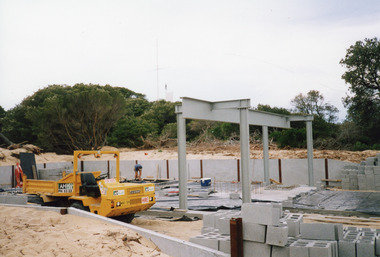
Photograph - Dredging, 1998
... Three other photographs in album of similar views of the construction of the sand transfer station....Colour photograph showing building of sand transfer station on eastern side of Entrance. Flagstaff visible in background in photo progress. ...Three other photographs in album of similar views of the construction of the sand transfer station. Dredging Public Works Flagstaff Colour photograph showing building of sand transfer station on eastern side of Entrance. ...Three other photographs in album of similar views of the construction of the sand transfer station.Colour photograph showing building of sand transfer station on eastern side of Entrance. Flagstaff visible in background in photo progress. Lakes Entrance Victoriadredging, public works, flagstaff -
 Marysville & District Historical Society
THE TRIANGLE NEWS-VOL 38 NO 35-SEPTEMBER 30 2011
... ...transfer stations...marysville victoria australia marysville drainage works vbfa amnesty supports fire prevention efforts murrindindi shire council resource recovery centres transfer stations marysville golf report advertisements sneak preview opening marysville & district historical society sparkling wine festival art & photographic galleries mary kenealy vale dawn hendy tudor lodge narbethong pullen family bushfire memorial commences the memorials working group murrindindi shire bushfire memorials forum alexandra district hospital women's health marysville medical centre clinic extension grants mayor peter beales THE TRIANGLE NEWS-VOL 38 NO 35-SEPTEMBER 30 2011 ...marysville, victoria, australia, marysville drainage works, vbfa, amnesty supports fire prevention efforts, murrindindi shire council, resource recovery centres, transfer stations, marysville golf report, advertisements, sneak preview opening, marysville & district historical society, sparkling wine festival, art & photographic galleries, mary kenealy, vale dawn hendy, tudor lodge narbethong, pullen family, bushfire memorial commences, the memorials working group, murrindindi shire bushfire memorials forum, alexandra district hospital, women's health, marysville medical centre, clinic extension grants, mayor peter beales -
 Whitehorse Historical Society Inc.
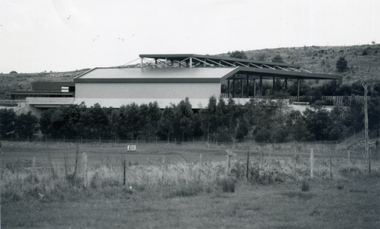
Photograph, Waste Transfer Station - looking south, 1978
... Waste Transfer Station - looking south......waste transfer station vermont south...Black and white photograph of the Waste Transfer Station (opened in 1978) looking south...city of nunawading waste transfer station vermont south burwood highway Black and white photograph of the Waste Transfer Station (opened in 1978) looking south Waste Transfer Station - looking south Photograph Photograph ...Black and white photograph of the Waste Transfer Station (opened in 1978) looking southcity of nunawading, waste transfer station vermont south, burwood highway -
 Whitehorse Historical Society Inc.
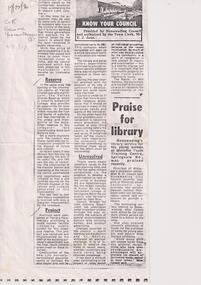
Newspaper - Article, Reserve, 17/12/1980
... Opening of information centre at Yarran Dheran, construction of transfer station and nursery - horticultural centre commenced....jane ted city of nunawading yarran dheran terrara park horticultural centre forest hill jolimont road Opening of information centre at Yarran Dheran, construction of transfer station and nursery - horticultural centre commenced. ...Opening of information centre at Yarran Dheran, construction of transfer station and nursery - horticultural centre commenced.jane, ted, city of nunawading, yarran dheran, terrara park, horticultural centre, forest hill, jolimont road -
Whitehorse Historical Society Inc.
Article, Recycling saves our environment, 1990
... ...Waste Transfer Station...Residents more concerned about the importance of recycling since the opening of Recycling and Waste Transfer Station in 1978....City of Nunawading Recycling Hawke Graham Waste Transfer Station Vermont South MacDonald Arthur Residents more concerned about the importance of recycling since the opening of Recycling and Waste Transfer Station in 1978. ...Residents more concerned about the importance of recycling since the opening of Recycling and Waste Transfer Station in 1978.Residents more concerned about the importance of recycling since the opening of Recycling and Waste Transfer Station in 1978.Residents more concerned about the importance of recycling since the opening of Recycling and Waste Transfer Station in 1978.city of nunawading, recycling, hawke, graham, waste transfer station, vermont south, macdonald, arthur -
 Whitehorse Historical Society Inc.
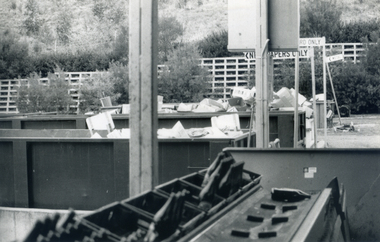
Photograph, Waste Transfer Station - paper recycling, 1978
... Waste Transfer Station - paper recycling......waste transfer station...Black and white photograph showing a view of the recycling bins at the Waste Transfer Station on Burwood Highway. The Station was opened in 1978...city of nunawading recycling waste transfer station vermont south burwood highway Black and white photograph showing a view of the recycling bins at the Waste Transfer Station on Burwood Highway. ...Black and white photograph showing a view of the recycling bins at the Waste Transfer Station on Burwood Highway. The Station was opened in 1978city of nunawading, recycling, waste transfer station, vermont south, burwood highway -
 Whitehorse Historical Society Inc.
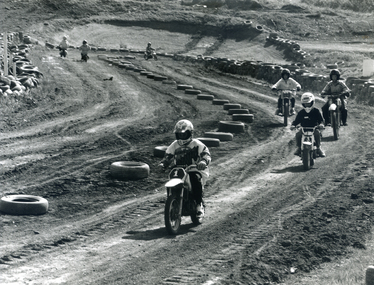
Photograph, Motocross Track, Vermont South, 1994
... Black and white photograph of the motocross track near the waste transfer station at Vermont South. Motorcyclist in centre of photograph with three following. 1994...motocross track vermont south Black and white photograph of the motocross track near the waste transfer station at Vermont South. Motorcyclist in centre of photograph with three following. 1994 Motocross Track, Vermont South Photograph Photograph ...Black and white photograph of the motocross track near the waste transfer station at Vermont South. Motorcyclist in centre of photograph with three following. 1994motocross track, vermont south -
 Whitehorse Historical Society Inc.
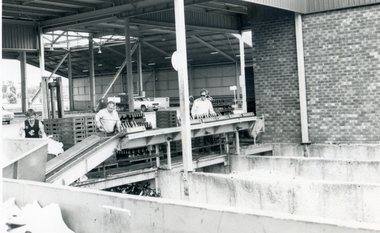
Photograph, Waste Transfer Station - bottle and glass recycling, c1978
... Waste Transfer Station - bottle and glass recycling......waste transfer station vermont south...Black and white photograph of the bottle and glass recycling section of the Waste Transfer Station on Burwood Highway, South Vermont. ...city of nunawading waste transfer station vermont south burwood highway vermont south recycling Black and white photograph of the bottle and glass recycling section of the Waste Transfer Station on Burwood Highway, South Vermont. ...Black and white photograph of the bottle and glass recycling section of the Waste Transfer Station on Burwood Highway, South Vermont. The Station was opened in 1978city of nunawading, waste transfer station vermont south, burwood highway vermont south, recycling -
Glenelg Shire Council Cultural Collection
Photograph - Photograph Album - Various Victorian locations, c. 1948
... This album was handed in at Portland Transfer station, as it was never collected it was donated to the collection....This album was handed in at Portland Transfer station, as it was never collected it was donated to the collection. ...This album was handed in at Portland Transfer station, as it was never collected it was donated to the collection.Photograph album, green covers, black and white photos of Mt Gambier, Portland, Port Fairy, Great Ocean Rd, Twelve apostles, Yallourn, and a zoo. -
Whitehorse Historical Society Inc.
Article, Apex needs new blood, 1991
... ...waste transfer station...They have just won a grant from the Department of Conservation and Lands to construct an observation tower at the rear of the waste transfer station on Burwood Highway, but they need more members to carry the project through, says Geoff Secker,. membership chairman....service clubs secker geoff victoria. department of conservation and lands nunawading apex club waste transfer station vermont south Nunawading Apex club urgently wanting new members. ...Nunawading Apex club urgently wanting new members.Nunawading Apex club urgently wanting new members. They have just won a grant from the Department of Conservation and Lands to construct an observation tower at the rear of the waste transfer station on Burwood Highway, but they need more members to carry the project through, says Geoff Secker,. membership chairman.Nunawading Apex club urgently wanting new members. service clubs, secker, geoff, victoria. department of conservation and lands, nunawading apex club, waste transfer station, vermont south -
Whitehorse Historical Society Inc.
Article, Popular PC transferred, 1966
... Article on Senior Constable Jack Baldiston's transfer from Blackburn Police Station and his voluntary work with Alkira Training Centre Box Hill....Blackburn Police Station Baldiston Jack Article on Senior Constable Jack Baldiston's transfer from Blackburn Police Station and his voluntary work with Alkira Training Centre Box Hill. ...Article on Senior Constable Jack Baldiston's transfer from Blackburn Police Station and his voluntary work with Alkira Training Centre Box Hill.Article on Senior Constable Jack Baldiston's transfer from Blackburn Police Station and his voluntary work with Alkira Training Centre Box Hill.Article on Senior Constable Jack Baldiston's transfer from Blackburn Police Station and his voluntary work with Alkira Training Centre Box Hill.blackburn police station, baldiston, jack -
 St Kilda Historical Society
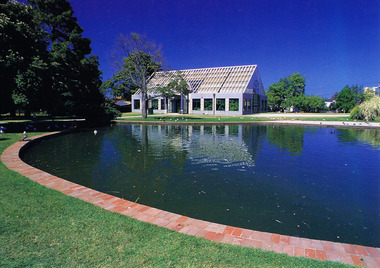
Ephemera - Postcard, City of Port Philip, St Kilda Botanical Garden view over lake to Conservatory 1995, 1995
... Clean green garden waste can be left at the Port Phillip Transfer Station at no charge to residents, Corner White and Boundary Street South Melbourne. 7 days a week. ...Clean green garden waste can be left at the Port Phillip Transfer Station at no charge to residents, Corner White and Boundary Street South Melbourne. 7 days a week. ...One of a series of postcards celebrating the launch of 'Flora for Victoria 1996', a project to celebrate the Royal Botanic Gardens of Melbourne`s 150th anniversary and the centenary of the death of its first director Baron Ferdinand von Mueller (1825 -1896) The postcard was used by the City of Port Phillip to send the following message to residents: "Dear Resident, RE: DUMPING OF GREEN WASTE: the Parks Department has had to remove a considerable amount of dumped Green Waste in your nearby reserve. The dumping of any rubbish, outside of your property other than on the Council collection days is a fineable offence and can be enforced. Clean green garden waste can be left at the Port Phillip Transfer Station at no charge to residents, Corner White and Boundary Street South Melbourne. 7 days a week. Free mulch is available to take away. Should you require green waste collection outside of Councils February / March and July / August collections contact Councils 'Dial-A-Garbo' Service, for further details ph 9209 6533"Colour postcard. Four copies held, three of which have a message to residents from the City of Port Phillip on the reverse side.St Kilda Botanical Garden view over lake to Conservatory 1995. Historic gardens in the City of Port Phillip Postcard series celebrating the launch of the Royal Botanic Garden's Melbourne, 'Flora for Victoria' 1996st kilda botanical gardens, st kilda botanical gardens conservatory -
 Melbourne Tram Museum
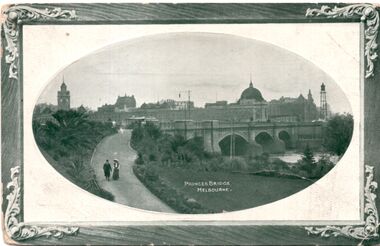
Postcard, Marlborough Art Series, Princes Bridge Melbourne, 1910
... station building. Note the clock on the right hand side of the photograph that was later transferred to Spencer Street station. ...station building. Note the clock on the right hand side of the photograph that was later transferred to Spencer Street station. ...Photograph of Princes bridge Melbourne with one cable tram set crossing. In the background is the then new Flinders Street station building. Note the clock on the right hand side of the photograph that was later transferred to Spencer Street station. Yields information about Princes Bridge in 1910.postcard - decorative border with a photo of Princes Bridge within an oval - embossed. On the rear is a letter dated 21/12/1910. Card by Marlborough Art Series.See note on rear.tramways, trams, yarra river, princes bridge, cable trams, flinders street station, clocks -
 Glenelg Shire Council Cultural Collection
Functional object - Leather Cash Bag, early 1900s
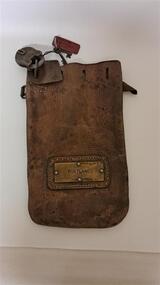
... Each would have a brass plate fitted engraved with the home station or a from & to location. Cash would have been transferred from country stations to Melbourne. ...Each would have a brass plate fitted engraved with the home station or a from & to location. Cash would have been transferred from country stations to Melbourne. ...Leather Cash Bags were generally used to transport wages and other cash between two locations. Each would have a brass plate fitted engraved with the home station or a from & to location. Cash would have been transferred from country stations to Melbourne. The lock was self-locking. Duplicate keys to the bags were held in the cashiers office Melbourne.Used at local railway station Portland for transference of cash and cheques back to the Melbourne office. The bag is an example of the how people in the remote areas of Victoria used railways and trains to transfer money, banking and other items. The railway system was used to transfer people, goods and cash between the districts of western Victoria.Brown Leather oblong shaped cash bag. Reinforced leather panel on the front with a brass name plant that has been stamped with the word 'PORTLAND'. Leather buckle at the top with eye holes for threading. Brass lock shaped like teddy bear attached. Brass tag plate. Two keys and a tag attached to a key ring that is hanging and secured with tie wire.Orange Tag - 'TRAVELLING CASH BAGS' / 'S.M. PORTLAND' Larger Key - 'HUBBAIL' 'MELBOURNE' ' P37' Smaller Key - 'PANTANT' 'LONDON' Metal Tag - 'PORTLAND' (Worn off) Lock - 'S205' ' PATANT' '120 QUEEN VICTORIA ST LONDON' ' MAKERS HER MAJESTY' '1202998' Front bottom under the plaque hand written 'MELB'portland railway, melbourne railway, trains, banking -
 Ballarat Tramway Museum
Photograph - Digital image, State Electricity Commission of Victoria (SECV), "Official Timetable Geelong No. 45"
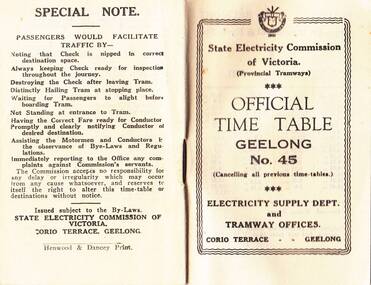
... Digital image or copy of the SEC "Official Timetable Geelong No. 45", 16 image files - 32 pages, giving details of the fares, transfers, luggage or parcels, lost property, times of each tram on the Belmont (1), Chilwell (2), East Geelong (3), Eastern Park (4), Newtown (5), North (6), West Geelong (7). Gives details of railway station...Trams tramways Geelong Timetables Digital image or copy of the SEC "Official Timetable Geelong No. 45", 16 image files - 32 pages, giving details of the fares, transfers, luggage or parcels, lost property, times of each tram on the Belmont (1), Chilwell (2), East Geelong (3), Eastern Park (4), Newtown (5), North (6), West Geelong (7). Gives details of railway station ...Digital image or copy of the SEC "Official Timetable Geelong No. 45", 16 image files - 32 pages, giving details of the fares, transfers, luggage or parcels, lost property, times of each tram on the Belmont (1), Chilwell (2), East Geelong (3), Eastern Park (4), Newtown (5), North (6), West Geelong (7). Gives details of railway station trams, transfer ticket arrangements, depot workings and the night signs carried out each tram. Based on the 4d max fare, it is a circa 1949 timetable - see reference. See also Reg Item 5629 for Timetable No. 39, c1943 and 8552 for a photocopy of No. 47, March 1953 and 9821 for a photocopy of No. 46. See BTM document, "SEC fare changes - by law references etc.doc, dated 3/9/2006.trams, tramways, geelong, timetables -
 Bendigo Historical Society Inc.
Photograph - BENDIGO FIRE BRIGADE, 16.6.1984
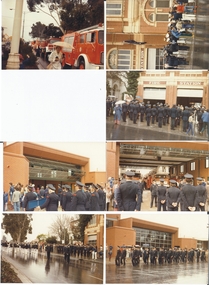
... Coloured photos of transfer from Bendigo Fire Station in View Street Bendigo to the new fire station in Hargreaves St. ...ORGANIZATION Government bendigo fire brigade Bendigo photographs service fire brigade fire fighting community services Coloured photos of transfer from Bendigo Fire Station in View Street Bendigo to the new fire station in Hargreaves St. ...Coloured photos of transfer from Bendigo Fire Station in View Street Bendigo to the new fire station in Hargreaves St. (a) FireBrigade band members participating in formal ceremony in front of the old fire brigade station in View St. ( b ) A line of fire trucks participating in the transfer process. ( c ) Officers participating in formal ceremony in front of the old fire station in View St. Dudley House is partially obscured beside it. In the foreground are some onlookers on what appears to be a wet day in Bendigo. (d) Officers and band members taking part in the ceremony in front of the old fire station. (e) Officers marching past new fire station. ( f ) Officers on parade at new fire station with some onlookers present. ( g ) Officers on parade at new fire station. There are three fire trucks in the background.organization, government, bendigo fire brigade, bendigo, photographs, service, fire brigade, fire fighting, community services -
 Federation University Historical Collection
Document - Document - Correspondence, ZILLES COLLECTION: Letter paper and cards - Defence Forces, Portsea and Queenscliff
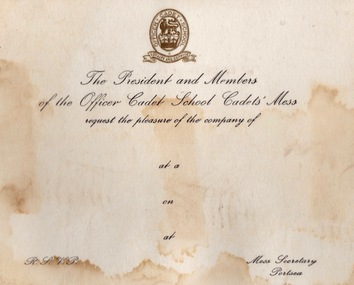
... Station established in the late 1800s. International protocols required captains of arriving ships to provide a clean bill of health from the last port of call. If this was not possible all on board would be transferred...Station established in the late 1800s. International protocols required captains of arriving ships to provide a clean bill of health from the last port of call. If this was not possible all on board would be transferred ...Zilles Printers was begun by Lewis Zilles in the early 1930s. It was in McKenzie Street Ballarat. His son Jeffrey also became a printer - letterpress, offset and screen printer. The business became Zilles Printers/Graphics and was in Armstrong Street and later Bell Street Ballarat. Items are work done for the Australian Defence Force bases at Portsea and Queenscliff. They were training bases - Officer Cadet School and Australian Staff College. Originally the base at Portsea was the Quarantine Station established in the late 1800s. International protocols required captains of arriving ships to provide a clean bill of health from the last port of call. If this was not possible all on board would be transferred to the Quarantine Station by boat for observations. This was to stop the spread of diseases such as cholera, small pox, typhoid fever, influenza and the plague. In 1952 it became a military training base - Officer Cadet School. The quarantine station still operated and the Army had to be prepared to evacuated in an emergency. This occurred in 1954 when 113 passengers on board the Strathaird were quarantined with smallpox. Cadets and staff came with their families and was a small township. Training for the Vietnam War was here, Now gone the remnants of the quarantine station and army activites can be seen. Under Point Nepean Community Trust. Fort Queenscliff dates from 1860 when it was an open battery known as Shortlands Bluff. The Garrison included volunteer artillery, engineers and infantry. It was a Coastal Defence Installation from 1883-1946. The base on Swan Island was part of this and soldiers from the Fort would go on detail to the Island each day. A permanent group with their families were housed there. The children would attend the local school in Queenscliff. It eventually became and still is a restricted area. In 1946 the Fort became home of the Army Command and Staff College. Officers came from overseas to train. Families would come with them and be accommodated in the main officers residence "Maytone" or private housing rented by the Army. Their children would attend local schools. Staff Colleges were all moved to Canberra. The Fort is now the Army Soldiers Career Management Agency and houses all historical documents related to the Army. .1 Off-white card with gold badge and black writing. .2 White card with separate page held together with blue and red ribbon. Badge in gold on front. Two Officer Cadet School flags - crossed and Christmas Greeting in blue inside card. .3 Off-white paper with Australian Staff College emblem. Blue print.2 Officer Cadet School emblem - lion and crown in centre. Flags - British and Australian .3 Emblem - crossed swords, owl and crownzilles printers, australian defence force, quarantine station portsea, officer cadet school, fort queenscliff, open battery, swan island, staff college, army command, zilles collection -
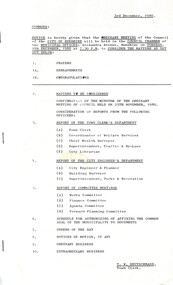 Sunshine and District Historical Society Incorporated
Administrative record - City of Sunshine - Commissioner Mr Alexander Alex George Gillon Collection 1976 - 1982 - Notice of ordinary meeting of the council 9th December 1980, City of Sunshine, 3rd December 1980
... Albans Prestressed Beam Lawrence Street Ardeer Footbridge Tenders Transfer of Reserves Westerngate Estate Installation of Fire Hydrants Transport Regulation Board Sunshine Bus Lines Pty Ltd Application to Change Route No 450 Sunshine to Ardeer St. Albans Road Footpath (East Side) Albion Station...Albans Prestressed Beam Lawrence Street Ardeer Footbridge Tenders Transfer of Reserves Westerngate Estate Installation of Fire Hydrants Transport Regulation Board Sunshine Bus Lines Pty Ltd Application to Change Route No 450 Sunshine to Ardeer St. Albans Road Footpath (East Side) Albion Station ...Notice of Ordinary Meeting of the Council 9th December 1980 Report of the Town Clerk's Department Report of the Town Clerk Kiosk Sunshine Swimming Pool Professional Indemnity Insurance Proposed Technical School for Keilor Rate Recovery Sale Lot 88 Balfour Avenue Sunshine North Deed of Release Advertising Contracts Increase in Ceiling Municipal Association Committees Nomination of Representative Proposed Closure Dobson Crescent Braybrook St. Johns College Report of Rainbow Workshop Supplementary Valuations Land Transfer 88 Station Road Deer Park Sunshine Swimming Pool Learners Pool Heating Golf Course South Side of Maribyrnong River Proposed Link with the Essendon Golf Course Sealing of General Rate Year Ending 30th September 1980 Date of Ordinary Meetings of Council Report of the Co-Ordinator of Welfare Services Purchase of Land Randall Street Maribyrnong Funding for Teenage Holiday Programmes Emergency Foster Care Family Day Care Local Youth Affairs Council's Forum International Year of the Disable Federal Government Funding of Child Care Programmes Victorian Transport Study Lonie Report Sunshine CYSS Report of the Chief Health Surveyor Authorisation of Officers Under Summary Offences Act 1966 Issuing of Septic Tank Approval Notices Application for Septic Tank Systems Subsidies for Infant Welfare Sisters Weights and Measures Practical Experience Health Act Registrations Prosecution Proceedings Sunshine Magistrates Court Health Act Registrations for 1981 Health Act Registration Late Fee Application for Transfer of Proprietorship of Premises Under the Health Act Smorgan Consolidated Industries (Paper Plant) "Black Liquor" Process Refuse By-Law Enforcement Report of the Superintendent Traffic & By-Laws Jumble Sale Albion Rovers Soccer Club Sunshine Commonwealth Offices Devonshire Road Sunshine Dog Act Court Proceedings Parking and Traffic Infringements Dog Act Authority Under Sections 695 (10) of the Local Government Act 1958 Disposal of Derelict Vehicles Proposed Procession St. Pauls Parish Report of the City Librarian Report of the Melton Branch Librarian Corio Street Branch Library National Conference on Multiculturalism and Libraries 8th to 11th November 1980 Report Report of the City Engineer & Planner Industrial Development Code for the City of Sunshine Planning Permit Application Sonley Street Kindergarten Maidstone Planning Permit Ground and First Floor Offices 237 & 239 - 24 Hampshire Road Sunshine Planning Permit Application Service Premises 250 McIntyre Road Sunshine North Planning Permit Application Illuminated Sky Sign Corner Glengala Road and Evelyn Crescent Sunshine West Planning Permit Application Alterations to Existing Shops Highpoint West Shopping Centre Lots 8, 9, 10, 11, 13 and Part 12 Rosamond Road Maribyrnong Planning Permit Application Four Flats 225 Main Road West St. Albans Planning Permit Bank Corner Hampshire Road and Devonshire Road Sunshine Planning Permit Application Transport Depot and Grain Store Francis Street Brooklyn Strata Subdivision 46 Monash Street Sunshine Strata Subdivision 53 Hertford Road Sunshine Plan of Subdivision Denton Avenue, Cavell Close and Maroondah Court St. Albans Prestressed Beam Lawrence Street Ardeer Footbridge Tenders Transfer of Reserves Westerngate Estate Installation of Fire Hydrants Transport Regulation Board Sunshine Bus Lines Pty Ltd Application to Change Route No 450 Sunshine to Ardeer St. Albans Road Footpath (East Side) Albion Station to B.T.M. Tubemakers Request by St. Albans South Progress Association Traffic Engineering Measures Accident Analysis Programme South Road Street Proposed Lighting Scheme by City of Footscray Electricity Supply Department Rochester Street to Darnley Street Braybrook Tariffs Public Lighting Sale of Surplus Equipment Appleby Avenue (Appleby Court) Private Street Scheme Boundary Road reconstruction East of Fitzgerald Road Laverton North St. Albans Heights Primary School Request for Regular Maintenance Proposed Roundabouts Northumberland Road / Suffolk Road and Northumberland Road / Warwick Road Sunshine North Air Conditioning Municipal Offices Proposed Public Toilet Block Ballarat Road Deer Park Report of the Building Surveyor Underground Tanks 199 Ballarat Road Maidstone Location of Building 63 Westmoreland Road Sunshine North Location of Building 8 Tullaroop Court St. Albans Building Over Easement 11 Jeffrey Close St. Albans Schedule for Authorising of Affixing the Common Seal of the Municipality to Documents Orders of the Day Accounts Submitted for Payment as at 30th November 1980balfour avenue, sunshine north, dobson crescent, sunshine, station road, deer park, sunshine swimming pool, kennedy street, st. johns college, essendon golf course, randall street, maribyrnong, smorgan consolidated industries, somerville road, tottenham, albion rovers soccer club, devonshire road, hampshire road, mcintyre road, glengala road, evelyn crescent, sunshine west, highpoint west shopping, rosamond road, main road west, st. albans, francis street, brooklyn, monash street, hertford road, denton avenue, cavell close, maroondah court, lawrence street, lawrence street bridge, ardeer, sunshine bus lines, st. albans road, b.t.m. tubemakers, south road, rochester street, darnley street, appleby avenue, appleby court, fitzgerald road, boundary road, st. albans heights primary school, norwich street, northumberland road, suffolk road, warwick road, ballarat road, maidstone, westmoreland road, tullaroop court, jeffrey close -
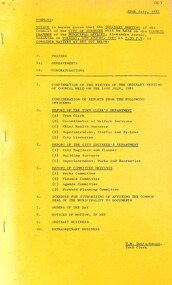 Sunshine and District Historical Society Incorporated
Administrative record - City of Sunshine - Commissioner Mr Alexander Alex George Gillon Collection 1976 - 1982 - Notice of ordinary meeting of the council 4th August 2026, City of Sunshine, 29th July 1981
... Notice of ordinary meeting of the council 4th August 2026 Report of the Town Clerk's Department Report of the Town Clerk Request for Refund of Rates Western Region Commission Annual Contribution Daylight Savings Municipal Association of Victoria Subscriptions 1981/82 Transfer of Land from Department of Administrative Services to Council Leopold Street, Navigator Street, Clyde Street and The Esplanade Maribyrnong Sunshine Swimming Pool Annual Report Land Transfer Lot 36 Station Road Deer Park for Road Widening Executive Committee Municipal Association of Victoria General Revenue Sharing 1981/82 Transfer of Sunshine Tip Tipping Rights from Collins & Davey Motors Pty Ltd to Whelan the Wrecker Holdings Pty Ltd Report of the Co-Ordinator of Welfare Services Community Education Officer Deer Park Disadvantaged Schools Social Work Service in Department of Social Security Community Youth Support Scheme Lions House of Sunshine Elderly Citizens' Club Bingo Report of the Chief Health Surveyor Installation of a Septic Tank Pump System Australian Institute of Health surveyors National Conference Sydney 29th September 1981 to 2nd October 1981 Properties 4 Tribe Street Sunshine, 13 Carlyle Street Maidstone and 8 Treloar Crescent Brayrook Sanitary Contract Health Act Registrations 1981 Anit-Rubella Campaign Report of the Superintendent Traffic & By-Laws Court Proceedings Sunshine Magistrates Court Disposal of Derelict Vehicles Report of the Chief Librarian Sunshine Lions Club (Lions Club of Sunshine) Grant to Corio Street Toy Library Report of the City Engineer & Planner Planning Permit Application 3 Maloney Street Sunshine West Resident Bee Keeping Planning Permit Application Finance Office Shop No 8 266 Hampshire Road Sunshine Planning Permit Application Take Away Food Premise Metherall Street Sunshine North Planning Permit Application Radio Mast Highfield Quarries Pty Ltd Bunting Road Brooklyn Planning Permit Application Three Factories Lot 2 Emu Road Maidstone Planning Permit Application Polyurethane Plant Lot 2 Williamson Road Bounded by Rosamond Road, Wattle Street & Hampstead Road Maidstone Delegated Matters University of Melbourne Proposed Purchase of Land from I.C.I. ...Derrimut Derrimut Maribyrnong River Wright Street Raleigh Road Killeen Street Fairbairn Road Hunt Court Links Street Glengala Road Kynoch Street Ballarat Road McIntyre Road Quinn Street Innis Court Fernhill Court Errol Street Winnington Street Vule Street Hook Street Maribyrnong Reserve Hortense Street Notice of ordinary meeting of the council 4th August 2026 Report of the Town Clerk's Department Report of the Town Clerk Request for Refund of Rates Western Region Commission Annual Contribution Daylight Savings Municipal Association of Victoria Subscriptions 1981/82 Transfer of Land from Department of Administrative Services to Council Leopold Street, Navigator Street, Clyde Street and The Esplanade Maribyrnong Sunshine Swimming Pool Annual Report Land Transfer Lot 36 Station Road Deer Park for Road Widening Executive Committee Municipal Association of Victoria General Revenue Sharing 1981/82 Transfer of Sunshine Tip Tipping Rights from Collins & Davey Motors Pty Ltd to Whelan the Wrecker Holdings Pty Ltd Report of the Co-Ordinator of Welfare Services Community Education Officer Deer Park Disadvantaged Schools Social Work Service in Department of Social Security Community Youth Support Scheme Lions House of Sunshine Elderly Citizens' Club Bingo Report of the Chief Health Surveyor Installation of a Septic Tank Pump System Australian Institute of Health surveyors National Conference Sydney 29th September 1981 to 2nd October 1981 Properties 4 Tribe Street Sunshine, 13 Carlyle Street Maidstone and 8 Treloar Crescent Brayrook Sanitary Contract Health Act Registrations 1981 Anit-Rubella Campaign Report of the Superintendent Traffic & By-Laws Court Proceedings Sunshine Magistrates Court Disposal of Derelict Vehicles Report of the Chief Librarian Sunshine Lions Club (Lions Club of Sunshine) Grant to Corio Street Toy Library Report of the City Engineer & Planner Planning Permit Application 3 Maloney Street Sunshine West Resident Bee Keeping Planning Permit Application Finance Office Shop No 8 266 Hampshire Road Sunshine Planning Permit Application Take Away Food Premise Metherall Street Sunshine North Planning Permit Application Radio Mast Highfield Quarries Pty Ltd Bunting Road Brooklyn Planning Permit Application Three Factories Lot 2 Emu Road Maidstone Planning Permit Application Polyurethane Plant Lot 2 Williamson Road Bounded by Rosamond Road, Wattle Street & Hampstead Road Maidstone Delegated Matters University of Melbourne Proposed Purchase of Land from I.C.I. ...Notice of ordinary meeting of the council 4th August 2026 Report of the Town Clerk's Department Report of the Town Clerk Request for Refund of Rates Western Region Commission Annual Contribution Daylight Savings Municipal Association of Victoria Subscriptions 1981/82 Transfer of Land from Department of Administrative Services to Council Leopold Street, Navigator Street, Clyde Street and The Esplanade Maribyrnong Sunshine Swimming Pool Annual Report Land Transfer Lot 36 Station Road Deer Park for Road Widening Executive Committee Municipal Association of Victoria General Revenue Sharing 1981/82 Transfer of Sunshine Tip Tipping Rights from Collins & Davey Motors Pty Ltd to Whelan the Wrecker Holdings Pty Ltd Report of the Co-Ordinator of Welfare Services Community Education Officer Deer Park Disadvantaged Schools Social Work Service in Department of Social Security Community Youth Support Scheme Lions House of Sunshine Elderly Citizens' Club Bingo Report of the Chief Health Surveyor Installation of a Septic Tank Pump System Australian Institute of Health surveyors National Conference Sydney 29th September 1981 to 2nd October 1981 Properties 4 Tribe Street Sunshine, 13 Carlyle Street Maidstone and 8 Treloar Crescent Brayrook Sanitary Contract Health Act Registrations 1981 Anit-Rubella Campaign Report of the Superintendent Traffic & By-Laws Court Proceedings Sunshine Magistrates Court Disposal of Derelict Vehicles Report of the Chief Librarian Sunshine Lions Club (Lions Club of Sunshine) Grant to Corio Street Toy Library Report of the City Engineer & Planner Planning Permit Application 3 Maloney Street Sunshine West Resident Bee Keeping Planning Permit Application Finance Office Shop No 8 266 Hampshire Road Sunshine Planning Permit Application Take Away Food Premise Metherall Street Sunshine North Planning Permit Application Radio Mast Highfield Quarries Pty Ltd Bunting Road Brooklyn Planning Permit Application Three Factories Lot 2 Emu Road Maidstone Planning Permit Application Polyurethane Plant Lot 2 Williamson Road Bounded by Rosamond Road, Wattle Street & Hampstead Road Maidstone Delegated Matters University of Melbourne Proposed Purchase of Land from I.C.I. Mt. Derrimut Subdivision Local Government (Land Liable to Flooding) Act 1979 Designated of Flood Levels Maribyrnong River Plan of Transfer 134 Wright Street Sunshine The C.R.B. SCRAM Project (Traffic Signal Linking) Raleigh Road East of Navigator Street Maribyrnong Flowmeter (M.M.B.W.) Availability of Sewers Albanvale Road Funding (Municipal Association of Victoria) Country Roads Board Killeen Street Between Fairbairn Road and Hunt Court Sunshine West Standing Restrictions Links Street Corner Glengala Road Sunshine West Restricted Parking Report of the Building Surveyor Ruinous and Dangerous Building 4 Kynoch Street Deer Park (Damaged by Fire) Underground Storage Tank 277 Ballarat Road Braybrook Underground Storage Tank 33 Emu Road Maidstone Underground Storage Tank 44 McIntyre Road Sunshine North Building Over Easement Lot 574 Quinn Street Deer Park Building Over Easement 7 Innis Court Deer Park Building Over Easement 10 Fernhill Court St. Albans Building Over Easement Lot 27 Errol Street Braybrook Building Over Easement Lot 526 Winnington Street Deer Park Building Over Easement Lot 3 Vule Street St. Albans Building Over Easement Lot 1 Hook Street St. Albans Schedule for Authorising of Affixing the Common Seal of the Municipality to Documents Orders of the Day Accounts Submitted for Payment as at 31st July 1981 Proposal to Close Right of Way Rear of Newstead Street, The Esplanade and Raleigh Road Adjacent to The Maribyrnong Reserveleopold street, navigator street, clyde street, the esplanade, maribyrnong, station road, deer park, sunshine swimming pool, kennedy street, sunshine, sunshine tip, collins & davey motors, whelan the wrecker, sunshine elderly citizens' club, lions house of sunshine, corio street, watt street, tribe street, carlyle street, maidstone, treloar crescent, brayrook, sunshine lions club, lions club of sunshine, maloney street, sunshine west, hampshire road, metherall street, sunshine north, highfield quarries, bunting road, brooklyn, emu road, williamson road, rosamond road, wattle street, hampstead road, i.c.i., mt. derrimut, derrimut, maribyrnong river, wright street, raleigh road, killeen street, fairbairn road, hunt court, links street, glengala road, kynoch street, ballarat road, mcintyre road, quinn street, innis court, fernhill court, errol street, winnington street, vule street, hook street, maribyrnong reserve, hortense street -
 Sunshine and District Historical Society Incorporated
Administrative record - City of Sunshine - Commissioner Mr Alexander Alex George Gillon Collection 1976 - 1982 - Minutes of the ordinary meeting of council held on 9th December 1980, City of Sunshine, 9th December 1980
... Albans Prestressed Beam Lawrence Street Ardeer Footbridge Tenders Transfer of Reserves Westerngate Estate Installation of Fire Hydrants Transport Regulation Board Sunshine Bus Lines Pty Ltd Application to Change Route No 450 Sunshine to Ardeer St. Albans Road Footpath (East Side) Albion Station...Albans Prestressed Beam Lawrence Street Ardeer Footbridge Tenders Transfer of Reserves Westerngate Estate Installation of Fire Hydrants Transport Regulation Board Sunshine Bus Lines Pty Ltd Application to Change Route No 450 Sunshine to Ardeer St. Albans Road Footpath (East Side) Albion Station ...Minutes of the Ordinary Meeting of Council held on 9th December 1980 Report of the Town Clerk's Department Report of the Town Clerk Kiosk Sunshine Swimming Pool Professional Indemnity Insurance Proposed Technical School for Keilor Rate Recovery Sale Lot 88 Balfour Avenue Sunshine North Deed of Release Advertising Contracts Increase in Ceiling Municipal Association Committees Nomination of Representative Proposed Closure Dobson Crescent Braybrook St. Johns College Report of Rainbow Workshop Supplementary Valuations Land Transfer 88 Station Road Deer Park Sunshine Swimming Pool Learners Pool Heating Golf Course South Side of Maribyrnong River Proposed Link with the Essendon Golf Course Sealing of General Rate Year Ending 30th September 1980 Date of Ordinary Meetings of Council Report of the Co-Ordinator of Welfare Services Purchase of Land Randall Street Maribyrnong Funding for Teenage Holiday Programmes Emergency Foster Care Family Day Care Local Youth Affairs Council's Forum International Year of the Disable Federal Government Funding of Child Care Programmes Victorian Transport Study Lonie Report Sunshine CYSS Report of the Chief Health Surveyor Authorisation of Officers Under Summary Offences Act 1966 Issuing of Septic Tank Approval Notices Application for Septic Tank Systems Subsidies for Infant Welfare Sisters Weights and Measures Practical Experience Health Act Registrations Prosecution Proceedings Sunshine Magistrates Court Health Act Registrations for 1981 Health Act Registration Late Fee Application for Transfer of Proprietorship of Premises Under the Health Act Smorgan Consolidated Industries (Paper Plant) "Black Liquor" Process Refuse By-Law Enforcement Report of the Superintendent Traffic & By-Laws Jumble Sale Albion Rovers Soccer Club Sunshine Commonwealth Offices Devonshire Road Sunshine Dog Act Court Proceedings Parking and Traffic Infringements Dog Act Authority Under Sections 695 (10) of the Local Government Act 1958 Disposal of Derelict Vehicles Proposed Procession St. Pauls Parish Report of the City Librarian Report of the Melton Branch Librarian Corio Street Branch Library National Conference on Multiculturalism and Libraries 8th to 11th November 1980 Report Report of the City Engineer & Planner Industrial Development Code for the City of Sunshine Planning Permit Application Sonley Street Kindergarten Maidstone Planning Permit Ground and First Floor Offices 237 & 239 - 24 Hampshire Road Sunshine Planning Permit Application Service Premises 250 McIntyre Road Sunshine North Planning Permit Application Illuminated Sky Sign Corner Glengala Road and Evelyn Crescent Sunshine West Planning Permit Application Alterations to Existing Shops Highpoint West Shopping Centre Lots 8, 9, 10, 11, 13 and Part 12 Rosamond Road Maribyrnong Planning Permit Application Four Flats 225 Main Road West St. Albans Planning Permit Bank Corner Hampshire Road and Devonshire Road Sunshine Planning Permit Application Transport Depot and Grain Store Francis Street Brooklyn Strata Subdivision 46 Monash Street Sunshine Strata Subdivision 53 Hertford Road Sunshine Plan of Subdivision Denton Avenue, Cavell Close and Maroondah Court St. Albans Prestressed Beam Lawrence Street Ardeer Footbridge Tenders Transfer of Reserves Westerngate Estate Installation of Fire Hydrants Transport Regulation Board Sunshine Bus Lines Pty Ltd Application to Change Route No 450 Sunshine to Ardeer St. Albans Road Footpath (East Side) Albion Station to B.T.M. Tubemakers Request by St. Albans South Progress Association Traffic Engineering Measures Accident Analysis Programme South Road Street Proposed Lighting Scheme by City of Footscray Electricity Supply Department Rochester Street to Darnley Street Braybrook Tariffs Public Lighting Sale of Surplus Equipment Appleby Avenue (Appleby Court) Private Street Scheme Boundary Road reconstruction East of Fitzgerald Road Laverton North St. Albans Heights Primary School Request for Regular Maintenance Proposed Roundabouts Northumberland Road / Suffolk Road and Northumberland Road / Warwick Road Sunshine North Air Conditioning Municipal Offices Proposed Public Toilet Block Ballarat Road Deer Park Report of the Building Surveyor Underground Tanks 199 Ballarat Road Maidstone Location of Building 63 Westmoreland Road Sunshine North Location of Building 8 Tullaroop Court St. Albans Building Over Easement 11 Jeffrey Close St. Albans Schedule for Authorising of Affixing the Common Seal of the Municipality to Documents Orders of the Day Accounts Submitted for Payment as at 30th November 1980 Extraordinary Business Report of the Chief Health Surveyor Catherine Yeung Community Nurse Report of the City Engineer & Planner Planning Permit Application 74 Lot Residential Subdivision Opie Road St. Albans Planning Permit Application 3 Flats Lots 23 & 25 Madden Street Maidstone Planning Permit Application Extensions to School Classrooms Land bounded by Churchill Avenue, Dobson Crescent and Darnley Street Planning Permit Application Restaurant, Service Premises and Associated Signs Red Rooster 204 - 210 Ballarat Road Maidstone Planning Permit Application Enforcement Factory and Petrol Filling Station Lots 13, 14, 15 & 16 North West Corner Ballarat Road and Glencairn Avenue Deer Park Planning Permit Application Two Lot Subdivision Ballarat Road Albion Planning Permit Application Junk Yard Scrap Metal Maida Avenue Sunshine North Planning Permit Application Warehouse Lots 30 & 31 Cromer Avenue Sunshine Planning Permit Application Display Home Centre Furlong Road St. Albans Planning Permit Application Factory Warehouse 4 Arvona Avenue Sunshine North Planning Permit Application Factory Renovation South West Corner Somerville Road and Tottenham Parade Planning Permit Application Bus Depot Lot 1 Emu Road Maidstone Planning Permit Application 4 Flats Lot 31 Bardsley Street Sunshine West Planning Permit Application Grain Storage Depot Stage 2 Francis Street Brooklyn Planning Permit Application Factory Warehouse North West Corner Ballarat Road and Lacy Street Braybrook Planning Permit Application Ground and Forst Floor Offices 239 - 241 Hampshire Road Sunshine Planning Permit Application Factory Lot 30 Frederick Street Brooklyn Planning Permit Application Service Premises Alterations Lot 2 Rosamond Road Maidstone Planning Permit Application 2 Flats 185A Main Road West St. Albans Planning Permit Application Clothing Manufacturer 67 Dumfries Street Deer Park Planning Permit Application Factory Display and Sales Lot 39 Reid Street Ardeer Planning Permit Application Extensions to Secondary School Marian College Glengala Road Sunshine West Planning Permit Application Promotion Panel Sign Lots 1, 6 and 7 Berkshire Road Sunshine North Planning Permit Application Shop Bank and Offices 288 Hampshire Road Sunshine Planning Permit Application Brick Store 75 Wright Street Sunshine Planning Permit Application Erection of New Multiple Sclerosis Residential and Day Attendance Centre Furlong Road St. Albans Planning Permit Application Warehouse Alterations 22 St. Albans Road St. Albans Planning Permit Application Junk Yard Lot 5 McIntyre Road Sunshine North Planning Permit Application Water Purification Plant Press Filter Platform Smorgon Consolidated Industries Meat and Paper Pty Ltd Planning Permit Application Bread and Cake Stall Level 2 Highpoint West Shopping Centre Rosamond Road Maribyrnong Planning Permit Application Hot Bread Kitchen Glengala Road Sunshine West Planning Permit Application Alterations to Service Station Lot 1 Ballarat Road Braybrook Planning Permit Application Market Extensions Level 1 Highpoint West Shopping Centre Rosamond Road Maribyrnong Planning Permit Application Laboratory and Offices Ballarat Road Sunshine Planning Permit Application Petrol Filling Station and Hotel Neale Road Deer Park Report of the Building Surveyor Building Over Easement 3 Droitwich Crescent Deer Park Building Over Easement 20 Hook Street St. Albans Building Over Easement 191 Wright Street Sunshine Building Over Easement 288 Station Road St. Albans Building Over Easement and Location of Building 11 Thwaites Street Sunshine Location of Building Lot 132 Hargreaves Crescent Braybrook Location of Building Lot 1 Station Road Deer Parkbalfour avenue, sunshine north, dobson crescent, sunshine, station road, deer park, sunshine swimming pool, kennedy street, st. johns college, churchill avenue, braybrook, maribyrnong river, essendon golf course, randall street, maribyrnong, smorgan consolidated industries, somerville road, tottenham, albion rovers soccer club, devonshire road, corio street branch library, corio street, sonley street kindergarten, sonley street, maidstone, mcintyre road, glengala road, evelyn crescent, sunshine west, highpoint west shopping centre, rosamond road, main road west, st. albans, francis street, brooklyn, monash street, hertford road, denton avenue, cavell close, maroondah court, lawrence street, lawrence street bridge, ardeer, sunshine bus lines, st. albans road, st. albans south progress association, b.t.m. tubemakers, south road, rochester street, darnley street, appleby avenue, appleby court, boundary road, fitzgerald road, laverton north, st. albans heights primary school, norwich street, northumberland road, suffolk road, warwick road, ballarat road, tullaroop court, jeffrey close, opie road, albanvale, madden street, red rooster, glencairn avenue, maida avenue, cromer avenue, furlong road, arvona avenue, tottenham parade, emu road, bardsley street, lacy street, frederick street, dumfries street, reid street, marian college, berkshire road, wright street, neale road, droitwich crescent, hook street, thwaites street, hargreaves crescent -
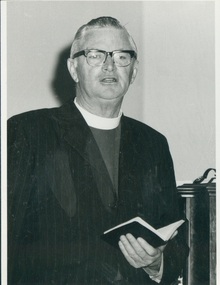 Uniting Church Archives - Synod of Victoria
BW photo, Undated
... He remained at Kaloleni until 1944 when he was transferred to the inland station of Maseno where all his gifts were to be deployed as rural dean of Nyanza. ...He remained at Kaloleni until 1944 when he was transferred to the inland station of Maseno where all his gifts were to be deployed as rural dean of Nyanza. ...STANWAY, ALFRED (b. 9 Sept 1908; d. Melbourne, Vic, 27 June 1989). Anglican bishop, missionary. Stanway grew up in the Wimmera district of western Victoria, and left school when 14 years old. He found work in Melbourne, trained as an accountant, and at the age of 20, held a responsible position with a publishing company. This background, allied with an uncommon flair for figures and finance, was to stand him in good stead throughout his life. But he had little knowledge and no experience of the grace of God until 29 July 1928. At the Evening Service in the parish church of Fairfield on 29 July, he heard the Rev C H Nash (q.v.) preach a sermon which led to his conversion. Within two years he made up his mind to become a missionary and began night studies in order to matriculate. He entered Ridley College in March 1932 to prepare for ordination undertaking week-end duties as a catechist at Deer Park and St Albans. He joined the CMS League of Youth, became chairman, and gathered a fine band of young people many of whom were to become missionaries. He was closely involved with the Belgrave Heights Convention (then at Upwey) and established a League of Youth camp on the site. All his energies were thrown into the task of building up its members in personal holiness and vigorous evangelism. Stanway was ordained in St Paul's Cathedral, Melbourne on St Thomas Day 1934 and was placed in charge of the Old Mission Church of St James and St John, Melbourne. The duties were light enough to allow him to enrol in the Melbourne Teachers College and to complete the Diploma in Teaching. On 26 January 1937, he sailed for Africa to become a missionary in the Anglican Diocese of Mombasa, which at that time embraced the whole of Kenya. He was sent to the hot coastal town of Kaloleni as principal of a Secondary Boys School. Before he left Melbourne, he had become engaged to Marjory Harrison: she followed him to Africa and their marriage took place in Mombasa Cathedral in June 1939. He remained at Kaloleni until 1944 when he was transferred to the inland station of Maseno where all his gifts were to be deployed as rural dean of Nyanza. His oversight of some 500 village churches as well as a widespread primary school system was so efficient that in 1948 he was appointed archdeacon of Kenya with his home and office in Nairobi. As secretary of the African Church Council and of the African Education Board, he was responsible for all African work in the diocese. His contacts with government ministers and public servants were of first class significance at the time when the cry of Uhuru and the demand for independence was travelling throughout the colonial world. On 2 Feb 1951, Alfred Stanway was consecrated in Westminster Abbey as the third Anglican Bp of Central Tanganyika. This Diocese was the special sphere of the CMS Australia, and he already knew most of the missionary personnel. He brought with him the understanding and experience of one who had fully shared the lot and problems of a district missionary, but he came to the diocese at a time when it had yet to recover from its losses in personnel and finance as a result of the war. His immediate task was to provide the impetus of fresh leadership and a long-term overall policy. His aim from-the outset was to build up a strong autonomous church with its own indigenous pastorate. With the whole-hearted confidence of the home base, he was able to enlist the service of new missionaries. He saw a great increase in the number of African clergy and he encouraged village evangelists to open new fields of work. Simple structures were built as new churches at the rate of two a week, week in and week out, year by year. He worked hard to meet the need for Christian literature, bookshops, adult literacy and theological training. He opened Bible schools for village evangelists and sent suitable clergy overseas for further studies. He encouraged initiative in others, helped them to find and use their talents, and gave them his unstinted confidence and support. Fresh finance was required for new ventures. This led him to travel widely in Germany and America, where he raised large funds for these projects. Mackay House was built in Dodoma as the central administrative base for the diocese, hospitals such as those at Mvumi and Hombolo were modernised or established, schools were built and upgraded. In keeping with his vision for ultimate leadership by African personnel, he consecrated Yohana Omari in 1955 as his assistant, he was the first national to become a bp in East Africa. Bp Stanway then set on foot the long and complicated process for the division of his sprawling diocese. In 1963, the diocese of Victoria Nyanza came into being; in 1965, that of Morogoro; in 1966, that of Western Tanganyika. Yet in 1971, his own diocese of Central Tanganyika, though greatly reduced in size, had more churches and more clergy than in its undivided state in 195 l. Stanway then played a leading part in the formation of the Province of Tanzania in 1970, with an African abp as metropolitan. A year later, after 35 years in East Africa and 20 years as bishop of Central Tanganyika, he resigned. His leadership and achievements throughout those years had placed him in the front rank as a great missionary statesman. Stanway had returned to Melbourne at the time when his resignation took effect in August 1971. His early love for Ridley College reasserted itself and he went into residence as deputy principal under the Rev Dr Leon Morris. He was put in charge of chapel worship and the pastoral oversight of the students. All his gifts and experience were called into play as he sought to guide and encourage those who were on the threshold of their ministry. The whole bent of his heart was to foster the spiritual life and missionary calling of those whose hearts the Lord had touched. It was during those years that his life-long zeal for the spread of the gospel through Christian literature had its ultimate flowering. It had begun in his Nairobi days with a small church bookstall, this had developed into a major book-shop in the heart of the city. Then in Dodoma he had established the Central Tanganyika Press in order to promote the publication and distribution of Christian literature at all levels. He had marked out Kevin Engel, trained him, and launched him on the international scene. Hence it was natural that in Melbourne he and Kevin Engel should found the Australian Christian Literature Society. But his time at Ridley College was not to last. Unknown to him, the Rev J R W Stott had put his name forward as that of a person who could head a new school of theology in the United States to provide a sound training for evangelical ordinands. Such a task would have been formidable enough for a younger man who had grown up in America. How could an Australian who had spent half his life in Africa hope to succeed in a venture of that kind in America? How could one who had been a missionary, not a theologian, found a new school to train men for ordination? Nevertheless he rose to the challenge. In Sept 1975, he and Mrs Stanway left Melbourne for Sewickly, an outer suburb of Pittsburg, with the promise of three years' service. He had to start from scratch. He found a house to live in, but there was no land for the school, no funds in hand, no staff yet appointed, no students, and no buildings. His drive, his infections enthusiasm, and his flair for practical enterprise carried the day. One by one, obstacles were overcome and support grew in volume and strength. Twelve months after his arrival, in Sept 1976, the Trinity Episcopal School for Ministry was opened with three staff members, seventeen students, and the goodwill of the whole American Episcopal Church to win. During the next two years, the school took shape and was firmly established. Bp Stanway left an indelible stamp on every aspect of its life and work, its spiritual tone and ideals, its financial and administrative principles. He had inspired widespread support among evangelical episcopalians and had imparted a strong sense of divine guidance and purpose. The council would gladly have extended his term in office beyond three years, but at 75 years of age he knew that his health had begun to fail. When he finally relinquished his office in Nov 1978, he could look back on those three years as the crown of his ministry. It is not too much to say that his name was even more highly honoured and revered in the Trinity School of Ministry than in his own dearly loved Africa. His return to Melbourne led to quiet retirement at Mount Waverley where he settled down to a long battle with the ever worsening effects of Parkinson's Disease. The slow loss of physical capacity and the ultimate failure in powers of speech were a great trial, but he never complained. His faith was summed up in his brief reply when he was asked why he had not prayed for healing: 'What God allows, I accept'. That acceptance was without reserve; his testimony was never brighter. His mental powers were undiminished and his spiritual concerns were as wide as ever. He kept in touch with CMS, he went to church, he met with missionaries, he led Bible studies in his home as long as he was able. Africa was always in his heart, news from Sewickly always gave him great pleasure. He had left a mark for God on three great continents and his death left sad but thankful hearts in them all. It was the close of a life in which he had felt that he could never do enough for God who had done so much for him. One of Bp Stanway's sayings was 'when the Holy Spirit takes hold of you, anything can happen'. So it was in his case. He was very human, with his full share of human foibles and frailties. He had a great zest for life and an endless fund of stories drawn from his own experience. He was himself the subject of many stories, some true, others legendary. His vibrant personality always seemed to fill the house where he was, his presence could not be overlooked. His own home was one in which Mrs Stanway had a paramount influence. She was a trained teacher, a skilled artist, a born hostess and a first-class linguist. They had no children of their own, but were devoted Godparents and always deeply interested in the children of missionaries. Home life allowed him to relax in a serene and contented atmosphere and to exercise his gifts for friendship and hospitality. He was always on the watch for souls, a person-to-person evangelist par excellence. He was a man of faith and prayer who dared to believe in the God of the impossible. His love for Africa, his total dedication as a missionary; his gifts as a soulwinner; his genius for finance; his shrewd practical initiatives, and his statesmanlike vision were outstanding characteristics. But great or small, all his gifts were laid out in the service of the gospel, and that service marked him out as one of the most remarkable Australian missionaries of his generation. M L Loane, Men to Remember (Sydney, 1987) Rev. Alfred Stanway is standing with open book in hand, dressed in clerical garb.Bishop Alfred Stanwaybishop alfred stanway -
 Flagstaff Hill Maritime Museum and Village
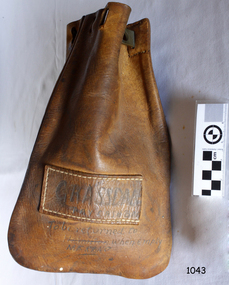
Functional object - Cash Bag, late 1800s to early 1900s
... It was used to transfer cash between the the railway stations of Grassdale and Merino....It was used to transfer cash between the the railway stations of Grassdale and Merino. ...The leather bag is a Pay Cash Bag. It was used to transfer cash between the the railway stations of Grassdale and Merino.This Pay Cash Bag is an example of the connection between people in the remote areas of Victoria. The railway system was used to transfer people, goods and cash between districts in western Victoria. Pay Cash Bag; a rectangular leather bag with rounded bottom corners, stitched, with brass peg for securing opening. Has stitched leather rectangle nameplate with hand written inscription.Handwritten; “GRASSDALE PAY CASH BAG” “To be returned to MERINO when empty”flagstaff hill, flagstaff hill maritime museum and village, warrnambool, maritime museum, maritime village, great ocean road, shipwreck coast, cash bag, merino railway station, rural banking, finances, grassdale railway station -
 Flagstaff Hill Maritime Museum and Village
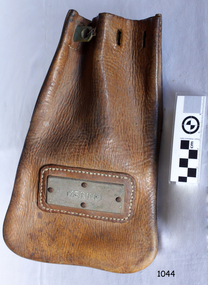
Functional object - Cash Bag, late 1800s to early 1900s
... It was used to transfer cash between the the railway stations of Merino and Casterton. ...It was used to transfer cash between the the railway stations of Merino and Casterton. ...The leather bag is a Railway Cash Bag. It was used to transfer cash between the the railway stations of Merino and Casterton. The Casterton Railway Station was Merino's banking station. This Cash Bag is an example of the connection between people in the remote areas of Victoria. The railway system was used to transfer people, goods and cash between the districts of western Victoria.Railway Cash Bag; a rectangular leather bag with rounded bottom corners, stitched, with brass peg for securing opening. Has stitched leather rectangle frame and brass nameplate with inscription."MERINO"flagstaff hill, flagstaff hill maritime museum and village, warrnambool, maritime museum, maritime village, great ocean road, shipwreck coast, cash bag, railway cash bag, merino railway station, casterton railway station, banking station, rural banking, finances -
 Flagstaff Hill Maritime Museum and Village
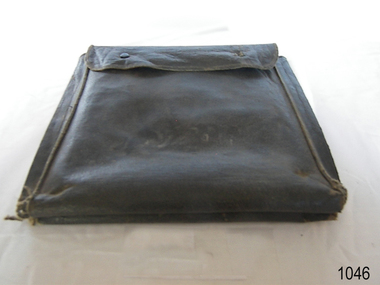
Functional object - Courier Bag, Late 19th to mid 20th centuries
... transfer documents, letters or business records between offices or from business to customer. Imitation leather was invented in the late 1800s and improved as time went on. The manufacture of synthetic leather began around the 1930s. The courier bag may have been used for a s similar purpose as the cash bags in our collection. Those cash bags transported money between the railway stations...transfer documents, letters or business records between offices or from business to customer. Imitation leather was invented in the late 1800s and improved as time went on. The manufacture of synthetic leather began around the 1930s. The courier bag may have been used for a s similar purpose as the cash bags in our collection. Those cash bags transported money between the railway stations ...The black imitation leather or leatherette bag or pouch could have been used by a courier to transfer documents, letters or business records between offices or from business to customer. Imitation leather was invented in the late 1800s and improved as time went on. The manufacture of synthetic leather began around the 1930s. The courier bag may have been used for a s similar purpose as the cash bags in our collection. Those cash bags transported money between the railway stations of Grassdale and Merino in Victoria's western district in the late 19th and early-to-mid 20th centuries. Perhaps the bag was used by the coastal trading vessels that operated in southwest Victoria until around the 1940s.This courier bag is an example of the connections made between people in the remote areas of Victoria. It could have been used by the railway system or the coastal trader vessels that shipped people, goods, documents and cash between the districts in western Victoria.Courier bag; black imitation leather pouch, square with wide seams and a flap with sttud closure at the top. Made by British Products Pty Ltd. "British Products Pty Ltd"warrnambool, shipwreck coast, flagstaff hill, flagstaff hill maritime museum, flagstaff hill maritime village, bag, pouch, imitation leather, artificial leather, faux leather, synthetic leather, british products pty ltd, document pouch, courier bag, western district, western victoria, 19th century, 20th century, railway, rural business, rural trade, coastal trader, southwest victoria -
 Flagstaff Hill Maritime Museum and Village
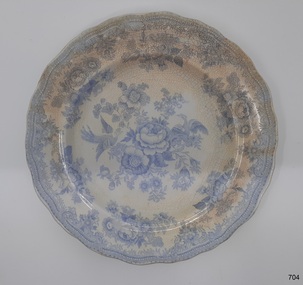
Domestic object - Dinner plate, William Adams, before 1863-1875
... Through is associated with the worst and best-known shipwreck in Victoria's history. flagstaff hill warrnambool flagstaff hill maritime museum shipwreck coast flagstaff hill maritime village great ocean road loch line loch ard captain gibbs eva carmichael tom pearce glenample station mutton bird island loch ard gorge asiatic pheasant china dinner plate earthenware plate w adams potteries Stickers with inscriptions "Rec 373 A" "L 102" "From Loch Ard Wreck (1878) - - -" Design logo [Floral wreath with ribbon and text "Asiatic Pheasant" and text below "- - - -"} Plate recovered from the wreck of the Loch Ard. Earthenware dinner plate with blue and white transfer ...The Asiatic Pheasant pattern is a transfer design and was the most popular design of the 18th & 19th centuries and is still being produced today. The design was produced as high quality, decorative dinnerware by the potters in the Staffordshire area of England, from the late 1830’s, but no-one is sure exactly who the original designer was. This particular example was made by William Adams of Tunstall, Stoke-on-Trent, Staffordshire at the Greengates Potteries probably after or around 1863 and is believed to have been part of a passengers goods. The Adams family have a long line of making pottery since 1584 until 1966 when they were acquired by the Wedgewood group of companies. But this items pattern is attributed to the Adams potteries. History of the Loch Ard: The Loch Ard got its name from ”Loch Ard” a loch which lies to the west of Aberfoyle, and the east of Loch Lomond. It means "high lake" in Scottish Gaelic. The vessel belonged to the famous Loch Line which sailed many vessels from England to Australia. The Loch Ard was built in Glasgow by Barclay, Curle & Co. in 1873, the vessel was a three-masted square-rigged iron sailing ship that measured 79.87 meters in length, 11.58 m in width, and 7 m in depth with a gross tonnage of 1693 tons with a mainmast that measured a massive 45.7 m in height. Loch Ard made three trips to Australia and one trip to Calcutta before its fateful voyage. Loch Ard left England on March 2, 1878, under the command of 29-year-old Captain Gibbs, who was newly married. The ship was bound for Melbourne with a crew of 37, plus 17 passengers. The general cargo reflected the affluence of Melbourne at the time. Onboard were straw hats, umbrella, perfumes, clay pipes, pianos, clocks, confectionery, linen and candles, as well as a heavier load of railway irons, cement, lead and copper. There were other items included that were intended for display in the Melbourne International Exhibition of 1880. The voyage to Port Phillip was long but uneventful. Then at 3 am on June 1, 1878, Captain Gibbs was expecting to see land. But the Loch Ard was running into a fog which greatly reduced visibility. Captain Gibbs was becoming anxious as there was no sign of land or the Cape Otway lighthouse. At 4 am the fog lifted and a lookout aloft announced that he could see breakers. The sheer cliffs of Victoria's west coast came into view, and Captain Gibbs realised that the ship was much closer to them than expected. He ordered as much sail to be set as time would permit and then attempted to steer the vessel out to sea. On coming head-on into the wind, the ship lost momentum, the sails fell limp and Loch Ard's bow swung back towards land. Gibbs then ordered the anchors to be released in an attempt to hold its position. The anchors sank some 50 fathoms - but did not hold. By this time the ship was among the breakers and the tall cliffs of Mutton Bird Island rose behind. Just half a mile from the coast, the ship's bow was suddenly pulled around by the anchor. The captain tried to tack out to sea, but the ship struck a reef at the base of Mutton Bird Island, near Port Campbell. Waves subsequently broke over the ship and the top deck became loosened from the hull. The masts and rigging came crashing down knocking passengers and crew overboard. When a lifeboat was finally launched, it crashed into the side of Loch Ard and capsized. Tom Pearce, who had launched the boat, managed to cling to its overturned hull and shelter beneath it. He drifted out to sea and then on the flood tide came into what is now known as Lochard Gorge. He swam to shore, bruised and dazed, and found a cave in which to shelter. Some of the crew stayed below deck to shelter from the falling rigging but drowned when the ship slipped off the reef into deeper water. Eva Carmichael a passenger had raced onto the deck to find out what was happening only to be confronted by towering cliffs looming above the stricken ship. In all the chaos, Captain Gibbs grabbed Eva and said, "If you are saved Eva, let my dear wife know that I died like a sailor". That was the last Eva Carmichael saw of the captain. She was swept off the ship by a huge wave. Eva saw Tom Pearce on a small rocky beach and yelled to attract his attention. He dived in and swam to the exhausted woman and dragged her to shore. He took her to the cave and broke the open case of brandy which had washed up on the beach. He opened a bottle to revive the unconscious woman. A few hours later Tom scaled a cliff in search of help. He followed hoof prints and came by chance upon two men from nearby Glenample Station three and a half miles away. In a complete state of exhaustion, he told the men of the tragedy. Tom then returned to the gorge while the two men rode back to the station to get help. By the time they reached Loch Ard Gorge, it was cold and dark. The two shipwreck survivors were taken to Glenample Station to recover. Eva stayed at the station for six weeks before returning to Ireland by steamship. In Melbourne, Tom Pearce received a hero's welcome. He was presented with the first gold medal of the Royal Humane Society of Victoria and a £1000 cheque from the Victorian Government. Concerts were performed to honour the young man's bravery and to raise money for those who lost family in the disaster. Of the 54 crew members and passengers on board, only two survived: the apprentice, Tom Pearce and the young woman passenger, Eva Carmichael, who lost her family in the tragedy. Ten days after the Lochard tragedy, salvage rights to the wreck were sold at auction for £2,120. Cargo valued at £3,000 was salvaged and placed on the beach, but most washed back into the sea when another storm developed. The wreck of Lochard still lies at the base of Mutton Bird Island. Much of the cargo has now been salvaged and some items were washed up into Lochard Gorge. Cargo and artefacts have also been illegally salvaged over many years before protective legislation was introduced in March 1982. One of the most unlikely pieces of cargo to have survived the shipwreck was a Minton majolica peacock- one of only nine in the world. The peacock was destined for the Melbourne 1880 International Exhibition in. It had been well packed, which gave it adequate protection during the violent storm. Today the Minton peacock can be seen at the Flagstaff Hill Maritime Museum in Warrnambool. From Australia's most dramatic shipwreck it has now become Australia's most valuable shipwreck artifact and is one of very few 'objects' on the Victorian State Heritage Register. The shipwreck of the Loch Ard is of significance for Victoria and is registered on the Victorian Heritage Register ( S 417). Flagstaff Hill has a varied collection of artefacts from Loch Ard and its collection is significant for being one of the largest accumulation of artefacts from this notable Victorian shipwreck of which the subject items are a small part. The collections objects give us a snapshot of how we can interpret the story of this tragic event. The collection is also archaeologically significant as it represents aspects of Victoria's shipping history that allows us to interpret Victoria's social and historical themes of the time. Through is associated with the worst and best-known shipwreck in Victoria's history. Plate recovered from the wreck of the Loch Ard. Earthenware dinner plate with blue and white transfer design (Asiatic Pheasant) with a clear over-glaze. The outer rim is scalloped. Stickers with inscriptions "Rec 373 A" "L 102" "From Loch Ard Wreck (1878) - - -" Design logo [Floral wreath with ribbon and text "Asiatic Pheasant" and text below "- - - -"}flagstaff hill, warrnambool, flagstaff hill maritime museum, shipwreck coast, flagstaff hill maritime village, great ocean road, loch line, loch ard, captain gibbs, eva carmichael, tom pearce, glenample station, mutton bird island, loch ard gorge, asiatic pheasant, china dinner plate, earthenware plate, w adams potteries -
 Flagstaff Hill Maritime Museum and Village
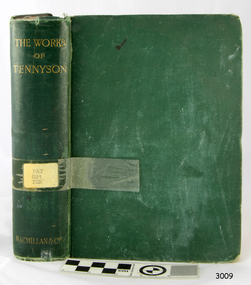
Book, The Works of Alfred Lord Tennyson
... station. A Mechanics' Institute building was opened at this site in August 1871. The following year four more rooms were added to the main Reading Room and in 1873 the Artisan School of Design was incorporated into the Institute. The same year Joseph Archibald established a Museum; however, it deteriorated when he was transferred...station. A Mechanics' Institute building was opened at this site in August 1871. The following year four more rooms were added to the main Reading Room and in 1873 the Artisan School of Design was incorporated into the Institute. The same year Joseph Archibald established a Museum; however, it deteriorated when he was transferred ...This item is from the ‘Pattison Collection’, a collection of books and records that was originally owned by the Warrnambool Mechanics’ Institute, which was founded in Warrnambool in 1853. By 1886 the Warrnambool Mechanics’ Institute (WMI) had grown to have a Library, Museum and Fine Arts Gallery, with a collection of “… choice productions of art and valuable specimens in almost every branch and many wonderful national curiosities are now to be seen there, including historic relics of the town and district.” It later included a School of Design. Although it was very well patronised, the lack of financial support led the WMI in 1911 to ask the City Council to take it over. In 1935 Ralph Pattison was appointed as City Librarian to establish and organise the Warrnambool Library as it was then called. When the WMI building was pulled down in 1963 a new civic building was erected on the site and the new Warrnambool Library, on behalf of the City Council, took over all the holdings of the WMI. At this time some of the items were separated and identified as the ‘Pattison Collection’, named after Ralph Pattison. Eventually, the components of the WMI were distributed from the Warrnambool Library to various places, including the Art Gallery, Historical Society and Flagstaff Hill. Later some were even distributed to other regional branches of Corangamite Regional Library and passed to and fro. It is difficult now to trace just where all of the items have ended up. The books at Flagstaff Hill Maritime Village generally display stamps and markings from Pattison as well as a variety of other institutions including the Mechanics’ Institute itself. RALPH ERIC PATTISON Ralph Eric Pattison was born in Rockhampton, Queensland, in 1891. He married Maude Swan from Warrnambool in 1920 and they set up home in Warrnambool. In 1935 Pattison accepted a position as City Librarian for the Warrnambool City Council. His huge challenge was to make a functional library within two rooms of the Mechanics’ Institute. He tirelessly cleaned, cleared and sorted a disarrayed collection of old books, jars of preserved specimens and other items reserved for exhibition in the city’s museum. He developed and updated the library with a wide variety of books for all tastes, including reference books for students; a difficult task to fulfil during the years following the Depression. He converted all of the lower areas of the building into a library, reference room and reading room for members and the public. The books were sorted and stored using a cataloguing and card index system that he had developed himself. He also prepared the upper floor of the building and established the Art Gallery and later the Museum, a place to exhibit the many old relics that had been stored for years for this purpose. One of the treasures he found was a beautiful ancient clock, which he repaired, restored and enjoyed using in his office during the years of his service there. Ralph Pattison was described as “a meticulous gentleman whose punctuality, floorless courtesy and distinctive neat dress were hallmarks of his character, and ‘his’ clock controlled his daily routine and his opening and closing of the library’s large heavy doors to the minute.” Pattison took leave from 1942 to 1945 to serve in the Royal Australian Navy, Volunteer Reserve as Lieutenant. A few years later he converted one of the Museum’s rooms into a Children’s Library, stocking it with suitable books for the younger generation. This was an instant success. In the 1950’s he had the honour of being appointed to the Victorian Library Board and received more inspiration from the monthly conferences in Melbourne. He was sadly retired in 1959 after over 23 years of service, due to the fact that he had gone over the working age of council officers. However, he continued to take a very keen interest in the continual development of the Library until his death in 1969. WARRNAMBOOL MECHANICS’ INSTITUTE Warrnambool's Mechanics' Institute (or Institution as it was sometimes called) was one of the earliest in Victoria. On 17th October 1853, a meeting was held where it was resolved to request the Lieutenant Governor of the Colony to grant land for the erection of a Mechanics' Institutes building. A committee was formed at the meeting and Richard Osburne chaired the first meeting of this committee. The land on the North West corner of Banyan and Merri Streets was granted but there were no funds to erect the building. The Formal Rights of the Warrnambool Mechanics' Institute's encompassed its aims and these were officially adopted in1859; "This Institution has for its object the diffusion of literary, scientific, and other useful knowledge amongst its members, excluding all controversial subjects, religious or political. These objects are sought to be obtained by means of a circulating library, a reading room, the establishment of classes, debates, and the occasional delivery of lectures on natural and experimental philosophy, mechanics, astronomy, chemistry, natural history, literature, and the useful and ornamental arts, particularly those which have a more immediate reference to the colony." The Warrnambool Mechanics' Institute opened its first reading room in November 1884 in the National School building at the corner of Banyan and Timor Streets. The Institute was funded by member subscription, payable on a quarterly, half-yearly or yearly basis. Samuel Hannaford, the Manager of the Warrnambool Bank of Australasia, was the first Honorary Secretary of the Mechanics' Institutes, and an early President and Vice-President. He also gave several of the early lectures in the Reading Room. Another early Secretary, Librarian and lecturer was Marmaduke Fisher, the teacher at the National School. Lecture topics included The Poets and Poetry of Ireland', 'The Birth and Development of the Earth', 'The Vertebrae - with Remarks on the pleasures resulting from the study of Natural History' and 'Architecture'. In 1856 the Reading Room was moved to James Hider's shop in Timor Street, and by 1864 it was located in the bookshop of Davies and Read. In the 1860's the Mechanics' Institute struggled as membership waned but in 1866, after a series of fundraising efforts, the committee was able to purchase land in Liebig Street, on a site then called Market Square, between the weighbridge and the fire station. A Mechanics' Institute building was opened at this site in August 1871. The following year four more rooms were added to the main Reading Room and in 1873 the Artisan School of Design was incorporated into the Institute. The same year Joseph Archibald established a Museum; however, it deteriorated when he was transferred to Bendigo in 1877. In 1880, with Archibald's return to Warrnambool, the Museum was re-established, and in 1885 a new building was built at the back of the Institute to accommodate the re-created School of Design, the Art Gallery and the Museum. In 1887 the Museum section was moved to the former courthouse in Timor Street (for some time the walls of the building formed part of the TAFE cafeteria but all is now demolished)). In 1911 the Museum was transferred back to the original building and the management of the Mechanics' Institute was handed over to the Warrnambool City Council. The Museum and Art Gallery became one and housed many fine works of art, and the Library continued to grow. The building was well patronised, with records showing that at the beginning of the 20th century there were between 500 and 800 visitors. During World War One the monthly figures were in the thousands, with 3,400 people visiting in January 1915. The Museum was a much-loved Institution in Warrnambool until the contents of the Museum and Art Gallery were removed to make room for the Warrnambool City Council Engineers' Department. The contents were stored but many of the items were scattered or lost. When the original building was demolished the site became occupied by the Civic Centre, which included the new City Library. (The library was temporarily located in the old Palais building in Koroit Street.) In the process of reorganisation the Collection was distributed amongst the community groups: -The new City Library took some of the historical books and some important documents, historic photographs and newspapers. -The Art Gallery kept the 19th Century art collection and some of the artefacts from the museum. -The Historical Society has some items -The State Museum has some items -Some items were destroyed -Flagstaff Hill Maritime Village has old newspapers, Government Gazettes, most of the Mechanics' Institute Library, ledgers and documents connected to the Mechanics' Institute Library, some framed and unframed artworks and some photographs. The Warrnambool Mechanics' Institute Library book collection is deemed to be of great importance because it is one of the few collections in an almost intact state, and many of the books are now very rare and of great value. The Pattison Collection, along with other items at Flagstaff Hill Maritime Village, was originally part of the Warrnambool Mechanics' Institute’s collection. The Warrnambool Mechanics’ Institute Collection is primarily significant in its totality, rather than for the individual objects it contains. Its contents are highly representative of the development of Mechanics' Institute libraries across Australia, particularly Victoria. A diversity of publications and themes has been amassed, and these provide clues to our understanding of the nature of and changes in the reading habits of Victorians from the 1850s to the middle of the 20th century. The collection also highlights the Warrnambool community’s commitment to the Mechanics’ Institute, reading, literacy and learning in the regions, and proves that access to knowledge was not impeded by distance. These items help to provide a more complete picture of our community’s ideals and aspirations. The Warrnambool Mechanics Institute book collection has historical and social significance for its strong association with the Mechanics Institute movement and the important role it played in the intellectual, cultural and social development of people throughout the latter part of the nineteenth century and the early twentieth century. The collection of books is a rare example of an early lending library and its significance is enhanced by the survival of an original collection of many volumes. The Warrnambool Mechanics' Institute’s publication collection is of both local and state significance. The Works of Alfred Lord Tennyson Author: Alfred, Lord Tennyson - Poet Laureate Publisher: Macmillan And Co Date: 1892The label on spine cover has typed text PAT 821 TEN Pastedown front endpaper has a sticker from Warrnambool Mechanics Institute and Free Library Front loose endpaper has a sticker from Corangamite Regional Library Service Front loose endpaper has a stamp from Corangamite Regional Library Service Flyleaf has a stamp from Warrnambool Public Museumshipwrecked-coast, flagstaff-hill, flagstaff-hill-maritime-museum, warrnambool, maritime-museum, shipwreck-coast, flagstaff-hill-maritime-village, shipwrecked-artefact, book, pattison collection, warrnambool library, warrnambool mechanics’ institute, ralph eric pattison, corangamite regional library service, warrnambool city librarian, mechanics’ institute library, victorian library board, warrnambool books and records, warrnambool children’s library, the works of alfred lord tennyson, alfred, lord tennyson, poet laureate, alfred tennyson -
The Beechworth Burke Museum
Audio - Oral History, Jennifer Williams, Max Suter, 29 June 2000
... He was first stationed at Morwell River Prison in South Gippsland, transferring to McLeod Prison in 1972 and finally to Beechworth in 1974 as senior prison and stores officer. ...He was first stationed at Morwell River Prison in South Gippsland, transferring to McLeod Prison in 1972 and finally to Beechworth in 1974 as senior prison and stores officer. ...Mr Max Sutor was born in South Australia. He first began his work as a marine engineer at the Mildura Irrigation Trusts, moving later to the Melbourne Harbour Trusts. After a number of years as an engineer, he moved into farming at Gippsland and joined the prison service several years after during the late 1960s. He was first stationed at Morwell River Prison in South Gippsland, transferring to McLeod Prison in 1972 and finally to Beechworth in 1974 as senior prison and stores officer. He would assist in the organisation, obtaining and distribution of food and medication to prisoners. The prison, at the time, was of medium security and held high security prisoners, with an estimated amount of 108 prisoners to 23 staff. Mr Suter showed a great push in showing humility towards prisoners, wanting to avoid animosity against them by never looking at their records to treat them equally. His choice of kind behaviour towards prisoners had clearly influenced their own, especially during manual labor. The prison had worked cooperatively with a local farm, having their prisoners assist in the farm work. Attitudes inevitably changed positively for several prisoners. Whilst he held no control over their actions at the farm, he still became well trusted and liked amongst the prisoners, as they would continue to go to him for assistance and questions. Mr Suter had also worked as an instigator of finding drugs within each prison he has worked within. This led him to study the variations, and being a member of the Parents and Citizens Association at the high school his children attended, as well as Community Service Director of a Rotary club, he wanted to educate parents in guidance for those unsure on how to conduct actions against such behaviours. From his first seminar, a police surgeon told him that three drug users were found by their parents. This oral history recording was part of a project conducted by Jennifer Williams in the year 2000 to capture the everyday life and struggles in Beechworth during the twentieth century. This project involved recording seventy oral histories on cassette tapes of local Beechworth residents which were then published in a book titled: Listen to what they say: voices of twentieth century Beechworth. These cassette tapes were digitised in July 2021 with funds made available by the Friends of the Burke.Mr Max Suter's account on his time and experience as a senior prison officer at Beechworth Prison is historically and socially significant for the cultural heritage of the region. His recounts of his time working within the prison and out in local parent and community associations held a positive effect on the awareness and behaviours of the Beechworth area, and provides detailed information on the duties and complications working in a 20th century rural prison, as well as the lack of local awareness from adults with young influential children. This oral history account is socially and historically significant as it is a part of a broader collection of interviews conducted by Jennifer Williams which were published in the book 'Listen to what they say: voices of twentieth-century Beechworth.' While the township of Beechworth is known for its history as a gold rush town, these accounts provide a unique insight into the day-to-day life of the town's residents during the 20th century, many of which will have now been lost if they had not been preserved.This is a digital copy of a recording that was originally captured on a cassette tape. The cassette tape is black with a horizontal white strip and is currently stored in a clear flat plastic rectangular container. It holds up 40 minutes of recordings on each side.Max Suterlisten to what they say, beechworth, oral history, burke museum, max suter, beechworth prison, farming, drug awareness -
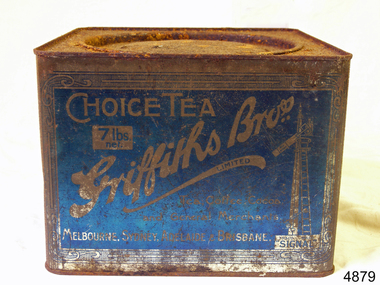 Flagstaff Hill Maritime Museum and Village
Container, Griffiths Bros, 1900 - 1940
... transferred to the Sydney City Council, who then leased it back to Griffiths Teas. The tea craze was over by 1965, and Griffiths relinquished control of the building to a variety of tenants. Griffiths tea became an intrical part of Australian life, during the late 19th to mid 20th century. The company became a household name through the clever use of outdoor advertising with their blue and white enamel “Griffiths Tea” signs. These were visible Australia wide on railway fences, stations ...In 1873, English grocer James Griffiths migrated to Melbourne with his wife and cousin in order to start a tea business. By 1875 Griffiths Brothers Teas had become a sensation, providing tea, coffee, cocoa and chocolate all over Australia. The Sydney outlet of the Melbourne-based company was built in 1915. In a memorable advertising campaign, a series of Griffiths signs were situated at varying intervals along the rail lines on fences and building, designed to allow travellers to count down the miles until they could drink up. In 1925, James Griffiths was killed by a train and the tea company was sold to Robur Tea, which itself lasted until 1974. Griffiths’ death meant downsizing within the company with the Sydney building being transferred to the Sydney City Council, who then leased it back to Griffiths Teas. The tea craze was over by 1965, and Griffiths relinquished control of the building to a variety of tenants. Griffiths tea became an intrical part of Australian life, during the late 19th to mid 20th century. The company became a household name through the clever use of outdoor advertising with their blue and white enamel “Griffiths Tea” signs. These were visible Australia wide on railway fences, stations and other buildings. Griffiths signs let the rail travelers know the distance to where their tea could be enjoyed, with distances being shown as “miles to Griffiths Tea”, These signs were well known along the eastern states railway lines. Tea container tin Griffiths blue tin with round lid, not hinged. 7lbs net Choice Tea Griffith Bros 7lb net in white on a blue labelflagstaff hill, warrnambool, shipwrecked-coast, flagstaff-hill, flagstaff-hill-maritime-museum, maritime-museum, shipwreck-coast, flagstaff-hill-maritime-village -
Marysville & District Historical Society
THE TRIANGLE NEWS-VOL 36 NO 37-OCTOBER 2 2009
... ...waste transfer station...marysville victoria australia late snow still an attraction marysville marathon dr lachlan fraser what's on when in october buxton cfa buxton community hall annual buxton community christmas bbq buxton reserve football in marysville the marysville & district lions club mtcrc report advertisements marysville marquee mobile kitchens my chef mike catering st michael's grammar school all stars band bpa news had enough community support gathering marysville golf club accredited facilitators graeme & julia cann church notices vale christina barton charcoal drawings of christ church and marysville primary school situations vacant waste transfer station community service hub operating hours spring-season of hope and promise marysville medical clinic councillor comment bushfire affected residents to reap solar hot water rebate marysville art show marysville & district football & netball clubs lakeside fellowship evening eildon community centre hall alexandra cinema murrindindi shire council youth development and participation officer mayors chair marysville community market gallipoli park lions triangle tool library marysville community golf & bowls club marysville caravan park your health and wellbeing public notice rural 1 land buxton progress assocn amnesty period on open air burning marysville junior cricket marysville triangle real estate alexandra clearing sale THE TRIANGLE NEWS-VOL 36 NO 37-OCTOBER 2 2009 ...marysville, victoria, australia, late snow still an attraction, marysville marathon, dr lachlan fraser, what's on when in october, buxton cfa, buxton community hall, annual buxton community christmas bbq, buxton reserve, football in marysville, the marysville & district lions club, mtcrc report, advertisements, marysville marquee, mobile kitchens, my chef mike catering, st michael's grammar school all stars band, bpa news, had enough community support gathering, marysville golf club, accredited facilitators graeme & julia cann, church notices, vale christina barton, charcoal drawings of christ church and marysville primary school, situations vacant, waste transfer station, community service hub operating hours, spring-season of hope and promise, marysville medical clinic, councillor comment, bushfire affected residents to reap solar hot water rebate, marysville art show, marysville & district football & netball clubs, lakeside fellowship evening, eildon community centre hall, alexandra cinema, murrindindi shire council, youth development and participation officer, mayors chair, marysville community market, gallipoli park, lions triangle tool library, marysville community golf & bowls club, marysville caravan park, your health and wellbeing, public notice, rural 1 land, buxton progress assocn, amnesty period on open air burning, marysville junior cricket, marysville triangle real estate, alexandra clearing sale -
 Flagstaff Hill Maritime Museum and Village
Book, Wild Geese Calling
... station. A Mechanics' Institute building was opened at this site in August 1871. The following year four more rooms were added to the main Reading Room and in 1873 the Artisan School of Design was incorporated into the Institute. The same year Joseph Archibald established a Museum; however, it deteriorated when he was transferred...station. A Mechanics' Institute building was opened at this site in August 1871. The following year four more rooms were added to the main Reading Room and in 1873 the Artisan School of Design was incorporated into the Institute. The same year Joseph Archibald established a Museum; however, it deteriorated when he was transferred ...Pattison Collection This item is from the ‘Pattison Collection’, a collection of books and records that was originally owned by the Warrnambool Mechanics’ Institute, which was founded in Warrnambool in 1853. By 1886 the Warrnambool Mechanics’ Institute (WMI) had grown to have a Library, Museum and Fine Arts Gallery, with a collection of “… choice productions of art, and valuable specimens in almost every branch and many wonderful national curiosities are now to be seen there, including historic relics of the town and district.” It later included a School of Design. Although it was very well patronised, the lack of financial support led the WMI in 1911 to ask the City Council to take it over. In 1935 Ralph Pattison was appointed as City Librarian to establish and organise the Warrnambool Library as it was then called. When the WMI building was pulled down in 1963 a new civic building was erected on the site and the new Warrnambool Library, on behalf of the City Council, took over all the holdings of the WMI. At this time some of the items were separated and identified as the ‘Pattison Collection’, named after Ralph Pattison. Eventually the components of the WMI were distributed from the Warrnambool Library to various places, including the Art Gallery, Historical Society and Flagstaff Hill. Later some were even distributed to other regional branches of Corangamite Regional Library and passed to and fro. It is difficult now to trace just where all of the items have ended up. The books at Flagstaff Hill Maritime Village generally display stamps and markings from Pattison as well as a variety of other institutions including the Mechanics’ Institute itself. RALPH ERIC PATTISON Ralph Eric Pattison was born in Rockhampton, Queensland, in 1891. He married Maude Swan from Warrnambool in 1920 and they set up home in Warrnambool. In 1935 Pattison accepted a position as City Librarian for the Warrnambool City Council. His huge challenge was to make a functional library within two rooms of the Mechanics’ Institute. He tirelessly cleaned, cleared and sorted a disarrayed collection of old books, jars of preserved specimens and other items reserved for exhibition in the city’s museum. He developed and updated the library with a wide variety of books for all tastes, including reference books for students; a difficult task to fulfil during the years following the Depression. He converted all of the lower area of the building into a library, reference room and reading room for members and the public. The books were sorted and stored using a cataloguing and card index system that he had developed himself. He also prepared the upper floor of the building and established the Art Gallery and later the Museum, a place to exhibit the many old relics that had been stored for years for this purpose. One of the treasures he found was a beautiful ancient clock, which he repaired, restored and enjoyed using in his office during the years of his service there. Ralph Pattison was described as “a meticulous gentleman whose punctuality, floorless courtesy and distinctive neat dress were hallmarks of his character, and ‘his’ clock controlled his daily routine, and his opening and closing of the library’s large heavy doors to the minute.” Pattison took leave during 1942 to 1942 to serve in the Royal Australian Navy, Volunteer Reserve as Lieutenant. A few years later he converted one of the Museum’s rooms into a Children’s Library, stocking it with suitable books for the younger generation. This was an instant success. In the 1950’s he had the honour of being appointed to the Victorian Library Board and received more inspiration from the monthly conferences in Melbourne. He was sadly retired in 1959 after over 23 years of service, due to the fact that he had gone over the working age of council officers. However he continued to take a very keen interest in the continual development of the Library until his death in 1969. WARRNAMBOOL MECHANICS’ INSTITUTE Warrnambool's Mechanics' Institute (or Institution as it was sometimes called) was one of the earliest in Victoria. On 17th October 1853, a meeting was held where it was resolved to request the Lieutenant Governor of the Colony to grant land for the erection of a Mechanics' Institutes building. A committee was formed at the meeting and Richard Osburne chaired the first meeting of this committee. The land on the North West corner of Banyan and Merri Streets was granted but there were no funds to erect the building. The Formal Rights of the Warrnambool Mechanics' Institute's encompassed its aims and these were officially adopted in1859; "This Institution has for its object the diffusion of literary, scientific, and other useful knowledge amongst its members, excluding all controversial subjects, religious or political. These objects are sought to be obtained by means of a circulating library, a reading room, the establishment of classes, debates, and the occasional delivery of lectures on natural and experimental philosophy, mechanics, astronomy, chemistry, natural history, literature, and the useful and ornamental arts, particularly those which have a more immediate reference to the colony." The Warrnambool Mechanics' Institute opened its first reading room in November 1884 in the National School building at the corner of Banyan and Timor Streets. The Institute was funded by member subscription, payable on a quarterly, half-yearly or yearly basis. Samuel Hannaford, the Manager of the Warrnambool Bank of Australasia, was the first Honorary Secretary of the Mechanics' Institutes, and an early President and Vice-President. He also gave several of the early lectures in the Reading Room. Another early Secretary, Librarian and lecturer was Marmaduke Fisher, the teacher at the National School. Lecture topics included The Poets and Poetry of Ireland', 'The Birth and Development of the Earth', 'The Vertebrae - with Remarks on the pleasures resulting from the study of Natural History' and 'Architecture'. In 1856 the Reading Room was moved to James Hider's shop in Timor Street, and by 1864 it was located in the bookshop of Davies and Read. In the 1860's the Mechanics' Institute struggled as membership waned but in 1866, after a series of fundraising efforts, the committee was able to purchase land in Liebig Street, on a site then called Market Square, between the weighbridge and the fire station. A Mechanics' Institute building was opened at this site in August 1871. The following year four more rooms were added to the main Reading Room and in 1873 the Artisan School of Design was incorporated into the Institute. The same year Joseph Archibald established a Museum; however, it deteriorated when he was transferred to Bendigo in 1877. In 1880, with Archibald's return to Warrnambool, the Museum was re-established, and in 1885 a new building was built at the back of the Institute to accommodate the re-created School of Design, the Art Gallery and the Museum. In 1887 the Museum section was moved to the former courthouse in Timor Street (for some time the walls of the building formed part of the TAFE cafeteria but all is now demolished)). In 1911 the Museum was transferred back to the original building and the management of the Mechanics' Institute was handed over to the Warrnambool City Council. The Museum and Art Gallery became one and housed many fine works of art, and the Library continued to grow. The building was well patronised, with records showing that at the beginning of the 20th century there were between 500 and 800 visitors. During World War One the monthly figures were in the thousands, with 3,400 people visiting in January 1915. The Museum was a much - loved Institution in Warrnambool until the contents of the Museum and Art Gallery were removed to make room for the Warrnambool City Council Engineers' Department. The contents were stored but many of the items were scattered or lost. When the original building was demolished the site became occupied by the Civic Centre, which included the new City Library. (The library was temporarily located in the old Palais building in Koroit Street.) In the process of reorganisation the Collection was distributed amongst the community groups: -The new City Library took some of the historical books and some important documents, historic photographs and newspapers. -The Art Gallery kept the 19th Century art collection and some of the artefacts from the museum. -The Historical Society has some items -The State Museum has some items -Some items were destroyed -Flagstaff Hill Maritime Village has old newspapers, Government Gazettes, most of the Mechanics' Institute Library, ledgers and documents connected to the Mechanics' Institute Library, some framed and unframed artworks and some photographs. The Warrnambool Mechanics' Institute Library book collection is deemed to be of great importance because it is one of the few collections in an almost intact state, and many of the books are now very rare and of great value. The Pattison Collection, along with other items at Flagstaff Hill Maritime Village, was originally part of the Warrnambool Mechanics' Institute’s collection. The Warrnambool Mechanics’ Institute Collection is primarily significant in its totality, rather than for the individual objects it contains. Its contents are highly representative of the development of Mechanics' Institute libraries across Australia, particularly Victoria. A diversity of publications and themes has been amassed, and these provide clues to our understanding of the nature of and changes in the reading habits of Victorians from the 1850s to the middle of the 20th century. The collection also highlights the Warrnambool community’s commitment to the Mechanics’ Institute, reading, literacy and learning in the regions, and proves that access to knowledge was not impeded by distance. These items help to provide a more complete picture of our community’s ideals and aspirations. The Warrnambool Mechanics Institute book collection has historical and social significance for its strong association with the Mechanics Institute movement and the important role it played in the intellectual, cultural and social development of people throughout the latter part of the nineteenth century and the early twentieth century. The collection of books is a rare example of an early lending library and its significance is enhanced by the survival of an original collection of many volumes. The Warrnambool Mechanics' Institute’s publication collection is of both local and state significance. Wild Geese Calling Author: Stewart Edward White Publisher: Hodder Stoughton Date: 1940 The label on the spine with the typed text PAT FIC WHI Pastedown front endpaper has a sticker from Corangamite Regional Library Service Front loose endpaper has a stamp from Corangamite Regional Library Service Front loose endpaper has a sticker from Warrnambool Mechanics Institute Fly paper has stamps from Warrnambool Mechanics Institute and Warrnambool Public Library warrnambool, shipwrecked-coast, flagstaff-hill, flagstaff-hill-maritime-museum, maritime-museum, shipwreck-coast, flagstaff-hill-maritime-village, shipwrecked-artefact, book, wild geese calling, stewart edward white
