
Showing 135 items matching "tree kangaroo"
-
 Hymettus Cottage & Garden Ballarat
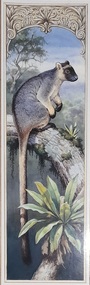
Work on paper - Bookmark, Untitled, but Andrew Isles bookmark
... ...Tree Kangaroo...Photo of an Australian Tree Kangaroo attractively framed with no label. ...Natural History Bookmark Melbourne Books Tree Kangaroo Cockatoos Nil Photo of an Australian Tree Kangaroo attractively framed with no label. ...A high gloss bookmark with an attractive photo and web address to back. An example of advertising a natural history specialist business in the first quarter of the tenty-first century.A modern twenty-first century pictorial bookmark advertising a bookseller. A fine example of period advertising.Photo of an Australian Tree Kangaroo attractively framed with no label. The reverse has the website address of Melbourne Natural History book specialist Andrew Isles www.AndrewIsles.com with two flying cockatoos,Nilnatural history, bookmark, melbourne, books, tree kangaroo, cockatoos, -
 Eltham District Historical Society Inc
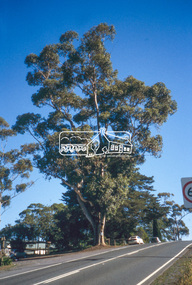
Slide - Photograph, Sugar Gum, 295 Eltham-Yarra Glen Road, Kangaroo Ground, c.2004
... tree...Kangaroo Ground...Part of a presentation on "Significant Trees, Wildflowers and Local Gardens" by Russell Yeoman to the 10 November 2004 Eltham District Historical Society meeting significant tree Eltham-Yarra Glen Road Heritage tree Kangaroo Ground Sugar Gum 35mm colour positive transparency (1 of 36) Mount - white (Pakon) Sugar Gum, 295 Eltham-Yarra Glen Road, Kangaroo Ground Slide Photograph ...Part of a presentation on "Significant Trees, Wildflowers and Local Gardens" by Russell Yeoman to the 10 November 2004 Eltham District Historical Society meeting35mm colour positive transparency (1 of 36) Mount - white (Pakon)significant tree, eltham-yarra glen road, heritage tree, kangaroo ground, sugar gum -
 Eltham District Historical Society Inc
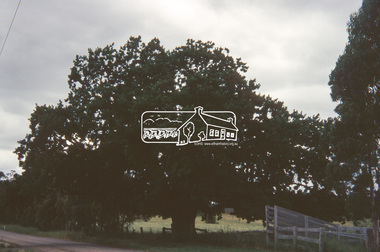
Slide - Photograph, Donaldson's Oak, Donaldson Road, Kangaroo Ground, c.1993
... tree...Kangaroo Ground...Donaldson Road Donaldson's Oak Heritage tree Kangaroo Ground Significant tree 35mm colour positive transparency Mount - Black and White Donaldson's Oak, Donaldson Road, Kangaroo Ground Slide Photograph ...Quercus Robur (English Oak) - Was planted by John Donaldson from seed collected from Windsor Great Park in 1878.35mm colour positive transparency Mount - Black and Whitedonaldson road, donaldson's oak, heritage tree, kangaroo ground, significant tree -
 Eltham District Historical Society Inc
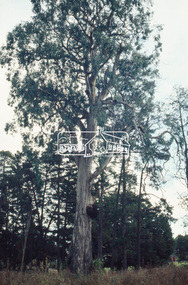
Slide - Photograph, Sugar Gum, 295 Eltham-Yarra Glen Road, Kangaroo Ground, c.1992
... tree...Kangaroo Ground...Eltham-Yarra Glen Road Heritage tree Kangaroo Ground Significant tree Sugar Gum 35mm colour positive transparency Mount - Black and White Sugar Gum, 295 Eltham-Yarra Glen Road, Kangaroo Ground Slide Photograph ...35mm colour positive transparency Mount - Black and Whiteeltham-yarra glen road, heritage tree, kangaroo ground, significant tree, sugar gum -
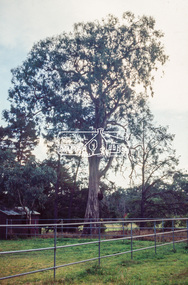 Eltham District Historical Society Inc
Slide - Photograph, Sugar Gum, 295 Eltham-Yarra Glen Road, Kangaroo Ground, c.1992
... tree...kangaroo ground...eltham-yarra glen road heritage tree kangaroo ground significant tree sugar gum 35mm colour positive transparency Mount - Black and White Sugar Gum, 295 Eltham-Yarra Glen Road, Kangaroo Ground Slide Photograph ...35mm colour positive transparency Mount - Black and Whiteeltham-yarra glen road, heritage tree, kangaroo ground, significant tree, sugar gum -
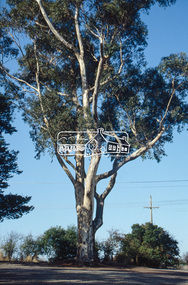 Eltham District Historical Society Inc
Slide - Photograph, Sugar Gum, 295 Eltham-Yarra Glen Road, Kangaroo Ground, c.1992
... tree...kangaroo ground...eltham-yarra glen road heritage tree kangaroo ground significant tree sugar gum 35mm colour positive transparency Mount - Black and White Sugar Gum, 295 Eltham-Yarra Glen Road, Kangaroo Ground Slide Photograph ...35mm colour positive transparency Mount - Black and Whiteeltham-yarra glen road, heritage tree, kangaroo ground, significant tree, sugar gum -
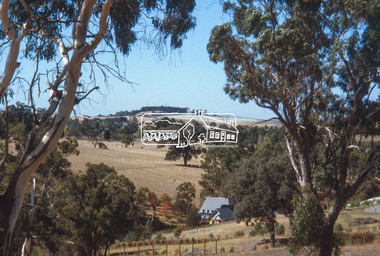 Eltham District Historical Society Inc
Slide - Photograph, Garden Hill, Kangaroo Ground, c.2004
... tree...Garden Hill...Kangaroo...Part of a presentation on "Significant Trees, Wildflowers and Local Gardens" by Russell Yeoman to the 10 November 2004 Eltham District Historical Society meeting significant tree Garden Hill Kangaroo Ground 35mm colour positive transparency (1 of 36) Mount - white (Pakon) Garden Hill, Kangaroo Ground Slide Photograph ...Part of a presentation on "Significant Trees, Wildflowers and Local Gardens" by Russell Yeoman to the 10 November 2004 Eltham District Historical Society meeting35mm colour positive transparency (1 of 36) Mount - white (Pakon)significant tree, garden hill, kangaroo ground -
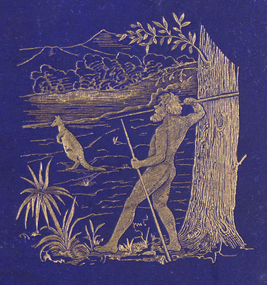 Ballarat Heritage Services
Photograph - Image, Aborigine with Kangaroo
... An Aborigine behind a tree points a tree towards a kangaroo....Aborigine Aboriginal spear kangaroo An Aborigine behind a tree points a tree towards a kangaroo. ...An Aborigine behind a tree points a tree towards a kangaroo.aborigine, aboriginal, spear, kangaroo -
 Ringwood and District Historical Society
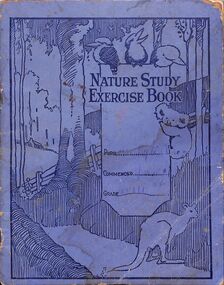
Work on paper, Nature Study Exercise Grade v111 name Wilson on the back c. 1930s (Part of the Wieland collection)
... Blue covered book with black stenciled picture of gum tree , koala , kangaroo and kookaburras.All pages filled with hand writing and drawn pictures In ink on back the name Wilson....Blue covered book with black stenciled picture of gum tree , koala , kangaroo and kookaburras.All pages filled with hand writing and drawn pictures In ink on back the name Wilson. ...Ruby Wilson was related to the Wieland family through the marriage of her sister Amy Ellen Thelma to Stanley Wieland.Blue covered book with black stenciled picture of gum tree , koala , kangaroo and kookaburras.All pages filled with hand writing and drawn pictures In ink on back the name Wilson. -
 Bendigo Historical Society Inc.
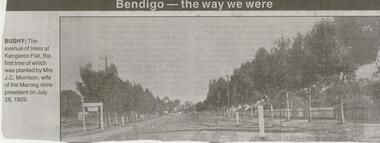
Newspaper - JENNY FOLEY COLLECTION: BUSHY
... Bushy: the avenue of trees at Kangaroo Flat, the first tree of which was planted by Mrs J.C. ...Bushy: the avenue of trees at Kangaroo Flat, the first tree of which was planted by Mrs J.C. ...BHS CollectionBendigo Advertiser ''The way we were'' from Tuesday, March 2, 2004. Bushy: the avenue of trees at Kangaroo Flat, the first tree of which was planted by Mrs J.C. Morrison, wife of the Marong shire president on July 28, 1929. The clip is in a folder.newspaper, bendigo advertiser, the way we were -
 Bendigo Historical Society Inc.
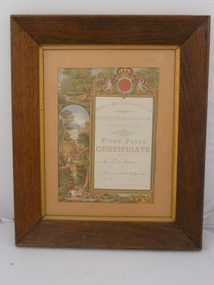
Certificate - Exhibition of Home Industries and fine arts. Miss E A Craven, 1880
... Coloured drawings of the bush, people, waterfall, trees and kangaroos. Markings: Evening news office. ...Coloured drawings of the bush, people, waterfall, trees and kangaroos. Markings: Evening news office. ...Exhibition of Home Industries and fine arts. Wesleyan schoolroom. Forest street. Sandhurst. 1880. First Prize Certificate awarded to Miss. E. A Craven for drawing in crayon. Figure division. In Class A. Section 3. James Thomas. Hon Secretary. Coloured drawings of the bush, people, waterfall, trees and kangaroos. Markings: Evening news office. Sandhurst.certificate, exhibition, home industires and fine arts, wesleyan schoolroom, drawing -
 Falls Creek Historical Society
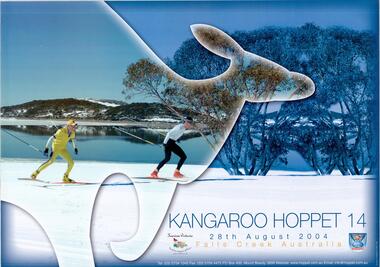
Poster - Kangaroo Hoppet 2004
... A coloured poster featuring two skiers passing a lake and trees with a kangaroo superimposed over the top. Borders are black with white text. ...Beauty Beneath the image: KANGAROO HOPPET 14 28th August 2004 Falls Creek Australia Tel: (03) 5754 1045 - Fax: (03) 5754 4475 - P.O. Box 400 Mount Beauty 3699 Website: http://www.hoppet.com.au Email: [email protected] A coloured poster featuring two skiers passing a lake and trees with a kangaroo superimposed over the top. ...The Kangaroo Hoppet is Australia’s premier long distance cross country ski race, and a member of the Worldloppet series of international cross country ski events. The first race at Falls Creek was held in 1979 under the name of “Australian Birkebeiner”. It was a 21km race with about 80 participants organised by the Birkebeiner Nordic Ski Club of Mount Beauty. The course started and finished at Falls Creek Alpine Resort and took participants out into the Bogong High Plains. After running the event for 10 years, it was decided they should become part of the Worldloppet series of marathon ski races. Representatives from the Birkebeiner Nordic Ski Club and the Australian Ski Federation attended the Worldloppet Annual Meeting in Finland in June 1990 to put the case for the acceptance of an Australian event into the Worldloppet series. Before being admitted, they had to demonstrate that the Birkebeiner Club could run a world class event, so three months later in August 1990 a 42km event named the Australian International Ski Marathon was held at Falls Creek together with a 21km Birkebeiner race and a 7km event called the Birkebeiner Lite. The event was approved by delegates from USA, Norway and Austria, in 1991 Australia became the 12th member of Worldloppet, with the condition that there had to be a name change. After some late night discussion allegedly involving red wine from North East Victoria the main event became the 42km Kangaroo Hoppet, with the minor events being the 21km Australian Birkebeiner, and 7km Joey Hoppet. In the winter of 1991, the first Kangaroo Hoppet was held. It was a great success and has been a regular fixture on the international ski calendar ever since. It features the main 42km event as well as a 21km event and a 7km event. The Hoppet brings the Australian snowfields to an international audience. In 2004 the Men's Winner was Ben Derrick from Australia in a time of 1:35:10. The winner of the Women's event was Clare-Louise Brumley of Australia in a time of 1:50:40. This poster is significant because it documents an event which brings international attention to Falls Creek and the surrounding region.A coloured poster featuring two skiers passing a lake and trees with a kangaroo superimposed over the top. Borders are black with white text. The logos of Tourism Victoria and Worldloppet are on either side of the text at the bottom of the image.Beneath the image: KANGAROO HOPPET 14 28th August 2004 Falls Creek Australia Tel: (03) 5754 1045 - Fax: (03) 5754 4475 - P.O. Box 400 Mount Beauty 3699 Website: http://www.hoppet.com.au Email: [email protected] kangaroo hoppet, worldloppet events, falls creek, mt. beauty -
 Ringwood and District Historical Society
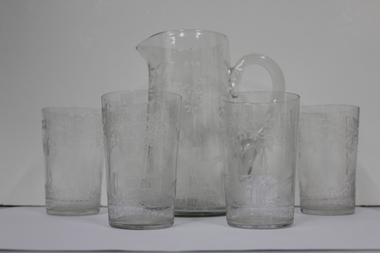
Domestic object - Jug and Glasses, Vintage glasses and pitcher set
... Jug and four glasses, each item with hand etchings of Australian fauna and flora - kookaburra sitting on a post and rail fence; kangaroos; and tree ferns:; 1. Glass Jug with handle and spout.; 2-5. ...Jug and four glasses, each item with hand etchings of Australian fauna and flora - kookaburra sitting on a post and rail fence; kangaroos; and tree ferns:; 1. Glass Jug with handle and spout.; 2-5. ...Jug and four glasses, each item with hand etchings of Australian fauna and flora - kookaburra sitting on a post and rail fence; kangaroos; and tree ferns:; 1. Glass Jug with handle and spout.; 2-5. Glasses +Additional Keywords: O'Connor, Neville / O'Connor, Ian -
 Glenelg Shire Council Cultural Collection
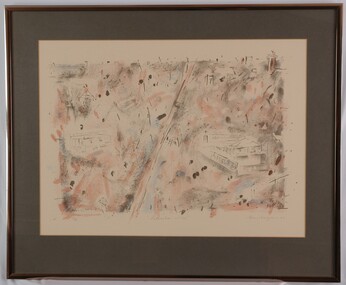
Print, Mary Macqueen, Nullabor 1-1-83, 1983
... A railway crossing sign is positioned lower centre, at beginning of road. Kangaroos and trees can also be seen in the image. ...A railway crossing sign is positioned lower centre, at beginning of road. Kangaroos and trees can also be seen in the image. ...Print Council of Australia Members' Print Commission, 1983Abstracted views of a desert scene. A central road intersects image at a vertical diagonal. Faint outlines of houses and a WaterTower are scattered throughout the image. To the lefthand side a building can be seen with a veranda and several seating areas. To the righthand side there is another building and the numerals '1983' can be seen to the side of it. A railway crossing sign is positioned lower centre, at beginning of road. Kangaroos and trees can also be seen in the image. Dominant colour is a pinky red, with blue accents and grey shadows. Mounted in grey matt, in wooden frame. Front: Nullarbor (lower left of image) (ink) 35/100 (lower left) Nullarbor 1-1-83 (lower centre) Mary Macqueen 83 (lower right) (pencil) Back: (no inscriptions)nullabor, desert scene, female artists, female artist, abstract -
 National Wool Museum
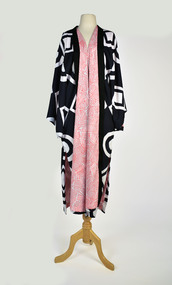
Textile - Cloak, Dr Deanne Gilson, Campfire Gathering, Meeting Place Cloak, 2022
... The circle and diamond pattern are ancient symbols used by Wadawurrung people dating pre-colonisation on possum skin and kangaroo skin cloaks, other artefacts like spear heads (carved), wooden shields, stone tools and caves were painted with blood, ochre and bound with grass tree sap, black wattle tree sap and kangaroo fats. ...The circle and diamond pattern are ancient symbols used by Wadawurrung people dating pre-colonisation on possum skin and kangaroo skin cloaks, other artefacts like spear heads (carved), wooden shields, stone tools and caves were painted with blood, ochre and bound with grass tree sap, black wattle tree sap and kangaroo fats. ...Standing proud, still here, the spirit of ten ancestral matriarchs adorned in contemporary ceremonial cloaks. Representing our women past, present and future, her Spirit, our culture, our Country (spelt with a capital for its importance and this is part of First Peoples protocols on acknowledging Country, our strength, our resilience and healing towards a sustainable future). The circle and diamond pattern are ancient symbols used by Wadawurrung people dating pre-colonisation on possum skin and kangaroo skin cloaks, other artefacts like spear heads (carved), wooden shields, stone tools and caves were painted with blood, ochre and bound with grass tree sap, black wattle tree sap and kangaroo fats. The diamond pattern was a strong design used by men on shields and women on baskets and adornments. Shields were taken from the tree in the colder months when the tree was cold as the wood came off cleaner. Ochre colours of red, white, yellow and charcoal were often used to colour in and decorate the skin side of possum skin cloaks, wooden shields, spear heads, baskets and some coolamon bowls.The design for this cloak has been simplified from the original artefact design.Cloak with black and white diamond and circle design on outer cloak and coral and white line pattern within lining. Trimming is solid black. Cloak is machine sewn and handstitched with hand stitching on shoulder seam.deanne gilson, wadawurrung, first nations, cloak -
 Bendigo Historical Society Inc.
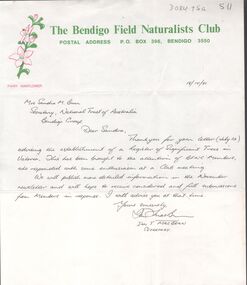
Document - National Trust Collection: Significant Trees - five letters re: significant trees projects, 1974 -1982
... Campbell, City Engineer from Warick Forge, Assistant Administrator National Trust of Australia D 29 June 1981 - Register of Significant Trees in Victoria - to Mrs Bunn from Warick Forge, Assistant Administrator National Trust of Australia E 16 February 1982 - Trees in High Street, Kangaroo Flat - T. Glazebrook, Divisional Engineer, C.R.B. from Sandra Bunn...Campbell, City Engineer from Warick Forge, Assistant Administrator National Trust of Australia D 29 June 1981 - Register of Significant Trees in Victoria - to Mrs Bunn from Warick Forge, Assistant Administrator National Trust of Australia E 16 February 1982 - Trees in High Street, Kangaroo Flat - T. Glazebrook, Divisional Engineer, C.R.B. from Sandra Bunn Document National Trust Collection: Significant Trees - five letters re: significant trees projects ...National Trust - Significant trees - four letters re: various significant trees across Bendigo A 10 March 1974 - Landscape - Harvey Town Wooded Gullies - to A. J. Smark, Town clerk, Borough of Eaglehawk from S. R. Birch, Administrator National Trust of Australia B 18 March 1974 - Landscape - Harvey Town Wooded Gullies - to Dr. J. M. Trembath from S. R. Birch, Administrator National Trust of Australia C 17 June 1981 - Historic Gardens Study - to C. C. Campbell, City Engineer from Warick Forge, Assistant Administrator National Trust of Australia D 29 June 1981 - Register of Significant Trees in Victoria - to Mrs Bunn from Warick Forge, Assistant Administrator National Trust of Australia E 16 February 1982 - Trees in High Street, Kangaroo Flat - T. Glazebrook, Divisional Engineer, C.R.B. from Sandra Bunntrees -
 Eltham District Historical Society Inc
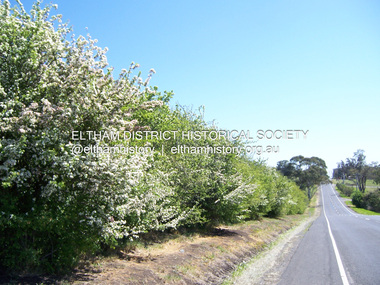
Photograph - Digital Photograph, Marguerite Marshall, Hawthorn hedges, Eltham-Yarra Glen Road, Kangaroo Ground, 3 October 2006
... kangaroos, (which the Scots were to exclude by planting hedgerows). But the Wurundjeri hunters left the gums (Eucalyptus vimminalis cygnetensis), on the grasslands as ‘stalking trees’ to hunt kangaroos. ...kangaroos, (which the Scots were to exclude by planting hedgerows). But the Wurundjeri hunters left the gums (Eucalyptus vimminalis cygnetensis), on the grasslands as ‘stalking trees’ to hunt kangaroos. ...Hawthorn hedges are important reminders of Kangaroo Ground's Scottish heritage. They are Registered on the Victorian Heritage Register. They are "historically significant because the planting of hawthorn hedges reflects the adoption of Eurorpean farming techniques by the Kangaroo Ground population in the period following settlement and because the grid pattern of paddocks that the Hawthorn hedges define is very different to today's farm landscapes." Covered under Heritage Overlay, Nillumbik Planning Scheme. Published: Nillumbik Now and Then / Marguerite Marshall 2008; photographs Alan King with Marguerite Marshall.; p21 Hawthorn hedges bordering Kangaroo Ground’s gently rolling farmlands are important reminders of its Scottish heritage and are rare so close to Melbourne.1 As early as the 1840s newly arrived farmers from Scotland planted hawthorn hedges around their properties, to protect crops from the numerous kangaroos and wallabies. Many of these hedges survive today. These farmers had the good fortune to settle some of the most fertile land available for cropping in the Colony of Victoria. At that time the black volcanic soil could sustain an amazing two crops a year. By the mid 1850s, 500 acres (202ha) of wheat were growing in Kangaroo Ground. But the crops were threatened by kangaroos, which were so plentiful, that Surveyor-General, Robert Hoddle, named the district Kangaroo Ground in 1838. As post-and-rail fences proved inadequate barriers for the bounding kangaroos, the Scots planted hawthorn hedgerows as they had done in Scotland. Some also used the hedges to net birds, presumably for the table. Interestingly the farmers in the bordering townships of Panton Hill and Christmas Hills, did not plant hawthorn hedges around their properties. Perhaps it was because by the time they settled in the 1860s and 1870s most of the wildlife had been gunned down by residents.2 The canny Scots planted the hedges on public land outside their own farms, as the hedgerows could spread to about five yards (five m) in width. With this impenetrable barrier Kangaroo Ground’s industrious farmers flourished to gain the economic power that saw the Shire of Eltham governed from Kangaroo Ground for 79 years (1858-1937). The Scots jealously guarded their land, so hard to get in Scotland. That is why they refused to release any of it ‘for local roads to follow easier grades as was the case in surrounding districts where roads generally followed ridgelines or streams’.3 Instead the roads were built in accordance with the magnetic bearings of their first survey in 1847 whether that suited the steep topography or not. This could force traffic to diverge when wet through Greensborough and Diamond Creek. Until 1921, the Eltham-Yarra Glen Road beside Wellers Restaurant, ‘dipped down into the upper reaches of Stony Creek’.4 Later some corners were compulsorily cut for the increasing motor traffic. As late as the 1960s, corners were cut to form sweeping curves above and alongside the Kangaroo Ground Cemetery and opposite the Emergency Operations Centre. In the latter case, the farmers – understanding their hedgerows as important heritage – insisted upon their reinstatement to conform to the altered road alignment. Kangaroo Ground’s ancient manna gums also point to the district’s history and to that of the hedgerows. The Aboriginal people had transformed the original forests into grasslands with the fires they lit to attract kangaroos, (which the Scots were to exclude by planting hedgerows). But the Wurundjeri hunters left the gums (Eucalyptus vimminalis cygnetensis), on the grasslands as ‘stalking trees’ to hunt kangaroos. The hawthorn hedges in Kangaroo Ground were neglected for around 60 years from about the middle of the 20th century. Bushfires had created gaps and the hedgerows were not trimmed. Then in late 2005, local historian Mick Woiwod, formed a group to lobby the Nillumbik Shire to restore the hedges, which could last for many centuries. Some hedges in parts of Britain date back to AD 800.5 Although the original Scottish farmers have gone, the hedges are a reminder of when they flourished in the district, which has changed little in 150 years.This collection of almost 130 photos about places and people within the Shire of Nillumbik, an urban and rural municipality in Melbourne's north, contributes to an understanding of the history of the Shire. Published in 2008 immediately prior to the Black Saturday bushfires of February 7, 2009, it documents sites that were impacted, and in some cases destroyed by the fires. It includes photographs taken especially for the publication, creating a unique time capsule representing the Shire in the early 21st century. It remains the most recent comprehenesive publication devoted to the Shire's history connecting local residents to the past. nillumbik now and then (marshall-king) collection, eltham-yarra glen road, hawthorn hedgerow, kangaroo ground -
 Flagstaff Hill Maritime Museum and Village
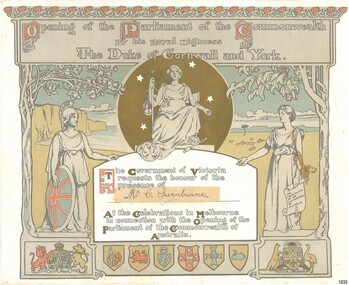
Certificate - Invitation, Norman Lindsay (Artist), Opening of the Parliament of the Commonwealth by His Royal Highness The Duke of Cornwall and York, ca. 1901
... Swinburne" Left image: [figure of Britannia holding a blue shield with three crossing red bands, standing below an oak tree] Central image, in front of a gilt circle : [symbolic female royal future with Orbe and Sceptre seated on throne, four stars around her] Right image: [young female figure representing Australia holding a scroll, standing below a flowering gum] "THE CONSTITUTION OF THE COMMONWEALTH OF AUSTRALIA" Bottom left: Combined Arms: "[Duke of Cornwall and York, Prince George Frederick Ernest Albert, Princess Alexandra, his Duchess]" Bottom centre: [six symbols representing the Coat of Arms for each state of Australia] Bottom right: Advance Australia Arms "[Shield with six symbols, between Kangaroo and Emu, and below Rising Sun'] ADVANCE AUSTRALIA"...Swinburne" Left image: [figure of Britannia holding a blue shield with three crossing red bands, standing below an oak tree] Central image, in front of a gilt circle : [symbolic female royal future with Orbe and Sceptre seated on throne, four stars around her] Right image: [young female figure representing Australia holding a scroll, standing below a flowering gum] "THE CONSTITUTION OF THE COMMONWEALTH OF AUSTRALIA" Bottom left: Combined Arms: "[Duke of Cornwall and York, Prince George Frederick Ernest Albert, Princess Alexandra, his Duchess]" Bottom centre: [six symbols representing the Coat of Arms for each state of Australia] Bottom right: Advance Australia Arms "[Shield with six symbols, between Kangaroo and Emu, and below Rising Sun'] ADVANCE AUSTRALIA" Invitation: certificate size, colour lithograph on cream card with gilt highlights. ...Australia became a Federation on January 1st, 1901, uniting Australia's six British colonies - New South Wales, Victoria, Queensland, South Australia, Western Australia and Tasmania – into States of the Commonwealth of Australia. The Government of Victoria invited 12,000 guests to attend the official celebrations for the Opening of the Federal Parliament by His Royal Highness, the Duke of Cornwall and York (later King George V). The historic occasion was held at noon on May 9th, 1901, at Melbourne's Royal Exhibition Building, the only building large enough for that number of guests. The guests represented all six states of Australia with varied connections and interests, including politics, business and industry, the arts, religion, education, and public service. In Melbourne, the occasion was followed by two weeks of celebrations. The decorative, elaborate design of the certificate-size invitation represents Australia’s colonial history and its transition to the Federated Commonwealth of Australia. The National Gallery of Australia attributes the artwork of this invitation to Australian artists Norman Lindsay (1879–1969) and John Longstaff (1861–1941) and its printing to Sands & McDougall Limited, Melbourne. The invitation has no date or location details. This invitation has the label “Mr. C Swinburne” added over an original, handwritten name. Perhaps it was a spelling correction, or a late change, with Swinburne attending in the place of another citizen. The book “Our Invited Guests An Official Directory, Melbourne, Victoria, 1901” lists all the guests, but not one has the surname SWINBURNE. There are five Warrnambool listings, eight people in all: - - MoCOBMICK, G. D., Esq., P.M., Warrnambool. - O’DOWD, The Ven. Monsignor, Warrnambool. - OPIE, C. N. T., Esq. (and Lady), Warrnambool. - OSBORNE, Hy. Wm., Esq., Shire Secretary (and Lady), Town Hall, Warrnambool. - STEVENS, Mrs. F. P., Mia Mia, Warrnambool. CHARLES GRANT SWINBURNE (1864-1934): - Charles Grant Swinburne, known as Chas.., was a prominent Warrnambool figure: a member of Toc H., the Progress Association and several other local clubs and societies. He purchased Warrnambool’s Tattersall’s Hotel in 1911 and had a booth at the 1914 Warrnambool Show. In 1891, he married Susan Jane Granter (1867-19 June 1935), daughter of Joseph Granter (1832-1879) and Ann (born Holley). Joseph had arrived in Melbourne on the famous tall ship Marco Polo in February 1856. In 1868, he was a shareholder of the Warrnambool Steam Packet Co., trading along the coast of Victoria. His portrait is among those recognised on the historic Warrnambool Pioneers Board. The invitation is nationally significant for its connection with the first Federal Parliament in May 1901, where the first federal parliamentarians were sworn in, and where the Duke and Duchess of Cornwall and York attended, representing the continued link with Britain. The invitation also unites a local Warrnambool businessman, Mr C Swinburne, with the 12,000 guests representing their towns and states that in 1901 became the Commonwealth of Australia. Swinburn was also married to the daughter of Joseph Granter, an early pioneer recognised on Warrnambool’s Pioneer Board. Invitation: certificate size, colour lithograph on cream card with gilt highlights. The Victorian Government invited Mr C Swinburne to celebrate the Opening of Federal Parliament by HRH the Duke of Cornwall and York, held in Melbourne. The invitation has printed drawings of figures, decorations, heraldic symbols, and gilt accents behind the central figure, on the capital letters of the message, and the Advance Australia Arms. Inscribed with a handwritten label that covers handwritten text. [The event was held at Noon, 9th May 1901, Royal Exhibition Building, Melbourne.] Inscription, handwritten on a label: "Mr. C. Swinburne" Left image: [figure of Britannia holding a blue shield with three crossing red bands, standing below an oak tree] Central image, in front of a gilt circle : [symbolic female royal future with Orbe and Sceptre seated on throne, four stars around her] Right image: [young female figure representing Australia holding a scroll, standing below a flowering gum] "THE CONSTITUTION OF THE COMMONWEALTH OF AUSTRALIA" Bottom left: Combined Arms: "[Duke of Cornwall and York, Prince George Frederick Ernest Albert, Princess Alexandra, his Duchess]" Bottom centre: [six symbols representing the Coat of Arms for each state of Australia] Bottom right: Advance Australia Arms "[Shield with six symbols, between Kangaroo and Emu, and below Rising Sun'] ADVANCE AUSTRALIA"flagstaff hill maritime museum and village, flagstaff hill, maritime museum, maritime village, warrnambool, great ocean road, shipwreck coast, invitation, certificate, mr c swinburne, government of victoria, opening of federal parliament, hrh the duke of cornwall and york, c swinburne, susan jane granter, susan jane swinburne, federal parliament, 1901, australian federation, ceremonies, politics, royal exhibition building, invited guest, britannia, orb, sceptre, advance australia arms, constitution of the commonwealth of australia, norman lindsay, john longstaff, sands & mcdougall, federation, british colonies, commonwealth of australia, charles grant swinburne, chas swinburne, c g swinburne, opening of the federal parliament, duke of cornwall and york, may 9th, tattersall’s hotel, marco polo, warrnambool steam packet co, warrnambool pioneers board, joseph granter, ann granter -
 The Beechworth Burke Museum
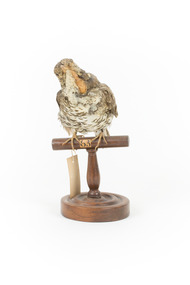
Animal specimen - Bassian Thrush, Trustees of the Australian Museum, 1860-1880
... tree forks. Primarily found in Tasmania, South Australia and Queensland, there are three sub-species of thrush, Zoothera lunulata cuneate (Queensland), Zoothera lunulata halmaturina (South Australian and Western Bassian Thrushes) and Zoothera lunulata lunulata/Zoothera lunulata macrorhyncha (South East Australia, Queensland, Victoria and Tasmania). Because this bird is a ground foraging species, the main threat to the Bassian Thrush is the ground clearing of its habitat, and unfortunately, the South Australian Zoothera lunulata halmaturina sub-species is considered vulnerable because of the bush fires that have eliminated much of its habitat, especially on Kangaroo Island. ...tree forks. Primarily found in Tasmania, South Australia and Queensland, there are three sub-species of thrush, Zoothera lunulata cuneate (Queensland), Zoothera lunulata halmaturina (South Australian and Western Bassian Thrushes) and Zoothera lunulata lunulata/Zoothera lunulata macrorhyncha (South East Australia, Queensland, Victoria and Tasmania). Because this bird is a ground foraging species, the main threat to the Bassian Thrush is the ground clearing of its habitat, and unfortunately, the South Australian Zoothera lunulata halmaturina sub-species is considered vulnerable because of the bush fires that have eliminated much of its habitat, especially on Kangaroo Island. ...The habitat of the Bassian Thrush includes leaf littered and canopied gullies and dense forests. It forages for food on the ground eating small invertebrates and nests in tree stumps and tree forks. Primarily found in Tasmania, South Australia and Queensland, there are three sub-species of thrush, Zoothera lunulata cuneate (Queensland), Zoothera lunulata halmaturina (South Australian and Western Bassian Thrushes) and Zoothera lunulata lunulata/Zoothera lunulata macrorhyncha (South East Australia, Queensland, Victoria and Tasmania). Because this bird is a ground foraging species, the main threat to the Bassian Thrush is the ground clearing of its habitat, and unfortunately, the South Australian Zoothera lunulata halmaturina sub-species is considered vulnerable because of the bush fires that have eliminated much of its habitat, especially on Kangaroo Island. While the overall structure of this particular representation of a Bassian Thrush is relatively accurate, some of the smaller details are lacking. The eyes within this particular specimen are not accurate. Instead of solid black eyes, this specimen has golden/yellow eyes with black pupils. Another inaccuracy is some inappropriate intrusions coming from the beak (most noticeable in the left and right close up images). From the photographs, it is unclear if this is a representative/presentation choice or a condition problem caused overtime. Unfortunately, several aging problems have also occurred over time, with the bird’s feathers fading (Bassian Thrushes have distinct dark brown and black and white scalloped plumage) and the beak which was probably once dark grey has faded to the under colour, a yellowy cream. This specimen is part of a collection of almost 200 animal specimens that were originally acquired as skins from various institutions across Australia, including the Australian Museum in Sydney and the National Museum of Victoria (known as Museums Victoria since 1983), as well as individuals such as amateur anthropologist Reynell Eveleigh Johns between 1860-1880. These skins were then mounted by members of the Burke Museum Committee and put-on display in the formal space of the Museum’s original exhibition hall where they continue to be on display. This display of taxidermy mounts initially served to instruct visitors to the Burke Museum of the natural world around them, today it serves as an insight into the collecting habits of the 19th century.This specimen is part of a significant and rare taxidermy mount collection in the Burke Museum. This collection is scientifically and culturally important for reminding us of how science continues to shape our understanding of the modern world. They demonstrate a capacity to hold evidence of how Australia’s fauna history existed in the past and are potentially important for future environmental research. This collection continues to be on display in the Museum and has become a key part to interpreting the collecting habits of the 19th century.The Bassian Thrush has white and black scalloped plumage on its underbelly with caramel, soft brown and black tipped scalloped plumage on its back. This soft brown continues onto the bird’s head and neck. The thrush has a white rim around the glass black eyes. When seen in flight, there is also a noticeable wide band across the underside of the wings which is not visible on this specimen due to its particular stance.Swing tag appears to read: ‘46a [the a is superscripted] / Mountain Thrush. / See Catalogue, Page 16. / The number in the top centre of the wooden perch reads '63'taxidermy mount, taxidermy, animalia, burke museum, beechworth, australian museum, skin, reynell eveleigh johns, bird, bassian thrush, zoothera lunulata, white's thrush, ground thrush, scaly thrush -
 Federation University Historical Collection
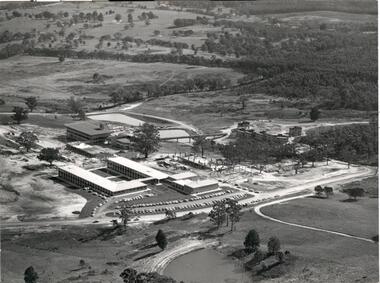
Document, Mount Helen Campus Arboretum, c1992
... A trail travels through the Arboretum where you may see resting kangaroos and wallabies, crosses a creek that holds a vulnerable colony of frogs commonly known as Victorian Smooth Froglet (Geocrinia victoriana), and admire the grass trees (Xanthorrhea australis) that grow on the campus behind accommodation. ...A trail travels through the Arboretum where you may see resting kangaroos and wallabies, crosses a creek that holds a vulnerable colony of frogs commonly known as Victorian Smooth Froglet (Geocrinia victoriana), and admire the grass trees (Xanthorrhea australis) that grow on the campus behind accommodation. ...A trail travels through the Arboretum where you may see resting kangaroos and wallabies, crosses a creek that holds a vulnerable colony of frogs commonly known as Victorian Smooth Froglet (Geocrinia victoriana), and admire the grass trees (Xanthorrhea australis) that grow on the campus behind accommodation. In 2018 2000 native trees planted by State Library Victoria and Federation University in the Arboretum .Planted with the help of locals, students, and kindergarten children as part of the joint project the plantings included indigenous trees, shrubs and grasses native to Ballarat. Federation University student Clancy Meaney is managing the tree planting project as part of her studies. “The arboretum is a fantastic resource that is used extensively by Federation University students as an outdoor classroom,” Ms Meaney said. “Being situated in between two main forests, our campus is also an important connection for native animals. These new trees will help migrating wildlife to move from one forest to the other.” State Library Victoria Project Management Office Director, Sarah Slade said the project was a wonderful opportunity to work with Mount Helen residents and the University to help protect the native landscape. “We’re thrilled to be able to give back to students, local residents and native flora and fauna through this valuable environmental initiative,” Ms Slade said. The tree planting project is a result of State Library Victoria’s ongoing partnership with Federation University. Construction of the Library’s second state-of-the-art storage facility, BOSS2 (Ballarat off-site store 2), is currently underway on the Federation University site. The existing storage facility at the Mount Helen Campus already holds more than half of the State Library’s collection, including newspapers, books, journals, textiles, paintings, architectural drawings, furniture and photographic glass plate negatives. In addition to State Library collection, BOSS2 will also provide two dedicated storage areas for the University’s collection. When completed, BOSS2 will provide additional storage of 25-30 linear kilometres, the equivalent of driving from Ballarat to Clunes or running 175 lengths of the MCG. The Mount Helen Campus Arboretum was established c1992.arboretum, mt helen campus arboretum, graeme ambrose, mt helen campus -
 Federation University Historical Collection
Photograph, Photographs of the planning for the Arbotoreum
... A trail travels through the Arboretum where you may see resting kangaroos and wallabies, crosses a creek that holds a vulnerable colony of frogs commonly known as Victorian Smooth Froglet (Geocrinia victoriana), and admire the grass trees (Xanthorrhea australis) that grow on the campus behind accommodation....A trail travels through the Arboretum where you may see resting kangaroos and wallabies, crosses a creek that holds a vulnerable colony of frogs commonly known as Victorian Smooth Froglet (Geocrinia victoriana), and admire the grass trees (Xanthorrhea australis) that grow on the campus behind accommodation. ...Mt Helen Campus is the site of Federation University. A trail travels through the Arboretum where you may see resting kangaroos and wallabies, crosses a creek that holds a vulnerable colony of frogs commonly known as Victorian Smooth Froglet (Geocrinia victoriana), and admire the grass trees (Xanthorrhea australis) that grow on the campus behind accommodation.Two coloured photographs of Rob McClellan, David James and Martin Westbrooke at the launch of the arbotoruem at Federation University.1 David James - Vice Chancellor, Rob McLellan - Minister, Martin Westbrooke - Science/Eng.2 Rob McLellan abotoreum, mt helen campus aboretium, mt helen campus, federation university, david james, rob mclellan, martin westbrooke -
Federation University Historical Collection
Booklet, Helen Ogden, Flowers of Western Australia, 1960
... kangaroo paw...hibbretia hypercoides...leucopogon pulchellus...isopogon roseus...qualup bell...blue leshenaultia...geradton wax plant...catspaw...wild clematis...sturt pea...donket orchid...spider orchid...hovea trisperma...black wattle...pink myrtle...boronia...christmas tree...wildflowers western australia helen ogden ida richardson c a gardner flora botany australian native plants orange banksia kangaroo paw hibbretia hypercoides leucopogon pulchellus isopogon roseus qualup bell blue leshenaultia geradton wax plant catspaw wild clematis sturt pea donket orchid spider orchid hovea trisperma black wattle pink myrtle boronia christmas tree Stamped in gold inside front cover: With Compliments A.H.A. ...Paperback booklet with painted wildflowers on the front cover and blue-grey back cover. 22 leaves of plates.Stamped in gold inside front cover: With Compliments A.H.A. Western Australian branch 1967 National Conferencewildflowers, western australia, helen ogden, ida richardson, c a gardner, flora, botany, australian native plants, orange banksia, kangaroo paw, hibbretia hypercoides, leucopogon pulchellus, isopogon roseus, qualup bell, blue leshenaultia, geradton wax plant, catspaw, wild clematis, sturt pea, donket orchid, spider orchid, hovea trisperma, black wattle, pink myrtle, boronia, christmas tree -
Federation University Historical Collection
Magazine - Booklet, Ballarat School of Mines Students' Magazine, 1943, 1943
... Artworks Mr Ferguson - By Beryl Grinter Miss Will - By Beryl Grinter Mr Tern - By Ruth Mole Editor - By Margaret Dark Digger - By Joan Walter Kangaroos - By Margaret Dark Lake Wendouree (Fairyland) - By Marion Beckwith Trees at Lake Wendouree - By John Lannen SMB - So much better - By Max Coward Miss Grigg - By Joan Walter Margaret By Joy Martin Head Study from Life - By Ruth Mole Joan - By Margaret Dark Study from Nature - By Beryl Grinter Muriel - By Ruth Mole Carrol - By Ruth Mole Murrell - By Beryl Grinter Betty - By Ruth Mole Kath - By Ruth Mole Pat - By Margaret Dark Betty - By Joan Walter Dorothy - By Joan Walter Margaret - By Margaret Dark Jeanie - By Joan Walter Lois - By Margaret Dark Peanut - By Beryl Grinter Curly - By Ruth Mole Joan - By Patricia Allan Alison - By Ruth Mole June - By Ruth Mole Ice Cream - By Margaret Dark Wright - By Beryl Grinter Willian - By Margaret Dark Duke - By Margaret Dark Redfern - By Beryl Grinter Tilgner - By Beryl Grinter Walla - By Joan Walter Fumbrey - By Joan Walter Coad - By Margaret Dark Fletcher - By Ruth Mole Legs - By Joan Walter ...Artworks Mr Ferguson - By Beryl Grinter Miss Will - By Beryl Grinter Mr Tern - By Ruth Mole Editor - By Margaret Dark Digger - By Joan Walter Kangaroos - By Margaret Dark Lake Wendouree (Fairyland) - By Marion Beckwith Trees at Lake Wendouree - By John Lannen SMB - So much better - By Max Coward Miss Grigg - By Joan Walter Margaret By Joy Martin Head Study from Life - By Ruth Mole Joan - By Margaret Dark Study from Nature - By Beryl Grinter Muriel - By Ruth Mole Carrol - By Ruth Mole Murrell - By Beryl Grinter Betty - By Ruth Mole Kath - By Ruth Mole Pat - By Margaret Dark Betty - By Joan Walter Dorothy - By Joan Walter Margaret - By Margaret Dark Jeanie - By Joan Walter Lois - By Margaret Dark Peanut - By Beryl Grinter Curly - By Ruth Mole Joan - By Patricia Allan Alison - By Ruth Mole June - By Ruth Mole Ice Cream - By Margaret Dark Wright - By Beryl Grinter Willian - By Margaret Dark Duke - By Margaret Dark Redfern - By Beryl Grinter Tilgner - By Beryl Grinter Walla - By Joan Walter Fumbrey - By Joan Walter Coad - By Margaret Dark Fletcher - By Ruth Mole Legs - By Joan Walter Ballarat School of Mines Students' Magazine, 1943 Magazine Booklet J.A. ...List of Full Course Students' 1943, Editorial, News, Obituary, News and Notes, The Literary Society, Fumes from the Lab, Arts & Crafts Gossip, Sport, Commercial Notes, The Junior Techs Black, green and gold soft covered magazine of 62 pages including advertisements. Artworks Mr Ferguson - By Beryl Grinter Miss Will - By Beryl Grinter Mr Tern - By Ruth Mole Editor - By Margaret Dark Digger - By Joan Walter Kangaroos - By Margaret Dark Lake Wendouree (Fairyland) - By Marion Beckwith Trees at Lake Wendouree - By John Lannen SMB - So much better - By Max Coward Miss Grigg - By Joan Walter Margaret By Joy Martin Head Study from Life - By Ruth Mole Joan - By Margaret Dark Study from Nature - By Beryl Grinter Muriel - By Ruth Mole Carrol - By Ruth Mole Murrell - By Beryl Grinter Betty - By Ruth Mole Kath - By Ruth Mole Pat - By Margaret Dark Betty - By Joan Walter Dorothy - By Joan Walter Margaret - By Margaret Dark Jeanie - By Joan Walter Lois - By Margaret Dark Peanut - By Beryl Grinter Curly - By Ruth Mole Joan - By Patricia Allan Alison - By Ruth Mole June - By Ruth Mole Ice Cream - By Margaret Dark Wright - By Beryl Grinter Willian - By Margaret Dark Duke - By Margaret Dark Redfern - By Beryl Grinter Tilgner - By Beryl Grinter Walla - By Joan Walter Fumbrey - By Joan Walter Coad - By Margaret Dark Fletcher - By Ruth Mole Legs - By Joan Walter Signed on front cover by "H. Yates".ballarat school of mines, magazine, alan w. wilson, wallace whiteside, jean ballinger, john r. elliott, bill f. carroll, maxwell richards, margaret dark, maxwell lawrence, l. strick, marion beckwith, geoffrey biddington, frances duffy, ian d. mclachlan, joy martin, ian cooper, valma falla, percival d. fisher, alma reid, f. day, n. pierce, john procter, dr pound, mr mein, a. mckenzie,, ruth mole, beryl grinter, h. b. murphy, margaret c. young, w. c. watts, john brittain, winsome hender, shirley dolan, adeline helm, j. f. lannen, max coward, alan e. daff, b. scott, lloyd o. lehmann, ernest j. poppins, b. egelton, john h. prout, roy e. mawby, robert j. mckenzie, phillip p. coulson, j. lawry, james owen, john w. jolly, norman k. clark, barbara curwen-walker, beryl hawkins, betty d. willian, beryl bedford, glenis dow, betty law, norma eltringham, jean lewis, dorothy ritchie, gwenda harrison, eileen dawkins, margaret lenaghan, olga m. lawrence, miss king, mrs mcilvena, h. packham, b. refurn, s. lang, d. hart, e. adams, f. savage, p. humphrey, e. skilbeck, a. carland, b. doull, r. ingleton, f. reeve, k. gowan, b. holloway, f. smith, t. bennett, mr bergin, s. wallis, d. struthberry, k. saunders, john lannen, patricia allan, joan walter -
 Orbost & District Historical Society
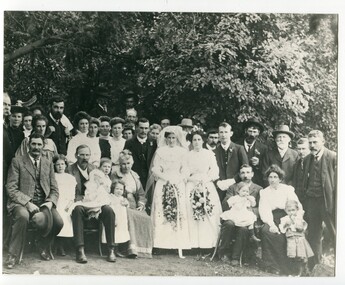
black and white photograph, April 15 1909
... kangaroo skins. Frank Merson Day was born in 1887 and died 1950. he was the son of George Seears Day and Annie Grose He and Maggie had four children : Eileen Margaret Annie Day; Francis Day; Anne Day and Frank Day. This is a pictorial record of a social event in Orbost in the early 20th century. Those recorded have connections to Orbost. day-frank middleditch-maggie on back - "Mary Gilbert" A large black / white photograph of a wedding party. The bride and groom are surrounded by family. Some are seated and most standing in front of some tall trees ...This photograph shows the wedding of Maggie (Fran Margaret) Middleditch form Murrangowar to Frank Day who worked in the local saddler's shop. An article in the The Snowy River Mail and Tambo and Croajingolong Gazette : ORBOST PETTY SESSIONS. 8 April 1909 Constable O'Shannassy proceeded against Frank Day on a charge of being unlawfully in possession ol four kangaroo skins. Frank Merson Day was born in 1887 and died 1950. he was the son of George Seears Day and Annie Grose He and Maggie had four children : Eileen Margaret Annie Day; Francis Day; Anne Day and Frank Day. This is a pictorial record of a social event in Orbost in the early 20th century. Those recorded have connections to Orbost.A large black / white photograph of a wedding party. The bride and groom are surrounded by family. Some are seated and most standing in front of some tall trees. There is a photocopy with a list of those in the photograph.on back - "Mary Gilbert"day-frank middleditch-maggie -
 Orbost & District Historical Society
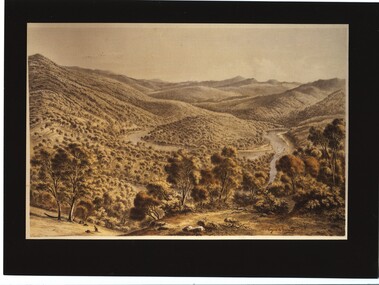
Photograph - The Snowy River near Buchan
... It shows a vast landscape of trees, hills, a river winding through, and kangaroos is the front left. ...It shows a vast landscape of trees, hills, a river winding through, and kangaroos is the front left. ...This is a photograph of a painting by Eugene von Guerard (1811–1901). Von Guerard was an Austrian-born artist renowned for his detailed and dramatic landscapes, particularly of the Australian bush, painted in the German Romantic tradition emphasizing the sublime and divine presence in nature. He initially worked as a painter of landscapes and house portraits, often commissioned by wealthy landowners, and produced sketches and paintings during extensive travels across Victoria, Tasmania, New South Wales, South Australia, and New Zealand. Presumably, the original painting was produced by Von Guerard during or after a visit to East Gippsland. This photo is significant because it is a copy of a painting of a remote Snowy River wilderness area by renowned artist Eugene Von Guerard. This appears to be a photograph of a painting. The photo has a sepia hue. It shows a vast landscape of trees, hills, a river winding through, and kangaroos is the front left. At the right hand bottom is the name Eugene von Guerard. At the bottom right of the photograph/painting is the name Eugene Von Guerard. On the back of this photo, written in black ink: 'The Snowy River near Buchan. Lucas Point.'snowy river near buchan, landscape painting, eugene von guerard -
 Eltham District Historical Society Inc
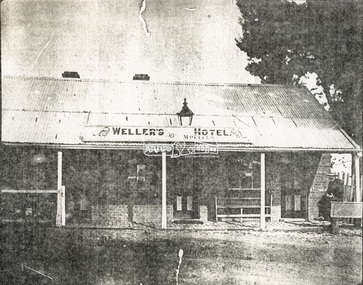
Document - Folder, Wellers of Kangaroo Ground, 1984-2017
... tree. (2017, January 1), 1 page. Retrieved from https://www.weller.org.uk/cgi-bin/FamilyTree/ShowFamily.pl?PersonID=516 d. Photograph (print copy), believed to be Edward Weller, 1836-1883 e. Photograph (print copy), Gravestone of Weller family at Kangaroo...tree. (2017, January 1), 1 page. Retrieved from https://www.weller.org.uk/cgi-bin/FamilyTree/ShowFamily.pl?PersonID=516 d. Photograph (print copy), believed to be Edward Weller, 1836-1883 e. Photograph (print copy), Gravestone of Weller family at Kangaroo ...Wellers of Kangaroo Ground Vertical File Contents: 1. Article: History of Wellers Restaurant by Sandra Cahir, revised 2017. 7 pages 2. Article: Weller’s Hotel of Kangaroo Ground (final draft) by Jim Allan, 1 June 2017, including feedback email from Sandra Cahir (7 May 2017). 3. Printout of online image - Kangaroo Ground landholders from 1841, Kangaroo Ground Presbyterian Church. (2022, June 29). Retrieved from https://kgpc.pcvic.org.au/images/history_images/Kangaroo-Ground-landholders.jpg 4. Folder of printouts of historical newspaper articles referencing the hotel 1866-1911 https://trove.nla.gov.au/list/163201 5. Printouts (various versions) from Victorian Heritage Database (National Trust and Nillumbik Shire) https://vhd.heritagecouncil.vic.gov.au/ 6. Collection of research notes, copies of records from various publications including EDHS Chronology of Events and Kangaroo Ground: The Highland Taken by Mick Woiwod, pp90, 180-181 (EDHS_01618). 7. Report: Request for ministerial amendment to use the property as a restaurant, includes existing conditions and plan for development, 1 November 1984 8. Papers donated by Diana and Peter Bassett-Smith including: a. Photocopy of Weller’s Hotel, Licensee M. Weller b. Letter: Shire of Eltham to Office of the Secretary for Planning and Environment, 23 Feb 1984 - Information regarding inclusion of Wellers Hotel into the Historic Buildings Register c. Letter: Historic Buildings Council letter to Peter Bassett-Smith seeking historical information on Wellers Hotel, 10 Jan 1985 d. Memo: Peter Bassett-Smith to Robert N. Hendrey on history of Wellers Hotel, 28 Jan 1985 - Includes extract of information about Mary Weller, Dept. of Crown Lands and Survey Map NILLUMBIK showing properties of John Weller and E. Weller and a Diamond Valley News article from 10 April 1973, p11, "Eltham on old coach route" 9. Information about the Weller family including family trees from various sources a. Edward Weller, Pioneer Families in Victoria, http://mepnab.netau.net/w/w09.html, 1 Jan 2017 (link broken) b. The WELLER family tree. (2017, January 1), 2 pages. Retrieved from https://www.weller.org.uk/cgi-bin/FamilyTree/ShowFamily.pl? and 27 pages Retrieved from https://www.weller.org.uk/cgi-bin/FamilyTree/ShowFamily.pl?ListAllPeople=A c. Edward WELLER on the WELLER family tree. (2017, January 1), 1 page. Retrieved from https://www.weller.org.uk/cgi-bin/FamilyTree/ShowFamily.pl?PersonID=516 d. Photograph (print copy), believed to be Edward Weller, 1836-1883 e. Photograph (print copy), Gravestone of Weller family at Kangaroo Cemetery f. Wellers of Kangaroo Ground, 1 page, possibly from History, http://www.wellers.com.au (broken) c.2016 g. Edward and Mary Weller miscellaneous biographical research notes (by Jim Allen?) including from Ancestry.com, and extracts from Chappel file (EDHS_04448) with relevant names highlighted h. Information about the Vernon Pitman family from Ancestry.com 10. Newspaper articles: a. Cobb & Co called here by Marguerite Marshall; Diamond Valley News, May 4, 1982, p2 b. Rich is history, 30 August 1983 (very similar to previous article) c. Weller’s Pub - restaurant, craft store or art gallery? Diamond Valley News, October 22, 1985, p3 d. Despite years of neglect a magical charm lies waiting, Diamond Valley News, October 29, 1985 e. Old pub fate still in doubt, Diamond Valley News, (?) 29 October 1985 f. Renovated Weller’s Pub to begin its new stage of life, DVN 26 January 1988 g. Wellers Restaurant, Lynne Hillier, Network, October 1988, p14 h. Revolution at Wellers, Nillumbik Mail, December 20, 2000 i. Wellers brings on good times, Valley Weekly, June 22, 2005 j. Dine in with ideal outlook, Valley News, 10 August 2005 k. Advertisement: Wellers of Kangaroo Ground, Enjoy lunch, afternoon tea and dinner at Wellers from Tuesday to Sunday, Valley Weekly, Wednesday, August 31, 2005 l. Advertisement: Wellers of Kangaroo Ground, Appearing live; Normie Rowe Fri 24 Feb, Diamond Valley Leader February 22, 2006, p11 m. Advertisement: Wellers of Kangaroo Ground, Lunch Special, Diamond Valley Leader March 27, 2010 n. Braithwaite abounds to Kangaroo Ground, Gig Guide, The Age, Friday, October 8, 2010, p14 o. History up for grabs, Diamond Valley Leader, March 28, 2012 p. Advertisement: Wellers Restaurant, Freehold only for sale, Morrison Kleeman, Diamond Valley Leader, March 28, 2012 q. Restaurant’s crash course, Megan Bailey, Diamond Valley Leader, January 1, 2014, p3. Also accessible online - Staff praised after car crashes through Kangaroo Ground eatery. (2022, June 29). Retrieved from https://www.heraldsun.com.au/leader/north/staff-praised-after-car-crashes-through-kangaroo-ground-eatery/news-story/021c896a1ab6d76bd6b73f2e57dc1854 r. Eatery set for revival, Brittany Shanahan, Diamond Valley Leader 15 February 2017; Also, online as Much-loved Wellers of Kangaroo Ground to be relaunched as Italian restaurant Fondata 1872. (2022, June 29). Retrieved from https://www.heraldsun.com.au/leader/north/muchloved-wellers-in-kangaroo-ground-to-be-relaunched-as-italian-restaurant-fondata-1872/news-story/665777fb347584ef483867ae2b536a8f s. Fondata 1872 proves a big hit with food, Diamond Valley Leader 3 May 2017, p3 11. Wellers of Kangaroo Restaurant Bar Entertainment Functions, tri-fold brochure promotional brochure 12. Website Printout: Wellers Restaurant, Live Guide, (2017, January 5). Retrieved from http://www.liveguide.com.au/Restaurants_Bars/VIC/Kangaroo_Ground/Food_Styles/3... 13. Website Printout: Wellers of Kangaroo Ground, Only Melbourne (2017, January 30). Retrieved from http://www.onlymelbourne.com.au/wellers-of-kangaroo-ground 14. Printouts from Fondata 1872 website and Facebook page including colour photograph of sign in front and business card (2017). Related EDHS Collection items • Wellers Hotel of Kangaroo Ground by Jim Allen, Part 1, Newsletter No. 235, Eltham District Historical Society, August 2017. Retrieved from https://elthamhistory.files.wordpress.com/2017/08/edhs-nl-235-aug-2017.pdf • Wellers Hotel of Kangaroo Ground by Jim Allen, Part 2, Newsletter No. 236, Eltham District Historical Society, October 2017. Retrieved from https://elthamhistory.files.wordpress.com/2017/10/edhs-nl-236-oct-2017.pdf • EDHS_03997 - Slide, Wellers Hotel, Pitmans Corner, Eltham-Yarra Glen Road, Kangaroo Ground, c.1975 https://victoriancollections.net.au/items/5e59e36221ea671798ac40eb • EDHS_03998 - Slide, Wellers Hotel, Pitmans Corner, Eltham-Yarra Glen Road, Kangaroo Ground, c.1975 https://victoriancollections.net.au/items/5e59e39e21ea671798ac9c27 • EDHS_03999 - Slide, Wellers Hotel, Pitmans Corner, Eltham-Yarra Glen Road, Kangaroo Ground, c.1975 https://victoriancollections.net.au/items/5e59e3c721ea671798acd2ef • EDHS_04000 - Slide, Wellers Hotel, Pitmans Corner, Eltham-Yarra Glen Road, Kangaroo Ground, c.1975 https://victoriancollections.net.au/items/5e59e3e021ea671798acfd68 • EDHS_04066-18 - Photograph, Wellers Restaurant, Eltham-Yarra Glen Road, Kangaroo Ground, c.Mar. 1989 https://victoriancollections.net.au/items/610f4dafa346aadcee7ac79c • EDHS_04041-26 - Photograph, Wellers Restaurant, 150 Eltham-Yarra Glen Road, Kangaroo Ground, c.May 1988 https://victoriancollections.net.au/items/610e2f4a7d65e7c945a35e69 • EDHS_04437 – Newsclipping, Renovated Weller's Pub to begin its new stage of life by Linley Hartley, Diamond Valley News, 26 January 1988 https://victoriancollections.net.au/items/5de4913921ea6710a46a85c7 • EDHS_04438 - Newsclipping, Wellers Restaurant by Lynne Hillier, Network, October 1988, p14 https://victoriancollections.net.au/items/5de4916f21ea6710a46aea0f • ArtStreams magazine (from Volume 9, 2004) ‘partnered' with Wellers in promoting and supporting the arts and culture. Various advertisements throughout, particular with live performance acts. Numerous references throughout to art and music performances on site. • Stephen Cummings and Joe Camilleri at Wellers Kangaroo Ground, ArtStreams, Vol. 9, No. 4, Sep/Oct 2004, p17 EDHS_04406 - Journal, ArtStreams: Whittlesea, Banyule, Darebin, Manningham, Nillumbik, Yarra; Vol. 9, No. 4, Sep-Oct 2004 https://victoriancollections.net.au/items/5bcc086021ea6804a82a92a9 • Daryl Braithwaite rocks up at Wellers, Fiona Sievers, ArtStreams, Vol.10 No.2, 2005, pp6-7 EDHS_04409 - Journal, ArtStreams: Vol. 10, No. 2, 2005 https://victoriancollections.net.au/items/60f5416ab06f0c13a9419541 • Ephemeral Sculpture by Peter Dougherty, ArtStreams, Vol.10 No.3, 2005, pp7-9. About sculptures created in or on the grounds of culinary establishments throughout the Shire. - Denise Keele-Bedford constructed ‘Ou Well’ at Wellers Restaurant and Vicky Shukuroglou, also at Wellers set up cotton banners printed and painted with natural dyes from onion skins, spinach, radish beetroot, turmeric and charcoal. EDHS_04410 - Journal, ArtStreams: Vol. 10, No. 3, 2005 https://victoriancollections.net.au/items/60f5436db06f0c13a941ae19 • Music at Wellers Restaurant, ArtStreams, Vol.10 No.4, 2005, p23 EDHS_04411 - Journal, ArtStreams: Vol. 10, No. 4, 2005 https://victoriancollections.net.au/items/60f543e4b06f0c13a941b059 • Weller’s Pub, Diamond Valley sketchbook / text by Brian McKinlay ; drawings by Graham Hawley, 1973, pp42-43 EDHS_00856 - https://victoriancollections.net.au/items/590852edd0ce7b14e8177da3 • Gold Field Coaches Stopped Here, Nillumbik now and then / Marguerite Marshall; photographs Alan King with Marguerite Marshall, 2008, pp86-87 EDHS_00977 - https://victoriancollections.net.au/items/5935f315d0cdd42c80f9cc52 External Links: • Historic Kangaroo Ground venue comes up for rare sale. (2022, June 29). Retrieved from https://www.smh.com.au/business/companies/historic-kangaroo-ground-venue-comes-up-for-rare-sale-20120325-1vshw.html • Wellers, Kangaroo Ground property sold with leaseback. (2022, June 29). Retrieved from https://www.urban.com.au/expert-insights/investing/37735-wellers-kangaroo-ground-property-sold-with-leaseback • Wellers, Kangaroo Ground | With Mark Seymour, at one of his …. (2022, June 29). Retrieved from https://www.flickr.com/photos/robertmilesdesign/4564390893/ • 2016 Notice of proposed deregistration - WELLERS OF KANGAROO GROUND PTY LTD 124 435 409. (2022, June 29). Retrieved from https://publishednotices.asic.gov.au/browsesearch-notices/notice-details/WELLERS-OF-KANGAROO-GROUND-PTY-LTD-124435409/35d43b89-159a-4435-963f-daec688a61ca • Search results for: Websites (archived). (2022, June 29). Retrieved from https://trove.nla.gov.au/search/category/websites?keyword=%22wellers%20restaurant%22 29 June 2022 edward weller, wellers of kangaroo ground, wellers hotel, wellers restaurant, mary weller, pittmans corner, fondata 1812 at wellers, historic buildings register, hotels, john weller, kangaroo ground, pitman's corner, bassett-smith collection -
 Eltham District Historical Society Inc
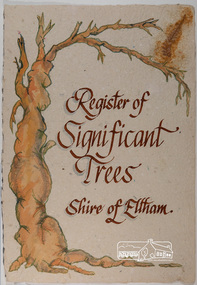
Work on paper - Folio, Register of Significant Trees, Shire of Eltham, c.1993
... arthurs creek road, blue gum (eucalyptus globulus), canary island pine (pinus canariensis), couties road, donaldsons oak, donaldsons road, eltham, english oak (quercus robur), eucalyptus melliodora, graysharps road, hurst tree, hurstbridge, ironbark (eucalyptus tricarpa), ironbark hill, kangaroo ground, kangaroo ground-kinglake road, laughing waters road, panton hill hotel, panton hill, parsons road, significant trees register, sonia van bodegraven, sonjart, stone pine (pinus pinea). atlantic cedar (cedrus atlantica), wippells oak, yellow box gum (eucalyptus melliodora), yellow box gum...This now misshapen tree is located on the St. Andrews Road near the Kangaroo Ground Fire Station. ...This now misshapen tree is located on the St. Andrews Road near the Kangaroo Ground Fire Station. ...In 1983, the National Trust advised the Shire of Eltham that it was investigating a number of trees within the shire which had been nominated for recording the Register of Significant Trees of Victoria. The trees involved were described in the Shire of Eltham Historical Society Newsletter No. 29, March 1983 as follows:- 1. Eucalyptus melliadora (Yellow box) . a) An outstanding mature specimen 42 metres high in Laughing Waters Road, Eltham. b) Another mature specimen in Arthurs Creek road, Hurstbridge is reported to be the tree under which the bushranger Robert Bourke was tied after he shot and killed Henry Hurst in 1866 . 2. Quercus robur (English Oak). a) "Donaldson's Oak", Donaldsons Road, Kangaroo Ground was planted by John Donaldson from seed collected from Windsor Great Park in 1878. b) "Wippells Oak". This now misshapen tree is located on the St. Andrews Road near the Kangaroo Ground Fire Station. Its origins may have been similar to Donaldson's Oak, and as a young tree it apparently slipped from higher up the hill during wet weather. Both oaks are of local historical importance. 3. Eucalyptus globulus (Blue Gum). A large mature specimen at the corner of the Kangaroo Ground-St. Andrews Road and Bakehouse Road, Panton Hill. 4. Plantanas acerifolia (Plane tree) A number of trees forming the Avenue of Honour to Eltham's First World War soldiers along Main Road between Dalton and Pitt Streets, Eltham. 5. Pinus canariensis (Canary Island Pine), Pinus pinea, (Stone pine) and Cedras altlantica, (Cedar) These trees are located at the Hurst family graves in the grounds of the Hurstbridge Pre-school Centre. In 1991 the Shire of Eltham introduced controls into its planning scheme to protect sites of architectural, historic or conservation interest and significant trees. The controls were approved by the Minister for Planning and Housing. As advised in the Shire of Eltham Historical Society Newsletter No. 78, May 1991, a planning permit is required to demolish or alter any listed building or to destroy, lop or remove any listed tree. Provision is made for comments to be obtained from the National Trust or Historic Buildings Council in considering any applications. The buildings and trees listed were: Buildings: 250 Bolton Street Eltham (former Walter Withers home) "Rosehill" - Bonds Road Lower Plenty St Andrews Church of England - St Andrews "Montsalvat" - Hillcrest Avenue Eltham St Margarets Church and former vicarage - Pitt Street Eltham Presbyterian Church - Kangaroo Ground Parks and Environment Office (former police quarters) Main Road Eltham Former Court House - Main Road Eltham "Shillinglaw Cottage" - Main Road Eltham "The Robins" - Kangaroo Ground Road Warrandyte Trees: "Donaldsons Oak" - Donaldsons Road Kangaroo Ground Yellow Box - Laughing Waters Road Eltham Yellow Box - Arthurs Creek Road Hurstbridge Wippells Oak - St Andrews Road Kanqaroo Road Pines and Cedar - Hurst family cemetery Greysharps Road Hurstbridge Yellow Box - Parsons Road Eltham A large Blue Gum at Panton Hill has been listed but has recently died (1991). In 1993 work by Council Parks and Environment staff and volunteers resulted in the preparation of a Significant Tree Register listing forty-one trees or groups of trees. According to Shire of Eltham Historical Society Newsletter No. 91, March 1993, a similar number remained to be assessed for inclusion in the register. There is a wide range of indigenous and planted trees on private and public land and extending through the Shire of Eltham from Lower Plenty to Kinglake. Most can be viewed from publicly accessible locations. The Significant Tree Register lists 41 trees or groups of trees throughout the Shire. It contains a wide range of naturally occurring and planted trees. They have been assessed according to eleven criteria including size, age, rarity, historical value and the like. The list includes large old Red Gums at Lower Plenty, historic Oaks at Kangaroo Ground and Mountain Ash at Kinglake. The register includes a set of slides showing each tree. Garry Bartlett of the Council's Parks and Environment Section and Faye Shepherd were extensively involved in establishment of the register (Newsletter No. 93, November 1993). In 1999 Niliumbik planners prepared an amendment to the Planning Scheme to provide protection for approximately 200 of the places listed in the heritage studies and also in the Significant Tree Register commenced by the Eltham Council (Eltham District Historical Society Newsletter No. 127, July 1999. In 2004, The Register of Significant Trees was presented to the Eltham District Historical Society by Nillumbik Shire Council as part of a wider collection of of its memorabilia of the former Eltham Shire Council (EDHS Newsletter No. 159, July 2004. Album of loose handmade paper sheets contained within a handmade slip cover constructed of handcrafted card with encapsulated flora material (flowers, vines, ferns) and tinted. Each page also contains an embedded/adhered fern leaf also tinted with lacqueur or similar, text as appropriate in ink by hand calligraphy. Each page also has a white protective sheet cut to size and adhered to back surface with sticky tape and folded over face of page. Pages variously have photographs and coloured masks adhered with a gum resin. Over time much of this resin has let go and photos/masks have been reattached using acid free archival safe adhesive. 15 pages 41 x 29 cm inclusive of 3 blank pages. Slip case 42 x 30 x 1 cm; face cover of slip case has broken off at left hand margin as insufficient depth/flexibility for contents.arthurs creek road, blue gum (eucalyptus globulus), canary island pine (pinus canariensis), couties road, donaldsons oak, donaldsons road, eltham, english oak (quercus robur), eucalyptus melliodora, graysharps road, hurst tree, hurstbridge, ironbark (eucalyptus tricarpa), ironbark hill, kangaroo ground, kangaroo ground-kinglake road, laughing waters road, panton hill hotel, panton hill, parsons road, significant trees register, sonia van bodegraven, sonjart, stone pine (pinus pinea). atlantic cedar (cedrus atlantica), wippells oak, yellow box gum (eucalyptus melliodora), yellow box gum -
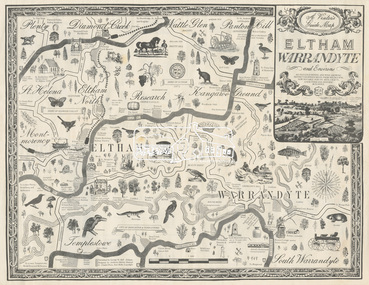 Eltham District Historical Society Inc
Map, George W. Bell, A Visitor's Guide Map; ELTHAM, WARRANDYTE and Environs, c.1969
... Research Inglenook, Warrandyte La Ronde, Eltham The Barrel, Research The Potters Restaurant, Warrandyte Setel Downs, Kangaroo Ground GALLERIES Hassall's Gallery, Research Lodge Gallery, Warrandyte The Bird Gallery, Eltham Royalat Gallery, Panton Hill PLANTYS, TREES AND SHRUBS Danson's Gardens, Research Dean's Orchids & Dahlias, Templestowe Diamond Vlley Trees & Shrubs, Warrandyte Jum Jum, Diamond Creek Parson's, Research Tantoon, Eltham Warran Glen, Warrandyte...Research Inglenook, Warrandyte La Ronde, Eltham The Barrel, Research The Potters Restaurant, Warrandyte Setel Downs, Kangaroo Ground GALLERIES Hassall's Gallery, Research Lodge Gallery, Warrandyte The Bird Gallery, Eltham Royalat Gallery, Panton Hill PLANTYS, TREES AND SHRUBS Danson's Gardens, Research Dean's Orchids & Dahlias, Templestowe Diamond Vlley Trees & Shrubs, Warrandyte Jum Jum, Diamond Creek Parson's, Research Tantoon, Eltham Warran Glen, Warrandyte eltham warrandyte map country art store diamond creek handicrafts eltham crafts john mills potters cottage setel downs the claypot warrandyte quarries and pottery alfred's homestead geranium parlour inglenook la ronde the barrel the potters restaurant hassall's gallery lodge gallery the bird gallery royalat gallery danson's gardens dean's orchids & dahlias diamond vlley trees & shrubs jum jum parson's tantoon warran glen advertising eltham barrel 44..8 x 57.5 cm (Two copies) On the reverse side (of one copy only) is printed in 8 panels (3 half-folds) advertising A Visitor's Guide Map; ELTHAM, WARRANDYTE and Environs Map Map George W. ...Commissioned by George W. Bell, designed by Anthony Harvey. An old gold mining and wine growing district eighteen miles from Melbourne, now notable for its arts, crafts, good food and historic buildings. On the reverse side (of one copy only) is printed in 8 panels (3 half-folds) advertising for Montsalvat, Eltham; Setel Downs Coffee Kitchen Art Gallery, Kangaroo Ground; Country Art Store, Eltham; Alfred's Homestead, Warrandyte; Neville F Emmerson Estate Agent, Lower Plenty; Eltham Crafts. Monstsalvat, Eltham; Tantoon native plants and culinary herbs, Eltham; Flavour of Eltham, Shillinglaw Coattage Preservation Society; The Eltham Barrel; Potters Cottage, Warrandyte. In addition is provided by cateogory listing: POTTERY AND CRAFTS Country Art Store, Eltham Diamond Creek Handicrafts, Diamond Creek Eltham Crafts, Eltham John Mills, Eltham Potters Cottage, Warrandyte Setel Downs, Kangaroo Ground The Claypot, Warrandyte Warrandyte Quarries and Pottery, Warrandyte GOOD FOOD AND DRINK Alfred's Homestead, Warrandyte Geranium Parlour,. Research Inglenook, Warrandyte La Ronde, Eltham The Barrel, Research The Potters Restaurant, Warrandyte Setel Downs, Kangaroo Ground GALLERIES Hassall's Gallery, Research Lodge Gallery, Warrandyte The Bird Gallery, Eltham Royalat Gallery, Panton Hill PLANTYS, TREES AND SHRUBS Danson's Gardens, Research Dean's Orchids & Dahlias, Templestowe Diamond Vlley Trees & Shrubs, Warrandyte Jum Jum, Diamond Creek Parson's, Research Tantoon, Eltham Warran Glen, Warrandyte44..8 x 57.5 cm (Two copies) On the reverse side (of one copy only) is printed in 8 panels (3 half-folds) advertisingeltham, warrandyte, map, country art store, diamond creek handicrafts, eltham crafts, john mills, potters cottage, setel downs, the claypot, warrandyte quarries and pottery, alfred's homestead, geranium parlour, inglenook, la ronde, the barrel, the potters restaurant, hassall's gallery, lodge gallery, the bird gallery, royalat gallery, danson's gardens, dean's orchids & dahlias, diamond vlley trees & shrubs, jum jum, parson's, tantoon, warran glen, advertising, eltham barrel -
Eltham District Historical Society Inc
Document - Folder, Spicer, Whatmough, Chapman, Pill, Moreland families
... Kangaroo Ground Presbyterian Ladies Guild...Senior Citizens Hurstbridge...Panton Hill Fire Station...Robert Whatmough...Robert Cook...Emmet Whatmough...Lamplighter in Melbourne...John Batman...Batman apple tree...Florence Spicer Cottlesbridge Kangaroo Ground Panton Hill St Andrews Victoria Nillumbik Historical Society Eltham District Historical Society Allwood House Hurstbridge John Pill Jessie Pill nee Whatmough Ted Pill Florence Pill Cottlesbridge post office Charles Spicer St Andrews Primary School Ladies Guild Panton Hill Anglican Church Kangaroo Ground Presbyterian Ladies Guild Senior Citizens Hurstbridge Panton Hill Fire Station Robert Whatmough Robert Cook Emmet Whatmough Lamplighter in Melbourne John Batman Batman apple tree Greensborough Diamond Hill Estate Phoebe Chapman Whatmough Park Greensborough Jessie Whatmough Edwin Pill Ada Moreland Martha Burgess Mary McMurray St James Church Melbourne George Wright of Westernport William Spicer Margaret Spicer George Spicer Maryanne Spicer Sarah Spicer Mary Spicer John Spicer Alexander Humphrey Spicer Clara Spicer Samson Spicer Martha Spicer John Henry Spicer Arthurs Creek Cemetery David Clark school master Little Eltham School William McMurray Sarah McMurray Newspaper clippings, A4 photocopies, etc Spicer, Whatmough, Chapman, Pill, Moreland families Document Folder ...Florence Spicer was born in Cottlesbridge and lived in the area all her life. Her ancestors included Robert Whatmough, Phoebe Chapman, John Pill, and Ada Moreland; she married Charles Spicer. Contents Transcribed and MS notes by Florence Spicer, undated: Spicer/Whatmough/Chapman/Pill/Moreland ancestry. MS notes, undated: Humphrey Spicer. MS notes, undated: Humphrey Spicer with list of children. Newspaper article: "Her 70 years in Cottlesbridge", Diamond Valley News, 4 April 1989. Florence Spicer's family history and current life. Newspaper clippings, A4 photocopies, etcflorence spicer, cottlesbridge, kangaroo ground, panton hill, st andrews victoria, nillumbik historical society, eltham district historical society, allwood house hurstbridge, john pill, jessie pill nee whatmough, ted pill, florence pill, cottlesbridge post office, charles spicer, st andrews primary school, ladies guild panton hill anglican church, kangaroo ground presbyterian ladies guild, senior citizens hurstbridge, panton hill fire station, robert whatmough, robert cook, emmet whatmough, lamplighter in melbourne, john batman, batman apple tree greensborough, diamond hill estate, phoebe chapman, whatmough park greensborough, jessie whatmough, edwin pill, ada moreland, martha burgess, mary mcmurray, st james church melbourne, george wright of westernport, william spicer, margaret spicer, george spicer, maryanne spicer, sarah spicer, mary spicer, john spicer, alexander humphrey spicer, clara spicer, samson spicer, martha spicer, john henry spicer, arthurs creek cemetery, david clark school master, little eltham school, william mcmurray, sarah mcmurray -
Eltham District Historical Society Inc
Document - Folder, Stevenson, Joseph
... Kangaroo Ground". Handwritten extracts from "Pioneers and Painters" by Alan Marshall, relevant to Joseph Stevenson. Handwritten extracts from "Pastoral Pioneers of Port Phillip"by R V Bills and A S Kenyon, relevant to Joseph Stevenson. Photocopy of photographs: Stevenson daughters; a stevenson daughter with baby; Joseph Stevenson. Handwritten Stevenson family tree...Kangaroo Ground". Handwritten extracts from "Pioneers and Painters" by Alan Marshall, relevant to Joseph Stevenson. Handwritten extracts from "Pastoral Pioneers of Port Phillip"by R V Bills and A S Kenyon, relevant to Joseph Stevenson. Photocopy of photographs: Stevenson daughters; a stevenson daughter with baby; Joseph Stevenson. Handwritten Stevenson family tree ...Joseph Stevenson came to Australia in 1837, eventually settling near Kangaroo Ground. He was active in local affairs.. Contents Handwritten and typed notes by Winifred Joy Ness, 1985, "Joseph Stevenson of Kangaroo Ground". Handwritten extracts from "Pioneers and Painters" by Alan Marshall, relevant to Joseph Stevenson. Handwritten extracts from "Pastoral Pioneers of Port Phillip"by R V Bills and A S Kenyon, relevant to Joseph Stevenson. Photocopy of photographs: Stevenson daughters; a stevenson daughter with baby; Joseph Stevenson. Handwritten Stevenson family tree (on 2 sheets). Photocopy of photograph: Robert Stevenson and family, "Bankhead", Kangaroo Ground (ref 423). Photocopy of two prints/paintings, annotated on reverse (information from R B Ness: Punt over Yarra River at Melbourne which Joseph Stevenson helped build, from "History of South Melbourne", published 1930s; First bridge over Yarra at Melbourne which Joseph Stevenson helped build. Photocopy of Death Certificate: Joseph Stevenson, 1 November 1878. Photocopy of Death Certificate: Ruth Sevenson, 1 November 1868. Photocopy of Marriage Certificate: names illegible 16 November 1868 Photocopy of extract of Marriage Certificate: Joseph Stephenson and Ruth Boyd, 14 June 1837. Newspaper article: "Resting in peace", Diamond Valley News, 23 March 1982. Judith Furphy and early Kangaroo Ground families buried in Kangaroo Ground Cemetery. Newspaper article: "Grounds for celebration", Diamond Valley Leader, 23 November 2005. Lynette Beale traced her ancestor Joseph Stevenson to Kangaroo Ground. Letter Diana Bassett-Smith to EDHS, 10 August 2005. Donation of a moulding plane marked Joseph Stephenson, property of descendants.Newspaper clippings, A4 photocopies, etcjoseph stevenson, ship willington 1837, ruth stevenson nee boyd, david stevenson, jane stevenson, kirk's bazaar, first punt across yarra river, princes bridge melbourne, stevenson street melbourne, saltwater creek, river plenty, christmas hills, david christmas, diamond creek, isabella stevenson, robert stevenson, five mill creek, watson's creek, "bankhead" kangaroo ground, ellen stevenson, yarra glen road, yarra glen cemetery, stevenson's corner kangaroo ground, stevenson's creek, presbyterian church kangaroo ground, eltham district road board, margaret stevenson, ruth stevenson, emma stevenson nee peers, margaret hargreaves nee stephenson, robert peers, cyrus peers, charlotte peers, jane mess nee stevenson, robert mess, pearl mess nee mills, james mess, george mess, janet mess, joseph mess, william mess, alexander mess, barbara mess, isabella mess, ruth gosling nee mess, john gosling, jessie gosling, evelyn sinclair nee gosling, william gosling, vera rowland nee gosling, florrie rawland, ethel rawland, john rawland, isobel gilson nee mess, bruce mess, joy mess nee masefield, janet crook nee mess, rodney crook, judith rodgers nee mess, ray rodgers, dean crook, jenine crooks, carolyn rodgers, merryn rodgers, beryl nansen nee mess, robert nansen, gerry oliming, roberta oliming nee nansen, bernard nansen, michele nansen nee blackie, rohan nansen, janet nansen nee britton, vera cope nee mess, cliff cope, graeme cope, louise cope nee thimpton, shannon cope, lucas cope, peter cope, marilyn cope nee turnley, oliver cope, sarah cope, kelvin cope, donald mess, joan mess, geoffrey mess, peter mess, rosemary mess, kerrie mess, isobel gibson nee mess, ellen stevenson nee armstrong, james stevenson, john stevenson, elizabeth stevenson, joanna stevenson, ellen little nee stevenson, william little, francis little, janet little nee armstrong, ruth lorimer nee little, david lorimer, ruth cameron nee lorimer, francis lorimer, val wade, elizabeth lorimer, david kelso, willaim lorimer, jean lorimer nee hewitt, nancy mitson nee lorimer, stan mitson, john hewitt, alison hewitt, john cameron, beryl ryan nee cameron, robert cameron, maryann ryan, peter ryan, margaret ryan, steven wade, andrew wade, jonathan wade, jennifer wade, ruth sadlernee stevenson, thomas sadler, alexander sadler, isabella booth nee sadler, angus sadler, heather sadler, ruth sadler, andrew sadler, nancy sadler, benjamin sadler, robert sadler, alice sadler nee smith, margaret smith, david sadler, anne mcclusky nee sadler, hope sadler, anne carson nee sadler, ruth edwards nee carson, david carson, joseph sadler, isabella bond nee sadler, ian bond, ruth bond, isabella bond, john sadler, thoas sadler, mary sadler nee stewart, stewart sadler, keith sadler, glen sadler, peter sadler, terry sadler, pamela sadler, armstrong family kangaroo ground, bell family kangaroo ground, rogerson family kangaroo ground, barr family kangaroo ground, harkness family kangaroo ground, jardin family kangaroo ground, thompson family kangaroo ground, johnson family kangaroo ground, walters family kangaroo ground, sir ewen camerson, flora margaret cameron, ewen cameron, sir ewan camerson, sir herbert gepp, "garden hill" yarra glen road, andrew moss museum kangaroo ground, lynette beale, noel beale, mick woiwod, diana bassett-smith
