
Showing 712 items matching "trees on farms"
-
 Wodonga & District Historical Society Inc
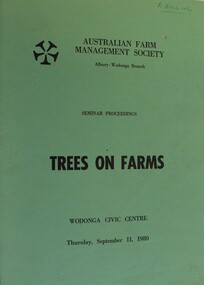
Book - Trees on Farms, Australian Farm Management Society, September 1980
... Trees on Farms...Trees on Farms...Trees on Farms...Topics include the Victorian Farm Forestry Loan Scheme, a Farmer's experience in growing and processing pines, and local outlets and future prospects for timber in Australia. Trees on Farms Book Trees on Farms Australian Farm Management Society ...This publication documents the proceedings of a conference held by the Australian Farm Management Societyat Wodonga CIvic Centre on September 11, 1980. It focussed on economic and technical aspects of commercial plantations, agro-forestry and shelter belts on farms. Topics include the Victorian Farm Forestry Loan Scheme, a Farmer's experience in growing and processing pines, and local outlets and future prospects for timber in Australia.non-fictionThis publication documents the proceedings of a conference held by the Australian Farm Management Societyat Wodonga CIvic Centre on September 11, 1980. It focussed on economic and technical aspects of commercial plantations, agro-forestry and shelter belts on farms. Topics include the Victorian Farm Forestry Loan Scheme, a Farmer's experience in growing and processing pines, and local outlets and future prospects for timber in Australia.trees on farms, victorian farm forestry, agroforesty australia -
 Tatura Irrigation & Wartime Camps Museum
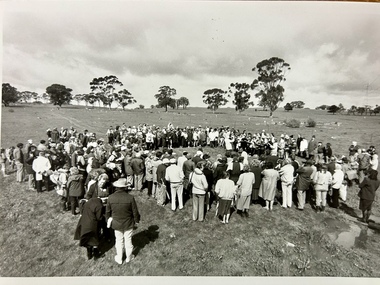
Photograph, Templers Return to Camp 3 1991, 21 September 1991
... The rolling hills, gum trees and farm fences. Have restored the site to its pre camp 3 days as former internees renew remembrances....The rolling hills, gum trees and farm fences. Have restored the site to its pre camp 3 days as former internees renew remembrances. ...50th Templer Society reunion.Black and white photograph with the Templers and descendants return to Camp 3, 21 September 1991. The rolling hills, gum trees and farm fences. Have restored the site to its pre camp 3 days as former internees renew remembrances.templer society, german templer society, templer society reunion -
 Mt Dandenong & District Historical Society Inc.
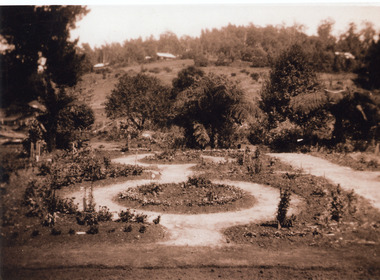
Photograph, The New Garden Mountain Grange Kalorama 1931, 1931
... On the right there is a house among the trees. Possibly Cherry Farm....On the right there is a house among the trees. Possibly Cherry Farm. The New Garden Mountain Grange Kalorama 1931 Photograph ...Garden with circular paths and the side of the hill in background. On the right there is a house among the trees. Possibly Cherry Farm.mountain grange -
 Orbost & District Historical Society
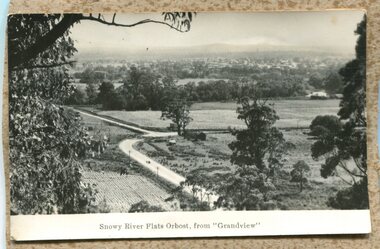
Photograph - Postcards - Orbost, Rose series, c. 1920s-50s
... Three b/w photographs/postcards of Orbost. 2702.1 photo of a river and a bridge. 2702.2 rural scene taken from an elevation, showing roads, trees, paddocks, farm buildings. 2702.3 a rural scene taken from an elevation, showing a river winding through hills and mountains....Three b/w photographs/postcards of Orbost. 2702.1 photo of a river and a bridge. 2702.2 rural scene taken from an elevation, showing roads, trees, paddocks, farm buildings. 2702.3 a rural scene taken from an elevation, showing a river winding through hills and mountains. ...These three b/w photographs/postcards were originally installed on a backing board and hung in the kitchen/dining room of Orbost House which was a well-known guest-house in Orbost. They were used in a display to give information about the district to guests and staff. These three photographs are significant because they not only show aspect of Orbost from c.1920s - c.1950s but were installed in one of the guests houses known as Orbost House.Three b/w photographs/postcards of Orbost. 2702.1 photo of a river and a bridge. 2702.2 rural scene taken from an elevation, showing roads, trees, paddocks, farm buildings. 2702.3 a rural scene taken from an elevation, showing a river winding through hills and mountains.2702.1 Snowy River and Bridge, Orbost has been printed in white onto the bottom of the photograph. 2702.2 Snowy River Flats, Orbost from "Grandview" printed on bottom of photograph. 2702.3 the Rose Series P2711 copyright. The Snowy River near Orbost, Victoria printed on bottom of photograph.orbost, snowy river -
 Whitehorse Historical Society Inc.
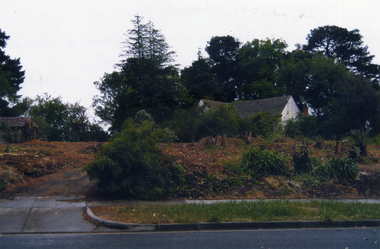
Photograph, Highland Avenue Mitcham, No.38
... cherry tree farm...This is the last piece of land that was originally part of Cherry Tree Farm...cherry tree farm mitcham highland avenue no.38 farming Three coloured photographs of the clearing of 38 Highland Avenue, Mitcham in 2006. ...Three coloured photographs of the clearing of 38 Highland Avenue, Mitcham in 2006. This is the last piece of land that was originally part of Cherry Tree Farmcherry tree farm, mitcham, highland avenue, no.38, farming -
 Harcourt Valley Heritage & Tourist Centre
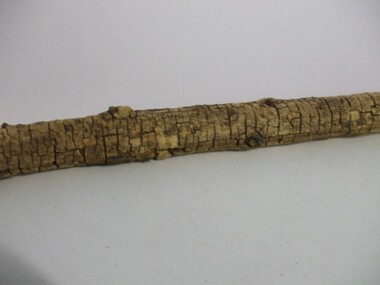
Mulberry Tree Branch, 1874
... A dead branch from a mulberry tree grown at Sericulture Farm, Mt Alexander, in the early 1870s. ...Typed: "Part of a limb of a mulberry tree from the Sericulture Farm on Mt Alexander which was started by Mrs Bladen-Neill in early 1870s, finally closing in 1878. ...Typed: "Part of a limb of a mulberry tree from the Sericulture Farm on Mt Alexander which was started by Mrs Bladen-Neill in early 1870s, finally closing in 1878. ...An unsuccessful attempt was made to set up a silkworm industry at Mt Alexander, to be an occupation for ladies of the district as well as to introduce the silk industry to Victoria. An attempt by women to enter the business world was beaten by difficulties: (1). Road access to the property (2). Heavy frost damage to mulberry plants. (3). Disease of silkworms. (4). Lack of quantity of leaves. (5) drought and rabbits. Experiments proved silk harvested and woven was superior to overseas products, but the venture was defeated by the climate and the surviving trees were relocated to Corowa NSWA relic of the far-sighted venture by the Victorian Ladies Sericulture Co, promoted by the charismatic Mrs Bladen Neill , who was anxious to generate employment opportunities for women..A dead branch from a mulberry tree grown at Sericulture Farm, Mt Alexander, in the early 1870s. This long limb's bark has cracked with age, forming a pattern of brown cracks. Remnants of smaller branch axilla are clearly visible. An inscription on paper is pasted around the branch L 74 x W 14 x D 3.5Typed: "Part of a limb of a mulberry tree from the Sericulture Farm on Mt Alexander which was started by Mrs Bladen-Neill in early 1870s, finally closing in 1878. Mrs Bladen-Neill died in September 1884 at the residence of Dr Barker, Melbourne" "Courtesy of Keith Henderson, Harcourt" -
 Tatura Irrigation & Wartime Camps Museum
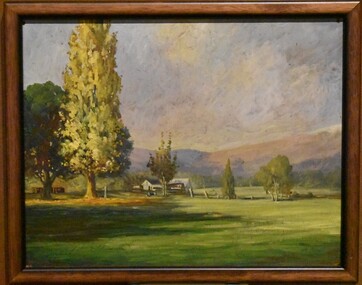
Artwork, other - Painting, Farm Scene
... Oil painting on Board (framed) - painting is of a farm scene with a large yellow-green tree in the centre-left with four other green trees and a farm and fence - in the background are hills against the skyline...(One of a pair C3505) DONOR: Otto Lobert, Nov. 1993' Oil painting on Board (framed) - painting is of a farm scene with a large yellow-green tree in the centre-left with four other green trees and a farm and fence - in the background are hills against the skyline Farm Scene Artwork, other Painting ...This artwork was painted by Charlotte Rippert who was interned in Camp 3 with her whole family. The painting was painted in camp. Charlotte Rippert was a German Lutheran Missionary in Egypt, arrested as a security risk in Cairo, 1941. Transported on Queen Elizabeth to Australia and interned at Camp 3 1941-1945.Oil painting on Board (framed) - painting is of a farm scene with a large yellow-green tree in the centre-left with four other green trees and a farm and fence - in the background are hills against the skylineBack: 'Oil painting believed to be by Charlotte Rippert. Wedding gift to Otto Lobert in Camp 3, WW2. (One of a pair C3505) DONOR: Otto Lobert, Nov. 1993' charlotte rippert, otto lobert, mrs lobert, camp 3 weddings, queen elizabeth, camp 3 artwork -
 Lakes Entrance Historical Society
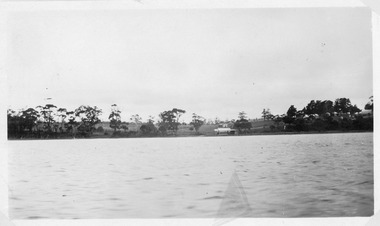
Photograph - Lake Tyers Aboriginal Station, Lake Tyers Victoria 1925, 1925
... The buildings of the settlement are seen through the pine trees, and cleared farm land behind trees at the shoreline. ...The buildings of the settlement are seen through the pine trees, and cleared farm land behind trees at the shoreline. ...Black and white photograph of a view of Lake Tyers Aboriginal Station, taken from across the lake. The buildings of the settlement are seen through the pine trees, and cleared farm land behind trees at the shoreline. Lake Tyers Victoriaaboriginals, waterways, vegetation, buildings -
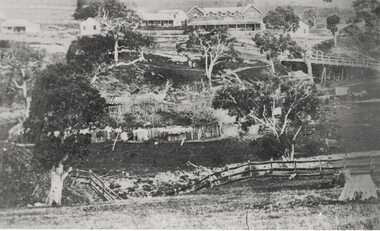 Linton and District Historical Society Inc
Photograph, Early Pitfield, Showing Bridge, Store and Hotel
... Small black and white copy of original photograph which shows trees, fencing and farm buildings in foreground, and in the background a large stone or brick building plus smaller timber buildings (dwellings?) ...Small black and white copy of original photograph which shows trees, fencing and farm buildings in foreground, and in the background a large stone or brick building plus smaller timber buildings (dwellings?) ...Identified by inscription on the back of the photograph as "Early Pitfield", and the buildings as "Matthew Hamilton Baird's . . . hotel & store". Information from Joan Hunt (see 'Pitfield/Kaleno' file) says the Emu Inn or Pitfield Hotel was at Pitfield/Wardy Yallock township on the road from Skipton to Geelong. Part of this area - foreground, to the left, was called "Buncle's Flat", named after John Buncle, a carpenter who lived in a cottage there with his family. An early timber inn on the Wardy Yallock Creek was owned first by Peter Hardie and then by Edward Langhorne/John McNamara in the 1840s and a mail run from Geelong was established to it in 1846. Matthew Hamilton Baird was the lessee or owner from 1852, and Benjamin Fernald from about 1860. In 1853, the nearby store, at that time owned by William Whitecross, caught fire. The fire spread to the hotel and both buildings were destroyed. The hotel was replaced by the brick or stone building seen in the photograph.Small black and white copy of original photograph which shows trees, fencing and farm buildings in foreground, and in the background a large stone or brick building plus smaller timber buildings (dwellings?) situated along a roadway. On the right of the photograph the road goes over a large bridge of timber construction.On back of photograph: "Early Pitfield showing Matthew Hamilton Baird's store & hotel & store".pitfield bridge, pitfield hotel, pitfield township, buncle's flat, emu inn, buildings, hotels, matthew hamilton baird, benjamin fernald, edward langhorne, john mcnamara, william whitecross, 'old pitfield' -
 University of Melbourne, Burnley Campus Archives
Nursery catalogues, Beaver Lodge Nursery, Nursery Catalogues: booklets & foolscap sheets, 1937-1982
... ...ronneby tree farm...Nursery catalogues from: Beaver Lodge Nursery; Camellia Lodge Nursery; Cowley Nurseries; Natural Resources Conservation League Victoria; Forests Commission of Victoria: Wimmera Forest Nursery; FCV :Macedon and Creswick; Gembrook Nurseries; Rumsey's Annual for 1937; Ronneby Tree Farm; Revised Nomenclature of commonly grown plants based on Hodgins Nurseries......Ronnaby Tree Farm...nurseries plant nomenclature beaver lodge nurseries camellia lodge nursery cowley nurseries natural resources conservation league of victoria forests commission of victoria hodgins nurseries gembrook nurseries rumseys annual ronneby tree farm e b littlejohn catalogues Nursery catalogues from: Beaver Lodge Nursery; Camellia Lodge Nursery; Cowley Nurseries; Natural Resources Conservation League Victoria; Forests Commission of Victoria: Wimmera Forest Nursery; FCV :Macedon and Creswick; Gembrook Nurseries; Rumsey's Annual for 1937; Ronneby Tree Farm; Revised Nomenclature of commonly grown plants based on Hodgins Nurseries Nursery Catalogues: booklets & foolscap sheets Nursery catalogues Beaver Lodge Nursery Camellia Lodge Nursery Cowley Nurseries Natural Resources Conservation League of Victoria Forests Commission Victoria gembrook nurseries Rumsey's Annual Ronnaby Tree Farm ...nurseries, plant nomenclature, beaver lodge nurseries, camellia lodge nursery, cowley nurseries, natural resources conservation league of victoria, forests commission of victoria, hodgins nurseries, gembrook nurseries rumseys annual, ronneby tree farm, e b littlejohn, catalogues -
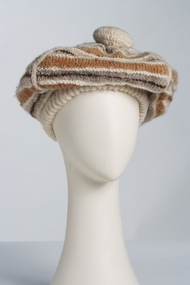 National Wool Museum
Beret
... She began working with unspun wool and making dyes from the natural sources from her garden and the farm trees around her. From knitting and croceting articles, she progressed to felting and a 'wrapping' technique, always using unspun wool. ...She began working with unspun wool and making dyes from the natural sources from her garden and the farm trees around her. From knitting and croceting articles, she progressed to felting and a 'wrapping' technique, always using unspun wool. ...Knitting by Joyce Hucker. She began working with unspun wool and making dyes from the natural sources from her garden and the farm trees around her. From knitting and croceting articles, she progressed to felting and a 'wrapping' technique, always using unspun wool. She was a successful exhibitor at many craft shows and was always willing to pass on her experience and knowledge to others, often travelling widely to help groups requiring a demonstration.Knitting by Joyce Hucker.knitting, hucker, mrs joyce -
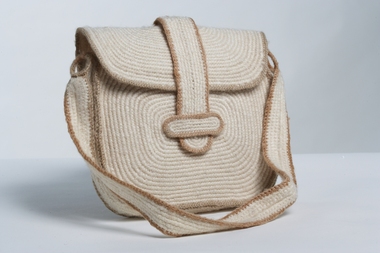 National Wool Museum
Bag, Costume
... Hucker began working with unspun wool and making dyes from the natural sources from her garden and the farm trees around her. From knitting and croceting articles, she progressed to felting and a 'wrapping' technique, always using unspun wool. ...Hucker began working with unspun wool and making dyes from the natural sources from her garden and the farm trees around her. From knitting and croceting articles, she progressed to felting and a 'wrapping' technique, always using unspun wool. ...Crochet example by Joyce Hucker. Hucker began working with unspun wool and making dyes from the natural sources from her garden and the farm trees around her. From knitting and croceting articles, she progressed to felting and a 'wrapping' technique, always using unspun wool. She was a successful exhibitor at many craft shows and was always willing to pass on her experience and knowledge to others, often travelling widely to help groups requiring a demonstration.Crochet example by Joyce Hucker.crochet, hucker, mrs joyce -
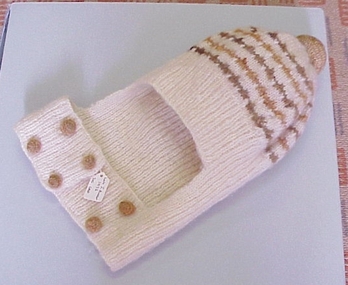 National Wool Museum
Balaclava
... Hucker began working with unspun wool and making dyes from the natural sources from her garden and the farm trees around her. From knitting and croceting articles, she progressed to felting and a 'wrapping' technique, always using unspun wool. ...Hucker began working with unspun wool and making dyes from the natural sources from her garden and the farm trees around her. From knitting and croceting articles, she progressed to felting and a 'wrapping' technique, always using unspun wool. ...Knitting example by Joyce Hucker. Hucker began working with unspun wool and making dyes from the natural sources from her garden and the farm trees around her. From knitting and croceting articles, she progressed to felting and a 'wrapping' technique, always using unspun wool. She was a successful exhibitor at many craft shows and was always willing to pass on her experience and knowledge to others, often travelling widely to help groups requiring a demonstration.Knitting example by Joyce Hucker.Late J. Hucker 1972 Ski Capknitting, hucker, mrs joyce -
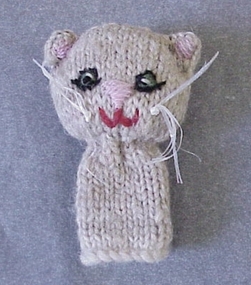 National Wool Museum
Puppet
... Hucker began working with unspun wool and making dyes from the natural sources from her garden and the farm trees around her. From knitting and croceting articles, she progressed to felting and a 'wrapping' technique, always using unspun wool. ...Hucker began working with unspun wool and making dyes from the natural sources from her garden and the farm trees around her. From knitting and croceting articles, she progressed to felting and a 'wrapping' technique, always using unspun wool. ...Knitting example by Joye Hucker. Hucker began working with unspun wool and making dyes from the natural sources from her garden and the farm trees around her. From knitting and croceting articles, she progressed to felting and a 'wrapping' technique, always using unspun wool. She was a successful exhibitor at many craft shows and was always willing to pass on her experience and knowledge to others, often travelling widely to help groups requiring a demonstration.Knitting example by Joye Hucker.knitting, hucker, mrs joyce -
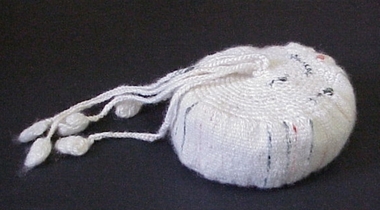 National Wool Museum
Hat
... Hucker began working with unspun wool and making dyes from the natural sources from her garden and the farm trees around her. From knitting and croceting articles, she progressed to felting and a 'wrapping' technique, always using unspun wool. ...Hucker began working with unspun wool and making dyes from the natural sources from her garden and the farm trees around her. From knitting and croceting articles, she progressed to felting and a 'wrapping' technique, always using unspun wool. ...Crocheted example by Joyce Hucker. Hucker began working with unspun wool and making dyes from the natural sources from her garden and the farm trees around her. From knitting and croceting articles, she progressed to felting and a 'wrapping' technique, always using unspun wool. She was a successful exhibitor at many craft shows and was always willing to pass on her experience and knowledge to others, often travelling widely to help groups requiring a demonstration.Crocheted example by Joyce Hucker.crochet, hucker, mrs joyce -
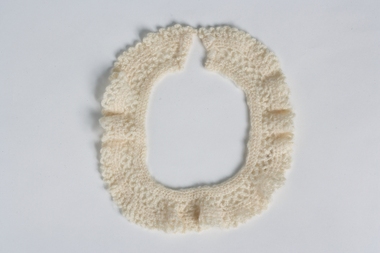 National Wool Museum
Collar
... Hucker began working with unspun wool and making dyes from the natural sources from her garden and the farm trees around her. From knitting and crocheting articles, she progressed to felting and a 'wrapping' technique, always using unspun wool. ...Hucker began working with unspun wool and making dyes from the natural sources from her garden and the farm trees around her. From knitting and crocheting articles, she progressed to felting and a 'wrapping' technique, always using unspun wool. ...Crocheted example by Joyce Hucker. Hucker began working with unspun wool and making dyes from the natural sources from her garden and the farm trees around her. From knitting and crocheting articles, she progressed to felting and a 'wrapping' technique, always using unspun wool. She was a successful exhibitor at many craft shows and was always willing to pass on her experience and knowledge to others, often travelling widely to help groups requiring a demonstration.Crocheted example by Joyce Hucker.N.F.S. samplecrochet, hucker, mrs joyce -
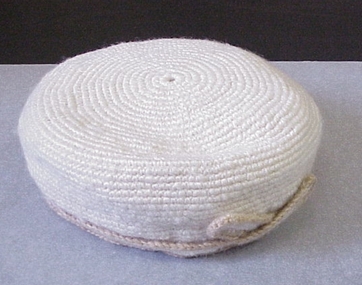 National Wool Museum
Hat
... Hucker began working with unspun wool and making dyes from the natural sources from her garden and the farm trees around her. From knitting and croceting articles, she progressed to felting and a 'wrapping' technique, always using unspun wool. ...Hucker began working with unspun wool and making dyes from the natural sources from her garden and the farm trees around her. From knitting and croceting articles, she progressed to felting and a 'wrapping' technique, always using unspun wool. ...Crocheted example by Joyce Hucker. Hucker began working with unspun wool and making dyes from the natural sources from her garden and the farm trees around her. From knitting and croceting articles, she progressed to felting and a 'wrapping' technique, always using unspun wool. She was a successful exhibitor at many craft shows and was always willing to pass on her experience and knowledge to others, often travelling widely to help groups requiring a demonstration.Crocheted example by Joyce Hucker."Jaunty Pair" Cap. J. Hucker Lake Bolac Viccrochet, hucker, mrs joyce -
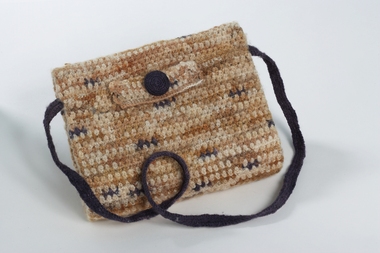 National Wool Museum
Muff
... Hucker began working with unspun wool and making dyes from the natural sources from her garden and the farm trees around her. From knitting and croceting articles, she progressed to felting and a 'wrapping' technique, always using unspun wool. ...Hucker began working with unspun wool and making dyes from the natural sources from her garden and the farm trees around her. From knitting and croceting articles, she progressed to felting and a 'wrapping' technique, always using unspun wool. ...Crocheted example by Joyce Hucker. Hucker began working with unspun wool and making dyes from the natural sources from her garden and the farm trees around her. From knitting and croceting articles, she progressed to felting and a 'wrapping' technique, always using unspun wool. She was a successful exhibitor at many craft shows and was always willing to pass on her experience and knowledge to others, often travelling widely to help groups requiring a demonstration.Crocheted example by Joyce Hucker.crochet, hucker, mrs joyce -
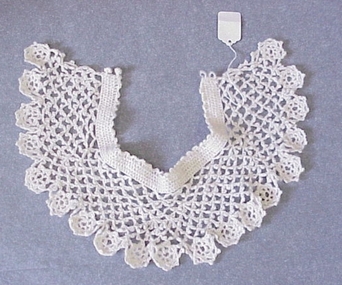 National Wool Museum
Collar
... Hucker began working with unspun wool and making dyes from the natural sources from her garden and the farm trees around her. From knitting and croceting articles, she progressed to felting and a 'wrapping' technique, always using unspun wool. ...Hucker began working with unspun wool and making dyes from the natural sources from her garden and the farm trees around her. From knitting and croceting articles, she progressed to felting and a 'wrapping' technique, always using unspun wool. ...Crocheted example by Joyce Hucker. Hucker began working with unspun wool and making dyes from the natural sources from her garden and the farm trees around her. From knitting and croceting articles, she progressed to felting and a 'wrapping' technique, always using unspun wool. She was a successful exhibitor at many craft shows and was always willing to pass on her experience and knowledge to others, often travelling widely to help groups requiring a demonstration.Crocheted example by Joyce Hucker.N.F.S. samplecrochet, hucker, mrs joyce -
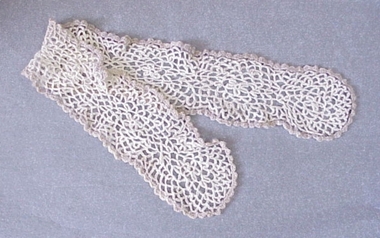 National Wool Museum
Scarf
... Hucker began working with unspun wool and making dyes from the natural sources from her garden and the farm trees around her. From knitting and croceting articles, she progressed to felting and a 'wrapping' technique, always using unspun wool. ...Hucker began working with unspun wool and making dyes from the natural sources from her garden and the farm trees around her. From knitting and croceting articles, she progressed to felting and a 'wrapping' technique, always using unspun wool. ...Crocheted example by Joyce Hucker. Hucker began working with unspun wool and making dyes from the natural sources from her garden and the farm trees around her. From knitting and croceting articles, she progressed to felting and a 'wrapping' technique, always using unspun wool. She was a successful exhibitor at many craft shows and was always willing to pass on her experience and knowledge to others, often travelling widely to help groups requiring a demonstration.Crocheted example by Joyce Hucker.crochet, hucker, mrs joyce -
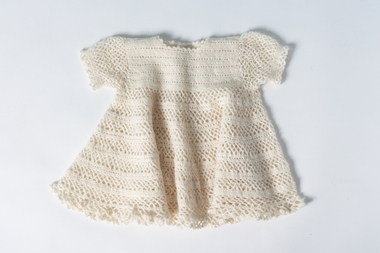 National Wool Museum
Dress
... Hucker began working with unspun wool and making dyes from the natural sources from her garden and the farm trees around her. From knitting and crocheting articles, she progressed to felting and a 'wrapping' technique, always using unspun wool. ...Hucker began working with unspun wool and making dyes from the natural sources from her garden and the farm trees around her. From knitting and crocheting articles, she progressed to felting and a 'wrapping' technique, always using unspun wool. ...Crocheted example by Joyce Hucker. Hucker began working with unspun wool and making dyes from the natural sources from her garden and the farm trees around her. From knitting and crocheting articles, she progressed to felting and a 'wrapping' technique, always using unspun wool. She was a successful exhibitor at many craft shows and was always willing to pass on her experience and knowledge to others, often travelling widely to help groups requiring a demonstration.Crocheted example by Joyce Hucker.crochet, hucker, mrs joyce -
 National Wool Museum
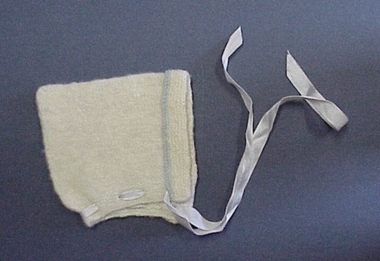
Bonnet
... Hucker began working with unspun wool and making dyes from the natural sources from her garden and the farm trees around her. From knitting and croceting articles, she progressed to felting and a 'wrapping' technique, always using unspun wool. ...Hucker began working with unspun wool and making dyes from the natural sources from her garden and the farm trees around her. From knitting and croceting articles, she progressed to felting and a 'wrapping' technique, always using unspun wool. ...Knitted example by Joyce Hucker. Hucker began working with unspun wool and making dyes from the natural sources from her garden and the farm trees around her. From knitting and croceting articles, she progressed to felting and a 'wrapping' technique, always using unspun wool. She was a successful exhibitor at many craft shows and was always willing to pass on her experience and knowledge to others, often travelling widely to help groups requiring a demonstration.Knitted example by Joyce Hucker.knitting, hucker, mrs joyce -
 National Wool Museum
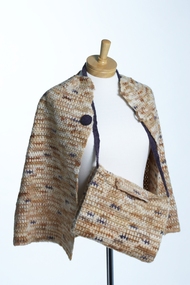
Cape
... Hucker began working with unspun wool and making dyes from the natural sources from her garden and the farm trees around her. From knitting and croceting articles, she progressed to felting and a 'wrapping' technique, always using unspun wool. ...Hucker began working with unspun wool and making dyes from the natural sources from her garden and the farm trees around her. From knitting and croceting articles, she progressed to felting and a 'wrapping' technique, always using unspun wool. ...Crocheted example by Joyce Hucker. Hucker began working with unspun wool and making dyes from the natural sources from her garden and the farm trees around her. From knitting and croceting articles, she progressed to felting and a 'wrapping' technique, always using unspun wool. She was a successful exhibitor at many craft shows and was always willing to pass on her experience and knowledge to others, often travelling widely to help groups requiring a demonstration.Knitted example by Joyce Hucker.crochet, hucker, mrs joyce -
 National Wool Museum
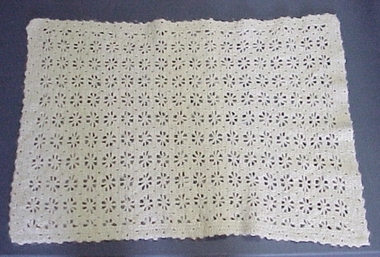
Layette
... Hucker began working with unspun wool and making dyes from the natural sources from her garden and the farm trees around her. From knitting and croceting articles, she progressed to felting and a 'wrapping' technique, always using unspun wool. ...Hucker began working with unspun wool and making dyes from the natural sources from her garden and the farm trees around her. From knitting and croceting articles, she progressed to felting and a 'wrapping' technique, always using unspun wool. ...Crocheted example by Joyce Hucker. Hucker began working with unspun wool and making dyes from the natural sources from her garden and the farm trees around her. From knitting and croceting articles, she progressed to felting and a 'wrapping' technique, always using unspun wool. She was a successful exhibitor at many craft shows and was always willing to pass on her experience and knowledge to others, often travelling widely to help groups requiring a demonstration.Crocheted item by Joyce Hucker.crochet, hucker, mrs joyce -
 National Wool Museum
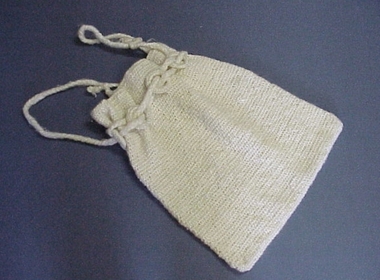
Bag, Costume
... Hucker began working with unspun wool and making dyes from the natural sources from her garden and the farm trees around her. From knitting and croceting articles, she progressed to felting and a 'wrapping' technique, always using unspun wool. ...Hucker began working with unspun wool and making dyes from the natural sources from her garden and the farm trees around her. From knitting and croceting articles, she progressed to felting and a 'wrapping' technique, always using unspun wool. ...Crocheted example by Joyce Hucker. Hucker began working with unspun wool and making dyes from the natural sources from her garden and the farm trees around her. From knitting and croceting articles, she progressed to felting and a 'wrapping' technique, always using unspun wool. She was a successful exhibitor at many craft shows and was always willing to pass on her experience and knowledge to others, often travelling widely to help groups requiring a demonstration.Crocheted item by Joyce Hucker.crochet, hucker, mrs joyce -
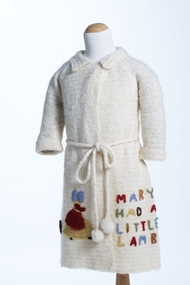 National Wool Museum
Dressing Gown
... Hucker began working with unspun wool and making dyes from the natural sources from her garden and the farm trees around her. From knitting and crocheting articles, she progressed to felting and a 'wrapping' technique, always using unspun wool. ...Hucker began working with unspun wool and making dyes from the natural sources from her garden and the farm trees around her. From knitting and crocheting articles, she progressed to felting and a 'wrapping' technique, always using unspun wool. ...Crocheted example by Joyce Hucker. Hucker began working with unspun wool and making dyes from the natural sources from her garden and the farm trees around her. From knitting and crocheting articles, she progressed to felting and a 'wrapping' technique, always using unspun wool. She was a successful exhibitor at many craft shows and was always willing to pass on her experience and knowledge to others, often travelling widely to help groups requiring a demonstration.Dressing gown crocheted by Joyce Hucker. Detail from crocheted dressing gown by Joyce Hucker. Detail from crocheted dressing gown by Joyce Hucker.crochet, hucker, mrs joyce -
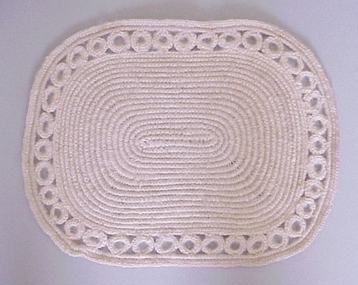 National Wool Museum
Place mat
... Hucker began working with unspun wool and making dyes from the natural sources from her garden and the farm trees around her. From knitting and croceting articles, she progressed to felting and a 'wrapping' technique, always using unspun wool. ...Hucker began working with unspun wool and making dyes from the natural sources from her garden and the farm trees around her. From knitting and croceting articles, she progressed to felting and a 'wrapping' technique, always using unspun wool. ...Placemat made with the in 'wrapping' technique taught by Hucker. Hucker began working with unspun wool and making dyes from the natural sources from her garden and the farm trees around her. From knitting and croceting articles, she progressed to felting and a 'wrapping' technique, always using unspun wool. She was a successful exhibitor at many craft shows and was always willing to pass on her experience and knowledge to others, often travelling widely to help groups requiring a demonstration.Placemat made with the 'wrapping' technique developed by Joyce Hucker.crochet, hucker, mrs joyce -
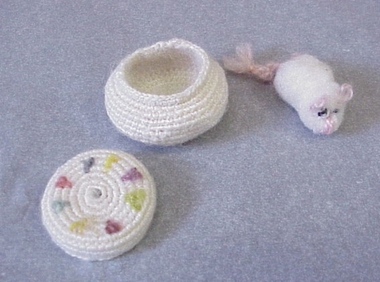 National Wool Museum
Container
... She began working with unspun wool and making dyes from the natural sources from her garden and the farm trees around her. From knitting and croceting articles, she progressed to felting and a 'wrapping' technique, always using unspun wool. ...She began working with unspun wool and making dyes from the natural sources from her garden and the farm trees around her. From knitting and croceting articles, she progressed to felting and a 'wrapping' technique, always using unspun wool. ...Conatiner made with the 'wrapping' technique developed by Hucker. She began working with unspun wool and making dyes from the natural sources from her garden and the farm trees around her. From knitting and croceting articles, she progressed to felting and a 'wrapping' technique, always using unspun wool. She was a successful exhibitor at many craft shows and was always willing to pass on her experience and knowledge to others, often travelling widely to help groups requiring a demonstration.Toy (container and pig) crocheted by Joyce Hucker.crochet, hucker, mrs joyce -
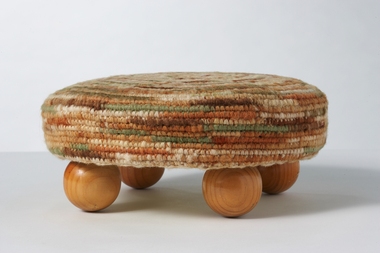 National Wool Museum
Foot stool
... Hucker began working with unspun wool and making dyes from the natural sources from her garden and the farm trees around her. From knitting and croceting articles, she progressed to felting and a 'wrapping' technique, always using unspun wool. ...Hucker began working with unspun wool and making dyes from the natural sources from her garden and the farm trees around her. From knitting and croceting articles, she progressed to felting and a 'wrapping' technique, always using unspun wool. ...Example of wrapping technique of crochet by Joyce Hucker. Hucker began working with unspun wool and making dyes from the natural sources from her garden and the farm trees around her. From knitting and croceting articles, she progressed to felting and a 'wrapping' technique, always using unspun wool. She was a successful exhibitor at many craft shows and was always willing to pass on her experience and knowledge to others, often travelling widely to help groups requiring a demonstration.Example of wrapping technique of crochet by Joyce Hucker.crochet, hucker, mrs joyce -
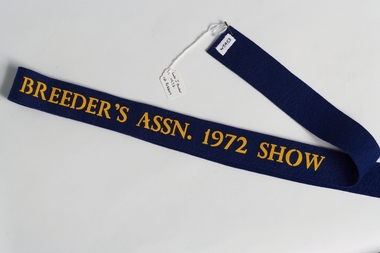 National Wool Museum
Ribbon
... Hucker began working with unspun wool and making dyes from the natural sources from her garden and the farm trees around her. From knitting and croceting articles, she progressed to felting and a 'wrapping' technique, always using unspun wool. ...Hucker began working with unspun wool and making dyes from the natural sources from her garden and the farm trees around her. From knitting and croceting articles, she progressed to felting and a 'wrapping' technique, always using unspun wool. ...Presented to Joyce Hucker for objects entered in the Australian Sheep Breeders' Association 1972 Show. Hucker began working with unspun wool and making dyes from the natural sources from her garden and the farm trees around her. From knitting and croceting articles, she progressed to felting and a 'wrapping' technique, always using unspun wool. She was a successful exhibitor at many craft shows and was always willing to pass on her experience and knowledge to others, often travelling widely to help groups requiring a demonstration.Presented to Joyce Hucker for objects entered in the Australian Sheep Breeders' Association 1972 Show.Australian Sheep Breeders' Assn, 1972 Show Late J Hucker 1972 1st Ribbonagricultural shows, hucker, mrs joyce
