
Showing 14 items matching "tuckey"
-
 Bendigo Military Museum
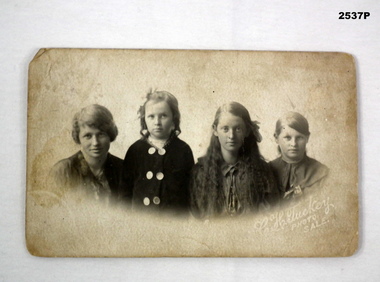
Postcard - POSTCARD, PHOTOGRAPHIC, WW1, C H Tuckey, c.1917
... Front: “C.H. Tuckey Photo. Sale” Rear: “Hoping you are quite well with best wishes from all at home. ...C H Tuckey...Postcard POSTCARD, PHOTOGRAPHIC, WW1 C H Tuckey ...Item in the collection relating to Alexander Norman Cummin No 18, 38th Batt AIF. Refer Cat No 2535P for his service details. Black & white portrait of 4 females, probably a mother & 3 daughters. Front: “C.H. Tuckey Photo. Sale” Rear: “Hoping you are quite well with best wishes from all at home. Madge Hazel Gladys & Daisy on January 18th 1917” photography-photographs, documents - postcards -
 Orbost & District Historical Society
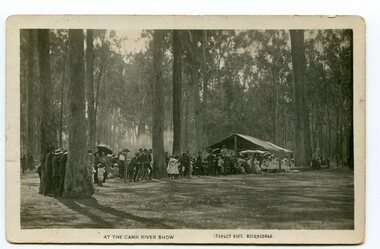
Photograph - Cann river photos, Vogt, Stanley, 1910 - 1930s
... On back: St James Church, CRB board houses, butcher's shop, Massey Herbert's Store (Hunts), Cape Everard Road. 2711.2 on the sign-board of a building: Cann River Hotel. On back: C H Tuckey, Sale 2711.3 on the front of the card: At the Cann River Show. ......C H Tuckey...Photograph Cann river photos Vogt, Stanley C H Tuckey ...These three photos show the early development of Cann River as a small township in the early 20th Century. This was a very remote area, connected by poor roads to Orbost. These three photos are significant early photos of the Cann River district. 2711.1 B/w. photo/postcard showing a road passing through a small collection of buildings. On the right foreground is a building with the sign Tea Rooms. To the middle of the photo is a dark coloured building which looks like a church. Tall trees in the background, along with some cleared land. 2711.2 B/w photo/postcard of two buildings, one with the sign-board 'Cann River Hotel'. Four people standing in front of this building, along with a cat, dog, and sheep. There is also fences and a gate. 2711.3 B/w photo/postcard showing a group of people in the centre, with large trees, a simple roofed building, and cleared land in the front. Many of the people are wearing hats, and some umbrellas. Women with long dresses. 2711.1 on the front: Scene at Cann River. On back: St James Church, CRB board houses, butcher's shop, Massey Herbert's Store (Hunts), Cape Everard Road. 2711.2 on the sign-board of a building: Cann River Hotel. On back: C H Tuckey, Sale 2711.3 on the front of the card: At the Cann River Show. Stanley Vogt, Bairnsdale cann river, cann river show, cann river hotel -
 Queenscliffe Maritime Museum
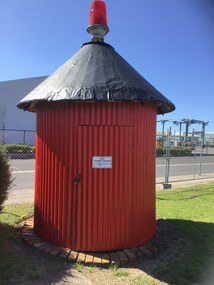
Functional object - Channel Marker - Colour Red
... ...Tuckey...This red circular building had a red navigational light on top and was know as Tuckey....This red circular building had a red navigational light on top and was know as Tuckey. West Channel Marker Tuckey Portside channel marker from West Channel Port Phillip. ...Portside channel marker from west channel Port Phillip. This red circular building had a red navigational light on top and was know as Tuckey. Portside channel marker from West Channel Port Phillip. Circular red building with red navigational light on top. west channel marker, tuckey -
 Gippsland Vehicle Collection
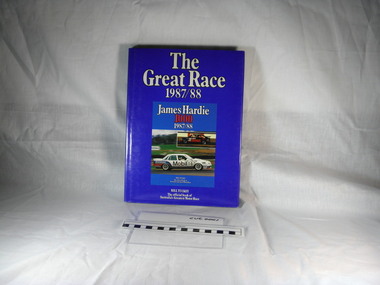
Book, Bill, Tuckey, The great race 1987/88, 1988 (exact)
... Bill, Tuckey...book james hardie james hardie 1000 1987 1988 illustrations james hardy 1000 hardie james Book with a bright blue hard cover, small insert photograph of two cars dust jacket The great race 1987/88 Book Bill, Tuckey ...Book with a bright blue hard cover, small insert photograph of two cars dust jacket book, james, hardie, james hardie 1000 1987 1988, illustrations, james hardy 1000, hardie james -
 Lakes Entrance Historical Society
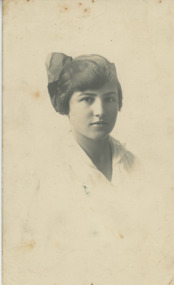
Postcard - 1920 Fashion, C H Tuckey Sale, 1920 c
... C H Tuckey Sale...Message on back of postcard Dear Bubb with Love Duk dated 24.1 .19 full date covered People Correspondence Black and white postcard with image of young girl Sale Victoria Postcard 1920 Fashion C H Tuckey Sale ...Message on back of postcard Dear Bubb with Love Duk dated 24.1 .19 full date covered Black and white postcard with image of young girl Sale Victoria people, correspondence -
 Flagstaff Hill Maritime Museum and Village
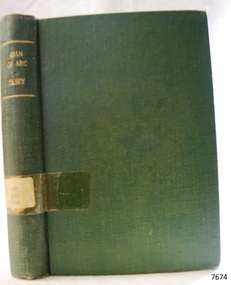
Book, Joan of Arc
... Joan of Arc "The Maid" Author: Janet Tuckey Publisher: Marcus Ward & Co Date: 1880...The Warrnambool Mechanics' Institute publication collection is of both local and state significance warrnambool shipwrecked-coast flagstaff-hill flagstaff-hill-maritime-museum maritime-museum shipwreck-coast flagstaff-hill-maritime-village shipwrecked-artefact book pattison collection warrnambool library warrnambool mechanics’ institute ralph eric pattison corangamite regional library service warrnambool city librarian mechanics’ institute library victorian library board warrnambool books and records warrnambool children’s library great ocean road joan of arc joan of arc "the maid" janet tuckey Label on spine cover with typed text PAT 920 JOA Pastedown front endpaper has sticker from Warrnambool Public Library covered by a sticker from Corangamite Regional Library Service Front loose endpaper has a stamp from Corangamite Regional Library Service Joan of Arc "The Maid" Author: Janet Tuckey Publisher: Marcus Ward & Co Date: 1880 Joan of Arc Book ...This item is from the ‘Pattison Collection’, a collection of books and records that was originally owned by the Warrnambool Mechanics’ Institute, which was founded in Warrnambool in 1853. By 1886 the Warrnambool Mechanics’ Institute (WMI) had grown to have a Library, Museum and Fine Arts Gallery, with a collection of “… choice productions of art, and valuable specimens in almost every branch and many wonderful national curiosities are now to be seen there, including historic relics of the town and district.” It later included a School of Design. Although it was very well patronised, the lack of financial support led the WMI in 1911 to ask the City Council to take it over. In 1935 Ralph Pattison was appointed as City Librarian to establish and organise the Warrnambool Library as it was then called. When the WMI building was pulled down in 1963 a new civic building was erected on the site and the new Warrnambool Library, on behalf of the City Council, took over all the holdings of the WMI. At this time some of the items were separated and identified as the ‘Pattison Collection’, named after Ralph Pattison. Eventually the components of the WMI were distributed from the Warrnambool Library to various places, including the Art Gallery, Historical Society and Flagstaff Hill. Later some were even distributed to other regional branches of Corangamite Regional Library and passed to and fro. It is difficult now to trace just where all of the items have ended up. The books at Flagstaff Hill Maritime Village generally display stamps and markings from Pattison as well as a variety of other institutions including the Mechanics’ Institute itself. RALPH ERIC PATTISON Ralph Eric Pattison was born in Rockhampton, Queensland, in 1891. He married Maude Swan from Warrnambool in 1920 and they set up home in Warrnambool. In 1935 Pattison accepted a position as City Librarian for the Warrnambool City Council. His huge challenge was to make a functional library within two rooms of the Mechanics’ Institute. He tirelessly cleaned, cleared and sorted a disarrayed collection of old books, jars of preserved specimens and other items reserved for exhibition in the city’s museum. He developed and updated the library with a wide variety of books for all tastes, including reference books for students; a difficult task to fulfil during the years following the Depression. He converted all of the lower area of the building into a library, reference room and reading room for members and the public. The books were sorted and stored using a cataloguing and card index system that he had developed himself. He also prepared the upper floor of the building and established the Art Gallery and later the Museum, a place to exhibit the many old relics that had been stored for years for this purpose. One of the treasures he found was a beautiful ancient clock, which he repaired, restored and enjoyed using in his office during the years of his service there. Ralph Pattison was described as “a meticulous gentleman whose punctuality, floorless courtesy and distinctive neat dress were hallmarks of his character, and ‘his’ clock controlled his daily routine, and his opening and closing of the library’s large heavy doors to the minute.” Pattison took leave during 1942 to 1945 to serve in the Royal Australian Navy, Volunteer Reserve as Lieutenant. A few years later he converted one of the Museum’s rooms into a Children’s Library, stocking it with suitable books for the younger generation. This was an instant success. In the 1950’s he had the honour of being appointed to the Victorian Library Board and received more inspiration from the monthly conferences in Melbourne. He was sadly retired in 1959 after over 23 years of service, due to the fact that he had gone over the working age of council officers. However he continued to take a very keen interest in the continual development of the Library until his death in 1969. WARRNAMBOOL PUBLIC LIBRARY The Warrnambool Mechanics’ Institute (WMI) was formed by a voluntary community group in 1863, within six years of Warrnambool’s beginnings, and its Reading Room opened in 1854. The WMI operated until 1963, at which time it was one of the oldest Mechanics’ Institutes in Victoria. Mechanics’ Institutes offered important services to the public including libraries, reading rooms and places to display and store collections of all sorts such as curiosities and local historical relics. In 1886 a Museum and Fine Arts Gallery were added to the WMI and by the beginning of the 20th century there was also a billiards room and a School of Art. By this time all Mechanics’ Institutes in country Victoria had museums attached. Over the years the Warrnambool Mechanics’ Institute Library was also known as the Warrnambool Public Library the Warrnambool Library and the Free Library. Early funding from the government was for the “Free Library”. The inscription in a book “Science of Man” was for the “Warrnambool Public Library”, donated by Joseph Archibald in 1899. Another inscription in the book “Catalogue of Plants Under Cultivation in the Melbourne Botanic Gardens 1 & 2, 1883” was presented to the “Warrnambool Library” and signed by the author W.R. Guilfoyle. In 1903 the Warrnambool Public Library decided to add a Juvenile Department to library and stock it with hundreds of books suitable for youth. In 1905 the Public Library committee decided to update the collection of books and added 100 new novels plus arrangements for the latest novels to be included as soon as they were available in Victoria. In July 1911 the Warrnambool Council took over the management of the Public Library, Art Gallery, Museum and Mechanics’ Institute and planned to double the size of the then-current building. In 1953, when Mr. R. Pattison was Public Librarian, the Warrnambool Public Library’s senior section 10,000 of the 13,000 books were fiction. The children’s section offered an additional 3,400 books. The library had the equivalent of one book per head of population and served around 33 percent of the reading population. The collection of books was made up of around 60 percent reference and 40 percent fiction. The library was lending 400 books per day. In 1963 the Warrnambool City Council allocated the site of the Mechanics’ Institute building, which included the Public Library, Museum and Art Gallery, for the new Municipal Offices and the Collections were dispersed until 1971. The Warrnambool Library took over the Mechanics’ Institute Library’s holdings on behalf of the Warrnambool City Council. Since the closure of the Warrnambool Mechanics’ Institute the exact location and composition of the original WMI books and items has become unclear. Other materials have been added to the collection, including items from Terang MI, Warrnambool Court House and Customs House. Many of the books have been identified as the Pattison Collection, named after the Librarian who catalogued and numbered the books during his time as Warrnambool Public Librarian in the time before the Mechanics’ Institute closed. It seems that when Warrnambool became part of the Corangamite Regional Library some of the books and materials went to its head office in Colac and then back to Warrnambool where they were stored at the Art Gallery for quite some time. Some then went to the Warrnambool Historical Society, some stayed at the Art Gallery and some were moved to Flagstaff Hill Maritime Village. The various stamps and labels on the books held at Flagstaff Hill show the variety of the collection’s distribution and origin. The books in the collection at Flagstaff Hill Maritime Village date from the 1850’s to the late 1950’s and include rare and valuable volumes. Many of the books are part of the “Pattison Collection” after the Warrnambool’s Public Librarian, Mr. R. Pattison. The Pattison Collection, along with other items at Flagstaff Hill Maritime Village, was originally part of the Warrnambool Mechanics' Institute’s collection. The Warrnambool Mechanics’ Institute Collection is primarily significant in its totality, rather than for the individual objects it contains. Its contents are highly representative of the development of Mechanics' Institute libraries across Australia, particularly Victoria. A diversity of publications and themes has been amassed, and these provide clues to our understanding of the nature of and changes in the reading habits of Victorians from the 1850s to the middle of the 20th century. The collection also highlights the Warrnambool community’s commitment to the Mechanics’ Institute, reading, literacy and learning in the regions, and proves that access to knowledge was not impeded by distance. These items help to provide a more complete picture of our community’s ideals and aspirations. The Warrnambool Mechanics Institute book collection has historical and social significance for its strong association with the Mechanics Institute movement and the important role it played in the intellectual, cultural and social development of people throughout the latter part of the nineteenth century and the early twentieth century. The collection of books is a rare example of an early lending library and its significance is enhanced by the survival of an original collection of many volumes. The Warrnambool Mechanics' Institute’s publication collection is of both local and state significance. The Warrnambool Mechanics' Institute Collection is primarily significant in its totality, rather than for the individual objects it contains. Its contents are highly representative of the development of Mechanics' Institute libraries across Australia, particularly Victoria. A diversity of publications and themes has been amassed, and these provide clues to our understanding of the nature of and changes in the reading habits of Victorians from the 1850s to the middle of the 20th century. The collection also highlights the Warrnambool community’s commitment to the Mechanics’ Institute, and to reading, literacy and learning in the regions, and proves that access to knowledge was not impeded by distance. These items help to provide a more complete picture of our community’s ideals and aspirations. As with many Mechanics' Institutes in Australia, the one which operated in Warrnambool was established and overseen for many years by key individuals associated with the development of the city itself. The WMI publication collection is historically significant because of its association with local people, places and the key historical themes in the development of Warrnambool of rural development, industry, farming, education, and community. The collection documents and illustrates the changing interests, focus and tastes of Victorians, especially those in regional cities. Generally the individual items in the collection are not particularly rare, as examples of all probably exist in other public collections in Victoria. It is primarily because there are so very few surviving Mechanics' Institute collections in Victoria, which lends this overall collection its significance. Many items in the WMI Collection have the potential to support further research, both as individual objects and through the collection in its entirety. This material is significant for its ability to assist in the interpretation of the history of the area and adds to the general understanding of the development of the township. Many components of the WMI publication collection complement and reinforce the Flagstaff Hill Maritime Museum Collection, the Warrnambool Art Gallery Collection, and that in the Warrnambool Historical Society, and also contribute to a clearer understanding of the original Warrnambool Mechanics' Institute collections. This will greatly enhance the appreciation of the few surviving Mechanics' Institute collections across Victoria, and also in New South Wales. The similarities and differences between the small number of collections that have survived can provide further insights into how the people of Victoria in general, and Warrnambool in particular, constructed a civic culture of adult learning to foster an informed citizenry. The Warrnambool Mechanics' Institute publication collection is of both local and state significance Joan of Arc "The Maid" Author: Janet Tuckey Publisher: Marcus Ward & Co Date: 1880 Label on spine cover with typed text PAT 920 JOA Pastedown front endpaper has sticker from Warrnambool Public Library covered by a sticker from Corangamite Regional Library Service Front loose endpaper has a stamp from Corangamite Regional Library Service warrnambool, shipwrecked-coast, flagstaff-hill, flagstaff-hill-maritime-museum, maritime-museum, shipwreck-coast, flagstaff-hill-maritime-village, shipwrecked-artefact, book, pattison collection, warrnambool library, warrnambool mechanics’ institute, ralph eric pattison, corangamite regional library service, warrnambool city librarian, mechanics’ institute library, victorian library board, warrnambool books and records, warrnambool children’s library, great ocean road, joan of arc, joan of arc "the maid", janet tuckey -
 National Vietnam Veterans Museum (NVVM)
Photograph
... Unframed colour photo of Pte Tom (Tuckey) Stevens 1968-70 5RAR Tracker Platoon. ...5 RAR T M Stevens Unframed colour photo of Pte Tom (Tuckey) Stevens 1968-70 5RAR Tracker Platoon. ...Unframed colour photo of Pte Tom (Tuckey) Stevens 1968-70 5RAR Tracker Platoon. Soldier kneeling in broken trees and wood with canteen 5 rar, t m stevens -
 National Vietnam Veterans Museum (NVVM)
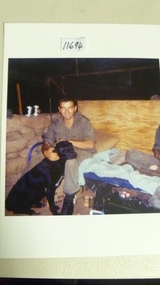
Photograph
... Unframed colour photo - Tom (Tuckey) Stevens 1969-70 5RAR Trackers with one of the tracker dogs. ...Tracker dog 5 RAR Unframed colour photo - Tom (Tuckey) Stevens 1969-70 5RAR Trackers with one of the tracker dogs. ...Unframed colour photo - Tom (Tuckey) Stevens 1969-70 5RAR Trackers with one of the tracker dogs. Soldier with tracker dog sitting on sand bags tracker dog, 5 rar -
 National Vietnam Veterans Museum (NVVM)
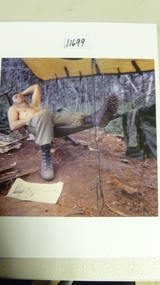
Photograph
... Unframed colour photo. Tom (Tuckey) Stevens 1969-70 5RAR Tracker PL Doing what he does best - Topless lying in a hammock...5 RAR Colour Photo Unframed colour photo. Tom (Tuckey) Stevens 1969-70 5RAR Tracker PL Doing what he does best - Topless lying in a hammock Photograph Photograph ...Unframed colour photo. Tom (Tuckey) Stevens 1969-70 5RAR Tracker PL Doing what he does best - Topless lying in a hammock 5 rar, colour photo -
 National Vietnam Veterans Museum (NVVM)
Photograph
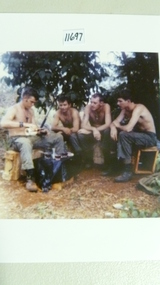
... Unframed colour photo of L/R John Cordurpull (ripcord) on his 21st birthday, Tom )Tuckey) Stevens, David (Moose) Barter, Mick, Brown, tracker PL 5RAR. 4 topless soldiers having a drink....Colour Photo 5 RAR Soldiers Unframed colour photo of L/R John Cordurpull (ripcord) on his 21st birthday, Tom )Tuckey) Stevens, David (Moose) Barter, Mick, Brown, tracker PL 5RAR. 4 topless soldiers having a drink. ...Unframed colour photo of L/R John Cordurpull (ripcord) on his 21st birthday, Tom )Tuckey) Stevens, David (Moose) Barter, Mick, Brown, tracker PL 5RAR. 4 topless soldiers having a drink. colour photo, 5 rar, soldiers -
 Federation University Historical Collection
Booklet - Report, John Ferres, Government Printer, Report of The Secretary for Mines on the School of Mines, Ballarat, 1873, 1873
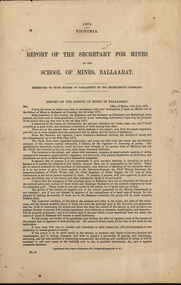
... The following are listed as having pyrites treated at the Ballarat School of Mines: Louis Ballhausen, Alexander Millan, Tuckey Quartz Mining Co (New Zealand), Egerton Mining Company, Park Gold Mining Company, S. ...The following are listed as having pyrites treated at the Ballarat School of Mines: Louis Ballhausen, Alexander Millan, Tuckey Quartz Mining Co (New Zealand), Egerton Mining Company, Park Gold Mining Company, S. ...The following are listed as having pyrites treated at the Ballarat School of Mines: Louis Ballhausen, Alexander Millan, Tuckey Quartz Mining Co (New Zealand), Egerton Mining Company, Park Gold Mining Company, S. Livingston Learmonth, New North Clunes Mining Company, Malcolm Morris, Mr Seal. Five printed foolscap pages presented to both houses of Parliament in 1873. The report details budget, student numbers, examiners, candidate for examination, museum and rooms. ballarat school of mines, serjeant, r.m. serjeant, flude, joseph flude, richard gibbs, stawell, lynch, john lynch, r.s. mitchell, mitchell, bull, e. bull, bickett, j.m. bickett, parliament, louis ballhausen, alexander millan, tuckey quartz mining co (new zealand), egerton mining company, park gold mining company, s. livingston learmonth, new north clunes mining company, malcolm morris, seal, f. ive, rev. g.j. russell, p.c. fitzpatrick, j. m. bickett, b. bryant, n. kent, a. martin, p. matthews, j. robinson, j.m. troup -
 City of Moorabbin Historical Society (Operating the Box Cottage Museum)
Newsletter, City of Moorabbin Historical Society No. 6 Vol. 4 June 1964, City of Moorabbin Historical Society No. 6 Vol.4 June 1964, 1964
... Topic Junior Citizen of the Year 1964; Collins Expedition 1803; ti-tree, lieutenant tuckey; The Aims of the CMHS are ‘to record the history of the City, and register something of the Australian Atmosphere, which the necessary speed-up in post-world-war two (WW11) immigration has caused to be lost; to produce a magazine at regular intervals, featuring the work of pioneers and the changing Australian scene; to work constantly with a long range view towards building a hall where records and exhibits can be housed’ (1961) The Original Newsletters reflect the history and heritage of the former City of Moorabbin — derived from Mooroobin, ‘a resting place’ in the Bunurrung spoken language. ...Topic Junior Citizen of the Year 1964; Collins Expedition 1803; ti-tree, lieutenant tuckey; The Aims of the CMHS are ‘to record the history of the City, and register something of the Australian Atmosphere, which the necessary speed-up in post-world-war two (WW11) immigration has caused to be lost; to produce a magazine at regular intervals, featuring the work of pioneers and the changing Australian scene; to work constantly with a long range view towards building a hall where records and exhibits can be housed’ (1961) The Original Newsletters reflect the history and heritage of the former City of Moorabbin — derived from Mooroobin, ‘a resting place’ in the Bunurrung spoken language. ...Topic Junior Citizen of the Year 1964; Collins Expedition 1803; ti-tree, lieutenant tuckey; The Aims of the CMHS are ‘to record the history of the City, and register something of the Australian Atmosphere, which the necessary speed-up in post-world-war two (WW11) immigration has caused to be lost; to produce a magazine at regular intervals, featuring the work of pioneers and the changing Australian scene; to work constantly with a long range view towards building a hall where records and exhibits can be housed’ (1961) The Original Newsletters reflect the history and heritage of the former City of Moorabbin — derived from Mooroobin, ‘a resting place’ in the Bunurrung spoken language. In 1994, the City of Moorabbin was integrated into the Cities of Bayside, Glen Eira, Kingston and Monash This is Newsletter No. 6 Vol. 4 of the CMHS June 1964 CMHS obtained a Kingston City Council Community Grant 2016 for the digitization and preservation of these Original CMHS Newsletters commenced in 1961 1 x Foolscap paper printed on 2 sides folded for 4 pages CITY OF MOORABBIN HISTORICAL / SOCIETY / (Affiliated with the Royal Historical Society of Victoria ). Newsletter Vol. 4 No. 6 June 1964 / ; President ; R Ashley ...... / Secretary; Mrs L. Harvey……./ : Historian : T.A.Sheehy city of moorabbin historical society 1961, sheehy t.a., newsletters, collins expedition 1803, port phillip bay, -
 Williamstown Historical Society Inc
Photograph - Water and Land Police, Williamstown, after 1886
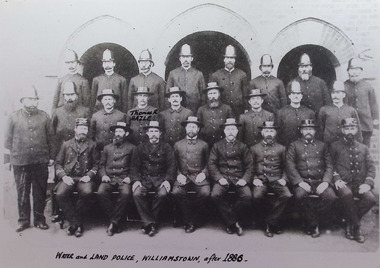
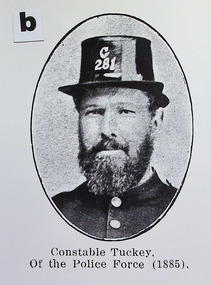
... ; Front row L-R: J. Tuckey, ??, John Watson, ??, ??, ??, ??, ?? ...; Front row L-R: J. Tuckey, ??, John Watson, ??, ??, ??, ??, ?? ...Top row L-R: ??,??, Thomas Band, ??,??,??, Bolger, ??. Middle Row: Sergeant James Whitcher, ??,??, Thomas Hazle, ??,??, ??, ??, ??; Front row L-R: J. Tuckey, ??, John Watson, ??, ??, ??, ??, ?? This historical photograph captures the Foot Police and Water Police stationed at Williamstown, after 1886. The officers in the back row wearing high white/light-colored custodian helmets represent the Foot Police (Land), while the members seated and standing in the lower rows wearing dark uniforms and caps or flat-brimmed hats represent the Water Police (Sea). Thomas Scott Band came out to Victoria as a second mate on the ship Adair in 1853. In the following year he joined the water police and was stationed at Geelong for a number of years, when he transferred to the Williamstown water police. He retired as a senior constable in 1887 after serving 33 years' service. He died aged 75 in January 1907. (Source: Williamstown Chronicle 19 January 1907) Constable Bolger had been a member of the Royal Irish constabulary and served two years arriving in the colony with the Permanent Artillery. He almost served 30 years service in the police force and died of illness during September 1900 aged 56. (Source: Williamstown Chronicle 15 September 1900) The handwritten text explicitly highlights Thomas R. Hazle (standing in the center row with a dark hat). Hazle was formerly a leading seaman on H.M.S. Nelson, stationed in Victoria, and left the navy in 1886, when he joined the water police and was stationed at Williamstown and South Wharf. He was a senior-constable when he retired during 1911. He died aged 86 on the 15th September 1931. (source: Williamstown Chronicle 19 September 1931) Sergeant James Whitcher gave up sea faring life to join the water police in 1852. He was promoted to the rank of senior-constable in 1881, and to sergeant in 1883, succeeding Sergeant Daly in charge of the station a year afterwards. He retired on 30 June 1892 and died in May 1893. (Source: Williamstown Advertiser Sat 20 May 1893) John Tuckey was born in Tipperary Ireland in 1827 and joined the Victorian Police Force in 1853. He rose to the position of Constable and retired after 29 years of service. He died in 1906, aged 79. (Source: Williamstown Chronicle 12 May 1906). Constable John Watson was born in England in 1850, and when quite a young man enlisted in the Imperial Navy, and after about eight years' service he entered the colonial navy, being for some time connected with the H.M S. Pharos, Victoria, and Nelson, filling the position of instructor on the last-named when a training ship. He joined the Victorian police force in 1880 and has consequently seen over 22 years' service. He died aged 53 during December 1902. (Source: Williamstown Chronicle 20 December 1902). williamstown water and land police, 1886, thomas hazle -
 Williamstown Historical Society Inc
Photograph - Constable Tuckey, Victorian Police Force, 1885
... Constable Tuckey Victorian Police Force 1885 Photograph Constable Tuckey, Victorian Police Force, 1885 ...constable tuckey, victorian police force, 1885
