
Showing 10 items matching "two commando company"
-
 Australian Commando Association - Victoria
Shooting Stick, Featherwate
... ...two commando company...Presented to Major Phillip Bennett in Feb 1961 on his retirement from Two Commando Company Governor of Tasmania and Chief of Defence Force...Presented to Major Phillip Bennett in Feb 1961 on his retirement from Two Commando Company Governor of Tasmania and Chief of Defence Force Of significance to the Two Commando Company as part of their history military tasmania shooting stick portable seat melbourne cup two commando company commandos defence force phillip bennett knight the last australian knight Embossed at base of seat "MADE IN ENGLAND" and also pinned under the seat base the Commando emblem Shooting stick, aluminium pole with folding leather seat on top and spike at base. ...Presented to Major Phillip Bennett in Feb 1961 on his retirement from Two Commando Company Governor of Tasmania and Chief of Defence ForceOf significance to the Two Commando Company as part of their historyShooting stick, aluminium pole with folding leather seat on top and spike at base.Embossed at base of seat "MADE IN ENGLAND" and also pinned under the seat base the Commando emblemmilitary, tasmania, shooting stick, portable seat, melbourne cup, two commando company, commandos, defence force, phillip bennett, knight, the last australian knight -
 Queenscliffe Maritime Museum
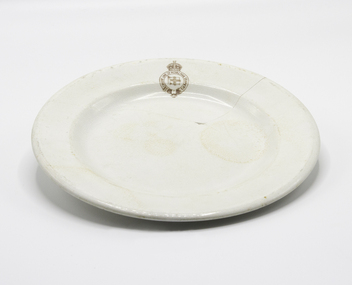
Domestic object - China Plates
... Recovered from Portsea Channel circa mid 1980s by captain Doug Knight, Two Commando Company, when conducting shallow water dive training in the 1980s whilst based out of Officer Cadet School, Portsea....Recovered from Portsea Channel circa mid 1980s by captain Doug Knight, Two Commando Company, when conducting shallow water dive training in the 1980s whilst based out of Officer Cadet School, Portsea. ...Recovered from Portsea Channel circa mid 1980s by captain Doug Knight, Two Commando Company, when conducting shallow water dive training in the 1980s whilst based out of Officer Cadet School, Portsea.Two plates recovered from the Portsea Channel circa 1980s1. Orient Line of Royal Mail Steamers white china plate with logo on front and back. 2. White Star Line china plate with blue edge design and central logo.passenger liners, table wear, captain doug knight, portsea -
 Australian Commando Association - Victoria
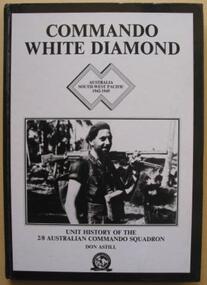
Book, Commando White Diamond: Unt History of the 2/8th Australian Commando Squadron
... Commando Company during World War II. Plastic protective cover over the book. The 2/8th Independent Company was formed at Wilson’s Promontory, Victoria, in July 1942 and travelled to Yandina, in Queensland, in September. While the other seven independent companies saw action in the islands off Australian and in New Guinea, the 2/8th spent most of the next two ...The detailed history of the No.8 Independent Commando Company during World War II. Plastic protective cover over the book. The 2/8th Independent Company was formed at Wilson’s Promontory, Victoria, in July 1942 and travelled to Yandina, in Queensland, in September. While the other seven independent companies saw action in the islands off Australian and in New Guinea, the 2/8th spent most of the next two years based at Adelaide River, in the Northern Territory. While it was in the Territory, the independent companies underwent a series of reorganisations and the name of the 2/8th was changed from the 2/8th Independent Company to the 2/8th Cavalry (Commando) Squadron. This name was later simplified to just commando squadron. In July 1944, after years of waiting, the squadron left the Territory and sailed from Townsville to Lae, via Milne Bay. While at Lae, the squadron received an intake of 70 men from the 2/8th from the 2/3rd, 2/5th and 2/6th Cavalry (Commando) Squadrons, many of whom were veterans of the earlier New Guinea campaigns. Their experience was no doubt a useful reserve that would have been called upon during the 2/8th’s subsequent campaign in Bougainville. Others though, were able to implement some of their commando training when a small group from the 2/8th they made a secret landing on New Britain. Towards the end of the 1944 the 5th Division was preparing to make a landing at Jacquinot Bay in New Britain. Part of these preparations included landing a small group of officers from the division at Jacquinot Bay to make a secret reconnaissance of the potential landing site. As Jacquinot Bay was still in Japanese controlled territory, ‘C’ Troop from the 2/8th provided the protection for the reconnaissance party by establishing a position on the beach and by patrolling the surrounding country. Everything went well and the 5th Division later landed at Jacquinot Bay in November. The squadron too was on the move, and in October it sailed to Torokina, the main Australian base on Bougainville, where it joined the II Australian Corps. The campaign on Bougainville was dived into three areas, the Central, Northern and Southern Sectors. The 2/8th served in the latter two areas. The 2/8th made the first move of the Australian campaign in the Northern Sector, by patrolling from Torokina to Kuraio Mission and Amun once a week. The squadron did this from the second week of November unit the second week of December. The 2/8th was then transferred to the Southern Sector. The main battle for Bougainville was fought in the Southern Sector, as the 3rd Division advanced towards Buin – the main Japanese base on the island. As the division’s infantry brigades advanced along the coast, the 2/8th’s task was to protect their flank by conducting forward reconnaissance patrols, harassing the Japanese with raids and ambushes and conducting a form of guerrilla warfare. The squadron had a long campaign. For nine months, from the end of December until August 1945, the troopers were in action the whole time. After securing the Jaba River, they moved inland, first to Sovele Mission, then the villages of Opai, Nihero and Morokaimoro. They had reached Kilipaijino by the end of the war. Each village taken became a patrol base. Patrols were usually limited to two sections, although up to six sections could be operating at a time. Patrols generally lasted four to six days, but nine-day patrols were not unknown. The squadron collected and collated track information, terrain reports and located the enemy. Once patrols had gathered information, they were free to make a ‘strike’ against the Japanese by setting an ambush or taking a prisoner. These raids were very effective, as they forced the Japanese to deploy troops to their rear areas, removing men from the front created by the infantry. Following Japan’s surrender and the end of the war, the ranks of the squadron thinned quickly as men were discharged or were transferred to other units. For those who were left, the squadron returned to Australia at the end of December. In mid January 1946, at Liverpool, the 2/8th Commando Squadron was disbanded.non-fictionThe detailed history of the No.8 Independent Commando Company during World War II. Plastic protective cover over the book. The 2/8th Independent Company was formed at Wilson’s Promontory, Victoria, in July 1942 and travelled to Yandina, in Queensland, in September. While the other seven independent companies saw action in the islands off Australian and in New Guinea, the 2/8th spent most of the next two years based at Adelaide River, in the Northern Territory. While it was in the Territory, the independent companies underwent a series of reorganisations and the name of the 2/8th was changed from the 2/8th Independent Company to the 2/8th Cavalry (Commando) Squadron. This name was later simplified to just commando squadron. In July 1944, after years of waiting, the squadron left the Territory and sailed from Townsville to Lae, via Milne Bay. While at Lae, the squadron received an intake of 70 men from the 2/8th from the 2/3rd, 2/5th and 2/6th Cavalry (Commando) Squadrons, many of whom were veterans of the earlier New Guinea campaigns. Their experience was no doubt a useful reserve that would have been called upon during the 2/8th’s subsequent campaign in Bougainville. Others though, were able to implement some of their commando training when a small group from the 2/8th they made a secret landing on New Britain. Towards the end of the 1944 the 5th Division was preparing to make a landing at Jacquinot Bay in New Britain. Part of these preparations included landing a small group of officers from the division at Jacquinot Bay to make a secret reconnaissance of the potential landing site. As Jacquinot Bay was still in Japanese controlled territory, ‘C’ Troop from the 2/8th provided the protection for the reconnaissance party by establishing a position on the beach and by patrolling the surrounding country. Everything went well and the 5th Division later landed at Jacquinot Bay in November. The squadron too was on the move, and in October it sailed to Torokina, the main Australian base on Bougainville, where it joined the II Australian Corps. The campaign on Bougainville was dived into three areas, the Central, Northern and Southern Sectors. The 2/8th served in the latter two areas. The 2/8th made the first move of the Australian campaign in the Northern Sector, by patrolling from Torokina to Kuraio Mission and Amun once a week. The squadron did this from the second week of November unit the second week of December. The 2/8th was then transferred to the Southern Sector. The main battle for Bougainville was fought in the Southern Sector, as the 3rd Division advanced towards Buin – the main Japanese base on the island. As the division’s infantry brigades advanced along the coast, the 2/8th’s task was to protect their flank by conducting forward reconnaissance patrols, harassing the Japanese with raids and ambushes and conducting a form of guerrilla warfare. The squadron had a long campaign. For nine months, from the end of December until August 1945, the troopers were in action the whole time. After securing the Jaba River, they moved inland, first to Sovele Mission, then the villages of Opai, Nihero and Morokaimoro. They had reached Kilipaijino by the end of the war. Each village taken became a patrol base. Patrols were usually limited to two sections, although up to six sections could be operating at a time. Patrols generally lasted four to six days, but nine-day patrols were not unknown. The squadron collected and collated track information, terrain reports and located the enemy. Once patrols had gathered information, they were free to make a ‘strike’ against the Japanese by setting an ambush or taking a prisoner. These raids were very effective, as they forced the Japanese to deploy troops to their rear areas, removing men from the front created by the infantry. Following Japan’s surrender and the end of the war, the ranks of the squadron thinned quickly as men were discharged or were transferred to other units. For those who were left, the squadron returned to Australia at the end of December. In mid January 1946, at Liverpool, the 2/8th Commando Squadron was disbanded. -
 Australian Commando Association - Victoria
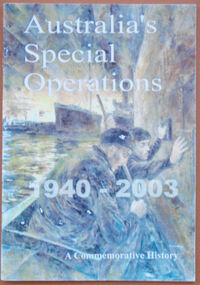
Australia's Special Operations 1940-2003. A Commemorative History
... A detailed history of Australian Special Forces operations during World War Two by the commandos of the Allied Intelligence Bureau and the Independent Companies/Commando Squadrons and through to operations in Vietnam and later conflicts. ...A detailed history of Australian Special Forces operations during World War Two by the commandos of the Allied Intelligence Bureau and the Independent Companies/Commando Squadrons and through to operations in Vietnam and later conflicts. ...A detailed history of Australian Special Forces operations during World War Two by the commandos of the Allied Intelligence Bureau and the Independent Companies/Commando Squadrons and through to operations in Vietnam and later conflicts. Compiled by two of Australia’s most famous military historians for the 60th anniversary of Operation JAYWICK in 2003. -
 Australian Commando Association - Victoria
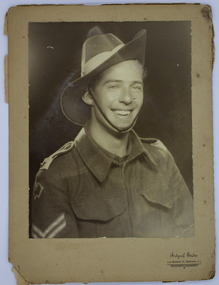
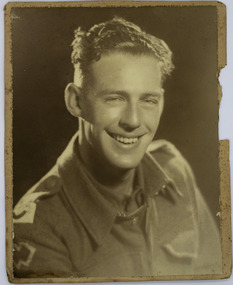
Photograph - Studio portrait of Corporal 'Curly' Papworh, Artgraph Studio, March 1943
... Company. It has strong provenance as part of the Papworth Family donated collection ww2 world war two 2nd/2nd commando commando francis john papworth Sepia Studio photograph Photograph Studio portrait of Corporal 'Curly' Papworh Artgraph Studio ...Francis John Papworth - VX66806 - Studio photograph - portrait style. Shot in March 1943 while on leave after escape from TimorThis photograph displays historic significance from WW2 and Curly Papworth's service in the 2nd/2nd Independent Company. It has strong provenance as part of the Papworth Family donated collectionSepia Studio photographww2, world war two, 2nd/2nd commando, commando, francis john papworth -
 Australian Commando Association - Victoria
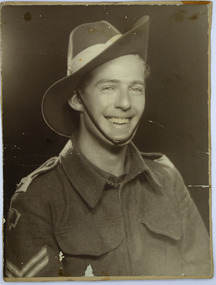
Photograph, Artgraph Studio, March 1943
... Company. It has strong provenance as part of the Papworth Family donated collection ww2 world war two 2nd/2nd commando commando francis john papworth Sepia Studio photograph Photograph Artgraph Studio ...Francis John Papworth - VX66806 - Studio photograph - portrait style. Shot in March 1943 while on leave after escape from TimorThis photograph displays historic significance from WW2 and Curly Papworth's service in the 2nd/2nd Independent Company. It has strong provenance as part of the Papworth Family donated collectionSepia Studio photographww2, world war two, 2nd/2nd commando, commando, francis john papworth -
 Australian Commando Association - Victoria
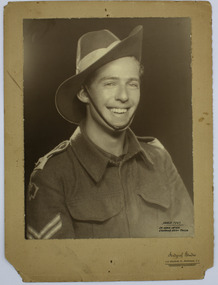
Photograph, Artgraph Studio, March 1943
... Company. It has strong provenance as part of the Papworth Family donated collection ww2 world war two 2nd/2nd commando commando francis john papworth On leave - 1943 Francis John Papworth VX66806 - Studio photograph Photograph Artgraph Studio ...Francis John Papworth - VX66806 - Studio photograph - portrait style. Shot in March 1943 while on leave after escape from TimorThis photograph displays historic significance from WW2 and Curly Papworth's service in the 2nd/2nd Independent Company. It has strong provenance as part of the Papworth Family donated collectionFrancis John Papworth VX66806 - Studio photographOn leave - 1943ww2, world war two, 2nd/2nd commando, commando, francis john papworth -
 Australian Commando Association - Victoria
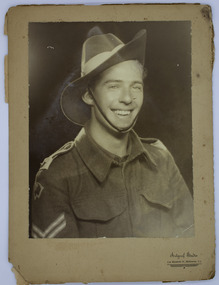
Photograph, Artgraph Studio, Curly Papworth, March 1943
... Company. It has strong provenance as part of the Papworth Family donated collection ww2 world war two 2nd/2nd commando commando francis john papworth Sepia Studio photograph Curly Papworth Photograph Artgraph Studio ...Francis John Papworth - VX66806 - Studio photograph - portrait style. Shot in March 1943 while on leave after escape from TimorThis photograph displays historic significance from WW2 and Curly Papworth's service in the 2nd/2nd Independent Company. It has strong provenance as part of the Papworth Family donated collectionSepia Studio photographww2, world war two, 2nd/2nd commando, commando, francis john papworth -
 Australian Commando Association - Victoria
Photograph - Portrait of Curly Papworth, Artgraph Studio, March 1943
... Company. It has strong provenance as part of the Papworth Family donated collection ww2 world war two 2nd/2nd commando commando francis john papworth Series of sepia studio portraits of 'Curly' Papworth - Francis John Papworth VX66806 Photograph Portrait of Curly Papworth Artgraph Studio ...Set of 4 sepia studio photographed portraits of Francis John Papworth VX66806 Shot in March 1943 while on leave after escape from Timor Items 4.1, 4.2, 4.3 & 4.4 referThese photographs display historic significance from WW2 and Curly Papworth's service in the 2nd/2nd Independent Company. It has strong provenance as part of the Papworth Family donated collectionSeries of sepia studio portraits of 'Curly' Papworth - Francis John Papworth VX66806ww2, world war two, 2nd/2nd commando, commando, francis john papworth -
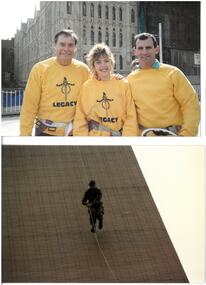 Melbourne Legacy
Photograph, Legacy Appeal 1989. Ron Barassi abseiling, August 1989
... Commando Company with training at Nidrie Quarry. Ron Barassi participated in many events for Legacy over the years, he had been a young Legatee after his father was killed in action at Tobruk in World War II, aged 27. Two...Commando Company with training at Nidrie Quarry. Ron Barassi participated in many events for Legacy over the years, he had been a young Legatee after his father was killed in action at Tobruk in World War II, aged 27. Two ...Photos of abseiling down the Gas and Fuel building that were on the corner of Flinders St and Swanston St. It was an event for Legacy Week 1989. See also the training that occurred prior to the event - photos 00486 and 01409. Ron Barassi abseils for Legacy joined by staff member Carol Shaw and Legatee Peter Heeney. A label states it "was a Legacy versus Radio personalities abseiling challenge". Media team was Fox's Wally (Paul) Weissel and Ken Cavanagh and Triple M's Andy McClean. Aided by Williamstown Commando Company with training at Nidrie Quarry. Ron Barassi participated in many events for Legacy over the years, he had been a young Legatee after his father was killed in action at Tobruk in World War II, aged 27. Two photos also featured in the President's Highlights Report in 1989.A record of some important personalities giving their time to promote Legacy in 1989.Colour photo x 13 of a junior legatee and Ron Barassi abseiling.legacy promotion, ron barassi, legacy week
