
Showing 54 items matching "types of aircraft engines"
-
 Moorabbin Air Museum
Book - Flight handbooks, Flight Handbook
... ...Types of aircraft engines...Flight handbooks First principles Aerodynamics Aircraft structures Gliders & sailplanes Airscrews Aircraft power units Types of aircraft engines Supercharging Stratosphere flight Modern developments Aircraft instruments A manual of aeronautical theory & practice, circa 1944 Flight Handbook Book Flight handbooks ...A manual of aeronautical theory & practice, circa 1944non-fictionA manual of aeronautical theory & practice, circa 1944first principles, aerodynamics, aircraft structures, gliders & sailplanes, airscrews, aircraft power units, types of aircraft engines, supercharging, stratosphere flight, modern developments, aircraft instruments -
 Bendigo Military Museum
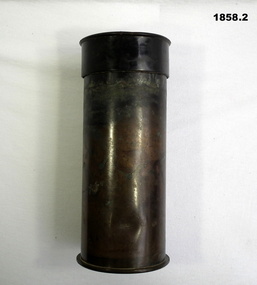
Accessory - CASING, est 1979
... .1 Rimmed brass case for "shotgun" type aircraft engine starting system. .2 Plastic end cap....machinery-engines military history-raaf .1 Base has "Cart Elec Eng Start MF 79/3 84 ME 7-79" .2 "Remove cap before loading EFM 79" .1 Rimmed brass case for "shotgun" type aircraft engine starting system. .2 Plastic end cap. ....1 Rimmed brass case for "shotgun" type aircraft engine starting system. .2 Plastic end cap..1 Base has "Cart Elec Eng Start MF 79/3 84 ME 7-79" .2 "Remove cap before loading EFM 79"machinery-engines, military history-raaf -
 Flagstaff Hill Maritime Museum and Village
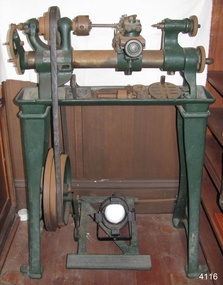
Machine - Treadle Lathe, 1920-1923
... aircraft industry, and the works were extended on many occasions to fulfill the increasing orders. The Maxicut multi-tool lathe (1925), designed for high-production turning operations, was one of the first machines of this type to be built in England. It was followed (1928) by an hydraulic version for turning gear blanks, and similar work. Further developments provided machines which, during the Second World War, turned all the crankshafts and propeller shafts for Bristol engines...aircraft industry, and the works were extended on many occasions to fulfill the increasing orders. The Maxicut multi-tool lathe (1925), designed for high-production turning operations, was one of the first machines of this type to be built in England. It was followed (1928) by an hydraulic version for turning gear blanks, and similar work. Further developments provided machines which, during the Second World War, turned all the crankshafts and propeller shafts for Bristol engines ...The lathe-making business incorporated in 1902 as Drummond Bros Ltd originated in the fertile mind of Mr Arthur Drummond, said to have been living at that time at Pinks Hill, on the southern edge of Broad Street Common, west of Guildford. Mr Drummond, whose accomplishments included several pictures hung in the Royal Academy, was unable to find a lathe suitable for use in model engineering. In 1896 he designed for himself a ‘small centre lathe … which had a compound slide rest with feed-screws and adjustable slides’. He also designed and built ‘lathes of 4.5 inch and 5 inch centre height, which had beds of a special form whereby the use of a gap piece was eliminated but the advantages of a gap-bed lathe were retained’. Assisted by his brother, Mr Frank Drummond, who had served an apprenticeship to an engineering firm at Tunbridge Wells, the first lathes were made in a workshop adjoining Arthur Drummond’s house. The demand that speedily built up led to the decision to form a company and manufacture the lathes for sale commercially. Land was acquired nearby, at Rydes Hill, and the first factory built. The enterprise was a success, and the company quickly established ‘a high reputation in this country and abroad for multi-tool and copying lathes, and gear-cutting machines’. Other lathes were added to the range, including the first of the ’round bed’ machines for which the firm became widely known. A Drummond 3.5 inch lathe was among the equipment of Captain Scott’s 1912 expedition to the South Pole, and large numbers of 3.5 inch and 4 inch designs were exported to Australia, Canada and India. By the outbreak of war in 1914, 5 inch, 6 inch and 7 inch screw cutting lathes, arranged for power drive, were on sale. Large orders were received from the government for 3.5 inch lathes, for use in destroyers and submarines, and 5 inch lathes for the mechanised section of the Army Service Corps. The latter were used in mobile workshops. The factory worked night and day to supply the forces’ needs, until production was disrupted by a fire which destroyed a large part of the works in May 1915. As soon as rebuilding was complete work restarted. At the end of the war the entire production was being taken by the Government departments, a special feature being a precision screw lathe, bought by the Ministry of Munitions in 1918. Between the wars Drummond Bros Ltd introduced new machines for the motor vehicle, and later the aircraft industry, and the works were extended on many occasions to fulfill the increasing orders. The Maxicut multi-tool lathe (1925), designed for high-production turning operations, was one of the first machines of this type to be built in England. It was followed (1928) by an hydraulic version for turning gear blanks, and similar work. Further developments provided machines which, during the Second World War, turned all the crankshafts and propeller shafts for Bristol engines. Others, ordered by the Ministry of Supply were employed in turning shells, and many other specific needs of vehicle and aircraft manufacture were catered for by new types of Drummond lathes. Production of the small centre lathes ceased during the war when the company needed to concentrate on building multi-tool lathes and gear shapers. After the war a completely new Maxicut range was introduced, replacing the older versions, and fully automatic. The types were continually developed, and new versions manufactured until the end of the company’s life in 1980. The disappearance from the scene of Mr Arthur Drummond in 1946, and the end of the company’s autonomous existence in 1953 when the company was acquired by William Asquith Ltd, which was in turn bought by Staveley in 1966, meant that the factory at Rydes Hill became one – albeit very effective – part of a large national engineering company. Achievements at the Guildford works during its last years included the development of automated Maxicut gear-shapers in what was ‘probably the most fully automated gear shop in the country’, while a machine from Guildford was sent to the Osaka Fair in 1962. In 1963 an agreement was signed with Hindustan Machine Tools for the manufacture of Maxicut gear-shapers in state owned factories in Bangalore and Chandigarh. During 1963 the two largest multi-tool lathes ever made in the UK were installed in Ambrose Shardlow’s works in Sheffield for handling cranks up to 14 foot long. In 1976 Drummond lathes were included in Staveley’s £14,000,000 installation in Moscow of an automated production line for Zil motor cars. Up to the end invention continued at Guildford: a new Drummond Multi-turn memory-controlled machine was shown at the International Machine Tool Exhibition in 1977. This could not save the works from the pressures of the late 1970s, and Staveley Industries closed its Guildford site in 1980.An early example of a lathe that was designed primarily for the hobbyist model maker. It is in good condition and sought today by collectors as many of it's attributes were innovative at the time and lead to further development and incorporation of some of its features into more industrial models of production machinery. Lathe, round bed, treadle powered lathe, Drummond Type A, Serial number and maker's inscription. 1920-1923, Made by Drummond Brothers in Guildford, Surrey, England. Lathe is complete with Chuck, Tool post and Tail Stock in situ (30 extra parts)"MADE BY DRUMMOND BROTHERS LIMITED - PATENT TEES - RYDE'S HILL n GUILDFORD SURREY", "Serial Number 01470," "L44" or "L45 " flagstaff hill, warrnambool, shipwrecked coast, flagstaff hill maritime museum, maritime museum, shipwreck coast, flagstaff hill maritime village, great ocean road, lathe 1920-1923, round bed lathe, treadle lathe, drummond type a, guildford surrey, drummond brothers guildford surrey england, tread'e -
 Nhill Aviation Heritage Centre
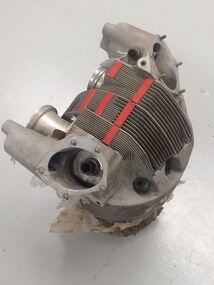
Memorabilia - Cylinder
... The type was used in the ANA Convair airliner that flew into Nhill Attached tag for cylinder stud. . Aerodex.Inc. Accepted or serviceable tag. Part number 433098. Model 3350 Engine cylinder, new, fits Wright 3350 aircraft ...The type was used in the ANA Convair airliner that flew into NhillEngine cylinder, new, fits Wright 3350 aircraft engineAttached tag for cylinder stud. . Aerodex.Inc. Accepted or serviceable tag. Part number 433098. Model 3350 -
 Nhill Aviation Heritage Centre
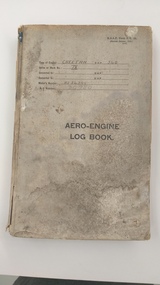
Memorabilia - Log Book, Aero Engine Log Book, 1942
... These log books would have been kept for each aircraft at the air station log book aero engine log repair log anson cheetah Aero Engine Log Book, Type of engine-Cheetah BHP. 340. ...These log books would have been kept for each aircraft at the air stationHard back bound book 305 pages with columns. sections titled Chronological Log, Repair Log, Modification LogAero Engine Log Book, Type of engine-Cheetah BHP. 340. Series or Mk No. IX Makers number AS34299, A Number DG750, A 143950log book, aero engine log, repair log, anson, cheetah -
 Lara RSL Sub Branch
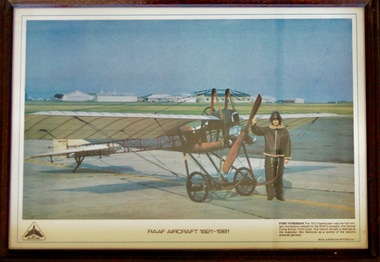
Photograph, RAAF 1912 Deperdussin Aircraft
... aircraft designer, M. Bechereau, formed the Societe Pour Appareils Deperdussin, and designed and produced Deperdussin monoplanes of advanced design for the period. In 1912, the Australian Government ordered from the British Deperdussin Aeroplane Company, two single-seat trainers, Type A with 35hp Anzani Y-type three cylinder engine. ...aircraft designer, M. Bechereau, formed the Societe Pour Appareils Deperdussin, and designed and produced Deperdussin monoplanes of advanced design for the period. In 1912, the Australian Government ordered from the British Deperdussin Aeroplane Company, two single-seat trainers, Type A with 35hp Anzani Y-type three cylinder engine. ...In the early days of flying in France, Armand Deperdussin and his aircraft designer, M. Bechereau, formed the Societe Pour Appareils Deperdussin, and designed and produced Deperdussin monoplanes of advanced design for the period. In 1912, the Australian Government ordered from the British Deperdussin Aeroplane Company, two single-seat trainers, Type A with 35hp Anzani Y-type three cylinder engine. These two aircraft were in the first batch of four aircraft ordered by the Commonwealth Government (the other two aircraft were BE-type biplanes). The recorded cost of the Deperdussin was 480 pounds each. The serial number CFS 5 identifies this aircraft as the 5th Australian Military aircraft. It is the oldest existing Australian aircraft. either military or civilian. Rectangular shaped glass covered picture frame with photo of the plane and pilot.RAAF AIRCRAFT 1921-1981. FIRST FOREBEAR The 1912 Deperdussin was the first military monoplane ordered for the RAAFs ancestor, the Central Flying School, Point cook.This historic aircraft is retained at the Australian War Memorial as a symbol of the nation's airpower genesis.deperdussin monoplane, australian military aircraft, lara r.s.l. australian flying corps, 1912 aircraft. -
 Lara RSL Sub Branch
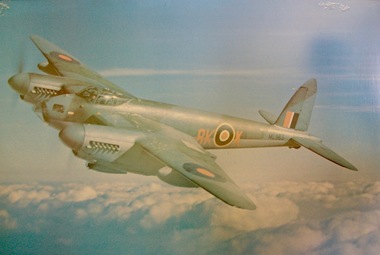
Framed photo print of Mosquito fighter plane
... aircraft development that some of the world's greatest aeroplanes have achieved their fame doing jobs other than the one they were originally designed for. No better example of this could be found than the Mosquito, which, conceived as a bomber, became one of the war's most potent fighters. More than this, indeed, it was probably the most successfully versatile of any twin-engined type ...The de Havilland DH.98 Mosquito is a British twin-engine shoulder-winged multi-role combat aircraft. The crew of two, pilot and navigator, sat side by side. It served during and after the Second World War. It was one of few operational front-line aircraft of the era whose frame was constructed almost entirely of wood and was nicknamed The Wooden Wonder. https://en.wikipedia.org/wiki/De_Havilland_MosquitoIt is one of the paradoxes of aircraft development that some of the world's greatest aeroplanes have achieved their fame doing jobs other than the one they were originally designed for. No better example of this could be found than the Mosquito, which, conceived as a bomber, became one of the war's most potent fighters. More than this, indeed, it was probably the most successfully versatile of any twin-engined type built between 1939 and 1945. It excelled in all the widely varied roles. Its duties included the duties of low-level and high-attack day and night bomber, long-range photo-reconnaissance, mine layer, pathfinder, high-speed military transport, long-range day and night fighter, and fighter-bomber. It served in Europe, the Middle and Far East and on the Russian front. In fact, the ubiquitous Mosquito reigned supreme among General Purpose types. Of the grand total of 7,781 Mosquitos built, 6,710 were delivered during the war years. www.aviation-history.com/dehavilland/mosquito.html Rectangular shaped picture frame showing Mosquito fighter plane.fighter planes, ww2, british aircraft, mosquito fighter planes, lara r.s.l. -
 B-24 Liberator Memorial Restoration Australia Inc
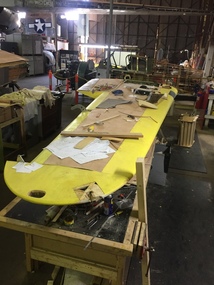
Airspeed Oxford aircraft (Replica under construction), c.1940
... This type first flew in 1937 and by the start of WWII it was the preferred aircraft in all Empire Air Training Schemes for multi-engine pilot training....This type of aircraft was described as a multi-engine three-seat advanced military trainer monoplane. ...aircraft in all Empire Air Training Schemes for multi-engine pilot training. As of April 2014, no Airspeed Oxfords remain in the world in airworthy condition and there are very few complete air frames. There are reportedly some restoration-to-fly projects underway, one in New Zealand. Parts originally used a base for this reconstruction were reckoned to be from an Oxford Mk 2 with registration A25 LX181 which was based at Point Cook and used extensively in training from the Werribee Aerodrome. Full-sized replica of an Airspeed Oxford aircraft. This type ...This type first flew in 1937 and by the start of WWII it was the preferred aircraft in all Empire Air Training Schemes for multi-engine pilot training. By the beginning of WWII the Airspeed Oxford was the preferred aircraft in all Empire Air Training Schemes for multi-engine pilot training. As of April 2014, no Airspeed Oxfords remain in the world in airworthy condition and there are very few complete air frames. There are reportedly some restoration-to-fly projects underway, one in New Zealand.Full-sized replica of an Airspeed Oxford aircraft. This type of aircraft was described as a multi-engine three-seat advanced military trainer monoplane. It was a wooden construction using plywood and fabric covering and powered by two 375 HP Armstrong Siddeley Cheetah 10 engines. Parts originally used a base for this reconstruction were reckoned to be from an Oxford Mk 2 with registration A25 LX181 which was based at Point Cook and used extensively in training from the Werribee Aerodrome. -
 Eltham District Historical Society Inc
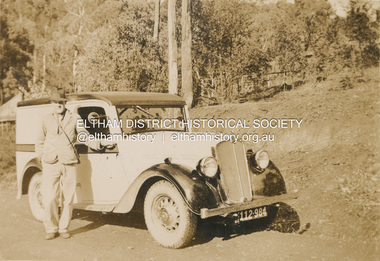
Photograph, Lester Neil Ingram with his Morris Ten Series II delivery van, c.1942
... type mission flown by a student pilot with almost two hours completed at night on similar flights. They had just changed aircraft as their previous aircraft had become unserviceable. The pilot had accepted the aircraft, which was technically unserviceable as the NCO in charge of flight had not completed the inspection paperwork correctly. The aircraft had undergone a major engine...type mission flown by a student pilot with almost two hours completed at night on similar flights. They had just changed aircraft as their previous aircraft had become unserviceable. The pilot had accepted the aircraft, which was technically unserviceable as the NCO in charge of flight had not completed the inspection paperwork correctly. The aircraft had undergone a major engine ...The van is a Morris Ten Series II which was manufactured 1935-1937. The numeral only Victorian Registration plate 112-984 was part of the sequence of numeral only plates issued 1910-1939. Lester Neil Ingram was born at Kew, 8 November 1911, the son of John and Ada (Key) Ingram of Research. According to Electoral Roll records, in 1903, John Ingram was a farmer at Lancefield, his wife Ada, a milliner. By 1906, John Ingram was a baker at Research and from about 1912, an orchardist. The family moved to Anglesea River sometime between 1937 and 1942. A sheet metal worker by trade, Lester had run the bakery business for 14 years, his father retired, and was working as a baker at Anglesea when he enlisted in the R.A.A.F. on 5 December 1941 at Melbourne. Previously he had worked as a baker at Research (1937). He undertook training as Aircrew at No. 4 Initial Training School at Victor Harbour, South Australia, followed by No. 1 Wireless Air Gunners School at Ballarat, Victoria, and No. 3 Bombing and Gunnery School, West Sale, Victoria. On October 15, 1942 Lester qualified as an Air Gunner, promoted to Sergeant, and was posted to 1 Embarkation Depot at Ascot Vale, Victoria, and attached to R.A.F. UK. Lester embarked from Australia December 2, 1942 and arrived at 11 Personnel Despatch and Reception Depot on January 13, 1943. On March 9 he was transferred to 10 Operational Training Unit, Group No. 91, Bomber Command, R.A.F. Lester’s service file reveals that on the evening of 22 April 1943, Lester was a member of the aircrew of Whitley V bomber, N.1374. The airframe had run 1,127 hours. A full moon was just rising. The flight was non-operational, its purpose a dual conversion on type mission flown by a student pilot with almost two hours completed at night on similar flights. They had just changed aircraft as their previous aircraft had become unserviceable. The pilot had accepted the aircraft, which was technically unserviceable as the NCO in charge of flight had not completed the inspection paperwork correctly. The aircraft had undergone a major engine repair the day before. The aircraft took off at 2348 hours from R.A.F. Abington. It was reported that the aircraft take-off was quite normal and after climbing to 800 feet it passed out of view of the ground observers. A few seconds later the aircraft crashed, and it was reported that the sound of the engines seemed to become desynchronised. The crash occurred one and a half miles northwest of Longworth, Berkshire and the aircraft destroyed by fire. It carried a crew of five. Lester is commemorated on the Eltham Roll of Honour Board, which was commissioned by the Eltham War Memorial Trust to be hung in the Eltham Infant Welfare Centre, part of complex of buildings that form the Eltham War Memorial. The Honour Roll is presently (2023) hanging in the Eltham Library Community Gallery space. Lester was remembered with the following notices published in The Argus newspaper, Saturday 22 April 1944, p2: INGRAM. —In treasured memories you are with me still. Sgt. Lester Neil Ingram, killed, aircraft accident, England, April 22, 1943. (Mother and father.) INGRAM. —In proud and ever loving memory of Lester, 410236, Sgt. L. N. Ingram, R.A.A.F., air crash England, April 22, 1943. —Per ardua ad astra. (Ellen Peake and family.) [“Per ardua ad astra” is a Latin phrase meaning “through adversity to the stars” or “through struggle to the stars” which was the motto of the Royal Air Force and other Commonwealth air forces such as the Royal Australian Air Force.] And from his fiancé Ellen, in The Argus, Wednesday, 5 May 1943, p2: INGRAM. —On April 22 (result of aircraft accident near Lodgeworth Village, Berks, England), Sgt. Lester Neil Ingram, R.A.A.F., fiance of Ellen. -Treasured memories till we meet again. Lester is buried at Brookwood Military Cemetery, Surrey, United Kingdom, Grave 4. 1. 11. INGRAM, Flt. Sgt. LESTER NEIL, 410236. R.A.A.F. 22nd April 1943. Age 31. Son of John and Ada Ingram, of Anglesea, Victoria, Australia. He gave his life For freedom’s cause ◊ ◊ ◊ LEST WE FORGET “They shall grow not old, as we that are left grow old; Age shall not weary them, nor the years condemn. At the going down of the sun and in the morning We will remember them.”On reverse "Lester Ingram"112-984 (victorian registration), lester neil ingram, morris ten series ii, bakery, delivery van, pam thoonen (nee ingram) collection -
 Eltham District Historical Society Inc
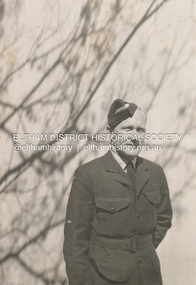
Photograph, Leading Aircraftsman, Lester Neil Ingram, RAAF, c.1943
... type mission flown by a student pilot with almost two hours completed at night on similar flights. They had just changed aircraft as their previous aircraft had become unserviceable. The pilot had accepted the aircraft, which was technically unserviceable as the NCO in charge of flight had not completed the inspection paperwork correctly. The aircraft had undergone a major engine...type mission flown by a student pilot with almost two hours completed at night on similar flights. They had just changed aircraft as their previous aircraft had become unserviceable. The pilot had accepted the aircraft, which was technically unserviceable as the NCO in charge of flight had not completed the inspection paperwork correctly. The aircraft had undergone a major engine ...Lester Neil Ingram was born at Kew, 8 November 1911, the son of John and Ada (Key) Ingram of Research. According to Electoral Roll records, in 1903, John Ingram was a farmer at Lancefield, his wife Ada, a milliner. By 1906, John Ingram was a baker at Research and from about 1912, an orchardist. The family moved to Anglesea River sometime between 1943 and 1949. A sheet metal worker by trade, Lester had run the bakery business for 14 years, his father retired, and was working as a baker at Anglesea when he enlisted in the R.A.A.F. on 5 December 1941 at Melbourne. Previously he had worked as a baker at Research (1937). He undertook training as Aircrew at No. 4 Initial Training School at Victor Harbour, South Australia, followed by No. 1 Wireless Air Gunners School at Ballarat, Victoria, and No. 3 Bombing and Gunnery School, West Sale, Victoria. On October 15, 1942 Lester qualified as an Air Gunner, promoted to Sergeant, and was posted to 1 Embarkation Depot at Ascot Vale, Victoria, and attached to R.A.F. UK. Lester embarked from Australia December 2, 1942 and arrived at 11 Personnel Despatch and Reception Depot on January 13, 1943. On March 9 he was transferred to 10 Operational Training Unit, Group No. 91, Bomber Command, R.A.F. Lester’s service file reveals that on the evening of 22 April 1943, Lester was a member of the aircrew of Whitley V bomber, N.1374. The airframe had run 1,127 hours. A full moon was just rising. The flight was non-operational, its purpose a dual conversion on type mission flown by a student pilot with almost two hours completed at night on similar flights. They had just changed aircraft as their previous aircraft had become unserviceable. The pilot had accepted the aircraft, which was technically unserviceable as the NCO in charge of flight had not completed the inspection paperwork correctly. The aircraft had undergone a major engine repair the day before. The aircraft took off at 2348 hours from R.A.F. Abington. It was reported that the aircraft take-off was quite normal and after climbing to 800 feet it passed out of view of the ground observers. A few seconds later the aircraft crashed, and it was reported that the sound of the engines seemed to become desynchronised. The crash occurred one and a half miles northwest of Longworth, Berkshire and the aircraft destroyed by fire. It carried a crew of five. Lester is commemorated on the Eltham Roll of Honour Board, which was commissioned by the Eltham War Memorial Trust to be hung in the Eltham Infant Welfare Centre, part of complex of buildings that form the Eltham War Memorial. The Honour Roll is presently (2023) hanging in the Eltham Library Community Gallery space. Lester was remembered with the following notices published in The Argus newspaper, Saturday 22 April 1944, p2: INGRAM. —In treasured memories you are with me still. Sgt. Lester Neil Ingram, killed, aircraft accident, England, April 22, 1943. (Mother and father.) INGRAM. —In proud and ever loving memory of Lester, 410236, Sgt. L. N. Ingram, R.A.A.F., air crash England, April 22, 1943. —Per ardua ad astra. (Ellen Peake and family.) [“Per ardua ad astra” is a Latin phrase meaning “through adversity to the stars” or “through struggle to the stars” which was the motto of the Royal Air Force and other Commonwealth air forces such as the Royal Australian Air Force.] And from his fiancé Ellen, in The Argus, Wednesday, 5 May 1943, p2: INGRAM. —On April 22 (result of aircraft accident near Lodgeworth Village, Berks, England), Sgt. Lester Neil Ingram, R.A.A.F., fiance of Ellen. -Treasured memories till we meet again. Lester is buried at Brookwood Military Cemetery, Surrey, United Kingdom, Grave 4. 1. 11. INGRAM, Flt. Sgt. LESTER NEIL, 410236. R.A.A.F. 22nd April 1943. Age 31. Son of John and Ada Ingram, of Anglesea, Victoria, Australia. He gave his life For freedom’s cause ◊ ◊ ◊ LEST WE FORGET “They shall grow not old, as we that are left grow old; Age shall not weary them, nor the years condemn. At the going down of the sun and in the morning We will remember them.”On reverse "Lester Ingram"lester neil ingram, baker, eltham, honour board, raaf, research (vic.), roll of honour, pam thoonen (nee ingram) collection -
 Eltham District Historical Society Inc
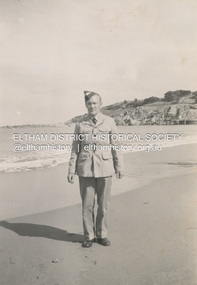
Photograph, Leading Aircraftsman, Lester Neil Ingram, RAAF, c.1943
... type mission flown by a student pilot with almost two hours completed at night on similar flights. They had just changed aircraft as their previous aircraft had become unserviceable. The pilot had accepted the aircraft, which was technically unserviceable as the NCO in charge of flight had not completed the inspection paperwork correctly. The aircraft had undergone a major engine...type mission flown by a student pilot with almost two hours completed at night on similar flights. They had just changed aircraft as their previous aircraft had become unserviceable. The pilot had accepted the aircraft, which was technically unserviceable as the NCO in charge of flight had not completed the inspection paperwork correctly. The aircraft had undergone a major engine ...Lester Neil Ingram was born at Kew, 8 November 1911, the son of John and Ada (Key) Ingram of Research. According to Electoral Roll records, in 1903, John Ingram was a farmer at Lancefield, his wife Ada, a milliner. By 1906, John Ingram was a baker at Research and from about 1912, an orchardist. The family moved to Anglesea River sometime between 1943 and 1949. A sheet metal worker by trade, Lester had run the bakery business for 14 years, his father retired, and was working as a baker at Anglesea when he enlisted in the R.A.A.F. on 5 December 1941 at Melbourne. Previously he had worked as a baker at Research (1937). He undertook training as Aircrew at No. 4 Initial Training School at Victor Harbour, South Australia, followed by No. 1 Wireless Air Gunners School at Ballarat, Victoria, and No. 3 Bombing and Gunnery School, West Sale, Victoria. On October 15, 1942 Lester qualified as an Air Gunner, promoted to Sergeant, and was posted to 1 Embarkation Depot at Ascot Vale, Victoria, and attached to R.A.F. UK. Lester embarked from Australia December 2, 1942 and arrived at 11 Personnel Despatch and Reception Depot on January 13, 1943. On March 9 he was transferred to 10 Operational Training Unit, Group No. 91, Bomber Command, R.A.F. Lester’s service file reveals that on the evening of 22 April 1943, Lester was a member of the aircrew of Whitley V bomber, N.1374. The airframe had run 1,127 hours. A full moon was just rising. The flight was non-operational, its purpose a dual conversion on type mission flown by a student pilot with almost two hours completed at night on similar flights. They had just changed aircraft as their previous aircraft had become unserviceable. The pilot had accepted the aircraft, which was technically unserviceable as the NCO in charge of flight had not completed the inspection paperwork correctly. The aircraft had undergone a major engine repair the day before. The aircraft took off at 2348 hours from R.A.F. Abington. It was reported that the aircraft take-off was quite normal and after climbing to 800 feet it passed out of view of the ground observers. A few seconds later the aircraft crashed, and it was reported that the sound of the engines seemed to become desynchronised. The crash occurred one and a half miles northwest of Longworth, Berkshire and the aircraft destroyed by fire. It carried a crew of five. Lester is commemorated on the Eltham Roll of Honour Board, which was commissioned by the Eltham War Memorial Trust to be hung in the Eltham Infant Welfare Centre, part of complex of buildings that form the Eltham War Memorial. The Honour Roll is presently (2023) hanging in the Eltham Library Community Gallery space. Lester was remembered with the following notices published in The Argus newspaper, Saturday 22 April 1944, p2: INGRAM. —In treasured memories you are with me still. Sgt. Lester Neil Ingram, killed, aircraft accident, England, April 22, 1943. (Mother and father.) INGRAM. —In proud and ever loving memory of Lester, 410236, Sgt. L. N. Ingram, R.A.A.F., air crash England, April 22, 1943. —Per ardua ad astra. (Ellen Peake and family.) [“Per ardua ad astra” is a Latin phrase meaning “through adversity to the stars” or “through struggle to the stars” which was the motto of the Royal Air Force and other Commonwealth air forces such as the Royal Australian Air Force.] And from his fiancé Ellen, in The Argus, Wednesday, 5 May 1943, p2: INGRAM. —On April 22 (result of aircraft accident near Lodgeworth Village, Berks, England), Sgt. Lester Neil Ingram, R.A.A.F., fiance of Ellen. -Treasured memories till we meet again. Lester is buried at Brookwood Military Cemetery, Surrey, United Kingdom, Grave 4. 1. 11. INGRAM, Flt. Sgt. LESTER NEIL, 410236. R.A.A.F. 22nd April 1943. Age 31. Son of John and Ada Ingram, of Anglesea, Victoria, Australia. He gave his life For freedom’s cause ◊ ◊ ◊ LEST WE FORGET “They shall grow not old, as we that are left grow old; Age shall not weary them, nor the years condemn. At the going down of the sun and in the morning We will remember them.”On reverse "Lester Ingram"lester neil ingram, baker, eltham, honour board, raaf, research (vic.), roll of honour, pam thoonen (nee ingram) collection -
 Eltham District Historical Society Inc
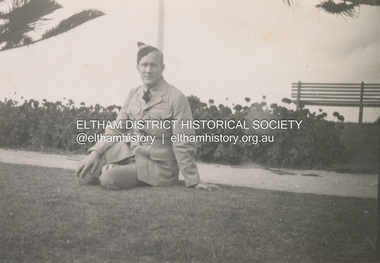
Photograph, Leading Aircraftsman, Lester Neil Ingram, RAAF, c.1943
... type mission flown by a student pilot with almost two hours completed at night on similar flights. They had just changed aircraft as their previous aircraft had become unserviceable. The pilot had accepted the aircraft, which was technically unserviceable as the NCO in charge of flight had not completed the inspection paperwork correctly. The aircraft had undergone a major engine...type mission flown by a student pilot with almost two hours completed at night on similar flights. They had just changed aircraft as their previous aircraft had become unserviceable. The pilot had accepted the aircraft, which was technically unserviceable as the NCO in charge of flight had not completed the inspection paperwork correctly. The aircraft had undergone a major engine ...Lester Neil Ingram was born at Kew, 8 November 1911, the son of John and Ada (Key) Ingram of Research. According to Electoral Roll records, in 1903, John Ingram was a farmer at Lancefield, his wife Ada, a milliner. By 1906, John Ingram was a baker at Research and from about 1912, an orchardist. The family moved to Anglesea River sometime between 1943 and 1949. A sheet metal worker by trade, Lester had run the bakery business for 14 years, his father retired, and was working as a baker at Anglesea when he enlisted in the R.A.A.F. on 5 December 1941 at Melbourne. Previously he had worked as a baker at Research (1937). He undertook training as Aircrew at No. 4 Initial Training School at Victor Harbour, South Australia, followed by No. 1 Wireless Air Gunners School at Ballarat, Victoria, and No. 3 Bombing and Gunnery School, West Sale, Victoria. On October 15, 1942 Lester qualified as an Air Gunner, promoted to Sergeant, and was posted to 1 Embarkation Depot at Ascot Vale, Victoria, and attached to R.A.F. UK. Lester embarked from Australia December 2, 1942 and arrived at 11 Personnel Despatch and Reception Depot on January 13, 1943. On March 9 he was transferred to 10 Operational Training Unit, Group No. 91, Bomber Command, R.A.F. Lester’s service file reveals that on the evening of 22 April 1943, Lester was a member of the aircrew of Whitley V bomber, N.1374. The airframe had run 1,127 hours. A full moon was just rising. The flight was non-operational, its purpose a dual conversion on type mission flown by a student pilot with almost two hours completed at night on similar flights. They had just changed aircraft as their previous aircraft had become unserviceable. The pilot had accepted the aircraft, which was technically unserviceable as the NCO in charge of flight had not completed the inspection paperwork correctly. The aircraft had undergone a major engine repair the day before. The aircraft took off at 2348 hours from R.A.F. Abington. It was reported that the aircraft take-off was quite normal and after climbing to 800 feet it passed out of view of the ground observers. A few seconds later the aircraft crashed, and it was reported that the sound of the engines seemed to become desynchronised. The crash occurred one and a half miles northwest of Longworth, Berkshire and the aircraft destroyed by fire. It carried a crew of five. Lester is commemorated on the Eltham Roll of Honour Board, which was commissioned by the Eltham War Memorial Trust to be hung in the Eltham Infant Welfare Centre, part of complex of buildings that form the Eltham War Memorial. The Honour Roll is presently (2023) hanging in the Eltham Library Community Gallery space. Lester was remembered with the following notices published in The Argus newspaper, Saturday 22 April 1944, p2: INGRAM. —In treasured memories you are with me still. Sgt. Lester Neil Ingram, killed, aircraft accident, England, April 22, 1943. (Mother and father.) INGRAM. —In proud and ever loving memory of Lester, 410236, Sgt. L. N. Ingram, R.A.A.F., air crash England, April 22, 1943. —Per ardua ad astra. (Ellen Peake and family.) [“Per ardua ad astra” is a Latin phrase meaning “through adversity to the stars” or “through struggle to the stars” which was the motto of the Royal Air Force and other Commonwealth air forces such as the Royal Australian Air Force.] And from his fiancé Ellen, in The Argus, Wednesday, 5 May 1943, p2: INGRAM. —On April 22 (result of aircraft accident near Lodgeworth Village, Berks, England), Sgt. Lester Neil Ingram, R.A.A.F., fiance of Ellen. -Treasured memories till we meet again. Lester is buried at Brookwood Military Cemetery, Surrey, United Kingdom, Grave 4. 1. 11. INGRAM, Flt. Sgt. LESTER NEIL, 410236. R.A.A.F. 22nd April 1943. Age 31. Son of John and Ada Ingram, of Anglesea, Victoria, Australia. He gave his life For freedom’s cause ◊ ◊ ◊ LEST WE FORGET “They shall grow not old, as we that are left grow old; Age shall not weary them, nor the years condemn. At the going down of the sun and in the morning We will remember them.”On reverse "Lester Ingram"lester neil ingram, baker, eltham, honour board, raaf, research (vic.), roll of honour, pam thoonen (nee ingram) collection -
Moorabbin Air Museum
Document (item) - Roland Jahne Collection - See Description for details
... Engines Booklet No date Aircraft Tire Maintenance Tips. Good Year. Stapled pages Feb-39 A German Vee-12 Engine Single page Jan-39 A New British Radial Engine Stapled pages Nov-99 Overhauling the Ultimate Allison. Warbirds Journal Stapled pages May-95 The New Mid-West Rotarie Single page No date Rolls Royce Turbomeca Stapled pages 17/9/2000 Batteries & Fuel Cells Stapled pages Nov-36 The Hallman B50 Lightplane Engine Stapled pages Nov-36 An Engine for Cannon Planes Stapled pages No date General Electric "Type 1 Supercharger". ...Engines Booklet No date Aircraft Tire Maintenance Tips. Good Year. Stapled pages Feb-39 A German Vee-12 Engine Single page Jan-39 A New British Radial Engine Stapled pages Nov-99 Overhauling the Ultimate Allison. Warbirds Journal Stapled pages May-95 The New Mid-West Rotarie Single page No date Rolls Royce Turbomeca Stapled pages 17/9/2000 Batteries & Fuel Cells Stapled pages Nov-36 The Hallman B50 Lightplane Engine Stapled pages Nov-36 An Engine for Cannon Planes Stapled pages No date General Electric "Type 1 Supercharger". ... -
Moorabbin Air Museum
Booklet (item) - CAC Marketing booklets - see Description
... CAC Booklets Various general marketing publications Aircraft Fatigue Data Analysis System Type AYM-FI AFDAS Metal Casting Division Marketing - history and summary of products up to 1950s Australian Government Aero-Engine Test Facility Annual Report 1965 Technical Publications Aircraft Engine Support Service Blade and Vane Coating and Repair...CAC Booklets Various general marketing publications Aircraft Fatigue Data Analysis System Type AYM-FI AFDAS Metal Casting Division Marketing - history and summary of products up to 1950s Australian Government Aero-Engine Test Facility Annual Report 1965 Technical Publications Aircraft Engine Support Service Blade and Vane Coating and Repair Booklet CAC Marketing booklets - see Description ... -
Moorabbin Air Museum
Manual (item) - Duplicates - see Description
... Engines. Manual 10/2/1983 RAAF Defence Instruction (Air Force) AAP 7291.021-3. Escape Facility - Mirage Aircraft Type OM6 Ejection Seat Overhaul. ...Engines. Manual 10/2/1983 RAAF Defence Instruction (Air Force) AAP 7291.021-3. Escape Facility - Mirage Aircraft Type OM6 Ejection Seat Overhaul. ... -
Moorabbin Air Museum
Manual (item) - CAC Collection - Twin WASP Type S3HI-G-CER Overhaul Manual, Overhaul Manual for the Commonwealth Wasp Type S3HI-G-CER Aircraft Engine
... Overhaul Manual for the Commonwealth Wasp Type S3HI-G-CER Aircraft Engine...Commonwealth Aircraft Corporation Overhaul Manual for the Commonwealth Wasp Type S3HI-G-CER Aircraft Engine Manual CAC Collection - Twin WASP Type S3HI-G-CER Overhaul Manual ...Commonwealth Aircraft Corporation -
Moorabbin Air Museum
Manual (item) - CAC Collection- Commonwealth Wasp Engine Overhaul Manual, Overhaul Manual for the Commonwealth Wasp Type S1H1-G Aircraft Engine
... Overhaul Manual for the Commonwealth Wasp Type S1H1-G Aircraft Engine...Commonwealth Aircraft Corporation Overhaul Manual for the Commonwealth Wasp Type S1H1-G Aircraft Engine Manual CAC Collection- Commonwealth Wasp Engine Overhaul Manual ...Commonwealth Aircraft Corporation -
Moorabbin Air Museum
Manual (item) - CAC Collection - Commonwealth Wasp Engine Overhaul Manual, Overhaul Manual for the Commonwealth Wasp Type S1H1-G Aircraft Engine
... Overhaul Manual for the Commonwealth Wasp Type S1H1-G Aircraft Engine...Commonwealth Aircraft Corporation Overhaul Manual for the Commonwealth Wasp Type S1H1-G Aircraft Engine Manual CAC Collection - Commonwealth Wasp Engine Overhaul Manual ...Commonwealth Aircraft Corporation -
Moorabbin Air Museum
Manual (item) - CAC Collection- Commonwealth Wasp S3HI-G-CER Overhaul Manual, Overhaul Manual for the Commonwealth Wasp Type S1H1-G -CER Aircraft Engine
... Overhaul Manual for the Commonwealth Wasp Type S1H1-G -CER Aircraft Engine...Commonwealth Aircraft Corporation Overhaul Manual for the Commonwealth Wasp Type S1H1-G -CER Aircraft Engine Manual CAC Collection- Commonwealth Wasp S3HI-G-CER Overhaul Manual ...Commonwealth Aircraft Corporation -
Moorabbin Air Museum
Manual (item) - CAC Ceres Wasp Engine Engine Parts List, COMMONWEALTH AIRCRAFT CORPORATION PTY LTD, Engines Parts List for Wasp Engine type S3H1-G-CER as used Ceres Agricultural Aircraft, 28/05/1959
... Engines Parts List for Wasp Engine type S3H1-G-CER as used Ceres Agricultural Aircraft...Engines Parts List for Wasp Engine type S3H1-G-CER as used Ceres Agricultural Aircraft Manual CAC Ceres Wasp Engine Engine Parts List COMMONWEALTH AIRCRAFT CORPORATION PTY LTD ... -
Moorabbin Air Museum
Manual (item) - CAC Ceres Wasp Engine Engine Parts List, Engines Parts List for Wasp Engine type S3H1-G-CER as used Ceres Agricultural Aircraft, 28/05/1959
... Engines Parts List for Wasp Engine type S3H1-G-CER as used Ceres Agricultural Aircraft...Engines Parts List for Wasp Engine type S3H1-G-CER as used Ceres Agricultural Aircraft Manual CAC Ceres Wasp Engine Engine Parts List ... -
Moorabbin Air Museum
Book (item) - CAC Collection - Engine Parts List for WASP Engine type S3H1-G - CER as used in the CERES Agricultural Aircraft Report No.E367
... CAC Collection - Engine Parts List for WASP Engine type S3H1-G - CER as used in the CERES Agricultural Aircraft Report No.E367...CAC Collection - Engine Parts List for WASP Engine type S3H1-G - CER as used in the CERES Agricultural Aircraft Report No.E367...CAC Collection - Engine Parts List for WASP Engine type S3H1-G - CER as used in the CERES Agricultural Aircraft Report No.E367 Book CAC Collection - Engine Parts List for WASP Engine type S3H1-G - CER as used in the CERES Agricultural Aircraft Report No.E367 ... -
Moorabbin Air Museum
Manual (item) - ATAR 09C Engine Repair Log Book, EE5 16 Aircraft Engine Log Book Engine Number CAC 120 Type ATAR Mark 09C5
... EE5 16 Aircraft Engine Log Book Engine Number CAC 120 Type ATAR Mark 09C5...Red lever-arch folder EE5 16 Aircraft Engine Log Book Engine Number CAC 120 Type ATAR Mark 09C5 Manual ATAR 09C Engine Repair Log Book ... -
Moorabbin Air Museum
Book (item) - Basic Detailed Type Specification for the Herald Four Engined Civil Transport Aircraft
... Multi ring binder Approx 28 cm x 22 cm landscape approx 100 pages Book Basic Detailed Type Specification for the Herald Four Engined Civil Transport Aircraft ... -
 Moorabbin Air Museum
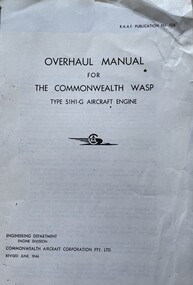
Document (item) - (SP) AAP RAAF Pub 156 Overhaul Manual for the Commonwealth Wasp Type S1H1-G Aircraft Engine
... (SP) AAP RAAF Pub 156 Overhaul Manual for the Commonwealth Wasp Type S1H1-G Aircraft Engine...Document (SP) AAP RAAF Pub 156 Overhaul Manual for the Commonwealth Wasp Type S1H1-G Aircraft Engine ... -
 Moorabbin Air Museum
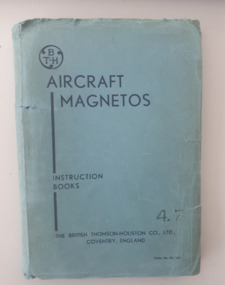
Manual (Item) - Aircraft Magnetos Instruction Books: The British Thomson-Houston Co., Ltf, Instruction Book No.1254: Magnetos Types Av & SV for Aeroplane Engines
... aircraft engines. Aircraft magnetos British Thomson-Houston Instruction Book No.1254: Magnetos Types Av & SV for Aeroplane Engines. ...created by the British Thomson-Houston during the interwar years. The manual relates to magnetos they produce for aircraft engines.aircraft magnetos, british thomson-houston -
Moorabbin Air Museum
Document (Item) - Various articles, photo's and cards (in some cases multiple copies). See description for more details, Various articles, photo's and cards. See description for more details
... Items include: De Havilland drover post card, WW2 Melbourne tram tickets, photo of Malcom Campbell with Bluebird (3 copies), Schedule of type experience booklet, dept of civil aviation, Aerogram RAAF museum Point cook journal Dec 2007 , CAC pamphlet on Macchi, Mirage, CAC Advanced fighter, Ikara missile, AV88, F/A 18, F-15, F-4, F-101,F3H, F2h, FH-1, Westland sea king, A4 Skyhawk, Sycamore, Hawker sea fury, De Havilland sea venom, Royal aeronautical society paper on high temperature turbo jet engines, Vulcan, Sabre, Firefly, C-130 Hercules, Catalina, Hawk Mark 60, Goswak T45 basic information, PC-9, P3C Orion, F-111, RAN naval aircraft, aerospace engineering magazine 1990, Australian armed forces badges, US ASTOVL project, Focke Wolfe tail photo, Puffin 1949 picture book of airliners, Aerospace article on gas turbine engines, Australian aviation article on F-35, geometrical tolerances BS308, Pamphlets on Rolls Royce engines, photos of DH-66, sopwith camels, Winjeel, 3 copies of 50th anniversary of ASTA - includes newspaper articles 1989, MD-17, Flight international schematics of helicopters, ...Hudson's Aristo Aviat Flight computer, drawing of S.N.E.C.M.A turbo engine, Notar no tail rotor helicopter, A4 photos of Mustang, Messerschmitt 109, Boeing jet transport design, Dassault Dornier Alpha jet 2, RAN naval aircraft, Yak-Aem 130, Aermacchi MB-339C,Saab 304, geometrical tolerancing BS 308, CA15, Hawker Harrier, Jaguar GR Mk 1, Pratt % Whitney PW4000, 8000, F100 and F117 engines, Saab AJ37 Viggen, F-16, AIAA publications catalog 2004, Micro dot inserts, Kaynar locknuts, K-Fast tools, AH-1 Cobra, F-14, Concorde, SR-71, B-17, XB-70, F-4 Phantom, Panavia tornado, Allison turboprop 250 engine, Gas turbine performance, F-117, Items include: De Havilland drover post card, WW2 Melbourne tram tickets, photo of Malcom Campbell with Bluebird (3 copies), Schedule of type experience booklet, dept of civil aviation, Aerogram RAAF museum Point cook journal Dec 2007 , CAC pamphlet on Macchi, Mirage, CAC Advanced fighter, Ikara missile, AV88, F/A 18, F-15, F-4, F-101,F3H, F2h, FH-1, Westland sea king, A4 Skyhawk, Sycamore, Hawker sea fury, De Havilland sea venom, Royal aeronautical society paper on high temperature turbo jet engines, Vulcan, Sabre, Firefly, C-130 Hercules, Catalina, Hawk Mark 60, Goswak T45 basic information, PC-9, P3C Orion, F-111, RAN naval aircraft, aerospace engineering magazine 1990, Australian armed forces badges, US ASTOVL project, Focke Wolfe tail photo, Puffin 1949 picture book of airliners, Aerospace article on gas turbine engines, Australian aviation article on F-35, geometrical tolerances BS308, Pamphlets on Rolls Royce engines, photos of DH-66, sopwith camels, Winjeel, 3 copies of 50th anniversary of ASTA - includes newspaper articles 1989, MD-17, Flight international schematics of helicopters, Various articles, photo's and cards. ...Post WW2, PR, brochures , pamphlets, photos, newspaper articles, drawings. Includes G.T. Hudson's Aristo Aviat Flight computer, drawing of S.N.E.C.M.A turbo engine, Notar no tail rotor helicopter, A4 photos of Mustang, Messerschmitt 109, Boeing jet transport design, Dassault Dornier Alpha jet 2, RAN naval aircraft, Yak-Aem 130, Aermacchi MB-339C,Saab 304, geometrical tolerancing BS 308, CA15, Hawker Harrier, Jaguar GR Mk 1, Pratt % Whitney PW4000, 8000, F100 and F117 engines, Saab AJ37 Viggen, F-16, AIAA publications catalog 2004, Micro dot inserts, Kaynar locknuts, K-Fast tools, AH-1 Cobra, F-14, Concorde, SR-71, B-17, XB-70, F-4 Phantom, Panavia tornado, Allison turboprop 250 engine, Gas turbine performance, F-117, -
 Australian Gliding Museum
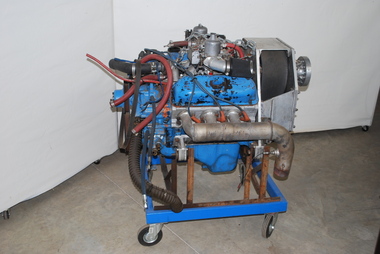
Machine - Auto-Tug Engine, 1983 or prior
... Based on the results of GFA’s program, CASA concluded that engine was quite suitable for an aircraft installation and rated it more reliable than the equivalent Lycoming and Continental aircraft engine. The use of the 1982 Ford V6 engine type...Based on the results of GFA’s program, CASA concluded that engine was quite suitable for an aircraft installation and rated it more reliable than the equivalent Lycoming and Continental aircraft engine. The use of the 1982 Ford V6 engine type ...The 1982 Ford V6 engine, built at the Ford Essex Engine Plant at Windsor in Ontario Canada, was released by Ford for installation in a number of car and light truck models manufactured in Canada, United States, Mexico and Venezula. Production probably exceeded 7 million items. The Australian Gliding Museum’s exhibit was an engine converted for aircraft use that was bought for the Gliding Federation of Australia “Auto-Tug” program from Javelin Aircraft Company in Wichita in USA. “Auto-Tug” was an experimental program sponsored by the Gliding Federation of Australia to equip a glider – sailplane Piper Pawnee PA-25-150 tug with a water-cooled engine to alleviate the costs of running and maintaining the Lycoming engines fitted to Pawnee tugs in Australia. The program began in 1988 and was aimed at obtaining limited certification for converting dedicated glider – sailplane tow planes. The engine equipped with modified intake manifolds produced 198 hp for flight with the same propeller RPM for take-off as the original Lycoming 0-540 engine. However, fuel consumption was halved as the water cooling of the Ford engine enabled quicker descents with throttle closed following the release of the sailplane. Based on the results of GFA’s program, CASA concluded that engine was quite suitable for an aircraft installation and rated it more reliable than the equivalent Lycoming and Continental aircraft engine. The use of the 1982 Ford V6 engine type for Pawnee tug conversions was discontinued when the General Motors LS1 5.7 litre V8 became available. It is understood that a small number of conversions have been done using the LS1 engine. This brief history is based on information obtained from Mike Burns and David Sharples who were involved in the Auto-Tug program from 1988 to 1992. Technical information relating to the 1982 Ford V6 automotive engine is contained in a paper by D.L. Armstrong and G.F. Stirrat of the Engine Engineering Office at Ford. Indicative of technological experimentation in the sport of glidingFord auto engine mounted on mobile standaustralian gliding, glider, sailplane, auto-tug, pawnee, tug, auto, engine, motor, ford, gliding federation of australia, burns, sharples. -
 Clunes Museum
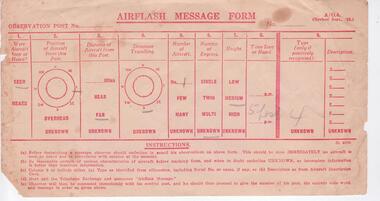
Ephemera - AIR FLASH MESSAGE FORM, 1942
... AIRCRAFT FLYING IN IMMEDIATE AREA. OBSERVER TO RECORD AND REPORT THE POSITION, DIRECTION, NUMBER OF ENGINES, HEIGHT, TIME SEEN OR HEARD AND TYPE OF AIRCRAFT TO AIRFORCE CONTROL BASE [BALLARAT] DURING 1939-1945 WORLD WAR ....AIRCRAFT FLYING IN IMMEDIATE AREA. OBSERVER TO RECORD AND REPORT THE POSITION, DIRECTION, NUMBER OF ENGINES, HEIGHT, TIME SEEN OR HEARD AND TYPE OF AIRCRAFT TO AIRFORCE CONTROL BASE [BALLARAT] DURING 1939-1945 WORLD WAR . ...MRS. ANDREW McLENNAN [ALMA] WAS AN OBSERVER FROM 1042 WHILE LIVING AT TOURELLO ESTATE, SMEATON ROAD, CLUNES.AIR FLASH MESSAGE FORM ISSUED TO NOMINATED OBSERVERS OF AIRCRAFT FLYING IN IMMEDIATE AREA. OBSERVER TO RECORD AND REPORT THE POSITION, DIRECTION, NUMBER OF ENGINES, HEIGHT, TIME SEEN OR HEARD AND TYPE OF AIRCRAFT TO AIRFORCE CONTROL BASE [BALLARAT] DURING 1939-1945 WORLD WAR .local history, document, identification, military, airforce, ww2 -
 Lake Boga Flying Boat Museum
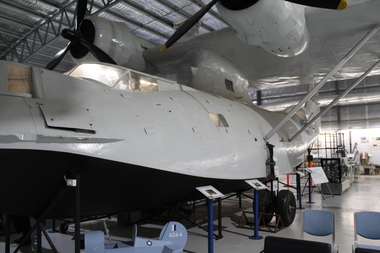
Vehicle - Catalina, Catalina aircraft, 1938
... engines and wings. Body purchased by Maher family, Nyah West. Donated to Lake Boga Lions Club in 1984 to be the central exhibit at the Flying Boat Museum. Further parts acquired. Centre wing section from Boundary Bend, VIC, outer wing sections from Gilgandra, NSW, and original Perspex for gun blisters from Frigate Bird II, donated by HARS (Historical Aircraft Restoration Society). Painted in 2012 by HARS. An airplane used by the RAAF during World War II, one of the types ...Built in 1938 by Consolidated Air Craft company in the USA. Attached to Netherlands East Airforce until 1942. Acquired by RAAF and used as a training airplane at 3 OTU until 1946. Sold to Kingsford Smith Aviation Services who removed the engines and wings. Body purchased by Maher family, Nyah West. Donated to Lake Boga Lions Club in 1984 to be the central exhibit at the Flying Boat Museum. Further parts acquired. Centre wing section from Boundary Bend, VIC, outer wing sections from Gilgandra, NSW, and original Perspex for gun blisters from Frigate Bird II, donated by HARS (Historical Aircraft Restoration Society). Painted in 2012 by HARS.An airplane used by the RAAF during World War II, one of the types serviced at Lake Boga Flying Boat Repair Depot during war time, decommissioned at Lake Boga in 1946, ex Netherlands East Airforce.Flying Boat painted in Pacific Blue, made of DuraliumA24-30world war ii, wwii, flying boat, catalina, pby5
