
Showing 47 items matching "underground development"
-
 Stawell Historical Society Inc
Map, Stawell Gold Mine, Plan Showing Wonga Pit and Underground Development, August 2001
... Plan Showing Wonga Pit and Underground Development...mining gold Stawell Gold Mines Victoria Scale 1 : 2500 Plan Showing Wonga Pit and Underground Development Map Stawell Gold Mine ...Stawell Gold Mines Victoria Scale 1 : 2500mining, gold -
 Melbourne Tram Museum
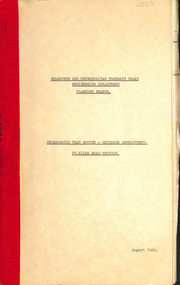
Document - Report, Melbourne & Metropolitan Tramways Board (MMTB), "Underground Routes - Ultimate Development - St Kilda Road Section", Aug. 1969
... "Underground Routes - Ultimate Development - St Kilda Road Section"...Report - Foolscap, card covers, red binding strip, 12 sheets + 4 drawings (fold out), titled "Underground Routes - Ultimate Development - St Kilda Road Section", detailing the proposal, including costs, issues, drains, obstructions. ..."Underground Routes - Ultimate Development - St Kilda Road Section" Document Report Melbourne & Metropolitan Tramways Board (MMTB) ...Report - Foolscap, card covers, red binding strip, 12 sheets + 4 drawings (fold out), titled "Underground Routes - Ultimate Development - St Kilda Road Section", detailing the proposal, including costs, issues, drains, obstructions. Includes cross sections of the tunnels and notes on public access. Dated August 1969. Includes parts where the roadway would dip under cross streets as well as the tram lines. Drawings not scanned.Has "Lees" in pencil on top right hand corner.trams, tramways, underground tramways, swanston st, reports, new tramways, st kilda road -
Stawell Historical Society Inc
Map, Stawell Gold Mine, Tenement Boundaries Stawell Township 2001, August 2001
... Showing Underground Development ...mining gold Stawell Gold Mines Victoria Scale 1 : 20000 Showing Underground Development Tenement Boundaries Stawell Township 2001 Map Stawell Gold Mine ...Showing Underground Development Stawell Gold Mines Victoria Scale 1 : 20000mining, gold -
 Bendigo Historical Society Inc.
Document - Kangaroo Flat Gold Mine Collection: Bendigo Gold Project Newsletters, Bendigo Mining NL, November 2001, August 2002, October 2002, July 2005, February 2006 and May 2006
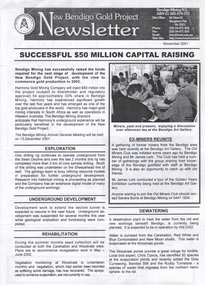
... ...underground development...Newsletters highlight development of gold project; a map of the decline development, underground workings and personnel news is featured on most newsletters. ...Newsletters highlight development of gold project; a map of the decline development, underground workings and personnel news is featured on most newsletters. ...New Bendigo Gold Project The Bendigo goldfield is centred on the urban area of Bendigo (population approximately 60 000) in central Victoria, 130 km north west of Melbourne, Australia. Gold was discovered at Bendigo in 1851 and production continued through to 1954. The Bendigo goldfield is the second largest goldfield in total gold produced in Australia, after Kalgoorlie's Golden Mile with a total production of 22 million oz. The geology of the Bendigo Field consists of a series of tightly folded, interbedded sandstone and shale sediments. Within the sediments the gold mineralisation is hosted in quartz reefs or ribbons closely associated with anticline axes and reverse faulting. The gold within the quartz reefs is typically both coarse grained and erratically distributed. Source: https://www.ausimm.com/publications/conference-proceedings/eighth-underground-operators-conference-2002/new-bendigo-gold-project/Six newsletters, "New Bendigo Gold Project", dated November 2001, August 2002, October 2002, July 2005, February 2006 and May 2006. Newsletters highlight development of gold project; a map of the decline development, underground workings and personnel news is featured on most newsletters. bendigo mining n.l., bendigo, mining, gold, kangaroo flat, decline, swan decline, south decline, new moon plant eaglehawk, ventilation shaft, drilling, blasting, ground support, sandra burns, james lerk, underground development, rehabilitation, greg miller, alexandria reef -
Stawell Historical Society Inc
Map, Western Mining Corp / Stawell Joint Venture, Three dimensional View of Wonga Open Cut & Decline, April 1992
... View Looking North West with Cut Away Showing Underground Development Floorplan...Mining Gold View Looking North West with Cut Away Showing Underground Development Floorplan Cutaway perspective showing Declines Three dimensional View of Wonga Open Cut & Decline Map Western Mining Corp / Stawell Joint Venture ...Cutaway perspective showing DeclinesView Looking North West with Cut Away Showing Underground Development Floorplanmining, gold -
 Bendigo Historical Society Inc.
Document - KANGAROO FLAT GOLD MINE COLLECTION: MEMO J.H. LALOR TO R. WOODALL
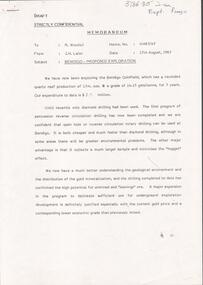
... Two options 'for ongoing exploration and development at Bendigo are: an underground exploration development program similar to Stawell and, secondly, limited traverse percussion drilling on traverses 800m and 400m apart prior to underground development'. ...Two options 'for ongoing exploration and development at Bendigo are: an underground exploration development program similar to Stawell and, secondly, limited traverse percussion drilling on traverses 800m and 400m apart prior to underground development'. ...Four page memorandum titled 'Strictly Confidential' between J.H. Lalor and R. Woodall, regarding Bendigo Proposed Exploration. Two options 'for ongoing exploration and development at Bendigo are: an underground exploration development program similar to Stawell and, secondly, limited traverse percussion drilling on traverses 800m and 400m apart prior to underground development'. Three areas are discussed, Spring Gully, Sailors Gully and Quarry Hill.bendigo, gold mining, exploration of bendigo goldfield, bendigo, central deborah gold mine, spring gully, sailors gully, quarry hill, anticline, exploration, western mining corporation, bendigo mining nl -
 Bendigo Historical Society Inc.
Document - Kangaroo Flat Gold Mine Collection: Bendigo Mining Shareholder Report, Bendigo Mining NL, July 2005
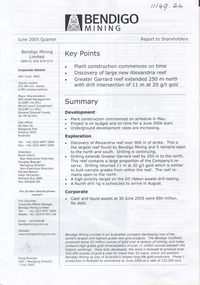
... Summary of key points: plant, project and underground development, exploration, engineering and procurement and mining. ...Summary of key points: plant, project and underground development, exploration, engineering and procurement and mining. ...Bendigo Mining 1993 to present In the 1980s Bendigo Mining listed on the ASX with ownership of leases along the Deborah line of reef. In 1993, the Company consolidated ownership of the entire Goldfield when it purchased WMC’s interests. A detailed account of the recent history of Bendigo Mining is outlined in the Company History. Bendigo Mining NL website: https://www.bmnl.com.au/goldfield-history/ A3 bifold 4 page document. On front page 'Bendigo Mining, report to shareholders, June 2005 quarter'. Corporate details on left hand side of front page. Summary of key points: plant, project and underground development, exploration, engineering and procurement and mining. Sheepshead line of reef and Deborah line of reef facts are presented with supporting long section diagrams, showing the Swan Decline. Corporate assets as at 30 June 2005, were $90 million held both in cash and liquid assets. Photos and diagrams include: Carshalton site plant construction, schematic view of ribbon locations. bendigo mining n.l., bendigo, mining, gold, douglas buerger, swan decline, deborah reef, sheepshead line of reef, alexandria reef, greater garrard reef, plant construction -
 Melbourne Tram Museum
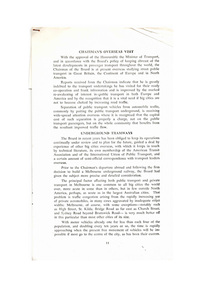
Document - Report, Melbourne & Metropolitan Tramways Board (MMTB), "Chairman's Overseas Visit", 1962
... Copy of a report, 3 A5 sheets and 1 A5 cut sheet, stapled, titled "Chairman's Overseas Visit", discussing overseas developments following an overseas tour and the development of underground tramway systems in the CBD, including the closure of the Collin St tram lines in favour of Bourke St. ...Trams tramways MMTB Collins St Bourke St Swanston St Underground tramways Reports Copy of a report, 3 A5 sheets and 1 A5 cut sheet, stapled, titled "Chairman's Overseas Visit", discussing overseas developments following an overseas tour and the development of underground tramway systems in the CBD, including the closure of the Collin St tram lines in favour of Bourke St. ...Copy of a report, 3 A5 sheets and 1 A5 cut sheet, stapled, titled "Chairman's Overseas Visit", discussing overseas developments following an overseas tour and the development of underground tramway systems in the CBD, including the closure of the Collin St tram lines in favour of Bourke St. Looks at congestion, development of the City Loop, monorails, motorists, Spencer St Station. See also Reg Item 409 and 2812 for further references. Item 409.4 referees to the Chairman's Tour of 1962.trams, tramways, mmtb, collins st, bourke st, swanston st, underground tramways, reports -
 Flagstaff Hill Maritime Museum and Village
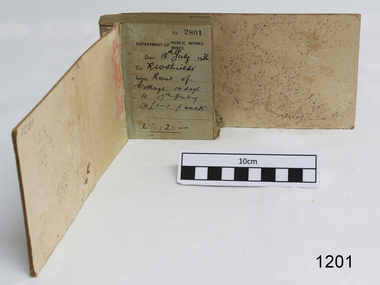
Financial record - Receipt Book, Department of Works and Mines Victoria, July 1936 (first record)
... Investigation of the state's geological structure, mineral wealth and underground water resources 4. Development of the mining industry 5. ...Investigation of the state's geological structure, mineral wealth and underground water resources 4. Development of the mining industry 5. ...Establishment and Functions Prior to 1860, the Chief Secretary's Department had been responsible for the administration of the gold fields and associated mining activities. In November 1860 a Commissioner of Mines was appointed and a Department was established under his administration. For the period November 1861 to June 1863, the Postmaster General was responsible for the Mining Department. A Minister of Mines was again appointed in 1863. Responsibilities of the Department of Mines were: 1. Regulation of mining and related public works activities through the issue of miners rights, business and residence licences, mining leases, mineral and other prospecting licences 2. Superintendence of the activities of mining surveyors, registrars, wardens and Mining Boards. 3. Investigation of the state's geological structure, mineral wealth and underground water resources 4. Development of the mining industry 5. Supervision of the safe working of mines, machinery and quarries including checking the credential of mine managers, inspectors and operators 6. Regulation of the disposal of sludge and other waste products 7. Administration of the Victorian Mining Accident Relief Fund. Arising from its initial responsibility for the supply of water on the gold fields, the Department became responsible for rural water supply from the mid 1860s. Statutory responsibility for rural water works during this period rested with the Board of Land and Works. In 1865 the Waterworks Act gave the Board power to construct waterworks, purchase land, levy charges and lease or sell works, while the Public Loans Act 1865 empowered it to provide loans to local water trusts for waterworks. The actual administration of these statutory provisions was undertaken by the Victorian Water Supply Department which operated from 1865 to 1889 as a sub-department of the Department of Mines, from 1889 as a department in its own right, and from 1895 to 1909 as a sub-department of the Department of Mines and Water Supply. For a brief period from 1891 to 1893 the Department of Mines was also responsible for forests and, until 1880, for the Schools of Mines subsequently transferred to the Education Department. In 1895 the Department of Mines and the Victorian Water Supply Department were amalgamated to form the Department of Mines and Water Supply. A snapshot into social history around the 1930s when the Department of works and the Mines Departments were still linkedReceipt Book for the Department of Works; Mines. Receipt No 2801 - 3000. 1st receipt Number 2801, "18th July 1936, for Rent of Cottage: 14 days for 2 pounds, 2 shillings. The inscription on the back is signed by J F Condau in 13-3-33Printed on spine "GENERAL RECEIPTS / 15 / 2801 / TO 3000" Printed on each receipt 'DEPARTMENT OF / PUBLIC WORKS. / MINES." Fill in using ink pen "(DATE) 18th July 1936 / (TO) - - - shields' / BEING) Rent of / Cottage: 14 days / (TO) 17th July / @ (symbol for pound) 1-1. p. week / . (symbol for pound) 2:2:-"Inside cover there is some red pencil writing, words and figures unreadable. Handwritten on back cover "Numbers checked / and found corredt / J S Coudou (?) / 13-3-33" One some receipts "Wharfage / S.S. Koonara"flagstaff hill, warrnambool, shipwrecked coast, flagstaff hill maritime museum, maritime museum, shipwreck coast, flagstaff hill maritime village, great ocean road, department of works: mines, receipt book, rent 1936, imperial currency, living costs 1936, department of works, department of mines, j f condou, 1933, 13-3-33 -
Federation University Historical Collection
Magazine - magazines, ASEA magazine folder, 1952 to 1954
... left at Ballarat School of Mines by Principal Graham Beanland Graham Beanland Ballarat School of Mines electrical engineering transmission systems high voltage transmission developments in Sweden underground hydro-electric power stations in Sweden Gotland HV DC transmission link Harspranget power station and 380 kV system magazine folder with blue spine and black cloth boards ASEA magazine folder Magazine magazines ...left at Ballarat School of Mines by Principal Graham Beanlandmagazine folder with blue spine and black cloth boardsgraham beanland, ballarat school of mines, electrical engineering, transmission systems, high voltage transmission developments in sweden, underground hydro-electric power stations in sweden, gotland hv dc transmission link, harspranget power station and 380 kv system -
 Greensborough Historical Society
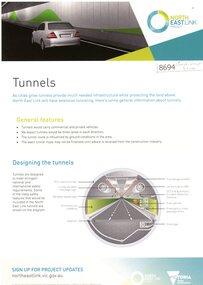
Newsletter - Leaflet, North East Link Authority, North East Link tunnels, and, Community Updates March 2022, 2022
... This newsletter, and additional leaflets, are to keep the community informed of project designs and developments in the area of underground tunnels....This newsletter, and additional leaflets, are to keep the community informed of project designs and developments in the area of underground tunnels. An ongoing collection of community updates north east link metropolitan ring road north east link tunnels Various page leaflets, colour text and images. ...The North East Link Authority was set up to lead development of this project. This newsletter, and additional leaflets, are to keep the community informed of project designs and developments in the area of underground tunnels.An ongoing collection of community updatesVarious page leaflets, colour text and images. Multiple updates on tunnels.north east link, metropolitan ring road, north east link tunnels -
 Kiewa Valley Historical Society
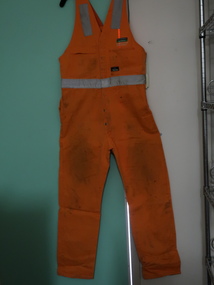
Clothes - Workmen - overalls and coat
... underground construction. Founded in New Zealand in 1961. In 2003 it became wholly owned subsidiary of Aveng (Sth Africa). It expanded to Australia, Asia and the Middle East in he 1970s. Bogong Power Development...underground construction. Founded in New Zealand in 1961. In 2003 it became wholly owned subsidiary of Aveng (Sth Africa). It expanded to Australia, Asia and the Middle East in he 1970s. Bogong Power Development ...Work clothes are made of durable fabric and the reflective tape enables it to be safe day and night. McConnell Dowell construcion company: Remote resources and energy projects - building, civil, electrical, fabrication, marine, mechanics, pipelines, rail, tunnel and underground construction. Founded in New Zealand in 1961. In 2003 it became wholly owned subsidiary of Aveng (Sth Africa). It expanded to Australia, Asia and the Middle East in he 1970s. Bogong Power Development consisting of tunnels and shafts and the construction of a new underground Hydro Electric Hydro Electric Power Station. It is the largest Hydro Power project constructed in Australia in 25 years.Bogong Power Development created a new power station extending the Kiewa Hydro Electric Scheme and increasing the generation of renewable energy.1. Overalls: Bright orange cotton gabardine overalls with 6 heavy duty studs down the front and retro reflective tape. Straps over the shoulders. The back has a large pocket sewn dividing it into 2 compartments. The front has 2 side pockets at the hip and 2 pockets at the chest. 2. Coat: Reversible red/grey coat. Sleeveless zip at the front. Pockets on each side of each layer - zip on one side and zipless on the other of each side. Waterproof grey material on one side and red warm materialo on the other. Sewn patches on the outside ".92R Yakka" "McConnell/Dowell/Bogong Power/ Development/ Safety Award/ 1 year/ 250,000" in white and green and on the grey side. "Aurora Australia/ picture/ Tunnel Boring machine"1. Black texta print 'Wiffen' and washing instructions label. workman's clothes, bogong power development, mcconnell dowell, high visibility garment -
 Kiewa Valley Historical Society
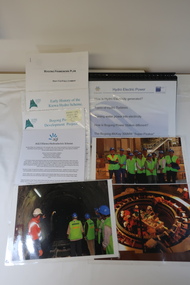
AGL - Bogong Information Centre
... AGL took over the operation of the Kiewa Hydro Electric Scheme and constructed the 'Bogong Power Development Project. This involved the construction of a new underground Hydro Electric Power Station on AGL Hydro's Junction Dam regulating pondage near Bogong village in Vctoria's High country. ...AGL took over the operation of the Kiewa Hydro Electric Scheme and constructed the 'Bogong Power Development Project. This involved the construction of a new underground Hydro Electric Power Station on AGL Hydro's Junction Dam regulating pondage near Bogong village in Vctoria's High country. ...AGL took over the operation of the Kiewa Hydro Electric Scheme and constructed the 'Bogong Power Development Project. This involved the construction of a new underground Hydro Electric Power Station on AGL Hydro's Junction Dam regulating pondage near Bogong village in Vctoria's High country. Construction commenced in 2007 and was completed by the end of 2009The Bogong Power Development Project was important to Victoria as hydro power was environmentally friendly. It was important to convey this to the population by way of educating them on the understanding of how it worked and its benefits to providing power to Victoria and beyond.Collection of photos, folders and papers used at the Bogong Information Centre to inform the public on the operation of the Kiewa Hydro Electric Scheme. Dated 2007 - 2009bogong power development project, agl hydro at bogong -
 Bendigo Historical Society Inc.
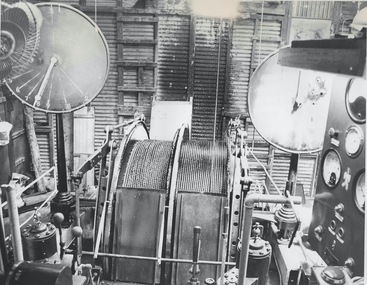
Photograph - AUSTIN COLLECTION: Wattle Gully Gold Mine, Chewton, Not dated but possibly 1980's
... The mine site has retained evidence of its development since 1937 with its most recent periods of equipment upgrades in the 1950s and 1980s being documented by buildings, structures and intact and working machinery. Heritage Council Victoria: https://vhd.heritagecouncil.vic.gov.au/places/2380 Gold Mining underground Wattle Gully Gold Mine Chewton winding gear Black and white photograph: view of engine room. ...Wattle Gully Mine holds a pivotal position in the history of the State's quartz mining industry. The rich strike at Wattle Gully mine in 1937 helped revive the State's gold mining industry that had been in the doldrums since the First World War. Wattle Gully, and a handful of other 'new' companies - the Maude and Yellow Girl, Morning Star, A 1, and North Deborah - were the flagships of the revived industry and sustained the State's gold production for some 30 years. Wattle Gully mine, with a yield of 350,000 ounces, was the richest mine of its era. By 1940, the Wattle Gully Company had paid out £207,000 in dividends to its shareholders. The company continued to mine profitably through the Second World War, though it struggled due to a shortage of manpower. After the war, the mine continued to develop - in the early 1950s new plant including a winding engine, steel poppet head, and twenty-head battery was added. The plant was obtained from the Central Nell Gwynne Company, Bendigo. On 13 March 1969, the Wattle Gully Company closed down the mine, laying off 62 men. Since 1970 Wattle Gully mine has worked intermittently. Recent additions to the mine's infrastructure has been a new ore processing plant and a decline tunnel. The ore processing plant was operated by Newmont mining from 1987 to 1990 and subsequently operated by Consolidated Victorian Mines and Duketon Goldfields. The mine site has retained evidence of its development since 1937 with its most recent periods of equipment upgrades in the 1950s and 1980s being documented by buildings, structures and intact and working machinery. Heritage Council Victoria: https://vhd.heritagecouncil.vic.gov.au/places/2380 Black and white photograph: view of engine room. Wattle Gully Gold Mine winding gear, two winding wheels in centre of image.gold mining, underground, wattle gully gold mine, chewton, winding gear -
 Bendigo Historical Society Inc.
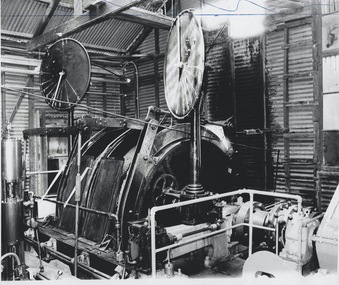
Photograph - AUSTIN COLLECTION: Winding Gear, Wattle Gully Gold Mine, Chewton, 1982
... The mine site has retained evidence of its development since 1937 with its most recent periods of equipment upgrades in the 1950s and 1980s being documented by buildings, structures and intact and working machinery. Heritage Council Victoria: https://vhd.heritagecouncil.vic.gov.au/places/2380 Gold Mining underground Wattle Gully Gold Mine Chewton winding gear Black and white photograph: view of engine room. ...Wattle Gully Mine holds a pivotal position in the history of the State's quartz mining industry. The rich strike at Wattle Gully mine in 1937 helped revive the State's gold mining industry that had been in the doldrums since the First World War. Wattle Gully, and a handful of other 'new' companies - the Maude and Yellow Girl, Morning Star, A 1, and North Deborah - were the flagships of the revived industry and sustained the State's gold production for some 30 years. Wattle Gully mine, with a yield of 350,000 ounces, was the richest mine of its era. By 1940, the Wattle Gully Company had paid out £207,000 in dividends to its shareholders. The company continued to mine profitably through the Second World War, though it struggled due to a shortage of manpower. After the war, the mine continued to develop - in the early 1950s new plant including a winding engine, steel poppet head, and twenty-head battery was added. The plant was obtained from the Central Nell Gwynne Company, Bendigo. On 13 March 1969, the Wattle Gully Company closed down the mine, laying off 62 men. Since 1970 Wattle Gully mine has worked intermittently. Recent additions to the mine's infrastructure has been a new ore processing plant and a decline tunnel. The ore processing plant was operated by Newmont mining from 1987 to 1990 and subsequently operated by Consolidated Victorian Mines and Duketon Goldfields. The mine site has retained evidence of its development since 1937 with its most recent periods of equipment upgrades in the 1950s and 1980s being documented by buildings, structures and intact and working machinery. Heritage Council Victoria: https://vhd.heritagecouncil.vic.gov.au/places/2380 Black and white photograph: view of engine room. Wattle Gully Gold Mine winding gear, two winding wheels in centre of image.gold mining, underground, wattle gully gold mine, chewton, winding gear -
 Bendigo Historical Society Inc.
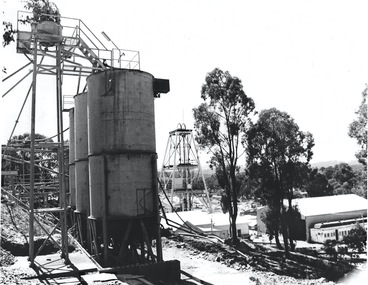
Photograph - AUSTIN COLLECTION: Wattle Gully Gold Mine, Chewton, 1982
... The mine site has retained evidence of its development since 1937 with its most recent periods of equipment upgrades in the 1950s and 1980s being documented by buildings, structures and intact and working machinery. Heritage Council Victoria: https://vhd.heritagecouncil.vic.gov.au/places/2380 Gold Mining underground Wattle Gully Gold Mine Chewton ore bins poppet head mine sheds Black and white photograph: view of Wattle Gully mine site with ore bins, poppet head and mining sheds. ...Wattle Gully Mine holds a pivotal position in the history of the State's quartz mining industry. The rich strike at Wattle Gully mine in 1937 helped revive the State's gold mining industry that had been in the doldrums since the First World War. Wattle Gully, and a handful of other 'new' companies - the Maude and Yellow Girl, Morning Star, A 1, and North Deborah - were the flagships of the revived industry and sustained the State's gold production for some 30 years. Wattle Gully mine, with a yield of 350,000 ounces, was the richest mine of its era. By 1940, the Wattle Gully Company had paid out £207,000 in dividends to its shareholders. The company continued to mine profitably through the Second World War, though it struggled due to a shortage of manpower. After the war, the mine continued to develop - in the early 1950s new plant including a winding engine, steel poppet head, and twenty-head battery was added. The plant was obtained from the Central Nell Gwynne Company, Bendigo. On 13 March 1969, the Wattle Gully Company closed down the mine, laying off 62 men. Since 1970 Wattle Gully mine has worked intermittently. Recent additions to the mine's infrastructure has been a new ore processing plant and a decline tunnel. The ore processing plant was operated by Newmont mining from 1987 to 1990 and subsequently operated by Consolidated Victorian Mines and Duketon Goldfields. The mine site has retained evidence of its development since 1937 with its most recent periods of equipment upgrades in the 1950s and 1980s being documented by buildings, structures and intact and working machinery. Heritage Council Victoria: https://vhd.heritagecouncil.vic.gov.au/places/2380 Black and white photograph: view of Wattle Gully mine site with ore bins, poppet head and mining sheds. Eucalypt trees in centre of image. gold mining, underground, wattle gully gold mine, chewton, ore bins, poppet head, mine sheds -
 Bendigo Historical Society Inc.
Photograph - AUSTIN COLLECTION: Wattle Gully Gold Mine, Chewton, 1980's
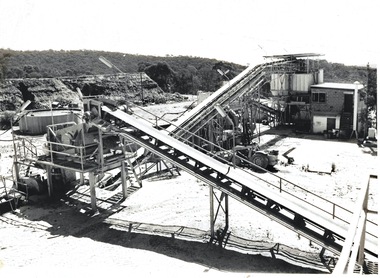
... The mine site has retained evidence of its development since 1937 with its most recent periods of equipment upgrades in the 1950s and 1980s being documented by buildings, structures and intact and working machinery. Heritage Council Victoria: https://vhd.heritagecouncil.vic.gov.au/places/2380 Gold Mining underground Wattle Gully Gold Mine ore elevators Black and white photograph: view of Wattle Gully mine site with two elevators, centre of image. ...Wattle Gully Mine holds a pivotal position in the history of the State's quartz mining industry. The rich strike at Wattle Gully mine in 1937 helped revive the State's gold mining industry that had been in the doldrums since the First World War. Wattle Gully, and a handful of other 'new' companies - the Maude and Yellow Girl, Morning Star, A 1, and North Deborah - were the flagships of the revived industry and sustained the State's gold production for some 30 years. Wattle Gully mine, with a yield of 350,000 ounces, was the richest mine of its era. By 1940, the Wattle Gully Company had paid out £207,000 in dividends to its shareholders. The company continued to mine profitably through the Second World War, though it struggled due to a shortage of manpower. After the war, the mine continued to develop - in the early 1950s new plant including a winding engine, steel poppet head, and twenty-head battery was added. The plant was obtained from the Central Nell Gwynne Company, Bendigo. On 13 March 1969, the Wattle Gully Company closed down the mine, laying off 62 men. Since 1970 Wattle Gully mine has worked intermittently. Recent additions to the mine's infrastructure has been a new ore processing plant and a decline tunnel. The ore processing plant was operated by Newmont mining from 1987 to 1990 and subsequently operated by Consolidated Victorian Mines and Duketon Goldfields. The mine site has retained evidence of its development since 1937 with its most recent periods of equipment upgrades in the 1950s and 1980s being documented by buildings, structures and intact and working machinery. Heritage Council Victoria: https://vhd.heritagecouncil.vic.gov.au/places/2380 Black and white photograph: view of Wattle Gully mine site with two elevators, centre of image. gold mining, underground, wattle gully gold mine, ore elevators -
 Bendigo Historical Society Inc.
Photograph - AUSTIN COLLECTION: Wattle Gully Gold Mine, Chewton, 1980's
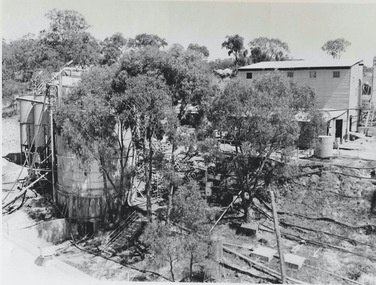
... The mine site has retained evidence of its development since 1937 with its most recent periods of equipment upgrades in the 1950s and 1980s being documented by buildings, structures and intact and working machinery. Heritage Council Victoria: https://vhd.heritagecouncil.vic.gov.au/places/2380 Gold Mining underground Wattle Gully Gold Mine mine sheds ore bins Black and white photograph: landscape view of Wattle Gully mine site. ...Wattle Gully Mine holds a pivotal position in the history of the State's quartz mining industry. The rich strike at Wattle Gully mine in 1937 helped revive the State's gold mining industry that had been in the doldrums since the First World War. Wattle Gully, and a handful of other 'new' companies - the Maude and Yellow Girl, Morning Star, A 1, and North Deborah - were the flagships of the revived industry and sustained the State's gold production for some 30 years. Wattle Gully mine, with a yield of 350,000 ounces, was the richest mine of its era. By 1940, the Wattle Gully Company had paid out £207,000 in dividends to its shareholders. The company continued to mine profitably through the Second World War, though it struggled due to a shortage of manpower. After the war, the mine continued to develop - in the early 1950s new plant including a winding engine, steel poppet head, and twenty-head battery was added. The plant was obtained from the Central Nell Gwynne Company, Bendigo. On 13 March 1969, the Wattle Gully Company closed down the mine, laying off 62 men. Since 1970 Wattle Gully mine has worked intermittently. Recent additions to the mine's infrastructure has been a new ore processing plant and a decline tunnel. The ore processing plant was operated by Newmont mining from 1987 to 1990 and subsequently operated by Consolidated Victorian Mines and Duketon Goldfields. The mine site has retained evidence of its development since 1937 with its most recent periods of equipment upgrades in the 1950s and 1980s being documented by buildings, structures and intact and working machinery. Heritage Council Victoria: https://vhd.heritagecouncil.vic.gov.au/places/2380 Black and white photograph: landscape view of Wattle Gully mine site. Eucalypt trees in foreground, mining sheds in background. Ore bins on left hand side of image.gold mining, underground, wattle gully gold mine, mine sheds, ore bins -
 Bendigo Historical Society Inc.
Photograph - AUSTIN COLLECTION: Bill Williamson, 1980's
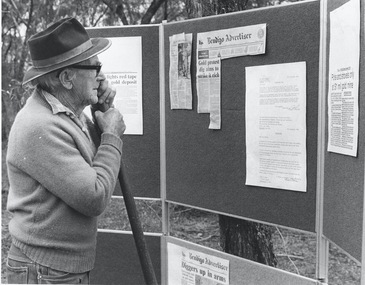
... The mine site has retained evidence of its development since 1937 with its most recent periods of equipment upgrades in the 1950s and 1980s being documented by buildings, structures and intact and working machinery. Heritage Council Victoria: https://vhd.heritagecouncil.vic.gov.au/places/2380 Gold Mining underground Wattle Gully Gold Mine mine sheds ore bins Written on back of photo in blue pen: Bill Williamson, old miner from Castlemaine, (mined through depression yrs) Black and white photograph: former miner from Castlemaine, Bill Williamson, leaning on a shovel, reading newspaper clippings pinned on trifold noticeboard. ...Wattle Gully Mine holds a pivotal position in the history of the State's quartz mining industry. The rich strike at Wattle Gully mine in 1937 helped revive the State's gold mining industry that had been in the doldrums since the First World War. Wattle Gully, and a handful of other 'new' companies - the Maude and Yellow Girl, Morning Star, A 1, and North Deborah - were the flagships of the revived industry and sustained the State's gold production for some 30 years. Wattle Gully mine, with a yield of 350,000 ounces, was the richest mine of its era. By 1940, the Wattle Gully Company had paid out £207,000 in dividends to its shareholders. The company continued to mine profitably through the Second World War, though it struggled due to a shortage of manpower. After the war, the mine continued to develop - in the early 1950s new plant including a winding engine, steel poppet head, and twenty-head battery was added. The plant was obtained from the Central Nell Gwynne Company, Bendigo. On 13 March 1969, the Wattle Gully Company closed down the mine, laying off 62 men. Since 1970 Wattle Gully mine has worked intermittently. Recent additions to the mine's infrastructure has been a new ore processing plant and a decline tunnel. The ore processing plant was operated by Newmont mining from 1987 to 1990 and subsequently operated by Consolidated Victorian Mines and Duketon Goldfields. The mine site has retained evidence of its development since 1937 with its most recent periods of equipment upgrades in the 1950s and 1980s being documented by buildings, structures and intact and working machinery. Heritage Council Victoria: https://vhd.heritagecouncil.vic.gov.au/places/2380 Black and white photograph: former miner from Castlemaine, Bill Williamson, leaning on a shovel, reading newspaper clippings pinned on trifold noticeboard. One notice ' Bendigo Advertiser, 'Gold protest dig aims to strike it rich'. Photo probably taken near Chewton.Written on back of photo in blue pen: Bill Williamson, old miner from Castlemaine, (mined through depression yrs) gold mining, underground, wattle gully gold mine, mine sheds, ore bins -
 Bendigo Historical Society Inc.
Administrative record - Bendigo Amalgamated Goldfields N.L. Mine Manager's Reports, 1917 - 1920
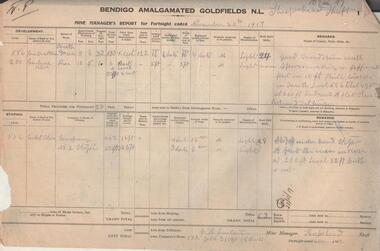
... Categories reported on include: development, stoping, tons from tributors, tons Company's stone, plant and machinery, underground workings, number of rock drill shifts, firewood used, coal burnt, and general remarks. charcoal burnt., lifting water...Categories reported on include: development, stoping, tons from tributors, tons Company's stone, plant and machinery, underground workings, number of rock drill shifts, firewood used, coal burnt, and general remarks. charcoal burnt., lifting water Administrative record Bendigo Amalgamated Goldfields N.L. ...In 1917 Bendigo Amalgamated Goldfield Ltd was formed from the amalgamation of 35 companies with operations on the Garden Gully, Sheepshead, Deborah and Derby lines of reef hoping to increase profits of these existing operations through economies of scale. This was difficult to achieve as the shafts involved were spread throughout the goldfield. Diamond drilling and good geological practices were introduced (Pabst was Chief Geologist) leading to some exploration success. However costs were rising rapidly and in 1923 the directors, deciding that mining would soon become unprofitable, dissolved the company returning assets to the original vendors. J.H. Lenten, Mine Manager, received his second class Mine Manager's certificate in September, 1914 at an examination held at the Bendigo Law Courts. One hundred pages of fortnightly manager's reports for Bendigo Amalgamated Goldfields N.L., Sheepshead Shaft. Reports consist of two pages for each fortnight, signed by J.H. Lenten, Mine Manager. Dates of reports range from November 20th, 1917 to 5th May 1920. Categories reported on include: development, stoping, tons from tributors, tons Company's stone, plant and machinery, underground workings, number of rock drill shifts, firewood used, coal burnt, and general remarks. charcoal burnt., lifting waterbendigo, margaret roberts, , goldmining, bendigo amalgamated goldfields, sheepshead shaft, j.h. lenten, mine manager -
 Bendigo Historical Society Inc.
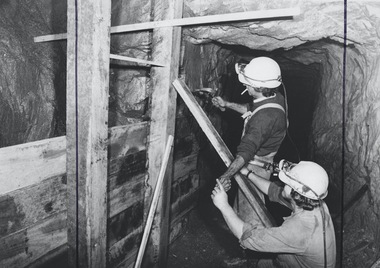
Photograph - AUSTIN COLLECTION: timbering a drive Williams United Gold Mine, Eaglehawk, 1987
... In the 1980s, a company, Bendigo Mining NL, proposed a re- development of the mine with an opencut and underground workings, leading to environmental assessments and the collection of photographs of the decaying underground infrastructure....In the 1980s, a company, Bendigo Mining NL, proposed a re- development of the mine with an opencut and underground workings, leading to environmental assessments and the collection of photographs of the decaying underground infrastructure. ...The Williams United Shaft (New Chum Reef) is a significant historical gold mining site in Eaglehawk, a suburb of Bendigo, Victoria. Located at the end of Junction Street, this heritage-listed site contains remnants of mining infrastructure, including a poppet head, compressor beds, and a winder bed, amidst old open-cut workings and mullock heaps. The mine was part of the rich Bendigo goldfield and is recognized on the Victorian Heritage Inventory. In the 1980s, a company, Bendigo Mining NL, proposed a re- development of the mine with an opencut and underground workings, leading to environmental assessments and the collection of photographs of the decaying underground infrastructure.Black and white photograph: two miners timbering a drive at Williams United Gold Mine, Eaglehawk. Miner in background hammering a nail in, with hand extended to miner squatting on floor of drive, who is handing up a nail. Miner, holding the hammer, is smoking a cigarette.gold mining, underground, williams united gold mine, eaglehawk, western mining gmc, timbering -
 Melbourne Water
Photographic View Book, The Melbourne & Metropolitan Board of Works - Water Supply, Sewerage etc. ...Photographic Views, 1908
... This book showcases the MMBW's infrastructure achievements and documents costs, requirements and key personnel involved in the development of the water supply and sewerage schemes.The introduction states "The water supply sources and headworks are in many cases situated in remote places and the sewerage works are chiefly underground. ...In 1891 The Melbourne and Metropolitan Board of Works (MMBW) was formed and became responsible for Melbourne's water supply. Melbourne had grown to a city of half a million people. To provide water to this rapidly growing city (especially the eastern suburbs), and to supplement the 1857 Yan Yean Reservoir, Melbourne's first water supply, the Watts River (near Healesville) was tapped. It supplied water to Melbourne, via the Maroondah aqueduct. In May 1892 the MMBW's first engineer-in-chief, Mr William Thwaites began construction on Melbourne's sewerage system. A treatment farm was built at Werribee and a pumping station was built at Spotswood (now the site of the Scienceworks Museum) to send the city's waste to Werribee. The first Melbourne homes were connected to the sewerage system in 1897. This book showcases the MMBW's infrastructure achievements and documents costs, requirements and key personnel involved in the development of the water supply and sewerage schemes.The introduction states "The water supply sources and headworks are in many cases situated in remote places and the sewerage works are chiefly underground. The Board has therefore resolved that these photographs of some of the scenes and works should be collected and bound for general information. August 1908" This book is in excellent condition and provides a detailed insight into the previous 17 years of work and the Board personnel of the MMBW leading up to 1908. It is of historical importance to the history of Melbourne for the photographic documents of places that were not generally open to the public, and for Melbourne Water in its detailed history of the MMBW in the early twentieth century. Photographic view book with hard khaki coloured cardboard cover and blue fabric binding. 120 Pages. Glossy paper with black and white plates and text about the MMBW, and scenic views and places of interest in association with the MMBW. The Melbourne & Metropolitan Board of Works - Water Supply, Sewerage etc. ...Photographic Views...mmbw, board members, sewerage, water supply, historic views, photographs -
 Bendigo Historical Society Inc.
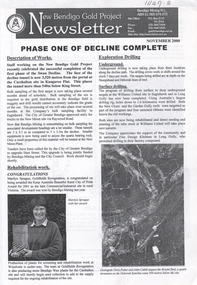
Document - Kangaroo Flat Gold Mine Collection: New Bendigo Gold Project Newsletters, no date
... November 2000 newsletter is headed ' Phase One of Decline Complete' Articles include description of works, rehabilitation work, exploration drilling - underground and surface drilling and dewatering and safety. Map showing decline development superimposed on street map on back of sheet. ...November 2000 newsletter is headed ' Phase One of Decline Complete' Articles include description of works, rehabilitation work, exploration drilling - underground and surface drilling and dewatering and safety. Map showing decline development superimposed on street map on back of sheet. ...Three New Bendigo Gold Project newsletters, dated November 2000, June 2002 and April 2003. November 2000 newsletter is headed ' Phase One of Decline Complete' Articles include description of works, rehabilitation work, exploration drilling - underground and surface drilling and dewatering and safety. Map showing decline development superimposed on street map on back of sheet. June 2002 newsletter, headed 'Environmental Manager Joins the Team' describes the appointment and previous experience of Philipa Varris. The newsletter includes information on water treatment plant, new shaft below the surface and provides a personality profile of John Cahill (Frank) the Senior Geologist. April 2003 newsletter, headed 'Bendigo Mining Seeks Site Expansion for Production' provides facts on the Swan Decline, a mine public open day, bird watching at Woodvale, the advisory board and a personality profile on Phil Walklate, project draftsman. A decline development map is provided on bottom right of sheet. bendigo mining n.l., bendigo, mining, gold, kangaroo flat, new bendigo gold project, drilling, rehabilitation, bree darcy, sam mcgowan, marilynh sprague, philipa varris, swan decline -
 Bendigo Historical Society Inc.
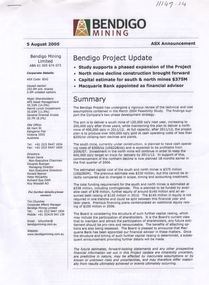
Document - Kangaroo Flat Gold Mine Collection: Bendigo Project Update ASX announcement, Bendigo Mining NL, 5 August 2005
... Source: https://www.ausimm.com/publications/conference-proceedings/eighth-underground-operators-conference-2002/new-bendigo-gold-project/ Bendigo Mining N.L. Bendigo mining gold Kangaroo Flat Swan decline Development strategy funding recent expenditures key project details production processing oeprating costs development capital maintenance capital Stock Exchange project update Three page, double sided project update for the Bendigo project. ...New Bendigo Gold Project The Bendigo goldfield is centred on the urban area of Bendigo (population approximately 60 000) in central Victoria, 130 km north west of Melbourne, Australia. Gold was discovered at Bendigo in 1851 and production continued through to 1954. The Bendigo goldfield is the second largest goldfield in total gold produced in Australia, after Kalgoorlie's Golden Mile with a total production of 22 million oz. The geology of the Bendigo Field consists of a series of tightly folded, interbedded sandstone and shale sediments. Within the sediments the gold mineralisation is hosted in quartz reefs or ribbons closely associated with anticline axes and reverse faulting. The gold within the quartz reefs is typically both coarse grained and erratically distributed. Source: https://www.ausimm.com/publications/conference-proceedings/eighth-underground-operators-conference-2002/new-bendigo-gold-project/Three page, double sided project update for the Bendigo project. On top of front page 'Bendigo Mining, 5 August 2005, ASX Announcement'. Content includes: summary of the project with the aim defined 'to deliver a south mine of 120,000 oz/y next year, increasing to 200,000 oz/y in 2011/12. At full capacity, after 2001/12, the project plan is to produce over 600,000 oz/y gold at cash operating costs of less than $200/0z utilising twin declines and plants'. Development strategy, funding, recent expenditures, key project details, production, processing, operating costs, development capital, maintenance capital are discussed in the project update. bendigo mining n.l., bendigo, mining, gold, kangaroo flat, swan decline, development strategy, funding, recent expenditures, key project details, production, processing, oeprating costs, development capital, maintenance capital, stock exchange, project update -
 Bendigo Historical Society Inc.
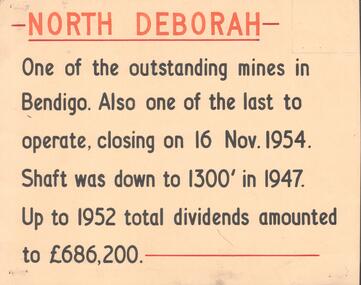
Document - NORTH DEBORAH , DEBORAH, CENTRAL NELL GWYNNE AND NAPOLEON GOLD MINES
... underground operations suspended 1952, shaft 2076 feet. c. Central Nell Gwynne: operations ceased at end of 1949, shaft depth 1933 feet. d. Napoleon: first subsidiary company formed by BML to carry out comprehensive programme of development along Napoleon anticline. ...underground operations suspended 1952, shaft 2076 feet. c. Central Nell Gwynne: operations ceased at end of 1949, shaft depth 1933 feet. d. Napoleon: first subsidiary company formed by BML to carry out comprehensive programme of development along Napoleon anticline. ...Five interpretive cards used for displays, yellow with black and orange text, describing the North Deborah, Deborah, Central Nell Gwynne and Napoleon Gold Mines. a. North Deborah: closed 16th November 1954. Shaft was 1300 feet deep. Total dividends 686,200 pounds. b. Deborah: underground operations suspended 1952, shaft 2076 feet. c. Central Nell Gwynne: operations ceased at end of 1949, shaft depth 1933 feet. d. Napoleon: first subsidiary company formed by BML to carry out comprehensive programme of development along Napoleon anticline. Shaft 1054 feet in 1937 when opertions ceased. e. Devonshire Sands, formed in 1933. Cyanide leaching plants installed on sand tailings heaps at Bendigo.Albert Richardsonbendigo, mining, north deborag mining company -
 Bendigo Historical Society Inc.
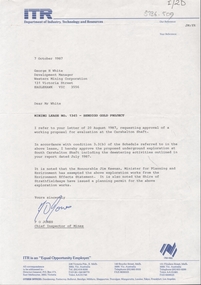
Letter - Kangaroo Flat Gold Mine Collection: Mining Lease 1345
... Development Manager, Western Mining Corporation, Eaglehawk, re mining lease no. 1345, Bendigo Gold Project. Approval of a working proposal for evaluation at the Carshalton Shaft has been sought by Western Mining Corporation. The Department of Industry, Technology and Resources 'hereby approves the proposed underground...Development Manager, Western Mining Corporation, Eaglehawk, re mining lease no. 1345, Bendigo Gold Project. Approval of a working proposal for evaluation at the Carshalton Shaft has been sought by Western Mining Corporation. The Department of Industry, Technology and Resources 'hereby approves the proposed underground ...One page letter from Department of Industry, Technology and Resources to George H. White, Development Manager, Western Mining Corporation, Eaglehawk, re mining lease no. 1345, Bendigo Gold Project. Approval of a working proposal for evaluation at the Carshalton Shaft has been sought by Western Mining Corporation. The Department of Industry, Technology and Resources 'hereby approves the proposed underground exploration at South Carshalton Shaft including the dewatering activities outlined in your report dated July 1987'. The Minister for Planning, Jim Keenan, has exempted the exploration works from the Environment Effects Statement. Shire of Strathfieldsaye have issued a planning permit. western mining corporation, department of industry, technology and resources, dewatering, carshalton shaft, environment effects, shire of strathfieldsaye -
 Bendigo Historical Society Inc.
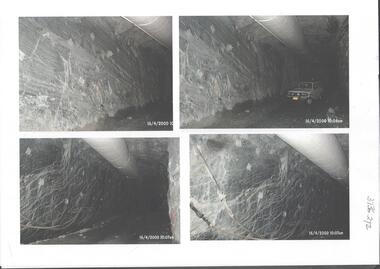
Photograph - Kangaroo Flat Gold Mine Collection: underground in Swan Decline, Kangaroo Flat Gold Mine, 2000
... Development of this decline commenced in 1998. Swan Decline closed and history preserved In a major rehabilitation milestone at Kangaroo Flat, the Swan Decline Bendigo’s primary gateway to underground mining, was permanently closed in December 2022. ...Development of this decline commenced in 1998. Swan Decline closed and history preserved In a major rehabilitation milestone at Kangaroo Flat, the Swan Decline Bendigo’s primary gateway to underground mining, was permanently closed in December 2022. ...The modern mine is accessed via the Swan Decline, which commences at the Kangaroo Flat site on the southern outskirts of Bendigo and progresses in a north easterly direction between the Deborah and Sheepshead anticlines, reaching a depth of almost 1000 m below the City of Bendigo. Development of this decline commenced in 1998. Swan Decline closed and history preserved In a major rehabilitation milestone at Kangaroo Flat, the Swan Decline Bendigo’s primary gateway to underground mining, was permanently closed in December 2022. Important parts of Bendigo’s gold rush history were also preserved from the onsite office buildings with 19 boxes of records, and 1350 old photos being scanned and provided to the local historical societies and the Goldfields Library Corporation. A volunteer from the Bendigo Historical Society, Kay MacGregor, also scanned approximately 40 bookshelves of newspaper clippings to assist with recording and preserving geological drilling locations.Black and white photocopies of photographs of Swan Decline, showing some stages of underground construction. Eleven images on 3 pages, dated 16/4/2000 (10 a.m.) show decline walls, rock bolts and markout of tunnel shape. One image shows a utility in the tunnel. Final three images on one page, have notations on the photos: 'opposite SP18 LHS decline', 'just up from previous 3 box positions' and 'just up from tank, same side' On bottom RH side 'spots for scale attention, IT required, all lower decline.' All three images dated 12/6/2000.goldmining, kangaroo flat gold mine, western mining corporation, unity mining, swan decline -
 Bendigo Historical Society Inc.
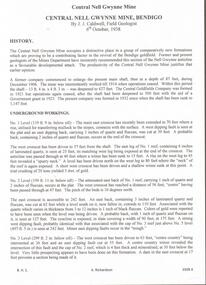
Document - CENTRAL NELL GWYNNE - HISTORY OF THE CENTRAL NELL GWYNNE
... 2 copies of typed notes on the history, underground workings, production, mining costs, machinery and equipment, structural features and present and future development. ...Caldwell 2 copies of typed notes on the history, underground workings, production, mining costs, machinery and equipment, structural features and present and future development. ...2 copies of typed notes on the history, underground workings, production, mining costs, machinery and equipment, structural features and present and future development. Written by J. J. Caldwell, Field Geologist. Dated 6th October, 1938. 1st copy images 3509.4a,4b,4c,4d,4e,4f,4g,4h 2nd copy images 3509.4i,4j,4k,4l,4m,4n,4o,4p,4q,4r,4s,4t,4u,4vJ. J. Caldwellmine, gold, central nell gwynne, central nell gwynne, history of the central nell gwynne, j. j. caldwell -
 Sunshine and District Historical Society Incorporated
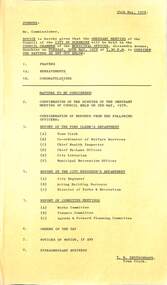
Administrative record - City of Sunshine - Commissioner Mr Alexander "Alex" George Gillon Collection 1976 - 1982 - Notice of Ordinary Meeting to be Held on 24th May 1978, City of Sunshine, 24th May 1978
... Allen Foundry Easement Drainage Scheme Houses Fraser Street South Side between Ripon Street and Lorraine Court have No Drains Footpath Reinstatement Charges Fire Service Sunshine Tip No Standing Any Time Signs Ballarat Road Hampshire Road to Lynch Street Fairbairn Road Pre-School Centre Final Costs Child Care Buildings Bon Thomas Reserve, Diamond Reserve, Orama Street & Highpoint West Report of the Acting Building Surveyor Sit of House Lot 18 Riverview Court Maribyrnong Sit of House Lot 313 Tamar Drive Deer Park Installation of Underground Tanks Fairbairn Road Installation of Underground Tanks 260 Sunshine Road Report of the Director of Parks & Recreation Bon Thomas reserve Development Orders of the Day Proposal to Close Part of Stanley Street Tottenham Under the Provisions of Section 528 of the Local Government Act 1958 Accounts Submitted for Payment as at 15th May 1975 Notice of Motion Variation to Contract Sunshine View Estate Private Street Scheme...Allen Foundry Easement Drainage Scheme Houses Fraser Street South Side between Ripon Street and Lorraine Court have No Drains Footpath Reinstatement Charges Fire Service Sunshine Tip No Standing Any Time Signs Ballarat Road Hampshire Road to Lynch Street Fairbairn Road Pre-School Centre Final Costs Child Care Buildings Bon Thomas Reserve, Diamond Reserve, Orama Street & Highpoint West Report of the Acting Building Surveyor Sit of House Lot 18 Riverview Court Maribyrnong Sit of House Lot 313 Tamar Drive Deer Park Installation of Underground Tanks Fairbairn Road Installation of Underground Tanks 260 Sunshine Road Report of the Director of Parks & Recreation Bon Thomas reserve Development Orders of the Day Proposal to Close Part of Stanley Street Tottenham Under the Provisions of Section 528 of the Local Government Act 1958 Accounts Submitted for Payment as at 15th May 1975 Notice of Motion Variation to Contract Sunshine View Estate Private Street Scheme Foolscap sized document. ...Notice of Ordinary Meeting to be Held on 30th May 1978 at Council Chambers City of Sunshine Municipal Offices 24th May 1978 Report of the Town Clerk's Department Report to the Town Clerk Revision of Voters' List Supplementary Valuations Proposal to Vary the Municipal Employees' (City of Sunshine Award) Melbourne Metropolitan Board of Works Charges Open Space Areas in Subdivisions Proposed Name for Railway Station Furlong Road Lease 2 - 4 Burton Crescent Report of the Co-Ordinator of Welfare Services Community Youth Support Scheme Interim Planning Committee New Ardeer High School Early Childhood Development Complex Attendance Centre Housing Commission Braybrook / Maidstone Project Manager Parking for the Handicap Report of the Chief Health Officer Health Act Registrations Application for Transfer of Proprietorship of Premises under the Health Act The Monsanto Story Noise, Legal Proceedings & Public Nuisance Application by Protean Enterprises (Newmarket) Pty Ltd for E.P.A. Licence to Discharge Water Noise Advertisement Noise By-Law Churchill Avenue Braybrook Housing Commission Shops and Lane Garbage Collection Report of the Chief By-Laws Officer Prohibited Parking McIntyre Road Prohibited Parking Downing Street Proposed Limited Parking Intersection of Derrimut Street, Sydney Street & Ballarat Road Albion Report of the City Librarian Library Statistics Red Phone Report of the City Engineer Land Use Permit Application 4 Warehouses and 1 Factory Berkshire Road and Ayton Street Land Use Permit Application Illuminated Sky Sign 242 Hampshire Road Land Use Permit Application Educational Establishment Primary School Lot 9 Navigator Street Land Use Permit Application Sky Sign Somerville Road Town Planning Appeal Melbourne Metropolitan Scheme Amendment No 72 Part 1 Land Use Permit Application Extractive Industry Somers Street Land Use Permit Application Commercial Centre & Associated Car Parking Neale Road Land Use Permit Application Caretaker's Dwelling Lots 1 & 2 Monash Street Royal Australian Planning Institute 15th Bi-Annual Congress Strata Subdivision 34 Adelaide Street Street Construction Westerngate Estate Consolidation of Title Hulett Street and Carrington Drive W.L. Allen Foundry Easement Drainage Scheme Houses Fraser Street South Side between Ripon Street and Lorraine Court have No Drains Footpath Reinstatement Charges Fire Service Sunshine Tip No Standing Any Time Signs Ballarat Road Hampshire Road to Lynch Street Fairbairn Road Pre-School Centre Final Costs Child Care Buildings Bon Thomas Reserve, Diamond Reserve, Orama Street & Highpoint West Report of the Acting Building Surveyor Sit of House Lot 18 Riverview Court Maribyrnong Sit of House Lot 313 Tamar Drive Deer Park Installation of Underground Tanks Fairbairn Road Installation of Underground Tanks 260 Sunshine Road Report of the Director of Parks & Recreation Bon Thomas reserve Development Orders of the Day Proposal to Close Part of Stanley Street Tottenham Under the Provisions of Section 528 of the Local Government Act 1958 Accounts Submitted for Payment as at 15th May 1975 Notice of Motion Variation to Contract Sunshine View Estate Private Street Scheme city of sunshine, neale road, deer park, alexander "alex" george gillon, burton crescent, maribyrnong, furlong road railway station, st. albans, ardeer high school, churchill avenue, braybrook, derrimut street, sydney street, ballarat road, albion, berkshire road, sunshine north, hampshire road, sunshine, navigator street, somerville road, brooklyn, somers street, monash street, adelaide street, hulett street, carrington drive, w.l. allen foundry, fraser street, ripon street, lorraine court, lynch street, bon thomas reserve, bon thomas reserve child care centre, diamond reserve, diamond reserve child care centre, albanvale, highpoint west, highpoint west childcare centre, riverview court, tamar drive, fairbairn road, sunshine west, sunshine road, tottenham, stanley street, mcintyre road, downing street -
 Sunshine and District Historical Society Incorporated
Administrative record - City of Sunshine - Commissioner Mr Alexander "Alex" George Gillon Collection 1976 - 1982 - Minutes of the Ordinary Meeting of Council Held on 30th May 1978, City of Sunshine, 30th May 1978
... Allen Foundry Easement Drainage Scheme Houses Fraser Street South Side between Ripon Street and Lorraine Court have No Drains Footpath Reinstatement Charges Fire Service Sunshine Tip No Standing Any Time Signs Ballarat Road Hampshire Road to Lynch Street Fairbairn Road Pre-School Centre Final Costs Child Care Buildings Bon Thomas Reserve, Diamond Reserve, Orama Street & Highpoint West Report of the Acting Building Surveyor Sit of House Lot 18 Riverview Court Maribyrnong Sit of House Lot 313 Tamar Drive Deer Park Installation of Underground Tanks Fairbairn Road Installation of Underground Tanks 260 Sunshine Road Report of the Director of Parks & Recreation Bon Thomas Reserve Development Orders of the Day Proposal to Close Part of Stanley Street Tottenham Under the Provisions of Section 528 of the Local Government Act 1958 Accounts Submitted for Payment as at 15th May 1975 Notice of Motion Variation to Contract Sunshine View Estate Private Street Scheme Extraordinary Business Report of the City Engineer Land Use Permit Application Subdivision and Detached House Neale Road Concrete Wicket Castley Reserve...Allen Foundry Easement Drainage Scheme Houses Fraser Street South Side between Ripon Street and Lorraine Court have No Drains Footpath Reinstatement Charges Fire Service Sunshine Tip No Standing Any Time Signs Ballarat Road Hampshire Road to Lynch Street Fairbairn Road Pre-School Centre Final Costs Child Care Buildings Bon Thomas Reserve, Diamond Reserve, Orama Street & Highpoint West Report of the Acting Building Surveyor Sit of House Lot 18 Riverview Court Maribyrnong Sit of House Lot 313 Tamar Drive Deer Park Installation of Underground Tanks Fairbairn Road Installation of Underground Tanks 260 Sunshine Road Report of the Director of Parks & Recreation Bon Thomas Reserve Development Orders of the Day Proposal to Close Part of Stanley Street Tottenham Under the Provisions of Section 528 of the Local Government Act 1958 Accounts Submitted for Payment as at 15th May 1975 Notice of Motion Variation to Contract Sunshine View Estate Private Street Scheme Extraordinary Business Report of the City Engineer Land Use Permit Application Subdivision and Detached House Neale Road Concrete Wicket Castley Reserve Foolscap sized document. ...Minutes of the Ordinary Meeting of Council Held on 30th May 1978 Report of the Town Clerk's Department Report to the Town Clerk Revision of Voters' List Supplementary Valuations Proposal to Vary the Municipal Employees' (City of Sunshine Award) Melbourne Metropolitan Board of Works Charges Open Space Areas in Subdivisions Proposed Name for Railway Station Furlong Road Lease 2 - 4 Burton Crescent Report of the Co-Ordinator of Welfare Services Community Youth Support Scheme Interim Planning Committee New Ardeer High School Early Childhood Development Complex Attendance Centre Housing Commission Braybrook / Maidstone Project Manager Parking for the Handicap Report of the Chief Health Officer Health Act Registrations Application for Transfer of Proprietorship of Premises under the Health Act The Monsanto Story Noise, Legal Proceedings & Public Nuisance Application by Protean Enterprises (Newmarket) Pty Ltd for E.P.A. Licence to Discharge Water Noise Advertisement Noise By-Law Churchill Avenue Braybrook Housing Commission Shops and Lane Garbage Collection Report of the Chief By-Laws Officer Prohibited Parking McIntyre Road Prohibited Parking Downing Street Proposed Limited Parking Intersection of Derrimut Street, Sydney Street & Ballarat Road Albion Report of the City Librarian Library Statistics Red Phone Report of the City Engineer Land Use Permit Application 4 Warehouses and 1 Factory Berkshire Road and Ayton Street Land Use Permit Application Illuminated Sky Sign 242 Hampshire Road Land Use Permit Application Educational Establishment Primary School Lot 9 Navigator Street Land Use Permit Application Sky Sign Somerville Road Town Planning Appeal Melbourne Metropolitan Scheme Amendment No 72 Part 1 Land Use Permit Application Extractive Industry Somers Street Land Use Permit Application Commercial Centre & Associated Car Parking Neale Road Land Use Permit Application Caretaker's Dwelling Lots 1 & 2 Monash Street Royal Australian Planning Institute 15th Bi-Annual Congress Strata Subdivision 34 Adelaide Street Street Construction Westerngate Estate Consolidation of Title Hulett Street and Carrington Drive W.L. Allen Foundry Easement Drainage Scheme Houses Fraser Street South Side between Ripon Street and Lorraine Court have No Drains Footpath Reinstatement Charges Fire Service Sunshine Tip No Standing Any Time Signs Ballarat Road Hampshire Road to Lynch Street Fairbairn Road Pre-School Centre Final Costs Child Care Buildings Bon Thomas Reserve, Diamond Reserve, Orama Street & Highpoint West Report of the Acting Building Surveyor Sit of House Lot 18 Riverview Court Maribyrnong Sit of House Lot 313 Tamar Drive Deer Park Installation of Underground Tanks Fairbairn Road Installation of Underground Tanks 260 Sunshine Road Report of the Director of Parks & Recreation Bon Thomas Reserve Development Orders of the Day Proposal to Close Part of Stanley Street Tottenham Under the Provisions of Section 528 of the Local Government Act 1958 Accounts Submitted for Payment as at 15th May 1975 Notice of Motion Variation to Contract Sunshine View Estate Private Street Scheme Extraordinary Business Report of the City Engineer Land Use Permit Application Subdivision and Detached House Neale Road Concrete Wicket Castley Reserve city of sunshine, alexander "alex" george gillon, burton crescent, maribyrnong, ardeer high school, churchill avenue, braybrook, mcintyre road, sunshine north, downing street, derrimut street, sydney street, ballarat road, albion, berkshire road, ayton street, hampshire road, sunshine, navigator street, somerville road, brooklyn, somers street, neale road, deer park, monash street, adelaide street, hulett street, carrington drive, w.l. allen foundry, fraser street, ripon street, lorraine court, sunshine tip, lynch street, fairbairn road pre-school centre, faribairn road, bon thomas reserve, bon thomas reserve child care centre, diamond reserve, diamond reserve day care centre, albanvale, orama street, orama street day care centre, st. albans, highpoint west, highpoint west day care centre, rosamond road, riverview court, tamar drive, sunshine road, tottenham, quinn street, stanley street, castley reserve, simmie street
