
Showing 219 items matching "uniting churches in victoria"
-
 Tatura Irrigation & Wartime Camps Museum
Book, Methodist Church in Goulburn Valley - 1873 - 1977, 1977
... ...Uniting Churches in Victoria...Uniting Church from 1977. Includes history of Tatura Methodist Church Methodist Churches in Goulburn Valley Tatura Methodist Church Uniting Churches in Victoria History of Methodist Church Black and white cover. ...To record the history of Methodist Churches in Goulburn Valley. As now it will be called the Uniting Church from 1977. Includes history of Tatura Methodist ChurchBlack and white cover. Picture of Methodist picnic at Goulburn River 1896 - top of front cover and picture of centenary service 30th September, 1973. Site of Furphy's blacksmith shop - 1st service held in 1873.methodist churches in goulburn valley, tatura methodist church, uniting churches in victoria, history of methodist church -
 Ballarat Heritage Services
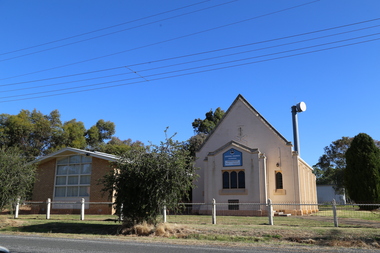
Photograph, Uniting Church Cavendish, 19/01/2021
... Colour photorgraph of the Uniting Church Cavendish, Victoria....Cavendish Uniting Church Colour photorgraph of the Uniting Church Cavendish, Victoria. Uniting Church Cavendish Photograph Photograph ...Colour photorgraph of the Uniting Church Cavendish, Victoria.cavendish, uniting church -
 Uniting Church Archives - Synod of Victoria
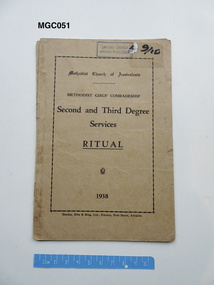
Booklet - Methdodist Girls' Comardeship, Hunkin, Ellis & King, Second and Third Degree Services Ritual, 1938
... On cover " UNITING CHURCH ARCHIVES VICTORIA" "J9/10"...On cover " UNITING CHURCH ARCHIVES VICTORIA" "J9/10" Buff colour soft covered booklet of eight pages.The inside cover has the Synod Archives Victoria stamp. ...Contents: Foreward; In a hall; in a church; points to be observed; Methodist Girls' Comradeship Degree service Ritual Third Degree; Second Degree.Buff colour soft covered booklet of eight pages.The inside cover has the Synod Archives Victoria stamp. non-fictionContents: Foreward; In a hall; in a church; points to be observed; Methodist Girls' Comradeship Degree service Ritual Third Degree; Second Degree.handbooks, methodist church of australasia, methodist girls' comradeship -
Canterbury History Group
Ephemera - Invitation Organ Recital, 1989
... Invitation from the Uniting Church in Victoria, Canterbury Parish to an organ recital to be held in the Canterbury Uniting Church to celebrate the 100th year of their organ....Canterbury Canterbury Uniting Church Balwyn Road Canterbury Methodist Church Organs Invitation from the Uniting Church in Victoria, Canterbury Parish to an organ recital to be held in the Canterbury Uniting Church to celebrate the 100th year of their organ. ...Invitation from the Uniting Church in Victoria, Canterbury Parish to an organ recital to be held in the Canterbury Uniting Church to celebrate the 100th year of their organ.canterbury, canterbury uniting church, balwyn road, canterbury methodist church, organs -
 Lakes Entrance Historical Society
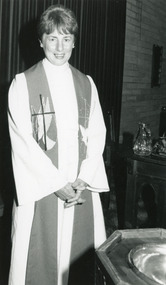
Photograph - Reverend Judy Archer, Uniting Church, Lakes Entrance Victoria 1993, Lakes Post Newspaper, 1993
... Black and white photograph of Reverend Judy Archer, new minister at the Uniting Church, Lakes Entrance Victoria...People Religion Black and white photograph of Reverend Judy Archer, new minister at the Uniting Church, Lakes Entrance Victoria Photograph Reverend Judy Archer, Uniting Church, Lakes Entrance Victoria 1993 Lakes Post Newspaper ...Article appeared in Lakes Post Newspaper page 1, 27 January 1993.Black and white photograph of Reverend Judy Archer, new minister at the Uniting Church, Lakes Entrance Victoriapeople, religion -
 Uniting Church Archives - Synod of Victoria
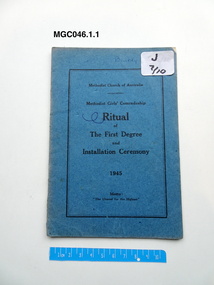
Booklet - Methdodist Girls' Comardeship, Hunkin, Ellis & King, Ritual of the First Degree and Installation Ceremony
... MGC046.2.2 On cover "UNITING CHURCH ARCHIVES VICTORIA" "8/10"...MGC046.2.2 On cover "UNITING CHURCH ARCHIVES VICTORIA" "8/10" MGC046.1.1 and MGC046.1.2 - Blue-grey soft covered 14 page booklet with black text, 1945 edition. ...Contents: Senior or Comrades' Section: Ritual for the meeting; the meeting; The order of the day; Closing ceremony; Initiation Ceremony; Installation Ceremony; Comradeship hymn; diagram of meeting.MGC046.1.1 and MGC046.1.2 - Blue-grey soft covered 14 page booklet with black text, 1945 edition. Each copy has a white sticky label on the top right cover on the cover. MGC046.2.1 and MGC046.2.2 - Blue soft covered 12 page booklet with black text. 1960 edition.non-fictionContents: Senior or Comrades' Section: Ritual for the meeting; the meeting; The order of the day; Closing ceremony; Initiation Ceremony; Installation Ceremony; Comradeship hymn; diagram of meeting.handbooks, methodist church of australasia, methodist girls' comradeship, methodist girls' comradeship barkly street ballarat -
 Lakes Entrance Historical Society
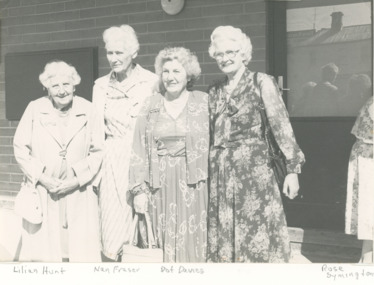
Photograph, Uniting Church ladies Lakes Entrance Victoria, 1990 c
... Black and white photograph of Lillian Hunt, Nan Fraser, Dot Davies and Rose Symington at Uniting Church Lakes Entrance Victoria...Churches Religion Groups Black and white photograph of Lillian Hunt, Nan Fraser, Dot Davies and Rose Symington at Uniting Church Lakes Entrance Victoria Uniting Church ladies Lakes Entrance Victoria Photograph ...Black and white photograph of Lillian Hunt, Nan Fraser, Dot Davies and Rose Symington at Uniting Church Lakes Entrance Victoriachurches, religion, groups -
 Uniting Church Archives - Synod of Victoria
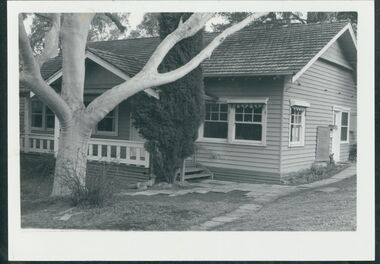
Photograph, 1984
... church use in the 1990s. It was used by "Connections", now part of "Uniting" - the community services organisation of the Uniting Church in Victoria and Tasmania....church use in the 1990s. It was used by "Connections", now part of "Uniting" - the community services organisation of the Uniting Church in Victoria and Tasmania. ...The house was purchased by the Presbyterian Church in 1966 and was used for church activities. In the 1970s it became a Neighbourhood House It reverted to church use in the 1990s. It was used by "Connections", now part of "Uniting" - the community services organisation of the Uniting Church in Victoria and Tasmania.B & W exterior view of the Blackburn Neighbourhood House in The Avenue, Blackburn.blackburn neighbourhood house, the avenue, presbyterian, connections, uniting, community services -
 Flagstaff Hill Maritime Museum and Village
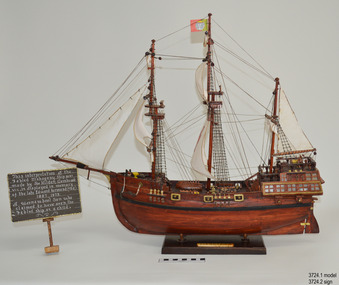
Craft - Ship Model, Portuguese Carvel, 1999
... The model was handmade by Joe Hilder (Senior) in 1999 from flooring obtained from the Gembrook Uniting Church in Victoria. Inscriptions, hand written, under base of case and on plaque....The model was handmade by Joe Hilder (Senior) in 1999 from flooring obtained from the Gembrook Uniting Church in Victoria. Inscriptions, hand written, under base of case and on plaque. ...The Mahogany Ship is today regarded as a legend and refers to an ancient wreck that is purported to lie beneath the sand beside Armstrong Bay, several kilometres west of Warrnambool, Its location is currently unknown. For well over a century the mystery of this ship has fascinated Australians because the existence of such a vessel could throw a different light on the earliest phases of exploration of eastern Australia by Europeans. The story is that in January 1836 a party of whalers from Port Fairy travelled to the mouth of the Hopkins River in search of seals. Their boat overturned and one man was drowned. The three survivors were walking the 30 kilometres back to Port Fairy along the coast when, about halfway along, they discovered the wrecked ship in the dunes. It is said that Captain John Mills, who was in charge of the whaling station at Port Fairy promptly visited the wreck with several of his men, including Hugh Donnelly. Donnelly who was the originator of that version of events is now regarded as unreliable. Local history researcher Joan Fawcett believes Donnelly could not have visited the wreck in 1836 because he did not arrive in Victoria until 1841. The "mahogany" description can be traced to a letter from Port Fairy builder, architect and surveyor John Mason and published in the Melbourne Argus in 1876. He said he had seen the hull in 1846 and it "had the appearance of either cedar or mahogany." In 1884 Argus journalist `The Vagabond' wrote that the hull was built of "Spanish mahogany" and six years later Mason wrote another letter saying it might not have been mahogany but red gum or ironbark from New South Wales. He was too late with this new description as the wrecks mahogany tag was here to stay all through the hull was not visible as it had disappeared beneath the shifting sands by 1880. A more reliable account was later presented by the former editor of the Warrnambool Examiner, historian Richard Osburne, who wrote about the wreck in his book History of Warrnambool (published 1887). In it the author remembers to have noticed a wreck in the hummocks between Belfast and Warrnambool, in 1847 or 1848; he stated it was much nearer Warrnambool than Belfast, now known as Port Fairy, going on to state “in fact, it was only two or three miles from the former place, to the west of the big hummock which was supposed to fill Warrnambool Bay with drift sand washed by the Merri River before the cutting was made.” Osburne followed up with a letter to the Port Fairy Gazette on June 25, 1876, during a period of heightened interest in the wreck, although he was unsure of the provenance of the ship he went on to state in his letter. “The old wreck was, in fact, miles away from the Port Fairy beach, and only about four miles from Warrnambool. In the years 1847 and 1848. I have often seen the wreck and I regret to say I do not believe she was a foreign ship at all.”The ship model is significant for its association with the Warrnambool story of what is now referred to as the Mahogany Ship, an ancient shipwreck. The model is significant as it is an interpretation of a Portuguese caravel and possibly associated with the early history and exploration of Southern Australia. The model is a fine example of a hand crafted ship made from plans, not from a kit. Some of the materials used for the model are significant to the Gembrook community in that the timber used is a portion from a 30-meter pine tree that fell onto and destroyed the 120-year-old Gembrook church building. The model is also a dedication to Edward Kermond, who grew up in Warrnambool and claimed to have seen the shipwreck in the dunes when he was a lad in the late 19th century. (See note section of this document for further information on the creator and donation of the subject item).Ship model, an interpretation of a mahogany Portuguese carvel vessel in a glass display case with wood frame and a description plaque. Model is made from dark stained wood. The three masted vessel is fully rigged, with a Portuguese-like flag on mast. Plaque is rectangular, free standing on a pedestal. The model was handmade by Joe Hilder (Senior) in 1999 from flooring obtained from the Gembrook Uniting Church in Victoria. Inscriptions, hand written, under base of case and on plaque.Under base, black felt tip pen “Ship & Case made From / Flooring from Gembrook uniting Church, Flattened in 1999 / By Large Pine Tree.” On plaque, white paint "This interpretation of the Fabled Mahogany Ship was made by Joe Hilder, Gembrook Vic. is displayed in the memory of the late Edward Kermond (Ted) 1887-1973, a Warrnambool son who claimed to have seen the original ship as a child." flagstaff hill, warrnambool, flagstaff hill maritime museum, shipwreck coast, flagstaff hill maritime village, great ocean road, ship model, mahogany ship, mahogany ship story, portuguese caravel, joe hilder, edward kermond, ted kermond, gembrook uniting church, gembrook storm 1999, port fairy whalers, belfast whalers -
 Greensborough Historical Society
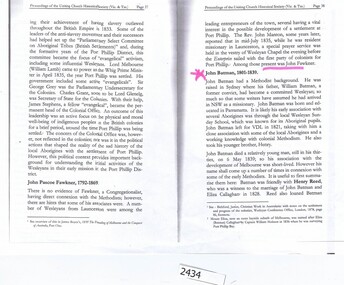
Article, Uniting Church Historical Society, John Batman, 1801-1839, 1801-1839
... Article on John Batman from Proceedings of the Uniting Church Historical Society (Victoria and Tasmania) Vol. 22, No. 2, September 2015, pp. 38-39 ...Article on John Batman from Proceedings of the Uniting Church Historical Society (Victoria and Tasmania) Vol. 22, No. 2, September 2015, pp. 38-39 john batman 3 photocopied pages John Batman, 1801-1839 Article Uniting Church Historical Society Robert W. ...Article on John Batman from Proceedings of the Uniting Church Historical Society (Victoria and Tasmania) Vol. 22, No. 2, September 2015, pp. 38-39 3 photocopied pagesjohn batman -
 Lakes Entrance Historical Society
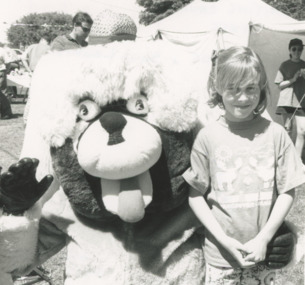
Photograph - Uniting Church Fete Lakes Entrance Victoria 1994, Lakes Post Newspaper
... Sarah Loukes with Big Dog at the Uniting Church Fete Lakes Entrance Victoria...Sarah Loukes with Big Dog at the Uniting Church Fete Lakes Entrance Victoria People Fundraising Churches Public Events Black and white photograph of Sarah Loukes with Big Dog Photograph Uniting Church Fete Lakes Entrance Victoria 1994 Lakes Post Newspaper ...Sarah Loukes with Big Dog at the Uniting Church Fete Lakes Entrance VictoriaBlack and white photograph of Sarah Loukes with Big Dog people, fundraising, churches, public events -
 Uniting Church Archives - Synod of Victoria
Sign - Magnetic sign
... The Uniting Church Synod of Victoria and Tasmania sold all its residential camps operated by UC Camping in June 2023. ..."Uniting Church in Australia SYNOD OF VICTORIA AND TASMANIA" "UC CAMMPING creating opportunities www.uccamping.org.au"...The Uniting Church Synod of Victoria and Tasmania sold all its residential camps operated by UC Camping in June 2023. ...The Uniting Church Synod of Victoria and Tasmania sold all its residential camps operated by UC Camping in June 2023. They were Grantville, Westernport Bay; Norval, Grampions/Gariwerd; Merricks Lodge, Mornington Peninsula and Adekate Camp, Creswick.White magnetic sign with the UCA symbol at the top, taupe coloured text and yellow and green images."Uniting Church in Australia SYNOD OF VICTORIA AND TASMANIA" "UC CAMMPING creating opportunities www.uccamping.org.au"uc camping -
 Uniting Church Archives - Synod of Victoria
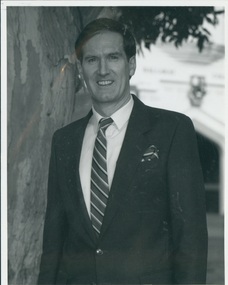
BW photo, 1988
... He was a member of the council of elders at St Leonard's Uniting Church and a school representative on the Education committee of the Uniting Church Synod of Victoria....He was a member of the council of elders at St Leonard's Uniting Church and a school representative on the Education committee of the Uniting Church Synod of Victoria. ...Alan Ross was Principal of Ballarat and Clarendon College between 1989 and 1996. He was also Principal of St Leonard's College.Mr Ross is married with two children and has taught at Wonthaggi, Coburg. in London and in the Netherlands. He was a member of the council of elders at St Leonard's Uniting Church and a school representative on the Education committee of the Uniting Church Synod of Victoria. BW photo of Mr Alan Ross, standing, upper body photo.Alan Ross; Ballarat and Clarendon College. Church and Nation 13 July 1988 p33 -
 Cornish College
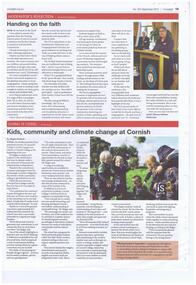
Newspaper article, UCA Synod of Victoria and Tasmania, 'Kids, community and climate change at Cornish', September 2012
... Crosslight is a monthly newspaper published by the Uniting Church in Australia, Synod of Victoria and Tasmania....Crosslight is a monthly newspaper published by the Uniting Church in Australia, Synod of Victoria and Tasmania. The article described the College's growth during the first eight months of operation. ...Crosslight issue number 225, September 2012. Crosslight is a monthly newspaper published by the Uniting Church in Australia, Synod of Victoria and Tasmania.The article described the College's growth during the first eight months of operation. The college Principal, Mr Kerry Bolger described the school's philosophy, a range of activities and community involvement.A half page article on page 19 of the UCA newspaper 'Crosslight' written by Megan Graham. A colour photo of ELC3 students playing in the grass taken by ELC Director Kirsten Liljegren.cornish_college_inaugural_year, crosslight, newspaper, article, mr bolger -
 Uniting Church Archives - Synod of Victoria
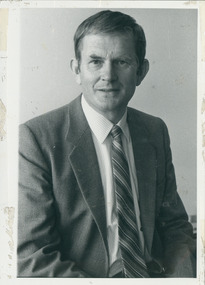
Photograph, Stuart Murray, 28/08/1985
... He was Moderator of the Uniting Church for the state of Victoria....He was Moderator of the Uniting Church for the state of Victoria. moderator Stuart Murray "Stuart Murray Moderator C&N 28/8/1985 page 10 Return to UCF Office 130 Little Collins Street Melbourne" B & W waist length photograph of Stuart Murray Stuart Murray Photograph ...John Stuart Macleod Murray (03/05/1933 - 18/03/2011) was a scientist who worked in forestry soil conservation before taking out a Bachelor of Theology with honours at the University of Melbourne and a Doctorate in Divinity at the University of Chicago. He was Moderator of the Uniting Church for the state of Victoria.B & W waist length photograph of Stuart Murray"Stuart Murray Moderator C&N 28/8/1985 page 10 Return to UCF Office 130 Little Collins Street Melbourne"moderator, stuart murray -
 Greensborough Historical Society
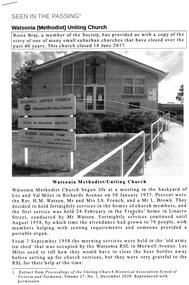
Document - Pamphlet, Rosie Bray et al, Seen in the passing: Watsonia (Methodist) Uniting Church, by Rosie Bray; Editorial comment by Robert Renton, 2021
... Uniting Church. This church closed in June 2017. This article is an extract from Proceedings of the Uniting Church Historical Association Synod of Victoria and Tasmania, Vol 27, No 1, December 2020....Uniting Church. This church closed in June 2017. This article is an extract from Proceedings of the Uniting Church Historical Association Synod of Victoria and Tasmania, Vol 27, No 1, December 2020. watsonia methodist church uniting chrch historical association rosie bray watsonia uniting church 4p., typescript, black and white photographs Seen in the passing: Watsonia (Methodist) Uniting Church, by Rosie Bray; Editorial comment by Robert Renton. ...Brief history of the Watsonia Methodist Church, which merged with Macleod Presbyterian Church in 1977 to form Watsonia Uniting Church. This church closed in June 2017. This article is an extract from Proceedings of the Uniting Church Historical Association Synod of Victoria and Tasmania, Vol 27, No 1, December 2020.4p., typescript, black and white photographswatsonia methodist church, uniting chrch historical association, rosie bray, watsonia uniting church -
 Uniting Church Archives - Synod of Victoria
BW photo, Undated
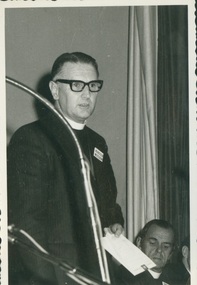
... Uniting Church came into being and Jock became the first Chairman of the Barwon Presbytery. There were now two ministers at Wesley – Jock and Alex Peerman, whose joint congregation of St. Giles (Pres) and City Congregational now joined with Wesley to become the City Parish. Jock was very surprised to be elected as the third Moderator of the Uniting Church in Victoria...Uniting Church came into being and Jock became the first Chairman of the Barwon Presbytery. There were now two ministers at Wesley – Jock and Alex Peerman, whose joint congregation of St. Giles (Pres) and City Congregational now joined with Wesley to become the City Parish. Jock was very surprised to be elected as the third Moderator of the Uniting Church in Victoria ...JOHN CORBEN LAVENDER (Jock) Jock was born in Ivanhoe, but spent most of his youth in Northcote where his father was a bank manager, and where he attended primary school, high school and the Methodist church in High Street which became a central point in his life. He took his first job in the dispatch office at McPhersons nut and bolt factory in North Richmond in 1935. After a short time at McPhersons he moved to the Trustees Executors and Agency Company in 1936. While working at the Trustees Jock developed the conviction that his vocation lay with the church. This necessitated studying Matriculation at night school for two years as well as working and studying to become a Local Preacher. The minister at Northcote at the time was the Rev.F.T.Cleverdon who helped him prepare to apply as a candidate for Ordination. Before going to university and Queen’s for his arts degree and theological training, Mr Cleverdon, who was now the minister at Neil Street, Ballarat, offered Jock the opportunity to minister to the small congregation at Brown Hill, Ballarat, which was in his Circuit, and to live with the Cleverdons. He spent a year in Ballarat under the tutelage of Rev.F.T Cleverdon in 1939. Jock was accepted by the 1940 Victorian Methodist Conference as a Candidate for the Ministry and started his studies for his theological training and an arts degree at Melbourne University that year. Because of a shortage of ministers, due to the war, Jock was taken out of Queen’s in 1943 to take charge of two fairly small churches in Caulfield - Hawthorn Road and Bambra Road. Jock was ordained in 1945 & married two days later to Elsie Chipperfield, with whom he had worked at the Trustees Executors and Agency. He had joined the RAAF as a chaplain and was sent to Borneo. Returning to Australia in early 1946, he was then appointed to Orbost for a year, Bracknell in Tasmania in 1948, followed by Reid in Canberra, 1951. The next move was to Portland in 1954. Unfortunately not long after this, Elsie was diagnosed with breast cancer. This necessitated a move back to Melbourne - to Mitcham in 1957. Elsie died in December 1957. This period was a very hard time as Jock had four young daughters but his mother helped out by living in for most of the week until Jock was married to Peg in 1959 and their son was born in 1961. In 1964 Jock was moved to Launceston, his first city church. These years were challenging for Jock as he felt compelled to speak out around social issues, such as the Vietnam War & Aboriginal rights, although many did not agree with his view. In 1969 Jock was moved to Horsham to take up the role of Separated Chairman of the North-Western District responsible for Circuits, ministers and families for policy issues and pastoral concerns over an area from the South Australian border, up to the Murray and over it to Wentworth and Dareton, up river to Swan Hill and south to Ballarat and Daylesford. It was a demanding job but richly rewarding in the relationships made with ministers and their families. In 1971 Jock was elected Secretary of the Methodist Conference and in 1972 was voted President of the Conference. He felt it an honour and a vote of confidence by clergy and lay people The final move was to Geelong in 1976 where Jock was the minister at Wesley until 1983.Jock found Geelong a very satisfying parish in which to finish his active ministry. It was while he was Minister of Wesley Church, Geelong, that the Uniting Church came into being and Jock became the first Chairman of the Barwon Presbytery. There were now two ministers at Wesley – Jock and Alex Peerman, whose joint congregation of St. Giles (Pres) and City Congregational now joined with Wesley to become the City Parish. Jock was very surprised to be elected as the third Moderator of the Uniting Church in Victoria, to take office in 1979/1980 1983 saw retirement to Portarlington several months’ locum in both Canada & Kununurra. When the property at Portarlington became too large to maintain, they moved in 1994 into the current house in Belmont & returned to the Wesley Church here. Deceased c.2015. Rev. John (Jock) Lavender is pictured standing at a microphone, wearing clerical clothingRev. J C Lavenderrev. john (jock) lavender; methodist minister; uniting church minister; -
 Uniting Church Archives - Synod of Victoria
BW photo, 1980s?
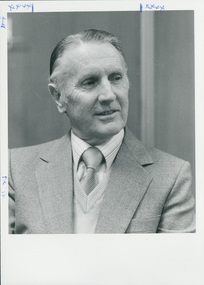
... Uniting Church came into being and Jock became the first Chairman of the Barwon Presbytery. There were now two ministers at Wesley – Jock and Alex Peerman, whose joint congregation of St. Giles (Pres) and City Congregational now joined with Wesley to become the City Parish. Jock was very surprised to be elected as the third Moderator of the Uniting Church in Victoria...Uniting Church came into being and Jock became the first Chairman of the Barwon Presbytery. There were now two ministers at Wesley – Jock and Alex Peerman, whose joint congregation of St. Giles (Pres) and City Congregational now joined with Wesley to become the City Parish. Jock was very surprised to be elected as the third Moderator of the Uniting Church in Victoria ...JOHN CORBEN LAVENDER (Jock) Jock was born in Ivanhoe, but spent most of his youth in Northcote where his father was a bank manager, and where he attended primary school, high school and the Methodist church in High Street which became a central point in his life. He took his first job in the dispatch office at McPhersons nut and bolt factory in North Richmond in 1935. After a short time at McPhersons he moved to the Trustees Executors and Agency Company in 1936. While working at the Trustees Jock developed the conviction that his vocation lay with the church. This necessitated studying Matriculation at night school for two years as well as working and studying to become a Local Preacher. The minister at Northcote at the time was the Rev.F.T.Cleverdon who helped him prepare to apply as a candidate for Ordination. Before going to university and Queen’s for his arts degree and theological training, Mr Cleverdon, who was now the minister at Neil Street, Ballarat, offered Jock the opportunity to minister to the small congregation at Brown Hill, Ballarat, which was in his Circuit, and to live with the Cleverdons. He spent a year in Ballarat under the tutelage of Rev.F.T Cleverdon in 1939. Jock was accepted by the 1940 Victorian Methodist Conference as a Candidate for the Ministry and started his studies for his theological training and an arts degree at Melbourne University that year. Because of a shortage of ministers, due to the war, Jock was taken out of Queen’s in 1943 to take charge of two fairly small churches in Caulfield - Hawthorn Road and Bambra Road. Jock was ordained in 1945 & married two days later to Elsie Chipperfield, with whom he had worked at the Trustees Executors and Agency. He had joined the RAAF as a chaplain and was sent to Borneo. Returning to Australia in early 1946, he was then appointed to Orbost for a year, Bracknell in Tasmania in 1948, followed by Reid in Canberra, 1951. The next move was to Portland in 1954. Unfortunately not long after this, Elsie was diagnosed with breast cancer. This necessitated a move back to Melbourne - to Mitcham in 1957. Elsie died in December 1957. This period was a very hard time as Jock had four young daughters but his mother helped out by living in for most of the week until Jock was married to Peg in 1959 and their son was born in 1961. In 1964 Jock was moved to Launceston, his first city church. These years were challenging for Jock as he felt compelled to speak out around social issues, such as the Vietnam War & Aboriginal rights, although many did not agree with his view. In 1969 Jock was moved to Horsham to take up the role of Separated Chairman of the North-Western District responsible for Circuits, ministers and families for policy issues and pastoral concerns over an area from the South Australian border, up to the Murray and over it to Wentworth and Dareton, up river to Swan Hill and south to Ballarat and Daylesford. It was a demanding job but richly rewarding in the relationships made with ministers and their families. In 1971 Jock was elected Secretary of the Methodist Conference and in 1972 was voted President of the Conference. He felt it an honour and a vote of confidence by clergy and lay people The final move was to Geelong in 1976 where Jock was the minister at Wesley until 1983.Jock found Geelong a very satisfying parish in which to finish his active ministry. It was while he was Minister of Wesley Church, Geelong, that the Uniting Church came into being and Jock became the first Chairman of the Barwon Presbytery. There were now two ministers at Wesley – Jock and Alex Peerman, whose joint congregation of St. Giles (Pres) and City Congregational now joined with Wesley to become the City Parish. Jock was very surprised to be elected as the third Moderator of the Uniting Church in Victoria, to take office in 1979/1980 1983 saw retirement to Portarlington several months’ locum in both Canada & Kununurra. When the property at Portarlington became too large to maintain, they moved in 1994 into the current house in Belmont & returned to the Wesley Church Geelong.Head and shoulders portrait of the Rev. John (Jock) Lavender, wearing suit and tie.Jock Lavenderrev. john (jock) lavender; methodist minister; uniting church minister; -
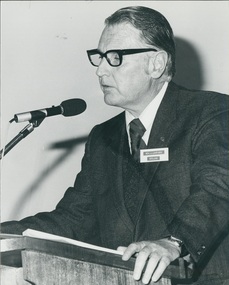 Uniting Church Archives - Synod of Victoria
BW photo, 1979
... Uniting Church came into being and Jock became the first Chairman of the Barwon Presbytery. There were now two ministers at Wesley – Jock and Alex Peerman, whose joint congregation of St. Giles (Pres) and City Congregational now joined with Wesley to become the City Parish. Jock was very surprised to be elected as the third Moderator of the Uniting Church in Victoria...Uniting Church came into being and Jock became the first Chairman of the Barwon Presbytery. There were now two ministers at Wesley – Jock and Alex Peerman, whose joint congregation of St. Giles (Pres) and City Congregational now joined with Wesley to become the City Parish. Jock was very surprised to be elected as the third Moderator of the Uniting Church in Victoria ...JOHN CORBEN LAVENDER (Jock) Jock was born in Ivanhoe, but spent most of his youth in Northcote where his father was a bank manager, and where he attended primary school, high school and the Methodist church in High Street which became a central point in his life. He took his first job in the dispatch office at McPhersons nut and bolt factory in North Richmond in 1935. After a short time at McPhersons he moved to the Trustees Executors and Agency Company in 1936. While working at the Trustees Jock developed the conviction that his vocation lay with the church. This necessitated studying Matriculation at night school for two years as well as working and studying to become a Local Preacher. The minister at Northcote at the time was the Rev.F.T.Cleverdon who helped him prepare to apply as a candidate for Ordination. Before going to university and Queen’s for his arts degree and theological training, Mr Cleverdon, who was now the minister at Neil Street, Ballarat, offered Jock the opportunity to minister to the small congregation at Brown Hill, Ballarat, which was in his Circuit, and to live with the Cleverdons. He spent a year in Ballarat under the tutelage of Rev.F.T Cleverdon in 1939. Jock was accepted by the 1940 Victorian Methodist Conference as a Candidate for the Ministry and started his studies for his theological training and an arts degree at Melbourne University that year. Because of a shortage of ministers, due to the war, Jock was taken out of Queen’s in 1943 to take charge of two fairly small churches in Caulfield - Hawthorn Road and Bambra Road. Jock was ordained in 1945 & married two days later to Elsie Chipperfield, with whom he had worked at the Trustees Executors and Agency. He had joined the RAAF as a chaplain and was sent to Borneo. Returning to Australia in early 1946, he was then appointed to Orbost for a year, Bracknell in Tasmania in 1948, followed by Reid in Canberra, 1951. The next move was to Portland in 1954. Unfortunately not long after this, Elsie was diagnosed with breast cancer. This necessitated a move back to Melbourne - to Mitcham in 1957. Elsie died in December 1957. This period was a very hard time as Jock had four young daughters but his mother helped out by living in for most of the week until Jock was married to Peg in 1959 and their son was born in 1961. In 1964 Jock was moved to Launceston, his first city church. These years were challenging for Jock as he felt compelled to speak out around social issues, such as the Vietnam War & Aboriginal rights, although many did not agree with his view. In 1969 Jock was moved to Horsham to take up the role of Separated Chairman of the North-Western District responsible for Circuits, ministers and families for policy issues and pastoral concerns over an area from the South Australian border, up to the Murray and over it to Wentworth and Dareton, up river to Swan Hill and south to Ballarat and Daylesford. It was a demanding job but richly rewarding in the relationships made with ministers and their families. In 1971 Jock was elected Secretary of the Methodist Conference and in 1972 was voted President of the Conference. He felt it an honour and a vote of confidence by clergy and lay people The final move was to Geelong in 1976 where Jock was the minister at Wesley until 1983.Jock found Geelong a very satisfying parish in which to finish his active ministry. It was while he was Minister of Wesley Church, Geelong, that the Uniting Church came into being and Jock became the first Chairman of the Barwon Presbytery. There were now two ministers at Wesley – Jock and Alex Peerman, whose joint congregation of St. Giles (Pres) and City Congregational now joined with Wesley to become the City Parish. Jock was very surprised to be elected as the third Moderator of the Uniting Church in Victoria, to take office in 1979/1980 1983 saw retirement to Portarlington several months’ locum in both Canada & Kununurra. When the property at Portarlington became too large to maintain, they moved in 1994 into the current house in Belmont & returned to the Wesley Church Geelong.Upper body photo of Rev. John (Jock) Lavender (Geelong) speaking at a lectern.Church & Nation 23/5/79, p. 5; Rev. Lavenderrev. john (jock) lavender; methodist minister; uniting church minister; -
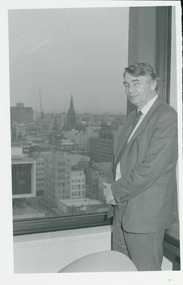 Uniting Church Archives - Synod of Victoria
Photograph, Rev. Brian Howe MP, 1986
... He served as a minister with the Methodist Church and the Uniting Church in various parts of Victoria – Morwell, Eltham and Fitzroy. ...He served as a minister with the Methodist Church and the Uniting Church in various parts of Victoria – Morwell, Eltham and Fitzroy. ...Brian Leslie Howe, AO (born 23 January 1936), is an Australian former politician who served as the Deputy Prime Minister of Australia in the Labor government under prime ministers Bob Hawke and Paul Keating from 1991 to 1995. Howe was born in Melbourne. He spent his early childhood in the suburb of Malvern and was educated at Melbourne High School and the University of Melbourne. He later studied theology in Chicago (1967–69) and then returned to Australia. He served as a minister with the Methodist Church and the Uniting Church in various parts of Victoria – Morwell, Eltham and Fitzroy. Howe was elected to the House of Representatives in 1977 representing the northern Melbourne metropolitan electoral Division of Batman. He defeated the incumbent Horrie Garrick for Labor preselection in a hard-fought contest.[1] A member of the Socialist Left faction of the Labor Party, he was Minister for Defence Support in the government of Bob Hawke from 1983. In 1984 he became Minister for Social Security and carried out various radical reforms to Australia's welfare system.[2] Howe appeared to face significant opposition within his electorate in 1988, when up to 60 members of the Greek Westgarth branch of the ALP defected to join the Australian Democrats. One of the defectors, tram-conductor George Gogas, contested Batman as a Democrat candidate in 1990, but polled only 12.9 per cent of the vote.[3] After the 1990 election Howe was appointed to the post of Minister for Community Services and Health. When Paul Keating resigned from Cabinet in 1991, Howe succeeded him as Deputy Prime Minister. He became Minister for Health, Housing and Community Services in the Keating government in December 1991, dropping the health part of the portfolio in 1993. In June 1995 he resigned as Deputy Prime Minister and was succeeded by Kim Beazley. He did not stand for re-election at the 1996 election. Following his parliamentary career, Howe has been appointed as an Associate Professor for Melbourne University and continues to work with social policy and related fields. He is a member of the Church of All Nations in Carlton, and active in the Uniting Church. A full biography in his own words can be found in the Proceedings of the Uniting Church Historical Society, Synod of Victoria and Tasmania, Vol. 21, No. 1 for June 2014.Howe standing by a window in his office 1986.Identification of Howe. -
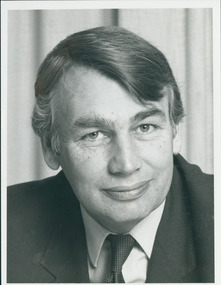 Uniting Church Archives - Synod of Victoria
Photograph, Rev. Brian Howe MP, 1984
... He served as a minister with the Methodist Church and the Uniting Church in various parts of Victoria – Morwell, Eltham and Fitzroy. ...He served as a minister with the Methodist Church and the Uniting Church in various parts of Victoria – Morwell, Eltham and Fitzroy. ...Brian Leslie Howe, AO (born 23 January 1936), is an Australian former politician who served as the Deputy Prime Minister of Australia in the Labor government under prime ministers Bob Hawke and Paul Keating from 1991 to 1995. Howe was born in Melbourne. He spent his early childhood in the suburb of Malvern and was educated at Melbourne High School and the University of Melbourne. He later studied theology in Chicago (1967–69) and then returned to Australia. He served as a minister with the Methodist Church and the Uniting Church in various parts of Victoria – Morwell, Eltham and Fitzroy. Howe was elected to the House of Representatives in 1977 representing the northern Melbourne metropolitan electoral Division of Batman. He defeated the incumbent Horrie Garrick for Labor preselection in a hard-fought contest.[1] A member of the Socialist Left faction of the Labor Party, he was Minister for Defence Support in the government of Bob Hawke from 1983. In 1984 he became Minister for Social Security and carried out various radical reforms to Australia's welfare system.[2] Howe appeared to face significant opposition within his electorate in 1988, when up to 60 members of the Greek Westgarth branch of the ALP defected to join the Australian Democrats. One of the defectors, tram-conductor George Gogas, contested Batman as a Democrat candidate in 1990, but polled only 12.9 per cent of the vote.[3] After the 1990 election Howe was appointed to the post of Minister for Community Services and Health. When Paul Keating resigned from Cabinet in 1991, Howe succeeded him as Deputy Prime Minister. He became Minister for Health, Housing and Community Services in the Keating government in December 1991, dropping the health part of the portfolio in 1993. In June 1995 he resigned as Deputy Prime Minister and was succeeded by Kim Beazley. He did not stand for re-election at the 1996 election. Following his parliamentary career, Howe has been appointed as an Associate Professor for Melbourne University and continues to work with social policy and related fields. He is a member of the Church of All Nations in Carlton, and active in the Uniting Church. A full biography in his own words can be found in the Proceedings of the Uniting Church Historical Society, Synod of Victoria and Tasmania, Vol. 21, No. 1 for June 2014.Full-face, looking into the camera 1984 - part of an advertisement for Wesley Church's 126th anniversary 9/9/1984.Identification of Howe -
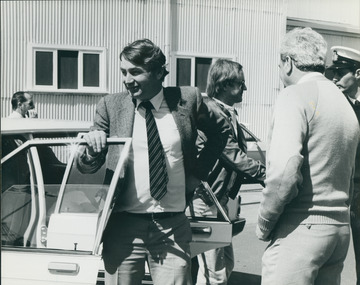 Uniting Church Archives - Synod of Victoria
Photograph, Rev. Brian Howe MP, 1985
... He served as a minister with the Methodist Church and the Uniting Church in various parts of Victoria – Morwell, Eltham and Fitzroy. ...He served as a minister with the Methodist Church and the Uniting Church in various parts of Victoria – Morwell, Eltham and Fitzroy. ...Brian Leslie Howe, AO (born 23 January 1936), is an Australian former politician who served as the Deputy Prime Minister of Australia in the Labor government under prime ministers Bob Hawke and Paul Keating from 1991 to 1995. Howe was born in Melbourne. He spent his early childhood in the suburb of Malvern and was educated at Melbourne High School and the University of Melbourne. He later studied theology in Chicago (1967–69) and then returned to Australia. He served as a minister with the Methodist Church and the Uniting Church in various parts of Victoria – Morwell, Eltham and Fitzroy. Howe was elected to the House of Representatives in 1977 representing the northern Melbourne metropolitan electoral Division of Batman. He defeated the incumbent Horrie Garrick for Labor preselection in a hard-fought contest.[1] A member of the Socialist Left faction of the Labor Party, he was Minister for Defence Support in the government of Bob Hawke from 1983. In 1984 he became Minister for Social Security and carried out various radical reforms to Australia's welfare system.[2] Howe appeared to face significant opposition within his electorate in 1988, when up to 60 members of the Greek Westgarth branch of the ALP defected to join the Australian Democrats. One of the defectors, tram-conductor George Gogas, contested Batman as a Democrat candidate in 1990, but polled only 12.9 per cent of the vote.[3] After the 1990 election Howe was appointed to the post of Minister for Community Services and Health. When Paul Keating resigned from Cabinet in 1991, Howe succeeded him as Deputy Prime Minister. He became Minister for Health, Housing and Community Services in the Keating government in December 1991, dropping the health part of the portfolio in 1993. In June 1995 he resigned as Deputy Prime Minister and was succeeded by Kim Beazley. He did not stand for re-election at the 1996 election. Following his parliamentary career, Howe has been appointed as an Associate Professor for Melbourne University and continues to work with social policy and related fields. He is a member of the Church of All Nations in Carlton, and active in the Uniting Church. A full biography in his own words can be found in the Proceedings of the Uniting Church Historical Society, Synod of Victoria and Tasmania, Vol. 21, No. 1 for June 2014.Howe alighting from a car at Williamstown dockyards March 1985.Identification of Howe. -
 Uniting Church Archives - Synod of Victoria
Photograph, Rev. Brian Howe MP, 1984
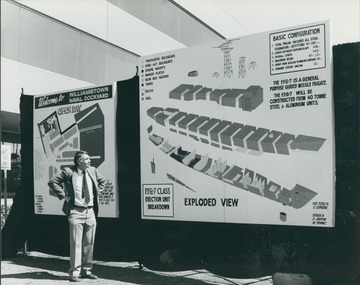
... He served as a minister with the Methodist Church and the Uniting Church in various parts of Victoria – Morwell, Eltham and Fitzroy. ...He served as a minister with the Methodist Church and the Uniting Church in various parts of Victoria – Morwell, Eltham and Fitzroy. ...Brian Leslie Howe, AO (born 23 January 1936), is an Australian former politician who served as the Deputy Prime Minister of Australia in the Labor government under prime ministers Bob Hawke and Paul Keating from 1991 to 1995. Howe was born in Melbourne. He spent his early childhood in the suburb of Malvern and was educated at Melbourne High School and the University of Melbourne. He later studied theology in Chicago (1967–69) and then returned to Australia. He served as a minister with the Methodist Church and the Uniting Church in various parts of Victoria – Morwell, Eltham and Fitzroy. Howe was elected to the House of Representatives in 1977 representing the northern Melbourne metropolitan electoral Division of Batman. He defeated the incumbent Horrie Garrick for Labor preselection in a hard-fought contest.[1] A member of the Socialist Left faction of the Labor Party, he was Minister for Defence Support in the government of Bob Hawke from 1983. In 1984 he became Minister for Social Security and carried out various radical reforms to Australia's welfare system.[2] Howe appeared to face significant opposition within his electorate in 1988, when up to 60 members of the Greek Westgarth branch of the ALP defected to join the Australian Democrats. One of the defectors, tram-conductor George Gogas, contested Batman as a Democrat candidate in 1990, but polled only 12.9 per cent of the vote.[3] After the 1990 election Howe was appointed to the post of Minister for Community Services and Health. When Paul Keating resigned from Cabinet in 1991, Howe succeeded him as Deputy Prime Minister. He became Minister for Health, Housing and Community Services in the Keating government in December 1991, dropping the health part of the portfolio in 1993. In June 1995 he resigned as Deputy Prime Minister and was succeeded by Kim Beazley. He did not stand for re-election at the 1996 election. Following his parliamentary career, Howe has been appointed as an Associate Professor for Melbourne University and continues to work with social policy and related fields. He is a member of the Church of All Nations in Carlton, and active in the Uniting Church. A full biography in his own words can be found in the Proceedings of the Uniting Church Historical Society, Synod of Victoria and Tasmania, Vol. 21, No. 1 for June 2014.Howe at Williamstown dockyard with an exploded view of a frigate September 1984.Identification of Howe.rev brian leslie howe, deputy prime minister of australia -
 Uniting Church Archives - Synod of Victoria
BW photo, March 1986
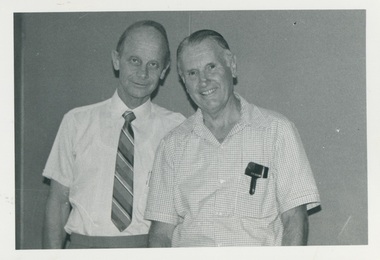
... Uniting Church came into being and Jock became the first Chairman of the Barwon Presbytery. There were now two ministers at Wesley – Jock and Alex Peerman, whose joint congregation of St. Giles (Pres) and City Congregational now joined with Wesley to become the City Parish. Jock was very surprised to be elected as the third Moderator of the Uniting Church in Victoria...Uniting Church came into being and Jock became the first Chairman of the Barwon Presbytery. There were now two ministers at Wesley – Jock and Alex Peerman, whose joint congregation of St. Giles (Pres) and City Congregational now joined with Wesley to become the City Parish. Jock was very surprised to be elected as the third Moderator of the Uniting Church in Victoria ...John (Jock) Corben Lavender Jock was born in Ivanhoe, but spent most of his youth in Northcote where his father was a bank manager, and where he attended primary school, high school and the Methodist church in High Street which became a central point in his life. He took his first job in the dispatch office at McPhersons nut and bolt factory in North Richmond in 1935. After a short time at McPhersons he moved to the Trustees Executors and Agency Company in 1936. While working at the Trustees Jock developed the conviction that his vocation lay with the church. This necessitated studying Matriculation at night school for two years as well as working and studying to become a Local Preacher. The minister at Northcote at the time was the Rev.F.T.Cleverdon who helped him prepare to apply as a candidate for Ordination. Before going to university and Queen’s for his arts degree and theological training, Mr Cleverdon, who was now the minister at Neil Street, Ballarat, offered Jock the opportunity to minister to the small congregation at Brown Hill, Ballarat, which was in his Circuit, and to live with the Cleverdons. He spent a year in Ballarat under the tutelage of Rev.F.T Cleverdon in 1939. Jock was accepted by the 1940 Victorian Methodist Conference as a Candidate for the Ministry and started his studies for his theological training and an arts degree at Melbourne University that year. Because of a shortage of ministers, due to the war, Jock was taken out of Queen’s in 1943 to take charge of two fairly small churches in Caulfield - Hawthorn Road and Bambra Road. Jock was ordained in 1945 & married two days later to Elsie Chipperfield, with whom he had worked at the Trustees Executors and Agency. He had joined the RAAF as a chaplain and was sent to Borneo. Returning to Australia in early 1946, he was then appointed to Orbost for a year, Bracknell in Tasmania in 1948, followed by Reid in Canberra, 1951. The next move was to Portland in 1954. Unfortunately not long after this, Elsie was diagnosed with breast cancer. This necessitated a move back to Melbourne - to Mitcham in 1957. Elsie died in December 1957. This period was a very hard time as Jock had four young daughters but his mother helped out by living in for most of the week until Jock was married to Peg in 1959 and their son was born in 1961. In 1964 Jock was moved to Launceston, his first city church. These years were challenging for Jock as he felt compelled to speak out around social issues, such as the Vietnam War & Aboriginal rights, although many did not agree with his view. In 1969 Jock was moved to Horsham to take up the role of Separated Chairman of the North-Western District responsible for Circuits, ministers and families for policy issues and pastoral concerns over an area from the South Australian border, up to the Murray and over it to Wentworth and Dareton, up river to Swan Hill and south to Ballarat and Daylesford. It was a demanding job but richly rewarding in the relationships made with ministers and their families. In 1971 Jock was elected Secretary of the Methodist Conference and in 1972 was voted President of the Conference. He felt it an honour and a vote of confidence by clergy and lay people The final move was to Geelong in 1976 where Jock was the minister at Wesley until 1983.Jock found Geelong a very satisfying parish in which to finish his active ministry. It was while he was Minister of Wesley Church, Geelong, that the Uniting Church came into being and Jock became the first Chairman of the Barwon Presbytery. There were now two ministers at Wesley – Jock and Alex Peerman, whose joint congregation of St. Giles (Pres) and City Congregational now joined with Wesley to become the City Parish. Jock was very surprised to be elected as the third Moderator of the Uniting Church in Victoria, to take office in 1979/1980 1983 saw retirement to Portarlington several months’ locum in both Canada & Kununurra. When the property at Portarlington became too large to maintain, they moved in 1994 into the current house in Belmont & returned to the Wesley Church here. In the words of Rev. Prof. Norman Young and Rev. Peter Gador-Whyte at Jock’s funeral service: “We are here today to give thanks to God for Jock Lavender; a gentle man of great compassion, humour and humility. We gather to remember the love he shared so generously the faith he lived so graciously, and the hope he expressed both in his preaching and in his presence. As President of the Methodist Conference and Moderator of the Uniting Church Jock held significant leadership roles within the church and did so with great dignity and grace never lording it over people but leading by example with an inner strength and faith that won respect and trust. There was something really special about him that is hard to put your finger on. We have all been blessed by God through Jock. Mr Alexander Kilgour Alex Kilgour was for many years an active elder and layman in the Presbyterian and then Uniting Church. He was involved in many committees at Synod level for many years. He was a Moderator of the Synod of Victoria of the UCA—one of the first laypeople to take on the role in the early years of the UCA. He was for many years Executive Director of the Resources Commission of the Synod. He worked at Mitchell Brushes (the company owned by Ethel and John Mitchell. B&W photograph. The Rev. John C (Jock) Lavender and Mr Alex Kilgour, dressed in shirts, are standing shoulder to shoulder, facing the camera.C&N 19/3/1986rev. jock lavender; mr alex kilgour; methodist, presbyterian, uniting church; synod appointments; moderator -
 Federation University Historical Collection
Photograph - Photograph - Colour, Installation of University of Ballarat Chancellor Paul Hemming, 2012, 17/0/2012
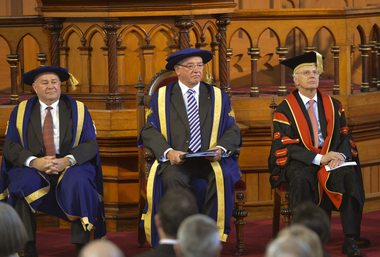
... (http://www.governor.vic.gov.au/victorias-governor/publications/speeches/speech/speech/104) university of ballarat federation university regalia chancellor vice chancellor paul hemming david battersby alex chrnov todd walker andy smith Craig's Hotel academics Colour photographS of three men in academic regalia sitting inside the Ballarat Uniting Church, Lydiard Street South. ...In April 2012 former Royal Australian College of General Practitioners president Dr Paul Hemming was appointed the University of Ballarat’s new chancellor. Dr Hemming was a deputy chancellor of the university since 2011 and a member of the university council since 2007, and replaces outgoing chancellor Robert Smith. He was a founding director of Beyondblue and has been president of the Royal Australian College of General Practitioners. He was also president of the Australian Medical Association Victoria and has served on numerous federal government medical bodies and tribunals. Chancellors are appointed to chair the university's council (governing body) as the senior office holder of the University. They also confer the academic awards of the university, and represent the university at meetings, functions and ceremonies. At the installation of Dr Hemming as the Fifth Chancellor Of The University Of Ballarat Governor of Victoria Alex Chrnov said: "I join Bonnie Fagan in acknowledging the traditional owners of this land and I pay my respects to their elders past and present. It is my great pleasure, as Governor of Victoria and Visitor to the University of Ballarat, to install Dr Paul Hemming as the fifth Chancellor of this University. I extend to him and his family my warmest congratulations on this appointment and wish him all the best in his new role. I have no doubt that he will be an industrious and wise leader of this University. Although the University of Ballarat is one of Australia’s newest Universities, it is the third oldest Tertiary institution in our country with the School of Mines being established in 1870. It has much to be proud of, and should be recognised for its commitment to being one of our most outstanding regionally focused higher education institutions. It offers on six campuses a diverse, yet suitably targeted, group of learning models that include higher education, TAFE and senior secondary school education, and is one of the few universities in the country that has an associated Technology Park. This University is uniquely placed to provide higher education in Regional Victoria. For example, I understand that by 2020 the population in the Ballarat area will increase by 20% so this University will have the responsibility and opportunity to provide educational opportunities for this growing population. The role of the Governor can be divided into three parts – ceremonial, constitutional and community engagement. It is the third aspect of the role that is most time consuming and, I add, enjoyable. It includes making official visits to Regional areas of Victoria. To date Elizabeth and I have been on 16 such visits and the thing that stands out is that despite the challenges that face Regional communities whether it be through natural disasters, or the economy more broadly – the stoicism, volunteerism and self reliance are always present. Ballarat is an example of such resilience and confidence in its future that can be dated back to this University’s inception. When the School of Mines was established in 1870 on the back of the gold rush era of the 1850s, the local community had vision and faith in its future that is reflected in the building of this institution. It is not dissimilar to Melbourne, where its relatively few citizens established the iconic pillars of our society like the State Library, the University of Melbourne, Parliament Houses and the National Gallery of Victoria. The contribution by the University of Ballarat to Regional Victoria cannot be overstated. Not only does it provide top educational opportunities for students from the Region but its graduates almost invariably end up working in Regional Australia, and often in their own local communities. More specifically, almost three out of every four of the graduates from this University end up finding employment in Regional areas. Such figures highlight the University’s significant contribution to the Regional economy. But its impact is not limited to our Regional areas – it extends to other parts of Australia and overseas. But like so many other higher education institutions in Australia, the University of Ballarat is facing challenges brought about by events such as global uncertainties and the high Australian dollar that impact on the inflow of international students, and dealing with students, more and more of whom come from the lower socio economic sector. It is in those circumstances that the Chancellor must show leadership that involves, amongst others, objectively guiding the Council and supporting the Vice-Chancellor, albeit without becoming involved in the day to day micro management of the University. A strong, trusting and respectful working relationship between the Chancellor and the Vice-Chancellor is, I believe, critical to the sound progress of a University. Before I turn more specifically to Dr Hemming, I would like to reflect briefly on his immediate predecessor, Emeritus Professor Robert Smith. I am sure that Dr Hemming has already found in Professor Smith an invaluable source of assistance. He was a skilled and effective leader not only here, but also in the broader higher education sector. I mention by way of example his instigation and leadership two years ago of the much acclaimed Chancellors’ Conference that was held in Melbourne. There was great diffidence amongst the Chancellors in having it at all. It was a little like herding cats. But Bob Smith spearheaded the organisation of it, with great attention to detail. And it was his hard work and leadership that resulted in the Conference being such a success and of assistance to all Chancellors who attended. It was an illustration of Bob Smith’s skills as a leader in the sector and of this University. And the sector, just as this University remains indebted to him. And I have no doubt that Dr Hemming will similarly lead this University through the challenging, yet exciting, times that lie ahead. He is eminently qualified to do so, in terms of his personal attributes, academic achievements and experience in governance. With his extensive medical career as a General Practitioner, service on a number of Federal Government medical boards and tribunals, and having been a Founding Director of ‘Beyondblue’, President of the Royal Australian College of General Practitioners and President of the Australian Medical Association (Victoria), his list of personal and professional achievements, as well as his strong sense of public and community duty, is impressive. Importantly, Dr Hemming has a long standing connection with the Ballarat community, having moved here with his family from the United Kingdom in 1977. He is now even accepted as a “local” I am told. Given his range of experience to which I have referred and the time he has already spent on the Council and Standing Committees of this University, he is obviously well placed to take part in leading this University. So it is a great pleasure for me to install Dr Hemming as the fifth Chancellor of the University of Ballarat." (http://www.governor.vic.gov.au/victorias-governor/publications/speeches/speech/speech/104) Colour photographS of three men in academic regalia sitting inside the Ballarat Uniting Church, Lydiard Street South. Chancellor Dr Paul Hemming sit in the centre, with Vice-Chancellor Professor david Battersby on the left. Also audience images, academics and a dinner at Craig's Hotel.university of ballarat, federation university, regalia, chancellor, vice chancellor, paul hemming, david battersby, alex chrnov, todd walker, andy smith, craig's hotel, academics -
 Federation University Historical Collection
Photograph, Installation of university of Ballarat Chancellor David Caro, 28/10/1998
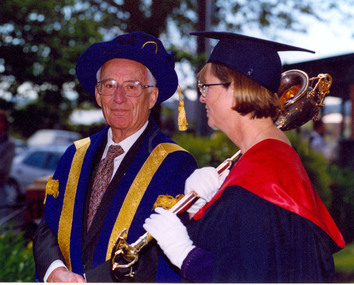
... The Installation of the Chancellor Professor Emeritus David Edmund Caro, AO, OBE as the second University of Ballarat Chancellor took place on 28 October 1998 at the Lydiard Street Uniting Church, corner of Lydiard and Dana Streets, Ballarat. caro david caro gobbo james gobbo governor of victoria chancellor university of ballarat william pryor michael ronaldson Gabrielle McMullin Nine colour photographic prints taken at the installation of the second University of Ballarat Chancellor, Professor Emeritus David Caro, AO, OBE. .1) Governor Sir James Gobbo greets David Caro .2) Father Rupert O'Down in blue hood .3) Michael Ronaldson in suit, Mary Akers in grey hood behind man in red. ...The Installation of the Chancellor Professor Emeritus David Edmund Caro, AO, OBE as the second University of Ballarat Chancellor took place on 28 October 1998 at the Lydiard Street Uniting Church, corner of Lydiard and Dana Streets, Ballarat.Nine colour photographic prints taken at the installation of the second University of Ballarat Chancellor, Professor Emeritus David Caro, AO, OBE. .1) Governor Sir James Gobbo greets David Caro .2) Father Rupert O'Down in blue hood .3) Michael Ronaldson in suit, Mary Akers in grey hood behind man in red. Gabrielle McMullan in blue and pink gown (left) .5) Vice Chancellor David James (left) speaks to Governor Sir James Gobbo .6) Academic Procession in Lydiard Street, Ballarat .7) University of Ballarat Mace followed by David Caro and Sir James Gobbo. (Bill Pryor on far right) .8) Chancellor David Caro and Mace holder .9 Janet Dawe stands with Bagpipe players outside the Ballarat Club. caro, david caro, gobbo, james gobbo, governor of victoria, chancellor, university of ballarat, william pryor, michael ronaldson, gabrielle mcmullin -
Marysville & District Historical Society
THE TRIANGLE NEWS-VOL 2 NO 16-JUNE 10 1977
... marysville victoria australia farewell kings crossways red cross marysville uniting church golf news snow damage at kooringa senior citizens community care centre footy club narbethong primary school mothers' club lions tribunal results found heifers rainfall congratulations alexandra football league marysville indoor bowls club THE TRIANGLE NEWS-VOL 2 NO 16-JUNE 10 1977 ...marysville, victoria, australia, farewell kings crossways, red cross, marysville uniting church, golf news, snow damage at kooringa, senior citizens, community care centre, footy club, narbethong primary school, mothers' club, lions, tribunal results, found heifers, rainfall, congratulations alexandra football league, marysville indoor bowls club -
Marysville & District Historical Society
THE TRIANGLE NEWS-VOL 3 NO 10-APRIL 21 1978
... marysville victoria australia water supply thank you 50th wedding anniversary community care centre jumbucks fleece opponents thank you from beryl & joe greatorex kindergarten get well senior citizens marysville primary school mothers' club marysville uniting church wanted marysville swimming and life saving club football 1st marysville girl guide l.a. helicopter crash orienteering running thought sport fruit salad farm handyman available THE TRIANGLE NEWS-VOL 3 NO 10-APRIL 21 1978 ...marysville, victoria, australia, water supply, thank you, 50th wedding anniversary, community care centre, jumbucks fleece opponents, thank you from beryl & joe greatorex, kindergarten, get well, senior citizens, marysville primary school mothers' club, marysville uniting church, wanted, marysville swimming and life saving club, football, 1st marysville girl guide l.a., helicopter crash, orienteering running thought sport, fruit salad farm, handyman available -
Marysville & District Historical Society
THE TRIANGLE NEWS-VOL 3 NO 16-JUNE 9 1978
... marysville victoria australia senior citizens marysville uniting church for sale rainfall 1st marysville girl guide l.a. parents of scouts cubs brownies etc community care centre dance! ...marysville, victoria, australia, senior citizens, marysville uniting church, for sale, rainfall, 1st marysville girl guide l.a., parents of scouts cubs brownies etc, community care centre, dance!, narbethong primary school, kinder roster, wirreanda, answers to puzzles, football, can you help?, wanted, fruit salad farm, get well soon, puppies -
Marysville & District Historical Society
THE TRIANGLE NEWS-VOL 3 NO 18-JUNE 23 1978
... marysville victoria australia congratulations brownies marysville senior citizens uniting church the salvos golf club birthday party h cuzens community care centre world vision film night rainfall thank you b west football situation vacant kindergarten table tennis girl guide l.a. meeting fruit salad farm wanted to rent for sale marysville indoor bowls lions change-over dinner primary school mothers' club luncheon bessemer demonstration THE TRIANGLE NEWS-VOL 3 NO 18-JUNE 23 1978 ...marysville, victoria, australia, congratulations brownies, marysville senior citizens, uniting church, the salvos, golf club, birthday party h cuzens, community care centre, world vision film night, rainfall, thank you b west, football, situation vacant, kindergarten, table tennis, girl guide l.a. meeting, fruit salad farm, wanted to rent, for sale, marysville indoor bowls, lions change-over dinner, primary school mothers' club luncheon, bessemer demonstration
