
Showing 8 items matching "urban railways - australia"
-
 Victorian Railway History Library
Book, Brian Carroll, Getting around town : a history of urban transport in Australia, 1980
... Urban transport - Australia...Urban railways...Urban transport - Australia Urban railways - Australia A history of urban transportation in Australia Index, ill, p.176. ...A history of urban transportation in AustraliaIndex, ill, p.176.A history of urban transportation in Australiaurban transport - australia, urban railways - australia -
 Narre Warren and District Family History Group
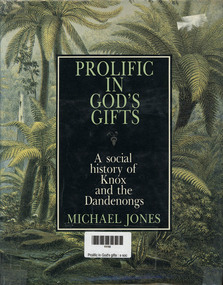
Book, MA Jones, Prolific in God's gifts : a social history of Knox and the Dandenongs, 1983
... Australia. The book explores the area's development from the arrival of the first pastoralists to its transformation into part of urban Melbourne. It highlights key figures such as James Clow, a clergyman and pastoralist, and John Wood Beilby, an explorer and speculator. The book also discusses the region's early agricultural struggles, the impact of the railway ...a detailed historical account of the Knox and Dandenong regions in Victoria, Australia. The book explores the area's development from the arrival of the first pastoralists to its transformation into part of urban Melbourne. It highlights key figures such as James Clow, a clergyman and pastoralist, and John Wood Beilby, an explorer and speculator. The book also discusses the region's early agricultural struggles, the impact of the railway, and its emergence as one of Australia's first tourist destinations. Richly illustrated with photographs and maps, it provides a vivid picture of the area's history through original newspaper excerpts and documents. [AI generated text]328 p.; 24 cmnon-fictiona detailed historical account of the Knox and Dandenong regions in Victoria, Australia. The book explores the area's development from the arrival of the first pastoralists to its transformation into part of urban Melbourne. It highlights key figures such as James Clow, a clergyman and pastoralist, and John Wood Beilby, an explorer and speculator. The book also discusses the region's early agricultural struggles, the impact of the railway, and its emergence as one of Australia's first tourist destinations. Richly illustrated with photographs and maps, it provides a vivid picture of the area's history through original newspaper excerpts and documents. [AI generated text]knox (vic.), dandenongs -
 Moorabbin Air Museum
Document (item) - CAC Collection - Transportation File From 01.11.1976 to 08.02.1978 - refer Description for further details
... Consisting of following, 1.Rail Transport 2.Australian Urban Passenger Train 3.Rail Car Manufacture 4.A.U.P.T Tendering 5.Queensland Railways 6.New Trams...Consisting of following, 1.Rail Transport 2.Australian Urban Passenger Train 3.Rail Car Manufacture 4.A.U.P.T Tendering 5.Queensland Railways 6.New Trams Document CAC Collection - Transportation File From 01.11.1976 to 08.02.1978 - refer Description for further details. ...Consisting of following, 1.Rail Transport 2.Australian Urban Passenger Train 3.Rail Car Manufacture 4.A.U.P.T Tendering 5.Queensland Railways 6.New Trams -
Glen Eira Historical Society
Document - Historic Conservation Areas Project
... Urban Action (CUA) National Trust Hopkins Sherry Ms. Ford Hazel Preliminary Conservation Survey Town Planning Heritage Studies Rodda Andrew City of Caulfield Housing Estates Victoria National Estate Grants Program Australia Icomos Burra Charter Buildings Structures and Establishments Land Surveys Suburbs Historic Buildings Architectural Significance ‘Caulfield’s Heritage Study’ Soloman Geulah Dr. Caulfield Library Dandenong Road Nepean Highway Hotham Street Iknerman Road Orrong Road North Road Poath Road ‘Plan of the City of Caulfield’ North Ward East Ward South Ward West Ward Kooyong Road Neerim Road Bambra Road Balaclava Road Shire of Caulfield Railways ...Contains 4 items relating to historic conservation: 1/Five newsletters (one page each newsletter, dated 07/1975, 08/1975, 09/1975, 10/1975 and the final one 12/1975) describing how the project evolved, project funds, progress, study method, project 1 report, project 2 report and summary as no further funds available. Project was to include all of Melbourne but funding did not allow this. Note: newsletters stamped with Caulfield Historical Society. 2/Letter (one page on official city of Caulfield letterhead) from Andrew Rodda (manager planning) to Hazal Ford (dated 13/11/1989) describing ‘council resolved on 18/07/1989 to proceed with preliminary conservation survey’ and mentions that a copy is included. 3/Preliminary conservation survey for the City of Caulfield (nine pages) describing background, study area, budget, purpose, study outline, timeframe, report format, ownership, tasks and background information (mentions number and types of houses and properties as at 1986 and 1988) and a map of City of Caulfield. 4/Booklet (28 pages) titled ‘Heritage Area – Caulfield North Draft Heritage Guidelines July 1999 – City of Glen Eira’, containing Caulfield North Heritage Area, cultural heritage, Heritage Overlay Area, architectural description, common architectural forms and features, development guidelines, key design checklist. It includes a map of the Caulfield North Heritage Overlay Area, two illustrations about the development envelope and many black-and-white photographs of houses and architectural features.historic conservation areas project niven barbara, newsletters, town planning, historic buildings, heritage studies, housing, royal historical society of victoria (rhsv), read michael, plans, local government, historical societies, committee for urban action (cua), national trust, hopkins sherry ms., ford hazel, preliminary conservation survey, town planning, heritage studies, rodda andrew, city of caulfield, housing estates, victoria national estate grants program, australia icomos, burra charter, buildings structures and establishments, land surveys, suburbs, historic buildings, architectural significance, ‘caulfield’s heritage study’, soloman geulah dr., caulfield library, dandenong road, nepean highway, hotham street, iknerman road, orrong road, north road, poath road, ‘plan of the city of caulfield’, north ward, east ward, south ward, west ward, kooyong road, neerim road, bambra road, balaclava road, shire of caulfield, railways, world war 1914-1918, depression 1929-1939, rippon lea, labassa, parks, mansions, community services, ‘caulfield north draft heritage guidelines july 1999’, city of glen eira, caulfield north heritage area, glen eira heritage management plan, mayfield grove, normanby avenue, carnarvon street, glenferrie street, arthur street, malakoff street, normanby road, heritage advisory service, construction materials, victorian style, mediterranean style, spanish mission style, californian bungalow style, federation style, architectural style, architectural features, heritage conservation design, building construction, building regulations, aboriginal peoples, carnarvon road -
 Sunshine and District Historical Society Incorporated
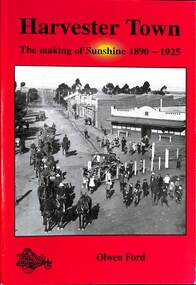
Book - Harvester Town. The making of Sunshine `1890 - 1925, Sunshine and District Historical Society, Harvester Town. The making of Sunshine `1890 - 1925. Olwen Ford
... Australia’s largest industrial complexes, shaping the suburb’s identity, workforce, and urban growth. Sunshine History Olwen Ford’s “Harvester Town” refers to her major historical study of Sunshine, Victoria during the years 1890–1925 — the era when the suburb transformed from a quiet railway junction into Australia’s most famous industrial ‘company town’ built around H.V. ...Olwen Ford’s “Harvester Town” refers to her major historical study of Sunshine, Victoria during the years 1890–1925 — the era when the suburb transformed from a quiet railway junction into Australia’s most famous industrial ‘company town’ built around H.V. McKay’s Sunshine Harvester Works.Red covered booknon-fictionOlwen Ford’s “Harvester Town” refers to her major historical study of Sunshine, Victoria during the years 1890–1925 — the era when the suburb transformed from a quiet railway junction into Australia’s most famous industrial ‘company town’ built around H.V. McKay’s Sunshine Harvester Works. sunshine, history -
 Victorian Railway History Library
Booklet, Urban Rail Electrification Steering Committee, Northern suburbs transit system, Perth-Joondalup railway : progress summary, 1991
... Urban transport - Perth Suburban railways - Perth Progress report on the construction of the Northern suburbs transit system in Perth Ill, maps, p.28. Northern suburbs transit system, Perth-Joondalup railway : progress summary. Booklet Urban Rail Electrification Steering Committee Government of Western Australia ...Progress report on the construction of the Northern suburbs transit system in PerthIll, maps, p.28.non-fictionProgress report on the construction of the Northern suburbs transit system in Perthurban transport - perth, suburban railways - perth -
 Victorian Railway History Library
Book, Russell, E.W, On the Right Track... Freeways or Better Public Transport for Melbourne's East?, 1991
... Light railways - Australia - history Urban transportation - Melbourne Report to the Victorian Minister of Transport, Hon Peter Spyker, M.P of the Eastern Corridor Transport Options Stydy by Professor E W Russell Melbourne July 1991. ill, bib, maps, p.113. ...Report to the Victorian Minister of Transport, Hon Peter Spyker, M.P of the Eastern Corridor Transport Options Stydy by Professor E W Russell Melbourne July 1991.ill, bib, maps, p.113.non-fictionReport to the Victorian Minister of Transport, Hon Peter Spyker, M.P of the Eastern Corridor Transport Options Stydy by Professor E W Russell Melbourne July 1991.light railways - australia - history, urban transportation - melbourne -
Emerald Museum & Nobelius Heritage Park
Photograph - Shell Service Station, Unknown photographer, 1990s
... railway lines or stations. In the late Nineteenth and early Twentieth Centuries transport options included carts of various sizes pulled by horses, oxen or bullocks. In the 1920s and 1930s cars (which had existed in Australia in early forms from approximately 1896) began to replace horses as the primary mode of transportation across Australia. By the end of the Second World War cars dominated transport options in rural areas as well as urban...railway lines or stations. In the late Nineteenth and early Twentieth Centuries transport options included carts of various sizes pulled by horses, oxen or bullocks. In the 1920s and 1930s cars (which had existed in Australia in early forms from approximately 1896) began to replace horses as the primary mode of transportation across Australia. By the end of the Second World War cars dominated transport options in rural areas as well as urban ...The township of Emerald was settled after gold was discovered in the area in 1858. Emerald's 'square mile' was established and roads between the township, other towns in the region and Melbourne were established (with alterations to the original layout in the intervening years). From these first years of the settlement roads and services to support the transport of goods (from businesses making and repairing carts and drays to mechanics' workshops to service cars and industrial vehicles) were integral to the economic survival and development of the township. Closely associated with the history of Emerald is the history of the Gembrook or Nobelius Nurseries, which transported trees and other plants to parks and private gardens in Melbourne, in other Australian locations and in many other countries. Impassable roads to transport goods in Winter, and the difficulty of transporting goods by bullock team or horse and cart over a route that at that time went via the railway station at Narre Warren led to Carl Axel Nobelius and other local business owners successfully lobbying the Victorian Government to build the narrow gauge railway to the Ferntree Gully line that is now operated as the tourist attraction 'Puffing Billy.' Puffing Billy was primarily a goods transport service, but did transport passengers in both directions of travel for both everyday needs and recreational purposes. The Puffing Billy service did not remove the need for local families and businesses to provide their own transport options, however, whenever they needed to move smaller loads or to access places not served by the railway lines or stations. In the late Nineteenth and early Twentieth Centuries transport options included carts of various sizes pulled by horses, oxen or bullocks. In the 1920s and 1930s cars (which had existed in Australia in early forms from approximately 1896) began to replace horses as the primary mode of transportation across Australia. By the end of the Second World War cars dominated transport options in rural areas as well as urban. Correspondingly, businesses to service vehicles shifted from focusing on repairs and maintenance of harnesses and cart structures to the repair and servicing of cars and other vehicles. Museum records indicate that the image was taken in the Shell Service Station in Emerald in approximately 1990. There is still a Shell Service Station in Emerald, located at 336-338 Belgrave-Gembrook Road, though it is now part of the Coles Express network.This image is significant because it provides insights into the development of automotive and engineering workshop businesses in the region, part of the progression from wheelwright and cartwright businesses in the days of oxen drays to businesses servicing cars and other vehicles. As part of this, it also provides insight into the equipment available at the time the photograph was taken, which is speculated to be the late 1980s or early 1990s. Identification of the two men pictured may also help ascertain the significance of the image.Black and white rectangular photograph printed on print media paper. The image depicts two men standing in front of a piece of mechanic's workshop equipment on which a Bridgestone tyre has been loaded. One of the men is wearing long-sleeved overalls, the other is wearing dark trousers and a polo-neck T-shirt. Museum records indicate the photograph may have been taken at the Shell Service Station.Obverse: BRIDGESTONE / SF-340 EAGER /emerald, victoria, australia, transport, automotive services, shell service station, cars, motor vehicles, puffing billy, businesses, local business
