
Showing 215 items matching "urban services"
-
 Tatura Irrigation & Wartime Camps Museum
Report, Urban Water Services Financing Study, 1980s
... Urban Water Services Financing Study...irrigation Typed reports about water management in Victoria Urban Water Services Financing Study Report ...Typed reports about water management in Victoriairrigation -
University of Melbourne, Burnley Campus Archives
Document, A Report on Services to Urban Horticulture in Victoria, 1976
... A Report on Services to Urban Horticulture in Victoria ...m.n. kinsella urban horticulture victoria Report by M.N. Kinsella to Assistant Director of Agriculture, 65 pp. A Report on Services to Urban Horticulture in Victoria Document ...Report by M.N. Kinsella to Assistant Director of Agriculture, 65 pp.m.n. kinsella, urban horticulture, victoria -
Broadmeadows Historical Society & Museum
Photograph (collection) - City of Broadmeadows Trucks, Don Woods, 1991
... ...Urban services...Victoria (Australia) 1990s Urban services Australian local government Photograph City of Broadmeadows Trucks Don Woods ...Created as part of City of Broadmeadows municipal operations. Later retained and archived by the Broadmeadows Historical Society.To document City of Broadmeadows municipal vehicles for operational, promotional, or record keeping purposes.Two colour photographs physically joined together with adhesive tape along the centre, forming a single composite photographic item. Original order maintained as received.Two colour photographs depicting City of Broadmeadows service vehicles parked at a municipal works depot: • An International ACCO 2250 water tanker marked “Broadmeadows” • An Isuzu FSR 450 tray truck bearing City of Broadmeadows livery Both images show vehicles in situ at the Broadmeadows depot.municipal vehicles, city of broadmeadows, local government, local government infrastructure, public works, council works depots, truck fleets, water tankers, utility trucks, vehicle livery, municipal branding, broadmeadows (vic.), victoria (australia), 1990s, urban services, australian local governmentmunicipal vehicles, city of broadmeadows, local government, local government infrastructure, public works, council works depots, truck fleets, water tankers, utility trucks, vehicle livery, municipal branding, broadmeadows (vic.), victoria (australia), 1990s, urban services, australian local government -
Broadmeadows Historical Society & Museum
Book (series) - Report, E. Hamilton-Smith, A.U.A., (Youth Services Planning Division) et al, Broadmeadows – A Growing City, 1972
... ...Welfare services — urban communities...Broadmeadows (Vic.) — social conditions Local government — planning and policy Youth services — Victoria Welfare services — urban communities Public housing — social impact Community development Broadmeadows – A Growing City Book Report E. ...Broadmeadows City Council; created through the Youth Services Planning Division with contributions from academic researchers and advisory committees.Produced as a commissioned study by the City of Broadmeadows to examine general welfare conditions and youth work needs within the municipality and to guide future planning, service provision, and community development.Two-volume set comprising: • Volume 1: Detailed survey data and working papers (207 pages) • Volume 2: Integrated summary, analysis, and recommendations (81 pages)A two-volume report documenting a comprehensive social survey of Broadmeadows, covering population growth, welfare services, youth needs, housing conditions, education, health, and employment. Volume 1 contains detailed data and statistical material, while Volume 2 synthesises findings and presents policy recommendations for municipal planning and community development.broadmeadows (vic.) — social conditions, local government — planning and policy, youth services — victoria, welfare services — urban communities, public housing — social impact, community developmentbroadmeadows (vic.) — social conditions, local government — planning and policy, youth services — victoria, welfare services — urban communities, public housing — social impact, community development -
 Broadmeadows Historical Society & Museum
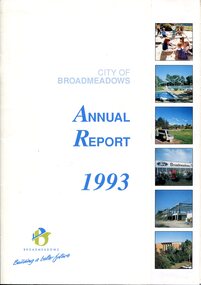
Book - Annual Report, Alex Simic et al, City of Broadmeadows Annual Report 1993, 1993
... ...Community Services...Urban...City of Broadmeadows Local Government Municipal Administration Annual Reports Civic Governance Community Services Urban Development Municipal Finance Recreation Facilities Infrastructure Broadmeadows Hume Region Victoria Local History Municipal Reform. ...The annual report presents an overview of municipal operations and achievements for 1993. Content typically includes reports from the Mayor and Chief Executive Officer, financial statements, departmental reports, community services, engineering and works programs, planning activities, recreation services, economic development initiatives, staffing information and statistical data relating to municipal governance and service delivery.28 pages including covers; colour printed publication with card cover and stapled binding. Front cover features the title City of Broadmeadows Annual Report 1993, municipal logo and slogan "Building a Better Future", and a series of colour photographs depicting community facilities, recreation spaces, commercial development and civic infrastructure.non-fictionThe annual report presents an overview of municipal operations and achievements for 1993. Content typically includes reports from the Mayor and Chief Executive Officer, financial statements, departmental reports, community services, engineering and works programs, planning activities, recreation services, economic development initiatives, staffing information and statistical data relating to municipal governance and service delivery.city of broadmeadows, local government, municipal administration, annual reports, civic governance, community services, urban development, municipal finance, recreation facilities, infrastructure, broadmeadows, hume region, victoria, local history, municipal reform. -
 Broadmeadows Historical Society & Museum
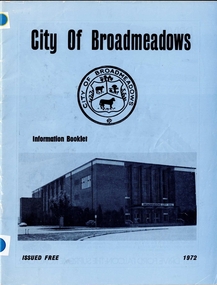
Booklet - Information Booklet, City of Broadmeadows Council, City of Broadmeadows Information Booklet 1972, 1972
... ...Community Services...Urban...services, infrastructure, planning initiatives and community resources. The publication serves as a contemporary record of the municipality during a significant period of population growth and urban development. ...City of Broadmeadows Local Government Municipal Administration Community Services Urban Development Civic Infrastructure Broadmeadows City Hall Municipal History Melbourne Northern Suburbs Public Information Publications Victoria 1972. ...An official municipal information booklet issued free by the City of Broadmeadows in 1972. It provides residents with an overview of council operations, elected representatives, municipal facilities, services, infrastructure, planning initiatives and community resources. The publication serves as a contemporary record of the municipality during a significant period of population growth and urban development.34-page stapled paper booklet with printed colour cover and black-and-white internal pages. Front cover features the City of Broadmeadows municipal seal, a photograph of Broadmeadows City Hall, the words “Information Booklet”, and the date 1972. Booklet contains information relating to municipal administration, services, facilities, development, and local government activities within the City of Broadmeadows. non-fictionAn official municipal information booklet issued free by the City of Broadmeadows in 1972. It provides residents with an overview of council operations, elected representatives, municipal facilities, services, infrastructure, planning initiatives and community resources. The publication serves as a contemporary record of the municipality during a significant period of population growth and urban development.city of broadmeadows, local government, municipal administration, community services, urban development, civic infrastructure, broadmeadows city hall, municipal history, melbourne northern suburbs, public information publications, victoria, 1972. -
 Ballarat Tramway Museum
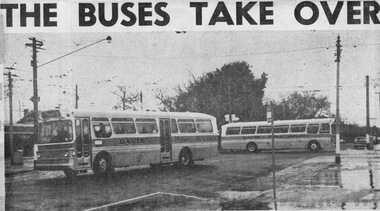
Newspaper, The Courier Ballarat, "The buses take over", 24/08/1971 12:00:00 AM
... Item features a photo of two Davis Bus lines (lettered Davis Urban Services) at the intersection of Sturt and Drummond St. on the first day of bus operation following the closure of the Victoria St. - Gardens Line. ...Item features a photo of two Davis Bus lines (lettered Davis Urban Services) at the intersection of Sturt and Drummond St. on the first day of bus operation following the closure of the Victoria St. - Gardens Line. ...Newspaper clipping from The Courier, Ballarat, dated Tuesday 24/8/1971, titled "The buses take over". Item features a photo of two Davis Bus lines (lettered Davis Urban Services) at the intersection of Sturt and Drummond St. on the first day of bus operation following the closure of the Victoria St. - Gardens Line. One of large group of newspaper cuttings from John Bainbridge, 7/4/02. High Res Images added 5/3/2011.buses, sturt st, drummond st, tram replacement -
 Ballarat Tramway Museum
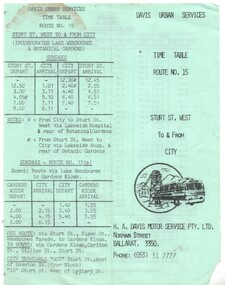
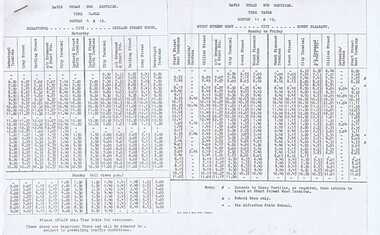
Ephemera - Timetable/s, H. A. Davis Motor Services, "Timetable Route No. 15, Sturt St. West to and from City", c1975
... Bus timetable for Davis Urban Services Ballarat, route 15 on light green duplicating paper. ...Bus timetable for Davis Urban Services Ballarat, route 15 on light green duplicating paper. ...Bus timetable for Davis Urban Services Ballarat, route 15 on light green duplicating paper. Route 15 - Sturt St. West to and from City. Not dated, but probably c1975, as Davis have moved to their "then" new depot in Norman St. Ballarat. Timetable gives times for departure to and the terminals, notes on intermediate times, notes on variations to standard arrangements and location of terminals. On Sunday, the bus served the Botanical Gardens area and route 15A, which served Lake Wendouree by Gardens Kiosk. Has a Davis bus logo - poppet head and bus. Was designed to be folded in the centre. Two copies held. See Graham Cleak via Gavin Young advised on possible date of timetable 26/01/01On copy 1, by Norman St "No. 804" in pencil.bus services, sturt st west, gardens, lake wendouree, davis bus lines -
 Ballarat Tramway Museum
Document - Photocopy, Davis Urban Bus Service - timetables, 1971
... Davis Urban Bus Service - timetables...Photocopies of the Davis Urban Bus Services to replace the tram services in Ballarat in 1971. ...Made on heat sensitive paper. Davis Urban Bus Service - timetables Document Photocopy ...Photocopies of the Davis Urban Bus Services to replace the tram services in Ballarat in 1971. Sebastopol - City - Lydiard St. North (routes 4 and 12) Sturt St West - City - Mt. Pleasant (routes 11 and 15) Wendouree West - City - Victoria St (routes 1 and 7) Timetables for Monday to Friday, Saturday and Sunday. Foolscap and quarto sheets photocopied with newspaper extracts in the background. Made on heat sensitive paper.trams, tramways, buses, timetables, ballarat, davis bus lines -
Ballarat Tramway Museum
Document - Report, State Electricity Commission of Victoria (SECV), "Creation of a state electricity Commission"
... Notes the operation of urban omnibus services and the issues of the lack of municipal supervision, though later on this occurred through the Transport Regulation Board....Notes the operation of urban omnibus services and the issues of the lack of municipal supervision, though later on this occurred through the Transport Regulation Board. ...Report titled "Creation of a State Electricity Commission", and "History of Provincial tramways before Act No. 3845 - 1929". Outlines the context of the SEC Act of 1919 which did not include tramway operation by the power or electricity supply authority - was seen as a Municipal concern. Gives the alternatives that were considered, including the agreement with the Municipal Councils of Geelong, Ballarat, and Bendigo. Notes the operation of urban omnibus services and the issues of the lack of municipal supervision, though later on this occurred through the Transport Regulation Board.Yields information about the operation of the Provincial tramways under the control of the SECV.Five foolscap sheets, carbon copycouncils, secv, buses, ballarat, bendigo, geelong, trb -
 Bendigo Historical Society Inc.
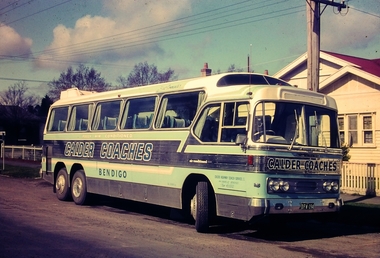
Slide - John Theodore Collection: Calder Coaches, Bendigo, 1970s - 1980s
... Over the next 28 years, Calder Coaches built up a deeply established and reputable operation in the Bendigo region, comprising of extensive service offerings, and an equally impressive premier class, renowned fleet. At it’s peak, the company offered Urban, School, and Charter services, alongside an extensive interstate tours program....Over the next 28 years, Calder Coaches built up a deeply established and reputable operation in the Bendigo region, comprising of extensive service offerings, and an equally impressive premier class, renowned fleet. At it’s peak, the company offered Urban, School, and Charter services, alongside an extensive interstate tours program. history calder coaches bendigo bus murray valley coaches john theodore collection Calder Coaches Bendigo Buses- Three 135 mm slides; two taken of IQK995 in the street and 1 more of 3 coaches in the depot; IQK995, KLO194 and IFW094 This item includes the following slides: 4404.1a Calder Coaches Bendigo Bus Registration IFW 094 in front of a house 4404.1b Calder Coaches Bendigo Denning Bus, Registration IQK 995 in front of a house. ...Murray Valley Coaches was a renowned coach company formed in the 1930’s, headquartered in Mildura, which by the early 50’s had an extensive network of service offerings, primarily centring around long distance (regular) coach services and tours. With advances in technology and manufacturing processes for heavy vehicles, decreased journey times and increased passenger comfort was suddenly achievable. All this meant many far places were now reachable and widely accessible within a day or two, resulting in a surge in demand for long distance passenger coach services. Murray Valley Coaches capitalised on these new opportunities in 1945 when they began operating regular coach services between Bendigo and Mildura. By the late 40’s, the route was just a small portion of an expansive network, with frequent services from Mildura to Adelaide, Canberra and Sydney, amongst others. However, with the rise of popularity in the motor car in the early 50’s (due to increased affordability), the company began to experience financial hardship. This saw the sale of the Bendigo – Mildura route on July 1st, 1954 to three drivers; Colin Symes, W.A. Runnalls and Doug Bennetts. Together these three formed Calder Highway Coaches, establishing a depot at 54 High Street/Chapel Street, Bendigo. Over the next 28 years, Calder Coaches built up a deeply established and reputable operation in the Bendigo region, comprising of extensive service offerings, and an equally impressive premier class, renowned fleet. At it’s peak, the company offered Urban, School, and Charter services, alongside an extensive interstate tours program.Calder Coaches Bendigo Buses- Three 135 mm slides; two taken of IQK995 in the street and 1 more of 3 coaches in the depot; IQK995, KLO194 and IFW094 This item includes the following slides: 4404.1a Calder Coaches Bendigo Bus Registration IFW 094 in front of a house 4404.1b Calder Coaches Bendigo Denning Bus, Registration IQK 995 in front of a house. Custom Denning (formerly Denning Manufacturing) is Australia's oldest bus manufacturer, known for producing durable coaches and electric transit buses. Since merging with Custom Bus, the company designs and manufactures vehicles at production facilities across Australia, including a major site in Sydney (18 Vallance St) 4404.1c Calder Coaches - Three Bendigo Buses in the Depot shed history, calder coaches, bendigo, bus, murray valley coaches, john theodore collection -
Emerald Museum & Nobelius Heritage Park
Photograph - Shell Service Station, Unknown photographer, 1990s
... By the end of the Second World War cars dominated transport options in rural areas as well as urban. Correspondingly, businesses to service vehicles shifted from focusing on repairs and maintenance of harnesses and cart structures to the repair and servicing of cars and other vehicles. ...By the end of the Second World War cars dominated transport options in rural areas as well as urban. Correspondingly, businesses to service vehicles shifted from focusing on repairs and maintenance of harnesses and cart structures to the repair and servicing of cars and other vehicles. ...The township of Emerald was settled after gold was discovered in the area in 1858. Emerald's 'square mile' was established and roads between the township, other towns in the region and Melbourne were established (with alterations to the original layout in the intervening years). From these first years of the settlement roads and services to support the transport of goods (from businesses making and repairing carts and drays to mechanics' workshops to service cars and industrial vehicles) were integral to the economic survival and development of the township. Closely associated with the history of Emerald is the history of the Gembrook or Nobelius Nurseries, which transported trees and other plants to parks and private gardens in Melbourne, in other Australian locations and in many other countries. Impassable roads to transport goods in Winter, and the difficulty of transporting goods by bullock team or horse and cart over a route that at that time went via the railway station at Narre Warren led to Carl Axel Nobelius and other local business owners successfully lobbying the Victorian Government to build the narrow gauge railway to the Ferntree Gully line that is now operated as the tourist attraction 'Puffing Billy.' Puffing Billy was primarily a goods transport service, but did transport passengers in both directions of travel for both everyday needs and recreational purposes. The Puffing Billy service did not remove the need for local families and businesses to provide their own transport options, however, whenever they needed to move smaller loads or to access places not served by the railway lines or stations. In the late Nineteenth and early Twentieth Centuries transport options included carts of various sizes pulled by horses, oxen or bullocks. In the 1920s and 1930s cars (which had existed in Australia in early forms from approximately 1896) began to replace horses as the primary mode of transportation across Australia. By the end of the Second World War cars dominated transport options in rural areas as well as urban. Correspondingly, businesses to service vehicles shifted from focusing on repairs and maintenance of harnesses and cart structures to the repair and servicing of cars and other vehicles. Museum records indicate that the image was taken in the Shell Service Station in Emerald in approximately 1990. There is still a Shell Service Station in Emerald, located at 336-338 Belgrave-Gembrook Road, though it is now part of the Coles Express network.This image is significant because it provides insights into the development of automotive and engineering workshop businesses in the region, part of the progression from wheelwright and cartwright businesses in the days of oxen drays to businesses servicing cars and other vehicles. As part of this, it also provides insight into the equipment available at the time the photograph was taken, which is speculated to be the late 1980s or early 1990s. Identification of the two men pictured may also help ascertain the significance of the image.Black and white rectangular photograph printed on print media paper. The image depicts two men standing in front of a piece of mechanic's workshop equipment on which a Bridgestone tyre has been loaded. One of the men is wearing long-sleeved overalls, the other is wearing dark trousers and a polo-neck T-shirt. Museum records indicate the photograph may have been taken at the Shell Service Station.Obverse: BRIDGESTONE / SF-340 EAGER /emerald, victoria, australia, transport, automotive services, shell service station, cars, motor vehicles, puffing billy, businesses, local business -
 Flagstaff Hill Maritime Museum and Village
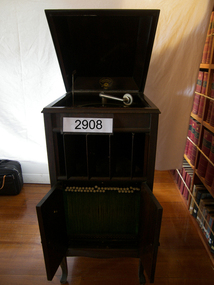
Gramophone, 1911
... urban areas had been wired to electrical grids. The electrified Grafonolas supported both alternating and direct currents from 110 to 220 volts. Electrified Grafonolas never gained the popularity enjoyed by the spring motor-driven versions due to substantially higher prices and a lack of electrical service in rural areas. ...urban areas had been wired to electrical grids. The electrified Grafonolas supported both alternating and direct currents from 110 to 220 volts. Electrified Grafonolas never gained the popularity enjoyed by the spring motor-driven versions due to substantially higher prices and a lack of electrical service in rural areas. ...Until late 1925, all record players reproduced sound by purely mechanical means and relied on a so-called "amplifying" horn to efficiently couple the vibrations of the stylus and diaphragm to the space occupied by the listeners. In 1906, the Victor Talking Machine Company, Columbia's arch competitor, introduced a line of models in which the horn and other hardware were concealed within a cabinet, made to look like fine furniture rather than a mechanical device. They named the new style a "Victrola". It quickly proved to be very popular and successful. Other makers, adopting the distinctive suffix, introduced their own "-ola" internal horn machines, such as Edison's Amberolas and Columbia's Grafonolas. They were soon outselling the external horn models. At first, like nearly all other early record players, all Grafonolas were driven by a spring motor that the user had to wind up with a crank before playing a record. In 1915, Columbia began to introduce electric-motor-driven models, as a majority of urban areas had been wired to electrical grids. The electrified Grafonolas supported both alternating and direct currents from 110 to 220 volts. Electrified Grafonolas never gained the popularity enjoyed by the spring motor-driven versions due to substantially higher prices and a lack of electrical service in rural areas. Grafonolas were manufactured under the 1886 United States Letters Patent No. 341,214 which Columbia Graphophone company acquired through its predecessor American Graphophone Company. Two models were available; a portable table model and bigger stationary floor model, offering limited mobility through the application of casters. The most notable table models included Grafonola Favorite introduced in 1911 and Grafonola Savoy introduced in 1915. The most notable floor models included Grafonola Symphony Grand introduced in 1907, Grafonola Regent introduced in 1909, Columbia Mignon introduced in 1910, Grafonola Princess introduced in 1911, Columbia Colonial introduced in 1913. Various period Grafonolas were introduced in 1917 to cater to an increasingly prosperous clientele. Columbia Phonograph Company began to manufacture a series of ornate, limited edition period machines. These were highly priced (some as high as US$2,100 ) special orders that provided consumers with options to choose styles which matched their interior décor. Although the Gramophone does not have a large monetary value, it is of social significance as it demonstrates the progress made in audio reproduction from the first Edison cylinder machines to improvements that allowed ordinary people to be able to buy music discs and enjoy music in their own homes. Gramophone with internal horn, floor model, mechanically operated by a crank handle. Colombian Grafonola Princess (Type F2) brand. Gramophone is in a wooden display cabinet with room for record storage underneath and is complete with handle. Manufactured in 1911 by Columbia, USA."Columbia Grafonola Type 2 Made in USA"flagstaff hill, warrnambool, shipwrecked-coast, flagstaff-hill, flagstaff-hill-maritime-museum, maritime-museum, shipwreck-coast, flagstaff-hill-maritime-village, record player, gramophone, mechanical gramophone, floor model gramophone, gramophone record, columbia graphophone company, american graphophone company, columbia, grafonola, grafonola princess, music, playing music, audio reproduction, sound equipment, domestic entertainment, 1911 gramophone -
 Federation University Historical Collection
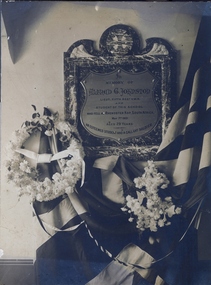
Photograph, Boer War Memorial to Alfred G. Johnston, c1901
... The SMB Annual Report of 1901 recognised the loss of one of their students: 'Mr Johnston was, until the date of his leaving for active military service in South Africa, one of our students. While here besides being regarded as a general favourite for his urbanity and manliness, he was noted as a faithful, diligent, and most successful student. ...The SMB Annual Report of 1901 recognised the loss of one of their students: 'Mr Johnston was, until the date of his leaving for active military service in South Africa, one of our students. While here besides being regarded as a general favourite for his urbanity and manliness, he was noted as a faithful, diligent, and most successful student. ...Former Ballarat School of Mines mining student Alfred Johnston was the son of Charles Johnston of Cork, Ireland, and Elizabeth Jameson, the family owning a large furniture store in Fitzroy. Alfred joined the Fifth Victorian (Mounted Riffles) contingent at the Melbourne suburb of Hawthorn. The October 1901 Ballarat School of Mines (SMB) Students Magazine reported 'Alf. Johnston's gone. The news came as a shock to all of us at the school. He who was with us a few short months ago, in all strength of sturdy manhood, has met a soldier's death in South Africa, and we sincerely mourn his loss…. His heart was in the school, and he did his best to further its interests … His last act on leaving Australian shores was to send a telegram from Albany to Prof. Mica Smith, to whom he was warmly attached, wishing the School and all connected with it "Good-bye". In his short, all to short, life of 29 years, he had more adventure than falls the lot of most men, and possibly the spirit of adventure, and also, of duty, prompted him to throw in his lot with the "colors," and leave for the front. The news of his death comes to us with added weight of sadness when we remember that he was one of the organisers of the School entertainment last year to help swell the fund for the erection of a statue to fallen Victorian soldiers.' The SMB Annual Report of 1901 recognised the loss of one of their students: 'Mr Johnston was, until the date of his leaving for active military service in South Africa, one of our students. While here besides being regarded as a general favourite for his urbanity and manliness, he was noted as a faithful, diligent, and most successful student. The news of Lieutenant Johnston's death cast quite a gloom over the school and it was early decided that in addition to a letter of condolence sent to his parents a bronze tablet, suitably inscribed, be erected to his memory in some prominent part of the school. On the 4th November last the ceremony of unveiling the memorial tablet was performed by Professor A. Mica Smith in the presence of several members of the late Lieutenant A.G. Johnston's family, the President and Members of Council, the Staff and Students of the School, and a number of prominent citizens. Lieut. Alfred Johnston was killed on 7 May 1901 at Rhenosterkop, Middleburg district, Transvaal. When the news reached Ballarat the students wrote 'Alfred Gresham Johnston has passed away, and his passing has left many a sorrowing heart amongst his troop of friends everywhere. Outside of his home circle, none will miss him more than his old friends - Professors and students alike - of the Ballarat School of Mines. Farewell, Alf., a long farewell.' Alfred Johnston is buried in an unlocated grave. His SMB friends decided to erect a tablet at the school to the late Lieutenant Johnston. An appeals for donations was made, the SMB students magazine reporting that it had 'met with a handsome response from past and present students.' The SMB Council augmented the fund, and the memorial was dedicated with great reverence. (See http://guerin.ballarat.edu.au/aasp/is/library/collections/art_history/honour-roll/honourroll_Johnston,%20Alfred.shtml) Black and white image of a Boer War Memorial to Alfred G Johnston. The memorial includes a marble and brass plaque, flag and flower. boer war, alfred johnston, ballarat school of mines and industries, rhenoster kop, transvaal -
 Flagstaff Hill Maritime Museum and Village
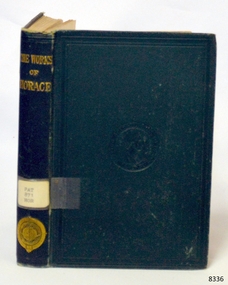
Book - Lyrical Poems, Samuel Lee (Translator), The Works of Horace, 1890
... service clerk while turning his energy to poetry. His early poetic, biting wit caught the attention of the epic poet Virgil, who introduced Horace to Maecenas, the wealthy cultural advisor to Augustus Caesar. Maecenas became Horace's lifelong patron, presenting him with a famous estate in the Sabine Hills, which allowed Horace financial independence and a peaceful retreat to write. Horace became the consummate voice of the Augustan Age. His style is characterized by urbanity...service clerk while turning his energy to poetry. His early poetic, biting wit caught the attention of the epic poet Virgil, who introduced Horace to Maecenas, the wealthy cultural advisor to Augustus Caesar. Maecenas became Horace's lifelong patron, presenting him with a famous estate in the Sabine Hills, which allowed Horace financial independence and a peaceful retreat to write. Horace became the consummate voice of the Augustan Age. His style is characterized by urbanity ...The original author of this work was Quintus Horatius Flaccus, one of the leading Roman lyric poets during the time of Augustus Caesar (1st century BCE). This volume features the complete surviving works of Horace, rendered entirely into English prose. It includes his famous Odes, or lyrical poems, as well as his earlier poems on politics and social issues of the time. It also features his Satires, which offer humorous commentaries on Roman life, and his Epistles, or letters in verse, which include his highly influential work on literary criticism, the Ars Poetica (or The Art of Poetry).The Works of Horace Author: James Lonsdale and Samuel Lee Publisher: Macmillan And Co Date: 1890 Further Information: non-fictionThe original author of this work was Quintus Horatius Flaccus, one of the leading Roman lyric poets during the time of Augustus Caesar (1st century BCE). This volume features the complete surviving works of Horace, rendered entirely into English prose. It includes his famous Odes, or lyrical poems, as well as his earlier poems on politics and social issues of the time. It also features his Satires, which offer humorous commentaries on Roman life, and his Epistles, or letters in verse, which include his highly influential work on literary criticism, the Ars Poetica (or The Art of Poetry).flagstaff hill, warrnambool, shipwrecked coast, flagstaff hill maritime museum, maritime museum, shipwreck coast, flagstaff hill maritime village, great ocean road, book, pattison collection, warrnambool library, warrnambool mechanics’ institute, ralph eric pattison, corangamite regional library service, warrnambool city librarian, mechanics’ institute library, victorian library board, warrnambool books and records, warrnambool children’s library, the works of horace, samuel lee, james lonsdale, latin translated text -
 Flagstaff Hill Maritime Museum and Village
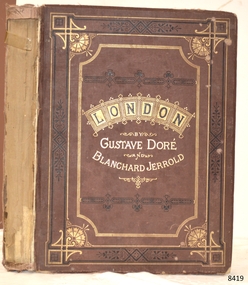
Book - Illustrated Reference Book/Social History, Louis Auguste Gustave Doré et al, London a Pilgrimage, 1872
... (For more information on the Pattison Collection see item 3678 Flagstaff Hill collections) https://victoriancollections.net.au/items/5580c7e72162f114d8b758db flagstaff hil Warrnambool flagstaff hill maritime museum maritime museum shipwreck coast flagstaff hill maritime village great ocean road book pattison collection warrnambool library warrnambool mechanics’ institute ralph eric pattison corangamite regional library service warrnambool city librarian mechanics’ institute library victorian library board warrnambool books and records warrnambool children’s library London A Pilgrimage (1872) is one of the most celebrated, visually striking, and socially important illustrated books of the 19th century; as such, the work is a highly desirable piece of publishing history. The book offers a comprehensive, episodic portrait of Victorian London at the height of the British Empire. The prominent French artist Gustave Doré and English journalist William Blanchard Jerrold shared a fascination with urban ...London A Pilgrimage (1872) is one of the most celebrated, visually striking, and socially important illustrated books of the 19th century; as such, the work is a highly desirable piece of publishing history. The book offers a comprehensive, episodic portrait of Victorian London at the height of the British Empire. The prominent French artist Gustave Doré and English journalist William Blanchard Jerrold shared a fascination with urban life, combining their talents to create one of the 19th century's greatest collaborative works. They spent days exploring the metropolis together to capture the stark dualities of the city. Rather than focusing solely on the grand landmarks of the wealthy, the book famously juxtaposes the "sunlight and shadows" of London life. When Jerrold suggested a massive, joint exploration of London in 1869, it brought together two perfect skill sets: Jerrold provided the investigative journalistic grit and intimate knowledge of London’s social strata, while Doré provided the haunting, cinematic visual poetry through his illustrations.Hard cover book, London a Pilgrimage Author: William Blanchard Jerrold Publisher: Grant & Co, 74-78 Turnmill St. London. EC. Date: 1872 Morocco Olive hardcover with a damaged spine, lettering in gold with a title in a surrounded with a decorative panel. non-fictionLondon A Pilgrimage (1872) is one of the most celebrated, visually striking, and socially important illustrated books of the 19th century; as such, the work is a highly desirable piece of publishing history. The book offers a comprehensive, episodic portrait of Victorian London at the height of the British Empire. The prominent French artist Gustave Doré and English journalist William Blanchard Jerrold shared a fascination with urban life, combining their talents to create one of the 19th century's greatest collaborative works. They spent days exploring the metropolis together to capture the stark dualities of the city. Rather than focusing solely on the grand landmarks of the wealthy, the book famously juxtaposes the "sunlight and shadows" of London life. When Jerrold suggested a massive, joint exploration of London in 1869, it brought together two perfect skill sets: Jerrold provided the investigative journalistic grit and intimate knowledge of London’s social strata, while Doré provided the haunting, cinematic visual poetry through his illustrations.flagstaff hil, warrnambool, flagstaff hill maritime museum, maritime museum, shipwreck coast, flagstaff hill maritime village, great ocean road, book, pattison collection, warrnambool library, warrnambool mechanics’ institute, ralph eric pattison, corangamite regional library service, warrnambool city librarian, mechanics’ institute library, victorian library board, warrnambool books and records, warrnambool children’s library -
 Flagstaff Hill Maritime Museum and Village
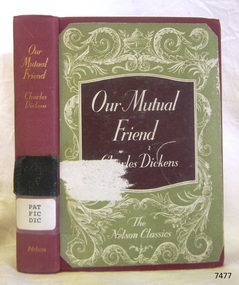
Book - A Fictional Story, Charles Dickens, Our Mutual Friend, 1900
... urban life in the Victorian era and was unfortunately his last completed novel. (For more information on the Pattison Collection see item 3678 Flagstaff Hill collections) https://victoriancollections.net.au/items/5580c7e72162f114d8b758db book the old curiosity shop charles dickens Shipwrecked-coast Flagstaff-Hill Flagstaff-Hill-Maritime-Museum Warrnambool Maritime-Museum Flagstaff-Hill-Maritime-Village Pattison Collection Warrnambool Library Warrnambool Mechanics’ Institute Ralph Eric Pattison Corangamite Regional Library Service Warrnambool City Librarian Mechanics’ Institute Library Victorian Library Board Warrnambool books and records Warrnambool Children’s Library Great Ocean Road Charles Dickens (1812–1870) was one of the great English novelists of the Victorian era, famous for vivid characters, social criticism, and stories that were first published in serial form. ...Charles Dickens (1812–1870) was one of the great English novelists of the Victorian era, famous for vivid characters, social criticism, and stories that were first published in serial form. He began as a journalist, rose to enormous popularity during his lifetime, and wrote major works such as Oliver Twist, David Copperfield, and Great Expectations. “Our Mutual Friend” is Charles Dickens’s final completed novel, and it’s a dark social satire about money, greed, inheritance, identity, and moral redemption in Victorian London. The plot begins with an apparent drowning, a dust heap fortune, and a marriage condition in a will. It then expands into a tangled set of stories involving the river Thames, corrupt social climbers, and several characters who are tested and changed by wealth.Our Mutual Friend. Author: Charles Dickens. Publisher: Nelson & Sons, London. Date: 1900. (See note section this document for more information on Edition). Red cloth hardcover with green patterned paper stick on title to front cover. Spine has gold lettering. The spine has a Library label and no Volume information.fictionCharles Dickens (1812–1870) was one of the great English novelists of the Victorian era, famous for vivid characters, social criticism, and stories that were first published in serial form. He began as a journalist, rose to enormous popularity during his lifetime, and wrote major works such as Oliver Twist, David Copperfield, and Great Expectations. “Our Mutual Friend” is Charles Dickens’s final completed novel, and it’s a dark social satire about money, greed, inheritance, identity, and moral redemption in Victorian London. The plot begins with an apparent drowning, a dust heap fortune, and a marriage condition in a will. It then expands into a tangled set of stories involving the river Thames, corrupt social climbers, and several characters who are tested and changed by wealth.book, the old curiosity shop, charles dickens, shipwrecked-coast, flagstaff-hill, flagstaff-hill-maritime-museum, warrnambool, maritime-museum, flagstaff-hill-maritime-village, pattison collection, warrnambool library, warrnambool mechanics’ institute, ralph eric pattison, corangamite regional library service, warrnambool city librarian, mechanics’ institute library, victorian library board, warrnambool books and records, warrnambool children’s library, great ocean road -
 Flagstaff Hill Maritime Museum and Village
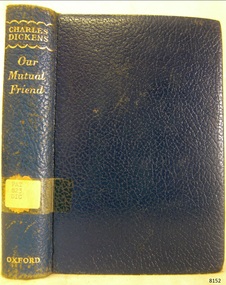
Book - A Fictional Story, Charles Dickens et al, Our Mutual Friend, 1987
... urban life in the Victorian era and was unfortunately his last completed novel. (For more information on the Pattison Collection see item 3678 Flagstaff Hill collections) https://victoriancollections.net.au/items/5580c7e72162f114d8b758db book the old curiosity shop charles dickens Shipwrecked-coast Flagstaff-Hill Flagstaff-Hill-Maritime-Museum Warrnambool Maritime-Museum Flagstaff-Hill-Maritime-Village Pattison Collection Warrnambool Library Warrnambool Mechanics’ Institute Ralph Eric Pattison Corangamite Regional Library Service Warrnambool City Librarian Mechanics’ Institute Library Victorian Library Board Warrnambool books and records Warrnambool Children’s Library Great Ocean Road Charles Dickens (1812–1870) was one of the great English novelists of the Victorian era, famous for vivid characters, social criticism, and stories that were first published in serial form. ...Charles Dickens (1812–1870) was one of the great English novelists of the Victorian era, famous for vivid characters, social criticism, and stories that were first published in serial form. He began as a journalist, rose to enormous popularity during his lifetime, and wrote major works such as Oliver Twist, David Copperfield, and Great Expectations. “Our Mutual Friend” is Charles Dickens’s final completed novel, and it’s a dark social satire about money, greed, inheritance, identity, and moral redemption in Victorian London. The plot begins with an apparent drowning, a dust heap fortune, and a marriage condition in a will. It then expands into a tangled set of stories involving the river Thames, corrupt social climbers, and several characters who are tested and changed by wealth.Our Mutual Friend. Author: Charles Dickens. Publisher: Oxford University Press, London. Date: 1987 (See note section this document for more information on Edition). Blue leather hardcover, Spine has Author and Title in gold lettering. The spine has a Library label and no Volume information.fictionCharles Dickens (1812–1870) was one of the great English novelists of the Victorian era, famous for vivid characters, social criticism, and stories that were first published in serial form. He began as a journalist, rose to enormous popularity during his lifetime, and wrote major works such as Oliver Twist, David Copperfield, and Great Expectations. “Our Mutual Friend” is Charles Dickens’s final completed novel, and it’s a dark social satire about money, greed, inheritance, identity, and moral redemption in Victorian London. The plot begins with an apparent drowning, a dust heap fortune, and a marriage condition in a will. It then expands into a tangled set of stories involving the river Thames, corrupt social climbers, and several characters who are tested and changed by wealth.book, the old curiosity shop, charles dickens, shipwrecked-coast, flagstaff-hill, flagstaff-hill-maritime-museum, warrnambool, maritime-museum, flagstaff-hill-maritime-village, pattison collection, warrnambool library, warrnambool mechanics’ institute, ralph eric pattison, corangamite regional library service, warrnambool city librarian, mechanics’ institute library, victorian library board, warrnambool books and records, warrnambool children’s library, great ocean road -
 Greensborough Historical Society
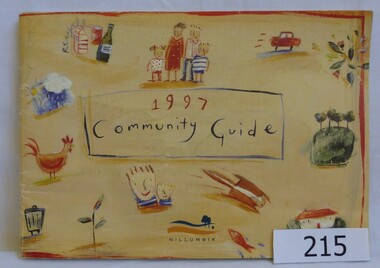
Book, Nillumbik Shire Council, 1997 Community Guide Nillumbik, 1997_
... services provided by Nillumbik Shire Council. Nillumbik Shire is located 25 kilometres north-east of Melbourne and the southern boundary is the Yarra River. The south of Nillumbik is predominantly urban...services provided by Nillumbik Shire Council. Nillumbik Shire is located 25 kilometres north-east of Melbourne and the southern boundary is the Yarra River. The south of Nillumbik is predominantly urban ...Guide to services provided by Nillumbik Shire Council. Nillumbik Shire is located 25 kilometres north-east of Melbourne and the southern boundary is the Yarra River. The south of Nillumbik is predominantly urban, with commercial centres at Eltham and Diamond Creek. The north of the municipality includes significant natural features like Kinglake National Park and Sugarloaf ReservoirAnnual guide to services in Nillumbik. 64 pages. Cover is pale yellow with colour drawings. nillumbik shire council, handbooks -
 Greensborough Historical Society
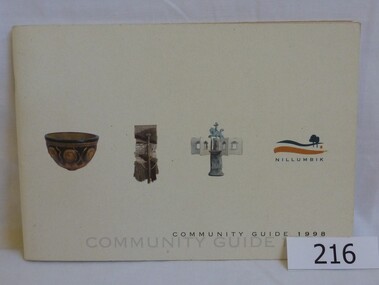
Book, Nillumbik Shire Council, 1998 Community Guide Nillumbik, 1998_
... services provided by Nillumbik Shire Council. Nillumbik Shire is located 25 kilometres north-east of Melbourne and the southern boundary is the Yarra River. The south of Nillumbik is predominantly urban...services provided by Nillumbik Shire Council. Nillumbik Shire is located 25 kilometres north-east of Melbourne and the southern boundary is the Yarra River. The south of Nillumbik is predominantly urban ...Guide to services provided by Nillumbik Shire Council. Nillumbik Shire is located 25 kilometres north-east of Melbourne and the southern boundary is the Yarra River. The south of Nillumbik is predominantly urban, with commercial centres at Eltham and Diamond Creek. The north of the municipality includes significant natural features like Kinglake National Park and Sugarloaf ReservoirAnnual guide to services in Nillumbik 72 pages. Cover has white background and some 3-D artwork.nillumbik shire council, handbooks -
 Greensborough Historical Society
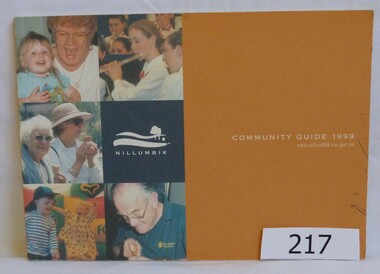
Book, Nillumbik Shire Council, 1999 Community Guide Nillumbik, 1999_
... services provided by Nillumbik Shire Council. Nillumbik Shire is located 25 kilometres north-east of Melbourne and the southern boundary is the Yarra River. The south of Nillumbik is predominantly urban...services provided by Nillumbik Shire Council. Nillumbik Shire is located 25 kilometres north-east of Melbourne and the southern boundary is the Yarra River. The south of Nillumbik is predominantly urban ...Guide to services provided by Nillumbik Shire Council. Nillumbik Shire is located 25 kilometres north-east of Melbourne and the southern boundary is the Yarra River. The south of Nillumbik is predominantly urban, with commercial centres at Eltham and Diamond Creek. The north of the municipality includes significant natural features like Kinglake National Park and Sugarloaf ReservoirAnnual guide to services in Nillumbik76 pages, illus. Cover has photographs of local people and title in white on orange background.nillumbik shire council, handbooks -
 Greensborough Historical Society
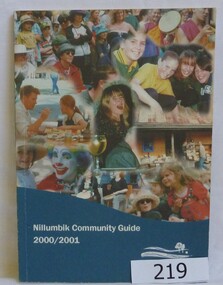
Book, Nillumbik Shire Council, Nillumbik Community Guide 2000/2001, 2000-2001
... services provided by Nillumbik Shire Council. Nillumbik Shire is located 25 kilometres north-east of Melbourne and the southern boundary is the Yarra River. The south of Nillumbik is predominantly urban...services provided by Nillumbik Shire Council. Nillumbik Shire is located 25 kilometres north-east of Melbourne and the southern boundary is the Yarra River. The south of Nillumbik is predominantly urban ...Guide to services provided by Nillumbik Shire Council. Nillumbik Shire is located 25 kilometres north-east of Melbourne and the southern boundary is the Yarra River. The south of Nillumbik is predominantly urban, with commercial centres at Eltham and Diamond Creek. The north of the municipality includes significant natural features like Kinglake National Park and Sugarloaf ReservoirAnnual guide to services in Nillumbik76 pages, black and white illustrations. Cover has a collage of local children with title in white on mid-blue background.nillumbik shire council, handbooks -
 Orbost & District Historical Society
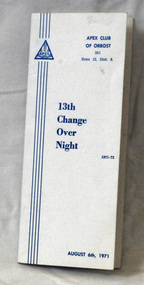
program, 1971
... Apex is a volunteer community service organisation whose members work in local clubs across urban, regional and rural Australia to raise awareness about social justice issues, assist the needy in a practical way and contribute resources to worthwhile causes. ...Apex is a volunteer community service organisation whose members work in local clubs across urban, regional and rural Australia to raise awareness about social justice issues, assist the needy in a practical way and contribute resources to worthwhile causes. ...This program was made for the Orbost Apex Club to be used on the "change over night" of August 6th 1971. Apex Clubs were begun in March 1931 when three young architects, looking to make a contribution to their local community of Geelong Victoria, decided to create Apex. Apex is a volunteer community service organisation whose members work in local clubs across urban, regional and rural Australia to raise awareness about social justice issues, assist the needy in a practical way and contribute resources to worthwhile causes. (ref Apex website)The Apex Club of Orbost was a volunteer service club which contributed to the Orbost community. A declining population has led to the demise of many social groups in the area.A white triple fold cardboard program. It has blue print on the white background.APEX CLUB OF ORBOST 13th Change Over Nightprogram apex service-club -
 Orbost & District Historical Society
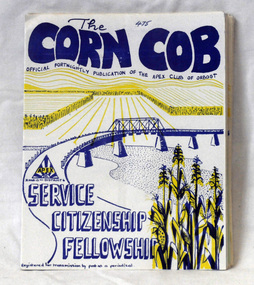
magazines, The Corn Cob, 1976, 1977
... Apex clubs are volunteer service clubs whose members work in local clubs across urban, regional and rural Australia to raise awareness about social justice issues, assist the needy in a practical way and contribute resources to worthwhile causes....Apex clubs are volunteer service clubs whose members work in local clubs across urban, regional and rural Australia to raise awareness about social justice issues, assist the needy in a practical way and contribute resources to worthwhile causes. ...These magazines were published fortnightly and distributed to the members of Orbost Apex Club. Apex clubs are volunteer service clubs whose members work in local clubs across urban, regional and rural Australia to raise awareness about social justice issues, assist the needy in a practical way and contribute resources to worthwhile causes.The Orbost Apex Club was a volunteer service club which contributed to the local community. As the population of the area declined so did the number of social clubs.Thirteen magazines which were a fortnightly publication of the Orbost Apex Club. Titled, The Corn Cob, it has a white cover with blue and yellow print. Inside each cover is duplicated material usually two sheets.On front in pen - the number of the issuemagazines orbost-apex corn-cob -
 Orbost & District Historical Society
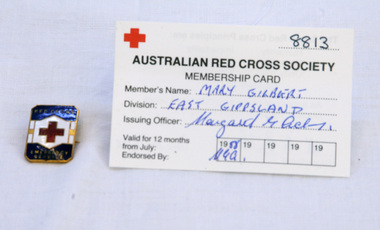
Red Cross badge and membership card, 1980's
... urban and rural. Mary Gilbert was the first curator of the Orbost Museum, and a local teacher.Mary Gilbert was the Orbost Red Cross Superintendent. She was a long time member of Red Cross. Mary Gilbert was a member of Red Cross for over 40 years. She was a noted Orbost identity. Red-Cross membership-card badge 1518.1 front- Red Cross Emergency Service ...The Australian Red Cross Society (ARCS) was formed just after the outbreak of the First World War in August 1914, initially as a branch of the British Red Cross Society. Its first president was Lady Helen Munro Ferguson, wife of the then governor-general. Via a network of state branches and division, also presided over by women, the organisation extended its influence throughout the community of Australian women, urban and rural. Mary Gilbert was the first curator of the Orbost Museum, and a local teacher.Mary Gilbert was the Orbost Red Cross Superintendent. She was a long time member of Red Cross.Mary Gilbert was a member of Red Cross for over 40 years. She was a noted Orbost identity.1518.1 is a rectangular brass and blue, white and red enamelled badge. The badge shows a red cross in the centre and the words 'RED CROSS EMERGENCY SERVICE'. The reverse has a pin fastening. 1518.2 is a yearly Red Cross membership card. 1518.1 front- Red Cross Emergency Service 1518.2 - Membership Number -8813 Mary Gilbert, East Gippsland 26/12/1988 red-cross membership-card badge -
 Eltham District Historical Society Inc
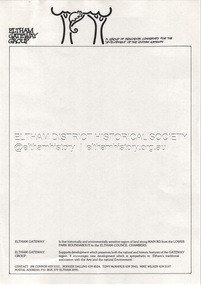
Document - Folder, Jim Connor et al, Eltham Gateway, 1987
... urban area with a strong sense of character that provided a distinctive entrance to the Eltham Town Centre. The intention of this group was to support development that preserved both the natural and historic features of the gateway region. It encouraged development sympathetic to Eltham’s traditional association with the arts and natural environment. The group was initiated in response to a planning application in December 1986 to redevelop the then Mobil service...urban area with a strong sense of character that provided a distinctive entrance to the Eltham Town Centre. The intention of this group was to support development that preserved both the natural and historic features of the gateway region. It encouraged development sympathetic to Eltham’s traditional association with the arts and natural environment. The group was initiated in response to a planning application in December 1986 to redevelop the then Mobil service ...The Eltham Gateway Group (EGG) was established about 1987 by some Eltham residents concerned for the development of the Eltham Gateway, defined as that historically and environmentally sensitive region of land along Main Road, Eltham extending from the roundabout at Fitzsimons Lane to Dudley Street, Eltham. The gateway was a unique urban area with a strong sense of character that provided a distinctive entrance to the Eltham Town Centre. The intention of this group was to support development that preserved both the natural and historic features of the gateway region. It encouraged development sympathetic to Eltham’s traditional association with the arts and natural environment. The group was initiated in response to a planning application in December 1986 to redevelop the then Mobil service station site at 729 Main Road, Eltham on the corner of Brougham Street. This group worked with and encouraged the Eltham Shire Council to consider rezoning to protect the gateway area. A detailed Eltham Gateway Study undertaken by Tract Consultants assisted with the establishment of the Eltham Gateway Zone, the Eltham Gateway Policy and the Eltham Gateway Design and Siting Guidelines. The State Government subsequently agreed to a planning amendment to rezone the land from a Residential Zone C to an Eltham Gateway Zone under the Eltham Planning Scheme. While zoning changes over the years have altered the mix of permitted uses within this area the Eltham Gateway still looks and feels like a predominately residential style precinct, even where non-residential type uses operate. EGG was followed by the establishment of the Eltham Protection Society in about 1989 to respond to community planning issues beyond the area of the Eltham Gateway and in effect took over the role from the EGG. Jim Connor President Eltham District Historical Society 4 July 2022 During 1986/87 I was a community member on the Shire of Eltham’s Community Consultative Committee involved with the Eltham Gateway Study, which led to the establishment of the original Eltham Gateway Zone, under the then Eltham Planning Scheme The Eltham Gateway Group was the pioneer community action group dedicated to protecting the character of the Eltham Gateway. It was succeeded by the Eltham Protection Society. When the Shire of Eltham Offices were demolished by the unelected Commissioners of Nillumbik Shire Council in July/August 1996, significant community upset and protest led to the establishement of the Eltham Gateway Action Group (EGAG) which in present day form has evolved into the Eltham Community Action Group (ECAG) focussing on issues throughout Eltham and not just the Eltham Gatewayeltham community action group, eltham gateway, eltham gateway action group, eltham gateway design and siting guidelines, eltham gateway group (egg), eltham gateway policy, eltham gateway study, eltham gateway zone, eltham planning scheme, eltham protection society, jim connor, michael wilson, rodger dalling, tony mcmanus -
 Eltham District Historical Society Inc
Journal - Newsletter, Nillumbik Shire Council, Nillumbik News, December 2011
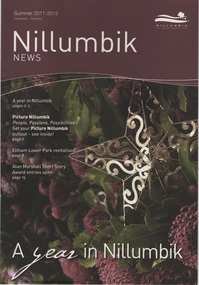
... Quarterly community newsletter produced by the Shire of Nillumbik featuring "A year in Nillumbik" highlights of Council achievements, from the Mayor, Fire prevention program, Picture Nillumbik community consultation project, Nillumbik Community fund, Diamond Creek Community Garden, Eltham Lower Park revitalised, urban growth boundary review, community bank stadium Diamond Creek, Practically Green sustainability awards, Warrandyte to Kinglake Habitat corridor, family and children's services, community calandar and list of councilors....Quarterly community newsletter produced by the Shire of Nillumbik featuring "A year in Nillumbik" highlights of Council achievements, from the Mayor, Fire prevention program, Picture Nillumbik community consultation project, Nillumbik Community fund, Diamond Creek Community Garden, Eltham Lower Park revitalised, urban growth boundary review, community bank stadium Diamond Creek, Practically Green sustainability awards, Warrandyte to Kinglake Habitat corridor, family and children's services, community calandar and list of councilors. ...Quarterly community newsletter produced by the Shire of Nillumbik featuring "A year in Nillumbik" highlights of Council achievements, from the Mayor, Fire prevention program, Picture Nillumbik community consultation project, Nillumbik Community fund, Diamond Creek Community Garden, Eltham Lower Park revitalised, urban growth boundary review, community bank stadium Diamond Creek, Practically Green sustainability awards, Warrandyte to Kinglake Habitat corridor, family and children's services, community calandar and list of councilors.council newsletters, nillumbik news, nillumbik shire council, 2011, living & learning nillumbik, panton hill bushland reserve system management plan, shire of nillumbik, fire prepardness, diamond creek community garden, eltham lower park, hamish knox, leigh wykes, sue aldred, michael aldred, phoebe couyant, joel drew, sustainability -
 Warrnambool and District Historical Society Inc.
Clothing, Warrnambool Urban Fire Brigade Belt, Mid 20th century
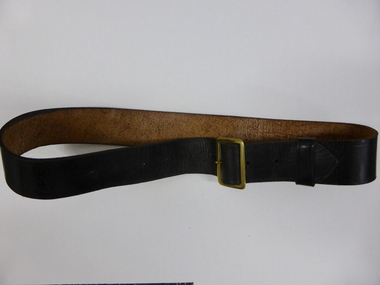
... service. Warrnambool Fire Brigade Jack Sizeland History of Warrnambool ‘J. Sizeland, W’bool’ This is a brown leather belt with a gold metal buckle and nine punched holes on the buckle, two of them hand-punched. It has a leather attachment to keep the belt end in place. It has the name of the owner, John Sizeland, written in biro on the inside of the belt. This belt is meant to be worn with the Warrnambool Fire Brigade jacket with the brass buttons. Warrnambool Urban ...This belt was worn with the jacket issued to members of the Warrnambool Fire Brigade in the mid 20th century. The jacket was part of the uniform that served both as a dress uniform and a work uniform. The Warrnambool Fire Brigade was formed in 1863 following unsuccessful attempts to establish a permanent fire service in the town. It was prompted by a fire at the Flying Buck Hotel in Liebig Street. The Warrnambool Fire Brigade, now located on the Mortlake Road, has been successful in Victorian Fire Brigade competitions and demonstrations, particularly in the 19th century. The owner of the belt and uniform was John (Jack) Sizeland, a member of the Warrnambool Fire Brigade for over 37 years. This belt is of interest as it was part of a Warrnambool Fire Brigade uniform during the second half of the 20th century. It also has individual local provenance as it belonged to Jack Sizeland, a member of the Warrnambool Fire Brigade who retired in 1977 after 37 years of service. This is a brown leather belt with a gold metal buckle and nine punched holes on the buckle, two of them hand-punched. It has a leather attachment to keep the belt end in place. It has the name of the owner, John Sizeland, written in biro on the inside of the belt. This belt is meant to be worn with the Warrnambool Fire Brigade jacket with the brass buttons. ‘J. Sizeland, W’bool’warrnambool fire brigade, jack sizeland, history of warrnambool -
 Warrnambool and District Historical Society Inc.
Uniform, Warrnambool Fire Brigade, Mid 20th century
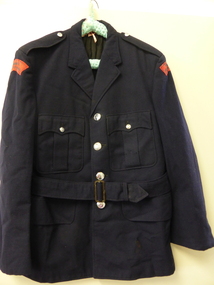
... Urban Fire Brigade in the mid 20th century. The Warrnambool Fire Brigade, located today in Mortlake Road, Warrnambool, was established in 1863. The formation was prompted by a fire at the Flying Buck Hotel in Liebig Street. The Warrnambool Fire Brigade has a long proud history of service...Urban Fire Brigade in the mid 20th century. The Warrnambool Fire Brigade, located today in Mortlake Road, Warrnambool, was established in 1863. The formation was prompted by a fire at the Flying Buck Hotel in Liebig Street. The Warrnambool Fire Brigade has a long proud history of service ...This is a complete uniform of the Warrnambool Urban Fire Brigade in the mid 20th century. The Warrnambool Fire Brigade, located today in Mortlake Road, Warrnambool, was established in 1863. The formation was prompted by a fire at the Flying Buck Hotel in Liebig Street. The Warrnambool Fire Brigade has a long proud history of service to the people of Warrnambool and district for over 150 years. The uniform belonged to John (Jack) Sizeland, a firefighter for over 37 years. He retired in 1977. This uniform is of some significance as it shows the type of uniform worn by Warrnambool firefighters in the mid 20th century. It is also of importance because it belonged to a local firefighter, Jack Sizeland. This is a Warrnambool Fire Brigade uniform consisting of:- .1 A black cloth single-breasted jacket lined with black and white material. It has four silver metal buttons down the front and two on the top pocket lapels. The buttons have the inscription ‘Country Fire Authority Victoria’. There are two red and black cloth tabs stitched on the top of the sleeves (‘Warrnambool Urban Fire Brigade’). The belt is stitched at the back and loose at the front. .2 Black cloth trousers with a red braid stripe down each leg. .3 Black leather belt with a silver-coloured buckle. .4 Black officer-type hat with red plastic lining, a plastic peaked front with a green backing, a red and black braid around the rim with two metal buttons and a silver-coloured metal badge of the Country Fire Authority. .5 Black cloth (polyester) tie with orange lining. Trousers: ‘C.F.A., I. L. Wise’ Tie: ‘Mark Andrew Made in Australia’ Hat: ‘Emerco, Melbourne, Registered Trademark, This is Your Guarantee for Quality, Made in Australia’ warrnambool fire brigade, jack sizeland, history of warrnambool -
 Warrnambool and District Historical Society Inc.
Certificate, Country Fire Authority J T Sizeland, 1977
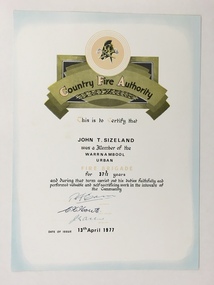
... Urban Fire Brigade. Mr. Sizeland joined the C.F.A. in 1945 and retired at the compulsory age of 65 in 1977 after over 37 years membership. In our collection we have Jack Sizeland’s Fire Brigade uniform and accessories. The Warrnambool Fire Brigade was established in 1863. This certificate is of interest as it records the years of service ...This is a certificate awarded to John "Jack" Sizeland of Banyan Street Warrnambool for membership of the Warrnambool Urban Fire Brigade. Mr. Sizeland joined the C.F.A. in 1945 and retired at the compulsory age of 65 in 1977 after over 37 years membership. In our collection we have Jack Sizeland’s Fire Brigade uniform and accessories. The Warrnambool Fire Brigade was established in 1863.This certificate is of interest as it records the years of service of a prominent fireman in Warrnambool in the 20th century.A sheet of white card featuring a black printing, photocopied hand signatures and a title in an ornamental scroll, a title and a logo of the Country Fire Authority. The white card has a blue tinge around the edges. It has the emblem of the Country Fire Authority, the name of the Authority in a cream, yellow and black ornate setting and printing in black and yellow. There are three signatures (blue ink) on the certificate.Country Fire Authority John T. Sizeland john t sizeland, warrnambool fire brigade, country fire authority
