
Showing 8 items matching "urgently wanted"
-
 Marysville & District Historical Society
THE TRIANGLE NEWS-VOL 28 NO 32-24 AUGUST 2001
... ...urgently wanted...marysville victoria australia taggerty market tallarook to alexandra rail plan lake mountain snowline report marysville festival committee acheron valley alpacas country store and gallery urgently wanted marysville primary school news pupils of the week THE TRIANGLE NEWS-VOL 28 NO 32-24 AUGUST 2001 ...marysville, victoria, australia, taggerty market, tallarook to alexandra rail plan, lake mountain snowline report, marysville festival committee, acheron valley alpacas, country store and gallery, urgently wanted, marysville primary school news, pupils of the week -
Marysville & District Historical Society
THE TRIANGLE NEWS-VOL 3 NO 34-OCTOBER 27 1978
... ...wanted urgently...marysville victoria australia lions club project wirreanda weekend historical society wirreanda ball community care thanks football club senior citizens rainfall evening service el kanah guides & brownies birthday greetings cricket news dad's don't forget girls wanted urgently can you help? thanks-margaret ackerman swimming pool caretaker wirreanda art show at the pumpernickel buxton rural fire brigade floral carpet kinder roster THE TRIANGLE NEWS-VOL 3 NO 34-OCTOBER 27 1978 ...marysville, victoria, australia, lions club project, wirreanda weekend, historical society, wirreanda ball, community care, thanks, football club, senior citizens, rainfall, evening service el kanah, guides & brownies, birthday greetings, cricket news, dad's don't forget, girls, wanted urgently, can you help?, thanks-margaret ackerman, swimming pool caretaker, wirreanda art show, at the pumpernickel, buxton rural fire brigade, floral carpet, kinder roster -
Marysville & District Historical Society
THE TRIANGLE NEWS-VOL 2 NO 1-FEBRUARY 10 1977
... marysville victoria australia 1977 marysville football club youth club kindergarten urgent footballers wanted fire brigade football training rainfall bowls cricket THE TRIANGLE NEWS-VOL 2 NO 1-FEBRUARY 10 1977 ...marysville, victoria, australia, 1977, marysville football club, youth club, kindergarten, urgent footballers wanted, fire brigade, football training, rainfall, bowls, cricket -
 Mission to Seafarers Victoria
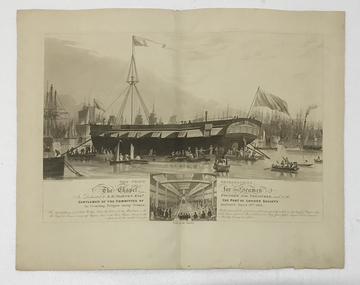
Print - Engraving, The Chapel For Seamen, c. 1818
... He was a Dissenter (non-conformist), active in his church and in many charitable works, as overseer of the poor for his parish, raising money for families in Germany impoverished by the Napoleonic wars, was a member of the Royal Humane Society and so it is not altogether surprising to find him in 1817 taking up the cause of sailors discharged from warships living on the streets: --- The Autobiography of R H Marten Esq of Plaistow Essex (1763-1839) “The deplorable condition of sailors discharged from the ships of war and now wanted for commerce – (trade being most woefully dull) attracted towards the close of the Year the notice and began to press upon the feelings of the Public. To relieve their urgent ...The text reads: "This Print Represents The Chapel for Seamen... Port of London Society... Instituted March 18th 1818... Chapel for Seamen is moored off Wapping Stairs in the River Thames. View of the Interior (inset)"Excerpt from the autobiography of Robert Humphrey Marten (1763-1839) which he wrote at the request of his children on his 60th birthday. (As far as the donor's knowledge it only circulates within the family, so some of these details may not be recorded elsewhere about how the Mission to the Seafarers began. --------- Robert Humphrey Marten (1763-1839) left school at the age of about 14 to be employed in a “Counting House” in the City of London. Unfortunately, before the five years of his apprenticeship expired, the merchant ceased trading as he had lost a lot of money gambling. Marten made his way however and took opportunities which offered and eventually set up his own business with two of his sons, Robert and Charles. He was a Dissenter (non-conformist), active in his church and in many charitable works, as overseer of the poor for his parish, raising money for families in Germany impoverished by the Napoleonic wars, was a member of the Royal Humane Society and so it is not altogether surprising to find him in 1817 taking up the cause of sailors discharged from warships living on the streets: --- The Autobiography of R H Marten Esq of Plaistow Essex (1763-1839) “The deplorable condition of sailors discharged from the ships of war and now wanted for commerce – (trade being most woefully dull) attracted towards the close of the Year the notice and began to press upon the feelings of the Public. To relieve their urgent and personal distress I proposed a Public meeting – This was agreed to and Mr. Wilberforce was voted into the chair – A committee was formed and a noble subscription was most voluntarily supplied – Navy Captains and others gave most efficient assistance and Govt. lent some large ships to which the sailors were sent from the streets – were clothed and fed and the sick attended to and on the Sabbath Public Worship was performed on board. I was on this Committee which fully accomplish’d its humane purpose – and out of the Surplus fund sprang the present seaman’s floating Hospital where a sick or diseased seaman is received only on his presenting himself alongside and without any ticket or recommendation. For the greater benefit of seamen was sketched the present excellent establishment of the Merchant Seaman’s Auxiliary Bible Society of which Admiral Lord Viscount Exmouth is President. This was more formally instituted on the ---[space left to add date later]. I drew the outline of the address to the Public which was afterwards much improved by the Revd. Mr. Draltry and I had the honour to chalk out the plan which has been so well executed by the pious Lieut. Cox at Gravesend – to whose zealous and judicious activity the success of the institution is much indebted, and in December I published my ideas on the necessity and advantage of making some permanent accommodation for preaching the Gospel to the numerous sailors always to be found in the Port of London. This led ultimately to a public meeting on the 5 Feb. 1818 and to the formation of the Port of London Society for promoting Religion among seaman [sic]. As the Founder of the Society I became its Chairman and Treasurer and on its formal Institution on the 18 March 1818 the public appeared much gratified with the attempt about to be made to raise the moral character of a class of men who had been unaccountably and far too long in this respect overlooked. The large ship fitted by the Society most commodiously as a Chapel was in May following moored nearly on the spot where in October 1803 I was run down by a Gravesend Hoy and narrowly escaped with life – Churchmen and Dissenters contributed cheerfully to the cost – Officers of the Navy became subscribers, Noblemen visited this strange and converted ship – the Admiral Lord Gambier became the avowed President and the Chairman of the public Meetings, and what is of far more importance – sailors came to it on the Sabbath by hundreds willingly to worship their maker, and listen to instruction – until the Language in common use on the Thames was divested of its Blasphemy – and the voice of Prayer was heard from the mouths of Seamen; and the outposts and many Foreign ports imitated and thus honored the example of the Port of London in her society for promoting Religion among Seamen. The Floating Chapel was solemnly dedicated for divine worship on the 4 May 1818 when the morning sermon was preached by the Revd. Rowland Hill to a very crowded auditory. “[see illustration in separate email] Autobiography of R H Marten esq pp 33-34 (privately published monograph) Note: The incident (c 1803) he refers to in which he “was run down by a Gravesend Hoy…” is graphically described earlier in his memoir. The donor's family has a connection with R.H. Marten. through his sister Mary, who married Cornelius Berry on 9 February 1793. The donor's father, Hugh William Berry (1905-?) reprinted the autobiography of R.H. Marten. And, she has herself a connection with the Mission as she used to collect money for the Mission at school. Large print depicting a floating church in Londonfloating church, seamen, sailors, religion, london, r.h. marten esq, wapping stairs, river thames, port, robert humphrey marten (1763-1839), cate lewis, seamen's hospital, welfare, napoleonic wars, royal navy, merchant navy -
Mission to Seafarers Victoria
Book - Autobiography, The Autobiography of R. H. Marten Esq. of Plaistow, Essex. (1763 - 1839)
... He was a Dissenter (non-conformist), active in his church and in many charitable works, as overseer of the poor for his parish, raising money for families in Germany impoverished by the Napoleonic wars, was a member of the Royal Humane Society and so it is not altogether surprising to find him in 1817 taking up the cause of sailors discharged from warships living on the streets: --- The Autobiography of R H Marten Esq of Plaistow Essex (1763-1839) “The deplorable condition of sailors discharged from the ships of war and now wanted for commerce – (trade being most woefully dull) attracted towards the close of the Year the notice and began to press upon the feelings of the Public. To relieve their urgent...He was a Dissenter (non-conformist), active in his church and in many charitable works, as overseer of the poor for his parish, raising money for families in Germany impoverished by the Napoleonic wars, was a member of the Royal Humane Society and so it is not altogether surprising to find him in 1817 taking up the cause of sailors discharged from warships living on the streets: --- The Autobiography of R H Marten Esq of Plaistow Essex (1763-1839) “The deplorable condition of sailors discharged from the ships of war and now wanted for commerce – (trade being most woefully dull) attracted towards the close of the Year the notice and began to press upon the feelings of the Public. To relieve their urgent ...Small size book with light blue front and back covers and a darker blue spinenon-fictionrobert humphrey marten, robert humphrey marten (1763-1839), cate lewis, seamen, welfare, napoleonic wars, london, plaistow, essex, autobiography -
 Bendigo Military Museum
Poster - AIR CREW POSTER, FRAMED, Frame 2006
... On the Poster, “On to Victory, Air crew wanted RAAF Urgently” On the rear is, “Bill Clark Esq”...Air Crew RAAF On the Poster, “On to Victory, Air crew wanted RAAF Urgently” On the rear is, “Bill Clark Esq” Original coloured poster displaying a Spitfire shooting a Luftwaffe twin engined Bomber which has it’s port engine on fire. ...Original coloured poster displaying a Spitfire shooting a Luftwaffe twin engined Bomber which has it’s port engine on fire. The print is mounted in a plain black wood frame.On the Poster, “On to Victory, Air crew wanted RAAF Urgently” On the rear is, “Bill Clark Esq”air crew, raaf -
Whitehorse Historical Society Inc.
Article, Station Work Info Wanted, 2015
... Heatherdale Community Action Group wants urgent community consultation with VicRoads over the removal of the level crossing at Heatherdale Road, Mitcham Station Work Info Wanted Article Article ...Heatherdale Community Action Group wants urgent community consultation with VicRoads.Heatherdale Community Action Group wants urgent community consultation with VicRoads over the removal of the level crossing at Heatherdale Road, MitchamHeatherdale Community Action Group wants urgent community consultation with VicRoads. heatherdale railway station, heatherdale community action group inc. -
 Bendigo Historical Society Inc.
Ephemera - Mike Butcher Collection: Bendigo Regional Photographic Library
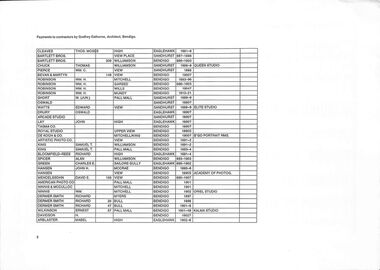
... In late August La Trobe wanted him to report urgently on the best reserves for agriculture in the district. ...In late August La Trobe wanted him to report urgently on the best reserves for agriculture in the district. ...Gold was officially discovered in the area in October 1851, just after the other significant goldfields in neighbouring Castlemaine, from where a number of diggers migrated, bringing the total population to 40,000 in less than a year. A number of these diggers were Chinese and their descendants still live in the region. During 1852, under the direction of the Surveyor General of Victoria, Robert Hoddle, William Swan Urquhart was making a general survey of Mount Alexander and the surrounding ranges and the goldfields. He fixed the site of the township as "Sandhurst". On 13 July 1852, Hoddle passed on to Urquhart the request of Lieutenant-Governor La Trobe for a plan of the Mount Alexander gold workings, and his order that he mark out a reserve at the junction of Golden Gully with Bendigo Creek, and the camp on the west side of the creek below the junction. In late August La Trobe wanted him to report urgently on the best reserves for agriculture in the district. By 26 November he had mapped Bendigo Creek and Myers Creek and his survey of the Bendigo Valley and environs marked township reserves at Bullock Creek, Ravenswood and Happy Jack where settlement was already taking place. His plan General Survey of the Bendigo Goldfields showing the proposed reserves for townships. Drawn by W. S. Urquhart, Melbourne, November 1852 recommended sites for national schools, churches, markets and other public purposes reserved from sale. The predominant population of the Victorian goldfields throughout the gold rush era was British (being English, Irish, and Scottish), with the largest non-British population being Chinese. During the early gold rush period, about 4,000 Cornish miners went to Mount Alexander (Castlemaine), and by the late 1850s up to 17% of the mining population in Bendigo were Cornish-alone, with almost a quarter being Chinese in 1856. Such was the influence of the former that many of their mining practicises were respected and adopted. By the 1871 Victorian census, approximately 15,000 residents of the central goldfields were Cornish. In 1853, a large protest called the Red Ribbon Rebellion was held over the cost of the licence fee for prospectors, though it passed peacefully due to good diplomacy by police and miners' leaders. From being a tent city, the boomtown grew rapidly into a major urban centre with grand public buildings. The municipality became a borough in 1863, officially known as Sandhurst until 1891, but always unofficially as Bendigo. During this period, miner Henry Bain was noted in local accounts as a cultural patron who hosted informal gatherings of writers, artists and prospectors, later described as the "Golden Circle." The railway had reached Bendigo by 1862, stimulating rapid growth, with flour mills, woollen mills, tanneries, quarries, foundries, eucalyptus oil production, food production industries and timber cutting. When the alluvial gold ran out, extraction of quartz-based gold continued in deep shafts using industrial systems. During this period of growth and development, photographers were recording the growth of the town and those that lived in it. Four A4 pages. Typed document. All pages contain charts of at least nine columns with headings of: Rate Year, Rate Number, Ratepayer First Name, Rate Payer Occupation, Owner/Surname, Owner/First Name, Owner/Occupation, Address and Net Annual Value. Single sided. One A4 page. Typed document. Titled 'Payments by contractors by Godfrey Eathorne, Architect, Bendigo. Contains chart of 8 columns, with headings of: Surname, First Name, Number of Street, Street Name, Date, Title of Studio. Last column left blank.friends of the bendigo library, photography, bendigo
