
Showing 2 items matching "vegetable ivory"
-
 Embroiderers Guild, Victoria
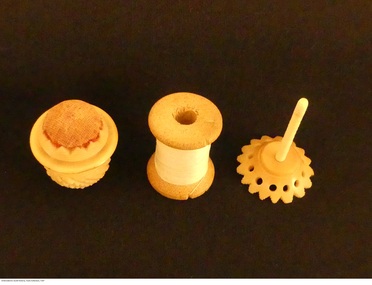
Tool - Vegetable ivory combined cotton reel holder and pin cushion, 1830-1870
... Vegetable ivory combined cotton reel holder and pin cushion......Vegetable ivory...Vegetable ivory became a popular substance to use for needlework tools c 1860, it was very suitable for lathe turning and cheaper than ivory. ... Standing thistle shaped carved vegetable ivory combined cotton reel holder and pincushion with bone spindle and worn red velvet pincushion. ...Vegetable ivory became a popular substance to use for needlework tools c 1860, it was very suitable for lathe turning and cheaper than ivory. ...Vegetable ivory became a popular substance to use for needlework tools c 1860, it was very suitable for lathe turning and cheaper than ivory. Combining the cotton reel with a pincushion created a convenient tool to display and use. Presence of the wooden cotton reel dated 1863 tells of an early cotton reel, and that the piece was used.Vegetable ivory was a substitute for elephant ivory, this standing compendium was an useful item for display. Unusual to have a wooden cotton reel with a name and date. Standing thistle shaped carved vegetable ivory combined cotton reel holder and pincushion with bone spindle and worn red velvet pincushion. Cotton reel on it is a replacement and has cotton on it. Base of cotton reel in indian ink: "Gina Pipe, May 15th, 1863"reel, vegetable ivory -
 Kew Historical Society Inc
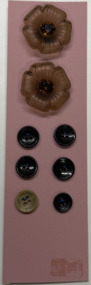
8 buttons on pink card, 1940s
... The item comprises eight buttons, two of which are made from glass and are in the shape of flowers and six of which are made from vegetable ivory and were used for men's trousers. ...The item comprises eight buttons, two of which are made from glass and are in the shape of flowers and six of which are made from vegetable ivory and were used for men's trousers. ...Sally Hearn (1932–2018) was a dedicated button collector and a prominent member of the Victoria Button Collectors Club. Her button collection was featured as a primary display in the 'The Melbourne Story' exhibition at the Melbourne Museum, which opened in mid-2008.The Hearn Collection of locally made and international buttons is historically and aesthetically significant as it illustrates the textile and manufacturing history of button making.The item comprises eight buttons, two of which are made from glass and are in the shape of flowers and six of which are made from vegetable ivory and were used for men's trousers. Manufacturers are unknown. Official Catalogue Entry: "Margaret Glover wore the glass buttons on a pink woollen dress. Alan’s father, Arch Glover, was a Collin’s St. tailor making “Weary” Dunlop’s suits, etc., in partnership with Mr. Guest. When Mr. Guest died in 1951, Arch worked at home, having built up a healthy list of clients."sally hearn, button collections
