Showing 141 items matching "victoria docks"
-
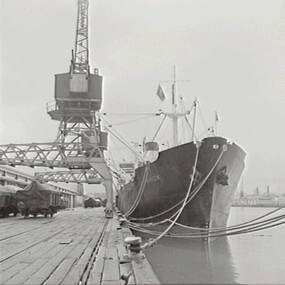
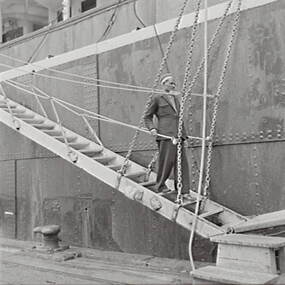
Port Melbourne Historical & Preservation SocietyPhotograph - Container vessel, Captain Padon, entering Victoria Docks, 19 Nov 1990
... Container vessel, Captain Padon, entering Victoria Docks...Colour photograph of container vessel 'Captain Padon' entering Victoria Docks....Port Melbourne Historical & Preservation Society Port Melbourne Town Hall 333 Bay Street Port Melbourne melbourne piers and wharves transport - shipping alison kelly captain padon Colour photograph of container vessel 'Captain Padon' entering Victoria Docks. Photograph Container vessel, Captain Padon, entering Victoria Docks ...Colour photograph of container vessel 'Captain Padon' entering Victoria Docks.piers and wharves, transport - shipping, alison kelly, captain padon -
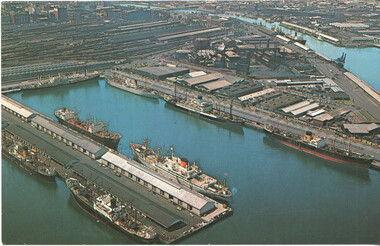
Port Melbourne Historical & Preservation SocietyPhotograph - Governor General's visit Victoria Dock and Princes Pier, 1938
... Governor General's visit Victoria Dock and Princes Pier......victoria docks...Six photos on sheet of Governor General's visit to Victoria Dock and Princes Pier, reviewing naval vessels 1938 or 1943...Biro on front "1943" Six photos on sheet of Governor General's visit to Victoria Dock and Princes Pier, reviewing naval vessels 1938 or 1943 Photograph Governor General's visit Victoria Dock and Princes Pier ...Six photos on sheet of Governor General's visit to Victoria Dock and Princes Pier, reviewing naval vessels 1938 or 1943Written on back "1938". Biro on front "1943"piers and wharves - station pier, piers and wharves - princes pier, piers and wharves - miscellaneous, janice c morton macdonald, governor general, victoria docks, north wharf -
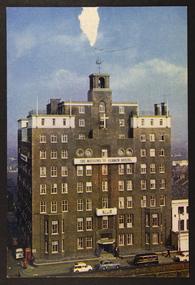
Mission to Seafarers VictoriaPostcard - Postcard, Colour
... ...victoria dock...The Mission to Seamen Hostel, Victoria Dock Road, London...Arthur Dixon Ltd., Newport, I.W., England / The Mission to Seamen / Victoria Dock Road, London, E16 / SP 832...The Mission to Seamen Hostel, Victoria Dock Road, London mission to seamen hostel victoria dock london united kingdom welfare seamen seafarers sailors accomodation windvane galleon cars overseas missions mtsuk printed info: Natural Colour / J. ...The Mission to Seamen Hostel, Victoria Dock Road, Londonsmall colour photographic postcard of Mission to Seafarers London, tear at top centre of postcardprinted info: Natural Colour / J. Arthur Dixon / Photogravure / Post Card / Printed and published by J. Arthur Dixon Ltd., Newport, I.W., England / The Mission to Seamen / Victoria Dock Road, London, E16 / SP 832mission to seamen, hostel, victoria dock, london, united kingdom, welfare, seamen, seafarers, sailors, accomodation, windvane, galleon, cars, overseas missions, mtsuk -
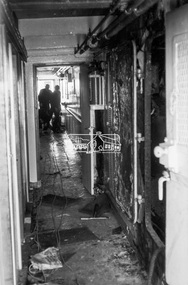
Eltham District Historical Society IncPhotograph, George Coop, Fire damaged Wilhelmsen Line ship Tomar at Victoria Dock, Melbourne, Jan. 1968
... Fire damaged Wilhelmsen Line ship Tomar at Victoria Dock, Melbourne......Victoria Docks...This photo was taken when the ship was brought up to Victoria Docks (No. 26 South Wharf) where George and other passengers were allowed to retrieve their luggage. ...lid=2961287 https://www.flickr.com/photos/wheelhouseno/8131145299 George Coop Collection Tomar (ship) Victoria Docks Wilhelmsen Line Digital TIFF file Scan of 35mm Kodak Plus-X Pan black and white negative transparency Fire damaged Wilhelmsen Line ship Tomar at Victoria Dock, Melbourne Photograph Photograph George Coop ...When George Coop and wife Helen following several years teaching in Canada, they bought a passage aboard the Wilhelmsen line cargo ship, Tomar departing Oslo, Norway for Melbourne, Australia. Whilst crossing the Bass Strait near Robe, South Australia, a generator in the engine room caught fire threatening the ship's fuel oil tanks, forcing the Captain to order the 43 crew and 8 passengers to abandon ship. They spent many hours in a lifeboat before being rescued. This photo was taken when the ship was brought up to Victoria Docks (No. 26 South Wharf) where George and other passengers were allowed to retrieve their luggage. The ship was then taken to Kaohsiung, Taiwan for scrapping. See also https://www.shipsnostalgia.com/media/tomar.450919/ http://www.shipspotting.com/gallery/photo.php?lid=2726028 http://www.shipspotting.com/gallery/photo.php?lid=2961287 https://www.flickr.com/photos/wheelhouseno/8131145299Digital TIFF file Scan of 35mm Kodak Plus-X Pan black and white negative transparencygeorge coop collection, tomar (ship), victoria docks, wilhelmsen line -
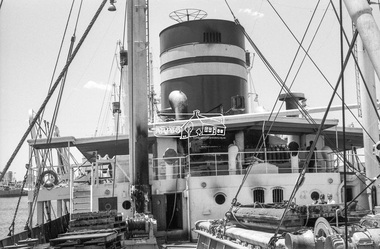
Eltham District Historical Society IncPhotograph, George Coop, Fire damaged Wilhelmsen Line ship Tomar at Victoria Dock, Melbourne, Jan. 1968
... Fire damaged Wilhelmsen Line ship Tomar at Victoria Dock, Melbourne......Victoria Docks...This photo was taken when the ship was brought up to Victoria Docks (No. 26 South Wharf) where George and other passengers were allowed to retrieve their luggage. ...lid=2961287 https://www.flickr.com/photos/wheelhouseno/8131145299 George Coop Collection Tomar (ship) Victoria Docks Wilhelmsen Line Digital TIFF file Scan of 35mm Kodak Plus-X Pan black and white negative transparency Fire damaged Wilhelmsen Line ship Tomar at Victoria Dock, Melbourne Photograph Photograph George Coop ...When George Coop and wife Helen following several years teaching in Canada, they bought a passage aboard the Wilhelmsen line cargo ship, Tomar departing Oslo, Norway for Melbourne, Australia. Whilst crossing the Bass Strait near Robe, South Australia, a generator in the engine room caught fire threatening the ship's fuel oil tanks, forcing the Captain to order the 43 crew and 8 passengers to abandon ship. They spent many hours in a lifeboat before being rescued. This photo was taken when the ship was brought up to Victoria Docks (No. 26 South Wharf) where George and other passengers were allowed to retrieve their luggage. The ship was then taken to Kaohsiung, Taiwan for scrapping. See also https://www.shipsnostalgia.com/media/tomar.450919/ http://www.shipspotting.com/gallery/photo.php?lid=2726028 http://www.shipspotting.com/gallery/photo.php?lid=2961287 https://www.flickr.com/photos/wheelhouseno/8131145299Digital TIFF file Scan of 35mm Kodak Plus-X Pan black and white negative transparencygeorge coop collection, tomar (ship), victoria docks, wilhelmsen line -
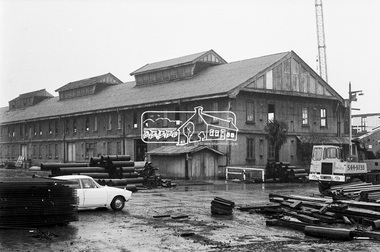
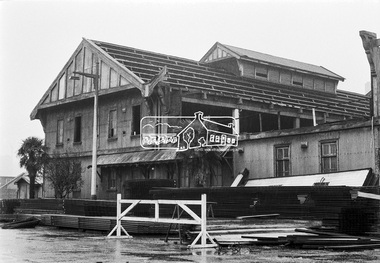
Eltham District Historical Society IncPhotograph, Timber salvage during demolition of former warehouses and wool sheds at Victoria Dock, Melbourne, c.May 1974, May 1974
... Timber salvage during demolition of former warehouses and wool sheds at Victoria Dock, Melbourne, c.May 1974...68 mount pleasant road, george coop collection, victoria docks, wool shed, eltham, houses, rover p6 2000...Also 5 x 13 cm black and white print Timber salvage during demolition of former warehouses and wool sheds at Victoria Dock, Melbourne, c.May 1974 Photograph George Coop George Coop ...Oregon timber beams and Jarrah flooring were salvalged by George Coop and incorporated into extensions undertaken to 68 Mount Pleasant Road, Eltham. Timber collection/storage for the house extension took years and much was stored on the front lawn for nearly ten years. The renovations were undertaken c.1983. Notice George's Rover P6 2000 (JXS507 (1968 registration)) which was sold in 1986.Digital TIFF file Scan of 35mm Kodak Plus-X black and white negative transparency. Also 5 x 13 cm black and white print68 mount pleasant road, george coop collection, victoria docks, wool shed, eltham, houses, rover p6 2000 -
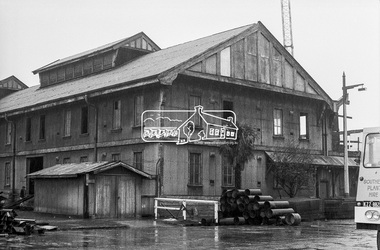
Eltham District Historical Society IncPhotograph, Timber salvage during demolition of former warehouses and wool sheds at Victoria Dock, Melbourne, c.May 1974, May 1974
... Timber salvage during demolition of former warehouses and wool sheds at Victoria Dock, Melbourne, c.May 1974...68 mount pleasant road, george coop collection, victoria docks, wool shed, eltham, houses...Also 5 x 13 cm black and white print Timber salvage during demolition of former warehouses and wool sheds at Victoria Dock, Melbourne, c.May 1974 Photograph George Coop George Coop ...Oregon timber beams and Jarrah flooring were salvalged by George Coop and incorporated into extensions undertaken to 68 Mount Pleasant Road, Eltham. Timber collection/storage for the house extension took years and much was stored on the front lawn for nearly ten years. The renovations were undertaken c.1983.Digital TIFF file Scan of 35mm Kodak Plus-X black and white negative transparency. Also 5 x 13 cm black and white print68 mount pleasant road, george coop collection, victoria docks, wool shed, eltham, houses -
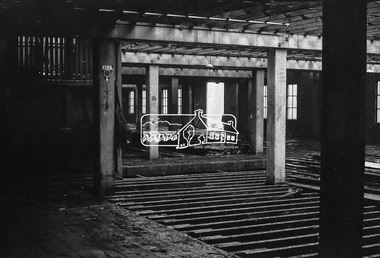
Eltham District Historical Society IncPhotograph, Timber salvage during demolition of former warehouses and wool sheds at Victoria Dock, Melbourne, c.May 1974, May 1974
... Timber salvage during demolition of former warehouses and wool sheds at Victoria Dock, Melbourne, c.May 1974...68 mount pleasant road, george coop collection, victoria docks, wool shed, eltham, houses...Also 5 x 13 cm black and white print Timber salvage during demolition of former warehouses and wool sheds at Victoria Dock, Melbourne, c.May 1974 Photograph George Coop George Coop ...Oregon timber beams and Jarrah flooring were salvalged by George Coop and incorporated into extensions undertaken to 68 Mount Pleasant Road, Eltham. Timber collection/storage for the house extension took years and much was stored on the front lawn for nearly ten years. The renovations were undertaken c.1983.Digital TIFF file Scan of 35mm Kodak Plus-X black and white negative transparency. Also 5 x 13 cm black and white print68 mount pleasant road, george coop collection, victoria docks, wool shed, eltham, houses -
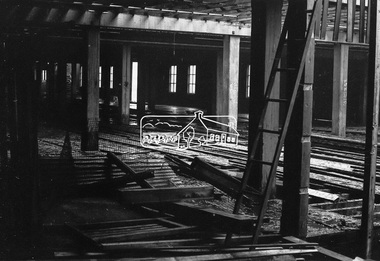
Eltham District Historical Society IncPhotograph, Timber salvage during demolition of former warehouses and wool sheds at Victoria Dock, Melbourne, c.May 1974, May 1974
... Timber salvage during demolition of former warehouses and wool sheds at Victoria Dock, Melbourne, c.May 1974...68 mount pleasant road, george coop collection, victoria docks, wool shed, eltham, houses...Also 5 x 13 cm black and white print Timber salvage during demolition of former warehouses and wool sheds at Victoria Dock, Melbourne, c.May 1974 Photograph George Coop George Coop ...Oregon timber beams and Jarrah flooring were salvalged by George Coop and incorporated into extensions undertaken to 68 Mount Pleasant Road, Eltham. Timber collection/storage for the house extension took years and much was stored on the front lawn for nearly ten years. The renovations were undertaken c.1983.Digital TIFF file Scan of 35mm Kodak Plus-X black and white negative transparency. Also 5 x 13 cm black and white print68 mount pleasant road, george coop collection, victoria docks, wool shed, eltham, houses -
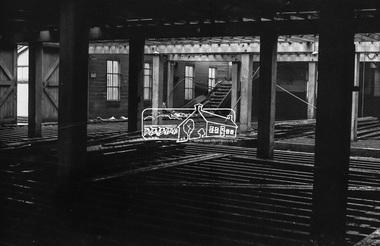
Eltham District Historical Society IncPhotograph, Timber salvage during demolition of former warehouses and wool sheds at Victoria Dock, Melbourne, c.May 1974, May 1974
... Timber salvage during demolition of former warehouses and wool sheds at Victoria Dock, Melbourne, c.May 1974...68 mount pleasant road, george coop collection, victoria docks, wool shed, eltham, houses...Also 5 x 13 cm black and white print Timber salvage during demolition of former warehouses and wool sheds at Victoria Dock, Melbourne, c.May 1974 Photograph George Coop George Coop ...Oregon timber beams and Jarrah flooring were salvalged by George Coop and incorporated into extensions undertaken to 68 Mount Pleasant Road, Eltham. Timber collection/storage for the house extension took years and much was stored on the front lawn for nearly ten years. The renovations were undertaken c.1983.Digital TIFF file Scan of 35mm Kodak Plus-X black and white negative transparency. Also 5 x 13 cm black and white print68 mount pleasant road, george coop collection, victoria docks, wool shed, eltham, houses -
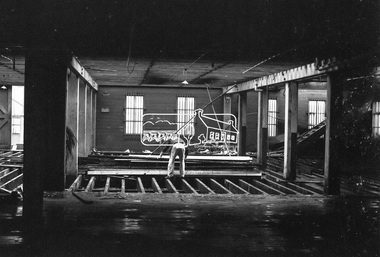
Eltham District Historical Society IncPhotograph, Timber salvage during demolition of former warehouses and wool sheds at Victoria Dock, Melbourne, c.May 1974, May 1974
... Timber salvage during demolition of former warehouses and wool sheds at Victoria Dock, Melbourne, c.May 1974...68 mount pleasant road, george coop collection, victoria docks, wool shed, eltham, houses...Also 5 x 13 cm black and white print Timber salvage during demolition of former warehouses and wool sheds at Victoria Dock, Melbourne, c.May 1974 Photograph George Coop George Coop ...Oregon timber beams and Jarrah flooring were salvalged by George Coop and incorporated into extensions undertaken to 68 Mount Pleasant Road, Eltham. Timber collection/storage for the house extension took years and much was stored on the front lawn for nearly ten years. The renovations were undertaken c.1983.Digital TIFF file Scan of 35mm Kodak Plus-X black and white negative transparency. Also 5 x 13 cm black and white print68 mount pleasant road, george coop collection, victoria docks, wool shed, eltham, houses -
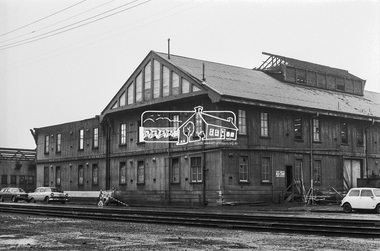
Eltham District Historical Society IncPhotograph, Timber salvage during demolition of former warehouses and wool sheds at Victoria Dock, Melbourne, c.May 1974, May 1974
... Timber salvage during demolition of former warehouses and wool sheds at Victoria Dock, Melbourne, c.May 1974...68 mount pleasant road, george coop collection, victoria docks, wool shed, eltham, houses...Also 5 x 13 cm black and white print Timber salvage during demolition of former warehouses and wool sheds at Victoria Dock, Melbourne, c.May 1974 Photograph George Coop George Coop ...Oregon timber beams and Jarrah flooring were salvalged by George Coop and incorporated into extensions undertaken to 68 Mount Pleasant Road, Eltham. Timber collection/storage for the house extension took years and much was stored on the front lawn for nearly ten years. The renovations were undertaken c.1983.Digital TIFF file Scan of 35mm Kodak Plus-X black and white negative transparency. Also 5 x 13 cm black and white print68 mount pleasant road, george coop collection, victoria docks, wool shed, eltham, houses -
Eltham District Historical Society IncPhotograph, Timber salvage during demolition of former warehouses and wool sheds at Victoria Dock, Melbourne, c.May 1974, May 1974
... Timber salvage during demolition of former warehouses and wool sheds at Victoria Dock, Melbourne, c.May 1974...68 mount pleasant road, george coop collection, victoria docks, wool shed, eltham, houses...Also 5 x 13 cm black and white print Timber salvage during demolition of former warehouses and wool sheds at Victoria Dock, Melbourne, c.May 1974 Photograph George Coop George Coop ...Oregon timber beams and Jarrah flooring were salvalged by George Coop and incorporated into extensions undertaken to 68 Mount Pleasant Road, Eltham. Timber collection/storage for the house extension took years and much was stored on the front lawn for nearly ten years. The renovations were undertaken c.1983.Digital TIFF file Scan of 35mm Kodak Plus-X black and white negative transparency. Also 5 x 13 cm black and white print68 mount pleasant road, george coop collection, victoria docks, wool shed, eltham, houses -
Port Melbourne Historical & Preservation SocietyPhotograph - Veterans group at 22 Victoria Dock, 45 people, Tom Hills at centre, Tom Hills Archive
... Veterans group at 22 Victoria Dock, 45 people, Tom Hills at centre...Photograph of Veterans group at 22 Victoria Dock - 45 people, Tom Hills at centre...Port Melbourne Historical & Preservation Society Port Melbourne Town Hall 333 Bay Street Port Melbourne melbourne Societies Clubs Unions and other Organisations Piers and Wharves - Waterside Workers Transport - Shipping Tom Hills Waterside Workers Federation of Australia Photograph of Veterans group at 22 Victoria Dock - 45 people, Tom Hills at centre Tom Hills Archive Photograph Veterans group at 22 Victoria Dock, 45 people, Tom Hills at centre ...Photograph of Veterans group at 22 Victoria Dock - 45 people, Tom Hills at centresocieties clubs unions and other organisations, piers and wharves - waterside workers, transport - shipping, tom hills, waterside workers federation of australia -
Port Melbourne Historical & Preservation SocietyPhotograph - Aerial view of River Yarra and Victoria Dock, 1920s
... Aerial view of River Yarra and Victoria Dock...Copy of aerial photo of River Yarra and Victoria Dock, 1920s; pasted onto A4 sheet with computer graphics border...Port Melbourne Historical & Preservation Society Port Melbourne Town Hall 333 Bay Street Port Melbourne melbourne transport - shipping Copy of aerial photo of River Yarra and Victoria Dock, 1920s; pasted onto A4 sheet with computer graphics border Photograph Aerial view of River Yarra and Victoria Dock ...Copy of aerial photo of River Yarra and Victoria Dock, 1920s; pasted onto A4 sheet with computer graphics bordertransport - shipping -
Port Melbourne Historical & Preservation SocietyPhotograph - Naval vessels at Williamstown, Victoria Dock or anchored in the Bay, Ron Laing, 1985 - 1996
... Naval vessels at Williamstown, Victoria Dock or anchored in the Bay...A set of 34colour photographs of various Naval vessels visiting Melbourne and berthed at Williamstown, in Victoria Dock or anchored in the bay, pre 1986 to 1996 inclusive...transport - shipping piers and wharves ron laing hmas sydney hmas derwent hmas anzac hmas success hmas perth hmas ovens hmas otama uss omaha uss helena uss california uss arkansas castlemaine a m vella - pma dredge USS Truxton Details on back in ink/pencil A set of 34colour photographs of various Naval vessels visiting Melbourne and berthed at Williamstown, in Victoria Dock or anchored in the bay, pre 1986 to 1996 inclusive Photograph Naval vessels at Williamstown, Victoria Dock or anchored in the Bay Ron Laing ...A set of 34colour photographs of various Naval vessels visiting Melbourne and berthed at Williamstown, in Victoria Dock or anchored in the bay, pre 1986 to 1996 inclusiveDetails on back in ink/penciltransport - shipping, piers and wharves, ron laing, hmas sydney, hmas derwent, hmas anzac, hmas success, hmas perth, hmas ovens, hmas otama, uss omaha, uss helena, uss california, uss arkansas, castlemaine, a m vella - pma dredge, uss truxton -
Port Melbourne Historical & Preservation SocietyPhotograph - Aerial view of American destroyers at Victoria Dock, 6 Aug 1925
... Aerial view of American destroyers at Victoria Dock......victoria dock...Copy of aerial photo of Victoria Dock 1925 with destroyers from visiting American fleet, with caption, both pasted onto paper with chequered computer border...Port Melbourne Historical & Preservation Society Port Melbourne Town Hall 333 Bay Street Port Melbourne melbourne transport - shipping piers and wharves - miscellaneous victoria dock Copy of aerial photo of Victoria Dock 1925 with destroyers from visiting American fleet, with caption, both pasted onto paper with chequered computer border Photograph Aerial view of American destroyers at Victoria Dock ...Copy of aerial photo of Victoria Dock 1925 with destroyers from visiting American fleet, with caption, both pasted onto paper with chequered computer bordertransport - shipping, piers and wharves - miscellaneous, victoria dock -
Port Melbourne Historical & Preservation SocietyPhotograph - Yarra River, Ron Laing, 1990s
... The Bolte Bridge which caused this closure of Victoria Dock, North and South Wharves is covered in photos 1319.01-.35....Donated to the PMH&PS by the photographer. nb Includes photographs of Victoria Dock in the period of time after the commercial shipping had gone but before the start of the proposed high-rises. ...Part of Ron Laing's collection of photographs recording Port Melbourne over a thirteen year period. Donated to the PMH&PS by the photographer. nb Includes photographs of Victoria Dock in the period of time after the commercial shipping had gone but before the start of the proposed high-rises. The Bolte Bridge which caused this closure of Victoria Dock, North and South Wharves is covered in photos 1319.01-.35.A set of 47 colour photogaphs of the Yarra River at various locations from the old Sandridge Railway Bridge westward to the power house at Newportyarra river, built environment, transport - shipping, ron laing -
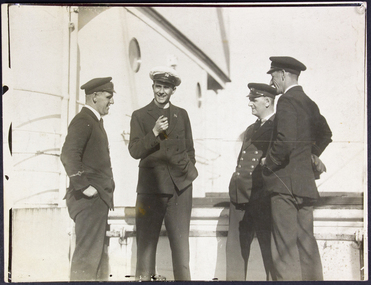
Mission to Seafarers Victoriaphotograph - Photograph, Black and white, Herald, 22 August 1930
... A similar photograph from the Herald dating from the 22 August 1930 indices it was taken on board the Blue Funnel liner Nestor at Victoria Docks....Mission to Seafarers Victoria 717 Flinders Street Docklands melbourne A similar photograph from the Herald dating from the 22 August 1930 indices it was taken on board the Blue Funnel liner Nestor at Victoria Docks. Representational photograph portraying a typical ship visit by MTSV clergyman. ...A similar photograph from the Herald dating from the 22 August 1930 indices it was taken on board the Blue Funnel liner Nestor at Victoria Docks.Representational photograph portraying a typical ship visit by MTSV clergyman. Large rectangular (landscape oriented) black and white photograph of 3 ship's officers casually standing on deck with Father Frank Oliverfrank oliver, padre frank leslie oliver, officers, ship visit, ships, blue funnel, nestor -
Port Melbourne Historical & Preservation SocietyPhotograph - Various wharf/pier locations, 1920 - 1922
... ...victoria dock...Namely the New Pier (Princes), Railway Pier, Williamstown, Centre Pier in Victoria Dock, and the Interstate Swinging Basin (near Charles Grimes Bridge) in Yarra River 1920s...Namely the New Pier (Princes), Railway Pier, Williamstown, Centre Pier in Victoria Dock, and the Interstate Swinging Basin (near Charles Grimes Bridge) in Yarra River 1920s Photograph Various wharf/pier locations ...Original photos. Eighteen loose photos in separate box . Charles Wynn Kiver Allison M.I.E.A.. Namely the New Pier (Princes), Railway Pier, Williamstown, Centre Pier in Victoria Dock, and the Interstate Swinging Basin (near Charles Grimes Bridge) in Yarra River 1920spiers and wharves - miscellaneous, piers and wharves - princes pier, charles wynn kiver allison, victoria dock -
Port Melbourne Historical & Preservation SocietyAlbum - Projects by Charles Wynn Kiver Allison, Piers, etc, 1920 - 1922
... ...victoria dock...Namely the New Pier (Princes), Railway Pier, Williamstown, Centre Pier in Victoria Dock, and the Interstate Swinging Basin (near Charles Grimes Bridge) in Yarra River 1920s...Namely the New Pier (Princes), Railway Pier, Williamstown, Centre Pier in Victoria Dock, and the Interstate Swinging Basin (near Charles Grimes Bridge) in Yarra River 1920s Album Projects by Charles Wynn Kiver Allison, Piers, etc ...Original photos. Photo album of 48 photos of projects undertaken by Charles Wynn Kiver Allison M.I.E.A.. Namely the New Pier (Princes), Railway Pier, Williamstown, Centre Pier in Victoria Dock, and the Interstate Swinging Basin (near Charles Grimes Bridge) in Yarra River 1920spiers and wharves - miscellaneous, piers and wharves - princes pier, charles wynn kiver allison - miea, victoria dock -
Flagstaff Hill Maritime Museum and VillagePhotograph
... ...Victoria Dock...Inscription Reads, A Unique Maritime Event Which Will Never Occur Again. 7 of the Well Known Loch Line of Clipper Ships Laying In The Victoria Dock, Melbourne In June 1907'. 170 mm X 58 mm Sh 169 Ships I - L....Inscription Reads, A Unique Maritime Event Which Will Never Occur Again. 7 of the Well Known Loch Line of Clipper Ships Laying In The Victoria Dock, Melbourne In June 1907'. 170 mm X 58 mm Sh 169 Ships I - L. ...Black And White photograph of Seven of the Loch Line Clipper Ships. Left To Right Loch Etive, Loch Broom, Loch Garry, Loch Katrine, Loch Carree, Loch Tay And Loch Torridon. Inscription Reads, A Unique Maritime Event Which Will Never Occur Again. 7 of the Well Known Loch Line of Clipper Ships Laying In The Victoria Dock, Melbourne In June 1907'. 170 mm X 58 mm Sh 169 Ships I - L.flagstaff hill, warrnambool, shipwrecked-coast, flagstaff-hill, flagstaff-hill-maritime-museum, maritime-museum, shipwreck-coast, flagstaff-hill-maritime-village, victoria dock, loch line, post card -
Mission to Seafarers VictoriaAlbum (item) - Photographic Album, 1928
... ...victoria dock...Picnic at Riversdale Hawthorn, 1 January 1928 Ships in Port Melbourne in November: HMAS Australia, HMAS Brisbane, and destroyers Anzac, Success, Swordsman Wharfs, Victoria Dock, Stevedores Picnic in Finhaven, Kew, the Buchan's Property for Cup Day (6 November) Views of Port Melbourne from 1888 building Monday 29 October: return of Archbishop of Melbourne (Dr. ...Picnic at Riversdale Hawthorn, 1 January 1928 Ships in Port Melbourne in November: HMAS Australia, HMAS Brisbane, and destroyers Anzac, Success, Swordsman Wharfs, Victoria Dock, Stevedores Picnic in Finhaven, Kew, the Buchan's Property for Cup Day (6 November) Views of Port Melbourne from 1888 building Monday 29 October: return of Archbishop of Melbourne (Dr. ...This album containing 50 photographs depicts a year at the Mission in 1928: Wedding of the Dora Walker with Harry Simpson on 14 February. Picnic at Riversdale Hawthorn, 1 January 1928 Ships in Port Melbourne in November: HMAS Australia, HMAS Brisbane, and destroyers Anzac, Success, Swordsman Wharfs, Victoria Dock, Stevedores Picnic in Finhaven, Kew, the Buchan's Property for Cup Day (6 November) Views of Port Melbourne from 1888 building Monday 29 October: return of Archbishop of Melbourne (Dr. Harrington Lees), who had spent a 10-month holiday in England with his wife. Arrival on the RMS Maloja Two photographs are missing.Pre Great Depression, 1928 was a difficult year in Melbourne and also for the Mission. Ships were rare on the wharfs meaning seamen were also rare in the missions. However they started the fundraising for the extension of the 1888 Port Melbourne building which was becoming too small. At the end of the year, Reverend Weller announced he was appointed assistant in London. He and his wife Alexina left in January 1929 after five years. They sailed on the Osterley on the 22 January 1929.Embossed yellow font on cover reads: ALBUMfan, strikes, police, reverend john reginald weller (1880-1969), alexina weller (nee caley), freda oxley, hmas australia, hmas brisbane, great depression, unemployment, port melbourne, station pier, sugar cane, queensland, dora simpson nee walker, weddings, cup day, finhaven, kew, the ducketts, mrs john buchan, flinders street extension, gasworks, wharfs, victoria dock, motorboat, southern cross, success, destroyers, football, sports, rms maloja, lhlg, fan album, anzac, swordsman, freda kathleen oxley 1882-1969, annie alexandrina caley (known as alexina) 1885-1934 -
Mission to Seafarers VictoriaPhotograph - Photograph, Sepia, Mr and Mrs Gurney Goldsmith, Disabled French Barque: Towing up the Yarra from Monomeith Gardens Newport, 1906
... It is his intention to establish a mission church and home near Victoria dock. Senator Styles and family will reside at Hawthorn." ...It is his intention to establish a mission church and home near Victoria dock. Senator Styles and family will reside at Hawthorn." ...Monomeith, located 67 the Strand, in Newport was built in 1887, and was the house of Senator James Styles. Reverend Gurney Goldsmith lived in Monomeith from 17 Octoberr 1905 to at least November 1907 (See Victorian Government Gazette: 14 November 1907) until he and his wife could move in the new central Seamen Institute open in December 1907. "Senator Styles' house, “Monomeith," Strand, has been leased to the Rev. A. Gurney Goldsmith, who has been sent to Victoria from England to establish a Church of England mission to seamen. Tho new tenant will enter into possession on October 17th and proposes to make it a rendezvous for seamen, and to get about the bay and river on an oil motor launch. It is his intention to establish a mission church and home near Victoria dock. Senator Styles and family will reside at Hawthorn." (Williamstown Advertiser, Saturday 2 September 1905, page 3) Monomeith has been housing the Westbourne Grammar School, Williamstown Campus, since it was leased from the Harbour Trust in 1956 then purchased by the school in 1972. Small monochrome photograph, view of ships from a parkHandwritten in pencil on verso: 83 (?) and a 3 in bottom right cornermonomeith, newport, french, barque, towing, yarra river -
Mission to Seafarers VictoriaPhotograph - Photograph, Sepia, Mr and Mrs Gurney Goldsmith, c. 1906-1907
... It is his intention to establish a mission church and home near Victoria dock. Senator Styles and family will reside at Hawthorn." ...It is his intention to establish a mission church and home near Victoria dock. Senator Styles and family will reside at Hawthorn." ...Possibly a photograph of a damaged vessel. The inscription at the back: Monomeith is a Victorian mansion, located on 67 the Strand in Williamstown. Monomeith, located 67 the Strand, in Newport was built in 1887, and was the house of Senator James Styles. Reverend Gurney Goldsmith lived in Monomeith from 17 Octoberr 1905 to at least November 1907 (See Victorian Government Gazette: 14 November 1907) until he and his wife could move in the new central Seamen Institute open in December 1907. "Senator Styles' house, “Monomeith," Strand, has been leased to the Rev. A. Gurney Goldsmith, who has been sent to Victoria from England to establish a Church of England mission to seamen. Tho new tenant will enter into possession on October 17th and proposes to make it a rendezvous for seamen, and to get about the bay and river on an oil motor launch. It is his intention to establish a mission church and home near Victoria dock. Senator Styles and family will reside at Hawthorn." (Williamstown Advertiser, Saturday 2 September 1905, page 3) Monomeith has been housing the Westbourne Grammar School, Williamstown Campus, since it was leased from the Harbour Trust in 1956 then purchased by the school in 1972. Small monochrome photograph with a black border depicting a sailing ship berthed in docks.Disabled French Barque: Towing up the Yarra from Monomeith Gardens Newportship, melbourne., sailing ship, 1900's, french, barque, williamstown -
City of Melbourne LibrariesPhotograph (item), Bull, Hugh Jones, 1897-1993, Unloading timber at Victoria Dock, 1933
... Unloading timber at Victoria Dock...Our photo is located at Victoria Dock (also known as Victoria Harbour) which is still an active component of Melbourne’s port system. ...Our photo is located at Victoria Dock (also known as Victoria Harbour) which is still an active component of Melbourne’s port system. ...Photographer notations on slide: "Unloading Timber at Wharves 1933 Age B5" Published: Age (Melbourne, Vic.: 1854- ), Tuesday 15 August 1933 MAHOGANY FROM MANILA. (1933, August 15). The Age (Melbourne, Vic. : 1854 - 1954), p. 11. Retrieved January 16, 2026, from http://nla.gov.au/nla.news-article204377024 Published title: MAHOGANY FROM MANILA Published Caption: Age Tue 15 Aug 1933 Caption: Unloading Mahogany Logs brought from Manila, Philippine Islands, by the steamer Taiping, which berthed yesterday at Victoria Dock. The vessel discharged twenty logs, each weighing three tons, the first shipment of this type of timber landed in Melbourne. Research by Project Volunteer, Louise McKenzie: This photograph in many ways epitomises Melbourne in the 1930s. It is a time of enormous growth, development and change. But before delving into that, the photo itself is very powerful. The huge mahogany logs being unloaded appear to be so heavy that the ship itself seems to list to port as they are craned over the side. They are being levered into a cart to which two large and sturdy Clydesdale horses are hitched. In contrast to the traditional horses, the wharf is crisscrossed with modern railway tracks. Unloading is both mechanical and manual, and the scene is one of intense interest to a young boy bystander. The ship appears to be squat and solid, but the whole image also gives a feeling of movement and intensity. The mahogany being delivered to Melbourne would be intended for high quality furniture. In the 1930s Australia actually had a growing timber industry, but much of the eucalyptus wood was being utilised for mass produced furniture, and much of this furniture would then have had a veneer applied to it. The fact that it was economic to import this timber from the “Philippine Islands” – not a traditional trading market for Australia – reflects a Victorian economy that was strong enough to support a growing demand for good quality furniture Mahogany was described as a classic, strong hardwood, often used for dark opulent furniture. In the 1930s the importation of timber from Manila (Philippines) to Australia was a notable trade, particularly in Philippine Lauan (often referred to as Philippine Mahogany), which was used as a cheaper alternative to other hardwoods. 1930s furniture, dominated by the art deco style, used a mix of luxurious exotic woods like mahogany, macassar and ebony for high-end pieces, often veneered over less expensive woods such as walnut, birch and poplar, and with plywood, chrome and lacquer also popular for more practical, streamlined designs during the Depression era. By the mid 1930s timber mills were being relocated away from the immediate dock area, but the fact that these logs were being transported by horse-drawn cart implies that the load would not have had to be taken too far for milling. 1885 the Melbourne Harbour Trust Commissioners had decided that land in or near the city was far too valuable to be used as timber yards. Furthermore, large stacks of timber posed a fire risk. The Trust asked the Victorian Government to reserve a site on the east side of the Yarra River opposite Yarraville and Spotswood. Here, in 1889, the Trust began building six jetties and a wharf specifically for the landing of timber. Clydesdale horses were initially brought to Victoria from Tasmania in the 1830s, and with the 1850s gold rush they were imported direct from Scotland. Melbourne was from its earliest years an important centre of horse-breeding from both imported and colonial-bred stock, providing the well-built draught horse for pulling heavily loaded wagons, the harness horse for delivery work and drawing coaches, and the saddle-horse used for riding. Stud breeding facilities were advertised from the early 1840s. By the 1870s the horse export trade was thriving, and the Port of Melbourne was the country's busiest exporter of horses to Indian, Asian and New Zealand markets. Kirk's Melbourne Horse and Carriage Bazaar in Bourke Street first advertised for business in 1840, and by the 1850s Bourke Street West was famed for its horse bazaars and saleyards. The Victorian Clydesdale Horse Society reports that Clydesdale working horses were a vital part of Melbourne's infrastructure and agricultural industry in the 1930s, when they reached the peak of their popularity despite the increasing competition from mechanization. Their main roles and usage at this time were: • City Delivery: Clydesdales were a common sight for metropolitan deliveries, particularly for breweries (such as Carlton & United Breweries), milk runs, and bread deliveries. • Industrial Work: They were heavily used for hauling cargo at the docks, in construction, and at specialized sites like the Truganina Explosives Reserve, where they pulled wagons. • Agriculture: In surrounding rural areas, they were the primary power source for ploughing and agricultural machinery. • Specialization: By the 1930s, the Clydesdale was smaller and more compact than the Shire or Percheron breeds, making them ideal for navigation in urban environments. After the 1930s their numbers decreased due to the onset of WWI and mechanisation. Wartime petrol rationing led to a brief revival for the working horse, as suburban tradesmen, now used to motor delivery, took their old jinkers out of mothballs. By 1947, however, only 1.5% of city traffic was horse-drawn. In 1952 the large horse cartage company A. Kellet Pty Ltd sold its 250 horses and converted its Richmond stables to storage. In the 1950s at Station and Princes piers, wharf labourers refused to work with the six draught horses still being used to haul trolleys and which were soon superseded by the fork lift, semi-trailer and mobile crane. Where carefully trained horses had once shunted trains in city goods yards, a few hundred a week were now being killed at the abattoirs for pet and human consumption. The last MCC dray horse was withdrawn from service in 1958, but some of the few remaining working animals are used by the mounted police for crowd control at demonstrations and football games. The death knell had also sounded for the associated trades of farrier, saddler and blacksmith. Our photo, therefore, showing the wharf with both the haulage Clydesdales and the rail lines, is a strong visual summary of the social and economic changes experienced in Victoria in the 1930s and on towards the 1950s. Our photo is located at Victoria Dock (also known as Victoria Harbour) which is still an active component of Melbourne’s port system. In 1892 the West Melbourne Dock (later Victoria Dock) was opened, downstream and immediately west of the Spencer Street railway shunting yards. It contained a swing basin for ships, replacing the one which had been provided on the south side of the river, later to be the Duke and Orr dry dock, west of the Charles Grimes Bridge. Further west was the South Wharf along the river bank. The history of Victoria Dock is extremely well described by Ashley Smith in his 2 March 2022 article in Docklands News, and its accompanying aerial photo of the Dock taken in 1934. He writes: "In the early 1930s Victoria Dock was one of the biggest sites for trade and export in Melbourne. A constant queue of ships sailed in, unloaded their cargo, recharged and reloaded, then left for the next port. Around the time this photo was taken (found in a 1934 photo book), the trapezium-shaped basin had been through some changes since its construction in the 1890s. The 497-metre-long Central Pier, finished in 1919, now featured six sheds to house the ever-increasing volume of cargo. The entrance had also been widened in the 1920s to allow better access. Some of the berths featured three-ton jib electric cranes to help with loading cargo and a rail network connected to the State Railway service. By the time construction was completed, the dock was 39 hectares and hailed as the second-largest dock in the world (behind Cavendish Dock, Barrow-in-Furness). To further save costs, excavations were dug to a more reasonable seven metres below low water, instead of British engineer Sir John Coode’s recommended 8.3 metres. Even then, the costs were still around £900,000. It was envisaged, with the extra wharfage, that around thirty 90-metre ships could berth inside. On March 22, 1892, Victoria Dock was opened by Victoria’s Governor, the Earl of Hopetoun (later Australia’s first Governor-General) who opened the sluice to let the Yarra in. It took six days to fill the basin with The Leader newspaper estimating that it would take another six months to completely fill (March 26, 1892). In the end, it took nearly a year before the first ship was allowed to enter on February 20, 1893, when the steamer Hubbuck sailed in to unload 1200 tonnes of cargo in 15 hours. The Argus (February 23, 1893) reported that the ship’s captain, J. R. Brodie, called the Yarra “better than the Thames”, and compared Victoria Dock favourably to the Albert Dock (Liverpool)." This would be a good time to move our focus on to the Taiping, which is the transporter of these giant mahogany logs. The Taiping was a steel-hulled, single-screw passenger-cargo Chinese steamer, which today has the dubious legacy of being involved in a collision headlined as “The Chinese Titanic”. It was constructed by the Hong Kong and Shampoa Dock Company at its facility in Hong Kong, with completion in 1926 for service under the Australia Oriental Line. Her gross register tonnage measured 4,324 tons, reflecting her design for inter-island and coastal trade routes, accommodating both passengers and freight. She operated routes connecting Australian ports with East Asian destinations. As World War II approached, Taiping continued predominantly working the trade routes between China and Australia, until December 1941, when she evacuated women and children from Hong Kong to Manila just before Japanese forces overran the region. She then safely reached Australia despite enemy air raids. Taiping was then requisitioned by the Royal Navy and repurposed as a victualling stores issuing ship for the Eastern Fleet, supporting logistical needs in the Pacific and Indian oceans. Returned to the Australian Oriental Line in 1947, she underwent refitting and by mid-1948 was chartered to the Shanghai Shipping Company, and modified for greater passenger accommodation – approximately 500 passengers. In 1948/49 the Chinese Civil War took place. The Taiping departed Shanghai on 26 January 1949 as one of the final vessels evacuating civilians from to Keelung Harbour in Taiwan. Reports indicate that the Taiping carried double the rated capacity of passengers i.e. 1000. The ship carried families, military personnel, civilians, carrying personal belongings, gold and valuables in hope of resettlement in Nationalist Taiwan. It also held heavy cargo in the form of silver and gold bullion loaded by the Central Bank of China. Because of the risk of patrols, and to conserve fuel, the Captain took the ship away from the usual open-sea passage, and instead navigated along the coast. He also extinguished navigation lights to avoid detection. Shortly after midnight on 27 January 1949 the Taiping collided with the smaller cargo steamer Chien Yuan in the East China Sea near the Zhoushan Archipelago. The Chien Yuan was also operating in darkness. The subsequent collision was catastrophic. The Chien Yuan sank with in 5 minutes, with the loss of 72 of its 74 crew. The Taiping sustained severe structural compromise from the broadside strike and initially remained afloat, then made a swift descent into the freezing water, with no attempt at an organised evacuation. No formal recovery process was instigated, however a distress signal went out. 32 survivors were picked up by the Australian destroyer HMAS Warramunga (on patrol nearby), a passing US vessel found 2 more, and local Zhoushan fishermen retrieved others. In the end, only 37 people survived. The event is remembered as a poignant moment in the mass migration to Taiwan, with families tragically separated. A memorial to the disaster exists at the Keelung Harbour naval base on Taiwan. With its total of over 1,500 deaths, it constituted one of the worst peacetime maritime losses. It is sometimes referred to as the “Oriental Titanic” because of the similarly large loss of life and speed of demise with the RMS Titanic in 1912. A fictional depiction of this event appears in the John Woo movies “The Crossing (Part 1) (2014), and The Crossing II (2015), known in Chinese as “Taiping Wheel”. The narrative weaves a story around pre-disaster romances and wartime turmoil among passengers, culminating in the ship’s rapid sinking. “The production, a high-budget Sino-Taiwanese-Hong Kong co-effort, portrays the event as a microcosm of the 1940s Sino-Japanese and civil war legacies, though critics noted the melodramatic style prioritizing spectacle over historical precision.” In conclusion, it is nice to return to our photo, and observe the people involved in this moment. The dockworkers are, so typical of the 1930s, dressed in what looks to us like formal clothing – dark suits or coats, white shirts, and black hats. I am particularly drawn to the young boy, bare-headed, arms crossed, and so intent on the unloading process. He too is wearing a white shirt, black trousers and jacket, and black shoes. This is 1933 Melbourne – but the haircut he is sporting is now very “hipster” and modern in 2026 Melbourne. References: MAHOGANY FROM MANILA. (1933, August 15). The Age (Melbourne, Vic. : 1854 - 1954), p. 11. Retrieved January 30, 2026, from http://nla.gov.au/nla.news-article204377024 Wikipedia, Taiping steamer, https://en.wikipedia.org/wiki/Taiping_(steamer) Wikipedia, Victoria Dock, https://en.wikipedia.org/wiki/Victoria_Dock_(Melbourne) Docklands News, Ashley Smith, 2 Mar 2022, https://www.docklandsnews.com.au/victoria-dock/ Living Histories: Heritage Council of Victoria, Jill Barnard, 2008, Jetties and Piers, https://livinghistories.net.au/wp-content/uploads/2015/11/Jetties-ONL-intro_Part-1.pdf eMelbourne, Wharves and Docks, https://www.emelbourne.net.au/biogs/EM01612b.htm Australian Academy of Technological Sciences – Harvesting Wood, https://www.austehc.unimelb.edu.au/tia/225.html Old Treasury Building, On the Water – The Docks, https://tinyurl.com/3wkbk66m Old Treasury Building, On The Road, https://tinyurl.com/dw44yr3t Port of Melbourne, Victorian Places, https://www.victorianplaces.com.au/port-of-melbourne Docklands Heritage Study - Environmental History, https://mvga-prod-files.s3.ap-southeast-4.amazonaws.com/public/2024-05/docklands-heritage-review-thematic-environmental-history-1991.pdf eMelbourne, Horses, https://www.emelbourne.net.au/biogs/EM00723b.htm Victorian Clydesdale Horse Society, https://www.clydesdalesvic.org.au/history The Crossing, https://letterboxd.com/film/the-crossing-i/Photographer notations on slide: "Unloading Timber at Wharves 1933 Age B5"ships, shipping, timber industry, shipwrecks, horses, docks, wharves, 1930-1939, wars, docklands -
Flagstaff Hill Maritime Museum and VillagePhotograph - Ship, Alma Doepel, 1931-1934
... She lay idle in Victoria Dock for quite some time. In April 2001 “Alma Doepel” was taken to Port Macquarie’s Lady Nelson Wharf where she became a museum ship maintained by volunteers. ...She lay idle in Victoria Dock for quite some time. In April 2001 “Alma Doepel” was taken to Port Macquarie’s Lady Nelson Wharf where she became a museum ship maintained by volunteers. ...This photograph is of the square-rigged schooner "Alma Doepel". Details added to the back of the photograph incorrectly describe the vessel as "Amy Doepel / ketch / Amy Doepel". The rigging on the vessel dates the photograph to sometime between 1931-1933. The location is yet to be determined. Frederick Doepel was a shipping agent in Bellinger Valley, NSW. He employed an experienced shipwright to build Alma Doepel, which was made from local timber. He named the ship “Alma Doepel” after his baby daughter Alma. The ship was registered in Sydney and launched 19th October 1903, and her first sea voyage was in December. She traded in timber Port Macquarie/Bellinger River and New Zealand. “Alma Doepel” was purchased by Henry Jones & Co., Hobart jam makers, in partnership with Harry Heather, her new captain, in 1916. The ship was then registered in Hobart. She carried jam and timber to the mainland, particularly Melbourne, and brought back cargo for Tasmania. She even carried the piles for the building of Portland Harbour. When Harry Heather passed away in 1937 he was succeeded by Eric Droscoll. Before the square-rigged "Alma Doepel" left for Tasmania on March 8th 1937 she was fitted with a new set of sails, becoming a fore-and-aft rigged schooner. She had been the last 'top sail' schooner in Bass Strait trade! "Alma Doepel" continued her coastal trading until 1942, when she was requisitioned by the Army. In January 1943 she was left in Melbourne by her crew and the Army took her over, taking her to Sydney in February, 1943. She was relaunched by the Army in 1944 minus two of her masts and her small 1936 engine, and was fitted with three large bus engines. In March 1945 she headed for the war zone, delivering cargo up and down the coast of New Guinea, at one time carrying over 400 troops. In 1946 she returned to Hobart where the Army re-converted her back for Bass Strait trading and returned her. In January 1947 Eric Driscoll took “Alma Doepel” to the eastern Tasmanian coastal port of St. Helens, trading cargo of local mountain ash timber to Melbourne on the mainland until 1959. She was then stripped down to her hull with only a single mast and two engines, and fitted with wooden bins on rails in her hold. From 1961 to 1975 she carried limestone to a factory to make carbide. Michael Wood and David Boykett, two of the governors of "Sail and Adventure", then bought her for the price of her two Gardiner engines and in 1976 they brought her to Melbourne. An Alma Doepel Supporters Club was formed to support the ship’s major restoration to a topsail schooner. In 1987 she was overhauled in Adelaide, with the support of Elders IXL and she returned to Sydney to lead the Parade of Sail on Bicentenary Day, 25th January 1988. She returned to Melbourne in February and began sail training voyages in Port Phillip Bay, operating from an office on Station Pier. The Alma Doepel Voyagers Club was started. Trainees joined the crew in sailing the ship over nine or ten days of instruction in sailing and seamanship. These trips plus chartered trips and fund raisers continued until early 1999, when she was no longer in a condition to operate; she needed a lot of attention. She lay idle in Victoria Dock for quite some time. In April 2001 “Alma Doepel” was taken to Port Macquarie’s Lady Nelson Wharf where she became a museum ship maintained by volunteers. In 2008 she had time in dry-dock and after sea-trials headed off to Victoria Harbour, Docklands, in Melbourne, where she is currently being restored with the help of The Supporters.This phot graph is significant for its connection with the Bass Strait trade, being the last top-sail schooner to brade across the strait. The photograph is also significant in its representation of the the sailing ships that traded around Australia in the 1930s.Photograph of "Alma Doepel " a wooden, 3 masted, square rigged sailing schooner built in Sydney, launched in 10/10/1903. Photograph is sepia coloured, mounted on card, inscription on the back. Information also provided with photograph. Photograph (marked incorrectly on back) "Amy Doepel / ketch / Amy Doepel". Sticker with "91" in pencil. Information provided (dated incorrectly) "1943, Sydney, New South Wales"flagstaff hill, warrnambool, shipwreck coast, maritime museum, maritime village, photograph, alma doepel, frederick doepel, henry jones and co, harry heather, eric droscoll, alma doepel supporters club, elders ixl, parade of sail, bicentenary day, alma doepel voyagers club, last top sail schooner in bass strait trade, square-rigged, fore-and-aft rigged -
City of Melbourne LibrariesPhotograph, Bull, Hugh Jones, 1897-1993, Groundsmen cover wicket during rain at the MCG match, Victoria v South Australia
... ENGLISH FLYING BOAT. VICTORIA DOCK. (1936, November 17). The Age (Melbourne, Vic. : 1854 - 1954), p. 13. ...ENGLISH FLYING BOAT. VICTORIA DOCK. (1936, November 17). The Age (Melbourne, Vic. : 1854 - 1954), p. 13. ...“How’s the wicket, Bert?” During the 4-Day Victoria v South Australia Sheffield Shield match, held 13-17 November 1936 at the Melbourne Cricket Ground, the play was often interrupted by rain squalls, causing the groundsmen to cover their carefully prepared wicket with tarpaulins to protect it. “How’s the wicket, Bert?” is the question on everyone’s lips – Will it be a batsman’s nightmare? A bowler’s dream? Will the spectators see a full day’s play or will rain spoil it? With a twinkle in his eye, Bert “Maker of Pitches” Luttrell, the MCG curator’s response is: “It’s not the wicket when batsmen get out early, it’s good bowling!” FRC Published: The Age 17 November 1936 Featured in "Newsworthy: Melbourne in photographs 1933-1936" exhibition at East Melbourne Library, October to December 2023. Exhibition caption by project volunteer, Fiona Collyer. Photographer notations on slide: "Covering wicket during Vict v Sth Aust Cricket at M.C.G. Nov 1936 B117" Published: Age (Melbourne, Vic. : 1854 - 1954), Tuesday 17 November 1936, page 13 Published title: SHEFFIELD SHIELD CRICKET. Published caption: Placing the tarpaulin over the wicket during one of the showers. This was done four times during the day. Trove article identifier: http://nla.gov.au/nla.news-article205952141 Description: Nine men wearing black macintoshes and hats drag a tarpaulin over a cricket pitch. There is a bucket containing pegs in the foreground. Research by project volunteer, Fiona Collyer: During the four day Victoria v South Australia Sheffield Shield match, held 13-17 November 1936 at the Melbourne Cricket Ground, the play was often interrupted by rain squalls, causing the groundsmen to cover their carefully prepared wicket with tarpaulins to protect it. “How’s the wicket, Bert?” is the question on everybody’s lips - will it be a batsman’s nightmare? A bowler’s dream? Will the spectators see a full day’s play or will rain spoil it? With a twinkle in his eye, Bert “Maker of Pitches” Luttrell, the MCG curator’s response is: “It’s not the wicket when batsmen get out early, it’s good bowling!” Albert (Bert) John Wesley Luttrell 1875-1951, was born in Geelong and worked as a painter and decorator. He played cricket for Clarendon Cricket Club while helping to prepare the wicket at Kardinia Park. In 1890, Mr Phillip Russell, a wealthy merino sheep breeder of Osborne House, North Geelong, offered Bert the job of curator and cricket player for his team “The Nondescripts”, a social team who played at his private oval at Osborne House. After five years at Osborne House, Bert took up a position at Geelong Grammar School and then in 1900 he was appointed curator of Warehousemen’s Ground, Albert Park (later called Albert Ground). There he prepared the tennis courts for the 1908 Davis Cup - Australia v USA featuring the eventual winner of the tournament, Wimbledon champion Sir Norman Brookes. Following the retirement of the MCG curator, Bert was offered the position there for the 1919/20 season. Sport was resuming at the MCG after the suspension caused by the Great War and the Spanish Influenza pandemic. Cricket grounds and matches are always at the mercy of the weather. Sudden heavy downpours can make the ground unfit for play. In 1933, Bert invented and patented an absorbent roller for soaked pitches. Similar to a lawn mower in appearance, it was fitted with a rubber sponge which sucked up the water and then squeezed it into a tank. The sponge was said to mop up a gallon (3.78 litres) of water in 32 seconds and remove 100 to 120 gallons (378 - 454 litres) of water from any wet sports ground in an hour. Bert worked as a curator of the MCG for nearly 30 years, invariably creating his famous “shirt front” wicket. He retired in 1947 due to ill health. He was married to Emma and they had six children- Albert, Harry, Nell, Lily, Frank and Jack. Bert died at home in South Yarra in 1951 at 76 years of age. References: SHEFFIELD SHIELD CRICKET. ENGLISH FLYING BOAT. VICTORIA DOCK. (1936, November 17). The Age (Melbourne, Vic. : 1854 - 1954), p. 13. Retrieved May 19, 2024, from http://nla.gov.au/nla.news-article205952141 To Dry Grounds (1933, May 13). Sporting Globe (Melbourne, Vic. : 1922 - 1954), p. 3 (Edition2). Retrieved May 20, 2024, from http://nla.gov.au/nla.news-article183038194 No title (1937, February 25). The Age (Melbourne, Vic. : 1854 - 1954), p. 10. Retrieved May 19, 2024, from http://nla.gov.au/nla.news-article206185862 GOSSIP of THE GAME (1937, November 12). The Herald (Melbourne, Vic. : 1861 - 1954), p. 21. Retrieved May 20, 2024, from http://nla.gov.au/nla.news-article244541623Photographer notations on slide: "Covering wicket during Vict v Sth Aust Cricket at M.C.G. Nov 1936 B117".cricket, 1930-1939 -
City of Melbourne LibrariesPhotograph, Bull, Hugh Jones, 1897-1993, Japanese woodblock prints
... Takahata, and are displayed in a specially arranged gallery on the deck of the ship now berthed at No. 13 Victoria Dock. A picture on board yesterday after noon. ...Takahata, and are displayed in a specially arranged gallery on the deck of the ship now berthed at No. 13 Victoria Dock. A picture on board yesterday after noon. ...A DECK GALLERY FOR JAPANESE PRINTS. A unique exhibition of Japanese Prints was opened yesterday on Japanese ship Kamo Maru.These pictures are the property of the captain of the Kamo Maru Captain T. Takahata, and are displayed in a specially arranged gallery on the deck of the ship now berthed at No. 13 Victoria Dock. A picture on board yesterday after noon. (Inset) - One of many fine works by Utaguard Toyokuni who died in 1825. Photographer notations on slide: "B21" Published: 23 February 1934 Published title: A DECK GALLERY FOR JAPANESE PRINTS. Published caption: A unique exhibition of Japanese Prints was opened yesterday on Japanese ship Kamo Maru.These pictures are the property of the captain of the Kamo Maru Captain T. Takahata, and are displayed in a specially arranged gallery on the deck of the ship now berthed at No. 13 Victoria Dock. A picture on board yesterday after noon. (Inset) - One of many fine works by Utaguard Toyokuni who died in 1825. Trove article identifier: http://nla.gov.au/nla.news-article203376863 Description: Japanese woodblock prints, probably belonging to Captain Takahata of the Japanese passenger and cargo ship Kamo Maru, who displayed his Japanese Woodblock prints in a special on-board gallery when it visited Melbourne during 1933 and 1934. Research by project volunteer, Louise McKenzie: Plate MCK025 shows a number of Japanese woodblock prints. Three are of traditional “samurai” or Kabuki-style Japanese men in traditional dress and hairstyle; one is a composite of four different prints: two men and two women (samurai/geisha) in traditional dress. There are also several prints appearing to depict traditional scenes of indoor and outdoor life in Japan in the Edo period. An article appeared in The Age in February 1934, covering the visit to Melbourne of Captain T Takahata on the Japanese ship the Kamo Maru. An accompanying photo shows several women, in coats and hats, and a man, closely inspecting a gallery hang of Japanese woodblocks. Inset is a single image of a Kabuki theatre performer, a detail from the full photograph as shown in our slide. This work is attributed to Utagawa Toyokuni (1769-1823), who was mostly known for his prints relating to kabuki theatre and the actors’ dramatic postures. Japanese Kabuki theatre features heavily stylised performances, glamorous, highly decorated costumes and elaborate make-up worn by its performers. It was particularly popular in the Edo period (1615-1868), as was woodblock printing, after its earlier introduction from China around 150 years earlier. Woodblock printing in Japan is a technique best known for its use in the ukiyo-e artistic genre of single sheet images (although books were also created) which flourished from the 17th through 19th centuries. Its artists produced woodblock prints and paintings of such subjects as female beauties; kabuki actors and sumo wrestlers; scenes from history and folk tales; travel scenes and landscapes; flora and fauna, and erotica. The term ukiyo-e translates as 'picture[s] of the floating world'. This expression could be confusingly translated as meaning ‘a world of sorrow and grief’, 'erotic’ or ‘stylish’, and later came to describe the hedonistic spirit of the lower classes of the 17th century. Asai Ryōi celebrated this spirit in the novel Ukiyo Monogatari (Tales of the Floating World), c. 1661: “[L]iving only for the moment, savouring the moon, the snow, the cherry blossoms, and the maple leaves, singing songs, drinking sake, and diverting oneself just in floating, unconcerned by the prospect of imminent poverty, buoyant and carefree, like a gourd carried along with the river current: this is what we call ukiyo.” (Wikipedia: 'Ukiyo-e') Mass production of woodblocks during the Edo period was due to high literacy rates: 100% for samurai and 50-60% for farmers. Consequently, cheaper books were produced in large numbers. In the 18th century, Suzuki Harunobu established the technique of multicolor woodblock printing called nishiki-e and greatly developed Japanese woodblock printing culture such as ukiyo-e. Ukiyo-e influenced European Japonisme and Impressionism. Yoshitoshi was called the last great ukiyo-e master, and his cruel depictions and fantastic expressions influenced later Japanese literature and anime. However today the best known exponents from the period are probably Hokusai and Hiroshige.The price of one ukiyo-e at that time was about 20 mon, and the price of a bowl of soba noodles was 16 mon, so the price of one ukiyo-e was several hundred yen to 1000 yen in today's currency. 'Wikipedia: Ukiyo-e' states: “Japanese art, and particularly ukiyo-e prints, came to influence Western art from the time of the early Impressionists. Early painter-collectors incorporated Japanese themes and compositional techniques into their works as early as the 1860s: the patterned wallpapers and rugs in Manet's paintings were inspired by the patterned kimono found in ukiyo-e pictures, and Whistler focused his attention on ephemeral elements of nature as in ukiyo-e landscapes. Van Gogh was an avid collector, and painted copies in oil of prints by Hiroshige and Eisen. Degas and Cassatt depicted fleeting, everyday moments in Japanese-influenced compositions and perspectives. ukiyo-e's flat perspective and unmodulated colours were a particular influence on graphic designers and poster makers. Toulouse-Lautrec's lithographs displayed his interest not only in ukiyo-e's flat colours and outlined forms, but also in their subject matter: performers and prostitutes. He signed much of this work with his initials in a circle, imitating the seals on Japanese prints. Other artists of the time who drew influence from ukiyo-e include Monet, La Farge, Gauguin, and Les Nabis members such as Bonnard and Vuillard. French composer Claude Debussy drew inspiration for his music from the prints of Hokusai and Hiroshige, most prominently in La mer (1905). Imagist poets such as Amy Lowell and Ezra Pound found inspiration in ukiyo-e prints; Lowell published a book of poetry called Pictures of the Floating World (1919) on oriental themes or in an oriental style.” An awareness of and interest in this style of art seems to have been well established by the time Captain Takahata brought his sailing gallery to Australia in the 1930s. The Age article “Colour Prints from Japan” on 22 February 1934 p. 13, consists predominantly of a sophisticated curatorial assessment of the woodblock style and detailed artist and style information, which is remarkable for its in-depth analysis. The writer even draws attention to the existence of female woodprint artists. It has been difficult to verify those noted in this article, but worth drawing attention to the work produced by the daughter of Hokusai, Katsushika Oi, which is documented and has gained attention within Japan and elsewhere. Captain Takahata may have been quite the ambassador: adverts in Australian quarterly magazine, The Home, promoted regular cruises out of Melbourne and Sydney via Queensland, Thursday Island, Phillippines and Hong Kong to Japan at a cost of £90 for a round trip via Yokohama.(The Home, 1 August 1936, pages 76 and 79). It is reported in one of the many newspapers articles printed during 1933/1934 about Captain Takahata and his collection, that he inherited it, and it was not for sale even at an offered £10,000. However, one article makes mention of him scouring antique shops in rural Japan to add to the collection! And even enlisting the help of his children in the hunt. The collection totalled 11,000 prints and apparently 1,500 travelled with him when he sailed. These numbers do differ between reports, but his collection was undoubtedly large, and Captain Takahata enjoyed lecturing on the subject, explaining that each print was handmade. It took painstaking work over months to create the delicate colour tones, with a block being created for each colour used, and transferred onto specially prepared paper. Many of the designs are symbolic, and even those representing figures and scenes have a narrative basis, or represent traditional incidents in the life and history of Japan. (See Japanese Prints, The Sydney Morning Herald, 14 July 1934). In Brisbane in October 1934, The Courier Mail noted that Captain Takahata, now on the Yusen Kaisha steamer ‘Atsuta Mam’ (a sister ship to Kamo Maru) arrived with another 100 prints in his possession, and that he spent his spare time mounting and cataloguing his treasures. One of his new additions dated from 1787 and Captain Takahata “said that it was the only woodcut to depict eyelashes, and with the aid of a magnifying glass, he showed the extremely fine lines around the eyes of the three Japanese ladies on the print.” References: COLOR PRINTS FROM JAPAN. (1934, February 22). The Age (Melbourne, Vic. : 1854 - 1954), p. 13. Retrieved February 29, 2024, from http://nla.gov.au/nla.news-article20338088 A DECK GALLERY FOR JAPANESE PRINTS. (1934, February 23). The Age (Melbourne, Vic. : 1854 - 1954), p. 11. Retrieved February 29, 2024, from http://nla.gov.au/nla.news-article203376863 JAPANESE WOOD-CUTS. (1934, July 14). Daily Commercial News and Shipping List (Sydney, NSW : 1891 - 1954), p. 4. Retrieved February 29, 2024, from http://nla.gov.au/nla.news-article161150580 JAPANESE PRINTS. (1934, July 14). The Sydney Morning Herald (NSW : 1842 - 1954), p. 12. Retrieved February 29, 2024, from http://nla.gov.au/nla.news-article28024038 RARE WOOD-PRINTS FROM JAPAN (1934, July 16). The Herald (Melbourne, Vic. : 1861 - 1954), p. 20. Retrieved March 2, 2024, from http://nla.gov.au/nla.news-article243171208 JAPANESE WOODPRINTS. (1934, July 14). The Sydney Morning Herald (NSW : 1842 - 1954), p. 16. Retrieved March 2, 2024, from http://nla.gov.au/nla.news-article28023902 11,000 RARE WOODCUTS (1934, October 11). The Courier-Mail (Brisbane, Qld. : 1933 - 1954), p. 18. Retrieved March 2, 2024, from http://nla.gov.au/nla.news-article35647690 A DECK GALLERY FOR JAPANESE PRINTS. (1934, February 23). The Age (Melbourne, Vic. : 1854 - 1954), p. 11. Retrieved March 2, 2024, from http://nla.gov.au/nla.news-article203376863 RARE JAPANESE PRINTS (1934, July 11). The Courier-Mail (Brisbane, Qld. : 1933 - 1954), p. 10. Retrieved March 2, 2024, from http://nla.gov.au/nla.news-article36723139 Wikipedia: 'Ukiyo-e', https://en.wikipedia.org/wiki/Ukiyo-e Wikipedia: 'Woodblock printing in Japan', https://en.wikipedia.org/wiki/Woodblock_printing_in_Japan Wikipedia: 'Utagawa Toyokuni', https://en.wikipedia.org/wiki/Utagawa_Toyokuni Wikipedia: 'Kabuki', https://en.wikipedia.org/wiki/Kabuki 'Digital Humanities and Japanese History',https://dh.japanese-history.org/2020-spring-women-in-japanese-history/japanese-women-artists-of-the-edo-period/ '25 Famous Painters in Japanese Art', https://dh.japanese-history.org/2020-spring-women-in-japanese-history/japanese-women-artists-of-the-edo-period/ 'Nyk Kamo Maru', https://blog.shipwatcher.com/index.php/nyk-kamo-maru/ The Home : an Australian quarterly Retrieved March 4, 2024, from http://nla.gov.au/nla.obj-386036987 : Volume 17, No. 8, 1 August 1936.Photographer notations on slide: "B21".japan, prints, ships, art -
Bendigo Military MuseumSouvenir - SOUVENIR OF PERTH WW1, C.1916
... docked in Fremantle on the way to England. Refer cat No 4183.3P for his service details. Souvenir photos Perth On front to, “Miss A Crossman 66 Wills St Bendigo Victoria”, from, “A.G.F”. ...Letter sent by Alfred G Ferris No 2156 AIF when he was docked in Fremantle on the way to England. Refer cat No 4183.3P for his service details.Booklet, folding, cover brown colour, “Souvenir of Perth WA” all print in black, hand written in black pen, inside has a letter in black pen dated followed by coloured photos of PerthOn front to, “Miss A Crossman 66 Wills St Bendigo Victoria”, from, “A.G.F”. Letter main points, “Perth 7th Aug 1916”, “Dear Amy”, “Kind regards and best wishes from Alf Ferris”souvenir, photos, perth