Showing 27 items matching "vietnam veterans mobile museum"
-
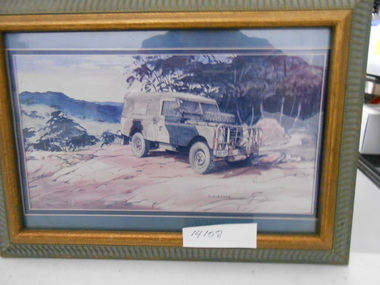
National Vietnam Veterans Museum (NVVM)Painting, Framed Painting, Series 3 Landrover
... ...Vietnam Veterans Mobile Museum...Framed painting of Series 3 landrover purchased to tow Vietnam veterans Mobile Museum. Painting is signed by D. ...National Vietnam Veterans Museum (NVVM) 25 Veterans Drive Newhaven phillip-island-and-the-bass-coast Framed Painting Painting Landrover Vietnam Veterans Mobile Museum Rego NRP 110 Framed painting of Series 3 landrover purchased to tow Vietnam veterans Mobile Museum. ...Framed painting of Series 3 landrover purchased to tow Vietnam veterans Mobile Museum. Painting is signed by D. LevershaRego NRP 110framed painting, painting, landrover, vietnam veterans mobile museum -
National Vietnam Veterans Museum (NVVM)Photograph, Gibbons, Denis, Mobile Crusher 2
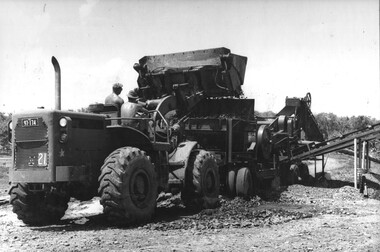
... Vietnam Veterans Museum make up the Gibbons Collection. Photograph Engineers 17 Const Sqn Phuoc Tuy Province Gibbons Collection Catalogue Photographer Vietnam War Denis Gibbons Front End Loader Machinery A black and white photograph of Engineers, from 17 Construction Squadron, use a front end loader to deliver rock into a mobile crusher used to prepare fine rock material for all types of foundation work, used in construction projects throughout Phuoc Tuy Province, South Vietnam. ...Denis Gibbons (1937 – 2011) Trained with the Australian Army, before travelling to Vietnam in January 1966, Denis stayed with the 1st Australian Task Force in Nui Dat working as a photographer. For almost five years Gibbons toured with nine Australian infantry battalions, posting compelling war images from within many combat zones before being flown out in late November 1970 after sustaining injuries. The images held within the National Vietnam Veterans Museum make up the Gibbons Collection.A black and white photograph of Engineers, from 17 Construction Squadron, use a front end loader to deliver rock into a mobile crusher used to prepare fine rock material for all types of foundation work, used in construction projects throughout Phuoc Tuy Province, South Vietnam.photograph, engineers, 17 const sqn, phuoc tuy province, gibbons collection catalogue, photographer, vietnam war, denis gibbons, front end loader, machinery -
National Vietnam Veterans Museum (NVVM)Photograph, Gibbons, Denis, Fresh Shower
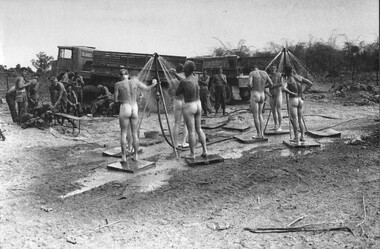
... Vietnam Veterans Museum (NVVM) 25 Veterans Drive Newhaven phillip-island-and-the-bass-coast Denis Gibbons (1937 – 2011) Trained with the Australian Army, before travelling to Vietnam in January 1966, Denis stayed with the 1st Australian Task Force in Nui Dat working as a photographer. For almost five years Gibbons toured with nine Australian infantry battalions, posting compelling war images from within many combat zones before being flown out in late November 1970 after sustaining injuries. The images held within the National Vietnam Veterans Museum make up the Gibbons Collection. Photograph 104 Battery Fire Base Betty 1st ATF Base Mobile ...Denis Gibbons (1937 – 2011) Trained with the Australian Army, before travelling to Vietnam in January 1966, Denis stayed with the 1st Australian Task Force in Nui Dat working as a photographer. For almost five years Gibbons toured with nine Australian infantry battalions, posting compelling war images from within many combat zones before being flown out in late November 1970 after sustaining injuries. The images held within the National Vietnam Veterans Museum make up the Gibbons Collection. A black and white photograph of 104 Battery Gunners at 4 RAR/NZ (ANZAC) Fire Support Base 'Betty' enjoying a fresh shower supplied by 1st Australian Task Force Mobile Shower Unit. The showers allowed eight diggers at a time to enjoy the fresh water brought in from Nui Dat. (Circa March 1970).photograph, 104 battery, fire base betty, 1st atf base, mobile shower unit, nui dat, gibbons collection catalogue, denis gibbons, photographer, vietnam war, gunners, 4 rar/nz (anzac) -
National Vietnam Veterans Museum (NVVM)Photograph, Gibbons, Denis, Front End Loader Service
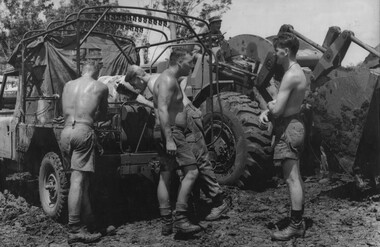
... Vietnam in January 1966, Denis stayed with the 1st Australian Task Force in Nui Dat working as a photographer. For almost five years Gibbons toured with nine Australian infantry battalions, posting compelling war images from within many combat zones before being flown out in late November 1970 after sustaining injuries. The images held within the National Vietnam Veterans Museum make up the Gibbons Collection. Photograph RAEME 17 Const Sqn Dat Do Phuoc Tuy Province Baria Gibbons Collection Catalogue Photographer Vietnam War Denis Gibbons Diggers A black and white photograph of diggers with a mobile ...Denis Gibbons (1937 – 2011) Trained with the Australian Army, before travelling to Vietnam in January 1966, Denis stayed with the 1st Australian Task Force in Nui Dat working as a photographer. For almost five years Gibbons toured with nine Australian infantry battalions, posting compelling war images from within many combat zones before being flown out in late November 1970 after sustaining injuries. The images held within the National Vietnam Veterans Museum make up the Gibbons Collection. A black and white photograph of diggers with a mobile service unit from the Royal Australian Mechanical and Electrical Engineers. They are servicing a front end loader of 17 Construction Squadron, working on the road construction between Dat Do and the Phuoc Tuy Province capital Baria.photograph, raeme, 17 const sqn, dat do, phuoc tuy province, baria, gibbons collection catalogue, photographer, vietnam war, denis gibbons, diggers -
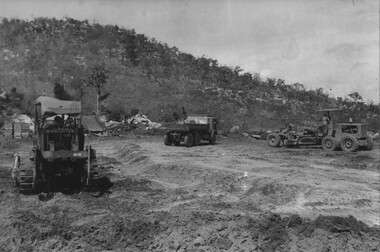
National Vietnam Veterans Museum (NVVM)Photograph, Gibbons, Denis, Road Construction
... Vietnam Veterans Museum make up the Gibbons Collection. Photograph Engineers 17 Const Sqn Gibbons Collection Catalogue D8 Bulldozer Denis Gibbons A black and white photograph of Engineers from 17 Construction Squadron use a bulldozer and road grader to prepare the road surface for sealing. A truck carries away rock to be crushed, in a mobile ...Denis Gibbons (1937 – 2011) Trained with the Australian Army, before travelling to Vietnam in January 1966, Denis stayed with the 1st Australian Task Force in Nui Dat working as a photographer. For almost five years Gibbons toured with nine Australian infantry battalions, posting compelling war images from within many combat zones before being flown out in late November 1970 after sustaining injuries. The images held within the National Vietnam Veterans Museum make up the Gibbons Collection.A black and white photograph of Engineers from 17 Construction Squadron use a bulldozer and road grader to prepare the road surface for sealing. A truck carries away rock to be crushed, in a mobile crusher operated by the Unit, to be used for foundation fill, on the road.photograph, engineers, 17 const sqn, gibbons collection catalogue, d8 bulldozer, denis gibbons -
National Vietnam Veterans Museum (NVVM)Photograph, Gibbons, Denis, Mobile Crusher 1
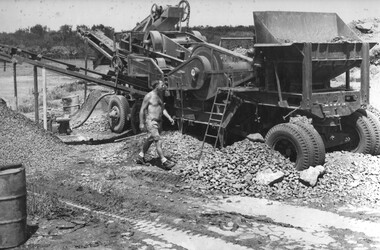
... Vietnam Veterans Museum (NVVM) 25 Veterans Drive Newhaven phillip-island-and-the-bass-coast Denis Gibbons (1937 – 2011) Trained with the Australian Army, before travelling to Vietnam in January 1966, Denis stayed with the 1st Australian Task Force in Nui Dat working as a photographer. For almost five years Gibbons toured with nine Australian infantry battalions, posting compelling war images from within many combat zones before being flown out in late November 1970 after sustaining injuries. The images held within the National Vietnam Veterans Museum make up the Gibbons Collection. Photograph Engineers 17 Const Sqn Phuoc Tuy Province Gibbons Collection Catalogue Mobile ...Denis Gibbons (1937 – 2011) Trained with the Australian Army, before travelling to Vietnam in January 1966, Denis stayed with the 1st Australian Task Force in Nui Dat working as a photographer. For almost five years Gibbons toured with nine Australian infantry battalions, posting compelling war images from within many combat zones before being flown out in late November 1970 after sustaining injuries. The images held within the National Vietnam Veterans Museum make up the Gibbons Collection.A black and white photograph an Engineer from 17 Construction Squadron operates a mobile crusher used to prepare rock material, of all sizes, for all types of foundation work used in construction projects throughout Phuoc Tuy Province, South Vietnamphotograph, engineers, 17 const sqn, phuoc tuy province, gibbons collection catalogue, mobile crusher, denis gibbons -
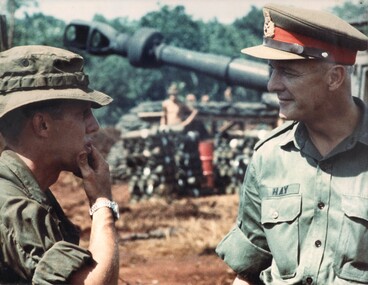
National Vietnam Veterans Museum (NVVM)Photograph, Gibbons, Denis, Maj Gen Vincent
... Vietnam Veterans Museum make up the Gibbons Collection. Photograph Maj Gen Hay 1st ATF Base Nui Dat 2/35th US Artillery Gibbons Collection Catalogue Fire Support Base Australian Force Vietnam Officer Commanding A Battery 1st Australian Task Force Denis Gibbons A coloured photograph of Maj Gen R.A. Hay, The Commander, Australian Force Vietnam, talking with the Officer Commanding, A Battery 2/35th United States Artillery, of 155mm mobile ...Denis Gibbons (1937 – 2011) Trained with the Australian Army, before travelling to Vietnam in January 1966, Denis stayed with the 1st Australian Task Force in Nui Dat working as a photographer. For almost five years Gibbons toured with nine Australian infantry battalions, posting compelling war images from within many combat zones before being flown out in late November 1970 after sustaining injuries. The images held within the National Vietnam Veterans Museum make up the Gibbons Collection. A coloured photograph of Maj Gen R.A. Hay, The Commander, Australian Force Vietnam, talking with the Officer Commanding, A Battery 2/35th United States Artillery, of 155mm mobile guns, attached to the 1st Australian Task Force, during a visit to a Forward Fire Support Basephotograph, maj gen hay, 1st atf base, nui dat, 2/35th us artillery, gibbons collection catalogue, fire support base, australian force vietnam, officer commanding, a battery, 1st australian task force, denis gibbons -
National Vietnam Veterans Museum (NVVM)Book, Savage, David, Through the wire: action with the SAS in Borneo and the Special Forces in Vietnam. (Copy 2)
... Vietnam Veterans Museum (NVVM) 25 Veterans Drive Newhaven phillip-island-and-the-bass-coast Australia. Army. Australian Army Training Team Vietnam Special Air Service Regiment (Australian Army) United States. Army. Special Forces Green Berets Mike Force The Montagnards The United States Special Forces, the Green Berets were often regarded as the elite of the American forces and their mobile strike force, the "Mike Force' , was considered the elite of these. ...The United States Special Forces, the Green Berets were often regarded as the elite of the American forces and their mobile strike force, the "Mike Force' , was considered the elite of these.The United States Special Forces, the Green Berets were often regarded as the elite of the American forces and their mobile strike force, the "Mike Force' , was considered the elite of these.australia. army. australian army training team, vietnam, special air service regiment (australian army), united states. army. special forces, green berets, mike force, the montagnards -
National Vietnam Veterans Museum (NVVM)Film - Film, Video, Vietnam: River Rats (Copy 1)
... National Vietnam Veterans Museum (NVVM) 25 Veterans Drive Newhaven phillip-island-and-the-bass-coast Vietnam War 1961-1975 -- Riverine operations American United States. Navy. Mobile ...vietnam war, 1961-1975 -- riverine operations, american, united states. navy. mobile riverine force -
National Vietnam Veterans Museum (NVVM)Film - Film, Video, Vietnam: River Rats (Copy 2)
... National Vietnam Veterans Museum (NVVM) 25 Veterans Drive Newhaven phillip-island-and-the-bass-coast Vietnam War 1961-1975 -- Riverine operations American United States. Navy. Mobile ...vietnam war, 1961-1975 -- riverine operations, american, united states. navy. mobile riverine force -
National Vietnam Veterans Museum (NVVM)Book, Savage, David, Through the Wire: Action with the SAS in Borneo and the Special Forces in Vietnam. (Copy 1)
... Vietnam Veterans Museum (NVVM) 25 Veterans Drive Newhaven phillip-island-and-the-bass-coast Australia. Army. Australian Army Training Team Vietnam Special Air Service Regiment (Australian Army) United States. Army. Special Forces Green Berets SAS Mike Force The Montagnards David Savage The United States Special Forces, the Green Berets were often regarded as the elite of the American forces and their mobile strike force, the "Mike Force' , was considered the elite of these. ...The United States Special Forces, the Green Berets were often regarded as the elite of the American forces and their mobile strike force, the "Mike Force' , was considered the elite of these.The United States Special Forces, the Green Berets were often regarded as the elite of the American forces and their mobile strike force, the "Mike Force' , was considered the elite of these.australia. army. australian army training team, vietnam, special air service regiment (australian army), united states. army. special forces, green berets, sas, mike force, the montagnards, david savage -
National Vietnam Veterans Museum (NVVM)Book, Rottman, Gordon L, Mobile Strike Forces in Vietnam 1966-70, 2007
... Vietnam Veterans Museum (NVVM) 25 Veterans Drive Newhaven phillip-island-and-the-bass-coast United States. Army. Special Forces Vietnam War 1961-1975 -- Regimental histories -- United States US Army Special Forces (USSF) Green Berets The US Army Special Forces (USSF), also known as the "Green Berets" performed a wide variety of missions in Vietnam, many of them unique and never since deuplicated. Mobile ...The US Army Special Forces (USSF), also known as the "Green Berets" performed a wide variety of missions in Vietnam, many of them unique and never since deuplicated.The US Army Special Forces (USSF), also known as the "Green Berets" performed a wide variety of missions in Vietnam, many of them unique and never since deuplicated.united states. army. special forces, vietnam war, 1961-1975 -- regimental histories -- united states, us army special forces (ussf), green berets -
National Vietnam Veterans Museum (NVVM)Book, Donahue, James C, No Greater Love: A Day With The Mobile Guerrilla Force In Vietnam
... Vietnam Veterans Museum (NVVM) 25 Veterans Drive Newhaven phillip-island-and-the-bass-coast United States. Army. Special Forces Group Vietnam War 1961-1975 - Personal narratives American Authentic, down to the last insect bite...This is the way it really was. No Greater Love: A Day With The Mobile ...Authentic, down to the last insect bite...This is the way it really was.Authentic, down to the last insect bite...This is the way it really was.united states. army. special forces group, vietnam war, 1961-1975 - personal narratives, american -
National Vietnam Veterans Museum (NVVM)Book, Rottman, Gordon L, Vietnam Riverine Craft 1962-75, 2006
... National Vietnam Veterans Museum (NVVM) 25 Veterans Drive Newhaven phillip-island-and-the-bass-coast Vietnam War 1961-1975 -- Riverine operations American Inland waterway vessels Mekong River Delta Navy Mobile Riverine Force US Army In 1965 the military situation in the Mekong River Delta of southern Vietnam had deteriorated to such a degree that the decision was made to commit a joint US Army and Navy Mobile Riverine Force to the area. ...In 1965 the military situation in the Mekong River Delta of southern Vietnam had deteriorated to such a degree that the decision was made to commit a joint US Army and Navy Mobile Riverine Force to the area.In 1965 the military situation in the Mekong River Delta of southern Vietnam had deteriorated to such a degree that the decision was made to commit a joint US Army and Navy Mobile Riverine Force to the area.vietnam war, 1961-1975 -- riverine operations, american, inland waterway vessels, mekong river delta, navy mobile riverine force, us army -
National Vietnam Veterans Museum (NVVM)Banner - Banner, framed, 11 Co (Nung)
... National Vietnam Veterans Museum (NVVM) 25 Veterans Drive Newhaven phillip-island-and-the-bass-coast Captain John E D White, Australian Army Training Team in Vietnam (AATTV) took over command of 11 Mobile Strike Force (Mike Force) Company in Da Nang, Vietnam, in February 1968. ...Captain John E D White, Australian Army Training Team in Vietnam (AATTV) took over command of 11 Mobile Strike Force (Mike Force) Company in Da Nang, Vietnam, in February 1968. He was 26 years old. The 2 NVA Division was moving from Laos into South Vietnam and his mission was to establish contact with the division and trace its movements south. In mid-March the company was air lifted to the Special Forces camp of Kham Duc, near the Laotian border. They used an old French Foreign Legion fort as a temporary base from which patrols could be sent out. White called it Ngok Tavak after a nearby mountain. Initially, patrols failed to find the enemy, but in late April a patrol clashed with the enemy. At the same time, White received intelligence that the NVA division was closing in. At night they could hear explosions in the distance heading toward them. White decided their best chance was to leave the fort and take to the jungle to adopt guerrilla tactics. However, in the meantime a platoon of United States Marine Corps artillery arrived bringing with them two howitzers and a stockpile of ammunition. To abandon the fort was to abandon the guns. White contacted Da Nang, explaining the predicament, and was ordered to remain where he was. A Civilian Irregular Defense Group (CIDG) platoon was sent to reinforce his numbers. This was a para military force comprised mainly of indigenous highlanders, trained by United States Special Forces. They also brought with them two mortars and their crews. At 3.15am on 10 May 1968 some members of the CIDG chose to assist the NVA to attack the fort instead of supporting Mike Force, and close hand to hand fighting followed, along with grenade attacks and heavy machine gun fire. Air support offered a brief respite from the NVA attack, and some NVA forces were pushed back outside the perimeter by counter attacks, but at 9am White contacted Da Nang to advise that his position was untenable. A second attack was imminent and they could not withstand it, so they would have to withdraw. The wounded were evacuated by helicopter (under orders from Major Mai, the NVA had not attacked the previous medical helicopters that collected the wounded under the cover of air strikes) and at 1pm the rest of the force evacuated east, into the jungle. The NVA did not notice their withdrawal, and continued mortar attacks on the fort for another ninety minutes. Seven kilometres from the fort White called for a helicopter withdrawal of his forces. The force was successfully lifted to Kham Duc and then Da Nang. (Credit AWM)Black framed glass covered flag. Red material with gold fringe, gold writing with Blackbird in the centre with parachute holding 2 white swords standing on a gold star. 11Co. in gold underneath. Gold plaque mounted under the flag.GUIDON OF 11 COY (NUNG) MOBILE STRIKE FORCE (MIKE FORCE) /5th SF GROUP, 1 CORPS, SVN/ A Significant number of AATTV personnel served with this Nung Company based in Da Nang./ At the end of the Vietnam War, this flag was taken by a former US SF officer and held until/ when it was given to former Captain John "Jed" White (AATTV), CO 11 Coy (Nung), who led/ the MIKE Forces at the Battle of Ngok Tavak on 10 May 1968.battle of ngok tavak, mobile strike force, nung, john white -
National Vietnam Veterans Museum (NVVM)Plaque, Mobile Strike Force Shield
... National Vietnam Veterans Museum (NVVM) 25 Veterans Drive Newhaven phillip-island-and-the-bass-coast Captain John E D White, Australian Army Training Team in Vietnam (AATTV) took over command of 11 Mobile Strike Force (Mike Force) Company in Da Nang, Vietnam, in February 1968. ...Captain John E D White, Australian Army Training Team in Vietnam (AATTV) took over command of 11 Mobile Strike Force (Mike Force) Company in Da Nang, Vietnam, in February 1968. He was 26 years old. The 2 NVA Division was moving from Laos into South Vietnam and his mission was to establish contact with the division and trace its movements south. In mid-March the company was air lifted to the Special Forces camp of Kham Duc, near the Laotian border. They used an old French Foreign Legion fort as a temporary base from which patrols could be sent out. White called it Ngok Tavak after a nearby mountain. Initially, patrols failed to find the enemy, but in late April a patrol clashed with the enemy. At the same time, White received intelligence that the NVA division was closing in. At night they could hear explosions in the distance heading toward them. White decided their best chance was to leave the fort and take to the jungle to adopt guerrilla tactics. However, in the meantime a platoon of United States Marine Corps artillery arrived bringing with them two howitzers and a stockpile of ammunition. To abandon the fort was to abandon the guns. White contacted Da Nang, explaining the predicament, and was ordered to remain where he was. A Civilian Irregular Defense Group (CIDG) platoon was sent to reinforce his numbers. This was a para military force comprised mainly of indigenous highlanders, trained by United States Special Forces. They also brought with them two mortars and their crews. At 3.15am on 10 May 1968 some members of the CIDG chose to assist the NVA to attack the fort instead of supporting Mike Force, and close hand to hand fighting followed, along with grenade attacks and heavy machine gun fire. Air support offered a brief respite from the NVA attack, and some NVA forces were pushed back outside the perimeter by counter attacks, but at 9am White contacted Da Nang to advise that his position was untenable. A second attack was imminent and they could not withstand it, so they would have to withdraw. The wounded were evacuated by helicopter (under orders from Major Mai, the NVA had not attacked the previous medical helicopters that collected the wounded under the cover of air strikes) and at 1pm the rest of the force evacuated east, into the jungle. The NVA did not notice their withdrawal, and continued mortar attacks on the fort for another ninety minutes. Seven kilometres from the fort White called for a helicopter withdrawal of his forces. The force was successfully lifted to Kham Duc and then Da Nang. (Credit AWM)A wooden shield painted grey/black celebrating the 40th Anniversary of the Battle of Ngok Tavak. There are three messages from mates written in black on the back. The shield was presented to Capt John (Jed) White.Presented to Captain John White, AATTV from the men of the Mobile Strike Force, Danang, Vietnam, 1968.mobile strike force, capt john (jed) white, shield, battle of ngok tavak -
National Vietnam Veterans Museum (NVVM)Banner, 2nd Field Ambulance
... National Vietnam Veterans Museum (NVVM) 25 Veterans Drive Newhaven phillip-island-and-the-bass-coast 2nd Field Ambulance (Fd Amb) is a highly mobile unit whose role was the rapid collection of the sick and wounded. ...2nd Field Ambulance (Fd Amb) is a highly mobile unit whose role was the rapid collection of the sick and wounded. The white plastic banner held by two wooden poles has red writing on top with large print "2 FIELD AMBULANCE". A gold crest is in centre depicting a crown atop an insignia "Australian Army Medical Corps" with a snake wrapped around a pole. In blue print 1914 - 1918 with several countries listed below and 1939 - 1945 with several countries listed below. Bottom of the banner in blue writing 1966 -67 SOUTH VIETNAM.2nd Field Ambulancebanner, 2 field ambulance -
National Vietnam Veterans Museum (NVVM)Weapon, Montagnard Crossbow, Mid 1960s
... National Vietnam Veterans Museum (NVVM) 25 Veterans Drive Newhaven phillip-island-and-the-bass-coast Montagnard Crossbow AATTV Bamboo double string crossbow made by traditional tribal peoples of the Monagnard Highlands, Vietnam, many of whom worked with the Australian Army Training Team Vietnam (AATTV) including in the Mobile Strike Force Command (MIKE Force). ...Bamboo double string crossbow made by traditional tribal peoples of the Monagnard Highlands, Vietnam, many of whom worked with the Australian Army Training Team Vietnam (AATTV) including in the Mobile Strike Force Command (MIKE Force). The AATTV used the symbol of the Montagnard crossbow as part of its emblem.montagnard, crossbow, aattv -
National Vietnam Veterans Museum (NVVM)Booklet, Australian Army, Australian Army: Infantry Training, Volume 3: Ranges and Courses Pamphlet No. 34: The Dart Range System (Mobile), 1971, 1971
... Vietnam Veterans Museum (NVVM) 25 Veterans Drive Newhaven phillip-island-and-the-bass-coast Booklet Australian Army Infantry Training Ranges and Courses Dart Range System A blue coloued cardboard cover with black information on the front. Top right hand corner reads DSN 7610-66-038-2795. Under the Australian Army insignia are the details of the booklet. At the bottom of the page the booklet has been stamped as superseded. There are two punch holes down the left hand side. Australian Army: Infantry Training, Volume 3: Ranges and Courses Pamphlet No. 34: The Dart Range System (Mobile ...A blue coloued cardboard cover with black information on the front. Top right hand corner reads DSN 7610-66-038-2795. Under the Australian Army insignia are the details of the booklet. At the bottom of the page the booklet has been stamped as superseded. There are two punch holes down the left hand side.booklet, australian army, infantry training, ranges and courses, dart range system -
National Vietnam Veterans Museum (NVVM)Photograph, Captain John White, AATTV, arrives in Vietnam, January 1968, 1/01/1968 12:00:00 AM
... National Vietnam Veterans Museum (NVVM) 25 Veterans Drive Newhaven phillip-island-and-the-bass-coast Captain John E D White, Australian Army Training Team in Vietnam (AATTV) took over command of 11 Mobile Strike Force (Mike Force) Company in Da Nang, Vietnam, in February 1968. ...Captain John E D White, Australian Army Training Team in Vietnam (AATTV) took over command of 11 Mobile Strike Force (Mike Force) Company in Da Nang, Vietnam, in February 1968. He was 26 years old. The 2 NVA Division was moving from Laos into South Vietnam and his mission was to establish contact with the division and trace its movements south. In mid-March the company was air lifted to the Special Forces camp of Kham Duc, near the Laotian border. They used an old French Foreign Legion fort as a temporary base from which patrols could be sent out. White called it Ngok Tavak after a nearby mountain. Initially, patrols failed to find the enemy, but in late April a patrol clashed with the enemy. At the same time, White received intelligence that the NVA division was closing in. At night they could hear explosions in the distance heading toward them. White decided their best chance was to leave the fort and take to the jungle to adopt guerrilla tactics. However, in the meantime a platoon of United States Marine Corps artillery arrived bringing with them two howitzers and a stockpile of ammunition. To abandon the fort was to abandon the guns. White contacted Da Nang, explaining the predicament, and was ordered to remain where he was. A Civilian Irregular Defense Group (CIDG) platoon was sent to reinforce his numbers. This was a para military force comprised mainly of indigenous highlanders, trained by United States Special Forces. They also brought with them two mortars and their crews. At 3.15am on 10 May 1968 some members of the CIDG chose to assist the NVA to attack the fort instead of supporting Mike Force, and close hand to hand fighting followed, along with grenade attacks and heavy machine gun fire. Air support offered a brief respite from the NVA attack, and some NVA forces were pushed back outside the perimeter by counter attacks, but at 9am White contacted Da Nang to advise that his position was untenable. A second attack was imminent and they could not withstand it, so they would have to withdraw. The wounded were evacuated by helicopter (under orders from Major Mai, the NVA had not attacked the previous medical helicopters that collected the wounded under the cover of air strikes) and at 1pm the rest of the force evacuated east, into the jungle. The NVA did not notice their withdrawal, and continued mortar attacks on the fort for another ninety minutes. Seven kilometres from the fort White called for a helicopter withdrawal of his forces. The force was successfully lifted to Kham Duc and then Da Nang. (Credit AWM)Coloured image of John (Jed) White, aged 26 arriving at Tan Son Nhut Airport in full uniform, bag straps over left shoulder. Close- up of chest and head with plane visible in the background.AWM - p 11058,001capt john (jed) white, aattv, battle of ngok tavak -
National Vietnam Veterans Museum (NVVM)Photograph, Leadership group the day before the Battle of Ngok Tavak, 9/05/1968 12:00:00 AM
... National Vietnam Veterans Museum (NVVM) 25 Veterans Drive Newhaven phillip-island-and-the-bass-coast Captain John E D White, Australian Army Training Team in Vietnam (AATTV) took over command of 11 Mobile Strike Force (Mike Force) Company in Da Nang, Vietnam, in February 1968. ...Captain John E D White, Australian Army Training Team in Vietnam (AATTV) took over command of 11 Mobile Strike Force (Mike Force) Company in Da Nang, Vietnam, in February 1968. He was 26 years old. The 2 NVA Division was moving from Laos into South Vietnam and his mission was to establish contact with the division and trace its movements south. In mid-March the company was air lifted to the Special Forces camp of Kham Duc, near the Laotian border. They used an old French Foreign Legion fort as a temporary base from which patrols could be sent out. White called it Ngok Tavak after a nearby mountain. Initially, patrols failed to find the enemy, but in late April a patrol clashed with the enemy. At the same time, White received intelligence that the NVA division was closing in. At night they could hear explosions in the distance heading toward them. White decided their best chance was to leave the fort and take to the jungle to adopt guerrilla tactics. However, in the meantime a platoon of United States Marine Corps artillery arrived bringing with them two howitzers and a stockpile of ammunition. To abandon the fort was to abandon the guns. White contacted Da Nang, explaining the predicament, and was ordered to remain where he was. A Civilian Irregular Defense Group (CIDG) platoon was sent to reinforce his numbers. This was a para military force comprised mainly of indigenous highlanders, trained by United States Special Forces. They also brought with them two mortars and their crews. At 3.15am on 10 May 1968 some members of the CIDG chose to assist the NVA to attack the fort instead of supporting Mike Force, and close hand to hand fighting followed, along with grenade attacks and heavy machine gun fire. Air support offered a brief respite from the NVA attack, and some NVA forces were pushed back outside the perimeter by counter attacks, but at 9am White contacted Da Nang to advise that his position was untenable. A second attack was imminent and they could not withstand it, so they would have to withdraw. The wounded were evacuated by helicopter (under orders from Major Mai, the NVA had not attacked the previous medical helicopters that collected the wounded under the cover of air strikes) and at 1pm the rest of the force evacuated east, into the jungle. The NVA did not notice their withdrawal, and continued mortar attacks on the fort for another ninety minutes. Seven kilometres from the fort White called for a helicopter withdrawal of his forces. The force was successfully lifted to Kham Duc and then Da Nang. (Credit AWM)Coloured image of 7 soldiers (5 shirtless) posed on the edge of a foxhole with jungle in background. L-R Willie Swicegood (USA), John White (AATTV-Aus), Ken Benway (USA), Frank Lucas (Aust), Clay Aitkins (USA), Glenn Miller (USA), Don Cameron (Aust)john white, aattv, battle of ngok tavak -
National Vietnam Veterans Museum (NVVM)Photograph, Marines arrive at Ngok Tavak 04/05/1968
... National Vietnam Veterans Museum (NVVM) 25 Veterans Drive Newhaven phillip-island-and-the-bass-coast In May 1968, in the western jungle of Vietnam near Laos, led by Australian Captain J White, 11th Mobile Strike Force Company (MSF) occupied an old French fort on a hill named Ngok Tavak tasked with improving allied intelligence-gathering capabilities in the area. ...In May 1968, in the western jungle of Vietnam near Laos, led by Australian Captain J White, 11th Mobile Strike Force Company (MSF) occupied an old French fort on a hill named Ngok Tavak tasked with improving allied intelligence-gathering capabilities in the area. However, with enemy activity increasing, on May 4th, 44 US Marines, 35 CIDG (Civilian Irregular Defence Group) and two 105mm Howitzer field guns arrived as reinforcement from the Special Forces base at Kham Duc. By May 9th, Captain White’s company numbered about 200 men. Although in a good defensive position, coming towards them was the Iron Brigade of the 2nd Division of the North Vietnamese Army (NVA). At 03:00 on May 10th, the attack on Ngok Tavak began. The NVA, led by Major Dang Ngoc Mai, poured through the entrance at the eastern wall quickly occupying most of the fort. By midday the next day, Captain White had lost 40 Nung soldiers and 11 Marines with over 70 others badly wounded. Realising he could not withstand another attack, Captain White decided to abandon Ngok Tavak. Once the wounded were evacuated, Captain White ordered strike aircraft to blast a ‘corridor’ through the surrounding enemy cordon using napalm. By early afternoon, what remained of the defenders escaped through the ‘corridor’ and helicopters eventually flew them to Kham Duc. Colour image of U.S. soldiers disembarking from a helicopter in a clearing in the jungle. Foreground is rear of two soldiers watching. Background is mountains.united states - marine corps, battle of ngok tavak, john white, ngok tavak -
National Vietnam Veterans Museum (NVVM)Photograph, Gateway to Ngok Tavak, 1/05/1968 12:00:00 AM
... National Vietnam Veterans Museum (NVVM) 25 Veterans Drive Newhaven phillip-island-and-the-bass-coast In May 1968, in the western jungle of Vietnam near Laos, led by Australian Captain J White, 11th Mobile Strike Force Company (MSF) occupied an old French fort on a hill named Ngok Tavak tasked with improving allied intelligence-gathering capabilities in the area. ...In May 1968, in the western jungle of Vietnam near Laos, led by Australian Captain J White, 11th Mobile Strike Force Company (MSF) occupied an old French fort on a hill named Ngok Tavak tasked with improving allied intelligence-gathering capabilities in the area. However, with enemy activity increasing, on May 4th, 44 US Marines, 35 CIDG (Civilian Irregular Defence Group) and two 105mm Howitzer field guns arrived as reinforcement from the Special Forces base at Kham Duc. By May 9th, Captain White’s company numbered about 200 men. Although in a good defensive position, coming towards them was the Iron Brigade of the 2nd Division of the North Vietnamese Army (NVA). At 03:00 on May 10th, the attack on Ngok Tavak began. The NVA, led by Major Dang Ngoc Mai, poured through the entrance at the eastern wall quickly occupying most of the fort. By midday the next day, Captain White had lost 40 Nung soldiers and 11 Marines with over 70 others badly wounded. Realising he could not withstand another attack, Captain White decided to abandon Ngok Tavak. Once the wounded were evacuated, Captain White ordered strike aircraft to blast a ‘corridor’ through the surrounding enemy cordon using napalm. By early afternoon, what remained of the defenders escaped through the ‘corridor’ and helicopters eventually flew them to Kham Duc. Colour image of edge of Ngok Tavak fort with soldiers sitting on & walking around sand-bagged foxholes. Jungle & mountains in background.battle of ngok tavak, john white -
National Vietnam Veterans Museum (NVVM)Photograph, II Corps MSF Pleiku
... National Vietnam Veterans Museum (NVVM) 25 Veterans Drive Newhaven phillip-island-and-the-bass-coast Photograph II Corps MSF Special forces (Military science) -- United States Pleiku Framed black and white photograph of II Corps Mobile Strike Force MSF) "Mike Special Forces" II Corps MSF Pleiku Photograph Photograph ...Framed black and white photograph of II Corps Mobile Strike Force MSF) "Mike Special Forces"photograph, ii corps msf, special forces (military science) -- united states, pleiku -
National Vietnam Veterans Museum (NVVM)Booklet, Australian Army: Infantry training, Vol. 3, Ranges and courses, Pamphlet No. 34: the Dart Range System (Mobile) 1971, 1971
... National Vietnam Veterans Museum (NVVM) 25 Veterans Drive Newhaven phillip-island-and-the-bass-coast Australia - Armed Forces - Service manuals Also contains amendment list 2 Australian Army: Infantry training, Vol. 3, Ranges and courses, Pamphlet No. 34: the Dart Range System (Mobile) 1971 Booklet Booklet Australian Army ...Also contains amendment list 2australia - armed forces - service manuals -
National Vietnam Veterans Museum (NVVM)Photograph, Sketch of Battle Map, Ngok Tavak, Mary 1968
... National Vietnam Veterans Museum (NVVM) 25 Veterans Drive Newhaven phillip-island-and-the-bass-coast Captain John E D White, Australian Army Training Team in Vietnam (AATTV) took over command of 11 Mobile Strike Force (Mike Force) Company in Da Nang, Vietnam, in February 1968. ...Captain John E D White, Australian Army Training Team in Vietnam (AATTV) took over command of 11 Mobile Strike Force (Mike Force) Company in Da Nang, Vietnam, in February 1968. He was 26 years old. The 2 NVA Division was moving from Laos into South Vietnam and his mission was to establish contact with the division and trace its movements south. In mid-March the company was air lifted to the Special Forces camp of Kham Duc, near the Laotian border. They used an old French Foreign Legion fort as a temporary base from which patrols could be sent out. White called it Ngok Tavak after a nearby mountain. Initially, patrols failed to find the enemy, but in late April a patrol clashed with the enemy. At the same time, White received intelligence that the NVA division was closing in. At night they could hear explosions in the distance heading toward them. White decided their best chance was to leave the fort and take to the jungle to adopt guerrilla tactics. However, in the meantime a platoon of United States Marine Corps artillery arrived bringing with them two howitzers and a stockpile of ammunition. To abandon the fort was to abandon the guns. White contacted Da Nang, explaining the predicament, and was ordered to remain where he was. A Civilian Irregular Defense Group (CIDG) platoon was sent to reinforce his numbers. This was a para military force comprised mainly of indigenous highlanders, trained by United States Special Forces. They also brought with them two mortars and their crews. At 3.15am on 10 May 1968 some members of the CIDG chose to assist the NVA to attack the fort instead of supporting Mike Force, and close hand to hand fighting followed, along with grenade attacks and heavy machine gun fire. Air support offered a brief respite from the NVA attack, and some NVA forces were pushed back outside the perimeter by counter attacks, but at 9am White contacted Da Nang to advise that his position was untenable. A second attack was imminent and they could not withstand it, so they would have to withdraw. The wounded were evacuated by helicopter (under orders from Major Mai, the NVA had not attacked the previous medical helicopters that collected the wounded under the cover of air strikes) and at 1pm the rest of the force evacuated east, into the jungle. The NVA did not notice their withdrawal, and continued mortar attacks on the fort for another ninety minutes. Seven kilometres from the fort White called for a helicopter withdrawal of his forces. The force was successfully lifted to Kham Duc and then Da Nang. (Credit AWM)Annotated hand-drawn map of the fort at Ngok Tavak, 10 May 1968.battle of ngok tavak, john white, battle map -
National Vietnam Veterans Museum (NVVM)Film - Film, DVD, Air mobile Vietnam (copy only) 2 copies
... National Vietnam Veterans Museum (NVVM) 25 Veterans Drive Newhaven phillip-island-and-the-bass-coast Vietnam War 1961-1975 - Aerial operations American Footage of the US 1st Air Cavalry in the Vietnam War Air mobile Vietnam (copy only) 2 copies Film Film, DVD ...Footage of the US 1st Air Cavalry in the Vietnam Warvietnam war, 1961-1975 - aerial operations, american