
Showing 19 items matching "vigilance"
-
 Whitehorse Historical Society Inc.
Pamphlet, Blackburn and Mitcham Progressive League
... The Blackburn & Mitcham Progressive League has been formed, comprising all the Shire Councilors, to combat the Vigilance Association....The Blackburn & Mitcham Progressive League has been formed, comprising all the Shire Councilors, to combat the Vigilance Association....Shire of Blackburn and Mitcham is wanting to raise a loan to carry out necessary improvements in the Shire. 24 ratepayers from the Vigilance Association have demanded a poll before taking action. ...Copy of circular of the Blackburn and Mitcham Progressive League.Copy of circular of the Blackburn and Mitcham Progressive League. Shire of Blackburn and Mitcham is wanting to raise a loan to carry out necessary improvements in the Shire. 24 ratepayers from the Vigilance Association have demanded a poll before taking action. The Blackburn & Mitcham Progressive League has been formed, comprising all the Shire Councilors, to combat the Vigilance Association.Copy of circular of the Blackburn and Mitcham Progressive League. clubs and associations, blackburn and mitcham progressive league, vigilance association, shire of blackburn and mitcham, depression, 1929-1939 -
Whitehorse Historical Society Inc.
Article, Mr A E Claringbould, a Candidate for Council, 1932
... Endorsed by the Vigilance Association. A. Claringbould was a foundation member of cost accountants....Blackburn and Mitcham Shire Council Claringbould A E Vigilance Association Endorsed by the Vigilance Association. ...Endorsed by the Vigilance Association.Endorsed by the Vigilance Association. A. Claringbould was a foundation member of cost accountants.Endorsed by the Vigilance Association.blackburn and mitcham shire council, claringbould a e, vigilance association -
 National Vietnam Veterans Museum (NVVM)
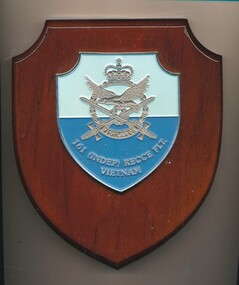
Plaque - 161 (INDEP) Recce Flight Vietnam Plaque
... VIGILANCE/ 161 (INDEP) RECCE FL.T./ VIETNAM...This item was collected because it commemorates the war in Vietnam. 161 Reconnaissance Flight Vietnam Army pilots 161 Recce VIGILANCE/ 161 (INDEP) RECCE FL.T./ VIETNAM Shield-shaped wooden plaque with metal badge/insignia of crown, eagle, crossed swords and laurel wreath in two shades of blue. ...161 (Independent) Reconnaissance Flight was an Australian Army aviation unit of both fixed-wing and rotary aircraft. This item was collected because it commemorates the war in Vietnam.Shield-shaped wooden plaque with metal badge/insignia of crown, eagle, crossed swords and laurel wreath in two shades of blue. The emblem of 161 (Independent) Reconnaissance Flight Vietnam.VIGILANCE/ 161 (INDEP) RECCE FL.T./ VIETNAM161 reconnaissance flight, vietnam, army pilots, 161 recce -
 Lara RSL Sub Branch
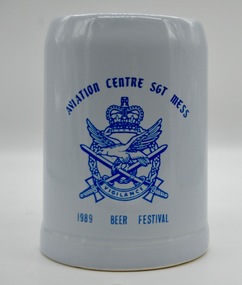
tankard, Aviation SGT Mess, 1989
... Aviation Centre SGT Mess......VIGILANCE......1989. BEER. FESTIVAL....Aviation Centre SGT Mess......VIGILANCE......1989. BEER. FESTIVAL. Tankard Aviation SGT Mess Aviation SGT Mess tankard ...Artistic.Tankard Aviation SGT MessAviation Centre SGT Mess......VIGILANCE......1989. BEER. FESTIVAL. -
 Red Cliffs Military Museum
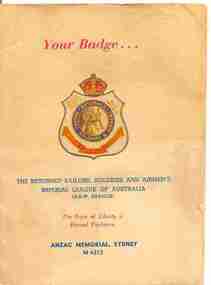
Booklet, Eric Stephenson, Your Badge, 1945 (estimated)
... Front cover has the original RSL badge printed above the Price of Liberty is Eternal Vigilance. ANZAC Memorial Sydney M4313..../ THE RETURNED SAILORS, SOLDIERS & AIRMEN'S IMPERIAL LEAGUE OF AUSTRALIA/ (NSW BRANCH)/ THE PRICE OF LIBERTY IS/ ETERNAL VIGILANCE/ ANZAC MEMORIAL SYDNEY/ M4313// Inside Cover: THE LEAGUES PLEDGE/ November 1939./ "That this Federal congress - the first to be held since the declaration of war/ publicly states that the whole body of the/ RSS&AILA is heart and sole behind/ the new Australian Expiditionary Force, and/ gladly accepts the new obligations to protect/ the interests of all who shall serve the Empire/ in the present war.// Page 1: A Welcome home/ From your Reception Committee/ The Old and New Diggers.// Page 2& 3: A Message from the State President.// Page 4: Policy of the RSS&AILA.// Pages 5,6,7: R.S.L. ...Front cover has the original RSL badge printed above the Price of Liberty is Eternal Vigilance. ANZAC Memorial Sydney M4313 Your Badge Booklet Booklet Eric Stephenson ...A booklet of the Returned Sailors, Soldiers and Airmen's Imperial League of Australia NSW Branch. Front cover has the original RSL badge printed above the Price of Liberty is Eternal Vigilance. ANZAC Memorial Sydney M4313Front Cover: YOUR BADGE/ colour picture of original RSL Badge./ THE RETURNED SAILORS, SOLDIERS & AIRMEN'S IMPERIAL LEAGUE OF AUSTRALIA/ (NSW BRANCH)/ THE PRICE OF LIBERTY IS/ ETERNAL VIGILANCE/ ANZAC MEMORIAL SYDNEY/ M4313// Inside Cover: THE LEAGUES PLEDGE/ November 1939./ "That this Federal congress - the first to be held since the declaration of war/ publicly states that the whole body of the/ RSS&AILA is heart and sole behind/ the new Australian Expiditionary Force, and/ gladly accepts the new obligations to protect/ the interests of all who shall serve the Empire/ in the present war.// Page 1: A Welcome home/ From your Reception Committee/ The Old and New Diggers.// Page 2& 3: A Message from the State President.// Page 4: Policy of the RSS&AILA.// Pages 5,6,7: R.S.L. Policy.// Pages 8,9,10 & 11: Record of Service (outlines the services the RSL provides and the Principles on which it was established.// Pages 12, 13, 14, 15, 16 & 17: List of Sub-Branches NSW. Women's Services/ Merchant Navy// Centre Page: Nomination for Membership // Pages 18,19,20,& 21: War Pensions.// Page 22: Did you know.//Page 23: Eligiblity for Membership.// Page 24: If there were no League. // Pages 25, 26: ANZAC Centre. // Page 27: Memorandum (clear page)// Page 28 Personal memoranda (to be filled in) Conclusion.book, anzac, imperial, sailors, soldiers, league, badge, your, returned, airmen, memorial, hand -
 Ringwood RSL Sub-Branch
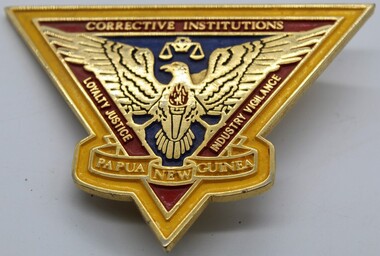
Badge - Shield, Corrective Services Papua New Guinea badge
... Papua New Guinea. loyalty - Justice-Industry Vigilance...Papua New Guinea. loyalty - Justice-Industry Vigilance Brass plaque Corrective Services Papua New Guinea badge Badge Shield ...Brass plaqueCorrective Institutions. Papua New Guinea. loyalty - Justice-Industry Vigilance -
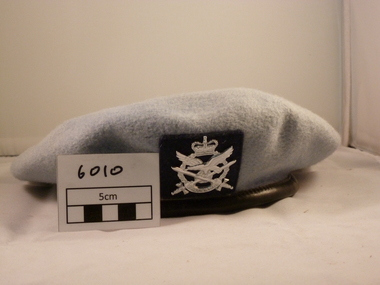 National Vietnam Veterans Museum (NVVM)
Headwear, RAAF Beret
... Badge has a Queen's crown, two crossed swords, flying bird and the word "Vigilance"...Royal Australian Air Force Uniform 161 Reconnaissance Flight Badge has a Queen's crown, two crossed swords, flying bird and the word "Vigilance" Light blue wool felt beret with adjustable black ribbon headband. ...Light blue wool felt beret with adjustable black ribbon headband. Pinned to the front is a silver metal badge.Badge has a Queen's crown, two crossed swords, flying bird and the word "Vigilance"royal australian air force, uniform, 161 reconnaissance flight -
Whitehorse Historical Society Inc.
Document, Circular for Loan, 1/05/1930
... A circular put out by the Shire of Blackburn & Mitcham who decided to raise a loan of 15,000 pounds to carry out necessary improvements in the shire. 24 ratepayers lodged a demand for a poll (Vigilance Association). To combat the activities of the Vigilance Association which is seeking to veto the loan the Blackburn & Mitcham Progressive League has been formed comprising all the Councillors of the Shire and a large number of prominent ratepayers. ...Local Government Shire of Blackburn and Mitcham Resident Action Vigilance Association Blackburn & Mitcham Progressive League A circular put out by the Shire of Blackburn & Mitcham who decided to raise a loan of 15,000 pounds to carry out necessary improvements in the shire. 24 ratepayers lodged a demand for a poll (Vigilance Association). ...A circular put out by the Shire of Blackburn & Mitcham who decided to raise a loan of 15,000 pounds to carry out necessary improvements in the shire. 24 ratepayers lodged a demand for a poll (Vigilance Association). To combat the activities of the Vigilance Association which is seeking to veto the loan the Blackburn & Mitcham Progressive League has been formed comprising all the Councillors of the Shire and a large number of prominent ratepayers. The purpose of the loan is itemised.local government, shire of blackburn and mitcham, resident action, vigilance association, blackburn & mitcham progressive league -
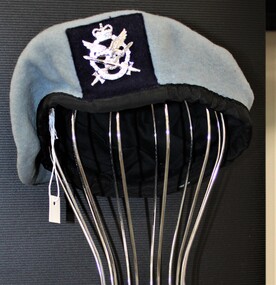 National Vietnam Veterans Museum (NVVM)
Uniform - Beret
... Crown over eagle over crossed swords on laurel emblem. Banner saying "Vigilance". ...Crown over eagle over crossed swords on laurel emblem. Banner saying "Vigilance". Uniform Beret ...This RAAF beret belonged to Gregory Carl Juckert, Service No. 3793918, Catering Corps, who served with 161 Reconnaissance in 1969.Blue felt material beret. Black binding around outer with black cotton lining. Silver badge on front (detachable). Crown over eagle over crossed swords on laurel emblem. Banner saying "Vigilance". Gregory Carl Juckert, Service No. 3793918.beret, cook, vietnam, 161 recce flight, juckert, raaf, g c juckert, 161 reconnaissance -
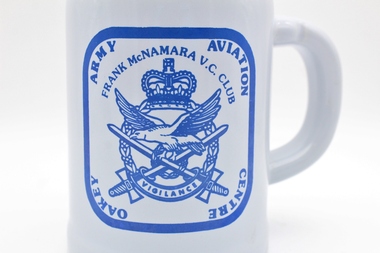 Montmorency–Eltham RSL Sub Branch
Memorabilia - Cup
... Inscription on top: 'Frank McNamara VC Club' Inscription at the bottom of the symbol: 'Vigilance' Inscription circling the symbol: 'Army Aviation Centre Oakey' ...Inscription on top: 'Frank McNamara VC Club' Inscription at the bottom of the symbol: 'Vigilance' Inscription circling the symbol: 'Army Aviation Centre Oakey' Large white cup with a handle; decorated with a blue ink symbol (displaying a crown and below it, a bird handling two swords) and blue ink inscriptions (from the Army Aviation Centre Oakey). ...The Oakey Army Aviation Centre is a training facility formed in October 1943 at Oakey, Queensland. It was built with the purpose of providing a maintenance facility: the units would erect, repair and insect aircrafts and engines. At the end of the war in 1945, the depot was used to store surplus aircraft. In early 1946, the RAAF Station Oakey was disbanded and categorised ‘to be retained but not maintained’. Since then, the RAAF Station Oakey facilities have been used few times for some minor activities. Although there are no information relating to the owner or usage of the cup; it holds historic significance for its direct link with the Australian Army Aviation Centre in Oakey and its involvement in World War II; and more generally for its link to the Australian Army.Large white cup with a handle; decorated with a blue ink symbol (displaying a crown and below it, a bird handling two swords) and blue ink inscriptions (from the Army Aviation Centre Oakey). Inscription on top: 'Frank McNamara VC Club' Inscription at the bottom of the symbol: 'Vigilance' Inscription circling the symbol: 'Army Aviation Centre Oakey' -
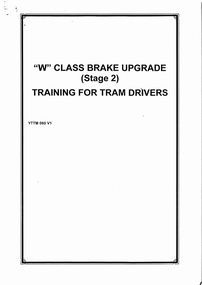 Melbourne Tram Museum
Document, Yarra Trams, "W class brake upgrade (Stage 2), training for drivers", 6/2002
... Has a table of contents, explaining the changes, vigilance control, emergency, and park brakes. ...Has a table of contents, explaining the changes, vigilance control, emergency, and park brakes. ...Document - for the training of tram drivers of W class trams with modified braking systems. Has a table of contents, explaining the changes, vigilance control, emergency, and park brakes. This system followed several rear-on collisions due to indifferent braking systems. Produced by Yarra Trams June 2002.Yields information about the modified braking systems on W class trams.Document - 16 A4 pages was stapled in top left hand corner.trams, tramways, w class trams, brakes, driver training -
 Melbourne Tram Museum
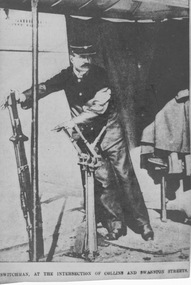
Photograph - Signalman at Collins and Swanton Streets, 1910s
... ...vigilance...This was a demanding job requiring constant vigilance: working with the policeman controlling the intersection, trams approaching from four directions, horse and motor traffic and pedestrians. ...This was a demanding job requiring constant vigilance: working with the policeman controlling the intersection, trams approaching from four directions, horse and motor traffic and pedestrians. ...Photograph shows uniformed MTOC signalman standing under a canopy operating two large levers (which may be the reason the newspaper mistakenly described him as a switchman). He stands under a canopy supported by poles with a partial curtain at the rear along with his overcoat. The canopy was located on the footpath on the southeast corner of the intersection of Collins and Swanston Streets. This was the busiest cable tramway intersection in Melbourne and one of the busiest for pedestrian and vehicle traffic. The tram tracks crossed each other at right angles with no curved tracks to permit turns. The signalman's job was twofold: to directed which trams had right of way by use of mechanical signals and to depress the Collins Street cable so that the upward incline did not cause the cable to rise out of the slot onto the roadway. The depression gear was located under both Collins Street tracks adjacent to the Town Hall and was only released momentarily to allow a Collins Street tram to pass over it. This was a demanding job requiring constant vigilance: working with the policeman controlling the intersection, trams approaching from four directions, horse and motor traffic and pedestrians. The signalman's rules provided a specific order of steps each time the signals and depression gear were reset, which occurred many times per hour. He was also authorised to stop trams with the use of his whistle and a red hand lamp and to report gripmen who disobey his directions. Traffic lights were gradually introduced to Melbourne from 1928 after cable trams were replaced in Swanston Street and just before they were replaced in Collins Street. This is a photograph taken of a newsprint photograph from an unnamed newspaper. Yields information about signalman's work. Black and white photograph with note below photograph. Printed below photograph: "Switchman [sic] at the intersection of Collins and Swanston Streets."newsprint, mtoc, switchman, canopy, levers, collins street, swanston street, busiest intersection, traffic lights, 1928, policeman, signalman, mechanical signals, right of way, depression gear, twon hall, slot, vigilance -
 Australian Commando Association - Victoria
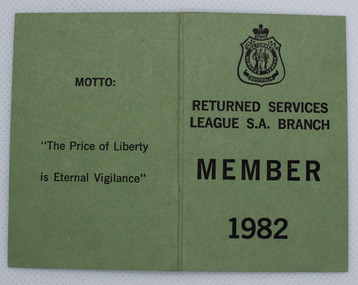
Document - RSL SA Membership Card- W.D. Alsop, c. 1982
... BRANCH/ MEMBER Back cover: MOTTO:/ "The Price of Liberty/ is Eternal Vigilance" Interior: W. D. ALSOP/ MEMBER'S NAME/ Col. ...BRANCH/ MEMBER Back cover: MOTTO:/ "The Price of Liberty/ is Eternal Vigilance" Interior: W. D. ALSOP/ MEMBER'S NAME/ Col. ...This object belonged to William Donald Alsop who served in the 2/10 Commando Squadron during the Second World War.This object has historic significance through it's connection to William Donald Alsop.Rectangular green cardboard card folded in half. Front cover: RETURNED SERVICES/ LEAGUE S.A. BRANCH/ MEMBER Back cover: MOTTO:/ "The Price of Liberty/ is Eternal Vigilance" Interior: W. D. ALSOP/ MEMBER'S NAME/ Col. Light Gons (?)/ SUB-BRANCH/ MEMBER'S SIGNATURE/ CLUB NIGHTS/ MONTHLY MEETINGS/ ANNUAL GENERAL MEETINGS/ (signature)/ ISSUING OFFICERcommando squadron, 2/10, alsop, rsl -
 Puffing Billy Railway
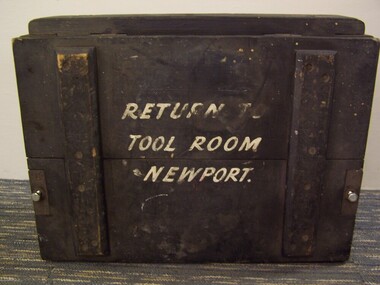
Equipment - Flaman Speed Indicator and Recorder transport Box
... Three graphs were recorded, the first being time elapsed (with the trace moving vertically if the train was stationary), the second being a speed curve. and the third recording the driver's attentiveness to signals ("Vigilance") by marking one tick above a line when the driver depressed a button, and another below the line when the engine went over the signal ramp. ...Three graphs were recorded, the first being time elapsed (with the trace moving vertically if the train was stationary), the second being a speed curve. and the third recording the driver's attentiveness to signals ("Vigilance") by marking one tick above a line when the driver depressed a button, and another below the line when the engine went over the signal ramp. ...Train Instrument transportation Box used for the transporting of Flaman Speed Indicator and Recorder to the repair workshops The Flaman Speed Indicator and Recorder was a device patented in 1901 by Nicolas Charles Eugène Flaman of France for indicating the current speed of a vehicle (for example a railway locomotive) and recording it on a paper tape that could be unrolled and examined at the end of a run to provide evidence of the speeds attained on the journey. Design features: The paper tape recording was driven directly by the wheels of the locomotive, with the paper spool moving at a fixed rate per kilometre travelled. Three graphs were recorded, the first being time elapsed (with the trace moving vertically if the train was stationary), the second being a speed curve. and the third recording the driver's attentiveness to signals ("Vigilance") by marking one tick above a line when the driver depressed a button, and another below the line when the engine went over the signal ramp. Data recorded: Read together, it was possible to determine exactly what speed the locomotive had been travelling at any point in time or distance. As well as allowing study of locomotive performance, it also allowed greater scrutiny of the observance of the driver of speed restrictions along the line and attentiveness to signals. It was practice on some railways such as the Victorian Railways in Australia for the driver to sign the speed chart prior to departure.Historic - Victorian Railways - Train Instrument transportation Box for the transporting of Flaman Speed Indicator and Recorder to the repair workshopsLarge wooden box with wrought iron fittings, painted black with white lettering on side panels. RETURN TO / TOOL ROOM / NEWPORTpuffing billy, train instrument transportation box, victorian railways, flaman speed indicator and recorder -
 Eltham District Historical Society Inc
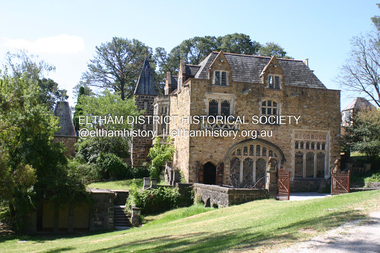
Photograph - Digital Photograph, Alan King, Great Hall, Montsalvat, 8 January 2008
... When Jörgensen died in 1975, his influence did not – thanks largely to the vigilance of his son, Sigmund, who became its administrator. ...When Jörgensen died in 1975, his influence did not – thanks largely to the vigilance of his son, Sigmund, who became its administrator. ...Great Hall at Montsalvat built 1938-52, designed by Justus Jorgensen Covered under National Estate, National Trust of Australia (Victoria) State Significance, Victorian Heritage and Heritage Overlay, Nillumbik Planning Scheme. Published: Nillumbik Now and Then / Marguerite Marshall 2008; photographs Alan King with Marguerite Marshall.; p129 At first glance, Montsalvat, the artists’ community at Hillcrest Avenue, Eltham, could belong to another time and place. The French provincial Gothic-style buildings blend picturesquely with the introduced and native trees and farm animals on the five hectare property. But Montsalvat belongs very much to today’s Eltham, having inspired much of its creative activity and style. The use of mud-brick and recycled building materials, for which Eltham is so well-known, was largely popularised by Montsalvat. Montsalvat – unique in Victoria and probably in Australia – is registered by the National Trust and National Estate.1 Montsalvat, named after the castle of the Knights of the Holy Grail, has attracted artists and intellectuals since it was founded in 1934. For years at weekends, artists, lawyers, philosophers, politicians and others, who shared a love for what Montsalvat stood for, gathered for a meal and stimulating discussion. The focus for this gathering of talent was Justus Jörgensen, an eccentric man with vision and charisma. It was Jörgensen’s foresight that saw the creation of Montsalvat, which in 1975 was formed into a trust to benefit the Victorian people. The property was then valued at about three million dollars. It is now visited by thousands of people annually. Born in 1894 and brought up a Catholic, Jörgensen had trained as an architect. He later studied painting at the National Gallery School under artist, Frederick McCubbin, then joined the studio of artist Max Meldrum. In 1924, Jörgensen married medical student Lillian Smith, and with artist friends they travelled to Europe to study the great masters. In London Jörgensen exhibited in several major galleries. One of his still life paintings was included in the book The Art of Still Life by Herbert Furst, which featured 100 of the greatest ever still life paintings.2 In 1929, Jörgensen returned to Melbourne where Lil, now qualified, worked as an anaesthetist at St Vincent’s Hospital. They bought a small house in Brighton and Jörgensen rented a large building in Queen Street for his studio until the Royal Automobile Club of Victoria bought it in 1955. While designing and overseeing the building of a studio for his friend the famous cartoonist Percy Leason, in Lavender Park Road, Jörgensen decided to buy land for a country retreat in Eltham. So the building of Montsalvat began. Jörgensen gathered around a dozen of his friends and students from his Queen Street studio. They set to work, first at weekends then some decided to live permanently on the site. Jörgensen had seen mud-brick buildings in Spain and recognised that Eltham’s clay soil was ideal for mud-bricks and although labour intensive, it was a very cheap way of building. Jörgensen’s students and friends worked under his direction with the help of local tradesmen, including carpenter, Len Jarrold and later stone mason, Horrie Judd. In return Jörgensen would give the students a painting lesson or two. It was the Great Depression when many were out of work. Jörgensen also inspired people to give generously of money and materials. With their help Jörgensen found second-hand materials for building. Friends donated slate for roofing, discarded firebricks were used for flooring and windows and doors and a cast-iron circular staircase came from a wrecker. The students’ day started at 7am with building and domestic chores, shared equally between the sexes. The first building was used by his friends at weekends and then became a home for his wife Lil. It consisted of three rooms and an attic under a high-pitched roof. Jörgensen then built a similar structure with the same high-pitched roof as a more permanent home for his students. The two buildings were joined together with a tower and a studio for Jörgensen. While excavating for the studio a reef of yellow mud-stone was found and then used in construction. The next building was the Great Hall, to be used for dining, exhibitions and meetings and completed in 1958, after a halt during the war. Whelan the Wrecker donated the stone-framed windows from the building that housed the Victorian Insurance Co. in Collins Street, which had been demolished in the 1930s. The swimming pool was donated and cubicles were built for the students with their initials marked in tiles on each doorstep.1 One of Jörgensen’s great abilities was to recognise how to use material which harmonised. He would comb through wreckers’ yards for what he needed. Regarding his buildings as sculptural pieces, his first consideration was for the aesthetic quality of a building and only then for its functionality.2 At Montsalvat, Jörgensen found he was able to put his ideas into practice without compromise and those who worked with him had to conform to his ideas. With the Jörgensens, the colony’s original nucleus consisted of the Skipper family – Mervyn and wife Lena, daughters Helen and Sonia and son Matcham,who was to become an eminent jeweller and sculptor represented in National Gallery collections throughout Australia and in European museums.3 Other members were Arthur Munday, Lesley Sinclair, Helen Lempriere, Ian Robertson, John Smith, George Chalmers, John Busst and Sue Van der Kellan; also Jörgensen’s three sons – Max, Sebastian and Sigmund – and Saskia, Sonia Skipper and Arthur Munday’s daughter. Montsalvat went through some hard times when local gossips spread rumours of sexual shenanigans at Montsalvat. However Montsalvat also had many local supporters – especially amongst the local tradespeople. The colony was certainly unconventional – with Jörgensen’s wife Lil (and son Max) and life-time partner Helen Skipper, (mother of Sebastian and Sigmund) living at Montsalvat. Sonia Skipper says in her biography that the group were ‘very conscious of their responsibilities to each other and a desire to make their relationships work’.4 By World War Two many buildings around the Great Hall were completed. Jörgensen was a pacifist, as were most of his students. Some of the Montsalvat community enlisted while others engaged in essential services like dairy farming and market gardening for the war effort. It was then that Jörgensen constructed farm buildings. After the war many well-known personalities such as Clifton Pugh, landscape gardener Gordon Ford, and builder Alistair Knox, were drawn to Montsalvat. They learnt that building was not a ‘sacred cow’ only for professionals, but that anyone who was willing to get their hands dirty could do it. The post-war shortage of materials also encouraged builders to follow Montsalvat’s lead in reusing materials. When Jörgensen died in 1975, his influence did not – thanks largely to the vigilance of his son, Sigmund, who became its administrator. The weekend dinners have gone, but in 2008 about 14 artists still work at Montsalvat – some living there – including a couple who have been there since its early days. Under Sigmund’s direction Montsalvat further expanded its activities which included festivals, art exhibitions, concerts and weddings. Sigmund completed the Chapel, then the Long Gallery next to the pool, After the barn burnt down, he replaced it in 1999 (the builder was Hamish Knox, Alistair’s son) with a new gallery and entrance and added a restaurant. Sigmund has been careful that any new building blends in with the character of Montsalvat. In 2006 Montsalvat was restructured for its continued financial viability and with the help of Arts Victoria a new executive officer was appointed. A representative board from the wider community was established, which includes members from the former Montsalvat Trust including Sigmund Jörgensen – who is now the heritage and arts adviser to the new company Montsalvat Ltd.5 Today, visiting Montsalvat one still sees artists, students and visitors enjoying the unique and beautiful surroundings.This collection of almost 130 photos about places and people within the Shire of Nillumbik, an urban and rural municipality in Melbourne's north, contributes to an understanding of the history of the Shire. Published in 2008 immediately prior to the Black Saturday bushfires of February 7, 2009, it documents sites that were impacted, and in some cases destroyed by the fires. It includes photographs taken especially for the publication, creating a unique time capsule representing the Shire in the early 21st century. It remains the most recent comprehenesive publication devoted to the Shire's history connecting local residents to the past. nillumbik now and then (marshall-king) collection, eltham, great hall, montsalvat -
 Flagstaff Hill Maritime Museum and Village
Machine - Dioptric Apparatus, mid 19th century
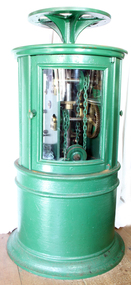
... Lighthouses illustrate social concepts such as danger, risk, adversity, challenge and vigilance but they also offers guidance, salvation and safety. ...Before the introduction of electricity, lighthouses had a clockwork mechanism that caused the lens to rotate with a light source inside that was either powered by Kerosene or Colza oil. The mechanism consisted of a large weight attached by a cable through the centre of the lighthouse to the top where the cable wrapped around a barrel, drum or wheels that controlled the speed of the lights rotation by a clockwork mechanism. The keeper would crank the clockwork mechanism, which would lift the weight ready for the next cycle similar to an old grandfather clock mechanism. Once the weight lifted to its apex at the bottom of the first landing, the keeper would let it fall, which would pull on the cable, which would, in turn, operate a series of gears activating the rotation of the Fresnel optical lens, which would then rotate to create the lighthouse’s unique light speed of rotation characteristic. Creating a specific characteristic required a way to regulate the speed of the rotation, and was important as sailors could identify a particular light by its speed and time between flashes. The weight had to fall at a certain rate to create the proper rotation speed of the lens and a regulator within the mechanism accomplished this. History: From 1851, Chance Brothers became a major lighthouse engineering company, producing optical components, machinery, and other equipment for lighthouses around the world. James Timmins Chance pioneered placing lighthouse lamps inside a cage surrounded by Fresnel lenses to increase the available light output these cages, are known as optics and they revolutionised lighthouse design. Another important innovation from Chance Brothers was the introduction of rotating optics, allowing adjacent lighthouses to be distinguished from each other by the number of times per revolution the light flashes. The noted English physicist and engineer, John Hopkins invented this system while employed at Chance Brothers. Chance Brothers and Company was a glass works and originally based in Spon Lane, Smethwick, West Midlands England. The company became a leading glass manufacturer and a pioneer of British glass making technology. The Chance family originated in Bromsgrove as farmers and craftsmen before setting up a business in Smethwick near Birmingham in 1824. They took advantage of the skilled workers, canals and many other industrial advances taking place in the West Midlands at the time. Robert Lucas Chance (1782–1865), known as 'Lucas', bought the British Crown Glass Company's works in Spon Lane in 1824. The company specialised in making crown window glass, the company ran into difficulty and its survival was guaranteed in 1832 by investment from Chance's brother, William (1788 – 1856). William owned an iron factoring business in Great Charles Street, Birmingham. After a previous partnership that Lucas had dissolved in 1836, Lucas and William Chance became partners in the business which was renamed, Chance Brothers and Company. Chance Brothers invented many innovative processes and became known as the greatest glass manufacturer in Britain. In 1848 under the supervision of Georges Bontemps, a French glass maker from Choosy-le-Roi, a new plant was set up to manufacture crown and flint glass for lighthouse optics, telescopes and cameras. Bontemps agreed to share his processes that up to then had been secret with the Chance Brothers and stayed in England to collaborate with them for six years. In 1900 a baronetcy was created for James Timmins Chance (1814–1902), a grandson of William Chance, who had started the family business in 1771 with his brother Robert. Roberts grandson, James became head of Chance Brothers until his retirement in 1889 when the company became a public company and its name changed to Chance Brothers & Co. Ltd. Additional information: Lighthouses are equipped with unique light characteristic or flashing pattern that sailors can use to identify specific lighthouses during the night. Lighthouses can achieve distinctive light characteristics in a few different ways. A lighthouse can flash, which is when brief periods of light interrupt longer moments of darkness. The light can occult, which is when brief periods of darkness interrupt longer moments of light. The light can be fixed, which is when the light never goes dark. A lighthouse can use a combination of flashing, oscillating, or being fixed in a variety of combinations and intervals to create individual light characteristics. It is a common misconception that a lighthouse's light source changes the intensity to create a light characteristic. The light source remains constant and the rotating Fresnel lens creates the various changes in appearance. Some Fresnel lenses have "bulls-eye" panels create beams of light that, when rotated between the light and the observer, make the light appear to flash. Conversely, some lenses have metal panels that, when rotated between the light and the observer, make the light appear to go dark. This Dioptric clockwork apparatus used to turn a lighthouse optical lens is very significant as it is integral to a lighthouses operation, we can also look at the social aspect of lighthouses as being traditionally rich with symbolism and conceptual meanings. Lighthouses illustrate social concepts such as danger, risk, adversity, challenge and vigilance but they also offers guidance, salvation and safety. The glowing lamp reminds sailors that security and home are well within reach, they also symbolize the way forward and help in navigating our way through rough waters not just on the oceans of the world but in our personal lives be it financial, personal, business or spiritual in nature. Nothing else speaks of safety and security in the face of adversity and challenge quite the way a lighthouse does. Revolving dioptric clockwork apparatus used to turn a Fresnel optical lighthouse lens. A cylindrical cast metal pillar and cabinet painted green with 3 glass doors enclosing the top section. Inside the pillar/cabinet is a large clockwork mechanism used to turn and regulate a lighthouse light by means of weights and a chain attached to same. One door has the name "Adams Mare" in metallic dots similar to "Braille" to the inside edge of door frame.shipwrecked-coast, flagstaff-hill, flagstaff-hill-maritime-museum, flagstaff hill, maritime-museum, shipwreck-coast, warrnambool, flagstaff-hill-maritime-village, revolving dioptric mechanism, dioptric mechanism for lighthouse, lighthouse clockwork timing mechanism, acetylene lighthouse light mechanism, 19th century lighthouse mechanism, kerosene light, fresnel lenses, colza oil, chance brothers -
 Bendigo Historical Society Inc.
Newspaper - LONG GULLY HISTORY GROUP COLLECTION: BENDIGO'S CENTURY VOLUME FIVE: 1940 - 1949
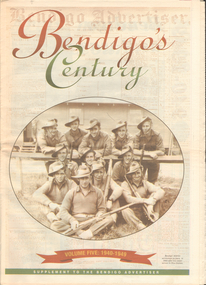
... BENDIGO History long gully history group The Long Gully History Group - Bendigo's Century - Volume Five: 1940 - 1949 Bendigo Advertiser Central Deborah Mine Jackie Lewis Bob Johnson W Landy Ryga Yates Les Johnson Central Nell Gwynne Department of Defence Bendigo Jockey Club 8th Division Robert Menzies Deborah Mine Bendigo Decentralisation Vigilance Committee Cr W H Taylor Bendigo War Funds Organisation The Easter Fair Society Bendigo Agricultural Show Committee Mr E G Ham Mr J V Fairbairn Cr A Staples The Bendigo Chamber of Commerce Richard Hartley Smith Abbott Captain Harley Abbott Bendigo Art Gallery Bill Woodfull Bendigo High School North Deborah Mine Boardwalk Toni Riley Pharmacy Windermere Hotel Cr G A Pethard Coliban System North Deborah Mine Bendigo Pottery Bendigo Trades Hall Council Private Lawrence Burstall Major-General G J Rankin MHR Andrew Dunstan Ordnance Factory Royal Australian Navy HMAS Bendigo SEC Offices MUIOOF YMCA Georger Addlem Fred Addlem Cr A J Anderson Pauline Buvhan Thompson Leslie Thompson Edward Joseph Leonski Bendigo Football League Mr J Dedman William Stephens Forest Street Methodist Church Pte Charles Phillips Pte W E durward Pte T Foley William John Stephens Central Nell Gwynne Air Chief Marshall Sir Arthur Tedder Cr Taylor United Nations Flying Officer R Bruce Tuff Flight Lieutenant Owens Royal Air Force Commonwealth War Workers Housing Trust Scheme Mr S McKinnon Bendigo Decentralised Vigilance Committee Ravenswood Estate John Lienhop MLC Margaret (Peggy) Brennan Strathfieldsaye Shire Council School of Mines Bendigo Base Hospital William George Ashman Ashman's Tailors Bendigo Jockey Club Victorian Football Association Bendigo East Swimming Pool Deborah Anticline Specimen Hill Methodist Church North Deborah Adolf Hitler Benito Mussolini Australian 7th Division Cr Galvin Bendigo War Funds Organisation HMAS Bendigo Lt-Commander Jackson Bendigo Football League Central Deborah Mine Victoria Day Cr Truscott Bendigo Gaol Lansellstowe AWAS Barracks Bendigo Citizens Committee John Cain Snr Ordnance Factory Bendigo Agricultural Society The Duke of Gloucester Duchess of Gloucester Bendigo Tennis Association North Deborah Gillies Famous Pies Aids & Appliance Shop Mrs Georgina Scott Dr J A Neptune Scott Alfred Sisley Corot Daubigney Louis Sonnenberg Gas Employees' Union John Lienhop Soldier Settlement Commission Burnewang Estate King George VI Princess Elizabeth Lt Philip Mountbatten Mr E J W Herbert Ansett Airways Reg Ansett Most Rev Dr John McCarthy Dr Bernard Stewart Michael Giudice Bendigo United Breweries Bendigo Lyric Photo Plays Bendigo Sun Newspaper Shamrock Hotel West Bendigo Progress Association Alan McDonald South Bendigo Football Club Albert Collier J T Webbo Mervyn Tresize State Rivers and Water Supply Commission Eppalock Reservoir Public Works Committee Bendigo Rotary Club John Edgar Bendigo Base Hospital Albert Dunstan Benevolent Home Magetti's Wine Hall Wallace Reef Wine Hall Magetti Family Albert Magetti Lance Galvin Bradford Cotton Spinnings (Victoria) Pty Otd Arthur Syer Stanley Crossman Albert Arthur Dunstan Rev Dr Henry Backhaus City Family Hotel Lyric Theatre Bank of Australasia City Club HotelColonial Mutual Building R Matchett & Co Lansellstowe Leonard Lansell Bendigo Bas Hospital Australian Women's Army Service Mr Hollway Kenworth (Aust) Ltd Foggitt Jones's Bacon Factory Gordon Sayers Sandhurst Trustees Dr John Drowley Alexander Hislop Royal Mint North Deborah Mine Ironbark South Mining Company Central Nell Gwynne Company New Chum Syncline Newspaper supplement titled Bendigo's Century Volume Five: 1940 - 1949. ...Newspaper supplement titled Bendigo's Century Volume Five: 1940 - 1949. Each year has heading of Who's Who, Weather, Sport and Business. Front page is titled Bendigo's Century and has a photo of a group of soldiers in uniform and with rifles. They were district servicemen on leave in 1944. Each year has heading of Who's Who, Weather, Sport and Business. First years are 1940 - 1949 titled Bendigo as it was. It has two photos of women wading through the 1949 Pall Mall flood waters and one of Miners in the crib room of the Central Deborah Mine. They are Jackie Lewis, Bob Johnson, W Landy, Ryga Yates and Les Johnson. 1940 - Army moves in to racecourse, 1941 - Devastating fire at pottery, 1942 - Forces expand, 1943 - Nation's eyes on Bendigo, 1944 - News dawns of D-day landing, 1945 - City cheers the end of the war, 1946 - Celebrations begin in city, 1947 - Gallery gets top paintings, 1948 - Water plan looks good and 1949 - Flood takes a toll on city.bendigo, history, long gully history group, the long gully history group - bendigo's century - volume five: 1940 - 1949, bendigo advertiser, central deborah mine, jackie lewis, bob johnson, w landy, ryga yates, les johnson, central nell gwynne, department of defence, bendigo jockey club, 8th division, robert menzies, deborah mine, bendigo decentralisation vigilance committee, cr w h taylor, bendigo war funds organisation, the easter fair society, bendigo agricultural show committee, mr e g ham, mr j v fairbairn, cr a staples, the bendigo chamber of commerce, richard hartley smith abbott, captain harley abbott, bendigo art gallery, bill woodfull, bendigo high school, north deborah mine, boardwalk, toni riley pharmacy, windermere hotel, cr g a pethard, coliban system, north deborah mine, bendigo pottery, bendigo trades hall council, private lawrence burstall, major-general g j rankin mhr, andrew dunstan, ordnance factory, royal australian navy, hmas bendigo, sec offices, muioof, ymca, georger addlem, fred addlem, cr a j anderson, pauline buvhan thompson, leslie thompson, edward joseph leonski, bendigo football league, mr j dedman, william stephens, forest street methodist church, pte charles phillips, pte w e durward, pte t foley, william john stephens, central nell gwynne, air chief marshall sir arthur tedder, cr taylor, united nations, flying officer, r bruce tuff, flight lieutenant owens, royal air force, commonwealth war workers housing trust scheme, mr s mckinnon, bendigo decentralised vigilance committee, ravenswood estate, john lienhop mlc, margaret (peggy) brennan, strathfieldsaye shire council, school of mines, bendigo base hospital, william george ashman, ashman's tailors, bendigo jockey club, victorian football association, bendigo east swimming pool, deborah anticline, specimen hill methodist church, north deborah, adolf hitler, benito mussolini, australian 7th division, cr galvin, bendigo war funds organisation, hmas bendigo, lt-commander jackson, bendigo football league, central deborah mine, victoria day, cr truscott, bendigo gaol, lansellstowe, awas barracks, bendigo citizens committee, john cain snr, ordnance factory, bendigo agricultural society, the duke of gloucester, duchess of gloucester, bendigo tennis association, north deborah, gillies famous pies, aids & appliance shop, mrs georgina scott, dr j a neptune scott, alfred sisley, corot, daubigney, louis sonnenberg, gas employees' union, john lienhop, soldier settlement commission, burnewang estate, king george vi, princess elizabeth, lt philip mountbatten, mr e j w herbert, ansett airways, reg ansett, most rev, dr john mccarthy, dr bernard stewart, michael giudice, bendigo united breweries, bendigo lyric photo plays, bendigo sun newspaper, shamrock hotel, west bendigo progress association, alan mcdonald, south bendigo football club, albert collier, j t webbo, mervyn tresize, state rivers and water supply commission, eppalock reservoir, public works committee, bendigo rotary club, john edgar, bendigo base hospital, albert dunstan, benevolent home, magetti's wine hall, wallace reef wine hall, magetti family, albert magetti, lance galvin, bradford cotton spinnings (victoria) pty otd, arthur syer, stanley crossman, albert arthur dunstan, rev dr henry backhaus, city family hotel, lyric theatre, bank of australasia, city club hotelcolonial mutual building, r matchett & co, lansellstowe, leonard lansell, bendigo bas hospital, australian women's army service, mr hollway, kenworth (aust) ltd, foggitt jones's bacon factory, gordon sayers, sandhurst trustees, dr john drowley, alexander hislop, royal mint, north deborah mine, ironbark south mining company, central nell gwynne company, new chum syncline -
Whitehorse Historical Society Inc.
Document, Nunawading Rate Issues, 1929 - 1944
... Shire of Blackburn and Mitcham Nunawading Ratepayers Defence League Blackburn Ratepayers and Citizens Severance Committee Rates Blackburn - Mitcham Ratepayers Vigilance Association Blackburn Progress Association Sydenham Diane Severance 'Nunawading Rate Issues' including severance documents. ...'Nunawading Rate Issues' including severance documents. The collection supplied by Diane Sydenham.'Nunawading Rate Issues' including severance documents. The collection supplied by Diane Sydenham.'Nunawading Rate Issues' including severance documents. The collection supplied by Diane Sydenham.shire of blackburn and mitcham, nunawading ratepayers defence league, blackburn ratepayers and citizens severance committee, rates, blackburn - mitcham ratepayers vigilance association, blackburn progress association, sydenham, diane, severance -
 Victorian Railway History Library
Book, Dunn, Ian, Byways of Steam 21, 2003
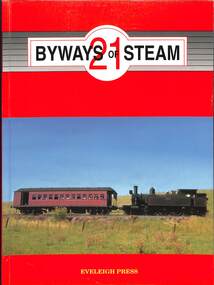
... In the Midst of Life, by Stephen Halgren. Eternal vigilance is required in whatever path we take, be it railway of every day. ...The Campbelltown to Camden Railway, by Ian Dunn. This essay explores the origins, building and operation of the line, and the photos dwell particularly on the operations associated with the coal loader at Narellan in the late 1950s. Bathurst’s 59 Class Bankers, by Peter Attenborough. This article looks at the role of those steam engines transferred to Bathurst, in particular the 59 class, which arrived at Bathurst at virtually the same time that mainline operations were drawing to a close. Troy Junction, by Ray Love. In this essay, Ray Love reviews the history and traffic operations of the junction which at one-time incorporated stock yards, an abattoir and a quarry. Kapooka, by Pat Turner & Ray Love. Retired engineman Pat Turner spent his entire railway career based at Junee, working on the main southern line. In this essay, Pat relates an incident at Kapooka, many years ago, at a time when all southern express trains required assistance in that area. Traffic Officer, by Russell Bright. Traffic Officer Russell Bright opts for a less uncertain life style than that of a guard and becomes an assistant station master, initially at Binnaway. He moves through the grades of ASM by way of promotions to Narrabri West and then to Temora. Many of the normal duties, as well as several incidents along the way are described as Russells railway career advances. In the Midst of Life, by Stephen Halgren. Eternal vigilance is required in whatever path we take, be it railway of every day. This essay recounts the tragic runaway and derailment of locomotive 5586 and the tragic death of Driver George Dixon at Eastwood in September 1940 which prompted railway poet Frank Brown to pen the ode Eastwood Fatality.ill, maps, p.128.non-fictionThe Campbelltown to Camden Railway, by Ian Dunn. This essay explores the origins, building and operation of the line, and the photos dwell particularly on the operations associated with the coal loader at Narellan in the late 1950s. Bathurst’s 59 Class Bankers, by Peter Attenborough. This article looks at the role of those steam engines transferred to Bathurst, in particular the 59 class, which arrived at Bathurst at virtually the same time that mainline operations were drawing to a close. Troy Junction, by Ray Love. In this essay, Ray Love reviews the history and traffic operations of the junction which at one-time incorporated stock yards, an abattoir and a quarry. Kapooka, by Pat Turner & Ray Love. Retired engineman Pat Turner spent his entire railway career based at Junee, working on the main southern line. In this essay, Pat relates an incident at Kapooka, many years ago, at a time when all southern express trains required assistance in that area. Traffic Officer, by Russell Bright. Traffic Officer Russell Bright opts for a less uncertain life style than that of a guard and becomes an assistant station master, initially at Binnaway. He moves through the grades of ASM by way of promotions to Narrabri West and then to Temora. Many of the normal duties, as well as several incidents along the way are described as Russells railway career advances. In the Midst of Life, by Stephen Halgren. Eternal vigilance is required in whatever path we take, be it railway of every day. This essay recounts the tragic runaway and derailment of locomotive 5586 and the tragic death of Driver George Dixon at Eastwood in September 1940 which prompted railway poet Frank Brown to pen the ode Eastwood Fatality.railroads - nsw - history, steam locomotives - nsw – pictorial
