
Showing 27 items matching "walter bowes"
-
 Federation University Historical Collection
Equipment - Postage Meter, Pitney Bowes, Post Office Franking Machine, c 1970
... ...walter bowes...It was founded in 1920 when the company of Arthur Pitney, founded in 1902, merged with the company of Walter Bowes, founded in 1908. The name at merger became Pitney Bowes Postage Meter Company. ...It was founded in 1920 when the company of Arthur Pitney, founded in 1902, merged with the company of Walter Bowes, founded in 1908. The name at merger became Pitney Bowes Postage Meter Company. ...This franking machine was used in the mail room of SMB and also in the mail room at University of Ballarat. Pitney Bowes is a global technical company, known for its postage meters and other mailing equipment and services. It was founded in 1920 when the company of Arthur Pitney, founded in 1902, merged with the company of Walter Bowes, founded in 1908. The name at merger became Pitney Bowes Postage Meter Company. They produced the first commercially available postage meter.White, brown and black Pitney Bowes model 6300 Franking Machine in a black carry case. Includes power lead and blue soft cover. Yellow card with instructions fro Supervisor of Mail Centre Code No. 6331 Serial No. 18412 Yellow sticker for SMBballarat school of mines, university of ballarat, post office, mail, franking machine, postage meter, arthur pitney, walter bowes -
 Orbost & District Historical Society
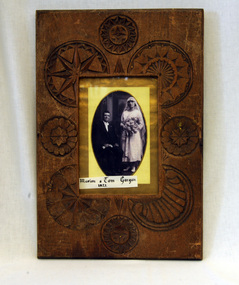
framed photograph, 1923
... The Gargans were early settlers in the Orbost district. gargan-thomas gargan-marion rice-walter wedding-photography on front - Marion & Tom Gargan 1923 A small black / white wedding photograph of a seated man with a woman standing beside him. He is wearing a dark suit, white bow ...The frame was hand carved by Cecil Rice and given to his aunt Mrs Marion Gargan. Cecil Rice ( 1912 - 1985) was the son of Walter Cecil Rice and Ellen Theresa Gargan.This item is a pictorial record of a 1920s wedding. Wedding dresses are a useful way to chart changing fashions. The Gargans were early settlers in the Orbost district.A small black / white wedding photograph of a seated man with a woman standing beside him. He is wearing a dark suit, white bow tie and is holding a pair of white gloves in one hand. She is wearing a dress which finishes above the ankles. She has a veil which is "cloche" style and is holding a large bunch of flowers.The photograph has a yellow frame and is mounted on gold card inside an ornately carved wooden frame.on front - Marion & Tom Gargan 1923gargan-thomas gargan-marion rice-walter wedding-photography -
 Williamstown High School
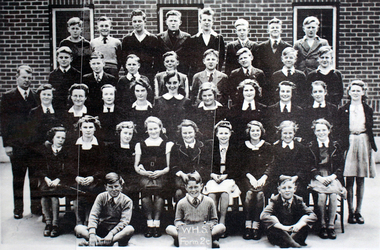
1946 Form 2C
... Barry Walters, Bob Lane, Keith McDonald, Ron Willshire Graeme Stock, Ray Tresize, Bob Brent, Ray(/) Jamieson, George Picone, Roy McQuade, Charlie Williams, ? Elaine (?), Mavis Dunne, Eileen Bowes...Barry Walters, Bob Lane, Keith McDonald, Ron Willshire Graeme Stock, Ray Tresize, Bob Brent, Ray(/) Jamieson, George Picone, Roy McQuade, Charlie Williams, ? Elaine (?), Mavis Dunne, Eileen Bowes ...Copy of a black and white photograph, laminated. We also have the original black and white photograph. It has been cut into three and re-stuck on card.Form 2C 1946 Don Jack, ?, Wally Gunn, ? Barry Walters, Bob Lane, Keith McDonald, Ron Willshire Graeme Stock, Ray Tresize, Bob Brent, Ray(/) Jamieson, George Picone, Roy McQuade, Charlie Williams, ? Elaine (?), Mavis Dunne, Eileen Bowes, Nola Strahehir, Valerie Maxwell, Norma Billington, Shirley Williams, Myra ?, Maureen Porter Alwynne Harris, Shirley Hall, Elaine ?, Netta McCallum, Shirley Carter, Norma Eden, Beth Crowder, Dawn Best, Marlene Edwards Stan Forbes, Don Orr, Alec Copeland Form Teacher: Mr Don McCullochwilliamstown high school, 1946, class photographs -
 Nhill and District Historical Society Inc.
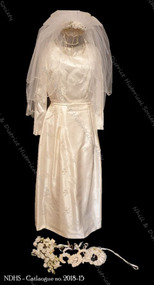
Clothing - 1964 Wedding dress of Patricia Capp
... Walter Clark of Nhill. 1964 Wedding gown Wedding attire Clothing Formal - clothing textiles - satin Bridal gown of figured de-lustered satin, with a fitted bodice and scooped neckline with long pointed sleeves and a full-length skirt with deep unpressed pleats. The three-tier veil was held by a circlet of flowers in front with a Dior bow ...Owned and worn by Patricia Capp of Dimboola, on her wedding day, when she married Mr. Walter Clark of Nhill.Bridal gown of figured de-lustered satin, with a fitted bodice and scooped neckline with long pointed sleeves and a full-length skirt with deep unpressed pleats. The three-tier veil was held by a circlet of flowers in front with a Dior bow, The bride carried a trailer of white roses and lily of the valley.1964 wedding gown, wedding attire, clothing, formal - clothing, textiles - satin -
 Melbourne Athenaeum Archives
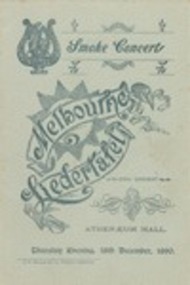
Newspaper Article, T.G. Ramsay & Co., Printers, Melbourne Liedertafel Smoke Concert 210th concert performed at Melbourne Athenaeum Hall 18th December 1890. Performer(s): Performers include: Mr. William Champion, vocals ; Mr. Lewis Thomas, vocals ; Mr. J. Frankland, vocals ; Mr. J. P. Turner, vocals ; Mr. Joseph Pfleger, zither, electric bow-lyre ; Mr. James Wood, vocals ; Mr. Walter T. Barker, harp
... Joseph Pfleger, zither, electric bow-lyre ; Mr. James Wood, vocals ; Mr. Walter T. Barker, harp. ...Joseph Pfleger, zither, electric bow-lyre ; Mr. James Wood, vocals ; Mr. Walter T. Barker, harp. ... -
 Whitehorse Historical Society Inc.
Photograph, Emil Jackschowsky
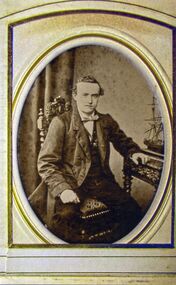
... Walter was born in 1919. Emil became an American citizen in 1928. He died from heart disease in 1954 at the age of 71. Jackschowsky Emil Insterrberg sepia photograph with a framed picture of a man seated on an ornamental chair and dressed in a coat and bow tie. ...Emil Jackschowsky was born in Insterburg (Prussia then Germany now Russia). He met Mary Schwerkolt aboard the 'Seydlitz' on its way to Australia. He was working as a ships steward. They married in Pittsburg in U.S.A in 1912. While visiting family in Germany he was conscripted. His son Walter was born in 1919. Emil became an American citizen in 1928. He died from heart disease in 1954 at the age of 71.sepia photograph with a framed picture of a man seated on an ornamental chair and dressed in a coat and bow tie.jackschowsky emil, insterrberg -
 Flagstaff Hill Maritime Museum and Village
Book - Reference/History, W Stanley Macbean Knight, The History of the Great European War Set 1 Vol 10, 1914-1920
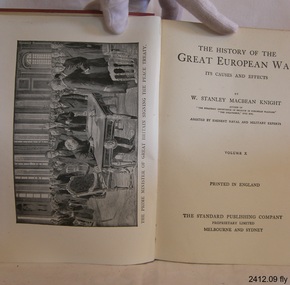
... Bow and Bromley, though he lost that seat in 1910. He was also a Conservative prospective parliamentary candidate for Tower Hamlets and Poplar. The London publishing house Caxtons, took its name from William Caxton (1422–1491), England's first printer a very common trope for English-language publishing or printing houses that wanted to invoke that heritage, like the many other separate companies that independently chose the same namesake. The firm was still trading under the same name in 1954 and again in 1958–1960, when the advertising agency J. Walter...Bow and Bromley, though he lost that seat in 1910. He was also a Conservative prospective parliamentary candidate for Tower Hamlets and Poplar. The London publishing house Caxtons, took its name from William Caxton (1422–1491), England's first printer a very common trope for English-language publishing or printing houses that wanted to invoke that heritage, like the many other separate companies that independently chose the same namesake. The firm was still trading under the same name in 1954 and again in 1958–1960, when the advertising agency J. Walter ...This set is a contemporary and popular narrative history of WWI, written and published while the war was still happening; the preface is dated 1914, but volumes were issued serially as the war progressed, meaning later volumes covering 1917–18 and the peace were released several years after the first. This is a common format for the period — compare rival serials like The Great War (Hammerton & Wilson) or Collier's The Story of the Great War — publishers issued 'instant history' in subscription parts to a public hungry for authoritative-sounding accounts. The volumes in this set cover the following topics during the First World War: Vol. I — Causes and Effects (1914): Its aims are to explain the political and diplomatic background to the war — the alliance system and the July Crisis — with the outbreak of hostilities in August 1914. Vol. II: Continues into the opening campaigns of 1914 (per Internet Archive, 'Vol 2 of 10', contemporary account). Vol. III: Descriptions note it as continuing the story of the campaign of the Allies and their mid-war campaigns. Vol. IV: Covers 1916 and the ongoing 1915–16 campaigns; this volume contains a fold-out colour map of the Serbian Retreat and one of the Italian front, featuring the Balkan and Italian theatres of war. Vols. V–VI: Continue the general campaign narrative through 1916–17. Vols. VII–VIII: Cover the later war years, focusing on 1917–18. Vols. IX–X: These volumes cover the war's final phase and the Armistice. Publication of the last volumes continued into the early 1920s, covering the peace settlement at Versailles and its aftermath.Hard Cover Book. History of The Great European War Set 1 Vol 10 Author: W Stanley Macbean Knight Publisher: The Caxton Publishing Company Ltd Clune House, 161 Surrey St, London W.C. Printer: The Standard Publishing Co. 100 Flinders St, Melbourne. Date: Various Volume Subscription Releases 1914 to 1920 Further Information: Red pictorial cloth gilt-lettered boards, each volume illustrated with a coloured frontispiece, black-and-white photographic plates, and fold-out colour maps of various fronts depending on volume(e.g. the Serbian Retreat, the Italian front etc.). Note there are two sets of this publication in the Flagstaff book collection.non-fictionThis set is a contemporary and popular narrative history of WWI, written and published while the war was still happening; the preface is dated 1914, but volumes were issued serially as the war progressed, meaning later volumes covering 1917–18 and the peace were released several years after the first. This is a common format for the period — compare rival serials like The Great War (Hammerton & Wilson) or Collier's The Story of the Great War — publishers issued 'instant history' in subscription parts to a public hungry for authoritative-sounding accounts. The volumes in this set cover the following topics during the First World War: Vol. I — Causes and Effects (1914): Its aims are to explain the political and diplomatic background to the war — the alliance system and the July Crisis — with the outbreak of hostilities in August 1914. Vol. II: Continues into the opening campaigns of 1914 (per Internet Archive, 'Vol 2 of 10', contemporary account). Vol. III: Descriptions note it as continuing the story of the campaign of the Allies and their mid-war campaigns. Vol. IV: Covers 1916 and the ongoing 1915–16 campaigns; this volume contains a fold-out colour map of the Serbian Retreat and one of the Italian front, featuring the Balkan and Italian theatres of war. Vols. V–VI: Continue the general campaign narrative through 1916–17. Vols. VII–VIII: Cover the later war years, focusing on 1917–18. Vols. IX–X: These volumes cover the war's final phase and the Armistice. Publication of the last volumes continued into the early 1920s, covering the peace settlement at Versailles and its aftermath.flagstaff hill, warrnambool, shipwrecked-coast, flagstaff-hill, flagstaff-hill-maritime-museum, maritime-museum, shipwreck-coast, flagstaff-hill-maritime-village, book, the history of the great european war vol 1 set 1, the history of the great european war, caxton printers -
 Flagstaff Hill Maritime Museum and Village
Book - Reference/History, W Stanley Macbean Knight, The History of the Great European War Set 1 Vol 8, 1914-1920
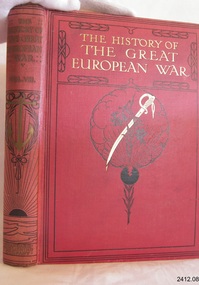
... Bow and Bromley, though he lost that seat in 1910. He was also a Conservative prospective parliamentary candidate for Tower Hamlets and Poplar. The London publishing house Caxtons, took its name from William Caxton (1422–1491), England's first printer a very common trope for English-language publishing or printing houses that wanted to invoke that heritage, like the many other separate companies that independently chose the same namesake. The firm was still trading under the same name in 1954 and again in 1958–1960, when the advertising agency J. Walter...Bow and Bromley, though he lost that seat in 1910. He was also a Conservative prospective parliamentary candidate for Tower Hamlets and Poplar. The London publishing house Caxtons, took its name from William Caxton (1422–1491), England's first printer a very common trope for English-language publishing or printing houses that wanted to invoke that heritage, like the many other separate companies that independently chose the same namesake. The firm was still trading under the same name in 1954 and again in 1958–1960, when the advertising agency J. Walter ...This set is a contemporary and popular narrative history of WWI, written and published while the war was still happening; the preface is dated 1914, but volumes were issued serially as the war progressed, meaning later volumes covering 1917–18 and the peace were released several years after the first. This is a common format for the period — compare rival serials like The Great War (Hammerton & Wilson) or Collier's The Story of the Great War — publishers issued 'instant history' in subscription parts to a public hungry for authoritative-sounding accounts. The volumes in this set cover the following topics during the First World War: Vol. I — Causes and Effects (1914): Its aims are to explain the political and diplomatic background to the war — the alliance system and the July Crisis — with the outbreak of hostilities in August 1914. Vol. II: Continues into the opening campaigns of 1914 (per Internet Archive, 'Vol 2 of 10', contemporary account). Vol. III: Descriptions note it as continuing the story of the campaign of the Allies and their mid-war campaigns. Vol. IV: Covers 1916 and the ongoing 1915–16 campaigns; this volume contains a fold-out colour map of the Serbian Retreat and one of the Italian front, featuring the Balkan and Italian theatres of war. Vols. V–VI: Continue the general campaign narrative through 1916–17. Vols. VII–VIII: Cover the later war years, focusing on 1917–18. Vols. IX–X: These volumes cover the war's final phase and the Armistice. Publication of the last volumes continued into the early 1920s, covering the peace settlement at Versailles and its aftermath.Hard Cover Book. History of The Great European War Set 1 Vol 8 Author: W Stanley Macbean Knight Publisher: The Caxton Publishing Company Ltd Clune House, 161 Surrey St, London W.C. Printer: The Standard Publishing Co. 100 Flinders St, Melbourne. Date: Various Volume Subscription Releases 1914 to 1920 Further Information: Red pictorial cloth gilt-lettered boards, each volume illustrated with a coloured frontispiece, black-and-white photographic plates, and fold-out colour maps of various fronts depending on volume(e.g. the Serbian Retreat, the Italian front etc.). Note there are two sets of this publication in the Flagstaff book collection.non-fictionThis set is a contemporary and popular narrative history of WWI, written and published while the war was still happening; the preface is dated 1914, but volumes were issued serially as the war progressed, meaning later volumes covering 1917–18 and the peace were released several years after the first. This is a common format for the period — compare rival serials like The Great War (Hammerton & Wilson) or Collier's The Story of the Great War — publishers issued 'instant history' in subscription parts to a public hungry for authoritative-sounding accounts. The volumes in this set cover the following topics during the First World War: Vol. I — Causes and Effects (1914): Its aims are to explain the political and diplomatic background to the war — the alliance system and the July Crisis — with the outbreak of hostilities in August 1914. Vol. II: Continues into the opening campaigns of 1914 (per Internet Archive, 'Vol 2 of 10', contemporary account). Vol. III: Descriptions note it as continuing the story of the campaign of the Allies and their mid-war campaigns. Vol. IV: Covers 1916 and the ongoing 1915–16 campaigns; this volume contains a fold-out colour map of the Serbian Retreat and one of the Italian front, featuring the Balkan and Italian theatres of war. Vols. V–VI: Continue the general campaign narrative through 1916–17. Vols. VII–VIII: Cover the later war years, focusing on 1917–18. Vols. IX–X: These volumes cover the war's final phase and the Armistice. Publication of the last volumes continued into the early 1920s, covering the peace settlement at Versailles and its aftermath.flagstaff hill, warrnambool, shipwrecked-coast, flagstaff-hill, flagstaff-hill-maritime-museum, maritime-museum, shipwreck-coast, flagstaff-hill-maritime-village, book, the history of the great european war vol 1 set 1, the history of the great european war, caxton printers -
 Flagstaff Hill Maritime Museum and Village
Book - Reference/History, W Stanley Macbean Knight, The History of the Great European War Set 2 Vol 1, 1914-1920
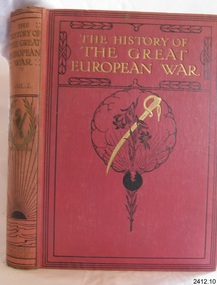
... Bow and Bromley, though he lost that seat in 1910. He was also a Conservative prospective parliamentary candidate for Tower Hamlets and Poplar. The London publishing house Caxtons, took its name from William Caxton (1422–1491), England's first printer a very common trope for English-language publishing or printing houses that wanted to invoke that heritage, like the many other separate companies that independently chose the same namesake. The firm was still trading under the same name in 1954 and again in 1958–1960, when the advertising agency J. Walter...Bow and Bromley, though he lost that seat in 1910. He was also a Conservative prospective parliamentary candidate for Tower Hamlets and Poplar. The London publishing house Caxtons, took its name from William Caxton (1422–1491), England's first printer a very common trope for English-language publishing or printing houses that wanted to invoke that heritage, like the many other separate companies that independently chose the same namesake. The firm was still trading under the same name in 1954 and again in 1958–1960, when the advertising agency J. Walter ...This set is a contemporary and popular narrative history of WWI, written and published while the war was still happening; the preface is dated 1914, but volumes were issued serially as the war progressed, meaning later volumes covering 1917–18 and the peace were released several years after the first. This is a common format for the period — compare rival serials like The Great War (Hammerton & Wilson) or Collier's The Story of the Great War — publishers issued 'instant history' in subscription parts to a public hungry for authoritative-sounding accounts. The volumes in this set cover the following topics during the First World War: Vol. I — Causes and Effects (1914): Its aims are to explain the political and diplomatic background to the war — the alliance system and the July Crisis — with the outbreak of hostilities in August 1914. Vol. II: Continues into the opening campaigns of 1914 (per Internet Archive, 'Vol 2 of 10', contemporary account). Vol. III: Descriptions note it as continuing the story of the campaign of the Allies and their mid-war campaigns. Vol. IV: Covers 1916 and the ongoing 1915–16 campaigns; this volume contains a fold-out colour map of the Serbian Retreat and one of the Italian front, featuring the Balkan and Italian theatres of war. Vols. V–VI: Continue the general campaign narrative through 1916–17. Vols. VII–VIII: Cover the later war years, focusing on 1917–18. Vols. IX–X: These volumes cover the war's final phase and the Armistice. Publication of the last volumes continued into the early 1920s, covering the peace settlement at Versailles and its aftermath.Hard Cover Book. History of The Great European War Set 2 Vol 1 Author: W Stanley Macbean Knight Publisher: The Caxton Publishing Company Ltd Clune House, 161 Surrey St, London W.C. Printer: The Standard Publishing Co. 100 Flinders St, Melbourne. Date: Various Volume Subscription Releases 1914 to 1920 Further Information: Red pictorial cloth gilt-lettered boards, each volume illustrated with a coloured frontispiece, black-and-white photographic plates, and fold-out colour maps of various fronts depending on volume(e.g. the Serbian Retreat, the Italian front etc.). Note there are two sets of this publication in the Flagstaff book collection.non-fictionThis set is a contemporary and popular narrative history of WWI, written and published while the war was still happening; the preface is dated 1914, but volumes were issued serially as the war progressed, meaning later volumes covering 1917–18 and the peace were released several years after the first. This is a common format for the period — compare rival serials like The Great War (Hammerton & Wilson) or Collier's The Story of the Great War — publishers issued 'instant history' in subscription parts to a public hungry for authoritative-sounding accounts. The volumes in this set cover the following topics during the First World War: Vol. I — Causes and Effects (1914): Its aims are to explain the political and diplomatic background to the war — the alliance system and the July Crisis — with the outbreak of hostilities in August 1914. Vol. II: Continues into the opening campaigns of 1914 (per Internet Archive, 'Vol 2 of 10', contemporary account). Vol. III: Descriptions note it as continuing the story of the campaign of the Allies and their mid-war campaigns. Vol. IV: Covers 1916 and the ongoing 1915–16 campaigns; this volume contains a fold-out colour map of the Serbian Retreat and one of the Italian front, featuring the Balkan and Italian theatres of war. Vols. V–VI: Continue the general campaign narrative through 1916–17. Vols. VII–VIII: Cover the later war years, focusing on 1917–18. Vols. IX–X: These volumes cover the war's final phase and the Armistice. Publication of the last volumes continued into the early 1920s, covering the peace settlement at Versailles and its aftermath.flagstaff hill, warrnambool, shipwrecked-coast, flagstaff-hill, flagstaff-hill-maritime-museum, maritime-museum, shipwreck-coast, flagstaff-hill-maritime-village, book, the history of the great european war vol 1 set 1, the history of the great european war, caxton printers -
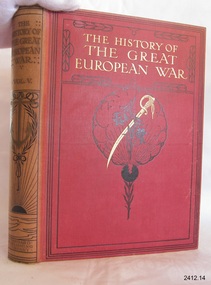 Flagstaff Hill Maritime Museum and Village
Book - Reference/History, W Stanley Macbean Knight, The History of the Great European War Set 2 Vol 5, 1914-1920
... Bow and Bromley, though he lost that seat in 1910. He was also a Conservative prospective parliamentary candidate for Tower Hamlets and Poplar. The London publishing house Caxtons, took its name from William Caxton (1422–1491), England's first printer a very common trope for English-language publishing or printing houses that wanted to invoke that heritage, like the many other separate companies that independently chose the same namesake. The firm was still trading under the same name in 1954 and again in 1958–1960, when the advertising agency J. Walter...Bow and Bromley, though he lost that seat in 1910. He was also a Conservative prospective parliamentary candidate for Tower Hamlets and Poplar. The London publishing house Caxtons, took its name from William Caxton (1422–1491), England's first printer a very common trope for English-language publishing or printing houses that wanted to invoke that heritage, like the many other separate companies that independently chose the same namesake. The firm was still trading under the same name in 1954 and again in 1958–1960, when the advertising agency J. Walter ...This set is a contemporary and popular narrative history of WWI, written and published while the war was still happening; the preface is dated 1914, but volumes were issued serially as the war progressed, meaning later volumes covering 1917–18 and the peace were released several years after the first. This is a common format for the period — compare rival serials like The Great War (Hammerton & Wilson) or Collier's The Story of the Great War — publishers issued 'instant history' in subscription parts to a public hungry for authoritative-sounding accounts. The volumes in this set cover the following topics during the First World War: Vol. I — Causes and Effects (1914): Its aims are to explain the political and diplomatic background to the war — the alliance system and the July Crisis — with the outbreak of hostilities in August 1914. Vol. II: Continues into the opening campaigns of 1914 (per Internet Archive, 'Vol 2 of 10', contemporary account). Vol. III: Descriptions note it as continuing the story of the campaign of the Allies and their mid-war campaigns. Vol. IV: Covers 1916 and the ongoing 1915–16 campaigns; this volume contains a fold-out colour map of the Serbian Retreat and one of the Italian front, featuring the Balkan and Italian theatres of war. Vols. V–VI: Continue the general campaign narrative through 1916–17. Vols. VII–VIII: Cover the later war years, focusing on 1917–18. Vols. IX–X: These volumes cover the war's final phase and the Armistice. Publication of the last volumes continued into the early 1920s, covering the peace settlement at Versailles and its aftermath.Hard Cover Book. History of The Great European War Set 2 Vol 5 Author: W Stanley Macbean Knight Publisher: The Caxton Publishing Company Ltd Clune House, 161 Surrey St, London W.C. Printer: The Standard Publishing Co. 100 Flinders St, Melbourne. Date: Various Volume Subscription Releases 1914 to 1920 Further Information: Red pictorial cloth gilt-lettered boards, each volume illustrated with a coloured frontispiece, black-and-white photographic plates, and fold-out colour maps of various fronts depending on volume(e.g. the Serbian Retreat, the Italian front etc.). Note there are two sets of this publication in the Flagstaff book collection.non-fictionThis set is a contemporary and popular narrative history of WWI, written and published while the war was still happening; the preface is dated 1914, but volumes were issued serially as the war progressed, meaning later volumes covering 1917–18 and the peace were released several years after the first. This is a common format for the period — compare rival serials like The Great War (Hammerton & Wilson) or Collier's The Story of the Great War — publishers issued 'instant history' in subscription parts to a public hungry for authoritative-sounding accounts. The volumes in this set cover the following topics during the First World War: Vol. I — Causes and Effects (1914): Its aims are to explain the political and diplomatic background to the war — the alliance system and the July Crisis — with the outbreak of hostilities in August 1914. Vol. II: Continues into the opening campaigns of 1914 (per Internet Archive, 'Vol 2 of 10', contemporary account). Vol. III: Descriptions note it as continuing the story of the campaign of the Allies and their mid-war campaigns. Vol. IV: Covers 1916 and the ongoing 1915–16 campaigns; this volume contains a fold-out colour map of the Serbian Retreat and one of the Italian front, featuring the Balkan and Italian theatres of war. Vols. V–VI: Continue the general campaign narrative through 1916–17. Vols. VII–VIII: Cover the later war years, focusing on 1917–18. Vols. IX–X: These volumes cover the war's final phase and the Armistice. Publication of the last volumes continued into the early 1920s, covering the peace settlement at Versailles and its aftermath.flagstaff hill, warrnambool, shipwrecked-coast, flagstaff-hill, flagstaff-hill-maritime-museum, maritime-museum, shipwreck-coast, flagstaff-hill-maritime-village, book, the history of the great european war vol 1 set 1, the history of the great european war, caxton printers -
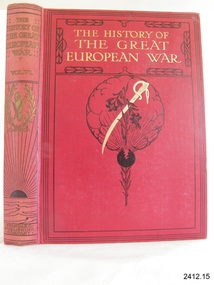 Flagstaff Hill Maritime Museum and Village
Book - Reference/History, W Stanley Macbean Knight, The History of the Great European War Set 2 Vol 6, 1914-1920
... Bow and Bromley, though he lost that seat in 1910. He was also a Conservative prospective parliamentary candidate for Tower Hamlets and Poplar. The London publishing house Caxtons, took its name from William Caxton (1422–1491), England's first printer a very common trope for English-language publishing or printing houses that wanted to invoke that heritage, like the many other separate companies that independently chose the same namesake. The firm was still trading under the same name in 1954 and again in 1958–1960, when the advertising agency J. Walter...Bow and Bromley, though he lost that seat in 1910. He was also a Conservative prospective parliamentary candidate for Tower Hamlets and Poplar. The London publishing house Caxtons, took its name from William Caxton (1422–1491), England's first printer a very common trope for English-language publishing or printing houses that wanted to invoke that heritage, like the many other separate companies that independently chose the same namesake. The firm was still trading under the same name in 1954 and again in 1958–1960, when the advertising agency J. Walter ...This set is a contemporary and popular narrative history of WWI, written and published while the war was still happening; the preface is dated 1914, but volumes were issued serially as the war progressed, meaning later volumes covering 1917–18 and the peace were released several years after the first. This is a common format for the period — compare rival serials like The Great War (Hammerton & Wilson) or Collier's The Story of the Great War — publishers issued 'instant history' in subscription parts to a public hungry for authoritative-sounding accounts. The volumes in this set cover the following topics during the First World War: Vol. I — Causes and Effects (1914): Its aims are to explain the political and diplomatic background to the war — the alliance system and the July Crisis — with the outbreak of hostilities in August 1914. Vol. II: Continues into the opening campaigns of 1914 (per Internet Archive, 'Vol 2 of 10', contemporary account). Vol. III: Descriptions note it as continuing the story of the campaign of the Allies and their mid-war campaigns. Vol. IV: Covers 1916 and the ongoing 1915–16 campaigns; this volume contains a fold-out colour map of the Serbian Retreat and one of the Italian front, featuring the Balkan and Italian theatres of war. Vols. V–VI: Continue the general campaign narrative through 1916–17. Vols. VII–VIII: Cover the later war years, focusing on 1917–18. Vols. IX–X: These volumes cover the war's final phase and the Armistice. Publication of the last volumes continued into the early 1920s, covering the peace settlement at Versailles and its aftermath.Hard Cover Book. History of The Great European War Set 2 Vol 6 Author: W Stanley Macbean Knight Publisher: The Caxton Publishing Company Ltd Clune House, 161 Surrey St, London W.C. Printer: The Standard Publishing Co. 100 Flinders St, Melbourne. Date: Various Volume Subscription Releases 1914 to 1920 Further Information: Red pictorial cloth gilt-lettered boards, each volume illustrated with a coloured frontispiece, black-and-white photographic plates, and fold-out colour maps of various fronts depending on volume(e.g. the Serbian Retreat, the Italian front etc.). Note there are two sets of this publication in the Flagstaff book collection.non-fictionThis set is a contemporary and popular narrative history of WWI, written and published while the war was still happening; the preface is dated 1914, but volumes were issued serially as the war progressed, meaning later volumes covering 1917–18 and the peace were released several years after the first. This is a common format for the period — compare rival serials like The Great War (Hammerton & Wilson) or Collier's The Story of the Great War — publishers issued 'instant history' in subscription parts to a public hungry for authoritative-sounding accounts. The volumes in this set cover the following topics during the First World War: Vol. I — Causes and Effects (1914): Its aims are to explain the political and diplomatic background to the war — the alliance system and the July Crisis — with the outbreak of hostilities in August 1914. Vol. II: Continues into the opening campaigns of 1914 (per Internet Archive, 'Vol 2 of 10', contemporary account). Vol. III: Descriptions note it as continuing the story of the campaign of the Allies and their mid-war campaigns. Vol. IV: Covers 1916 and the ongoing 1915–16 campaigns; this volume contains a fold-out colour map of the Serbian Retreat and one of the Italian front, featuring the Balkan and Italian theatres of war. Vols. V–VI: Continue the general campaign narrative through 1916–17. Vols. VII–VIII: Cover the later war years, focusing on 1917–18. Vols. IX–X: These volumes cover the war's final phase and the Armistice. Publication of the last volumes continued into the early 1920s, covering the peace settlement at Versailles and its aftermath.flagstaff hill, warrnambool, shipwrecked-coast, flagstaff-hill, flagstaff-hill-maritime-museum, maritime-museum, shipwreck-coast, flagstaff-hill-maritime-village, book, the history of the great european war vol 1 set 1, the history of the great european war, caxton printers -
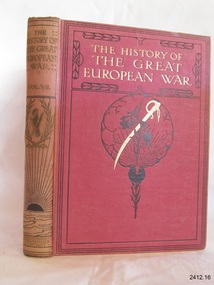 Flagstaff Hill Maritime Museum and Village
Book - Reference/History, W Stanley Macbean Knight, The History of the Great European War Set 2 Vol 7, 1914-1920
... Bow and Bromley, though he lost that seat in 1910. He was also a Conservative prospective parliamentary candidate for Tower Hamlets and Poplar. The London publishing house Caxtons, took its name from William Caxton (1422–1491), England's first printer a very common trope for English-language publishing or printing houses that wanted to invoke that heritage, like the many other separate companies that independently chose the same namesake. The firm was still trading under the same name in 1954 and again in 1958–1960, when the advertising agency J. Walter...Bow and Bromley, though he lost that seat in 1910. He was also a Conservative prospective parliamentary candidate for Tower Hamlets and Poplar. The London publishing house Caxtons, took its name from William Caxton (1422–1491), England's first printer a very common trope for English-language publishing or printing houses that wanted to invoke that heritage, like the many other separate companies that independently chose the same namesake. The firm was still trading under the same name in 1954 and again in 1958–1960, when the advertising agency J. Walter ...This set is a contemporary and popular narrative history of WWI, written and published while the war was still happening; the preface is dated 1914, but volumes were issued serially as the war progressed, meaning later volumes covering 1917–18 and the peace were released several years after the first. This is a common format for the period — compare rival serials like The Great War (Hammerton & Wilson) or Collier's The Story of the Great War — publishers issued 'instant history' in subscription parts to a public hungry for authoritative-sounding accounts. The volumes in this set cover the following topics during the First World War: Vol. I — Causes and Effects (1914): Its aims are to explain the political and diplomatic background to the war — the alliance system and the July Crisis — with the outbreak of hostilities in August 1914. Vol. II: Continues into the opening campaigns of 1914 (per Internet Archive, 'Vol 2 of 10', contemporary account). Vol. III: Descriptions note it as continuing the story of the campaign of the Allies and their mid-war campaigns. Vol. IV: Covers 1916 and the ongoing 1915–16 campaigns; this volume contains a fold-out colour map of the Serbian Retreat and one of the Italian front, featuring the Balkan and Italian theatres of war. Vols. V–VI: Continue the general campaign narrative through 1916–17. Vols. VII–VIII: Cover the later war years, focusing on 1917–18. Vols. IX–X: These volumes cover the war's final phase and the Armistice. Publication of the last volumes continued into the early 1920s, covering the peace settlement at Versailles and its aftermath.Hard Cover Book. History of The Great European War Set 2 Vol 7 Author: W Stanley Macbean Knight Publisher: The Caxton Publishing Company Ltd Clune House, 161 Surrey St, London W.C. Printer: The Standard Publishing Co. 100 Flinders St, Melbourne. Date: Various Volume Subscription Releases 1914 to 1920 Further Information: Red pictorial cloth gilt-lettered boards, each volume illustrated with a coloured frontispiece, black-and-white photographic plates, and fold-out colour maps of various fronts depending on volume(e.g. the Serbian Retreat, the Italian front etc.). Note there are two sets of this publication in the Flagstaff book collection.non-fictionThis set is a contemporary and popular narrative history of WWI, written and published while the war was still happening; the preface is dated 1914, but volumes were issued serially as the war progressed, meaning later volumes covering 1917–18 and the peace were released several years after the first. This is a common format for the period — compare rival serials like The Great War (Hammerton & Wilson) or Collier's The Story of the Great War — publishers issued 'instant history' in subscription parts to a public hungry for authoritative-sounding accounts. The volumes in this set cover the following topics during the First World War: Vol. I — Causes and Effects (1914): Its aims are to explain the political and diplomatic background to the war — the alliance system and the July Crisis — with the outbreak of hostilities in August 1914. Vol. II: Continues into the opening campaigns of 1914 (per Internet Archive, 'Vol 2 of 10', contemporary account). Vol. III: Descriptions note it as continuing the story of the campaign of the Allies and their mid-war campaigns. Vol. IV: Covers 1916 and the ongoing 1915–16 campaigns; this volume contains a fold-out colour map of the Serbian Retreat and one of the Italian front, featuring the Balkan and Italian theatres of war. Vols. V–VI: Continue the general campaign narrative through 1916–17. Vols. VII–VIII: Cover the later war years, focusing on 1917–18. Vols. IX–X: These volumes cover the war's final phase and the Armistice. Publication of the last volumes continued into the early 1920s, covering the peace settlement at Versailles and its aftermath.flagstaff hill, warrnambool, shipwrecked-coast, flagstaff-hill, flagstaff-hill-maritime-museum, maritime-museum, shipwreck-coast, flagstaff-hill-maritime-village, book, the history of the great european war vol 1 set 1, the history of the great european war, caxton printers -
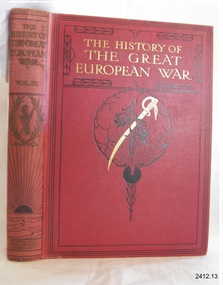 Flagstaff Hill Maritime Museum and Village
Book - Reference/History, W Stanley Macbean Knight, The History of the Great European War Set 2 Vol 4, 1914-1920
... Bow and Bromley, though he lost that seat in 1910. He was also a Conservative prospective parliamentary candidate for Tower Hamlets and Poplar. The London publishing house Caxtons, took its name from William Caxton (1422–1491), England's first printer a very common trope for English-language publishing or printing houses that wanted to invoke that heritage, like the many other separate companies that independently chose the same namesake. The firm was still trading under the same name in 1954 and again in 1958–1960, when the advertising agency J. Walter...Bow and Bromley, though he lost that seat in 1910. He was also a Conservative prospective parliamentary candidate for Tower Hamlets and Poplar. The London publishing house Caxtons, took its name from William Caxton (1422–1491), England's first printer a very common trope for English-language publishing or printing houses that wanted to invoke that heritage, like the many other separate companies that independently chose the same namesake. The firm was still trading under the same name in 1954 and again in 1958–1960, when the advertising agency J. Walter ...This set is a contemporary and popular narrative history of WWI, written and published while the war was still happening; the preface is dated 1914, but volumes were issued serially as the war progressed, meaning later volumes covering 1917–18 and the peace were released several years after the first. This is a common format for the period — compare rival serials like The Great War (Hammerton & Wilson) or Collier's The Story of the Great War — publishers issued 'instant history' in subscription parts to a public hungry for authoritative-sounding accounts. The volumes in this set cover the following topics during the First World War: Vol. I — Causes and Effects (1914): Its aims are to explain the political and diplomatic background to the war — the alliance system and the July Crisis — with the outbreak of hostilities in August 1914. Vol. II: Continues into the opening campaigns of 1914 (per Internet Archive, 'Vol 2 of 10', contemporary account). Vol. III: Descriptions note it as continuing the story of the campaign of the Allies and their mid-war campaigns. Vol. IV: Covers 1916 and the ongoing 1915–16 campaigns; this volume contains a fold-out colour map of the Serbian Retreat and one of the Italian front, featuring the Balkan and Italian theatres of war. Vols. V–VI: Continue the general campaign narrative through 1916–17. Vols. VII–VIII: Cover the later war years, focusing on 1917–18. Vols. IX–X: These volumes cover the war's final phase and the Armistice. Publication of the last volumes continued into the early 1920s, covering the peace settlement at Versailles and its aftermath.Hard Cover Book. History of The Great European War Set 2 Vol 4 Author: W Stanley Macbean Knight Publisher: The Caxton Publishing Company Ltd Clune House, 161 Surrey St, London W.C. Printer: The Standard Publishing Co. 100 Flinders St, Melbourne. Date: Various Volume Subscription Releases 1914 to 1920 Further Information: Red pictorial cloth gilt-lettered boards, each volume illustrated with a coloured frontispiece, black-and-white photographic plates, and fold-out colour maps of various fronts depending on volume(e.g. the Serbian Retreat, the Italian front etc.). Note there are two sets of this publication in the Flagstaff book collection.non-fictionThis set is a contemporary and popular narrative history of WWI, written and published while the war was still happening; the preface is dated 1914, but volumes were issued serially as the war progressed, meaning later volumes covering 1917–18 and the peace were released several years after the first. This is a common format for the period — compare rival serials like The Great War (Hammerton & Wilson) or Collier's The Story of the Great War — publishers issued 'instant history' in subscription parts to a public hungry for authoritative-sounding accounts. The volumes in this set cover the following topics during the First World War: Vol. I — Causes and Effects (1914): Its aims are to explain the political and diplomatic background to the war — the alliance system and the July Crisis — with the outbreak of hostilities in August 1914. Vol. II: Continues into the opening campaigns of 1914 (per Internet Archive, 'Vol 2 of 10', contemporary account). Vol. III: Descriptions note it as continuing the story of the campaign of the Allies and their mid-war campaigns. Vol. IV: Covers 1916 and the ongoing 1915–16 campaigns; this volume contains a fold-out colour map of the Serbian Retreat and one of the Italian front, featuring the Balkan and Italian theatres of war. Vols. V–VI: Continue the general campaign narrative through 1916–17. Vols. VII–VIII: Cover the later war years, focusing on 1917–18. Vols. IX–X: These volumes cover the war's final phase and the Armistice. Publication of the last volumes continued into the early 1920s, covering the peace settlement at Versailles and its aftermath.flagstaff hill, warrnambool, shipwrecked-coast, flagstaff-hill, flagstaff-hill-maritime-museum, maritime-museum, shipwreck-coast, flagstaff-hill-maritime-village, book, the history of the great european war vol 1 set 1, the history of the great european war, caxton printers -
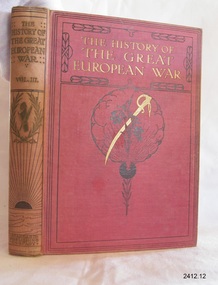 Flagstaff Hill Maritime Museum and Village
Book - Reference/History, W Stanley Macbean Knight, The History of the Great European War Set 2 Vol 3, 1914-1920
... Bow and Bromley, though he lost that seat in 1910. He was also a Conservative prospective parliamentary candidate for Tower Hamlets and Poplar. The London publishing house Caxtons, took its name from William Caxton (1422–1491), England's first printer a very common trope for English-language publishing or printing houses that wanted to invoke that heritage, like the many other separate companies that independently chose the same namesake. The firm was still trading under the same name in 1954 and again in 1958–1960, when the advertising agency J. Walter...Bow and Bromley, though he lost that seat in 1910. He was also a Conservative prospective parliamentary candidate for Tower Hamlets and Poplar. The London publishing house Caxtons, took its name from William Caxton (1422–1491), England's first printer a very common trope for English-language publishing or printing houses that wanted to invoke that heritage, like the many other separate companies that independently chose the same namesake. The firm was still trading under the same name in 1954 and again in 1958–1960, when the advertising agency J. Walter ...This set is a contemporary and popular narrative history of WWI, written and published while the war was still happening; the preface is dated 1914, but volumes were issued serially as the war progressed, meaning later volumes covering 1917–18 and the peace were released several years after the first. This is a common format for the period — compare rival serials like The Great War (Hammerton & Wilson) or Collier's The Story of the Great War — publishers issued 'instant history' in subscription parts to a public hungry for authoritative-sounding accounts. The volumes in this set cover the following topics during the First World War: Vol. I — Causes and Effects (1914): Its aims are to explain the political and diplomatic background to the war — the alliance system and the July Crisis — with the outbreak of hostilities in August 1914. Vol. II: Continues into the opening campaigns of 1914 (per Internet Archive, 'Vol 2 of 10', contemporary account). Vol. III: Descriptions note it as continuing the story of the campaign of the Allies and their mid-war campaigns. Vol. IV: Covers 1916 and the ongoing 1915–16 campaigns; this volume contains a fold-out colour map of the Serbian Retreat and one of the Italian front, featuring the Balkan and Italian theatres of war. Vols. V–VI: Continue the general campaign narrative through 1916–17. Vols. VII–VIII: Cover the later war years, focusing on 1917–18. Vols. IX–X: These volumes cover the war's final phase and the Armistice. Publication of the last volumes continued into the early 1920s, covering the peace settlement at Versailles and its aftermath.Hard Cover Book. History of The Great European War Set 2 Vol 3 Author: W Stanley Macbean Knight Publisher: The Caxton Publishing Company Ltd Clune House, 161 Surrey St, London W.C. Printer: The Standard Publishing Co. 100 Flinders St, Melbourne. Date: Various Volume Subscription Releases 1914 to 1920 Further Information: Red pictorial cloth gilt-lettered boards, each volume illustrated with a coloured frontispiece, black-and-white photographic plates, and fold-out colour maps of various fronts depending on volume(e.g. the Serbian Retreat, the Italian front etc.). Note there are two sets of this publication in the Flagstaff book collection.non-fictionThis set is a contemporary and popular narrative history of WWI, written and published while the war was still happening; the preface is dated 1914, but volumes were issued serially as the war progressed, meaning later volumes covering 1917–18 and the peace were released several years after the first. This is a common format for the period — compare rival serials like The Great War (Hammerton & Wilson) or Collier's The Story of the Great War — publishers issued 'instant history' in subscription parts to a public hungry for authoritative-sounding accounts. The volumes in this set cover the following topics during the First World War: Vol. I — Causes and Effects (1914): Its aims are to explain the political and diplomatic background to the war — the alliance system and the July Crisis — with the outbreak of hostilities in August 1914. Vol. II: Continues into the opening campaigns of 1914 (per Internet Archive, 'Vol 2 of 10', contemporary account). Vol. III: Descriptions note it as continuing the story of the campaign of the Allies and their mid-war campaigns. Vol. IV: Covers 1916 and the ongoing 1915–16 campaigns; this volume contains a fold-out colour map of the Serbian Retreat and one of the Italian front, featuring the Balkan and Italian theatres of war. Vols. V–VI: Continue the general campaign narrative through 1916–17. Vols. VII–VIII: Cover the later war years, focusing on 1917–18. Vols. IX–X: These volumes cover the war's final phase and the Armistice. Publication of the last volumes continued into the early 1920s, covering the peace settlement at Versailles and its aftermath.flagstaff hill, warrnambool, shipwrecked-coast, flagstaff-hill, flagstaff-hill-maritime-museum, maritime-museum, shipwreck-coast, flagstaff-hill-maritime-village, book, the history of the great european war vol 1 set 1, the history of the great european war, caxton printers -
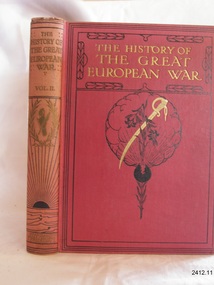 Flagstaff Hill Maritime Museum and Village
Book - Reference/History, W Stanley Macbean Knight, The History of the Great European War Set 2 Vol 2, 1914-1920
... Bow and Bromley, though he lost that seat in 1910. He was also a Conservative prospective parliamentary candidate for Tower Hamlets and Poplar. The London publishing house Caxtons, took its name from William Caxton (1422–1491), England's first printer a very common trope for English-language publishing or printing houses that wanted to invoke that heritage, like the many other separate companies that independently chose the same namesake. The firm was still trading under the same name in 1954 and again in 1958–1960, when the advertising agency J. Walter...Bow and Bromley, though he lost that seat in 1910. He was also a Conservative prospective parliamentary candidate for Tower Hamlets and Poplar. The London publishing house Caxtons, took its name from William Caxton (1422–1491), England's first printer a very common trope for English-language publishing or printing houses that wanted to invoke that heritage, like the many other separate companies that independently chose the same namesake. The firm was still trading under the same name in 1954 and again in 1958–1960, when the advertising agency J. Walter ...This set is a contemporary and popular narrative history of WWI, written and published while the war was still happening; the preface is dated 1914, but volumes were issued serially as the war progressed, meaning later volumes covering 1917–18 and the peace were released several years after the first. This is a common format for the period — compare rival serials like The Great War (Hammerton & Wilson) or Collier's The Story of the Great War — publishers issued 'instant history' in subscription parts to a public hungry for authoritative-sounding accounts. The volumes in this set cover the following topics during the First World War: Vol. I — Causes and Effects (1914): Its aims are to explain the political and diplomatic background to the war — the alliance system and the July Crisis — with the outbreak of hostilities in August 1914. Vol. II: Continues into the opening campaigns of 1914 (per Internet Archive, 'Vol 2 of 10', contemporary account). Vol. III: Descriptions note it as continuing the story of the campaign of the Allies and their mid-war campaigns. Vol. IV: Covers 1916 and the ongoing 1915–16 campaigns; this volume contains a fold-out colour map of the Serbian Retreat and one of the Italian front, featuring the Balkan and Italian theatres of war. Vols. V–VI: Continue the general campaign narrative through 1916–17. Vols. VII–VIII: Cover the later war years, focusing on 1917–18. Vols. IX–X: These volumes cover the war's final phase and the Armistice. Publication of the last volumes continued into the early 1920s, covering the peace settlement at Versailles and its aftermath.Hard Cover Book. History of The Great European War Set 2 Vol 2 Author: W Stanley Macbean Knight Publisher: The Caxton Publishing Company Ltd Clune House, 161 Surrey St, London W.C. Printer: The Standard Publishing Co. 100 Flinders St, Melbourne. Date: Various Volume Subscription Releases 1914 to 1920 Further Information: Red pictorial cloth gilt-lettered boards, each volume illustrated with a coloured frontispiece, black-and-white photographic plates, and fold-out colour maps of various fronts depending on volume(e.g. the Serbian Retreat, the Italian front etc.). Note there are two sets of this publication in the Flagstaff book collection.non-fictionThis set is a contemporary and popular narrative history of WWI, written and published while the war was still happening; the preface is dated 1914, but volumes were issued serially as the war progressed, meaning later volumes covering 1917–18 and the peace were released several years after the first. This is a common format for the period — compare rival serials like The Great War (Hammerton & Wilson) or Collier's The Story of the Great War — publishers issued 'instant history' in subscription parts to a public hungry for authoritative-sounding accounts. The volumes in this set cover the following topics during the First World War: Vol. I — Causes and Effects (1914): Its aims are to explain the political and diplomatic background to the war — the alliance system and the July Crisis — with the outbreak of hostilities in August 1914. Vol. II: Continues into the opening campaigns of 1914 (per Internet Archive, 'Vol 2 of 10', contemporary account). Vol. III: Descriptions note it as continuing the story of the campaign of the Allies and their mid-war campaigns. Vol. IV: Covers 1916 and the ongoing 1915–16 campaigns; this volume contains a fold-out colour map of the Serbian Retreat and one of the Italian front, featuring the Balkan and Italian theatres of war. Vols. V–VI: Continue the general campaign narrative through 1916–17. Vols. VII–VIII: Cover the later war years, focusing on 1917–18. Vols. IX–X: These volumes cover the war's final phase and the Armistice. Publication of the last volumes continued into the early 1920s, covering the peace settlement at Versailles and its aftermath.flagstaff hill, warrnambool, shipwrecked-coast, flagstaff-hill, flagstaff-hill-maritime-museum, maritime-museum, shipwreck-coast, flagstaff-hill-maritime-village, book, the history of the great european war vol 1 set 1, the history of the great european war, caxton printers -
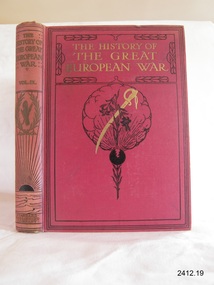 Flagstaff Hill Maritime Museum and Village
Book - Reference/History, W Stanley Macbean Knight, The History of the Great European War Vol 9 set 2-2, 1914-1920
... Bow and Bromley, though he lost that seat in 1910. He was also a Conservative prospective parliamentary candidate for Tower Hamlets and Poplar. The London publishing house Caxtons, took its name from William Caxton (1422–1491), England's first printer a very common trope for English-language publishing or printing houses that wanted to invoke that heritage, like the many other separate companies that independently chose the same namesake. The firm was still trading under the same name in 1954 and again in 1958–1960, when the advertising agency J. Walter...Bow and Bromley, though he lost that seat in 1910. He was also a Conservative prospective parliamentary candidate for Tower Hamlets and Poplar. The London publishing house Caxtons, took its name from William Caxton (1422–1491), England's first printer a very common trope for English-language publishing or printing houses that wanted to invoke that heritage, like the many other separate companies that independently chose the same namesake. The firm was still trading under the same name in 1954 and again in 1958–1960, when the advertising agency J. Walter ...This set is a contemporary and popular narrative history of WWI, written and published while the war was still happening; the preface is dated 1914, but volumes were issued serially as the war progressed, meaning later volumes covering 1917–18 and the peace were released several years after the first. This is a common format for the period — compare rival serials like The Great War (Hammerton & Wilson) or Collier's The Story of the Great War — publishers issued 'instant history' in subscription parts to a public hungry for authoritative-sounding accounts. The volumes in this set cover the following topics during the First World War: Vol. I — Causes and Effects (1914): Its aims are to explain the political and diplomatic background to the war — the alliance system and the July Crisis — with the outbreak of hostilities in August 1914. Vol. II: Continues into the opening campaigns of 1914 (per Internet Archive, 'Vol 2 of 10', contemporary account). Vol. III: Descriptions note it as continuing the story of the campaign of the Allies and their mid-war campaigns. Vol. IV: Covers 1916 and the ongoing 1915–16 campaigns; this volume contains a fold-out colour map of the Serbian Retreat and one of the Italian front, featuring the Balkan and Italian theatres of war. Vols. V–VI: Continue the general campaign narrative through 1916–17. Vols. VII–VIII: Cover the later war years, focusing on 1917–18. Vols. IX–X: These volumes cover the war's final phase and the Armistice. Publication of the last volumes continued into the early 1920s, covering the peace settlement at Versailles and its aftermath.Hard Cover Book. History of The Great European War Vol 9 set 2-2 Author: W Stanley Macbean Knight Publisher: The Caxton Publishing Company Ltd Clune House, 161 Surrey St, London W.C. Printer: The Standard Publishing Co. 100 Flinders St, Melbourne. Date: Various Volume Subscription Releases 1914 to 1920 Further Information: Red pictorial cloth gilt-lettered boards, each volume illustrated with a coloured frontispiece, black-and-white photographic plates, and fold-out colour maps of various fronts depending on volume(e.g. the Serbian Retreat, the Italian front etc.). Note there are two sets of this publication in the Flagstaff book collection.non-fictionThis set is a contemporary and popular narrative history of WWI, written and published while the war was still happening; the preface is dated 1914, but volumes were issued serially as the war progressed, meaning later volumes covering 1917–18 and the peace were released several years after the first. This is a common format for the period — compare rival serials like The Great War (Hammerton & Wilson) or Collier's The Story of the Great War — publishers issued 'instant history' in subscription parts to a public hungry for authoritative-sounding accounts. The volumes in this set cover the following topics during the First World War: Vol. I — Causes and Effects (1914): Its aims are to explain the political and diplomatic background to the war — the alliance system and the July Crisis — with the outbreak of hostilities in August 1914. Vol. II: Continues into the opening campaigns of 1914 (per Internet Archive, 'Vol 2 of 10', contemporary account). Vol. III: Descriptions note it as continuing the story of the campaign of the Allies and their mid-war campaigns. Vol. IV: Covers 1916 and the ongoing 1915–16 campaigns; this volume contains a fold-out colour map of the Serbian Retreat and one of the Italian front, featuring the Balkan and Italian theatres of war. Vols. V–VI: Continue the general campaign narrative through 1916–17. Vols. VII–VIII: Cover the later war years, focusing on 1917–18. Vols. IX–X: These volumes cover the war's final phase and the Armistice. Publication of the last volumes continued into the early 1920s, covering the peace settlement at Versailles and its aftermath.flagstaff hill, warrnambool, shipwrecked-coast, flagstaff-hill, flagstaff-hill-maritime-museum, maritime-museum, shipwreck-coast, flagstaff-hill-maritime-village, book, the history of the great european war vol 1 set 1, the history of the great european war, caxton printers -
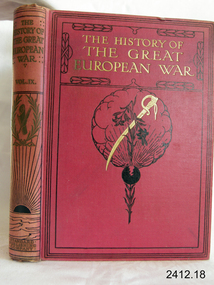 Flagstaff Hill Maritime Museum and Village
Book - Reference/History, W Stanley Macbean Knight, The History of the Great European War Set 2 Vol 9, 1914-1920
... Bow and Bromley, though he lost that seat in 1910. He was also a Conservative prospective parliamentary candidate for Tower Hamlets and Poplar. The London publishing house Caxtons, took its name from William Caxton (1422–1491), England's first printer a very common trope for English-language publishing or printing houses that wanted to invoke that heritage, like the many other separate companies that independently chose the same namesake. The firm was still trading under the same name in 1954 and again in 1958–1960, when the advertising agency J. Walter...Bow and Bromley, though he lost that seat in 1910. He was also a Conservative prospective parliamentary candidate for Tower Hamlets and Poplar. The London publishing house Caxtons, took its name from William Caxton (1422–1491), England's first printer a very common trope for English-language publishing or printing houses that wanted to invoke that heritage, like the many other separate companies that independently chose the same namesake. The firm was still trading under the same name in 1954 and again in 1958–1960, when the advertising agency J. Walter ...This set is a contemporary and popular narrative history of WWI, written and published while the war was still happening; the preface is dated 1914, but volumes were issued serially as the war progressed, meaning later volumes covering 1917–18 and the peace were released several years after the first. This is a common format for the period — compare rival serials like The Great War (Hammerton & Wilson) or Collier's The Story of the Great War — publishers issued 'instant history' in subscription parts to a public hungry for authoritative-sounding accounts. The volumes in this set cover the following topics during the First World War: Vol. I — Causes and Effects (1914): Its aims are to explain the political and diplomatic background to the war — the alliance system and the July Crisis — with the outbreak of hostilities in August 1914. Vol. II: Continues into the opening campaigns of 1914 (per Internet Archive, 'Vol 2 of 10', contemporary account). Vol. III: Descriptions note it as continuing the story of the campaign of the Allies and their mid-war campaigns. Vol. IV: Covers 1916 and the ongoing 1915–16 campaigns; this volume contains a fold-out colour map of the Serbian Retreat and one of the Italian front, featuring the Balkan and Italian theatres of war. Vols. V–VI: Continue the general campaign narrative through 1916–17. Vols. VII–VIII: Cover the later war years, focusing on 1917–18. Vols. IX–X: These volumes cover the war's final phase and the Armistice. Publication of the last volumes continued into the early 1920s, covering the peace settlement at Versailles and its aftermath.Hard Cover Book. History of The Great European War Set 2 Vol 9 Author: W Stanley Macbean Knight Publisher: The Caxton Publishing Company Ltd Clune House, 161 Surrey St, London W.C. Printer: The Standard Publishing Co. 100 Flinders St, Melbourne. Date: Various Volume Subscription Releases 1914 to 1920 Further Information: Red pictorial cloth gilt-lettered boards, each volume illustrated with a coloured frontispiece, black-and-white photographic plates, and fold-out colour maps of various fronts depending on volume(e.g. the Serbian Retreat, the Italian front etc.). Note there are two sets of this publication in the Flagstaff book collection.non-fictionThis set is a contemporary and popular narrative history of WWI, written and published while the war was still happening; the preface is dated 1914, but volumes were issued serially as the war progressed, meaning later volumes covering 1917–18 and the peace were released several years after the first. This is a common format for the period — compare rival serials like The Great War (Hammerton & Wilson) or Collier's The Story of the Great War — publishers issued 'instant history' in subscription parts to a public hungry for authoritative-sounding accounts. The volumes in this set cover the following topics during the First World War: Vol. I — Causes and Effects (1914): Its aims are to explain the political and diplomatic background to the war — the alliance system and the July Crisis — with the outbreak of hostilities in August 1914. Vol. II: Continues into the opening campaigns of 1914 (per Internet Archive, 'Vol 2 of 10', contemporary account). Vol. III: Descriptions note it as continuing the story of the campaign of the Allies and their mid-war campaigns. Vol. IV: Covers 1916 and the ongoing 1915–16 campaigns; this volume contains a fold-out colour map of the Serbian Retreat and one of the Italian front, featuring the Balkan and Italian theatres of war. Vols. V–VI: Continue the general campaign narrative through 1916–17. Vols. VII–VIII: Cover the later war years, focusing on 1917–18. Vols. IX–X: These volumes cover the war's final phase and the Armistice. Publication of the last volumes continued into the early 1920s, covering the peace settlement at Versailles and its aftermath.flagstaff hill, warrnambool, shipwrecked-coast, flagstaff-hill, flagstaff-hill-maritime-museum, maritime-museum, shipwreck-coast, flagstaff-hill-maritime-village, book, the history of the great european war vol 1 set 1, the history of the great european war, caxton printers -
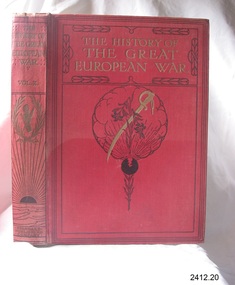 Flagstaff Hill Maritime Museum and Village
Book - Reference/History, W Stanley Macbean Knight, The History of the Great European War Set 2 Vol 10, 1914-1920
... Bow and Bromley, though he lost that seat in 1910. He was also a Conservative prospective parliamentary candidate for Tower Hamlets and Poplar. The London publishing house Caxtons, took its name from William Caxton (1422–1491), England's first printer a very common trope for English-language publishing or printing houses that wanted to invoke that heritage, like the many other separate companies that independently chose the same namesake. The firm was still trading under the same name in 1954 and again in 1958–1960, when the advertising agency J. Walter...Bow and Bromley, though he lost that seat in 1910. He was also a Conservative prospective parliamentary candidate for Tower Hamlets and Poplar. The London publishing house Caxtons, took its name from William Caxton (1422–1491), England's first printer a very common trope for English-language publishing or printing houses that wanted to invoke that heritage, like the many other separate companies that independently chose the same namesake. The firm was still trading under the same name in 1954 and again in 1958–1960, when the advertising agency J. Walter ...This set is a contemporary and popular narrative history of WWI, written and published while the war was still happening; the preface is dated 1914, but volumes were issued serially as the war progressed, meaning later volumes covering 1917–18 and the peace were released several years after the first. This is a common format for the period — compare rival serials like The Great War (Hammerton & Wilson) or Collier's The Story of the Great War — publishers issued 'instant history' in subscription parts to a public hungry for authoritative-sounding accounts. The volumes in this set cover the following topics during the First World War: Vol. I — Causes and Effects (1914): Its aims are to explain the political and diplomatic background to the war — the alliance system and the July Crisis — with the outbreak of hostilities in August 1914. Vol. II: Continues into the opening campaigns of 1914 (per Internet Archive, 'Vol 2 of 10', contemporary account). Vol. III: Descriptions note it as continuing the story of the campaign of the Allies and their mid-war campaigns. Vol. IV: Covers 1916 and the ongoing 1915–16 campaigns; this volume contains a fold-out colour map of the Serbian Retreat and one of the Italian front, featuring the Balkan and Italian theatres of war. Vols. V–VI: Continue the general campaign narrative through 1916–17. Vols. VII–VIII: Cover the later war years, focusing on 1917–18. Vols. IX–X: These volumes cover the war's final phase and the Armistice. Publication of the last volumes continued into the early 1920s, covering the peace settlement at Versailles and its aftermath.Hard Cover Book. History of The Great European War Set 2 Vol 10 Author: W Stanley Macbean Knight Publisher: The Caxton Publishing Company Ltd Clune House, 161 Surrey St, London W.C. Printer: The Standard Publishing Co. 100 Flinders St, Melbourne. Date: Various Volume Subscription Releases 1914 to 1920 Further Information: Red pictorial cloth gilt-lettered boards, each volume illustrated with a coloured frontispiece, black-and-white photographic plates, and fold-out colour maps of various fronts depending on volume(e.g. the Serbian Retreat, the Italian front etc.). Note there are two sets of this publication in the Flagstaff book collection.non-fictionThis set is a contemporary and popular narrative history of WWI, written and published while the war was still happening; the preface is dated 1914, but volumes were issued serially as the war progressed, meaning later volumes covering 1917–18 and the peace were released several years after the first. This is a common format for the period — compare rival serials like The Great War (Hammerton & Wilson) or Collier's The Story of the Great War — publishers issued 'instant history' in subscription parts to a public hungry for authoritative-sounding accounts. The volumes in this set cover the following topics during the First World War: Vol. I — Causes and Effects (1914): Its aims are to explain the political and diplomatic background to the war — the alliance system and the July Crisis — with the outbreak of hostilities in August 1914. Vol. II: Continues into the opening campaigns of 1914 (per Internet Archive, 'Vol 2 of 10', contemporary account). Vol. III: Descriptions note it as continuing the story of the campaign of the Allies and their mid-war campaigns. Vol. IV: Covers 1916 and the ongoing 1915–16 campaigns; this volume contains a fold-out colour map of the Serbian Retreat and one of the Italian front, featuring the Balkan and Italian theatres of war. Vols. V–VI: Continue the general campaign narrative through 1916–17. Vols. VII–VIII: Cover the later war years, focusing on 1917–18. Vols. IX–X: These volumes cover the war's final phase and the Armistice. Publication of the last volumes continued into the early 1920s, covering the peace settlement at Versailles and its aftermath.flagstaff hill, warrnambool, shipwrecked-coast, flagstaff-hill, flagstaff-hill-maritime-museum, maritime-museum, shipwreck-coast, flagstaff-hill-maritime-village, book, the history of the great european war vol 1 set 1, the history of the great european war, caxton printers -
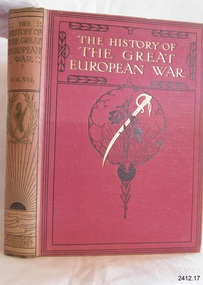 Flagstaff Hill Maritime Museum and Village
Book - Reference/History, W Stanley Macbean Knight, The History of the Great European War Set 2 Vol 8, 1914-1920
... Bow and Bromley, though he lost that seat in 1910. He was also a Conservative prospective parliamentary candidate for Tower Hamlets and Poplar. The London publishing house Caxtons, took its name from William Caxton (1422–1491), England's first printer a very common trope for English-language publishing or printing houses that wanted to invoke that heritage, like the many other separate companies that independently chose the same namesake. The firm was still trading under the same name in 1954 and again in 1958–1960, when the advertising agency J. Walter...Bow and Bromley, though he lost that seat in 1910. He was also a Conservative prospective parliamentary candidate for Tower Hamlets and Poplar. The London publishing house Caxtons, took its name from William Caxton (1422–1491), England's first printer a very common trope for English-language publishing or printing houses that wanted to invoke that heritage, like the many other separate companies that independently chose the same namesake. The firm was still trading under the same name in 1954 and again in 1958–1960, when the advertising agency J. Walter ...This set is a contemporary and popular narrative history of WWI, written and published while the war was still happening; the preface is dated 1914, but volumes were issued serially as the war progressed, meaning later volumes covering 1917–18 and the peace were released several years after the first. This is a common format for the period — compare rival serials like The Great War (Hammerton & Wilson) or Collier's The Story of the Great War — publishers issued 'instant history' in subscription parts to a public hungry for authoritative-sounding accounts. The volumes in this set cover the following topics during the First World War: Vol. I — Causes and Effects (1914): Its aims are to explain the political and diplomatic background to the war — the alliance system and the July Crisis — with the outbreak of hostilities in August 1914. Vol. II: Continues into the opening campaigns of 1914 (per Internet Archive, 'Vol 2 of 10', contemporary account). Vol. III: Descriptions note it as continuing the story of the campaign of the Allies and their mid-war campaigns. Vol. IV: Covers 1916 and the ongoing 1915–16 campaigns; this volume contains a fold-out colour map of the Serbian Retreat and one of the Italian front, featuring the Balkan and Italian theatres of war. Vols. V–VI: Continue the general campaign narrative through 1916–17. Vols. VII–VIII: Cover the later war years, focusing on 1917–18. Vols. IX–X: These volumes cover the war's final phase and the Armistice. Publication of the last volumes continued into the early 1920s, covering the peace settlement at Versailles and its aftermath.Hard Cover Book. History of The Great European War Set 2 Vol 8 Author: W Stanley Macbean Knight Publisher: The Caxton Publishing Company Ltd Clune House, 161 Surrey St, London W.C. Printer: The Standard Publishing Co. 100 Flinders St, Melbourne. Date: Various Volume Subscription Releases 1914 to 1920 Further Information: Red pictorial cloth gilt-lettered boards, each volume illustrated with a coloured frontispiece, black-and-white photographic plates, and fold-out colour maps of various fronts depending on volume(e.g. the Serbian Retreat, the Italian front etc.). Note there are two sets of this publication in the Flagstaff book collection.non-fictionThis set is a contemporary and popular narrative history of WWI, written and published while the war was still happening; the preface is dated 1914, but volumes were issued serially as the war progressed, meaning later volumes covering 1917–18 and the peace were released several years after the first. This is a common format for the period — compare rival serials like The Great War (Hammerton & Wilson) or Collier's The Story of the Great War — publishers issued 'instant history' in subscription parts to a public hungry for authoritative-sounding accounts. The volumes in this set cover the following topics during the First World War: Vol. I — Causes and Effects (1914): Its aims are to explain the political and diplomatic background to the war — the alliance system and the July Crisis — with the outbreak of hostilities in August 1914. Vol. II: Continues into the opening campaigns of 1914 (per Internet Archive, 'Vol 2 of 10', contemporary account). Vol. III: Descriptions note it as continuing the story of the campaign of the Allies and their mid-war campaigns. Vol. IV: Covers 1916 and the ongoing 1915–16 campaigns; this volume contains a fold-out colour map of the Serbian Retreat and one of the Italian front, featuring the Balkan and Italian theatres of war. Vols. V–VI: Continue the general campaign narrative through 1916–17. Vols. VII–VIII: Cover the later war years, focusing on 1917–18. Vols. IX–X: These volumes cover the war's final phase and the Armistice. Publication of the last volumes continued into the early 1920s, covering the peace settlement at Versailles and its aftermath.flagstaff hill, warrnambool, shipwrecked-coast, flagstaff-hill, flagstaff-hill-maritime-museum, maritime-museum, shipwreck-coast, flagstaff-hill-maritime-village, book, the history of the great european war vol 1 set 1, the history of the great european war, caxton printers -
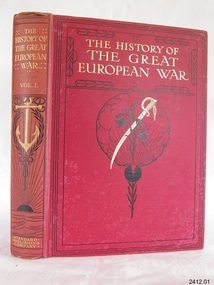 Flagstaff Hill Maritime Museum and Village
Book - Reference/History, W Stanley Macbean Knight, The History of the Great European War Set 1 Vol 1, 1914-1920
... Bow and Bromley, though he lost that seat in 1910. He was also a Conservative prospective parliamentary candidate for Tower Hamlets and Poplar. The London publishing house Caxtons, took its name from William Caxton (1422–1491), England's first printer a very common trope for English-language publishing or printing houses that wanted to invoke that heritage, like the many other separate companies that independently chose the same namesake. The firm was still trading under the same name in 1954 and again in 1958–1960, when the advertising agency J. Walter...Bow and Bromley, though he lost that seat in 1910. He was also a Conservative prospective parliamentary candidate for Tower Hamlets and Poplar. The London publishing house Caxtons, took its name from William Caxton (1422–1491), England's first printer a very common trope for English-language publishing or printing houses that wanted to invoke that heritage, like the many other separate companies that independently chose the same namesake. The firm was still trading under the same name in 1954 and again in 1958–1960, when the advertising agency J. Walter ...This set is a contemporary and popular narrative history of WWI, written and published while the war was still happening; the preface is dated 1914, but volumes were issued serially as the war progressed, meaning later volumes covering 1917–18 and the peace were released several years after the first. This is a common format for the period — compare rival serials like The Great War (Hammerton & Wilson) or Collier's The Story of the Great War — publishers issued 'instant history' in subscription parts to a public hungry for authoritative-sounding accounts. The volumes in this set cover the following topics during the First World War: Vol. I — Causes and Effects (1914): Its aims are to explain the political and diplomatic background to the war — the alliance system and the July Crisis — with the outbreak of hostilities in August 1914. Vol. II: Continues into the opening campaigns of 1914 (per Internet Archive, 'Vol 2 of 10', contemporary account). Vol. III: Descriptions note it as continuing the story of the campaign of the Allies and their mid-war campaigns. Vol. IV: Covers 1916 and the ongoing 1915–16 campaigns; this volume contains a fold-out colour map of the Serbian Retreat and one of the Italian front, featuring the Balkan and Italian theatres of war. Vols. V–VI: Continue the general campaign narrative through 1916–17. Vols. VII–VIII: Cover the later war years, focusing on 1917–18. Vols. IX–X: These volumes cover the war's final phase and the Armistice. Publication of the last volumes continued into the early 1920s, covering the peace settlement at Versailles and its aftermath.Hard Cover Book. History of The Great European War Set 1 Vol 1 Author: W Stanley Macbean Knight Publisher: The Caxton Publishing Company Ltd Clune House, 161 Surrey St, London W.C. Printer: The Standard Publishing Co. 100 Flinders St, Melbourne. Date: Various Volume Subscription Releases 1914 to 1920 Further Information: Red pictorial cloth gilt-lettered boards, each volume illustrated with a coloured frontispiece, black-and-white photographic plates, and fold-out colour maps of various fronts depending on volume(e.g. the Serbian Retreat, the Italian front etc.). Note there are two sets of this publication in the Flagstaff book collection.non-fictionThis set is a contemporary and popular narrative history of WWI, written and published while the war was still happening; the preface is dated 1914, but volumes were issued serially as the war progressed, meaning later volumes covering 1917–18 and the peace were released several years after the first. This is a common format for the period — compare rival serials like The Great War (Hammerton & Wilson) or Collier's The Story of the Great War — publishers issued 'instant history' in subscription parts to a public hungry for authoritative-sounding accounts. The volumes in this set cover the following topics during the First World War: Vol. I — Causes and Effects (1914): Its aims are to explain the political and diplomatic background to the war — the alliance system and the July Crisis — with the outbreak of hostilities in August 1914. Vol. II: Continues into the opening campaigns of 1914 (per Internet Archive, 'Vol 2 of 10', contemporary account). Vol. III: Descriptions note it as continuing the story of the campaign of the Allies and their mid-war campaigns. Vol. IV: Covers 1916 and the ongoing 1915–16 campaigns; this volume contains a fold-out colour map of the Serbian Retreat and one of the Italian front, featuring the Balkan and Italian theatres of war. Vols. V–VI: Continue the general campaign narrative through 1916–17. Vols. VII–VIII: Cover the later war years, focusing on 1917–18. Vols. IX–X: These volumes cover the war's final phase and the Armistice. Publication of the last volumes continued into the early 1920s, covering the peace settlement at Versailles and its aftermath.flagstaff hill, warrnambool, shipwrecked-coast, flagstaff-hill, flagstaff-hill-maritime-museum, maritime-museum, shipwreck-coast, flagstaff-hill-maritime-village, book, the history of the great european war vol 1 set 1, the history of the great european war, caxton printers -
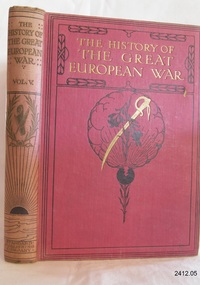 Flagstaff Hill Maritime Museum and Village
Book - Reference/History, W Stanley Macbean Knight, The History of the Great European War Set 1 Vol 5, 1914-1920
... Bow and Bromley, though he lost that seat in 1910. He was also a Conservative prospective parliamentary candidate for Tower Hamlets and Poplar. The London publishing house Caxtons, took its name from William Caxton (1422–1491), England's first printer a very common trope for English-language publishing or printing houses that wanted to invoke that heritage, like the many other separate companies that independently chose the same namesake. The firm was still trading under the same name in 1954 and again in 1958–1960, when the advertising agency J. Walter...Bow and Bromley, though he lost that seat in 1910. He was also a Conservative prospective parliamentary candidate for Tower Hamlets and Poplar. The London publishing house Caxtons, took its name from William Caxton (1422–1491), England's first printer a very common trope for English-language publishing or printing houses that wanted to invoke that heritage, like the many other separate companies that independently chose the same namesake. The firm was still trading under the same name in 1954 and again in 1958–1960, when the advertising agency J. Walter ...This set is a contemporary and popular narrative history of WWI, written and published while the war was still happening; the preface is dated 1914, but volumes were issued serially as the war progressed, meaning later volumes covering 1917–18 and the peace were released several years after the first. This is a common format for the period — compare rival serials like The Great War (Hammerton & Wilson) or Collier's The Story of the Great War — publishers issued 'instant history' in subscription parts to a public hungry for authoritative-sounding accounts. The volumes in this set cover the following topics during the First World War: Vol. I — Causes and Effects (1914): Its aims are to explain the political and diplomatic background to the war — the alliance system and the July Crisis — with the outbreak of hostilities in August 1914. Vol. II: Continues into the opening campaigns of 1914 (per Internet Archive, 'Vol 2 of 10', contemporary account). Vol. III: Descriptions note it as continuing the story of the campaign of the Allies and their mid-war campaigns. Vol. IV: Covers 1916 and the ongoing 1915–16 campaigns; this volume contains a fold-out colour map of the Serbian Retreat and one of the Italian front, featuring the Balkan and Italian theatres of war. Vols. V–VI: Continue the general campaign narrative through 1916–17. Vols. VII–VIII: Cover the later war years, focusing on 1917–18. Vols. IX–X: These volumes cover the war's final phase and the Armistice. Publication of the last volumes continued into the early 1920s, covering the peace settlement at Versailles and its aftermath.Hard Cover Book. History of The Great European War Set 1 Vol 5 Author: W Stanley Macbean Knight Publisher: The Caxton Publishing Company Ltd Clune House, 161 Surrey St, London W.C. Printer: The Standard Publishing Co. 100 Flinders St, Melbourne. Date: Various Volume Subscription Releases 1914 to 1920 Further Information: Red pictorial cloth gilt-lettered boards, each volume illustrated with a coloured frontispiece, black-and-white photographic plates, and fold-out colour maps of various fronts depending on volume(e.g. the Serbian Retreat, the Italian front etc.). Note there are two sets of this publication in the Flagstaff book collection.non-fictionThis set is a contemporary and popular narrative history of WWI, written and published while the war was still happening; the preface is dated 1914, but volumes were issued serially as the war progressed, meaning later volumes covering 1917–18 and the peace were released several years after the first. This is a common format for the period — compare rival serials like The Great War (Hammerton & Wilson) or Collier's The Story of the Great War — publishers issued 'instant history' in subscription parts to a public hungry for authoritative-sounding accounts. The volumes in this set cover the following topics during the First World War: Vol. I — Causes and Effects (1914): Its aims are to explain the political and diplomatic background to the war — the alliance system and the July Crisis — with the outbreak of hostilities in August 1914. Vol. II: Continues into the opening campaigns of 1914 (per Internet Archive, 'Vol 2 of 10', contemporary account). Vol. III: Descriptions note it as continuing the story of the campaign of the Allies and their mid-war campaigns. Vol. IV: Covers 1916 and the ongoing 1915–16 campaigns; this volume contains a fold-out colour map of the Serbian Retreat and one of the Italian front, featuring the Balkan and Italian theatres of war. Vols. V–VI: Continue the general campaign narrative through 1916–17. Vols. VII–VIII: Cover the later war years, focusing on 1917–18. Vols. IX–X: These volumes cover the war's final phase and the Armistice. Publication of the last volumes continued into the early 1920s, covering the peace settlement at Versailles and its aftermath.flagstaff hill, warrnambool, shipwrecked-coast, flagstaff-hill, flagstaff-hill-maritime-museum, maritime-museum, shipwreck-coast, flagstaff-hill-maritime-village, book, the history of the great european war vol 1 set 1, the history of the great european war, caxton printers -
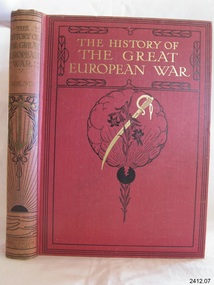 Flagstaff Hill Maritime Museum and Village
Book - Reference/History, W Stanley Macbean Knight, The History of the Great European War Set 1 Vol 7, 1914-1920
... Bow and Bromley, though he lost that seat in 1910. He was also a Conservative prospective parliamentary candidate for Tower Hamlets and Poplar. The London publishing house Caxtons, took its name from William Caxton (1422–1491), England's first printer a very common trope for English-language publishing or printing houses that wanted to invoke that heritage, like the many other separate companies that independently chose the same namesake. The firm was still trading under the same name in 1954 and again in 1958–1960, when the advertising agency J. Walter...Bow and Bromley, though he lost that seat in 1910. He was also a Conservative prospective parliamentary candidate for Tower Hamlets and Poplar. The London publishing house Caxtons, took its name from William Caxton (1422–1491), England's first printer a very common trope for English-language publishing or printing houses that wanted to invoke that heritage, like the many other separate companies that independently chose the same namesake. The firm was still trading under the same name in 1954 and again in 1958–1960, when the advertising agency J. Walter ...This set is a contemporary and popular narrative history of WWI, written and published while the war was still happening; the preface is dated 1914, but volumes were issued serially as the war progressed, meaning later volumes covering 1917–18 and the peace were released several years after the first. This is a common format for the period — compare rival serials like The Great War (Hammerton & Wilson) or Collier's The Story of the Great War — publishers issued 'instant history' in subscription parts to a public hungry for authoritative-sounding accounts. The volumes in this set cover the following topics during the First World War: Vol. I — Causes and Effects (1914): Its aims are to explain the political and diplomatic background to the war — the alliance system and the July Crisis — with the outbreak of hostilities in August 1914. Vol. II: Continues into the opening campaigns of 1914 (per Internet Archive, 'Vol 2 of 10', contemporary account). Vol. III: Descriptions note it as continuing the story of the campaign of the Allies and their mid-war campaigns. Vol. IV: Covers 1916 and the ongoing 1915–16 campaigns; this volume contains a fold-out colour map of the Serbian Retreat and one of the Italian front, featuring the Balkan and Italian theatres of war. Vols. V–VI: Continue the general campaign narrative through 1916–17. Vols. VII–VIII: Cover the later war years, focusing on 1917–18. Vols. IX–X: These volumes cover the war's final phase and the Armistice. Publication of the last volumes continued into the early 1920s, covering the peace settlement at Versailles and its aftermath.Hard Cover Book. History of The Great European War Set 1 Vol 7 Author: W Stanley Macbean Knight Publisher: The Caxton Publishing Company Ltd Clune House, 161 Surrey St, London W.C. Printer: The Standard Publishing Co. 100 Flinders St, Melbourne. Date: Various Volume Subscription Releases 1914 to 1920 Further Information: Red pictorial cloth gilt-lettered boards, each volume illustrated with a coloured frontispiece, black-and-white photographic plates, and fold-out colour maps of various fronts depending on volume(e.g. the Serbian Retreat, the Italian front etc.). Note there are two sets of this publication in the Flagstaff book collection.non-fictionThis set is a contemporary and popular narrative history of WWI, written and published while the war was still happening; the preface is dated 1914, but volumes were issued serially as the war progressed, meaning later volumes covering 1917–18 and the peace were released several years after the first. This is a common format for the period — compare rival serials like The Great War (Hammerton & Wilson) or Collier's The Story of the Great War — publishers issued 'instant history' in subscription parts to a public hungry for authoritative-sounding accounts. The volumes in this set cover the following topics during the First World War: Vol. I — Causes and Effects (1914): Its aims are to explain the political and diplomatic background to the war — the alliance system and the July Crisis — with the outbreak of hostilities in August 1914. Vol. II: Continues into the opening campaigns of 1914 (per Internet Archive, 'Vol 2 of 10', contemporary account). Vol. III: Descriptions note it as continuing the story of the campaign of the Allies and their mid-war campaigns. Vol. IV: Covers 1916 and the ongoing 1915–16 campaigns; this volume contains a fold-out colour map of the Serbian Retreat and one of the Italian front, featuring the Balkan and Italian theatres of war. Vols. V–VI: Continue the general campaign narrative through 1916–17. Vols. VII–VIII: Cover the later war years, focusing on 1917–18. Vols. IX–X: These volumes cover the war's final phase and the Armistice. Publication of the last volumes continued into the early 1920s, covering the peace settlement at Versailles and its aftermath.flagstaff hill, warrnambool, shipwrecked-coast, flagstaff-hill, flagstaff-hill-maritime-museum, maritime-museum, shipwreck-coast, flagstaff-hill-maritime-village, book, the history of the great european war vol 1 set 1, the history of the great european war, caxton printers -
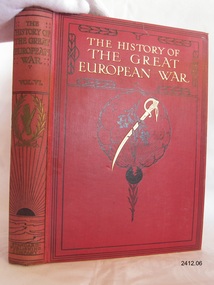 Flagstaff Hill Maritime Museum and Village
Book - Reference/History, W Stanley Macbean Knight, The History of the Great European War Set 1 Vol 6, 1914-1920
... Bow and Bromley, though he lost that seat in 1910. He was also a Conservative prospective parliamentary candidate for Tower Hamlets and Poplar. The London publishing house Caxtons, took its name from William Caxton (1422–1491), England's first printer a very common trope for English-language publishing or printing houses that wanted to invoke that heritage, like the many other separate companies that independently chose the same namesake. The firm was still trading under the same name in 1954 and again in 1958–1960, when the advertising agency J. Walter...Bow and Bromley, though he lost that seat in 1910. He was also a Conservative prospective parliamentary candidate for Tower Hamlets and Poplar. The London publishing house Caxtons, took its name from William Caxton (1422–1491), England's first printer a very common trope for English-language publishing or printing houses that wanted to invoke that heritage, like the many other separate companies that independently chose the same namesake. The firm was still trading under the same name in 1954 and again in 1958–1960, when the advertising agency J. Walter ...This set is a contemporary and popular narrative history of WWI, written and published while the war was still happening; the preface is dated 1914, but volumes were issued serially as the war progressed, meaning later volumes covering 1917–18 and the peace were released several years after the first. This is a common format for the period — compare rival serials like The Great War (Hammerton & Wilson) or Collier's The Story of the Great War — publishers issued 'instant history' in subscription parts to a public hungry for authoritative-sounding accounts. The volumes in this set cover the following topics during the First World War: Vol. I — Causes and Effects (1914): Its aims are to explain the political and diplomatic background to the war — the alliance system and the July Crisis — with the outbreak of hostilities in August 1914. Vol. II: Continues into the opening campaigns of 1914 (per Internet Archive, 'Vol 2 of 10', contemporary account). Vol. III: Descriptions note it as continuing the story of the campaign of the Allies and their mid-war campaigns. Vol. IV: Covers 1916 and the ongoing 1915–16 campaigns; this volume contains a fold-out colour map of the Serbian Retreat and one of the Italian front, featuring the Balkan and Italian theatres of war. Vols. V–VI: Continue the general campaign narrative through 1916–17. Vols. VII–VIII: Cover the later war years, focusing on 1917–18. Vols. IX–X: These volumes cover the war's final phase and the Armistice. Publication of the last volumes continued into the early 1920s, covering the peace settlement at Versailles and its aftermath.Hard Cover Book. History of The Great European War Set 1 Vol 6 Author: W Stanley Macbean Knight Publisher: The Caxton Publishing Company Ltd Clune House, 161 Surrey St, London W.C. Printer: The Standard Publishing Co. 100 Flinders St, Melbourne. Date: Various Volume Subscription Releases 1914 to 1920 Further Information: Red pictorial cloth gilt-lettered boards, each volume illustrated with a coloured frontispiece, black-and-white photographic plates, and fold-out colour maps of various fronts depending on volume(e.g. the Serbian Retreat, the Italian front etc.). Note there are two sets of this publication in the Flagstaff book collection.non-fictionThis set is a contemporary and popular narrative history of WWI, written and published while the war was still happening; the preface is dated 1914, but volumes were issued serially as the war progressed, meaning later volumes covering 1917–18 and the peace were released several years after the first. This is a common format for the period — compare rival serials like The Great War (Hammerton & Wilson) or Collier's The Story of the Great War — publishers issued 'instant history' in subscription parts to a public hungry for authoritative-sounding accounts. The volumes in this set cover the following topics during the First World War: Vol. I — Causes and Effects (1914): Its aims are to explain the political and diplomatic background to the war — the alliance system and the July Crisis — with the outbreak of hostilities in August 1914. Vol. II: Continues into the opening campaigns of 1914 (per Internet Archive, 'Vol 2 of 10', contemporary account). Vol. III: Descriptions note it as continuing the story of the campaign of the Allies and their mid-war campaigns. Vol. IV: Covers 1916 and the ongoing 1915–16 campaigns; this volume contains a fold-out colour map of the Serbian Retreat and one of the Italian front, featuring the Balkan and Italian theatres of war. Vols. V–VI: Continue the general campaign narrative through 1916–17. Vols. VII–VIII: Cover the later war years, focusing on 1917–18. Vols. IX–X: These volumes cover the war's final phase and the Armistice. Publication of the last volumes continued into the early 1920s, covering the peace settlement at Versailles and its aftermath.flagstaff hill, warrnambool, shipwrecked-coast, flagstaff-hill, flagstaff-hill-maritime-museum, maritime-museum, shipwreck-coast, flagstaff-hill-maritime-village, book, the history of the great european war vol 1 set 1, the history of the great european war, caxton printers -
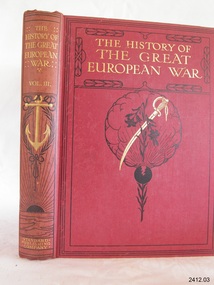 Flagstaff Hill Maritime Museum and Village
Book - Reference/History, W Stanley Macbean Knight, The History of the Great European War Set 1 Vol 3, 1914-1920
... Bow and Bromley, though he lost that seat in 1910. He was also a Conservative prospective parliamentary candidate for Tower Hamlets and Poplar. The London publishing house Caxtons, took its name from William Caxton (1422–1491), England's first printer a very common trope for English-language publishing or printing houses that wanted to invoke that heritage, like the many other separate companies that independently chose the same namesake. The firm was still trading under the same name in 1954 and again in 1958–1960, when the advertising agency J. Walter...Bow and Bromley, though he lost that seat in 1910. He was also a Conservative prospective parliamentary candidate for Tower Hamlets and Poplar. The London publishing house Caxtons, took its name from William Caxton (1422–1491), England's first printer a very common trope for English-language publishing or printing houses that wanted to invoke that heritage, like the many other separate companies that independently chose the same namesake. The firm was still trading under the same name in 1954 and again in 1958–1960, when the advertising agency J. Walter ...This set is a contemporary and popular narrative history of WWI, written and published while the war was still happening; the preface is dated 1914, but volumes were issued serially as the war progressed, meaning later volumes covering 1917–18 and the peace were released several years after the first. This is a common format for the period — compare rival serials like The Great War (Hammerton & Wilson) or Collier's The Story of the Great War — publishers issued 'instant history' in subscription parts to a public hungry for authoritative-sounding accounts. The volumes in this set cover the following topics during the First World War: Vol. I — Causes and Effects (1914): Its aims are to explain the political and diplomatic background to the war — the alliance system and the July Crisis — with the outbreak of hostilities in August 1914. Vol. II: Continues into the opening campaigns of 1914 (per Internet Archive, 'Vol 2 of 10', contemporary account). Vol. III: Descriptions note it as continuing the story of the campaign of the Allies and their mid-war campaigns. Vol. IV: Covers 1916 and the ongoing 1915–16 campaigns; this volume contains a fold-out colour map of the Serbian Retreat and one of the Italian front, featuring the Balkan and Italian theatres of war. Vols. V–VI: Continue the general campaign narrative through 1916–17. Vols. VII–VIII: Cover the later war years, focusing on 1917–18. Vols. IX–X: These volumes cover the war's final phase and the Armistice. Publication of the last volumes continued into the early 1920s, covering the peace settlement at Versailles and its aftermath.Hard Cover Book. History of The Great European War Set 1 Vol 3 Author: W Stanley Macbean Knight Publisher: The Caxton Publishing Company Ltd Clune House, 161 Surrey St, London W.C. Printer: The Standard Publishing Co. 100 Flinders St, Melbourne. Date: Various Volume Subscription Releases 1914 to 1920 Further Information: Red pictorial cloth gilt-lettered boards, each volume illustrated with a coloured frontispiece, black-and-white photographic plates, and fold-out colour maps of various fronts depending on volume(e.g. the Serbian Retreat, the Italian front etc.). Note there are two sets of this publication in the Flagstaff book collection.non-fictionThis set is a contemporary and popular narrative history of WWI, written and published while the war was still happening; the preface is dated 1914, but volumes were issued serially as the war progressed, meaning later volumes covering 1917–18 and the peace were released several years after the first. This is a common format for the period — compare rival serials like The Great War (Hammerton & Wilson) or Collier's The Story of the Great War — publishers issued 'instant history' in subscription parts to a public hungry for authoritative-sounding accounts. The volumes in this set cover the following topics during the First World War: Vol. I — Causes and Effects (1914): Its aims are to explain the political and diplomatic background to the war — the alliance system and the July Crisis — with the outbreak of hostilities in August 1914. Vol. II: Continues into the opening campaigns of 1914 (per Internet Archive, 'Vol 2 of 10', contemporary account). Vol. III: Descriptions note it as continuing the story of the campaign of the Allies and their mid-war campaigns. Vol. IV: Covers 1916 and the ongoing 1915–16 campaigns; this volume contains a fold-out colour map of the Serbian Retreat and one of the Italian front, featuring the Balkan and Italian theatres of war. Vols. V–VI: Continue the general campaign narrative through 1916–17. Vols. VII–VIII: Cover the later war years, focusing on 1917–18. Vols. IX–X: These volumes cover the war's final phase and the Armistice. Publication of the last volumes continued into the early 1920s, covering the peace settlement at Versailles and its aftermath.flagstaff hill, warrnambool, shipwrecked-coast, flagstaff-hill, flagstaff-hill-maritime-museum, maritime-museum, shipwreck-coast, flagstaff-hill-maritime-village, book, the history of the great european war vol 1 set 1, the history of the great european war, caxton printers -
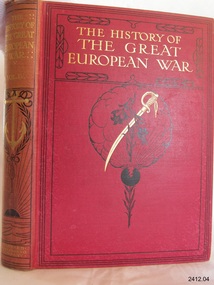 Flagstaff Hill Maritime Museum and Village
Book - Reference/History, W Stanley Macbean Knight, The History of the Great European War Set 1 Vol 4, 1914-1920
... Bow and Bromley, though he lost that seat in 1910. He was also a Conservative prospective parliamentary candidate for Tower Hamlets and Poplar. The London publishing house Caxtons, took its name from William Caxton (1422–1491), England's first printer a very common trope for English-language publishing or printing houses that wanted to invoke that heritage, like the many other separate companies that independently chose the same namesake. The firm was still trading under the same name in 1954 and again in 1958–1960, when the advertising agency J. Walter...Bow and Bromley, though he lost that seat in 1910. He was also a Conservative prospective parliamentary candidate for Tower Hamlets and Poplar. The London publishing house Caxtons, took its name from William Caxton (1422–1491), England's first printer a very common trope for English-language publishing or printing houses that wanted to invoke that heritage, like the many other separate companies that independently chose the same namesake. The firm was still trading under the same name in 1954 and again in 1958–1960, when the advertising agency J. Walter ...This set is a contemporary and popular narrative history of WWI, written and published while the war was still happening; the preface is dated 1914, but volumes were issued serially as the war progressed, meaning later volumes covering 1917–18 and the peace were released several years after the first. This is a common format for the period — compare rival serials like The Great War (Hammerton & Wilson) or Collier's The Story of the Great War — publishers issued 'instant history' in subscription parts to a public hungry for authoritative-sounding accounts. The volumes in this set cover the following topics during the First World War: Vol. I — Causes and Effects (1914): Its aims are to explain the political and diplomatic background to the war — the alliance system and the July Crisis — with the outbreak of hostilities in August 1914. Vol. II: Continues into the opening campaigns of 1914 (per Internet Archive, 'Vol 2 of 10', contemporary account). Vol. III: Descriptions note it as continuing the story of the campaign of the Allies and their mid-war campaigns. Vol. IV: Covers 1916 and the ongoing 1915–16 campaigns; this volume contains a fold-out colour map of the Serbian Retreat and one of the Italian front, featuring the Balkan and Italian theatres of war. Vols. V–VI: Continue the general campaign narrative through 1916–17. Vols. VII–VIII: Cover the later war years, focusing on 1917–18. Vols. IX–X: These volumes cover the war's final phase and the Armistice. Publication of the last volumes continued into the early 1920s, covering the peace settlement at Versailles and its aftermath.Hard Cover Book. History of The Great European War Set 1 Vol 4 Author: W Stanley Macbean Knight Publisher: The Caxton Publishing Company Ltd Clune House, 161 Surrey St, London W.C. Printer: The Standard Publishing Co. 100 Flinders St, Melbourne. Date: Various Volume Subscription Releases 1914 to 1920 Further Information: Red pictorial cloth gilt-lettered boards, each volume illustrated with a coloured frontispiece, black-and-white photographic plates, and fold-out colour maps of various fronts depending on volume(e.g. the Serbian Retreat, the Italian front etc.). Note there are two sets of this publication in the Flagstaff book collection.non-fictionThis set is a contemporary and popular narrative history of WWI, written and published while the war was still happening; the preface is dated 1914, but volumes were issued serially as the war progressed, meaning later volumes covering 1917–18 and the peace were released several years after the first. This is a common format for the period — compare rival serials like The Great War (Hammerton & Wilson) or Collier's The Story of the Great War — publishers issued 'instant history' in subscription parts to a public hungry for authoritative-sounding accounts. The volumes in this set cover the following topics during the First World War: Vol. I — Causes and Effects (1914): Its aims are to explain the political and diplomatic background to the war — the alliance system and the July Crisis — with the outbreak of hostilities in August 1914. Vol. II: Continues into the opening campaigns of 1914 (per Internet Archive, 'Vol 2 of 10', contemporary account). Vol. III: Descriptions note it as continuing the story of the campaign of the Allies and their mid-war campaigns. Vol. IV: Covers 1916 and the ongoing 1915–16 campaigns; this volume contains a fold-out colour map of the Serbian Retreat and one of the Italian front, featuring the Balkan and Italian theatres of war. Vols. V–VI: Continue the general campaign narrative through 1916–17. Vols. VII–VIII: Cover the later war years, focusing on 1917–18. Vols. IX–X: These volumes cover the war's final phase and the Armistice. Publication of the last volumes continued into the early 1920s, covering the peace settlement at Versailles and its aftermath.flagstaff hill, warrnambool, shipwrecked-coast, flagstaff-hill, flagstaff-hill-maritime-museum, maritime-museum, shipwreck-coast, flagstaff-hill-maritime-village, book, the history of the great european war vol 1 set 1, the history of the great european war, caxton printers -
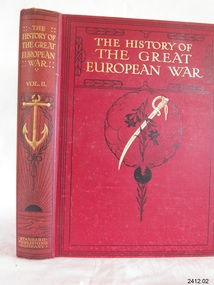 Flagstaff Hill Maritime Museum and Village
Book - Reference/History, W Stanley Macbean Knight, The History of the Great European War Set 1 Vol 2, 1914-1920
... Bow and Bromley, though he lost that seat in 1910. He was also a Conservative prospective parliamentary candidate for Tower Hamlets and Poplar. The London publishing house Caxtons, took its name from William Caxton (1422–1491), England's first printer a very common trope for English-language publishing or printing houses that wanted to invoke that heritage, like the many other separate companies that independently chose the same namesake. The firm was still trading under the same name in 1954 and again in 1958–1960, when the advertising agency J. Walter...Bow and Bromley, though he lost that seat in 1910. He was also a Conservative prospective parliamentary candidate for Tower Hamlets and Poplar. The London publishing house Caxtons, took its name from William Caxton (1422–1491), England's first printer a very common trope for English-language publishing or printing houses that wanted to invoke that heritage, like the many other separate companies that independently chose the same namesake. The firm was still trading under the same name in 1954 and again in 1958–1960, when the advertising agency J. Walter ...This set is a contemporary and popular narrative history of WWI, written and published while the war was still happening; the preface is dated 1914, but volumes were issued serially as the war progressed, meaning later volumes covering 1917–18 and the peace were released several years after the first. This is a common format for the period — compare rival serials like The Great War (Hammerton & Wilson) or Collier's The Story of the Great War — publishers issued 'instant history' in subscription parts to a public hungry for authoritative-sounding accounts. The volumes in this set cover the following topics during the First World War: Vol. I — Causes and Effects (1914): Its aims are to explain the political and diplomatic background to the war — the alliance system and the July Crisis — with the outbreak of hostilities in August 1914. Vol. II: Continues into the opening campaigns of 1914 (per Internet Archive, 'Vol 2 of 10', contemporary account). Vol. III: Descriptions note it as continuing the story of the campaign of the Allies and their mid-war campaigns. Vol. IV: Covers 1916 and the ongoing 1915–16 campaigns; this volume contains a fold-out colour map of the Serbian Retreat and one of the Italian front, featuring the Balkan and Italian theatres of war. Vols. V–VI: Continue the general campaign narrative through 1916–17. Vols. VII–VIII: Cover the later war years, focusing on 1917–18. Vols. IX–X: These volumes cover the war's final phase and the Armistice. Publication of the last volumes continued into the early 1920s, covering the peace settlement at Versailles and its aftermath.Hard Cover Book. History of The Great European War Set 1 Vol 2 Author: W Stanley Macbean Knight Publisher: The Caxton Publishing Company Ltd Clune House, 161 Surrey St, London W.C. Printer: The Standard Publishing Co. 100 Flinders St, Melbourne. Date: Various Volume Subscription Releases 1914 to 1920 Further Information: Red pictorial cloth gilt-lettered boards, each volume illustrated with a coloured frontispiece, black-and-white photographic plates, and fold-out colour maps of various fronts depending on volume(e.g. the Serbian Retreat, the Italian front etc.). Note there are two sets of this publication in the Flagstaff book collection.non-fictionThis set is a contemporary and popular narrative history of WWI, written and published while the war was still happening; the preface is dated 1914, but volumes were issued serially as the war progressed, meaning later volumes covering 1917–18 and the peace were released several years after the first. This is a common format for the period — compare rival serials like The Great War (Hammerton & Wilson) or Collier's The Story of the Great War — publishers issued 'instant history' in subscription parts to a public hungry for authoritative-sounding accounts. The volumes in this set cover the following topics during the First World War: Vol. I — Causes and Effects (1914): Its aims are to explain the political and diplomatic background to the war — the alliance system and the July Crisis — with the outbreak of hostilities in August 1914. Vol. II: Continues into the opening campaigns of 1914 (per Internet Archive, 'Vol 2 of 10', contemporary account). Vol. III: Descriptions note it as continuing the story of the campaign of the Allies and their mid-war campaigns. Vol. IV: Covers 1916 and the ongoing 1915–16 campaigns; this volume contains a fold-out colour map of the Serbian Retreat and one of the Italian front, featuring the Balkan and Italian theatres of war. Vols. V–VI: Continue the general campaign narrative through 1916–17. Vols. VII–VIII: Cover the later war years, focusing on 1917–18. Vols. IX–X: These volumes cover the war's final phase and the Armistice. Publication of the last volumes continued into the early 1920s, covering the peace settlement at Versailles and its aftermath.flagstaff hill, warrnambool, shipwrecked-coast, flagstaff-hill, flagstaff-hill-maritime-museum, maritime-museum, shipwreck-coast, flagstaff-hill-maritime-village, book, the history of the great european war vol 1 set 1, the history of the great european war, caxton printers -
 Emerald Museum & Nobelius Heritage Park
Tool - Saw set, A.E. Cunningham
... Donated by Norma Baguley, belonged to her husband Walter Baguley. Used to set the angle of the teeth on a bow saw or a buck saw. ...Donated by Norma Baguley, belonged to her husband Walter Baguley. Used to set the angle of the teeth on a bow saw or a buck saw. ...Donated by Norma Baguley, belonged to her husband Walter Baguley. Used to set the angle of the teeth on a bow saw or a buck saw. Inscription on brass plate. Used on his property in Florence Avenue from the 1940s.Metal tool with moving parts, made of cast iron with brass plate; wooden handleA.E. Cunningham, Worcester Mass, USA Pat 9408emerald, victoria, australia, tools, timber industry, norma baguley
