
Showing 32 items matching "water heaters"
-
 Bendigo Historical Society Inc.
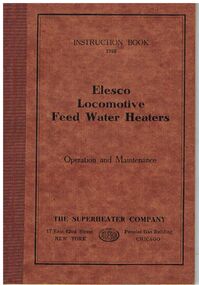
Book - BADHAM COLLECTION: 1925 INSTRUCTION BOOK - ELESCO LOCOMOTIVE FEED WATER HEATERS
... BADHAM COLLECTION: 1925 INSTRUCTION BOOK - ELESCO LOCOMOTIVE FEED WATER HEATERS...Elesco Locomotive Feed Water Heaters. The Superheater company 17 East 42nd Street new York....Elesco Locomotive Feed Water Heaters, operation and maintenance. The Superheater Company, 17 East 42nd Street new York, peoples gas building Chicago, Copyright 1925. ...Book BADHAM COLLECTION: 1925 INSTRUCTION BOOK - ELESCO LOCOMOTIVE FEED WATER HEATERS ...Instruction Book 1925. Elesco Locomotive Feed Water Heaters, operation and maintenance. The Superheater Company, 17 East 42nd Street new York, peoples gas building Chicago, Copyright 1925. Inside the cover is a branch rubber stamp, The Superheater company (Australia) Ltd, Manchester unity Building, 185 Elizabeth St, Sydney NSW. The book has a small brown cardboard cover with purple binding.document, memo, railway, elesco locomotive feed water heaters. the superheater company 17 east 42nd street new york. -
 Flagstaff Hill Maritime Museum and Village
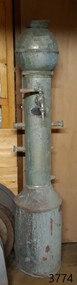
Functional object - Water Boiler, Jackson Boilers Ltd, 1920s
... ...water heaters...Flagstaff Hill Maritime Museum and Village Flagstaff Hill Maritime Museum Flagstaff Hill Maritime Museum Maritime Village Warrnambool Great Ocean Road Leeds Jackson Boilers Ltd Jackson Boilers Henry Jackson brass founders electro platers sheet metal works Patent Water Boilers Leeds manufacturer tube water boiler domestic boiler tube domestic boiler tube boiler water heaters water boilers self-feeding water boilers sheet metal work instantaneous water heaters engineering allied trades metal workers metal trade food machinery hospitality equipment ship equipment ship water boiler ship heater catering boilers café boiler restaurant boiler canteen boiler Catering Equipment Manufacturers’ Association CEMA kitchen equipment kitchen appliance war work World War I WWI picric acid picric acid cases fuse hole plugs electro plated fuse hole plugs Reginald M cargo ship Port Adelaide 1922 John Murch Jackson Boilers Leeds Ltd. ...Jackson Boilers Ltd., brass founders, electro platers and sheet metal works made this tube water boiler. It was a fitting in the vessel Reginald M, a small cargo ship built at Port Adelaide in 1922 and named after her builder and first owner, John Murch. The Reginald M was launched at Largs Bay, South Australia, in 1922 to carry cargo around South Australia that included guano, barley, wool, horses, cattle, timber, explosives, potatoes, shell grit, and gypsum. It passed through numerous owners over the years and primarily maintained its purpose as a cargo vessel. In 1975, the decommissioned Reginald M was purchased by Flagstaff Hill Maritime Museum as an attraction. Although restoration efforts were undertaken and maintained for the craft above the water line, deterioration occurred below the surface and resulted in the ship being unsafe for visitors to board. It was broken up and removed from Flagstaff Hill in 2018, but items such as the historical boiler remain in Flagstaff Hill’s Collection. JACKSON BOILERS LTD.: - In 1911, Henry Jackson was the Managing Director at Jackson Boilers Ltd. He had gained around 30 years’ experience as a tin plate worker, plumber and gas fitter at Ilkey in 1881, then at Leeds by 1901. By 1921, he had changed employment from Jackson Boilers to Managing Director of Patent Water Boilers. During World War I, Jackson Boilers Ltd of Leeds performed war work like many other manufacturers at that time. The firm made cases for the explosive picric acid and electroplated fuse hole plugs. In 1918, the firm employed 15 males and 19 females. Jacksons Boilers became very successful throughout the first half of the twentieth century with showrooms and sales offices in Scotland, the Midlands and Southern England. It also had an office in Dublin, Ireland. In the post-war 1920s, the firm’s production included instantaneous water boilers and coffee machines for cafes, restaurants and canteens. Jackson Boilers also began to supply shipping lines with catering water boilers for their ships. The firm applied for a USA patent for the tube boiler in 1930, for the design which appears to have been invented in 1926. A 1971 advertisement adds the credentials, Members of the Catering Equipment Manufacturers’ Association. The tube water boiler was designed specifically for use in a ship's restaurant or dining area and patented by Jackson Boilers Ltd. of Leeds. The boiler is significant as a patented design, illustrating the evolution of maritime, commercial and domestic water boilers that have led to many innervations and improvements in today's boilers that are used in heating and in producing hot water for domestic and catering use. It is also significant as it is one of the earlier boilers the Jackson company made in the early 1920s before they applied for a US patent on their revised design in 1926.Water boiler, free standing Jackson's Tube boiler. A tall metal cylindrical stand with a metal sphere on top and several pipe fittings on the sides. A brass tap with a lever handle is connected to the front. A plaque with maker's details is attached under the tap. Details are also impressed into the cylinder above the tap.Jackson Boilers Leeds Ltd. "JACKSON'S PATENT" . Other details indecipherable. flagstaff hill maritime museum and village, flagstaff hill maritime museum, flagstaff hill, maritime museum, maritime village, warrnambool, great ocean road, leeds, jackson boilers ltd, jackson boilers, henry jackson, brass founders, electro platers, sheet metal works, patent water boilers, leeds manufacturer, tube water boiler, domestic boiler, tube domestic boiler, tube boiler, water heaters, water boilers, self-feeding water boilers, sheet metal work instantaneous water heaters, engineering, allied trades, metal workers, metal trade, food machinery, hospitality equipment, ship equipment, ship water boiler, ship heater, catering boilers, café boiler, restaurant boiler, canteen boiler, catering equipment manufacturers’ association, cema, kitchen equipment, kitchen appliance, war work, world war i, wwi, picric acid, picric acid cases, fuse hole plugs, electro plated fuse hole plugs, reginald m, cargo ship, port adelaide, 1922, john murch -
 Federation University Historical Collection
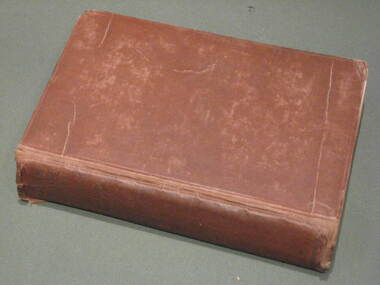
Book, William Ripper, Steam-Engine Theory and Practice, 1914
... ...feed-water heaters...Used at Ballarat School of Mines compound engines thermodynamics of gases properties of steam temperature-entropy diagrams superheated steam steam-jacket feed-water heaters crank-shaft flywheels corliss engine steam turbine condensers friction of engines steam-engine william ripper steam On the inside cover it is stamped with The School of Mines Ballarat and written in pencil is 1914 and E K. ...Used at Ballarat School of MinesThe cover is a red brown colour with the title on the spine and the publisher Longmans & Co printed near base of the spine. The book has 496 illustrations throughout with some pull out plates. Pages 514.On the inside cover it is stamped with The School of Mines Ballarat and written in pencil is 1914 and E K.compound engines, thermodynamics of gases, properties of steam, temperature-entropy diagrams, superheated steam, steam-jacket, feed-water heaters, crank-shaft, flywheels, corliss engine, steam turbine, condensers, friction of engines, steam-engine, william ripper, steam -
 National Vietnam Veterans Museum (NVVM)
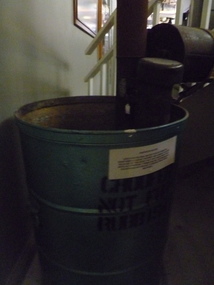
Equipment - Equipment, Army, Immersion Heater
... Hot water heater consisting of a barrel, flue, fuel tank and an igniting unit....Immersion heater Choofer Choofer not for rubbish. 4540-SG-10G-033G Hot water heater consisting of a barrel, flue, fuel tank and an igniting unit. ...Hot water heater consisting of a barrel, flue, fuel tank and an igniting unit.Choofer not for rubbish. 4540-SG-10G-033Gimmersion heater, choofer -
 Federation University Historical Collection
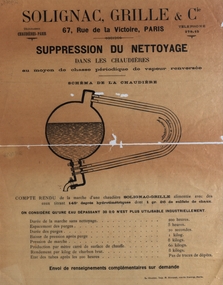
Document, Advertisement for Water Heater Cleaner from France
... Advertisement for Water Heater Cleaner from France......Hot Water Heater Cleaner...Advertisement for Water Heater Cleaner from France under the name Solignac, Grille and Cie...Solignac Grille and Company Henry Sutton Hot Water Heater Cleaner Advertisement Advertisement for Water Heater Cleaner from France under the name Solignac, Grille and Cie Advertisement for Water Heater Cleaner from France Document ...Henry Sutton is a talented world-wide accepted inventor with inventions relating to the telephone, photography, wireless, cars, motorcycles, and bicycles as well as many more inventions. Henry was also one of four brothers that ran the Sutton's Music Store after the death of their Father Richard Sutton. Henry Sutton taught Applied Electricity at the Ballarat School of Mines in 1883 to 1886.Advertisement for Water Heater Cleaner from France under the name Solignac, Grille and Ciesolignac grille and company, henry sutton, hot water heater cleaner, advertisement -
 Bendigo Historical Society Inc.
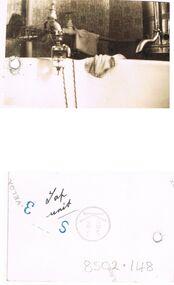
Photograph - BILL ASHMAN COLLECTION: TAP UNIT
... Photo shows a water heater? On the right. Tap unit written on the back....Photo shows a water heater? On the right. Tap unit written on the back. ...Small sepia? Photo of a tap unit. Photo shows a water heater? On the right. Tap unit written on the back.sciences, instruments - general, scalebuoy, bill ashman collection - correspondence, scalebuoy tap unit -
 Bendigo Historical Society Inc.
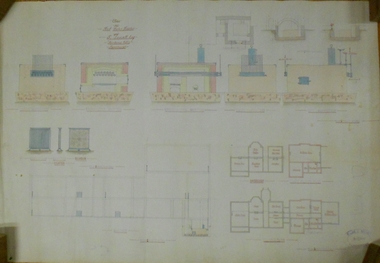
Document - MARKS COLLECTION: PLAN OF HOT WATER HEATER FORTUNA FOR G. LANSELL
... MARKS COLLECTION: PLAN OF HOT WATER HEATER FORTUNA FOR G. LANSELL...Plan of hot water heater, Fortuna Villa, drawn on heavy paper. ...BENDIGO House fortuna villa Plan of hot water heater, Fortuna Villa, drawn on heavy paper. ...Plan of hot water heater, Fortuna Villa, drawn on heavy paper. On top of plan in red ink 'Plan of Hot Water Heater for G. Lansell Esq for Fortuna Villa Sandhurst' Drawings show front, transverse, longitudinal, back and side elevations of heater, also back, side and front elevation of individual water heaters, including one with ornate screen. On bottom of document: floor plans of ground plan and basement. Plan stamped on RH bottom: William C. Vahland, Architect, Sandhurst.bendigo, house, fortuna villa -
 Hand Tool Preservation Association of Australia Inc
Diagram
... Diagram hot water supply system + heaters...Diagram hot water supply system + heaters Diagram ...This item is part of the Thomas Caine Tool Collection, owned by The National Trust of Australia (Victoria) and curated by the Hand Tools Preservation Association of Australia.Diagram hot water supply system + heaters -
 Bendigo Historical Society Inc.
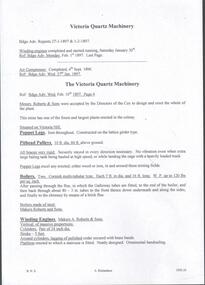
Document - VICTORIA QUARTZ - VICTORIA QUARTZ MACHINERY
... Items mentioned are: Poppet Legs, Pithead Pulleys, Braces, Boilers, Winding Engines, Platform, Air Compressor, Boiler Feed Pump and a Feed-water Heater which was attached to the main exhaust pipe of the winding engines....Items mentioned are: Poppet Legs, Pithead Pulleys, Braces, Boilers, Winding Engines, Platform, Air Compressor, Boiler Feed Pump and a Feed-water Heater which was attached to the main exhaust pipe of the winding engines. ...Handwritten notes describing the machinery at the Victoria Quartz Mine. Items mentioned are: Poppet Legs, Pithead Pulleys, Braces, Boilers, Winding Engines, Platform, Air Compressor, Boiler Feed Pump and a Feed-water Heater which was attached to the main exhaust pipe of the winding engines.document, gold, victoria quartz, victoria quartz, victoria quartz machinery, bendigo advertiser1/2/1897 & 4/9/1896 & 10/2/1897, roberts & sons, mr w foote, mr ennor -
 Bendigo Historical Society Inc.
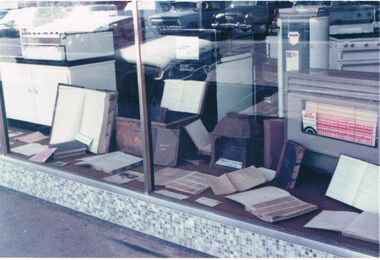
Photograph - CASTLEMAINE GAS COMPANY COLLECTION: SHOP FRONT
... Display consists of gas stove place don top of cupboard left side, gas heater right side, on floor in front of display are a number of books, sheets of paper, book containing newspaper cuttings open, background off centre right water heater....Display consists of gas stove place don top of cupboard left side, gas heater right side, on floor in front of display are a number of books, sheets of paper, book containing newspaper cuttings open, background off centre right water heater. Photograph CASTLEMAINE GAS COMPANY COLLECTION: SHOP FRONT ...BHS CollectionCollection Castlemaine Gas & Fuel. Colour photo of shop front window. Display consists of gas stove place don top of cupboard left side, gas heater right side, on floor in front of display are a number of books, sheets of paper, book containing newspaper cuttings open, background off centre right water heater.business, retail, gas and fuel showroom -
 Ballarat Tramway Museum
Pamphlet, State Electricity Commission of Victoria (SECV), advertising free briquettes to SEC employees, late 1960's
... Printed - two colours - pamphlet, with black border top and bottom of the sheets, advertising free briquettes to SEC employees and relatives on the installation of a hot water heater or space heater. Late 1960's - has a 7 digit telephone contact number. ...Trams tramways SEC Briquettes Personnel Printed - two colours - pamphlet, with black border top and bottom of the sheets, advertising free briquettes to SEC employees and relatives on the installation of a hot water heater or space heater. Late 1960's - has a 7 digit telephone contact number. ...Yields information about the method of promotion of the sales of briquettes amongst SEC employees and the sale of gas heaters.Printed - two colours - pamphlet, with black border top and bottom of the sheets, advertising free briquettes to SEC employees and relatives on the installation of a hot water heater or space heater. Late 1960's - has a 7 digit telephone contact number. In top left hand corner has the name "Everett" On rear has various calculations in pencil. Was loose with the group of track diaries - eg around Reg Item 3703.trams, tramways, sec, briquettes, personnel -
 Bendigo Historical Society Inc.
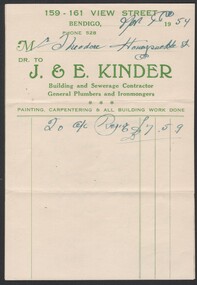
Document - William 'Bill' Theodore - invoices and receipts for plumbing works at Honeysuckle Street, Bendigo for Mr. Theodore, 1954
... Theodore at Honeysuckle Street Bendigo: 1 Juily 1954 repairs to a water heater £4/1/4, paid 29 July 1954 6 Oct 1954 for fixing bath heater at £7/5/9, paid 15 Nov 1954 1/11/1954 follow up account for £ 7/5/9, paid as above 15 Nov 1954. ...Theodore at Honeysuckle Street Bendigo: 1 Juily 1954 repairs to a water heater £4/1/4, paid 29 July 1954 6 Oct 1954 for fixing bath heater at £7/5/9, paid 15 Nov 1954 1/11/1954 follow up account for £ 7/5/9, paid as above 15 Nov 1954. ...William Anthony Theodore (19.3.1917 - 5.1.2007).William 'Bill' Theodore - two invoices (over three pages) and receipts for plumbing requisites from J. & E. Kinder, Building and Sewerage Contractor, General Plumbing and Ironmongers, 159-161 View Street, Bendigo for works for Mr. Theodore at Honeysuckle Street Bendigo: 1 Juily 1954 repairs to a water heater £4/1/4, paid 29 July 1954 6 Oct 1954 for fixing bath heater at £7/5/9, paid 15 Nov 1954 1/11/1954 follow up account for £ 7/5/9, paid as above 15 Nov 1954. bill theodore, william theodore -
![Photograph - Colour Print, Harry Gilham [Attrib.], Living and Learning Centre, Main Road, Eltham, Aug 1988](/media/collectors/4f729f7b97f83e03086018a5/items/6a1ccb54e43e4200865b4676/item-media/6a1ccbd3e43e4200865b58ed/item-fit-380x285.jpg?cb=6) Eltham District Historical Society Inc
Eltham District Historical Society IncPhotograph - Colour Print, Harry Gilham [Attrib.], Living and Learning Centre, Main Road, Eltham, Aug 1988
... Kitchen stove and sink was removed (they fell apart) and a slow-combustion stove with hot water heater installed. Basins and hot water were connected to the new bathroom. ...Kitchen stove and sink was removed (they fell apart) and a slow-combustion stove with hot water heater installed. Basins and hot water were connected to the new bathroom. ...North face of house viewed from the current (1990) pottery area (now pathed) The kitchen was separate from the house as a safety measure in the late 1800s. A detailed history of the site and early development of the Eltham Living and Learning Centre can be found in EDHS_04870 - Folder, Shire of Eltham Living and Learning Centre, 1996 The original property was part of Josiah Holloways subdivision of Little Eltham. It had a 70 foot frontage to Maria Street and stretched down to the Diamond Creek. John Perason, a Tanner, purchased the property in 1857 for £100 and he built a solid brick house which over the years was modified significantly by various owners and which is the basis of the present-day Living and Learning Centre. Claire Fitzpatrick and her husband Alfred, a retired chemical engineer, bought it in the early 1950's. Claire's interest in farming and animal husbandry and breeding saw her modify and establish buildings on the property to house goats and poultry with a horse stable and storage sheds for the animal food. She also built the coach house with its horse box and tack room and built an adjoining garage for their car. Structural alterations to the house were also carried out during the period of their ownership. Their house renovations removed the four fireplaces and chimneys and added a wider verandah, a fibro cement extension on the north wall requiring a doorway to be made in the brick wall for access. Part of a passage wall was removed to join the northwest room, now the "sitting room". A new jarrah floor was put in as the old one was rotten with borer. The verandahs, front and back, were re-organised in design and the front door had its leadlighting panels removed to allow more light into the house. During this period the water catchment well was filled in. This well had a concrete slab fitted onto a collar around its top. The well is 12 feet deep and 8 feet in diameter. Septic sewerage was installed and an internal toilet fitted in the house. The former northeast room was divided into bathroom/toilet and passageway with cupboards to access the extension. Kitchen stove and sink was removed (they fell apart) and a slow-combustion stove with hot water heater installed. Basins and hot water were connected to the new bathroom. In the early 1970s Eltham Shire Council, Councillors Frank Maas and Don Maling, were proposing an extended communities activities program be set up and the Commonwealth Grants Commission was approached for financial assistance to such a scheme. During 1974 a $50,000 Commonwealth Government grant was received by the Shire Council to acquire the Fitzpatrick property as part of the Shire's planning to establish an "extended community activities program". Council's Committee recommended an annual budget of $26,950 for the program and the project was named the Living and Learning Centre and in charge of the program was the first co-ordinator, Carina Hack. The activities were planned to cover "practical skills for living" and included cooking, preserving, gardening, animal husbandry, home economics, electronics, carpentry, hairdressing, making children's clothes and car maintenance. Hobbies and arts and crafts that would include amongst other future items, winemaking, music spinning and weaving and painting. 739 main road eltham, eltham living and learning centre, living and learning centre, living and learning nillumbik (eltham), main road eltham -
 Eltham District Historical Society Inc
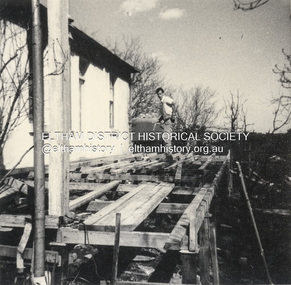
Photograph - Black and White Print, Widening of the verandah of 'Rosebank,' now Living and Learning Centre, Main Road, Eltham, c.1965
... Kitchen stove and sink was removed (they fell apart) and a slow-combustion stove with hot water heater installed. Basins and hot water were connected to the new bathroom. ...Kitchen stove and sink was removed (they fell apart) and a slow-combustion stove with hot water heater installed. Basins and hot water were connected to the new bathroom. ...Restructure of the front verandah of 'Rosebank' by widening, c.1965. It was glassed in at a later date. The west facing front verandah was widened and enclosed for additional class room use by the Living and Learning Centre. A detailed history of the site and early development of the Eltham Living and Learning Centre can be found in EDHS_04870 - Folder, Shire of Eltham Living and Learning Centre, 1996 The original property was part of Josiah Holloways subdivision of Little Eltham. It had a 70 foot frontage to Maria Street and stretched down to the Diamond Creek. John Perason, a Tanner, purchased the property in 1857 for £100 and he built a solid brick house which over the years was modified significantly by various owners and which is the basis of the present-day Living and Learning Centre. Claire Fitzpatrick and her husband Alfred, a retired chemical engineer, bought it in the early 1950's. Claire's interest in farming and animal husbandry and breeding saw her modify and establish buildings on the property to house goats and poultry with a horse stable and storage sheds for the animal food. She also built the coach house with its horse box and tack room and built an adjoining garage for their car. Structural alterations to the house were also carried out during the period of their ownership. Their house renovations removed the four fireplaces and chimneys and added a wider verandah, a fibro cement extension on the north wall requiring a doorway to be made in the brick wall for access. Part of a passage wall was removed to join the northwest room, now the "sitting room". A new jarrah floor was put in as the old one was rotten with borer. The verandahs, front and back, were re-organised in design and the front door had its leadlighting panels removed to allow more light into the house. During this period the water catchment well was filled in. This well had a concrete slab fitted onto a collar around its top. The well is 12 feet deep and 8 feet in diameter. Septic sewerage was installed and an internal toilet fitted in the house. The former northeast room was divided into bathroom/toilet and passageway with cupboards to access the extension. Kitchen stove and sink was removed (they fell apart) and a slow-combustion stove with hot water heater installed. Basins and hot water were connected to the new bathroom. In the early 1970s Eltham Shire Council, Councillors Frank Maas and Don Maling, were proposing an extended communities activities program be set up and the Commonwealth Grants Commission was approached for financial assistance to such a scheme. During 1974 a $50,000 Commonwealth Government grant was received by the Shire Council to acquire the Fitzpatrick property as part of the Shire's planning to establish an "extended community activities program". Council's Committee recommended an annual budget of $26,950 for the program and the project was named the Living and Learning Centre and in charge of the program was the first co-ordinator, Carina Hack. The activities were planned to cover "practical skills for living" and included cooking, preserving, gardening, animal husbandry, home economics, electronics, carpentry, hairdressing, making children's clothes and car maintenance. Hobbies and arts and crafts that would include amongst other future items, winemaking, music spinning and weaving and painting. 739 main road eltham, eltham living and learning centre, living and learning centre, living and learning nillumbik (eltham), main road eltham -
![Photograph - Colour Print, Harry Gilham [Attrib.], Living and Learning Centre, Main Road, Eltham, c.1988](/media/collectors/4f729f7b97f83e03086018a5/items/6a1cdaf8e43e4200865c849d/item-media/6a1cdb13e43e4200865c85b6/item-fit-380x285.jpg?cb=6) Eltham District Historical Society Inc
Eltham District Historical Society IncPhotograph - Colour Print, Harry Gilham [Attrib.], Living and Learning Centre, Main Road, Eltham, c.1988
... Kitchen stove and sink was removed (they fell apart) and a slow-combustion stove with hot water heater installed. Basins and hot water were connected to the new bathroom. ...Kitchen stove and sink was removed (they fell apart) and a slow-combustion stove with hot water heater installed. Basins and hot water were connected to the new bathroom. ...The 'back door' which faced the Main Road entrance to the office, Eltham Living and Learning Centre, herb garden at its peak, late 1980s A detailed history of the site and early development of the Eltham Living and Learning Centre can be found in EDHS_04870 - Folder, Shire of Eltham Living and Learning Centre, 1996 The original property was part of Josiah Holloways subdivision of Little Eltham. It had a 70 foot frontage to Maria Street and stretched down to the Diamond Creek. John Perason, a Tanner, purchased the property in 1857 for £100 and he built a solid brick house which over the years was modified significantly by various owners and which is the basis of the present-day Living and Learning Centre. Claire Fitzpatrick and her husband Alfred, a retired chemical engineer, bought it in the early 1950's. Claire's interest in farming and animal husbandry and breeding saw her modify and establish buildings on the property to house goats and poultry with a horse stable and storage sheds for the animal food. She also built the coach house with its horse box and tack room and built an adjoining garage for their car. Structural alterations to the house were also carried out during the period of their ownership. Their house renovations removed the four fireplaces and chimneys and added a wider verandah, a fibro cement extension on the north wall requiring a doorway to be made in the brick wall for access. Part of a passage wall was removed to join the northwest room, now the "sitting room". A new jarrah floor was put in as the old one was rotten with borer. The verandahs, front and back, were re-organised in design and the front door had its leadlighting panels removed to allow more light into the house. During this period the water catchment well was filled in. This well had a concrete slab fitted onto a collar around its top. The well is 12 feet deep and 8 feet in diameter. Septic sewerage was installed and an internal toilet fitted in the house. The former northeast room was divided into bathroom/toilet and passageway with cupboards to access the extension. Kitchen stove and sink was removed (they fell apart) and a slow-combustion stove with hot water heater installed. Basins and hot water were connected to the new bathroom. In the early 1970s Eltham Shire Council, Councillors Frank Maas and Don Maling, were proposing an extended communities activities program be set up and the Commonwealth Grants Commission was approached for financial assistance to such a scheme. During 1974 a $50,000 Commonwealth Government grant was received by the Shire Council to acquire the Fitzpatrick property as part of the Shire's planning to establish an "extended community activities program". Council's Committee recommended an annual budget of $26,950 for the program and the project was named the Living and Learning Centre and in charge of the program was the first co-ordinator, Carina Hack. The activities were planned to cover "practical skills for living" and included cooking, preserving, gardening, animal husbandry, home economics, electronics, carpentry, hairdressing, making children's clothes and car maintenance. Hobbies and arts and crafts that would include amongst other future items, winemaking, music spinning and weaving and painting. 739 main road eltham, eltham living and learning centre, living and learning centre, living and learning nillumbik (eltham), main road eltham -
![Photograph - Black and White Print, Harry Gilham [Attrib.], Living and Learning Centre, Main Road, Eltham, 1990](/media/collectors/4f729f7b97f83e03086018a5/items/6a1cdbffe43e4200865c95df/item-media/6a1cdc19e43e4200865c975d/item-fit-380x285.jpg?cb=6) Eltham District Historical Society Inc
Eltham District Historical Society IncPhotograph - Black and White Print, Harry Gilham [Attrib.], Living and Learning Centre, Main Road, Eltham, 1990
... Kitchen stove and sink was removed (they fell apart) and a slow-combustion stove with hot water heater installed. Basins and hot water were connected to the new bathroom. ...Kitchen stove and sink was removed (they fell apart) and a slow-combustion stove with hot water heater installed. Basins and hot water were connected to the new bathroom. ...The 'back door' which faced the Main Road entrance to the office, Eltham Living and Learning Centre - Shows original sandstone blocks in back verandah floor A detailed history of the site and early development of the Eltham Living and Learning Centre can be found in EDHS_04870 - Folder, Shire of Eltham Living and Learning Centre, 1996 The original property was part of Josiah Holloways subdivision of Little Eltham. It had a 70 foot frontage to Maria Street and stretched down to the Diamond Creek. John Perason, a Tanner, purchased the property in 1857 for £100 and he built a solid brick house which over the years was modified significantly by various owners and which is the basis of the present-day Living and Learning Centre. Claire Fitzpatrick and her husband Alfred, a retired chemical engineer, bought it in the early 1950's. Claire's interest in farming and animal husbandry and breeding saw her modify and establish buildings on the property to house goats and poultry with a horse stable and storage sheds for the animal food. She also built the coach house with its horse box and tack room and built an adjoining garage for their car. Structural alterations to the house were also carried out during the period of their ownership. Their house renovations removed the four fireplaces and chimneys and added a wider verandah, a fibro cement extension on the north wall requiring a doorway to be made in the brick wall for access. Part of a passage wall was removed to join the northwest room, now the "sitting room". A new jarrah floor was put in as the old one was rotten with borer. The verandahs, front and back, were re-organised in design and the front door had its leadlighting panels removed to allow more light into the house. During this period the water catchment well was filled in. This well had a concrete slab fitted onto a collar around its top. The well is 12 feet deep and 8 feet in diameter. Septic sewerage was installed and an internal toilet fitted in the house. The former northeast room was divided into bathroom/toilet and passageway with cupboards to access the extension. Kitchen stove and sink was removed (they fell apart) and a slow-combustion stove with hot water heater installed. Basins and hot water were connected to the new bathroom. In the early 1970s Eltham Shire Council, Councillors Frank Maas and Don Maling, were proposing an extended communities activities program be set up and the Commonwealth Grants Commission was approached for financial assistance to such a scheme. During 1974 a $50,000 Commonwealth Government grant was received by the Shire Council to acquire the Fitzpatrick property as part of the Shire's planning to establish an "extended community activities program". Council's Committee recommended an annual budget of $26,950 for the program and the project was named the Living and Learning Centre and in charge of the program was the first co-ordinator, Carina Hack. The activities were planned to cover "practical skills for living" and included cooking, preserving, gardening, animal husbandry, home economics, electronics, carpentry, hairdressing, making children's clothes and car maintenance. Hobbies and arts and crafts that would include amongst other future items, winemaking, music spinning and weaving and painting. 739 main road eltham, eltham living and learning centre, living and learning centre, living and learning nillumbik (eltham), main road eltham -
![Photograph - Black and White Print, Harry Gilham [Attrib.], Living and Learning Centre, Main Road, Eltham, c.1990](/media/collectors/4f729f7b97f83e03086018a5/items/6a1cddabe43e4200865cee41/item-media/6a1cddbbe43e4200865cf696/item-fit-380x285.jpg?cb=6) Eltham District Historical Society Inc
Eltham District Historical Society IncPhotograph - Black and White Print, Harry Gilham [Attrib.], Living and Learning Centre, Main Road, Eltham, c.1990
... Kitchen stove and sink was removed (they fell apart) and a slow-combustion stove with hot water heater installed. Basins and hot water were connected to the new bathroom. ...Kitchen stove and sink was removed (they fell apart) and a slow-combustion stove with hot water heater installed. Basins and hot water were connected to the new bathroom. ...Brick storage shed, south wall entry. This cool room, half set down in the soil still standing at time but with a more modern galvanised tin roof. A detailed history of the site and early development of the Eltham Living and Learning Centre can be found in EDHS_04870 - Folder, Shire of Eltham Living and Learning Centre, 1996 The original property was part of Josiah Holloways subdivision of Little Eltham. It had a 70 foot frontage to Maria Street and stretched down to the Diamond Creek. John Perason, a Tanner, purchased the property in 1857 for £100 and he built a solid brick house which over the years was modified significantly by various owners and which is the basis of the present-day Living and Learning Centre. Claire Fitzpatrick and her husband Alfred, a retired chemical engineer, bought it in the early 1950's. Claire's interest in farming and animal husbandry and breeding saw her modify and establish buildings on the property to house goats and poultry with a horse stable and storage sheds for the animal food. She also built the coach house with its horse box and tack room and built an adjoining garage for their car. Structural alterations to the house were also carried out during the period of their ownership. Their house renovations removed the four fireplaces and chimneys and added a wider verandah, a fibro cement extension on the north wall requiring a doorway to be made in the brick wall for access. Part of a passage wall was removed to join the northwest room, now the "sitting room". A new jarrah floor was put in as the old one was rotten with borer. The verandahs, front and back, were re-organised in design and the front door had its leadlighting panels removed to allow more light into the house. During this period the water catchment well was filled in. This well had a concrete slab fitted onto a collar around its top. The well is 12 feet deep and 8 feet in diameter. Septic sewerage was installed and an internal toilet fitted in the house. The former northeast room was divided into bathroom/toilet and passageway with cupboards to access the extension. Kitchen stove and sink was removed (they fell apart) and a slow-combustion stove with hot water heater installed. Basins and hot water were connected to the new bathroom. In the early 1970s Eltham Shire Council, Councillors Frank Maas and Don Maling, were proposing an extended communities activities program be set up and the Commonwealth Grants Commission was approached for financial assistance to such a scheme. During 1974 a $50,000 Commonwealth Government grant was received by the Shire Council to acquire the Fitzpatrick property as part of the Shire's planning to establish an "extended community activities program". Council's Committee recommended an annual budget of $26,950 for the program and the project was named the Living and Learning Centre and in charge of the program was the first co-ordinator, Carina Hack. The activities were planned to cover "practical skills for living" and included cooking, preserving, gardening, animal husbandry, home economics, electronics, carpentry, hairdressing, making children's clothes and car maintenance. Hobbies and arts and crafts that would include amongst other future items, winemaking, music spinning and weaving and painting. 739 main road eltham, eltham living and learning centre, living and learning centre, living and learning nillumbik (eltham), main road eltham -
![Photograph - Colour Print, Harry Gilham [Attrib.], Living and Learning Centre, Main Road, Eltham, 1995](/media/collectors/4f729f7b97f83e03086018a5/items/6a1cde5de43e4200865d0c81/item-media/6a1cde8be43e4200865d1127/item-fit-380x285.jpg?cb=6) Eltham District Historical Society Inc
Eltham District Historical Society IncPhotograph - Colour Print, Harry Gilham [Attrib.], Living and Learning Centre, Main Road, Eltham, 1995
... Kitchen stove and sink was removed (they fell apart) and a slow-combustion stove with hot water heater installed. Basins and hot water were connected to the new bathroom. ...Kitchen stove and sink was removed (they fell apart) and a slow-combustion stove with hot water heater installed. Basins and hot water were connected to the new bathroom. ...New Pavilion at left has plants appearing. Grass area needs a mow - verandah with repainted stool/forms - early spring 1995 A detailed history of the site and early development of the Eltham Living and Learning Centre can be found in EDHS_04870 - Folder, Shire of Eltham Living and Learning Centre, 1996 The original property was part of Josiah Holloways subdivision of Little Eltham. It had a 70 foot frontage to Maria Street and stretched down to the Diamond Creek. John Perason, a Tanner, purchased the property in 1857 for £100 and he built a solid brick house which over the years was modified significantly by various owners and which is the basis of the present-day Living and Learning Centre. Claire Fitzpatrick and her husband Alfred, a retired chemical engineer, bought it in the early 1950's. Claire's interest in farming and animal husbandry and breeding saw her modify and establish buildings on the property to house goats and poultry with a horse stable and storage sheds for the animal food. She also built the coach house with its horse box and tack room and built an adjoining garage for their car. Structural alterations to the house were also carried out during the period of their ownership. Their house renovations removed the four fireplaces and chimneys and added a wider verandah, a fibro cement extension on the north wall requiring a doorway to be made in the brick wall for access. Part of a passage wall was removed to join the northwest room, now the "sitting room". A new jarrah floor was put in as the old one was rotten with borer. The verandahs, front and back, were re-organised in design and the front door had its leadlighting panels removed to allow more light into the house. During this period the water catchment well was filled in. This well had a concrete slab fitted onto a collar around its top. The well is 12 feet deep and 8 feet in diameter. Septic sewerage was installed and an internal toilet fitted in the house. The former northeast room was divided into bathroom/toilet and passageway with cupboards to access the extension. Kitchen stove and sink was removed (they fell apart) and a slow-combustion stove with hot water heater installed. Basins and hot water were connected to the new bathroom. In the early 1970s Eltham Shire Council, Councillors Frank Maas and Don Maling, were proposing an extended communities activities program be set up and the Commonwealth Grants Commission was approached for financial assistance to such a scheme. During 1974 a $50,000 Commonwealth Government grant was received by the Shire Council to acquire the Fitzpatrick property as part of the Shire's planning to establish an "extended community activities program". Council's Committee recommended an annual budget of $26,950 for the program and the project was named the Living and Learning Centre and in charge of the program was the first co-ordinator, Carina Hack. The activities were planned to cover "practical skills for living" and included cooking, preserving, gardening, animal husbandry, home economics, electronics, carpentry, hairdressing, making children's clothes and car maintenance. Hobbies and arts and crafts that would include amongst other future items, winemaking, music spinning and weaving and painting. 739 main road eltham, eltham living and learning centre, living and learning centre, living and learning nillumbik (eltham), main road eltham -
![Photograph - Colour Print, Harry Gilham [Attrib.], Living and Learning Centre, Main Road, Eltham, 1995](/media/collectors/4f729f7b97f83e03086018a5/items/6a1cdf36e43e4200865d43d6/item-media/6a1cdf50e43e4200865d4778/item-fit-380x285.jpg?cb=6) Eltham District Historical Society Inc
Eltham District Historical Society IncPhotograph - Colour Print, Harry Gilham [Attrib.], Living and Learning Centre, Main Road, Eltham, 1995
... Kitchen stove and sink was removed (they fell apart) and a slow-combustion stove with hot water heater installed. Basins and hot water were connected to the new bathroom. ...Kitchen stove and sink was removed (they fell apart) and a slow-combustion stove with hot water heater installed. Basins and hot water were connected to the new bathroom. ...New verandah Eltham Living and Learning Centre on the western face looking down over the Tannery site and Diamond Creek. Pavilion in place (LH Side). The verandah with its upgrade of curtains 1995. Originally 4 feet 6 inches wide. A detailed history of the site and early development of the Eltham Living and Learning Centre can be found in EDHS_04870 - Folder, Shire of Eltham Living and Learning Centre, 1996 The original property was part of Josiah Holloways subdivision of Little Eltham. It had a 70 foot frontage to Maria Street and stretched down to the Diamond Creek. John Perason, a Tanner, purchased the property in 1857 for £100 and he built a solid brick house which over the years was modified significantly by various owners and which is the basis of the present-day Living and Learning Centre. Claire Fitzpatrick and her husband Alfred, a retired chemical engineer, bought it in the early 1950's. Claire's interest in farming and animal husbandry and breeding saw her modify and establish buildings on the property to house goats and poultry with a horse stable and storage sheds for the animal food. She also built the coach house with its horse box and tack room and built an adjoining garage for their car. Structural alterations to the house were also carried out during the period of their ownership. Their house renovations removed the four fireplaces and chimneys and added a wider verandah, a fibro cement extension on the north wall requiring a doorway to be made in the brick wall for access. Part of a passage wall was removed to join the northwest room, now the "sitting room". A new jarrah floor was put in as the old one was rotten with borer. The verandahs, front and back, were re-organised in design and the front door had its leadlighting panels removed to allow more light into the house. During this period the water catchment well was filled in. This well had a concrete slab fitted onto a collar around its top. The well is 12 feet deep and 8 feet in diameter. Septic sewerage was installed and an internal toilet fitted in the house. The former northeast room was divided into bathroom/toilet and passageway with cupboards to access the extension. Kitchen stove and sink was removed (they fell apart) and a slow-combustion stove with hot water heater installed. Basins and hot water were connected to the new bathroom. In the early 1970s Eltham Shire Council, Councillors Frank Maas and Don Maling, were proposing an extended communities activities program be set up and the Commonwealth Grants Commission was approached for financial assistance to such a scheme. During 1974 a $50,000 Commonwealth Government grant was received by the Shire Council to acquire the Fitzpatrick property as part of the Shire's planning to establish an "extended community activities program". Council's Committee recommended an annual budget of $26,950 for the program and the project was named the Living and Learning Centre and in charge of the program was the first co-ordinator, Carina Hack. The activities were planned to cover "practical skills for living" and included cooking, preserving, gardening, animal husbandry, home economics, electronics, carpentry, hairdressing, making children's clothes and car maintenance. Hobbies and arts and crafts that would include amongst other future items, winemaking, music spinning and weaving and painting. 739 main road eltham, eltham living and learning centre, living and learning centre, living and learning nillumbik (eltham), main road eltham -
 Flagstaff Hill Maritime Museum and Village
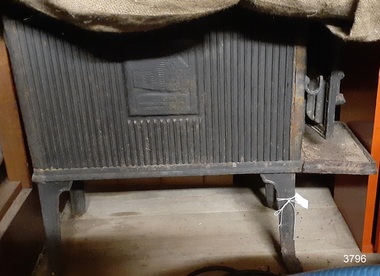
Domestic object - Wood Stove, circa 1880-1920
... It is one of the very few sailing coastal trading vessels built in Australia, with its flat bottom, single chine shape designed for navigating shallow water. flagstaff hil warrnambool flagstaff hill maritime museum maritime museum shipwreck coast flagstaff hill maritime village coastal trader trading vessel vessel reginald m ketch john murch ship builder reg webb carribie station mt lyell copper company queenstown navy league andrew rennie melbourne ferry company r.f. dale port adelaide vessel reginald m macquarie training vessel grenfell studio port lincoln stove domestic heating domestic cooking heater cooking unit wood fired stove wood stove wood-burning stove Image of a log cabin with an illegible inscription below it. ...Stoves of this design are used for heating domestic places and were available in many designs and shapes. They commonly used wood as fuel. They were used for both heating and cooking. This stove was part of the original furnishings of the 1922 vessel 'Reginald M', a South Australian coastal trader. The two-masted coastal ketch was built from material and fittings obtained from salvage yards by Mr Jack (John) Murch of Birkenhead, Port of Adelaide, South Australia. Its construction took approximately six months. It was launched at Largs Bay in 1922. ‘REGINALD M’ 1922 to 1975- The vessel “Reginald M” was a two-masted coastal ketch, owned and built by Mr. Jack (John) Murch of Birkenhead, Port of Adelaide, South Australia. Its construction took approximately 6 months, and it launched at Largs Bay in 1922. The Reginald M’s purpose was to serve the coastal trade of South Australia, to carry cargo cheaply and efficiently. Some have said that the keel was in fact hewn from two telegraph poles! Its builder frequented all the salvage yards for materials and fittings. Reginald M had a very shallow draft and a flat bottom that enabled it to come close to shore and to sit high and dry at low tide or to be beached on sand. The flat bottom was also to make the ship able to skim over reefs. Wagons could load and unload direct from its side. Her cargo included Guano, Barley, Wool, Horses, Cattle, Timber, Explosives, Potatoes, Shell Gritt and Gypsum. On April 9th 1931Reginald M weathered a large storm in St Vincent Gulf, SA. The vessel suffered great damage; mast snapped and the crew laboured for four hours to free it by chopping off the past and rigging. The crew patched iit up and slowly returned to Port Adelaide with only a portion of the insured cargo being damaged. Her crew members at the time were owner Mr John H Murch of Wells Street Largs Bay, Skipper Mr R Murch – John’s brother, Murray – son of Captain Murch and Seaman John Smith. Reg Webb purchased Carribie Station, at Marion in the Warooka District, south of Adelaide, in 1921. He cleared the land and farmed sheep and grain. In 1923 he shipped his own wool and grain from Marion Bay, having first carted 300 bags of the barley grain, 12 bags at a time, along the unmade track to the jetty. A photograph donated to Flagstaff Hill, dating about 1929 - 1942, shows two men on the Reginald M, holding between them their fishing catch of a large hammer shark. The photograph is stamped “GRENFELL STUDIO PORT LINCOLN PRINT” and titled “hammer shark caught on Reginald Emm”. The donor’s family lived on the Your Peninsular and despatched their grain from a chute at Gleeson’s Landing to the awaiting transport vessel. Reg knew the Murch Brothers from Port Adelaide. The brothers had been using their ketch Reginald M to ship Guano from the Islands, led by Captain Richard Murch. Reg approached them in 1934 about shipping grain from Marion Bay. The brothers visited the bay and thought it was an ideal place. They showed Reg where to stack his grain, and they measured up the cliffs. When Reg was ready, they brought down and installed a ninety-foot wooden chute. The bags of grain individually pushed down the chute, landing in a waiting small boat then rowed to Reginald M, 14 bags at a time. After 10 hours Reginald M would have a load of 1300 bags of grain to ship to waiting ports. At one time a wild storm destroyed the chute, so they built a stronger replacement chute. Reginald M engaged in the shipping of grain from there until 1938. In 1940 Able Seaman Allan H Lucas served on Reginald M between September and December, being engaged and discharged from Port of Adelaide. The ship’s Master, W S Murch, signed his Certificate of Discharge. It seems that at the Reginald M was used at one time as a Customs vessel, as one photograph in Flagstaff Hill’s collection shows “H.M.C. No. 3, Pt Adelaide” on the bow. In 1969 the last freight left Marion Bay on the ketch Reginald M carrying grain, wool, and explosives. In late 1970 the Mt. Lyell Mining and Railway Company bought the vessel to use as a barge to carry explosives. In 1972 the Navy League of Strahan, Tasmania, purchased it for use by the Strahan Sea Cadet Unit to use at Macquarie Harbour and renamed iit T.S. Macquarie. However, this plan for use of Reginald M did not happen. In 1974 Mr. Andrew Rennie, of East Brighton, Melbourne, bought it for a similar purpose, paying $5,000 and donating a ‘Cadet of the Year” trophy to the Sea Cadets. He sailed it from Strahan to Melbourne, planning to use it for pleasure sailing. Also, in 1975 Reginald M was bought by the Melbourne Ferry Company auction. Later in 1975 Flagstaff Hill Maritime Museum bought the Reginald M for $20,000. It became a popular exhibit in the Village’s lake. In 2006, using funds from a $4,000 government grant, restoration continued the vessel. Flagstaff Hill Maritime Village’s Collection holds other artefacts associated with Reginald M. They include - Photographs of the Reginald M, including one photograph of iit in Outer Harbour, S.A. dated 1947, with Skipper- R.F. Dale and Owner- John Murch. Another shows it docked at Port Adelaide, with the lettering H.M.C. No. 3 Pt ADEL (standing for His/Her Majesty’s Customs). There is a black and white photo of it at a wharf and another showing a person on board. - a lifebuoy, made of cork, with the inscription of “Pt Adelaide” on it. - Helm section, removed and replaced during restoration. - a bullet found in pieces of timber when Reginald M was restored in 1979 Reginald M was a much-loved exhibit at the Maritime Village, where many visitors enjoyed boarding and exploring a real ship with a long history. Sadly, in late 2016, the Reginald M was decommissioned due to the continuing prohibitive cost of maintenance and the risk to public safety. Components from the Reginald M are preserved as part of Flagstaff Hill's collection. The stove is significant as it represents the heating and cooking appliances used in the late 19th and early 20th centuries, both on board vessels as well as for domestic purposes. The stove has additional significance for its association with the vessel "Reginald M", a coastal trading ketch from South Australia built in 1922 at Largs Bay. It is one of the very few sailing coastal trading vessels built in Australia, with its flat bottom, single chine shape designed for navigating shallow water. Stove: a cast-iron, rectangular, four-legged stove with a hinged front door. This stove was part of the original furnishings of the vessel 'Reginald M', built in Adelaide in 1922. Inscription on the side. Image of a log cabin with an illegible inscription below it.flagstaff hil, warrnambool, flagstaff hill maritime museum, maritime museum, shipwreck coast, flagstaff hill maritime village, coastal trader, trading vessel, vessel reginald m, ketch, john murch ship builder, reg webb, carribie station, mt lyell copper company, queenstown navy league, andrew rennie, melbourne ferry company, r.f. dale, port adelaide vessel reginald m, macquarie training vessel, grenfell studio port lincoln, stove, domestic heating, domestic cooking, heater, cooking unit, wood fired stove, wood stove, wood-burning stove -
 Flagstaff Hill Maritime Museum and Village
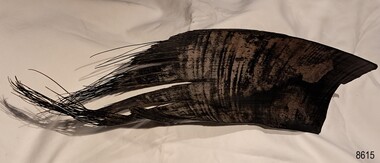
Animal specimen - Baleen
... water it releases from its mouth. In the19th Century, whales were hunted for the products that could be made from their bodies, such as oil for lubricating machinery, soap making, lamps, heaters and fuel for the lighthouse lights. ...water it releases from its mouth. In the19th Century, whales were hunted for the products that could be made from their bodies, such as oil for lubricating machinery, soap making, lamps, heaters and fuel for the lighthouse lights. ...A baleen whale has hard bristly baleen that hangs from its upper jaw inside its mouth instead of teeth. Baleen is made from a protein called keratin, just like human hair and fingernails, and its colour can vary between species, from black to yellow or white. The whale uses the tough, flexible baleen like a sieve to catch its food, filtering the small sea creatures out of the sea water it releases from its mouth. In the19th Century, whales were hunted for the products that could be made from their bodies, such as oil for lubricating machinery, soap making, lamps, heaters and fuel for the lighthouse lights. The flexible baleen was used for whip handles, carriage springs and umbrella ribs. It was also used for the skirt hoops, hat ribs, and rigid ‘stays’ in tightly fitting bodices to enhance their figures. The Southern Right Whales, as well as Blue Whales and Humpback Whales, are baleen whales. The Southern Rights annually visit the ocean off the southwest coast during the breeding season. In the early 1800s whalers hunted along this coastline in their dangerous pursuit of money for the precious cargoes of whale oil and bones. The population of these large animals dwindled quickly and by the late 1840s the whaling industry dwindled. Whaling recommenced from the 1940s to the 1980s when the whale products were used to make margarine and dog food. The baleen sample has been used to educate people about whaling and about the properties of baleen. The baleen sample is significant for its association with 19th century women's fashion. It helps to understand how garments were supported to shape a woman's figure. The baleen sample represents a period when whales were hunted and killed to provide income and products for for the local settlers and for the export industry.Baleen sample from a whale's jaw. Its black shiny hard yet flexible surface is slightly rippled and textured. One end is fringed and the other and a smooth cut edge. The colour varies in places, with stripy brown colouring. flagstaff hill maritime museum and village, great ocean road, shipwreck coast, baleen, whalebone, baleen whale, keratin, 19th century, whaling industry, women's fashion, stays, bodice, women's figures, fashion, clothing, whale oil, baleen colour, whale hunting, whale products, southern right whale, blue whale, humpback whale, southwest victoria, whalers, whale bones -
 Orbost & District Historical Society
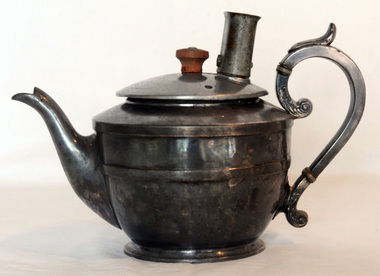
electric teapot, Chesters Trading Company, mid 20th century
... This item reflects the importance of tea drinking in 19th and 20th century Australia. teapot electro-plated-britannia-metal appliances water-heating drink-food-preparation On the bottom of the teapot - EPBM James Dixon & Sons a trumpet symbol Sheffield 8578 4 A teapot of EPBM - electroplated britannia metal with an aluminium lid that has an electric plug connection. The lid is an Alanware, 240 volt 100 watt immersion heater ...This item wasdonated to the Slab Hut, the Orbost Visitor Information Centre. This item reflects the importance of tea drinking in 19th and 20th century Australia. A teapot of EPBM - electroplated britannia metal with an aluminium lid that has an electric plug connection. The lid is an Alanware, 240 volt 100 watt immersion heater with a coil suspended from it. The lid does not match the teapot.On the bottom of the teapot - EPBM James Dixon & Sons a trumpet symbol Sheffield 8578 4teapot electro-plated-britannia-metal appliances water-heating drink-food-preparation -
 Bendigo Military Museum
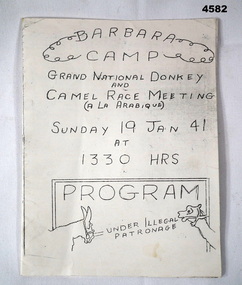
Booklet - PROGRAMME, Barbara Camp Race Meeting
... NR 19 "Hot Water" out of Shower by "Heater Sometimes". The program shows Donkey's names and their AIF riders names. ...NR 19 "Hot Water" out of Shower by "Heater Sometimes". The program shows Donkey's names and their AIF riders names. ...This Racing program states 'Barbara' is a town in Palestine, Refer to Cat 4575P Donor details.Four sheets of foolscap paper, folded and stapled to make a 'booklet'. It has both printed lines and cartoons. Bottom of front cover has drawing of a donkey's head and a camel's head (with the words "Under Illegal Patronage") It shows pedigrees of famous racing donks. i.e. NR 19 "Hot Water" out of Shower by "Heater Sometimes". The program shows Donkey's names and their AIF riders names. The program shows Race Committee and "Boonmaners". The program has a cartoon showing a digger riding a camel called "Typiste's Error" - some pages are blank.war, aif, camel and donkey racing -
 Bendigo Historical Society Inc.
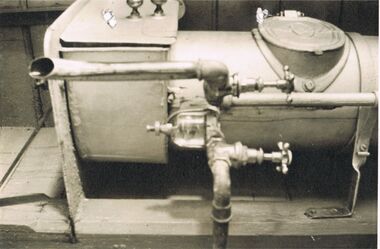
Photograph - BILL ASHMAN COLLECTION: SCALEBUOY
... Fitted direct to heater here hot or cold Scalebuoy treated water may be had at any moment....Fitted direct to heater here hot or cold Scalebuoy treated water may be had at any moment. ...Black and white photo of a Scalebuoy set up beside a Wood Chip Heater Unit (Bath). Typed on the back: Wood Chip Heater Unit (Bath). Fitted direct to heater here hot or cold Scalebuoy treated water may be had at any moment.sciences, instruments - general, scalebuoy, bill ashman collection - correspondence, scalebuoy wood chip heater unit (bath) -
 Bendigo Historical Society Inc.
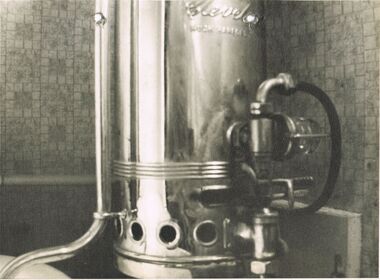
Photograph - BILL ASHMAN COLLECTION: SCALEBUOY
... Fitted to the heater in conjunction with combination water cock and gas valve....Fitted to the heater in conjunction with combination water cock and gas valve. ...Black and white photo of a Scalebuoy being used with a gas Bath heater unit. Typed on the back: Scalebuoy Metropolitan Gas Bath Heater Unit. Fitted to the heater in conjunction with combination water cock and gas valve.sciences, instruments - general, scalebuoy, bill ashman collection - correspondence, scalebuoy unit, bath heater -
 Bendigo Historical Society Inc.
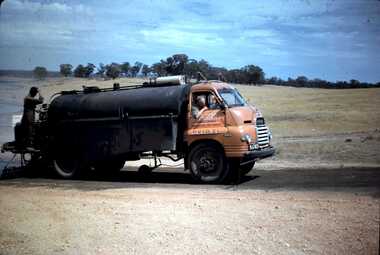
Slide - EPPALOCK. CONSTRUCTION, c1963
... water in the Lake. Working at Lake Eppalock continues. Markings: Bitumen Heater - Spreader Eppalock, March 1963....water in the Lake. Working at Lake Eppalock continues. Markings: Bitumen Heater - Spreader Eppalock, March 1963. ...Eppalock. Construction. There is already some water in the Lake. Working at Lake Eppalock continues. Markings: Bitumen Heater - Spreader Eppalock, March 1963.Kodakcivil engineering, water supply, eppalock -
Moorabbin Air Museum
Manual (Item) - RAAF Water Heater Manual, Royal Australian Air Force Water Heater Type H0801/ C/ 115/140 (Herman Smith)
... RAAF Water Heater Manual ...Royal Australian Air Force Water Heater Type H0801/ C/ 115/140 (Herman Smith) ...Royal Australian Air Force Water Heater Type H0801/ C/ 115/140 (Herman Smith) Manual RAAF Water Heater Manual ... -
 Ballarat Tramway Museum
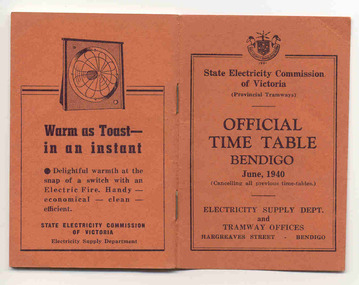
Ephemera - Timetable/s, State Electricity Commission of Victoria (SECV), "Official Time Table Bendigo June 1940", Jun. 1940
... Has four SECV Advertisements within the book for hot water, ovens - cookers, toasters and electric fan heaters. Three copies held. ...Has four SECV Advertisements within the book for hot water, ovens - cookers, toasters and electric fan heaters. Three copies held. ...Centre pages show a map of the system and the sections. The extension to North Bendigo is yet to be constructed. Gives times for trams leaving the city or the terminals for the routes and for the Eaglehawk route, leaving Long Gully Bridge. Has four SECV Advertisements within the book for hot water, ovens - cookers, toasters and electric fan heaters. Three copies held. See item 5356 for a digital image of the same document with a photograph of Len Smith of Geelong loading a pram into a Birney tram.Provides details of 1940 tram services in Bendigo.Forty-page booklet, with orange lightweight covers, saddle-stapled, SECV Provincial Tramways with the title "Official Time Table Bendigo June 1940". Has address if Hargreaves St Bendigo on bottom of the cover. Two copies held.bendigo, timetables, secv -
 Wodonga & District Historical Society Inc
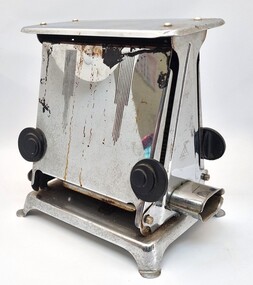
Domestic object - Electric Toaster, Hecla Electrics Pty Ltd, c1940s
... The Hecla range rapidly expanded to include electric heaters and radiators, electric foot warmers, electric kettles, ceramic & metal electric jugs, immersion hot water elements, electric fans, electric coffee percolators, electric toasters, electric grillers and stoves, electric irons and electric frypans, clocks and curling wands. ...The Hecla range rapidly expanded to include electric heaters and radiators, electric foot warmers, electric kettles, ceramic & metal electric jugs, immersion hot water elements, electric fans, electric coffee percolators, electric toasters, electric grillers and stoves, electric irons and electric frypans, clocks and curling wands. ...Hecla produced a wide range of appliances for domestic use, beginning with heaters and later branching out to a wider range of kitchen appliances Hecla was established by Clarence William Marriott, a young Melbourne metal worker. He began manufacturing Australia's first carbon filament electric radiators in 1899. He originally worked for his father James Marriott who commenced business in Melbourne as an art metal worker in 1872 and was, in 1907, appointed as the official art metal worker to the Victorian Government producing items including the ornate iron gates and gas lamp standards outside Melbourne's Parliament House. With the invention of nickel chromium wire after 1900, C.W. Marriott began making more efficient heating elements using this new material in 1916. After being influenced by the eruption of Mount Hekla in Iceland, on 19 December 1918, Clarence registered the brand name "HECLA" with an erupting volcano as its logo. The company Hecla Electrics Pty Ltd was officially registered in 1922. In 1928 the company adopted the advertising slogan, 'By Hecla, it's Good'. The Hecla range rapidly expanded to include electric heaters and radiators, electric foot warmers, electric kettles, ceramic & metal electric jugs, immersion hot water elements, electric fans, electric coffee percolators, electric toasters, electric grillers and stoves, electric irons and electric frypans, clocks and curling wands. Electric blankets were introduced shortly after WWII.In 1930, a controlling interest in Hecla Electrics Pty Ltd was acquired by General Electric Corporation. Clarence William Marriott died in June 1967 in Melbourne, Victoria.This item is representative of a common domestic appliance used throughout Australia. It was manufactured by a pioneering Australian company.A small chrome steel toaster manufactured by Hecla Australia. It has a door on either side which flips down to insert or remove a slice of bread on each side, Each door has two black Bakelite knobs. The electric element is placed down the centre of the cavity. A detachable electric cord is included.240 Volts, 600 Watts. Cat. No. T4 Submitted to Electrical Approval Board Ref Application A1/AD01 SECV 240 Volt 600 Watt MANFED. IN AUSTRALIA SOLID BRASSelectrical appliances, hecla corporation australia, clarence william marriott, domestic appliances -
Melbourne Tram Museum
Document - Specification - set of 7 - worker ammenties etc, Melbourne & Metropolitan Tramways Board (MMTB), mid 1950s
... Seven documents for the supply and delivery of equipment and sheds for track workers - All undated. 1 - "Five oil-fired 25 gallon urns for boiling water" - 4 sheets 2 - "Two (2) mobile bitumen heaters - oil fired" - 6 sheets 3 - "Six (6) mobile tool boxes" - 4 sheets 4 - "Three hundred (300) barricade posts and six hundred (600) barricade rails - 4 sheets 5 - "Five (5) portable gangers' offices" - 5 sheets 6 - "Two (2) portable lamp cabins" - 7 sheets 7 - "Four (4) mobile conveniences" - 4 sheets...Seven documents for the supply and delivery of equipment and sheds for track workers - All undated. 1 - "Five oil-fired 25 gallon urns for boiling water" - 4 sheets 2 - "Two (2) mobile bitumen heaters - oil fired" - 6 sheets 3 - "Six (6) mobile tool boxes" - 4 sheets 4 - "Three hundred (300) barricade posts and six hundred (600) barricade rails - 4 sheets 5 - "Five (5) portable gangers' offices" - 5 sheets 6 - "Two (2) portable lamp cabins" - 7 sheets 7 - "Four (4) mobile conveniences" - 4 sheets Yields information about the MMTB tender for track workers facilities and equipment. ...Seven documents for the supply and delivery of equipment and sheds for track workers - All undated. 1 - "Five oil-fired 25 gallon urns for boiling water" - 4 sheets 2 - "Two (2) mobile bitumen heaters - oil fired" - 6 sheets 3 - "Six (6) mobile tool boxes" - 4 sheets 4 - "Three hundred (300) barricade posts and six hundred (600) barricade rails - 4 sheets 5 - "Five (5) portable gangers' offices" - 5 sheets 6 - "Two (2) portable lamp cabins" - 7 sheets 7 - "Four (4) mobile conveniences" - 4 sheetsYields information about the MMTB tender for track workers facilities and equipment.Set of seven documents - foolscap sheets stapled in top left hand corner and hole punched along the top edge.mmtb, tramways, contracts, purchases, trackwork, tools
