
Showing 55 items matching "wes archibald"
-
 Federation University Historical Collection
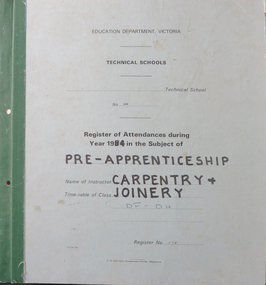
Booklet, Education Department Victoria Technical Schools Register of Attendances in Pre-Apprenticeship Carpentry and Joinery, 1984, 1984
... ...wes archibald...ballarat school of mines trades basic carpentry brian jacobson p.r. baldwin paul baldwin g.w. archibald wes archibald brad hardy david f. hubble noel p. leonard tim d. mckeegan justin griffin craig a. rodgers Blue hard covered book with green tape. ...Blue hard covered book with green tape. The instructor was D.F. and D.H.ballarat school of mines, trades, basic carpentry, brian jacobson, p.r. baldwin, paul baldwin, g.w. archibald, wes archibald, brad hardy, david f. hubble, noel p. leonard, tim d. mckeegan, justin griffin, craig a. rodgers -
 Federation University Historical Collection
Book - Book - Scrapbook, Ballarat College of Advanced Education: Scrapbook of newspaper cutting, Book 7; January 1980 to September 1980
... ...wes walters wins archibald prize...The cuttings cover the period from 31 January 1980 to 5 September 1980. . employment advertisements application for enrolment outline of courses colleges spend up education needs publicity college pay review prof compes professor of safety class of 1930 class of '46 cae prizes presented mineral boom jobless boon wes walters wins archibald prize lismore art prize to margaret bennett track and field competion bcae second in national titles library files on film bill hitchins enrolments inrease bcae head praises mp's efforts re-opening of mine at berringa bcae graduates michael and gregory stowe richards medal presentation bcae help for national squad the need for innovation prof john crisp institution of engineers australia move for archaeological society anne freeman elected graeme lowe introduces new law elective for teachers career scope for chemists grant for wood pulping research dispute halts work on hall music department has superb facilities grant for water pollution research david hemmings at bcae college staff to hold stop-work canberra moves on colleges name decided for 'great hall' notable year for bcae victoria lagging in farm safety laws $40000computer plan students attend memorial lecture ceramics exhibition boom in part-time study open day at mt helen visiting ceramics lecturer information technology week science students win bursaries margaret haddon francis brown seminar on rural television toxic effects of sea wasp Book with grey cover, front. ...Newspaper cuttings relating to Ballarat College of Advanced Education. These are from various newspapers and include The Age, Ballarat Courier, The Australian, The Herald. The cuttings cover the period from 31 January 1980 to 5 September 1980. . Book with grey cover, front. Image of two trotters. Spiral bound.employment advertisements, application for enrolment, outline of courses, colleges spend up, education needs publicity, college pay review, prof compes, professor of safety, class of 1930, class of '46, cae prizes presented, mineral boom jobless boon, wes walters wins archibald prize, lismore art prize to margaret bennett, track and field competion, bcae second in national titles, library files on film, bill hitchins, enrolments inrease, bcae head praises mp's efforts, re-opening of mine at berringa, bcae graduates, michael and gregory stowe, richards medal presentation, bcae help for national squad, the need for innovation, prof john crisp, institution of engineers australia, move for archaeological society, anne freeman elected, graeme lowe introduces new law elective for teachers, career scope for chemists, grant for wood pulping research, dispute halts work on hall, music department has superb facilities, grant for water pollution research, david hemmings at bcae, college staff to hold stop-work, canberra moves on colleges, name decided for 'great hall', notable year for bcae, victoria lagging in farm safety laws, $40000computer plan, students attend memorial lecture, ceramics exhibition, boom in part-time study, open day at mt helen, visiting ceramics lecturer, information technology week, science students win bursaries, margaret haddon, francis brown, seminar on rural television, toxic effects of sea wasp -
 Flagstaff Hill Maritime Museum and Village
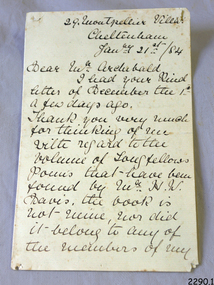
Letter
... Archibald, first curator of the Warrnambool Mechanics Institute Museum, and was in response to a letter he wrote to Miss Carmichael on 1 December 1883. A complete transcript of Eva’s letter is attached as a Hard Copy Supplementary File. The letter first addressed the subject of her reply. She writes, “Thank you very much for thinking of me with regard to the volume of Longfellows Poems that have been found by Mr HW Davis [at Loch Ard Gorge], the book is not mine, nor did it belong to any members of my family. We...Archibald, first curator of the Warrnambool Mechanics Institute Museum, and was in response to a letter he wrote to Miss Carmichael on 1 December 1883. A complete transcript of Eva’s letter is attached as a Hard Copy Supplementary File. The letter first addressed the subject of her reply. She writes, “Thank you very much for thinking of me with regard to the volume of Longfellows Poems that have been found by Mr HW Davis [at Loch Ard Gorge], the book is not mine, nor did it belong to any members of my family. We ...This original letter was handwritten and dated 21 January 1884. The author is Eveline V. Carmichael, of 29 Montpellier Villa, Cheltenham. Eva Carmichael was the only woman survivor of the iron clipper LOCH ARD, which was wrecked on 1 June 1878, at the subsequently named Loch Ard Gorge near Port Campbell. The letter was written to Mr J Archibald, first curator of the Warrnambool Mechanics Institute Museum, and was in response to a letter he wrote to Miss Carmichael on 1 December 1883. A complete transcript of Eva’s letter is attached as a Hard Copy Supplementary File. The letter first addressed the subject of her reply. She writes, “Thank you very much for thinking of me with regard to the volume of Longfellows Poems that have been found by Mr HW Davis [at Loch Ard Gorge], the book is not mine, nor did it belong to any members of my family. We had a ‘Longfellows’, but our book had a green cover.” The rescued book is on display at Flagstaff Hill (541) and has a blue cover. Another interesting aspect to her letter is its reference to the only other survivor from the LOCH ARD. As a postscript she writes, “You will be glad to hear that Tom Pearce is now on board the HMS Solvent. I heard from him last month he wrote from the West-Indies and seemed well and in good spirits. I have not seen him since we parted in Melbourne. I believe he is to be married next year, or perhaps this, but I do not know the young lady.” Tom Pearce was the young, male, able seaman who had risked his life to save her. In the months after the shipwreck, an excited public press speculated of a romantic connection between the two survivors, but this was clearly not the case. HISTORY OF THE LOCH ARD The LOCH ARD belonged to the famous Loch Line which sailed many ships from England to Australia. Built in Glasgow by Barclay, Curdle and Co. in 1873, the LOCH ARD was a three-masted square rigged iron sailing ship. The ship measured 262ft 7" (79.87m) in length, 38ft (11.58m) in width, 23ft (7m) in depth and had a gross tonnage of 1693 tons. The LOCH ARD's main mast measured a massive 150ft (45.7m) in height. LOCH ARD made three trips to Australia and one trip to Calcutta before its final voyage. LOCH ARD left England on March 2, 1878, under the command of Captain Gibbs, a newly married, 29 year old. She was bound for Melbourne with a crew of 37, plus 17 passengers and a load of cargo. The general cargo reflected the affluence of Melbourne at the time. On board were straw hats, umbrella, perfumes, clay pipes, pianos, clocks, confectionary, linen and candles, as well as a heavier load of railway irons, cement, lead and copper. There were items included that intended for display in the Melbourne International Exhibition in 1880. The voyage to Port Phillip was long but uneventful. At 3am on June 1, 1878, Captain Gibbs was expecting to see land and the passengers were becoming excited as they prepared to view their new homeland in the early morning. But LOCH ARD was running into a fog which greatly reduced visibility. Captain Gibbs was becoming anxious as there was no sign of land or the Cape Otway lighthouse. At 4am the fog lifted. A man aloft announced that he could see breakers. The sheer cliffs of Victoria's west coast came into view, and Captain Gibbs realised that the ship was much closer to them than expected. He ordered as much sail to be set as time would permit and then attempted to steer the vessel out to sea. On coming head on into the wind, the ship lost momentum, the sails fell limp and LOCH ARD's bow swung back. Gibbs then ordered the anchors to be released in an attempt to hold its position. The anchors sank some 50 fathoms - but did not hold. By this time LOCH ARD was among the breakers and the tall cliffs of Mutton Bird Island rose behind the ship. Just half a mile from the coast, the ship's bow was suddenly pulled around by the anchor. The captain tried to tack out to sea, but the ship struck a reef at the base of Mutton Bird Island, near Port Campbell. Waves broke over the ship and the top deck was loosened from the hull. The masts and rigging came crashing down knocking passengers and crew overboard. When a lifeboat was finally launched, it crashed into the side of LOCH ARD and capsized. Tom Pearce, who had launched the boat, managed to cling to its overturned hull and shelter beneath it. He drifted out to sea and then on the flood tide came into what is now known as LOCH ARD Gorge. He swam to shore, bruised and dazed, and found a cave in which to shelter. Some of the crew stayed below deck to shelter from the falling rigging but drowned when the ship slipped off the reef into deeper water. Eva Carmichael had raced onto deck to find out what was happening only to be confronted by towering cliffs looming above the stricken ship. In all the chaos, Captain Gibbs grabbed Eva and said, "If you are saved Eva, let my dear wife know that I died like a sailor". That was the last Eva Carmichael saw of the captain. She was swept off the ship by a huge wave. Eva saw Tom Pearce on a small rocky beach and yelled to attract his attention. He dived in and swam to the exhausted woman and dragged her to shore. He took her to the cave and broke open case of brandy which had washed up on the beach. He opened a bottle to revive the unconscious woman. A few hours later Tom scaled a cliff in search of help. He followed hoof prints and came by chance upon two men from nearby Glenample Station three and a half miles away. In a state of exhaustion, he told the men of the tragedy. Tom returned to the gorge while the two men rode back to the station to get help. By the time they reached LOCH ARD Gorge, it was cold and dark. The two shipwreck survivors were taken to Glenample Station to recover. Eva stayed at the station for six weeks before returning to Ireland, this time by steamship. In Melbourne, Tom Pearce received a hero's welcome. He was presented with the first gold medal of the Royal Humane Society of Victoria and a £1000 cheque from the Victorian Government. Concerts were performed to honour the young man's bravery and to raise money for those who lost family in the LOCH ARD disaster. Of the 54 crew members and passengers on board, only two survived: the apprentice, Tom Pearce and the young woman passenger, Eva Carmichael, who lost all of her family in the tragedy. Ten days after the LOCH ARD tragedy, salvage rights to the wreck were sold at auction for £2,120. Cargo valued at £3,000 was salvaged and placed on the beach, but most washed back into the sea when another storm developed. The wreck of LOCH ARD still lies at the base of Mutton Bird Island. Much of the cargo has now been salvaged and some was washed up into what is now known as LOCH ARD Gorge. Cargo and artefacts have also been illegally salvaged over many years before protective legislation was introduced. One of the most unlikely pieces of cargo to have survived the shipwreck was a Minton porcelain peacock - one of only nine in the world. The peacock was destined for the Melbourne International Exhibition in 1880. It had been well packed, which gave it adequate protection during the violent storm. Today, the Minton peacock can be seen at the Flagstaff Hill Maritime Museum in Warrnambool. From Australia's most dramatic shipwreck it has now become Australia's most valuable shipwreck artefact and is one of very few 'objects' on the Victorian State Heritage Register. The LOCH ARD shipwreck is of State significance – Victorian Heritage Number S417 Flagstaff Hill’s collection of artefacts from LOCH ARD is significant for being one of the largest collections of artefacts from this shipwreck in Victoria. It is significant for its association with the shipwreck, which is on the Victorian Heritage Register (VHR S417). The collection is significant because of the relationship between the objects, as together they have a high potential to interpret the story of the LOCH ARD. The LOCH ARD collection is archaeologically significant as the remains of a large international passenger and cargo ship. The LOCH ARD collection is historically significant for representing aspects of Victoria’s shipping history and its potential to interpret sub-theme 1.5 of Victoria’s Framework of Historical Themes (living with natural processes). The collection is also historically significant for its association with the LOCH ARD, which was one of the worst and best known shipwrecks in Victoria’s history. A photocopy of a letter, handwritten in ink on both sides of 4 small sheets of thick, light blue paper. The letter is in neat cursive script. The writing originally covered 7 sides of the note paper and has been reproduced as 7 separate pages. It is dated 21 January 1884, five and a half years after the LOCH ARD shipwreck. The letter is from Eva Carmichael, one of only 2 survivors from that disaster, and is addressed to J. Archibald, first curator of the Warrnambool Mechanics Institute Museum. The copies include the reproduction of a typed index card which accompanies the original letter. The card states: “Photographic copy of the letter written by Eva Carmichael to Mr J Archibald, first Curator of the Warrnambool Museum. The original letter is kept with other documents, but the writing being on both sides of the note-paper it was not possible to read in its entireity when on display”.flagstaff hill, warrnambool, shipwrecked coast, flagstaff hill maritime museum, maritime museum, shipwreck coast, flagstaff hill maritime village, great ocean road, loch line, loch ard, captain gibbs, eva carmichael, tom pearce, glenample station, mutton bird island, loch ard gorge, loch ard, survivor’s letter, eva carmichael, longfellow’s poems, warrnambool mechanics institute museum, joseph archibald, henry davis -
 Flagstaff Hill Maritime Museum and Village
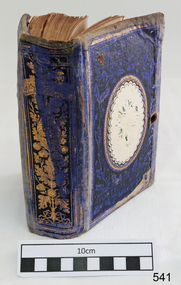
Book - Literary Work, Henry Wardsworth Longfellow, The Poetical Works of Henry Wadsworth Longfellow, (short title on cover is ‘Longfellow’s Poetical Works’), 1877
... The story behind this book prompted Mr Archibald to write to the sole surviving female passenger from the LOCH ARD, Eva Carmichael, asking if the book was hers. Miss Carmichael replied by handwritten letter in January 1884, advising that the volume of poems did not belong to her: “We had a ‘Longfellow’, but our book had a green cover”. ...The story behind this book prompted Mr Archibald to write to the sole surviving female passenger from the LOCH ARD, Eva Carmichael, asking if the book was hers. Miss Carmichael replied by handwritten letter in January 1884, advising that the volume of poems did not belong to her: “We had a ‘Longfellow’, but our book had a green cover”. ...This well-produced but water-damaged book of Longfellows Poetry, was part of the former Warrnambool Mechanics Institute Library and Museum collection. The custody of this collection was assumed by Flagstaff Hill Maritime Village in the 1970s. Supporting provenance indicates the book was retrieved from the sea at Loch Ard Gorge soon after the shipwreck of the same name in June 1878. This book was given to the Warrnambool Museum curator Joseph Archibald by its finder, the Warrnambool Standard editor Henry Davis in October 1883. A letter from Mr Davis describing the poignant circumstances of his discovery is also in the Flagstaff Hill collection. A transcript of this letter is displayed next to the book in the Great Circle Gallery at the Maritime Village (reg. no. 2292). The story behind this book prompted Mr Archibald to write to the sole surviving female passenger from the LOCH ARD, Eva Carmichael, asking if the book was hers. Miss Carmichael replied by handwritten letter in January 1884, advising that the volume of poems did not belong to her: “We had a ‘Longfellow’, but our book had a green cover”. This letter is also in the Flagstaff Hill collection (reg. no. 2290.4).The book is rare as it has survived a shipwreck in relatively good condition. It is an example of personal possessions carried by a shipboard passenger in the 1870s. It holds significance for its connection to the renowned poet, Henry Wardsworth Longfellow. The book is important for its probable association with the wreck of the vessel Loch Ard in 1878. The LOCH ARD shipwreck is of State significance and is listed on the Victorian Heritage Register S417. A volume of poetry by Henry Wadsworth Longfellow. It is bound in blue-purple cloth on thick board, with black lettering and curling-vine design, framed by gold border. In the centre of the front cover is a raised smooth-white ellipse with crimped edges, now worn bare but with traces of an original brightly coloured floral design. This white centre of supple leather is also framed by a decorative gold border. The upper case lettering on the front cover reads ‘Longfellow’s Poetical Works’. The edges of the blue material are faded and worn. The pages are corrugated by water damage but their original gold-edged condition is still evident. The front and back covers are scored with singed holes approximately 1.5cm diameter, situated about the centre edge of each side and in roughly corresponding positions. These holes may be from an original book-latch or fastening. However they have since been damaged by a hot piercing object, which has blackened the holes and extended the damage into the enclosed pages. The spine of the book features a stylised oak tree in gold, rising from bared roots to serrated leaves and acorns. The letters “LON[DON]” at the top of the spine and “W.P.NI[MM]O” at the bottom. The book cover has separated from the majority of stitched pages, along with a number of title pages, which are now loosed from the binding. The books condition is fragile from a handling perspective, but stable in terms of further deterioration. ‘Inscribed “Loch Ard June 1 1878” in pencil within ― believed to be a salvage from the shipwreck’ (Mechanics Institute Library auditor, June 1996).warrnambool, shipwrecked-coast, flagstaff-hill, flagstaff-hill-maritime-museum, longfellow’s poems, loch ard, eva carmichael, warrnambool mechanics institute library, warrnambool museum, joseph archibald, henry davis, william p. nimmo, poetry, heny longfellow, henry wadsworth longfellow, poetical works, 1870s, 1877, longfellow’s poetical works -
Marysville & District Historical Society
Document (Item) - Document-Table, Judith Vimpani, Yarra Track Hostelries- Marysville to Woods Point, Unknown
... archibald charles edwin jones...matlock...alexander myers...frank berwick frederick jones...ned jones...jennie jones...sophie milllicent parker jones...thomas shaw...dorothy walker...travellers rest hotel...reefton...summers...john fehring...f fehring...katerina fehring...john christoph blumeyer...anne fehring...john baker...evelyn observer...anna katrina baker...hannah catherine baker...john frederick baker...mcmahon's creek...oaks...the springs...st clair...sinclair's valley...mountain home hotel...neilson...collins...waters...jan emma sinclair...john sinclair...mr cox...peter sinclair...willie we...A document outling all the hostelries that existed along the Yarra Track between Marysville and Wood's Point. yarra track marysville wood's point woods point fernshaw paradise plains black spur mount grant george edwards walker family melbourne new chum hit & miss restaurant mr clifford michael woods glen watts tri bhean hotel ewen cameron ewen hugh cameron thomas barton butler's wood's point directory globe hotel swanston street mount juliet ben more & c jordan district jefferson's watts bridge inn matthew jefferson reefer's hotel boyle's hotel william henry johnson samuel boyle black spur hotel fisher's creek narbethong fisher's home hotel black spur inn frederick fisher william hodson wood's point road acheron river acheron bridge hotel john robson granton clifford wilks creek wilks creek hotel patrick maloney steavenson marysville hotel australian hotel junction hotel the dutchman's restaurant henry kuyper william podlech mount arnold mount arnold hotel charles schultz james toohey john gleeson joy burchall ian newman henry brockman belle isle belle elle bellell creek upper yarra guerin's bridge bell's hotel henry petty celia moran ruth petty cumberland creek cumberland creek store and restaurant cumberland creek hotel charles edwin hargreaves annie hargreaves urina hargreaves alice hargreaves healesville josiah hargreaves henderson drysdale henry whelan halfway house thomas smith svendson gosling donovans creek chesterville perry's hotel john perry perry's coach and horses hotel edward courtney scandinavian hotel the swede's walker's hotel jacob burchart golden fleece theodore kappler george koehler's hotel david walker millicent walker elsie jowett bill walker big river royal mail hotel shaw's slingsby davies edwin jones elizabeth jane parker sandridge archibald charles edwin jones matlock alexander myers frank berwick frederick jones ned jones jennie jones sophie milllicent parker jones thomas shaw dorothy walker travellers rest hotel reefton summers john fehring f fehring katerina fehring john christoph blumeyer anne fehring john baker evelyn observer anna katrina baker hannah catherine baker john frederick baker mcmahon's creek oaks the springs st clair sinclair's valley mountain home hotel neilson collins waters jan emma sinclair john sinclair mr cox peter sinclair willie we have missed you hotel spring vale hotel robert matthews thomas crawford A document outlining all the hostelries that existed along the Yarra Track between Marysville and Wood's Point. ...A document outlining all the hostelries that existed along the Yarra Track between Marysville and Wood's Point.A document outling all the hostelries that existed along the Yarra Track between Marysville and Wood's Point.yarra track, marysville, wood's point, woods point, fernshaw, paradise plains, black spur, mount grant, george edwards, walker family, melbourne, new chum, hit & miss restaurant, mr clifford, michael woods, glen watts, tri bhean hotel, ewen cameron, ewen hugh cameron, thomas barton, butler's wood's point directory, globe hotel, swanston street, mount juliet, ben more & c, jordan district, jefferson's watts bridge inn, matthew jefferson, reefer's hotel, boyle's hotel, william henry johnson, samuel boyle, black spur hotel, fisher's creek, narbethong, fisher's home hotel, black spur inn, frederick fisher, william hodson, wood's point road, acheron river, acheron bridge hotel, john robson, granton, clifford, wilks creek, wilks creek hotel, patrick maloney, steavenson, marysville hotel, australian hotel, junction hotel, the dutchman's restaurant, henry kuyper, william podlech, mount arnold, mount arnold hotel, charles schultz, james toohey, john gleeson, joy burchall, ian newman, henry brockman, belle isle, belle elle, bellell creek, upper yarra, guerin's bridge, bell's hotel, henry petty, celia moran, ruth petty, cumberland creek, cumberland creek store and restaurant, cumberland creek hotel, charles edwin hargreaves, annie hargreaves, urina hargreaves, alice hargreaves, healesville, josiah hargreaves, henderson drysdale, henry whelan, halfway house, thomas smith, svendson, gosling, donovans creek, chesterville, perry's hotel, john perry, perry's coach and horses hotel, edward courtney, scandinavian hotel, the swede's, walker's hotel, jacob burchart, golden fleece, theodore kappler, george koehler's hotel, david walker, millicent walker, elsie jowett, bill walker, big river, royal mail hotel, shaw's, slingsby davies, edwin jones, elizabeth jane parker, sandridge, archibald charles edwin jones, matlock, alexander myers, frank berwick frederick jones, ned jones, jennie jones, sophie milllicent parker jones, thomas shaw, dorothy walker, travellers rest hotel, reefton, summers, john fehring, f fehring, katerina fehring, john christoph blumeyer, anne fehring, john baker, evelyn observer, anna katrina baker, hannah catherine baker, john frederick baker, mcmahon's creek, oaks, the springs, st clair, sinclair's valley, mountain home hotel, neilson, collins, waters, jan emma sinclair, john sinclair, mr cox, peter sinclair, willie we have missed you hotel, spring vale hotel, robert matthews, thomas crawford -
 Marysville & District Historical Society
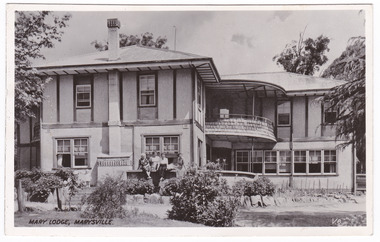
Postcard (item) - Black and white postcard, Valentine Publishing Co. Pty. Ltd, MARY LODGE, MARYSVILLE, 1923-1963
... A black and white postcard from Mary Lodge Guest House in Marysville. marysville victoria australia kerami guesthouse sister elizabeth glover wood's point road kerami house pack road murchison street marysville & district tourist & progress association sister helena brayshay marion bethia curdie sister margaret vincent thomas sister elsie rose beatrice bolam mbe lesley archibald elinor macgowan mary lodge silver birch motel kufstein inn the birches kerami gardens resort the birches resort valentine's publishing co. pty. ltd. postcard souvenir VALENTINE'S/ POST CARD A GENUINE PHOTOGRAPH Mary Lodge/ Marysville My Dear Mu & May,/ Just a Post Card to/ let you see where we are staying. ...A black and white postcard from Mary Lodge Guest House in Marysville. The postcard was produced by Valentine Publishing Co. Pty. Ltd. as a souvenir of Marysville.A black and white postcard from Mary Lodge Guest House in Marysville.VALENTINE'S/ POST CARD A GENUINE PHOTOGRAPH Mary Lodge/ Marysville My Dear Mu & May,/ Just a Post Card to/ let you see where we are staying. We are/ having quite a nice time up this part/ It is a very pretty part. How did you/ enjoy your xmas, I suppose little Philip/ was excited with his toys. Mrs Watkin +/ I will be leaving here on the 7th of Jan, Wishing/ you all a Happy New Year, Love from/ Mum xxxmarysville, victoria, australia, kerami guesthouse, sister elizabeth glover, wood's point road, kerami house, pack road, murchison street, marysville & district tourist & progress association, sister helena brayshay, marion bethia curdie, sister margaret vincent thomas, sister elsie rose beatrice bolam mbe, lesley archibald elinor macgowan, mary lodge, silver birch motel, kufstein inn, the birches, kerami gardens resort, the birches resort, valentine's publishing co. pty. ltd., postcard, souvenir -
 Marysville & District Historical Society
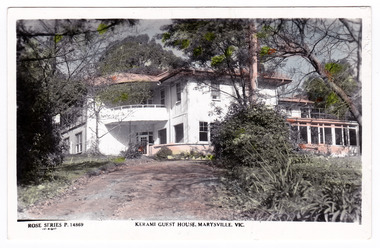
Postcard (item) - Colour postcard, Rose Stereograph Company, KERAMI GUEST HOUSE, MARYSVILLE, VIC, 1913-1967
... This postcard was produced by the Rose Stereograph Company as a souvenir of Marysville. marysville victoria australia kerami guesthouse sister elizabeth glover wood's point road kerami house pack road murchison street marysville & district tourist & progress association sister helena brayshay marion bethia curdie sister margaret vincent thomas sister elsie rose beatrice bolam mbe lesley archibald elinor macgowan postcard souvenir rose series rose stereograph company p. 14869 THE ROSE SERIES P. 14869/ COPYRIGHT POST CARD The "Rose" Series/ De Luxe A Real Photograph/ Produced in Australia Published by the Rose Stereograph Co.,/ Armadale, Victoria. Wednesday. My Dear Mother(+ Grandma)/ This is a photo of the guest house/ where we ...A colour postcard from Kerami Guest House in Marysville. This postcard was produced by the Rose Stereograph Company as a souvenir of Marysville.A colour postcard from Kerami Guest House in Marysville. This postcard was produced by the Rose Stereograph Company as a souvenir of Marysville.THE ROSE SERIES P. 14869/ COPYRIGHT POST CARD The "Rose" Series/ De Luxe A Real Photograph/ Produced in Australia Published by the Rose Stereograph Co.,/ Armadale, Victoria. Wednesday. My Dear Mother(+ Grandma)/ This is a photo of the guest house/ where we are staying. It is marvellous./ The food is good, the place clean and/ the ??? is very lovely./ We are going for walks and/ spent the morning in the snow/ at Lake Mountain yesterday. The/ children are loving every minute/ of it. (The parents are having a/ good rest). They think this kind/ of holiday is a change from our/ usual touring holidays. Love from us all/ Ken, Olive, ???, Sandra, Jennifer, ???.marysville, victoria, australia, kerami guesthouse, sister elizabeth glover, wood's point road, kerami house, pack road, murchison street, marysville & district tourist & progress association, sister helena brayshay, marion bethia curdie, sister margaret vincent thomas, sister elsie rose beatrice bolam mbe, lesley archibald elinor macgowan, postcard, souvenir, rose series, rose stereograph company, p. 14869 -
 Federation University Historical Collection
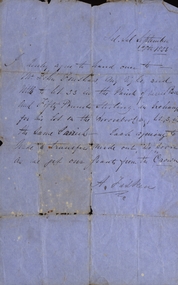
Document, Archibald Fisken, Bill of Sale, 1855, 28/09/1855
... Archibald Fisken John Foushaw bill of sale land transfer squatter John Bonshaw Lal Lal September 28th 1855 I hereby agre to hand over to Mr John Bonshaw my right and title to lot 33 in the parish of Kirit Berrit and Fifty Pounds Sterling in Exchange for his lot on the Moorabool [?], lot 3 in the same Parrish. Each agreeing to trade & transfer made out, as soon as we ...Hand written bill of sale between A. Fisken and John [Bonshaw?]Lal Lal September 28th 1855 I hereby agre to hand over to Mr John Bonshaw my right and title to lot 33 in the parish of Kirit Berrit and Fifty Pounds Sterling in Exchange for his lot on the Moorabool [?], lot 3 in the same Parrish. Each agreeing to trade & transfer made out, as soon as we get our grants from the Crown. A. Fisken. archibald fisken, john foushaw, bill of sale, land transfer, squatter, john bonshaw -
 Bendigo Historical Society Inc.
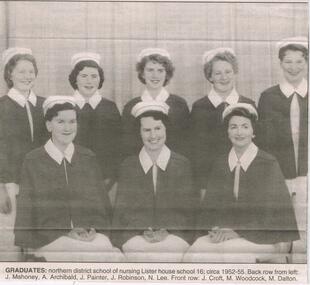
Newspaper - JENNY FOLEY COLLECTION: GRADUATES
... we were'' from 2002. Graduates: northern district school of nursing lister house school 16; circa 1952-55. Back row from left: J. Mahoney, A. Archibald...we were'' from 2002. Graduates: northern district school of nursing lister house school 16; circa 1952-55. Back row from left: J. Mahoney, A. Archibald ...Lister House in Rowan Street, Bendigo was the home of the Northern District School of Nursing established in 1950Bendigo Advertiser '' the way we were'' from 2002. Graduates: northern district school of nursing lister house school 16; circa 1952-55. Back row from left: J. Mahoney, A. Archibald, J. Painter, J. Robinson, N. Lee. Front row: J. Croft, M. Woodcock, M. Dalton. The clip is in a folder.newspaper, bendigo advertiser, the way we were -
 Bendigo Historical Society Inc.
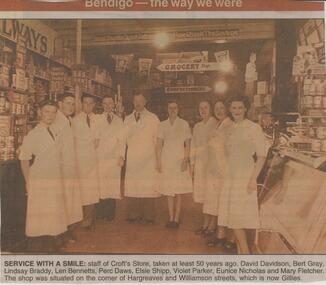
Newspaper - JENNY FOLEY COLLECTION: SERVICE WITH A SMILE
... Archibald Crofts (1875-1942) was born in India and came to Australia in the mid 1890's. He married Mary Keene i 1899 and in 1905 opened his first grocery store in Sth Melbourne. Eventually there were 137 Crofts stores including one in Bendigo. In many cases these were the first self-serve grocery stores. Crofts was also heavily involved in the South Melbourne Football Club and was its president 1933-37. He was a councillor for South Melbourne in 1931 before entering state politics in 1935 until his death. NEWSPAPER Bendigo advertiser the way we ...Archibald Crofts (1875-1942) was born in India and came to Australia in the mid 1890's. He married Mary Keene i 1899 and in 1905 opened his first grocery store in Sth Melbourne. Eventually there were 137 Crofts stores including one in Bendigo. In many cases these were the first self-serve grocery stores. Crofts was also heavily involved in the South Melbourne Football Club and was its president 1933-37. He was a councillor for South Melbourne in 1931 before entering state politics in 1935 until his death.Bendigo Advertiser ''The way we were'' from 2002. Service with a smile: staff of Croft's Store, taken at least 50 years ago. David Davidson, Bert Gray, Lindsay Braddy, Len Bennetts, Perc Daws, Elsie Shipp, Violet Parker, Eunice Nicholas and Mary Fletcher. The shop was situated on the corner of Hargreaves and Williamson streets, which is now Gillies. The clip is in a folder.newspaper, bendigo advertiser, the way we were -
 Bendigo Historical Society Inc.
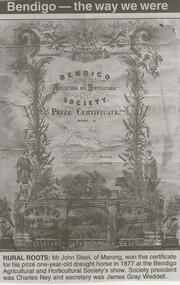
Newspaper - JENNY FOLEY COLLECTION: RURAL ROOTS
... Archibald (1873- ); George (1875-1928); William (1878-1946). John moved to Cowes c. 1900 where his son George lived and died there in 1912. He was buried at Marong. NEWSPAPER Bendigo advertiser the way we ...John Steel (1825-1912) was born in England and arrived in Marong in 1862. In 1865 he married Agnes McKenzie (1843-1894) and they had the following children:- Robert (1866-1941); John Nichol (1867-1935); James Duncan (1869-1915); Archibald (1873- ); George (1875-1928); William (1878-1946). John moved to Cowes c. 1900 where his son George lived and died there in 1912. He was buried at Marong.Bendigo Advertiser '' The way we were'' from Monday, March 1, 2004. Rural roots: Mr. John Steel, of Marong, won this certificate for his prize one-year old draught horse in 1877 at the Bendigo Agricultural and Horticultural Society's show. Society president was Charles Ney and secretary was James Gray Weddell. The clip is in a folder.newspaper, bendigo advertiser, the way we were -
 National Vietnam Veterans Museum (NVVM)
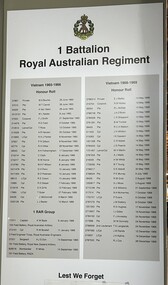
Poster - Information Board - 1 Battalion Royal Australian Regiment (Honour Roll), 1RAR
... 1st Battalion Royal Australian Regiment Killed in Action Pte Michael Alwyn Bourke 37867 Royal Australian Infantry Corps Pte William Thomas Carroll 37010 Pte Arie Van Valen 54320 Pte William Lynn Nalder 2412151 Cpl Francis John Smith 37003 Cpl (Temp) Francis John Smith Pte Ronald Eric Field 214479 Pte Thomas Ross 212612 L/Cpl Thomas Ross Pte Allan Robert Hansen 214329 L/Cpl Richard Harold John Parker L/Cpl Richard Harold Heath (other name) 213963 Pte Peter Raymond Gillson 37857 Cpl Reginald Hedley Hillier 42774 Mention in Dispatches Cpl Alexander Henry Fotheringham 36543 Pte Christopher Clark 215214 Pte Neville Wayne Horne 215217 Pte Mervyn Arthur Frederick Wilson 213780 Pte Desmond Hugh Penn 5411479 Pte Bror Ola Petersen 5411305 L/Cpl Ronald Edward Coxon 38012 Cpl Raymond Douglas Seipel 15985 Pte Edward Anthony Grills 215418 L/Cpl Thomas Suter 17665 Cpl Leslie Charles McDonnell 54026 Pte Lionel James Baxter 1200128 Capt Kenneth Wilfred Bade 17071 Royal Regiment of Australian Artillery 105th Field Battery Cpl Robert Walter Bowtell 213151 Royal Australian Engineers 3 Field Troop Sgt Alastair John Sherwood Don 37221 RNZA 161 FD Battery RNZA Bombardier Robert White 928518 Pte Errol John Bailey 2786313 Australian National Serviceman Cpl Robert Bernard Hickey 215745 Pte Robert Leo McNab 39354 Pte John Alfred O'Brien 2786748 Pte Lawrence Rodney Sheppard 3790506 7th Battalion Pte Bevan Maxwell Trimble 3791291 Pte Richard Christopher Allan Watson 39403 Cpl John Hunter Whitton 311532 Cpl Ian Kenneth Dawson 215063 Pte Christopher Robert Nisbet 1201338 Cpl John Gregory Stinson Pearce 2784043 L/Cpl William Henry Martin 1731467 Pte Alan John Wallis 2787255 Pte Harry Winston White 216009 Pte Brian Thomas Young 1733095 Pte Peter Eris Murray 2788524 Pte Robert Maxwell Grist 39426 Pte Graeme John Moss 1200817 Pte Archibald Stanley Williams 5715189 Pte Neil Anthony McInerney 217514 Pte Paul Evans 1732701 Pte John Michael Slattery 2787079 Pte Rodney Donald Hughes 1201350 Pte Ian James Gibbs 5715657 Cpl (Temp) Frederick John Annesley 2784162 Pte William Wayne Donnelly 2Lt Terrance Edward Langlands 2786939 L/Cpl John Milton Rands 2787069 L/Cpl John Henry Kalma 215637 Pte Raymond John Cox 2787020 1st Battalion, Royal Australian Regiment Vietnam. Honour Roll from Vietnam 1965 - 1966 and Vietnam 1968 - 1969. At the bottom of the Board reads Lest We ...1st Battalion, Royal Australian Regiment Vietnam. Honour Roll from Vietnam 1965 - 1966 and Vietnam 1968 - 1969. At the bottom of the Board reads Lest We Forget1st battalion, royal australian regiment, killed in action, pte michael alwyn bourke, 37867, royal australian infantry corps, pte william thomas carroll, 37010, pte arie van valen, 54320, pte william lynn nalder, 2412151, cpl francis john smith, 37003, cpl (temp) francis john smith, pte ronald eric field, 214479, pte thomas ross, 212612, l/cpl thomas ross, pte allan robert hansen, 214329, l/cpl richard harold john parker, l/cpl richard harold heath (other name), 213963, pte peter raymond gillson, 37857, cpl reginald hedley hillier, 42774, mention in dispatches, cpl alexander henry fotheringham, 36543, pte christopher clark, 215214, pte neville wayne horne, 215217, pte mervyn arthur frederick wilson, 213780, pte desmond hugh penn, 5411479, pte bror ola petersen, 5411305, l/cpl ronald edward coxon, 38012, cpl raymond douglas seipel, 15985, pte edward anthony grills, 215418, l/cpl thomas suter, 17665, cpl leslie charles mcdonnell, 54026, pte lionel james baxter, 1200128, capt kenneth wilfred bade, 17071, royal regiment of australian artillery, 105th field battery, cpl robert walter bowtell, 213151, royal australian engineers, 3 field troop, sgt alastair john sherwood don, 37221, rnza, 161 fd battery rnza, bombardier robert white, 928518, pte errol john bailey, 2786313, australian national serviceman, cpl robert bernard hickey, 215745, pte robert leo mcnab, 39354, pte john alfred o'brien, 2786748, pte lawrence rodney sheppard, 3790506, 7th battalion, pte bevan maxwell trimble, 3791291, pte richard christopher allan watson, 39403, cpl john hunter whitton, 311532, cpl ian kenneth dawson, 215063, pte christopher robert nisbet, 1201338, cpl john gregory stinson pearce, 2784043, l/cpl william henry martin, 1731467, pte alan john wallis, 2787255, pte harry winston white, 216009, pte brian thomas young, 1733095, pte peter eris murray, 2788524, pte robert maxwell grist, 39426, pte graeme john moss, 1200817, pte archibald stanley williams, 5715189, pte neil anthony mcinerney, 217514, pte paul evans, 1732701, pte john michael slattery, 2787079, pte rodney donald hughes, 1201350, pte ian james gibbs, 5715657, cpl (temp) frederick john annesley, 2784162, pte william wayne donnelly, 2lt terrance edward langlands, 2786939, l/cpl john milton rands, 2787069, l/cpl john henry kalma, 215637, pte raymond john cox, 2787020 -
Port Melbourne Historical & Preservation Society
Film - Video Recording - Digital, I Wish I Had Been There, 28 Jul 2020
... we hosted our first meeting via Zoom. Margaret BRIDE Wilbraham Frederick Evelyn LIARDET WFE LIARDET Separation John MAY Port Melbourne Football Club Williamstown Football Club Sue LEONG Knight's Transport David RADCLIFFE HMS Hood HMS Repulse Beris CAMPBELL Archibald (Arch) TODD Gary SMART Local Government - Municipal District of Sandridge Court House Helen BARRY Lex JOHNSTON Coburg Football Club Celebrations Fetes and Exhibitions Digital video recording of PMHPS meeting held via Zoom on 28 July 2020. ...The Port Melbourne Historical and Preservation made history on the 28 July 2020 when, because of the COVID-19 pandemic, we hosted our first meeting via Zoom.Digital video recording of PMHPS meeting held via Zoom on 28 July 2020. Eight members spoke on the theme “I Wish I Had Been There …” Margaret BRIDE wishes she had there when Wilbraham LIARDET had ridden up and down Bay Street proclaiming the separation of Victoria from New South Wales. John MAY wishes he was there in 1937 when Port Melbourne and Williamstown Football Clubs swapped players. Sue LEONG wishes she was there in July, 1901 in front of the building where she now lives but previously was a stables and carrier’s business. David RADCLIFFE wishes he was there in March, 1924 when the HMS Hood and the HMS Repulse arrived in Port Melbourne. Beris CAMPBELL wishes she was there in 1974 at Arch TODD's Mayoral Ball at Port Melbourne Town Hall. Garry SMART wishes he was there for the Sandridge Council meeting held at the newly built court house on 23 August 1860. Helen BARRY wishes she was there at the Graham Street railway gates where her grandfather proposed to her grandmother. Lex JOHNSON wishes he was there on the last Saturday in August, 1946 when Port Melbourne took on Coburg at North Port Oval.margaret bride, wilbraham frederick evelyn liardet, wfe liardet, separation, john may, port melbourne football club, williamstown football club, sue leong, knight's transport, david radcliffe, hms hood, hms repulse, beris campbell, archibald (arch) todd, gary smart, local government - municipal district of sandridge, court house, helen barry, lex johnston, coburg football club, celebrations fetes and exhibitions -
 RMIT Design Archives
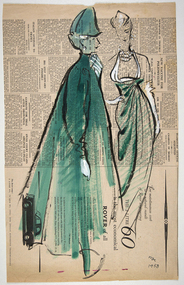
Drawings, 1958
... we can see Kahan playing with the graphic effects of line and text, while communicating the cut and drape of late-1950s fashions.’ Kahn was born in Vienna in 1905 and first travelled to Australia in 1947. He moved to Melbourne in 1950 where he became friends with artist George Bell, writer Alan McCulloch who introduced him to Clem Christensen, editor of the literary journal Meanjin, where many of his portraits of Australian writers were published. His 1962 portrait of the author Patrick White won the Archibald...we can see Kahan playing with the graphic effects of line and text, while communicating the cut and drape of late-1950s fashions.’ Kahn was born in Vienna in 1905 and first travelled to Australia in 1947. He moved to Melbourne in 1950 where he became friends with artist George Bell, writer Alan McCulloch who introduced him to Clem Christensen, editor of the literary journal Meanjin, where many of his portraits of Australian writers were published. His 1962 portrait of the author Patrick White won the Archibald ...Louis Kahan (1905-2002) is best known in Australia for his skill as an artist. As Independent Fashion Curator, Laura Jocic has observed, ‘It is less known though that Kahan had a career in theatre and fashion in Vienna and Paris during the 1920s and 1930s that continued when he came to Australia in 1947. He signed his fashion illustration with the initials 'nac', a phonetic interpretation of his surname spelled backwards. In this illustration on newspaper we can see Kahan playing with the graphic effects of line and text, while communicating the cut and drape of late-1950s fashions.’ Kahn was born in Vienna in 1905 and first travelled to Australia in 1947. He moved to Melbourne in 1950 where he became friends with artist George Bell, writer Alan McCulloch who introduced him to Clem Christensen, editor of the literary journal Meanjin, where many of his portraits of Australian writers were published. His 1962 portrait of the author Patrick White won the Archibald Prize, bringing him national recognition. He also designed sets and costumes for the Elizabeth Theatre Trust (Opera Australia) and the Melbourne Theatre Company. In 1993 his contribution to Australian cultural life was recognised when he was made an Officer in the Order of Australia (AO). He died in Melbourne, at the age of 97 in 2002. Ann Carew 2018Fashion illustration on newsprint. Drawing depicts two women. Women in foreground is wearing a long green coat and hat.Woman at rear is wearing a green and white evening dress with white gloves.Signed lower right in ink, 'nac 1958'.fashion illustration, fashion design -
![Work on paper - Limited edition print, Wes Walters, '[Shoe on Chair]' by Wes Walters](/media/collectors/530576742162ef0fa09a2288/items/55824ddd2162f10f84253ffc/item-media/5582619f2162f10f84271f8d/item-fit-380x285.jpg?cb=6) Federation University Art Collection
Federation University Art CollectionWork on paper - Limited edition print, Wes Walters, '[Shoe on Chair]' by Wes Walters
... Wes Walters studied at Ballarat Tecnical Art School, known as a portrait painter, he won the Archibald Prize in 1979. ...Wes Walters studied at Ballarat Tecnical Art School, known as a portrait painter, he won the Archibald Prize in 1979. ...Wes Walters studied at Ballarat Tecnical Art School, known as a portrait painter, he won the Archibald Prize in 1979. This item is part of the Federation University Art Collection. The Art Collection features over 2000 works and was listed as a 'Ballarat Treasure' in 2007.Framed work, pencil and airbrush on paper, depiction of shoe on chair. wes walters, drawing, chair, shoe, artist, artwork, available -
 Federation University Art Collection
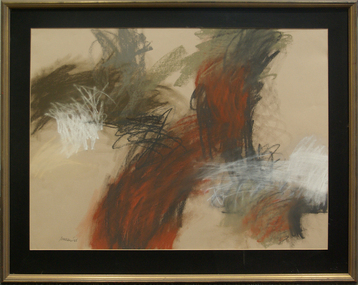
Drawing - Artwork, [Abstract Drawing] by Wes Walters, 1988
... Wes Walters excelled in both abstract and realist art. He won the Art Gallery of Ballarat’s Minnie Crouch Prize for watercolour art in 1953 and 1956. He won the prestigious Archibald...Wes Walters excelled in both abstract and realist art. He won the Art Gallery of Ballarat’s Minnie Crouch Prize for watercolour art in 1953 and 1956. He won the prestigious Archibald ...Wes WALTERS (06 August 1928 - 19 August 2014) Born Mildura, Victoria From 1940 t0 1945 Wes Walters attended the Ballarat High School. He then studied architecture at the Gordon Institute in Geelong, followed by art at the Ballarat School of Mines (a division of the Ballarat School of Mines). During his time at the Ballarat Technical Art School (later Federation University Australia) Walters studied under Neville Bunning and Taylor Kelloch, and was awarded the Ballarat Ladies Art Association Scholarship in 1948. He next moved to Melbourne to work as a commercial artist with the George Patterson advertising agency. Each evening Walters studied life drawing at the Victoria Artists’ Society and taught himself anatomy. Wes Walters excelled in both abstract and realist art. He won the Art Gallery of Ballarat’s Minnie Crouch Prize for watercolour art in 1953 and 1956. He won the prestigious Archibald Prize in 1879 for his portrait of Phillip Adams. This item is part of the Federation University Art Collection. The Art Collection features over 2000 works and was listed as a 'Ballarat Treasure' in 2007.Framed abstract pastel artwork by Wes Walters.wes walters, abstract, pastel, alumni, alumni -
 Federation University Art Collection
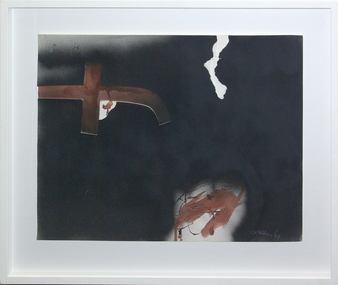
Mixed media - Artwork, Wes Walters, 'W.W.01.25' by Wes Walters, 1999
... Wes Walters excelled in both abstract and realist art. He won the Art Gallery of Ballarat’s Minnie Crouch Prize for watercolour art in 1953 and 1956. He won the prestigious Archibald...Wes Walters excelled in both abstract and realist art. He won the Art Gallery of Ballarat’s Minnie Crouch Prize for watercolour art in 1953 and 1956. He won the prestigious Archibald ...Wes WALTERS (06 August 1928 - 19 August 2014) Born Mildura, Victoria From 1940 t0 1945 Wes Walters attended the Ballarat High School. He then studied architecture at the Gordon Institute in Geelong, followed by art at the Ballarat School of Mines (a division of the Ballarat School of Mines). During his time at the Ballarat Technical Art School (later Federation University Australia) Walters studied under Neville Bunning and Taylor Kelloch, and was awarded the Ballarat Ladies Art Association Scholarship in 1948. He next moved to Melbourne to work as a commercial artist with the George Patterson advertising agency. Each evening Walters studied life drawing at the Victoria Artists’ Society and taught himself anatomy. Wes Walters excelled in both abstract and realist art. He won the Art Gallery of Ballarat’s Minnie Crouch Prize for watercolour art in 1953 and 1956. He won the prestigious Archibald Prize in 1879 for his portrait of Phillip Adams. This item is part of the Federation University Art Collection. The Art Collection features over 1000 works and was listed as a 'Ballarat Treasure' in 2007.Framed abstract artwork which involves the use of airbrush and torn paper.wes walters, abstract, available -
 Federation University Art Collection
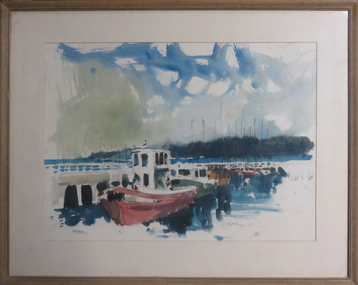
Painting - Artwork - Painting, [Boats] by Wes Walters
... Wes Walters excelled in both abstract and realist art. He won the Art Gallery of Ballarat’s Minnie Crouch Prize for watercolour art in 1953 and 1956. He won the prestigious Archibald...Wes Walters excelled in both abstract and realist art. He won the Art Gallery of Ballarat’s Minnie Crouch Prize for watercolour art in 1953 and 1956. He won the prestigious Archibald ...Wes WALTERS (06 August 1928 - 19 August 2014) Born Mildura, Victoria From 1940 t0 1945 Wes Walters attended the Ballarat High School. He then studied architecture at the Gordon Institute in Geelong, followed by art at the Ballarat School of Mines (a division of the Ballarat School of Mines). During his time at the Ballarat Technical Art School (later Federation University Australia) Walters studied under Neville Bunning and Taylor Kelloch, and was awarded the Ballarat Ladies Art Association Scholarship in 1948. He next moved to Melbourne to work as a commercial artist with the George Patterson advertising agency. Each evening Walters studied life drawing at the Victoria Artists’ Society and taught himself anatomy. Wes Walters excelled in both abstract and realist art. He won the Art Gallery of Ballarat’s Minnie Crouch Prize for watercolour art in 1953 and 1956. He won the prestigious Archibald Prize in 1879 for his portrait of Phillip Adams. This item is part of the Federation University Art Collection. The Art Collection features over 1000 works and was listed as a 'Ballarat Treasure' in 2007.Framed water colour showing boats along a pier.wes walters, watercolour, boats, vessels, sailing, available, alumni, ballarat technical art school -
 Federation University Art Collection
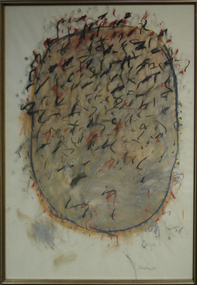
Drawing - Artwork, Wes Walters, [Untitled] by Wes Walters, 1998
... Wes Walters excelled in both abstract and realist art. He won the Art Gallery of Ballarat’s Minnie Crouch Prize for watercolour art in 1953 and 1956. He won the prestigious Archibald...Wes Walters excelled in both abstract and realist art. He won the Art Gallery of Ballarat’s Minnie Crouch Prize for watercolour art in 1953 and 1956. He won the prestigious Archibald ...Wes WALTERS (06 August 1928 - 19 August 2014) Born Mildura, Victoria From 1940 to 1945 Wes Walters attended the Ballarat High School. He then studied architecture at the Gordon Institute in Geelong, followed by art at the Ballarat School of Mines (a division of the Ballarat School of Mines). During his time at the Ballarat Technical Art School (later Federation University Australia) Walters studied under Neville Bunning and Taylor Kellock, and was awarded the Ballarat Ladies Art Association Scholarship in 1948. He next moved to Melbourne to work as a commercial artist with the George Patterson advertising agency. Each evening Walters studied life drawing at the Victoria Artists’ Society and taught himself anatomy. Wes Walters excelled in both abstract and realist art. He won the Art Gallery of Ballarat’s Minnie Crouch Prize for watercolour art in 1953 and 1956. He won the prestigious Archibald Prize in 1879 for his portrait of Phillip Adams. This item is part of the Federation University Art Collection. The Art Collection features over 1000 works and was listed as a 'Ballarat Treasure' in 2007.Framed artwork behind glass.wes walters, pastel, abstract, landscape, available -
 Federation University Art Collection
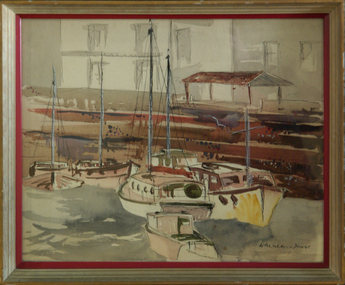
Painting - Artwork - watercolour, Wes Walters, [Boats] by Wes Walters, 06/1948
... Wes Walters excelled in both abstract and realist art. He won the Art Gallery of Ballarat’s Minnie Crouch Prize for watercolour art in 1953 and 1956. He won the prestigious Archibald...Wes Walters excelled in both abstract and realist art. He won the Art Gallery of Ballarat’s Minnie Crouch Prize for watercolour art in 1953 and 1956. He won the prestigious Archibald ...Wes WALTERS (06 August 1928 - 19 August 2014) Born Mildura, Victoria From 1940 t0 1945 Wes Walters attended the Ballarat High School. He then studied architecture at the Gordon Institute in Geelong, followed by art at the Ballarat School of Mines (a division of the Ballarat School of Mines). During his time at the Ballarat Technical Art School (later Federation University Australia) Walters studied under Neville Bunning and Taylor Kelloch, and was awarded the Ballarat Ladies Art Association Scholarship in 1948. He next moved to Melbourne to work as a commercial artist with the George Patterson advertising agency. Each evening Walters studied life drawing at the Victoria Artists’ Society and taught himself anatomy. Wes Walters excelled in both abstract and realist art. He won the Art Gallery of Ballarat’s Minnie Crouch Prize for watercolour art in 1953 and 1956. He won the prestigious Archibald Prize in 1879 for his portrait of Phillip Adams, and the sketch was completed tin preparation for that portrait. 2 This item is part of the Federation University Art Collection. The Art Collection features over 2000 works and was listed as a 'Ballarat Treasure' in 2007.Framed watercolour behind glass depicting moored sailing boats.Signed lower right 'W.R. Walters June 48' Sticker verso "Jaman the Picture Framer 84-88 Lt Collins Street Melbourne Phone Cent 4802"wes walters, watercolour, boats, coastal, sailing, alumni -
![Drawing - Artwork, [Title Unknown] by Wes Walters](/media/collectors/530576742162ef0fa09a2288/items/558384312162f11b8cbfb771/item-media/558384e12162f11b8cbfcf01/item-fit-380x285.jpg?cb=6) Federation University Art Collection
Federation University Art CollectionDrawing - Artwork, [Title Unknown] by Wes Walters
... Wes Walters excelled in both abstract and realist art. He won the Art Gallery of Ballarat’s Minnie Crouch Prize for watercolour art in 1953 and 1956. He won the prestigious Archibald...Wes Walters excelled in both abstract and realist art. He won the Art Gallery of Ballarat’s Minnie Crouch Prize for watercolour art in 1953 and 1956. He won the prestigious Archibald ...Wes WALTERS (06 August 1928 - 19 August 2014) Born Mildura, Victoria From 1940 t0 1945 Wes Walters attended the Ballarat High School. He then studied architecture at the Gordon Institute in Geelong, followed by art at the Ballarat School of Mines (a division of the Ballarat School of Mines). During his time at the Ballarat Technical Art School (later Federation University Australia) Walters studied under Neville Bunning and Taylor Kelloch, and was awarded the Ballarat Ladies Art Association Scholarship in 1948. He next moved to Melbourne to work as a commercial artist with the George Patterson advertising agency. Each evening Walters studied life drawing at the Victoria Artists’ Society and taught himself anatomy. Wes Walters excelled in both abstract and realist art. He won the Art Gallery of Ballarat’s Minnie Crouch Prize for watercolour art in 1953 and 1956. He won the prestigious Archibald Prize in 1879 for his portrait of Phillip Adams, and the sketch was completed tin preparation for that portrait. This item is part of the Federation University Art Collection. The Art Collection features over 1000 works and was listed as a 'Ballarat Treasure' in 2007.Black and white charcoal drawing in white frame with glass.wes walters, drawing, available, alumni -
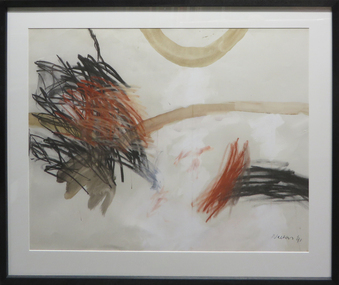 Federation University Art Collection
Drawing, Wes Walters, 'Towards' by Wes Walters, 1991
... Wes Walters excelled in both abstract and realist art. He won the Art Gallery of Ballarat’s Minnie Crouch Prize for watercolour art in 1953 and 1956. He won the prestigious Archibald...Wes Walters excelled in both abstract and realist art. He won the Art Gallery of Ballarat’s Minnie Crouch Prize for watercolour art in 1953 and 1956. He won the prestigious Archibald ...Wes WALTERS (06 August 1928 - 19 August 2014) Born Mildura, Victoria From 1940 t0 1945 Wes Walters attended the Ballarat High School. He then studied architecture at the Gordon Institute in Geelong, followed by art at the Ballarat School of Mines (a division of the Ballarat School of Mines). During his time at the Ballarat Technical Art School (later Federation University Australia) Walters studied under Neville Bunning and Taylor Kelloch, and was awarded the Ballarat Ladies Art Association Scholarship in 1948. He next moved to Melbourne to work as a commercial artist with the George Patterson advertising agency. Each evening Walters studied life drawing at the Victoria Artists’ Society and taught himself anatomy. Wes Walters excelled in both abstract and realist art. He won the Art Gallery of Ballarat’s Minnie Crouch Prize for watercolour art in 1953 and 1956. He won the prestigious Archibald Prize in 1879 for his portrait of Phillip Adams, and the sketch was completed tin preparation for that portrait. This item is part of the Federation University Art Collection. The Art Collection features over 1000 works and was listed as a 'Ballarat Treasure' in 2007.Framed and mounted abstract artwork wes walters, artist, artwork, drawing, walters, available -
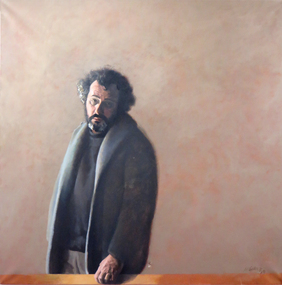 Federation University Art Collection
Painting - Artwork, 'Smeaton' by Wes Walters [and charcoal study], 1978
... Wes Walters excelled in both abstract and realist art. He won the Art Gallery of Ballarat’s Minnie Crouch Prize for watercolour art in 1953 and 1956. He won the prestigious Archibald...Wes Walters excelled in both abstract and realist art. He won the Art Gallery of Ballarat’s Minnie Crouch Prize for watercolour art in 1953 and 1956. He won the prestigious Archibald ...Wes WALTERS (06 August 1928 - 19 August 2014) Born Mildura, Victoria From 1940 t0 1945 Wes Walters attended the Ballarat High School. He then studied architecture at the Gordon Institute in Geelong, followed by art at the Ballarat School of Mines (a division of the Ballarat School of Mines). During his time at the Ballarat Technical Art School (later Federation University Australia) Walters studied under Neville Bunning and Taylor Kelloch, and was awarded the Ballarat Ladies Art Association Scholarship in 1948. He next moved to Melbourne to work as a commercial artist with the George Patterson advertising agency. Each evening Walters studied life drawing at the Victoria Artists’ Society and taught himself anatomy. Wes Walters excelled in both abstract and realist art. He won the Art Gallery of Ballarat’s Minnie Crouch Prize for watercolour art in 1953 and 1956. He won the prestigious Archibald Prize in 1879 for his portrait of Phillip Adams, and the sketch was completed tin preparation for that portrait. Bruce Smeaton (born 5 March 1938) is an Australian composer who is well known for a variety of Australian film and television scores in all genres, including features, shorts, television, documentaries and advertisements.[1] His scores include Picnic at Hanging Rock, Seven Little Australians, Roxanne, Iceman, and Circle of Iron. He has won the Australian Film Institute 'Best Original Music Score' Award for The Cars That Ate Paris (1974), The Great McCarthy (1975), The Chant of Jimmie Blacksmith (1978) and Street Hero (1984, shared with Garth Porter and others). (Wikipedia).1) Portrait of Bruce Smeaton in oil on an unframed stretcher. .2) Charcoal sketch of the head of Bruce Smeatonwes walters, portrait, artist, artwork, bruce smeaton, musician, sketch, walters, alumni, available -
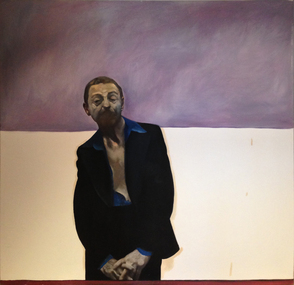 Federation University Art Collection
Painting - Portrait, Wes Walters, [Portrait] by Wes Walters
... Wes Walters excelled in both abstract and realist art. He won the Art Gallery of Ballarat’s Minnie Crouch Prize for watercolour art in 1953 and 1956. He won the prestigious Archibald...Wes Walters excelled in both abstract and realist art. He won the Art Gallery of Ballarat’s Minnie Crouch Prize for watercolour art in 1953 and 1956. He won the prestigious Archibald ...Wes WALTERS (06 August 1928 - 19 August 2014) Born Mildura, Victoria From 1940 to 1945 Wes Walters attended the Ballarat High School. He then studied architecture at the Gordon Institute in Geelong, followed by art at the Ballarat School of Mines (a division of the Ballarat School of Mines). During his time at the Ballarat Technical Art School (later Federation University Australia) Walters studied under Neville Bunning and Taylor Kelloch, and was awarded the Ballarat Ladies Art Association Scholarship in 1948. He next moved to Melbourne to work as a commercial artist with the George Patterson advertising agency. Each evening Walters studied life drawing at the Victoria Artists’ Society and taught himself anatomy. Wes Walters excelled in both abstract and realist art. He won the Art Gallery of Ballarat’s Minnie Crouch Prize for watercolour art in 1953 and 1956. He won the prestigious Archibald Prize in 1979 for his portrait of Phillip Adams. This item is part of the Federation University Art Collection. The Art Collection features over 2000 works and was listed as a 'Ballarat Treasure' in 2007.A large portrait of a man painted in oil.wes walters, artwork, artist, portrait, alumni, archibald prize winner, available -
![Mixed media - artwork, [Untitled] by Wes Walters](/media/collectors/530576742162ef0fa09a2288/items/5588bc972162f121489e4736/item-media/57c66caed0cdd8174847ae81/item-fit-380x285.jpg?cb=6) Federation University Art Collection
Federation University Art CollectionMixed media - artwork, [Untitled] by Wes Walters
... Wes Walters excelled in both abstract and realist art. He won the Art Gallery of Ballarat’s Minnie Crouch Prize for watercolour art in 1953 and 1956. He won the prestigious Archibald...Wes Walters excelled in both abstract and realist art. He won the Art Gallery of Ballarat’s Minnie Crouch Prize for watercolour art in 1953 and 1956. He won the prestigious Archibald ...Wes WALTERS (06 August 1928 - 19 August 2014) Born Mildura, Victoria From 1940 t0 1945 Wes Walters attended the Ballarat High School. He then studied architecture at the Gordon Institute in Geelong, followed by art at the Ballarat School of Mines (a division of the Ballarat School of Mines). During his time at the Ballarat Technical Art School (later Federation University Australia) Walters studied under Neville Bunning and Taylor Kelloch, and was awarded the Ballarat Ladies Art Association Scholarship in 1948. He next moved to Melbourne to work as a commercial artist with the George Patterson advertising agency. Each evening Walters studied life drawing at the Victoria Artists’ Society and taught himself anatomy. Wes Walters excelled in both abstract and realist art. He won the Art Gallery of Ballarat’s Minnie Crouch Prize for watercolour art in 1953 and 1956. He won the prestigious Archibald Prize in 1879 for his portrait of Phillip Adams. This item is part of the Federation University Art Collection. The Art Collection features over 2000 works and was listed as a 'Ballarat Treasure' in 2007.Framed abstract mixed media artwork featuring natural timberwes walters, artwork, artist, available, abstract -
![[Nude Study] by Wes Walters](/media/collectors/530576742162ef0fa09a2288/items/558a30e82162f121bc02f46a/item-media/558ca6c12162f11ab0b26513/item-fit-380x285.jpg?cb=6) Federation University Art Collection
Federation University Art CollectionPainting - Artwork, Wes Walters, [Nude Study] by Wes Walters, c1987
... Wes Walters excelled in both abstract and realist art. He won the Art Gallery of Ballarat’s Minnie Crouch Prize for watercolour art in 1953 and 1956. He won the prestigious Archibald...Wes Walters excelled in both abstract and realist art. He won the Art Gallery of Ballarat’s Minnie Crouch Prize for watercolour art in 1953 and 1956. He won the prestigious Archibald ...Wes WALTERS (06 August 1928 - 19 August 2014) Born Mildura, Victoria From 1940 t0 1945 Wes Walters attended the Ballarat High School. He then studied architecture at the Gordon Institute in Geelong, followed by art at the Ballarat School of Mines (a division of the Ballarat School of Mines). During his time at the Ballarat Technical Art School (later Federation University Australia) Walters studied under Neville Bunning and Taylor Kelloch, and was awarded the Ballarat Ladies Art Association Scholarship in 1948. He next moved to Melbourne to work as a commercial artist with the George Patterson advertising agency. Each evening Walters studied life drawing at the Victoria Artists’ Society and taught himself anatomy. Wes Walters excelled in both abstract and realist art. He won the Art Gallery of Ballarat’s Minnie Crouch Prize for watercolour art in 1953 and 1956. He won the prestigious Archibald Prize in 1879 for his portrait of Phillip Adams. This item is part of the Federation University Art Collection. The Art Collection features over 2000 works and was listed as a 'Ballarat Treasure' in 2007.Pastel and paint study of a nude framed behind glass. wes walters, nude, life drawing, available, alumni -
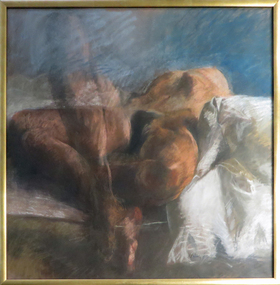 Federation University Art Collection
Painting - Artwork, Wes Walters, [Nude Study] by Wes Walters, 1987
... Wes Walters excelled in both abstract and realist art. He won the Art Gallery of Ballarat’s Minnie Crouch Prize for watercolour art in 1953 and 1956. He won the prestigious Archibald...Wes Walters excelled in both abstract and realist art. He won the Art Gallery of Ballarat’s Minnie Crouch Prize for watercolour art in 1953 and 1956. He won the prestigious Archibald ...Wes WALTERS (06 August 1928 - 19 August 2014) Born Mildura, Victoria From 1940 t0 1945 Wes Walters attended the Ballarat High School. He then studied architecture at the Gordon Institute in Geelong, followed by art at the Ballarat School of Mines (a division of the Ballarat School of Mines). During his time at the Ballarat Technical Art School (later Federation University Australia) Walters studied under Neville Bunning and Taylor Kelloch, and was awarded the Ballarat Ladies Art Association Scholarship in 1948. He next moved to Melbourne to work as a commercial artist with the George Patterson advertising agency. Each evening Walters studied life drawing at the Victoria Artists’ Society and taught himself anatomy. Wes Walters excelled in both abstract and realist art. He won the Art Gallery of Ballarat’s Minnie Crouch Prize for watercolour art in 1953 and 1956. He won the prestigious Archibald Prize in 1879 for his portrait of Phillip Adams. This item is part of the Federation University Art Collection. The Art Collection features over 1000 works and was listed as a 'Ballarat Treasure' in 2007.Large framed life Drawing in pastel framed behind glass. signed lower right 'Walters '87'wes walters, nude, life drawing, available -
 Federation University Art Collection
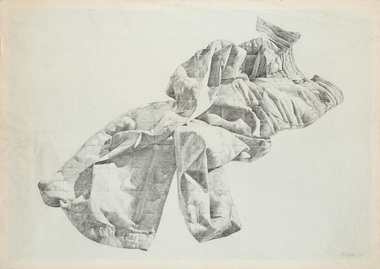
Drawing - Pencil drawing, 'Jeans' by Wes Walters, 1974
... Wes Walters excelled in both abstract and realist art. He won the Art Gallery of Ballarat’s Minnie Crouch Prize for watercolour art in 1953 and 1956. He won the prestigious Archibald...Wes Walters excelled in both abstract and realist art. He won the Art Gallery of Ballarat’s Minnie Crouch Prize for watercolour art in 1953 and 1956. He won the prestigious Archibald ...Wes WALTERS (06 August 1928 - 19 August 2014) Born Mildura, Victoria From 1940 t0 1945 Wes Walters attended the Ballarat High School. He then studied architecture at the Gordon Institute in Geelong, followed by art at the Ballarat School of Mines (a division of the Ballarat School of Mines). During his time at the Ballarat Technical Art School (later Federation University Australia) Walters studied under Neville Bunning and Taylor Kelloch, and was awarded the Ballarat Ladies Art Association Scholarship in 1948. He next moved to Melbourne to work as a commercial artist with the George Patterson advertising agency. Each evening Walters studied life drawing at the Victoria Artists’ Society and taught himself anatomy. Wes Walters excelled in both abstract and realist art. He won the Art Gallery of Ballarat’s Minnie Crouch Prize for watercolour art in 1953 and 1956. He won the prestigious Archibald Prize in 1879 for his portrait of Phillip Adams. This item is part of the Federation University Art Collection. The Art Collection features over 1000 works and was listed as a 'Ballarat Treasure' in 2007.Framed pencil drawing on graph paper.wes walters, drawing, jeans, costume, alumni, available -
 Federation University Art Collection
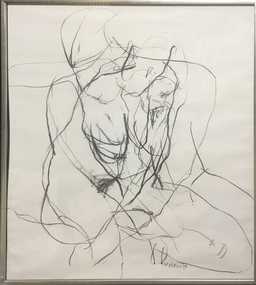
Drawing - Artwork, Wes Walters, Life Drawing by Wes Walters, 1980, 1980
... Wes Walters excelled in both abstract and realist art. He won the Art Gallery of Ballarat’s Minnie Crouch Prize for watercolour art in 1953 and 1956. He won the prestigious Archibald...Wes Walters excelled in both abstract and realist art. He won the Art Gallery of Ballarat’s Minnie Crouch Prize for watercolour art in 1953 and 1956. He won the prestigious Archibald ...Wes WALTERS (06 August 1928 - 19 August 2014) Born Mildura, Victoria From 1940 t0 1945 Wes Walters attended the Ballarat High School. He then studied architecture at the Gordon Institute in Geelong, followed by art at the Ballarat School of Mines (a division of the Ballarat School of Mines). During his time at the Ballarat Technical Art School (later Federation University Australia) Walters studied under Neville Bunning and Taylor Kelloch, and was awarded the Ballarat Ladies Art Association Scholarship in 1948. He next moved to Melbourne to work as a commercial artist with the George Patterson advertising agency. Each evening Walters studied life drawing at the Victoria Artists’ Society and taught himself anatomy. Wes Walters excelled in both abstract and realist art. He won the Art Gallery of Ballarat’s Minnie Crouch Prize for watercolour art in 1953 and 1956. He won the prestigious Archibald Prize in 1879 for his portrait of Phillip Adams. This item is part of the Federation University Art Collection. The Art Collection features over 1000 works and was listed as a 'Ballarat Treasure' in 2007.Large charcoal drawing framed behind acrylic.Signed lower right side 'Walters '80'wes walters, artist, artwork, drawing, available -
![Work on paper - Artwork - Printmaking, Wes Walters, [Nude in the Landscape] by Wes Walters](/media/collectors/530576742162ef0fa09a2288/items/55c2da132162f11990034ba5/item-media/5a9ce96621ea6a1798903861/item-fit-380x285.jpg?cb=6) Federation University Art Collection
Federation University Art CollectionWork on paper - Artwork - Printmaking, Wes Walters, [Nude in the Landscape] by Wes Walters
... Wes Walters excelled in both abstract and realist art. He won the Art Gallery of Ballarat’s Minnie Crouch Prize for watercolour art in 1953 and 1956. He won the prestigious Archibald...Wes Walters excelled in both abstract and realist art. He won the Art Gallery of Ballarat’s Minnie Crouch Prize for watercolour art in 1953 and 1956. He won the prestigious Archibald ...Wes WALTERS (06 August 1928 - 19 August 2014) Born Mildura, Victoria From 1940 t0 1945 Wes Walters attended the Ballarat High School. He then studied architecture at the Gordon Institute in Geelong, followed by art at the Ballarat School of Mines (a division of the Ballarat School of Mines). During his time at the Ballarat Technical Art School (later Federation University Australia) Walters studied under Neville Bunning and Taylor Kelloch, and was awarded the Ballarat Ladies Art Association Scholarship in 1948. He next moved to Melbourne to work as a commercial artist with the George Patterson advertising agency. Each evening Walters studied life drawing at the Victoria Artists’ Society and taught himself anatomy. Wes Walters excelled in both abstract and realist art. He won the Art Gallery of Ballarat’s Minnie Crouch Prize for watercolour art in 1953 and 1956. He won the prestigious Archibald Prize in 1879 for his portrait of Phillip Adams. This item is part of the Federation University Art Collection. The Art Collection features over 1000 works and was listed as a 'Ballarat Treasure' in 2007.Limited edition print by Wes Walters.Signed lower right "Walters"wes walters, walters, printmaking, etching, nude, alumni
