
Showing 6 items matching "wiregrass cartoons"
-
 Eltham District Historical Society Inc
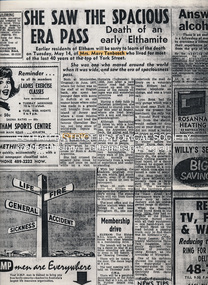
Document - Folder, Tenbosch, Mary
... ...Wiregrass cartoons...Mary Tenbosch York Street Eltham Bridge Street Eltham Brougham Street Eltham Eltham telephone exchange Lyon Brothers Eltham Millette's Eltham Research Hotel Eltham fire brigade Percy Leason Wiregrass cartoons Henry Street Eltham Blue Gum Milk Bar (Eltham) Brougham Steet Eltham Eltham Public Hall Eltham Shops Ford Model T Ford Wagonette henry street Lyon Bros. ...Mary Tenbosch lived in Eltham for 40 years and died 1968. Contents Newspaper article: "She saw the spacious era pass: Death of an early Elthamite", Diamond Valley News, 21 May 1968. Life of Mary Tenbosch. - Obituary for Mrs Mary Tenbosch, former wife of W.B. Bassett-Smith who lived for 40 years at the top of York Street.Newspaper clippings, A4 photocopies, etcmary tenbosch, york street eltham, bridge street eltham, brougham street eltham, eltham telephone exchange, lyon brothers eltham, millette's eltham, research hotel, eltham fire brigade, percy leason, wiregrass cartoons, henry street eltham, blue gum milk bar (eltham), brougham steet, eltham, eltham public hall, eltham shops, ford model t, ford wagonette, henry street, lyon bros. garage, millett's foodland, montevideo, newsagency, obituary, police station, post office, table talk, telephone exchange, uruguay, w.b. bassett-smith, york street -
![Book, Percy Leason, 1889-1959 : centenary exhibition / [organised by Castlemaine Art Gallery & Historical Museum for tour to Victorian Regional Art Galleries], 1989](/media/collectors/4f729f7b97f83e03086018a5/items/5908603ad0ce9914e8bdc25d/item-media/5bac351e21eaf7156842ad9d/item-fit-380x285.jpg?cb=6) Eltham District Historical Society Inc
Eltham District Historical Society IncBook, Percy Leason, 1889-1959 : centenary exhibition / [organised by Castlemaine Art Gallery & Historical Museum for tour to Victorian Regional Art Galleries], 1989
... Percy Leason (1889-1959) was born in Kaniva Victoria, Leason is best remembered as a cartoonist. His wiregrass cartoons in the Melbourne magazine “Table Talk” were based on a mythical country town. ...Percy Leason (1889-1959) was born in Kaniva Victoria, Leason is best remembered as a cartoonist. His wiregrass cartoons in the Melbourne magazine “Table Talk” were based on a mythical country town. ...Percy Leason (1889-1959) was born in Kaniva Victoria, Leason is best remembered as a cartoonist. His wiregrass cartoons in the Melbourne magazine “Table Talk” were based on a mythical country town. The inspiration was Kaniva but the happenings could be associated with many towns. Eltham residents thought they could identify with many cartoons. Leason was also an accomplished painter and an anthropologist. Leason was associated with the Montsalvat Artists’ Colony and in the mid 1930’s built “Landscape” in nearby Lavender Park Road. At the end of 1937 Leason travelled to America where he remained for the rest of his life. Paperback; 1 v. (unpaged) : ill. ; 22 cm.percy leason, artists -
 Eltham District Historical Society Inc
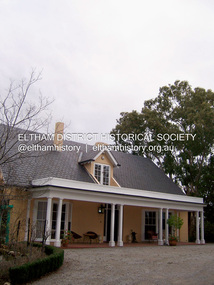
Photograph - Digital Photograph, Marguerite Marshall, 'Landscape', 60 Lavender Park Road, Eltham South, 24 June 2008
... In 1926 Leason began the cartoons of a mythical Australian town Wiregrass, which were inspired by Kaniva, his home town. ...In 1926 Leason began the cartoons of a mythical Australian town Wiregrass, which were inspired by Kaniva, his home town. ...Built by artist and cartoonist Percy Leason in 1927 in what was then New Street but renamed Lavender Park Road in the late 1950s/early 1960s. Covered under Heritage Overlay, Nillumbik Planning Scheme. Published: Nillumbik Now and Then / Marguerite Marshall 2008; photographs Alan King with Marguerite Marshall.; p121 Said to be a genius, cartoonist Percy Leason’s career was at its peak when in 1925 to 1926 he built his home at New Street (now Lavender Park Road) Eltham. The Herald newspaper owner, Sir Keith Murdoch, had hired Leason for his newly acquired Melbourne Punch magazine at a salary of £1750, making him ‘one of the highest paid cartoonists in the world’.1 With this salary and financial help from Murdoch, Leason was able to build his lovely home in Eltham. At the crest of a sweeping drive, the home now two-storey in white brick with a gabled grey slate roof and dormer windows is flanked by an extension built by another owner in the 1980s. Leason lived in the home with his wife, Isabel and children, until 1937, when he left for the United States of America, where he lived until his death in 1959. The four-bedroom house and garden would have been well-suited to bringing up his family and to entertaining their friends in style. Large airy rooms have high ceilings with moulded plaster, timber floors and several are brightened with bay windows. Leason made friends with many of the artists and personalities who gravitated to Eltham. Around 1931 Justus Jörgensen, founder of the Montsalvat Artists’ Colony, helped Leason build his large studio at the back of the house. Another friend was journalist Mervyn Skipper, father of jeweller and sculptor Matcham, and artists Helen and Sonia. Leason’s teacher, artist Max Meldrum, also visited and rented accommodation in Eltham, opposite Wingrove Park. Punch folded in 1925, but Leason continued as cartoonist for Table Talk. In 1926 Leason began the cartoons of a mythical Australian town Wiregrass, which were inspired by Kaniva, his home town. The art gallery in Main Road Eltham was named Wiregrass in Leason’s honour. Leason completed 1000 drawings from 1919 to 1937, which author Garrie Hutchinson claimed, were technically unsurpassed and had regional and universal interest. Leason’s acute observations of country life stemmed from his childhood in Kaniva in Victoria’s western Wimmera, where he was born, the son of a selector, in 1889. Meldrum claimed that Leason could name every plant and the habits of every animal.2 Leason also painted 28 portraits of the last full-blooded aboriginals in Victoria at Lake Tyers in Gippsland, most of which are in a private collection. In Sydney Leason illustrated Henry Lawson’s Selected Poems and worked for The Bulletin. Leason had begun his career at 13 as an apprentice lithographic artist at Sands and MacDougall. He attended night classes at the National Gallery and the Victorian Artists Society. Leason first visited Eltham in 1910 to paint with fellow artist William ‘Jock’ Frater. They camped near Bible and Pitt Streets and along the Diamond Creek on the site of the present Eltham Retirement Centre. Despite his success as a cartoonist, Leason wanted to be recognised as a serious painter and for his anthropological work.3 He was also conservative and felt uncomfortable with the modern art scene in Melbourne.4 So he left for the United States of America to work as a painter. Ironically his time in New York saw the burgeoning of modern art, notably by artists such as Jackson Pollock. But Leason found his niche by running an art school, painting society portraits and illustrating books and magazines.This collection of almost 130 photos about places and people within the Shire of Nillumbik, an urban and rural municipality in Melbourne's north, contributes to an understanding of the history of the Shire. Published in 2008 immediately prior to the Black Saturday bushfires of February 7, 2009, it documents sites that were impacted, and in some cases destroyed by the fires. It includes photographs taken especially for the publication, creating a unique time capsule representing the Shire in the early 21st century. It remains the most recent comprehenesive publication devoted to the Shire's history connecting local residents to the past. nillumbik now and then (marshall-king) collection, landscape, lavender park road, percy leason, new street -
 Eltham District Historical Society Inc
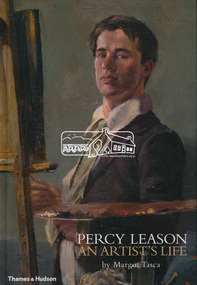
Book, Percy Leason: an artist's life by Margot Tasca, 2016
... When electricity did arrive, Leason reflected on the community's reception of electricity at the expense of the old growth gum tree corridors in his cartoon, Electricity comes to Wiregrass. The family had now grown to seven. ...When electricity did arrive, Leason reflected on the community's reception of electricity at the expense of the old growth gum tree corridors in his cartoon, Electricity comes to Wiregrass. The family had now grown to seven. ..."Who would have thought that a boy born in 1889 from the Victorian Mallee would become a successful artist on New York’s Staten Island? This finely illustrated, exhaustively researched and beautifully written biography on Leason features the artist’s entire career as a painter and cartoonist renowned for his depictions of Australian society in the 1920s and 1930s. Leason’s story is a poignant one tracing his beginnings as a cartoonist, to the bohemian Melbourne art scene in the early 20th century, to his involvement in the artists’ camps of Eltham, to his important series of portraits of Lake Tyers Indigenous Australians, and his eventual move to the US where he has been acknowledged as making an enormous contribution to the New York arts scene. This story, as yet untold, fills a gap in the history of art in Australia and offers a new perspective on Australian art in the first half of the 20th century." - Thames and Hudson website A NEW HOME IN ELTHAM Once they had settled back into Melbourne, Perry and Belle began to look for a place to make a permanent home. Having enjoyed the bush setting of Mosman, they decided to explore the rural fringes of Melbourne. Each weekend they packed a picnic and travelled to the towns in the nearby hills - such as Ferntree Gully, Sassafras, Lilydale and, of course, Cockatoo Creek. Eventually deciding these places might be a little too far from The Herald office, they searched closer to the city. The Heidelberg and Box Hill regions that had inspired his old teacher McCubbin, had become busy, urban areas but further east, towards Warrandyte and Templestowe, there were still large tracts of bush. Finally they settled on Eltham, an area Percy knew very well, having often painted there with Jock Frater. Perry's old friend Dick McCann and his wife Margery had also settled in Eltham. The township was fifteen miles from Melbourne and serviced by an electric train that went to the central Melbourne station of Flinders Street, near where The Herald offices were located. Eltham was a small village in 1925, separated from Melbourne by the Yarra River, and surrounded by orchards and large tracts of bush. Small farms dotted the landscape and the main businesses revolved around ironmongers, blacksmiths, and farming supplies. Of particular appeal to artists was Eltham Park, a large expanse of bushland bounded by the Yarra River on the south side and the Diamond Creek on the east. The park included a playing field that was busy on weekends with cricket or football matches, but for the rest of the week it was mostly empty and an ideal place to paint. The scenery there provided the inspiration for many paintings by Leason, Meldrum and other artists such as Colin Colahan and Peter (A.E.) Newburv. The Leasons found a rundown old farmhouse on four-and-a-half acres of land in New Street, now known as Lavender Park Road. The site was splendid, at the top of a gentle slope which gave panoramic views east to the Dandenong hills, south over the Templestowe orchards and north to Kinglake. The front lawn was taken over by onion grass (or wiregrass as Leason called it) and scattered about the property were many wattles and gum trees. Aloe cacti covered much to the front of the house, while old quince and lucerne hedges separated the house and out-buildings from a rundown apple orchard. Here they would build a new home. ·with financial assistance from The Herald, Leason bought the property and immediately commissioned an architectural firm to design a new house in the popular bungalow style of the time. The old farm house was demolished but Percy saved the siding boards, bricks and corrugated iron for the outbuildings of his new home. The new house was a two storey, triple brick with a large, gabled, terracotta tiled roof. It was situated at the very top of the slope. The paint and varnish were barely dry when the family moved in during the summer of 1925-26 and the fumes were overpowering in the heat. Despite the house being wired for electricity, power poles had not yet reached the area and initially the family had to rely on kerosene lamps and candles. When electricity did arrive, Leason reflected on the community's reception of electricity at the expense of the old growth gum tree corridors in his cartoon, Electricity comes to Wiregrass. The family had now grown to seven. Jack was nearly nine, Jean was seven, Marjory was four, Nancy was two and the baby Patricia was seven months old. Jack and Jean were enrolled in the local primary school down the hill. A retired farmer, Jock McMillan, came to live on the property and help out with the general maintenance. Jock built himself a shack and Belle provided him with meals. He was kept occupied building structures around the property·, such as the garage, the outside toilet, garden beds, trellis arbours and a number of ponds. The elderly, bearded Scotsman with his old hat and baggy pants also provided the inspiration for one of the characters Leason regularly included in his cartoons. Like Leason, Jock smoked a straight stemmed pipe. A neighbour was employed to help Belle with domestic chores, and so the family settled down to live comfortably in their new Eltham house. Two dogs, Maginary and Wodger, completed the large and vibrant household. “Percy Leason; an artist’s life” by Margot Tasca, Thames & Hudson Australia Pty Ltd, Port Melbourne 2016, pp 63-64 Hardback Bookpercy leason, margot tasca, biography, artist, landscape -
 Eltham District Historical Society Inc
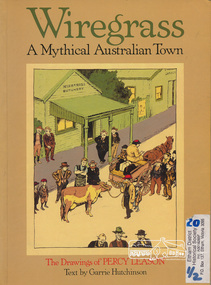
Book, Ross Publishing, Wiregrass: A Mythical Australian Town, drawings by Percy Leason, text by Garrie Hurchinson, 1986
... Wiregrass flourished in Table Talk Magazine from 1926 to 1937 when Leason, seeking to escape his comic reputation and pursue "serious" art, went to live in America." Percy Leason lived in Eltham australian wit and humour drawing caricatures and cartoons country life ISBN 0850912490 Softcover, 80 p. : ill., 1 port. ; 30 cm. ...Back Cover: At a time when black and white art was flourishing in Australia- with artists like Norman Lindsay, Will Dyson and Stan Cross at work - Percy Leason's creation of Wiregrass ranked him as an illustrator of surpassing genius. His early successes as a book illustrator and as a cartoonist for the Bulletin and Melbourne Punch, presaged a full flowering of his work with his creation of the mythical town and his endowment of it with a host of characters and comic situations. His inspiration came from his childhood town in Kaniva, Western Victoria but Wiregrass was every country town, with its general store, pub and church hall, its swimming hole, football ground and racecourse, its leading citizens, its battlers and mischievous children. Wiregrass flourished in Table Talk Magazine from 1926 to 1937 when Leason, seeking to escape his comic reputation and pursue "serious" art, went to live in America." Percy Leason lived in Eltham Softcover, 80 p. : ill., 1 port. ; 30 cm.ISBN 0850912490australian wit and humour, drawing, caricatures and cartoons, country life -
 Eltham District Historical Society Inc
Folder, Percy Leason, 1930s
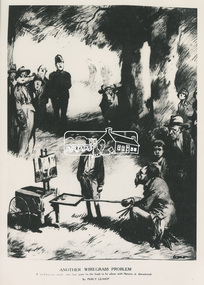
... WIREGRASS WEEKLY CLARION, By Percy Leason 4. Photocopy: "Goliath and the Prodigal David" by Percy Leason 1931 [See SEPP_0727] 5. Photocopy: "Yes you are improving the place. I'll have to increase your rent." by Percy Leason 1933 [See SEPP_0728] 6. Photocopy: Cartoon...WIREGRASS WEEKLY CLARION, By Percy Leason 4. Photocopy: "Goliath and the Prodigal David" by Percy Leason 1931 [See SEPP_0727] 5. Photocopy: "Yes you are improving the place. I'll have to increase your rent." by Percy Leason 1933 [See SEPP_0728] 6. Photocopy: Cartoon ...Folder of information on Percy Leason, Artist, Cartoonist, Historian, Anthropologist, Eltham, 1930s. 1. Photo: ANOTHER WIREGRASS PROBLEM: A well known artist who has gone to the bush to be alone with Nature, is discovered, By Percy Leason 2. Photo: SCENE DURING THE EIGHT HOURSS' DAY SPORTS AT WIREGRASS, By Percy Leason 3. Photo: "FIRE!": "An unfortunate occurrence. When the members of the Wiregrass Fire Brigade assembled at the Fire Station last evening for their weekly practice, they were horrified to discover that the building was on fire." - WIREGRASS WEEKLY CLARION, By Percy Leason 4. Photocopy: "Goliath and the Prodigal David" by Percy Leason 1931 [See SEPP_0727] 5. Photocopy: "Yes you are improving the place. I'll have to increase your rent." by Percy Leason 1933 [See SEPP_0728] 6. Photocopy: Cartoon by Percy Leason 1931 [See SEPP_0729] 7. Photocopy: Cartoon by Percy Leason [See SEPP_0730] 8. LEASON, Percy Alexander, Painter and Illustrator; Who's Who in Australia, XIVth Edition 1950 9. LEASON, Percy Alexander, Painter and Illustrator; Who's Who in Australia, date unknown 10. Percy Leason 1889-1959 11. LEASON, Percy Alexander, 1889-1959, Painter and Illustrator 12. Percy Leason: Artist, cartoonist and Historian, by L.J. Blake, B.A., B.Ed., M.A.C.E. (President of the R.H.S.V.); An Address to the Society on Tuesday evening 27 August 1968; The Victorian Historical Magazine, pp 158-180 13. Catalogue: The Percy Leason Collection on view in The la Trobe Library 20 September - 29 October 1971 14. Invitation: Christmas Exhibition, The Wiregrass Gallery, 4 December 1977 15. Newspaper clipping: Artist's retreat, 1980 16. Newspaper clipping: Sharper than snapshots by Giles Auty; Arts, Review, The Weekend Australian, November 13-14, 1999 17. Works by Percy leason held by Castlemaine Art Museum, October 2018alan whitmore estate agents, biography, exhibition catalogue, la trobe library, landscape, percy leason, rhsv, shire of eltham pioneers photograph collection, wiregrass gallery, eltham
