
Showing 175 items matching "world war 1939-1945 - japan"
-
 Monbulk RSL Sub Branch
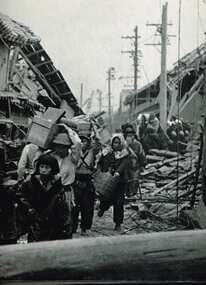
Book, Time-Life Books, Japan at war, 1980
... World War 1939-1945 - Japan - History...World War 1939-1945 - Japan - History World War 1939-1945 - Japan The story of Japan's preparation for war and its role in World War Ii until its surrender. ...The story of Japan's preparation for war and its role in World War Ii until its surrender.Index, bib, ill, p.201.non-fictionThe story of Japan's preparation for war and its role in World War Ii until its surrender.world war 1939-1945 - japan - history, world war 1939-1945 - japan -
 Monbulk RSL Sub Branch
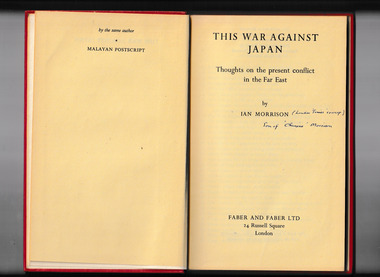
Book, Ian Morrison, The war against Japan, 1943
... world war 1939-1945 - japan...world war 1939-1945 - japan japan - foreign relations Thoughts on the present conflict in the far east Index, ill, p.111. ...Thoughts on the present conflict in the far eastIndex, ill, p.111.non-fictionThoughts on the present conflict in the far eastworld war 1939-1945 - japan, japan - foreign relations -
 Monbulk RSL Sub Branch
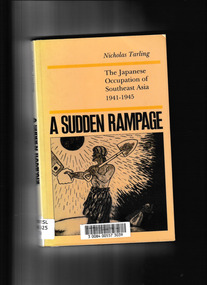
Book, C. Hurst, A sudden rampage : the Japanese occupation of South East Asia, 2000
... world war 1939-1945 - japan - occupied territories...world war 1939-1945 - japan - occupied territories japan - foreign relations - 1941-1945 A Sudden Rampage describes the origins, the methods and the results of imperial Japan's occupation of Southeast Asia during the Second World War. ...A Sudden Rampage describes the origins, the methods and the results of imperial Japan's occupation of Southeast Asia during the Second World War.Index, bibliography, map, p.268.non-fictionA Sudden Rampage describes the origins, the methods and the results of imperial Japan's occupation of Southeast Asia during the Second World War.world war 1939-1945 - japan - occupied territories, japan - foreign relations - 1941-1945 -
 Sunshine and District Historical Society Incorporated
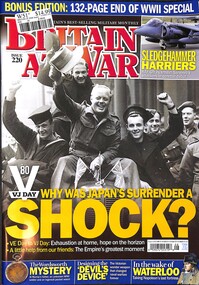
Magazine - Britain At War
... World War 1939 - 1945...Japan...World War 1939 - 1945 Japan Contains a feature article VJ Day - The dawn peace from the setting of the Rising Sun Britain At War VJ80 Day Why was Japan's surrender a Shock Color magazine Britain At War Magazine Britain At War ...Contains a feature article VJ Day - The dawn peace from the setting of the Rising SunColor magazineContains a feature article VJ Day - The dawn peace from the setting of the Rising Sunworld war 1939 - 1945, japan -
 Sunshine and District Historical Society Incorporated
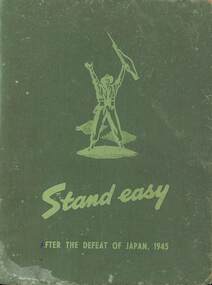
Book - Stand Easy After The Defeat Of Japan 1945, Australian War Memorial, 1945
... World War 1939 - 1945... Japan...World War 1939 - 1945 Japan Stand Easy After The Defeat Of Japan 1945 Hard copy book Stand Easy After The Defeat Of Japan 1945 Book Stand Easy After The Defeat Of Japan 1945 Australian War Memorial ...Hard copy bookworld war 1939 - 1945, japan -
 Monbulk RSL Sub Branch
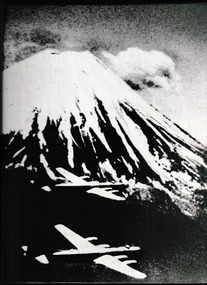
Book, Time-Life Books, Bombers over Japan, 1982
... World War 1939-1945 - Campaigns - Japan...World War 1939-1945 - Campaigns - Japan World War 1939-1945 - Strategic bombing - Japan The air war over Japan, primarily the operations of the B29 bombers Index, bib, ill, p.208. ...The air war over Japan, primarily the operations of the B29 bombersIndex, bib, ill, p.208.non-fictionThe air war over Japan, primarily the operations of the B29 bombersworld war 1939-1945 - campaigns - japan, world war 1939-1945 - strategic bombing - japan -
 Monbulk RSL Sub Branch
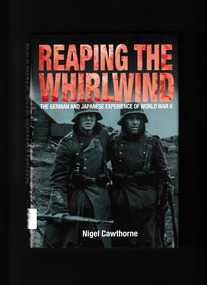
Book, Nigel Cawthorne, Reaping the whirlwind : the German and Japanese experience of World War II, 2007
... world war 1939-1945 - participation - germany...world war 1939-1945 - participation - japan...world war 1939-1945 - participation - germany world war 1939-1945 - participation - japan Reaping the Whirlwind offers amazing insight into the events of World War II through the eyes of those who fought against the Allied forces in all theatres of the war. ...Reaping the Whirlwind offers amazing insight into the events of World War II through the eyes of those who fought against the Allied forces in all theatres of the war. Readers will comb through many previously unpublished accounts of the war from German, Italian and Japanese soldiers, civilians and military leaders. The book covers every major arena of the war: Europe; the German invasion of Russia; Rommel's Afrika Korps; and the Pacific war between Japan and forces of the US, Australia and New Zealand. Reaping the Whirlwind uses the authentic voices of Germans and Japanese people caught up in the conflict and highlights the similar deprivations and dangers experienced by both victors and vanquished.Index, bibliography, ill, maps, p.288.non-fictionReaping the Whirlwind offers amazing insight into the events of World War II through the eyes of those who fought against the Allied forces in all theatres of the war. Readers will comb through many previously unpublished accounts of the war from German, Italian and Japanese soldiers, civilians and military leaders. The book covers every major arena of the war: Europe; the German invasion of Russia; Rommel's Afrika Korps; and the Pacific war between Japan and forces of the US, Australia and New Zealand. Reaping the Whirlwind uses the authentic voices of Germans and Japanese people caught up in the conflict and highlights the similar deprivations and dangers experienced by both victors and vanquished. world war 1939-1945 - participation - germany, world war 1939-1945 - participation - japan -
 Monbulk RSL Sub Branch
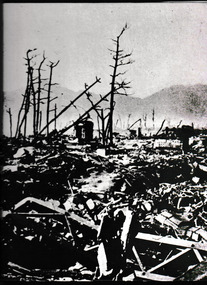
Book, Time-Life Books, The fall of Japan, 1982
... World War 1939-1945 - Campaigns - Japan...World War 1939-1945 - Campaigns - Japan Atomic bombing - Japan Aspects of the final collapse of Japan Index, bib, ill, p.208. ...Aspects of the final collapse of JapanIndex, bib, ill, p.208.non-fictionAspects of the final collapse of Japanworld war 1939-1945 - campaigns - japan, atomic bombing - japan -
 Mrs Aeneas Gunn Memorial Library
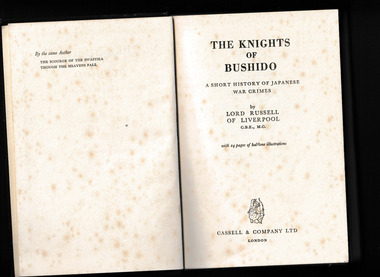
Book, Cassell, The Knights of Bushido, 1960
... World War 1939-1945 - Atrocities...Japan...World War 1939-1945 - Atrocities Japan - War crimes An account of Japanese war atrocities. ...An account of Japanese war atrocities.Index, ill, p.329.non-fictionAn account of Japanese war atrocities.world war 1939-1945 - atrocities, japan - war crimes -
 Monbulk RSL Sub Branch
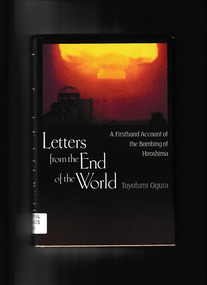
Book, Kodansha International, Letters from the end of the world a firsthand account of the bombing of Hiroshima, 1997
... World war 1939 – 1945 – Personal narratives – Japan...World war 1939 – 1945 – Personal narratives – Japan Hiroshima - Atomic bombing A collection of letters that document the catastrophe of Hiroshima. ...A collection of letters that document the catastrophe of Hiroshima. The author - a professor of history at Hiroshima University - spent several days after bomb searching for his wife and son. His joy on being re-united with them was short-lived as radiation sickness took his wife ten days later.Ill, map, p.194.non-fictionA collection of letters that document the catastrophe of Hiroshima. The author - a professor of history at Hiroshima University - spent several days after bomb searching for his wife and son. His joy on being re-united with them was short-lived as radiation sickness took his wife ten days later. world war 1939 – 1945 – personal narratives – japan, hiroshima - atomic bombing -
 Monbulk RSL Sub Branch
Book, Tall Stories, A war at home : a comprehensive guide to the first Japanese attacks on Darwin, 1999
... World war 1939-1945 - Air raids - Darwin...World war 1939-1945 - Aerial operations - japan...World war 1939-1945 - Air raids - Darwin World war 1939-1945 - Aerial operations - japan A comprehensive guide to the first Japanese attacks on Darwin on 19th February 1942, written by Dr Tom Lewis, OAM. ...A comprehensive guide to the first Japanese attacks on Darwin on 19th February 1942, written by Dr Tom Lewis, OAM. An essential reference work on this controversial subject that includes a full list of those killed as well as other detailed appendices. It also includes fascinating information on what wartime sites are still accessible in and around the northern capital. Originally published in 1999, until recently it has mainly been available only in Darwin itself.Index, bibliography, ill, maps, p.73.non-fictionA comprehensive guide to the first Japanese attacks on Darwin on 19th February 1942, written by Dr Tom Lewis, OAM. An essential reference work on this controversial subject that includes a full list of those killed as well as other detailed appendices. It also includes fascinating information on what wartime sites are still accessible in and around the northern capital. Originally published in 1999, until recently it has mainly been available only in Darwin itself.world war 1939-1945 - air raids - darwin, world war 1939-1945 - aerial operations - japan -
 Monbulk RSL Sub Branch
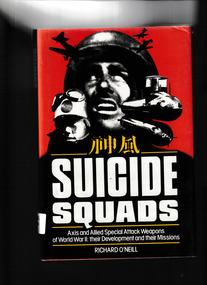
Book, Salamander Books, Suicide squads: the men and machines of World War II special operations, 1981
... World war 1939 – 1945 – Aerial operations - Japan...World war 1939 – 1945 – Aerial operations - Japan Kamikaze attacks An examination of the machinery and motives of self sacrifice during World War Two Index, bibliography, ill, diagrams, p.281. ...An examination of the machinery and motives of self sacrifice during World War TwoIndex, bibliography, ill, diagrams, p.281.non-fictionAn examination of the machinery and motives of self sacrifice during World War Twoworld war 1939 – 1945 – aerial operations - japan, kamikaze attacks -
 Monbulk RSL Sub Branch
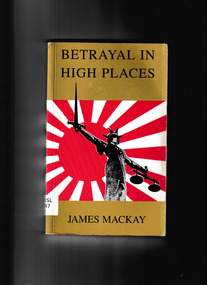
Book, Tasman Archives, Betrayal in high places, 1996
... World war 1939-1945 - War crime - Japan...World war 1939-1945 - War crime - Japan World war 1939 – 1945 - Prisons and prisoners – Japanese Alleges an extensive cover-up of Japanese war crimes. ...Alleges an extensive cover-up of Japanese war crimes.Index, ill, p.263.non-fictionAlleges an extensive cover-up of Japanese war crimes.world war 1939-1945 - war crime - japan, world war 1939 – 1945 - prisons and prisoners – japanese -
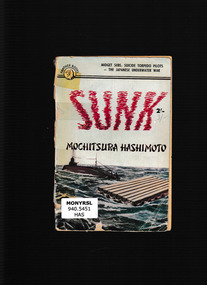 Monbulk RSL Sub Branch
Book, Mochitsura Hashimoto, Sunk, 1955
... World war 1939-1945 - Naval operations - Japan...World war 1939-1945 - Naval operations - Japan Submarines- Japan Recounts the exploits of midget sub, suicide torpedo pilots and of Japanese submariners in World War Two Ill, map, p.192. ...Recounts the exploits of midget sub, suicide torpedo pilots and of Japanese submariners in World War TwoIll, map, p.192.non-fictionRecounts the exploits of midget sub, suicide torpedo pilots and of Japanese submariners in World War Twoworld war 1939-1945 - naval operations - japan, submarines- japan -
 Monbulk RSL Sub Branch
Book, Cassell, Not peace but a sword, 1943
... World War 1939-1945 - Aerial operations - Britain...World war 1939 – 1945 – Personal narratives – Japan...World War 1939-1945 - Aerial operations - Britain World war 1939 – 1945 – Personal narratives – Japan Personal experiences of a Coastal Command pilot in World war Two p.270. ...Personal experiences of a Coastal Command pilot in World war Twop.270.non-fictionPersonal experiences of a Coastal Command pilot in World war Twoworld war 1939-1945 - aerial operations - britain, world war 1939 – 1945 – personal narratives – japan -
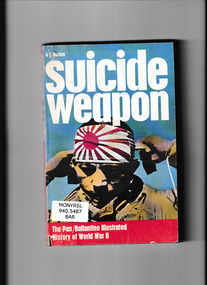 Monbulk RSL Sub Branch
Book, Pan Books, Suicide weapons, 1971
... World war 1939-1945 - Aerial operations - japan...Kamikaze attacks World war 1939-1945 - Aerial operations - japan A history of japanese suicide weapons and actions Ill, p.159. ...A history of japanese suicide weapons and actionsIll, p.159.non-fictionA history of japanese suicide weapons and actionskamikaze attacks, world war 1939-1945 - aerial operations - japan -
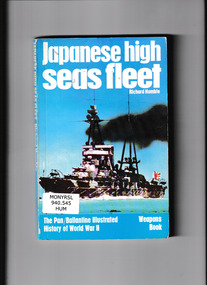 Monbulk RSL Sub Branch
Book, Pan Books, Japanese high seas fleet, 1972
... World war 1939-1945 - Naval operations - Japan...Naval history World war 1939-1945 - Naval operations - Japan A history of the Japanese navy Ill, maps, p.159. ...A history of the Japanese navyIll, maps, p.159.non-fictionA history of the Japanese navynaval history, world war 1939-1945 - naval operations - japan -
 Lara RSL Sub Branch
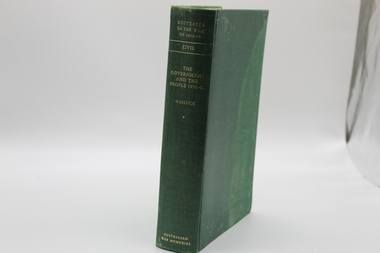
Book, Australia in the War of 1939-1945 - The Government and the People 1939-41 Author - Paul Hasluck, First Published in 1952
... War of 1939-1941. A history of political events in Australia during the War and merges into the history of world events. Matters which found their eventual significance in decisions made in the Australian Cabinet, the Parliament and the Australian electorate. The Political, Social chronological history of Australian Parliament, Cabinet and Electorate. prime minister robert.g. menzies the challenge of survival scullin ministry the declaration of war manpower democratic rights danger in europe women at war the effects on citizens the downfall of menzies fadden government danger from japan 1941 Australian War Memorial Australia in the War of 1939-1945 - The Government and the People 1939-41 Photographs, Illustrations Australia in the War of 1939-1945 - The Government and the People 1939-41 Author - Paul Hasluck Book ...Political and Social History of Australia in the War of 1939-1941. A history of political events in Australia during the War and merges into the history of world events. Matters which found their eventual significance in decisions made in the Australian Cabinet, the Parliament and the Australian electorate.The Political, Social chronological history of Australian Parliament, Cabinet and Electorate.Australia in the War of 1939-1945 - The Government and the People 1939-41 Photographs, IllustrationsAustralian War Memorialprime minister robert.g. menzies, the challenge of survival, scullin ministry, the declaration of war, manpower, democratic rights, danger in europe, women at war, the effects on citizens, the downfall of menzies, fadden government, danger from japan 1941 -
 Monbulk RSL Sub Branch
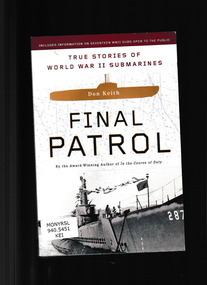
Book, NAL Caliber, Final patrol : true stories of World War II submarines, 2006
... World war II World War 1939-1945 - Naval operations - United States During World War II, the U.S. Navy's submarine service suffered the highest percentage of casualties of any branch of the American armed forces. One in five submariners was lost. But despite the odds, these underwater warriors accounted for almost sixty percent of Japanese ...During World War II, the U.S. Navy's submarine service suffered the highest percentage of casualties of any branch of the American armed forces. One in five submariners was lost. But despite the odds, these underwater warriors accounted for almost sixty percent of Japanese shipping losses and were a major factor in winning the war.Index, ill, p.331.During World War II, the U.S. Navy's submarine service suffered the highest percentage of casualties of any branch of the American armed forces. One in five submariners was lost. But despite the odds, these underwater warriors accounted for almost sixty percent of Japanese shipping losses and were a major factor in winning the war.submarine warfare - world war ii, world war 1939-1945 - naval operations - united states -
 Monbulk RSL Sub Branch
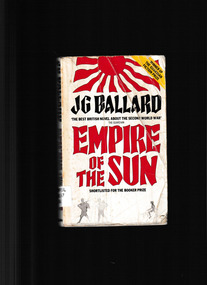
Book, Panther, Empire of the sun, 1985
... world war 1939-1945 - fiction World war 1939 – 1945 - Prisons and prisoners - Japanese The heartrending story of British boy Jim's four year ordeal in a Japanese prison camp during the second world war. ...The heartrending story of British boy Jim's four year ordeal in a Japanese prison camp during the second world war. Based on J. G. Ballard's own childhood, this is the extraordinary account of a boy's life in Japanese-occupied wartime Shanghai--a mesmerising, hypnotically compelling novel of war, of starvation and survival, of internment camps and death marches. It blends searing honesty with an almost hallucinatory vision of a world thrown utterly out of joint. Rooted as it is in the author's own disturbing experience of war in our time, it is one of a handful of novels by which the twentieth century will be not only remembered but judged.p.351.fictionThe heartrending story of British boy Jim's four year ordeal in a Japanese prison camp during the second world war. Based on J. G. Ballard's own childhood, this is the extraordinary account of a boy's life in Japanese-occupied wartime Shanghai--a mesmerising, hypnotically compelling novel of war, of starvation and survival, of internment camps and death marches. It blends searing honesty with an almost hallucinatory vision of a world thrown utterly out of joint. Rooted as it is in the author's own disturbing experience of war in our time, it is one of a handful of novels by which the twentieth century will be not only remembered but judged. world war 1939-1945 - fiction, world war 1939 – 1945 - prisons and prisoners - japanese -
 Monbulk RSL Sub Branch
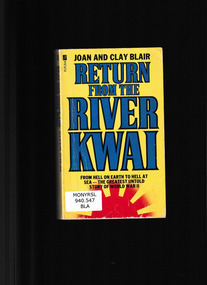
Book, Futura Publications, Return from the river Kwai, 1980
... World war 1939 – 1945 - Prisons and prisoners - Japanese Burma - Thailand Railway 2000 survivors of the Burma railway were sent to Japan but their ship was sunk by an american submarine. ...2000 survivors of the Burma railway were sent to Japan but their ship was sunk by an american submarine.Index, ill, maps, p.320.non-fiction2000 survivors of the Burma railway were sent to Japan but their ship was sunk by an american submarine.world war 1939 – 1945 - prisons and prisoners - japanese, burma - thailand railway -
 Monbulk RSL Sub Branch
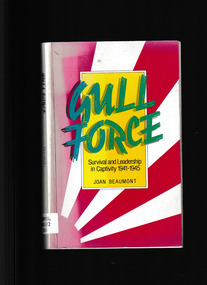
Book, Allen & Unwin, Gull Force : Survival and Leadership in Captivity 1941-1945, 1988
... World war 1939 – 1945 - Prisons and prisoners - Japanese Prison camp - Ambon The captivity experiences of Gull Force taken prisoner by the Japanese in Ambon in 1942 Index, bib, ill, map, p.220. ...The captivity experiences of Gull Force taken prisoner by the Japanese in Ambon in 1942Index, bib, ill, map, p.220.non-fictionThe captivity experiences of Gull Force taken prisoner by the Japanese in Ambon in 1942world war 1939 – 1945 - prisons and prisoners - japanese, prison camp - ambon -
 Monbulk RSL Sub Branch
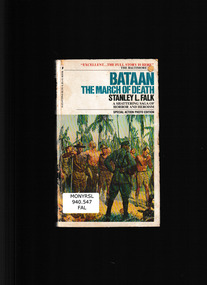
Jove Books, Bataan : the march of death, 1984
... World war 1939 – 1945 - Prisons and prisoners - Japanese...Atrocities - Japan...World war 1939 – 1945 - Prisons and prisoners - Japanese Atrocities - Japan The story of the infamous Bataan death march Index, ill, map, p.242. ...The story of the infamous Bataan death marchIndex, ill, map, p.242.non-fictionThe story of the infamous Bataan death marchworld war 1939 – 1945 - prisons and prisoners - japanese, atrocities - japan -
 Monbulk RSL Sub Branch
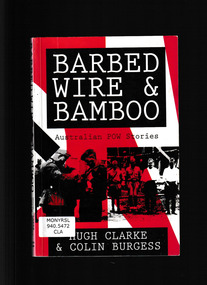
Book, Hugh V. Clarke and Colin Burgess, Barbed wire and bamboo : Australian POWs in Europe, North Africa, Singapore, Thailand and Japan, 1993
... World war 1939 – 1945 - Prisons and prisoners - Japanese World war 1939 – 1945 - Prisons and prisoners – Germany A collection of stories of capture, imprisonment and escape in World War I and II. ...A collection of stories of capture, imprisonment and escape in World War I and II. Covering experiences in Europe and in South East Asia, the book presents contrasting PoW experiences - of daring escapes from Colditz Castle, and of endurance and slow suffering in Japanese camps.Ill, maps, p.159A collection of stories of capture, imprisonment and escape in World War I and II. Covering experiences in Europe and in South East Asia, the book presents contrasting PoW experiences - of daring escapes from Colditz Castle, and of endurance and slow suffering in Japanese camps.world war 1939 – 1945 - prisons and prisoners - japanese, world war 1939 – 1945 - prisons and prisoners – germany -
 Monbulk RSL Sub Branch
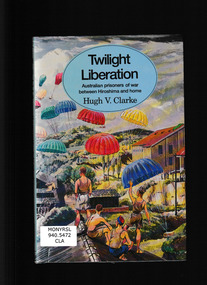
Book, George Allen & Unwin, Twilight liberation : Australian prisoners of war between Hiroshima and home, 1985
... World war 1939 – 1945 - Prisons and prisoners – Japanese World War 1939-1945 - Personal narratives - Australia Australian prisoners of war in Japan in the aftermath of The Japanese surrender Ill, p.165 Twilight liberation : Australian prisoners of war between Hiroshima and home Book George Allen & Unwin Hugh V Clarke ...Australian prisoners of war in Japan in the aftermath of The Japanese surrenderIll, p.165non-fictionAustralian prisoners of war in Japan in the aftermath of The Japanese surrenderworld war 1939 – 1945 - prisons and prisoners – japanese, world war 1939-1945 - personal narratives - australia -
 Monbulk RSL Sub Branch
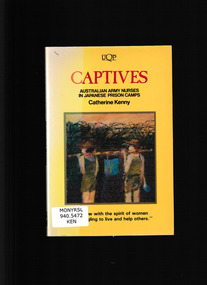
Book, University of Queensland Press, Captives: Australian Army Nurses in Japanese Prison Camps, 1986
... World war 1939 – 1945 - Prisons and prisoners - Japanese Australian Army Nursing Service The story of the experiences of Australian Army nurses as Japanese prisoners of war Index, ill, p.162. ...The story of the experiences of Australian Army nurses as Japanese prisoners of warIndex, ill, p.162.non-fictionThe story of the experiences of Australian Army nurses as Japanese prisoners of warworld war 1939 – 1945 - prisons and prisoners - japanese, australian army nursing service -
 Monbulk RSL Sub Branch
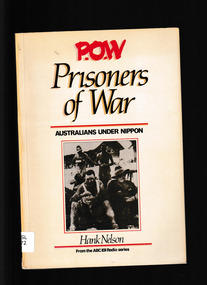
Book, Australian Broadcasting Corporation, P.O.W. : prisoners of war, 1985
... World war 1939 – 1945 - Prisons and prisoners – Japanese World war 1939-1945 - Personal narrativies - Australia Within three months of the Japanese entering World War II on December 8, 1941 over 22 000 Australians had become prisoners-of-war. ...Within three months of the Japanese entering World War II on December 8, 1941 over 22 000 Australians had become prisoners-of-war. They went into camps in Timor, Ambon, New Britain, Java, Sumatra, Borneo, Singapore and Malaya, and a few were scattered to other points in what was briefly part of the Japanese empire. Later most of the prisoners were to be shifted further north into South-east Asia, Formosa, Korea, Manchuria and Japan itself. They were captives within lands and cultures and to experiences alien to those known to all other Australians. At the end of the war in August 1945, 14315 servicemen and thirty service women were alive to put on new, loose-fitting uniforms and go home. One in three of the prisoners had died. That is, nearly half of the deaths suffered by Australians in the war in the Pacific were among men and women who had surrendered. Another 8174 Australians had been captured in the fighting in Europe, the Middle East and North Africa: but of these men only 265 died as a result of wounds, disease or execution.By any quantitative measure the imprisonment of so many Australians is a major event in Australian history. For many soldiers it was living --and dying --in captivity which made World War II different from that of World War I. But the prisoners have received no permanent place in Australian history. Their story is not immediately recalled on celebratory occasions. In a general history of the nation in which a chapter is given to the war the prisoners might be mentioned in a sentence, or part of a sentence. Where the horror, stoicism and gallantry of Gallipoli have become part of a common tradition shared by all Australians, the ex-prisoners are granted just the horror. The public may be sympathetic; but the horror is for the prisoners alone. To make another comparison: in five months of fighting on the Kokoda Trail in 1942 the Australians lost 625 dead, less than the number who died on Ambon. Yet the events on Ambon are unknown to most Australians. There were no reporters or cameramen on Ambon and, for the 309 who defended Ambon's Laha airfield, no survivors. How many of them died in battle or died as prisoners will never be known. But there are more than just practical reasons why the record of the prisoners of war is so slight and uneven in the general knowledge of Australians. They have not tried to find out. No historian has written a book to cover the range of camps and experiences, and only in specialist medical publications has anyone investigated the impact of prison life on subsequent physical and mental health. The complexity of the experience and its impact on particular lives have not been expressed in a way to give them significance for other Australians.Index, bib, ill, maps, p.224.Within three months of the Japanese entering World War II on December 8, 1941 over 22 000 Australians had become prisoners-of-war. They went into camps in Timor, Ambon, New Britain, Java, Sumatra, Borneo, Singapore and Malaya, and a few were scattered to other points in what was briefly part of the Japanese empire. Later most of the prisoners were to be shifted further north into South-east Asia, Formosa, Korea, Manchuria and Japan itself. They were captives within lands and cultures and to experiences alien to those known to all other Australians. At the end of the war in August 1945, 14315 servicemen and thirty service women were alive to put on new, loose-fitting uniforms and go home. One in three of the prisoners had died. That is, nearly half of the deaths suffered by Australians in the war in the Pacific were among men and women who had surrendered. Another 8174 Australians had been captured in the fighting in Europe, the Middle East and North Africa: but of these men only 265 died as a result of wounds, disease or execution.By any quantitative measure the imprisonment of so many Australians is a major event in Australian history. For many soldiers it was living --and dying --in captivity which made World War II different from that of World War I. But the prisoners have received no permanent place in Australian history. Their story is not immediately recalled on celebratory occasions. In a general history of the nation in which a chapter is given to the war the prisoners might be mentioned in a sentence, or part of a sentence. Where the horror, stoicism and gallantry of Gallipoli have become part of a common tradition shared by all Australians, the ex-prisoners are granted just the horror. The public may be sympathetic; but the horror is for the prisoners alone. To make another comparison: in five months of fighting on the Kokoda Trail in 1942 the Australians lost 625 dead, less than the number who died on Ambon. Yet the events on Ambon are unknown to most Australians. There were no reporters or cameramen on Ambon and, for the 309 who defended Ambon's Laha airfield, no survivors. How many of them died in battle or died as prisoners will never be known. But there are more than just practical reasons why the record of the prisoners of war is so slight and uneven in the general knowledge of Australians. They have not tried to find out. No historian has written a book to cover the range of camps and experiences, and only in specialist medical publications has anyone investigated the impact of prison life on subsequent physical and mental health. The complexity of the experience and its impact on particular lives have not been expressed in a way to give them significance for other Australians.world war 1939 – 1945 - prisons and prisoners – japanese, world war 1939-1945 - personal narrativies - australia -
 Monbulk RSL Sub Branch
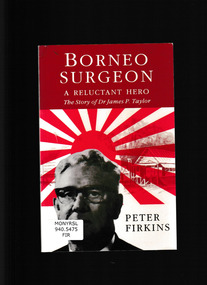
Book, Hesperian Press, Borneo surgeon : a reluctant hero : the life and times of Dr. James Patrick Taylor, OBE, MB, CH.M, 1995
... World war 1939 – 1945 - Prisons and prisoners - Japanese World war 1939 – 1945 – Personal narratives – Australia Peter Firkins has produced a heroic figure comparable in courage and selflessness to that of the legendary 'Weary' Dunlop, and whose story should be known by all Australians in the same way. ...Peter Firkins has produced a heroic figure comparable in courage and selflessness to that of the legendary 'Weary' Dunlop, and whose story should be known by all Australians in the same way. What a wonderful epitaph to a man born into a humble Yass family at the end of the nineteenth century who, by his own determination and intellect, won a scholarship for his secondary education at St Patrick's College, Goulburn and an Exhibition to study medicine at Sydney University. Almost by pure chance he pursued his medical career in an outpost of the British Empire then known as British North Borneo to become Principal Medical Officer at the time of the Japanese occupation during World War II. The Japanese allowed the civilian medical staff to remain at their posts with the status of 'simple confinement' while at the same time the bewildered local people looked to someone for leadership in their new and unaccustomed circumstances.Aided by his wonderful wife Celia he was imperceptibly drawn into the key role of organising the underground movement among loyal native and giving support to the Australian Prisoners of War transferred to Borneo from Singapore. In 1943 he was exposed to the Japanese, arrested and terribly tortured. Donated by Major General M.P.J. O'Brien, July 2018. Signed by authorIll, p.151non-fictionPeter Firkins has produced a heroic figure comparable in courage and selflessness to that of the legendary 'Weary' Dunlop, and whose story should be known by all Australians in the same way. What a wonderful epitaph to a man born into a humble Yass family at the end of the nineteenth century who, by his own determination and intellect, won a scholarship for his secondary education at St Patrick's College, Goulburn and an Exhibition to study medicine at Sydney University. Almost by pure chance he pursued his medical career in an outpost of the British Empire then known as British North Borneo to become Principal Medical Officer at the time of the Japanese occupation during World War II. The Japanese allowed the civilian medical staff to remain at their posts with the status of 'simple confinement' while at the same time the bewildered local people looked to someone for leadership in their new and unaccustomed circumstances.Aided by his wonderful wife Celia he was imperceptibly drawn into the key role of organising the underground movement among loyal native and giving support to the Australian Prisoners of War transferred to Borneo from Singapore. In 1943 he was exposed to the Japanese, arrested and terribly tortured. Donated by Major General M.P.J. O'Brien, July 2018. Signed by authorworld war 1939 – 1945 - prisons and prisoners - japanese, world war 1939 – 1945 – personal narratives – australia -
 Monbulk RSL Sub Branch
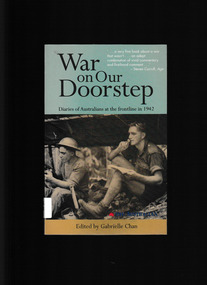
Book, Hardie Grant Books, War on our doorstep : diaries of Australians at the frontline in 1942, 2004
... World War 1939-1945 - Personal narratives - Australia Soldiers - Australia - Diaries As the clock struck twelve to signal the start of 1942, Australians did not give the New Year their traditional noisy welcome. Regular events were cancelled, nightclub bookings were down and most people stayed in their blacked out homes. Clocks were put forward an hour for the start of daylight saving, as part of a war-time scheme to save power. All around the Pacific, Japan ...As the clock struck twelve to signal the start of 1942, Australians did not give the New Year their traditional noisy welcome. Regular events were cancelled, nightclub bookings were down and most people stayed in their blacked out homes. Clocks were put forward an hour for the start of daylight saving, as part of a war-time scheme to save power. All around the Pacific, Japan was making gains. They already occupied most of China; bombed Pearl Harbour, Guam and Wake; sunk the stars of the British naval fleet, the Prince of Wales and Repulse. They had landed in British Borneo, Hong Kong and the Philippines. This is the story of 1942, as told in first-hand accounts by the men and women in Australia and around the world.Ill, map, p.316.non-fictionAs the clock struck twelve to signal the start of 1942, Australians did not give the New Year their traditional noisy welcome. Regular events were cancelled, nightclub bookings were down and most people stayed in their blacked out homes. Clocks were put forward an hour for the start of daylight saving, as part of a war-time scheme to save power. All around the Pacific, Japan was making gains. They already occupied most of China; bombed Pearl Harbour, Guam and Wake; sunk the stars of the British naval fleet, the Prince of Wales and Repulse. They had landed in British Borneo, Hong Kong and the Philippines. This is the story of 1942, as told in first-hand accounts by the men and women in Australia and around the world. world war 1939-1945 - personal narratives - australia, soldiers - australia - diaries -
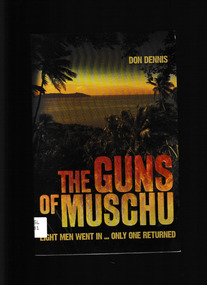 Monbulk RSL Sub Branch
Book, Allen & Unwin, The guns of Muschu, 2006
... World war 1939 – 1945 – Campaigns – Papua new Guinea World war 1939 – 1945 – Personal narratives – Australia During the night of 11 April 1945, eight Australian Z Special commandos landed on Japanese-held Muschu Island, off the coast of New Guinea. ...During the night of 11 April 1945, eight Australian Z Special commandos landed on Japanese-held Muschu Island, off the coast of New Guinea. Their mission was to reconnoitre the island's defences and confirm the location of two concealed naval guns that commanded the approaches to Wewak Harbour. But the secret mission went horribly wrong. Unknown to them, their presence had been discovered within hours of their landing. With no means of escape, the island became a killing ground. Nine days later, on the New Guinea mainland, the only survivor staggered back through the Japanese lines to safety... This is the remarkable true story of that survivor.Maps, p.255.non-fictionDuring the night of 11 April 1945, eight Australian Z Special commandos landed on Japanese-held Muschu Island, off the coast of New Guinea. Their mission was to reconnoitre the island's defences and confirm the location of two concealed naval guns that commanded the approaches to Wewak Harbour. But the secret mission went horribly wrong. Unknown to them, their presence had been discovered within hours of their landing. With no means of escape, the island became a killing ground. Nine days later, on the New Guinea mainland, the only survivor staggered back through the Japanese lines to safety... This is the remarkable true story of that survivor. world war 1939 – 1945 – campaigns – papua new guinea, world war 1939 – 1945 – personal narratives – australia
