
Showing 56 items matching "world war 1939-1945 - prisoners and prisons - japan"
-
 Monbulk RSL Sub Branch
Book, Department of Veterans Affairs, Sandakan 1942-1945, 2014
... ...World war 1939-1945 - Prisoners and prisons - Japan...World War 1939-1945 - Prisoners of war - Sandakan World war 1939-1945 - Prisoners and prisons - Japan Illustrated history of the Sandakan death marches. ...Illustrated history of the Sandakan death marches. Includes a roll of honourIll, maps, p.138.non-fictionIllustrated history of the Sandakan death marches. Includes a roll of honourworld war 1939-1945 - prisoners of war - sandakan, world war 1939-1945 - prisoners and prisons - japan -
 Monbulk RSL Sub Branch
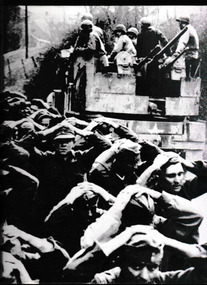
Book, Time-Life Books, Prisoners of war, 1981
... ...World war 1939-1945 - Prisoners and prisons - Japan...World War 1939-1945 - prisoners of war - Germany World war 1939-1945 - Prisoners and prisons - Japan The experiences of prisoners of war of all belligerents are described in this book Index, bib, ill, p.208. ...The experiences of prisoners of war of all belligerents are described in this bookIndex, bib, ill, p.208.non-fictionThe experiences of prisoners of war of all belligerents are described in this bookworld war 1939-1945 - prisoners of war - germany, world war 1939-1945 - prisoners and prisons - japan -
 Monbulk RSL Sub Branch
Book, Cameron Forbes, Hellfire : The Story of Australia, Japan and the Prisoners of War, 2005
... World war 1939-1945 - Prisoners and Prisons - Japan...World war 1939-1945 - Prisoners and Prisons - Japan Burma - Siam railway For months during 1943 there was no night in Hellfire Pass. ...For months during 1943 there was no night in Hellfire Pass. By the light of flares, carbide lamps and bamboo fires, men near-naked and skeletal cut a passage through stone to make way for a railway. Among these men were some of the 22,000 Australian soldiers taken prisoner by the Japanese during World War II. In camps across Asia and the Pacific, they struggled, died, and survived with a little help from their mates. 'Hellfire' was researched in Australia, Japan and across South-East Asia. It draws on 50 first-person interviews, ranging from former prisoners to an old Mon villager deep in the Burmese jungle, and from Singapore's Lee Kuan Yew to veterans of the Imperial Japanese Army. The result is a tour de force, a powerful and searing history of the prisoners of the Japanese.Index, ill, bib, p.559.non-fictionFor months during 1943 there was no night in Hellfire Pass. By the light of flares, carbide lamps and bamboo fires, men near-naked and skeletal cut a passage through stone to make way for a railway. Among these men were some of the 22,000 Australian soldiers taken prisoner by the Japanese during World War II. In camps across Asia and the Pacific, they struggled, died, and survived with a little help from their mates. 'Hellfire' was researched in Australia, Japan and across South-East Asia. It draws on 50 first-person interviews, ranging from former prisoners to an old Mon villager deep in the Burmese jungle, and from Singapore's Lee Kuan Yew to veterans of the Imperial Japanese Army. The result is a tour de force, a powerful and searing history of the prisoners of the Japanese. world war 1939-1945 - prisoners and prisons - japan, burma - siam railway -
 Monbulk RSL Sub Branch
Book, Hamilton, At the going down of the sun Hong Kong and South-East Asia 1841-194, 1981
... ...World war 1939-1945 - Prisoners and Prisons - Japan...World war 1939 – 1945 – Campaigns – Hong Kong World war 1939-1945 - Prisoners and Prisons - Japan The story of POW's captured at Hong Kong is told for the first time in this book. ...The story of POW's captured at Hong Kong is told for the first time in this book. A gripping tale of courage and enduranceIndex, bibliography, notes, ill, maps, p.262.non-fictionThe story of POW's captured at Hong Kong is told for the first time in this book. A gripping tale of courage and enduranceworld war 1939 – 1945 – campaigns – hong kong, world war 1939-1945 - prisoners and prisons - japan -
 Monbulk RSL Sub Branch
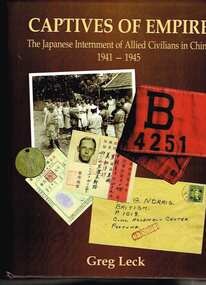
Book, Shandy Press, Captives of empire : the Japanese internment of allied civilians in China, 1941-1945, 2006
... World war 1939-1945 - Prisoners and prisons - Japan...World war 1939-1945 - Prisoners and prisons - Japan Internment camps - China Here for the first time is the definitive history of the internment of Allied civilians ib China Index, ill, maps, plans, p.738. ...Here for the first time is the definitive history of the internment of Allied civilians ib ChinaIndex, ill, maps, plans, p.738.Here for the first time is the definitive history of the internment of Allied civilians ib Chinaworld war 1939-1945 - prisoners and prisons - japan, internment camps - china -
 Monbulk RSL Sub Branch
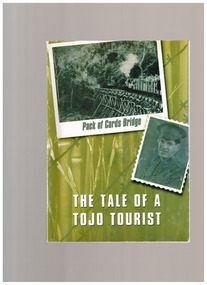
Book, John Towers, The tale of a Tojo tourist, 1997
... ...World war 1939-1945 - Prisoners and Prisons - Japan...Japanese prisoners of war - Australia World war 1939-1945 - Prisoners and Prisons - Japan Experiences of a prisoner on the Burma to Siam railway Ill, p.110. ...Experiences of a prisoner on the Burma to Siam railwayIll, p.110.non-fictionExperiences of a prisoner on the Burma to Siam railwayjapanese prisoners of war - australia, world war 1939-1945 - prisoners and prisons - japan -
 Monbulk RSL Sub Branch
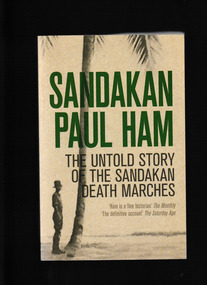
Book, William Heinemann, Sandakan : the untold story of the Sandakan Death Marches, 2013
... ...Japan - prisons and prisoners of war...World War 1939-1945 - Prisoners of war - Sandakan Japan - prisons and prisoners of war The untold story of the Sandakan death marches of World War II. ...The untold story of the Sandakan death marches of World War II. After the fall of Singapore, in February 1942, the Japanese conquerors rounded up tens of thousands of British and Australian soldiers and shipped them to prison camps scattered throughout Hirohito's newly won Empire. The fall of Britain's 'impregnable fortress' was the greatest humiliation in British military history, for which Churchill never forgave the Japanese. But nothing would surpass the wretched fate of some 2,700 British and Australian prisoners who were shipped to British North Borneo later that year. They landed in Sandakan, on the east coast of the island, after a 10-day voyage on a Japanese 'hell' ship, and were herded into a jungle camp some eight miles inland. Thus began the three-year ordeal of the Sandakan prisoners of war - a barely known story of unimaginable horror.Index, bibliography, notes, ill, p.688.non-fictionThe untold story of the Sandakan death marches of World War II. After the fall of Singapore, in February 1942, the Japanese conquerors rounded up tens of thousands of British and Australian soldiers and shipped them to prison camps scattered throughout Hirohito's newly won Empire. The fall of Britain's 'impregnable fortress' was the greatest humiliation in British military history, for which Churchill never forgave the Japanese. But nothing would surpass the wretched fate of some 2,700 British and Australian prisoners who were shipped to British North Borneo later that year. They landed in Sandakan, on the east coast of the island, after a 10-day voyage on a Japanese 'hell' ship, and were herded into a jungle camp some eight miles inland. Thus began the three-year ordeal of the Sandakan prisoners of war - a barely known story of unimaginable horror.world war 1939-1945 - prisoners of war - sandakan, japan - prisons and prisoners of war -
 Monbulk RSL Sub Branch
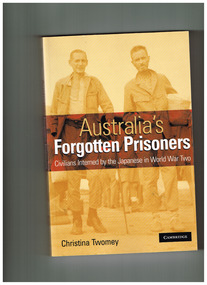
Book, Cambridge, Australia's forgotten prisoners: Civilians interred by the Japanese in World War Two, 2007
... Japan - prisons and prisoners of war...Japan - prisons and prisoners of war world war 1939-1945 - prisoners of war - japan The Japanese captured 1500 Australian civilians during World War II. ...The Japanese captured 1500 Australian civilians during World War II. They spent the war interned in harsh, prison-like camps throughout the Asia-Pacific region. Civilian internees - though not members of the armed forces - endured hardship, privation and even death at the hands of the enemy." "This book tells the stories of Australian civilians interned by the Japanese in World War II. By re-creating the daily lives and dramas within internment camps, it explores how captivity posed different dilemmas for the men, women and children held there.Ill, bib, index, notes, p.207.non-fictionThe Japanese captured 1500 Australian civilians during World War II. They spent the war interned in harsh, prison-like camps throughout the Asia-Pacific region. Civilian internees - though not members of the armed forces - endured hardship, privation and even death at the hands of the enemy." "This book tells the stories of Australian civilians interned by the Japanese in World War II. By re-creating the daily lives and dramas within internment camps, it explores how captivity posed different dilemmas for the men, women and children held there.japan - prisons and prisoners of war, world war 1939-1945 - prisoners of war - japan -
 Monbulk RSL Sub Branch
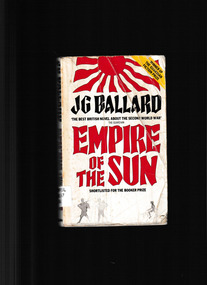
Book, Panther, Empire of the sun, 1985
... world war 1939-1945 - fiction World war 1939 – 1945 - Prisons and prisoners - Japanese The heartrending story of British boy Jim's four year ordeal in a Japanese prison camp during the second world war. ...The heartrending story of British boy Jim's four year ordeal in a Japanese prison camp during the second world war. Based on J. G. Ballard's own childhood, this is the extraordinary account of a boy's life in Japanese-occupied wartime Shanghai--a mesmerising, hypnotically compelling novel of war, of starvation and survival, of internment camps and death marches. It blends searing honesty with an almost hallucinatory vision of a world thrown utterly out of joint. Rooted as it is in the author's own disturbing experience of war in our time, it is one of a handful of novels by which the twentieth century will be not only remembered but judged.p.351.fictionThe heartrending story of British boy Jim's four year ordeal in a Japanese prison camp during the second world war. Based on J. G. Ballard's own childhood, this is the extraordinary account of a boy's life in Japanese-occupied wartime Shanghai--a mesmerising, hypnotically compelling novel of war, of starvation and survival, of internment camps and death marches. It blends searing honesty with an almost hallucinatory vision of a world thrown utterly out of joint. Rooted as it is in the author's own disturbing experience of war in our time, it is one of a handful of novels by which the twentieth century will be not only remembered but judged. world war 1939-1945 - fiction, world war 1939 – 1945 - prisons and prisoners - japanese -
 Monbulk RSL Sub Branch
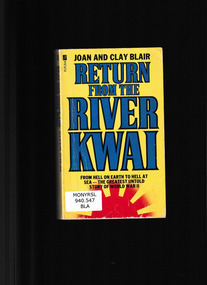
Book, Futura Publications, Return from the river Kwai, 1980
... World war 1939 – 1945 - Prisons and prisoners - Japanese Burma - Thailand Railway 2000 survivors of the Burma railway were sent to Japan but their ship was sunk by an american submarine. ...2000 survivors of the Burma railway were sent to Japan but their ship was sunk by an american submarine.Index, ill, maps, p.320.non-fiction2000 survivors of the Burma railway were sent to Japan but their ship was sunk by an american submarine.world war 1939 – 1945 - prisons and prisoners - japanese, burma - thailand railway -
 Monbulk RSL Sub Branch
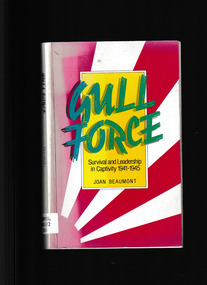
Book, Allen & Unwin, Gull Force : Survival and Leadership in Captivity 1941-1945, 1988
... World war 1939 – 1945 - Prisons and prisoners - Japanese Prison camp - Ambon The captivity experiences of Gull Force taken prisoner by the Japanese in Ambon in 1942 Index, bib, ill, map, p.220. ...The captivity experiences of Gull Force taken prisoner by the Japanese in Ambon in 1942Index, bib, ill, map, p.220.non-fictionThe captivity experiences of Gull Force taken prisoner by the Japanese in Ambon in 1942world war 1939 – 1945 - prisons and prisoners - japanese, prison camp - ambon -
 Monbulk RSL Sub Branch
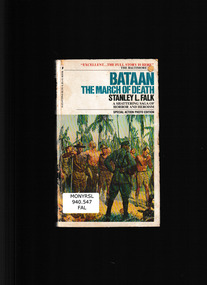
Jove Books, Bataan : the march of death, 1984
... World war 1939 – 1945 - Prisons and prisoners - Japanese Atrocities - Japan The story of the infamous Bataan death march Index, ill, map, p.242. ...The story of the infamous Bataan death marchIndex, ill, map, p.242.non-fictionThe story of the infamous Bataan death marchworld war 1939 – 1945 - prisons and prisoners - japanese, atrocities - japan -
 Monbulk RSL Sub Branch
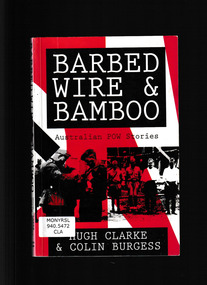
Book, Hugh V. Clarke and Colin Burgess, Barbed wire and bamboo : Australian POWs in Europe, North Africa, Singapore, Thailand and Japan, 1993
... World war 1939 – 1945 - Prisons and prisoners - Japanese World war 1939 – 1945 - Prisons and prisoners – Germany A collection of stories of capture, imprisonment and escape in World War I and II. ...A collection of stories of capture, imprisonment and escape in World War I and II. Covering experiences in Europe and in South East Asia, the book presents contrasting PoW experiences - of daring escapes from Colditz Castle, and of endurance and slow suffering in Japanese camps.Ill, maps, p.159A collection of stories of capture, imprisonment and escape in World War I and II. Covering experiences in Europe and in South East Asia, the book presents contrasting PoW experiences - of daring escapes from Colditz Castle, and of endurance and slow suffering in Japanese camps.world war 1939 – 1945 - prisons and prisoners - japanese, world war 1939 – 1945 - prisons and prisoners – germany -
 Monbulk RSL Sub Branch
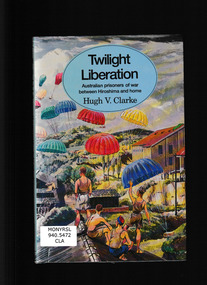
Book, George Allen & Unwin, Twilight liberation : Australian prisoners of war between Hiroshima and home, 1985
... World war 1939 – 1945 - Prisons and prisoners – Japanese World War 1939-1945 - Personal narratives - Australia Australian prisoners of war in Japan in the aftermath of The Japanese surrender Ill, p.165 Twilight liberation : Australian prisoners of war between Hiroshima and home Book George Allen & Unwin Hugh V Clarke ...Australian prisoners of war in Japan in the aftermath of The Japanese surrenderIll, p.165non-fictionAustralian prisoners of war in Japan in the aftermath of The Japanese surrenderworld war 1939 – 1945 - prisons and prisoners – japanese, world war 1939-1945 - personal narratives - australia -
 Monbulk RSL Sub Branch
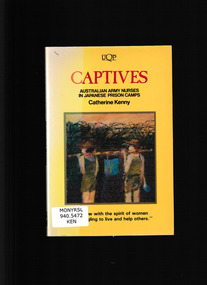
Book, University of Queensland Press, Captives: Australian Army Nurses in Japanese Prison Camps, 1986
... World war 1939 – 1945 - Prisons and prisoners - Japanese Australian Army Nursing Service The story of the experiences of Australian Army nurses as Japanese prisoners of war Index, ill, p.162. ...The story of the experiences of Australian Army nurses as Japanese prisoners of warIndex, ill, p.162.non-fictionThe story of the experiences of Australian Army nurses as Japanese prisoners of warworld war 1939 – 1945 - prisons and prisoners - japanese, australian army nursing service -
 Monbulk RSL Sub Branch
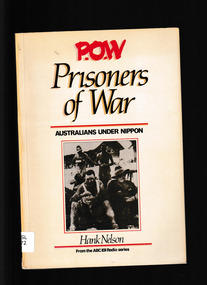
Book, Australian Broadcasting Corporation, P.O.W. : prisoners of war, 1985
... World war 1939 – 1945 - Prisons and prisoners – Japanese World war 1939-1945 - Personal narrativies - Australia Within three months of the Japanese entering World War II on December 8, 1941 over 22 000 Australians had become prisoners-of-war. ...Within three months of the Japanese entering World War II on December 8, 1941 over 22 000 Australians had become prisoners-of-war. They went into camps in Timor, Ambon, New Britain, Java, Sumatra, Borneo, Singapore and Malaya, and a few were scattered to other points in what was briefly part of the Japanese empire. Later most of the prisoners were to be shifted further north into South-east Asia, Formosa, Korea, Manchuria and Japan itself. They were captives within lands and cultures and to experiences alien to those known to all other Australians. At the end of the war in August 1945, 14315 servicemen and thirty service women were alive to put on new, loose-fitting uniforms and go home. One in three of the prisoners had died. That is, nearly half of the deaths suffered by Australians in the war in the Pacific were among men and women who had surrendered. Another 8174 Australians had been captured in the fighting in Europe, the Middle East and North Africa: but of these men only 265 died as a result of wounds, disease or execution.By any quantitative measure the imprisonment of so many Australians is a major event in Australian history. For many soldiers it was living --and dying --in captivity which made World War II different from that of World War I. But the prisoners have received no permanent place in Australian history. Their story is not immediately recalled on celebratory occasions. In a general history of the nation in which a chapter is given to the war the prisoners might be mentioned in a sentence, or part of a sentence. Where the horror, stoicism and gallantry of Gallipoli have become part of a common tradition shared by all Australians, the ex-prisoners are granted just the horror. The public may be sympathetic; but the horror is for the prisoners alone. To make another comparison: in five months of fighting on the Kokoda Trail in 1942 the Australians lost 625 dead, less than the number who died on Ambon. Yet the events on Ambon are unknown to most Australians. There were no reporters or cameramen on Ambon and, for the 309 who defended Ambon's Laha airfield, no survivors. How many of them died in battle or died as prisoners will never be known. But there are more than just practical reasons why the record of the prisoners of war is so slight and uneven in the general knowledge of Australians. They have not tried to find out. No historian has written a book to cover the range of camps and experiences, and only in specialist medical publications has anyone investigated the impact of prison life on subsequent physical and mental health. The complexity of the experience and its impact on particular lives have not been expressed in a way to give them significance for other Australians.Index, bib, ill, maps, p.224.Within three months of the Japanese entering World War II on December 8, 1941 over 22 000 Australians had become prisoners-of-war. They went into camps in Timor, Ambon, New Britain, Java, Sumatra, Borneo, Singapore and Malaya, and a few were scattered to other points in what was briefly part of the Japanese empire. Later most of the prisoners were to be shifted further north into South-east Asia, Formosa, Korea, Manchuria and Japan itself. They were captives within lands and cultures and to experiences alien to those known to all other Australians. At the end of the war in August 1945, 14315 servicemen and thirty service women were alive to put on new, loose-fitting uniforms and go home. One in three of the prisoners had died. That is, nearly half of the deaths suffered by Australians in the war in the Pacific were among men and women who had surrendered. Another 8174 Australians had been captured in the fighting in Europe, the Middle East and North Africa: but of these men only 265 died as a result of wounds, disease or execution.By any quantitative measure the imprisonment of so many Australians is a major event in Australian history. For many soldiers it was living --and dying --in captivity which made World War II different from that of World War I. But the prisoners have received no permanent place in Australian history. Their story is not immediately recalled on celebratory occasions. In a general history of the nation in which a chapter is given to the war the prisoners might be mentioned in a sentence, or part of a sentence. Where the horror, stoicism and gallantry of Gallipoli have become part of a common tradition shared by all Australians, the ex-prisoners are granted just the horror. The public may be sympathetic; but the horror is for the prisoners alone. To make another comparison: in five months of fighting on the Kokoda Trail in 1942 the Australians lost 625 dead, less than the number who died on Ambon. Yet the events on Ambon are unknown to most Australians. There were no reporters or cameramen on Ambon and, for the 309 who defended Ambon's Laha airfield, no survivors. How many of them died in battle or died as prisoners will never be known. But there are more than just practical reasons why the record of the prisoners of war is so slight and uneven in the general knowledge of Australians. They have not tried to find out. No historian has written a book to cover the range of camps and experiences, and only in specialist medical publications has anyone investigated the impact of prison life on subsequent physical and mental health. The complexity of the experience and its impact on particular lives have not been expressed in a way to give them significance for other Australians.world war 1939 – 1945 - prisons and prisoners – japanese, world war 1939-1945 - personal narrativies - australia -
 Monbulk RSL Sub Branch
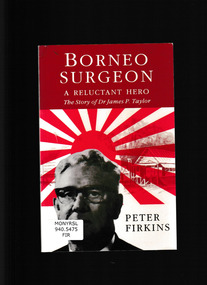
Book, Hesperian Press, Borneo surgeon : a reluctant hero : the life and times of Dr. James Patrick Taylor, OBE, MB, CH.M, 1995
... World war 1939 – 1945 - Prisons and prisoners - Japanese World war 1939 – 1945 – Personal narratives – Australia Peter Firkins has produced a heroic figure comparable in courage and selflessness to that of the legendary 'Weary' Dunlop, and whose story should be known by all Australians in the same way. ...Peter Firkins has produced a heroic figure comparable in courage and selflessness to that of the legendary 'Weary' Dunlop, and whose story should be known by all Australians in the same way. What a wonderful epitaph to a man born into a humble Yass family at the end of the nineteenth century who, by his own determination and intellect, won a scholarship for his secondary education at St Patrick's College, Goulburn and an Exhibition to study medicine at Sydney University. Almost by pure chance he pursued his medical career in an outpost of the British Empire then known as British North Borneo to become Principal Medical Officer at the time of the Japanese occupation during World War II. The Japanese allowed the civilian medical staff to remain at their posts with the status of 'simple confinement' while at the same time the bewildered local people looked to someone for leadership in their new and unaccustomed circumstances.Aided by his wonderful wife Celia he was imperceptibly drawn into the key role of organising the underground movement among loyal native and giving support to the Australian Prisoners of War transferred to Borneo from Singapore. In 1943 he was exposed to the Japanese, arrested and terribly tortured. Donated by Major General M.P.J. O'Brien, July 2018. Signed by authorIll, p.151non-fictionPeter Firkins has produced a heroic figure comparable in courage and selflessness to that of the legendary 'Weary' Dunlop, and whose story should be known by all Australians in the same way. What a wonderful epitaph to a man born into a humble Yass family at the end of the nineteenth century who, by his own determination and intellect, won a scholarship for his secondary education at St Patrick's College, Goulburn and an Exhibition to study medicine at Sydney University. Almost by pure chance he pursued his medical career in an outpost of the British Empire then known as British North Borneo to become Principal Medical Officer at the time of the Japanese occupation during World War II. The Japanese allowed the civilian medical staff to remain at their posts with the status of 'simple confinement' while at the same time the bewildered local people looked to someone for leadership in their new and unaccustomed circumstances.Aided by his wonderful wife Celia he was imperceptibly drawn into the key role of organising the underground movement among loyal native and giving support to the Australian Prisoners of War transferred to Borneo from Singapore. In 1943 he was exposed to the Japanese, arrested and terribly tortured. Donated by Major General M.P.J. O'Brien, July 2018. Signed by authorworld war 1939 – 1945 - prisons and prisoners - japanese, world war 1939 – 1945 – personal narratives – australia -
 Monbulk RSL Sub Branch
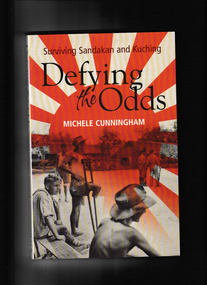
Book, Lothian Books, Defying the odds : surviving Sandakan and Kuching, 2006
... World war 1939 – 1945 - Prisons and prisoners - Japanese Prisoners of war - Sandakan and Kuching Presents a riveting account of the experiences of a unique group of 145 Australian officers who were held prisoners by the Japanese, at Sandakan, and later Kuching, from 1942 to 1945. ...Presents a riveting account of the experiences of a unique group of 145 Australian officers who were held prisoners by the Japanese, at Sandakan, and later Kuching, from 1942 to 1945.Index, bib, ill, maps, p.237.non-fictionPresents a riveting account of the experiences of a unique group of 145 Australian officers who were held prisoners by the Japanese, at Sandakan, and later Kuching, from 1942 to 1945.world war 1939 – 1945 - prisons and prisoners - japanese, prisoners of war - sandakan and kuching -
 Monbulk RSL Sub Branch
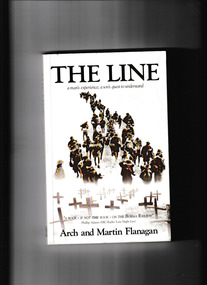
One Day Hill, The line : a man's experience; a son's quest to understand, 2006
... World war 1939 – 1945 - Prisons and prisoners – Japanese Burma - Thailand Railway A man's reflection of the infamous Burma railway p.190. ...A man's reflection of the infamous Burma railwayp.190.non-fictionA man's reflection of the infamous Burma railwayworld war 1939 – 1945 - prisons and prisoners – japanese, burma - thailand railway -
 Monbulk RSL Sub Branch
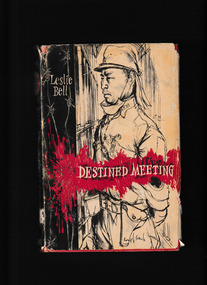
Book, Oldhams Press, Destined meeting, 1959
... World war 1939 – 1945 - Prisons and prisoners - Japanese Changi prison - Singapore An account of a husband and wife interned in Singapore during Wprld War Two. ...An account of a husband and wife interned in Singapore during Wprld War Two.Index, ill, p.253.non-fictionAn account of a husband and wife interned in Singapore during Wprld War Two.world war 1939 – 1945 - prisons and prisoners - japanese, changi prison - singapore -
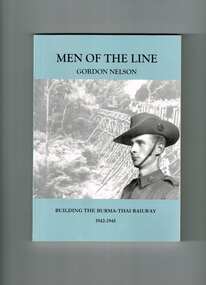 Monbulk RSL Sub Branch
Book, Australian Military History Publications, Men of the line : building the Burma-Thai railway, 1942-1945, 2005
... Burma - Thailand Railway World war 1939 – 1945 - Prisons and prisoners - Japanese Biographical account of the travails of an p Australian risoner on the Burma railway Ill, index, p.192. ...Biographical account of the travails of an p Australian risoner on the Burma railwayIll, index, p.192.non-fictionBiographical account of the travails of an p Australian risoner on the Burma railwayburma - thailand railway, world war 1939 – 1945 - prisons and prisoners - japanese -
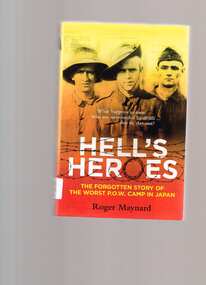 Monbulk RSL Sub Branch
Book, Harper Collins, Hell's heroes, 2009
... World war 1939 – 1945 - Prisons and prisoners - Japanese Atrocities - Japan Hell′s Heroes is the story of the POW camp that never was − so dubbed by one old soldier because the atrocities that occurred there went largely unreported at the time. ...Hell′s Heroes is the story of the POW camp that never was − so dubbed by one old soldier because the atrocities that occurred there went largely unreported at the time. For while the Burma−Thai railway‚ the Bataan death march and events at Changi and in many other parts of Asia became synonymous with Japanese brutality‚ most of the camps which were set up to provide slave labour for the enemy military machine at home were slowly forgotten in the aftermath of World War II.Ill, maps, p.359.non-fictionHell′s Heroes is the story of the POW camp that never was − so dubbed by one old soldier because the atrocities that occurred there went largely unreported at the time. For while the Burma−Thai railway‚ the Bataan death march and events at Changi and in many other parts of Asia became synonymous with Japanese brutality‚ most of the camps which were set up to provide slave labour for the enemy military machine at home were slowly forgotten in the aftermath of World War II.world war 1939 – 1945 - prisons and prisoners - japanese, atrocities - japan -
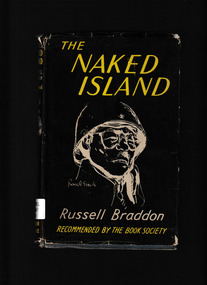 Monbulk RSL Sub Branch
Book, Werner Laurie, The naked island, 1954
... World war 1939 – 1945 - Prisons and prisoners - Japanese Prisoners of war - Australia Story of the Malayan Campaign of 1942 and subsequent captivity in the hands of the Japanese from a private soldier's point of view. ...Story of the Malayan Campaign of 1942 and subsequent captivity in the hands of the Japanese from a private soldier's point of view.Ill, p.266.non-fictionStory of the Malayan Campaign of 1942 and subsequent captivity in the hands of the Japanese from a private soldier's point of view. world war 1939 – 1945 - prisons and prisoners - japanese, prisoners of war - australia -
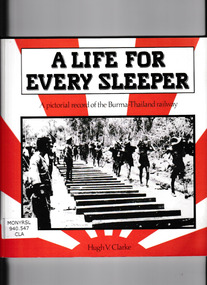 Monbulk RSL Sub Branch
Book, Hugh V Clarke, A life for every sleeper : a pictorial record of the Burma - Thailand railway, 1988
... World war 1939 – 1945 - Prisons and prisoners – Japanese Burma Thailand railway This book is based on documents, photographs and maps preserved in the records of the Australian war memorial, and on the experiences of the author. ...This book is based on documents, photographs and maps preserved in the records of the Australian war memorial, and on the experiences of the author.Ill, p.115.non-fictionThis book is based on documents, photographs and maps preserved in the records of the Australian war memorial, and on the experiences of the author.world war 1939 – 1945 - prisons and prisoners – japanese, burma thailand railway -
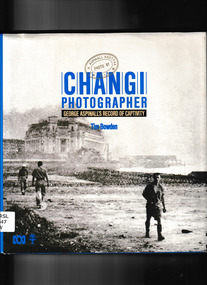 Monbulk RSL Sub Branch
Book, Australian Broadcasting Corporation, Changi Photographer : George Aspinall's Record of Captivity, 1984
... World war 1939 – 1945 - Prisons and prisoners – Japanese Changi prison George Aspinalls photography hobby during captivity has resulted in a unique visual diary. ...George Aspinalls photography hobby during captivity has resulted in a unique visual diary.Index, ill, p.141.non-fictionGeorge Aspinalls photography hobby during captivity has resulted in a unique visual diary.world war 1939 – 1945 - prisons and prisoners – japanese, changi prison -
 Monbulk RSL Sub Branch
Book, Kangaroo Press, Singapore samurai, 1998
... World war 1939 – 1945 - Prisons and prisoners – Japanese Changi jail The authors escape from Changi jail and their subsequent recaapture and ill treatment. p.250. ...The authors escape from Changi jail and their subsequent recaapture and ill treatment.p.250.non-fictionThe authors escape from Changi jail and their subsequent recaapture and ill treatment. world war 1939 – 1945 - prisons and prisoners – japanese, changi jail -
 Monbulk RSL Sub Branch
Book, McMillan, British civilians and the Japanese war in Malaya and Singapore, 1941-1945, 1987
... World war 1939 – 1945 - Prisons and prisoners – Japanese Civilian internment - malaya and Singapore An account of British civilians interned in Malaya and Singapore 1942-1945. ...An account of British civilians interned in Malaya and Singapore 1942-1945.Index, bibliography, ill, maps, p.156.non-fictionAn account of British civilians interned in Malaya and Singapore 1942-1945.world war 1939 – 1945 - prisons and prisoners – japanese, civilian internment - malaya and singapore -
 Monbulk RSL Sub Branch
Book, Tasman Archives, Betrayal in high places, 1996
... World war 1939-1945 - War crime - Japan World war 1939 – 1945 - Prisons and prisoners – Japanese Alleges an extensive cover-up of Japanese war crimes. ...Alleges an extensive cover-up of Japanese war crimes.Index, ill, p.263.non-fictionAlleges an extensive cover-up of Japanese war crimes.world war 1939-1945 - war crime - japan, world war 1939 – 1945 - prisons and prisoners – japanese -
 Monbulk RSL Sub Branch
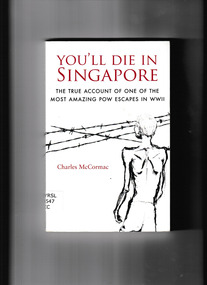
Book, Monsoon, You'll die in Singapore: True account of one of the most amazing POW escapes in WWII, 2005
... World war 1939 – 1945 - Prisons and prisoners – Japanese Prisoner of war escapes - Singapore With sixteen other POWs, author Charles McCormac broke out from his POW camp in Japanese-occupied Singapore and began a two-thousand-mile escape from Singapore, through the jungles of Indonesia to Australia. ...With sixteen other POWs, author Charles McCormac broke out from his POW camp in Japanese-occupied Singapore and began a two-thousand-mile escape from Singapore, through the jungles of Indonesia to Australia. The POWs' escape took a staggering five months and only two out of the original seventeen men survived. This is McCormac's compelling true account of one of the most horrifying and amazing escapes in World War Two. It is a story of courage, endurance and compassion, and makes for a very gripping read.Ill, maps, p.223.non-fictionWith sixteen other POWs, author Charles McCormac broke out from his POW camp in Japanese-occupied Singapore and began a two-thousand-mile escape from Singapore, through the jungles of Indonesia to Australia. The POWs' escape took a staggering five months and only two out of the original seventeen men survived. This is McCormac's compelling true account of one of the most horrifying and amazing escapes in World War Two. It is a story of courage, endurance and compassion, and makes for a very gripping read.world war 1939 – 1945 - prisons and prisoners – japanese, prisoner of war escapes - singapore -
 Monbulk RSL Sub Branch
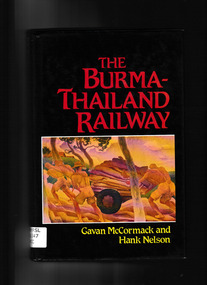
Book, Allen & Unwin, The Burma-Thailand railway : memory and history, 1993
... World war 1939 – 1945 - Prisons and prisoners – Japanese Burma - Thailand Railway The reminiscences of Australian POW's and Japanese historians at a meeting 50 years after the war ended on the Burma Thailand railway. ...The reminiscences of Australian POW's and Japanese historians at a meeting 50 years after the war ended on the Burma Thailand railway.Index, notes, ill, tales, p.175.non-fictionThe reminiscences of Australian POW's and Japanese historians at a meeting 50 years after the war ended on the Burma Thailand railway.world war 1939 – 1945 - prisons and prisoners – japanese, burma - thailand railway
