
Showing 15 items matching "world war 1939-1954"
-
 Monbulk RSL Sub Branch
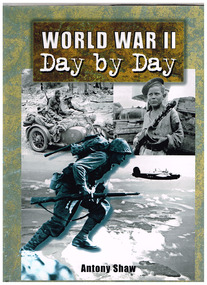
Book, Partworks Limited, World War II day by day, 2000
... World War 1939-1945 - History...World War 1939-1954...World War 1939-1945 - History World War 1939-1954 - Photographic record Illustrated and chronological history of the second world war Ill, maps, p.192. ...Illustrated and chronological history of the second world warIll, maps, p.192.non-fictionIllustrated and chronological history of the second world warworld war 1939-1945 - history, world war 1939-1954 - photographic record -
 Monbulk RSL Sub Branch
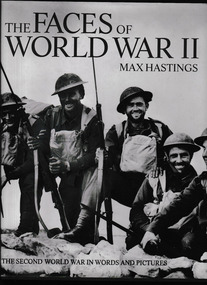
Book, Max Hastings, The faces of world war two, 2008
... World War 1939-1945 - History...World War 1939-1954...World War 1939-1945 - History World War 1939-1954 - Photographic record The second world war in words and pictures Ill. index, p.245. ...The second world war in words and picturesIll. index, p.245.non-fictionThe second world war in words and picturesworld war 1939-1945 - history, world war 1939-1954 - photographic record -
 Monbulk RSL Sub Branch
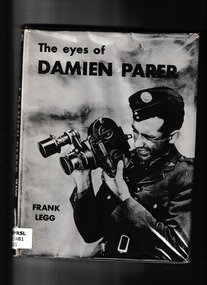
Book, Rigby, The Eyes of Damien Parer, 1963
... ...World War 1939-1954 - Photographic record...War photographers - Australia World War 1939-1954 - Photographic record Collection of the war photographs of Damien parer Ill The Eyes of Damien Parer Book Rigby Frank Legg ...Collection of the war photographs of Damien parerIllnon-fictionCollection of the war photographs of Damien parerwar photographers - australia, world war 1939-1954 - photographic record -
 Alfred Hospital Nurses League - Nursing History Collection
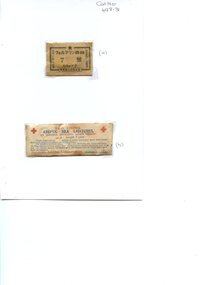
Equipment - Silk surgical suture, Army Medical Material Headquarters (Japan), Packet containing japanese silk surgical suture, May 1942
... World War 1939-1954...This item was found among memorabilia belonging to Gethla Forsyth (AH Graduate 1936) who served with the Australian Army Nursing Service during World War 2. translating the Japanes script shows that it was from Japanese army medical supplies with date of manufacture May 1942 Of significance to he AHNL as an example of World War 2 medical equipment World War 1939-1954 World War 2 Wold War II Gethle Forsyth Medical supplies sutures Previous catlogue number handwitten [black ink] at top right of cardboard '(a) written at right of packet. ...This item was found among memorabilia belonging to Gethla Forsyth (AH Graduate 1936) who served with the Australian Army Nursing Service during World War 2. translating the Japanes script shows that it was from Japanese army medical supplies with date of manufacture May 1942Of significance to he AHNL as an example of World War 2 medical equipmentUnopend discoloured cream waxed paper packet, presumably containing 2 silk sutures. Black print on front of packet. Within a double line border, that has a small five pointed star in centre top, is Japanese script, '7' and 0.3m x 2. The packet has been mouted on white carboard with clear photocorners along with item 202601.048Previous catlogue number handwitten [black ink] at top right of cardboard '(a) written at right of packet. '(b)' written at right of 202601.048world war 1939-1954, world war 2, wold war ii, gethle forsyth, medical supplies, sutures -
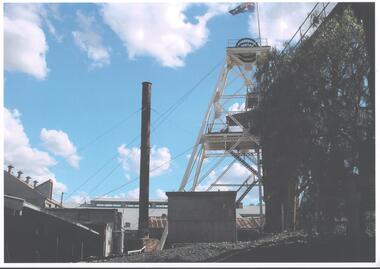 Bendigo Historical Society Inc.
Photograph - AUSTIN COLLECTION: Central Deborah Gold Mine, 1980's
... The Central Deborah Gold Mine, 76 Violet Street, Bendigo, was developed from 1939 and operated as a working mine until 1954. The mine was one of a minority that continued to function during the Second World War. ...The Central Deborah Gold Mine, 76 Violet Street, Bendigo, was developed from 1939 and operated as a working mine until 1954. The mine was one of a minority that continued to function during the Second World War. ...The Central Deborah Gold Mine, 76 Violet Street, Bendigo, was developed from 1939 and operated as a working mine until 1954. The mine was one of a minority that continued to function during the Second World War. In 1939 the mine boasted a small timber poppet head, boiler steam winch, compressor, blacksmith shop, store, change rooms, and offices. Between 1945-46 the company upgraded the mine with extensions to sheds and the installation of new steam machinery, electric air compressor, steel poppet head, and ore bins. Colour photograph: metal mine chimney in centre of image, metal poppet head on right hand side. Mine sheds on left of image, peppercorn trees on right. Australian flag flying from top of popper head. mining, bendigo, mine site, historic mine site, central deborah gold mine, poppet head -
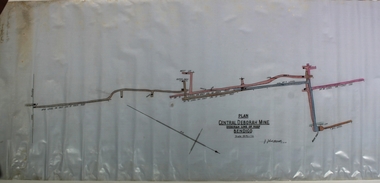 Bendigo Historical Society Inc.
Plan - Central Deborah Gold Mine, J.J. Caldwell, 1945
... 1939 through to 1954 and extracted 929 kg of gold. The Central Deborah Gold Mine is a non-active gold mine and tourist attraction in Bendigo, Australia. It was listed on the Victorian Heritage Register on 18 November 1999.[1] The mine was opened in 1939 by the Central Deborah Gold Mining Company during a 1930s revival of the gold industry, extending an existing 108 ft shaft from many years earlier with new machinery. It was one of the last mines to open on the Bendigo goldfields and one of the few to stay open during World War...1939 through to 1954 and extracted 929 kg of gold. The Central Deborah Gold Mine is a non-active gold mine and tourist attraction in Bendigo, Australia. It was listed on the Victorian Heritage Register on 18 November 1999.[1] The mine was opened in 1939 by the Central Deborah Gold Mining Company during a 1930s revival of the gold industry, extending an existing 108 ft shaft from many years earlier with new machinery. It was one of the last mines to open on the Bendigo goldfields and one of the few to stay open during World War ...The Central Deborah Gold Mine is situated at 76 Violet Street, Bendigo. The mine operated from 1939 through to 1954 and extracted 929 kg of gold. The Central Deborah Gold Mine is a non-active gold mine and tourist attraction in Bendigo, Australia. It was listed on the Victorian Heritage Register on 18 November 1999.[1] The mine was opened in 1939 by the Central Deborah Gold Mining Company during a 1930s revival of the gold industry, extending an existing 108 ft shaft from many years earlier with new machinery. It was one of the last mines to open on the Bendigo goldfields and one of the few to stay open during World War II. It was expanded during 1945–46, with extensions and new machinery. It reached its maximum depth (now recorded as 412m) during the 1940s. It closed in November 1954, having produced 29,865 ounces of gold in its lifetime; the closure of the North Deborah Mine two weeks later marked the last mine in Bendigo to close Central Deborah Gold Mine is now a tourist destination, operated by Bendigo Heritage Attractions: https://www.central-deborah.com/about-us/central-deborah-gold-mine-s-history Blue waxed paper, features on plan drawn in pale pink and blue, title written in black text on centre bottom: 'Plan, Central Deborah Mine, Deborah Line of Reef, Bendigo, Scale 30 ft = 1 in.' Signature of J.J. Caldross, 13.10.45, written below name of mine. Handwritten on outside of plan in black pen: 'Mines Department, Cent. Deborah, Transverse section, Plan of levels' Plan notation shows No. 8 level on east leg of inner reef, level of east leg on outer reef, outer back, west leg, main shaft, numbers 5, 6, 7 and 10 levels. Mine map is part of the Margaret Roberts Collection. gold mining, gold, margaret roberts collection, central deborah gold mine, violet street, tourist attraction, bendigo -
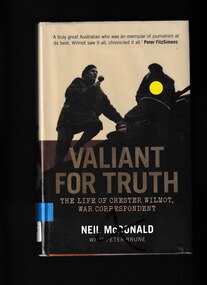 Monbulk RSL Sub Branch
Book, Neil McDonald et al, Valiant for truth: The life of Chester Wilmot, war correspondent, 2016
... world war 1939-1945 - journalists - biography...wilmot chester 1911-1954...He covered all Australian participation in World War II as well as the eventual defeat of Nazi Germany. world war 1939-1945 - journalists - biography wilmot chester 1911-1954 Valiant for the truth charts Wilmots exceptional life as he reported key events of the twentieth century. ...Valiant for the truth charts Wilmots exceptional life as he reported key events of the twentieth century.Notes, index, bibliography, maps, p.463.non-fictionValiant for the truth charts Wilmots exceptional life as he reported key events of the twentieth century.world war 1939-1945 - journalists - biography, wilmot chester 1911-1954 -
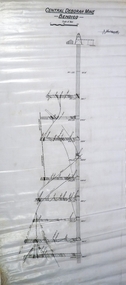 Bendigo Historical Society Inc.
Plan - Central Deborah Gold Mine, 22.10.45
... CENTRAL DEBORAH GOLD MINE 76 VIOLET STREET BENDIGO, GREATER BENDIGO CITY: The Central Deborah Gold Mine was developed from 1939 and operated as a working mine until 1954. The mine was one of a minority that continued to function during the Second World War. ...CENTRAL DEBORAH GOLD MINE 76 VIOLET STREET BENDIGO, GREATER BENDIGO CITY: The Central Deborah Gold Mine was developed from 1939 and operated as a working mine until 1954. The mine was one of a minority that continued to function during the Second World War. ...CENTRAL DEBORAH GOLD MINE 76 VIOLET STREET BENDIGO, GREATER BENDIGO CITY: The Central Deborah Gold Mine was developed from 1939 and operated as a working mine until 1954. The mine was one of a minority that continued to function during the Second World War. In 1939 the mine boasted a small timber poppet head, boiler steam winch, compressor, blacksmith shop, store, change rooms, and offices. Between 1945-46 the company upgraded the mine with extensions to sheds and the installation of new steam machinery, electric air compressor, steel poppet head, and ore bins. The Central Deborah Gold Mine is historically significant for its ability to demonstrate the tangible and important links to twentieth century quartz mining. It is of outstanding historical significance as the last intact and working example of the 5,500 quartz mines that won Bendigo widespread fame as a gold mining centre. At one time Bendigo had the world’s deepest shafts. Of particular importance are original buildings, fittings and mining machinery that document the mine’s character from 1939 to 1954. (Criterion A) The Central Deborah Gold Mine is archaeologically significant for its ability and potential to illustrate important aspects of early twentieth century mining. The physical evidence at the site has excellent interpretative value and the ability to answer archaeological research questions. (Criterion C) The Central Deborah Gold Mine is significant as a notable and fine example of the class of twentieth century quartz mine. The working machinery—including a Cornish boiler, winding engine and two compressors—comprise one of the few publicly accessible and in situ collections in the State. Central Deborah Company Gold Mine is now a popular tourist mine and a living part of the story of gold mining in Australia. Its historic mining equipment is still functional, and several levels underground are accessible to visitors. (Victorian Heritage Database: https://vhd.heritagecouncil.vic.gov.au/places/5996) Transverse section of Central Deborah Gold Mine, Bendigo. Printed on top in bold black text: ' Central Deborah Mine Bendigo'. Handwritten on plan: J.Caldwell 12.10.45 Plan forms part of the Margaret Roberts Collection.gold mining, gold, bendigo, central deborah gold mine, transverse -
 Otway Districts Historical Society
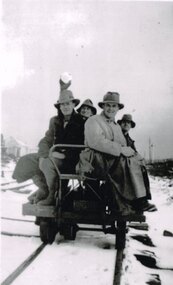
Photograph, R. Preston, Beech Forest: Track gang in snow, c.1940, c.1940
... There were two track gangs at Beech Forest until 1954, so a large number of gangers and repairers was present over the years. World War 2 with petrol and rubber rationing provided a boost to the line. The 1939...There were two track gangs at Beech Forest until 1954, so a large number of gangers and repairers was present over the years. World War 2 with petrol and rubber rationing provided a boost to the line. The 1939 ...The railway track was maintained initially by seven three-man gangs headed by a ganger. The gangers tended to be promoted into the Otways but many of their subordinate staff of repairers were local recruits. There were two track gangs at Beech Forest until 1954, so a large number of gangers and repairers was present over the years. World War 2 with petrol and rubber rationing provided a boost to the line. The 1939 bushfire killed a great deal of timber which had to transported out of the Otways, and the commencement of a vigorous wartime pulp wood traffic from Beech Forest meant that only the railway could efficiently handle the volume of traffic. By early 1940 not only the Garratt was running a daily train to Beech Forest but an NA goods train was scheduled to run at night. As a result the track gangs were also particularly busy at the same time.B/W. In snow at Beech Forest, a track gang on a trolley at the entrance to the Way and Works shed, comprising G. Newland, Ned Hewing, Bill Taylor, Jim Gowty, and Buck.beech forest; railways; g. newland; ned hewing; bill taylor; jim gowty; snow; track gang; -
 Melbourne Legacy
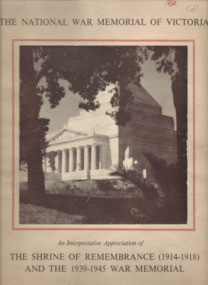
Booklet, The National War Memorial of Victoria (S2) : An interpretive appreciation of The Shrine of Remembrance (1914-1918) and the 1939-1945 War Memorial, c1955
... Its full title mentions the 1939-45 memorial and 'Including a full description of the many features of the Memorial together with its history and thirty six photographs.' The exact date is unknown but was after the Queen dedicated the World War 2 memorial in 1954. ...Its full title mentions the 1939-45 memorial and 'Including a full description of the many features of the Memorial together with its history and thirty six photographs.' The exact date is unknown but was after the Queen dedicated the World War 2 memorial in 1954. ...A booklet produced about the Shrine of Remembrance. Its full title mentions the 1939-45 memorial and 'Including a full description of the many features of the Memorial together with its history and thirty six photographs.' The exact date is unknown but was after the Queen dedicated the World War 2 memorial in 1954. Item was with other photos and programmes from different items relating to the Shrine of Remembrance - including discussions on its location and design. Labelled 'Shrine of Remembrance S1 - S14' it was part of an old archive numbering system, that showed there has been efforts in the past to collect, order and save items of Legacy's history. (01181 - 01190, 01206 - 01211, 01649, 01650).Details of the Shrine of Remembrance published for the public. It is important to note it mentions that Legacy had an important role in promoting the construction of the original design over alternate proposals (of a civic square or a hospital). There was an effort to record historical events for the "Archive Committee" which collected this and other documents relating to the Shrine together in a file (see items 01181 - 01190, 01206 - 01211, 01649).A 40 page of booklet describing the Shrine, buff paper in a cream cover with black and white photos and black print.Handwritten on top right corner of the cover is S2 in red pen, part of an original numbering system.memorial, shrine of remembrance -
 Returned Nurses RSL Sub-branch
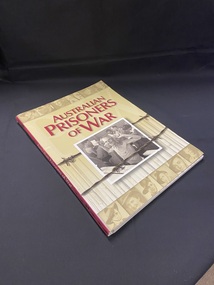
Book - Illustrated paperback book, Department of Veterans' Affairs, Canberra, Australian Prisoners of War, 2009
... World War Two and the Korean War. It provides students with resources for studying the major themes of these experiences through on-screen memories and words of former POWs, framed by accompanying narration and images which place those memories in an historical perspective. Covers the following wars: Boer War, 1899-1901; First World War, 1914-1918; Second World War, 1939-1945; Korea, 1950-1954 ...This resource primarily investigates the experiences of Australian POWs from World War Two and the Korean War. It provides students with resources for studying the major themes of these experiences through on-screen memories and words of former POWs, framed by accompanying narration and images which place those memories in an historical perspective. Covers the following wars: Boer War, 1899-1901; First World War, 1914-1918; Second World War, 1939-1945; Korea, 1950-1954. Includes teachers' information; guided activities; the stories; worksheets; review and reflection. - from Trove. .Maroon spine with title printed in cream and barbed wire either side. The cover shows a strip of sepia toned portraits of soldiers across the top and bottom of the page. The title is in large maroon lettering and a photo of an emaciated prisoner in a mess hall, is below, with barbed wire running across and behond the photograpnon-fictionThis resource primarily investigates the experiences of Australian POWs from World War Two and the Korean War. It provides students with resources for studying the major themes of these experiences through on-screen memories and words of former POWs, framed by accompanying narration and images which place those memories in an historical perspective. Covers the following wars: Boer War, 1899-1901; First World War, 1914-1918; Second World War, 1939-1945; Korea, 1950-1954. Includes teachers' information; guided activities; the stories; worksheets; review and reflection. - from Trove. .australian military history - 20th century, australian armed forces, prisoners of war, nurses -
 City of Melbourne Libraries
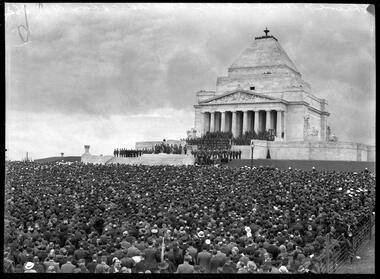
Photograph, Bull, Hugh Jones, 1897-1993, Shrine and multitude afield at opening dedication, Shrine of Remembrance
... 1954; 1956), p. 7. Retrieved June 19, 2024, from http://nla.gov.au/nla.news-article277075769 DAY OF SOLEMNITY (1934, November 12). The Argus (Melbourne, Vic. : 1848 - 1957), p. 9. Retrieved November 8, 2024, from http://nla.gov.au/nla.news-article10992864 shrine of remembrance 1930-1939 ceremonies world war 1 pigeons Photographer notations on slide: "Shrine and multitude afield B62". ...On Armistice Day, 11 November 1934, an estimated third of Melbourne’s population, assembled for the Dedication Ceremony of the Shrine of Remembrance by Prince Henry, Duke of Gloucester. Featured in "Newsworthy: Melbourne in photographs 1933-1936" exhibition at East Melbourne Library, October to December 2023 Photographer notations on slide: "Shrine and multitude afield B62" Description: “Shrine and multitude afield” On Armistice Day, 11 November 1934, an estimated third of Melbourne’s population, assembled for the Dedication Ceremony of the Shrine of Remembrance by Prince Henry, Duke of Gloucester. The Argus reported the following day: “10,000 Pigeons Released. With whirring wings, 10,000 pigeons rose above the Shrine like a huge puff of smoke when they were released from the second balcony at 11.43am, after the ceremony of dedication. The pigeons had come from all parts of the metropolitan area and from places as far away as Shepparton, Broadford, and Trentham. They hovered above the Shrine for a moment or two, taking their bearings, and then flew away toward their homes. A boy at Burnley reported later that one of his pigeons had returned and entered its box two minutes after the liberation. The pigeons were assembled in metropolitan clubrooms of the Victorian Homing Pigeon Association on Saturday night, and transported in 75 panniers to the Shrine, carried up stairways, and placed in readiness on the balcony. A man remained in charge of them all night. In the early hours of the morning he had a busy time covering the panniers with a tarpaulin to protect the birds from the rain.” In the foreground can be seen three women standing with their backs to the Shrine, looking upwards. In the same coverage, The Argus noted: “Women, unconscious probably of the fact that they were resorting to the principle of the periscope of the days of the war which had brought this vast assemblage together, turned their backs upon the scene the better to view it by looking into mirrors held high in one hand.” FRC Featured in "Newsworthy: Melbourne in photographs 1933-1936" exhibition at East Melbourne Library, October to December 2023. Exhibition caption by project volunteer, Fiona Collyer. References: President Roosevelt's Tribute (1934, November 13). The Advertiser (Adelaide, SA : 1931 - 1954), p. 16. Retrieved November 8, 2024, from http://nla.gov.au/nla.news-article35018382 Here, There and Everywhere (1934, November 12). The Sun News-Pictorial (Melbourne, Vic. : 1922 - 1954; 1956), p. 7. Retrieved June 19, 2024, from http://nla.gov.au/nla.news-article277075769 DAY OF SOLEMNITY (1934, November 12). The Argus (Melbourne, Vic. : 1848 - 1957), p. 9. Retrieved November 8, 2024, from http://nla.gov.au/nla.news-article10992864Photographer notations on slide: "Shrine and multitude afield B62".shrine of remembrance, 1930-1939, ceremonies, world war 1, pigeons -
 City of Melbourne Libraries
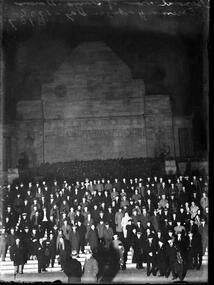
Photograph, Bull, Hugh Jones, 1897-1993, Dawn Ceremony, Anzac Day, Shrine of Remembrance
... 1954), p. 9. Retrieved October 10, 2025, from http://nla.gov.au/nla.news-article205260905 shrine of remembrance world war 1 1930-1939 Photographer notations on slide: "General View Of Shrine. ...Dawn Service 25 April 1936 “And in the morning, we will remember them” A ghostly crowd of predominantly men gather before the Shrine of Remembrance at the Anzac Dawn Service on 25 April 1936. The picture was taken just before the Two Minutes’ silence. An estimated 8,000 were in attendance. The Age reported: The many bright flashes of the press photographers called forth a barrage of remarks, such as passed down the trenches when the shelling began. "Eyes down, they're rangeing on us," "Was that one of ours or one of Jerry's?" "Tin hats on, boys." Exhibition caption by project volunteer, Fiona Collyer. Published: The Age 27 April 1936 Featured in "Newsworthy : Melbourne in photographs 1933-1936", an exhibition held at East Melbourne Library from October to December 2023. THE IMMORTAL DAWN (1936, April 27). The Age (Melbourne, Vic. : 1854 - 1954), p. 9. Retrieved October 10, 2025, from http://nla.gov.au/nla.news-article205260905Photographer notations on slide: "General View Of Shrine. Dawn Ceremony - Anzac Day 1936 B107".shrine of remembrance, world war 1, 1930-1939 -
 City of Melbourne Libraries
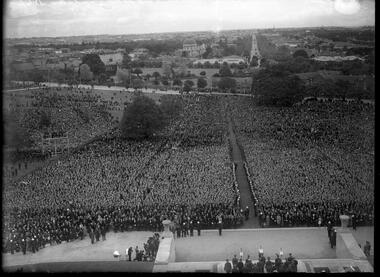
Photograph, Bull, Hugh Jones, 1897-1993, The Multitude before the Shrine at Dedication, 11 November 1934
... 1954), p. 13. Retrieved October 14, 2024, from http://nla.gov.au/nla.news-article205078252 shrine of remembrance 1930-1939 ceremonies world war 1 Photographer notations on slide: "Multitude before Shrine at Dedication 1934 B62". ...“The greatest gathering in Australia” – The Argus, 12 November 1934 On Armistice Day, 11 November 1934, the Dedication Ceremony for the Shrine of Remembrance was held in the Domain, presided over by Prince Henry, the Duke of Gloucester. A crowd of over 300,000 people - about one third of Melbourne's population at the time - attended. Photographer notations on slide: "Multitude before Shrine at Dedication 1934 B62" Published: (1934, November 12). The Age (Melbourne, Vic. : 1854 - 1954), p. 13. Published title: ". . . . . . WE WILL REMEMBER THEM." THE MULTITUDE BEFORE THE SHRINE. Published caption: The vast concourse of people gathered yesterday on the southern side of the Shrine of Remembrance. A picture taken during the actual ceremony of Dedication by the Duke of Gloucester. In the foreground, the Duke of Gloucester can be seen at the microphone, making his speech of dedication. He is facing the assembly of returned men, who to the number of 27,500 attended the ceremony. Trove article identifier: http://nla.gov.au/nla.news-article205078252 Description: Massive crowd gathered in the southern forecourt of Melbourne's Shrine of Remembrance on 11 November 1934, for its opening dedication by the Duke of Gloucester. There were an estimated 300,000 in attendance (almost one third of Melbourne's population of 1 million). Research by project volunteer, Louise McKenzie: There were an estimated 300,000 people in attendance for the opening dedication of the Shrine of Remembrance on 11 November 1934. This was almost one third of Melbourne's population of 1 million. Age photographer Hugh Bull cleverly captured the massive crowd using two glass plate exposures. This elevated view is captured from the Shrine and takes in the eastward area with St Kilda Road trams and mansions, Kellow and Falkiner Motor Showrooms, the Toorak Synagogue and Melbourne Grammar School. The corresponding westward view can be accessed via the "Related material link" in the item record. References: WE WILL REMEMBER THEM."--THE MULTITUDE BEFORE THE SHRINE. (1934, November 12). The Age (Melbourne, Vic. : 1854 - 1954), p. 13. Retrieved October 14, 2024, from http://nla.gov.au/nla.news-article205078252Photographer notations on slide: "Multitude before Shrine at Dedication 1934 B62".shrine of remembrance, 1930-1939, ceremonies, world war 1 -
 City of Melbourne Libraries
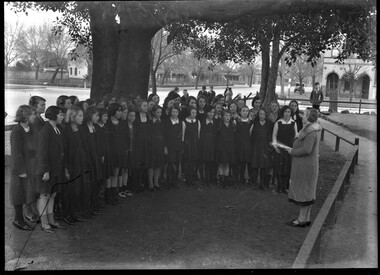
Photograph (item), Bull, Hugh Jones, 1897-1993, Miss Ida Park conducts the North Fitzroy State School Choir
... In 2014, after being under threat of demolition, Total House was listed on the Victorian Heritage Register as “a landmark of post-World War II modernist design and…one of the earliest and best expressions of Brutalist architecture in Victoria”. References: RICHARD CROOKS ARRIVES SCHOOL AGAIN VENUE OF ROYAL VISIT (1939, May 31). The Age (Melbourne, Vic. : 1854 - 1954...In 2014, after being under threat of demolition, Total House was listed on the Victorian Heritage Register as “a landmark of post-World War II modernist design and…one of the earliest and best expressions of Brutalist architecture in Victoria”. References: RICHARD CROOKS ARRIVES SCHOOL AGAIN VENUE OF ROYAL VISIT (1939, May 31). The Age (Melbourne, Vic. : 1854 - 1954 ...The pupils of Falconer Street Central School No.3918 in North Fitzroy rehearse with conductress Miss Ida Park for their performance at the Temperance Hall, Russell Street Melbourne with proceeds going to the Lord Mayor’s Fund. The house on the right of the photograph is Jubilee House, 126 Michael Street North Fitzroy and is extant. Photographer notations on slide: Choir At Fitzroy State School 1933 B5 While this photograph appears not to have been published, a photograph taken from a different angle of the same event was published in The Age 21 July 1933. SCHOOL CHILDREN SING IN THE OPEN AIR. “A choir of children at North Fitzroy practise their songs for a Pantomime, to be given in the Temperance Hall for the Lord Mayor's Fund on Wednesday next. On the extreme left is the conductress of the Choir (Miss Ida Park).” Reference: http://nla.gov.au/nla.news-article204368572 Research by project volunteer, Fiona Collyer: Children of The Falconer Street Central School Choral Society, trained by conductress Miss Ida Park, along with dance and gymnastics pupils of Misses Dorothy Gibb and Inez Ellis, performed in the “Cinderella” pantomime at the Temperance Hall in Russell Street, Melbourne on 26 July, 1933. The proceeds went to the Lord Mayor’s Fund. Conductress Miss Ida Park (1904- 1952) lived in the North Fitzroy and Clifton Hill area all her life. She was immersed in the music world of Melbourne and was a member of the Musical Society of Victoria. Ida graduated from Melbourne University Conservatorium with a Bachelor of Music degree in 1929 before departing for London where she studied piano and organ at the Royal Academy of Music. Ida returned to Melbourne in 1931, and billed as “The Gifted Young Australian Pianist”, held pianoforte recitals of classical music at Assembly Hall, Collins Street. She also played the organ for services at St Paul’s Independent Church in Delbridge Street, North Fitzroy and later St Luke’s, North Fitzroy. Ida conducted the children of the Falconer Street Central School Choral Society as they competed in the State School Choral Championships and the 85 children of the Fitzroy City Centenary Choir who sang at Melbourne’s Centenary celebrations of 1934/35. In 1945, Ida married Charles Hazeldine, a tenor and returned digger who had served in two world wars. The pair performed together in many concerts over the years. Tragically, both Ida and Charles were badly injured when struck by a car while crossing Queens Parade Clifton Hill in June 1952, with Ida dying from head injuries at St Vincent’s Hospital soon after. She was 48 years old. Charles wrote on Ida’s death notice - “Called home.” The choir were pupils of Falconer Street Central School No. 3918 in North Fitzroy which was built in 1915 to provide upper primary education for grades 5 to 8 for the area. In 1957 it became Fitzroy High School. In 1992, the Kennett Government swept to power, embarking on a program of fiscal austerity and privatisation of government services. 390 government schools were closed, with the land proposed to be sold to developers. 7000 teachers were sacked: 10% of Victoria’s public school teachers. Auxiliary school staff also lost their jobs. Amongst the first to close was Fitzroy High School. Fearful that the land would be sold, hundreds of students, parents, teachers and local residents occupied the building around-the-clock in four hour shifts and overnight for 14 months, sleeping on gym mats in the principal’s office and administrators’ wing. The blockade was lifted when a arrangement was reached to allow Kangan Batman TAFE to use the school from 1993 until 1998. With the election of the Bracks Government in 1999, and construction of new buildings, Fitzroy High School was reopened in 2004 after a 12 year battle. Temperance Hall, at 172 Russell Street, where the children performed “Cinderella”, was built in 1872 by the Melbourne Total Abstinence Society as a venue for lectures, meetings and alcohol-free community concerts and events. From 1934, Temperance Hall was fitted out as a cinema and renamed the Imperial Theatre, showing popular Hollywood films, before closing in 1939 for renovations and reopening as the Savoy Theatre, Melbourne’s first “Continental” talkies cinema. At this time, Australian cinema programming was dominated by American and British films. The lessees, Continental Film Art Theatre began negotiating for theatre properties in Melbourne, Sydney, Adelaide, Brisbane, Perth and Auckland to screen foreign language films, hoping to present the finest productions from France, Germany, Holland and Italy. At the cost of £6000, the theatre was fitted with the latest Mirrophonic sound and projection system and enlarged to seat 800 patrons with luxurious, ultra modern fittings and furnishings in a colour palette of rust and beige. Instead of usherettes, General Manager Peter Dawson, hoping to bring a sophisticated European atmosphere to the theatre, employed attractive, multilingual “Continental hostesses” to assist guests (not patrons) and answer queries relating to the films. Collectively the hostesses spoke English, French, Dutch, German, Russian and Italian. The Age 20 May 1939- “Atmosphere is a very important part of the theatre's scheme. Ushers in the ordinary sense will not be employed; hostesses will look upon patrons as guests. They will be dressed in full evening dress, and the only indication that they are not guests is the little medallion pinned to their evening dress, on which their names are inscribed.” The hostesses were dressed in evening gowns of olive-green velvet, the full skirts embroidered with gold loops, wine velvet bolero jackets and long white kid gloves with silvery tiaras in their hair. For guests worried that they may not understand the plot, the management assured patrons that- “By means of superimposed English translations on the bottom of the screen, the dialogue is perfectly understandable and the whole witty story can be followed with ease.” The Gala opening of the Savoy Theatre, on 31 May 1939 was attended by a “who’s who” of Melbourne Society, the women wearing beautiful gowns, headdresses and furs. Amongst the guests were former premier Sir Stanley Argyle and Lady Argyle, former Lord Mayor Sir Harold Gengoult-Smith and his wife Cynthia, Field Marshall Thomas Blamey and Lady Blamey and Miss Jessie Brookes. The Vice Consul for France, Monsieur Frank Puaux and his wife attended, Madame Puaux dressed in a black satin gown and a musquash fur cape. She was presented with a beautiful bouquet of scarlet carnations and lily of the valley tied with the tricolour of France. In his speech Monsieur Puaux stated that “from the cultural, linguistic and artistic points of view it was excellent that the Australian public should have an opportunity to see foreign film in the original language.” “Letty” writing in Table Talk magazine described the atmosphere of “Continental” gaiety that had permeated Melbourne - “The Letters of Letty”, Table Talk 8 June 1939 “The “foreign influence” is definitely obtruding itself into the even tenor of Melbourne life these days…. but in the pleasantest manner possible! Included in the great number of Continental people who have recently made their homes here, we have stars of the Russian ballet settling in our midst…. and now… we have been presented with our own Continental picture theatre in the attractive shape of The Savoy, which opened its doors on Wednesday night for the exclusive release of foreign films. One could hardly recognise the old Temperance Hall in its adaptation to the smart, comfortable and thoroughly-intriguing Savoy Theatre. Where once this rather draughty old building stood in Russell Street there now greets us an unmistakable “Continental” edifice, living up to its exterior by sustaining within its walls its overseas’ atmosphere. Indeed, one feels as though one has crossed the threshold into a European city, stepping out of the unmistakably Australian street that is Russell into The Savoy lounge to be greeted by polite “messieurs” from the attractive, Continental-looking usherettes and to gaze upon a film as delightfully French in story and presentation as “La Kermesse Heroique.” But successful though “La Kermesse Heroique” proved on its initial presentation inside the theatre, the debut was no more triumphal than that made by the winning and pretty little French lass who had charge of the booking office outside in the foyer. With her attractive accent and Continental flair for making one “feel at home” she was undoubtedly one of the hits of the night-especially with the susceptible males, who spent very much longer in the lounge than is customary, racking their brains for excuses for making conversation with the attractive Parisienne! Those French girls certainly have a way with them!” The opening film, the 1935 French comedy “La Kermesse Heroique”, (The Heroic Sex) starring Francoise Rosay and Jean Murat (film now called “Carnival in Flanders”) was the winner of the Grand Prix du Cinema Francais as the finest picture of 1936 and described in the advertisement as “The Gay French Comedy of Laughter and Romance” The film is set during the 17th century Spanish occupation of Flanders in the Flemish town of Boom at the time of their annual festival. Hearing news of a pending visit to Boom by the commander, the Duke of Olivares and his army, and fearing rape and pillage, the boorish burgomaster feigns his own death, hoping the Spaniards will bypass the grieving town out of respect. The army arrives and the cowardly men of the town flee. The womenfolk decide on a different approach. Lead by the burgomaster’s beautiful wife Cornelia, they set out to to preserve the peace with grace and hospitality only to find the Spaniards attractive and virile, unlike their own husbands. The Sun newspaper described the film as “Mellow as a Stilton cheese, and as ripely suited to adult taste.” Preceding “La Kermesse Heroique” was a Gaumont British newsreel of King George VI and Queen Elizabeth departing for a tour of Canada and the Soviet documentary “Nine Months on a Drifting Ice Floe” During the war “Continental” films became difficult to source, so the Savoy screened Hollywood movies and held fund raisers for the war effort. After World War Two, the Savoy continued to screen “Continental” films, catering to post-war immigrants from Europe and bohemian Melburnians. In 1953, the Savoy had a wildly popular season with queues winding around the block to see Swedish summer romance “One Summer of Happiness” (Hon dansade en sommar) with its nude swimming scenes. The Chief Commonwealth Censor declined to cut the film on the grounds that although it displayed nudity, it was genuinely artistic. According to Wikipedia, film director Fred Schepisi was first exposed to European films such as “Bicycle Thieves”, “Rocco and His Brothers” and “The Wages of Fear” at the Savoy as a teenager, leading to his long career in filmmaking. In 1955, in response to the massive rise in car ownership, the Melbourne City Council recommended that parking stations be built on every block. The Savoy Theatre and adjacent buildings, which included the Golden Fleece Hotel were demolished in 1963 and replaced with Total House, a Brutalist commercial building consisting of a seven storey car park crowned by a four storey office block, shops at street level, and a basement theatre which housed the Lido Theatre Restaurant-Cabaret from 1965. The building was designed by architectural firm Bogle & Banfield Associates and named for the original tenant of the offices, French oil company, Total Oil Products P/L. The Lido Theatre Restaurant was managed by former Tivoli dancer and promoter David Hamilton McIlwraith, presenting dinner and a glamorous cabaret floor show of showgirls, (some topless) to accompany variety acts by local and international actors, singers, comedians and magicians. The interior of the Lido was opulently decorated in deep, lush green with old world gold trim and chandeliers. Handily, patrons could enter and leave via an elevator, straight from the building’s own car park! A four course gourmet dinner with show and dancing cost $8.00 in 1968. The Lido advertised in 1966 that “Every visitor to Melbourne soon discovers the brightest entertainment spot in the Southern Hemisphere with its million dollar decor, dining delights and spectacular stage productions.” Australian Jewish News - 21 April 1967 - “Superb decor and atmosphere, cuisine and service have been readily recognised as the contributing factors to the excellence of stage presentations, staging, costumes, decor and, of course, the actual choice of artists.” The bedazzling ensemble of 40 high-kicking, feathered and sequinned showgirls were advertised as the “Fabulous Lido girls and the controversial Baretop Lido Goddesses” who were described as “Statuesque Beauty as Nature intended” and “…a host of glamorous gals whose favourite shade is flesh pink.” Some of the acts who performed at the Lido were- -Broken Hill’s own - opera singer June Bronhill -1967. -Versatile singer Lovelace Watkins known as “Black Sinatra - 1967. -“Queen of the five-fingered boogie", honky-tonk and rollicking rag-time pianist, Winifred Atwell - 1967. -New Zealand pop duo, Bill and Boyd -1968. -American actress and soprano Kathryn Grayson -1968. -Denise Drysdale in “Say It With Music” -1968. -“Catwoman” Eartha Kitt -1969. -Internationally recognised female impersonator, Sydneysider Tracey Lee, (Maxwell Richie) billed as "controversial impressionist and singing personality from the famous Carousel Nightspot in Paris". -Frances Faye, American comedienne and show-tune singer and pianist-1969. -“Cry Guy” histrionic singer Johnnie Ray -1970. -Risqué revue “Oh Calcutta!” with some segments and the “four letter” words removed-1970. In 1970, under new management, the Lido was renovated with claret and gold wallpaper, midnight blue ceiling and a computerised fountain with fairy lights and relaunched by “The Tigress from Tiger Bay”, Shirley Bassey. The relaunch was short lived however, as later that year the venue became El Toro Espana, a Spanish restaurant and nightclub offering a four course meal for $4.50 while you watched the floorshow. The venue then briefly became the Red Garter Music Hall Theatre from 1972, then in 1974 the site became the 600 seat Total Theatre comprising of a cinema with a stage for live acts. There were also three bars to choose from - the Crush Bar, the Bleachers and the Snake Pit. Total Theatre had the unusual concept of a live music act, or plays, musicals and magicians followed by a film. In 1975 soprano Suzanne Steele featured, followed by the film “The Voyage” starring Sophia Loren and Richard Burton. In 1975, the Total held a rock film festival showing a Jimi Hendrix documentary, “Monterey Pop Festival”, “Pink Floyd in Pompeii” and more. In 1976, 17 year old Chrissy Amphlett, later of rock band Divinyls, played the role of Linda Lips for nine months in the Australian stage production of R-rated “sexual musical”, “Let My People Come” at the Total Theatre. The Total Theatre closed in 1979 and from 1980 to 2014 the venue became Billboard Nightclub, hosting local and international acts, including INXS, Tina Turner and John Farnham, and in 2009, 18 year old Taylor Swift. The venue is now called 170 Russell and presents hundreds of live local and international acts every year. In 2014, after being under threat of demolition, Total House was listed on the Victorian Heritage Register as “a landmark of post-World War II modernist design and…one of the earliest and best expressions of Brutalist architecture in Victoria”. References: RICHARD CROOKS ARRIVES SCHOOL AGAIN VENUE OF ROYAL VISIT (1939, May 31). The Age (Melbourne, Vic. : 1854 - 1954), p. 17. Retrieved November 21, 2025, from http://nla.gov.au/nla.news-article205629696 AMUSEMENTS. (1933, July 27). The Age (Melbourne, Vic. : 1854 - 1954), p. 12. Retrieved September 19, 2025, from http://nla.gov.au/nla.news-article204378853 https://larzra.wordpress.com/origins/ CONTINENTAL HOSTESSES, (1939, May 31). The Sun News-Pictorial (Melbourne, Vic. : 1922 - 1954; 1956), p. 27. Retrieved November 21, 2025, from http://nla.gov.au/nla.news-article278189387 The Letters of Letty (1939, June 8). Table Talk (Melbourne, Vic. : 1885 - 1939), p. 12. Retrieved October 29, 2025, from http://nla.gov.au/nla.news-article149320966 SAVOY THEATRE (1939, June 1). The Age (Melbourne, Vic. : 1854 - 1954), p. 7. Retrieved September 19, 2025, from http://nla.gov.au/nla.news-article205639035 NEW THEATRE OPENED (1939, June 1). The Argus (Melbourne, Vic. : 1848 - 1957), p. 8. Retrieved September 21, 2025, from http://nla.gov.au/nla.news-article12134234 https://en.wikipedia.org/wiki/Total_House Page [?] TOUCH OF SPAIN (1970, December 18). The Australian Jewish News (Melbourne, Vic. : 1935 - 1999), p. 35. Retrieved September 23, 2025, from http://nla.gov.au/nla.news-article262493757 No title (1935, June 11). The Herald (Melbourne, Vic. : 1861 - 1954), p. 27. Retrieved September 29, 2025, from http://nla.gov.au/nla.news-article244840169 Dine, wine, and watch a stage show (1966, November 16). The Australian Women's Weekly (1933 - 1982), p. 6. Retrieved November 9, 2025, from http://nla.gov.au/nla.news-article44025050 http://jonathanbollen.net/2011/02/26/tracey-lee/ LIDO ‘ART’ (1967, April 21). The Australian Jewish News (Melbourne, Vic. : 1935 - 1999), p. 8. Retrieved November 9, 2025, from http://nla.gov.au/nla.news-article263003136 THE FABULOUS LIDO (1965, October 22). The Australian Jewish News (Melbourne, Vic. : 1935 - 1999), p. 17. Retrieved November 9, 2025, from http://nla.gov.au/nla.news-article262983995 No title (1939, May 31). The Argus (Melbourne, Vic. : 1848 - 1957), p. 6. Retrieved November 21, 2025, from http://nla.gov.au/nla.news-article12134144 #NEW THEATRE OPENED (1939, June 1). The Argus (Melbourne, Vic. : 1848 - 1957), p. 8. Retrieved September 29, 2025, from http://nla.gov.au/nla.news-article12134234 https://en.wikipedia.org/wiki/Tracey_Lee_(female_impersonator) https://citycollection.melbourne.vic.gov.au/35b-40h-image-of-a-model-for-the-total-house-offices-and-car-park-on-russell-street/ https://www.theage.com.au/national/victoria/from-the-archives-1990-s-hundreds-of-school-closures-hit-victoria-20190801-p52cwj.html http://jonathanbollen.net/2011/05/29/the-lido-melbourne/Photographer notations on slide: primary schools, schools, music, education, choirs, fitzroy, cars, theatre restaurants, venues, films
