
Showing 30 items matching "world war i fundraising"
-
 Orbost & District Historical Society
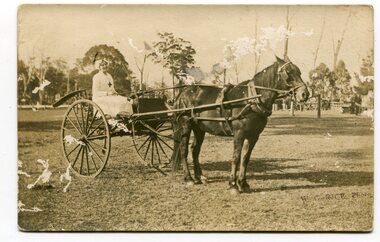
Photograph - photograph of Ethel Lynn, W C Rice, 1914-1918
... ...World War I fundraising...World War I. She is wearing the uniform of women who engaged in fundraising for the War. ...World War I. She is wearing the uniform of women who engaged in fundraising for the War. ...This is a photograph printed onto a postcard of Ethel Lynn. She is competing in the Orbost Show, sometime during World War I. She is wearing the uniform of women who engaged in fundraising for the War. Ethel was the only child of Samuel J Lynn and Elizabeth Jane Lynn (nee Warren) who farmed at Jarrahmond and bred Clydesdale horses. After the War, Ethel trained as a nurse in Melbourne at the Royal Victorian Nurses' Association. She later worked as a nurse in England and also in Orbost. The Australian Red Cross Society (ARCS) was formed just after the outbreak of the First World War in August 1914, originally as a branch of the the British Red Cross. It came into being as a branch of the British Red Cross Society on August 13th 1914 to succour the wounded in the First World War.This photograph is significant because it is of a local Orbost district person, Ethel Lynn. Her uniform shows that she is involved with fundraising for the First World War. A sepia coloured photograph on a postcard. A woman in a white dress, with a white cap on her head, and a red cross on her front is sitting in a buggy pulled by one horse. The background shows trees and a fence.W C RICE photo on front right Ethel Lynn, Ist Prize Lady Driver, Old Show Ground is written in pencil on the back. ethel lynn, world war i fundraising, orbost show, australian red cross -
 Kew Historical Society Inc
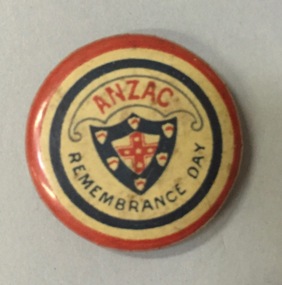
Badge - Fundraising Button, ANZAC Remembrance Day, 1916-1918
... World War I-era pressed metal fundraising badge, advertising ANZAC Remembrance Day...Their widespread distribution means that they are frequently significant at a local, state, national and international level. patriotic buttons Remembrance Day Badges "ANZAC Remembrance Day" World War I-era pressed metal fundraising badge, advertising ANZAC Remembrance Day ANZAC Remembrance Day Badge Fundraising Button ...Frances Rigg was a local business identity in Kew, at one stage managing the local branch of the English, Scottish and Australian (ES&A) Bank at 175 High Street from c. 1920 until the 1940s. After Francis Rigg’s death, the collection of buttons and medallions was inherited by his son, Ken Rigg (1922-2014). The collection was subsequently donated to the Kew Historical Society in 2015 by Francis' grandson, Adrian Rigg, at the time of the Gallipoli & Beyond Commemoration in 2015. The collection covers a period of almost 40 years. The majority of the buttons are patriotic buttons, issued and sold during and immediately after the First World World War (1914-1918) to raise funds for national and overseas causes. The collection also includes a number of locally significant sporting event buttons and sporting club medallions, issued in the 1920s and 1930s.Patriotic and other pressed tin buttons and badges were produced in large numbers in the first decades of the twentieth century. By nature, insubstantial and ephemeral, they have not always survived. The collections of badges, buttons and medallions in the Kew Historical Society collection is homogenous and yet diverse, ranging from buttons sold to raise funds for the war efforts in 1914-18 and 1939-45, to those used at festivals and sporting events. Because of the manufacturing process, many surviving buttons and badges have been affected by inadequate storage, suffering from oxidisation and physical damage. These survivors are now historically and socially significant artefacts, revealing much about the attitudes and values of the period in which they were produced. Their widespread distribution means that they are frequently significant at a local, state, national and international level.World War I-era pressed metal fundraising badge, advertising ANZAC Remembrance Day"ANZAC Remembrance Day"patriotic buttons, remembrance day, badges -
 Kew Historical Society Inc
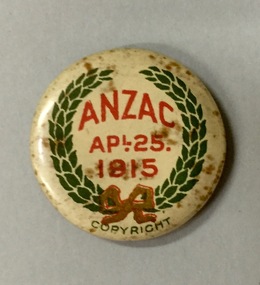
Badge - Fundraising Button, ANZAC Apl.25. 1915, 1916-1918
... World War I-era pressed metal fundraising badge, featuring an olive wreath encircling in red text: ‘ANZAC Apr. 25. 1915’, on a white background....Their widespread distribution means that they are frequently significant at a local, state, national and international level. anzac day first world war (1914-18) patriotic buttons world war one numismatics badges "ANZAC Apr. 25. 1915 / Copyright" World War I-era pressed metal fundraising badge, featuring an olive wreath encircling in red text: ‘ANZAC Apr. 25. 1915’, on a white background. ...Frances Rigg was a local business identity in Kew, at one stage managing the local branch of the English, Scottish and Australian (ES&A) Bank at 175 High Street from c. 1920 until the 1940s. After Francis Rigg’s death, the collection of buttons and medallions was inherited by his son, Ken Rigg (1922-2014). The collection was subsequently donated to the Kew Historical Society in 2015 by Francis' grandson, Adrian Rigg, at the time of the Gallipoli & Beyond Commemoration in 2015. The collection covers a period of almost 40 years. The majority of the buttons are patriotic buttons, issued and sold during and immediately after the First World World War (1914-1918) to raise funds for national and overseas causes. The collection also includes a number of locally significant sporting event buttons and sporting club medallions, issued in the 1920s and 1930s.Patriotic and other pressed tin buttons and badges were produced in large numbers in the first decades of the twentieth century. By nature, insubstantial and ephemeral, they have not always survived. The collections of badges, buttons and medallions in the Kew Historical Society collection is homogenous and yet diverse, ranging from buttons sold to raise funds for the war efforts in 1914-18 and 1939-45, to those used at festivals and sporting events. Because of the manufacturing process, many surviving buttons and badges have been affected by inadequate storage, suffering from oxidisation and physical damage. These survivors are now historically and socially significant artefacts, revealing much about the attitudes and values of the period in which they were produced. Their widespread distribution means that they are frequently significant at a local, state, national and international level.World War I-era pressed metal fundraising badge, featuring an olive wreath encircling in red text: ‘ANZAC Apr. 25. 1915’, on a white background. "ANZAC Apr. 25. 1915 / Copyright"anzac day, first world war (1914-18), patriotic buttons, world war one, numismatics, badges -
 Kew Historical Society Inc
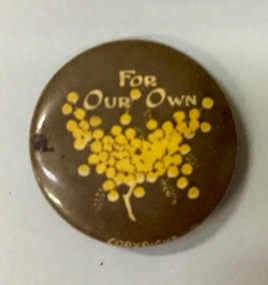
Badge - Fundraising Button, For Our Own, 1914-1918
... World War I-era pressed tin fundraising button featuring a sprig of wattle on a dark brown background. ...Their widespread distribution means that they are frequently significant at a local, state, national and international level. patriotic buttons first world war (1914-18) "For Our Own" World War I-era pressed tin fundraising button featuring a sprig of wattle on a dark brown background. ...Frances Rigg was a local business identity in Kew, at one stage managing the local branch of the English, Scottish and Australian (ES&A) Bank at 175 High Street from c. 1920 until the 1940s. After Francis Rigg’s death, the collection of buttons and medallions was inherited by his son, Ken Rigg (1922-2014). The collection was subsequently donated to the Kew Historical Society in 2015 by Francis' grandson, Adrian Rigg, at the time of the Gallipoli & Beyond Commemoration in 2015. The collection covers a period of almost 40 years. The majority of the buttons are patriotic buttons, issued and sold during and immediately after the First World World War (1914-1918) to raise funds for national and overseas causes. The collection also includes a number of locally significant sporting event buttons and sporting club medallions, issued in the 1920s and 1930s.Patriotic and other pressed tin buttons and badges were produced in large numbers in the first decades of the twentieth century. By nature, insubstantial and ephemeral, they have not always survived. The collections of badges, buttons and medallions in the Kew Historical Society collection is homogenous and yet diverse, ranging from buttons sold to raise funds for the war efforts in 1914-18 and 1939-45, to those used at festivals and sporting events. Because of the manufacturing process, many surviving buttons and badges have been affected by inadequate storage, suffering from oxidisation and physical damage. These survivors are now historically and socially significant artefacts, revealing much about the attitudes and values of the period in which they were produced. Their widespread distribution means that they are frequently significant at a local, state, national and international level.World War I-era pressed tin fundraising button featuring a sprig of wattle on a dark brown background. In this ‘Wattle Day’ badge, the word copyright is emphasised on the rim of the button."For Our Own"patriotic buttons, first world war (1914-18) -
 Clayton RSL Sub Branch
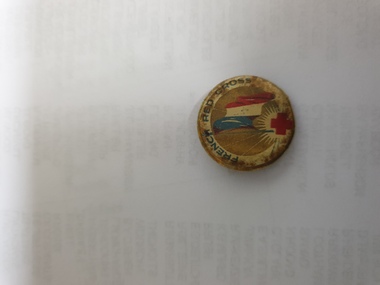
Button, French Red Cross
... World War I-era pressed tin fundraising button. The button features the French flag and a red cross over a starburst, against a gold background. ...Pride in salesmanship was affected by publishing the name of the woman and her fiscal achievement in the major newspapers of the day French Red Cross World War I-era pressed tin fundraising button. The button features the French flag and a red cross over a starburst, against a gold background. ...The use of these buttons as a means of raising revenue through patriotic sentiment occurred soon after Australia pledged allegiance to Empire. Buttons reflected ‘public sentiment, courage, patriotism, generosity and several [un- named] virtues’ such as the martyred mother of a ‘fallen’ hero. Attention was paid to attractiveness of design, encoded symbolism and high quality of production. Expressing ‘loyalty’, they were tokens to be kept for perpetuity. Female labour was used to operate the die that compressed the tin backing, photographic print and celluloid cover together. The pin was applied by hand. Women, of all ages, entered into the spirit of voluntary sales. Often they were sold at the entry and exit points of major pedestrian thoroughfares. The women of Kew set up a kiosk in front of the Post Office and the Railway Station to solicit their round, oval and square shaped wares. Pride in salesmanship was affected by publishing the name of the woman and her fiscal achievement in the major newspapers of the dayWorld War I-era pressed tin fundraising button. The button features the French flag and a red cross over a starburst, against a gold background. Encircling the image is a white ring with the text ‘French Red Cross’ in blueFrench Red Cross -
 Kew Historical Society Inc
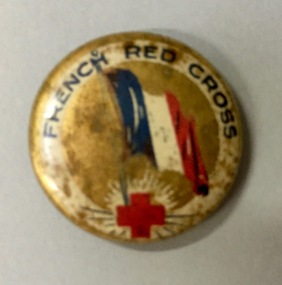
Badge - Fundraising Button, French Red Cross, 1916-1919
... World War I-era pressed tin fundraising button. The button features the French flag and a red cross over a starburst, against a gold background. ...Their widespread distribution means that they are frequently significant at a local, state, national and international level. first world war (1914-18) "French Red Cross" World War I-era pressed tin fundraising button. ...Frances Rigg was a local business identity in Kew, at one stage managing the local branch of the English, Scottish and Australian (ES&A) Bank at 175 High Street from c. 1920 until the 1940s. After Francis Rigg’s death, the collection of buttons and medallions was inherited by his son, Ken Rigg (1922-2014). The collection was subsequently donated to the Kew Historical Society in 2015 by Francis' grandson, Adrian Rigg, at the time of the Gallipoli & Beyond Commemoration in 2015. The collection covers a period of almost 40 years. The majority of the buttons are patriotic buttons, issued and sold during and immediately after the First World World War (1914-1918) to raise funds for national and overseas causes. The collection also includes a number of locally significant sporting event buttons and sporting club medallions, issued in the 1920s and 1930s.Patriotic and other pressed tin buttons and badges were produced in large numbers in the first decades of the twentieth century. By nature, insubstantial and ephemeral, they have not always survived. The collections of badges, buttons and medallions in the Kew Historical Society collection is homogenous and yet diverse, ranging from buttons sold to raise funds for the war efforts in 1914-18 and 1939-45, to those used at festivals and sporting events. Because of the manufacturing process, many surviving buttons and badges have been affected by inadequate storage, suffering from oxidisation and physical damage. These survivors are now historically and socially significant artefacts, revealing much about the attitudes and values of the period in which they were produced. Their widespread distribution means that they are frequently significant at a local, state, national and international level.World War I-era pressed tin fundraising button. The button features the French flag and a red cross over a starburst, against a gold background. Encircling the image is a white ring with the text ‘French Red Cross’ in blue."French Red Cross"first world war (1914-18) -
 City of Moorabbin Historical Society (Operating the Box Cottage Museum)
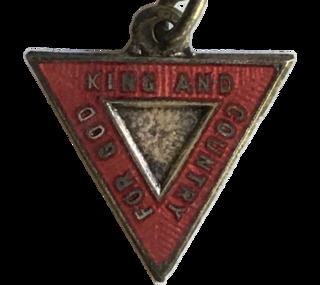
Badge - Red Triangle Day, ca 1917
... Fundraising badge from World War I. Red Triangle Days were held in both Australia and New Zealand to raise money for the Y.M.C.A. ...Fundraising badge from World War I. Red Triangle Days were held in both Australia and New Zealand to raise money for the Y.M.C.A. ...Fundraising badge from World War I. Red Triangle Days were held in both Australia and New Zealand to raise money for the Y.M.C.A. The earliest references to Red Triangle Days seem to be from 1917.This Badge is an example of the general community support for organizations providing aid to the Soldiers in WW1Triangle enamel BadgeFor God King and Countrywwi, fundraising, y.m.c.a., red triangle day, moorabbin shire, cheltenham, bentleigh, market gardeners, early settlers -
 Bendigo Historical Society Inc.
Newspaper - Fortuna Article - "Lansell's Impressive Legacy", Mar 06 2008
... World War I with the 38th Battalion; wounded but returned to service. George organized the northwest Victorian Volunteer Defence Corps in WWII; retired as honorary colonel in 1942. Served as a Nationalist Party member for Bendigo in the Legislative Council, later joined the Country Party.President of the Bendigo branch of the Returned Sailors' and Soldiers' Imperial League of Australia for nearly 30 years. Led fundraising...World War I with the 38th Battalion; wounded but returned to service. George organized the northwest Victorian Volunteer Defence Corps in WWII; retired as honorary colonel in 1942. Served as a Nationalist Party member for Bendigo in the Legislative Council, later joined the Country Party.President of the Bendigo branch of the Returned Sailors' and Soldiers' Imperial League of Australia for nearly 30 years. Led fundraising ...George Victor Lansell was Born in London in 1883, eldest son of George Lansell ('Quartz King') and Edith. Educated at St Andrew's College, Bendigo, and Melbourne Grammar. Married Edith, a skiing champion, in 1910; honeymooned overseas and visited Egypt. Named his Bendigo home 'Denderah' after an Egyptian archaeological site. The house featured art nouveau architecture and a Widow's Walk for astronomy. Commissioned in the 8th Australian Infantry Regiment in 1904; captain by 1909. He served in France during World War I with the 38th Battalion; wounded but returned to service. George organized the northwest Victorian Volunteer Defence Corps in WWII; retired as honorary colonel in 1942. Served as a Nationalist Party member for Bendigo in the Legislative Council, later joined the Country Party.President of the Bendigo branch of the Returned Sailors' and Soldiers' Imperial League of Australia for nearly 30 years. Led fundraising for the Soldiers' Memorial Hall and its brass honour rolls. Director of several local companies, including Sandhurst Trustees Co. and Bendigo Mutual Permanent Land and Building Society. Introduced Hanro Knitting Mills and the Australian Swiss Watch Co. to Bendigo.Acquired and merged the Bendigo Independent with The Bendigo Advertiser. Built a clinic at Bendigo Hospital with his mother; donated medical equipment and supported local institutions like the Benevolent Home, art gallery, School of Mines, and YMCA.Recognition and Legacy. Knighted in 1951.Remembered for personal generosity, especially to ex-servicemen and their families.Described as shy and retiring, but a major figure in Bendigo's history.His funeral in 1959 was one of the largest in Bendigo, reflecting his impact on the community.Fortuna Restoration Article - "Lansell's Impressive Legacy" - The Bendigo Miner Tuesday March 06 2008- Author Jim Evans This item contains the following: 11217.10a Colour Photo of The Edith and G. V. Lansell Laboratory Clinic at the Bendigo Hospital 11217.10b Part of page 23 - Lansell's Impressive Legacynon-fictionbendigo, fortuna, george lansell, the edith and g. v. lansell laboratory clinic -
 National Wool Museum
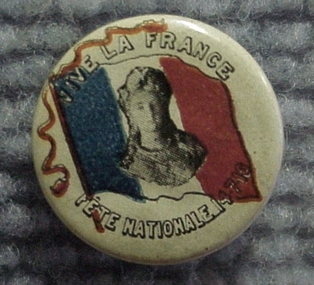
Badge - Vive La France, Fête Nationale, 1916
... Badge was likely a fundraising badge for the French War Effort or a commemorative item from the French National Day (Bastille Day) on July 14th, 1916, during World War I. ...Badge was likely a fundraising badge for the French War Effort or a commemorative item from the French National Day (Bastille Day) on July 14th, 1916, during World War I. ...Badge was likely a fundraising badge for the French War Effort or a commemorative item from the French National Day (Bastille Day) on July 14th, 1916, during World War I. These badges were sold to raise funds or show patriotic support for France during the war.Circular white badge with printed French flag (red, white and blue) which has been superimposed the head and shoulders of a woman. Inscription on upper and lower edge. Celluloid cover. Pin on back.VIVE LA FRANCE / FÉTE NATIONALE 14-7-16world war i, france, vive la france, fete nationale, badge -
 Surrey Hills Historical Society Collection
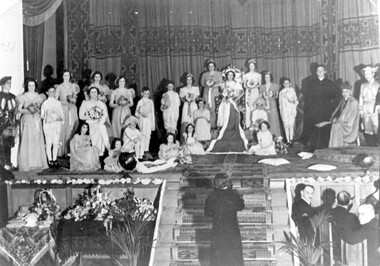
Photograph, Holy Redeemer Queen Carnival, 1938, 1938
... fundraising events. They were particularly popular in both Australian and New Zealand during the early 20th century. They were particularly common during and after World War I when they were used to raise funds for returned soldiers. ...Donor identifies the following: Parish priest - Dr W M Collins Queen - Molly Baker Attendants - Marg Wise, Lola Sans, Gertie Baker Flower girls - Madge Wise, Molly Brown, Rita O'Sullivan Probably taken in Our Holy Redeemer Hall, Mont Albert Road, Surrey Hills.This is one of only a few photos in our collection which are evidence of Queen Carnivals which originated as fundraising events. They were particularly popular in both Australian and New Zealand during the early 20th century. They were particularly common during and after World War I when they were used to raise funds for returned soldiers. It is currently the only photo in the collection of a social event connected to Our Holy Redeemer Church and the only one which includes Dr William M Collins who was the parish priest from 1933-1941. Dr Collins was a significant figure in the Catholic Church in Melbourne in the first half of the 20th century. REF: The Advocate: The first priest-editor by Fiona Power; Kairos Catholic Journal Volume 22, Issue 16. - 2 September 2011": Summary: Born in Kilmore in 1884, William Collins attended South Melbourne College and then the University of Melbourne, where he assisted in the formation of the Newman Society of Victoria. After graduating in arts in 1911, he worked at the Melbourne Public Library and the Education Department. In 1912, at the age of 28, he went to Rome, where he studied for the priesthood at Urban College. He obtained doctorates in philosophy and theology and was ordained on 3 June 1917. He returned to Melbourne and was appointed curate at St Mary’s, West Melbourne, and St Francis’, Lonsdale Street. In 1918, Dr Collins became editor of The Advocate. He remained in the role for seven years. Dr Collins was parish priest of Dandenong, Daylesford, East Malvern, Surrey Hills and Kew, and administrator at St Francis’. He died in 1959 and a Requiem Mass was held at Sacred Heart, Kew. Black and white photo of the participants in the Queen Carnival arranged on a stage in a tableaux of the coronation of the Queen. To the right are the parish priest and the archbishop and there is a man at the bottom of the stairs centre front of the stage. Guests are seated at a table to the right of the stairs and to the left of the stairs is a table with floral arrangements and other objects. "1938" hand-written on the original photo in upper LH corner.festivals and celebrations, queen carnivals, our holy redeemer church, dr w m collins, rev william m collins, (miss) molly baker, (miss) marg wise, (miss) lola sans, (miss) gertie baker, (miss) madge wise, (miss) molly brown, (miss) rita o'sullivan -
 Surrey Hills Historical Society Collection
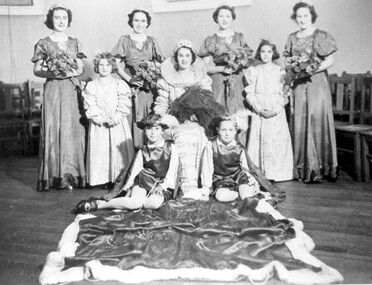
Photograph - Holy Trinity Surrey Hills Tennis Queen Carnival, 1940, 11 June 1940
... fundraising practice common in the early 20th century. Queen carnivals were also popular in New Zealand. In both countries they were particularly common during World War I and in the years after, when they were used to raise funds for returned soldiers. ...Identification has been given as follows: L to R: front: Derek Manley and (?) Jeff Holland; Queen: Leila Hanslow; young women: Connie Eastwood, Mary Clucas (nee Holborn), Hazel Bodley, Olwyn Powys. Girls: L - unknown; R - Barbara Fair. The Queen Carnival was a fundraiser for the Holy Trinity Tennis Club. The Queen Carnival Coronation was held in the Canterbury Memorial Hall on 11 June 1940. Mrs F Eastwood was the trainer and the Honorary Secretary of the tennis club. The donor Mary Holborn married Geoffrey Stroud Clucas in 1946 in Surrey Hills.The photo documents a social fundraising practice common in the early 20th century. Queen carnivals were also popular in New Zealand. In both countries they were particularly common during World War I and in the years after, when they were used to raise funds for returned soldiers. The first such carnival is believed to have been held in Napier, New Zealand, in 1913. The carnivals were not always annual events, and were held in various locations throughout a year.Black and white group photo of 5 women, 2 girls and 2 boys in formal and / or mock-Elizabethan costume. The Queen is seated in the centre and the 'page boys' are seated in front and on her train. The young girls and young women are standing beside her. The photo appears to have been taken in a hall. REAR: "Holy Trinity Tennis Club Queen Carnival / June 11 / 1940 / M Clucas / 33 Jurang St / Balwyn"sport, tennis, holy trinity anglican church, 1940, clothing and dress, miss mary holborn, mrs mary clucas, miss connie eastwood, miss hazel bodley, miss olwyn powys, miss leila hanslow, mr derek manley, mr geoff holland, miss barbara fair, queen carnivals, mrs f eastwood, canterbury memorial hall -
 Surrey Hills Historical Society Collection
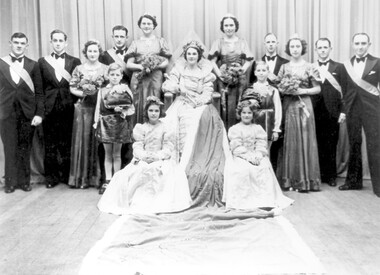
Photograph - Holy Trinity Surrey Hills Tennis Queen Carnival, Queen and court, 1940, 11 June 1940
... fundraising practice common in the early 20th century. Queen carnivals were also popular in New Zealand. In both countries they were particularly common during World War I and in the years after, when they were used to raise funds for returned soldiers. ...Identification has been given as follows: LHS 'page': Jeff Holland (?); RHS 'page': Derek Manley; Queen: Leila Hanslow; young women L to R: Olwyn Powys, Hazel Bodley, Mary Clucas (nee Holborn), Connie Eastwood. Girls: L - Barbara Fair; R - Unknown. Gentlemen not identified. The Queen Carnival was a fundraiser for the Holy Trinity Tennis Club. The Queen Carnival Coronation was held in the Canterbury Memorial Hall on 11 June 1940. Mrs F Eastwood was the trainer and the Honorary Secretary of the tennis club. The donor Mary Holborn married Geoffrey Stroud Clucas in 1946 in Surrey Hills. The photo documents a social fundraising practice common in the early 20th century. Queen carnivals were also popular in New Zealand. In both countries they were particularly common during World War I and in the years after, when they were used to raise funds for returned soldiers. The first such carnival is believed to have been held in Napier, New Zealand, in 1913. The carnivals were not always annual events, and were held in various locations throughout a year.Black and white group photo of 6 men, 5 women, 2 girls and 2 boys in formal and / or mock-Elizabethan costume mounted on cardboard which has been roughly trimmed. The Queen is seated in the centre and the 2 young girls are seated either side and slightly in front of her. The 2 'pages' and the men and other women are standing evenly divided either side of her. The photo appears to have been taken in a hall. REAR: "Holy Trinity Tennis Club Queen Carnival / June 11 / 1940 / M Clucas / 33 Jurang St / Balwyn"sport, tennis, holy trinity anglican church, 1940, clothing and dress, miss connie eastwood, miss hazel bodley, miss leila hanslow, miss olwyn powys, miss barbara fair, jeff holland, derek manley, queen carnival, mrs mary clucas, miss mary holborn, mrs f eastwood -
 Surrey Hills Historical Society Collection
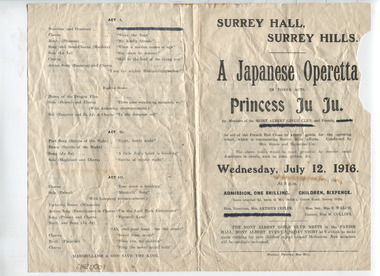
Work on paper - Ephemera, Theatre program - Princess Ju Ju, 12/07/1916
... Keissling is probably a mis-spelling of Kiessling - the family lived in Essex Road and son Ferdinand Gustav served in WW1. surrey hall operetta princess ju ju mont albert girl's club french red cross miss strachan's orchestra entertainment world war 1914-1918 fundraising musical events and activities mrs steele signorina coy mrs arthur zeplin miss e walch miss m collins Hodges printer Viola Zeplin Miss Ray Zeplin Elsie Price Sylvia Hosking Verna Price Gertie Collins Clarice Maudson Mr Browne Myrtle Collins Harry Webster Harold Jenkins Horace Breeden Lexton Beggs Janet French Jean Pearce Evelyn Cadd Gladys Davis Freda Keissling N Emary L Bellman M Purton I Smith D Price E Pratt C Gourlay S Lobb Ada French W Maudson L Jackson G Jackson C Day D Lancaster N Lobb V Curson O Curson N Pearce D Brooks C Brooks program ephemera Cream-coloured bi-fold paper program with a small area of loss down one side. ...Mrs Steele is probably Mrs C H D (Sarah Margaret) Steele, President of the Surrey Hills Patriotic Society; she lived at 'Dalriada', 77 Union Road. Keissling is probably a mis-spelling of Kiessling - the family lived in Essex Road and son Ferdinand Gustav served in WW1.Cream-coloured bi-fold paper program with a small area of loss down one side. This does not diminish the information. Three lines have been crossed out. Includes a full cast list and synopsis of the three acts.surrey hall, operetta, princess ju ju, mont albert girl's club, french red cross, miss strachan's orchestra, entertainment, world war, 1914-1918, fundraising, musical events and activities, mrs steele, signorina coy, mrs arthur zeplin, miss e walch, miss m collins, hodges printer, viola zeplin, miss ray zeplin, elsie price, sylvia hosking, verna price, gertie collins, clarice maudson, mr browne, myrtle collins, harry webster, harold jenkins, horace breeden, lexton beggs, janet french, jean pearce, evelyn cadd, gladys davis, freda keissling, n emary, l bellman, m purton, i smith, d price, e pratt, c gourlay, s lobb, ada french, w maudson, l jackson, g jackson, c day, d lancaster, n lobb, v curson, o curson, n pearce, d brooks, c brooks, program, ephemera -
 Surrey Hills Historical Society Collection
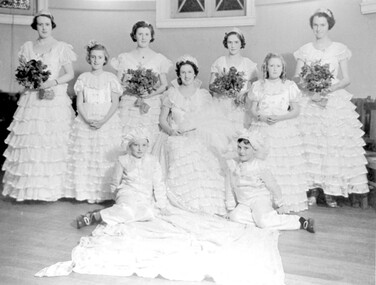
Photograph - Holy Trinity Surrey Hills Tennis Queen Carnival, 1940, 11 June 1940
... fundraising practice common in the early 20th century. Queen carnivals were also popular in New Zealand. In both countries they were particularly common during World War I and in the years after, when they were used to raise funds for returned soldiers. ...Identification has been given as follows: Young women: (?) Elizabeth Cooper, Ilma Bodley, "Queen" Avis Andrews, Marion Fair, Lynette Elliott. Names of girl and boy attendants not known by donor. The Queen Carnival was a fundraiser for the Holy Trinity Tennis Club. The Queen Carnival Coronation was held in the Canterbury Memorial Hall on 11 June 1940. Mrs F Eastwood was the trainer and the Honorary Secretary of the tennis club. The donor Mary Holborn married Geoffrey Stroud Clucas in 1946 in Surrey Hills. The photo documents a social fundraising practice common in the early 20th century. Queen carnivals were also popular in New Zealand. In both countries they were particularly common during World War I and in the years after, when they were used to raise funds for returned soldiers. The first such carnival is believed to have been held in Napier, New Zealand, in 1913. The carnivals were not always annual events, and were held in various locations throughout a year.Black and white group photo of 5 women, 2 girls and 2 boys in formal costume mounted on cardboard which has been roughly trimmed. The 'Queen' is seated in the centre and the 2 young girls and 4 young women are standing beside her. The 2 'pages' seated in front of her on the edge of her train. The photo appears to have been taken in a hall. REAR: "Holy Trinity Tennis Club Queen Carnival / June 11 / 1940 / M Clucas / 33 Jurang St / Balwyn"sport, tennis, holy trinity anglican church, 1940, clothing and dress, queen carnival, mrs mary clucas, miss mary holborn, mrs f eastwood, elizabeth cooper, ilma bodley, avis andrews, marion fair, lynette elliott, canterbury memorial hall -
 Linton and District Historical Society Inc
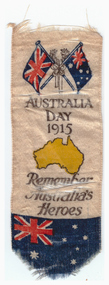
Ribbon, Australia Day, July 1915, 1915
... This was not the celebration of nationhood as we know it today, but a national fundraising effort during World War I. Across Australia, this day was set aside for fundraising to assist wounded soldiers returning to Australia during WWI. ...This was not the celebration of nationhood as we know it today, but a national fundraising effort during World War I. Across Australia, this day was set aside for fundraising to assist wounded soldiers returning to Australia during WWI. ...The ribbon is a souvenir of the first 'Australia Day', held 30 July 1915. This was not the celebration of nationhood as we know it today, but a national fundraising effort during World War I. Across Australia, this day was set aside for fundraising to assist wounded soldiers returning to Australia during WWI. In Linton Australia Day 1915 was celebrated with a jumble sale, raffles, and the collection of donations. There was also a stall outside the Shire Offices, attended by a group of girls dressed as Red Cross nurses, which sold flowers, postcards, toys and souvenirs. Mrs Surman, then Stella Todd, was one of this group of girls, along with her sister Millie Todd. (See photograph, Registration no. 055.) Presumably the souvenir ribbon was purchased by one of the Todd family on this day.Small white-blue silk ribbon. Printed - black writing - flags - Australia and Britain. Map of Australia. This ribbon was part of a collection of historical items belonging to Mrs. Stella Surman (formerly Stella Todd), of Linton."Australia-Day-1915" "Remember Australia's Heroes"australia day 1915, world war 1914-1918, souvenirs -
 Linton and District Historical Society Inc
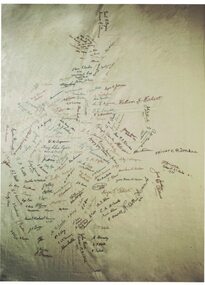
Tablecloth, Signature Cloth, the Linton Embroidered Tablecloth, 1930s-1940s
... World War I and the inter-war period, often embroidered in red or blue. The Linton tablecloth has a number of signatures and dates, some not embroidered, the dates ranging from 1931 to 1945. It is a delightful example of the genre and a wonderful visual record of people who lived in or visited Linton over a period of 15 years. Tablecloths Fundraising ...The rectangular white damask tablecloth was owned by Mrs Murrell (Lily Murrell, née Young, wife of William Murrell) who ran the Linton newsagency during the 1930s and 1940s. Mrs Murrell asked people who came into the newsagency to sign and date the cloth, and later she embroidered the names and dates in various coloured thread. Traditionally such ‘signature cloths’ were used as a fundraiser for charity purposes and date back to the 1890s at least. They were at their height of popularity during World War I and the inter-war period, often embroidered in red or blue. The Linton tablecloth has a number of signatures and dates, some not embroidered, the dates ranging from 1931 to 1945. It is a delightful example of the genre and a wonderful visual record of people who lived in or visited Linton over a period of 15 years.Large ivory damask tablecloth embroidered with signatures in various coloured threads.tablecloths, fundraising, mrs murrell, murrell's newsagency -
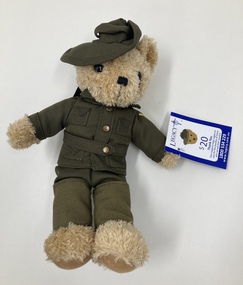 Melbourne Legacy
Leisure object - Toy Bear, Legacy Bear $20 - Army, 2021
... fundraising opportunities during the year. This bear is in an Australian World War 1 uniform and slouch hat. He was given the name Digger. The term "digger" was military slang for Australian and New Zealand soldiers. It became closely linked with the principles of mateship during World War I...fundraising opportunities during the year. This bear is in an Australian World War 1 uniform and slouch hat. He was given the name Digger. The term "digger" was military slang for Australian and New Zealand soldiers. It became closely linked with the principles of mateship during World War I ...In the 2000s Legacy released a range of Legacy Bears to expand the merchandise available for sale during Legacy Week and at other fundraising opportunities during the year. This bear is in an Australian World War 1 uniform and slouch hat. He was given the name Digger. The term "digger" was military slang for Australian and New Zealand soldiers. It became closely linked with the principles of mateship during World War I. This Digger bear reminds us of the endurance, courage, ingenuity, good humour, hardiness, and resourcefulness the ANZAC forces showed during the Gallipoli campaign and other WW1 campaigns. This was a special edition of the bears. In 2021 the price was increased to $20 per bear.An example of the type of products sold along with Legacy Badges for fundraising in the 2010-2020s.Legacy bear dressed in a World War 1 uniform with a printed cardboard tag.Printed tag gives the price as $20.legacy appeal, fundraising, legacy bear -
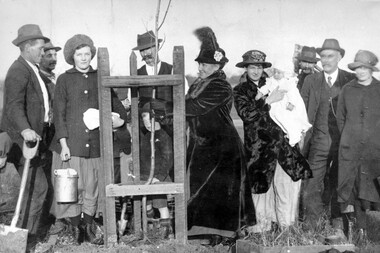 City of Kingston
Photograph - Black and white, c. 1917
... Through community fundraising, funds for over 140 trees had been raised. An avenue of honour was planted after World War I (WWI) to commemorate those from the area who had died during service. ...Members of the local community have gathered to plant an avenue of honour. Through community fundraising, funds for over 140 trees had been raised.An avenue of honour was planted after World War I (WWI) to commemorate those from the area who had died during service. The arboreal Avenue of Honour has been an enduring and highly popular form of public commemoration of military service in Australia. With a significant groundswell of community endeavour, as a nation, Australians have chosen to recognise service, sacrifice and suffering through community plantings of memorial Avenues of Honour. The earliest recorded Avenues of Honour were created in response to Australia’s participation in the Boer War, but the majority were established during and after World War I and, to a lesser extent, World War II. (https://avenuesofhonour.org/about/)A group of about eleven (11) people, including children and a baby, have gathered to plant trees along to create an avenue of honour for the fallen of World War I (WWI). From left to right: Moss Daff, Mr Stratford, Alice Edwards, Len Alln with Ron Allan, Mrs Wood (sen), Mrs Wood (jnr) with baby, name unrecorded, Mr McKittrick and Maud Edwards. White round sticker with black printed text on reverse: 99 Handwritten in red ink: 50%cheltenham, world war i, commemoration, avenue of honour -
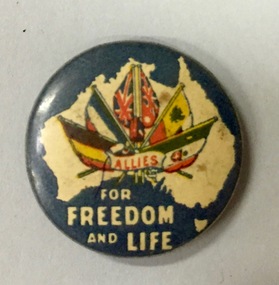 Kew Historical Society Inc
Badge - Fundraising Button, Allies For Freedom and Life, c. 1914-1917
... Their widespread distribution means that they are frequently significant at a local, state, national and international level. patriotic buttons first world war (1914-18) "Allies For Freedom and Life" A small circular pressed metal badge with a white outline of Australia against a dark blue background. Flags of Australia’s World War I allies are depicted within the Australian outline, including that of Imperial Russia. Allies For Freedom and Life Badge Fundraising ...Frances Rigg was a local business identity in Kew, at one stage managing the local branch of the English, Scottish and Australian (ES&A) Bank at 175 High Street from c. 1920 until the 1940s. After Francis Rigg’s death, the collection of buttons and medallions was inherited by his son, Ken Rigg (1922-2014). The collection was subsequently donated to the Kew Historical Society in 2015 by Francis' grandson, Adrian Rigg, at the time of the Gallipoli & Beyond Commemoration in 2015. The collection covers a period of almost 40 years. The majority of the buttons are patriotic buttons, issued and sold during and immediately after the First World World War (1914-1918) to raise funds for national and overseas causes. The collection also includes a number of locally significant sporting event buttons and sporting club medallions, issued in the 1920s and 1930s.Patriotic and other pressed tin buttons and badges were produced in large numbers in the first decades of the twentieth century. By nature, insubstantial and ephemeral, they have not always survived. The collections of badges, buttons and medallions in the Kew Historical Society collection is homogenous and yet diverse, ranging from buttons sold to raise funds for the war efforts in 1914-18 and 1939-45, to those used at festivals and sporting events. Because of the manufacturing process, many surviving buttons and badges have been affected by inadequate storage, suffering from oxidisation and physical damage. These survivors are now historically and socially significant artefacts, revealing much about the attitudes and values of the period in which they were produced. Their widespread distribution means that they are frequently significant at a local, state, national and international level.A small circular pressed metal badge with a white outline of Australia against a dark blue background. Flags of Australia’s World War I allies are depicted within the Australian outline, including that of Imperial Russia."Allies For Freedom and Life"patriotic buttons, first world war (1914-18) -
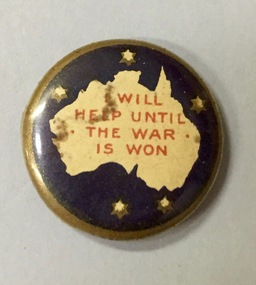 Kew Historical Society Inc
Badge - Fundraising Button, I Will Help Until the War is Won, 1916-1918
... Their widespread distribution means that they are frequently significant at a local, state, national and international level. patriotic buttons first world war (1914-18) badges "I Will Help Until the War is Won" Small circular pressed tinplate button featuring a white map of Australia on a dark blue ground with the stars of the Southern Cross surrounding, all within a gold border. The phrase ‘I Will Help Until the War is Won’ is printed in red across the map. I Will Help Until the War is Won Badge Fundraising ...Frances Rigg was a local business identity in Kew, at one stage managing the local branch of the English, Scottish and Australian (ES&A) Bank at 175 High Street from c. 1920 until the 1940s. After Francis Rigg’s death, the collection of buttons and medallions was inherited by his son, Ken Rigg (1922-2014). The collection was subsequently donated to the Kew Historical Society in 2015 by Francis' grandson, Adrian Rigg, at the time of the Gallipoli & Beyond Commemoration in 2015. The collection covers a period of almost 40 years. The majority of the buttons are patriotic buttons, issued and sold during and immediately after the First World World War (1914-1918) to raise funds for national and overseas causes. The collection also includes a number of locally significant sporting event buttons and sporting club medallions, issued in the 1920s and 1930s.Patriotic and other pressed tin buttons and badges were produced in large numbers in the first decades of the twentieth century. By nature, insubstantial and ephemeral, they have not always survived. The collections of badges, buttons and medallions in the Kew Historical Society collection is homogenous and yet diverse, ranging from buttons sold to raise funds for the war efforts in 1914-18 and 1939-45, to those used at festivals and sporting events. Because of the manufacturing process, many surviving buttons and badges have been affected by inadequate storage, suffering from oxidisation and physical damage. These survivors are now historically and socially significant artefacts, revealing much about the attitudes and values of the period in which they were produced. Their widespread distribution means that they are frequently significant at a local, state, national and international level.Small circular pressed tinplate button featuring a white map of Australia on a dark blue ground with the stars of the Southern Cross surrounding, all within a gold border. The phrase ‘I Will Help Until the War is Won’ is printed in red across the map."I Will Help Until the War is Won"patriotic buttons, first world war (1914-18), badges -
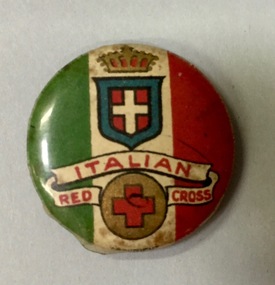 Kew Historical Society Inc
Badge - Fundraising Button, Italian Red Cross, 1916-1919
... Fundraising badge for the Italian Red Cross (Croce Rossa Italiana) from World War I. ...Their widespread distribution means that they are frequently significant at a local, state, national and international level. patriotic buttons first world war (1914-18) badges I"talian Red Cross" Fundraising badge for the Italian Red Cross (Croce Rossa Italiana) from World War I. ...Frances Rigg was a local business identity in Kew, at one stage managing the local branch of the English, Scottish and Australian (ES&A) Bank at 175 High Street from c. 1920 until the 1940s. After Francis Rigg’s death, the collection of buttons and medallions was inherited by his son, Ken Rigg (1922-2014). The collection was subsequently donated to the Kew Historical Society in 2015 by Francis' grandson, Adrian Rigg, at the time of the Gallipoli & Beyond Commemoration in 2015. The collection covers a period of almost 40 years. The majority of the buttons are patriotic buttons, issued and sold during and immediately after the First World World War (1914-1918) to raise funds for national and overseas causes. The collection also includes a number of locally significant sporting event buttons and sporting club medallions, issued in the 1920s and 1930s.Patriotic and other pressed tin buttons and badges were produced in large numbers in the first decades of the twentieth century. By nature, insubstantial and ephemeral, they have not always survived. The collections of badges, buttons and medallions in the Kew Historical Society collection is homogenous and yet diverse, ranging from buttons sold to raise funds for the war efforts in 1914-18 and 1939-45, to those used at festivals and sporting events. Because of the manufacturing process, many surviving buttons and badges have been affected by inadequate storage, suffering from oxidisation and physical damage. These survivors are now historically and socially significant artefacts, revealing much about the attitudes and values of the period in which they were produced. Their widespread distribution means that they are frequently significant at a local, state, national and international level.Fundraising badge for the Italian Red Cross (Croce Rossa Italiana) from World War I. The Italian Red Cross worked throughout the war to support sick and wounded Italian servicemen. Badges like these were designed for fundraising purposes during the war.I"talian Red Cross"patriotic buttons, first world war (1914-18), badges -
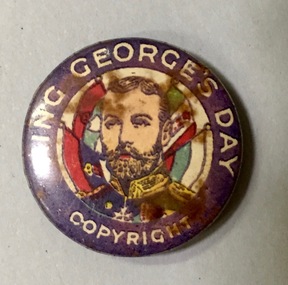 Kew Historical Society Inc
Badge - Fundraising Button, King George’s Day, 1916
... Fundraising badge dating to World War I with an image in the centre of King George V. ...Their widespread distribution means that they are frequently significant at a local, state, national and international level. patriotic buttons first world war (1914-18) george v "King George’s Day" Fundraising badge dating to World War I with an image in the centre of King George V. ...Frances Horace Rigg was a local business identity in Kew, at one stage managing the local branch of the English, Scottish and Australian (ES&A) Bank at 175 High Street from c.1920 until the 1940s. After Francis Rigg’s death, the collection of badges, buttons and medallions was inherited by his son, Ken Rigg (1922-2014). The collection was subsequently donated to the Kew Historical Society by Francis' grandson, Adrian Rigg, at the time of the Gallipoli & Beyond Commemorations of 2015. The collection covers a period of almost 40 years. The majority are fundraising buttons, issued and sold during and immediately after the First World World War (1914-1918) to raise funds for national and overseas causes. The collection also includes a number of locally significant sporting event buttons and sporting club medallions, issued in the 1920s and 1930s.Patriotic and other pressed buttons and badges were produced in large numbers in the first decades of the twentieth century. By nature, insubstantial and ephemeral, they have not always survived. The collections of badges, buttons and medallions in the Kew Historical Society collection is homogenous and yet diverse, ranging from buttons sold to raise funds for the war efforts in 1914-18 and 1939-45, to those used at festivals and sporting events. Because of the manufacturing process, many surviving buttons and badges have been affected by inadequate storage, suffering from oxidisation and physical damage. These survivors are now historically and socially significant artefacts, revealing much about the attitudes and values of the period in which they were produced. Their widespread distribution means that they are frequently significant at a local, state, national and international level.Fundraising badge dating to World War I with an image in the centre of King George V. ‘King George’s Day’ buttons were sold on 2 June 1916, the day before the ‘actual’ celebrations of the monarch’s birthday."King George’s Day"patriotic buttons, first world war (1914-18), george v -
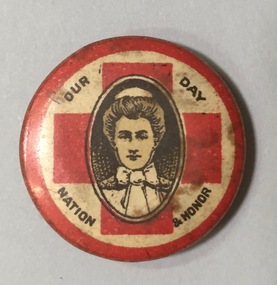 Kew Historical Society Inc
Badge - Fundraising Button, Our Day Nation & Honor, 1915-1919
... Their widespread distribution means that they are frequently significant at a local, state, national and international level. patriotic buttons first world war (1914-18) badges "Our Day / Nation & Honor" A First World War button inscribed ‘Our Day Nation & Honour’, and featuring an image of British nurse Edith Louisa Cavell, who died at the hands of a German firing squad in 1915. She became a heroic figure of sacrifice in World War I, and was used to increase military recruitment in Britain and win support for the war in the United States. Our Day Nation & Honor Badge Fundraising ...Frances Rigg was a local business identity in Kew, at one stage managing the local branch of the English, Scottish and Australian (ES&A) Bank at 175 High Street from c. 1920 until the 1940s. After Francis Rigg’s death, the collection of buttons and medallions was inherited by his son, Ken Rigg (1922-2014). The collection was subsequently donated to the Kew Historical Society in 2015 by Francis' grandson, Adrian Rigg, at the time of the Gallipoli & Beyond Commemoration in 2015. The collection covers a period of almost 40 years. The majority of the buttons are patriotic buttons, issued and sold during and immediately after the First World World War (1914-1918) to raise funds for national and overseas causes. The collection also includes a number of locally significant sporting event buttons and sporting club medallions, issued in the 1920s and 1930s.Patriotic and other pressed tin buttons and badges were produced in large numbers in the first decades of the twentieth century. By nature, insubstantial and ephemeral, they have not always survived. The collections of badges, buttons and medallions in the Kew Historical Society collection is homogenous and yet diverse, ranging from buttons sold to raise funds for the war efforts in 1914-18 and 1939-45, to those used at festivals and sporting events. Because of the manufacturing process, many surviving buttons and badges have been affected by inadequate storage, suffering from oxidisation and physical damage. These survivors are now historically and socially significant artefacts, revealing much about the attitudes and values of the period in which they were produced. Their widespread distribution means that they are frequently significant at a local, state, national and international level.A First World War button inscribed ‘Our Day Nation & Honour’, and featuring an image of British nurse Edith Louisa Cavell, who died at the hands of a German firing squad in 1915. She became a heroic figure of sacrifice in World War I, and was used to increase military recruitment in Britain and win support for the war in the United States."Our Day / Nation & Honor"patriotic buttons, first world war (1914-18), badges -
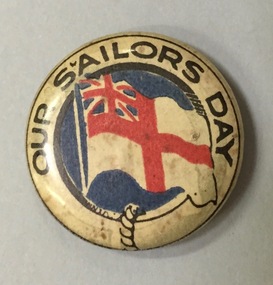 Kew Historical Society Inc
Badge - Fundraising Button, Our Sailors Day, c. 1917
... Their widespread distribution means that they are frequently significant at a local, state, national and international level. our sailors day patriotic buttons first world war (1914-18) badges "Our Sailors Day" ‘Our Sailors Day’ buttons were sold to the public to raise money and support Australia’s soldiers and its allies in World War I. The design features the White Ensign (the ensign of the British Royal Navy and also used by the Royal Australian Navy until 1967) on a blue background within a life preserver. Our Sailors Day Badge Fundraising ...Frances Rigg was a local business identity in Kew, at one stage managing the local branch of the English, Scottish and Australian (ES&A) Bank at 175 High Street from c. 1920 until the 1940s. After Francis Rigg’s death, the collection of buttons and medallions was inherited by his son, Ken Rigg (1922-2014). The collection was subsequently donated to the Kew Historical Society in 2015 by Francis' grandson, Adrian Rigg, at the time of the Gallipoli & Beyond Commemoration in 2015. The collection covers a period of almost 40 years. The majority of the buttons are patriotic buttons, issued and sold during and immediately after the First World World War (1914-1918) to raise funds for national and overseas causes. The collection also includes a number of locally significant sporting event buttons and sporting club medallions, issued in the 1920s and 1930s.Patriotic and other pressed tin buttons and badges were produced in large numbers in the first decades of the twentieth century. By nature, insubstantial and ephemeral, they have not always survived. The collections of badges, buttons and medallions in the Kew Historical Society collection is homogenous and yet diverse, ranging from buttons sold to raise funds for the war efforts in 1914-18 and 1939-45, to those used at festivals and sporting events. Because of the manufacturing process, many surviving buttons and badges have been affected by inadequate storage, suffering from oxidisation and physical damage. These survivors are now historically and socially significant artefacts, revealing much about the attitudes and values of the period in which they were produced. Their widespread distribution means that they are frequently significant at a local, state, national and international level.‘Our Sailors Day’ buttons were sold to the public to raise money and support Australia’s soldiers and its allies in World War I. The design features the White Ensign (the ensign of the British Royal Navy and also used by the Royal Australian Navy until 1967) on a blue background within a life preserver."Our Sailors Day"our sailors day, patriotic buttons, first world war (1914-18), badges -
 Kew Historical Society Inc
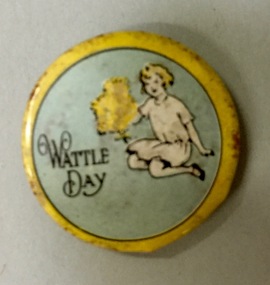
Badge - Fundraising Button, Australian Natives Association, Wattle Day, 1914-1919
... world war (1914-18) badges "Wattle Day" A yellow and blue ‘Wattle Day’ badge featuring a seated girl holding a bouquet of wattle. The first ‘national’ Wattle Day was celebrated in Sydney, Melbourne and Adelaide on 1 September 1910. Public support for Wattle Day peaked during World War I, when it was a potent symbol of home for military personnel serving overseas, and a means of raising money for organisations such as the Red Cross. Wattle Day Badge Fundraising ...Frances Rigg was a local business identity in Kew, at one stage managing the local branch of the English, Scottish and Australian (ES&A) Bank at 175 High Street from c. 1920 until the 1940s. After Francis Rigg’s death, the collection of buttons and medallions was inherited by his son, Ken Rigg (1922-2014). The collection was subsequently donated to the Kew Historical Society in 2015 by Francis' grandson, Adrian Rigg, at the time of the Gallipoli & Beyond Commemoration in 2015. The collection covers a period of almost 40 years. The majority of the buttons are patriotic buttons, issued and sold during and immediately after the First World World War (1914-1918) to raise funds for national and overseas causes. The collection also includes a number of locally significant sporting event buttons and sporting club medallions, issued in the 1920s and 1930s.Patriotic and other pressed tin buttons and badges were produced in large numbers in the first decades of the twentieth century. By nature, insubstantial and ephemeral, they have not always survived. The collections of badges, buttons and medallions in the Kew Historical Society collection is homogenous and yet diverse, ranging from buttons sold to raise funds for the war efforts in 1914-18 and 1939-45, to those used at festivals and sporting events. Because of the manufacturing process, many surviving buttons and badges have been affected by inadequate storage, suffering from oxidisation and physical damage. These survivors are now historically and socially significant artefacts, revealing much about the attitudes and values of the period in which they were produced. Their widespread distribution means that they are frequently significant at a local, state, national and international level.A yellow and blue ‘Wattle Day’ badge featuring a seated girl holding a bouquet of wattle. The first ‘national’ Wattle Day was celebrated in Sydney, Melbourne and Adelaide on 1 September 1910. Public support for Wattle Day peaked during World War I, when it was a potent symbol of home for military personnel serving overseas, and a means of raising money for organisations such as the Red Cross."Wattle Day"patriotic buttons, wattle day, first world war (1914-18), badges -
 Kew Historical Society Inc
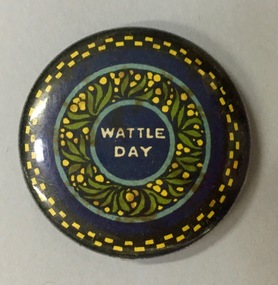
Badge - Fundraising Button, Australian Natives Association, Wattle Day, 1914-1919
... world war (1914-18) "Wattle Day" This round ‘Wattle Day’ button is edged with a green and yellow wattle design. It is inscribed with white capital latters on a blue background in the centre. The first ‘national’ Wattle Day was celebrated in Sydney, Melbourne and Adelaide on 1 September 1910. Public support for Wattle Day peaked during World War I, when it was a potent symbol of home for military personnel serving overseas, and a means of raising money for organisations such as the Red Cross. Wattle Day Badge Fundraising ...Frances Rigg was a local business identity in Kew, at one stage managing the local branch of the English, Scottish and Australian (ES&A) Bank at 175 High Street from c. 1920 until the 1940s. After Francis Rigg’s death, the collection of buttons and medallions was inherited by his son, Ken Rigg (1922-2014). The collection was subsequently donated to the Kew Historical Society in 2015 by Francis' grandson, Adrian Rigg, at the time of the Gallipoli & Beyond Commemoration in 2015. The collection covers a period of almost 40 years. The majority of the buttons are patriotic buttons, issued and sold during and immediately after the First World World War (1914-1918) to raise funds for national and overseas causes. The collection also includes a number of locally significant sporting event buttons and sporting club medallions, issued in the 1920s and 1930s.Patriotic and other pressed tin buttons and badges were produced in large numbers in the first decades of the twentieth century. By nature, insubstantial and ephemeral, they have not always survived. The collections of badges, buttons and medallions in the Kew Historical Society collection is homogenous and yet diverse, ranging from buttons sold to raise funds for the war efforts in 1914-18 and 1939-45, to those used at festivals and sporting events. Because of the manufacturing process, many surviving buttons and badges have been affected by inadequate storage, suffering from oxidisation and physical damage. These survivors are now historically and socially significant artefacts, revealing much about the attitudes and values of the period in which they were produced. Their widespread distribution means that they are frequently significant at a local, state, national and international level.This round ‘Wattle Day’ button is edged with a green and yellow wattle design. It is inscribed with white capital latters on a blue background in the centre. The first ‘national’ Wattle Day was celebrated in Sydney, Melbourne and Adelaide on 1 September 1910. Public support for Wattle Day peaked during World War I, when it was a potent symbol of home for military personnel serving overseas, and a means of raising money for organisations such as the Red Cross."Wattle Day"wattle day, patriotic buttons, first world war (1914-18) -
 St Kilda Historical Society
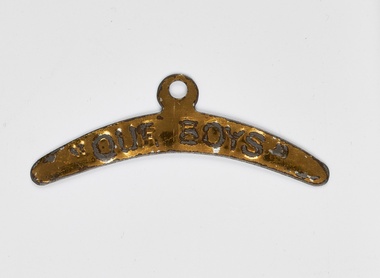
Badge - WWI souvenir, Boomerang badge, 1914-1918
... During World War I, "boomerang badges" were popular sweetheart brooches and fundraising pins. ...During World War I, "boomerang badges" were popular sweetheart brooches and fundraising pins. ...During World War I, "boomerang badges" were popular sweetheart brooches and fundraising pins. The boomerang motif was chosen to symbolize the solder's safe return from the war, much like a thrown boomerang comes back. This badge was donated to the St Kilda Society by the wife of John (Jack) Dudley Cullen, who was the first person from St Kilda to enlist in World War I. He lived at 23 Argyle Street (now Waterloo Crescent), St Kilda. An electrician with three years service with the militia behind him, Jack enlisted on 18 August 1914 at the age of 21. By 20 October that year he was sailing to Egypt on the HMAT Shropshire as a member of the 5th Battery, 2nd Field Artillery Brigade. He served in the Middle East for a short time before being hospitalised with enteric fever and returning home to Australia. After recovering, Jack undertook permanent guard duties at Broadmeadows Training Camp until October 1916, when he went to England with the 118th Howitzer Battery on the HMAT Aeneas. He again returned to Australia on health grounds, this time suffering a bronchial condition, and was discharged in June 1918. In February 1918, while still in England, Jack married Miss Daisy Dawes of Durrington, near Salisbury. They settled for a short while in Australia but returned to England to live in 1921.Gold coloured metal boomerang with eyelet for attachment."Our Boys"wwi memorabilia, john dudley cullen, jack cullen -
 Port Melbourne Historical & Preservation Society
Photograph - Swallow & Ariell Busy Bee fundraising stall, 1914 - 1920
... Business and Traders War - World War I Social Activities Busy Bee Swallow & Ariell Ltd Red Cross Built Environment - Industrial One of 44 black and white photos recording the work and contribution by Swallow & Ariell's "Busy Bee" for the First World War in Europe .31 - Busy Bee fundraising stall Photograph Swallow & Ariell Busy Bee fundraising stall ...One of 44 black and white photos recording the work and contribution by Swallow & Ariell's "Busy Bee" for the First World War in Europe .31 - Busy Bee fundraising stallbusiness and traders, war - world war i, social activities, busy bee, swallow & ariell ltd, red cross, built environment - industrial -
Port Melbourne Historical & Preservation Society
Photograph - Swallow & Ariell Busy Bee fundraising stall, 1914 - 1920
... Business and Traders War - World War I Social Activities Busy Bee Swallow & Ariell Ltd Red Cross Built Environment - Industrial One of 44 black and white photos recording the work and contribution by Swallow & Ariell's "Busy Bee" for the First World War in Europe .30 - Busy Bee fundraising stall Photograph Swallow & Ariell Busy Bee fundraising stall ...One of 44 black and white photos recording the work and contribution by Swallow & Ariell's "Busy Bee" for the First World War in Europe .30 - Busy Bee fundraising stallbusiness and traders, war - world war i, social activities, busy bee, swallow & ariell ltd, red cross, built environment - industrial -
 Returned Nurses RSL Sub-branch
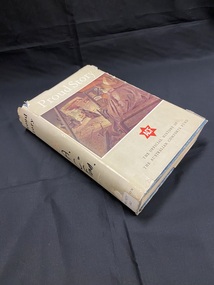
Book - Hardcover book, C.O.Badham Jackson et al, Proud Story: the official history of the Australian Comforst Fund, 1949
... World War I to send comfort to the troops. Many local women's groups formed early in the war to provide various 'luxury items' to supplement the Australian soldier's army rations and personal kit. The Australian Comforts Fund quickly grew into a fundraising...World War I to send comfort to the troops. Many local women's groups formed early in the war to provide various 'luxury items' to supplement the Australian soldier's army rations and personal kit. The Australian Comforts Fund quickly grew into a fundraising ...History of the Australian Comforts Fund (ACF). The fund was "a commonwealth-wide voluntary organisation accredited to the Royal Australian Navy, the Australian Military Forces and the Royal Australian Air Force and charged with the duty of caring for all fit and well members of the Australian Forces during the Second World War, 1939-1945" -taken from title page. This volume details the history from each individual state in Australia, as well as the service it provided overseas, and it's partnership with the Salvation Army, Y.M.C.A. and Y.W.C.A.Blue cloth-bound hardcover book with a worn cream coloured dust-jacket. The title is printed in white across the top, beneath which is an illustration of three jeeps driving in a row (from the perspective of someone sitting in the back seat of the third jeep). The bottom of the page displays black text with a red star above it with the letters ACF inside. The spine has the title printed in black across the top, a spine label taped to the bottom, and A.C.Fund handwritten in black marker in the middle.non-fictionHistory of the Australian Comforts Fund (ACF). The fund was "a commonwealth-wide voluntary organisation accredited to the Royal Australian Navy, the Australian Military Forces and the Royal Australian Air Force and charged with the duty of caring for all fit and well members of the Australian Forces during the Second World War, 1939-1945" -taken from title page. This volume details the history from each individual state in Australia, as well as the service it provided overseas, and it's partnership with the Salvation Army, Y.M.C.A. and Y.W.C.A.ww2, wwii, world war 1939-1945, civilian relief, australian comforts fund, acf
