
Showing 8 items matching "worsted cotton"
-
 Broadmeadows Historical Society & Museum
Clothing - Christening Gown, c. 1900's
... ...worsted cotton...A christening gown made of worsted cotton from the early 20th century is a distinctive artifact that reflects both the textile practices and ceremonial traditions of the time. ...Worsted cotton christening gown from the early 20th century....A christening gown made of worsted cotton from the early 20th century is a distinctive artifact that reflects both the textile practices and ceremonial traditions of the time. ...A christening gown made of worsted cotton from the early 20th century is a distinctive artifact that reflects both the textile practices and ceremonial traditions of the time. Unlike the more commonly used fine cottons or silks, worsted cotton—known for its smooth, tightly spun yarn—would have given the gown a slightly firmer texture and greater durability while still maintaining a refined appearance. This choice of fabric suggests a practical yet elegant approach, possibly indicating a middle-class family valuing both quality and longevity in ceremonial garments. The gown likely featured traditional design elements such as a long, flowing silhouette, delicate lace or embroidery, and possibly hand-finished seams or pintucks. These garments were often handmade and passed down through generations, serving as cherished heirlooms. The use of worsted cotton may also reflect regional textile availability or a preference for sturdier materials that could withstand repeated use and laundering. Historically, such a gown embodies the intersection of faith, family heritage, and domestic craftsmanship, offering insight into early 20th-century social customs and material culture. This early 20th-century christening gown, crafted from worsted cotton, is a rare and valuable example of ceremonial infant clothing that reflects both the social customs and textile practices of its time. The use of worsted cotton—a durable, finely spun fabric more commonly associated with suiting or outerwear—distinguishes the gown from the more typical fine cotton or silk examples, suggesting a unique blend of practicality and refinement. Its construction likely involved skilled handwork, including lace, embroidery, or pintucks, indicative of domestic craftsmanship and the importance placed on family rites of passage. As a garment used in baptism, a significant religious and cultural event, the gown embodies themes of purity, tradition, and familial continuity. Its preservation offers insight into early 20th-century material culture, class sensibilities, and the evolving role of textile choices in everyday and ceremonial life.Worsted cotton christening gown from the early 20th century.christening gown, 20th century, worsted cotton -
 National Wool Museum
Instrument - Scales, 1880-1898
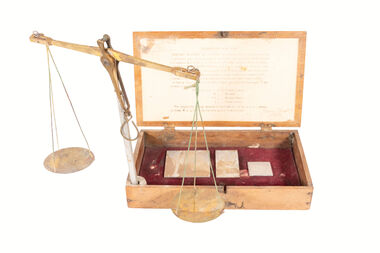
... . -------------------------------------------------------------------------------------------------------------------------------------------------- Indispensable to Manufactures, Merchants & handling Woollen, Worsted, Cotton, Linen, Jute, Hemp, Flannel, Felt, Army, Navy, Police, Railway, Sail & other Cloths -------------------------------------------------------------------------------------------------------------------------------------------------- USED IN GOVERNMENT DEPARTMENTS -------------------------------------------------------------------------------------------------------------------------------------------------- The apparatus consists of Scales, Weights, 1, 2 & 4 sq. inch Cutting Templates & Book of Tables --------------------------------------------------------------------------------------------------------------------------------------------------By weighing a small Sample the accurate Weight in Ounces of a yard of Cloth any width from 18 to 64 inches, the Weight per Square Metre in Grams, the Counts* of Warp and Weft, and the approximate length of full & short ends of pieces of fabrics, [without unrolling and measuring for stocktaking & other purposes] can be ascertained without any Calculation --------------------------------------------------------------------------------------------------------------------------------------------------Price in United Kingdom, 25s., Carriage Paid. .... -------------------------------------------------------------------------------------------------------------------------------------------------- Indispensable to Manufactures, Merchants & handling Woollen, Worsted, Cotton, Linen, Jute, Hemp, Flannel, Felt, Army, Navy, Police, Railway, Sail & other Cloths -------------------------------------------------------------------------------------------------------------------------------------------------- USED IN GOVERNMENT DEPARTMENTS -------------------------------------------------------------------------------------------------------------------------------------------------- The apparatus consists of Scales, Weights, 1, 2 & 4 sq. inch Cutting Templates & Book of Tables --------------------------------------------------------------------------------------------------------------------------------------------------By weighing a small Sample the accurate Weight in Ounces of a yard of Cloth any width from 18 to 64 inches, the Weight per Square Metre in Grams, the Counts* of Warp and Weft, and the approximate length of full & short ends of pieces of fabrics, [without unrolling and measuring for stocktaking & other purposes] can be ascertained without any Calculation --------------------------------------------------------------------------------------------------------------------------------------------------Price in United Kingdom, 25s., Carriage Paid. ...At the time of sale, the last of the Hirst family to work in the mill located in Geelong gave Donald (donor Bruce's father) Doherty a set of scales that had been used by several generations of Hirsts and adapted by them over time for specific use in their mill. These Scales were saved from waste and being thrown away at the time of sale to remain in use in the industry in the hands of someone who knew how to use them. The scales were used in calculating the weight of cloth and simultaneously calculating the amount of yarn required to weave it following the instructions printed within the box. The box bears the signatures of two Hirst family members, one being Lewis Hirst dated at 1898. The original brass pole has been replaced with a replica metal somewhere throughout the years after the brass pole broke through use. Hirst was brought by McKendrick in the 1960s and these scales sat for 12 months as part of the 12 month "cooling off" period. The scales were then handed to Donald rather than being disposed of.Scales used for weighing and calculating weight and thread count of textile samples. Originated from Godfrey Hirst Mills in Geelong. Writing describes how to utilise scales. Scales are made from brass, pole for holding scales once brass now replaced with metal pole. Scales held inside wooden box with black text in ink depicting use of scales on paper located inside and outside of box.Outside of box. Wording: APPARTUS for TESTING the WEIGHT per YARD of CLOTHS & COUNT of YARN from a small SAMPLE. -------------------------------------------------------------------------------------------------------------------------------------------------- Indispensable to Manufactures, Merchants & handling Woollen, Worsted, Cotton, Linen, Jute, Hemp, Flannel, Felt, Army, Navy, Police, Railway, Sail & other Cloths -------------------------------------------------------------------------------------------------------------------------------------------------- USED IN GOVERNMENT DEPARTMENTS -------------------------------------------------------------------------------------------------------------------------------------------------- The apparatus consists of Scales, Weights, 1, 2 & 4 sq. inch Cutting Templates & Book of Tables --------------------------------------------------------------------------------------------------------------------------------------------------By weighing a small Sample the accurate Weight in Ounces of a yard of Cloth any width from 18 to 64 inches, the Weight per Square Metre in Grams, the Counts* of Warp and Weft, and the approximate length of full & short ends of pieces of fabrics, [without unrolling and measuring for stocktaking & other purposes] can be ascertained without any Calculation --------------------------------------------------------------------------------------------------------------------------------------------------Price in United Kingdom, 25s., Carriage Paid. Price to Canada & U.S.A. $6.75 do. H. Lord. 10, And Place, Bradford, England. --------------------------------------------------------------------------------------------------------------------------------------------------*When ordering, state on what system you base your YARN COUNTS. Inside of box. Wording: DIRECTIONS FOR USE --------------------------------------------------------------------------------------------------------------------------------------------------TESTING WEIGHT OF CLOTHS. Place sample to be tested on a piece of cardboard, put a Cutting Template on it, cut card and cloth round template with scissors and weigh it according to instructions given in Book of Tables. TESTING FOR YARN COUNTS. Cut out 1 square inch of cloth, draw out wrap or weft threads, according to which is being tested, and the number of inches so drawn, that balance respective weight is the approximate Count. The same rule holds good when number of inches are drawn from a bobbin. In testing from the cloth, allowance has to be made for loss or gain in the process of manufacture. Weight marked C is for Cotton Counts " " W " " Worsted " " " WS " " Woollen Skeins " " L " " Linen Counts. The weights for testing samples of cloth are 20, 10, 10, 5, 3, 2, 1, grains in brass & '5, '3, '2, '1 [tenths of a grain] in aluminium. Inside of box. Signtures, handwritten: Bottom right: Lewis Hirst !898 Top Left (Smudge ?) W Hirst !935godfrey hirst, hirst family, textile design, textile creation -
 Bendigo Military Museum
Uniform - BAND TUNIC, GRENADIER GUARDS, Peter MASLEN, 1981
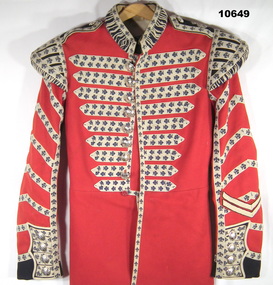
... Collar edges with narrow white with red cotton Drummers Lace (braid) and has blue and white worsted fringing. ...Collar edges with narrow white with red cotton Drummers Lace (braid) and has blue and white worsted fringing. ...This uniform Tunic belonged to Peter MASLEN Regiment No. 24125234. Unit 2nd Battalion Grenadier Guards. MASTER TAILOR British Army. retired from 1985 when came to Australia with wife. Information from Donation form- "Band uniform for Military Tattoo/ (England) Grenadier Orchestra/ 1981 - Berlin Tattoo/ - uniform is to do with the choir/2nd Battalion Grenadier Guards/ handmade - Peter made all the uniforms".Uniform tunic Army. Tunic fabric - scarlet superfine wool with black velvet cuffs and stand up collar. Collar edges with narrow white with red cotton Drummers Lace (braid) and has blue and white worsted fringing. Tunic has wings and shoulder straps (epaulettes) with embroidered Battalion motto - Queen's crown above circular ribbon with the words (in french) "HONI-SOIT-QUI-MAL-Y-PENSE. Translation is "Shame To Him Who Thinks Evil of Him" or "Evil Be To Him Who Evil Thinks"; in the centre is the Royal Cypher. Tunic fronts are trimmed with nine bars of double Drummer's Lace (Braid) and fastened with eight large regimental plastic silver buttons with shank and moulded insignia - Queens Crown with Royal Cypher. There is additional lace on the back, skirt sleeves and on both shoulder epaulettes. Additional buttons on back, shoulders and sleeve cuffs. Left sleeve has two rank stripes - Corporal. Two brass belt hooks at waist. Tunic Lining - cotton fabric. Cream colour to body of tunic and sleeves. Red colour to skirt of tunic Two white cotton fabric labels attached front interior tunic lining. Handwritten details on back lining. Information details on labels - top, black ink print. "GRENADIER GUARDS/ DRUMMER/ WARRANT NO. 102/110/ NAME???/ HEIGHT???/ BREAST ??? WAIST ???/ B.L. WAIST??/ COLLAR ??/ KAS ??? & PARTNERS LTD " (Many details illegible) lower label - red ink print " ??? + ??? / MADE IN ENGLAND/ NAME". Information on back lining - blue ink pen - handwritten "6176/CARUANA/ ML/ DRUMS".uniform, tunic, army, grenadier guards, england -
National Wool Museum
Book, I.C.S. Reference Library no. 92
... Cotton Textile Mills...International Correspondence Schools Ltd Returned Soldiers and Sailors Mill...Cloth - woollen...Cloth - worsted...Reference Library no. 92: glossary of weaves, elementary textile designing, analysis of cotton fabrics, analysis of woolen and worsted fabrics, twill weaves and derivatives, satin and other weaves, combination weaves, construction of spot weaves, weaves for backed cotton fabrics, woolen and worsted ply weaves, leno weaves, pile weaves, color in textile designing, designing in general" International Correspondence Schools Ltd, 1921. ...Weaving Textile Design Cotton Textile Mills International Correspondence Schools Ltd Returned Soldiers and Sailors Mill Cloth - woollen Cloth - worsted Twill Trigg W. ..."I.C.S. Reference Library no. 92: glossary of weaves, elementary textile designing, analysis of cotton fabrics, analysis of woolen and worsted fabrics, twill weaves and derivatives, satin and other weaves, combination weaves, construction of spot weaves, weaves for backed cotton fabrics, woolen and worsted ply weaves, leno weaves, pile weaves, color in textile designing, designing in general" International Correspondence Schools Ltd, 1921. There is a fine ex libris plate (designed by W.L. Trigg) on the inside of the front cover depicting the Anzac statue from the RSS Mill. This book is from the library of V.J. Schofield, son of Albert Schofield, the first managing director of the RSS Mill.EX LIBRIS / V.J. SCHOFIELD / W.L. TRIGGweaving textile design cotton textile mills, international correspondence schools ltd returned soldiers and sailors mill, cloth - woollen, cloth - worsted, twill, trigg, w. l., weaving, textile design, cotton, textile mills -
 National Wool Museum
Textile - Rug, Returned Soldiers and Sailors Mill, 1963
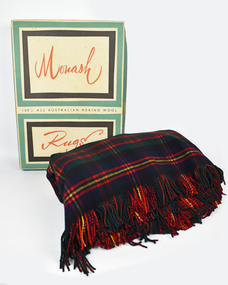
... worsted fabrics for more casual clothing. Modern day textile production requires fewer steps in the processing of materials for this use. This meant large factory complexes such as early woollen mills like the RS&S mills were no longer required. Compared to modern textile production which can spin a fine yarn out of synthetic fibre or imported cotton...worsted fabrics for more casual clothing. Modern day textile production requires fewer steps in the processing of materials for this use. This meant large factory complexes such as early woollen mills like the RS&S mills were no longer required. Compared to modern textile production which can spin a fine yarn out of synthetic fibre or imported cotton ...The Returned Soldiers and Sailors Mills was located near the Barwon river on Pakington Street, Geelong, where its building still stands. The mill was established in October 1922 with capital acquired from War Gratuity Bonds. The mill produced fine grade woollen products with its speciality being ‘Retsol’ travelling rugs. The mill first began to run into financial troubles with the ‘Credit Squeeze’ or the ‘Holt Jolt’ of the early 1960s. This saw import restrictions lifted which triggered the start of a minor recession and a rise in unemployment. Included in these troubles was the RS&S Mill which saw the number of employees gradually decrease and business declining with cheaper imports beginning to grab an expanding part of the market share. The mill was eventually purchased by Godfrey Hirst in 1973 who tried to continue operations without success and in June 1975 textile production at the site ceased. Outside of financial considerations contributing to the closure of Woollen Mills in this period was the declining need for heavier fabrics as in-home heating and insulation improved. This need had been replaced for a demand for ever softer, finer and lighter worsted fabrics for more casual clothing. Modern day textile production requires fewer steps in the processing of materials for this use. This meant large factory complexes such as early woollen mills like the RS&S mills were no longer required. Compared to modern textile production which can spin a fine yarn out of synthetic fibre or imported cotton easily, spinning fine yarn from medium quality wool at a textile factory was cumbersome and no longer financially viable to suit new consumer demands. This rug provides context to this statement. It was gifted to Shirley and Gordon Green as a wedding present in November 1963 by one of Gordon's colleagues in the wool industry. Living in areas such as Neutral Bay, the Hornsby area and later in life retiring to the Central Coast, the blanket was too heavy for use in these weather conditions and hence it stayed in its original box for nearly 60 years. Top and bottom of rug has frilled edges. Pattern is titled the 'Clan Cameron' and is repeated in a 7x7 grid. Front of rug has a red background with 4 vertical and horizontal lines. All is surrounded by a yellow boarder. Label is stitched into the bottom right corner. Reverse of rug also has a repeating 7x7 grid. Blue background with thick green horizontal stripe. Yellow and red boarder to the grid with 4 red vertical and horizontal lines making up the interior. Rug measure 1550 x 2040mm, approximately the same size as a queen size mattress.Wording, Bottom right corner. THE GEELONG R.S&S. WOOLEN MILLS/ PURE/ WOOL/ AUSTRALIA/ The John Monash Rug (cursive)/ The Clan Cameron (cursive)rs&s mills, textile manufacture, rug, clan cameron, sydney greasy wool exchange -
National Wool Museum
Book, How to Know Textiles
... Cotton Silk...Lace...Dyeing...Cloth - woollen...Cloth - worsted...Textile Fibres Weaving Machine Knitting Yarn production Cotton Silk Lace Dyeing Cloth - woollen Cloth - worsted Rayon Textile Fibres Weaving Machine Knitting Yarn production Cotton Silk How to Know Textiles Book ..."How to Know Textiles" - Cassie Paine Small, 1932.textile fibres weaving machine knitting yarn production cotton silk, lace, dyeing, cloth - woollen, cloth - worsted, rayon, textile fibres, weaving, machine knitting, yarn production, cotton, silk -
 Sunshine and District Historical Society Incorporated
Photograph - Flickers Fabric Dye Works 295 – 317 St. Albans Road 1990 Photographs, Sharon Cavanagh, 3rd September 1990
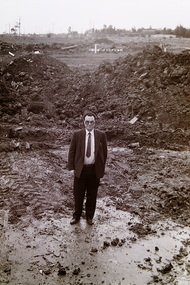
... Worsted Finishers Australia Pty Ltd, a textile finishing and dyeing works specialising in wool and later synthetic fabrics. In 1975, the business was purchased by Mr Harry Flicker, after which it was renamed it to Flicker’s Australia. By the 1980s–1990s, Flickers Fabric Dye Works had become one of the largest dye houses in Victoria, supplying knitted cotton ...These photographs were taken by The Advocate in 1990. These photographs feature Flickers Fabric Dye Works located at 295 – 317 St. Albans Road during one of their expansion projects. The business now known as Flicker’s Australia Pty Ltd began in the 1940s – 1950s as Worsted Finishers Australia Pty Ltd, a textile finishing and dyeing works specialising in wool and later synthetic fabrics. In 1975, the business was purchased by Mr Harry Flicker, after which it was renamed it to Flicker’s Australia.By the 1980s–1990s, Flickers Fabric Dye Works had become one of the largest dye houses in Victoria, supplying knitted cotton, polyester, nylon, viscose and blended fabrics to garment manufacturers.7431.01 - Flickers Fabric Dye Works 295–317 St. Albans Road 1990 Photographs (Advocate 382.1).JPG 7431.02 - Flickers Fabric Dye Works 295–317 St. Albans Road 1990 Photographs (Advocate 382.1).JPG 7431.03 - Flickers Fabric Dye Works 295–317 St. Albans Road 1990 Photographs (Advocate 382.1).JPGflickers, st. albans road, sunshine north -
 Sunshine and District Historical Society Incorporated
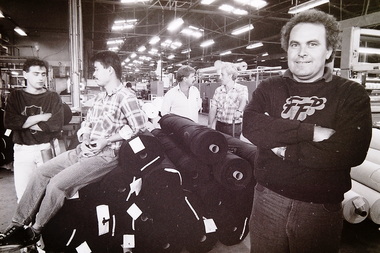
Photograph - Flickers 295 - 317 St. Albans Road Sunshine North 1991 Photograph, Sharon Cavanagh, 18th March 1991
... Worsted Finishers Australia Pty Ltd, a textile finishing and dyeing works specialising in wool and later synthetic fabrics. In 1975, the business was purchased by Mr Harry Flicker, after which it was renamed it to Flicker’s Australia. By the 1980s–1990s, Flickers Fabric Dye Works had become one of the largest dye houses in Victoria, supplying knitted cotton...Worsted Finishers Australia Pty Ltd, a textile finishing and dyeing works specialising in wool and later synthetic fabrics. In 1975, the business was purchased by Mr Harry Flicker, after which it was renamed it to Flicker’s Australia. By the 1980s–1990s, Flickers Fabric Dye Works had become one of the largest dye houses in Victoria, supplying knitted cotton ...This photograph, taken by The Advocate in 1991, features a group of employees on the floor of the Flickers Factory located at 295 - 317 St. Albans Road, Sunshine North. On the right is Production Manager Joe Theumaare with factory floor workers (L-R) Corey Attard, Quan Hong, Lindon Thompson and Mario Vella. The business now known as Flicker’s Australia Pty Ltd began in the 1940s – 1950s as Worsted Finishers Australia Pty Ltd, a textile finishing and dyeing works specialising in wool and later synthetic fabrics. In 1975, the business was purchased by Mr Harry Flicker, after which it was renamed it to Flicker’s Australia. By the 1980s–1990s, Flickers Fabric Dye Works had become one of the largest dye houses in Victoria, supplying knitted cotton, polyester, nylon, viscose and blended fabrics to garment manufacturers.The Advocate’s feature on local traders was a modest yet well‑liked column that played a meaningful role in strengthening community identity. Through these regular profiles, the newspaper promoted local businesses and helped shape Sunshine’s understanding of its developing commercial district.7388.01 - Flickers 295 - 317 St. Albans Road Sunshine North 1991 Photograph (Advocate 168.3).JPGflickers, st. albans road, sunshine north, worsted finishers
