
Showing 76 items matching "yarn - worsted"
-
 National Wool Museum
Book, Modern Developments in the Australian Wool Industry
... ...Yarn - worsted...Pty Ltd Australian Knitting Mills Limited Yarn - woollen Cloth - worsted Yarn - worsted Wool Tops Yarn - cashmere Logo Merino: sheep in Australian art and design - Exhibition (29/07/2000 - 04/02/2001) Weaving Textile Industry - history Textile Production Machine Knitting Textile Mills Book, front cover: "Modern Developments in the Australia Woollen Industry" c.1923; Yarra Falls Spinning Co. ..."Modern Developments in the Australian Wool Industry", c.1923. Examines the operations of the Yarra Falls Spinning Co. Pty Ltd and the Australian Knitting Mills Limited (makers of Golden Fleece and Kookaburra knitted underwear). Includes photos of processes and of the buildings.Book, front cover: "Modern Developments in the Australia Woollen Industry" c.1923; Yarra Falls Spinning Co. Pty Ltd and Australian Knitting Mills Limited.weaving textile industry - history textile production machine knitting textile mills, yarra falls spinning co. pty ltd australian knitting mills limited, yarn - woollen, cloth - worsted, yarn - worsted, wool tops, yarn - cashmere, logo merino: sheep in australian art and design - exhibition (29/07/2000 - 04/02/2001), weaving, textile industry - history, textile production, machine knitting, textile mills -
 National Wool Museum
Book, Modern Developments in the Australian Wool Industry
... ...Yarn - worsted...Pty Ltd Australian Knitting Mills Limited Yarn - woollen Cloth - worsted Yarn - worsted Wool Tops Yarn - cashmere Weaving Textile Industry - history Textile Production Machine Knitting Textile Mills F H Murgatroyd/20 Kensington Rd/ Leopold 3224 Modern Developments in the Australian Wool Industry Book ..."Modern Developments in the Australian Wool Industry", c.1923. Examines the operations of the Yarra Falls Spinning Co. Pty Ltd and the Australian Knitting Mills Limited (makers of Golden Fleece and Kookaburra knitted underwear). Includes photos of processes and of the buildings.F H Murgatroyd/20 Kensington Rd/ Leopold 3224weaving textile industry - history textile production machine knitting textile mills, yarra falls spinning co. pty ltd australian knitting mills limited, yarn - woollen, cloth - worsted, yarn - worsted, wool tops, yarn - cashmere, weaving, textile industry - history, textile production, machine knitting, textile mills -
 National Wool Museum
Book, Hand books of the textile industry, vol 2: manufacture of narrow woven fabrics
... ...Yarn - worsted..."Hand books of the textile industry, vol 2: manufacture of narrow woven fabrics" - E A Posselt Textile Calculations Textile Industry Weaving Textile Industry - education Weaving Weaving Looms Yarn - woollen Yarn - worsted Ribbon Textile Calculations Textile Industry Textile Industry - education K M Chisholm/ Denholm/ Bowenfels Hand books of the textile industry, vol 2: manufacture of narrow woven fabrics Book ..."Hand books of the textile industry, vol 2: manufacture of narrow woven fabrics" - E A PosseltK M Chisholm/ Denholm/ Bowenfelstextile calculations textile industry weaving textile industry - education, weaving, weaving looms, yarn - woollen, yarn - worsted, ribbon, textile calculations, textile industry, textile industry - education -
National Wool Museum
Book, The Worsted Industry
... ...Yarn - worsted...Wool Processing Yarn - worsted Cloth - worsted The Worsted Industry Book ..."The Worsted Industry", by J. Dumville and S. Kershaw, c.1930 (part of the Pitman's Common Commodities and Industries series).wool processing, yarn - worsted, cloth - worsted -
 National Wool Museum
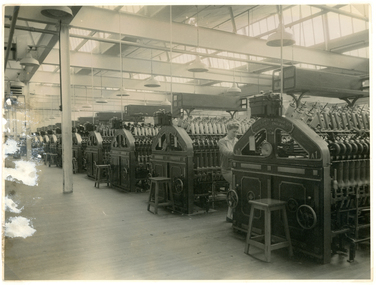
Photograph, R S & S worsted spinning
... ...yarn - worsted...Worsted spinning department, R S & S mill. textile machinery textile mills - history textile mills - staff textile mills returned soldiers and sailors mill spinning machinery yarn - worsted textile machinery textile mills - history textile mills - staff textile mills R S & S worsted spinning AUSTRALIAN OFFICIAL PHOTOGRAPH/ DEPT OF INFORMATION R S & S worsted spinning Photograph Photograph ...Worsted spinning department, R S & S mill.R S & S worsted spinning AUSTRALIAN OFFICIAL PHOTOGRAPH/ DEPT OF INFORMATIONtextile machinery textile mills - history textile mills - staff textile mills, returned soldiers and sailors mill, spinning machinery, yarn - worsted, textile machinery, textile mills - history, textile mills - staff, textile mills -
 National Wool Museum
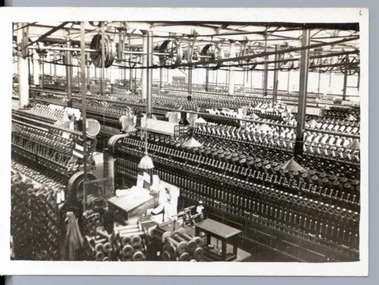
Photograph
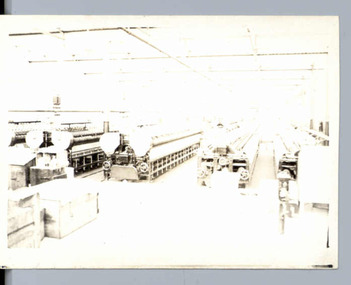
... ...Yarn - worsted...Valley Worsted Mill Spinning Machinery Yarn - worsted Interior of Valley Worsted Mill, c.1923. ...This photograph shows the interior of the Valley Worsted Mill in 1923. The mill was first established at this time, and the photo shows the interior after tooling up but prior to the mill actually commencing operation. This photo is one of 31 in total and shows the spinning machinery for producing worsted thread. The donor worked at the Valley Mill for many years. This mill still exists in Swanston Street, Geelong and is now being used by Melba Industries (an Austrim-Nylex company) to produce Jumbuck Nylon wool packs.Interior of Valley Worsted Mill, c.1923.valley worsted mill, spinning machinery, yarn - worsted -
 National Wool Museum
Photograph
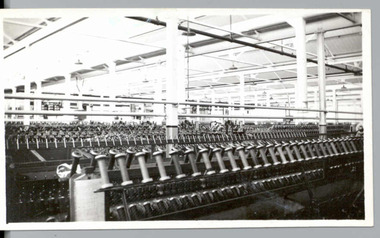
... ...Yarn - worsted...Valley Worsted Mill Spinning Machinery Yarn - worsted Interior of Valley Worsted Mill, c.1923. ...This photograph shows the interior of the Valley Worsted Mill in 1923. The mill was first established at this time, and the photo shows the interior after tooling up but prior to the mill actually commencing operation. This photo is one of 31 in total and shows the spinning machinery for producing worsted thread. The donor worked at the Valley Mill for many years. This mill still exists in Swanston Street, Geelong and is now being used by Melba Industries (an Austrim-Nylex company) to produce Jumbuck Nylon wool packs.Interior of Valley Worsted Mill, c.1923.valley worsted mill, spinning machinery, yarn - worsted -
 National Wool Museum
Photograph
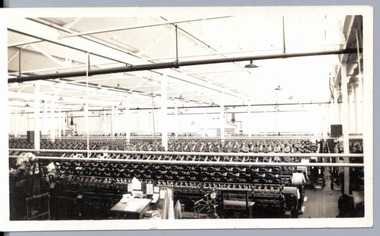
... ...Yarn - worsted...Valley Worsted Mill Spinning Machinery Yarn - worsted Interior of Valley Worsted Mill, c.1923. ...This photograph shows the interior of the Valley Worsted Mill in 1923. The mill was first established at this time, and the photo shows the interior after tooling up but prior to the mill actually commencing operation. This photo is one of 31 in total and shows the spinning machinery for producing worsted thread. The donor worked at the Valley Mill for many years. This mill still exists in Swanston Street, Geelong and is now being used by Melba Industries (an Austrim-Nylex company) to produce Jumbuck Nylon wool packs.Interior of Valley Worsted Mill, c.1923.valley worsted mill, spinning machinery, yarn - worsted -
 National Wool Museum
Photograph
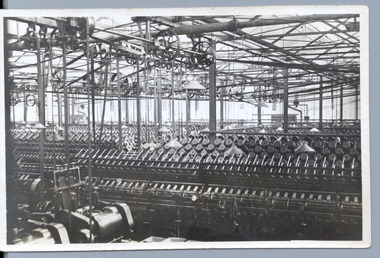
... ...Yarn - worsted...Valley Worsted Mill Spinning Machinery Yarn - worsted Interior of Valley Worsted Mill, c.1923. ...This photograph shows the interior of the Valley Worsted Mill in 1923. The mill was first established at this time, and the photo shows the interior after tooling up but prior to the mill actually commencing operation. This photo is one of 31 in total and shows the spinning machinery for producing worsted thread. The donor worked at the Valley Mill for many years. This mill still exists in Swanston Street, Geelong and is now being used by Melba Industries (an Austrim-Nylex company) to produce Jumbuck Nylon wool packs.Interior of Valley Worsted Mill, c.1923.valley worsted mill, spinning machinery, yarn - worsted -
 National Wool Museum
Photograph
... ...Yarn - worsted...Valley Worsted Mill Spinning Machinery Yarn - worsted Interior of Valley Worsted Mill, c.1923. ...This photograph shows the interior of the Valley Worsted Mill in 1923. The mill was first established at this time, and the photo shows the interior after tooling up but prior to the mill actually commencing operation. This photo is one of 31 in total and shows the spinning machinery for producing worsted thread. The donor worked at the Valley Mill for many years. This mill still exists in Swanston Street, Geelong and is now being used by Melba Industries (an Austrim-Nylex company) to produce Jumbuck Nylon wool packs.Interior of Valley Worsted Mill, c.1923.valley worsted mill, spinning machinery, yarn - worsted -
 National Wool Museum
Photograph
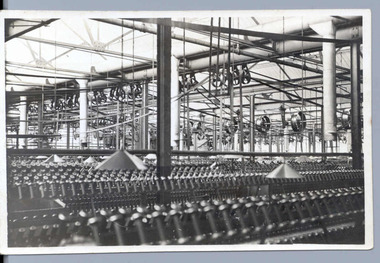
... ...Yarn - worsted...Valley Worsted Mill Spinning Machinery Yarn - worsted Interior of Valley Worsted Mill, c.1923. ...This photograph shows the interior of the Valley Worsted Mill in 1923. The mill was first established at this time, and the photo shows the interior after tooling up but prior to the mill actually commencing operation. This photo is one of 31 in total and shows the spinning machinery for producing worsted thread. The donor worked at the Valley Mill for many years. This mill still exists in Swanston Street, Geelong and is now being used by Melba Industries (an Austrim-Nylex company) to produce Jumbuck Nylon wool packs.Interior of Valley Worsted Mill, c.1923.valley worsted mill, spinning machinery, yarn - worsted -
 National Wool Museum
Photograph
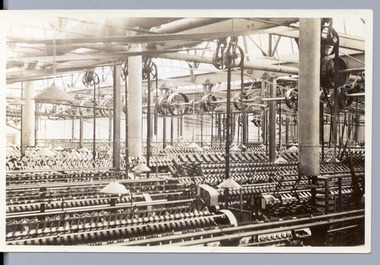
... ...Yarn - worsted...Valley Worsted Mill Spinning Machinery Yarn - worsted Interior of Valley Worsted Mill, c.1923. ...This photograph shows the interior of the Valley Worsted Mill in 1923. The mill was first established at this time, and the photo shows the interior after tooling up but prior to the mill actually commencing operation. This photo is one of 31 in total and shows the spinning machinery for producing worsted thread. The donor worked at the Valley Mill for many years. This mill still exists in Swanston Street, Geelong and is now being used by Melba Industries (an Austrim-Nylex company) to produce Jumbuck Nylon wool packs.Interior of Valley Worsted Mill, c.1923.valley worsted mill, spinning machinery, yarn - worsted -
 National Wool Museum
Photograph
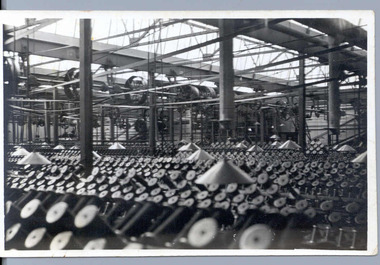
... ...Yarn - worsted...Valley Worsted Mill Spinning Machinery Yarn - worsted Interior of Valley Worsted Mill, c.1923. ...This photograph shows the interior of the Valley Worsted Mill in 1923. The mill was first established at this time, and the photo shows the interior after tooling up but prior to the mill actually commencing operation. This photo is one of 31 in total and shows the spinning machinery for producing worsted thread. The donor worked at the Valley Mill for many years. This mill still exists in Swanston Street, Geelong and is now being used by Melba Industries (an Austrim-Nylex company) to produce Jumbuck Nylon wool packs.Interior of Valley Worsted Mill, c.1923.valley worsted mill, spinning machinery, yarn - worsted -
 National Wool Museum
Photograph
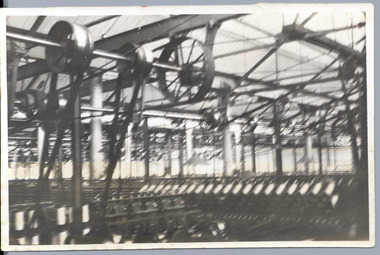
... ...Yarn - worsted...Valley Worsted Mill Spinning Machinery Yarn - worsted Interior of Valley Worsted Mill, c.1923. ...This photograph shows the interior of the Valley Worsted Mill in 1923. The mill was first established at this time, and the photo shows the interior after tooling up but prior to the mill actually commencing operation. This photo is one of 31 in total and shows the spinning machinery for producing worsted thread. The donor worked at the Valley Mill for many years. This mill still exists in Swanston Street, Geelong and is now being used by Melba Industries (an Austrim-Nylex company) to produce Jumbuck Nylon wool packs.Interior of Valley Worsted Mill, c.1923.valley worsted mill, spinning machinery, yarn - worsted -
National Wool Museum
Book, Principles of worsted spinning
... ...Yarn - worsted..."Principles of worsted spinning 2nd ed" - Howard Priestman, 1921 Textile Fibres Yarn production Yarn - worsted Spinning Textile Fibres Yarn production Principles of worsted spinning Book ..."Principles of worsted spinning 2nd ed" - Howard Priestman, 1921textile fibres yarn production, yarn - worsted, spinning, textile fibres, yarn production -
 National Wool Museum
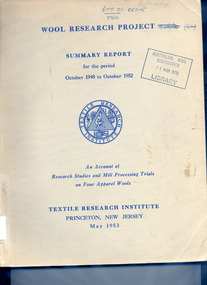
Book, An account of research studies and mill processing trials on four apparel wools
... ...Yarn - worsted...Merino sheep Wool - characteristics Wool - chemistry Textile Research Textile Calculations Textile Fibres Dyeing Spinning Carding Yarn - worsted Merino sheep Wool - characteristics Wool - chemistry Textile Research Textile Calculations Textile Fibres An account of research studies and mill processing trials on four apparel wools Book ..."An account of research studies and mill processing trials on four apparel wools"- J H Wakelin and W von Bergen 1953 : Wool research project, summary report for the period October 1948 to October 1952.merino sheep wool - characteristics wool - chemistry textile research textile calculations textile fibres, dyeing, spinning, carding, yarn - worsted, merino sheep, wool - characteristics, wool - chemistry, textile research, textile calculations, textile fibres -
National Wool Museum
Book, The woollen and worsted industry: an economic analysis
... ...Yarn - worsted..."The woollen and worsted industry: an economic analysis" - G F Rainnie (ed),1965 Textile Industry Textile Fibres Weaving Yarn - woollen Yarn - worsted Cloth - woollen Cloth - worsted Textile Industry Textile Fibres Weaving The woollen and worsted industry: an economic analysis Book ..."The woollen and worsted industry: an economic analysis" - G F Rainnie (ed),1965textile industry textile fibres weaving, yarn - woollen, yarn - worsted, cloth - woollen, cloth - worsted, textile industry, textile fibres, weaving -
 National Wool Museum
Book, Worsted Carding and Combing
... ...Yarn - worsted...Port Phillip Mills Pty Ltd Carding Combing Yarn - worsted Stanley Mr W. - Port Phillip Mills Pty Ltd FOR AND ON BEHALF OF / PORT PHILLIP MILLS PTY. ..."Worsted Carding and Combing: covering the syllabus of the City and Guilds of London Examination in this subject" - John R. Hind, London, 1932.FOR AND ON BEHALF OF / PORT PHILLIP MILLS PTY. LTD. / W. Stanley / Managing Director. / 16/11/32port phillip mills pty ltd, carding, combing, yarn - worsted, stanley, mr w. - port phillip mills pty ltd -
 National Wool Museum
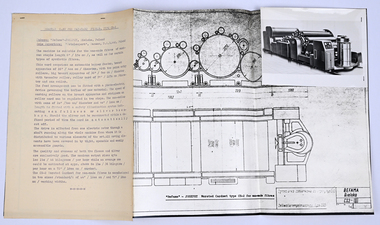
Document - Worsted Card for Man-Made Fibres Type CS-2, Metalexport, 1950
... ...Yarn - worsted...Textile Machinery Metalexport Bielsko Textile Machinery Works Carding Yarn - worsted Befama Textile Industry Poland export Document consisting of a single sided page with typed text stapled to an engineering drawing of a machine and a black and white photo of a machine. ...Pamphlet detailing specifications of the textile machine "Worsted Card for Man-Made Fibres, Type CS-2" made by Befama at the Bielsko Textile Machinery Works in Poland. The machines were exported by Metalexport to countries all over the world. Document consisting of a single sided page with typed text stapled to an engineering drawing of a machine and a black and white photo of a machine.textile machinery, metalexport bielsko textile machinery works, carding, yarn - worsted, befama, textile industry, poland, export -
 National Wool Museum
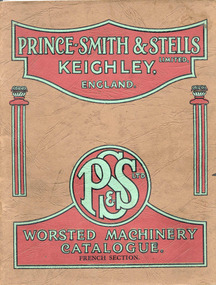
Book, Worsted Machinery Catalogue
... ...Yarn - worsted...Textile Machinery Prince-Smith and Stells Limited Jackson Mr George - Mount Gambier Spinning Mills Limited Combing Drawing Spinning Machinery Twisting Yarn - worsted Cloth - worsted Book/catalogue - "Worsted Machinery Catalogue", Prince-Smith and Stells Limited, c.1920. ..."Worsted Machinery Catalogue (French Section)" - Prince-Smith & Stells Limited, Keighley, England, c.1920. The catalogue is very comprehensive and describes in detail many types of combing, drawing, spinning and twisting machinery (French System).Book/catalogue - "Worsted Machinery Catalogue", Prince-Smith and Stells Limited, c.1920.textile machinery, prince-smith and stells limited jackson, mr george - mount gambier spinning mills limited, combing, drawing, spinning machinery, twisting, yarn - worsted, cloth - worsted -
 Parks Victoria - Cape Nelson Lightstation
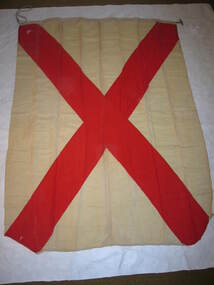
Functional object - Flag set, navigational
... Cape Nelson Lightstation’s complete set of 41 alphabetic and numeric visual signaling flags (including substitute and answering pennants) are made of bunting, a coarse fabric of worsted (open yarn wool) in various colour combinations, and some of the fabric is hand sewn and bears inscriptions. ...Cape Nelson Lightstation’s complete set of 41 alphabetic and numeric visual signaling flags (including substitute and answering pennants) are made of bunting, a coarse fabric of worsted (open yarn wool) in various colour combinations, and some of the fabric is hand sewn and bears inscriptions. ...The flags were used for communicating messages to passing ships. Knowledge of visual signaling was mandatory for all lightkeepers and all stations maintained a set of these flags. Although used for centuries, visual flag signaling formally developed in the nineteenth century and was published internationally as a system in 1857. By the early twentieth century it had developed into an effective means of conveying all kinds of short range visual messages.The Cape Nelson Lightstation is architecturally and scientifically (technologically) important as the most intact complex of lightstation buildings in Victoria. The octagonal signal station is a unique feature which is all the more important for its complete set of signal flags’. Cape Nelson Lightstation’s complete set of 41 alphabetic and numeric visual signaling flags (including substitute and answering pennants) are made of bunting, a coarse fabric of worsted (open yarn wool) in various colour combinations, and some of the fabric is hand sewn and bears inscriptions. Attachments include handmade wooden toggles, brass clips and hemp rope. -
 National Wool Museum
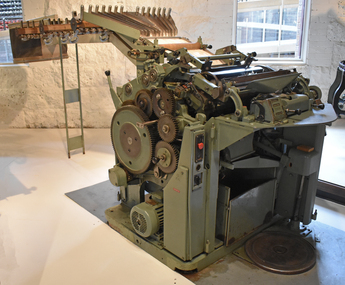
Machine - French Comb, Schlumberger & Cie, 1964
... The process is necessary to produce long and soft strands needed for worsted yarn. These machines remove the short fibres and blend the remaining long fibres together to form the top. ...The process is necessary to produce long and soft strands needed for worsted yarn. These machines remove the short fibres and blend the remaining long fibres together to form the top. ...Combing removes the short or broken fibres and draws out the long fibres into even strands suitable for spinning. The process is necessary to produce long and soft strands needed for worsted yarn. These machines remove the short fibres and blend the remaining long fibres together to form the top. The short fibres that are removed, known as the noil, are used in the woollen system. The long fibres are drawn together, ready for spinning. To retain as many of the valuable long fibres as possible, a skilled operator always needed to be on duty in the factory to precisely set the machine. Machine has been completely rebuilt and set up by Nick Sokolov of Comb Research and Development with the help of Bruce Hill and others. NSC Schlumberger Comb PB25L machine No 3953, year of manufacture 1964. A rectilinear version of the Noble Comb, this machine separated long and short fibres. Donated to the National Wool Museum by Port Phillip Wool Processing Pty Ltd in 1993.French comb machine. 1962 Shlumberger and Co, France Model PB 251 NO. 3953.french comb, wool processing, textile industry, factory, machine, comb, restoration, fibres -
 National Wool Museum
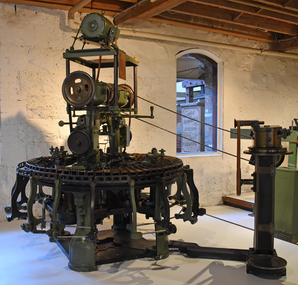
Machine - Noble Comb, Prince Smith & Sons, Burlington Shed, Keighley, 1915
... The process is necessary to produce long and soft strands needed for worsted yarn. These machines remove the short fibres and blend the remaining long fibres together to form the top. ...The process is necessary to produce long and soft strands needed for worsted yarn. These machines remove the short fibres and blend the remaining long fibres together to form the top. ...Combing removes the short or broken fibres and draws out the long fibres into even strands suitable for spinning. The process is necessary to produce long and soft strands needed for worsted yarn. These machines remove the short fibres and blend the remaining long fibres together to form the top. The short fibres that are removed, known as the noil, are used in the woollen system. The long fibres are drawn together, ready for spinning. To retain as many of the valuable long fibres as possible, a skilled operator always needed to be on duty in the factory to precisely set the machine. A Nobel Comb separates short (Noils) fibres while also blending long (Tops) fibres together. The long fibres are used for worsted materials while the short fibres are used for woollen fabrics. Woollen materials are soft, bulky and fuzzy, such as a picnic blanket; whereas worsted materials are fine, smooth and crisp, such as a suit jacket. The Valley Worsted Mills in Geelong, now the Little Creatures Brewery, ran 12 noble combs up until 1981. Gold plaque on display with machine until 2018 read: G.H. Mitchell & Son, Adelaide have celebrated 125 Years of involvement with the Australian Wool Processing Industry by contributing the funds necessary to restore The Carding Machine, Noble Comb & The Gill Box.Noble Comb with plates - 'Prince Smith & Sons, Burlington Shed, Keishley' (One plate located on each gear box). 'Prince Smith & Sons, Burlington Shed, Keishley' (One plate located on each gear box).wool manufacturing, noble comb, textile industry, geelong, little creatures brewery, valley worsted mills, fibres, wool, factory -
 Parks Victoria - Gabo Island Lightstation
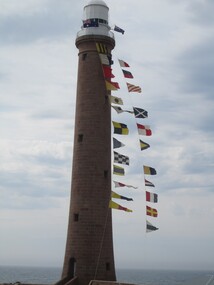
Flags & Pennants, navigational, signal
... They are made of bunting, a coarse fabric of worsted (open yarn wool) in various colour combinations. ...They are made of bunting, a coarse fabric of worsted (open yarn wool) in various colour combinations. ...The 41 alphabetic and numeric visual signalling flags (including substitute and answering pennants) have either square or pointed ends. They are made of bunting, a coarse fabric of worsted (open yarn wool) in various colour combinations. Some of the flags are marked with inscriptions, for example “B”. Attachments to the flags include hemp rope and metal clips. Each flag has its own galvanised canister and lid, each of which is painted grey and marked with a letter, number or word. The flags were used for communicating messages to passing ships. Knowledge of visual signalling was mandatory for all lightkeepers and all lightstations maintained a set of flags. Although used for centuries, visual flag signalling formally developed in the nineteenth century and was published internationally as a system in 1857. By the early twentieth century it had developed into an effective means of conveying all kinds of short range visual messages. The signal flags and canisters at Gabo Island form a complete set and are not historically linked to the lightstation and their provenance is unknown. It is known however that they originate from a lightstation in Victoria and for some years were on loan from AMSA to the Queenscliff Maritime Museum, where they were held in storage and not displayed. Three of the six lightstations that Parks Victoria manages have sets of signal flags in their collections. Forty navigational signal alphabet flags & numeral pennants. Flags are made of wool. -
 Parks Victoria - Gabo Island Lightstation
Flag canisters
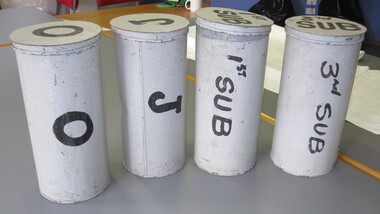
... They are made of bunting, a coarse fabric of worsted (open yarn wool) in various colour combinations. ...They are made of bunting, a coarse fabric of worsted (open yarn wool) in various colour combinations. ...The 41 alphabetic and numeric visual signalling flags (including substitute and answering pennants) have either square or pointed ends. They are made of bunting, a coarse fabric of worsted (open yarn wool) in various colour combinations. Some of the flags are marked with inscriptions, for example “B”. Attachments to the flags include hemp rope and metal clips. Each flag has its own galvanised canister and lid, each of which is painted grey and marked with a letter, number or word. The flags were used for communicating messages to passing ships. Knowledge of visual signalling was mandatory for all lightkeepers and all lightstations maintained a set of flags. Although used for centuries, visual flag signalling formally developed in the nineteenth century and was published internationally as a system in 1857. By the early twentieth century it had developed into an effective means of conveying all kinds of short range visual messages. The signal flags and canisters at Gabo Island form a complete set and are not historically linked to the lightstation and their provenance is unknown. It is known however that they originate from a lightstation in Victoria and for some years were on loan from AMSA to the Queenscliff Maritime Museum, where they were held in storage and not displayed. In three of the six lightstations that Parks Victoria manages have sets of signal flags in their collections. Forty-one galvanised canisters with separate lids. The canisters are painted a grey/white colour and have either numbers, letters or words painted on the lid and on the cannister in black paint. There are variations in the style of canister and in the style of the inscriptions. -
 National Wool Museum
Machine - Wrap Reel
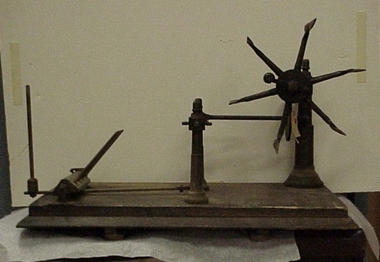
... Wrap reel manufactured at Valley Worsted Mill and possibly used in the laboratory. "Wrap reels were used to check the yarn count in a spinning mill. ...Wrap reel manufactured at Valley Worsted Mill and possibly used in the laboratory. "Wrap reels were used to check the yarn count in a spinning mill. ...Wrap reel manufactured at Valley Worsted Mill and possibly used in the laboratory. "Wrap reels were used to check the yarn count in a spinning mill. A set length of yarn was wound off several test bobbins and weighed, if the weight was not the correct amount expected the spinning machines draft could be re calculated and the machine draft wheel ( cog ) changed to achieve the required count". - Greg AldridgeA small hand operated wrap reel. The reel is on a wooden base, the winding mechanism is metal and turned by a wooden handle. There is a metal plaque on the base inscribed MAKERS VWM. A wood and metal yarn feeder has broken off its mount.MAKERS/ VWMtextile machinery textile production weaving, valley worsted mill valley worsted mill, warping machinery, textile machinery, textile production, weaving, wrap reel, skein winder -
 National Wool Museum
Photograph - Valley Worsted Mill, 1923
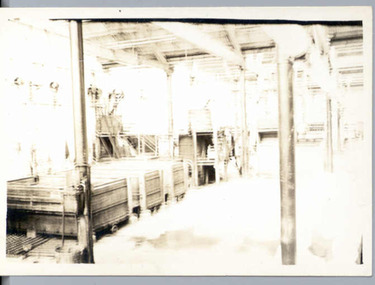
... Worsted Mill in 1923. The mill was first established at this time, and the photo shows the interior after tooling up but prior to the mill actually commencing operation. This photo is one of 31 in total and shows the area and machines used for blending (the mixing of various fibres to produce the required quantity of yarn). ...Worsted Mill in 1923. The mill was first established at this time, and the photo shows the interior after tooling up but prior to the mill actually commencing operation. This photo is one of 31 in total and shows the area and machines used for blending (the mixing of various fibres to produce the required quantity of yarn). ...This photograph shows the interior of the Valley Worsted Mill in 1923. The mill was first established at this time, and the photo shows the interior after tooling up but prior to the mill actually commencing operation. This photo is one of 31 in total and shows the area and machines used for blending (the mixing of various fibres to produce the required quantity of yarn). The donor worked at the Valley Mill for many years. This mill still exists in Swanston Street, Geelong and is now being used by Melba Industries (an Austrim-Nylex company) to produce Jumbuck Nylon wool packs. "This wool scouring line was built by J Dyson & Sons Textile Engineers located at South Geelong, greasy wool blending was carried out on second floor above the scour line and dropped from above into the feed hopper, the scoured wool after drying was then blown through ducting directly into the Carding room for processing." - Greg AldrigeInterior of Valley Worsted Mill, c.1923.valley worsted mill, blending -
 National Wool Museum
Photograph
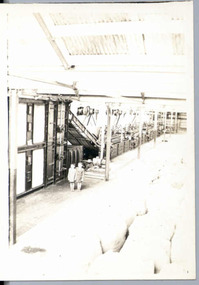
... Worsted Mill in 1923. The mill was first established at this time, and the photo shows the interior after tooling up but prior to the mill actually commencing operation. This photo is one of 31 in total and shows the area and machines used for blending (the mixing of various fibres to produce the required quantity of yarn). ...Worsted Mill in 1923. The mill was first established at this time, and the photo shows the interior after tooling up but prior to the mill actually commencing operation. This photo is one of 31 in total and shows the area and machines used for blending (the mixing of various fibres to produce the required quantity of yarn). ...This photograph shows the interior of the Valley Worsted Mill in 1923. The mill was first established at this time, and the photo shows the interior after tooling up but prior to the mill actually commencing operation. This photo is one of 31 in total and shows the area and machines used for blending (the mixing of various fibres to produce the required quantity of yarn). The donor worked at the Valley Mill for many years. This mill still exists in Swanston Street, Geelong and is now being used by Melba Industries (an Austrim-Nylex company) to produce Jumbuck Nylon wool packs.Interior of Valley Worsted Mill, c.1923.valley worsted mill, blending -
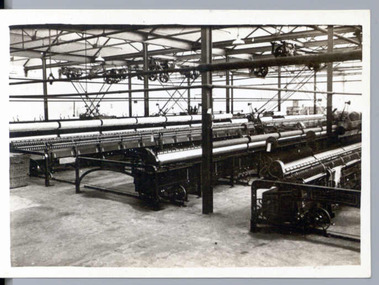 National Wool Museum
Photograph
... Worsted Mill...Spinning Machinery...Yarn...Valley Worsted Mill Spinning Machinery Yarn - woollen Interior of Valley Worsted Mill, c.1923. ...This photograph shows the interior of the Valley Worsted Mill in 1923. The mill was first established at this time, and the photo shows the interior after tooling up but prior to the mill actually commencing operation. This photo is one of 31 in total and shows the spinning mule for woollen threads. The donor worked at the Valley Mill for many years. This mill still exists in Swanston Street, Geelong and is now being used by Melba Industries (an Austrim-Nylex company) to produce Jumbuck Nylon wool packs.Interior of Valley Worsted Mill, c.1923.valley worsted mill, spinning machinery, yarn - woollen -
National Wool Museum
Book, Spinning Woollen and Worsted
... Yarn production...Spinning...Cloth - woollen...Cloth - worsted..."Spinning Woollen and Worsted: being a practical treatise for the use of all persons engaged in these trades" - Walter S. Bright McLaren, 1884. Yarn ..."Spinning Woollen and Worsted: being a practical treatise for the use of all persons engaged in these trades" - Walter S. Bright McLaren, 1884.yarn production, spinning, cloth - woollen, cloth - worsted
