
Showing 21 items matching "youth sport and recreation"
-
 Port Melbourne Historical & Preservation Society
Document - Documents regarding youth sport and recreation, Port Melbourne Y.M.C.A, How to apply for financial assistance from Dept of Youth Sport and Recreation, c1969-73
... Documents regarding youth sport and recreation...How to apply for financial assistance from Dept of Youth Sport and Recreation......Department of Youth Sport and Recreation...Department of Youth, Sport & Recreation. Guidelines on how to apply for financial assistance......Department of Youth, Sport & Recreation...Port Melbourne Historical & Preservation Society Port Melbourne Town Hall 333 Bay Street Port Melbourne melbourne Development of local youth clubs Social Clubs and societies Department of Youth Sport and Recreation Several documents relating to the development of Youth centres in Port Melbourne Department of Youth, Sport & Recreation. ...Several documents relating to the development of Youth centres in Port MelbourneDepartment of Youth, Sport & Recreation. Guidelines on how to apply for financial assistancefictionSeveral documents relating to the development of Youth centres in Port Melbourne clubs and societies, department of youth sport and recreation -
Port Melbourne Historical & Preservation Society
Document - Documents regarding youth sport and recreation, Port Melbourne Y.M.C.A, Policy Guidelines, c1969-73
... Documents regarding youth sport and recreation......Department of Youth Sport and Recreation....04 Department of Youth Sport & Recreation - Policy guidelines ......Department of Youth, Sport & Recreation...Port Melbourne Historical & Preservation Society Port Melbourne Town Hall 333 Bay Street Port Melbourne melbourne Development of local youth clubs Social Clubs and societies Department of Youth Sport and Recreation Several documents relating to the development of Youth centres in Port Melbourne .04 Department of Youth Sport & Recreation - Policy guidelines Policy Guidelines Document Documents regarding youth sport and recreation Port Melbourne Y.M.C.A. ...Several documents relating to the development of Youth centres in Port Melbourne.04 Department of Youth Sport & Recreation - Policy guidelines fictionSeveral documents relating to the development of Youth centres in Port Melbourne clubs and societies, department of youth sport and recreation -
Federation University Historical Collection
Booklet, Victorian Department of Youth, Sport and Recreation, Life. Be In it. Health and Fitness, c1980s
... Victorian Department of Youth, Sport and Recreation...Booklet Victorian Department of Youth, Sport and Recreation ...Ballarat College of Advanced Education lecturer Peter Fryar and others listed on page 43A book of initiratives to increas health and fitness.non-fictionBallarat College of Advanced Education lecturer Peter Fryar and others listed on page 43health, fitness, recreation, peter fryar, clem barnett, i. anderson, j. hopley, m. reynolds, a. roberts -
Port Melbourne Historical & Preservation Society
Document - Documents regarding youth sport and recreation, Port Melbourne Y.M.C.A, Report to Port Melbourne Youth Aid and Development Association 3.11.1969, c1969-73
... Documents regarding youth sport and recreation......Department of Youth, Sport & Recreation...Report to Port Melbourne Youth Aid and Development Association 3.11.1969 Document Documents regarding youth sport and recreation Port Melbourne Y.M.C.A. ...documents relating to the development of Youth centres in Port MelbourneReport to Port Melbourne Youth and development association 3 Nov 1969 .fiction documents relating to the development of Youth centres in Port Melbourne clubs and societies, port melbourne youth centres aid and development association, ymca -
Port Melbourne Historical & Preservation Society
Document - Document regarding youth sport and recreation, Port Melbourne Y.M.C.A, Committe meeting of Port Melbourne Youth Centre Aid & Development 6 .10.1969, c1969-73
... Document regarding youth sport and recreation......Department of Youth, Sport & Recreation...Port Melbourne Youth Aid and Development Assosciation Department of Youth, Sport & Recreation Port Melbourne Youth Centre Aid & Development Association ...Several documents relating to the development of Youth centres in Port MelbourneMinutes of committee meeting Port Melbourne Youth Centre Aid and Development Association 6 Oct 1960 fictionSeveral documents relating to the development of Youth centres in Port Melbourne archibald (arch) todd, societies clubs unions and other organisations, port melbourne youth centres aid and development association, morison, mcleod, sedgman, villiers, brooks, armishaw, brockhoff, christie, charleworth, cruikshank, mrs allport, miss spinner, theodore thomas (tom) buckingham -
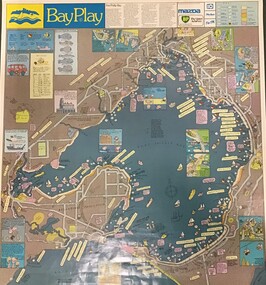 Queenscliffe Maritime Museum
Poster - Poster Port Phillip leisure activities
... ...youth sport and recreation...Department of Youth, Sport and Recreation...Queenscliffe Maritime Museum 2 Wharf St Queenscliff geelong-and-the-bellarine-peninsula Issued to encourage Victorians to learn about Port Phillip and its recreational potential Local context port phillip bay play youth sport and recreation Department of Youth, Sport and Recreation Large colour Poster with drawings of Port Phillip leisure activities Poster Poster Port Phillip leisure activities ...Issued to encourage Victorians to learn about Port Phillip and its recreational potential Local contextLarge colour Poster with drawings of Port Phillip leisure activities Department of Youth, Sport and Recreationport phillip, bay play, youth sport and recreation -
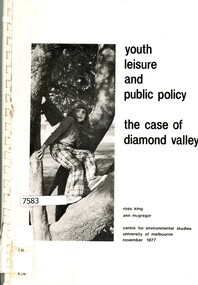 Greensborough Historical Society
Book - Report, Ross King et al, Youth, leisure and public policy: the case of Diamond Valley, 1977, 1977_11
... Report prepared by Ross King and Ann McGregor, supported by the Department of Youth, Sport and Recreation....Report prepared by Ross King and Ann McGregor, supported by the Department of Youth, Sport and Recreation. shire of diamond valley leisure activities sport 119 pages text and black and white line drawings and tables. ...119 pages text and black and white line drawings and tables. One colour fold out map. White plastic binding. non-fictionshire of diamond valley, leisure activities, sport -
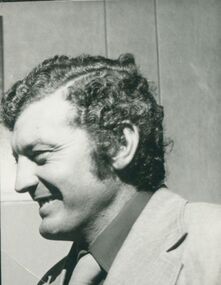 Uniting Church Archives - Synod of Victoria
Photograph, Brian Dixon, Undated
... He variously served in several portfolios including youth, sport and recreation, housing and Aboriginal affairs. ...He variously served in several portfolios including youth, sport and recreation, housing and Aboriginal affairs. ...Brian James Dixon (born 20/05/1936) is a former Australian rules footballer and Victorian politician. Dixon played 252 VFL games for Melbourne between 1954 and 1968, playing mostly on the wing. He had a stellar football career, playing in five premierships, winning Melbourne's best and fairest in 1960, while in 1961 he was selected in the All-Australian team and he also won the Tassie Medal for his performances at the 1961 Brisbane Carnival. In 2000 he was named in Melbourne's Team of the Century. Despite still playing football for Melbourne, he entered parliament in 1964, as the member for the now abolished seat of St Kilda, representing the Liberal Party. Being from the moderate wing of the party he clashed with then Premier Henry Bolte, especially over the hanging of Ronald Ryan which Dixon strongly opposed.[1] After Rupert Hamer took over as Liberal Party leader and Premier, Dixon was promoted to the ministry. He variously served in several portfolios including youth, sport and recreation, housing and Aboriginal affairs. His most remembered achievement was introducing the iconic Life. Be in it. program.[2] In 1979 Dixon won St Kilda by an extremely narrow margin, which crucially gave the Hamer Liberal government a majority of one seat in the Legislative Assembly and meant that the Liberal Party did not need to form a Coalition with the National Party with whom relations were traditionally poor in Victoria. However, in 1982 Dixon was defeated as the Liberals lost government after 27 years in office. After his defeat, Dixon has worked predominantly in sports administration and he currently runs public speaking seminars. Brian currently travels the world representing TAFISA and ASFAA. He is also president of AFL South Africa and takes a keen interest in other countries playing Australian rules football.[3]B & W photograph of Brian Dixon in profile.dixon, brian, football, victorian parliament -
Bendigo Historical Society Inc.
Document - The Victorian Country Volleyball Council (VCVC) Australian Volleyball Federation (AVF) Newsletters, 1979-80
... This item contains Newsletters from the Australian Volleyball Federation, and other speorting news; it includes the following documents: 11171.22a Goulburn Valley Volleyball Association Winter Competition 1976 11171.22b Victorian Volleyball Calendar 1982 11171.22c Western Australia Volleyball Association newsletter 1978 11171.22d Volleyball Facilities and Equipment - Australian Volleyball Federation Booklet 11171.22e Australain U15 Volleyball Championship Program Booklet Geelong Aug 1984 11171.22f Geelong Amateur Volleyball Association Rules and by-laws and program 1983 season 11171.22g Ansett Airlines sponsored leaflet for the 1st International Coaches Course Adelaide 1978 11171.22h Sports Coach National Coaching Journal Spring 1979 - 64 pages 11171.22i Sports Coach Australian Coaching Journal Summer 1980 - 52 pages 11171.22j Sports Coach National Coaching Journal Winter 1979 - 56 pages 11171.22k Volleyball Journal March 1979 - Article "Joe Hiller retires with interview" 24 pages 11171.22l Volleyball Journal March 1978 - Article "Interview with Victorian Coach Tomas Satamaria" 20 pages 11171.22m Volleyball Journal Sept 1978 - 24 pages 11171.22n Volleyball Journal Sept 1978 - 24 pages 11171.22o Volleyball Journal Dec 1978 - 24 pages 11171.22p Leaflet promoting Australian Sports Development Programme 11171.22q Volleyball Victoria News June 1985 11171.22r Australian Volleyball News 1985-1987 11171.22s Australian Volleyball News 41/1975 Booklet 11171.22t Australian Volleyball News Jan 1982 11171.22u Journal Documentation Service - Dept. of Youth Sport and Recreation 1979...In 2023, the Commission handed the organisation of the Championships back to VVI, who with paid staff, were better equipped to manage the event. victorian country volleyball council vcvc victorian amateur volleyball association volleyball victoria This item contains Newsletters from the Australian Volleyball Federation, and other speorting news; it includes the following documents: 11171.22a Goulburn Valley Volleyball Association Winter Competition 1976 11171.22b Victorian Volleyball Calendar 1982 11171.22c Western Australia Volleyball Association newsletter 1978 11171.22d Volleyball Facilities and Equipment - Australian Volleyball Federation Booklet 11171.22e Australain U15 Volleyball Championship Program Booklet Geelong Aug 1984 11171.22f Geelong Amateur Volleyball Association Rules and by-laws and program 1983 season 11171.22g Ansett Airlines sponsored leaflet for the 1st International Coaches Course Adelaide 1978 11171.22h Sports Coach National Coaching Journal Spring 1979 - 64 pages 11171.22i Sports Coach Australian Coaching Journal Summer 1980 - 52 pages 11171.22j Sports Coach National Coaching Journal Winter 1979 - 56 pages 11171.22k Volleyball Journal March 1979 - Article "Joe Hiller retires with interview" 24 pages 11171.22l Volleyball Journal March 1978 - Article "Interview with Victorian Coach Tomas Satamaria" 20 pages 11171.22m Volleyball Journal Sept 1978 - 24 pages 11171.22n Volleyball Journal Sept 1978 - 24 pages 11171.22o Volleyball Journal Dec 1978 - 24 pages 11171.22p Leaflet promoting Australian Sports Development Programme 11171.22q Volleyball Victoria News June 1985 11171.22r Australian Volleyball News 1985-1987 11171.22s Australian Volleyball News 41/1975 Booklet 11171.22t Australian Volleyball News Jan 1982 11171.22u Journal Documentation Service - Dept. of Youth Sport and Recreation 1979 Document The Victorian Country Volleyball Council (VCVC) Australian Volleyball Federation (AVF) Newsletters. ...Volleyball has been played in regional Victoria since the early-1960’s. During those early days, most competitions, like the founders of our great sport, were run by, or in conjunction with, the YMCA. Competitions were running at the Ballarat School of Mines and the YMCA’s of Bendigo, Geelong and Warrnambool. In August 1966, an invitation was extended by the Victorian Amateur Volleyball Association to play in the first State-wide event at Monash University. Geelong and Bendigo accepted the invitation with Melbourne represented by Sisu. For Bendigo players at least, this was the first exposure to ‘international rules’, which prevented upward scoops with open hands, introduced an action called a ‘dig’ and seemed to penalise most overhead actions using the fingers as ‘double hits’! Over the next few years, the sport expanded through the YMCA movement with weekly competitions starting up in Ararat, Warrnambool and Latrobe Valley. The Victorian Regional Council of YMCA’s proposed the first Victorian YMCA Championship in Warrnambool on 30th March 1968 with an entry fee of $4.00 per team. The sport continued to grow with additional regional associations affiliating with the Victorian Amateur Volleyball Association (now VVI) who provided the coaching and refereeing assistance needed to raise the standard of play. In 1970, the YMCA Championships started to give way to the Victorian Country Championships with the first ever event held in Bendigo. In 1973, a re-organisation of the VAVA saw the proposal to create separate Victorian Country and Metropolitan Volleyball Councils. The VCVC was established in 1974 and took over the organisation of the Victorian Country Championships. For the next 10-12 years, the Country Championships grew in stature with the inclusion of two divisions for open men and women and junior divisions for boys and girls. Representative teams successfully contested Australian Country Championships between Victoria, South Australia and New South Wales on several occasions. In October 1985, the VCVC voluntarily wound up the Council and handed the responsibility for the Country Championships back to Volleyball Victoria, who by that time had full-time State Executive and Coaching Directors. Since that time, the Long Weekend in June has continued to be the date of the major annual volleyball event for most regional associations, even though in 1986 the Junior Country Championships were wound up in favour of state and national schools events. A number of regional associations have ceased to exist, as have a number of regional tournaments. Regional leagues were created in both the Gippsland and Central, North-West regions, with Gippsland the only one to survive. Some associations have successfully competed in the State League competitions at various times. Following the experience gained by a number of regional administrators working on the Sydney Olympic Games, a proposal to revamp the Victorian Country Championship was put to VVI in early 2002. Later that year, the Volleyball Victoria Country Championships Commission was formed to implement the recommendations of the review and take control of the event into the future. These championships now provide regional players and officials an opportunity to participate in a consistently well-managed event, using many international protocols and a high standard of presentation. Without doubt, this event now ranks as one of the best volleyball events in Australia. Source: 2022 Country Championship regulations The management of the Country Championships by the Victorian Country Championship Commission certainly achieved the objective of raising the standard of presentation, and delivering a consistently high quality event. However, the demands on Host Associations began to take their toll, with several Associations declining the opportunity to host the event due to the high workload. Similarly, the workload of the volunteer Commissioners also took its toll, with the Commission unable to fill casual vacancies. In 2023, the Commission handed the organisation of the Championships back to VVI, who with paid staff, were better equipped to manage the event.This item contains Newsletters from the Australian Volleyball Federation, and other speorting news; it includes the following documents: 11171.22a Goulburn Valley Volleyball Association Winter Competition 1976 11171.22b Victorian Volleyball Calendar 1982 11171.22c Western Australia Volleyball Association newsletter 1978 11171.22d Volleyball Facilities and Equipment - Australian Volleyball Federation Booklet 11171.22e Australain U15 Volleyball Championship Program Booklet Geelong Aug 1984 11171.22f Geelong Amateur Volleyball Association Rules and by-laws and program 1983 season 11171.22g Ansett Airlines sponsored leaflet for the 1st International Coaches Course Adelaide 1978 11171.22h Sports Coach National Coaching Journal Spring 1979 - 64 pages 11171.22i Sports Coach Australian Coaching Journal Summer 1980 - 52 pages 11171.22j Sports Coach National Coaching Journal Winter 1979 - 56 pages 11171.22k Volleyball Journal March 1979 - Article "Joe Hiller retires with interview" 24 pages 11171.22l Volleyball Journal March 1978 - Article "Interview with Victorian Coach Tomas Satamaria" 20 pages 11171.22m Volleyball Journal Sept 1978 - 24 pages 11171.22n Volleyball Journal Sept 1978 - 24 pages 11171.22o Volleyball Journal Dec 1978 - 24 pages 11171.22p Leaflet promoting Australian Sports Development Programme 11171.22q Volleyball Victoria News June 1985 11171.22r Australian Volleyball News 1985-1987 11171.22s Australian Volleyball News 41/1975 Booklet 11171.22t Australian Volleyball News Jan 1982 11171.22u Journal Documentation Service - Dept. of Youth Sport and Recreation 1979victorian country volleyball council, vcvc, victorian amateur volleyball association, volleyball victoria -
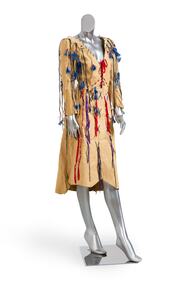 Brighton Historical Society
Clothing - Dress, c. 1974
... Di initiated many local projects, including the creation of a bike path along Nepean Highway and the first Brighton Festival, while balancing family life and a demanding ‘day job’ as personal assistant to Victorian Minister for Youth, Sport and Recreation Brian Dixon. She was a member of the Women’s Electoral Lobby and a champion for women’s representation, encouraging both Sally Allmand and Kate Harman to run for council (both were successfully elected). ...Di initiated many local projects, including the creation of a bike path along Nepean Highway and the first Brighton Festival, while balancing family life and a demanding ‘day job’ as personal assistant to Victorian Minister for Youth, Sport and Recreation Brian Dixon. She was a member of the Women’s Electoral Lobby and a champion for women’s representation, encouraging both Sally Allmand and Kate Harman to run for council (both were successfully elected). ...This dress was worn by Brighton's first female mayor, Councillor Di Lopez, to a Mayoral Ball held at Brighton Technical School in 1977. Diane Margaret Lewis completed a law degree at the University of Melbourne, later marrying one of her classmates, criminal lawyer Ramon (Ray) Lopez. When she decided to run for the Brighton City Council in 1975, she was seen as an outside chance. Undeterred, she rallied a small group of friends and supporters and set out on an extensive door-knocking campaign that won voters to her side and successfully unseated former mayor Keith Devenport. She went on to serve two terms on council from 1975 to 1981. Di initiated many local projects, including the creation of a bike path along Nepean Highway and the first Brighton Festival, while balancing family life and a demanding ‘day job’ as personal assistant to Victorian Minister for Youth, Sport and Recreation Brian Dixon. She was a member of the Women’s Electoral Lobby and a champion for women’s representation, encouraging both Sally Allmand and Kate Harman to run for council (both were successfully elected). She advocated forcefully for an open, transparent local government in which ratepayers had the chance to participate and be heard. In 1976 Di became the first woman to hold the title of Mayor of Brighton, and she made it clear from the outset that she was going to do it her way. For the annual mayoral ball in 1977, ordinarily a staid traditional function, she chose a discotheque theme based on the Rod Stewart album Night on the Town, with a broad dress code of ‘black tie or jeans’: ‘You’ve got to get with the times,’ she said. ‘We want people to wear whatever they feel comfortable in.’ Di herself chose to attend in this knee-length chamois dress embellished with strings, ribbons, beads and feathers. It was both a fashion statement, exemplifying her colourful, flamboyant and forthright style, and a political one: a declaration of her intention to lead a progressive council, embracing the new and refusing to be hemmed in by dated traditions. In 2020 she was awarded an Order of Australia Medal for her service to local government and to the community of Brighton.This dress has local historical significance for its association with Brighton's first female mayor, Councillor Di Lopez, who wore it to a Mayoral Ball in 1976. The dress exemplifies her flamboyant reputation, modern outlook and willingness to break norms. At the time, the dress was a radical choice for a Mayoral Ball, where women typically wore formal evening gowns. With her choice of dress, Cr Lopez was making a public statement, breaking away from dated traditions and announcing her intention to bring the Mayor's office into the 1970s. In this way, the dress also points to the wider social and political changes taking place both in Brighton and across Australia during the mid-1970s.Three quarter length chamois dress circa 1974. Machine stitched with a v-neck and full length sleeves and an uneven raw hem, the dress is decorated with narrow thongs of chamois embellished with red beads and blue feathers. The open-fronted bodice is laced with red ribbon and the skirt is decorated with a large blue wool cross stitch and a combination of blue wool and purple ribbon cross stitch. Made in the style of an Indian 'Wild West Dress'.di lopez, chamois, brighton, brighton council, brighton technical school, mayoral ball, 1970s, feminism -
Bendigo Historical Society Inc.
Document - The Victorian Country Volleyball Council (VCVC) Correspondence and Country Championship Reports, 1976
... This item contains Correspondence of the Council in 1976 and reports on the Country Championships for that year; it includes the following documents: 11171.5a Letter from Swan Hill Volleyball Association President 11171.5b Letter from the ehuca and District YMCA Youth Clubs 11171.5c Letter from VAVA re contact details of country associations 11171.5d Letter from the Swan Hill Volleyball Association 11171.5e Letters to and from the VAVA and VCVC 11171.5f Invoice for Olympic Team Appeal Biros 11171.5g Invoice for Olympic Team Appeal Biros to all Associations 11171.5h Letter to the Echuca and District YMCA Youth Clubs 11171.5i Letter from the Warrnambool Volleyball Association 11171.5j Letter to the VAVA 11171.5k Country Championships, Roster for Referees and Draw 11171.5l Country Championships Team Registrations 1976 11171.5m Voting Slips to approve Albury Wodonga to join the VCVC 11171.5n Letter from Geelong Volleyball association 11171.5o Letter of apology from VAVA for non attendance at the Country Championships 11171.5p Letter from the Goulburn Valley Volleyball Association 11171.5q Letters to and from the Ballarat Volleyball Association 11171.5r Letter to the VAVA Treasurer Mark Perrott 11171.5s Letter from the Geelong Amateur Volleyball Association Registration fees 11171.5t Letter from VAVA Treasurer Mark Perrott 11171.5u Three letters from the VAVA and Department of Youth Sport and recreation 11171.5v Study of Voluntary Workers 11171.5w Letter from Latrobe Valley Volleyball Association 11171.5x Letter from Ballarat Volleyball re their tournament 11171.5y Notice of AGM Sept 1976 at Ballarat 11171.5z Goulburn Valley Volleyball Association Letter Office Bearers 11171.5aa Three letters from the VAVA 11171.5ab Letter from Ballarat Association requesting a referee 11171.5ac Letter from Geelong Volleyball re monies paid 11171.5ad Circular from VAVA Chinese Reciprocal Visit...In 2023, the Commission handed the organisation of the Championships back to VVI, who with paid staff, were better equipped to manage the event. victorian country volleyball council vcvc victorian amateur volleyball association volleyball victoria This item contains Correspondence of the Council in 1976 and reports on the Country Championships for that year; it includes the following documents: 11171.5a Letter from Swan Hill Volleyball Association President 11171.5b Letter from the ehuca and District YMCA Youth Clubs 11171.5c Letter from VAVA re contact details of country associations 11171.5d Letter from the Swan Hill Volleyball Association 11171.5e Letters to and from the VAVA and VCVC 11171.5f Invoice for Olympic Team Appeal Biros 11171.5g Invoice for Olympic Team Appeal Biros to all Associations 11171.5h Letter to the Echuca and District YMCA Youth Clubs 11171.5i Letter from the Warrnambool Volleyball Association 11171.5j Letter to the VAVA 11171.5k Country Championships, Roster for Referees and Draw 11171.5l Country Championships Team Registrations 1976 11171.5m Voting Slips to approve Albury Wodonga to join the VCVC 11171.5n Letter from Geelong Volleyball association 11171.5o Letter of apology from VAVA for non attendance at the Country Championships 11171.5p Letter from the Goulburn Valley Volleyball Association 11171.5q Letters to and from the Ballarat Volleyball Association 11171.5r Letter to the VAVA Treasurer Mark Perrott 11171.5s Letter from the Geelong Amateur Volleyball Association Registration fees 11171.5t Letter from VAVA Treasurer Mark Perrott 11171.5u Three letters from the VAVA and Department of Youth Sport and recreation 11171.5v Study of Voluntary Workers 11171.5w Letter from Latrobe Valley Volleyball Association 11171.5x Letter from Ballarat Volleyball re their tournament 11171.5y Notice of AGM Sept 1976 at Ballarat 11171.5z Goulburn Valley Volleyball Association Letter Office Bearers 11171.5aa Three letters from the VAVA 11171.5ab Letter from Ballarat Association requesting a referee 11171.5ac Letter from Geelong Volleyball re monies paid 11171.5ad Circular from VAVA Chinese Reciprocal Visit Document The Victorian Country Volleyball Council (VCVC) Correspondence and Country Championship Reports. ...Volleyball has been played in regional Victoria since the early-1960’s. During those early days, most competitions, like the founders of our great sport, were run by, or in conjunction with, the YMCA. Competitions were running at the Ballarat School of Mines and the YMCA’s of Bendigo, Geelong and Warrnambool. In August 1966, an invitation was extended by the Victorian Amateur Volleyball Association to play in the first State-wide event at Monash University. Geelong and Bendigo accepted the invitation with Melbourne represented by Sisu. For Bendigo players at least, this was the first exposure to ‘international rules’, which prevented upward scoops with open hands, introduced an action called a ‘dig’ and seemed to penalise most overhead actions using the fingers as ‘double hits’! Over the next few years, the sport expanded through the YMCA movement with weekly competitions starting up in Ararat, Warrnambool and Latrobe Valley. The Victorian Regional Council of YMCA’s proposed the first Victorian YMCA Championship in Warrnambool on 30th March 1968 with an entry fee of $4.00 per team. The sport continued to grow with additional regional associations affiliating with the Victorian Amateur Volleyball Association (now VVI) who provided the coaching and refereeing assistance needed to raise the standard of play. In 1970, the YMCA Championships started to give way to the Victorian Country Championships with the first ever event held in Bendigo. In 1973, a re-organisation of the VAVA saw the proposal to create separate Victorian Country and Metropolitan Volleyball Councils. The VCVC was established in 1974 and took over the organisation of the Victorian Country Championships. For the next 10-12 years, the Country Championships grew in stature with the inclusion of two divisions for open men and women and junior divisions for boys and girls. Representative teams successfully contested Australian Country Championships between Victoria, South Australia and New South Wales on several occasions. In October 1985, the VCVC voluntarily wound up the Council and handed the responsibility for the Country Championships back to Volleyball Victoria, who by that time had full-time State Executive and Coaching Directors. Since that time, the Long Weekend in June has continued to be the date of the major annual volleyball event for most regional associations, even though in 1986 the Junior Country Championships were wound up in favour of state and national schools events. A number of regional associations have ceased to exist, as have a number of regional tournaments. Regional leagues were created in both the Gippsland and Central, North-West regions, with Gippsland the only one to survive. Some associations have successfully competed in the State League competitions at various times. Following the experience gained by a number of regional administrators working on the Sydney Olympic Games, a proposal to revamp the Victorian Country Championship was put to VVI in early 2002. Later that year, the Volleyball Victoria Country Championships Commission was formed to implement the recommendations of the review and take control of the event into the future. These championships now provide regional players and officials an opportunity to participate in a consistently well-managed event, using many international protocols and a high standard of presentation. Without doubt, this event now ranks as one of the best volleyball events in Australia. Source: 2022 Country Championship regulations The management of the Country Championships by the Victorian Country Championship Commission certainly achieved the objective of raising the standard of presentation, and delivering a consistently high quality event. However, the demands on Host Associations began to take their toll, with several Associations declining the opportunity to host the event due to the high workload. Similarly, the workload of the volunteer Commissioners also took its toll, with the Commission unable to fill casual vacancies. In 2023, the Commission handed the organisation of the Championships back to VVI, who with paid staff, were better equipped to manage the event.This item contains Correspondence of the Council in 1976 and reports on the Country Championships for that year; it includes the following documents: 11171.5a Letter from Swan Hill Volleyball Association President 11171.5b Letter from the ehuca and District YMCA Youth Clubs 11171.5c Letter from VAVA re contact details of country associations 11171.5d Letter from the Swan Hill Volleyball Association 11171.5e Letters to and from the VAVA and VCVC 11171.5f Invoice for Olympic Team Appeal Biros 11171.5g Invoice for Olympic Team Appeal Biros to all Associations 11171.5h Letter to the Echuca and District YMCA Youth Clubs 11171.5i Letter from the Warrnambool Volleyball Association 11171.5j Letter to the VAVA 11171.5k Country Championships, Roster for Referees and Draw 11171.5l Country Championships Team Registrations 1976 11171.5m Voting Slips to approve Albury Wodonga to join the VCVC 11171.5n Letter from Geelong Volleyball association 11171.5o Letter of apology from VAVA for non attendance at the Country Championships 11171.5p Letter from the Goulburn Valley Volleyball Association 11171.5q Letters to and from the Ballarat Volleyball Association 11171.5r Letter to the VAVA Treasurer Mark Perrott 11171.5s Letter from the Geelong Amateur Volleyball Association Registration fees 11171.5t Letter from VAVA Treasurer Mark Perrott 11171.5u Three letters from the VAVA and Department of Youth Sport and recreation 11171.5v Study of Voluntary Workers 11171.5w Letter from Latrobe Valley Volleyball Association 11171.5x Letter from Ballarat Volleyball re their tournament 11171.5y Notice of AGM Sept 1976 at Ballarat 11171.5z Goulburn Valley Volleyball Association Letter Office Bearers 11171.5aa Three letters from the VAVA 11171.5ab Letter from Ballarat Association requesting a referee 11171.5ac Letter from Geelong Volleyball re monies paid 11171.5ad Circular from VAVA Chinese Reciprocal Visitvictorian country volleyball council, vcvc, victorian amateur volleyball association, volleyball victoria -
Bendigo Historical Society Inc.
Document - The Victorian Country Volleyball Council (VCVC) Correspondence and Country Championship Reports, 1979
... This item contains Correspondence of the Council in 1979 and reports on the Country Championships for that year; it includes the following documents: 11171.8a Department of Youth Sport and Recreation Courses for 1979 11171.8b From VAVA General Coaches Course Level 2 11171.8c VAVA Executive Officers List 11171.8d Letter from Ballarat asking for promotional posters 11171.8e To Mildura Volleyball re affiliation 11171.8f To Wangaratta Volleyball re costs for Country Championships 11171.8g To all associations re tournament rules and registration fees 11171.8h To all associations re VCVC Meeting March 1979 11171.8i Calendar of events for the VAVA Referee's Commission 11171.8j To VAVA re possible grant for U17 Championships at Wangaratta 11171.8k To Ann Mansfield re Volleyball Equipment stock 11171.8l Estonia Sports Club South Australia notication of annual tournament 11171.8m Country Volleyball Championships Team Entry Form 11171.8n From Geelong Volleyball asking for promotional posters 11171.8o To Kyneton Volleyball information for affiliation 11171.8p Australian Volleyball Federation advertising for coaches 11171.8q Wangaratta Volleyball Executive Details 11171.8r From J. ...In 2023, the Commission handed the organisation of the Championships back to VVI, who with paid staff, were better equipped to manage the event. victorian country volleyball council vcvc victorian amateur volleyball association volleyball victoria This item contains Correspondence of the Council in 1979 and reports on the Country Championships for that year; it includes the following documents: 11171.8a Department of Youth Sport and Recreation Courses for 1979 11171.8b From VAVA General Coaches Course Level 2 11171.8c VAVA Executive Officers List 11171.8d Letter from Ballarat asking for promotional posters 11171.8e To Mildura Volleyball re affiliation 11171.8f To Wangaratta Volleyball re costs for Country Championships 11171.8g To all associations re tournament rules and registration fees 11171.8h To all associations re VCVC Meeting March 1979 11171.8i Calendar of events for the VAVA Referee's Commission 11171.8j To VAVA re possible grant for U17 Championships at Wangaratta 11171.8k To Ann Mansfield re Volleyball Equipment stock 11171.8l Estonia Sports Club South Australia notication of annual tournament 11171.8m Country Volleyball Championships Team Entry Form 11171.8n From Geelong Volleyball asking for promotional posters 11171.8o To Kyneton Volleyball information for affiliation 11171.8p Australian Volleyball Federation advertising for coaches 11171.8q Wangaratta Volleyball Executive Details 11171.8r From J. ...Volleyball has been played in regional Victoria since the early-1960’s. During those early days, most competitions, like the founders of our great sport, were run by, or in conjunction with, the YMCA. Competitions were running at the Ballarat School of Mines and the YMCA’s of Bendigo, Geelong and Warrnambool. In August 1966, an invitation was extended by the Victorian Amateur Volleyball Association to play in the first State-wide event at Monash University. Geelong and Bendigo accepted the invitation with Melbourne represented by Sisu. For Bendigo players at least, this was the first exposure to ‘international rules’, which prevented upward scoops with open hands, introduced an action called a ‘dig’ and seemed to penalise most overhead actions using the fingers as ‘double hits’! Over the next few years, the sport expanded through the YMCA movement with weekly competitions starting up in Ararat, Warrnambool and Latrobe Valley. The Victorian Regional Council of YMCA’s proposed the first Victorian YMCA Championship in Warrnambool on 30th March 1968 with an entry fee of $4.00 per team. The sport continued to grow with additional regional associations affiliating with the Victorian Amateur Volleyball Association (now VVI) who provided the coaching and refereeing assistance needed to raise the standard of play. In 1970, the YMCA Championships started to give way to the Victorian Country Championships with the first ever event held in Bendigo. In 1973, a re-organisation of the VAVA saw the proposal to create separate Victorian Country and Metropolitan Volleyball Councils. The VCVC was established in 1974 and took over the organisation of the Victorian Country Championships. For the next 10-12 years, the Country Championships grew in stature with the inclusion of two divisions for open men and women and junior divisions for boys and girls. Representative teams successfully contested Australian Country Championships between Victoria, South Australia and New South Wales on several occasions. In October 1985, the VCVC voluntarily wound up the Council and handed the responsibility for the Country Championships back to Volleyball Victoria, who by that time had full-time State Executive and Coaching Directors. Since that time, the Long Weekend in June has continued to be the date of the major annual volleyball event for most regional associations, even though in 1986 the Junior Country Championships were wound up in favour of state and national schools events. A number of regional associations have ceased to exist, as have a number of regional tournaments. Regional leagues were created in both the Gippsland and Central, North-West regions, with Gippsland the only one to survive. Some associations have successfully competed in the State League competitions at various times. Following the experience gained by a number of regional administrators working on the Sydney Olympic Games, a proposal to revamp the Victorian Country Championship was put to VVI in early 2002. Later that year, the Volleyball Victoria Country Championships Commission was formed to implement the recommendations of the review and take control of the event into the future. These championships now provide regional players and officials an opportunity to participate in a consistently well-managed event, using many international protocols and a high standard of presentation. Without doubt, this event now ranks as one of the best volleyball events in Australia. Source: 2022 Country Championship regulations The management of the Country Championships by the Victorian Country Championship Commission certainly achieved the objective of raising the standard of presentation, and delivering a consistently high quality event. However, the demands on Host Associations began to take their toll, with several Associations declining the opportunity to host the event due to the high workload. Similarly, the workload of the volunteer Commissioners also took its toll, with the Commission unable to fill casual vacancies. In 2023, the Commission handed the organisation of the Championships back to VVI, who with paid staff, were better equipped to manage the event.This item contains Correspondence of the Council in 1979 and reports on the Country Championships for that year; it includes the following documents: 11171.8a Department of Youth Sport and Recreation Courses for 1979 11171.8b From VAVA General Coaches Course Level 2 11171.8c VAVA Executive Officers List 11171.8d Letter from Ballarat asking for promotional posters 11171.8e To Mildura Volleyball re affiliation 11171.8f To Wangaratta Volleyball re costs for Country Championships 11171.8g To all associations re tournament rules and registration fees 11171.8h To all associations re VCVC Meeting March 1979 11171.8i Calendar of events for the VAVA Referee's Commission 11171.8j To VAVA re possible grant for U17 Championships at Wangaratta 11171.8k To Ann Mansfield re Volleyball Equipment stock 11171.8l Estonia Sports Club South Australia notication of annual tournament 11171.8m Country Volleyball Championships Team Entry Form 11171.8n From Geelong Volleyball asking for promotional posters 11171.8o To Kyneton Volleyball information for affiliation 11171.8p Australian Volleyball Federation advertising for coaches 11171.8q Wangaratta Volleyball Executive Details 11171.8r From J. A. Sporting Goods Price list 11171.8s To Horsham Volleyball re affiliation 11171.8t To Ararat Volleyball re affiliation 11171.8u Wangaratta U7 Championship referee's list and accomodation 11171.8v Notice of change of date of General Meeting 11171.8w Latrobe Valley Volleyball Association team colours 11171.8x 1979 Country Championships Shepparton list of accomodation 11171.8y Warrnambool Country Championships Team Entry Form 11171.8z From Goulburn Valley Volleyball contact details 11171.8aa From Kyneton Volleyball deference of affiliation 11171.8ab Notice of General Meeting at Wangaratta 11171.8ac Stawell Volleyball possible affiliation 11171.8ad Men's Volleyball draw 21-22 April 11171.8ae Wangaratta Volleyball U17 Championships Costs and schedule 11171.8af To Stawell Association re affiliation 11171.8ag VCVC Financial Statement 1978-79 11171.8ah VCVC Letter to the Shire of Nathalia 11171.8ai Letter re Fort Street Volleyball Club poaching players 11171.8aj Letter re Fort Street Volleyball Club poaching players 11171.8ak Letter to Coaches Commission re tournament 11171.8al VCVC Notice of general meeting in April 11171.8am VCVC re AGM Dates 1979 11171.8an VCVC re AGM Dates 1979 11171.8ao VCVC re AGM Dates 1979 11171.8ap Letter to Sports Services re design for tracksuit badge 11171.8aq VAVA Minutes of Executive Meeting Nov 1979 11171.8ar Country Championships Shaepparton Report 1979victorian country volleyball council, vcvc, victorian amateur volleyball association, volleyball victoria -
Bendigo Historical Society Inc.
Document - The Victorian Country Volleyball Council (VCVC) Correspondence and Country Championship Reports, 1979
... This item contains Correspondence of the Council in 1979 and reports on the Country Championships for that year; it includes the following documents: 11171.9a Draft VAVA Constitution 11171.9b VAVA Draft Constitution Changes 11171.9c VAVA Executive meeting April 1979 11171.9d Seymour Amateur Volleyball Association re affiliation 11171.9e VAVA Minutes and Agenda Executive Meeting April 1979 11171.9f Disqualification of Players in Melbourne from all associations 11171.9g Latrobe Valley Volleyball association executive list 11171.9h Country Championships 1979 team entry forms 11171.9i Graham Watson transfer form 11171.9j Volleyball Equipment price list 11171.9k VAVA News to all country associations 11171.9l Swan Hill Association re score pad order 11171.9m Letter from Ararat Student re history of volleyball in Australia 11171.9n Letter to Hamilton Volleyball (Memorial Stadium) - promotional posters 11171.9o Draft No 2 VAVA Constitution 11171.9p From Goulburn Valley Association - referee request 11171.9q To Goulburn Valley Association Requesting Player registration details 11171.9r Letter explaing new VAVA draft constitution 11171.9s Australian Volleyball Federation Secretary's Report 1978-79 11171.9t VAVA Agenda for Sept Executive Meeting 11171.9u VAVA Notice of Executive Meeting Aug 1979 11171.9v Letters from members available for match against south Australia 1-2 Dec 11171.9w Australian Volleyball Federation Mailing List 11171.9x Paperwork for VAVA Executive Meeting Sept 1979 11171.9y VAVA Notice of AGM Nov 1979 11171.9z Bendigo YMCA Volleyball association Executive list 11171.9aa VAVA Executive Meeting Details Oct 1979 11171.9ab VAVA Executive Minutes and notices Nov 1979 11171.9ac Australian Volleyball Federation new National Executive Director 11171.9ad VAVA Request fro secondhand equipment 11171.9ae VAVA Minutes of Special General meeting to amend the constitution 11171.9af Notice of VAVA Executive meeting 11171.9ag The Ray Riordan Sports Admin Newsletter 11171.9ah The Ray Riordan Sports Admin Newsletter 11171.9ai VCVC Minutes of General Meeting April 1979 11171.9aj VCVC General Meeting Notices Nov 1979 11171.9ak VAVA 1979 registration Fees 11171.9al VAVA Minutes of Executive Meeting Feb 1979 11171.9am VAVA Minutes of Executive Meeting March 1979 11171.9an VAVA Proposed Referee Commission 11171.9ao VAVA Survey of Facilities 11171.9ap VAVA Office-bearers 1979 11171.9aq Bendigo Trophy Centre Change of Owners 1978 11171.9ar VAVA Promotional Material Resources 11171.9as VAVA Resource Material 11171.9at Department of Youth Sport and Recreation Training Video Pamphlet 11171.9au VAVA Grants for 1979-80...In 2023, the Commission handed the organisation of the Championships back to VVI, who with paid staff, were better equipped to manage the event. victorian country volleyball council vcvc victorian amateur volleyball association volleyball victoria This item contains Correspondence of the Council in 1979 and reports on the Country Championships for that year; it includes the following documents: 11171.9a Draft VAVA Constitution 11171.9b VAVA Draft Constitution Changes 11171.9c VAVA Executive meeting April 1979 11171.9d Seymour Amateur Volleyball Association re affiliation 11171.9e VAVA Minutes and Agenda Executive Meeting April 1979 11171.9f Disqualification of Players in Melbourne from all associations 11171.9g Latrobe Valley Volleyball association executive list 11171.9h Country Championships 1979 team entry forms 11171.9i Graham Watson transfer form 11171.9j Volleyball Equipment price list 11171.9k VAVA News to all country associations 11171.9l Swan Hill Association re score pad order 11171.9m Letter from Ararat Student re history of volleyball in Australia 11171.9n Letter to Hamilton Volleyball (Memorial Stadium) - promotional posters 11171.9o Draft No 2 VAVA Constitution 11171.9p From Goulburn Valley Association - referee request 11171.9q To Goulburn Valley Association Requesting Player registration details 11171.9r Letter explaing new VAVA draft constitution 11171.9s Australian Volleyball Federation Secretary's Report 1978-79 11171.9t VAVA Agenda for Sept Executive Meeting 11171.9u VAVA Notice of Executive Meeting Aug 1979 11171.9v Letters from members available for match against south Australia 1-2 Dec 11171.9w Australian Volleyball Federation Mailing List 11171.9x Paperwork for VAVA Executive Meeting Sept 1979 11171.9y VAVA Notice of AGM Nov 1979 11171.9z Bendigo YMCA Volleyball association Executive list 11171.9aa VAVA Executive Meeting Details Oct 1979 11171.9ab VAVA Executive Minutes and notices Nov 1979 11171.9ac Australian Volleyball Federation new National Executive Director 11171.9ad VAVA Request fro secondhand equipment 11171.9ae VAVA Minutes of Special General meeting to amend the constitution 11171.9af Notice of VAVA Executive meeting 11171.9ag The Ray Riordan Sports Admin Newsletter 11171.9ah The Ray Riordan Sports Admin Newsletter 11171.9ai VCVC Minutes of General Meeting April 1979 11171.9aj VCVC General Meeting Notices Nov 1979 11171.9ak VAVA 1979 registration Fees 11171.9al VAVA Minutes of Executive Meeting Feb 1979 11171.9am VAVA Minutes of Executive Meeting March 1979 11171.9an VAVA Proposed Referee Commission 11171.9ao VAVA Survey of Facilities 11171.9ap VAVA Office-bearers 1979 11171.9aq Bendigo Trophy Centre Change of Owners 1978 11171.9ar VAVA Promotional Material Resources 11171.9as VAVA Resource Material 11171.9at Department of Youth Sport and Recreation Training Video Pamphlet 11171.9au VAVA Grants for 1979-80 Document The Victorian Country Volleyball Council (VCVC) Correspondence and Country Championship Reports. ...Volleyball has been played in regional Victoria since the early-1960’s. During those early days, most competitions, like the founders of our great sport, were run by, or in conjunction with, the YMCA. Competitions were running at the Ballarat School of Mines and the YMCA’s of Bendigo, Geelong and Warrnambool. In August 1966, an invitation was extended by the Victorian Amateur Volleyball Association to play in the first State-wide event at Monash University. Geelong and Bendigo accepted the invitation with Melbourne represented by Sisu. For Bendigo players at least, this was the first exposure to ‘international rules’, which prevented upward scoops with open hands, introduced an action called a ‘dig’ and seemed to penalise most overhead actions using the fingers as ‘double hits’! Over the next few years, the sport expanded through the YMCA movement with weekly competitions starting up in Ararat, Warrnambool and Latrobe Valley. The Victorian Regional Council of YMCA’s proposed the first Victorian YMCA Championship in Warrnambool on 30th March 1968 with an entry fee of $4.00 per team. The sport continued to grow with additional regional associations affiliating with the Victorian Amateur Volleyball Association (now VVI) who provided the coaching and refereeing assistance needed to raise the standard of play. In 1970, the YMCA Championships started to give way to the Victorian Country Championships with the first ever event held in Bendigo. In 1973, a re-organisation of the VAVA saw the proposal to create separate Victorian Country and Metropolitan Volleyball Councils. The VCVC was established in 1974 and took over the organisation of the Victorian Country Championships. For the next 10-12 years, the Country Championships grew in stature with the inclusion of two divisions for open men and women and junior divisions for boys and girls. Representative teams successfully contested Australian Country Championships between Victoria, South Australia and New South Wales on several occasions. In October 1985, the VCVC voluntarily wound up the Council and handed the responsibility for the Country Championships back to Volleyball Victoria, who by that time had full-time State Executive and Coaching Directors. Since that time, the Long Weekend in June has continued to be the date of the major annual volleyball event for most regional associations, even though in 1986 the Junior Country Championships were wound up in favour of state and national schools events. A number of regional associations have ceased to exist, as have a number of regional tournaments. Regional leagues were created in both the Gippsland and Central, North-West regions, with Gippsland the only one to survive. Some associations have successfully competed in the State League competitions at various times. Following the experience gained by a number of regional administrators working on the Sydney Olympic Games, a proposal to revamp the Victorian Country Championship was put to VVI in early 2002. Later that year, the Volleyball Victoria Country Championships Commission was formed to implement the recommendations of the review and take control of the event into the future. These championships now provide regional players and officials an opportunity to participate in a consistently well-managed event, using many international protocols and a high standard of presentation. Without doubt, this event now ranks as one of the best volleyball events in Australia. Source: 2022 Country Championship regulations The management of the Country Championships by the Victorian Country Championship Commission certainly achieved the objective of raising the standard of presentation, and delivering a consistently high quality event. However, the demands on Host Associations began to take their toll, with several Associations declining the opportunity to host the event due to the high workload. Similarly, the workload of the volunteer Commissioners also took its toll, with the Commission unable to fill casual vacancies. In 2023, the Commission handed the organisation of the Championships back to VVI, who with paid staff, were better equipped to manage the event.This item contains Correspondence of the Council in 1979 and reports on the Country Championships for that year; it includes the following documents: 11171.9a Draft VAVA Constitution 11171.9b VAVA Draft Constitution Changes 11171.9c VAVA Executive meeting April 1979 11171.9d Seymour Amateur Volleyball Association re affiliation 11171.9e VAVA Minutes and Agenda Executive Meeting April 1979 11171.9f Disqualification of Players in Melbourne from all associations 11171.9g Latrobe Valley Volleyball association executive list 11171.9h Country Championships 1979 team entry forms 11171.9i Graham Watson transfer form 11171.9j Volleyball Equipment price list 11171.9k VAVA News to all country associations 11171.9l Swan Hill Association re score pad order 11171.9m Letter from Ararat Student re history of volleyball in Australia 11171.9n Letter to Hamilton Volleyball (Memorial Stadium) - promotional posters 11171.9o Draft No 2 VAVA Constitution 11171.9p From Goulburn Valley Association - referee request 11171.9q To Goulburn Valley Association Requesting Player registration details 11171.9r Letter explaing new VAVA draft constitution 11171.9s Australian Volleyball Federation Secretary's Report 1978-79 11171.9t VAVA Agenda for Sept Executive Meeting 11171.9u VAVA Notice of Executive Meeting Aug 1979 11171.9v Letters from members available for match against south Australia 1-2 Dec 11171.9w Australian Volleyball Federation Mailing List 11171.9x Paperwork for VAVA Executive Meeting Sept 1979 11171.9y VAVA Notice of AGM Nov 1979 11171.9z Bendigo YMCA Volleyball association Executive list 11171.9aa VAVA Executive Meeting Details Oct 1979 11171.9ab VAVA Executive Minutes and notices Nov 1979 11171.9ac Australian Volleyball Federation new National Executive Director 11171.9ad VAVA Request fro secondhand equipment 11171.9ae VAVA Minutes of Special General meeting to amend the constitution 11171.9af Notice of VAVA Executive meeting 11171.9ag The Ray Riordan Sports Admin Newsletter 11171.9ah The Ray Riordan Sports Admin Newsletter 11171.9ai VCVC Minutes of General Meeting April 1979 11171.9aj VCVC General Meeting Notices Nov 1979 11171.9ak VAVA 1979 registration Fees 11171.9al VAVA Minutes of Executive Meeting Feb 1979 11171.9am VAVA Minutes of Executive Meeting March 1979 11171.9an VAVA Proposed Referee Commission 11171.9ao VAVA Survey of Facilities 11171.9ap VAVA Office-bearers 1979 11171.9aq Bendigo Trophy Centre Change of Owners 1978 11171.9ar VAVA Promotional Material Resources 11171.9as VAVA Resource Material 11171.9at Department of Youth Sport and Recreation Training Video Pamphlet 11171.9au VAVA Grants for 1979-80victorian country volleyball council, vcvc, victorian amateur volleyball association, volleyball victoria -
 Glen Eira Historical Society
Letter - Bambra Road Church Of Christ
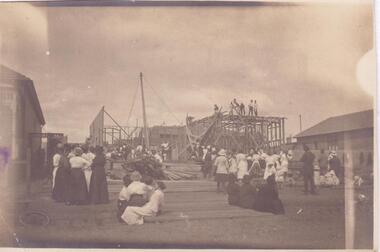
... and Recreation...Youth Clubs Everett Doris Lynch Maisie Collings A. B. Eaton C. Burdell McCann Taylor Collings C. Davey A. Neeson Mrs Brooker Mr. Venty Mrs. Buckingham Mrs Brooker Mrs. Deveraux Mrs Carnie Mrs Meehan K. Sanderson W. Sanderson Vera Architects Construction (events and activities) Sunday School Union Of The Churches Of Christ Victoria Bible School Committee Of The Churches Of Christ Beit Hamasiach Messianic Congregation Sport and Recreation Letter Bambra Road Church Of Christ ...This file contains four items. 1/Photocopied pamphlet on the establishment of the Bambra Road Church of Christ, Caulfield South, including information on its early members and the pioneers of the nineteenth century church meetings. The pamphlet was produced for the fiftieth anniversary of the church in May 1970 and includes copies of photographs and drawings of the early church. 2/A postcard photograph by W. Sanderson, taken c. 1921, of the building of the church of Christ, Bambra Road, built in one day. Included with the photo is a letter for the donation dated 02/05/1998. 3/Information on Bambra Road Church of Christ, undated and unattributed, providing details about the pipe organ, Joint Choir and the Adult Group which continued at St. Stephen’s after the Union of the Churches. 4/Two photographs, dated 20/11/2009, of the front of the former Bambra Road Church of Christ and of the foundation stone. The Church is now used by the Beit Hamasiach Messianic Congregation.caulfield south, churches, ennis reg., glenhuntly, sunday schools, earl h.s., bambra road, princes park, cheek stephen, churches of christ, st. stephen’s church, killey f., bambra road church of christ, mcdiarmid a. b, mortimer w., clubs and associations, robbins h. b., religious ceremonies, williams e. l., haddon a l, religious groups, everett maisie, youth clubs, everett doris, lynch maisie, collings a. b., eaton c. burdell, mccann taylor, collings c., davey a., neeson mrs, brooker mr., venty mrs., buckingham mrs, brooker mrs., deveraux mrs, carnie mrs, meehan k., sanderson w., sanderson vera, architects, construction (events and activities), sunday school union of the churches of christ victoria, bible school committee of the churches of christ, beit hamasiach messianic congregation, sport and recreation -
 Bendigo Historical Society Inc.
Document - LA TROBE UNIVERSITY BENDIGO COLLECTION: NATIONAL FITNESS YOUTH RALLY BENDIGO
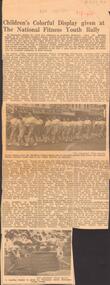
... Youth Rally... Victorian National Fitness Council... sport...Mills Bendigo Teachers' College staff tertiary education education Bendigo National Fitness Youth Rally Victorian National Fitness Council sport sports athletics marching recreation ' Wanda-Inn ' Milk Bar R. ...A Bendigo advertiser article titled 'Children's Colourful Display given at The National Fitness Youth Rally'. The Bendigo Branch of the Victorian National Fitness Council held its second annual youth rally. The article includes two photos (1) Young women from the Bendigo Teachers' College marching before the rally at the Upper Reserve. They are marching in front of a shop called 'Wanda - Inn Milk Bar'. To the right behind them is a business titled 'R. White'. (11) The second photo is of a vaulting display given by the Mackenzie Street Methodist Senior Group at the rally. The Principal of Bendigo Teachers' College Mr. G.R. Mills was an official visitor at the proceedings. Dated 14-10-46.bendigo, sporting clubs, youth rally, la trobe university bendigo collection, collection, bendigo teachers' college, bendigo teachers' college students, mr. g.r. mills, bendigo teachers' college staff, tertiary education, education, bendigo, national fitness youth rally, victorian national fitness council, sport, sports, athletics, marching, recreation, ' wanda-inn ' milk bar, r. white, physical culture, folk dancing, youth rally, clubs, sporting clubs, photo, photograph -
Port Melbourne Historical & Preservation Society
Document - Document regarding youth sport and recreation, Port Melbourne Y.M.C.A, YMCA Port Melbourne, c1969-73
... Document regarding youth sport and recreation...Including Billiards challenges for Walter LINDRUM YMCA Port Melbourne Document Document regarding youth sport and recreation Port Melbourne Y.M.C.A. ...Several documents relating to the development of Youth centres in Port MelbourneFolded sheet describing what is Y.M.C.A. Port Melbourne. Including Billiards challenges for Walter LINDRUMfictionSeveral documents relating to the development of Youth centres in Port Melbourne j e earl pty ltd, the consolidated pneumatic tool co, ymca, societies clubs unions and other organisations, theodore thomas (tom) buckingham, mayors -
Bendigo Historical Society Inc.
Document - The Victorian Country Volleyball Council Correspondence and Country Championship Reports, 1978
... This item contains Victorian Country Volleyball Council Correspondence and Country Championship Reports; it includes the following documents: 11171.23a VAVA AGM Minutes Dec 1978 11171.23b Letter to State Coaches from Victorian Coaches Commission 11171.23c VAVA re World sport '79 Expo 11171.23d VAVA Player Registration Fees 11171.23e Report on U17 Australain Volleyball Championships 1978 11171.23f VAVA "Money Makes Money" Prospectus 11171.23g VAVA Australian Youth Championships Newsletter 11171.23h VAVA Notice of new secretary 11171.23i VAVA Requirement to list all owned equipment 11171.23j VAVA Executive Council meeting Dec 1977 11171.23k VAVA Executive Council meeting Feb 1978 11171.23l VAVA Executive Council meeting March 1978 11171.23m VAVA Executive Council meeting May 1978 11171.23n Letter listing VAVA Membership Numbers 11171.23o VAVA Minutes of Executive Meeting June 1978 11171.23p VAVA Minutes of Executive Meeting July 1978 11171.23q VAVA Minutes of Executive Meeting July 1978 11171.23r VAVA Official training Times Aug 1978 11171.23s VAVA Executive Meeting Aug 1978 11171.23t VAVA Executive Meeting Sept 1978 11171.23u VAVA Executive Meeting Oct 1978 11171.23v Two hand written letters from President of VAVA Eric Hayman 11171.23w Letter from City of sydney and Districts Volleyball association 11171.23x Letter to Sisu Volleyball Club re tournament 11171.23y VAVA letter of appreciation to VCVC re contribution 11171.23z VAVA Letter from Eric Hayman to Tasmanian Volleyball Association re U20 Entry Charges 11171.23aa VAVA Submission to the Sports and Recreation Assistance Programme 1977-78 11171.23ab VAVA Letter to the Geelong Vollayball Association re Australian Championships 11171.23ac VAVA Coaching Commission to re upcoming coaches seminar...In 2023, the Commission handed the organisation of the Championships back to VVI, who with paid staff, were better equipped to manage the event. victorian country volleyball council vcvc victorian amateur volleyball association volleyball victoria This item contains Victorian Country Volleyball Council Correspondence and Country Championship Reports; it includes the following documents: 11171.23a VAVA AGM Minutes Dec 1978 11171.23b Letter to State Coaches from Victorian Coaches Commission 11171.23c VAVA re World sport '79 Expo 11171.23d VAVA Player Registration Fees 11171.23e Report on U17 Australain Volleyball Championships 1978 11171.23f VAVA "Money Makes Money" Prospectus 11171.23g VAVA Australian Youth Championships Newsletter 11171.23h VAVA Notice of new secretary 11171.23i VAVA Requirement to list all owned equipment 11171.23j VAVA Executive Council meeting Dec 1977 11171.23k VAVA Executive Council meeting Feb 1978 11171.23l VAVA Executive Council meeting March 1978 11171.23m VAVA Executive Council meeting May 1978 11171.23n Letter listing VAVA Membership Numbers 11171.23o VAVA Minutes of Executive Meeting June 1978 11171.23p VAVA Minutes of Executive Meeting July 1978 11171.23q VAVA Minutes of Executive Meeting July 1978 11171.23r VAVA Official training Times Aug 1978 11171.23s VAVA Executive Meeting Aug 1978 11171.23t VAVA Executive Meeting Sept 1978 11171.23u VAVA Executive Meeting Oct 1978 11171.23v Two hand written letters from President of VAVA Eric Hayman 11171.23w Letter from City of sydney and Districts Volleyball association 11171.23x Letter to Sisu Volleyball Club re tournament 11171.23y VAVA letter of appreciation to VCVC re contribution 11171.23z VAVA Letter from Eric Hayman to Tasmanian Volleyball Association re U20 Entry Charges 11171.23aa VAVA Submission to the Sports and Recreation Assistance Programme 1977-78 11171.23ab VAVA Letter to the Geelong Vollayball Association re Australian Championships 11171.23ac VAVA Coaching Commission to re upcoming coaches seminar Document The Victorian Country Volleyball Council Correspondence and Country Championship Reports ...Volleyball has been played in regional Victoria since the early-1960’s. During those early days, most competitions, like the founders of our great sport, were run by, or in conjunction with, the YMCA. Competitions were running at the Ballarat School of Mines and the YMCA’s of Bendigo, Geelong and Warrnambool. In August 1966, an invitation was extended by the Victorian Amateur Volleyball Association to play in the first State-wide event at Monash University. Geelong and Bendigo accepted the invitation with Melbourne represented by Sisu. For Bendigo players at least, this was the first exposure to ‘international rules’, which prevented upward scoops with open hands, introduced an action called a ‘dig’ and seemed to penalise most overhead actions using the fingers as ‘double hits’! Over the next few years, the sport expanded through the YMCA movement with weekly competitions starting up in Ararat, Warrnambool and Latrobe Valley. The Victorian Regional Council of YMCA’s proposed the first Victorian YMCA Championship in Warrnambool on 30th March 1968 with an entry fee of $4.00 per team. The sport continued to grow with additional regional associations affiliating with the Victorian Amateur Volleyball Association (now VVI) who provided the coaching and refereeing assistance needed to raise the standard of play. In 1970, the YMCA Championships started to give way to the Victorian Country Championships with the first ever event held in Bendigo. In 1973, a re-organisation of the VAVA saw the proposal to create separate Victorian Country and Metropolitan Volleyball Councils. The VCVC was established in 1974 and took over the organisation of the Victorian Country Championships. For the next 10-12 years, the Country Championships grew in stature with the inclusion of two divisions for open men and women and junior divisions for boys and girls. Representative teams successfully contested Australian Country Championships between Victoria, South Australia and New South Wales on several occasions. In October 1985, the VCVC voluntarily wound up the Council and handed the responsibility for the Country Championships back to Volleyball Victoria, who by that time had full-time State Executive and Coaching Directors. Since that time, the Long Weekend in June has continued to be the date of the major annual volleyball event for most regional associations, even though in 1986 the Junior Country Championships were wound up in favour of state and national schools events. A number of regional associations have ceased to exist, as have a number of regional tournaments. Regional leagues were created in both the Gippsland and Central, North-West regions, with Gippsland the only one to survive. Some associations have successfully competed in the State League competitions at various times. Following the experience gained by a number of regional administrators working on the Sydney Olympic Games, a proposal to revamp the Victorian Country Championship was put to VVI in early 2002. Later that year, the Volleyball Victoria Country Championships Commission was formed to implement the recommendations of the review and take control of the event into the future. These championships now provide regional players and officials an opportunity to participate in a consistently well-managed event, using many international protocols and a high standard of presentation. Without doubt, this event now ranks as one of the best volleyball events in Australia. Source: 2022 Country Championship regulations The management of the Country Championships by the Victorian Country Championship Commission certainly achieved the objective of raising the standard of presentation, and delivering a consistently high quality event. However, the demands on Host Associations began to take their toll, with several Associations declining the opportunity to host the event due to the high workload. Similarly, the workload of the volunteer Commissioners also took its toll, with the Commission unable to fill casual vacancies. In 2023, the Commission handed the organisation of the Championships back to VVI, who with paid staff, were better equipped to manage the event.This item contains Victorian Country Volleyball Council Correspondence and Country Championship Reports; it includes the following documents: 11171.23a VAVA AGM Minutes Dec 1978 11171.23b Letter to State Coaches from Victorian Coaches Commission 11171.23c VAVA re World sport '79 Expo 11171.23d VAVA Player Registration Fees 11171.23e Report on U17 Australain Volleyball Championships 1978 11171.23f VAVA "Money Makes Money" Prospectus 11171.23g VAVA Australian Youth Championships Newsletter 11171.23h VAVA Notice of new secretary 11171.23i VAVA Requirement to list all owned equipment 11171.23j VAVA Executive Council meeting Dec 1977 11171.23k VAVA Executive Council meeting Feb 1978 11171.23l VAVA Executive Council meeting March 1978 11171.23m VAVA Executive Council meeting May 1978 11171.23n Letter listing VAVA Membership Numbers 11171.23o VAVA Minutes of Executive Meeting June 1978 11171.23p VAVA Minutes of Executive Meeting July 1978 11171.23q VAVA Minutes of Executive Meeting July 1978 11171.23r VAVA Official training Times Aug 1978 11171.23s VAVA Executive Meeting Aug 1978 11171.23t VAVA Executive Meeting Sept 1978 11171.23u VAVA Executive Meeting Oct 1978 11171.23v Two hand written letters from President of VAVA Eric Hayman 11171.23w Letter from City of sydney and Districts Volleyball association 11171.23x Letter to Sisu Volleyball Club re tournament 11171.23y VAVA letter of appreciation to VCVC re contribution 11171.23z VAVA Letter from Eric Hayman to Tasmanian Volleyball Association re U20 Entry Charges 11171.23aa VAVA Submission to the Sports and Recreation Assistance Programme 1977-78 11171.23ab VAVA Letter to the Geelong Vollayball Association re Australian Championships 11171.23ac VAVA Coaching Commission to re upcoming coaches seminarvictorian country volleyball council, vcvc, victorian amateur volleyball association, volleyball victoria -
Koorie Heritage Trust
Book, Brady, Maggie, The Health of Young Aborigines: A report on the health of Aborigines aged 12 to 25, 1992
... Sport play and recreation; Some concluding ideas; Recommendations and key issues. viii, 51 p. ; 26 cm. The Health of Young Aborigines: A report on the health of Aborigines aged 12 to 25. Book Brady, Maggie National Clearinghouse for Youth ...Contents: Concepts of youth and adolescence - The Aboriginal youth population in Australia; Urban and rural residence. The health of young Aboriginal people: an overview - Mortality: an overview; Specific data on mortality; Morbidity: an overview; Specific data on morbidity; Presentations at local health centres. Social factors related to youth health - Sexually transmitted Diseases; AIDS: prevalence and education; Social issues and AIDS; Pelvic inflammatory disease; Childbirth among adolescent girls; Social and cultural issues in youthful childbirth; Young mothers; Maternal education; Ear disease: prevalence and social influences; Eye disease: prevalence and solutions. Psychosocial health issues among young Aborigines - Prevalence of drug and alcohol use; Social factors associated with drug use; Stress and mental health; Interpersonal violence, accidents and poisoning; Domestic violence and child abuse. Social factors in overall health - Priorities; Washing; Eating; School; Utilisation of health services; Hospitalisation; Aboriginal Medical Services; Drug and alcohol services. Issues related to urban or remote residence - Health issues and remoteness; 'Street kids'; Sport play and recreation; Some concluding ideas; Recommendations and key issues.viii, 51 p. ; 26 cm.Contents: Concepts of youth and adolescence - The Aboriginal youth population in Australia; Urban and rural residence. The health of young Aboriginal people: an overview - Mortality: an overview; Specific data on mortality; Morbidity: an overview; Specific data on morbidity; Presentations at local health centres. Social factors related to youth health - Sexually transmitted Diseases; AIDS: prevalence and education; Social issues and AIDS; Pelvic inflammatory disease; Childbirth among adolescent girls; Social and cultural issues in youthful childbirth; Young mothers; Maternal education; Ear disease: prevalence and social influences; Eye disease: prevalence and solutions. Psychosocial health issues among young Aborigines - Prevalence of drug and alcohol use; Social factors associated with drug use; Stress and mental health; Interpersonal violence, accidents and poisoning; Domestic violence and child abuse. Social factors in overall health - Priorities; Washing; Eating; School; Utilisation of health services; Hospitalisation; Aboriginal Medical Services; Drug and alcohol services. Issues related to urban or remote residence - Health issues and remoteness; 'Street kids'; Sport play and recreation; Some concluding ideas; Recommendations and key issues.aboriginal australians -- health and hygiene. | youth, aboriginal australian -- health and hygiene. -
 Ballarat Heritage Services
Photograph - Digital copy, K.P. Gervasoni, Opening of Jack Gervasoni Pavilion at Willsmere Park by Premier of Victoria Rupert (Dick) Hamer, 28/07/1979
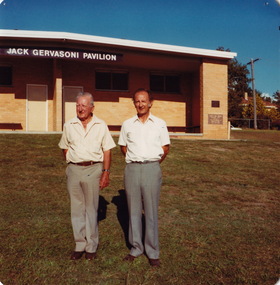
... The naming of the pavilion honoured his work within the community, particlularly with youth and recreation. kew sport facility ground dick hamer jack gervasoni gus gervasoni pavilion alan hutchinson les fell willsmere park jack gervasoni pavilion Colour photographs of the Gervasoni Pavilion, North Kew. .1) John Hogan (Jack) Gervasoni and his father, Gus Gervasoni, in front of the Jack Gervasoni Pavilion .2) Cr Allan Hitchinson, Premier Rupert Hamer, Jack Gervasoni and Kew Town Clerk Les Fell beside as sign at the newly opened Jack Gervasoni Pavilion. ...Jack Gervasoni was a newsagent at 93 Willsmere Rd Kew for 17 years and a City of kew councillor for 9 years. The naming of the pavilion honoured his work within the community, particlularly with youth and recreation. Colour photographs of the Gervasoni Pavilion, North Kew. .1) John Hogan (Jack) Gervasoni and his father, Gus Gervasoni, in front of the Jack Gervasoni Pavilion .2) Cr Allan Hitchinson, Premier Rupert Hamer, Jack Gervasoni and Kew Town Clerk Les Fell beside as sign at the newly opened Jack Gervasoni Pavilion.kew, sport, facility, ground, dick hamer, jack gervasoni, gus gervasoni, pavilion, alan hutchinson, les fell, willsmere park, jack gervasoni pavilion -
 Ballarat Heritage Services
Photograph - Digital copy, Jack Gervasoni Pavilion at Willsmere Park, Kew, c2020
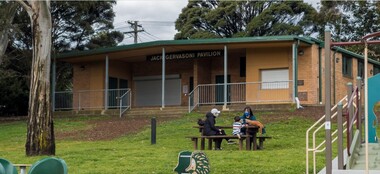
... The naming of the pavilion honoured his work within the community, particularly with youth and recreation. kew sport facility ground dick hamer jack gervasoni gus gervasoni pavilion alan hutchinson les fell willsmere park jack gervasoni pavilion Colour photographs of the Jack Gervasoni Pavilion, Kew. ...Jack Gervasoni was a newsagent at 93 Willsmere Rd Kew for 17 years and a City of Kew councillor for 9 years. The naming of the pavilion honoured his work within the community, particularly with youth and recreation. Colour photographs of the Jack Gervasoni Pavilion, Kew. This photograph was taken before the 2024/2025 renovations. kew, sport, facility, ground, dick hamer, jack gervasoni, gus gervasoni, pavilion, alan hutchinson, les fell, willsmere park, jack gervasoni pavilion -
 Bendigo Historical Society Inc.
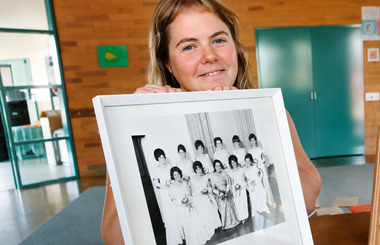
Newspaper - Michele Matthews Collection: PHD Research - The YWCA in Bendigo, 1906-1980s
... It combined religious values with practical education, recreation, accommodation, employment assistance, and community service. ...It combined religious values with practical education, recreation, accommodation, employment assistance, and community service. ...Dr Michele Matthews has been a local and social historian for nearly three decades since she first used correspondence held by the then Bendigo City Council for her Honours thesis. She is an ardent advocate for the use of local history records to tell Victorian and Australian history from a grassroots perspective. Michele’s MA thesis, ‘A forgotten “Father” of Federation: Sir John Quick 1852‑1911’ (2003), and her PhD thesis, ‘Survivors, schemes, Samaritans and shareholders: the impact of the Great Depression on Bendigo and District 1925‑1935’ (2007), both drew heavily on Bendigo and district records. Michele used these articles as part of her research: The Bendigo Y.W.C.A. played a significant role in shaping opportunities for young women during the early twentieth century. It combined religious values with practical education, recreation, accommodation, employment assistance, and community service. By addressing women's social, educational, physical, and spiritual needs, the Association became an important institution within Bendigo, helping thousands of women develop confidence, independence, leadership, and a strong sense of community. Its work also contributed to broader social reform by improving women's access to education, employment, health, and civic participation. Michele Matthews Collection: PHD Research - The YWCA in Bendigo, Newspaper Articles and a publication (Author Unknown) This item includes the following documents: 8672.31a Newspaper (Unknown) Article coloured photo of Kylie Emonson who had been researching the YWCA and memorabillia, story by Nicole Strahn and photo by Brendan McCarthy. 8672.31b Newspaper (Unknown) Article coloured photo of Norma Cook sifting through old clippings and photos, story by Nicole Strahn and photo by Laura Scott. 8672.31c The article 8672.31c "YWCA: A Century of Achievements" celebrates the 100-year history of the Bendigo YWCA and its significant contribution to improving the lives of women and girls. Founded in the early 1900s, the organisation initially focused on helping women achieve financial independence by providing employment assistance, educational classes, and safe accommodation. It also offered practical training in subjects such as shorthand, dressmaking, and millinery, creating opportunities that were uncommon for women at the time. As the organisation developed, its services expanded to meet the changing needs of the community. The Bendigo YWCA established hostels and residences for women, provided affordable meals, and later introduced a wide range of programs supporting young mothers, migrants and refugees, women in business, and survivors of violence. It also promoted women's participation in sport by helping establish hockey and basketball teams and encouraging community involvement through theatre, singing, fitness, and holiday programs. During World War I, the YWCA even encouraged women to save money through weekly savings schemes. Although the YWCA was originally founded on Christian principles, the article explains that it evolved into an inclusive organisation focused on equality and empowerment rather than religion. According to Bendigo YWCA coordinator Kylie Emmerson, the organisation has always been committed to helping women become independent and providing opportunities that were often unavailable to them. Long-time member Norma Cook also reflects on the important role the YWCA has played in advancing women's rights and creating equal opportunities over many decades. The article concludes by describing the Bendigo YWCA's centenary celebrations, including a permanent sculpture and a public exhibition featuring decorated handbags representing each decade of the organisation's history. It also highlights several current programs, such as school holiday activities, community arts projects, self-protection classes, the Baby Dolls program for young mothers, the Bendigo Young Women's Network, the Encore exercise program for breast cancer survivors, and the Week Without Violence campaign. Overall, the article presents the Bendigo YWCA as an organisation that has continually adapted over the past century while remaining dedicated to supporting, educating, and empowering women and girls. 8672.31d Newspaper article from the Bendigo Advertiser, Sat March 22 1986. YWCA's great record of service by Maurie McDonald, black and white photo of one of the girls' basketball teams. 8672.31e Newspaper article from the Bendigo Advertiser, Sat March 22 1986. YWCA's great record of service by Maurie McDonald. The article traces the history of the Bendigo YWCA, which was established in 1906 following a public meeting inspired by representatives from the Melbourne YWCA. Founded to promote the spiritual, intellectual, social and physical development of women and girls, the organisation quickly became an important part of the Bendigo community. In its early years, it focused on meeting the practical needs of young women by creating an employment bureau, offering guidance on job applications and interviews, and recognising the need for safe and affordable accommodation for women moving to Bendigo for work. A major milestone came in 1919, when the YWCA purchased the Black Swan Hotel and transformed it into a residence for young women. The building provided accommodation as well as classes in home nursing, millinery, first aid, typing, bookkeeping, French and English. Beyond housing and education, the YWCA also became known for addressing controversial social issues of the time, including women's rights and sex education, by organising lectures and discussions that encouraged public debate. The organisation also played a significant role in promoting sport and recreation. In 1926, it helped establish Bendigo's first basketball association and later introduced softball to the city. During the Great Depression, the Black Swan became a refuge for girls and young women who had little hope of employment, providing companionship and support. Throughout World War II, YWCA members contributed to the war effort by washing and ironing for servicemen, writing letters, and organising dances and social events for Australian and American soldiers stationed in the region. The article highlights the contributions of several influential women who shaped the Bendigo YWCA over the decades. Members such as Vi Morgan, Loris Nankivell, and Mavis Carne expanded the organisation's programs and strengthened its role within the community. Their leadership helped the YWCA move beyond its original focus on accommodation and employment to become a centre for education, recreation, youth development and family support. From the 1960s onwards, the Bendigo YWCA broadened its services by introducing after-school care programs and developing the **Mother-Child Playgrounds Project**, an initiative that later became a model adopted throughout Australia. In 1968, it established the **Young Theatre Group**, providing hundreds of local young people with opportunities to develop confidence, creativity and performance skills. These programs reflected the organisation's commitment to responding to changing community needs. By 1983, the YWCA had moved to new premises at **465 Hargreaves Street**, where it continued to offer a wide range of services. At the time the article was written, these included school holiday programs, play schools, porcelain painting, stretch sewing, English and French classes, exercise and yoga, the Young Theatre, friendship groups, women's workshops and drama groups. Overall, the article celebrates the Bendigo YWCA's eighty-year history, highlighting its transformation from a support organisation for working women into a diverse community organisation that made lasting contributions to education, welfare, recreation and social development in Bendigo. 8672.31f Newspaper article from the Bendigo Advertiser, Mon Nov 04 1985. Family fun Fair in 79th Year, Black and white photo of YWCA Women in the 1920s, by Susan Masters. Front Row: Phyllis Ellery, Leah Wilson, Vi Clifton, Rene Truscott, Hilda Read and Vera Baker. Back Row: Glad Richardson, Elsie Talbot, Dorothy Ackland, Dorothy Hodden and Dorothy McKay. The photo has been scanned from the newspaper article. 8672.31g Newspaper article from the Bendigo Advertiser, Mon Nov 04 1985. Family fun Fair in 79th Year, by Susan Masters. The article celebrates the 79th anniversary of the Bendigo YWCA, highlighting both its upcoming annual family fun fair and the organisation’s long history of supporting women and the local community. The fair, to be held at Rosalind Park on **Saturday, November 16**, will feature amusements, cake and plant stalls, craft displays, horse and buggy rides, and a surprise visit by VFL footballers. Funds raised will support YWCA programs, with the Bendigo Zonta Club also assisting through a ceramics exhibition. The article explains that the YWCA has been a significant provider of services for women in Bendigo since **1906**, adapting to changing social needs over the decades. Public relations officer Jill Tobias notes that the organisation has always focused on supporting women, and early fundraising included donated pottery from Victorian artists and prizes contributed by prominent figures in the arts. A major focus of the article is the YWCA’s historical role in providing practical support for young women. In 1911, it established a "thrift club" that encouraged women to save small amounts of money each week. It also offered writing rooms, meeting facilities, and an employment bureau for girls. By 1919, the organisation had expanded into larger premises where it hosted educational lectures, including an early series of talks on sex education, reflecting its progressive approach to women's education. The article also highlights the YWCA’s commitment to accommodation and community support. It operated a hostel for young women for many years, beginning with the conversion of the "Black Swan" hotel and later moving to a larger building that continued as a youth centre until 1981. During the 1920s, the YWCA welcomed Swiss girls to Bendigo to work in local knitting mills, providing accommodation and helping them settle into the community. Beyond welfare services, the YWCA played an important role in developing women's sport in Bendigo. A basketball (later netball) association was formed in **1926**, while the YWCA’s hockey association enjoyed many successful seasons and hosted the Women's International Rules Basketball in 1969. The organisation also established a mother-and-child playgroup and a home tutor scheme for migrant women, demonstrating its broad commitment to community development. Looking ahead, the article notes that the YWCA hoped to continue evolving to meet changing community needs. Coordinator Judyth Jones encouraged new members to join the association, emphasising that the future success of its programs would depend on continued public involvement and support. 8672.31h Unknown Author 38 pages of the history of the YWCA in Bendigo. The document is an academic history of the Bendigo Young Women’s Christian Association (Y.W.C.A.) between 1906 and 1939, focusing on its establishment, development, activities, and contribution to women and the wider Bendigo community. Establishment of the Bendigo Y.W.C.A. (1906–1919) The Bendigo Y.W.C.A. was established in May 1906 as part of the wider Y.W.C.A. movement in Victoria. Its founders sought to improve the spiritual, social, educational, and physical wellbeing of young women, particularly those moving to Bendigo for work or study. Initially operating from rented rooms, the Association provided Bible studies, educational classes, recreation, and a safe meeting place. As demand grew, it expanded its services and, in 1919, opened a permanent hostel in the former Black Swan Hotel, offering affordable and secure accommodation for women travelling or working in Bendigo. Activities and Programs (1906–1939) The Y.W.C.A. believed in developing the "whole person" and therefore offered a broad range of activities beyond religious instruction. Members participated in educational classes, including bookkeeping, shorthand, languages, sewing, cooking, literature, and correspondence courses. Lectures addressed health, citizenship, family life, and social issues, encouraging women to become informed, confident, and capable members of society. Physical recreation formed another important aspect of the Association's work. Sporting competitions, basketball, tennis, gymnastics, marching, folk dancing, and exercise classes promoted healthy lifestyles and provided opportunities for friendship and leadership. Club activities fostered teamwork, confidence, and community spirit, while family and social clubs helped members develop lifelong friendships and a sense of belonging. Welfare and Community Service The Bendigo Y.W.C.A. extended its work well beyond its members. The hostel offered affordable accommodation, meals, and a supportive environment for young women, particularly those working away from home. During the Great Depression, the Association reduced boarding fees for women facing financial hardship, demonstrating its commitment to social welfare. The organisation also operated employment services, helping women find work while providing temporary accommodation. Other initiatives included the Thrift Club, which encouraged savings, and the Travellers' Aid Society, which assisted women and families travelling through Bendigo with accommodation, transport, and emergency support. Holiday accommodation was also provided for women needing rest or recovery. Response to the First World War During the First World War, the Bendigo Y.W.C.A. redirected many of its activities to support the war effort. Members organised fundraising, prepared care packages for soldiers, assisted military camps, and supported women whose family members were serving overseas. Educational meetings and lectures kept members informed about wartime conditions, while international Y.W.C.A. links strengthened members' awareness of global humanitarian work. Following the war, the Association promoted citizenship and leadership among young women through the Girl Citizen movement. These programs aimed to prepare women for greater social responsibility by providing education in health, family life, community service, and public citizenship. International Outlook The Bendigo Y.W.C.A. promoted international friendship and Christian fellowship through correspondence with overseas branches and participation in worldwide Y.W.C.A. programs. Members learned about different cultures, missionary work, and international issues through lectures, discussions, and exchanges with women from other countries. The organisation believed that understanding other cultures and fostering cooperation would contribute to world peace and responsible citizenship. Overall Contribution The study concludes that the Bendigo Y.W.C.A. played a significant role in shaping opportunities for young women during the early twentieth century. It combined religious values with practical education, recreation, accommodation, employment assistance, and community service. By addressing women's social, educational, physical, and spiritual needs, the Association became an important institution within Bendigo, helping thousands of women develop confidence, independence, leadership, and a strong sense of community. Its work also contributed to broader social reform by improving women's access to education, employment, health, and civic participation.bendigo, michele matthews collection, ywca
