
Showing 59 items matching "ziebell"
-
 Wodonga & District Historical Society Inc
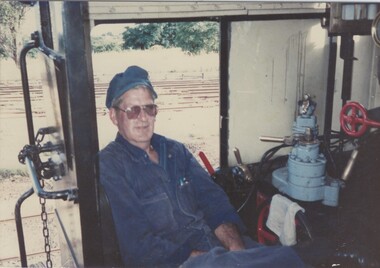
Photograph - Fred Rochow Railways Collection - Driver Ned Ziebell on R761, 12 December 1988
... Fred Rochow Railways Collection - Driver Ned Ziebell on R761...Train driver Ned Ziebell inside the R761 on 12th December 1988...Railways Wodonga Fred Rochow Ned Ziebell R761 locomotive Train driver Ned Ziebell inside the R761 on 12th December 1988 Fred Rochow Railways Collection - Driver Ned Ziebell on R761 Photograph Fred Rochow Railways Collection - Driver Ned Ziebell on R761 ...The Fred Rochow Railways Collection incorporates photos related to the operation of the Wodonga Railway Station including different types of trains and railways staff C. 1930 – 1990. It was donated to the Wodonga Historical Society by Fred Rochow, a railwayman who spent many years based in Wodonga. He joined the Victorian Railways on 17th June l947 and retired in 1988. For some time, he was a member of the Australian Federated Union of Locomotive Enginemen and served a term as a member of the Trades Hall Council. He had an extensive knowledge of the struggles that took place to achieve better conditions for railway workers. Fred worked for many years as a fireman and then worked his way up the ranks to driver, experiencing many changes from the days of steam locomotives through to diesel trains, locomotives and even the modern XPT train. He worked throughout Victoria at different stages of his career, with his final working years focused on the northeast of Victoria and the Albury to Melbourne line. After his retirement, Fred continued to share his love of steam miniature trains with the community. R761 - The R761 arrived in Victoria on the 28th February 1952 upon the ship ‘Helenus’ and entered service on the 9th April 1952. R761 spent long periods in storage and occasionally saw service until it was withdrawn. In 1970 R761 was overhauled and was made available for use on special trains. It became the final R class to run in VR service on the 5th September 1974, ending 120 years of mainline steam operation in Victoria. After years of debate about its future, on the 30th March 1985 the loco was officially returned to service, hauling special trains to celebrate the years of steam locomotives.This collection has local and statewide significance as it captures images of trains, locomotives and personnel who operated the railway services in Wodonga and throughout Northeast Victoria. The railways played a critical role in opening up Victoria and connecting Australia for trade, business, social communication and transport.Train driver Ned Ziebell inside the R761 on 12th December 1988railways wodonga, fred rochow, ned ziebell, r761 locomotive -
 Friends of Westgarthtown
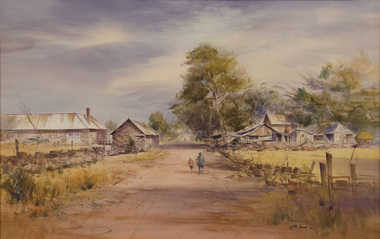
Painting, John Borrack, Ziebells, German Lane, South View, c. 1970s
... ...ziebell...Painted in the late afternoon, the lengthening shadows and lowering sky, could presage the ominous fate awaiting the farm with development. The Ziebell Farm was known as “The Pines†and sadly none of the many that proliferated there remain. ...Watercolour depicting Ziebell Farmhouse from the north, Thomastown and Mernda. ...Artist signature: John Borrack; 70's Ziebells German Lane South View...In gold frame with cream border. Ziebells, German Lane, South View Painting Painting John Borrack ...Painted from Gardenia Road. The extensive farm complex on the right. (Western side of Gardenia Road). was demolished in 1972 for housing development. Buildings shown are cowshed, hay barn, engine shed and stables. Painted in the late afternoon, the lengthening shadows and lowering sky, could presage the ominous fate awaiting the farm with development. The Ziebell Farm was known as “The Pines†and sadly none of the many that proliferated there remain. Today they would be equivalent to those at the cemetery, having been planted at the same time. Provenance: John Borrack CollectionThese two paintings by acclaimed Victorian artist John Borrack, a direct descendant of the Ziebell family through his mother Augusta, hold substantial artistic, historical, and familial significance for Ziebell’s Farmhouse Museum and the broader Westgarthtown narrative. Borrack, recognised as one of Australia’s leading landscape painters, is known for his sensitive, precise and atmospheric depictions of place. His professional standing and artistic skill considerably elevate the cultural value of these works. The paintings depict Ziebell’s Farmhouse and the associated outbuildings on the opposite side of Gardenia Road, capturing the rural character of the property prior to subdivision and suburban encroachment. They function as accurate visual records of the farm’s earlier setting and the self-sufficient lifestyle. Their documentary value is amplified by Borrack’s own reflections: he explained that he made the original sketches in the 1950s and later, in the 1970s, “decided to make a positive record of what the farm looked like”, developing these paintings from those earlier drawings. One work shows the farmhouse and milking shed as seen from the cemetery: the other captures the view from the front garden toward the former vegetable garden. Their provenance deepens their significance. As works created by a Ziebell descendant who consciously sought to record his family heritage, the paintings embody intergenerational memory, personal connection, and the enduring legacy of the Ziebell family within Victoria’s cultural landscape. They enrich the museum’s interpretive capacity, offering rare artistic insight into the historic farmstead and contributing meaningfully to the preservation and understanding of Westgarthtown’s heritage. Watercolour depicting Ziebell Farmhouse from the north, Thomastown and Mernda. In gold frame with cream border.Artist signature: John Borrack; 70's Ziebells German Lane South Viewillustrations, watercolours, john borrack, ziebell, watercolour, painting -
 Friends of Westgarthtown
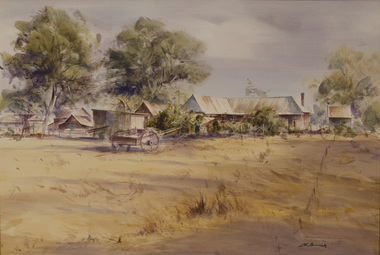
Painting, John Borrack, Last Days Ziebells "The Pines" Thomastown, c. 1970s
... ...ziebell...Provenance: Augusta Borrack (nee Ziebell) Collection, John Borrack Collection...Watercolour painting, depicting Ziebell's Farmhouse from the south (Thomastown and Mernda). ...Artist signature: John Borrack; Last Days at Ziebells "The Pines" Thomastown, 'Pro mea matre hanc picturan feci (In Memoria)'...Provenance: Augusta Borrack (nee Ziebell) Collection, John Borrack Collection These two paintings by acclaimed Victorian artist John Borrack, a direct descendant of the Ziebell family through his mother Augusta, hold substantial artistic, historical, and familial significance for Ziebell’s Farmhouse Museum and the broader Westgarthtown narrative. ...Painted from the home (or front) paddock which ran south to the creek. The paddock was used for the cultivation of lucerne and maize crops in the lower regions while closer to the house where Ainwick Crescent is now situated, it was a burgeoning market garden for the cultivation of all varieties of vegetables. The large pines beyond, sheltered the farmyard on the west of Gardenia Road. That complex can be partly glimpsed on the left of the painting. This is a directly painted watercolour relying on the use of white paper and transparencies to impart a feeling of morning light. The figure is the artist's mother for whom the picture was painted. Provenance: Augusta Borrack (nee Ziebell) Collection, John Borrack CollectionThese two paintings by acclaimed Victorian artist John Borrack, a direct descendant of the Ziebell family through his mother Augusta, hold substantial artistic, historical, and familial significance for Ziebell’s Farmhouse Museum and the broader Westgarthtown narrative. Borrack, recognised as one of Australia’s leading landscape painters, is known for his sensitive, precise and atmospheric depictions of place. His professional standing and artistic skill considerably elevate the cultural value of these works. The paintings depict Ziebell’s Farmhouse and the associated outbuildings on the opposite side of Gardenia Road, capturing the rural character of the property prior to subdivision and suburban encroachment. They function as accurate visual records of the farm’s earlier setting and the self-sufficient lifestyle. Their documentary value is amplified by Borrack’s own reflections: he explained that he made the original sketches in the 1950s and later, in the 1970s, “decided to make a positive record of what the farm looked like”, developing these paintings from those earlier drawings. One work shows the farmhouse and milking shed as seen from the cemetery: the other captures the view from the front garden toward the former vegetable garden. Their provenance deepens their significance. As works created by a Ziebell descendant who consciously sought to record his family heritage, the paintings embody intergenerational memory, personal connection, and the enduring legacy of the Ziebell family within Victoria’s cultural landscape. They enrich the museum’s interpretive capacity, offering rare artistic insight into the historic farmstead and contributing meaningfully to the preservation and understanding of Westgarthtown’s heritage. Watercolour painting, depicting Ziebell's Farmhouse from the south (Thomastown and Mernda). Painting is mounted in a gold frame with cream board.Artist signature: John Borrack; Last Days at Ziebells "The Pines" Thomastown, 'Pro mea matre hanc picturan feci (In Memoria)'illustrations, watercolours, john borrack, ziebell, watercolour, painting -
 Eltham District Historical Society Inc
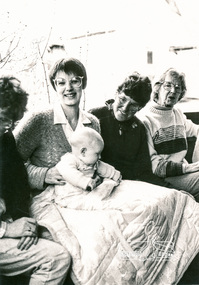
Photograph, Helen Ziebell and Adam (6 months), at Eltham Living and Learning Centre, c.1984, 1984c
... Helen Ziebell and Adam (6 months), at Eltham Living and Learning Centre, c.1984...eltham living and learning centre activities helen ziebell Black and white photograph Helen Ziebell and Adam (6 months), at Eltham Living and Learning Centre, c.1984 Photograph ...Black and white photographeltham living and learning centre, activities, helen ziebell -
 Friends of Westgarthtown
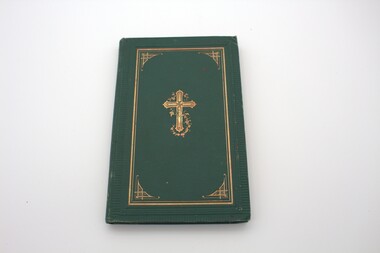
Book - Bible, "Confirmandenbuch", 1881
... given to Charles Ziebell on 12 November 1882...Written in fly leaf " Charles Ziebell...given to Charles Ziebell on 12 November 1882 books religion confirmation methodist prayer book german text charles ziebell confirmandenbuch hermann thummel. ...? This bible was ?acquired by/?given to Charles Ziebell on 12 November 1882Small hard covered book with green cover and gold cross and decorations embossed. Written in German with title "Confirmandenbuch". Author Hermann Thummel. 175 pages.Written in fly leaf " Charles Ziebellbooks, religion, confirmation, methodist, prayer book, german text, charles ziebell, confirmandenbuch, hermann thummel. -
 Friends of Westgarthtown
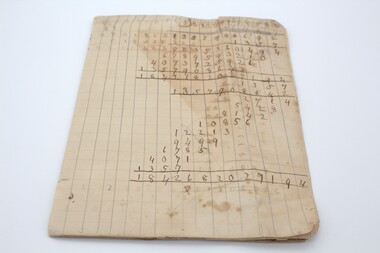
Book - Book, exercise
... Used by Alfred Ziebell at the Thomastown State School...exercises done in lead pencil, 'Alfred Ziebell' on inside page...Used by Alfred Ziebell at the Thomastown State School books school/educational arithmetic exercise maths arthur ziebell exercises done in lead pencil, 'Alfred Ziebell' on inside page paper exercise book, lined into squares. ...Used by Alfred Ziebell at the Thomastown State Schoolpaper exercise book, lined into squares. Pencil arithmetic exercises completed on all pages, some with red pencil marks. 8 leaves.exercises done in lead pencil, 'Alfred Ziebell' on inside pagebooks, school/educational, arithmetic, exercise, maths, arthur ziebell -
 Friends of Westgarthtown
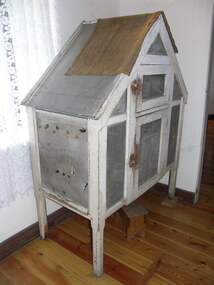
Functional object - Coolgardie Safe, Carl Ziebell, direct descendant, c. 1915
... Carl Ziebell, direct descendant...Sylvia Schultz (nee Ziebell) remembers the Coolgardie safe at Ziebell’s Farmhouse “was always positioned in the pantry where it is today, near the window to allow the breeze in”. ...This Coolgardie safe is a significant example of late-19th-century Australian ingenuity and domestic adaptation in response to the challenges of life in remote and harsh environments. Invented in the late 1890s by Arthur Patrick McCormick at Coolgardie, then the center of a major Western Australian gold rush, the safe represents an important technological response to the need for preserving perishable foods in extreme heat before the availability of mechanical refrigeration. Using the same evaporative principles employed by explorer’s canvas water bags, the Coolgardie safe utilised a timber frame, zinc metal sheets, wire mesh panels and wet hessian cloth to create a naturally cooled storage chamber. When placed in a draught or breeze, evaporation lowered the internal temperature, allowing miners, settlers and later rural households to keep meat, dairy and vegetables safe for longer periods. Sylvia Schultz (nee Ziebell) remembers the Coolgardie safe at Ziebell’s Farmhouse “was always positioned in the pantry where it is today, near the window to allow the breeze in”. Items the Ziebell’s stored in the safe included meats, milk and cream, and home-made goods. This object embodies a pivotal moment in Australia’s social and technological history, illustrating resourcefulness, adaptation to climate, and the lived realities of those who settled and worked in remote regions. As an early form of sustainable refrigeration, it contributes valuable interpretive depth to domestic, rural and goldfields history. Handmade food safe with white painted wooden frame and perforated zinc screen panels. Galvanised sheet roof. Raised four beveled legs. Two rectangular doors, bottom door large, opens to main area with one shelf. top door small, opens to triangular roof section. Movable latches of wood on both doors.No visible markingsdomestic items, food storage and preservation, food, safe, storage, pantry, carl ziebell -
 Emerald Museum & Nobelius Heritage Park
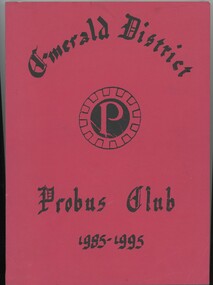
Book, Mervyn Ziebell, Emerald District Probus Club 1985-1995, 1990s
... Mervyn Ziebell...Emerald District Probus Club 1985-1995 Book Mervyn Ziebell ...Historical record of the Emerald District Probus Club from 1985 to 1995.Maroon coloured cover with black 'old English style' font. No page numbering. Contents page. Colour photos.non-fictionHistorical record of the Emerald District Probus Club from 1985 to 1995.emerald probus club -
 Friends of Westgarthtown
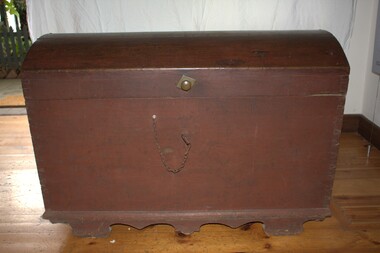
Functional object - Trunk/ Koffer, c. 1840s
... It is likely that the contents included some building tools and as well, implements which Christian Ziebell used in his trade as a butcher in Bruel, thereby enabling him to undertake profitable work on his arrival in Australia....'C. Ziebell' written in large font on back of chest...Ziebell' written in large font on back of chest Large wooden trunk/koffer. ...The chest was constructed to allowable dimensions for storage in the ship's hold. The sturdy watertight construction afforded protection for the chests contents. It can be imagined that these would be household utensils, items of clothing and the most treasured ornaments as space permitted. It is likely that the contents included some building tools and as well, implements which Christian Ziebell used in his trade as a butcher in Bruel, thereby enabling him to undertake profitable work on his arrival in Australia.This object is of primary significance. The Koffer was constructed to allowable dimensions for storage in the ship’s hold. The sturdy watertight construction afforded protection for the Koffer’s contents on the voyage aboard the Privislaw from Hamburg, Germany to Hobsons Bay, Australia in 1850. The Koffer held the precious necessities for life for Christian Ziebell's family at their new destination. It is likely that the contents included some building tools as well, implements that Christian used in his trade as a butcher in Bruel, thereby enabling him to undertake profitable work on arrival in Australia. The wooden Koffer was airtight, so if lost overboard it would be retrievable. Some were fixed to the ship’s deck. After they settled at Westgarthtown the Koffer continued to contain the precious documents through each generation. Only the current owners saw the contents in each generation, and the children always regarded it as a “treasure chest”, which was always locked and out of bounds for them. This German-made sea chest, dating from the late 1840s, holds exceptional historical, cultural, and interpretive significance as an original migration object belonging to Christian and Sophia Ziebell during their maiden voyage to Australia. Serving as the family’s personal storage trunk aboard the Pribislaw in 1849, the chest would have functioned as a container for clothing, tools, and essential belongings. Later it served as storage for family archives and Lutheran church committee papers. Constructed in the robust mid-19th-century German style, the chest likely features oak timbers, dovetail joinery, and iron fittings typical of sea-going koffers of the period. Its painted decoration, including the name “C. Ziebell” in large black charcoal script, provides strong, direct provenance and reflects both ownership and pride in family identity. Such personalised embellishment was common among German migrants who decorated their chests during periods of spare time aboard the ship. As one of the rare surviving objects directly associated with the Ziebell family’s migration story, this chest embodies themes of aspiration, hardship, cultural continuity, and settlement. It is a tangible link between the family’s Mecklenburg origins and their new life at Westgarthtown, offering powerful interpretive value for understanding early German-Wendish migration and daily life at sea. Built to specifications for sea voyaging it is also a reminder of the planning required prior to considered migration. Its survival enriches the museum’s capacity to convey the lived experience of Christian and Sophia Ziebell and the foundational story of the community they helped to establish. Large wooden trunk/koffer. Base is rectangular, and lid is rectancular to fit the base but curves between the front and back. Morticed corners; protruding base with beveled edge. Supported by profiled runners with four built-in feet. Handle for carrying on each end, and locking mechanism on front.'C. Ziebell' written in large font on back of chestpersonal effects, travel goods, pribislaw, johann christian ziebell, german migration, luggage -
 Friends of Westgarthtown
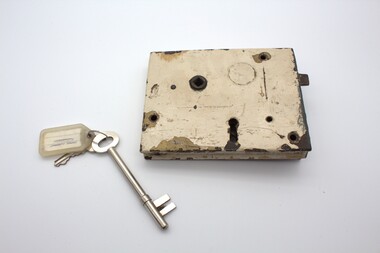
Functional object - Rim Lock and Key, c.1850
... This example formed part of the fabric of the Ziebell's Farmhouse, one of the earliest surviving German settler homes in Victoria, and provides insight into the construction methods and everyday domestic life of the Ziebell family....The lock was removed from one of the doors of Ziebell's Farmhouse and is representative of the original fittings used throughout the nineteenth-century dwelling....This example formed part of the fabric of the Ziebell's Farmhouse, one of the earliest surviving German settler homes in Victoria, and provides insight into the construction methods and everyday domestic life of the Ziebell family. ...Rim locks were commonly used on domestic buildings throughout the nineteenth and early twentieth centuries. This example formed part of the fabric of the Ziebell's Farmhouse, one of the earliest surviving German settler homes in Victoria, and provides insight into the construction methods and everyday domestic life of the Ziebell family.Painted metal rim lock with associated metal key. The rectangular lock case retains traces of its original cream-coloured paint and exhibits wear consistent with long-term use. The lock was removed from one of the doors of Ziebell's Farmhouse and is representative of the original fittings used throughout the nineteenth-century dwelling. -
 Friends of Westgarthtown
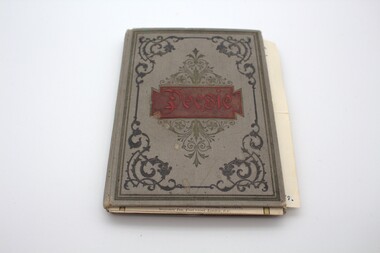
Book - Poesie Book, c1885
... The notebook formed part of a group of German-language family items inherited by Janet Hubbard from her grandfather, Henry Christian Ziebell (1911–1988), and was later donated to Ziebell's Farmhouse Museum by Janet Hubbard...The volume includes a bookplate recording the confirmation of Otto Ziebell in 1887, along with two loose inserted papers: a prayer titled Be Faithful Unto Death and a handwritten note dated 22 March 1959 describing the book as a collection of original German poems written by Charles and family....The volume also contains a bookplate commemorating the confirmation of Otto Ziebell in 1887 and a loose prayer sheet titled Be Faithful Unto Death. ...According to a handwritten note inserted in the volume and dated 22 March 1959, the notebook contains a collection of original German poems written by Charles and members of his family. The volume also contains a bookplate commemorating the confirmation of Otto Ziebell in 1887 and a loose prayer sheet titled Be Faithful Unto Death. The notebook formed part of a group of German-language family items inherited by Janet Hubbard from her grandfather, Henry Christian Ziebell (1911–1988), and was later donated to Ziebell's Farmhouse Museum by Janet HubbardBound notebook containing handwritten poems in German, likely compiled for personal use or family exchange. The volume includes a bookplate recording the confirmation of Otto Ziebell in 1887, along with two loose inserted papers: a prayer titled Be Faithful Unto Death and a handwritten note dated 22 March 1959 describing the book as a collection of original German poems written by Charles and family. -
 Whitehorse Historical Society Inc.
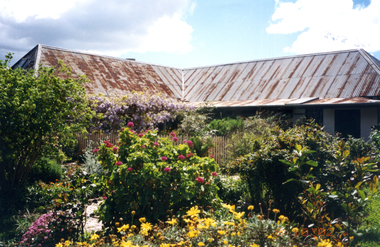
Photograph, Ziebell's Cottage, 8/10/2002 12:00:00 AM
... Coloured photograph of Ziebell's Cottage and garden....westgarthtown ziebell's cottage Coloured photograph of Ziebell's Cottage and garden. ...Coloured photograph of Ziebell's Cottage and garden.westgarthtown, ziebell's cottage -
 Friends of Westgarthtown
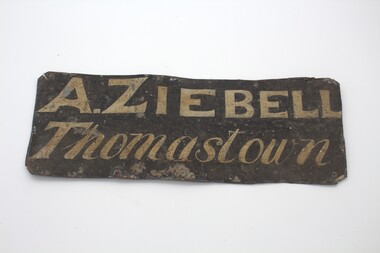
Sign - Buggy ownership plate-A Ziebell, Homemade
... A. Ziebell Thomastown...Its significance relates to the buggy (0254.2), belonging to Alfred Ziebell, to which it was attached. buggy number plate alfred ziebell ziebell's farmhouse friends of westgarthtown A. ...This plate was attached to the buggy (0254.2) which acted similarly to a number plate in denoting ownership. As such it is the only one of its kind. Estimated date of manufacture was late 19th or early 20th Century.This object is of primary significance. Its significance relates to the buggy (0254.2), belonging to Alfred Ziebell, to which it was attached.Metal hand painted ownership plate. Black background with yellow writingA. Ziebell Thomastownbuggy, number plate, alfred ziebell, ziebell's farmhouse, friends of westgarthtown -
 Friends of Westgarthtown
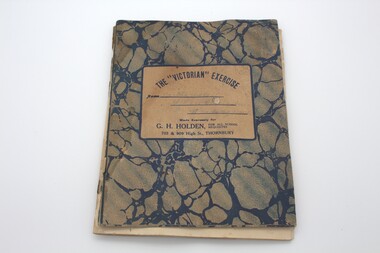
Book - Book, exercise, c.1923
... This book was used by Bertha Ziebell while a student at Thomastown State School in c. 1923. ...The "Victorian" Exercise, Name 'Bertha Ziebell SS 181 Thomastown Writing Book' Made Expressly for G. ...This book was used by Bertha Ziebell while a student at Thomastown State School in c. 1923. ...This book was used by Bertha Ziebell while a student at Thomastown State School in c. 1923. A lined paper exercise book, cardboard cover, writing practice in ink, in English. Bound in cardboard. Back cover missing. Label: pencil. inside back page, bottom right corner.Bertha Ziebell was a great granddaughter of Christian Ziebell and Sophia Ziebell who migrated to Australia from Germany in 1850. Bertha Ziebell was born at Ziebell's Farmhouse and this book is typical of writing books used by Victorian school children in the first half of the 20th century. It is the only one of its kind.lined paper exercise book, cardboard cover, writing practice in ink, in English.The "Victorian" Exercise, Name 'Bertha Ziebell SS 181 Thomastown Writing Book' Made Expressly for G. H. Holden, For All School Requisites, 703& 909 High St., Thornbury'books, school/educational, exercise book, writing, ink, paper -
 Whitehorse Historical Society Inc.
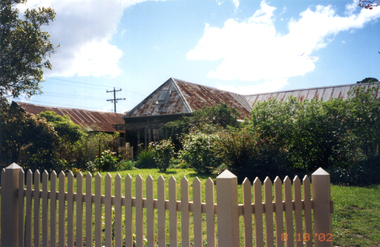
Photograph, Ziebell's Cottage, 8/10/2002 12:00:00 AM
... Coloured photograph of Ziebell's Cottage from the entrance gate....westgarthtown ziebell's cottage Coloured photograph of Ziebell's Cottage from the entrance gate. ...Coloured photograph of Ziebell's Cottage from the entrance gate.westgarthtown, ziebell's cottage -
 Friends of Westgarthtown
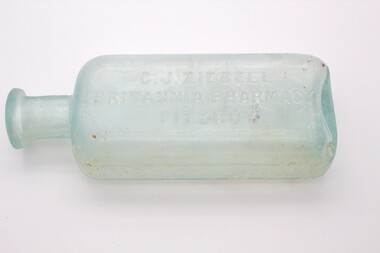
Container - Medicine bottle, c.1900
... Small medicine glass bottle branded "C.J. Ziebell, Britannia Pharmacy". The bottle is associated with Charles Johann Ziebell, a pharmaceutical chemist who, after studying in Germany, operated the Britannia Pharmacy in Brunswick Street, Fitzroy, for the entirety of his working life. ...Small clear medicine glass bottle branded "C.J. Ziebell, Britannia Pharmacy". The base is embossed “W.T. & Co. ...Small medicine glass bottle branded "C.J. Ziebell, Britannia Pharmacy". The bottle is associated with Charles Johann Ziebell, a pharmaceutical chemist who, after studying in Germany, operated the Britannia Pharmacy in Brunswick Street, Fitzroy, for the entirety of his working life. ...Small medicine glass bottle branded "C.J. Ziebell, Britannia Pharmacy". The bottle is associated with Charles Johann Ziebell, a pharmaceutical chemist who, after studying in Germany, operated the Britannia Pharmacy in Brunswick Street, Fitzroy, for the entirety of his working life. During this period, Brunswick Street was home to numerous pharmacies, shops and medical practices. Charles was reportedly the first chemist in Australia to manufacture hydrogen peroxide, along with developing a range of other pharmaceutical and beauty products. Hydrogen peroxide was produced in a building located behind the pharmacy. Family history suggests that a large chemical company later acquired or appropriated Charles's formula. Believing he had been unfairly treated, and amidst strong anti-German sentiment during the early twentieth century, Charles subsequently took his own life.Small clear medicine glass bottle branded "C.J. Ziebell, Britannia Pharmacy". The base is embossed “W.T. & Co. U.S.A. 1892”, likely referring to Whitall Tatum & Co., an American glass manufacturer known for producing pharmaceutical and chemical bottles. The 1892 date may relate to a patent or mould design rather than the exact date of manufacture.W T & Co USA 1892 -
 8th/13th Victorian Mounted Rifles Regimental Collection
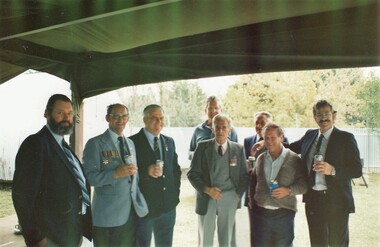
Photograph - ex-VMR group 1990
... ...Ziebell...Pictured from left to right are: Mick Hudson, Vern Martin, Viv Schmidt, Jack Hodda, Daryl Conway, Joe Richter, Rear Ned Ziebell, Les Coward....Pictured from left to right are: Mick Hudson, Vern Martin, Viv Schmidt, Jack Hodda, Daryl Conway, Joe Richter, Rear Ned Ziebell, Les Coward. Buna Barracks VMR Hudson Martin Schmidt Hodda Conway Richter Ziebell Coward Coloured photograph of group of former members of 8 /13 Victorian Mounted Rifles at Buna Barracks,Albury 29 April 1990. ...Pictured from left to right are: Mick Hudson, Vern Martin, Viv Schmidt, Jack Hodda, Daryl Conway, Joe Richter, Rear Ned Ziebell, Les Coward.Coloured photograph of group of former members of 8 /13 Victorian Mounted Rifles at Buna Barracks,Albury 29 April 1990.buna barracks, vmr, hudson, martin, schmidt, hodda, conway, richter, ziebell, coward -
 Whitehorse Historical Society Inc.
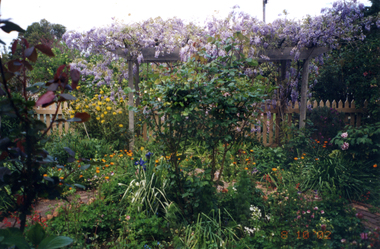
Photograph, Ziebell's Cottage Garden, 8/10/2002 12:00:00 AM
... Coloured photograph of the garden at Ziebell's Cottage Garden taken from the front garden looking to the street....westgarthtown ziebell's cottage Coloured photograph of the garden at Ziebell's Cottage Garden taken from the front garden looking to the street. ...Coloured photograph of the garden at Ziebell's Cottage Garden taken from the front garden looking to the street.westgarthtown, ziebell's cottage -
 Friends of Westgarthtown
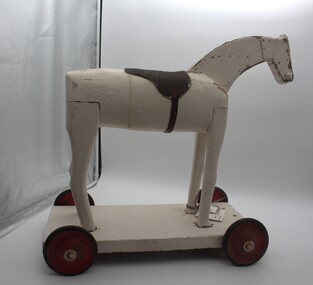
Toy Horse, c. 1910-1930
... Handmade by Carl Heinrich Alfred "Carl Alfred" Ziebell (1867–1940), great-grandson of Westgarthtown pioneers Christian and Sophia Ziebell, this toy horse is an example of the skilled craftsmanship practised within the Ziebell family. ...Handmade by Carl Heinrich Alfred "Carl Alfred" Ziebell (1867–1940), great-grandson of Westgarthtown pioneers Christian and Sophia Ziebell, this toy horse is an example of the skilled craftsmanship practised within the Ziebell family. ...Handmade by Carl Heinrich Alfred "Carl Alfred" Ziebell (1867–1940), great-grandson of Westgarthtown pioneers Christian and Sophia Ziebell, this toy horse is an example of the skilled craftsmanship practised within the Ziebell family. It was made for the children of his eldest son, Alfred Ziebell, and remained within the family until donated by Joan Morris (née Ziebell).Handmade wooden toy horse known as Pearly Bridge, constructed and painted white with a dark painted saddle and mounted on a rectangular wheeled base with four red-painted wheels. The horse features a stylised carved body with a flat, shaped head and simple painted details -
 Friends of Westgarthtown
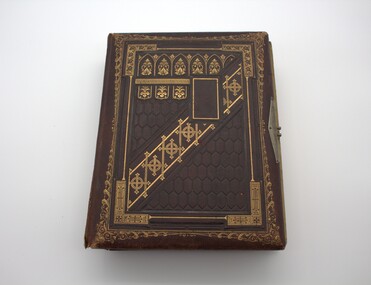
Album - Photo Album, c.1800s
... The album also contains memorial bookplates commemorating family members including Henry Ziebell, Charles Ludwig Ziebell, Heinrich August Sprenger and Elisabeth Ziebell, recording details of their deaths and burial places. ...The album also contains memorial bookplates commemorating family members including Henry Ziebell, Charles Ludwig Ziebell, Heinrich August Sprenger and Elisabeth Ziebell, recording details of their deaths and burial places. ...Large leather-bound family photograph album with gold-foiled decoration, containing black-and-white photographs of members of the Ziebell family. Many of the images featured in the publication The House that Christian Built. The album also contains memorial bookplates commemorating family members including Henry Ziebell, Charles Ludwig Ziebell, Heinrich August Sprenger and Elisabeth Ziebell, recording details of their deaths and burial places. Donated to Ziebell's Farmhouse Museum by Janet Hubbard. -
 8th/13th Victorian Mounted Rifles Regimental Collection
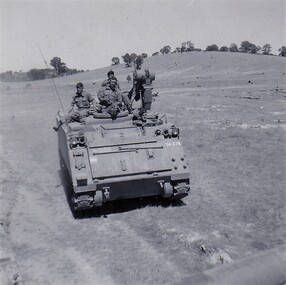
Photograph - Recovery vehicle
... c/c Sgt. Faul, Dvr Cpl Ziebell" Two other crewmen not named...ARVs were allocated on basis 1 to each squadron of an armoured regiment for battlefield recovery. military tank recovery VMR Puckapunyal " L.A.D. c/c Sgt. Faul, Dvr Cpl Ziebell" Two other crewmen not named Black and white photograph of Centurion Armoured Recovery Vehicle ( ARV ) of 8/13 Victorian Mounted Rifles on exercise at Puckapunyal, 1970. ...ARVs were allocated on basis 1 to each squadron of an armoured regiment for battlefield recovery.Black and white photograph of Centurion Armoured Recovery Vehicle ( ARV ) of 8/13 Victorian Mounted Rifles on exercise at Puckapunyal, 1970." L.A.D. c/c Sgt. Faul, Dvr Cpl Ziebell" Two other crewmen not namedmilitary, tank, recovery, vmr, puckapunyal -
 Wodonga & District Historical Society Inc
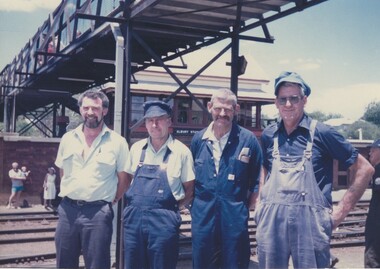
Photograph - Fred Rochow Railways Collection - Crew on the Flying Scotsman, 1988
... L-R: Guard Jim Taylor, Fireman Noel Strauss, Foreman Jack Brown and Driver Ned Ziebell....Railways Wodonga Fred Rochow Flying Scotsman Australia Bicentennial L-R: Guard Jim Taylor, Fireman Noel Strauss, Foreman Jack Brown and Driver Ned Ziebell. The 4 members of the crew of The Flying Scotsman in 1988, taken at the Albury Station The Flying Scotsman Pacific 4-6-2, perhaps one of the most iconic steam locomotives in the world, visited Australia in 1988-89 for a series of events associated with the country’s bicentennial celebrations. ...The Fred Rochow Railways Collection incorporates photos related to the operation of the Wodonga Railway Station including different types of trains and railways staff C. 1930 – 1990. It was donated to the Wodonga Historical Society by Fred Rochow, a railwayman who spent many years based in Wodonga. He joined the Victorian Railways on 17th June l947 and retired in 1988. For some time, he was a member of the Australian Federated Union of Locomotive Enginemen and served a term as a member of the Trades Hall Council. He had an extensive knowledge of the struggles that took place to achieve better conditions for railway workers. Fred worked for many years as a fireman and then worked his way up the ranks to driver, experiencing many changes from the days of steam locomotives through to diesel trains, locomotives and even the modern XPT train. He worked throughout Victoria at different stages of his career, with his final working years focused on the northeast of Victoria and the Albury to Melbourne line. After his retirement, Fred continued to share his love of steam miniature trains with the community.This collection has local and statewide significance as it captures images of trains, locomotives and personnel who operated the railway services in Wodonga and throughout Northeast Victoria. The railways played a critical role in opening up Victoria and connecting Australia for trade, business, social communication and transport.The 4 members of the crew of The Flying Scotsman in 1988, taken at the Albury Station The Flying Scotsman Pacific 4-6-2, perhaps one of the most iconic steam locomotives in the world, visited Australia in 1988-89 for a series of events associated with the country’s bicentennial celebrations. As part of the Bicentennial celebrations locomotives began to arrive in Melbourne for the AusSteam 88 exhibition from 14 October. A planned parallel run south of Seymour with NSW locomotives 3112 and 1210 and Victorian Railways J515 had to be abandoned due to late running by the NSW locomotives. A parallel run did take place on Sunday 16 October when VR R761 and NSW 3801 ran from Wodonga to Melbourne. On 25 October 1988, the Flying Scotsman worked its first passenger trip in Australia when it took a return Melbourne to Albury journey. L-R: Guard Jim Taylor, Fireman Noel Strauss, Foreman Jack Brown and Driver Ned Ziebell.railways wodonga, fred rochow, flying scotsman, australia bicentennial -
 Wodonga & District Historical Society Inc
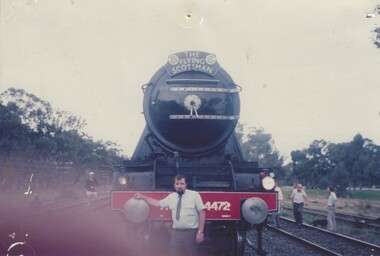
Photograph - Fred Rochow Railways Collection - Guard Colin Ray and The Flying Scotsman, 1988
... L-R: Guard Jim Taylor, Fireman Noel Strauss, Foreman Jack Brown and Driver Ned Ziebell....Railways Wodonga Fred Rochow Flying Scotsman L-R: Guard Jim Taylor, Fireman Noel Strauss, Foreman Jack Brown and Driver Ned Ziebell. Guard Colin Ray standing in front of The Flying Scotsman at Longwood, Victoria on 20th October 1988. ...The Fred Rochow Railways Collection incorporates photos related to the operation of the Wodonga Railway Station including different types of trains and railways staff C. 1930 – 1990. It was donated to the Wodonga Historical Society by Fred Rochow, a railwayman who spent many years based in Wodonga. He joined the Victorian Railways on 17th June l947 and retired in 1988. For some time, he was a member of the Australian Federated Union of Locomotive Enginemen and served a term as a member of the Trades Hall Council. He had an extensive knowledge of the struggles that took place to achieve better conditions for railway workers. Fred worked for many years as a fireman and then worked his way up the ranks to driver, experiencing many changes from the days of steam locomotives through to diesel trains, locomotives and even the modern XPT train. He worked throughout Victoria at different stages of his career, with his final working years focused on the northeast of Victoria and the Albury to Melbourne line. After his retirement, Fred continued to share his love of steam miniature trains with the community.This collection has local and statewide significance as it captures images of trains, locomotives and personnel who operated the railway services in Wodonga and throughout Northeast Victoria. The railways played a critical role in opening up Victoria and connecting Australia for trade, business, social communication and transport.Guard Colin Ray standing in front of The Flying Scotsman at Longwood, Victoria on 20th October 1988. The Flying Scotsman Pacific 4-6-2, perhaps one of the most iconic steam locomotives in the world, visited Australia in 1988-89 for a series of events associated with the country’s bicentennial celebrations. As part of the Bicentennial celebrations locomotives began to arrive in Melbourne for the AusSteam 88 exhibition from 14 October. A planned parallel run south of Seymour with NSW locomotives 3112 and 1210 and Victorian Railways J515 had to be abandoned due to late running by the NSW locomotives. A parallel run did take place on Sunday 16 October when VR R761 and NSW 3801 ran from Wodonga to Melbourne. On 25 October 1988, the Flying Scotsman worked its first passenger trip in Australia when it took a return Melbourne to Albury journey. L-R: Guard Jim Taylor, Fireman Noel Strauss, Foreman Jack Brown and Driver Ned Ziebell.railways wodonga, fred rochow, flying scotsman -
 Friends of Westgarthtown
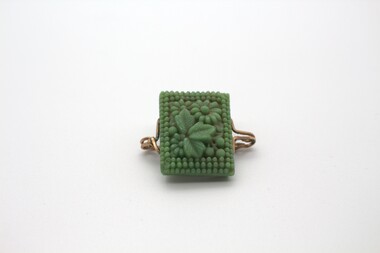
Accessory - Gold Brooch with Jade Stone
... The brooch was passed down through generations of the Ziebell family before being donated to Ziebell's Farmhouse Museum by Janet Hubbard. ...The brooch was passed down through generations of the Ziebell family before being donated to Ziebell's Farmhouse Museum by Janet Hubbard. ...Gold brooch featuring a square jade stone set within a decorative gold mount. The brooch was passed down through generations of the Ziebell family before being donated to Ziebell's Farmhouse Museum by Janet Hubbard. While the original owner and date of manufacture are unknown, the brooch is believed to have belonged to Annie Ziebell (née Robertson) -
 Friends of Westgarthtown
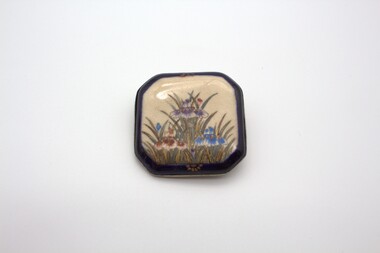
Accessory - Painted Porcelain Brooch
... The brooch was passed down through generations of the Ziebell family before being donated to Ziebell's Farmhouse Museum by Janet Hubbard. ...The brooch was passed down through generations of the Ziebell family before being donated to Ziebell's Farmhouse Museum by Janet Hubbard. ...Painted porcelain brooch featuring a hand-painted floral design set within a decorative metal mount. The brooch was passed down through generations of the Ziebell family before being donated to Ziebell's Farmhouse Museum by Janet Hubbard. While the original owner and date of manufacture are unknown, the brooch is believed to have belonged to Annie Ziebell (née Robertson). -
 Friends of Westgarthtown
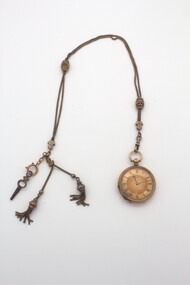
Accessory - Fobwatch, Chain and Key, c.1856-1890
... Believed to have belonged to either Elizabeth Ziebell (née Sprenger, 1836–1892) wife of Carl Chrsitian Ziebell or Amelia Alice Ziebell (née Bodycoat 1870-1948) wife of Albert Heinrich Ziebell, the watch provides a personal link to the women of the early Ziebell family and to domestic and social life within Westgarthtown’s German settler community. ...Believed to have belonged to either Elizabeth Ziebell (née Sprenger, 1836–1892) wife of Carl Chrsitian Ziebell or Amelia Alice Ziebell (née Bodycoat 1870-1948) wife of Albert Heinrich Ziebell, the watch provides a personal link to the women of the early Ziebell family and to domestic and social life within Westgarthtown’s German settler community. ...This finely crafted women’s gold fob watch, made by Robert Stauffer & Fils of La Chaux-de-Fonds, Switzerland, is an elegant example of mid-19th-century Swiss watchmaking. Its engraved floral motifs, protected beneath glass and repeated on the reverse, reflect the refinement and skill associated with one of Europe’s foremost horological centers. Believed to have belonged to either Elizabeth Ziebell (née Sprenger, 1836–1892) wife of Carl Chrsitian Ziebell or Amelia Alice Ziebell (née Bodycoat 1870-1948) wife of Albert Heinrich Ziebell, the watch provides a personal link to the women of the early Ziebell family and to domestic and social life within Westgarthtown’s German settler community. Women’s watches of this era were both functional and fashionable, commonly worn on a long necklace chain, suspended from a chatelaine at the waist, or attached to a decorative bodice brooch. Such pieces served as markers of refinement, femininity and social standing. The tiny winding key is central to the object’s significance. Before stem-winding mechanisms became standard in the 1870s, watches were wound and set by inserting a small key into an arbor at the back of the case. The survival of both the watch and its original key strengthens their historical integrity and deepens understanding of 19th-century personal technology. Donated to Ziebell’s Farmhouse Museum in 2025 by Kristina Colic (née Ziebell) and her father Mervyn Turner Ziebell, the watch holds strong familial and interpretive value, enriching the museum’s representation of women’s heritage, adornment and craftsmanship within the Ziebell family. Robert Stauffer & Fils of La Chaux-de-Fonds, Switzerland -
 Friends of Westgarthtown
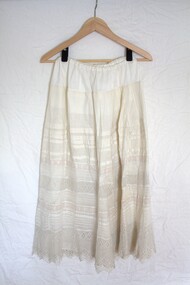
Clothing - Petticoat, c. 1895-1910
... This petticoat was originally owned and worn by Annie Ziebell (née Robertson) (1872–1953) and remained within the Ziebell family. ...This petticoat was originally owned and worn by Annie Ziebell (née Robertson) (1872–1953) and remained within the Ziebell family. ...This petticoat was originally owned and worn by Annie Ziebell (née Robertson) (1872–1953) and remained within the Ziebell family. In 1967, descendant Janet Hubbard altered the waistband so that the garment could be worn as part of her wedding ensemble for her marriage to Terry Hubbard on 1 December 1967. The adaptation and continued use of the petticoat demonstrates the enduring significance of family clothing and the intergenerational transmission of material culture within the Ziebell family. -
 Friends of Westgarthtown
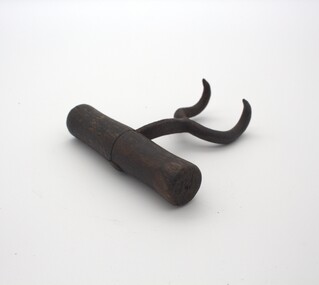
Functional object - Hook, bag
... One of the original bag hooks used on the farm at Ziebell’s...One of the original bag hooks used on the farm at Ziebell’s Hessian bags were used pre 1970 and bag hooks were used to lift heavy bags of wheat, and milled grains such as bran and pollard rural industry agriculture hook farming transportation tool Small instrument for hanging and moving bags, bifurcated hook with wood handle Functional object Hook, bag ...One of the original bag hooks used on the farm at Ziebell’sHessian bags were used pre 1970 and bag hooks were used to lift heavy bags of wheat, and milled grains such as bran and pollardSmall instrument for hanging and moving bags, bifurcated hook with wood handlerural industry, agriculture, hook, farming, transportation, tool -
 Friends of Westgarthtown
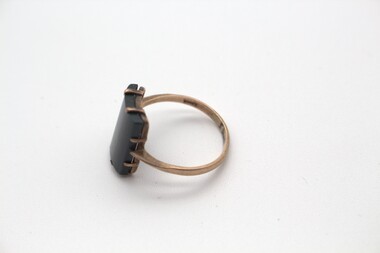
Accessory - Gold Ring with Black Stone
... The ring was passed down through generations of the Ziebell family before being donated to Ziebell's Farmhouse Museum by Janet Hubbard. ...The ring was passed down through generations of the Ziebell family before being donated to Ziebell's Farmhouse Museum by Janet Hubbard. ...Gold ring featuring a rectangular black stone set within a decorative gold band. The ring was passed down through generations of the Ziebell family before being donated to Ziebell's Farmhouse Museum by Janet Hubbard. While the original owner and date of manufacture are unknown, the ring is believed to have belonged to Annie Ziebell (née Robertson). The ring represents the types of personal jewellery that were treasured, worn and passed between family members over many years -
 Friends of Westgarthtown
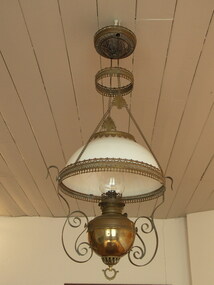
Domestic object - Lamp, Miller, Miller, c. 1890s
... Purchased by Christian Ziebell on one of his two visits back to Germany....Purchased by Christian Ziebell on one of his two visits back to Germany. ...Purchased by Christian Ziebell on one of his two visits back to Germany.This object is of primary significance. Christian Ziebell brought it back from Germany on his return visit to Germany in 1856. It always hung where it is now and it is retractable to different heights. It hung on the lowest chain length over the table and was only raised when the family had festive events such as dances when Dorothea would accompany them on the piano. Great care had to be exercised when the lamp was raised because if it went up too high, and therefore became too close to the wooden ceiling, it could cause a fire. Francis Adams – son of Sylvia Adams (Ziebell) restored the lamp in the 1990’s. This Miller-style hanging oil lamp is a rare and culturally layered object that connects American industrial manufacture with German domestic life and early migrant history in Victoria. Produced by Bradley & Hubbard (B&H) in the United States in the 1890s, the lamp displays characteristic features of the firm’s Rayo line, including a brass body, opaque white glass shade, quality burner mechanism, and a chain-operated raising and lowering system. The inscriptions “B&H Valpirfor” and patent dates 1894-1895 confirm its authenticity as an American-made B&H Rayo lamp. This lamp was likely purchased in Mecklenburg, Germany, reflecting the export of modern lighting technologies into rural German households in the late 19th century. The lamp’s significance is further enhanced by its believed association with the Ziebell family. It is understood that a family member brought the lamp to Melbourne on a subsequent return journey to Germany after the family had established themselves at Westgarthtown. As a result, the lamp embodies themes of migration, technological adaptation, and the lived domestic environment of the Ziebell family across two continents. Its high level of intactness, combined provenance and dual- history contribute to its importance as a culturally rich artefact within the Ziebell’s Farmhouse collection. Original Miller hanging lamp, made of brass and opaque white glass. Lamp has chain-operated raising and lowering mechanism. Decorative brass trimming around widest edge of glass lampshade. Contains tubular wick.B & H Valpirfor written on lowering mechanism on top of the lamp. Rayo 24.98, PAT'D. NOV. 20.94, FEB 28.95, written on top of oil compartment.lighting, kerosene & oil, oil lamp, hanging lamp, original.
