
Showing 2 items matching "Mt Franklin."
-
 State Library Victoria
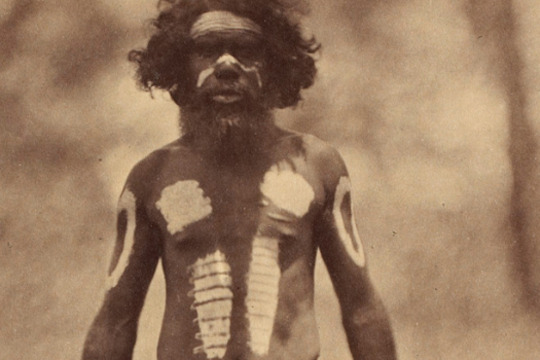
Early photographs: Indigenous Victorians
... ...Mt Franklin. ...This selection of early photographs were taken by Antoine Fauchery and Richard Daintree between late 1857 and early 1859 for inclusion in their photographic series Sun Pictures of Victoria. The album consists of fifty albumen silver prints, twelve of which are photographs of Indigenous Victorians and were the first photographic series of Australian scenes presented for sale to the public.
Featuring Victorian scenes such as landscapes and gold mining activities, the series included 12 images of various Indigenous Victorians. Taking a very 19th Century approach to their subjects, the portraits show people in both traditional and western wear, documenting the effects of colonisation.
CULTURAL WARNING: Aboriginal and Torres Strait Islander users of this website are warned that this story contains images of deceased persons and places that could cause sorrow.
-
Nyernila - Listen Continuously: Aboriginal Creation Stories of Victoria
... Tarrengower’s anger eased and he just grumbled at this cheeky little volcano who was now just coughing and spluttering with no energy left at all.All the rocks thrown by Lalgambook at Tarrengower can still be seen today and have formed what is known in the present day as the Guilford Plateau where the Jaara people would perform ceremonies on the Bora grounds also known as Yapene.Re-told by Justice B Nelson – Dja Dja Wurrung, JaaraDja Dja Wurrung word list:Tarrengower big and heavy, also a mountain situated near the township of present day MaldonYapene dance, also a township outside Guildford called YapeenLalgambook now known as Mt Franklin, near Daylesfordgart gart many rocksThe sounds of Dja Dja Wurrung:a as in karte as in eggWathaurong: The MagpieMaeewan nyanbo meerreeWoorrwoorr kommerreen-ik dja wangala woordeegarrong-goolee-a yanmeelpalamoorrkalParwon-getyaweel ngotaborreeyn ba karrangateeyngayoopanyoon-goopma-ikba koora meernook woorr-woorr benganak yan bakoopmaBenganak gayoopanyoon-goopma-ik nyeerreem talk-getyaweel ba beetyarra.Baleet benganak waeema-ik woorr-woorr kombaba.Benganak goopmala-ik talk-getyaweel Nganyakee ba deerdabeel laa-getyaweelBenganak beetyarra-ik waeema woorr-woorr werreeyt-ikWoorr-woorr tyoorrkoorrma werupmering wenering-ik yerram nganbookardineyooBenganak lola booyt nya yerram ba comugeen yoodorra meerree thornBenganak werraa yeng-yeengBenganak yeeng-ik yelatneboorang moorrkal werraa-ik ba ngaalbooma-ikwoorr-woorrMatnyoo yerram Parwan wayaperree kardineyoo benggoeethanang yerrayeng-yeng.Translated by Uncle David TournierEnglish Translation:Long time before today…The sky covered the earth making everyone crawl around in the dark.The Magpies, being proud and industrious, gathered and worked to raise thesky so everyone could move about freely.They gathered some long sticks and fighting hard they lifted the sky up.They placed the long sticks on small and big rocks,they fought to lift the sky even higher.The sky split open, showing the beauty of the first sunrise.They were so overjoyed to see the light and feel the warmth of the sun’s heat,they burst into song.As they sang, the blanket of darkness broke and drifted away like clouds.To this day the Magpies greet the sunrise with their joyful song.Re-told by Uncle David TournierThe sounds of Wathauronga as in cartee as in feetoo as in looko as in pote as in eggp as in pigt as in teart tongue is curled back and released into ‘t’t made with tongue touching the back of the teethty (yt) combination of ‘t’ and ‘y’k as in kickm as in milkn as in noisern tongue is curled backwards and released into ‘n’nh ‘n’ made with tongue touching back of teethny (yn) combination of ‘n’ and ‘y’ng as in singl as in lookrl tongue is curled backwards and released into ‘l’rr as in roady as in youw as in waterWathaurong: The Three SistersMaeewan nyanbo meerreeyoo, gelanyee kooleek wainga knettuk getyaweel, benganak merridjig. ...This story is based on the unique publication Nyernila – Listen Continuously: Aboriginal Creation Stories of Victoria.
The uniqueness is differentiated by two significant and distinguishing features. It is the first contemporary compilation of Victorian Aboriginal Creation Stories told by Victorian Aboriginal People, and it is the first to extensively use languages of origin to tell the stories.
‘Nyernila’ to listen continuously – a Wergaia/Wotjobaluk word recorded in the 20th century. To listen continuously. What is meant by this term. What meaning is being attempted to be communicated by the speaker to the recorder? What is implied in this term? What is the recorder trying to translate and communicate to the reader?
‘Nyernila’ means something along the lines of what is described in Miriam Rose Ungemerrs ‘dadirri’ – deep and respectful listening in quiet contemplation of Country and Old People. This is how our Old People, Elders and the Ancestors teach us and we invite the reader to take this with them as they journey into the spirit of Aboriginal Victoria through the reading of these stories.
Our stories are our Law. They are important learning and teaching for our People. They do not sit in isolation in a single telling. They are accompanied by song, dance and visual communications; in sand drawings, ceremonial objects and body adornment, rituals and performance. Our stories have come from ‘wanggatung waliyt’ – long, long ago – and remain ever-present through into the future.
You can browse the book online by clicking the items below, or you can download a PDF of the publication here.
nyernila
nye
ny like the ‘n’ in new
e like the ‘e’ in bed
rn
a special kind of ‘n’
i
i like the ‘i’ in pig
la
la
