
Showing 11 items matching "police"
-
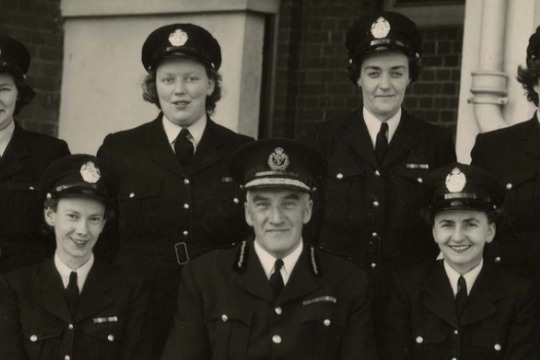 Rachael Cottle
Breaking the Mould: The First Police Women in Victoria
... ...police women...Breaking the Mould: The First Police Women in Victoria...The story of Victoria’s Police Women begins in 1917 when Madge Connor and Elizabeth Beers were appointed as police agents. They had no uniform and were unarmed. Their work was to be similar to that of a social worker; looking after neglected children and protecting vulnerable women. ...The story of Victoria’s Police Women begins in 1917 when Madge Connor and Elizabeth Beers were appointed as police agents. They had no uniform and were unarmed. Their work was to be similar to that of a social worker; looking after neglected children and protecting vulnerable women.
By 12 November 1924 the number of agents had increased to four; they were sworn into the force as police members. Police women now had powers of arrest and equal pay. However, there were still many challenges ahead for them, including battles for equal opportunities and training.
The onset of World War II saw the role of women change in the work force in Australia. Record numbers of women filled jobs traditionally held by men. Victoria Police faced a shortage of staff due to men enlisting in the war. As a result the Women’s Auxiliary Force was formed in 1942.
Since then, Victorian police women have gone on to many great achievements including: Anne Wregg (nee Cursio) being the first police woman in Australia to be awarded the Queen’s Gallantry Medal for bravery; and Christine Nixon being appointed the first female Chief Commissioner.
In 2017 Victoria Police celebrates 100 years of women in policing. Today women make up a quarter of Victoria’s Police employees. Their struggles and achievements over the last century are acknowledged and celebrated through a new exhibition ‘Agents of Change’ and by the objects and photographs collected and shared by the Victoria Police Museum.
-
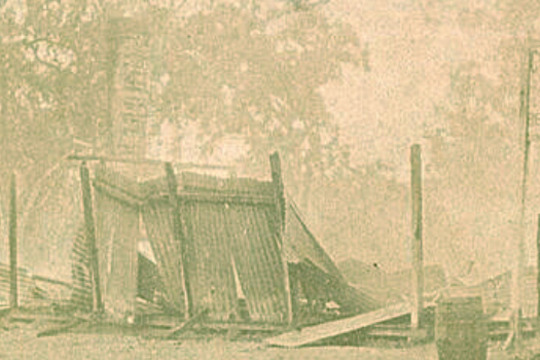 Rural City of Wangaratta / State Library Victoria
The Last Stand of the Kelly Gang: Sites in Glenrowan
... ...The Police Paddock......Photograph: The police paddock view...The Inn became the principal site of the Kelly Gang’s Last Stand, where the hostages were kept over the long wait for the Police Special Train to arrive. By the time the siege was over, with Ned Kelly captured and the rest of the gang dead, the Inn had been destroyed by fire, lit by police to flush out gang members. ...Jones’ Hotel was where the final confrontation between Ned Kelly and the Victorian Police began....The siege at Glenrowan on Monday, June 28th, 1880, was the result of a plan by the Kelly Gang to derail a Police Special Train carrying Indigenous trackers (the Gang's primary targets), into a deep gully adjacent to the railway line. The plan was put into effect on Saturday, June 26 with the murder [near Beechworth] of Aaron Sherritt, a police informant, the idea being to draw the Police Special Train through the township of Glenrowan, an area the local Kellys knew intimately. ...Ned Kelly, born in June 1855 at Beveridge, north-east of Melbourne, Northern Victoria, came to public attention as a bushranger in the late 1870s.
He was hanged at the Melbourne Gaol, November 11th, 1880. Kelly is perhaps Australia’s best known folk hero, not least of all because of the iconic armour donned by his gang in what became known as the Siege at Glenrowan (or The Last Stand), the event that led to Ned Kelly’s capture and subsequent execution.
The siege at Glenrowan on Monday, June 28th, 1880, was the result of a plan by the Kelly Gang to derail a Police Special Train carrying Indigenous trackers (the Gang's primary targets), into a deep gully adjacent to the railway line. The plan was put into effect on Saturday, June 26 with the murder [near Beechworth] of Aaron Sherritt, a police informant, the idea being to draw the Police Special Train through the township of Glenrowan, an area the local Kellys knew intimately. After the Glenrowan Affair, the Kelly Gang planned to ride on to Benalla, blow up the undermanned police station and rob some banks.
However, Ned miscalculated, thinking the train would come from Benalla not Melbourne. Instead of the 12 hours he thought it would take for a police contingent to be organized and sent on its way from Benalla, the train took 31 hours to reach Glenrowan. This resulted in a protracted and uncertain wait, leading to the long period of containment of more than 60 hostages in the Ann Jones Inn. It also resulted in a seriously sleep deprived Kelly Gang and allowed for the intervention of Thomas Curnow, a hostage who convinced Ned that he needed to take his sick wife home, enabling him to get away and warn the Police Special train of the danger.
Eventually, in the early morning darkness of Monday, June 28th, the Police Special train slowly pulled into Glenrowan Railway Station, and the police contingent on board disembarked. The siege of the Glenrowan Inn began, terminating with its destruction by fire in the mid afternoon, and the deaths of Joe Byrne, Dan Kelly and Steve Hart. Earlier, shortly after daylight on the 29th, Ned was captured about 100 metres north east of the Inn.
Glenrowan is situated on the Hume Freeway, 16 kms south of Wangaratta. The siege precinct and Siege Street have State and National Heritage listing. The town centre, bounded by Church, Gladstone, Byrne and Beaconsfield parade, including the Railway Reserve and Ann Jones’ Inn siege site, have State and National listing.
-
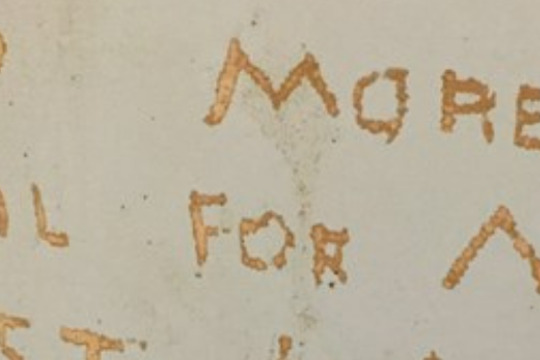 Mark Brandi
Portable Justice: The old Bacchus Marsh police lock-up
... ...police...Portable Justice: The old Bacchus Marsh police lock-up...Scratched into the timber wall of the old Bacchus Marsh police lock–up, these crudely formed words might be a prisoner’s repentance before finally going straight. Or perhaps their regret was short-lived, soon returning to a life of crime. ...Scratched into the timber wall of the old Bacchus Marsh police lock–up, these crudely formed words might be a prisoner’s repentance before finally going straight. Or perhaps their regret was short-lived, soon returning to a life of crime.
We will never know if they remained faithful to their promise, but the pledge gives life to the bitter solitude of this place, and others like it.
Prior to the widespread construction of police lock-ups, suspected criminals were subject to primitive forms of detention. In some towns, alleged culprits were tied to trees while awaiting trial, and were often subject to threats of lynching.
-
Eureka Stories
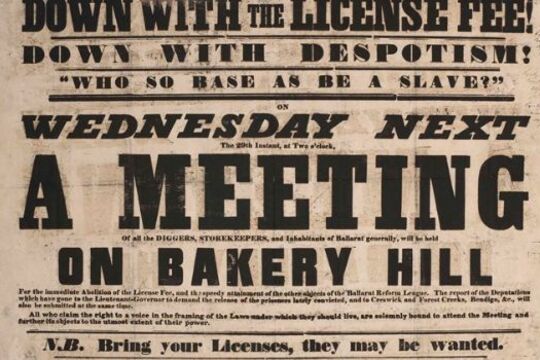
... ...police...The charter also stated that the administration of the goldfields and the colony’s police service and justice system needed to be improved. The charter was read out at a monster meeting on Bakery Hill, Ballarat, 11 November 1854, to around 10,000 miners and residents. ...Resentment of the licence fee and the conduct of police in their “licence hunts” was expressed across the Victorian goldfields. The Unfair Treatment of Diggers by the Police and Justice System People around the Victorian goldfields were also unhappy with the lack of thoroughness with which police had investigated a number of goldfields crimes. ...What is Eureka and what happened there?
In the early hours of 3 December 1854 a force of police and other troops charged a reinforced camp constructed by miners on the Eureka gold diggings. About 150 diggers were inside the stockade at the time of the attack. In the fighting, 4 soldiers and about 30 other people were killed, and another 120 people taken prisoner. Thirteen people from the stockade were charged with treason – these men were either tried and found not guilty, or charges against them were dropped.
Many people think of the Eureka Stockade as a battle between the diggers (rebellious Irish fighting for democracy) and the police and colonial militia (the forces of the British Crown in the Colony). It’s nice to have a single story to make sense of everything. Eureka, however, is not a single simple narrative. Several stories intertwine and involve many of the same people and places. Let’s look at some of them.
The Hated Gold Licences
In 1854, people mining for gold around Victoria had to pay a monthly fee of 30 shillings for the right to mine, regardless of how much gold they found. Someone who had been looking for gold unsuccessfully for months still had to pay the same fee as someone who was pulling out gold by the pound. Diggers argued that it was an unfair tax, imposed on them without their consent, as they did not have the right to vote. (After the Goldfields Royal Commission the licensing fee was changed to a tax on gold when it was being exported.)
Not only did the diggers resent the licence fee, they were angry at the way the goldfields police went about checking that miners had licences. Diggers claimed that police were beating people up or chaining them to trees if they could not produce a licence, and undertaking unnecessary inspections on people they didn’t like. Resentment of the licence fee and the conduct of police in their “licence hunts” was expressed across the Victorian goldfields.
The Unfair Treatment of Diggers by the Police and Justice System
People around the Victorian goldfields were also unhappy with the lack of thoroughness with which police had investigated a number of goldfields crimes. They were concerned about what they thought was the unfair and secretive way people were charged and convicted of crimes. There were claims by people living on the goldfields that it was necessary to bribe police and government officials in order to do business and stay safe. As the goldfields populations increased, tensions between the goldfields communities and police and other government officials rose.
In Ballarat a series of events (a murder, an arrest and a hotel burning) in late 1854 involving police and Ballarat locals led to the arrests of three men for burning down the Eureka Hotel. These arrests caused enormous disquiet in the area, adding weight to calls by the Ballarat Reform League and other organisations around the goldfields for a fundamental change to the system of government in the Colony – the next element in our Eureka story.
Demands for a Democratic Political System
Since the early 1850s people had been calling for the government to abandon the gold licensing system, remove the gold commissioners, and provide the Colony with a better policing and justice system. Despite an investigation by the Victorian parliament into the goldfields in 1853 (a Legislative Council Select Committee) the government did not make significant changes. By November 1854 an organisation called the Ballarat Reform League had formed in response to official inaction and had written a Charter of democratic rights. They organised a "monster meeting" in Ballarat on 11 November 1854, to have it accepted, and met with Governor Hotham on 27 November 1854, to demand his acceptance of the Charter, and the release of the three prisoners charged with burning down the Eureka Hotel.
Population Explosion
The people calling for these changes to taxes, justice and political participation came from many different parts of the world, such as the United States, Canada, England, Ireland, Scotland, Italy, Germany. This corner of South-Eastern Australia was rapidly changing as thousands and thousands of people arrived to search for gold. Many of these people were educated and from middle-class or merchant backgrounds. The domination of squatters running sheep on large land holdings was being challenged by dense populations of people in goldrush regions generating enormous wealth in the colony, and a desire from these recent arrivals to take up land, and have a say in the making of laws.
We have looked at some parts of the Eureka story; at what unfolded around the colony as a result of this mix of people, events and system of government. There are many other stories about Eureka. To find out more, you can explore the stories through original documents at Eureka on Trial.
-
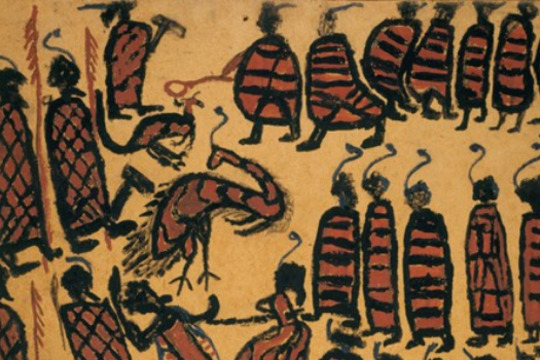
William Barak
... ...Native Police...But the white police told Barak to go in first, saying they’d follow behind. Barak replied “I have no gun. I track. You are cowards.” The white police then deemed it wise to send for reinforcements....Barak was educated at the Yarra Mission School in Narrm (Melbourne), and was a tracker in the Native Police as his father had been, before becoming ngurungaeta (clan leader). Energetic, charismatic and mild mannered, he spent much of his life at Coranderrk Reserve - a self-sufficient Aboriginal farming community in Healesville. ...Diplomat, artist, story-teller and leader, Wurundjeri (Woiwurung) man William Barak worked all his life to protect the rights and culture of his people, and to bridge the gap between settlers and the land’s original custodians.
Barak was educated at the Yarra Mission School in Narrm (Melbourne), and was a tracker in the Native Police as his father had been, before becoming ngurungaeta (clan leader). Energetic, charismatic and mild mannered, he spent much of his life at Coranderrk Reserve - a self-sufficient Aboriginal farming community in Healesville.
Barak campaigned to protect Coranderrk, worked to improve cross-cultural understanding and created many unique artworks and artifacts, leaving a rich cultural legacy for future generations.
CULTURAL WARNING: Aboriginal and Torres Strait Islander users are warned that this material may contain images and voices of deceased persons, and images of places that could cause sorrow.
Further information on William Barak can be found at the State Library of Victoria's Ergo site.
-
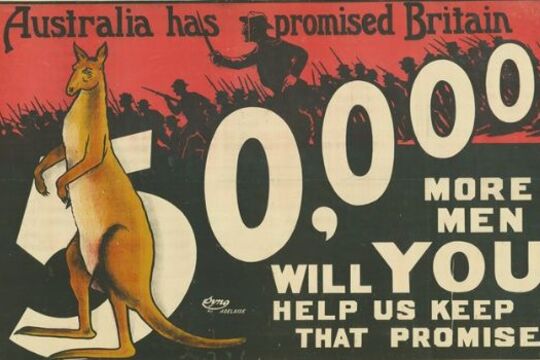
Against the Odds: The victory over conscription in World War One
... ...Work on Paper: John Curtin, 'Police Just Raided...'...John Curtin was imprisoned for three days for failing to register for conscription, while Adela Pankhurst served nearly three months in Pentridge Prison for provoking damage to property. As well as official persecution, the government and police tolerated harassment of anti-conscriptionists by pro-conscriptionists. Disruption of meetings were common, but there were also incidents of violence. Secretary of the Australian Peace Alliance, Frederick Riley, was thrown into the river on several occasions while speaking at protest meetings at the Yarra Bank. ...One man carried a hammer and another a spanner. Mr. Hughes, in the midst of the demonstration appealed to the police. But the sympathies of the police were not with him. Mr. Hughes was being assailed by a man much bigger than himself. The man was arrested, but was released immediately when out of Mr. ...In October 1916 and December 1917 two contentious referendums were held in Australia, asking whether the Commonwealth government should be given the power to conscript young men into military service and send them to war overseas.
These campaigns were momentous and their legacy long-lasting. This is the only time in history that citizens of a country have been asked their opinion about such a question, and the decisive 'No' vote that was returned remains the greatest success of the peace movement in Australia to date. Yet the campaigns split families, workplaces and organisations, and left an imprint on Australian politics that lasted for decades.
Many of the actors and events that were central to these campaigns were based in the northern Melbourne suburbs of Brunswick and Coburg. In many ways, these localities were a microcosm of the entire campaign. Against the Odds: The Victory Over Conscription in World War One tells the story of the anti-conscription movement in Australia during World War 1 through this lens.
-
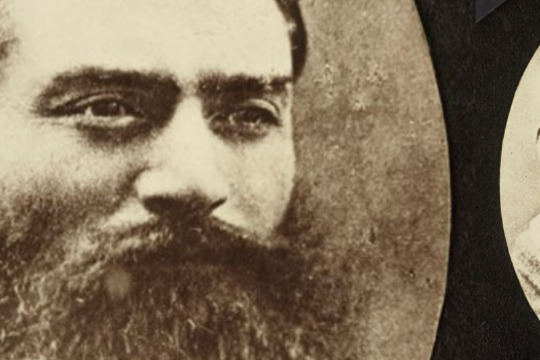 State Library Victoria / Public Records Office Victoria
Ned Kelly
... ...police ...Ned Kelly, the most famous of our 'Wild Colonial Boys', was born in 1855.
He was raised in harsh poverty in Northern Victoria, and became an expert bushman; by his teens he had developed a reputation as a bushranger. Kelly and his 'gang' were proclaimed outlaws when they killed three policemen, accounts of which differ.
So began the prolonged hunt, which ended with Kelly's capture in Glenrowan, in iconic home-made armour made from plough parts. Ned Kelly was executed in 1880, hanged in the Melbourne Goal by order of Sir Redmond Barry. Barry was instrumental in the foundation of the State Library of Victoria where, perhaps ironically, Kelly's "manifesto", the Jerilderie letter and the armour are held.
Kelly's Irish heritage, his contempt for and success in humilating the authorities, his harsh and some say unfair treatment, his bad luck and his daring and notoriety have ensured Kelly's place as folk hero.
View videos and other Kelly artefacts from the State Library of Victoria Ergo site:
Capture of the Kelly Gang
Ned Kelly's Armour
The Life of Ellen Kelly, Ned Kelly's mother
The Jerilderie Letter
Ned Kelly's death mask
-
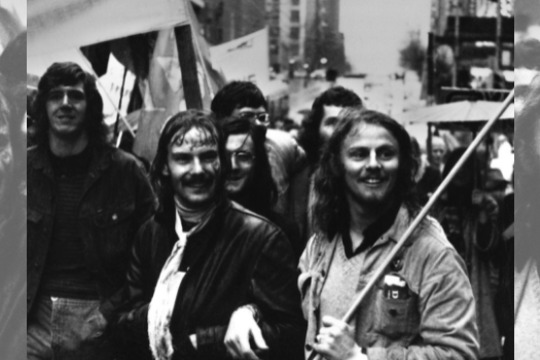
Out of the Closets, Into the Streets
... On 30 September 1988, two ex-members of the Vice Squad were acquitted of Duncan’s manslaughter. A police task force interviewed eighty-one people and reported to parliament in April 1990 that there was ‘insufficient evidence to charge any other person’. The case remains unsolved....It is also a fact that a 19 year old boy named Wayne Craille was drowned in the Torrens in similar circumstances on October the 23rd, 1971.Not only is homosexuality harshly punished by the law - consenting adult males have been given seven years sentences for a homosexual act an, contrary to popular belief, lesbians are also arrested, on such charges as offensive behaviour - but homosexuals are vulnerable to every form of blackmail and illegal violence because they are forced to meet in secret. Heterosexuals are protected by the police. Are homosexuals protected by the police? - you must be joking. We need to be projected from the police.Here in Victoria the Vice Squad is stepping up its campaign against homosexuality, the number of arrests has increased dramatically in the past few months. ...This project documents the very beginning of the Gay Liberation Movement in Melbourne.
Through the manifestos, photographs, flyers and recollections of those who were part of the movement, this digital story explores the ways in which gay people found their voice in Melbourne, and refused to pass for straight anymore.
Gay Liberation had both local and imported roots. Internationally the New York City Stonewall riots in 1969 sparked off a new phase of radical gay politics, drawing on the momentum of activist organisations and protests across America throughout the 1960s, but locally few people took immediate notice, though fledgling advancements in homosexual law reform had developed within the civil liberties movement.
In Melbourne, the short-lived Daughters of Bilitis (later Australasian Lesbian Movement) arrived quietly on the scene in January 1970, gaining media coverage but limited influence. The real start to the Australian gay movement occurred in September 1970 with the formation of the Campaign Against Moral Persecution, or CAMP, in Sydney. Within two years there were CAMP branches in most Australian capital cities, with the Melbourne branch established in January 1971, soon renamed Society Five. However, despite the success of these organisations in counselling and socialising and later law reform, the relatively closeted nature of Society Five was never radical enough for some activists.
Gay Liberation arrived in Australia first in Sydney in 1971 and soon after in Melbourne and other states. By 1972 small Gay Liberation groups were springing up around the country. The differences between Gay Liberation and Society Five were in practice small, but those in Gay Liberation prided themselves on their commitment to bringing about radical social change.
Influenced by the counter-cultural movements and radical political movements of the 1970s, the politics of gay liberation became an all-encompassing liberation, an ‘embodied politics’ that saw liberation in all aspects of one’s life, from households to classrooms, sexual relations to workplaces, clothing to protests. Young gay people had found their voice, and group members organised the demonstrations, marches and public events illustrated in this story.
This Digital Story draws on material produced for the Australian Lesbian and Gay Archives (now Australian Queer Archives) exhibition Out of the Closets, Into the Streets: Histories of Melbourne Gay Liberation, curated and written by Nick Henderson, drawing on the original research of Graham Willett. A complementary documentary film, additional interviews, and written curatorial and audio content was produced by documentary film makers Wind & Sky Productions.
-
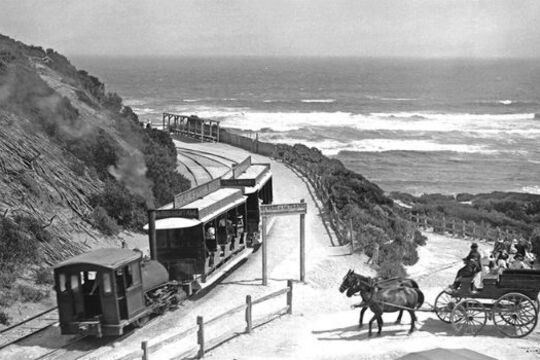
Postcards: Stories from the Mornington Peninsula
... TRANSCRIPT Shire of Flinders & Kangerong.REGULATION No. 4In the pursuance of the powers conferred by Part IX of 13th Schedule of the "Local Government Act 1903", the President, Councillors and Rate-payers of the Shire of Flinders and Kangerong order as follows:BATHING PLACES.No person over Ten years of age shall bathe within 200 yards of either side of the Dromana Pier without the Consent of Council.No person over Ten years of age shall bathe from the foreshore, commencing at a point distant 200 yards north west of the Sorrento Pier, thence along the Foreshore to the Bathing Boxes at Webster's Corner, without the Consent of the Council.DRESS.No person over Ten years of age shall bathe from any beach within the Shire, unless dressed in a Canadian Bathing Costume, or some similar costume, which shall effectively cover the body from the neck to the knee, so as to observe proper decency.No person in bathing costume shall sit, lie, loiter on, or run along any part of the beach or seashore within the Shire, but shall proceed in a direct line to and from the dressing place.No person in bathing costume shall walk, ride, or drive through any streets or thoroughfares of the Shire. Any Officer of Police, or any Officer of the Council may request any person who, in his opinion, is not sufficiently or decently dressed when in a bathing costume to forthwith resume ordinary dress, and such person shall forthwith comply with the request.This Regulation shall apply to, and have operation throughout the whole of the Municipal District of the Shire of Flinders and Kangerong, and 300 yards seawards of the boundary of the Shire, as set forth in the said Part IX of the 13th Schedule of the Local Government Act 1903.Adopted 28th September, 1912 E. ...Stories of a time in history when holidaying was a grand pastime, and when special and unique places in Victoria began to be appreciated, celebrated and shared in that iconic mode of communication: the picture postcard.
Inspired by postcards in their collections, eight historical societies developed themes to explore the history of the Mornington Peninsula.
This story is based on a touring exhibition which was initiated by the Mornington Peninsula Local History Network and the Mornington Peninsula Shire.
-
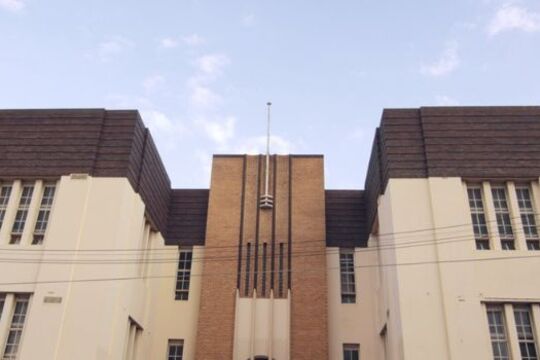
Collingwood Technical School
... The Collingwood Council encouraged the establishment of factories in order to exploit the availability of labour, to assist commerce and to increase land values and municipal revenue [3]. In 1853, a bluestone 'Police Court,' was built at 35 Johnston Street, Collingwood. Designed by Government Architect, Peter Kerr (1820 – 1912), it was a single story and imposing courthouse, set back from the road [4]. ...For over 140 years, the site of the former Collingwood Technical School on Johnston Street, Melbourne, has played an integral role in the well being of the local community.
It has been a civic hub, including courthouse (1853), Council Chambers (1860) and the Collingwood Artisans’ School of Design (1871). The school opened in 1912 when its first principal, Matthew Richmond, rang a bell on the street to attract new students. Collingwood was a poor and industrial suburb, and as a trade school, young boys were offered the opportunity to gain industrial employment skills.
Throughout the twentieth century, Collingwood Technical School supported the local and broader community. From training schemes for ex-servicemen who were suffering from post traumatic stress following World War I (1914-1918), to extra classes during the Great Depression, and the development of chrome and electroplating for machine parts for the Australian Army and Air Force during World War II (1939-1945).
The precinct between Johnston, Perry and Wellington Streets has transformed over time, including expansion with new buildings and school departments, and the change in the demographic of students as Collingwood evolved from an industrial centre to eventual gentrification. And in 1984, New York street artist, Keith Haring (1958-1990), painted a large mural onsite.
Collingwood Technical College closed in 1987 when it amalgamated with the Preston TAFE (Technical and Further Education) campus. Education classes continued until 2005 and the site sat empty for more than a decade, before a section was redeveloped for Circus Oz in 2013.
The former school now has a new identity as Collingwood Arts Precinct, and is being developed into an independent space for small and medium creative organisations. The heritage buildings will house the next generation of thinkers and makers, and will become a permanent home to the arts in Collingwood. -
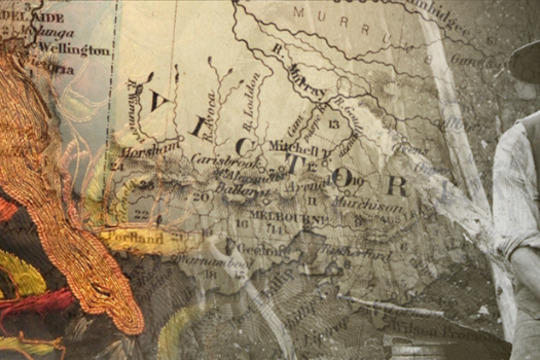 Wind & Sky Productions
Many Roads: Stories of the Chinese on the goldfields
... A Chinese head man was assigned, Chinese interpreters were provided along with special police constables and other administrators. Chinese were required to pay a special tax to pay for the Protectorate services, though, as with Aboriginal people, not all Chinese people chose to live in the town protectorates. ...In the 1850s tens of thousands of Chinese people flocked to Victoria, joining people from nations around the world who came here chasing the lure of gold.
Fleeing violence, famine and poverty in their homeland Chinese goldseekers sought fortune for their families in the place they called ‘New Gold Mountain’. Chinese gold miners were discriminated against and often shunned by Europeans. Despite this they carved out lives in this strange new land.
The Chinese took many roads to the goldfields. They left markers, gardens, wells and place names, some which still remain in the landscape today. After a punitive tax was laid on ships to Victoria carrying Chinese passengers, ship captains dropped their passengers off in far away ports, leaving Chinese voyagers to walk the long way hundreds of kilometres overland to the goldfields. After 1857 the sea port of Robe in South Australia became the most popular landing point. It’s estimated 17,000 Chinese, mostly men, predominantly from Southern China, walked to Victoria from Robe following over 400kms of tracks.
At the peak migration point of the late 1850s the Chinese made up one in five of the male population in fabled gold mining towns of Victoria such as Ballarat, Bendigo, Castlemaine, Beechworth and Ararat. It was not just miners who took the perilous journey. Doctors, gardeners, artisans and business people voyaged here and contributed to Victoria’s economy, health and cultural life. As the nineteenth century wore on and successful miners and entrepreneurs returned home, the Chinese Victorian population dwindled. However some chose to settle here and Chinese culture, family life, ceremony and work ethic became a distinctive feature of many regional Victorian towns well into the twentieth century.
By the later twentieth century many of the Chinese relics, landscapes and legacy of the goldrush era were hidden or forgotten. Today we are beginning to unearth and celebrate the extent of the Chinese influence in the making of Victoria, which reaches farther back than many have realised.
