
Showing 47 items matching "regimental sergeant major"
-
 Bendigo Military Museum
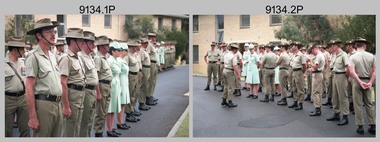
Photograph - Army Survey Regiment - CO's Parade, Awards, RSM Handover, Fortuna Bendigo, 1990
... The formalities performed at the parade were the presentation of a Warrant, presentation of the Defence Force Service Medal to two recipients, handover of the Regimental Sergeant-Major (RSM) appointment and promotions of four WO1’s to the rank of Captain. ...The formalities performed at the parade were the presentation of a Warrant, presentation of the Defence Force Service Medal to two recipients, handover of the Regimental Sergeant-Major (RSM) appointment and promotions of four WO1’s to the rank of Captain. ...This is a set of 39 photographs taken on a CO’s Parade held in December 1990 at the Army Survey Regiment, Fortuna, Bendigo. The Reviewing officer was the Commander of the 3rd Military District BRIG P. Davies AM ADC and the Parade Host was D-SVY COL Don Swiney MBE. The formalities performed at the parade were the presentation of a Warrant, presentation of the Defence Force Service Medal to two recipients, handover of the Regimental Sergeant-Major (RSM) appointment and promotions of four WO1’s to the rank of Captain. WO1 Neville Stone was the RSM of the Army Survey Regiment from 1988 to 1990. WO1 Graham Ragless was the RSM of the Army Survey Regiment from 1990 to 1992. The WO2 who received his Warrant on promotion is unknown and the Defence Force Service Medal was presented to SSGT Phil Smalley and an unidentified SGT. See item 9135.15P for the set of photos of four WO1’s promoted to the rank of Captain taken at the parade. Formally known as the Prescribed Commissioned Officer Scheme, it is now known as the Army Senior Non-Commissioned Officer and Warrant Officer Commissioning Scheme.This is a set of 39 photographs taken on the occasion of a CO’s Parade at the Army Survey Regiment, Fortuna, Bendigo held in December 1990. The photographs are on 35mm negative film and were scanned at 2400 dpi. They are part of the Army Survey Regiment’s Collection. .1) - Photo, colour, 1990. The uniforms of Headquarters Squadron personnel are checked before the parade. L to R: SSM WO1 Ken ‘Sluggo’ Slater, unidentified (x2), CPL Peter Keane, SGT John ‘Stormy’ Tempest, remainder unidentified. .2) - Photo, colour, 1990. The uniforms of Lithographic Squadron personnel are checked before the parade. L to R: CPL Rob Jones, SPR Steve Wright, SPR Gary Sievers, SSM WO2 Rob Bogumil, CPL Le-anne (Smallshaw) Shirley, SPR Michelle Withers, SPR Scott Cameron, unidentified (x3), SPR Ken Labouchardiere, CPL Peter Dillon, LCPL Geoff Webb, remainder unidentified. .3) & .4) - Photo, colour, 1990. Lithographic Squadron under command of SSM WO2 Rob Bogumil marches on to the parade ground. L to R: WO1 Steve Egan, WO2 Allan Virtue, SPR Scott Cameron, CPL Warren ‘Waldo’ Shirley, SPR John Bragg, SPR Steve Wright, SPR Tony Hilbig, CPL Le-anne (Smallshaw) Shirley, unidentified, CPL Rob Jones, SPR Gary Sievers, SSM WO2 Rob Bogumil. .5) - Photo, colour, 1990. Cartographic Squadron under command of SSM WO1 Bob Rogister marches on to the parade ground. L to R: WO1 Gary Warnest, SPR Leigh Palfrey, SSGT Dennis Learmonth, unidentified, SSGT Bob Garritty, CPL Peter Johnson, SGT Martin Evans, SPR Ian Baldwin, CPL Damian Killeen, SPR Dandy Dee, SPR Cam Bramich, CPL Dick Crawford, LCPL Charmian McKean, SPR Nadine ‘Princy’ (Paul) Read, SGT Sherri (Dally) Burke, CPL Darren ‘Barney’ Maher, remainder unidentified, SSM WO1 Bob Rogister. .6) - Photo, colour, 1990. Headquarters Squadron under command of SSM WO1 Ken ‘Sluggo’ Slater marches on to the parade ground. L to R: WO2 Wayne Rothwell, SPR Mark Bird, WO1 Rowan Gillies, unidentified (x3), SGT Ian Fitzgerald, unidentified (x2), CPL Peter Keane, SGT John ‘Stormy’ Tempest, remainder unidentified, SSM WO1 Ken ‘Sluggo’ Slater. .7) - Photo, colour, 1990. Air Survey Squadron under command of SSM WO1 Allan Hancox marches on to the parade ground. L to R: WO2 Neil ‘Ned’ Kelly, SGT Dave Longbottom, SPR Steve Wegener, LCPL Stuart Midgley, SPR Derek Percival, SGT Sandy Craig, CPL Neale ‘ Tex’ Houston, SSGT John ‘Shep’ Shephard, SPR Neil Pedler, remainder unidentified, SSM WO1 Allan Hancox. .8) - Photo, colour, 1990. RSM WO1 Neville Stone issues the order ‘Right Dress’. .9) - Photo, colour, 1990. Officers standing at ease in readiness to take posts. L to R: MAJ Graeme Wastell, LT Steve Hledik, CAPT Dave McLachlan, LT Peter Crabbe, MAJ Peter Clark, LT Craig Hersant, LT Simon Buckpitt, unidentified, MAJ Bob Coote, LT Marty Lyons, remainder unidentified. .10) - Photo, colour, 1990. Officers standing at ease in readiness to take posts. L to R: LT Craig Hersant, LT Simon Buckpitt, LT Garret Addison, MAJ Bob Coote, LT Marty Lyons, LT Derek Bell, MAJ John South, CAPT Noel ‘Nesty’ Coulthard, MAJ Bob Williams. .11) - Photo, colour, 1990. Cartographic Squadron under command of SSM WO1 Bob Rogister performs ‘Right Dress’. Front Rank L to R: SPR Pat McAllister, SPR Ian Baldwin, CPL Damian Killeen, SPR Dandy Dee, SPR Cam Bramich, CPL Dick Crawford, SPR Charmian McKean, SPR Nadine ‘Princy’ (Paul) Read, SGT Sherri (Dally) Burke, remainder unidentified. .12) - Photo, colour, 1990. RSM WO1 Neville Stone seen at right hands over command to 2IC MAJ Bob Williams. .13) - Photo, colour, 1990. As the officers take posts, Headquarters Squadron SSM WO1 Ken ‘Sluggo’ Slater at right foreground hands over command to OC MAJ John South. RSM WO1 Neville Stone is seen in left foreground. .14) - Photo, colour, 1990. Arrival of the Parade Host D-SVY COL Don Swiney MBE. L to R: Unidentified soldier salutes assisted by SPR Gordon Santo. .15) - Photo, colour, 1990. Arrival of the Reviewing Officer, the Commander of the 3rd Military District BRIG P. Davies AM ADC. L to R: Unidentified soldier salutes assisted by SPR Gordon Santo. .16) - Photo, colour, 1990. Arrival of the Reviewing Officer, the Commander of the 3rd Military District (COMD 3MD) BRIG P. Davies AM ADC at left, and his unidentified Aide-de-camp. L to R: Unidentified soldier salutes assisted by SPR Gordon Santo. Officers sitting in audience L to R: MAJ Neil Taylor, MAJ Laurie Newton. .17) - Photo, colour, 1990. Standing at the dias L to R: Reviewing Officer - Commander 3rd Military District BRIG P. Davies AM ADC, Parade Host - D-SVY COL Don Swiney MBE, unidentified Aide-de-camp. .18) - Photo, colour, 1990. Headquarters Squadron inspection. L to R: CAPT Noel ‘Nesty’ Coulthard, CO LTCOL Rene van den Tol, D-SVY COL Don Swiney MBE, RSM WO1 Neville Stone, COMD 3MD BRIG P. Davies AM ADC, unidentified Aide-de-camp, unidentified (x5), CPL Roger Pearson, SGT Chris Edwards. .19) - Photo, colour, 1990. Headquarters Squadron inspection. Rear rank 3rd from right – SGT Ian Fitzgerald, L to R: D-SVY COL Don Swiney MBE, COMD 3MD BRIG P. Davies AM ADC, unidentified Aide-de-camp, CO LTCOL Rene van den Tol. .20) - Photo, colour, 1990. Headquarters Squadron inspection. Unidentified soldiers, COMD 3MD BRIG P. Davies AM ADC. .21) - Photo, colour, 1990. Cartographic Squadron inspection. L to R: CO LTCOL Rene van den Tol, unidentified Aide-de-camp, COMD 3MD BRIG P. Davies AM ADC, CPL Dick Crawford, LCPL Charmian McKean, SPR Nadine ‘Princy’ (Paul) Read, SGT Sherri (Dally) Burke, CPL Darren ‘Barney’ Maher, SPR Sue (Foote) Bourne, unidentified, CPL Chris Wynn, SGT Steve McGuiness. SVY COL Don Swiney MBE, COMD 3MD BRIG P. Davies AM ADC, SPR Michelle Withers, unidentified, SPR Ken Labouchardiere, CPL Peter Dillon, LCPL Geoff Webb, remainder unidentified. .22) - Photo, colour, 1990. Soldiers sitting in back row of audience L to R: unidentified, SPR Joyce Gray, CPL Mick McConnell, SPR Bob Bousfield, unidentified. .23) - Photo, colour, 1990. Air Survey Squadron inspection. L to R: LCPL Stuart Midgley, unidentified, SGT Sandy Craig, CPL Steve Coulsen, SPR Paul Boulton, unidentified, COMD 3MD BRIG P. Davies AM ADC, D-SVY COL Don Swiney MBE, CO LTCOL Rene van den Tol. .24) - Photo, colour, 1990. Air Survey Squadron inspection. L to R: CPL Steve Coulsen, LCPL Phuc ‘Charlie’ Tran, SPR Paul Boulton, unidentified, COMD 3MD BRIG P. Davies AM ADC, D-SVY COL Don Swiney MBE. .25) - Photo, colour, 1990. Lithographic Squadron inspection. L to R: CO LTCOL Rene van den Tol, D-SVY COL Don Swiney MBE, COMD 3MD BRIG P. Davies AM ADC, SPR Michelle Withers, unidentified, SPR Ken Labouchardiere, CPL Peter Dillon, LCPL Geoff Webb, remainder unidentified. .26) - Photo, colour, 1990. Lithographic Squadron inspection. L to R: SPR Steve Wright, SPR Tony Hilbig, CPL Le-anne (Smallshaw) Shirley, SPR Gavin Craggs, CPL Penny Knott, SPR Greg Howell, SPR Andrew Morrison-Evans, CPL Graeme Spong, unidentified, SGT Dale Hudson, unidentified, COMD 3MD BRIG P. Davies AM ADC, D-SVY COL Don Swiney MBE, CO LTCOL Rene van den Tol. .27) - Photo, colour, 1990. Dignitaries seated at parade L to R: unidentified Aide-de-camp, D-SVY COL Don Swiney MBE, COMD 3MD BRIG P. Davies AM ADC. .28) - Photo, colour, 1990. Dignitaries seated at parade L to R: unidentified Aide-de-camp, D-SVY COL Don Swiney MBE, COMD 3MD BRIG P. Davies AM ADC. Back row at far right: MAJ Neil Taylor, MAJ Laurie Newton. .29) - Photo, colour, 1990. The Army Survey Regiment performs a ‘Right Dress’ drill movement. RSM WO1 Neville Stone is seen at far left. .30) - Photo, colour, 1990. Exchange of salutes L to R: CO LTCOL Rene van den Tol, incoming WO1 Graham Ragless, outgoing RSM WO1 Neville Stone. .31) - Photo, colour, 1990. RSM Handover L to R: CO LTCOL Rene van den Tol, incoming RSM WO1 Graham Ragless, outgoing RSM WO1 Neville Stone. .32) & .33) - Photo, colour, 1990. RSM Handover L to R: incoming RSM WO1 Graham Ragless, outgoing RSM WO1 Neville Stone. .34) & .35) - Photo, colour, 1990. COMD 3MD BRIG P. Davies AM ADC at left presents the Warrant Certificate to an unidentified AACC WO2. .36) & .37) - Photo, colour, 1990. COMD 3MD BRIG P. Davies AM ADC at left presents the Defence Force Service Medal to SSGT Phil Smalley. .38) & .39) - Photo, colour, 1990. COMD 3MD BRIG P. Davies AM ADC at left presents the Defence Force Service Medal to SGT John Haseloff.No personnel are identified. ‘SSM Handover Parade & Commissioning of Officers. Dec 1990’ annotated on negative sleeve. ‘Note – it should have been annotated ‘RSM Handover, not SSM Handover.royal australian survey corps, rasvy, army survey regiment, army svy regt, fortuna -
 8th/13th Victorian Mounted Rifles Regimental Collection
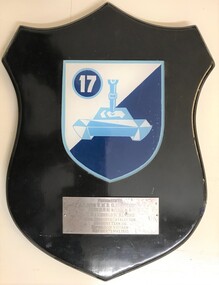
Plaque - Almond plaque
... He later returned to 8/13 VMR as Regimental Sergeant Major. The AATTV was a specialist unit of military advisors of the Australian Army that operated during the Vietnam War. ...He later returned to 8/13 VMR as Regimental Sergeant Major. The AATTV was a specialist unit of military advisors of the Australian Army that operated during the Vietnam War. ...Warrant Officer Class One Ron Almond served on the 8/13 Victorian Mounted Rifles cadre staff before being posted as a member of the Australian Army Training Team Vietnam (AATTV) in 1969. There he was posted as adviser to 17th Armored Cavalry Squadron. He later returned to 8/13 VMR as Regimental Sergeant Major. The AATTV was a specialist unit of military advisors of the Australian Army that operated during the Vietnam War. Raised in 1962, the unit was formed solely for service as part of Australia's contribution to the war, providing training and assistance to South Vietnamese forces. Initially numbering only approximately 30 men, the size of the unit grew several times over the following years as the Australian commitment to South Vietnam gradually grew, with the unit's strength peaking at 227 in November 1970. Members of the team worked individually or in small groups, operating throughout the country from the far south to the Demilitarized Zone (DMZ) in the north. Later they were concentrated in Phước Tuy Province as Australian forces prepared to withdraw from Vietnam. It is believed to be the most decorated Australian unit to serve in Vietnam; its members received over 100 decorations, including four Victoria Crosses, during its existence. The unit was withdrawn from Vietnam on 18 December 1972 and was disbanded in Australia on 16 February 1973. A total of 1,009 men served with the unit over a period of ten years, consisting of 998 Australians and 11 New Zealanders. Representative of a connection between Australian Army Reserve and South Vietnam.Wooden shield with coloured plastic emblem mounted at centre and engraved metal plate below.Presented to / 8/13 VMR OR's Mess / By Ex RSM 8/13 VMR / WO1 Ronald M Almond / 17th Armoured Cavalry Sqn / Advisory team 116 / Republic of Vietnam / May 1969-May 1970military, cadre, aattv, vietnam, cavalry, armour, almond -
 4th/19th Prince of Wales's Light Horse Regiment Unit History Room
Miniature Guidon, 2017
... Commanding Officer, Lieutenant Colonel John Molnar Regimental Sergeant Major, Warrant Officer Class 1 Russell Earl The makers of the Guidon, Spear of Fame Pty. ...Commanding Officer, Lieutenant Colonel John Molnar Regimental Sergeant Major, Warrant Officer Class 1 Russell Earl The makers of the Guidon, Spear of Fame Pty. ...See inscriptionSee inscriptionFramed miniature guidon of the 4th/19th Prince of Wales's Light Horse Regiment. Wood frame with glass front.Certificate on back of frame - "On the 10 October 2006, Lieutenant General P.F. Leahy, AO, then Chief of the Army, authorised the commencement of work for the procurement of a new Guidon for the 4th/19th Prince of Wales's Light Horse Regiment. This new Guidon is historically significant being be (sic) the first single Guidon for a linked unit of the Australian Army. The Guidon proudly shows the unit Colour Patches, Battle and Theatre Honours of: 4th Light Horse Regiment 8th Light Horse Regiment 13th Light Horse Regiment 17th Light Horse Regiment 19th Light Horse Regiment 20th Light Horse Regiment 2nd/8th Armoured Regiment 2nd/4th Armoured Regiment The Guidon was formally presented to the Regiment by His Excellency, General the Honourable Sir Peter Cosgrove. AK, MC, (Retd) during a parade held at Puckapunyal on the 26 November 2016. Commanding Officer, Lieutenant Colonel John Molnar Regimental Sergeant Major, Warrant Officer Class 1 Russell Earl The makers of the Guidon, Spear of Fame Pty. Ltd., developed this limited edition miniature in conjunction with the 4th/19th Prince of Wales's Light Horse Regiment for all members past and present to commemorate this occaison Certified by (signature) 62/250 Spear of Fame Pty Ltd 6 King Street, Blackburn. Ph 03 98771111 -
 Bendigo Military Museum
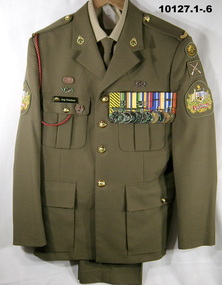
Uniform - SERVICE DRESS, ARMY, Australian Defence Industries, 2016
... Australian Coat of Arms = Regimental Sergeant Major. Lapel Badges - gold colour plastic - Queens Crown above laurel wreath with centre crossed swords = Royal Australian Corps of Military Police. ...Australian Coat of Arms = Regimental Sergeant Major. Lapel Badges - gold colour plastic - Queens Crown above laurel wreath with centre crossed swords = Royal Australian Corps of Military Police. ...Left side - Campaign and service medals = Left to Right. 1. Conspicuous Service Medal. 2. Australian Active Service Medal - 2 clasps - 1 RAQ 2003 - ICAT Afghanistan 2001. 3. Afghanistan Campaign Medal. 4. Iraq Campaign Medal. 5. Australian Service Medal - 2 clasps - Balkans 1997 - 2004, - Sinai - Egypt. 6. Defence Force Service Medal - 3 clasps (25 Years). 7. Australian Defence Medal. 8. North Atlantic Treaty Organisation medal (NATO) 9. British IRAQ Medal. 10. North Atlantic Treaty Organisation and clasp ISAF> 11. Multi National Force and Observers Medal - Sinai - Egypt (These are replica medals). Award badge - Crossed swords with Laurel wreath dark bronze colour = ARMY COMBAT BADGE. Right side - Top to Bottom. Award Badge = COMMANDER 2nd DIVISION COMMENDATION BRONZE 1998-99 Badge = STEYR INDIVIDUAL READINESS Badge Name Badge = Rising Sun Emblem with "GREG WESTHEAD"' Badge = RECENT INSTRUCTOR BADGE. Uniform Jacket, trousers, shirt, necktie, lanyard, medals, beret. 1. 2. & 4. Fabric outer - khaki colour wool and polyester. Lining - dark khaki polyester. 1. Jacket - Service dress style, shoulder epaulettes, four front patch pockets with button down flap. Gold colour plastic buttons with raised emblem - Rising Sun Badge. Army shoulder epaulettes - gold colour 'AUSTRALIA' badge. Cloth shoulder patches - eft sleeve top - gold, black and red. Rising Sun with Queen's Crown and lettering "THE AUSTRALIAN ARMY". Middle - silver and brown crossed rifles = Marksmanship Proficiency. Lower and right sleeves Rank Insignia Patch in colour. Australian Coat of Arms = Regimental Sergeant Major. Lapel Badges - gold colour plastic - Queens Crown above laurel wreath with centre crossed swords = Royal Australian Corps of Military Police. Front left side - Campaign and Service medals Mounted and Award badge. Right side - one award badge and three badges.(Fabric, metal and plastic). 2. Trousers - waistband, belt loops, fob pocket, two side pockets and one back pocket with button down flap. Bottom green plastic metal and nylon zipper fly. Fabric and lining as above. 3. Shirt - light khaki colour polyester/cotton fabric. Short sleeves, collar, shoulder epaulettes, two front patch pockets with button down flap. Buttons - beige plastic. Left and right shoulder and rank cloth patches as per jacket. 4. Necktie - fabric and lining as above. 'V' shape on ends. Two makers labels. 5. Lanyard - braided red and black colour cotton cord with knots. 6. Medals - mounted medals with ribbons. Metal pin on back. 7. Beret - red colour wool felt fabric with black colour polyester and plastic lining. Oval shape. Black colour vinyl trim with ribbon for size adjustment. Front - badge = Royal Australian Corps of Military Police - Queens Crown, Laurel wreath and crossed swords - gold colour plastic and metal.1. & 2. Manufacturers information on lining in black print on white colour fabric. "ADA/MADE IN CHINA/ AUG 2016/CC30BK or CC3087/ ^/ NSN 8405 66 162 6301 or 607?/ SIZE: 110R OR 85R/ NAME:/ PM KEYS NO:/ OUTER: 60% WOOL/40% POLYESTER/LINING: 100% POLYESTER/DRY CLEAN ONLY/ DO NOT WASH/ IRON UNDER DAMP CLOTH/ WARM IRON". 2. Handwritten black ink 'WESTHEAD/ 317595". 4. Tie - top label "ADAY" Lower label "ADAY"/ MADE IN CHINA/ MAY 2016/ 60% WOOL/ 40% POLYESTER/ DRY CLEAN ONLYuniform, army, military police, westhead -
 Bendigo Military Museum
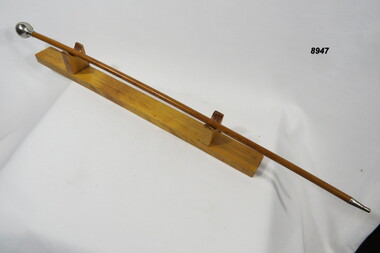
Equipment - SWAGGER STICK, Australian Army - 38th Battalion, Unknown
... The Australian Army uses the Swagger stick as a traditional ceremonial symbol of authority, commonly carried under the right arm by a Company Sergeant Major and Commissioned Officers, particularly in ceremonial or “Walking Out” dress. The swagger stick is made of light coloured polished timber with a round silver top featuring the 38th Battalion Regimental Badge, the lower of base of the stick is protected by a silver metal cap....Regimental Badge. The Australian Army uses the Swagger stick as a traditional ceremonial symbol of authority, commonly carried under the right arm by a Company Sergeant Major and Commissioned Officers, particularly in ceremonial or “Walking Out” dress. ...Relates to the 38th Battalion. Belonged to "Jack GERDSEN".The Australian Army uses the Swagger stick as a traditional ceremonial symbol of authority, commonly carried under the right arm by a Company Sergeant Major and Commissioned Officers, particularly in ceremonial or “Walking Out” dress. The swagger stick is made of light coloured polished timber with a round silver top featuring the 38th Battalion Regimental Badge, the lower of base of the stick is protected by a silver metal cap.Round-silver top with the Rising Sun emblem embossed and featuring the Bendigo Regiment 38th Battalion Regimental Badge.passchendaele barracks trust, pbt243, swagger stick, ceremonial equipment, jack gerdsen -
 Waverley RSL Sub Branch
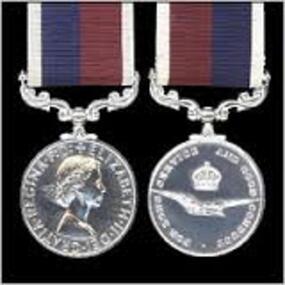
R.A.A.F. Long Service Medal
... He had borrowed several sums of money, of around 40 Pounds or so, from junior ranks on base (as well as from the Regimental Sergeant Major) and had failed to pay the money back. ...Awarded to Alan Bowers (A236814) who was a R.A.A.F. dental mechanic who serverd during WWII including service in Darwin, and then continued in the R.A.A.F. for some years after the end of WWII The Royal Australian Air Force (and all Commonwealth Air Forces) Long Service and Good Conduct Medal: Awarded to NCOs and ORs of the RAAF (RAF, RCAF etc) for 15 years service. A cupro-nickel plated medal, the obverse features the sovereign's head, the reverse features the crown and eagle emblem of the RAAF (and RAF). Officers are eligible for the award provided they have served a minimum 12 years in the ranks. The riband is dark blue and maroon with white edges. This medal ceased to be awarded in Australia in 1975 when it was replaced by the National Medal (and sbsequently the DFSM and DLSM) in the Australian system of honours and awards. http://www.heritagemedals.com.au/medals-1/service-long-service/air-force-long-service-and-good-conduct-medal.html History of the RAAF Dental Branch It took six years following the formation of the RAAF in 1921 for the first Dental Clinic to be established at Point Cook, Victoria. On 10th June 1927 Flying Officer James Carl Rosenbrock commenced work as an RAAF Dental Officer for the FlyingTraining School at Point Cook. As personnel numbers were still relatively small, Rosenbrock was also responsible for the dental care of all Victorian RAAF units, which involved treating members at 1AD Laverton, as well as Air Force Headquarters at Victoria Barracks in Melbourne. As Army Dental Officers were currently caring for RAAF personnel at Richmond, NSW, the Senior Dental Officer of the 3rd Military District in Victoria (SDO 3MD) requested through the military board that a similar arrangement be established, where that the newly appointed RAAF Dentist provide part time dental services to the Army units stationed at Queenscliff. This was seen as an effective reciprocal arrangement, with both units having a Dental Officer in attendance for, in total, around 3-4 weeks a year. Rosenbrock continued to serve as the sole RAAF Dental Officer until the middle of 1933, when the Air Board asked for his service to be terminated following ‘behaviour unbecoming of a RAAF officer'. He had borrowed several sums of money, of around 40 Pounds or so, from junior ranks on base (as well as from the Regimental Sergeant Major) and had failed to pay the money back. He was replaced by a fellow Victorian, FLGOFF Norman Henry Andrews, on the 18th Sep 1933, who went on to become our first Director of Dental Services, and was instrumental in establishing the organisations and conditions of the Branch that are still present today. Through a fair amount of persistence and hard work on the part of Norman Andrews, the RAAF Dental Branch began to expand from 1937, with the introduction of 2 additional positions, at RAAF station Richmond, and at the FlyingTraining School at Point Cook. This gave the RAAF 3 uniformed Dental Officers, which was expanded to 5 in the months leading up to WW2. 4 of these Dental Officers were based in Victoria and 1 at Richmond, with the other two RAAF units being cared for by the Army (as in the case of Pearce in WA) or by civilians (as in Darwin). With the sudden increase in RAAF personnel required at the outbreak of WW2, the number of RAAF Dental Officers increased dramatically, from 5 in 1939, 28 in 1940, 64 in 1941, 147 in 1942, 193 in 1943, 219 in 1944, and peaking at 227 in 1945. RAAF Dental Officers were required to work in a variety of locations, both in and out of Australia. Between 1940 and 1942 a massive construction programme occurred, with new dental clinics being established around Australia. Priority was given to aircrew training units in order to get these personnel dentally fit for operational deployment, but Dental Officers could equally find themselves posted to recruit depots, fixed stations, medical clearance stations, mobile dental sections, and RAAF and civilian hospitals. RAAF Dental Officers were posted to the large dental centres at Ascot Vale (Vic) and Bradfield Park (NSW) when first appointed, where they received military and clinical training, before being deployed to their needed location. Mobile Dental Units When Japan entered the war in 1941, the rapid deployment of troops to northern operational areas with less than ideal dental fitness was extremely high. As a result, the RAAF deployed a range of mobile dental units, either alone or with medical sections, to support the increasing number of isolated deployed personnel within Australia and overseas. There were three types of mobile unit used: a. Mobile Dental Unit – relied on using either a semi-trailer to get around or by building a surgery directly on to the truck chassis, and installing hydraulic chairs, units, x-rays, and laboratory equipment. They were able to move around between small units, such as RAAF radar stations, where they could plug into the local power supply and work immediately. b. Transportable Dental Units – used for stops of longer duration, where field equipment was carried in panniers from one unit to another by road or rail and housed in whatever accommodation was available at the destination. They were often carried within Australia on Tiger Moths and Dakota aircraft. c. Itinerant Dental Units – in some areas, the dental equipment was installed at the RAAF unit and the Dental Officer and their staff would travel from unit to unit, using the equipment available at each location. RAAF Dental BadgeAs the war developed in Europe, it soon became obvious that the RAF Dental support was not capable of supporting the increasing numbers of RAAF aircrew that were being sent for service with the RAF, with only enough Dental Officers available to provide one to every 2000 men ( instead of the preferred 1 to 600). As a result, the RAAF provided a mobile dental unit, fitted out in a caravan and pulled by a Ford V8 Coupe, to travel around England in support of RAAF personnel at various squadrons. Some degree of tact was needed to ensure that the RAF did not take this as a comment on the treatment they were providing, but it proved successful in maintaining a satisfactory state of dental fitness in RAAF personnel, and a second mobile unit was soon dispatched. They were also set up with a laboratory on board as well as the surgery, which was a major difference between the RAF and RAAF, as the RAF did not provide dentures for their troops (the RAAF would, providing they had served for 6 years). In 1943 the RAF was no longer able to provide Dental support to Australian troops in the Middle East, which resulted in the need for a transportable dental unit to be deployed from Australia. It functioned in a similar manner to the RAF, by moving from one squadron to another. It served in the Middle East and Africa, from Cairo across North Africa, to Italy, and eventually back to England to treat returned prisoners of war. GPCAPT Norman Andrews The growth and development of the RAAF Dental Branch owes a debt to one man in particular, GPCAPT Norman Andrews. As the second RAAF Dental Officer to enlist on 18 Sep 1933, Andrews became the principal architect of the structure and organisation of the RAAF Dental Branch leading up to and during WW2. Until early 1940, the RAAF Dental Branch was administered by the Director of Medical Services (Air), which placed it under the control of the Army Medical staff. The Army would provide their Inspector of Dental Services for advice whenever needed. In April 1940, the RAAF Medical service separated from the Army, resulting in the control of the RAAF Dental Branch shifting back to the RAAF. Andrews became the first Director of Dental Services, when the position was created in 1943 as recognition of the higher profile the Dental Branch was now playing in the RAAF Medical service. Until this time, Andrews's title had been as the Dental Staff Officer to the RAAF Medical Service. Andrews was responsible for the establishment of the war-time structure of the Dental service, establishing new dental centres at all major bases, creating mobile and transportable dental units, ensuring the continual growth of the Branch, maintaining professional development of staff through the establishment of a professional journal, and by organising renowned lecturers to speak at RAAF bases. He also believed in visiting as many dental units as possible to see for himself what conditions were like and to talk first-hand to staff in remote units. His itinerary during the war years, both in and out of Australia, shows a large number of trips in a variety of modes of transport in order to reach remote areas where units were serving. He was promoted to GPCAPT in July 1944, as the numbers of Dental Officers soon peaked at 227 towards the end of the war (1 GPCAPT, 9 WGCDRs, 60 SQNLDRs, and 157 FLTLTs). After the war, with the reduction in RAAF personnel required in uniform, the Dental Branch also reduced its numbers significantly. By 1947 there were only 18 Dental Officers serving (many part-time), with 1 GPCAPT, 1 WGCDR, 10 SQNLDRs, and 6 FLTLTs, and only 13 by 1950. With the decrease in Branch personnel numbers, the ‘powers to be' saw fit to reduce the Director of Dental Service rank to WGCDR, and as a result Norman Andrews found that in order to continue serving in the RAAF he would have to wear a reduced rank. This appears to have been a contributing factor in his decision to discharge at the relatively early age of 43 and accept an administrative job as Director of the Victorian Government's School Dental Service. Norman Andrews holds the proud honour of being the founder of the RAAF Dental Branch, which during the war was instrumental in educating servicemen of the importance of dental health and maintaining the dental fitness of troops in a variety of areas. Dental Orderlies (Assistants) The dental orderly mustering was first introduced in 1937. Until that time, medical orderlies were assigned to assist the Dental officer with their duties. As early as 1931 it had been noted by both RAAF and Army Dental Officers working in Victoria and Richmond that a lot of the troubles they were having would be solved by appointing a permanent Dental Orderly. Often they would find that the medical orderly they were assigned was a different one each day, and as a result the administration and work in general was very inefficient. By 1937, with the increase in Dental Officers to 3, it was realised that a Dental Orderly mustering needed to be created. Dental Mechanics/Technicians Before WW2, dental laboratory work was provided by civilian laboratories, as most RAAF units were stationed around metropolitan areas. At this time, service personnel were still required to pay for their own dentures, unless they had served for six years or had their dentures damaged during performance of their duties. In July 1940, mainly in response to the development of more remote RAAF dental units and the increasing demand for dental prostheses, the Dental Mechanic mustering was established. Unfortunately there was a very limited pool of civilian dental mechanics to recruit from, and as a result the RAAF set up a training school at Laverton (which was later moved to Ascot Vale) in June 1941 which conducted an intensive 6 month course in Dental mechanics. Dental mechanics were quickly in demand. In all fixed and mobile dental units at least 1 Mechanic was supplied for each Dental Officer, and indeed the RAAF supplied Dental Mechanics throughout all its deployments, something the RAF were unwilling, or unable, to do. Two grades of dental mechanic existed: the Senior Mechanic (with the rank of NCO), who was competent in all phases of laboratory work; and the Junior Mechanic, who could only handle routine work and not more advanced denture work. The progression to Senior required a further trade test in techniques including setting up, clasp-forming, casting and backing teeth. During the course of the War, two special courses were held for Mechanics. The first, directed at senior mechanics so that they could instruct others, was in 1942 when Acrylic Resin was first introduced as a denture base material, as an alternative to the current option of vulcanite. Later, towards the end of the War, a ‘refresher' course was provided for those that had served for the greatest period of time in order to allow them retraining in techniques that they had not practised during their service and which were common in civilian life. This included cast base dentures, crowns and bridges, partial dentures, and retainers. Towards the end of the War, a course was held with WAAAF trainees to train them as Mechanics. However, as the War was soon to end they never had the opportunity to progress within the mustering to become Senior Mechanics. The RAAF Dental Branch has survived 75 years of turbulence, with reviews of its viability occurring regularly every few years from as early as 1937. The Branch continues to provide excellent service to the ADF community and, despite reduced manpower, will continue to play an important role in Air Force Health operations. http://www.defence.gov.au/health/about/docs/RAAFDental.pdf40cm cupro-nickel plated medal, the obverse features the sovereign's head, the reverse features the crown and eagle emblem of the RAAF (and RAF). A23814 BOWERS.A. A. F.r.a.a.f long service medal, r.a.a.f good conduct, r.a.a.f. dental service medal -
 Bendigo Historical Society Inc.
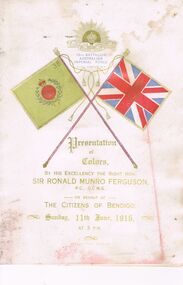
Book - AUSTRALIAN COMMONWEALTH MILITARY FORCES 38TH BATTALION AIF PRESENTATION OF COLOURS JUNE 11, 1916, 11th June, 1916
... Regimental Staff: Lieut-Colonel C.H. Davis Commanding; Major R.O. Henderson 2nd in Command; Captain A. Fraser Adjutant; Captain J.M. McCusker Medical Officer; Captain R.M. Marks Quartermaster, Captain W.N. Gunson Chaplain; R.S.M. Warrant Officer P.S. Spark; R.Q.M.S Warrant Officer P.J. Telfer Orderly Room Sergeant...Regimental Staff: Lieut-Colonel C.H. Davis Commanding; Major R.O. Henderson 2nd in Command; Captain A. Fraser Adjutant; Captain J.M. McCusker Medical Officer; Captain R.M. Marks Quartermaster, Captain W.N. Gunson Chaplain; R.S.M. Warrant Officer P.S. Spark; R.Q.M.S Warrant Officer P.J. Telfer Orderly Room Sergeant ...Card and Paper Booklet Australian Commonwealth Military Forces 38th Battalion Australian Imperial Force. Presentation of Colours by His Excellency The Right Hon. Sir Ronald Munro Ferguson, P.C. G.C.M.G. Governor-General and Commander in Chief of the Commonwealth of Australia, on behalf of The Citizens of Bendigo Sunday June 11, 1916 at 3pm. Regimental Staff: Lieut-Colonel C.H. Davis Commanding; Major R.O. Henderson 2nd in Command; Captain A. Fraser Adjutant; Captain J.M. McCusker Medical Officer; Captain R.M. Marks Quartermaster, Captain W.N. Gunson Chaplain; R.S.M. Warrant Officer P.S. Spark; R.Q.M.S Warrant Officer P.J. Telfer Orderly Room Sergeant H.W. Joseph; Band Sergeant J.J. Coe; Armourer Sergeant A.Runting. On Parade with Colours:- Lieut, F.E. Fairweather King's Colours; Lieut, J.H. Moore Regimental Colour. Companies Present (A. Company) - Captain G.V. Lansell, O.C; Captain R.E. Trebilcock; Lieut F.E. Fairweather; Lieut, L. Lipshut; Lieut, W.J. Collins 2nd Lieut C.H. Peters. (B Company) Captain L.L. Smith, O.C; Captai, E.F. Moore; Lieut, H. Dench; Lieut, E. W. Latchford; 2nd Lieut, F.C. Morrison; 2nd Lieut, F.R.B. Martin. (C: Company) Major G. Hurry, O.C., Captain J. Akeroyd; Lieut, R.D. Tyres; 2nd Lieut, J.L. Whitehead; 2nd Lieut W. Maxwell; 2nd Lieut H. McColl. (D Company) Captain A.J.A. Maudsley O.C.; Captain H.F. Selleck; Lieut J.H. Moore; 2nd Lieut W.L. Bogle; 2nd Lieut W. Williams; 2nd Lieut A.L. Reid. (Reinforcements) 1st/38th Lieut W.H. Orchard, O.C.; Machine Gun Section 2nd Lieut J.B. O'Donnell. T.E. Green, Hon. Secretary.bendigo, clubs, australian imperial force 38th bat -
 National Vietnam Veterans Museum (NVVM)
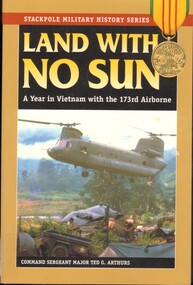
Book, Arthurs, Ted G. (Command Sergeant Major), Land With No Sun: A Year in Vietnam with the 173rd Airborne
... Regimental histories -- United States You know it's going to be hot when your brigade is referred to as a fireball unit. From May 1967 through May 1968, the Sky Soldiers of the 173rd Airborne were in the thick of it, humping eighty-pound rucksacks through triple-canopy jungle and chasing down the Viet Cong and North Vietnamese in the Central Highlands of South Vietnam. Land With No Sun: A Year in Vietnam with the 173rd Airborne Book Book Arthurs, Ted G. (Command Sergeant Major ...You know it's going to be hot when your brigade is referred to as a fireball unit. From May 1967 through May 1968, the Sky Soldiers of the 173rd Airborne were in the thick of it, humping eighty-pound rucksacks through triple-canopy jungle and chasing down the Viet Cong and North Vietnamese in the Central Highlands of South Vietnam.You know it's going to be hot when your brigade is referred to as a fireball unit. From May 1967 through May 1968, the Sky Soldiers of the 173rd Airborne were in the thick of it, humping eighty-pound rucksacks through triple-canopy jungle and chasing down the Viet Cong and North Vietnamese in the Central Highlands of South Vietnam.united states. army. airborne brigade, 173rd -- history, vietnam war, 1961-1975 -- regimental histories -- united states -
 8th/13th Victorian Mounted Rifles Regimental Collection
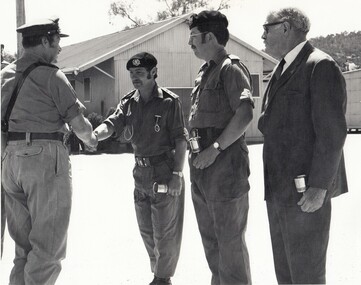
Photograph - Presentation at Farewell parade
... Sergeant Adrian Younger who in turn placed them in the Regimental Collection.. Buna Barracks Albury farewell McLean Malloy Whitehead Black and white photograph of Captain John Mclean, Lieutenant Gordon Maloy and retired Major Norman Whitehead MC being presented with trophies at the Regimental Farewell Parade at Buna Barracks Albury 1976. ...In 1977 the 8/13th VMR was reduced to Independent Squadron status titled " A Squadron 8/13 VMR. This is one of a collection of photographs found at the Cobram Tip They were handed to local Member Tim McCurdy MLA who in turn handed them on to former 8/13th Sergeant Adrian Younger who in turn placed them in the Regimental Collection.. Black and white photograph of Captain John Mclean, Lieutenant Gordon Maloy and retired Major Norman Whitehead MC being presented with trophies at the Regimental Farewell Parade at Buna Barracks Albury 1976.buna barracks, albury, farewell, mclean, malloy, whitehead -
 8th/13th Victorian Mounted Rifles Regimental Collection
Photograph
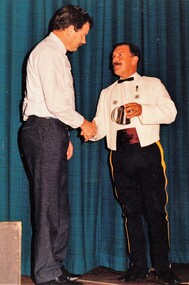
... Regimental Headquarters moved to Wangaratta and a second squadron was located at Albury. The Sale squadron transferred to 4th/19th Prince of Wales’s Light Horse. In 1977 8/13 VMR Regiment was reduced to an independent squadron A Squadron 8th/13th Victorian Mounted Rifles and in 1991 was linked with 4th/19th Prince of Wales’s Light Horse forming the VMR Squadron of that regiment. Colour photograph of Officer Commanding ' A ' Squadron 8/3 Victorian Mounted Rifles Major Robert Morrison presenting tankard to Sergeant ...The 8th/13th Victorian Mounted Rifles was raised as a regiment of the Royal Australian Armoured Corps on 1 May 1948 with Headquarters in Melbourne and squadrons in Sale, Benalla/Wangaratta and Albury. In 1955 Regimental Headquarters moved to Wangaratta and a second squadron was located at Albury. The Sale squadron transferred to 4th/19th Prince of Wales’s Light Horse. In 1977 8/13 VMR Regiment was reduced to an independent squadron A Squadron 8th/13th Victorian Mounted Rifles and in 1991 was linked with 4th/19th Prince of Wales’s Light Horse forming the VMR Squadron of that regiment.Colour photograph of Officer Commanding ' A ' Squadron 8/3 Victorian Mounted Rifles Major Robert Morrison presenting tankard to Sergeant Jason of Wangaratta at the Squadron Ball 7 October 1989. -
 8th/13th Victorian Mounted Rifles Regimental Collection
Photograph
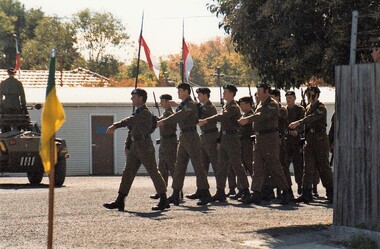
... Following the parade Colonel Howard officially opened the Regimental Museum. Colour photograph of Squadron Sergeant Major P. Clarke leading No1 Guard on to parade ground. ...‘A’ Squadron 8/13 Victorian Mounted Rifles conducted a parade at Buna Barracks, Albury on Sunday 1 May 1988 to mark the 103rd Anniversary of the formation of the Victorian Mounted Rifles and the 40th Anniversary of the linking of the 8th (Indi), 13th (Gippsland) and 20th (Victorian Mounted Rifles) Light Horse Regiments to form the 8th/13th Victorian Mounted Rifles. Colonel G K Howard, Director of the Royal Australian Armoured Corps was the Reviewing Officer. The Pipes and Drums of the 5th/6th Battalion Royal Victorian Regiment provided the music for the occasion. Following the parade Colonel Howard officially opened the Regimental Museum.Colour photograph of Squadron Sergeant Major P. Clarke leading No1 Guard on to parade ground. -
 8th/13th Victorian Mounted Rifles Regimental Collection
Photograph
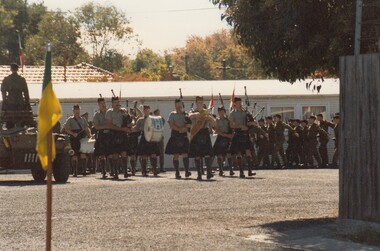
... Regimental Museum. Colour photograph of Pipes and Drums of Battalion Royal Victorian Regiment leading ' A ' Squadron Victorian Mounted Rifles on to the parade ground. Pipe Major; Sergeant ...‘A’ Squadron 8/13 Victorian Mounted Rifles conducted a parade at Buna Barracks, Albury on Sunday 1 May 1988 to mark the 103rd Anniversary of the formation of the Victorian Mounted Rifles and the 40th Anniversary of the linking of the 8th (Indi), 13th (Gippsland) and 20th (Victorian Mounted Rifles) Light Horse Regiments to form the 8th/13th Victorian Mounted Rifles. Colonel G K Howard, Director of the Royal Australian Armoured Corps was the Reviewing Officer. The Pipes and Drums of the 5th/6th Battalion Royal Victorian Regiment provided the music for the occasion. Following the parade Colonel Howard officially opened the Regimental Museum.Colour photograph of Pipes and Drums of Battalion Royal Victorian Regiment leading ' A ' Squadron Victorian Mounted Rifles on to the parade ground. Pipe Major; Sergeant Cox, Drum Major Private Donnely. -
 8th/13th Victorian Mounted Rifles Regimental Collection
photograph
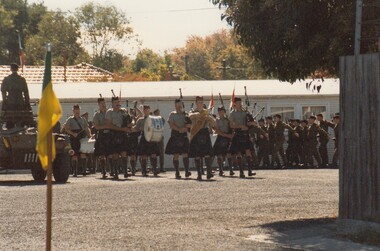
... Regimental Museum. Colour photograph of Pipes and Drums of 5/6 Battalion Royal Victorian Regiment leading ' A ' Squadron 8/13 Victorian Mounted Rifles on to the parade ground.Pipe Major : Sergeant Cox, Drum Major private Dennahy. photograph ...‘A’ Squadron 8/13 Victorian Mounted Rifles conducted a parade at Buna Barracks, Albury on Sunday 1 May 1988 to mark the 103rd Anniversary of the formation of the Victorian Mounted Rifles and the 40th Anniversary of the linking of the 8th (Indi), 13th (Gippsland) and 20th (Victorian Mounted Rifles) Light Horse Regiments to form the 8th/13th Victorian Mounted Rifles. Colonel G K Howard, Director of the Royal Australian Armoured Corps was the Reviewing Officer. The Pipes and Drums of the 5th/6th Battalion Royal Victorian Regiment provided the music for the occasion. Following the parade Colonel Howard officially opened the Regimental Museum.Colour photograph of Pipes and Drums of 5/6 Battalion Royal Victorian Regiment leading ' A ' Squadron 8/13 Victorian Mounted Rifles on to the parade ground.Pipe Major : Sergeant Cox, Drum Major private Dennahy. -
 8th/13th Victorian Mounted Rifles Regimental Collection
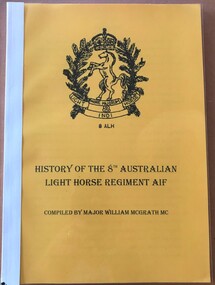
Document - McGrath history 8th ALH
... Sergeant Major and was commissioned as a Second Lieutenant on Gallipoli. McGrath served throughout the war with 8th Light Horse Regiment progressing through the officer ranks. This history was compiled from personal knowledge and the war diary of the regiment. McGrath's successor as adjutant, Captain Austin, is believed to have had input into the document and for some years was thought to have been the originator. Unique document of regimental ...William McGrath enlisted as a Trooper in the 8th Light Horse in 1915. He rose to the rank of Squadron Sergeant Major and was commissioned as a Second Lieutenant on Gallipoli. McGrath served throughout the war with 8th Light Horse Regiment progressing through the officer ranks. This history was compiled from personal knowledge and the war diary of the regiment. McGrath's successor as adjutant, Captain Austin, is believed to have had input into the document and for some years was thought to have been the originator.Unique document of regimental interest.Typed history of the 8th Light Horse Regiment AIF 1915-1919 prepared by Captain William McGrath when posted as Adjutant of the Regiment 1917-1919.military, history, light horse, world war one, wwi, mcgrath -
 8th/13th Victorian Mounted Rifles Regimental Collection
Photograph
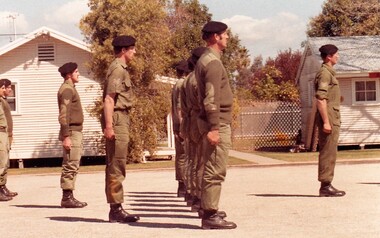
... Regimental Headquarters moved to Wangaratta and a second squadron was located at Albury. The Sale squadron transferred to 4th/19th Prince of Wales’s Light Horse. In 1977 8/13 VMR Regiment was reduced to an independent squadron A Squadron 8th/13th Victorian Mounted Rifles and in 1991 was linked with 4th/19th Prince of Wales’s Light Horse forming the VMR Squadron of that regiment. Colour photograph of soldiers of ' A ' Squadron 8/13 Victorian Mounted Rifles on parade at Buna Barracks, Albury, 1986. Squadron Sergeant Major ...The 8th/13th Victorian Mounted Rifles was raised as a regiment of the Royal Australian Armoured Corps on 1 May 1948 with Headquarters in Melbourne and squadrons in Sale, Benalla/Wangaratta and Albury. In 1955 Regimental Headquarters moved to Wangaratta and a second squadron was located at Albury. The Sale squadron transferred to 4th/19th Prince of Wales’s Light Horse. In 1977 8/13 VMR Regiment was reduced to an independent squadron A Squadron 8th/13th Victorian Mounted Rifles and in 1991 was linked with 4th/19th Prince of Wales’s Light Horse forming the VMR Squadron of that regiment.Colour photograph of soldiers of ' A ' Squadron 8/13 Victorian Mounted Rifles on parade at Buna Barracks, Albury, 1986. Squadron Sergeant Major Paech has taken post on right of front rank. -
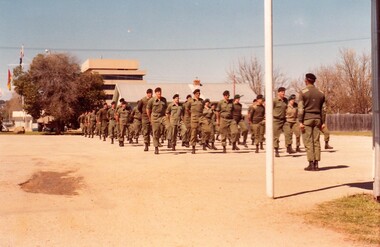 8th/13th Victorian Mounted Rifles Regimental Collection... Regimental Headquarters moved to Wangaratta and a second squadron was located at Albury. The Sale squadron transferred to 4th/19th Prince of Wales’s Light Horse. In 1977 8/13 VMR Regiment was reduced to an independent squadron A Squadron 8th/13th Victorian Mounted Rifles and in 1991 was linked with 4th/19th Prince of Wales’s Light Horse forming the VMR Squadron of that regiment. Colour photograph of ' A ' Squadron 8/13 Victorian Mounted Rifles moving on parade at Buna Barracks Albury 1986 under command of Squadron Sergeant Major ...The 8th/13th Victorian Mounted Rifles was raised as a regiment of the Royal Australian Armoured Corps on 1 May 1948 with Headquarters in Melbourne and squadrons in Sale, Benalla/Wangaratta and Albury. In 1955 Regimental Headquarters moved to Wangaratta and a second squadron was located at Albury. The Sale squadron transferred to 4th/19th Prince of Wales’s Light Horse. In 1977 8/13 VMR Regiment was reduced to an independent squadron A Squadron 8th/13th Victorian Mounted Rifles and in 1991 was linked with 4th/19th Prince of Wales’s Light Horse forming the VMR Squadron of that regiment.Colour photograph of ' A ' Squadron 8/13 Victorian Mounted Rifles moving on parade at Buna Barracks Albury 1986 under command of Squadron Sergeant Major Paech.
 -
 8th/13th Victorian Mounted Rifles Regimental Collection
Photograph
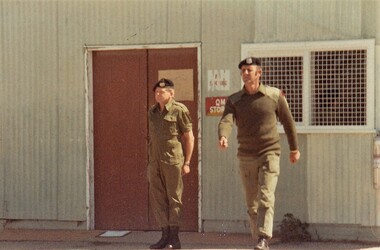
... Regimental Headquarters moved to Wangaratta and a second squadron was located at Albury. The Sale squadron transferred to 4th/19th Prince of Wales’s Light Horse. In 1977 8/13 VMR Regiment was reduced to an independent squadron A Squadron 8th/13th Victorian Mounted Rifles and in 1991 was linked with 4th/19th Prince of Wales’s Light Horse forming the VMR Squadron of that regiment. olour photograph of two soldiers of ' A ' Squadron Victorian Mounted Rifles on parade at Buna Barracks Albury. Squadron Sergeant Major ...The 8th/13th Victorian Mounted Rifles was raised as a regiment of the Royal Australian Armoured Corps on 1 May 1948 with Headquarters in Melbourne and squadrons in Sale, Benalla/Wangaratta and Albury. In 1955 Regimental Headquarters moved to Wangaratta and a second squadron was located at Albury. The Sale squadron transferred to 4th/19th Prince of Wales’s Light Horse. In 1977 8/13 VMR Regiment was reduced to an independent squadron A Squadron 8th/13th Victorian Mounted Rifles and in 1991 was linked with 4th/19th Prince of Wales’s Light Horse forming the VMR Squadron of that regiment.olour photograph of two soldiers of ' A ' Squadron Victorian Mounted Rifles on parade at Buna Barracks Albury. Squadron Sergeant Major Paech has just handed over the parade to Squadron Second second - in - Command Captain P. Martin.
