
Showing 87 items matching "sheet metal work"
-
 Eltham District Historical Society Inc
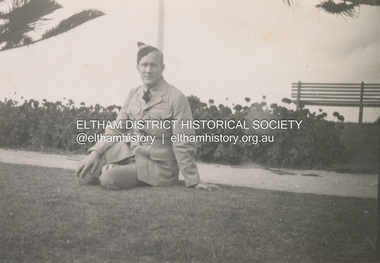
Photograph, Leading Aircraftsman, Lester Neil Ingram, RAAF, c.1943
... A sheet metal worker by trade, Lester had run the bakery business for 14 years, his father retired, and was working as a baker at Anglesea when he enlisted in the R.A.A.F. on 5 December 1941 at Melbourne. Previously he had worked...A sheet metal worker by trade, Lester had run the bakery business for 14 years, his father retired, and was working as a baker at Anglesea when he enlisted in the R.A.A.F. on 5 December 1941 at Melbourne. Previously he had worked ...Lester Neil Ingram was born at Kew, 8 November 1911, the son of John and Ada (Key) Ingram of Research. According to Electoral Roll records, in 1903, John Ingram was a farmer at Lancefield, his wife Ada, a milliner. By 1906, John Ingram was a baker at Research and from about 1912, an orchardist. The family moved to Anglesea River sometime between 1943 and 1949. A sheet metal worker by trade, Lester had run the bakery business for 14 years, his father retired, and was working as a baker at Anglesea when he enlisted in the R.A.A.F. on 5 December 1941 at Melbourne. Previously he had worked as a baker at Research (1937). He undertook training as Aircrew at No. 4 Initial Training School at Victor Harbour, South Australia, followed by No. 1 Wireless Air Gunners School at Ballarat, Victoria, and No. 3 Bombing and Gunnery School, West Sale, Victoria. On October 15, 1942 Lester qualified as an Air Gunner, promoted to Sergeant, and was posted to 1 Embarkation Depot at Ascot Vale, Victoria, and attached to R.A.F. UK. Lester embarked from Australia December 2, 1942 and arrived at 11 Personnel Despatch and Reception Depot on January 13, 1943. On March 9 he was transferred to 10 Operational Training Unit, Group No. 91, Bomber Command, R.A.F. Lester’s service file reveals that on the evening of 22 April 1943, Lester was a member of the aircrew of Whitley V bomber, N.1374. The airframe had run 1,127 hours. A full moon was just rising. The flight was non-operational, its purpose a dual conversion on type mission flown by a student pilot with almost two hours completed at night on similar flights. They had just changed aircraft as their previous aircraft had become unserviceable. The pilot had accepted the aircraft, which was technically unserviceable as the NCO in charge of flight had not completed the inspection paperwork correctly. The aircraft had undergone a major engine repair the day before. The aircraft took off at 2348 hours from R.A.F. Abington. It was reported that the aircraft take-off was quite normal and after climbing to 800 feet it passed out of view of the ground observers. A few seconds later the aircraft crashed, and it was reported that the sound of the engines seemed to become desynchronised. The crash occurred one and a half miles northwest of Longworth, Berkshire and the aircraft destroyed by fire. It carried a crew of five. Lester is commemorated on the Eltham Roll of Honour Board, which was commissioned by the Eltham War Memorial Trust to be hung in the Eltham Infant Welfare Centre, part of complex of buildings that form the Eltham War Memorial. The Honour Roll is presently (2023) hanging in the Eltham Library Community Gallery space. Lester was remembered with the following notices published in The Argus newspaper, Saturday 22 April 1944, p2: INGRAM. —In treasured memories you are with me still. Sgt. Lester Neil Ingram, killed, aircraft accident, England, April 22, 1943. (Mother and father.) INGRAM. —In proud and ever loving memory of Lester, 410236, Sgt. L. N. Ingram, R.A.A.F., air crash England, April 22, 1943. —Per ardua ad astra. (Ellen Peake and family.) [“Per ardua ad astra” is a Latin phrase meaning “through adversity to the stars” or “through struggle to the stars” which was the motto of the Royal Air Force and other Commonwealth air forces such as the Royal Australian Air Force.] And from his fiancé Ellen, in The Argus, Wednesday, 5 May 1943, p2: INGRAM. —On April 22 (result of aircraft accident near Lodgeworth Village, Berks, England), Sgt. Lester Neil Ingram, R.A.A.F., fiance of Ellen. -Treasured memories till we meet again. Lester is buried at Brookwood Military Cemetery, Surrey, United Kingdom, Grave 4. 1. 11. INGRAM, Flt. Sgt. LESTER NEIL, 410236. R.A.A.F. 22nd April 1943. Age 31. Son of John and Ada Ingram, of Anglesea, Victoria, Australia. He gave his life For freedom’s cause ◊ ◊ ◊ LEST WE FORGET “They shall grow not old, as we that are left grow old; Age shall not weary them, nor the years condemn. At the going down of the sun and in the morning We will remember them.”On reverse "Lester Ingram"lester neil ingram, baker, eltham, honour board, raaf, research (vic.), roll of honour, pam thoonen (nee ingram) collection -
 Port Melbourne Historical & Preservation Society
Document - Sheet Metal Working Union; Victorian Branch notification of meeting, 31 Mar 1956
... Alan commenced work with CAC Commonwealth Aircraft Corporation on 27/4/1953. Documents related to Union. The Sheet Metal Working Union; Victorian Branch notification of meeting. ...Alan commenced work with CAC Commonwealth Aircraft Corporation on 27/4/1953. Documents related to Union. The Sheet Metal Working Union; Victorian Branch notification of meeting. ...The Mathews family have been in continuous ownership of 395 Howe Parade (was 8 Howe Parade until 1964 when addresses re-assigned), Port Melbourne from 1938 to the present (Sept 2019)Six folders of assorted documents relating to the life of Alan Mathews and his family. Employment documents. Alan commenced work with CAC Commonwealth Aircraft Corporation on 27/4/1953. Documents related to Union. The Sheet Metal Working Union; Victorian Branch notification of meeting. Member #M2737industry, workers, alan mathews, commonwealth aircraft corporation, cac -
 Ithacan Historical Society
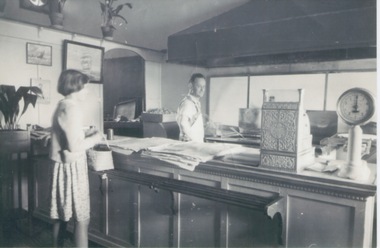
Photograph, Dimitri Sofianos in his fish shop, Late 1940s
... worked there together for almost thirty years. They sold fish and chips and potato cakes as well as fresh fish and shell fish. Dimitrios Sofianos, sometimes called Jimmy James, is pictured serving a customer. On the counter there are two piles of paper for wrapping the fish and chips. The white greaseproof paper on the LHS was the first wrapper used to wrap the fish and the single sheets of newspaper on the RHS were used for the outer wrappers. The takings went into the embossed metal...worked there together for almost thirty years. They sold fish and chips and potato cakes as well as fresh fish and shell fish. Dimitrios Sofianos, sometimes called Jimmy James, is pictured serving a customer. On the counter there are two piles of paper for wrapping the fish and chips. The white greaseproof paper on the LHS was the first wrapper used to wrap the fish and the single sheets of newspaper on the RHS were used for the outer wrappers. The takings went into the embossed metal ...Dimitrios Sofianos and Kalypso Sofianos (nee Raftopoulos) ran a small shop at 391 Camberwell Road Hartwell and worked there together for almost thirty years. They sold fish and chips and potato cakes as well as fresh fish and shell fish. Dimitrios Sofianos, sometimes called Jimmy James, is pictured serving a customer. On the counter there are two piles of paper for wrapping the fish and chips. The white greaseproof paper on the LHS was the first wrapper used to wrap the fish and the single sheets of newspaper on the RHS were used for the outer wrappers. The takings went into the embossed metal cash register on the counter and the metal scales on the far RHS weighed the goods to be purchased. The fish and chips were cooked in the metal vats where Dimitri is standing. Potted plants and framed pictures of sailing boats were used to decorate his shop. Many Greeks ran fish and chips shops. Coming from an island Ithacans were often keen fishermen and knew how to cook fish expertly. The Ithacan families who set up their businesses were very conscious of the presentation and attractiveness of their venues and some of the added decorative touches often reflected their interests. A black and white photograph of a man serving a customer in his fish and chip shop. -
 Kiewa Valley Historical Society
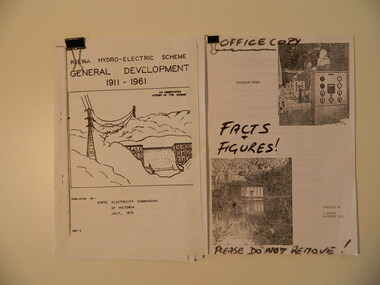
Papers - The Kiewa Hydro Electric Scheme x2, 1973 and 1993
... The first is and abbreviated history of the scheme published by the SEC, the second is similar with 'facts & figures' accessed by Bill Sutton, (Mt Beauty resident and SEC worker) whose father worked on the scheme, and who enjoyed speaking to visitors and groups about the history of the area including some of the light hearted aspects of the history. kiewa hydro electric scheme state electricity commission of victoria bill sutton The Kiewa Hydro Electric Scheme General Development 1911 - 1961 by SECV, July 1973. Consists of 22 A4 pages held within a folded A3 sheet Victorian Hydro compiled by W. Sutton Nov. 1993. Office Copy / Facts & Figures. Consists of 44 A4 pages held by a metal ...1. Chronological account of the Kiewa Hydro Electric Scheme from 1911 to 1961 2.Victorian Hydro with technical facts and figures, with Aboriginal History of the region, Settlement of the Kiewa Valley, Origin of Names Both accounts are a history of the Kiewa Hydro Electric Scheme constructed by the State Electricity Commission of Victoria. The first is and abbreviated history of the scheme published by the SEC, the second is similar with 'facts & figures' accessed by Bill Sutton, (Mt Beauty resident and SEC worker) whose father worked on the scheme, and who enjoyed speaking to visitors and groups about the history of the area including some of the light hearted aspects of the history.The Kiewa Hydro Electric Scheme General Development 1911 - 1961 by SECV, July 1973. Consists of 22 A4 pages held within a folded A3 sheet Victorian Hydro compiled by W. Sutton Nov. 1993. Office Copy / Facts & Figures. Consists of 44 A4 pages held by a metal clip.kiewa hydro electric scheme, state electricity commission of victoria, bill sutton -
Stawell Historical Society Inc
Plan, Wiring Plans Stawell Hospital, 1933
... Sheets 1 & 2. Plus Specifications of work to be done in rusted metal Cylinder. ...Sheets 1 & 2. Plus Specifications of work to be done in rusted metal Cylinder. ...Blueprint Plans of Wiring for Stawell Hospital 1933. Sheets 1 & 2. Plus Specifications of work to be done in rusted metal Cylinder. Specifications in brown paper folder containing seven (7) typed semi-transparent pagesHospital Plans Healthhospital, plans, health -
 Embroiderers Guild, Victoria
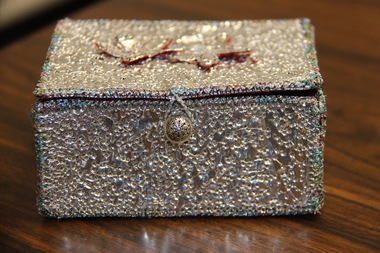
Container - Box, June Edwards
... June Edwards, member EGV Boxes Metal work Machine embroidered box, covered in stamped metal sheet. Stitched with silver thread. ...June Edwards, member EGVMachine embroidered box, covered in stamped metal sheet. Stitched with silver thread. Two machine embroidered flowers on the lid. Edge stitched by machine in Madeira metallic thread, then stitched together. Lined with red felt.boxes, metal work -
 Ballarat Tramway Museum
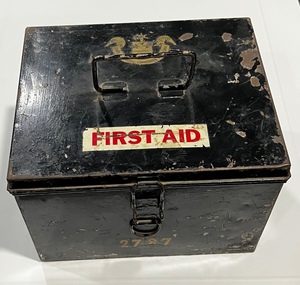
Functional object - SEC First Aid Box, State Electricity Commission of Victoria (SECV)
... work places containing first aid equipment and materials. It has been made with interior slots or dividers to hold items. Images of contents of a box that went to auction in Feb. 2025 collected. Demonstrates an SECV First Aid Box. SECV tramways First Aid Equipment Has SEC logo and number 2787. Has a hand date stamp of "16 Apr 1970" on the inside of the lid, top left hand corner. First aid box made from sheet metal ...The State Electricity Commission of Victoria 1921 to 1993 was responsible for electricity generation in Victoria and the operation of three Provincial Tramways. It had a strong safety focus for the time. This first-aid box would have been provided to work places containing first aid equipment and materials. It has been made with interior slots or dividers to hold items. Images of contents of a box that went to auction in Feb. 2025 collected.Demonstrates an SECV First Aid Box.First aid box made from sheet metal, with hinged lid, press locking clamp on the front, with a divided interior or fitting to hold items, painted white on the inside and black on the outside. Has the SEC logo, marked "First Aide" in red letters on a white background and numbered "2787" on the front side.Has SEC logo and number 2787. Has a hand date stamp of "16 Apr 1970" on the inside of the lid, top left hand corner.secv, tramways, first aid, equipment -
 National Wool Museum
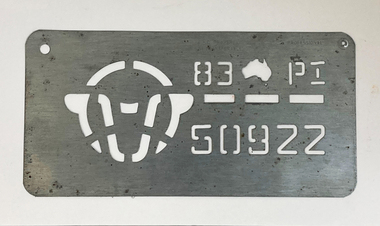
Tool - Stencil, 1983
... work invested by this dedicated father and son duo. Wool Classing Stencil 90 years wool classing between father & son Engraved letters. “A.W.C. PROPERTY / NOT TRANSFERABLE” Engraved letters. “PROFESSIONAL“. Cut imagery. Sheep’s head Cut letters, numbers, and imagery. “83 (Image Australia) P I / 50922” Thin sheet of metal ...The story of 90 years of wool classing between father & son begins in 1936, when a young boy by the name of Stanley James Hucker walked through the doors of the Gordon Technical School in Geelong. Born in 1921, Stanley was 15 years of age when he began his 3-year course in Wool Classing. 30 years later, Stanley’s second son Denis completed the same 3-year wool classing course. Beginning in 1966, Denis attended the same Gordon Technical School and walked the same halls as his father before him. Stanley finished his course in 1938. He went back to the family farm in Lake Bolac for a brief period before enrolling in the Second World War. At the completion of the war, Stanley returned home and married before gaining a soldier settler allotment, north of Willaura. This enabled Stan to use his wool classing knowledge. He ran between 1,500 and 2,000 sheep for many years, while his wool classer stencil also allowed him to go out and class at various sheds around the area. He held his stencil from 1938 until he retired at the age of 60 in 1981. On retirement, his second son Denis was working in the district, managing a local property while also leasing land himself. Upon his father’s retirement, Denis had the opportunity to lease his father’s farm, an opportunity he could not refuse. Denis had finished his wool classing course at the Gordon Technical School in 1968, graduating dux of his class. He began working with a local contractor and started classing wool in his team. Denis gained a great deal of experience working as part of this team in big sheds of up to 8 stands servicing between 10 & 20,000 sheep. It was not all smooth sailing for Denis however, and he soon learnt an important lesson. Class wool the way you’re taught, don’t listen to the owner standing over your shoulder. At a clip of Corriedales near Casterton, Denis was pushing too many fleeces into the line of fine wool. This resulted in a notice from the Australian Wool Exchange (AWEX) “mixing counts too much, submit three clips for inspection”. Denis was able to submit 3 clips with no further complaints, however, this proved a valuable lesson he would never forget over his long career classing wool. In the early 1980s, when Denis was leasing two properties including his father’s, things were going well until drought struck. February 1983 was the date of the Ash Wednesday bushfires, and saw Melbourne have three days over 40 °C for only the second time on record. This period saw Denis give away farming, turning towards contracting work instead. After the difficult times of the early 1980s, the next two decades were a good time for the sheep industry. 15 micron wool was selling for prices between 4 to 5,000 cents per kilo, double what you’d expect for the same wool in 2022. In 1995 a single bale of wool sold for a million dollars. This was a good time for Denis too. His contracting work saw him employing local shearers and shed staff. His team was involved with the shearing and classing of more than 130,000 sheep. After 20 years of contracting, it was time for Denis to transition into the next phase of his life. He gave up independent contracting, preferring instead to return to being a member of someone else’s team. In 2018, having completed 50 years of wool classing, it was time to call it a day and retire completely. At the annual Gordon Wool School Old Students Association dinner held in 2018, Denis was presented with his 50 years as a registered wool classer stencil awarded by the Australian Wool Exchange (AWEX). This is a rare honour achieved by few. As of February 2020, a total of 430 wool classers had achieved this 50-year milestone. For Denis however, his proudest achievement is achieving 90 years of wool classing with his father. The National Wool Museum is proud to share the collection of objects gained from 90 years in the wool classing industry by Stanley and Denis. This ranges from Stanley’s first stencil and Wool Sample book, started when he first attended the Gordon in 1936. The collection concludes 90 years later with Denis’ 50 years of wool classing Stencil. The collection contains many more objects, all telling the story of these 90 years, and the hard work invested by this dedicated father and son duo. Thin sheet of metal with letters and numbers cut to produce a consistent pattern for the surface below through the application of ink. In small text on the top edge of the stencil two separate phrases are engraved.” A.W.C. PROPERTY NOT TRANSFERABLE” and “PROFESSIONAL“. This wool classing stencil belonged to Stanley Hucker. It was his last Wool Classing Stencil. Dated to 1983, it is 45 years older than his first stencil. The role of a Wool Classer is to sort, classify, and grade wool into various ‘lines’ so that it can be sold for best market price. Wool Classers are typically also tasked with the managing and supervising of wool-handling teams. The stencil is used in the final step of preparing a bale of wool for sale. It is branded across the front of a wool bale to indicate the quality of the wool, with the classers number used as a seal of guarantee.Engraved letters. “A.W.C. PROPERTY / NOT TRANSFERABLE” Engraved letters. “PROFESSIONAL“. Cut imagery. Sheep’s head Cut letters, numbers, and imagery. “83 (Image Australia) P I / 50922”wool classing, stencil, 90 years wool classing between father & son -
 National Wool Museum
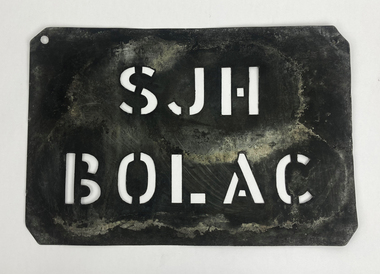
Tool - Stencil, 1938
... The collection contains many more objects, all telling the story of these 90 years, and the hard work invested by this dedicated father and son duo. wool classing stencil 90 years wool classing between father & son Cut letters. “SJH / BOLAC ” Thin sheet of metal ...The story of 90 years of wool classing between father & son begins in 1936, when a young boy by the name of Stanley James Hucker walked through the doors of the Gordon Technical School in Geelong. Born in 1921, Stanley was 15 years of age when he began his 3-year course in Wool Classing. 30 years later, Stanley’s second son Denis completed the same 3-year wool classing course. Beginning in 1966, Denis attended the same Gordon Technical School and walked the same halls as his father before him. Stanley finished his course in 1938. He went back to the family farm in Lake Bolac for a brief period before enrolling in the Second World War. At the completion of the war, Stanley returned home and married before gaining a soldier settler allotment, north of Willaura. This enabled Stan to use his wool classing knowledge. He ran between 1,500 and 2,000 sheep for many years, while his wool classer stencil also allowed him to go out and class at various sheds around the area. He held his stencil from 1938 until he retired at the age of 60 in 1981. On retirement, his second son Denis was working in the district, managing a local property while also leasing land himself. Upon his father’s retirement, Denis had the opportunity to lease his father’s farm, an opportunity he could not refuse. Denis had finished his wool classing course at the Gordon Technical School in 1968, graduating dux of his class. He began working with a local contractor and started classing wool in his team. Denis gained a great deal of experience working as part of this team in big sheds of up to 8 stands servicing between 10 & 20,000 sheep. It was not all smooth sailing for Denis however, and he soon learnt an important lesson. Class wool the way you’re taught, don’t listen to the owner standing over your shoulder. At a clip of Corriedales near Casterton, Denis was pushing too many fleeces into the line of fine wool. This resulted in a notice from the Australian Wool Exchange (AWEX) “mixing counts too much, submit three clips for inspection”. Denis was able to submit 3 clips with no further complaints, however, this proved a valuable lesson he would never forget over his long career classing wool. In the early 1980s, when Denis was leasing two properties including his father’s, things were going well until drought struck. February 1983 was the date of the Ash Wednesday bushfires, and saw Melbourne have three days over 40 °C for only the second time on record. This period saw Denis give away farming, turning towards contracting work instead. After the difficult times of the early 1980s, the next two decades were a good time for the sheep industry. 15 micron wool was selling for prices between 4 to 5,000 cents per kilo, double what you’d expect for the same wool in 2022. In 1995 a single bale of wool sold for a million dollars. This was a good time for Denis too. His contracting work saw him employing local shearers and shed staff. His team was involved with the shearing and classing of more than 130,000 sheep. After 20 years of contracting, it was time for Denis to transition into the next phase of his life. He gave up independent contracting, preferring instead to return to being a member of someone else’s team. In 2018, having completed 50 years of wool classing, it was time to call it a day and retire completely. At the annual Gordon Wool School Old Students Association dinner held in 2018, Denis was presented with his 50 years as a registered wool classer stencil awarded by the Australian Wool Exchange (AWEX). This is a rare honour achieved by few. As of February 2020, a total of 430 wool classers had achieved this 50-year milestone. For Denis however, his proudest achievement is achieving 90 years of wool classing with his father. The National Wool Museum is proud to share the collection of objects gained from 90 years in the wool classing industry by Stanley and Denis. This ranges from Stanley’s first stencil and Wool Sample book, started when he first attended the Gordon in 1936. The collection concludes 90 years later with Denis’ 50 years of wool classing Stencil. The collection contains many more objects, all telling the story of these 90 years, and the hard work invested by this dedicated father and son duo. Thin sheet of metal with letters cut to produce a consistent pattern for the surface below through the application of ink. This wool classing stencil belonged to Stanley Hucker. It was his first Wool Classing Stencil. It was used on Stanley’s property named “Yohhatnbu” in Willaura. Stanley gained the property as part of the Returned Soldiers Settlement Scheme for his service in World War 2. The role of a Wool Classer is to sort, classify, and grade wool into various ‘lines’ so that it can be sold for best market price. Wool Classers are typically also tasked with the managing and supervising of wool-handling teams. The stencil is used in the final step of preparing a bale of wool for sale. It is branded across the front of a wool bale to indicate the quality of the wool, with the classers number used as a seal of guarantee.Cut letters. “SJH / BOLAC ”wool classing, stencil, 90 years wool classing between father & son -
 Ballarat Tramway Museum
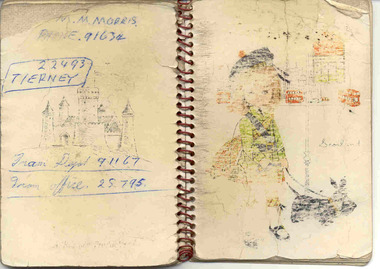
Pamphlet, D. J. Everett, Ballarat tram rosters, late 1960's
... metal spiral binding, notebook with card board covers. Each sheet faint ruled, both sides. Front cover had a drawing of a Scots lassie with a Scots terrier on a lead and a drawing of a street scene in the background with the words "Scotland" in script. Rear cover has a drawing of a castle on it. Each sheet, most left hand side only has the hand written details of each SEC Ballarat run - giving sign on times, notes, timetables, which run taken or taken by, meal times, notes with regard to special instructions, finish times and total hours worked. ...metal spiral binding, notebook with card board covers. Each sheet faint ruled, both sides. Front cover had a drawing of a Scots lassie with a Scots terrier on a lead and a drawing of a street scene in the background with the words "Scotland" in script. Rear cover has a drawing of a castle on it. Each sheet, most left hand side only has the hand written details of each SEC Ballarat run - giving sign on times, notes, timetables, which run taken or taken by, meal times, notes with regard to special instructions, finish times and total hours worked. ...Has a strong association with tram crews and the rosters crew workings, possibly D.J. Everett. Prepared by crews from sheets to enable them to know what service times to run, meal times, details of crew changes etc, based on their allocated shift or run from the roster.Thirty eight (38) page red metal spiral binding, notebook with card board covers. Each sheet faint ruled, both sides. Front cover had a drawing of a Scots lassie with a Scots terrier on a lead and a drawing of a street scene in the background with the words "Scotland" in script. Rear cover has a drawing of a castle on it. Each sheet, most left hand side only has the hand written details of each SEC Ballarat run - giving sign on times, notes, timetables, which run taken or taken by, meal times, notes with regard to special instructions, finish times and total hours worked. Image 1 shows covers and image 2, one of the sheets with the runs printed on both side of the page. On a scrap of paper, written on the back of a Ballarat Summary timesheet for a Thursday in 1968 is the run details for 22 run. Has been folded into 4. See also Reg item 4073 for a later book and 6876 for a typed versionOn rear cover - phone numbers for M. Morris, Tierney, Tram depot and tram office.trams, tramways, ballarat, rosters, employees, shifts, timetables -
 Ballarat Tramway Museum
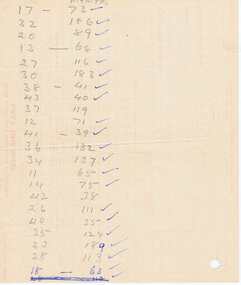
Document - Form/s, Personal Papers, List, State Electricity Commission of Victoria (SECV), 1950's
... worked by employees. Trams tramways SEC Wages Tramcars MMTB List of Ballarat Tramcar numbers against their original MMTB numbers which have then been ticked off. Written on the back of an SEC Daily Time Sheet for the Afternoon Shift - form No. FTK 2-1-2 - printed in red on off white paper. Item was contained within Reg Item 5507 - Foolscap binder with green covers, black binding edge and metal ...Yields information about the process of preparing lists of ex MMTB tramcars that were used in Ballarat and demonstrates the record keeping of the SEC in relation to time worked by employees.List of Ballarat Tramcar numbers against their original MMTB numbers which have then been ticked off. Written on the back of an SEC Daily Time Sheet for the Afternoon Shift - form No. FTK 2-1-2 - printed in red on off white paper. Item was contained within Reg Item 5507 - Foolscap binder with green covers, black binding edge and metal clips - see btm5507-list.pdf for actual location. trams, tramways, sec, wages, tramcars, mmtb -
 Ballarat Tramway Museum
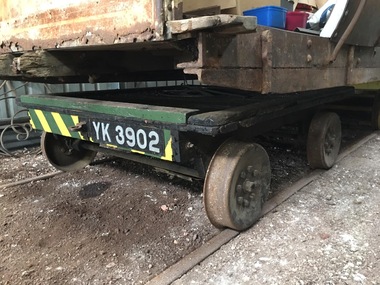
Vehicle - Four Wheel Flat top Trolley, Commonwealth Railways - Port Augusta Workshops (Understood), 1940's?
... metal has connecting tow/couplers. Relocated to Bungaree c2015 when 22 moved. Photographed at Bungaree 6-4-2020 by Neville Britton, see image btm18i1.jpg. Record updated 6-4-2020. See detailed information on back of sheet in folder for sketches, timber damaged, notes re a number plate and a note regarding work done 7/97 in replacing underside diagonal bracing supports....metal has connecting tow/couplers. Relocated to Bungaree c2015 when 22 moved. Photographed at Bungaree 6-4-2020 by Neville Britton, see image btm18i1.jpg. Record updated 6-4-2020. See detailed information on back of sheet in folder for sketches, timber damaged, notes re a number plate and a note regarding work done 7/97 in replacing underside diagonal bracing supports. ...Four wheel flat top track trolley- deck wood frame and sides on four fabricated/pressed wheels, with bearings, axles- Used to transport materials- hand pushed or towed. Metal tie rods in front over axles and metal has connecting tow/couplers. Relocated to Bungaree c2015 when 22 moved. Photographed at Bungaree 6-4-2020 by Neville Britton, see image btm18i1.jpg. Record updated 6-4-2020. See detailed information on back of sheet in folder for sketches, timber damaged, notes re a number plate and a note regarding work done 7/97 in replacing underside diagonal bracing supports.On underside in paint, "To Cargeeg, 50 Pasadena East Bentleigh, Melbourne"trams, tramways, commonwealth railways, maintenance equipment, railway trolley -
 National Wool Museum
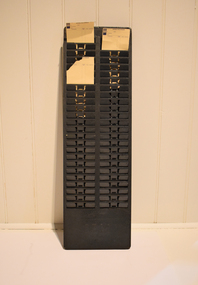
Functional object - Time Card Rack
... sheet or provide the data to fill one. This allowed a timekeeper to have an official record of the hours an employee worked to calculate the pay owed an employee. Time Sheet Time Card Factory Employee Work Life Punch Clock Textile Industry Metal ...A time clock, sometimes known as a clock card machine, punch clock, or time recorder, is a device that recorded the time an employee entered and left the factory. In mechanical time clocks, this was accomplished by inserting a heavy paper card, called a time card, into a slot on the time clock. When the time card hit a contact at the rear of the slot, the machine would print day and time information (a timestamp) on the card. One or more time cards could serve as a time sheet or provide the data to fill one. This allowed a timekeeper to have an official record of the hours an employee worked to calculate the pay owed an employee.Metal time card rack.time sheet, time card, factory, employee, work life, punch clock, textile industry -
 Ballarat Tramway Museum
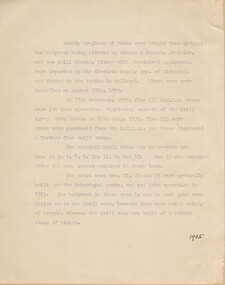
Album - Photo Album, State Electricity Commission of Victoria (SECV), "Photographs of Ballarat Tramways Rolling Stock & Track Reconditioning Works", 1935
... work and trackwork to rehabilitate the system. Demonstrates an important era of the Ballarat Tramways through the SEC preparing an album of photographs. The completeness of the record adds to the significance. Trams tramways Ballarat Reconstruction Tramcars ESCo MMTB New Trams Handwritten notes re trams history under each photo on sheet 1 in pencil., On front cover in ink "Ballarat Tramway Preservation Society Catalogue No. 601" Photo Album - comprising folded manila card covers, 11 photo sheets each with two, one with three black and white photos. Has three metal ...Yields information about the condition of the ESCo tram fleet at the time of the SEC takeover of the operations their appearance, the reconstruction work and trackwork to rehabilitate the system. Demonstrates an important era of the Ballarat Tramways through the SEC preparing an album of photographs. The completeness of the record adds to the significance.Photo Album - comprising folded manila card covers, 11 photo sheets each with two, one with three black and white photos. Has three metal - steel fold back clips holding the sheets together. Folded so that the metal clips are not exposed on the outside. Has the title "Photographs of Ballarat Tramways Rolling Stock & Track Reconditioning Works". Album contains 23 photos, glued to the manila sheets - assembled by the SEC. All SEC photos except as noted below. Each of the photographs have been separately registered, as shown in the table below. Scanned images made of photos. Conservation Notes prepared - within the cataloguing sheet. Inside cover Typed notes, dated 1935, of the early trams of Ballarat, trailers ex Sydney, new trams ex Melbourne in 1930, and a further 5 in 1931. Lists the original Brill trams still in service (9 Number), and a noted on the recent scrapping of No. 11. Also had a note re the Sebastopol cars and the timber quality used in their construction - see hi Res image btm3000h-cover.jpg (added 16-12-2015) Folio Reg. Notes Item No. 1 3001 ESCo 14 see also Reg Item Image 755 for early copy. 3002 ESCo 21 ditto 1354. 2 3003 ESCo 1 ditto 756 3004 ESCo 1 ditto 758 3 3005 SEC 30 1357 and N204 3006.1 Interior photo 3006.2 Interior photo 4 3007 189 1356 and N203 3008 SEC car? 5 3009.1 Track work at Grenville St 3009.2 Track work at Grenville St with 27 in photo. 6 3010 Official party for launch of new rolling stock 1935 - Richards & Co photo 3011 No 30 on ditto - Richards & Co photo 7 3012.1 Interior photo of ex MMTB car 3012.2 ditto 8 3013.1 Track reconstruction photo 3013.2 ditto 9 3013.3 ditto 3013.4 ditto 10 3013.5 ditto 3013.6 ditto 11 3009.3 ditto - City Loop (See note below) 3009.4 ditto - Grenville St It would appear or is possible that folio 5 is out of position relative to No. 10 and 11. This is given the location of the photographs contained and would be more consistent with that of No. 11. Also the silverfish damage to the photographs would be consistent. The folio arrangement has been left as found, although catalogued to the follow style of photographs. Photos not to be taken out of the album unless for photographic copying. Use image files.Handwritten notes re trams history under each photo on sheet 1 in pencil., On front cover in ink "Ballarat Tramway Preservation Society Catalogue No. 601"trams, tramways, ballarat, reconstruction, tramcars, esco, mmtb, new trams -
 Ballarat Tramway Museum
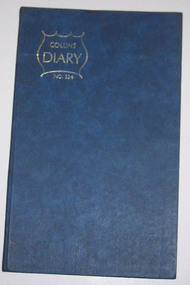
Administrative record - Log book, Diary, Collins Bros, 1970
... sheets at from the diary. Used by the SEC Ballarat track gang to record their daily work, leave, welding, track cleaning, truck driver etc. Names of gang often mentioned in the diary undertaking specific jobs and when on leave. Last day work recorded - 24/9/1072. Loose contents Inside front cover Workshop requisition to fill pot holes and note re rail requirements for Daylesford and Hamilton. Clip to page with metal...sheets at from the diary. Used by the SEC Ballarat track gang to record their daily work, leave, welding, track cleaning, truck driver etc. Names of gang often mentioned in the diary undertaking specific jobs and when on leave. Last day work recorded - 24/9/1072. Loose contents Inside front cover Workshop requisition to fill pot holes and note re rail requirements for Daylesford and Hamilton. Clip to page with metal ...Yields information about the track maintenance activities of the track gang in Ballarat, the work they did, notes, names and other information.Collins Australian Diary, No. 324 printed by Collins Bros, dark blue card covers, sewn sections with ruled sheets providing a diary for 1971, one week per double page. Has "useful information" sheets at from the diary. Used by the SEC Ballarat track gang to record their daily work, leave, welding, track cleaning, truck driver etc. Names of gang often mentioned in the diary undertaking specific jobs and when on leave. Last day work recorded - 24/9/1072. Loose contents Inside front cover Workshop requisition to fill pot holes and note re rail requirements for Daylesford and Hamilton. Clip to page with metal paper clip. 29/8/1971 - note re account numbers and on rear of a pink requisition form - work list for gang. 12/9/1971 - Workshop Requisition form - green dated 6/5/1971 Inside rear cover Circular for a Male Cleaner in Traralgon Workshop Requisition for work at the Zone substation - Ballarat South Circular to authorised drivers re used of defective vehicles. Has W. Vermeend name typed in top left hand corner. SEC Long Service Regulations circular - has name D.Wiseman handwritten in top right hand corner. 5 sheets of blue carbon paper.tram, trams, sec, ballarat, depot, trackwork -
Moorabbin Air Museum
Book (Item) - Airplane Metal Work Vol 3 Sheet Metal Pattern Development and Template Making AM Robson
... Airplane Metal Work Vol 3 Sheet Metal Pattern Development and Template Making AM Robson...Book Airplane Metal Work Vol 3 Sheet Metal Pattern Development and Template Making AM Robson ... -
 Melbourne Tram Museum
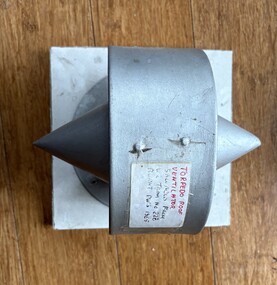
Functional object - W class tram Torpedp Roof Vent, Melbourne & Metropolitan Tramways Board (MMTB), 1920s
... Demonstrates sheet metal work and equipment fitted to the first batch of W class trams. tramways mmtb W class tramcar fittings equipment Lable in ink "Torpedo Roof ventilator salvaged from W2 228, Burnt PWS 1965" Sheet metal-formed and riveted object manufactured to provide a roof ventilator. ...Manufactured for the first batch of W-class trams starting with tram No. 219. Later W-class trams had a separate raised section in the roof. See Appendix 4 of Destination City 5th Edition for details of tramcar numbers.Demonstrates sheet metal work and equipment fitted to the first batch of W class trams.Sheet metal-formed and riveted object manufactured to provide a roof ventilator. Has been painted silver and mounted onto a timber sheet with white taped edges.Lable in ink "Torpedo Roof ventilator salvaged from W2 228, Burnt PWS 1965"tramways, mmtb, w class, tramcar fittings, equipment -
 Vision Australia
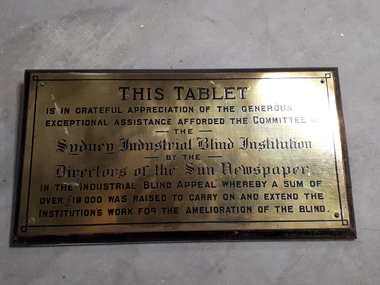
Plaque - Object, Sydney Industrial Blind Institution
... This tablet is in grateful appreciation of the generous exceptional assistance afforded the committee - The - Sydney Industrial Blind Institution - by the - Director of the Sun Newspaper in the Industrial "Blind Appeal" whereby a sum of over 18000 pounds was raised to carry on and extend the Institution's work for the amelioration of the blind. sydney industrial blind institution Nameplates Gold coloured metal sheet with black writing mounted on wood Sydney Industrial Blind Institution Plaque Object ...This tablet is in grateful appreciation of the generous exceptional assistance afforded the committee - The - Sydney Industrial Blind Institution - by the - Director of the Sun Newspaper in the Industrial "Blind Appeal" whereby a sum of over 18000 pounds was raised to carry on and extend the Institution's work for the amelioration of the blind.Gold coloured metal sheet with black writing mounted on woodsydney industrial blind institution, nameplates -
 Vision Australia
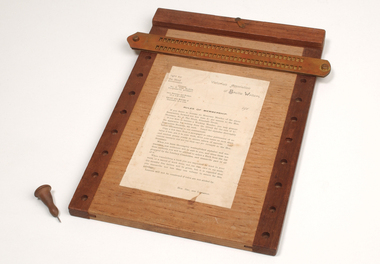
Equipment - Object, Braille hand frame and stylus
... sheets equating to 300 hours of work! This wooden slate, which was used to make the system portable, served as a firm base needed to sustain puncture pressure. The frame can also be slotted into both sides of the slate, thereby ensuring that the lines of Braille were straight across the page. The metal...sheets equating to 300 hours of work! This wooden slate, which was used to make the system portable, served as a firm base needed to sustain puncture pressure. The frame can also be slotted into both sides of the slate, thereby ensuring that the lines of Braille were straight across the page. The metal ...Braille hand frames and styluses were the primary way to produce Braille for over a century. The stylus was used to make a separate indentation for each dot, and the hand frame to keep dots within the same cell. Braille rows are produced from right to left. The process was very time consuming. Volunteer transcribers for the library could take an average of ½ hour to produce one page of Braille using this method. For example: “Oliver Twist” required approximately 600 sheets equating to 300 hours of work! This wooden slate, which was used to make the system portable, served as a firm base needed to sustain puncture pressure. The frame can also be slotted into both sides of the slate, thereby ensuring that the lines of Braille were straight across the page. The metal clasp at the top of the frame held the wooden which kept paper from slipping. In this example, the Rules of Membership for the Victorian Braille Writers were attached to the board.1 wooden back board with metal hand frame and stylus156 carved into wooden framevictorian association of braille writers, braille equipment -
 Federation University Art Collection
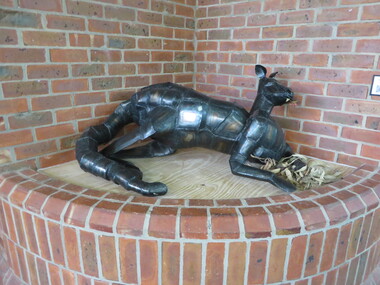
Sculpture - Sculpture - metal, Collier, Betty, [Kangaroo] by Betty Collier
... work was requested for the collection by Brian McLennan. This item is part of the Federation University Art Collection. The Art Collection features over @000 works and was listed as a 'Ballarat Treasure' in 2007. art artwork betty collier collier kangaroo sculpture A large oxy welded sheet steel reclining kangaroo. [Kangaroo] by Betty Collier Sculpture Sculpture - metal ...Betty Collier (nee Thege) was a student of the Ballarat Technical Art School, and lectured in Sculpture at the University of Ballarat, both predecessor institutions of Federation University Australia. This work was requested for the collection by Brian McLennan. This item is part of the Federation University Art Collection. The Art Collection features over @000 works and was listed as a 'Ballarat Treasure' in 2007.A large oxy welded sheet steel reclining kangaroo.art, artwork, betty collier, collier, kangaroo, sculpture -
 Vision Australia
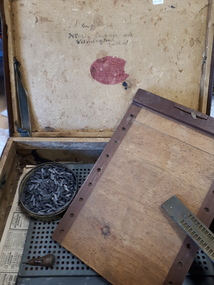
Equipment - Object, Braille hand frame and stylus with Braille maths slate and pegs
... For example: “Oliver Twist” required approximately 600 sheets equating to 300 hours of work! Various metal hand frames accompanied by a metal stylus with wooden handle. ...For example: “Oliver Twist” required approximately 600 sheets equating to 300 hours of work! Various metal hand frames accompanied by a metal stylus with wooden handle. ...Braille hand frames and styluses were the primary way to produce Braille for over a century. The stylus was used to make a separate indentation for each dot, and the hand frame to keep dots within the same cell. Braille rows are produced from right to left. The process was very time consuming. Volunteer transcribers for the library could take an average of ½ hour to produce one page of Braille using this method. For example: “Oliver Twist” required approximately 600 sheets equating to 300 hours of work! Various metal hand frames accompanied by a metal stylus with wooden handle. Some include a wooden slate, which was used to make the system portable as a firm base was needed to sustain puncture pressure. The frame can also be slotted into both sides of the slate, thereby ensuring that the lines of Braille were straight across the page. Transcribing maths was an extremely complex task and a metal grid was utilised to reproduce graphs and diagrams.1 wooden hand frame with metal grid and metal and wooden stylus, 1 metal maths grid with metal pegs in metal container inside a brown suitcase and numerous sheets of Braille paperT.C. Coughlin 5 doz sausage rolls Wilmington Southend is written inside the lid of the suitcasebraille equipment, james murphy -
 Vision Australia
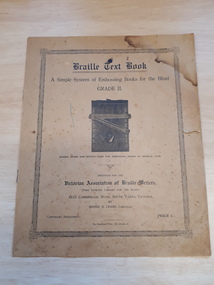
Equipment - Object, Braille wooden board and Braille text book
... sheets equating to 300 hours of work! This wooden slate, which was used to make the system portable, served as a firm base needed to sustain puncture pressure. The frame can also be slotted into both sides of the slate, thereby ensuring that the lines of Braille were straight across the page. The metal...sheets equating to 300 hours of work! This wooden slate, which was used to make the system portable, served as a firm base needed to sustain puncture pressure. The frame can also be slotted into both sides of the slate, thereby ensuring that the lines of Braille were straight across the page. The metal ...Braille hand frames and styluses were the primary way to produce Braille for over a century. The stylus was used to make a separate indentation for each dot, and the hand frame to keep dots within the same cell. Braille rows are produced from right to left. The process was very time consuming. Volunteer transcribers for the library could take an average of ½ hour to produce one page of Braille using this method. For example: “Oliver Twist” required approximately 600 sheets equating to 300 hours of work! This wooden slate, which was used to make the system portable, served as a firm base needed to sustain puncture pressure. The frame can also be slotted into both sides of the slate, thereby ensuring that the lines of Braille were straight across the page. The metal clasp at the top of the frame held the wooden which kept paper from slipping. This donation includes the signature of Miss Bertha Yoxon, who was a student that transcribed braille around the 1920's for the Victorian Association of Braille Writers, and the owner of this board and textbook. Some originals of her work and a translated letter from her friend James Grubb accompany the frame. 1 wooden board and Braille paper, with 1 Braille text bookbraille equipment, victorian association of braille writers -
 Vision Australia
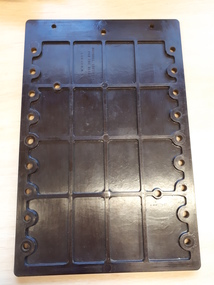
Equipment - Object, Hand frame with grid
... sheets equating to 300 hours of work! This wooden slate, which was used to make the system portable, served as a firm base needed to sustain puncture pressure. The frame can also be slotted into both sides of the slate, thereby ensuring that the lines of Braille were straight across the page. The metal...sheets equating to 300 hours of work! This wooden slate, which was used to make the system portable, served as a firm base needed to sustain puncture pressure. The frame can also be slotted into both sides of the slate, thereby ensuring that the lines of Braille were straight across the page. The metal ...Braille hand frames and styluses were the primary way to produce Braille for over a century. The stylus was used to make a separate indentation for each dot, and the hand frame to keep dots within the same cell. Braille rows are produced from right to left. The process was very time consuming. Volunteer transcribers for the library could take an average of ½ hour to produce one page of Braille using this method. For example: “Oliver Twist” required approximately 600 sheets equating to 300 hours of work! This wooden slate, which was used to make the system portable, served as a firm base needed to sustain puncture pressure. The frame can also be slotted into both sides of the slate, thereby ensuring that the lines of Braille were straight across the page. The metal clasp at the top of the frame held the wooden which kept paper from slipping.Brown plastic rectangular hand frame with holes evenly spaced on either long side. Hinged Braille metal guide with space for 2 rows of Braille, each 35 cells long. braille equipment, rnib -
 Vision Australia
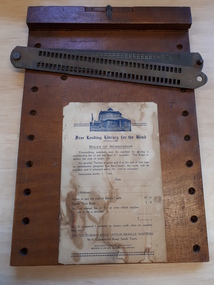
Equipment - Object, Braille hand frame
... sheets equating to 300 hours of work! This wooden slate, which was used to make the system portable, served as a firm base needed to sustain puncture pressure. The frame can also be slotted into both sides of the slate, thereby ensuring that the lines of Braille were straight across the page. The metal...sheets equating to 300 hours of work! This wooden slate, which was used to make the system portable, served as a firm base needed to sustain puncture pressure. The frame can also be slotted into both sides of the slate, thereby ensuring that the lines of Braille were straight across the page. The metal ...Braille hand frames and styluses were the primary way to produce Braille for over a century. The stylus was used to make a separate indentation for each dot, and the hand frame to keep dots within the same cell. Braille rows are produced from right to left. The process was very time consuming. Volunteer transcribers for the library could take an average of ½ hour to produce one page of Braille using this method. For example: “Oliver Twist” required approximately 600 sheets equating to 300 hours of work! This wooden slate, which was used to make the system portable, served as a firm base needed to sustain puncture pressure. The frame can also be slotted into both sides of the slate, thereby ensuring that the lines of Braille were straight across the page. The metal clasp at the top of the frame held the wooden which kept paper from slipping. Sometimes the board was labelled with organisational labels. In this example, the Rules of Membership for the Victorian Association of Braille Writers was attached, which included the costs of being a transcribing member and the length of the loan period. It is signed by Millicent Ritchie (Hon. Secretary) and Minnie H Crabb (Asst Sec and Librarian) at the base of the sheet.Brown rectangular wooden board with hinged paper clamp and metal hinged guideFree Lending Library for the Blind label is attached to boardbraille equipment, victorian association of braille writers -
 Melbourne Tram Museum
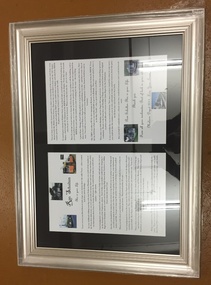
Certificate - Framed Certificate, Ormond Frames and Gifts, "Ron Scholten - This is your life", 2011
... work at 332 Flinders St (the Shoe shop), TMSV, MMTB, trip to Germany for Siemens. Printed onto sheets with tram photos top or bottom, has been framed with a black cardboard trimmed for the sheets of paper. Frame from a silver finished timber frame (outside edge covered in plastic), Perspex cover, timber backing with tape around rear edges metal hanging strips, with plastic covered wire and black plastic bumpers in the lower corners....work at 332 Flinders St (the Shoe shop), TMSV, MMTB, trip to Germany for Siemens. Printed onto sheets with tram photos top or bottom, has been framed with a black cardboard trimmed for the sheets of paper. Frame from a silver finished timber frame (outside edge covered in plastic), Perspex cover, timber backing with tape around rear edges metal hanging strips, with plastic covered wire and black plastic bumpers in the lower corners. ...Framed certificate or presentation to Ron Scholten when he retired from Malvern depot in 2011 after 32 years of service for the tramways. Titled "Ron Scholten - This is your life", outline's Ron's tramway life as a young enthusiast, work at 332 Flinders St (the Shoe shop), TMSV, MMTB, trip to Germany for Siemens. Printed onto sheets with tram photos top or bottom, has been framed with a black cardboard trimmed for the sheets of paper. Frame from a silver finished timber frame (outside edge covered in plastic), Perspex cover, timber backing with tape around rear edges metal hanging strips, with plastic covered wire and black plastic bumpers in the lower corners.trams, tramways, certificates, presentations, malvern depot -
Ballarat Tramway Museum
Document - Personal Papers, Wal Jack, Reconstruction of diamond crossing Hospital Corner, 1951
... metal clips. Yields information about the reconstruction of the diamond crossing in the centre of the Sturt and Drummond intersection. Trams tramways Sturt St Drummond St Pointwork Maintenance Special Work Handwritten note and diagrams single sheet. ...Notes and sketch on the reconstruction of a diamond crossing in the centre of the Sturt and Drummond Street intersections on 19/6/1951 and the tram operational arrangements for the day. Contained within Reg Item 5507 - Foolscap binder with green covers, black binding edge and metal clips.Yields information about the reconstruction of the diamond crossing in the centre of the Sturt and Drummond intersection.Handwritten note and diagrams single sheet.trams, tramways, sturt st, drummond st, pointwork, maintenance, special work -
Ballarat Tramway Museum
Document - Tramcar Record - SEC No. 43, Wal Jack, 1950's
... work in Ballarat. Outlining the history of Ballarat Tramcar No. 43, who built for, date to Ballarat, painting and other changes to the tramcar as compiled by Wal Jack. Part of a series on each SEC Ballarat operated tramcar, except for the ESCo trams. Contained within Reg Item 5507 - Foolscap binder with green covers, black binding edge and metal clips. Yields information about the history of individual tramcars in Ballarat. Trams tramways Ballarat Tramcars Tramcars Of Ballarat tram 43 Handwritten note on foolscap lined sheet ...Tramcar record for SEC Ballarat No. 43, builder, system location, short history and work in Ballarat. Outlining the history of Ballarat Tramcar No. 43, who built for, date to Ballarat, painting and other changes to the tramcar as compiled by Wal Jack. Part of a series on each SEC Ballarat operated tramcar, except for the ESCo trams. Contained within Reg Item 5507 - Foolscap binder with green covers, black binding edge and metal clips.Yields information about the history of individual tramcars in Ballarat.Handwritten note on foolscap lined sheet.trams, tramways, ballarat, tramcars, tramcars of ballarat, tram 43 -
Ballarat Tramway Museum
Document - Tramcar Record - SEC No. 26, Wal Jack, 1950's
... work in Ballarat, outlining the history of Ballarat Tramcar No. 26, who built for, date to Ballarat, painting and other changes to the tramcar as compiled by Wal Jack. Part of a series on each SEC Ballarat operated tramcar, except for the ESCo trams. Contained within Reg Item 5507 - Foolscap binder with green covers, black binding edge and metal clips. Yields information about the history of individual tramcars in Ballarat. Trams tramways Ballarat Tramcars Tramcars Of Ballarat tram 26 Handwritten note on foolscap lined sheet ...Tramcar record for SEC Ballarat No. 26, builder, system location, short history and work in Ballarat, outlining the history of Ballarat Tramcar No. 26, who built for, date to Ballarat, painting and other changes to the tramcar as compiled by Wal Jack. Part of a series on each SEC Ballarat operated tramcar, except for the ESCo trams. Contained within Reg Item 5507 - Foolscap binder with green covers, black binding edge and metal clips.Yields information about the history of individual tramcars in Ballarat.Handwritten note on foolscap lined sheet.trams, tramways, ballarat, tramcars, tramcars of ballarat, tram 26 -
Ballarat Tramway Museum
Document - Tramcar Record - SEC No. 25, Wal Jack, 1950's
... work in Ballarat. Note outlining the history of Ballarat Tramcar No. 25, who built for, date to Ballarat, painting and other changes to the tramcar as compiled by Wal Jack. Part of a series on each SEC Ballarat operated tramcar, except for the ESCo trams. Contained within Reg Item 5507 - Foolscap binder with green covers, black binding edge and metal clips. Yields information about the history of individual tramcars in Ballarat. Trams tramways Ballarat Tramcars Tramcars Of Ballarat tram 25 Handwritten note on foolscap lined sheet ...Tramcar record for SEC Ballarat No. 25, builder, system location, short history and work in Ballarat. Note outlining the history of Ballarat Tramcar No. 25, who built for, date to Ballarat, painting and other changes to the tramcar as compiled by Wal Jack. Part of a series on each SEC Ballarat operated tramcar, except for the ESCo trams. Contained within Reg Item 5507 - Foolscap binder with green covers, black binding edge and metal clips.Yields information about the history of individual tramcars in Ballarat.Handwritten note on foolscap lined sheet.trams, tramways, ballarat, tramcars, tramcars of ballarat, tram 25 -
Ballarat Tramway Museum
Document - Tramcar Record - SEC No. 22 (4th), Wal Jack, 1950's
... work in Ballarat. Was renumbered 37 during 1952 Yields information about the history of individual tramcars in Ballarat. Trams tramways Ballarat Tramcars Tramcars Of Ballarat tram 22 Handwritten note on foolscap lined sheet outlining the history of Ballarat Tramcar No. 22 - 4th use of this number as a bogie tram, who built for, date to Ballarat, painting and other changes to the tramcar as compiled by Wal Jack. Part of a series on each SEC Ballarat operated tramcar, except for the ESCo trams. Contained within Reg Item 5507 - Foolscap binder with green covers, black binding edge and metal ...Tramcar record for SEC Ballarat No. 22, the 4th tram to carry this number, builder, system location, short history and work in Ballarat. Was renumbered 37 during 1952Yields information about the history of individual tramcars in Ballarat.Handwritten note on foolscap lined sheet outlining the history of Ballarat Tramcar No. 22 - 4th use of this number as a bogie tram, who built for, date to Ballarat, painting and other changes to the tramcar as compiled by Wal Jack. Part of a series on each SEC Ballarat operated tramcar, except for the ESCo trams. Contained within Reg Item 5507 - Foolscap binder with green covers, black binding edge and metal clips.trams, tramways, ballarat, tramcars, tramcars of ballarat, tram 22
