
Showing 4771 items matching "milling"
-
 Warrnambool and District Historical Society Inc.
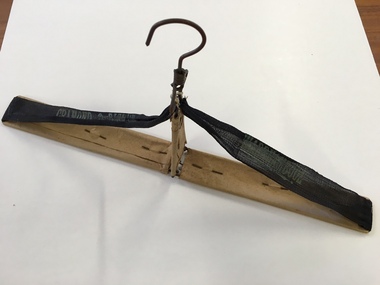
Coat Hanger, Cramond & Dickson Folding
... Both partners were involved with the community and James Dickson was an original director of the Warrnambool Woollen Mill 1909 and the Warrnambool Cheese and butter factory. ...Both partners were involved with the community and James Dickson was an original director of the Warrnambool Woollen Mill 1909 and the Warrnambool Cheese and butter factory. ...John Glass Cramond 1829 and James Dickson 1831-1910 were founders of a large drapery store. Both were Scots and both came separately to Australia in 1852. Cramond initially came for gold but soon opened a store in St Kilda with a post Office attached and he was the first post master there. Dickson was a farmer’s son but became a draper and while he was unsuccessful on the Bendigo diggings and then returned to Melbourne where he met Cramond and soon after they opened a store on Lonsdale Street. They opened their business in Warrnambool in 1855 as a general store with groceries, drapery and ironmongery. Both partners were involved with the community and James Dickson was an original director of the Warrnambool Woollen Mill 1909 and the Warrnambool Cheese and butter factory. He also served on the committee of management of Warrnambool Base Hospital. This coathanger would have been used in their store. An everyday item linked to one of Warrnambool’s earliest and longest running businesses.Folding coathanger with metal frame covered in brown paper with black cotton tape. Cramond & Dickson Warrnambool stamped on the cotton tape.cramond and dickson, warrnambool -
 Warrnambool and District Historical Society Inc.
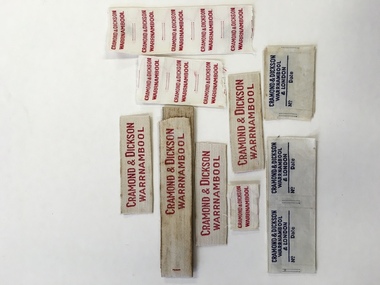
Label, Name labels Cramond & Dickson
... Both partners were involved with the community and James Dickson was an original director of the Warrnambool Woollen Mill 1909 and the Warrnambool Cheese and butter factory. ...Both partners were involved with the community and James Dickson was an original director of the Warrnambool Woollen Mill 1909 and the Warrnambool Cheese and butter factory. ...John Glass Cramond 1829 and James Dickson 1831-1910 were founders of a large drapery store. Both were Scots and both came separately to Australia in 1852. Cramond initially came for gold but soon opened a store in St Kilda with a post Office attached and he was the first post master there. Dickson was a farmer’s son but became a draper and while he was unsuccessful on the Bendigo diggings and then returned to Melbourne where he met Cramond and soon after they opened a store on Lonsdale Street. They opened their business in Warrnambool in 1855 as a general store with groceries, drapery and ironmongery. Both partners were involved with the community and James Dickson was an original director of the Warrnambool Woollen Mill 1909 and the Warrnambool Cheese and butter factory. He also served on the committee of management of Warrnambool Base Hospital. These labels would have been used to sew to garments sold by Cramond & Dickson. A common item for many decades with which many people would identify.Eleven cloth name tag labels. White cotton fabric. Some are embroidered in navy blue and others in red.Those embroidered in red state Cramond & Dickson Warrnambool and the ones embroidered in navy blue state Cramond & Dickson Warrnambool & London.cramond & dickson, john glass cramond, warrnambool, james dickson -
 Bendigo Historical Society Inc.
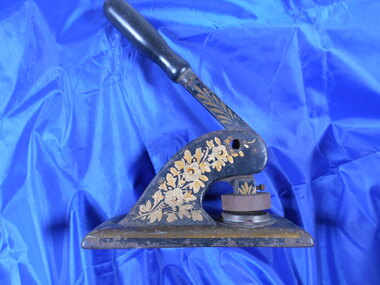
Functional object - Seal Embossing Press
... It consisted of a “building on a railway siding, plant and machinery, including dry grinding plant, kalsomine mixer, paint mill, furnace, electric motor, etc., large stores of raw and finished material, kalsomine with range of 21 colours, oil paints, &c.”...It consisted of a “building on a railway siding, plant and machinery, including dry grinding plant, kalsomine mixer, paint mill, furnace, electric motor, etc., large stores of raw and finished material, kalsomine with range of 21 colours, oil paints, &c.” ...The Corona Paint Company Pty. Ltd. Bendigo was formed in November 1920 with £10,000 capital, in £1 shares. By July 1921, the Company had completed its factory and plant at Bendigo East, ready to begin the manufacture of paints. The Corona Paint works were opened on Saturday 28 January by the Prime Minister (Mr. Hughes) during a visit to Bendigo. Many new manufacturing industries were opened during this time after calls to address the decline of mining in the region. The factory of the CORONA PAINT COMPANY, BENDIGO, was advertised for sale in The Argus on 5 October 1923. It consisted of a “building on a railway siding, plant and machinery, including dry grinding plant, kalsomine mixer, paint mill, furnace, electric motor, etc., large stores of raw and finished material, kalsomine with range of 21 colours, oil paints, &c.”A cast iron embossing press. It's painted black with gold coulered floral decorations. The base is 18 centimetres long, nine centimetres wide and one and a half centimetres thick. A curved protrusion rises from the base that is eight centimetres by four centimetres which narrows to four centimetres by two and a half centimetres with a three-quarter centimetre wide slot. Inside the slot is a lever action with a ten centimetre by two and a half centimetre wooden handle. There is a removeable die on the end of the lever and an opposite removeable die the base. A small oval metal disc with paten no 3965 on is attached. The seal is The Corona Paint Company proprietary Limited seal embossing press, corona paint company -
 City of Whittlesea
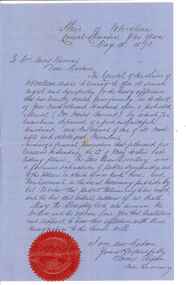
Document - Correspondence, Council letter to Mrs Moses Thomas 1868, 1878
... It covered part of what is today Mernda, Doreen, South Morang, Mill Park and Bundoora. In 1875, the area merged with the Whittlesea Road District to form the Shire of Whittlesea. ...It covered part of what is today Mernda, Doreen, South Morang, Mill Park and Bundoora. In 1875, the area merged with the Whittlesea Road District to form the Shire of Whittlesea. ...In 1851 Moses Thomas purchased 400 acres, including a half mile frontage to the Plenty River, at Mernda (then known as Morang) where he operated a farm, inn and other business. In 1865 Moses Thomas was appointed Engineer, Clerk and Collector for the Morang District Road Board. In this role he would have been responsible for overseeing the collection of local property rates and the maintenance and construction of local roads and drains. Road District Boards were one of the earliest forms of local government in Victoria. The Morang or Upper Plenty Road District was established in 1862. It covered part of what is today Mernda, Doreen, South Morang, Mill Park and Bundoora. In 1875, the area merged with the Whittlesea Road District to form the Shire of Whittlesea. Moses Thomas briefly served as a Councillor with the Shire of Whittlesea until his death in 1878. Correspondence. Letter, paper, handwritten text with seal. Letter from James Ryan, Shire Secretary, Shire of Whittlesea to Mrs Moses Thomas on the death of Moses 18 May 1878. -
 Warrnambool and District Historical Society Inc.
Medallion, Education Department Victoria
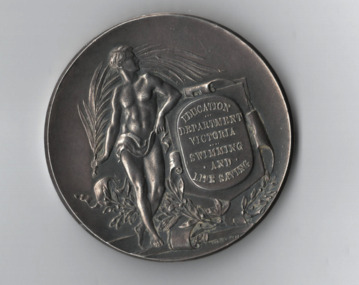
... Her grandfather, John Marfell, a Warrnambool hay and corn dealer and miller connected to the Warrnambool Co-operative Milling Company, was prominent in community and civic affairs in the town. ...Her grandfather, John Marfell, a Warrnambool hay and corn dealer and miller connected to the Warrnambool Co-operative Milling Company, was prominent in community and civic affairs in the town. ...This medallion was awarded to Mirth Marfell for swimming. The award was given to students in Victorian schools for advanced prowess in swimming and lifesaving. Mirth Marfell was a student at Warrnambool High School in 1935 when she received the medallion. Warrnambool High School was established as an Agricultural High School in 1907 and, after a merger with Warrnambool North Technical School, it is known today as Warrnamboool College. Mirth Marfell, the daughter of Henry and Helena Marfell, was born in Warrnambool in 1919. Her grandfather, John Marfell, a Warrnambool hay and corn dealer and miller connected to the Warrnambool Co-operative Milling Company, was prominent in community and civic affairs in the town. Mirth Marfell completed her nursing training at the Warrnambool Base Hospital and served in the Australian Army Nursing Service in World War Two for five years. She then became the first Australian nursing organizer for the Victorian Royal College of Nursing. This medallion is of interest, firstly as an example of the medallion given to students for swimming achievements in the 1930s in Victorian schools and secondly because it was awarded to Mirth Marfell, a Warrnambool person who had a distinguished nursing career.Circular metal medallion . Obverse features raised semi naked figure holding a cloth across the lower torso with one hand and a palm like branch in the other hand, an oval shield with text and decorative sprays of leaves. The reverse features the back of a naked female figure with long hair and a trident holding the hand of a child half immersed in the sea, another child"s head is raised above the sea. A lighthouse is featured on the distant shore. MIRTH MARFELL 1933. 34 on rim EDUCATION DEPARTMENT VICTORIA SWIMMING AND LIFE SAVINGmirth marfell, warrnambool co-operative milling company, australian army nursing service, history of warrnambool -
 Stawell Historical Society Inc
Photograph, Aerial Photos of Stawell from a Hot Air Balloon 1985 -- 11 Photos
... North Western Woollen Mills. 8. Pleasant Creek special school. 9. ...North Western Woollen Mills. 8. Pleasant Creek special school. 9. ...Series of 11 Aerial Photos of Stawell. Hot Air Balloon 1985. Photo were taken during a second balloon ride in July 1985. Take off venue was the oval at Stawell West Primary School. The balloon course was parallel to the Western Highway out over Deep Lead. 1. Ride left from Stawell West Primary Oval. 2. School Children were brought out to see the balloon launch. 3. Western Highway Green School oval. 4. Central Park Lower Main St. 5. Taylor's Gully Park Sloane St. 6. Shadow of Hot Air balloon on low cloud over Western Highway. 7. North Western Woollen Mills. 8. Pleasant Creek special school. 9. Looking back at Stawell. 10. Grampians & Lake Lonsdale. 11. Over Deep Lead. Series of 11 colour photographs of aerial photos of balloon rides over a town. stawell -
 Stawell Historical Society Inc
Photograph, Stawell Fire Brigade Ladies Auxiliary 1973
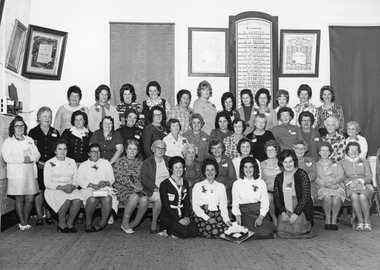
... (Bub) Dickens, J Rowlands, Phoeme Dunn, Pearl Newton, Ivy Mills. Front: Ev Hooper, Marge O'Neill, Vi Floyd, R Lynch, E Dunn, Ella Dunn, Ev Maddocks, Phyllis Ledger, Jean Phillips, Rene Williamson (Hughes), Enid Hughes. ...(Bub) Dickens, J Rowlands, Phoeme Dunn, Pearl Newton, Ivy Mills. Front: Ev Hooper, Marge O'Neill, Vi Floyd, R Lynch, E Dunn, Ella Dunn, Ev Maddocks, Phyllis Ledger, Jean Phillips, Rene Williamson (Hughes), Enid Hughes. ...Back L to R: Dot Margetts, Betty Crouch (ass sec) Diane Smith (v. pres), June Grace, Joyce Grace, Pat Asten, Betty Kingston, Lana Oates, Ella Tidy, Margaret Beech, Daisy Mason, Fay Nicholls. Centre: Bev Biggs, Colleen Floyd, Betty Giles, Betty O'Neill, Thelma Illig, Pat Holloway, Kath Prosser, Barbara Court, Roma Smith, Enid Hyslop, E. (Bub) Dickens, J Rowlands, Phoeme Dunn, Pearl Newton, Ivy Mills. Front: Ev Hooper, Marge O'Neill, Vi Floyd, R Lynch, E Dunn, Ella Dunn, Ev Maddocks, Phyllis Ledger, Jean Phillips, Rene Williamson (Hughes), Enid Hughes. Front: Diane Raeburn, Kathleen Rickard (pres) Pam Mason (sec/tres), Eileen Smith. Reunion 1973 Stawell Fire Brigade Centenary Photo taken upstairs of Stawell Old Fire Station Full List of Names on Back -
 Puffing Billy Railway
Sign - Puffing Billy Museum Entry
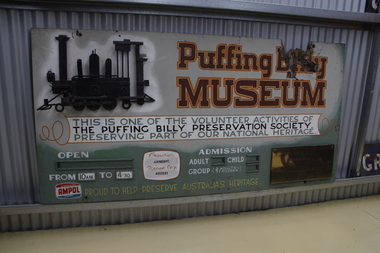
... In 1965 an Umbrella style shed was built and by May, the first locomotive ex Erica State Saw Mill (CLIMAX) had arrived. The Museum was opened to the public in November 1970 but was officially opened by His Excellency the Governor of Victoria, Sir Rohan Delacombe on Saturday 7th April 1973....In 1965 an Umbrella style shed was built and by May, the first locomotive ex Erica State Saw Mill (CLIMAX) had arrived. The Museum was opened to the public in November 1970 but was officially opened by His Excellency the Governor of Victoria, Sir Rohan Delacombe on Saturday 7th April 1973. ...The Museum was first considered in 1963 when it was felt that Victorian narrow gauge railway history was quickly being destroyed by progress. Originally it was planned to only cater for two locomotives and some rolling stock associated with the Moe and Walhalla Railway. Construction of the site commenced on Labour Day Weekend in March 1964, the area was then fenced. The first exhibit arrived soon after and companies with locomotives and other railway features offered items to the Museum. When interesting exhibits from the "Steam Era " were known to be coming available,discussions were held with the owners in an attempt to obtain the item for preservation. In 1965 an Umbrella style shed was built and by May, the first locomotive ex Erica State Saw Mill (CLIMAX) had arrived. The Museum was opened to the public in November 1970 but was officially opened by His Excellency the Governor of Victoria, Sir Rohan Delacombe on Saturday 7th April 1973.Historic - Puffing Billy Museum Entry SignPuffing Billy Museum Entry Sign Rectangular hand painted sign in use from 1970.Puffing Billy Museum This is one of the Volunteer activities of The Puffing Billy Preservation Society Preserving part of our National Heritage Proud to Help Preserve Australia's Heritage puffing billy, menzies creek, sir rohan delacombe, narrow gauge, steam -
 Ballarat Heritage Services
Photograph - Photograph - Colour, Clare Gervasoni, Tarilta, 2017, 16/07/2017
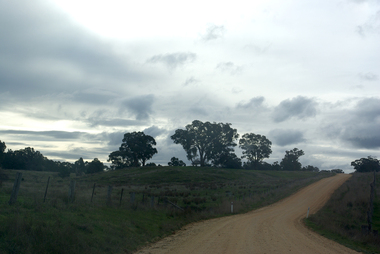
... In 1865 Bailliere’s Victorian gazetteer described Tarilta as being an alluvial and quartz gold-mining town with three quartz-crushing mills, three horse-puddling machines and two hotels. ...In 1865 Bailliere’s Victorian gazetteer described Tarilta as being an alluvial and quartz gold-mining town with three quartz-crushing mills, three horse-puddling machines and two hotels. ...Tarilta is a rural locality and former gold-mining town 12 km south of Castlemaine, 4 km north-west of Guildford and 3 km north-east of Vaughan. The last gold mining activity took place around the 1880s. It was originally Kangaroo Flat, being located where the Kangaroo Creek enters the Loddon River. It was surveyed and named in 1864. Gold was discovered at Tarilta in 1853. The Tarilta School was opened in 1860 in a Wesleyan chapel, and closed i n1925. In 1864 a township was surveyed and named Tarilta, the word being derived from an Aboriginal expression thought to mean kangaroo. In 1865 Bailliere’s Victorian gazetteer described Tarilta as being an alluvial and quartz gold-mining town with three quartz-crushing mills, three horse-puddling machines and two hotels. The elevated nature of the land around Tarilta made it accessible only by horse and dray, or on horseback. Colour photograph of Tarilta in Central Victoria. tarilta, central victoria, landcape -
 Melbourne Legacy
Photograph, Annual Demonstration
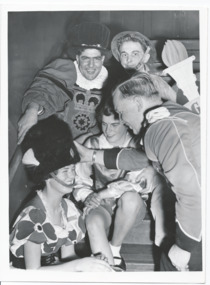
... The floral dress costume was used in a scene set in Holland with wind mills in other photos but this could be a different year. ...The floral dress costume was used in a scene set in Holland with wind mills in other photos but this could be a different year. ...A photo of junior legatees in costume for an Annual Demonstration, the date is unknown. Costumes were reused in different years. These costumes include a beefeater, an English soldier with a bear skin hat, a soldier with a tin hat and a girl in a floral dress. The floral dress costume was used in a scene set in Holland with wind mills in other photos but this could be a different year. It is possible this was taken at a rehearsal by a newspaper and used in promoting the event. Throughout the year Melbourne Legacy provided classes for Junior Legatees such as dancing, gymnastics and Eurythmics. The Demonstration was an annual event to showcase their skills. Melbourne Legacy conducted Annual Demonstrations / Parades from 1928 through to the late 1970's, usually held at Melbourne Town Hall or Olympic Pool Stadium. The beautiful costumes were made by members of the Junior Legacy Mothers' Club and the Melbourne Legacy Wives' Association.A record of that Legacy provided classes for junior legatees and the skills learned were displayed in the Annual Demonstration.Black and white photo of a group of junior legatees in costume for an Annual Demonstration.annual demonstration, junior legatee, costume -
 Melbourne Tram Museum
Photograph, "Employees of the Body Shop 1928", 1928
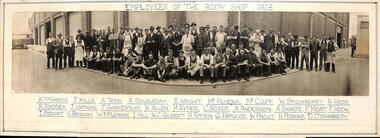
... Named employees: W McGibbon, J Mills, A Todd, A Doubleday, Mr Pender, Mr Cluff, W Stuchberry, H Hood, R Rhodes, J Watkins, J Shakespear, W Allen, H Ryder, C Boxer, A Anderson, A Sharpe, F Moat, F Hook, I Porrat, S Braham, W McLennan, I Hill, W C Gilbert, H Ritson, G Hapgood, W Prout, H Perkins, D O'Shannesy....Named employees: W McGibbon, J Mills, A Todd, A Doubleday, Mr Pender, Mr Cluff, W Stuchberry, H Hood, R Rhodes, J Watkins, J Shakespear, W Allen, H Ryder, C Boxer, A Anderson, A Sharpe, F Moat, F Hook, I Porrat, S Braham, W McLennan, I Hill, W C Gilbert, H Ritson, G Hapgood, W Prout, H Perkins, D O'Shannesy. ...This photograph shows 51 men standing and 25 men sitting on a bench or kneeling, wearing a variety of clothes. There are some men "lurking" in the background. Photo taken with a fish-eye lens. See also item 8647 for a similar photo using a fish-eye lens. In the background is W2 class tram No. 546, nearing completion in the background. This tram entered service late Dec. 1928. Named employees: W McGibbon, J Mills, A Todd, A Doubleday, Mr Pender, Mr Cluff, W Stuchberry, H Hood, R Rhodes, J Watkins, J Shakespear, W Allen, H Ryder, C Boxer, A Anderson, A Sharpe, F Moat, F Hook, I Porrat, S Braham, W McLennan, I Hill, W C Gilbert, H Ritson, G Hapgood, W Prout, H Perkins, D O'Shannesy.Yields some information about the Preston Workshops body shop tram car builders in 1928.Photograph mounted onto a white card with names and title hand written in.tramways, preston workshops, staff photo, body shop, tram 546 -
 St Kilda Historical Society
Photograph, St Kilda Rifle Club, 1905, c. 1905
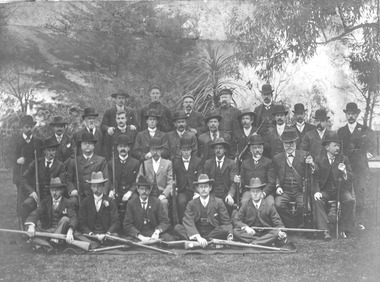
... R W Vivian, O Lankcaster, J E Phillips, C Lankcaster, F G Dixon, R Cooke, V Kelly, C E Short, A Adkins, C H Davis, L D Kitchen, A Morgan, J E LeGriffon, J F Allen, W Dummett, W Whitehead, W J Toy, H McQuade, H Bunn, G Darling, S Wilson, H Greenwell, J King, H M Knox, J Buckley, J H O Myers, H Mills, J M A Spottoswood, J Vivian, W J Bayley, A A Bayley...R W Vivian, O Lankcaster, J E Phillips, C Lankcaster, F G Dixon, R Cooke, V Kelly, C E Short, A Adkins, C H Davis, L D Kitchen, A Morgan, J E LeGriffon, J F Allen, W Dummett, W Whitehead, W J Toy, H McQuade, H Bunn, G Darling, S Wilson, H Greenwell, J King, H M Knox, J Buckley, J H O Myers, H Mills, J M A Spottoswood, J Vivian, W J Bayley, A A Bayley black and white photograph, poor condition St Kilda Rifle Club, 1905 Photograph ...black and white photograph, poor conditionOriginal photograph, mounted. From M.Vivian, 1 Blanche st, St Kilda. R W Vivian, O Lankcaster, J E Phillips, C Lankcaster, F G Dixon, R Cooke, V Kelly, C E Short, A Adkins, C H Davis, L D Kitchen, A Morgan, J E LeGriffon, J F Allen, W Dummett, W Whitehead, W J Toy, H McQuade, H Bunn, G Darling, S Wilson, H Greenwell, J King, H M Knox, J Buckley, J H O Myers, H Mills, J M A Spottoswood, J Vivian, W J Bayley, A A Bayley -
 Sunshine and District Historical Society Incorporated
Education kit - Teaching aides for primary school students
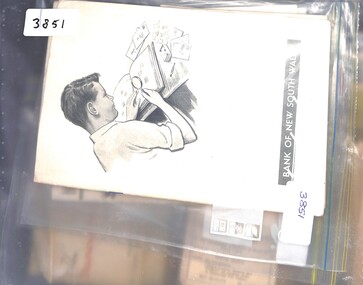
... Martin 3851.10 - Teaching Aides For Primary School Students - Card 01 The Beginning Of The Story Of Crusader Cloth 3851.10 - Teaching Aides For Primary School Students - Card 02 Shearing Merinos For The Crusader Mills 3851.10 - Teaching Aides For Primary School Students - Card 03 Buying The Golden Fleece For The Crusader Mills 3851.10 - Teaching Aides For Primary School Students - Card 04 Wool Sorting At The Crusader Mills 3851.10 - Teaching Aides For Primary School Students - Card 05 Wool Scouring At The Crusader Mills 3851.10 - Teaching Aides For Primary School Students - Card 06 Carding The Scoured Wool At The Crusader Mills 3851.10 - Teaching Aides For Primary School Students - Card 07 Combing The Carded Slivers At The Crusader Mills 3851.10 - Teaching Aides For Primary School Students - Card 08 Top Making At The Crusader Mills 3851.10 - Teaching Aides For Primary School Students - Card 09 Drawing Out The Top Prior To Spinning At The Crusader Mills 3851.10 - Teaching Aides For Primary School Students - Card 10 Spinning The Rovings Into Yard At The Crusader Mills 3851.10 - Teaching Aides For Primary School Students - Card 11 Warping The Tow Fold Yard At The Crusader Mills 3851.10 - Teaching Aides For Primary School Students - Card 12 Weaving The Famous Crusader Cloth 3851.10 - Teaching Aides For Primary School Students - Card 13 Inpsecting And Mendings Any Slight Imprefections 3851.10 - Teaching Aides For Primary School Students - Card 14 Dyeing The Famous Crusader Blues That Never Fade 3851.10 - Teaching Aides For Primary School Students - Card 15 Dry Blowing At The Crusader Mills 3851.10 - Teaching Aides For Primary School Students - Card 16 An Experience Tailor Proudly Displays The Crusader Trade Make 3851.11 - Teaching Aides For Primary School Students - Card 01 Sewing Machine Inverted By Elias Howe 3851.11 - Teaching Aides For Primary School Students - Card 02 Experts Cutting Out Stamina Trousers 3851.11 - Teaching Aides For Primary School Students - Card 03 Serging The Seams To Make Fraying Impossible 3851.11 - Teaching Aides For Primary School Students - Card 04 Making The Side Straps By Precision Machinery 3851.11 - Teaching Aides For Primary School Students - Card 05 Attaching The Chromium Planted Buckles To Side Straps 3851.11 - Teaching Aides For Primary School Students - Card 06 The Wonder Machine That Makes Five Buttonholes In 19 Seconds 3851.11 - Teaching Aides For Primary School Students - Card 07 A Pocket That Won't Wear Out 3851.11 - Teaching Aides For Primary School Students - Card 08 Putting The Pcokets Into The Trousers 3851.11 - Teaching Aides For Primary School Students - Card 09 Assembling Stamina Trousers 3851.11 - Teaching Aides For Primary School Students - Card 10 A Generous Roomy Hip Pocket Is Made 3851.11 - Teaching Aides For Primary School Students - Card 11 Joining The Waistband To The Trouser 3851.11 - Teaching Aides For Primary School Students - Card 12 Reinforcing The End Of Every Pocket 3851.11 - Teaching Aides For Primary School Students - Card 13 Millions Of Buttons That Don't Come Off 3851.11 - Teaching Aides For Primary School Students - Card 14 Hemming Up The Cuffs Of Stamina Trousers 3851.11 - Teaching Aides For Primary School Students - Card 15 Pressing Stamina Trousers 3851.11 - Teaching Aides For Primary School Students - Card 16 Inspecting The Completed Works 3851.11 - Teaching Aides For Primary School Students - Card 17 look For The Label On The Pocket Stamina Clothes 3851.11 - Teaching Aides For Primary School Students - Card 18 The Story Of Cloth Making 3851.12 - Teaching Aides For Primary School Students - Davies Coop & Co Limited Knitted & Woven Materials After Dyeing Sample 3851.13 - Teaching Aides For Primary School Students - ACTIL Sample No 2 Cotton After First Cleaning 3851.13 - Teaching Aides For Primary School Students - ACTIL Sample No 3 Carded Silver 3851.13 - Teaching Aides For Primary School Students - ACTIL Sample No 4 Drawing Silver 3851.13 - Teaching Aides For Primary School Students - ACTIL Sample No 6 Spun Yarn 3851.13 - Teaching Aides For Primary School Students - ACTIL Sample No 7 Woven Cloth 3851.13 - Teaching Aides For Primary School Students - ACTIL Sample No 8 Cloth After Bleaching 3851.13 - Teaching Aides For Primary School Students - ACTIL Sample No 9 Cloth After Dyeing 3851.14 - Teaching Aides For Primary School Students - Card Tricks With A Borrowed Pack By Weirdo 3851.15 - Teaching Aides For Primary School Students - Fifty One Impromtu Conjuring Tricks That You Can Do 3851.16 - Teaching Aides For Primary School Students - Mirco sCope Sunshine Inspectorate Science Bulletin Number 5 September 3851.17 - Teaching Aides For Primary School Students - Digit Sunshine Inspectorate Mathematics Bulletin September 1970 3851.18 - Teaching Aides For Primary School Students - Scouring Yarra Falls Limited...Martin 3851.10 - Teaching Aides For Primary School Students - Card 01 The Beginning Of The Story Of Crusader Cloth 3851.10 - Teaching Aides For Primary School Students - Card 02 Shearing Merinos For The Crusader Mills 3851.10 - Teaching Aides For Primary School Students - Card 03 Buying The Golden Fleece For The Crusader Mills 3851.10 - Teaching Aides For Primary School Students - Card 04 Wool Sorting At The Crusader Mills 3851.10 - Teaching Aides For Primary School Students - Card 05 Wool Scouring At The Crusader Mills 3851.10 - Teaching Aides For Primary School Students - Card 06 Carding The Scoured Wool At The Crusader Mills 3851.10 - Teaching Aides For Primary School Students - Card 07 Combing The Carded Slivers At The Crusader Mills 3851.10 - Teaching Aides For Primary School Students - Card 08 Top Making At The Crusader Mills 3851.10 - Teaching Aides For Primary School Students - Card 09 Drawing Out The Top Prior To Spinning At The Crusader Mills 3851.10 - Teaching Aides For Primary School Students - Card 10 Spinning The Rovings Into Yard At The Crusader Mills 3851.10 - Teaching Aides For Primary School Students - Card 11 Warping The Tow Fold Yard At The Crusader Mills 3851.10 - Teaching Aides For Primary School Students - Card 12 Weaving The Famous Crusader Cloth 3851.10 - Teaching Aides For Primary School Students - Card 13 Inpsecting And Mendings Any Slight Imprefections 3851.10 - Teaching Aides For Primary School Students - Card 14 Dyeing The Famous Crusader Blues That Never Fade 3851.10 - Teaching Aides For Primary School Students - Card 15 Dry Blowing At The Crusader Mills 3851.10 - Teaching Aides For Primary School Students - Card 16 An Experience Tailor Proudly Displays The Crusader Trade Make 3851.11 - Teaching Aides For Primary School Students - Card 01 Sewing Machine Inverted By Elias Howe 3851.11 - Teaching Aides For Primary School Students - Card 02 Experts Cutting Out Stamina Trousers 3851.11 - Teaching Aides For Primary School Students - Card 03 Serging The Seams To Make Fraying Impossible 3851.11 - Teaching Aides For Primary School Students - Card 04 Making The Side Straps By Precision Machinery 3851.11 - Teaching Aides For Primary School Students - Card 05 Attaching The Chromium Planted Buckles To Side Straps 3851.11 - Teaching Aides For Primary School Students - Card 06 The Wonder Machine That Makes Five Buttonholes In 19 Seconds 3851.11 - Teaching Aides For Primary School Students - Card 07 A Pocket That Won't Wear Out 3851.11 - Teaching Aides For Primary School Students - Card 08 Putting The Pcokets Into The Trousers 3851.11 - Teaching Aides For Primary School Students - Card 09 Assembling Stamina Trousers 3851.11 - Teaching Aides For Primary School Students - Card 10 A Generous Roomy Hip Pocket Is Made 3851.11 - Teaching Aides For Primary School Students - Card 11 Joining The Waistband To The Trouser 3851.11 - Teaching Aides For Primary School Students - Card 12 Reinforcing The End Of Every Pocket 3851.11 - Teaching Aides For Primary School Students - Card 13 Millions Of Buttons That Don't Come Off 3851.11 - Teaching Aides For Primary School Students - Card 14 Hemming Up The Cuffs Of Stamina Trousers 3851.11 - Teaching Aides For Primary School Students - Card 15 Pressing Stamina Trousers 3851.11 - Teaching Aides For Primary School Students - Card 16 Inspecting The Completed Works 3851.11 - Teaching Aides For Primary School Students - Card 17 look For The Label On The Pocket Stamina Clothes 3851.11 - Teaching Aides For Primary School Students - Card 18 The Story Of Cloth Making 3851.12 - Teaching Aides For Primary School Students - Davies Coop & Co Limited Knitted & Woven Materials After Dyeing Sample 3851.13 - Teaching Aides For Primary School Students - ACTIL Sample No 2 Cotton After First Cleaning 3851.13 - Teaching Aides For Primary School Students - ACTIL Sample No 3 Carded Silver 3851.13 - Teaching Aides For Primary School Students - ACTIL Sample No 4 Drawing Silver 3851.13 - Teaching Aides For Primary School Students - ACTIL Sample No 6 Spun Yarn 3851.13 - Teaching Aides For Primary School Students - ACTIL Sample No 7 Woven Cloth 3851.13 - Teaching Aides For Primary School Students - ACTIL Sample No 8 Cloth After Bleaching 3851.13 - Teaching Aides For Primary School Students - ACTIL Sample No 9 Cloth After Dyeing 3851.14 - Teaching Aides For Primary School Students - Card Tricks With A Borrowed Pack By Weirdo 3851.15 - Teaching Aides For Primary School Students - Fifty One Impromtu Conjuring Tricks That You Can Do 3851.16 - Teaching Aides For Primary School Students - Mirco sCope Sunshine Inspectorate Science Bulletin Number 5 September 3851.17 - Teaching Aides For Primary School Students - Digit Sunshine Inspectorate Mathematics Bulletin September 1970 3851.18 - Teaching Aides For Primary School Students - Scouring Yarra Falls Limited Teaching Aides for primary school students Education kit Teaching aides for primary school students ...3851.01 - Teaching Aides For Primary School Students - Card 01 John McDonald Stuart 1815 - 1866 3851.01 - Teaching Aides For Primary School Students - Card 02 Before Them Lay A Vast Silent Land 3851.01 - Teaching Aides For Primary School Students - Card 03 The First Man To Reach The Centre 3851.01 - Teaching Aides For Primary School Students - Card 04 Three Cheers For The Flag 3851.01 - Teaching Aides For Primary School Students - Card 05 The Desert Drove Them Back 3851.01 - Teaching Aides For Primary School Students - Card 06 A Savage Attack By Aborgines 3851.01 - Teaching Aides For Primary School Students - Card 07 They Discovered Newcastle Waters 3851.01 - Teaching Aides For Primary School Students - Card 08 The Thick Scrub Was Impassable 3851.01 - Teaching Aides For Primary School Students - Card 09 They Were Forced To Return 3851.01 - Teaching Aides For Primary School Students - Card 10 Stuart Set Out For A Third Time 3851.01 - Teaching Aides For Primary School Students - Card 11 Beyond The Ropers Was Beauttiful Country 3851.01 - Teaching Aides For Primary School Students - Card 12 Then At Last They Reached The Sra 3851.01 - Teaching Aides For Primary School Students - Card 13 Hostile Natives attacked Again And Again 3851.01 - Teaching Aides For Primary School Students - Card 14 Sick And Exhausted They Struggled On 3851.01 - Teaching Aides For Primary School Students - Card 15 Week And Weary He Had Won Through 3851.02 - Teaching Aides For Primary School Students - Card 01 Captain Charles Stuart Plans To Solve The Riddle Of The Rivers 3851.02 - Teaching Aides For Primary School Students - Card 02 Stuart's Expedition Sets Out From Sydney In 1829 3851.02 - Teaching Aides For Primary School Students - Card 03 An Upturned Dray In Devil's Pass 3851.02 - Teaching Aides For Primary School Students - Card 04 Stuart's Party Follows The Murrumbridgee 3851.02 - Teaching Aides For Primary School Students - Card 05 First Stage Of The River Journey 3851.02 - Teaching Aides For Primary School Students - Card 06 Building The Whaleboat On The Banks Of The Murrumbidgee 3851.02 - Teaching Aides For Primary School Students - Card 07 The Lachlan Enters The Murrumbidgee River 3851.02 - Teaching Aides For Primary School Students - Card 08 Stuart Discovers The Murray River 3851.02 - Teaching Aides For Primary School Students - Card 09 A Narrow Escape From Hostile Natives 3851.02 - Teaching Aides For Primary School Students - Card 10 Hoisting The Union Jack On The Banks Of The Darling 3851.02 - Teaching Aides For Primary School Students - Card 11 Stuart Discovers Lake Alexandrina 3851.02 - Teaching Aides For Primary School Students - Card 12 Across The Sandhills To Encounter Bay 3851.02 - Teaching Aides For Primary School Students - Card 13 A Disappointment 3851.02 - Teaching Aides For Primary School Students - Card 14 The Nightmare Return 3851.02 - Teaching Aides For Primary School Students - Card 15 Relief 3851.03 - Teaching Aides For Primary School Students - Fourteen Explorers Of Australia 3851.04 - Teaching Aides For Primary School Students - Sixteen Explorers Of Australia 3851.05 - Teaching Aides For Primary School Students - Australian Commorative Stamps Published 1955 3851.05 - Teaching Aides For Primary School Students - Australian Commorative Stamps Published 1961 3851.06 - Teaching Aides For Primary School Students - Carded Roving Wool Sample 3851.06 - Teaching Aides For Primary School Students - Carded Silver Wool Sample 3851.06 - Teaching Aides For Primary School Students - Davies Coop & Co Limited Raw Cotton Sample 3851.06 - Teaching Aides For Primary School Students - Davies Coop & Co Limited Sized Cotton Yard Sample 3851.06 - Teaching Aides For Primary School Students - Finished Cloth Wool Sample 3851.06 - Teaching Aides For Primary School Students - Greasy Cloth Wool Sample 3851.06 - Teaching Aides For Primary School Students - Greasy Wool Sample 3851.06 - Teaching Aides For Primary School Students - Scoured And Carbonized Wool Sample 3851.06 - Teaching Aides For Primary School Students - Scoured And Milled Cloth Wool Sample 3851.07 - Teaching Aides For Primary School Students - From The Sheep's Back To You Book 01 3851.07 - Teaching Aides For Primary School Students - From The Sheep's Back To You Book 02 3851.08 - Teaching Aides For Primary School Students - How To Wash Physician Blankets 3851.09 - Teaching Aides For Primary School Students - What Members Of The A.I.F. Thought Of Physician Chillproof Blackets Leter By Lieut W. Martin 3851.10 - Teaching Aides For Primary School Students - Card 01 The Beginning Of The Story Of Crusader Cloth 3851.10 - Teaching Aides For Primary School Students - Card 02 Shearing Merinos For The Crusader Mills 3851.10 - Teaching Aides For Primary School Students - Card 03 Buying The Golden Fleece For The Crusader Mills 3851.10 - Teaching Aides For Primary School Students - Card 04 Wool Sorting At The Crusader Mills 3851.10 - Teaching Aides For Primary School Students - Card 05 Wool Scouring At The Crusader Mills 3851.10 - Teaching Aides For Primary School Students - Card 06 Carding The Scoured Wool At The Crusader Mills 3851.10 - Teaching Aides For Primary School Students - Card 07 Combing The Carded Slivers At The Crusader Mills 3851.10 - Teaching Aides For Primary School Students - Card 08 Top Making At The Crusader Mills 3851.10 - Teaching Aides For Primary School Students - Card 09 Drawing Out The Top Prior To Spinning At The Crusader Mills 3851.10 - Teaching Aides For Primary School Students - Card 10 Spinning The Rovings Into Yard At The Crusader Mills 3851.10 - Teaching Aides For Primary School Students - Card 11 Warping The Tow Fold Yard At The Crusader Mills 3851.10 - Teaching Aides For Primary School Students - Card 12 Weaving The Famous Crusader Cloth 3851.10 - Teaching Aides For Primary School Students - Card 13 Inpsecting And Mendings Any Slight Imprefections 3851.10 - Teaching Aides For Primary School Students - Card 14 Dyeing The Famous Crusader Blues That Never Fade 3851.10 - Teaching Aides For Primary School Students - Card 15 Dry Blowing At The Crusader Mills 3851.10 - Teaching Aides For Primary School Students - Card 16 An Experience Tailor Proudly Displays The Crusader Trade Make 3851.11 - Teaching Aides For Primary School Students - Card 01 Sewing Machine Inverted By Elias Howe 3851.11 - Teaching Aides For Primary School Students - Card 02 Experts Cutting Out Stamina Trousers 3851.11 - Teaching Aides For Primary School Students - Card 03 Serging The Seams To Make Fraying Impossible 3851.11 - Teaching Aides For Primary School Students - Card 04 Making The Side Straps By Precision Machinery 3851.11 - Teaching Aides For Primary School Students - Card 05 Attaching The Chromium Planted Buckles To Side Straps 3851.11 - Teaching Aides For Primary School Students - Card 06 The Wonder Machine That Makes Five Buttonholes In 19 Seconds 3851.11 - Teaching Aides For Primary School Students - Card 07 A Pocket That Won't Wear Out 3851.11 - Teaching Aides For Primary School Students - Card 08 Putting The Pcokets Into The Trousers 3851.11 - Teaching Aides For Primary School Students - Card 09 Assembling Stamina Trousers 3851.11 - Teaching Aides For Primary School Students - Card 10 A Generous Roomy Hip Pocket Is Made 3851.11 - Teaching Aides For Primary School Students - Card 11 Joining The Waistband To The Trouser 3851.11 - Teaching Aides For Primary School Students - Card 12 Reinforcing The End Of Every Pocket 3851.11 - Teaching Aides For Primary School Students - Card 13 Millions Of Buttons That Don't Come Off 3851.11 - Teaching Aides For Primary School Students - Card 14 Hemming Up The Cuffs Of Stamina Trousers 3851.11 - Teaching Aides For Primary School Students - Card 15 Pressing Stamina Trousers 3851.11 - Teaching Aides For Primary School Students - Card 16 Inspecting The Completed Works 3851.11 - Teaching Aides For Primary School Students - Card 17 look For The Label On The Pocket Stamina Clothes 3851.11 - Teaching Aides For Primary School Students - Card 18 The Story Of Cloth Making 3851.12 - Teaching Aides For Primary School Students - Davies Coop & Co Limited Knitted & Woven Materials After Dyeing Sample 3851.13 - Teaching Aides For Primary School Students - ACTIL Sample No 2 Cotton After First Cleaning 3851.13 - Teaching Aides For Primary School Students - ACTIL Sample No 3 Carded Silver 3851.13 - Teaching Aides For Primary School Students - ACTIL Sample No 4 Drawing Silver 3851.13 - Teaching Aides For Primary School Students - ACTIL Sample No 6 Spun Yarn 3851.13 - Teaching Aides For Primary School Students - ACTIL Sample No 7 Woven Cloth 3851.13 - Teaching Aides For Primary School Students - ACTIL Sample No 8 Cloth After Bleaching 3851.13 - Teaching Aides For Primary School Students - ACTIL Sample No 9 Cloth After Dyeing 3851.14 - Teaching Aides For Primary School Students - Card Tricks With A Borrowed Pack By Weirdo 3851.15 - Teaching Aides For Primary School Students - Fifty One Impromtu Conjuring Tricks That You Can Do 3851.16 - Teaching Aides For Primary School Students - Mirco sCope Sunshine Inspectorate Science Bulletin Number 5 September 3851.17 - Teaching Aides For Primary School Students - Digit Sunshine Inspectorate Mathematics Bulletin September 1970 3851.18 - Teaching Aides For Primary School Students - Scouring Yarra Falls Limitedprimary school, state school -
 Flagstaff Hill Maritime Museum and Village
Photograph - Glass plate, circa 1866
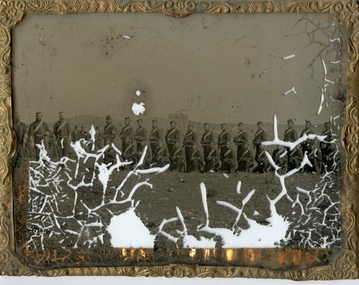
... The three storey building in the photograph is likely to be the Manifold & Bostock flour mill, built in 1854 near the ‘cutting’ in Merri Street, which was one of the main streets at the time; if one faced the building’s front from a vantage point and looked south to south-east, the hills around Flagstaff Hill and Cannon Hill would be behind that mill, and the Harbour behind the hills. ...The three storey building in the photograph is likely to be the Manifold & Bostock flour mill, built in 1854 near the ‘cutting’ in Merri Street, which was one of the main streets at the time; if one faced the building’s front from a vantage point and looked south to south-east, the hills around Flagstaff Hill and Cannon Hill would be behind that mill, and the Harbour behind the hills. ...This glass plate photograph shows good detail of members of the Warrnambool Garrison posing for their photograph in front of a young township. There are other well-dressed citizens behind them. The three men with frogging on their sleeves were commanders were likely to be commanders. The men are facing north with Cannon Hill and the fortification area in the background. It dates from the 1860s. The firearms held appear to be 1853 pattern Lee Enfield muskets used by the British army in Crimea at this time and in Australia, rather than the later Martini Henry cartridge rifles. The uniforms match other photos of the Warrnambool Garrison Militia and Band in our Collection, taken up until the 1880s. The three storey building in the photograph is likely to be the Manifold & Bostock flour mill, built in 1854 near the ‘cutting’ in Merri Street, which was one of the main streets at the time; if one faced the building’s front from a vantage point and looked south to south-east, the hills around Flagstaff Hill and Cannon Hill would be behind that mill, and the Harbour behind the hills. This is the area of the Fortifications. The glass plate method of photography was widely used during the mid-19th to early-20th century. The donor and maker of the photograph are unknown. Around this time the citizens of Victoria were prospering from the gold rush but felt isolated and uneasy about their security in the colony. In 1854 the Volunteer Act was passed to provide some military defence. In 1858 the Warrnambool Volunteer Rifle Corps was established, disbanded in 1863, then a new Warrnambool Detachment was formed in September 1866. Legislation was passed in 1884 that replaced the volunteers’ corps with a partly paid, permanent Militia Defence Force. The batteries manning the coastal forts of Victoria were termed Garrison Artillery Companies. When the Army was federated in 1901 there were eight Militia Companies in Victoria. Warrnambool and Port Fairy together were known as 8 Coy AGA (Australian Garrison Artillery). Changes to formation and name continued into the 20th century.This photograph is a record of the very early local defence force, circa 1866. The photograph signifies the connection of the colony in Victoria to the growing need for security due to the unrest in Europe at that time. The photograph is also locally significant to the industry of the young township of Warrnambool, showing what is likely to be one of the first flour mills in the town. The photograph is also the only example of the early methods of glass plate photography in our collection. Photograph, rectangular glass plate, positive sepia image. Photograph has brass framed edges that fold over to the back, with mitred corners. The front edges are pressed with a decorative floral pattern. The photograph shows a group of thirty military men, standing or kneeling, in dark uniforms with pillbox forage caps, round-collared jackets with light buttons, light sashes worn from top left shoulder to bottom right side of waist belt, and long, straight-legged trousers. Three of these men have light braid around the buttons on the front of their jackets, light frogging on their sleeve cuffs and stripes on the outside seams of their trousers. The other twenty-seven men have plain uniforms and are holding firearms in their right hands, steadied with their left hands. Other figures are standing behind this group of soldiers, including three or four men wearing top hats, jackets and ties. In the background is a row of buildings. The central building is three stories high. Bare hills are in the far background. The foreground is uneven ground with patches of short grass. Photographer looking towards the south east and Cannon Hill, with the Warrnambool Garrison facing north, ca.1860s.flagstaff hill, warrnambool, shipwrecked coast, flagstaff hill maritime museum, maritime museum, shipwreck coast, flagstaff hill maritime village, great ocean road, glass plate, photography 19th century, colonial forces, military defence, volunteer act 1854, volunteer rifle, garrison artillery, volunteer corps, militia, militia garrison band, pillbox forage caps, helpmann, manifold and bostock, 1853 lee enfield musket, tintype, warrnambool garrison, 1860s, cannon hill, manifold & bostock, flour mill, 3-storey building -
 Eltham District Historical Society Inc
Negative - Photograph, Opening of St. Andrews Battery, Queenstown, 29 Aug. 1919
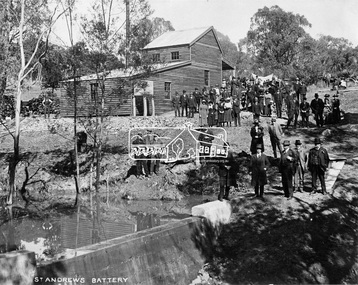
... The party arrived punctually at 12.30, and was received by an assemblage of about 200 residents, including, those representing local prospecting and mining interests. At the mill house the Minister wished prosperity to mining on the old Queenstown field, and, in a few appropriate remarks, gave the battery the name of St. ...The party arrived punctually at 12.30, and was received by an assemblage of about 200 residents, including, those representing local prospecting and mining interests. At the mill house the Minister wished prosperity to mining on the old Queenstown field, and, in a few appropriate remarks, gave the battery the name of St. ...Reproduced on p31 of 'Pioneers & Painters' Was destroyed in 1962 bushfire. Now Peter Franks Reserve, St Andrews On Friday 29th (August 1919) …, the Hon. S. Barnes, M. L. A., Minister of Mines, accompanied by Mr W. Everard, M.L.A., Mr. V. Dickson, secretary for Mines, and Mr. Merrin, Chief Mining Inspector, visited Smith's Gully for the purpose of opening, the new Government battery which has recently been erected. The party arrived punctually at 12.30, and was received by an assemblage of about 200 residents, including, those representing local prospecting and mining interests. At the mill house the Minister wished prosperity to mining on the old Queenstown field, and, in a few appropriate remarks, gave the battery the name of St. Andrew's. Then, as the stamps began to fall, three hearty cheers were given by the gathering. ….. The Queenstown field, dating back to the early sixties, might be regarded as a link that took them back to the Augustine age of gold mining in Victoria…From 1868 to 1918 the total yield of gold from the field was 274,606 fine oz. It might be that here, as elsewhere, deeper prospecting would give new life to the Queenstown goldfield. The miners of Queenstown, who through long year's had never lost faith in the possibilities of the field, felt that the purpose for which they were that day marked the beginning of a new era in the history of local reefing. …. The new mill is situated on the bank of the creek opposite the Queenstown Cemetery, and consists of a five head battery (Berdan pan) and 12 h.p. portable steam engine housed in a spacious structure of wood and iron. A concrete weir across the creek provides a good water supply, and all the necessary pumps, settling dams, etc., have been installed. Later on, should circumstances warrant it, it is pro-posed to erect Wilfley tables for concentrates. Eltham and Whittlesea Shires Advertiser and Diamond Creek Valley Advocate, Friday 5 September 1919, page 3This photo forms part of a collection of photographs gathered by the Shire of Eltham for their centenary project book,"Pioneers and Painters: 100 years of the Shire of Eltham" by Alan Marshall (1971). The collection of over 500 images is held in partnership between Eltham District Historical Society and Yarra Plenty Regional Library (Eltham Library) and is now formally known as the 'The Shire of Eltham Pioneers Photograph Collection.' It is significant in being the first community sourced collection representing the places and people of the Shire's first one hundred years.Digital image 4 x 5 inch B&W Neg Print 20 x 25 (2)shire of eltham pioneers photograph collection, queenstown, st andrews, st. andrews battery, gold mining, s. barnes, merrin, st andrews battery, v. dickson, william h. everard, peter franks reserve -
 National Wool Museum
Clothing - Shirt, 1925-1938
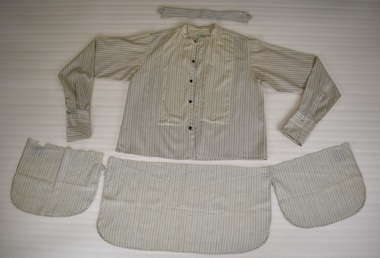
... The shirt is cut from first fabric woven from 100% traceable Australian wool. Bradford Mills differ to Australian mills in that the entire process of producing worsted material does not take place at the one firm/factory. ...The shirt is cut from first fabric woven from 100% traceable Australian wool. Bradford Mills differ to Australian mills in that the entire process of producing worsted material does not take place at the one firm/factory. ...Male wool shirt made in Bradford, U.K. The shirt is cut from first fabric woven from 100% traceable Australian wool. Bradford Mills differ to Australian mills in that the entire process of producing worsted material does not take place at the one firm/factory. Rather it is split between many firm/factories specialising in their task in the production of worsted material. For example, the wool goes from merchants to combers to produce tops, the tops to spinners to produce yarn and then the yarn is sold to manufactures who weave it into cloth. After the weaving is done the cloth has to be sent to the dryers and finishers, who scour, dye and finish the cloth. Finally, the finished cloth is purchase by a fresh set of merchants, who will later sell the cloth elsewhere in England or abroad. At each these steps a new firm is handling the wool/cloth making it hard to track lineage of wool through this process and hence hard to guarantee 100% Australian wool. This shirt was purchased and worn by the donor’s husband, George H. Gerber, an Australian Wool Buyer. The shirt was purchased on one of George’s trips to Bradford in the U.K. on company business. Gerber was a second-generation Wool Traders in his family. His father, also named George H. Gerber, worked for Kreglinger & Furneau. He worked for them in Boston, U.S.A. before he died from the Spanish Flu in 1918. The company then promised a job to his oldest son (donor’s husband) once he finished school. Thus, George came to be trained as a Fine Wool Classer by Kreglinger & Furneaux (Aust.) Pty Ltd where he was employed as a Wool Buyer all his working life. He retired in 1969 as the head of their Australian office when the company was taken over Also of note, the shirt was sold with 2 add-on collars. Having additional collars was advantageous as changing only the collar increased the number of days the shirt could be worn without washing. Cream coloured shirt with black and red single thread verticle stripes.“Grandpa” collar (with 1 of its 2 supplied add-on collars included). French cuffs. Sold with 2 add-on collars, hence both ends of the collar have buttonholes to take a stud, and a partially-opened button-hole is at the centre of the neck on the outside of the collar for a second stud.Letering label on shirt: GENT’S OUTFITTER Herbert Winfield 23 CHEAPSIDE, BRADFORDbradford, u.k, kreglinger & furneaux (aust.) pty ltd, 100% australian wool -
 Federation University Historical Collection
Book, Guide to Ballarat the Beautiful, 1923, 1923
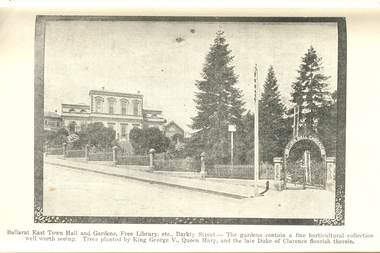
... Vickery & Son, trout, Berry, Anderson & co., Ballarat Botanical Gardens and hot houses, Claxton Memorial Fountain, statues, New Imperial Gold Mine, Art Gallery of Ballarat, St Patrick's College, Ballarat Grammar School, Ballarat School of Mines, Ballarat College, Sunnyside Woollen Mills, Ballarat Agricultural High School, Passenger Steamer on Lake Wendouree, Moorabool Falls, Lal Lal Falls, Grosvenor Square, Netherby, Buninyong, Ballarat Motor Garage....Vickery & Son, trout, Berry, Anderson & co., Ballarat Botanical Gardens and hot houses, Claxton Memorial Fountain, statues, New Imperial Gold Mine, Art Gallery of Ballarat, St Patrick's College, Ballarat Grammar School, Ballarat School of Mines, Ballarat College, Sunnyside Woollen Mills, Ballarat Agricultural High School, Passenger Steamer on Lake Wendouree, Moorabool Falls, Lal Lal Falls, Grosvenor Square, Netherby, Buninyong, Ballarat Motor Garage. ...The image of Ballarat Trustees relates to a building on the corner of Mair and Lydiard Streets. In 2010 it was used as Cuthberts law firm.Grey/green soft covered book. Includes photographs and map. Themes include: Ballarat History pre gold, mining, Eureka Stockade, Lake Wendouree, South Street, Grand National Eisteddfod of Australasia, schools, Black Hill, Lake Burrumbeet, Creswick, Buninyong. Illustrations and advertisement include: Sturt Street,James Smith, Ballarat Town Hall, Ballarat East Town Hall, Rowlands, Ballarat brewing Co., Royal Standard Brewery, steam train, Lake Wendouree, J.S. Vickery & Son, trout, Berry, Anderson & co., Ballarat Botanical Gardens and hot houses, Claxton Memorial Fountain, statues, New Imperial Gold Mine, Art Gallery of Ballarat, St Patrick's College, Ballarat Grammar School, Ballarat School of Mines, Ballarat College, Sunnyside Woollen Mills, Ballarat Agricultural High School, Passenger Steamer on Lake Wendouree, Moorabool Falls, Lal Lal Falls, Grosvenor Square, Netherby, Buninyong, Ballarat Motor Garage.ballarat, cuthberts, ballarat trustees, sturt street, tram, trams, ballarat town hall, crag's hotel, sun foundry, eureka aerated waters and brewing co, d. lem, chinese practioner, chinese herbalist, hugh v. mckay, sunshine harvester, gordon brothers, central business college, george hotel, edwards pyrites furnace, long's biscuits, ballarat eisteddfod, george farmer, ballarat botanical gardens, eureka stockade, lake wendouree, ballarat school of mines, moorabool falls, kirks reservoir, ballarat post office, hepburn lagoon, star of the east mine, emu river, ballarat observatory, statues, angus' rialto cafe, carlyon's hotel, clarendon ladies' college, j.e, sang, ballarat coffee palace, stansfield and smith, ballaray brewing company, phoenix brewery, rotal standard brewery, john macleod co, robert sim and co, cobb and co\eagle foundry, j.j. goller and co., mt buninyong lookout, ballarat town hall ballarat east gardens, hot house, glass house, statuary pavilion new imperial gold mining co.,, art gallery of ballarat, st patrick's college, ballarat agricultural high school, lake wendouree steamer, grass trees at mt clear, mount clear, lake burrumbeet, newlyn reservoir trout, lal lal falls, grosvenor square, netherby, ramelli's motor garage, buninyong gold obelisk, memorial, imperial gold mine, botanical gardens lily pond and fernery -
 Federation University Historical Collection
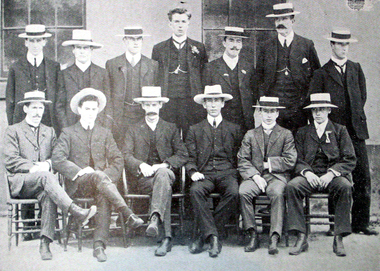
Book, Ballarat School of Mines Students' Magazine, 1902-1906, 1902-1906
... Nevett 1906 Excursion to Broken Hill, The Artistic Printing Process, Hints on Portraiture, Arizona, Cornish Mining Images Ballarat School of Mines and AusImm at the Central Mine, Broken Hill; At Iron Knob, Brown Boveri Turbo Generator at Block 10, Junction Mine plant or Potter Process, Broken Hill Propriety Mill, Carlyon's Hotel, Sam Jamieson, Electrical Labortory, Ballarat School of Mines Rowing Eight, Sports Committee,...Nevett 1906 Excursion to Broken Hill, The Artistic Printing Process, Hints on Portraiture, Arizona, Cornish Mining Images Ballarat School of Mines and AusImm at the Central Mine, Broken Hill; At Iron Knob, Brown Boveri Turbo Generator at Block 10, Junction Mine plant or Potter Process, Broken Hill Propriety Mill, Carlyon's Hotel, Sam Jamieson, Electrical Labortory, Ballarat School of Mines Rowing Eight, Sports Committee, Ballarat School of Mines Students' Magazine, 1902-1906 Book ...The Ballarat School of Mines is a predecessor institution of Federation University Ausgtralia.Five copies of the Ballarat School of Mines Students' Magazine bound in a blue hard cover and quart bound in calf. 1902 - Retirement of Herbert L. Krause 1905 - Mt Lyall Ore Deposits Images: Ballarat School of Mines Sports Association Committee and Officers, 1905 Standing left to right: W. Pearce, T. Williams, S. Hepburn, Seward, W. Figgis, J.R. Reid, P. Elliott Sitting left to right: P.A. Pratt, N. Buley, John Sutherland, H.R Murphy, J. Inglis, R. Nevett 1906 Excursion to Broken Hill, The Artistic Printing Process, Hints on Portraiture, Arizona, Cornish Mining Images Ballarat School of Mines and AusImm at the Central Mine, Broken Hill; At Iron Knob, Brown Boveri Turbo Generator at Block 10, Junction Mine plant or Potter Process, Broken Hill Propriety Mill, Carlyon's Hotel, Sam Jamieson, Electrical Labortory, Ballarat School of Mines Rowing Eight, Sports Committee,ballarat school of mines, magazines, sports committee, thomas williams, mount lyell, w. pearce, t. williams, s. hepburn, seward, w. figgis, j.r. reid, p. elliott, p.a. pratt, n. buley, john sutherland, h.r murphy, j. inglis, r. nevett, herbert l. krause, broken hill, artistic printing process, hints on portraiture, arizona, cornish mining, ausimm at the central mine, broken hill, iron knob, brown boveri turbo generator at block 10, junction mine plant or potter process, broken hill propriety mill, carlyon's hotel, sam jamieson, electrical labortory, ballarat school of mines rowing eight, sports committee,, rowing on lake wendouree, boat shed, h. valentine, l. seward, c. macgennis, d. don, m. gaunt, h. owne, l. nott, s. leathes, j.a. reid, h.r. murphy, alfred mica smith, r. hosking, zeehan, moonta, wallaroo, smelting silver, south africa, south australia excursion, sunnyside woollen mills, tasmanian excursion, swedish iron, mt jukes excurson, western australian gold ore, wynne-grant furnace, bhp sintering slimes, leggo furnace, mine ventilation, mount morgan mine, mount pani ltd, new zealand coal, adelaide school of mines, students' association, at iron knob, ausimm, excursions, visits, south australian excursion -
 Glenelg Shire Council Cultural Collection
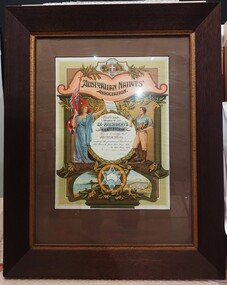
Certificate - Australian Natives Association Certificate, c. 1939
... Portland Branch's ex President's certificate. Issue to Mr W.A. Mills. Occupied the position from 16 May 1938 to 15 May 1939. ...Portland Branch's ex President's certificate. Issue to Mr W.A. Mills. Occupied the position from 16 May 1938 to 15 May 1939. ...The Australian Natives Association (ANA) was founded in Melbourne in 1871. Its membership was restricted to white men born in Australia and its aim was to benefit them.Certificate issued by the Australian Natives Association. Portland Branch's ex President's certificate. Issue to Mr W.A. Mills. Occupied the position from 16 May 1938 to 15 May 1939. Signed by the President and the Secretary (illegible, faded). The certificate has the Australian emblem at the top under which is an orange banner with the words ' Australian Natives Association' across. Under this is a woman in classical style dress holding an Australian flag in her right hand and a document in her left which reads, 'Constitution of the Australian Commonwealth'. A circular frame states the owner of the certificate and why it was issued. On the other side of the circle is a man. He wears leather riding boots, cream trousers and a blue shirt. He is holding something in his left hand. Under is a central star in which is an image of Australia. Either side is a picture of the sea with an Aboriginal man standing at the shore by some boats. The other side has an image of white buildings. Wattle is depicted around the entire certificate.certificate, ana, australian natives association -
 Bendigo Historical Society Inc.
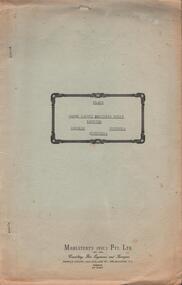
Document - HANRO COLLECTION: PLANS AND REPORT FROM FIRE ENGINEERS AND SURVEYORS, 1954/1960
... Inside the border is typed in black *Plans, Hanro (Aust) Knitting Mills Limited, Bendigo Victoria Australia. ...Inside the border is typed in black *Plans, Hanro (Aust) Knitting Mills Limited, Bendigo Victoria Australia. ...BHS CollectionPlans and Report from Fire Engineers and Surveyors:- Green Card has a rectangular box with an ornate border in the centre of the front page. Inside the border is typed in black *Plans, Hanro (Aust) Knitting Mills Limited, Bendigo Victoria Australia. At the bottom:- Mahlstedt's (Vic) Pty Ltd. (est. 1884). Consulting Fire Engineers and Surveyors. Temple Court, 422 Collins Street., Melbourne C.1. Telephone 673069. Inside the folder is the Key to Detail Block Plans & Fire Surveys. Correspondence from Mahlstedt's Pty Ltd to Edward Lumley and Sons, Insurance Brokers regarding a new survey and the changes to the building with respect to fire hazard. Main report recommendations and general information on the building. Blue print of Shirt Factory, Inglewood Road No. 1061 by Welmar Ltd Bendigo. Small blue print of the main buildings showing different work areas. Blue print No.1119 of John Brown Industries Ltd Alley Street Bendigo showing work areas. Box 116AMahlstedt's (Vic) Pty Ltdhanro, clothing, plans and reports, edward lumley & sons pty ltd. hanro knitting mills. mahlstedt's (vic) pty ltd. welmar ltd bendigo. john brown industries ltd. -
 Bendigo Historical Society Inc.
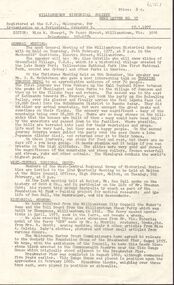
Document - COPY OF WILLIAMSTOWN HISTORICAL SOCIETY NEWSLETTER NO 17 (1977)
... On the second and third page of this Newsletter is an article entitled ''The guns of the 'Nelson''', written by Doug Mills, Castlemaine. The Warship NELSON underwent alterations in 1860, including cut down to two decks and lengthened, her armaments reduced to 72 guns. ...On the second and third page of this Newsletter is an article entitled ''The guns of the 'Nelson''', written by Doug Mills, Castlemaine. The Warship NELSON underwent alterations in 1860, including cut down to two decks and lengthened, her armaments reduced to 72 guns. ...Copy of Williamstown Historical Society Newsletter No 17 (1977). On the second and third page of this Newsletter is an article entitled ''The guns of the 'Nelson''', written by Doug Mills, Castlemaine. The Warship NELSON underwent alterations in 1860, including cut down to two decks and lengthened, her armaments reduced to 72 guns. Two 7inch 68 pounder guns were added to her armament. On February 7, 1867, she was officially given to the Colony if Victoria by the Imperial Government. At the time her Commander was Captain Charles B. Payne. The Warship reached Melbourne on 4th February 1868. Relics of the NELSON were auctioned at Williamstown Victoria Naval Depot, and her two anchors are preserved for public display at Williamstown. An active demand for a share of the guns from various towns in the State. Ballarat received four (4) guns, Bendigo and Castlemaine two (2) each, while one has been given to each of the following towns: - Ararat, Tarnagulla, Hamilton, Bacchus Marsh, Echuca and Geelong.document, williamstown historical society -
 Bendigo Historical Society Inc.
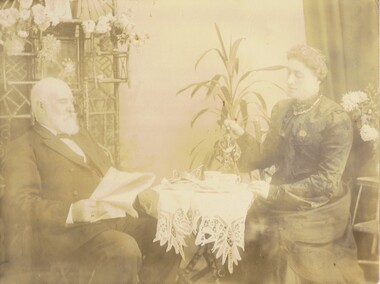
Photograph - GEORGE AND EDITH LANSELL
... The lady is Edith Lansell, the second wife of George Lansell. 1st wife - Bedelia died Sept 1880 at St. Kilda, buried Mill Scu Cem?, (Mrs. Balfour), Geo & Edith Borins? ...The lady is Edith Lansell, the second wife of George Lansell. 1st wife - Bedelia died Sept 1880 at St. Kilda, buried Mill Scu Cem?, (Mrs. Balfour), Geo & Edith Borins? ...Black and white (faded) photograph of Mr George and Mrs Edith Lansell sitting at small table with lace tablecloth. Mrs Lansell is pouring tea from a silver teapot. Mr Lansell reading newspaper. Flowers behind Mrs Lansell and flowers decorating a stand behind Mr Lansell. On back in pencil- 'could be George Lansell and wife (Peg Parsons, Castlemaine)'. 'Is definitely George Lansell and wife (Aunty Ruth Hill)'. 'Is definitely George Lansell and wife' - according to Mr Peter Lansell from Kew (June 1990). He has a similar photograph. The lady is Edith Lansell, the second wife of George Lansell. 1st wife - Bedelia died Sept 1880 at St. Kilda, buried Mill Scu Cem?, (Mrs. Balfour), Geo & Edith Borins? Bgo. Scu Cem. (Children all from Edith). By chapel. Printed on back in blue ink: QC Binks, 99 Rowan St, Bendigo, 3550. Photocopy of photo included with original.Agnes S Morris - Dunollyperson, family, husband and wife -
 Ballarat Tramway Museum
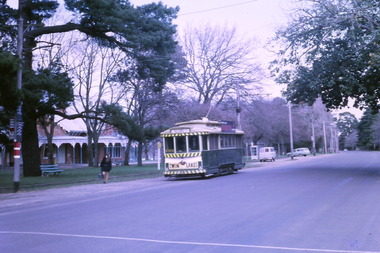
Photograph - Digital image Set of 10, Tony Smith, 1971
... Tram has an Eureka and SEC roof advertisement. .8 - 27 in Wendouree Parade, showing depot, just to the east of the depot. .9 - 33 in bound in Drummond St North at the Mill St Loop. .10 - 33 in bound in Victoria St, has Gardens via Drummond St Nth destination....Tram has an Eureka and SEC roof advertisement. .8 - 27 in Wendouree Parade, showing depot, just to the east of the depot. .9 - 33 in bound in Drummond St North at the Mill St Loop. .10 - 33 in bound in Victoria St, has Gardens via Drummond St Nth destination. ...Yields information about Ballarat Tramways and trams prior to the closure of the tramway system.Set of 10 digital images of Ballarat trams prior to closure, scanned from original slides by Tony Smith, 1971 prior to closure of the system. .1 - 11 arriving at Gardens Loop, tram has destination of Mt Pleasant, advert for Twin Lakes and SEC Briquettes. In the background is the Gardens Kiosk building. .2 - 11 at Gardens Loop .3 - 11 in Victoria St, crossing the Eureka line rail bridge. .4 - 43 and another bogie tram sitting on 1 road at the depot. .5 - 27 derailed at the depot, in Wendouree Parade - derailed all wheels. .6 - ditto .7 - 33 coupled up to 27, to pull it back onto the track. Driver adjusting the pole. Tram has an Eureka and SEC roof advertisement. .8 - 27 in Wendouree Parade, showing depot, just to the east of the depot. .9 - 33 in bound in Drummond St North at the Mill St Loop. .10 - 33 in bound in Victoria St, has Gardens via Drummond St Nth destination.trams, tramways, wendouree parade, gardens loop, victoria st, depot, derailments, drummond st nth, mill st loop, tram 11, tram 43, tram 27, tram 33 -
 Ballarat Tramway Museum
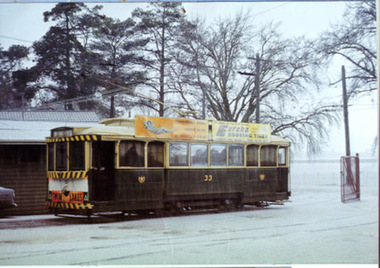
Document - Calendar, Topmill Pty Ltd, "Australian Trams 1999 Calendar", 1998
... 24 Page full colour calendar featuring Australian Trams, published by Top mill Pty Ltd. Cover (1299i5) features Sydney trams outside Central station in Eddy Ave. ...Tramways trams Australian Trams Ballarat Bendigo Museums 24 Page full colour calendar featuring Australian Trams, published by Top mill Pty Ltd. Cover (1299i5) features Sydney trams outside Central station in Eddy Ave. ...24 Page full colour calendar featuring Australian Trams, published by Top mill Pty Ltd. Cover (1299i5) features Sydney trams outside Central station in Eddy Ave. Other cities represented - Brisbane, Sydney, Adelaide, Perth, Fremantle, Bendigo, Ballarat, Sydney light rail, Hobart and Melbourne. Photos by Hugh Ballment, Dale Budd, Robert Merchant, Arthur Perry and the Sydney Tramway Museum. Priced at $9.95, and has "Parkholme Newsagency and Toys" sticker over bar code section, giving the same price. Distributed by Gordon and Gotch. Ballarat trams - 1299i1 - 33 at depot during hail storm on 20/8/1971 and 1299i2 - BTM trams 14 and 26 at Carlton St. during BTM operations 1970's or early 1980's. Used for month of June. Bendigo trams - 1299i3 - No. 4 at Eaglehawk terminus - 1/2/1971 and 1299i4 - trams 28, 2, 23 and two single truckers at Charing Cross 1970. Used for month of May.tramways, trams, australian trams, ballarat, bendigo, museums -
 Marysville & District Historical Society
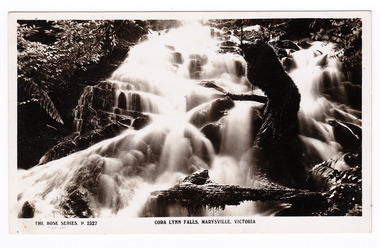
Postcard (item) - Black and white postcard, Rose Stereograph Company, Cora Lynn Falls, Marysville, Victoria, 1913-1967
... We also went to the/ Rubicon Power Station & to/ 2 of the big timber mills that/ were burnt out 2 yrs ago./ Well I must stop/ now & write to Bub/ Love from Joan Love from Auntie Mima...Cambarville was established as a timber mill town in the 1940s. Timber mill owners A Cameron and FJ Barton named Cambarville. ...A postcard in a series produced by the Rose Stereograph Company in Victoria, Australia as a souvenir of Marysville.A black and white photograph of the Cora Lynn Falls which are in Cambarville. These falls are located on the Marysville-Wood's Point Road. Cambarville is notable for its giant mountain ash (Eucalyptus regnans) trees within the Cumberland Memorial Scenic Reserve, and relics from former sawmills and gold mining. The Big Culvert is located nearby on the Marysville - Woods Point Road, which was historically part of the Yarra Track. Cambarville was established as a timber mill town in the 1940s. Timber mill owners A Cameron and FJ Barton named Cambarville. They established the mill to salvage timber from trees destroyed in the 1939 bushfires. Cambarville was impacted by the 2009 Black Saturday bushfires and any remaining structures were destroyed. POST CARD The "Rose" Series/ De Luxe A Real Photograph/ Produced in Australia Published by the Rose Stereograph Co.,/ Armadale, Victoria. Kitchener House,/ Marysville/ Monday Dear Gwen,/ Just a line now/ as it's nearly dinnertime./ We went to these falls/ last week & also to the/ Cumberland falls. I took/ some photos but it was/ too dark with all the/ ferns in the gullies./ We went to the Eildon/ Weir on Friday - do you/ remember what part that is/ in? We also went to the/ Rubicon Power Station & to/ 2 of the big timber mills that/ were burnt out 2 yrs ago./ Well I must stop/ now & write to Bub/ Love from Joan Love from Auntie Mimacora lynn falls, cambarville, marysville, victoria, waterfalls, p. 2327, rose series postcard, postcard, souvenir, a cameron, fj barton, black saturday bushfires, mountain ash, mining, timber mills, 1939 bushfires -
 Ringwood and District Historical Society
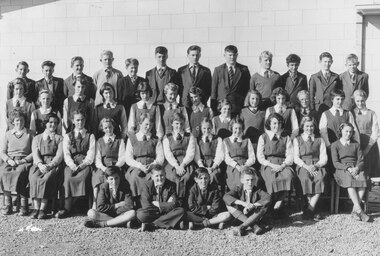
Photograph, Ringwood High School - 1954, Form 2B
... List of pupil names attached to photograph: Back row (L-R): Robert Buchan, Rupert Macaw, Ron Moxam, John Barker, John Thornbury, Barry Mills, Victor Greensill, Robin Pratt, Jack Ritch, Des Benjamin, Denis Higginbotham, John Stevens. 3rd row: Margaret Bould, ?...List of pupil names attached to photograph: Back row (L-R): Robert Buchan, Rupert Macaw, Ron Moxam, John Barker, John Thornbury, Barry Mills, Victor Greensill, Robin Pratt, Jack Ritch, Des Benjamin, Denis Higginbotham, John Stevens. 3rd row: Margaret Bould, ? ...Black and white photographList of pupil names attached to photograph: Back row (L-R): Robert Buchan, Rupert Macaw, Ron Moxam, John Barker, John Thornbury, Barry Mills, Victor Greensill, Robin Pratt, Jack Ritch, Des Benjamin, Denis Higginbotham, John Stevens. 3rd row: Margaret Bould, ?, Helen Burden, Beverley Wigley, Elaine Fryer, Jeanette Pease, Gwen Ward, Florence McKay, Jean Hull, Coral Skurrie, ?, Judith Morris, Beverley Sutherland. 2nd row: ?, ?, Taty Senik, Valerie Peck, Jeanette Melvin, Janet Casimir, Sandra Harrison, Pam Ternouth, Corinna Taylor, Lynette Koeford, Marie Anderson. Front row: Garry Norris, Laurie Watnall, ?, Kerry Brennan. -
 Sunshine and District Historical Society Incorporated
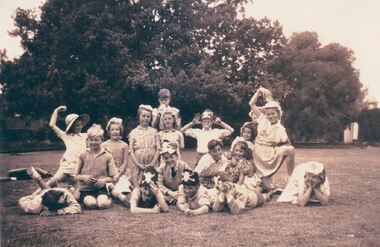
Essay - Albion State School 1940s Collection of Photographs
... 5169.01 - Albion State School 1940s Pirate Hat Group 5169.02 - Albion State School 1940s Standing In Front of the Building 5169.03 - Albion State School 1940s 2 Little Girls 5169.04 - Albion State School 1940s 6 Adults 5169.05 - Albion State School 1940s 6 Flower Girl and Boy 5169.06 - Albion State School 1940s Small Group Sitting Down 5169.07 - Albion State School 1940s Class Photo 5169.08 - Albion State School 1940s Albion Trestle Bridge Teachers Visiting Bridge 5169.09 - Albion State School 1940s Albion Trestle Bridge 5169.10 - Albion State School 1940s John Darling Flour Mills...Albion State School Albion Primary School Adelaide Street Albion 5169.01 - Albion State School 1940s Pirate Hat Group 5169.02 - Albion State School 1940s Standing In Front of the Building 5169.03 - Albion State School 1940s 2 Little Girls 5169.04 - Albion State School 1940s 6 Adults 5169.05 - Albion State School 1940s 6 Flower Girl and Boy 5169.06 - Albion State School 1940s Small Group Sitting Down 5169.07 - Albion State School 1940s Class Photo 5169.08 - Albion State School 1940s Albion Trestle Bridge Teachers Visiting Bridge 5169.09 - Albion State School 1940s Albion Trestle Bridge 5169.10 - Albion State School 1940s John Darling Flour Mills Collection of Digital Photographs Essay Albion State School 1940s Collection of Photographs ...The current school, Albion Primary School, No 4265 opened in 1926. It was built on a site once owned by John Fitzgerald (1850s). The land was later acquired by H. V. McKay who had transferred his Sunshine Harvester Works to the area in 1905 - 7. In 1920, the Albion railway station was moved nearer Ballarat Road at the request of Mr McKay. More people came to live in the area including soldier settlers.Albion Primary School's mission is to 'Aim High' in all we do so that our students grow to be socially capable, reach their full academic potential and become caring, respectful community minded people. Albion Primary School is located in a residential area in Albion, a small pocket of the local government area of Brimbank, approximately 10 kilometres west of Melbourne and was established in 1926. Our current enrolment is 199 students. We have a rich cultural diversity amongst our school community. The school is set around a courtyard with spacious playing areas including a grassed oval, running track, games courts, an adventure playground, sand pit, jumping pits, shady courtyard and garden areas, a vegetable garden and fruit tree orchard. As well as classroom groups, we have our learning teams, student house groups (siblings are allocated to the same house) and a Junior School Council. The school has four main buildings. All classrooms have air conditioning and interactive screens. Block A houses classrooms, staff areas and the administration offices. Our newest building has classrooms and some small group/office spaces. Block B includes our library, canteen and a multi-purpose room used for indoor physical education, Perceptual Motor Program, drama, visiting performers, and community activities. Block C houses classrooms and specialist rooms. We expect and receive the best from our students in terms of their learning and behaviour. The school’s dedicated and effective staff is strongly committed to helping students achieve personal, behavioural, social and academic success. In terms of learning, the highest priority is placed on the work in English and Mathematics. We also have a range of specialist and extra-curricular programs that we provide. Our specialist teacher-librarian is involved in reading extension programs that support development in literacy. All children are able to develop their artistic abilities through visual arts and music program. Our music program is supported by the Australian Children's Music Foundation. A specialist Physical Education teacher provides lessons for all children as well as the opportunity for students to participate in organised lunch time sporting competitions between the house groups. Auslan is the additional language all students learn at Albion. All children participate in a student wellbeing program that focuses on developing strong connections and a sense of belonging within the school. Our school student leaders participate in programs that help develop their leadership skills. 5169.01 - Albion State School 1940s Pirate Hat Group 5169.02 - Albion State School 1940s Standing In Front of the Building 5169.03 - Albion State School 1940s 2 Little Girls 5169.04 - Albion State School 1940s 6 Adults 5169.05 - Albion State School 1940s 6 Flower Girl and Boy 5169.06 - Albion State School 1940s Small Group Sitting Down 5169.07 - Albion State School 1940s Class Photo 5169.08 - Albion State School 1940s Albion Trestle Bridge Teachers Visiting Bridge 5169.09 - Albion State School 1940s Albion Trestle Bridge 5169.10 - Albion State School 1940s John Darling Flour Millsalbion state school, albion primary school, adelaide street, albion -
 Federation University Historical Collection
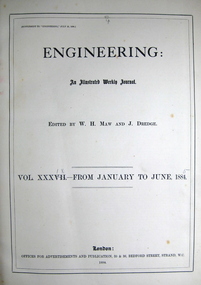
Book, Engineering: an illustrated weekly journal, 1884 (exact)
... This book contains a wide range of articles and reviews related to industrial developments such as rail mill engines at the Dowlais iron works (constructed by Messrs. ...This book contains a wide range of articles and reviews related to industrial developments such as rail mill engines at the Dowlais iron works (constructed by Messrs. ...William Henry Maw was a British civil engineer and astronomer. He was born in 1838 and died in 1924 at eighty-five years. Maw worked as an assistant at the workshops of the Eastern Counties Railway before he became a draughtsman in the design office. He designed the first outside cylinder locomotive for use in India. In 1865 he founded the journal Engineering and continued to be an editor for the rest of his life. Maw became a consulting engineer. He was president of the Civil and Mechanical Engineers' Society, the Institution of Mechanical Engineers and the Institution of Civil Engineers. This book contains a wide range of articles and reviews related to industrial developments such as rail mill engines at the Dowlais iron works (constructed by Messrs. Kitson and Co., engineers, Leeds), cable tramway, Clay-street, San Francisco, U.S.A., road and railway bridge over the river Dnieper, at Jekaterinoslow, Russia (constructed from the designs of Professor N. Belelubsky, St. Petersburg, by the Brjonsk iron works) etc. A book with blue large hard cover. Title and publication date are written on spine in gold. Illustrations (fig., plates, plans, diagrams) in B/W. Includes collection of the engineering weekly journal vol. xxxix-from January to June 1885. This book contains a wide range of articles and reviews related to industrial developments. Page no.712.machinery, tools, engines, engineering, railroad, w h maw, rail, mill engines, cable tramway, clay street, dowlais iron works, twin screw engines, royal italian torpedo ram vessel, messrs r and, w hawthorn engineers, electro plated carriage, the tehuantepec ship railway, otis elevator -
 City of Moorabbin Historical Society (Operating the Box Cottage Museum)
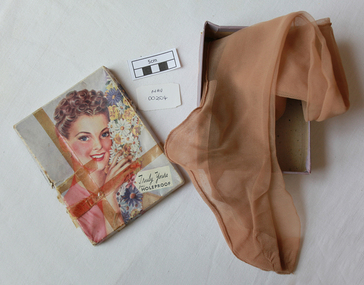
Clothing - Clothing, lady's stockings "Holeproof', mid 20thC
... The company went public in 1929 and opened the first Holeproof mill at Brunswick, Victoria in 1930, becoming the first manufacturer to produce and market Australian-made self-supporting socks. ...The company went public in 1929 and opened the first Holeproof mill at Brunswick, Victoria in 1930, becoming the first manufacturer to produce and market Australian-made self-supporting socks. ...Holeproof Hosiery was a Milwaukee, Wisconsin textile firm that was founded in 1901.With extensive advertising the brand name became recognized worldwide. The business produced men's and women's hosiery, underwear, lingerie, and men's pyjamas. Holeproof Hosiery began making nylon hosiery in January 1940, starting production on 8 of its 230 machines. The hose were made of a synthetic yarn composed of derivatives of coal and iron manufactured by Du Pont. In the late 1920s, a successful hosiery manufacturer, Staley & Staley Ltd, started making ladies hosiery under licence from the Holeproof Hosiery Company in Milwaukee, USA. The company went public in 1929 and opened the first Holeproof mill at Brunswick, Victoria in 1930, becoming the first manufacturer to produce and market Australian-made self-supporting socks. During the 1930s, Holeproof revolutionised the Australian market by promoting their products as a sought-after fashion accessory. The Australian company is still in business today, owned by Pacific Brands. A unused pair of lady's silk stockings in original box. 'Holeproof' 'Truly Yours' Candlelight, size 10Box Cover: Truly Yours / by / Holeproof Side Holeproof 'Candlelight' Size 10clothing, stockings, nylons, holeproof hosiery pty ltd, lingerie, melbourne, bentleigh, cheltenham moorabbin, brunswick milwaukee usa, wisconsin -
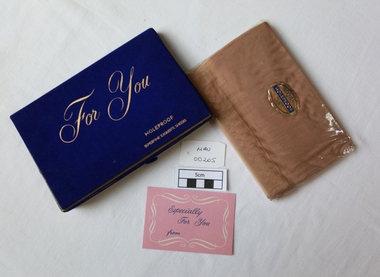 City of Moorabbin Historical Society (Operating the Box Cottage Museum)
Clothing - Clothing, lady's stockings 'Holeproof', c1950
... The company went public in 1929 and opened the first Holeproof mill at Brunswick, Victoria in 1930, becoming the first manufacturer to produce and market Australian-made self-supporting socks. ...The company went public in 1929 and opened the first Holeproof mill at Brunswick, Victoria in 1930, becoming the first manufacturer to produce and market Australian-made self-supporting socks. ...Holeproof Hosiery was a Milwaukee, Wisconsin textile firm that was founded in 1901.With extensive advertising the brand name became recognized worldwide. The business produced men's and women's hosiery, underwear, lingerie, and men's pyjamas. Holeproof Hosiery began making nylon hosiery in January 1940, starting production on 8 of its 230 machines. The hose were made of a synthetic yarn composed of derivatives of coal and iron manufactured by Du Pont. In the late 1920s, a successful hosiery manufacturer, Staley & Staley Ltd, started making ladies hosiery under licence from the Holeproof Hosiery Company in Milwaukee, USA. The company went public in 1929 and opened the first Holeproof mill at Brunswick, Victoria in 1930, becoming the first manufacturer to produce and market Australian-made self-supporting socks. During the 1930s, Holeproof revolutionised the Australian market by promoting their products as a sought-after fashion accessory. The Australian company is still in business today, owned by Pacific Brands. An unused pair of lady's nylon stockings in original box. 'Holeproof' 'For you', 'Precious' size 91/2Box Cover : For You / HOLEPROOF/ SUPERFINE EXQUISITE SHEERS Side : Precious 9 1/2 Package : 60 GUAGE / SHEER NYLON / BY / HOLEPROOF / 9 1/2 Card : Especially / For You / fromclothing, stockings, nylons, holeproof pty ltd, milwaukee usa, hosiery, fashion, melbourne, bentleigh, cheltenham moorabbin, brunswick, lingerie
